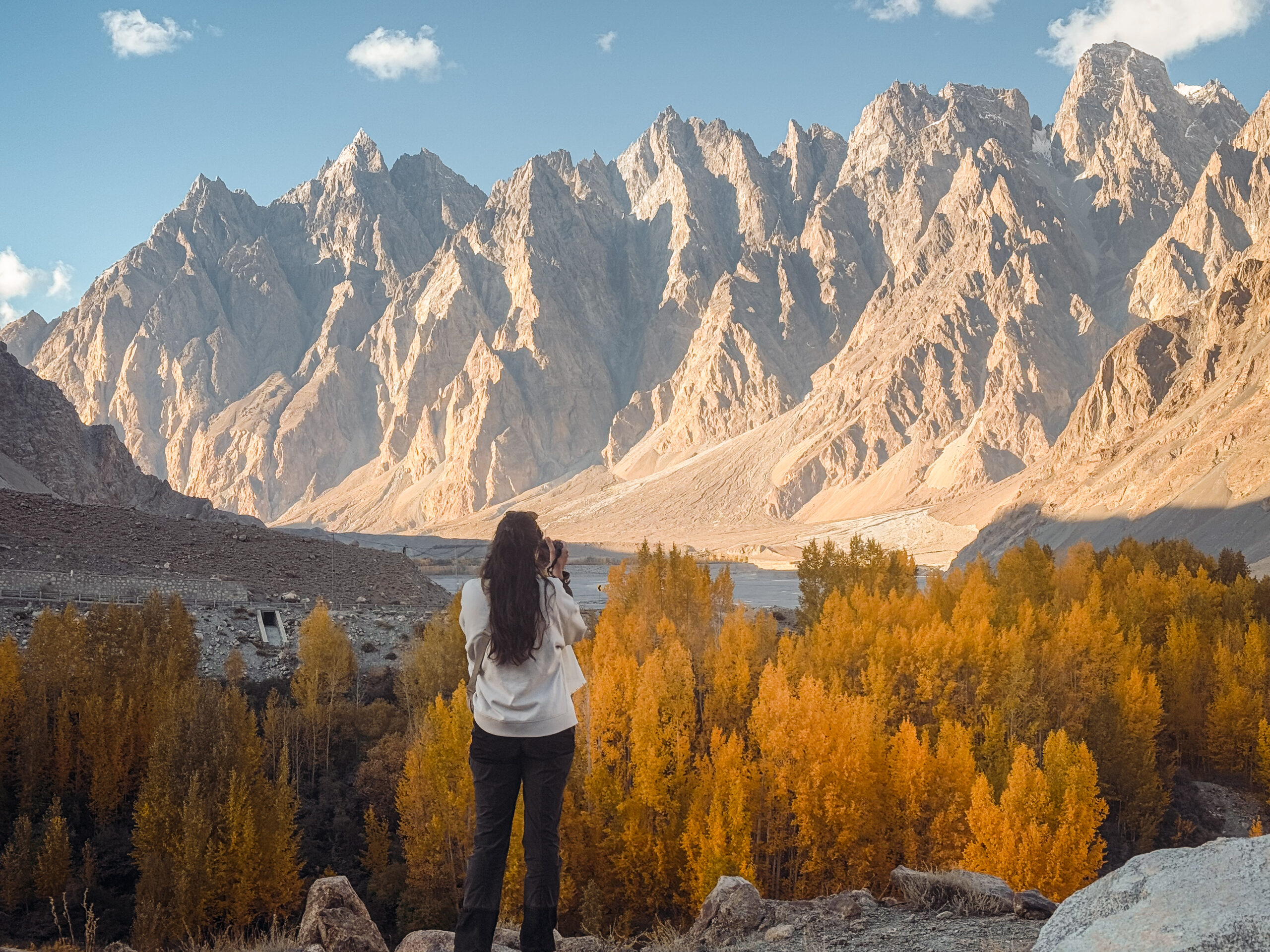
My solo female travel experience in Pakistan isn’t the one you’ll find on most travel blogs. No private driver. No tour group. No agency-planned itinerary. Just me, a backpack, public buses, shared vans, occasional hitchhiking, and five months across two separate trips, the most recent ending in December 2025.
I’m writing this because most of what exists online about travelling Pakistan as a woman is either written by men, by women who went for two weeks with a guide, or by people whose last trip was in 2018. What I haven’t been able to find, and what I needed when I was planning, is an honest account from a woman who travelled Pakistan independently, on a budget, using public transport, staying in local guesthouses and with local families, going deep into places most tourists never reach.
This is that account. It’s not here to scare you off, and it’s not here to tell you Pakistan is easy. It’s here to give you an accurate picture so you can make your own decision, and if you decide to go, to go prepared.
How I Travelled Pakistan
This matters for context, because the kind of trip shapes everything about the experience.
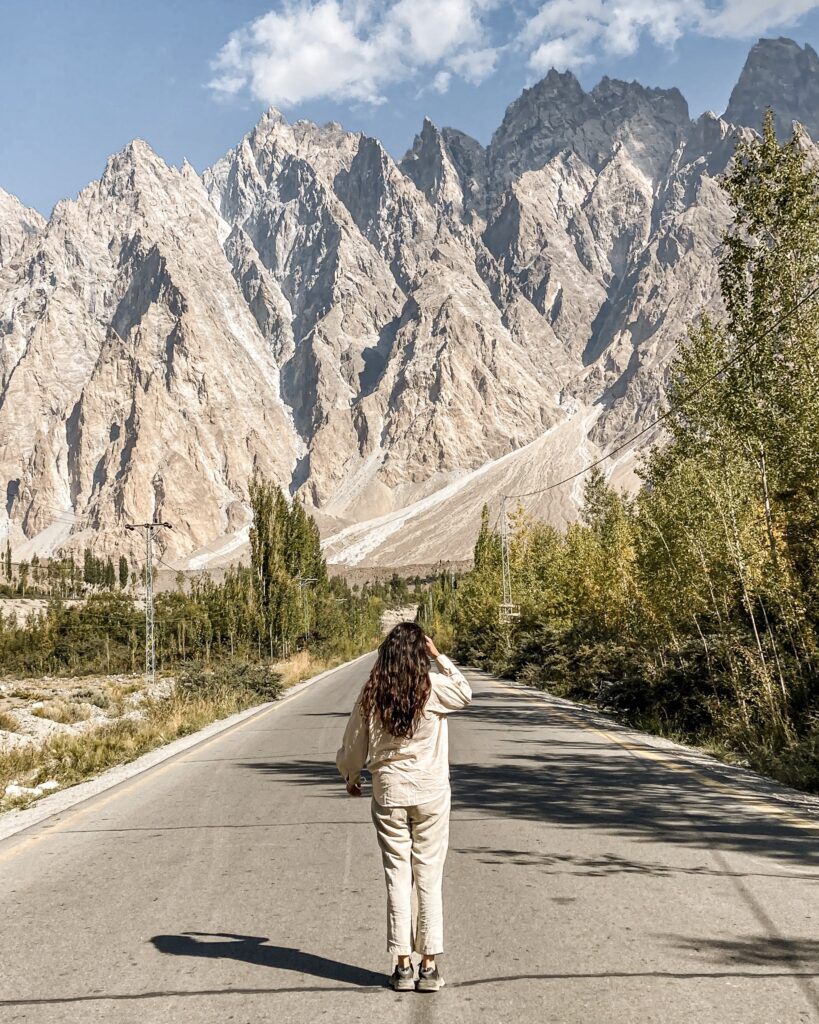
Over two trips totalling around five months in Pakistan, I travelled almost entirely independently. I used public transport throughout: long-distance NATCO buses overnight to Gilgit, shared minivans packed well beyond capacity between valleys, local jeeps into remote areas, and the occasional shared taxi when I needed to move faster. I hitchhiked in areas where public transport was scarce or non-existent, which in Gilgit-Baltistan is more common than you might think. And, I stayed in budget guesthouses and family-run homestays.
I had no private driver, no fixer, and no tour guide except for specific glacier treks where one was genuinely necessary for safety. My average daily spend was under €25, and I wasn’t on an extreme budget since I occasionally splurged on a slightly nicer guesthouse or a guided trek.
Almost everywhere I went, I was the only solo foreign woman. In the more remote valleys – Chapursan, Shimshal, Barah – I was often the only foreigner at all.
I say this not to make the trip sound more dramatic than it was, but because how you travel Pakistan shapes everything about the experience. The interactions, the logistics, the moments of discomfort, the depth of connection. All of it is different when you’re doing it independently rather than from behind the window of a private vehicle. Most of what’s written about solo female travel in Pakistan doesn’t reflect this kind of trip. This guide does.
For the full logistics of getting around (transport, costs, itineraries, SIM cards, ATMs) see my Backpacking Northern Pakistan guide. This post focuses on the experience of being a woman travelling independently, which is a separate and largely unwritten subject.
Where I Went in Pakistan
I began both trips in Islamabad, but spent most of my time further north in Gilgit-Baltistan: the mountainous region that covers Hunza, Skardu, Passu, and dozens of valleys beyond the main tourist trail.
In Hunza, I explored Karimabad and Passu, crossed suspension bridges, and ventured off the highway into remote valleys like Shimshal, Chapursan, and Misgar. I hitchhiked up to the Khunjerab Pass, the high-altitude border crossing into China. I did several treks (some alone, some with a local guide), including solo hikes to Fairy Meadows and Rakaposhi Base Camp, and the multi-day Patundas Meadows trek across a glacier.
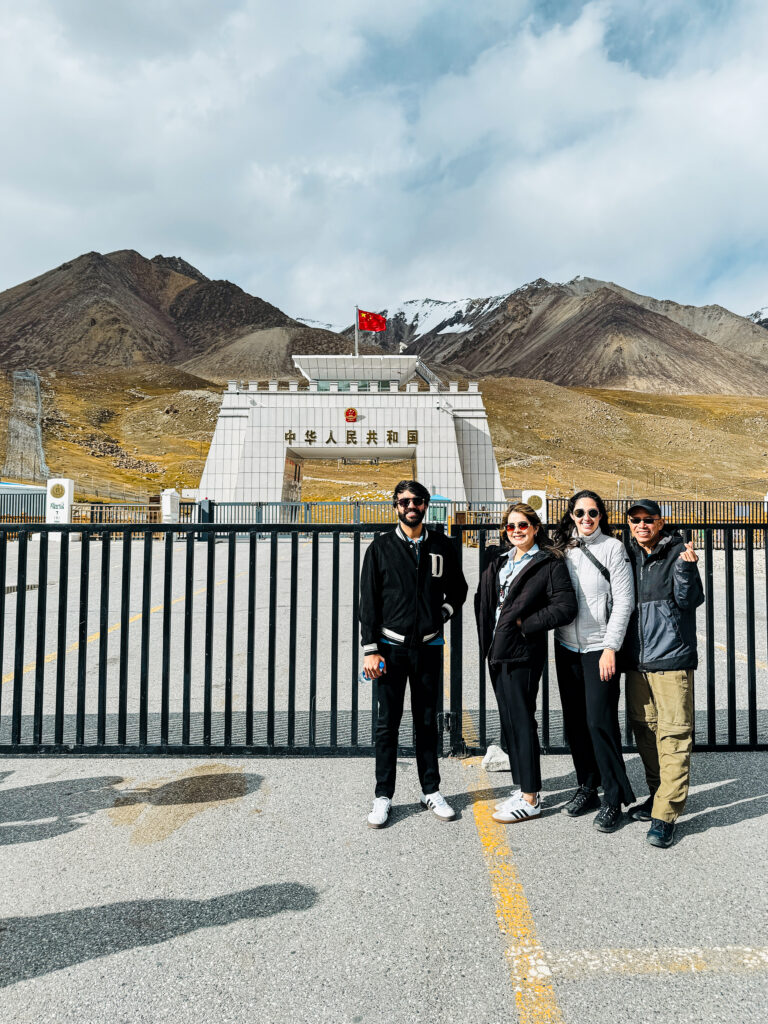
I spent weeks in the Skardu region, exploring the cold deserts, Deosai National Park, Khaplu, and smaller valleys that see almost no foreign visitors. I made my way west to the Kalash Valley in Chitral, one of the most culturally distinct areas in the country. And I spent time in the cities, Islamabad, Lahore, and Peshawar, the latter being the most conservative and logistically complicated of the three.
I travelled almost entirely by public transport and occasional hitchhiking. I was, in most places, the only solo foreign woman.
What the Locals Were Like
If there is one thing that defines solo female travel in Pakistan more than anything else, it’s the people.
The hospitality I encountered went far beyond anything I’ve experienced elsewhere. Strangers offered chai within minutes of meeting me. Families invited me into their homes for meals. People went out of their way to make sure I knew where I was going, often accompanying me to the right minivan or waiting with me until it departed. This happened constantly, and it happened in places where I stuck out enormously.
In Hunza and Gilgit-Baltistan more broadly, locals are used to foreign travellers, but still frequently surprised to see a woman alone. In more remote areas, the curiosity was more intense. Always respectful, but sometimes sustained in a way that took adjustment. People wanted to know where I was from, whether I was married, why I was alone, where my family was. These questions came from genuine curiosity, not hostility, but it’s worth knowing they will come, everywhere, every day.
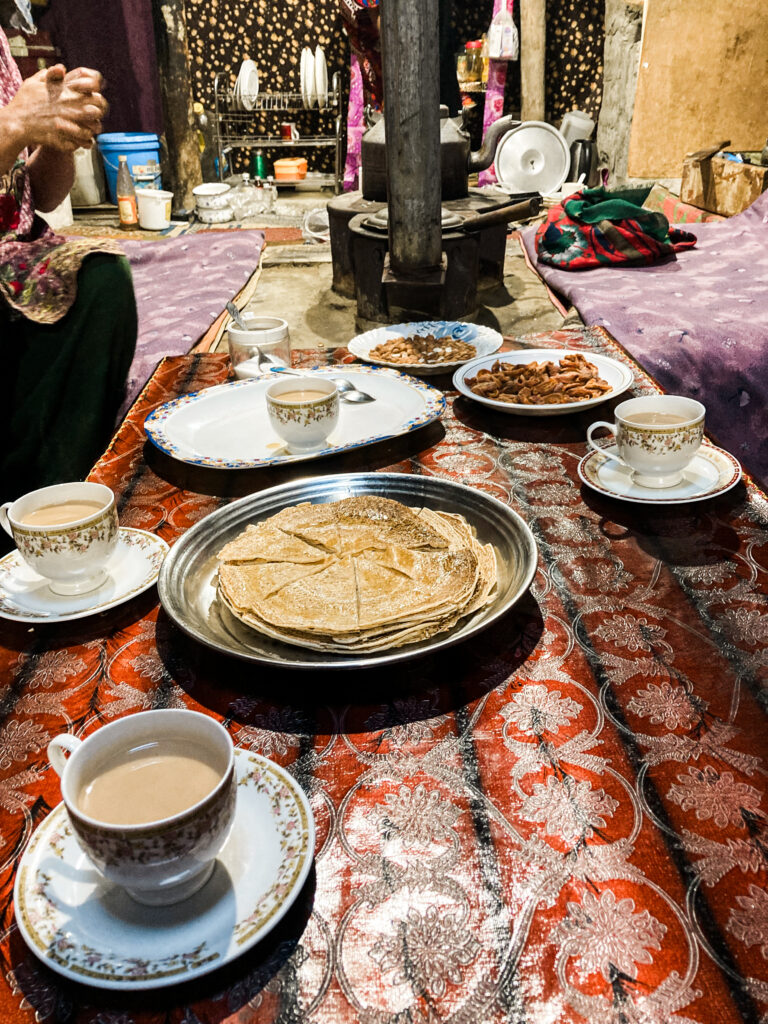
The women I met, though far less visible in public spaces, were often the warmest and most direct interactions I had. In mountain villages especially, being invited into a home usually meant being welcomed by the women of that household: offered tea, with a side of chapati or graal, asked questions through a mix of broken English, Urdu, and hand gestures. These moments were consistently the best parts of the trip.
In the cities, Peshawar especially, the public space dynamic was different. Far fewer women visible, more sustained attention on the street, more awareness required. Not hostile, but noticeably more charged than the mountains.
Is Pakistan Safe for Solo Female Travellers? Breaking the Stereotypes
When researching Pakistan, you’ll quickly notice that official government websites often paint the country as a risky destination. The UK Foreign Office Travel Advice and the US State Department Travel Advisory both highlight certain regions as unsafe due to political instability terrorism, and women’s rights violations. While these warnings shouldn’t be completely ignored, they don’t necessarily reflect the everyday reality for travellers, especially in the more popular areas. It was easy to believe that the country was too dangerous, too conservative, too unpredictable for a woman travelling alone. But what you’ll discover, will challenge nearly every assumption.
Yes, Pakistan has its complexities, but the overwhelming narrative of fear doesn’t reflect the reality I experienced. What the headlines don’t tell you is how strangers stop to offer help without expecting anything in return. How families invite you into their homes for chai within minutes of meeting you. How people go out of their way to make sure you’re safe, comfortable, and cared for simply because you’re a guest in their country.
Of course, I didn’t walk in blindly. I knew travelling in Pakistan, especially as a solo female, would require a certain level of caution, cultural sensitivity, and preparation. But I quickly realised that most of the fear surrounding the country comes from a lack of understanding, not actual risk.
Travelling Pakistan isn’t like travelling in Europe or Southeast Asia. It demands a different mindset. But it’s precisely this contrast that makes it so powerful, so rewarding, and so deeply misunderstood.
Did I Ever Feel Unsafe?
This is the question I get asked most, and I’ll answer it honestly.
For the most part, no. I felt watched constantly. I felt the weight of being a visible anomaly: the only woman on a crowded bus, the only foreigner in a bazaar, someone whose presence prompted visible calculation in the people around me. That’s not the same as feeling unsafe. But it is exhausting in a way that’s hard to convey until you’ve experienced it at length.
There were uncomfortable moments. Being the only woman in a crowded minivan, walking through a bazaar and feeling forty pairs of eyes tracking my movement. A couple of instances at checkpoints in the KPK, where officers were more insistent. However, none of these crossed into actual threat. But they required awareness and energy that you don’t spend in other destinations.
I never experienced theft. I never experienced physical harassment or assault. I never felt in immediate danger. In fact, and this is something the standard safety post rarely acknowledges, the most genuinely threatening moments of my solo travel life have happened in supposedly “safe” countries. Not in Pakistan.
What Pakistan requires is that you don’t switch off. You stay aware, read situations, trust your gut when something feels off, and accept that a heightened level of attention is simply part of the experience here. That’s not a reason not to go.
Don’t skip travel insurance!
I use SafetyWing for most trips – solid coverage for adventure travel.
Pakistan Compared to Other Solo Female Destinations
This is the comparison I wish someone had written for me before I went, so I’ll be direct about it.
I’ve travelled solo through Turkey, Jordan, Egypt, Oman, and across Central Asia (Kazakhstan, Kyrgyzstan, Uzbekistan). I’ve also spent extended time in the Caucasus. None of those trips left me feeling unsafe as a woman. Stared at in some places, yes. Treated as a curiosity, frequently. But genuinely threatened or uncomfortable on the street? Rarely, and never in a way that was specifically about being a woman rather than being a conspicuous foreigner.
The places where I’ve most consistently felt harassed or unsafe walking alone have been in Western Europe. Not the Middle East, not Central Asia, not Pakistan.
Egypt is the most nuanced comparison. The attention I got there was relentless, but in my experience it was foreigner-targeted rather than woman-targeted: the selling, the hustling, the commission-chasing. Exhausting, but a different texture to gender-based harassment. In Oman and Jordan, I felt watched but never pressured. In Central Asia, the staring in more rural areas could be intense, but it came from the same place as Pakistan’s: genuine bewilderment at an anomaly, not aggression.
Pakistan’s north sits comfortably within that range. The staring is occasional and should be expected, but in five months I never experienced the kind of street harassment (catcalling, following, groping), which I’ve had in supposedly safe European cities. What Pakistan requires is cultural adaptation rather than constant vigilance against threat. That’s a meaningful distinction that most safety-framed travel posts miss entirely, because most of them are written by people who haven’t spent enough time in the country to tell the difference.
If you’ve managed Egypt, Central Asia, or the Caucasus independently, northern Pakistan is within reach.
Practical Tips for Solo Women in Pakistan
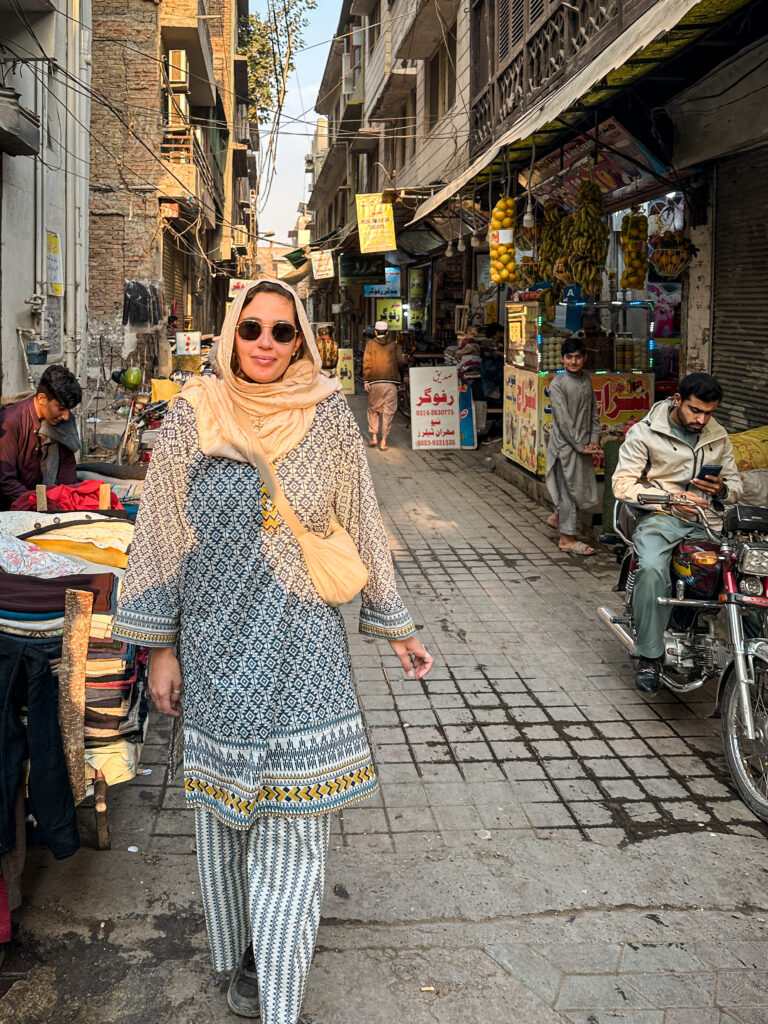
Dress modestly. Loose trousers, arms covered, a scarf to hand. In Peshawar and more conservative areas of KPK, I wore a shalwar kameez, which made a noticeable difference in how I was perceived and treated. You don’t need to cover your face. You do need to cover everything else.
Trust your instincts without apology. I changed seats on buses, left places early, and declined invitations when something felt off. Pakistan will throw a lot of social pressure at you in the form of relentless hospitality, it’s okay to say no politely and firmly. Nobody is owed your time.
Use public transport strategically. As a solo woman you’ll typically be given the front seat on shared vehicles. It costs slightly more and means you’re more visible, but you’re also under the implicit protection of the driver and more easily engaged in conversation if something feels wrong. On buses, sit near families when possible. Full practical detail on transport along the Karakoram Highway.
Prepare for the questions. “Are you married?” “Where is your husband?” “Why are you alone?” You’ll answer these every single day. Having a patient, warm, stock response ready means you won’t exhaust yourself explaining. A polite excuse (boyfriend at home, husband joining later) can defuse pressure in situations where the honest answer would create more complication.
Learn a few words of Urdu. Shukriya (thank you). It signals respect and disarms a lot of friction before it starts.
Stay in family-run guesthouses. Particularly in smaller towns and remote valleys, family guesthouses offer a level of informal looking-out-for-you that hotels don’t. Ask locals for recommendations, word of mouth is more reliable than booking platforms in the north.
Know the restricted zones before you go. Some border regions require permits or are off-limits. Rules change. The situation in the tribal districts south of Peshawar and along the Afghan border fluctuates. Research current conditions before heading anywhere remote.
Get a local SIM in Gilgit. SCOM gives the best coverage in Gilgit-Baltistan. It’s around 1,100 PKR for a SIM and a 20GB monthly data plan. If you need coverage before you get north, an eSIM to cover the Islamabad leg.
Need data before you land? Try Saily eSIM
Use code RITAHE1486 for $5 off your first plan.
Things I Wish I Knew Before Going
The north and the rest of the country are genuinely different. Gilgit-Baltistan has a notably more relaxed culture than Peshawar or rural Punjab. If northern Pakistan is your destination, much of the fear-based coverage you’ll read online relates to parts of the country you may never visit.
You will rarely see women in public in some areas. This takes adjustment, especially in cities. The upside is that when you do connect with local women (inside homes, in villages) those interactions tend to be intense and wonderful precisely because they’re not casual.
Logistics are unpredictable. Buses don’t run on schedule, roads close, landslides happen. Flexibility isn’t just useful, it’s mandatory. Plan the broad strokes, hold the details loosely.
Cash is essential outside major towns. The only bank reliably accepting foreign cards is Bank Alfalah (Standard Chartered also works in Islamabad). Withdraw large amounts before heading into remote areas.
Avoid ATM fees with Wise
The card I use for all my travel withdrawals – real exchange rate, low fees.
Use Revolut to avoid ATM fees
Good alternative to Wise – I carry both as a backup.
Police escorts happen, especially in Peshawar and other areas of KPK. Near borders and in more sensitive areas, officers sometimes insist on following or accompanying foreigners. It’s usually harmless, occasionally helpful, and sometimes frustrating. It’s worth knowing about before it happens so it’s less alarming when it does.
It will change you. This sounds like a cliché, but five months in Pakistan was one of the more genuinely formative experiences of my life. The intensity of the place (the beauty, the challenge, the kindness, the disorientation) accumulates into something that doesn’t wash off.
Frequently Asked Questions
Yes. It’s uncommon, especially as a foreign woman travelling independently without a guide or tour, but it’s entirely possible and I did it across five months spread over two trips. Northern Pakistan in particular is manageable for solo women who have some prior experience with conservative, patriarchal travel environments.
Yes, with preparation and the right expectations. Northern Pakistan (Hunza, Skardu) is the safest and most welcoming region for solo women. Cities like Lahore and Islamabad are manageable with standard awareness. Peshawar and KPK require more cultural navigation. The security situation in some tribal areas and near the Afghan border is genuinely variable. Check current conditions before planning anything near those zones.
Loose clothing covering arms and legs at all times. A scarf or dupatta for conservative areas, religious sites, and any time you want to reduce attention. In Peshawar and rural KPK, a shalwar kameez is both respectful and practical. It signals cultural awareness and significantly changes how you’re treated. You don’t need to cover your hair everywhere, but having a scarf to hand is essential.
Generally yes. Gilgit-Baltistan, covering Hunza, Skardu, Passu, Gilgit, and surrounding areas, is the most tourist-accustomed region and where I spent the majority of my time. The Ismaili Muslim culture in Hunza in particular is notably more relaxed and open.
Sustained staring is universal and should be expected. Active verbal harassment, following, and physical contact, in my experience across five months, were far rarer than in other countries. The north in particular was notably calm on this front. Curiosity is the dominant mode, not aggression. That said, I did find certain situations, crowded city bus stations, bazaars in Lahore, more charged than others, and situational awareness remained a constant background task.
Yes, with adjustments. Front seat on shared vehicles (standard for solo foreign women, costs slightly more) is actually a reasonably safe. Night buses require more awareness. Sitting near families helps. The full breakdown of how to navigate northern Pakistan’s transport system is in my Karakoram Highway by public transport guide.
Yes, particularly if you plan to trek. Make sure your policy covers high-altitude hiking and emergency evacuation as many standard tourist policies exclude adventure activities.
Don’t skip travel insurance!
I use SafetyWing for most trips – solid coverage for adventure travel.
Should You Go to Pakistan?
Yes, but with honest caveats, not motivational ones.
Pakistan is not a destination for travelling on autopilot. It’s not always comfortable, and the cultural distance requires active navigation rather than passive observation. If you’re looking for ease, there are easier places.
But if you’re someone who travels to be genuinely changed by the experience, who wants landscapes that are still genuinely wild, hospitality that is unrehearsed and real, and the particular reward that comes from doing something difficult independently, Pakistan delivers this in a way that very few destinations still do.
I didn’t experience theft, physical danger, or serious harassment across five months here. I did experience discomfort, exhaustion, moments of genuine uncertainty, and kindness that I still think about. The balance was overwhelmingly positive.
I’ve been twice. I’m going back.
Need help planning your Pakistan trip?
Custom itineraries, local guide sourcing, and on-trip support from someone who’s done it.
More Pakistan Travel Guides
If you’re planning to travel Pakistan independently, these in-depth guides will help you navigate the country, travel on a budget, and explore far beyond the usual routes:
Have questions about safety in Pakistan? Drop them in the comments. I read every single one.