
Lahore travel guide posts tend to oversell the city. This one won’t. Lahore has genuinely impressive Mughal architecture, one of the best food cultures in Pakistan, and an old city worth two full days of your time. But it’s also louder, more chaotic, and harder going for solo female travellers than anywhere else in the country.
This guide covers the Badshahi Mosque, Lahore Fort, Wazir Khan Mosque, the food streets, where to stay, how to get around, what it costs, and an honest safety section for women travelling alone. Go once, see it properly, and know what you’re walking into.
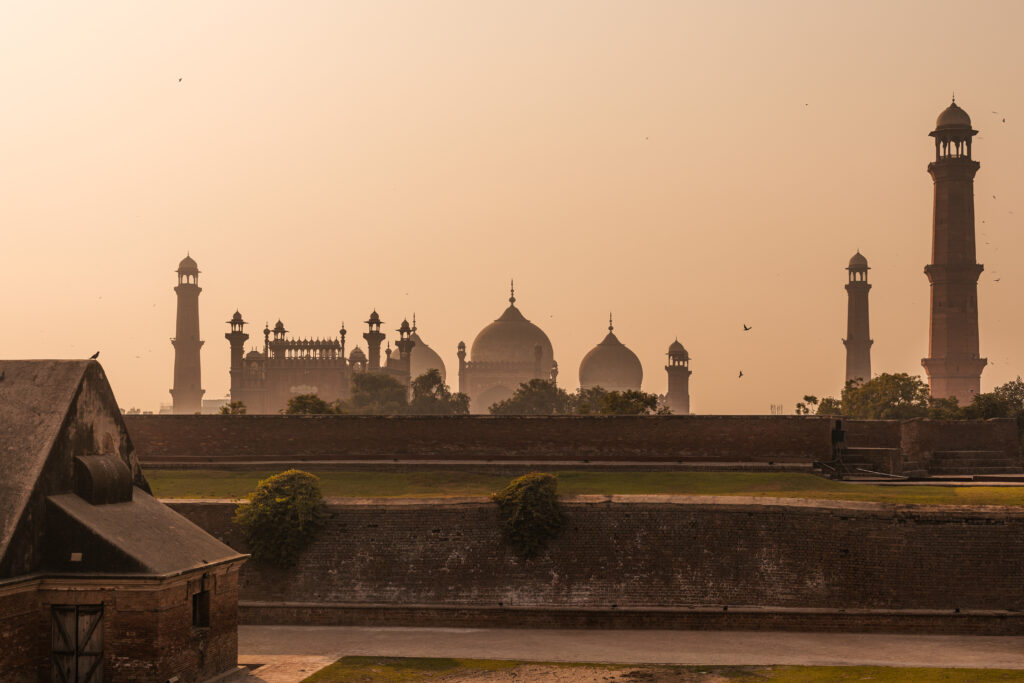 Badshahi Mosque seen from Lahore Fort
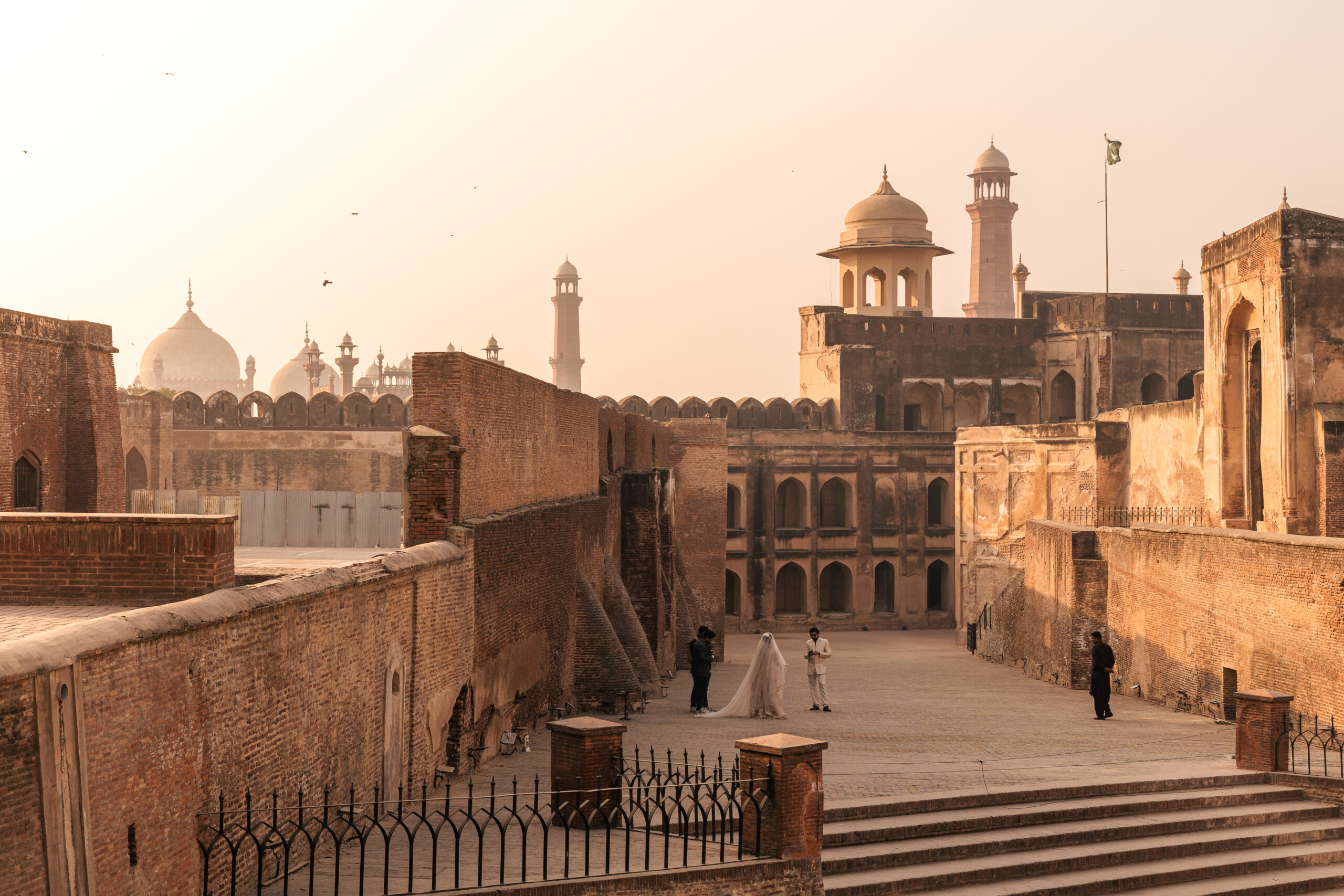
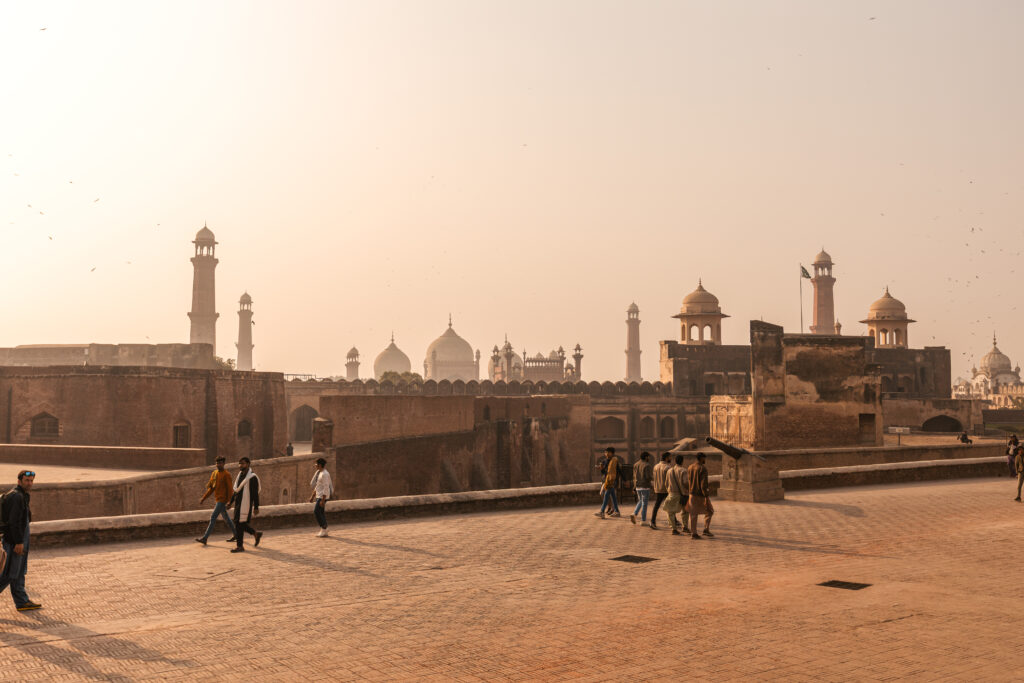 Lahore Fort at Sunset
Is Lahore Safe for Solo Female Travellers?
Lahore is the city in Pakistan where I felt least comfortable as a solo female traveller. I want to be specific about what that means, because it’s different to the vague warnings you’ll read elsewhere.
I’ve been stared at across Pakistan. In remote Pashtun villages, in Chitral, in the mountain towns along the KKH. The stares are frequent and sometimes intense in some places, and I’ve made my peace with that. It’s part of travelling as a visible foreign woman in a conservative country. But Lahore felt different. The staring here was more aggressive, more sustained, and more deliberate than anywhere else I visited in the country. Unlike most places it didn’t feel curious, but predatory is closer to the word.
Local women friends were direct about it: men in Lahore’s crowded markets try to touch you. Groping in busy areas is common enough that Pakistani women factor it into how they move through the city. I was with a local male friend for most of my time there, which almost certainly shielded me from the worst of it. But even with that buffer, the atmosphere in certain areas was uncomfortable in a way that I never felt in other Pakistani city.
This is a Punjab thing more than a Pakistan thing. The culture in Lahore, and to a lesser extent across the Punjab more broadly, is closer to what you might encounter in parts of northern India than to what you’ll find in Gilgit-Baltistan, Khyber Pakhtunkhwa, or the mountain regions. The paradox is that Peshawar, which has a far more conservative reputation and sits closer to the Afghan border, is where I felt the most respected and the most comfortable of any major city in Pakistan. Men there were courteous in a way that Lahore’s markets were not.
Don’t skip travel insurance!
I use SafetyWing for most trips – solid coverage for adventure travel.
None of this means Lahore is too dangerous to visit. It means you go in with clear eyes and adjust accordingly:
For a complete picture of safety across Pakistan as a solo female traveller, read my dedicated guide →
When to Visit Lahore
Lahore sits in the Punjab plains at around 200 metres above sea level, which means it has none of the mountain climate you’ll get in Gilgit-Baltistan. Seasons matter here in a way they don’t further north.
October to March: The Best Window
This is when Lahore is at its most liveable for travellers. Temperatures are mild, between 10°C and 25°C, the air is cooler, and the city’s outdoor spaces and food streets are at their most pleasant. If you’re combining Lahore with a northern Pakistan trip, timing your Lahore visit for the beginning or end of October fits neatly with the mountain season.
April and May: Warm but Manageable
Spring brings warmth quickly in Lahore. April is still pleasant, May starts to push towards uncomfortable, particularly midday heat. If you’re passing through on the way north in May, a day or two is manageable. Start your sightseeing early and retreat to a café or guesthouse during the afternoon.
June to September: Avoid if Possible
Summers in Lahore are genuinely brutal. Temperatures regularly exceed 40°C, humidity is high, and the city slows down considerably. If you’re backpacking Pakistan in summer and focusing on the north, skip Lahore and come back in autumn. Some travellers pass through briefly on arrival or departure, which is fine, but a full exploration of the city in peak summer is punishing.
Getting to Lahore
From Islamabad
The Lahore–Islamabad corridor is one of the best-connected routes in Pakistan. Daewoo Express and Faisal Movers run comfortable air-conditioned buses regularly throughout the day from Rawalpindi’s Pir Wadhai terminal. The journey takes around 4-5 hours and costs approximately 1,500-2,000 PKR. Simply show up at the bus station. Buses run frequently and seats are rarely hard to find outside of public holidays.
From Gilgit or the KKH
There is no direct public transport from Gilgit to Lahore. The standard route is to take a shared car or bus from Gilgit to Islamabad (12-22 hours), spend a night in Islamabad, then continue to Lahore by bus the following morning. The total journey from Gilgit to Lahore is a full day-and-a-half. Plan accordingly and don’t try to compress it into one leg.
By Air
Both Allama Iqbal International Airport in Lahore and Islamabad International Airport have domestic connections. PIA operates flights between major Pakistani cities. Flying into or out of Lahore directly makes sense if you’re combining Pakistan with a longer international itinerary and want to enter from one city and exit from another.
By Train
Pakistan’s railway network connects Lahore to Rawalpindi, Karachi, and other major cities. Trains are slower than buses but more comfortable for overnight journeys, and the experience of travelling by rail in Pakistan is worthwhile in itself. The Lahore to Rawalpindi route runs several times daily; check the Pakistan Railways website for schedules, as they change frequently.
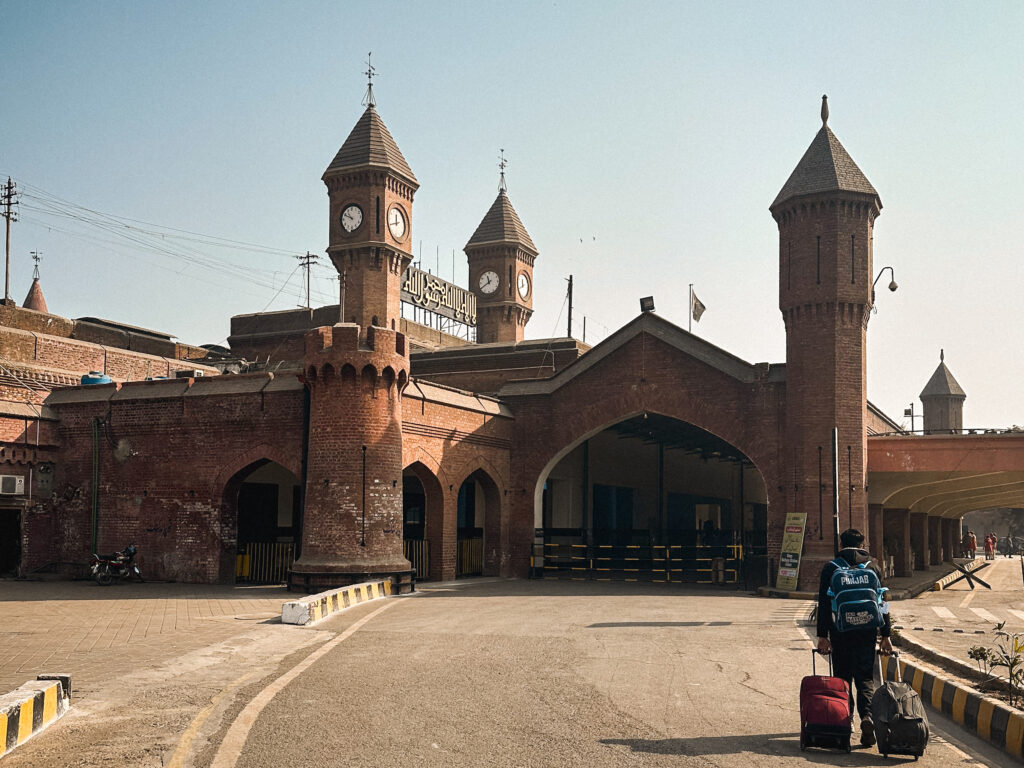 Lahore Train Station
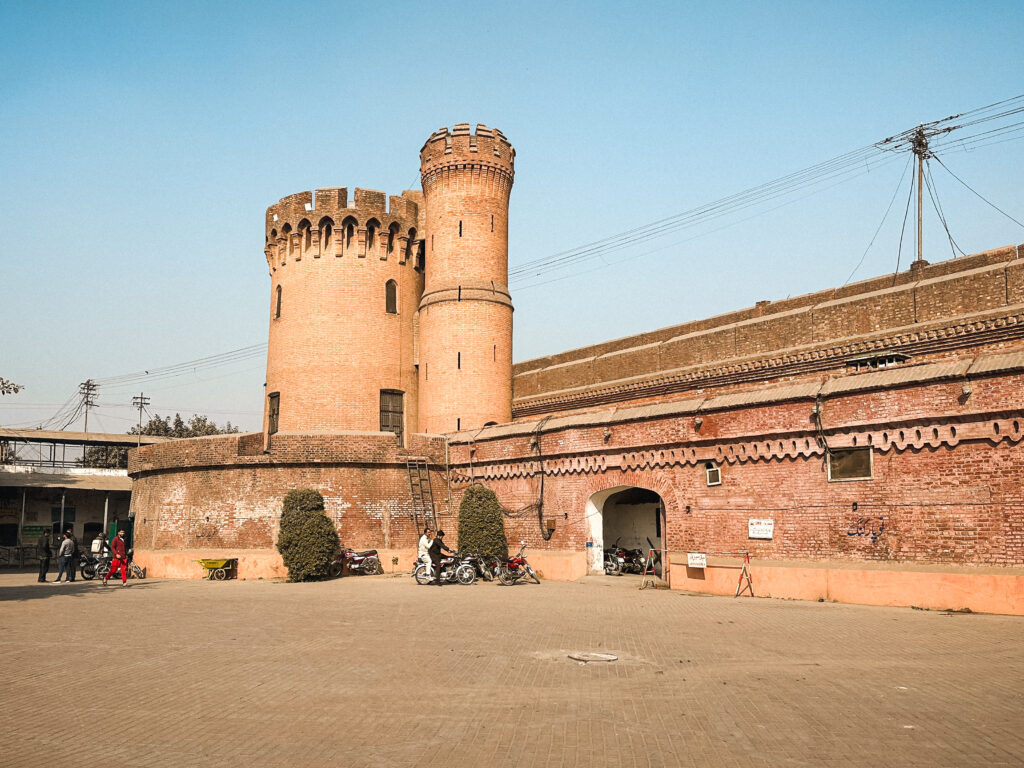 Lahore Train Station
Getting Around Lahore
Lahore is a large, sprawling city and its main attractions are spread across several distinct areas. The old walled city, the colonial Mall Road area, and newer neighbourhoods like Gulberg and DHA. Walking between major sights is rarely practical.
inDrive and Careem
These are the most practical options for getting around as a foreigner, and what I used for almost all my movement in the city. inDrive in particular is excellent. You name your price, the driver accepts or counters, and you pay what’s agreed in cash. No language barrier, no haggling with a stranger on the street, no inflated foreigner prices. Download it before you arrive and use it as your default. Careem also works well and has fixed pricing.
Lahore Overground Metro
Lahore has an overground metro and it’s worth using if your destination is anywhere near the route. I took the Orange Line to get across town and was genuinely surprised. Clean, air-conditioned, and efficient in a way that cuts straight through Lahore’s notorious traffic. A single ride costs 40 PKR (around €0.10), making it the cheapest way to cover distance in the city by a significant margin.
The limitation is coverage: there are only two lines, so it won’t get you everywhere. But the strategy that works well is taking the metro as far as it goes in your direction, then jumping in an inDrive from the nearest station to your final destination. You avoid the worst of the traffic, the total cost is still a fraction of a cross-city taxi, and the journey is faster. Worth checking the route map before any longer trip across town to see if the metro can do the heavy lifting.
Rickshaws
Auto-rickshaws are everywhere and are the most local way to get around shorter distances in the old city where cars can’t always navigate the narrow lanes. Always agree on a price before getting in. As a foreigner you will be quoted more than the local rate and knowing approximate fares helps. Ask at your guesthouse/hostel for help.
Walking
The old walled city is best explored on foot. The lanes between Bhati Gate, Delhi Gate, and the Wazir Khan Mosque are too narrow and too interesting for a vehicle. Give yourself a full half-day to wander without a specific plan and you’ll find corners no travel guide has catalogued.
The Old City: Where Lahore Actually Lives
The walled city of Lahore is the historical and emotional heart of the city. Built across centuries of Mughal rule, it is one of the best-preserved old city centres in South Asia, not because it has been cleaned up for tourists, but because it has simply continued to be lived in. The lanes are narrow, busy, and smell of spices and frying oil. Wooden balconies overhang the street. Motorbikes thread through gaps that seem impossible.
Start at any of the old city gates. Delhi Gate or Bhati Gate are the most atmospheric entry points, and walk without too much agenda. The Walled City of Lahore Authority (WCLA) app offers self-guided walking routes and is genuinely useful for context if you want it, but the old city rewards wandering more than planning.
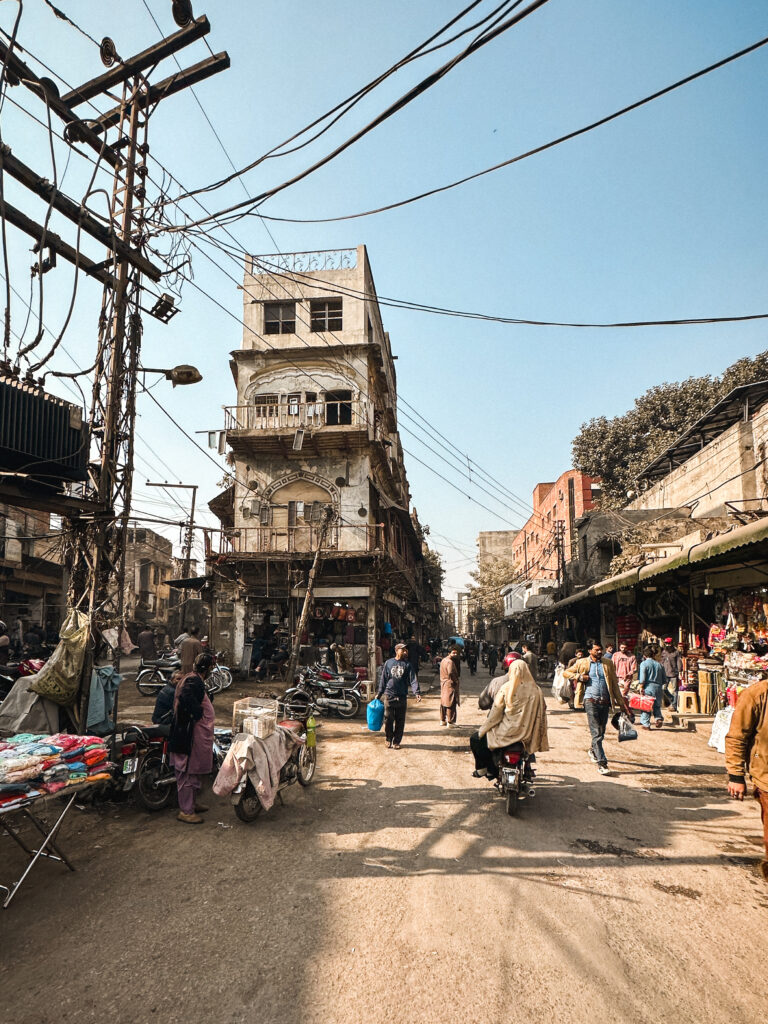 Streets in the Old City of Lahore
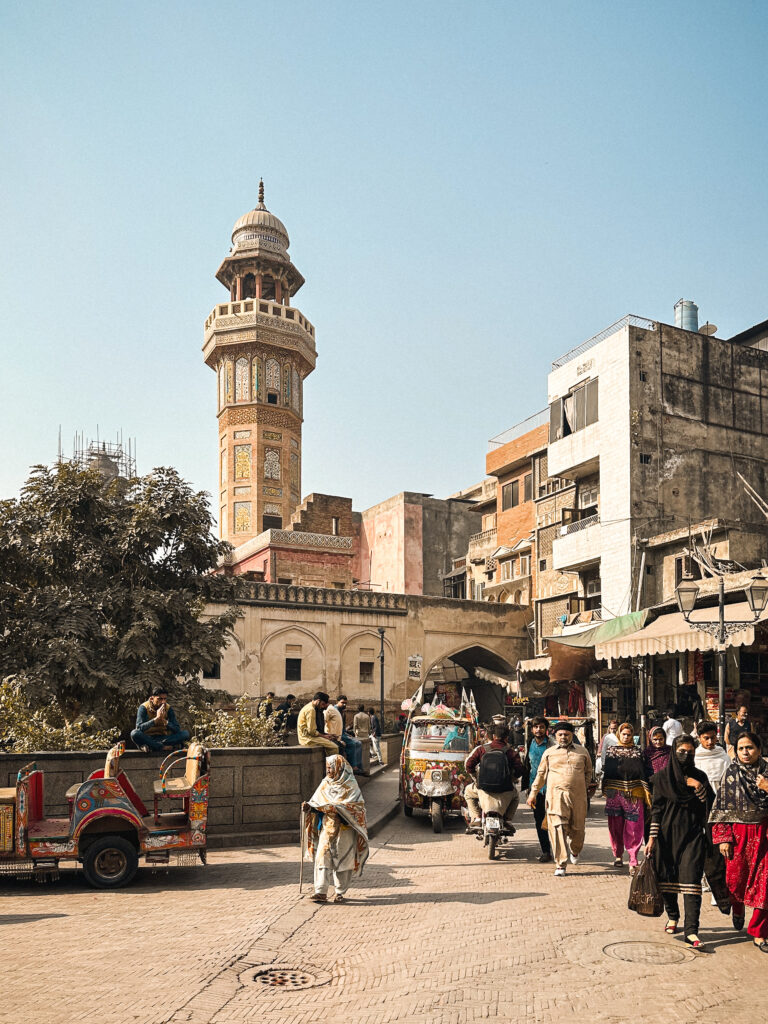 Delhi Gate Lahore
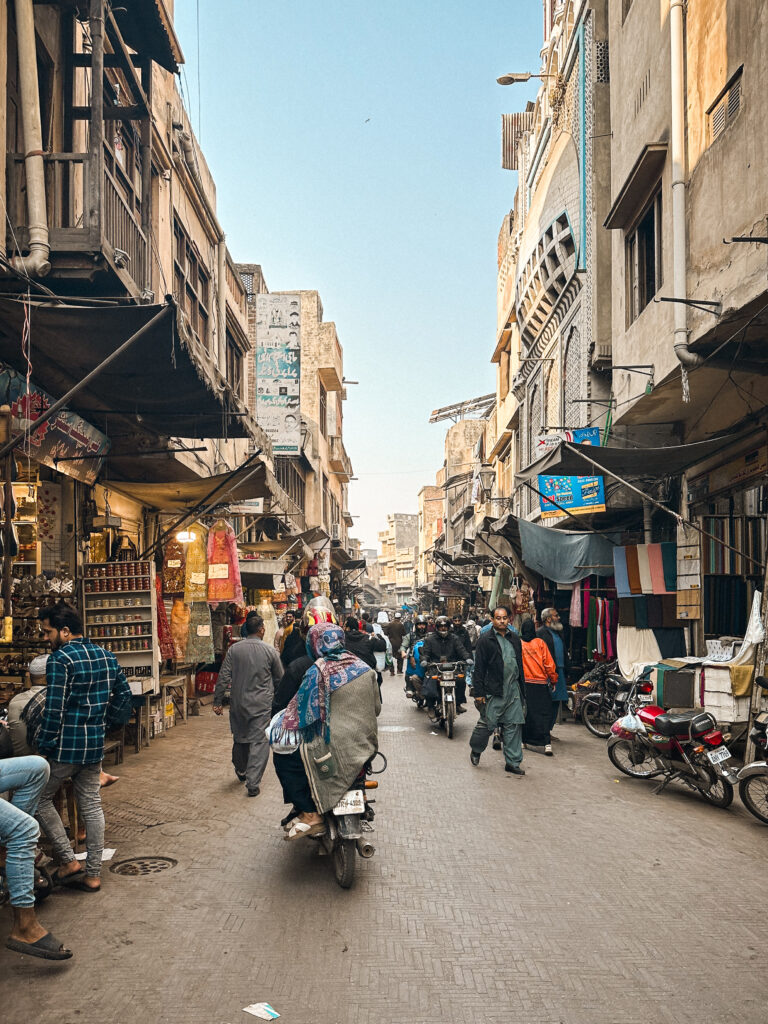 Streets in the Old City of Lahore
Badshahi Mosque
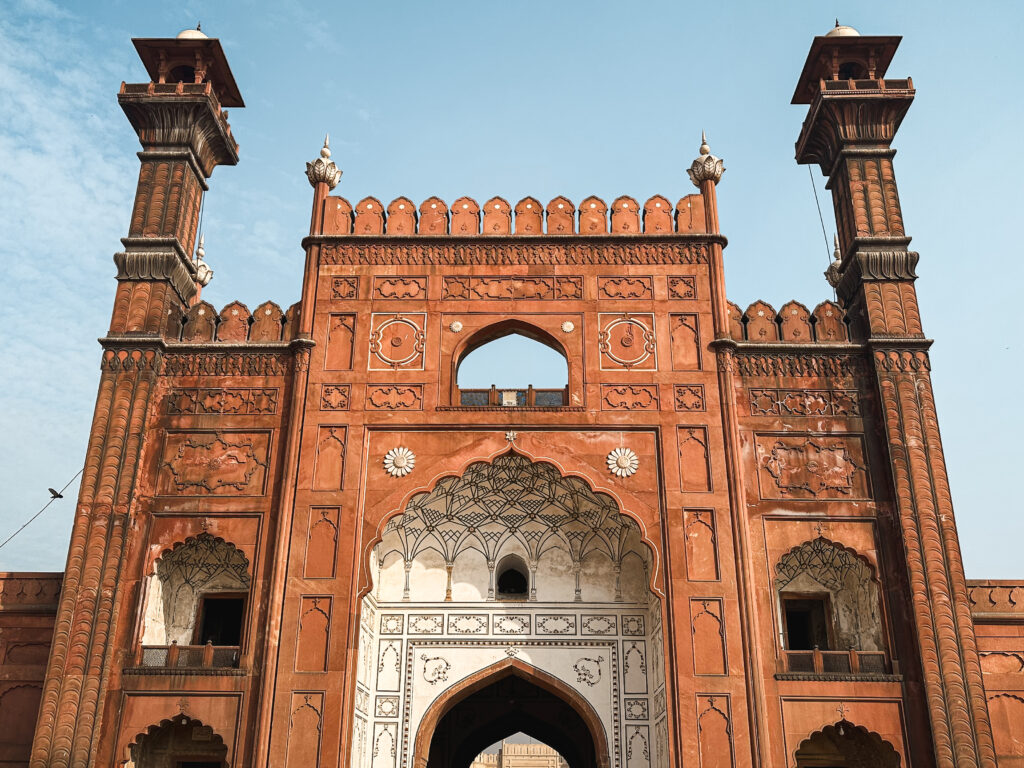 Badshahi Mosque Entrance
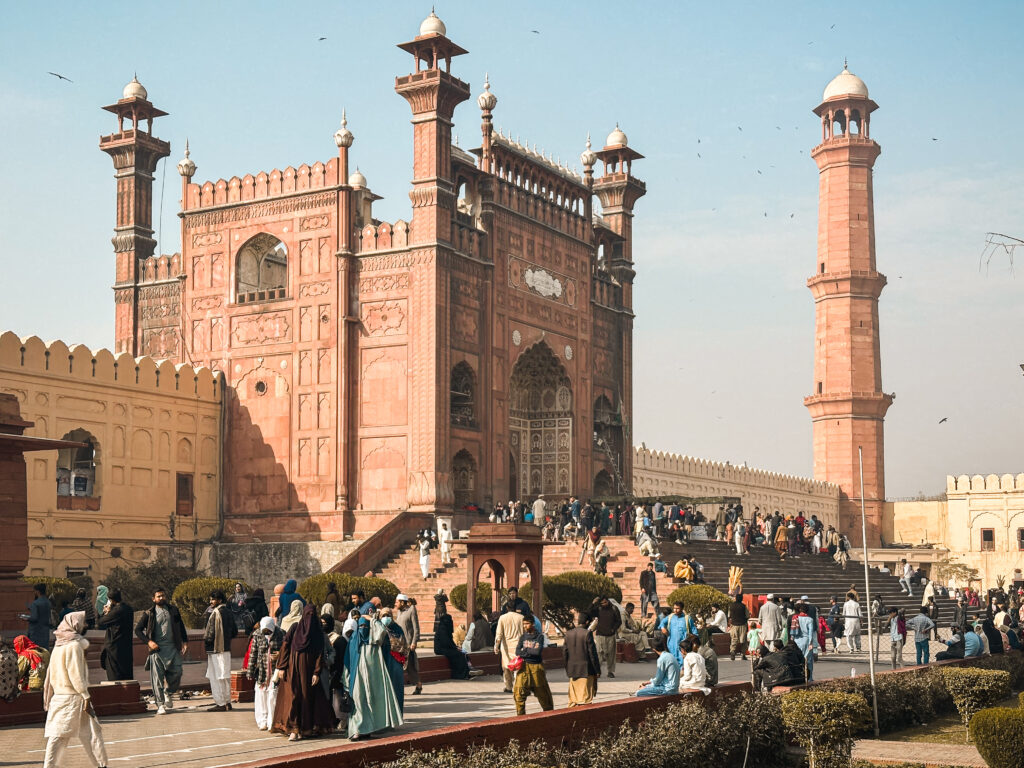 Badshahi Mosque Entrance
The Badshahi Mosque is the centrepiece of Lahore’s old city and one of the most impressive Mughal monuments anywhere in South Asia. Built in 1673 under Emperor Aurangzeb, its courtyard can hold up to 100,000 worshippers, a scale that doesn’t fully register until you’re standing inside it. The red sandstone and white marble, the four minarets at the corners, the sheer open space of the courtyard, it is one of those places that silences people.
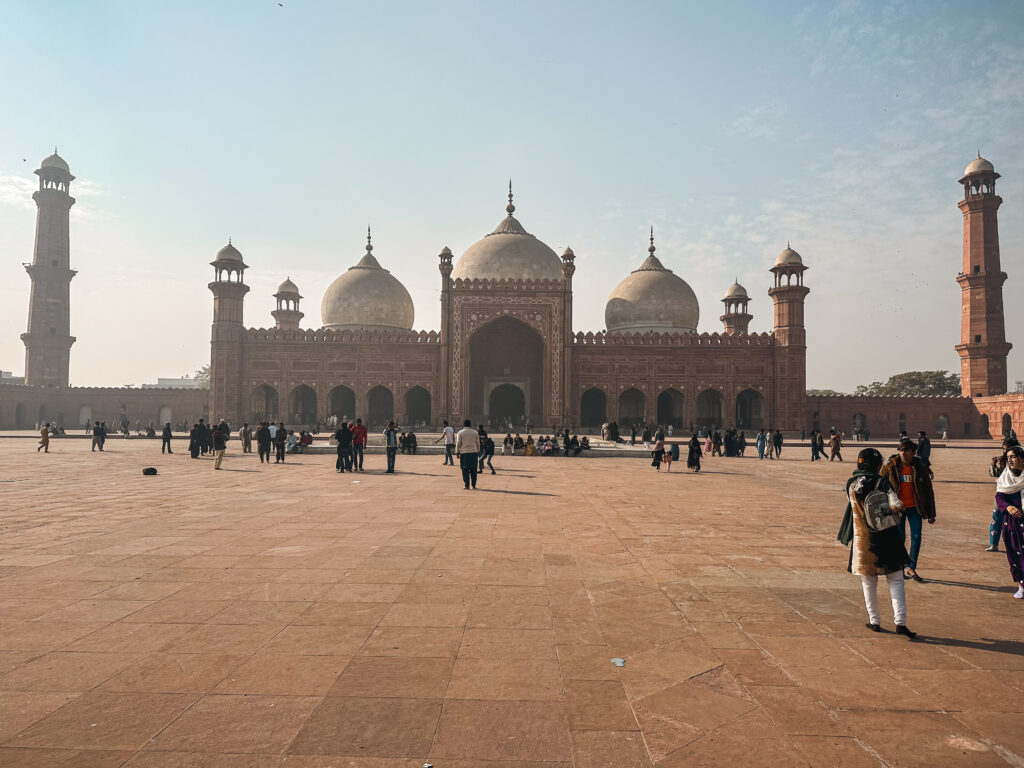 Badshahi Mosque Courtyard
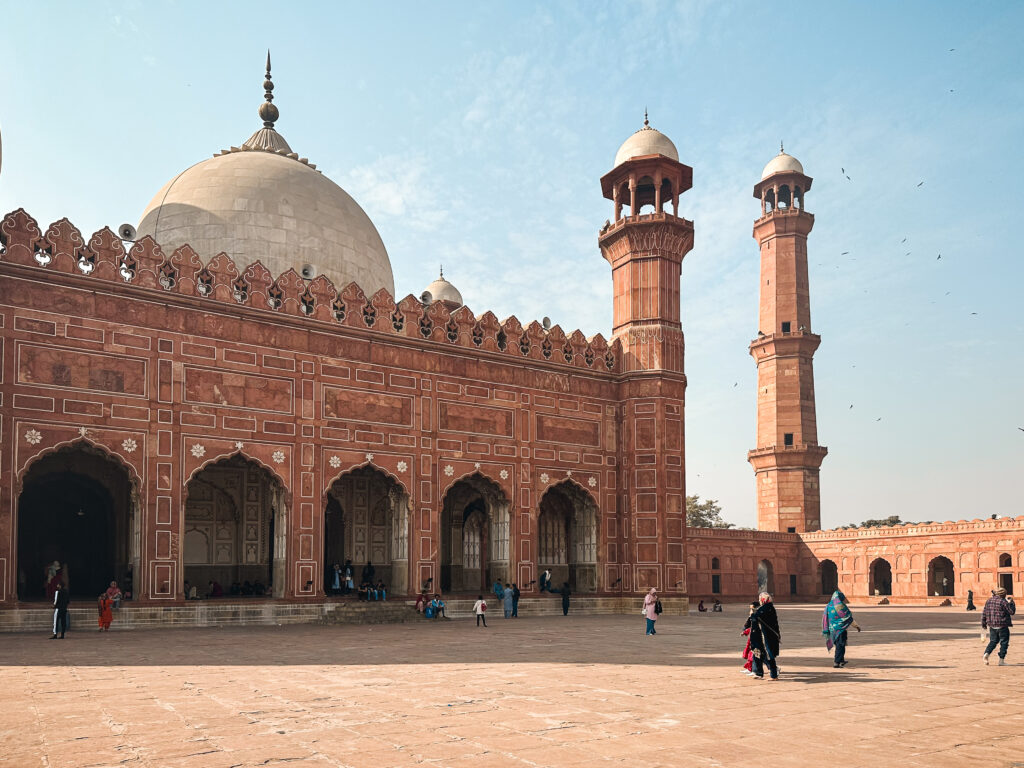 Badshahi Mosque
Entry is free. Dress modestly (full coverage for arms and legs; women need to bring a scarf). Go in the morning for fewer people or at dusk when the light turns the sandstone a deep amber. The mosque is still fully active so be respectful of prayer times and worshippers.
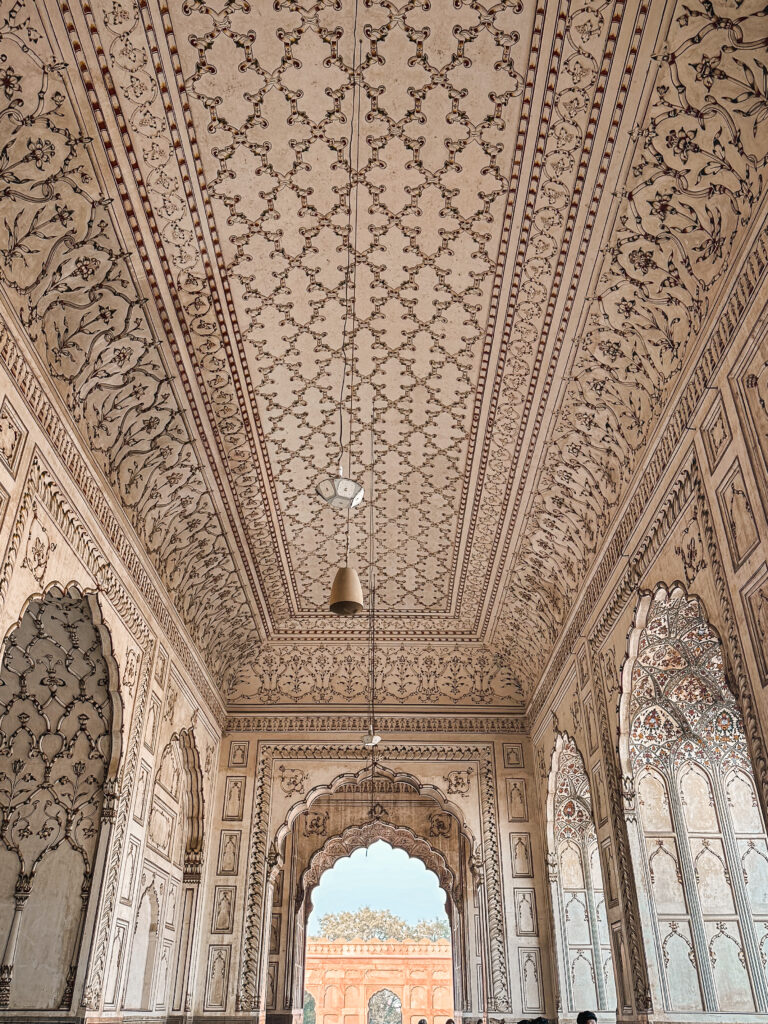
Badshahi Mosque Interior Details
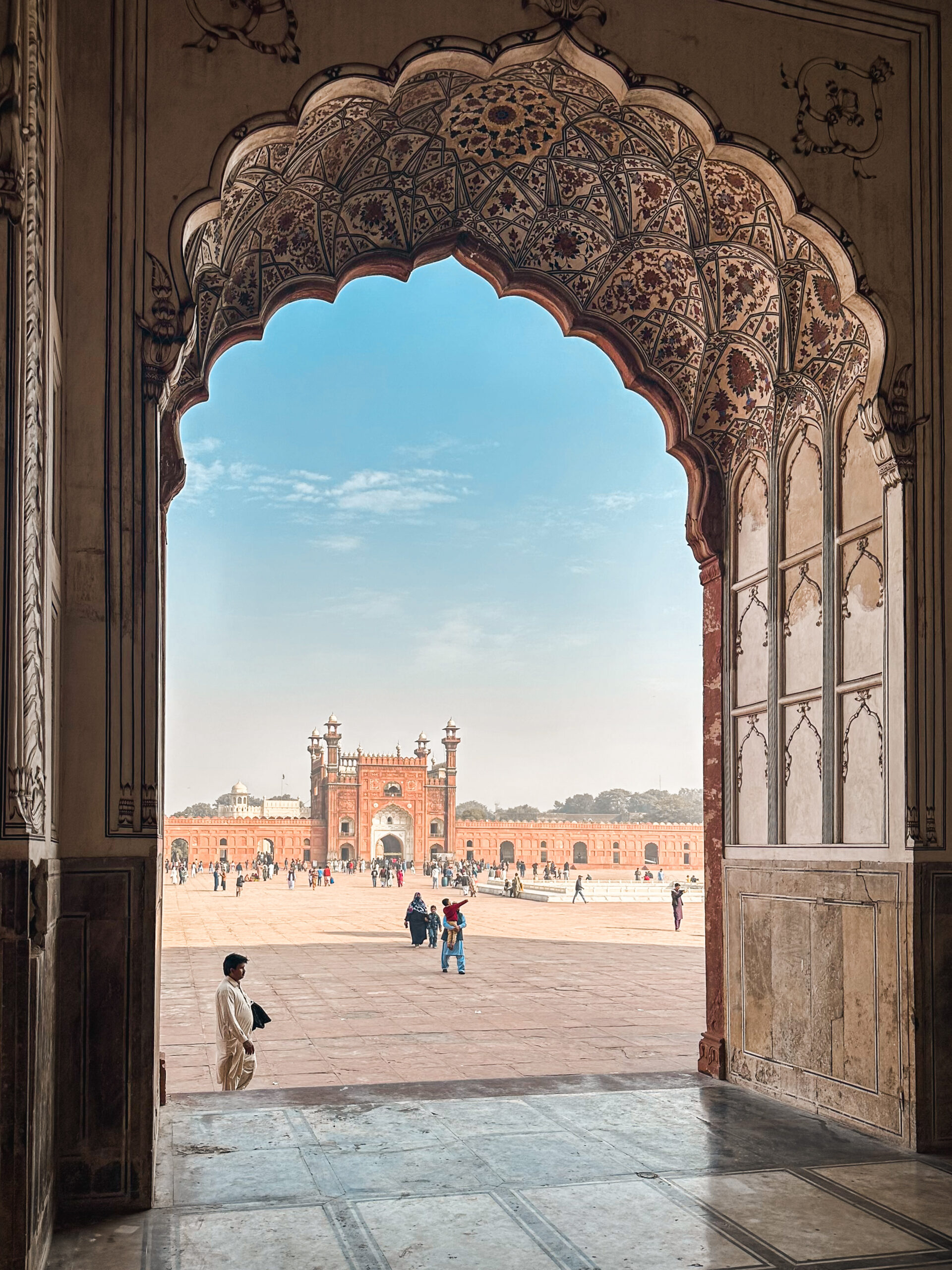
Badshahi Mosque
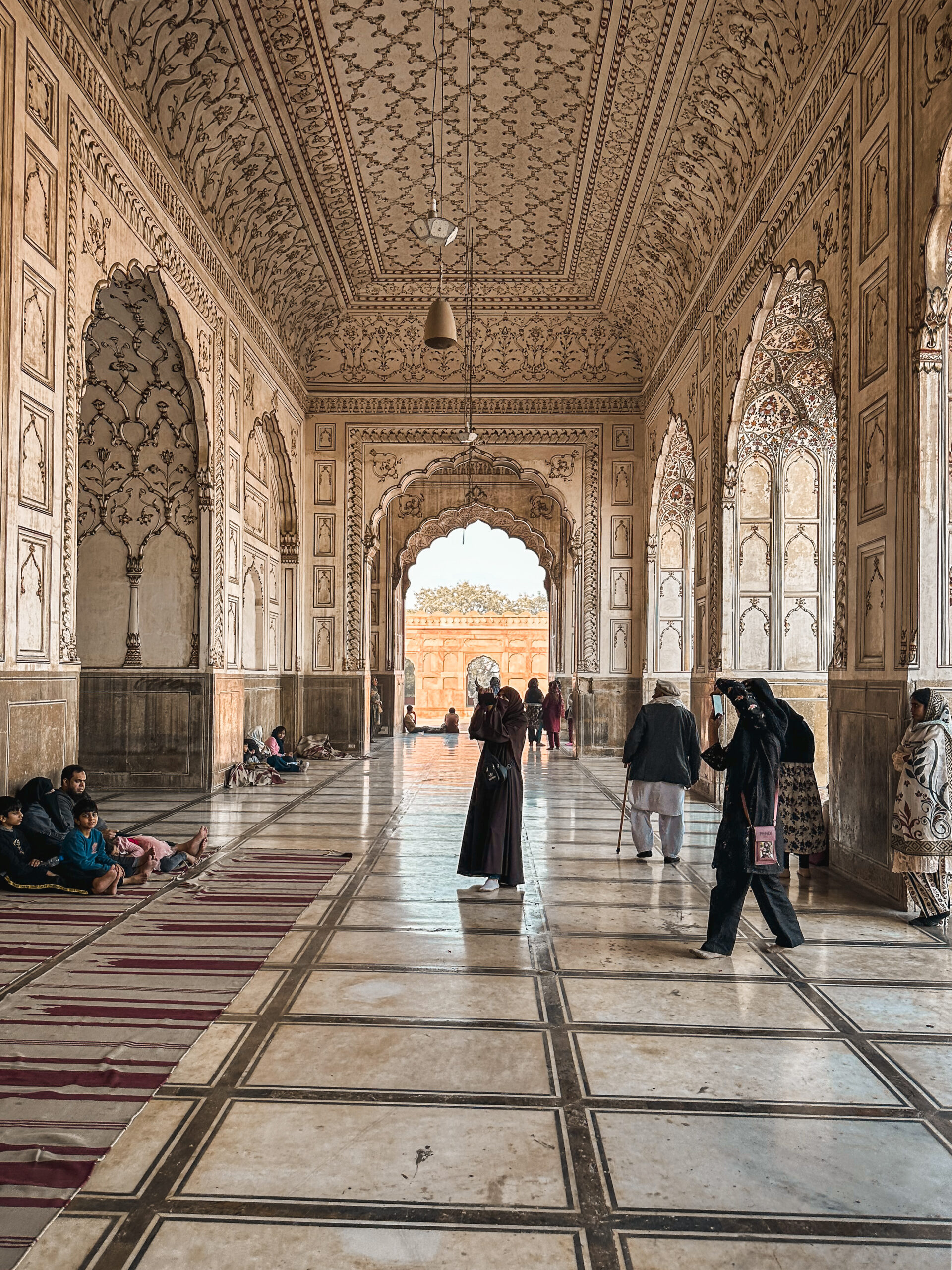
Badshahi Mosque Interior Details
Lahore Fort (Shahi Qila)
Adjacent to the Badshahi Mosque and connected to the same open esplanade, Lahore Fort is a UNESCO World Heritage Site and a landmark that rewards more time than most visitors give it. Built and expanded across multiple Mughal dynasties from the 11th century onwards, the fort contains palaces, audience halls, gardens, and mosques in varying states of preservation.
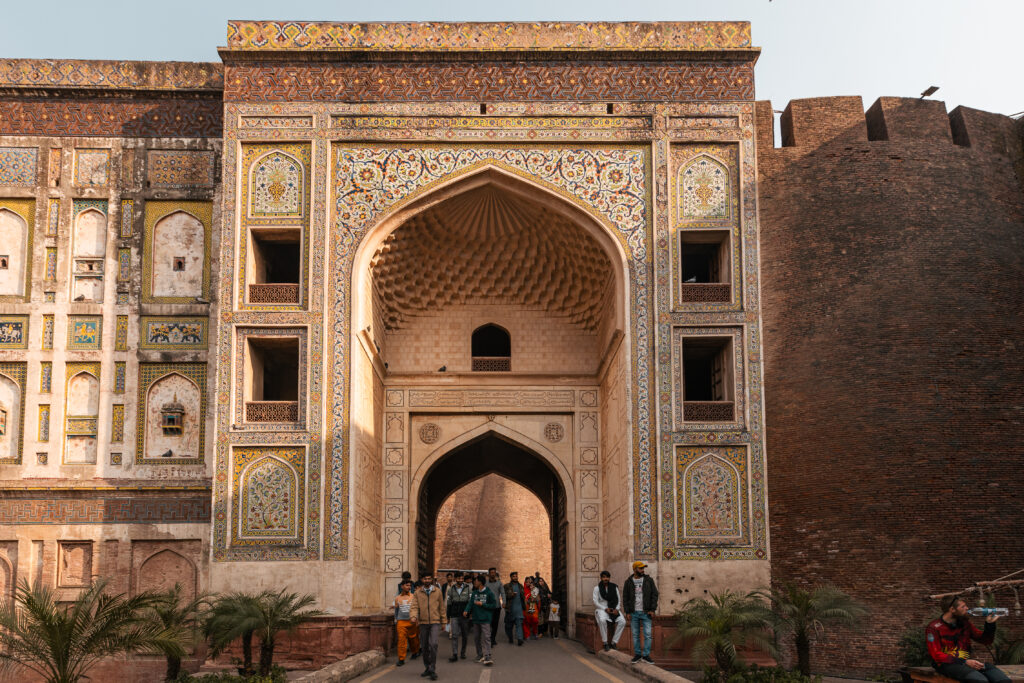 Lahore Fort Entrance
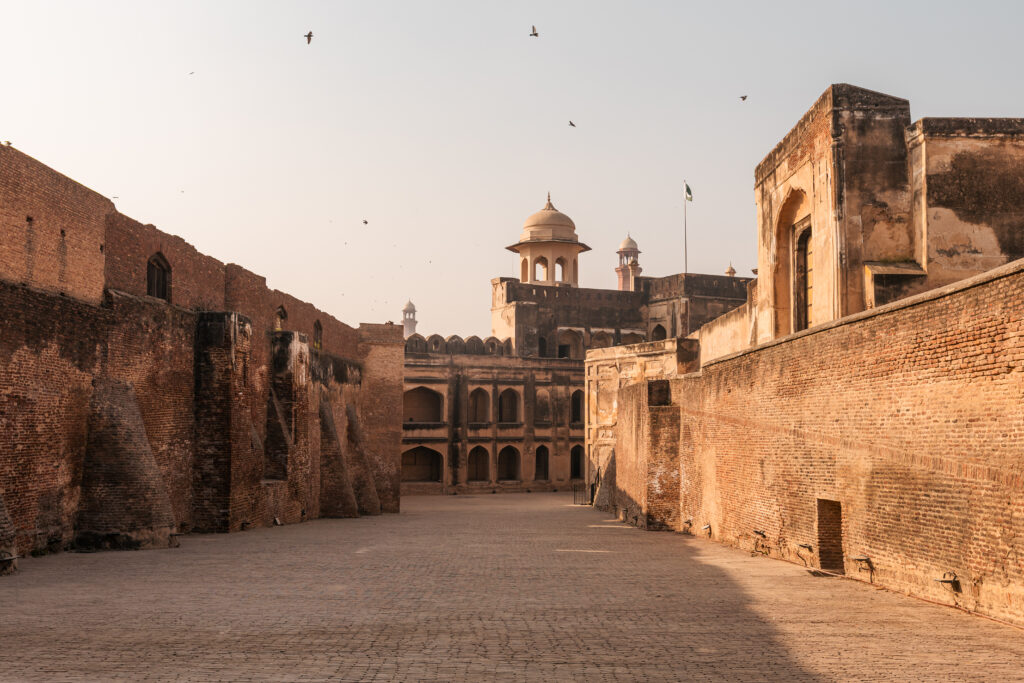 Lahore Fort
The Sheesh Mahal (Palace of Mirrors) is the most photographed interior. Walls and ceilings covered in intricate mirror work that reflects candlelight into thousands of points. The Naulakha Pavilion and the painted tile panels of the Lahori Gate are worth finding. Budget at least two hours. Entry fee is approximately 1000 PKR for foreigners.
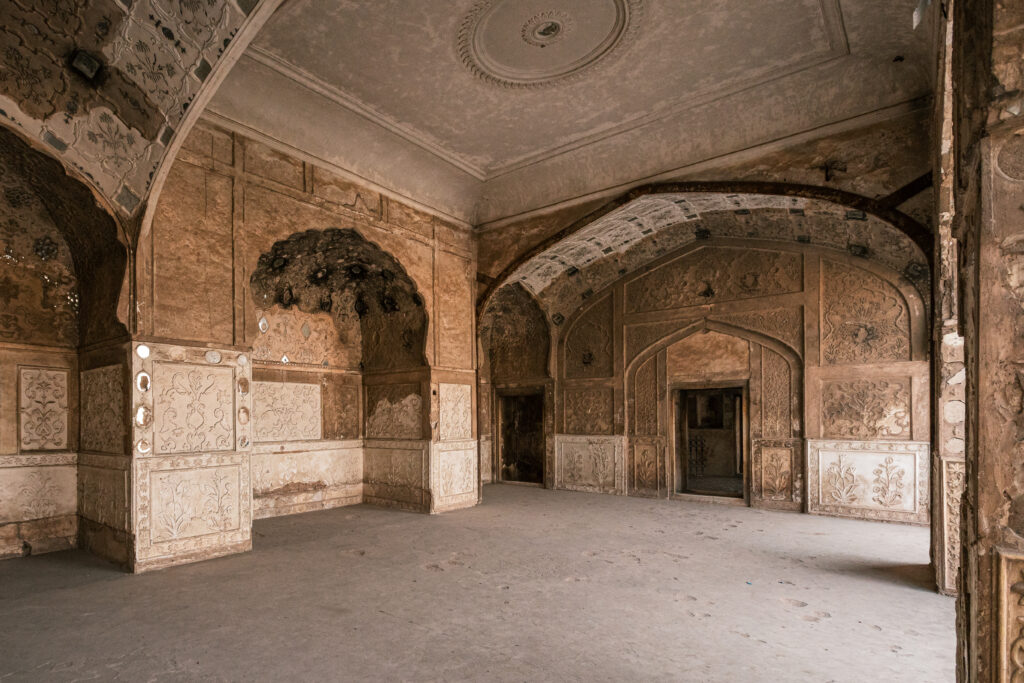 Palace of Mirrors
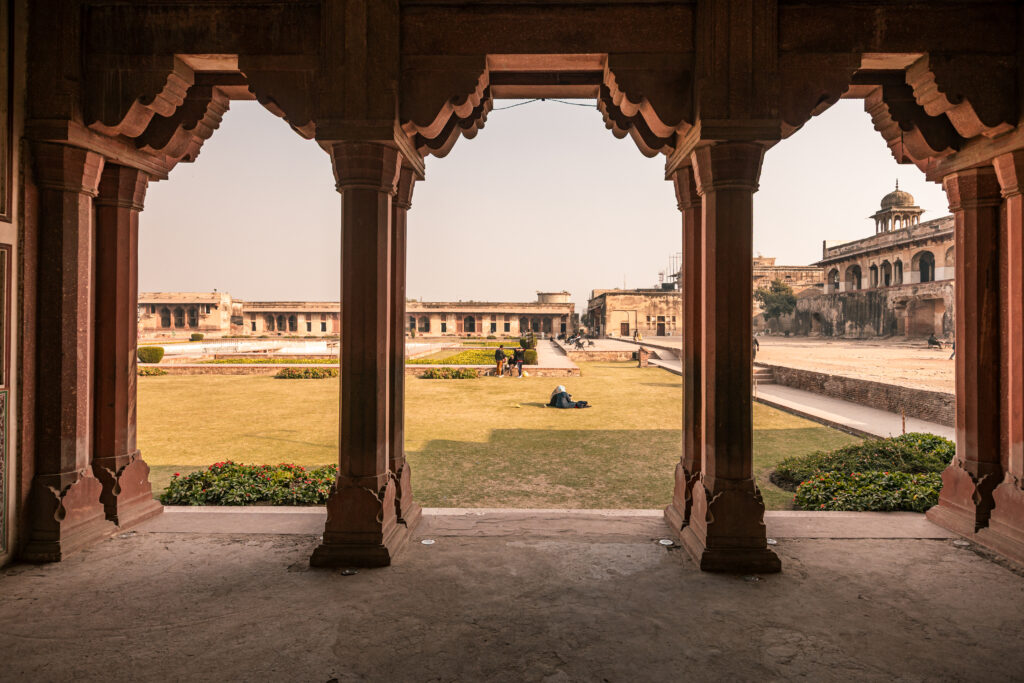 Inside Lahore Fort
The best time to visit is late afternoon, when the fort closes and the sun drops behind the Badshahi Mosque. The view from the fort at this hour is one of Lahore’s finest.
Wazir Khan Mosque
Tucked inside the old city lanes, the Wazir Khan Mosque is smaller than the Badshahi but arguably more beautiful in its detail. Built in 1635, its interior and exterior walls are covered in extraordinary tile mosaic work. Deep blues, reds, and whites in geometric and floral patterns that remain vivid after nearly 400 years. It is still an active mosque and sits in the middle of a busy neighbourhood, which makes visiting it feel completely different to the vast, formal space of the Badshahi.
Entry is free. Go in the morning before the lanes around it get busy. Climbing to the roof of the mosque (sometimes permitted, sometimes not) gives you a view across the old city roofscape that is worth the attempt.
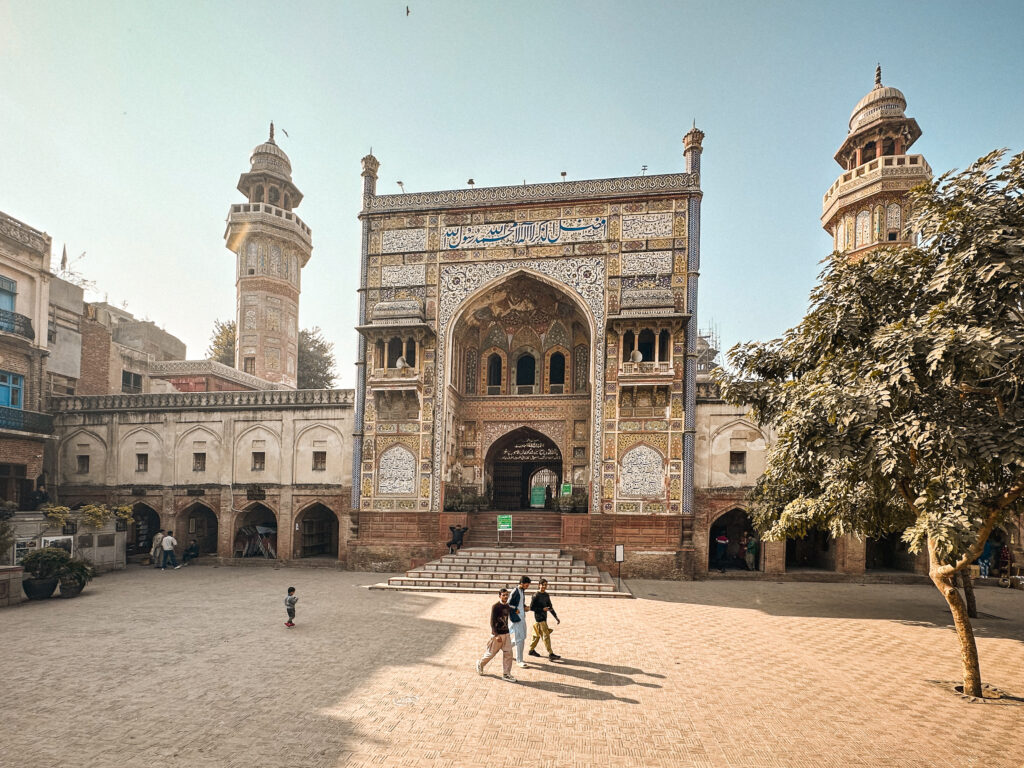 Wazir Khan Mosque
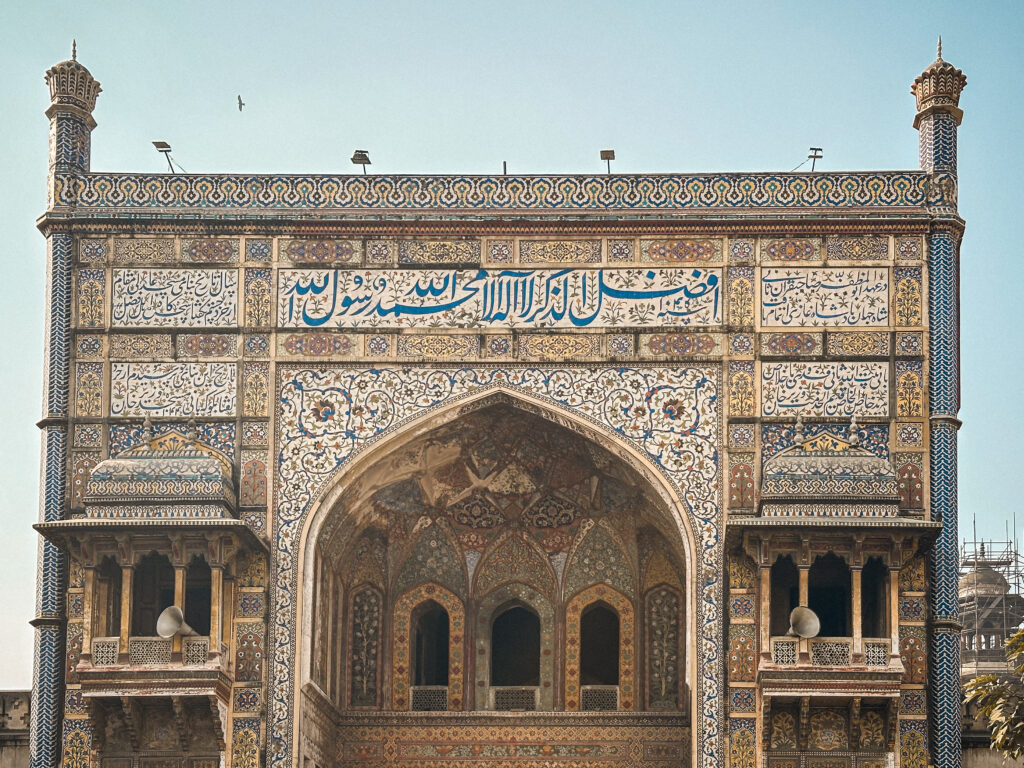 Details in the Wazir Khan Mosque
The Narrow Lanes: Gali Surjan Singh and Beyond
Between the main monuments, the old city has a network of lanes that most visitors walk straight past. Gali Surjan Singh is one of the most atmospheric: tall havelis, carved wooden balconies, quiet courtyards – and is often cited as one of the most photogenic corners of Lahore. It’s just a few minutes’ walk from Wazir Khan Mosque.
Exploring these lanes is the thing that separates a good Lahore visit from a great one. There is no specific destination. You simply walk, look up, follow what interests you, and accept that you will get slightly lost. Getting lost in the old city of Lahore is not a problem; it is the method.
Beyond the Old City
Minar-e-Pakistan
A short walk from the fort, Minar-e-Pakistan is the 70-metre tower built to mark the site where the Lahore Resolution of 1940 was passed, the declaration that ultimately led to the creation of Pakistan as an independent state. It is surrounded by a large park (Iqbal Park) and is worth visiting in combination with the fort and Badshahi Mosque. The Pakistan Monument Museum inside the base covers the independence movement in detail and includes a notable digital simulation of 14th August 1947.
Entry fee is approximately 50 PKR. Visit in the late afternoon, then walk the park at sunset before heading to the old city for dinner.
Mall Road
Lahore’s colonial-era boulevard runs through the heart of the city, lined with red-brick British Raj architecture. Government buildings, museums, and institutions that represent a completely different chapter of the city’s layered history. A late-afternoon walk along the Mall Road, from the Zamzama Gun towards the Lahore Museum, gives you a feel for the colonial city that co-exists with the Mughal one.
The Lahore Museum on Mall Road is Pakistan’s largest museum and one of its best, covering Mughal, Sikh, Buddhist, and colonial history with an extensive collection. Entry is modest and it is significantly undervisited by foreign travellers. Allow at least two hours.
Shalimar Gardens
A short ride from the old city, the Shalimar Gardens were built by Shah Jahan in 1641, the same emperor who built the Taj Mahal, as a terraced Persian garden with fountains, pavilions, and shade. Less visited than the main monuments and quieter for it. A good addition to a longer Lahore stay for anyone interested in Mughal garden design or simply looking for a calm half-hour away from the city’s noise.
Wagah Border Ceremony
The daily flag-lowering ceremony at the Wagah Border. The crossing point between Pakistan and India is a spectacle: soldiers from both sides performing an elaborate, choreographed and intensely theatrical display of military pride to crowds of several thousand on each side. It happens every evening at sunset, around 45 minutes to an hour before dark.
It is genuinely extraordinary to witness once. The atmosphere, crowds, music, chanting, the ceremony itself, is unlike anything else in Pakistan. The border is around 30 km from Lahore; the trip by inDrive will cost you over 2,000 PKR. Arrive at least an hour before sunset to get a good position in the stands.
Whether to go is a matter of personal interest. It is entirely optional, but worth knowing about.
From Lahore, Consider Going Further: Peshawar
If your Pakistan itinerary has room for one more city before heading north, make it Peshawar. It was my favourite city in the entire country, more so than Lahore, more so than anywhere else. And it is consistently the most under-visited by foreign travellers who stick to the standard Islamabad-KKH route.
Where Lahore’s old city is grand and Mughal, Peshawar’s is ancient and Pashtun. Narrower lanes, older energy, a bazaar culture that feels like it belongs to a different era entirely. The Qissa Khwani Bazaar (Storytellers Bazaar) has been a trading hub since the Silk Road, and walking it today. Past spice sellers, dried fruit vendors, traditional tea houses serving qahwa, is one of the most atmospheric urban experiences in Pakistan. The food is different too: Pashtun cooking is less spicy and oil-heavy than Punjabi, centred on slow-cooked meat, fresh bread, and the best seekh kebab I ate anywhere in the country.
Peshawar gets an undeserved reputation for being difficult or unsafe for independent travellers. In reality, the city is navigable, welcoming, and completely manageable and the old city is straightforward to explore on foot. For a full picture of what it’s actually like on the ground, including honest safety notes and exactly what to do and eat, read my complete guide:
Peshawar Travel Guide: A Solo Female Traveller’s Experience
Food in Lahore
Lahore’s food culture is the best argument for spending more time in the city. Punjabi cuisine here is specific, proud, and unapologetically heavy. Slow-cooked meat dishes, fresh bread from clay ovens, dairy-rich curries, and street food that operates on a different level to anywhere else in Pakistan. People in Lahore talk about food with conviction, with local pride, and with strong opinions about where to go.
Food Street (Gawalmandi)
The most famous food destination in Lahore, Gawalmandi Food Street is a pedestrianised lane of historic buildings converted into restaurant frontages, best experienced after dark when the lights come on and the entire street fills with the smell of cooking meat. Classic Punjabi dishes dominate: karahi (a rich, spiced meat curry cooked in a wok), nihari (slow-cooked beef shank, a Lahore breakfast speciality), paye (trotters), biryani, and freshly baked naan from tandoor ovens visible through open kitchen windows.
It’s slightly more expensive than eating at a local dhaba, and definitely more theatrical, but the atmosphere is worth it at least once. Go on a Thursday or Friday evening when it’s at its busiest and most alive.
Old City Street Food
The lanes around Wazir Khan Mosque and Delhi Gate are full of street food that is cheaper, less polished, and often better than anything on Food Street. Look for: pathooray (deep-fried bread served with chickpea curry, a Lahore breakfast staple), jalebi (crispy fried spirals soaked in sugar syrup, eaten hot), nihari sold from enormous pots that have been cooking overnight, and falooda (a cold milk and rose-water dessert drink that cuts through the heat and the spice).
Eat where the locals eat. If there are no locals, walk further.
Where to Stay in Lahore
Budget: Lahore Backpackers
The most established backpacker hostel in the city and the social hub for independent travellers passing through Pakistan. Dorm beds available, private rooms also, and the kind of atmosphere where you’ll meet other travellers and swap information about routes, guides, and conditions. It’s close to the old city, which is convenient for sightseeing, though the immediate neighbourhood is less comfortable for solo walking, particularly at night. Use inDrive after dark rather than walking. Private room is around 3,000-4,000 PKR.
Mid-Range: Gulberg Area
For a more comfortable stay or if you want a quieter base with better café options, Gulberg is the neighbourhood. More modern, significantly calmer than the old city area, and better connected to the rest of the city by inDrive. Mid-range guesthouses and hotels here start from around 6,000-8,000 PKR for a private room. You sacrifice proximity to the main historical sights but gain a neighbourhood where you can walk freely in the evening.
Neighbourhood Note for Solo Female Travellers
Lahore is manageable as a solo female traveller but requires more awareness than the mountain areas. The old city is fascinating to explore but expect to attract unwanted attention in a way that doesn’t happen in Hunza. Travel with confidence, dress modestly (salwar kameez is ideal and practical), use inDrive rather than flagging down rickshaws at night, and trust your instincts.
How Much Does Lahore Cost?
Lahore is more expensive than the north. More developed, more urban, and with a wider range of accommodation and food options that push costs upward if you let them. That said, it remains affordable by any international standard.
| Expense | Cost (PKR) | Cost (approx. EUR) |
|---|---|---|
| Dorm bed (Lahore Backpackers) | 1,500-2,000 | ~5-6 € |
| Private guesthouse room | 3,500-6,000 | ~11-19 € |
| Street food meal (old city) | 200-500 | ~0.70-1.50 € |
| Restaurant meal (Food Street) | 1,000-2,500 | ~3-8 € |
| inDrive ride (cross-city) | 300-600 | ~1-2 € |
| Metro ride | 40 | 0.10 € |
| Lahore Fort entry (foreigner) | 1000 | ~3 € |
| Total per day (budget) | ~4,000-6,000 PKR | ~12-18 € |
| Total per day (mid-range) | ~8,000-12,000 PKR | ~25-37 € |
Budget Tips
The biggest controllable cost in Lahore is accommodation. A dorm bed at Lahore Backpackers keeps you under €15/day total on a genuine budget. Food costs are negligible if you eat at local dhabas and street stalls. The street food in the old city is both the cheapest and most interesting option.
Avoid ATM fees with Wise
The card I use for all my travel withdrawals – real exchange rate, low fees.
Use Revolut to avoid ATM fees
Good alternative to Wise – I carry both as a backup.
Bank Alfalah is the most reliable ATM for foreign cards in Lahore. Standard Chartered also works. Withdraw enough cash to cover your stay plus your onward transport to Islamabad.
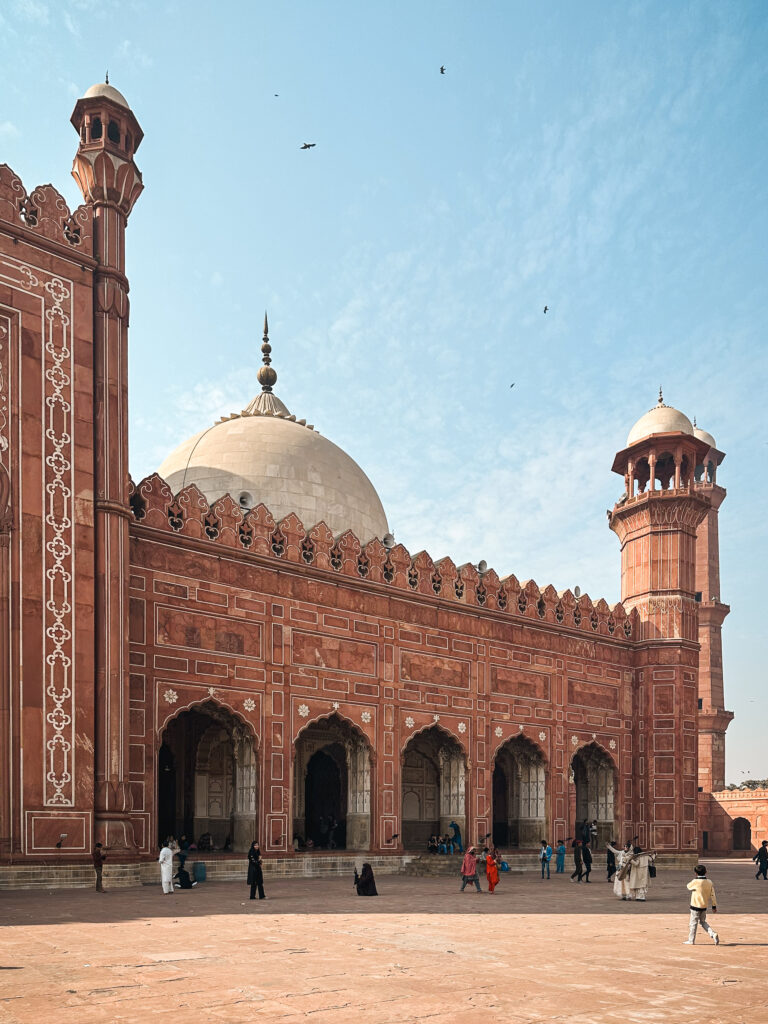
Badshahi Mosque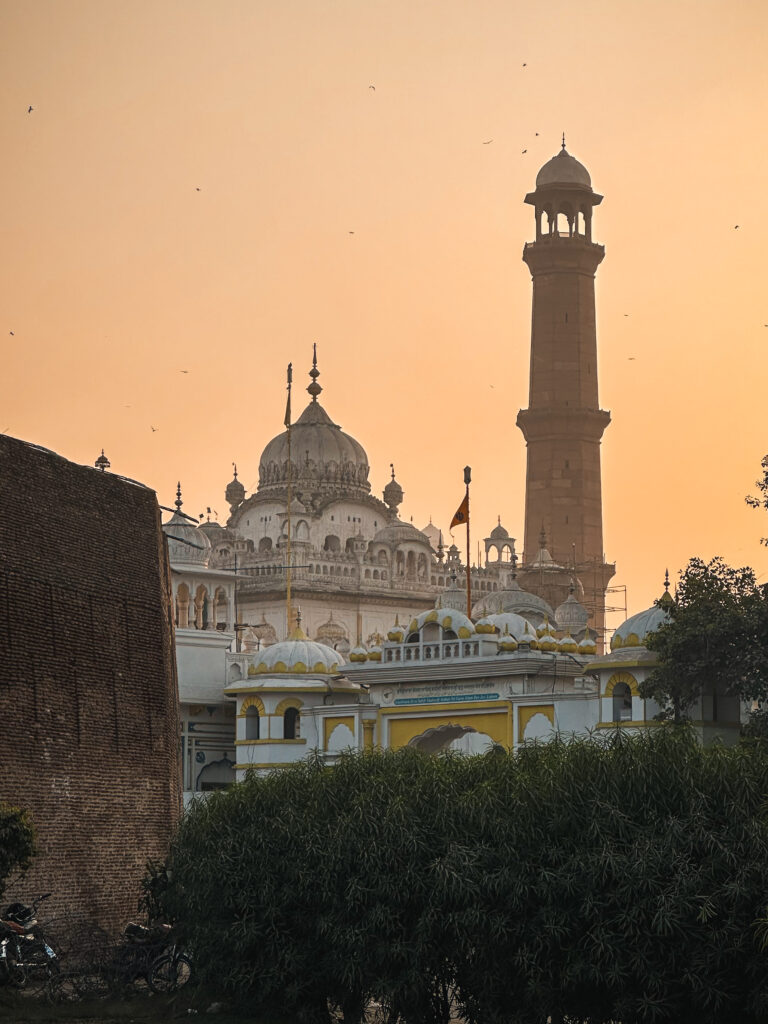 Monument near Lahore Fort
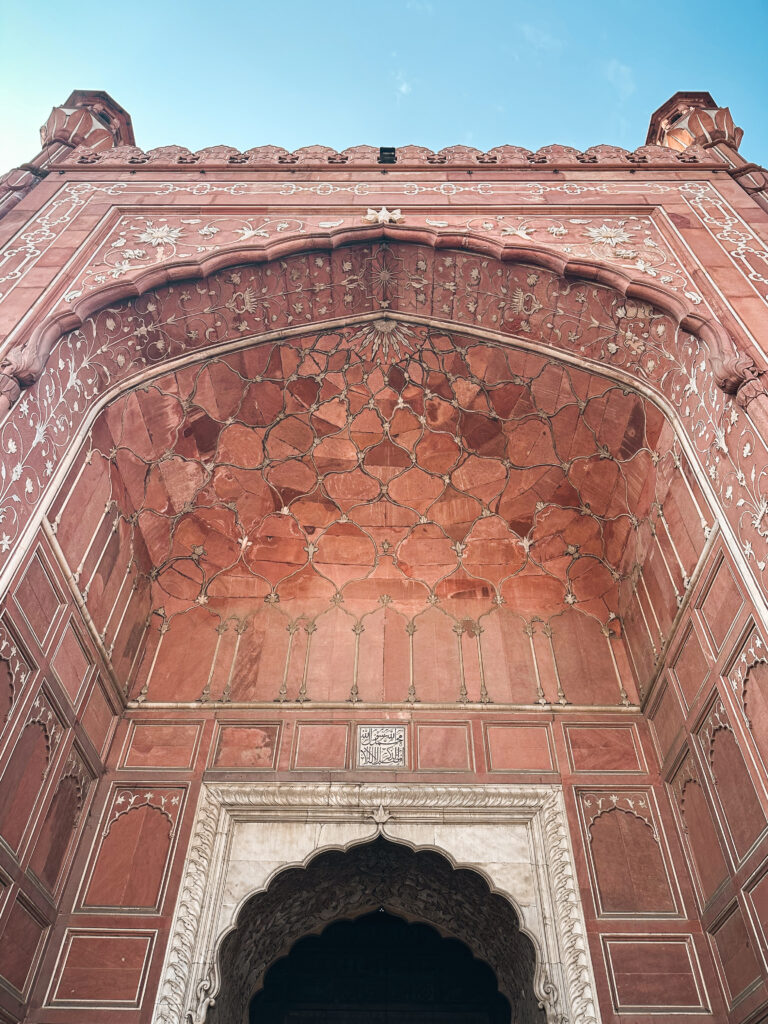 Badshahi Mosque
Practical Tips for Visiting Lahore
Use inDrive for everything. Lahore is too large and too hot to navigate primarily on foot, and inDrive removes all the hassle of price negotiation that comes with rickshaws. Download it before you arrive, set a fair price (drivers will counter if needed), and it becomes the most stress-free way to move around a large Pakistani city.
Dress modestly. Lahore is more liberal than much of Pakistan but still conservative by international standards. Loose-fitting clothing covering arms and legs is appropriate everywhere. A dupatta (scarf) is useful for mosque visits and for the old city generally. Salwar kameez, widely available in Liberty Market for very reasonable prices, is both culturally appropriate and genuinely comfortable in the heat.
An eSIM is useful on arrival. If you’re arriving in Pakistan via Lahore, an eSIM bridges the gap before you get a local SIM. For extended travel in northern Pakistan, switch to SCOM in Gilgit, far cheaper for GB coverage.
Need data before you land? Try Saily eSIM
Use code RITAHE1486 for $5 off your first plan.
The old city is best in the morning. The lanes are quieter, the light is better for photography, and the street food breakfast culture is one of the great Lahore experiences. Arrive at any lane near Delhi Gate or Wazir Khan Mosque before 9am and eat whatever the locals are eating.
Lahore gets dark early in winter. If you’re visiting in November to January, sunset is around 5-5:30pm. Plan sightseeing to end before dark and use the evenings for Food Street rather than old city wandering.
Keep your passport accessible. Less critical in Lahore than in the northern areas, but worth having with you when visiting major monuments where foreigners may be asked for ID.
Be aware of the heat in transition seasons. Even in October, afternoon temperatures in Lahore can reach 30°C+. Schedule the Badshahi Mosque and Lahore Fort for the morning, break in a café during early afternoon, and return to sightseeing from 4pm onwards when the light is better anyway.
FAQ: Lahore
How many days do you need in Lahore?
Two days minimum, three if you want to do the city properly without rushing. One day is enough for the main monuments but leaves no time for the old city lanes, Food Street in the evening, and the slower pleasures that make Lahore worth visiting.
Is Lahore safe for solo female travellers?
Yes, with appropriate precautions. Lahore is manageable for solo women and has the most developed infrastructure for independent travellers of any Pakistani city. The old city requires more awareness than the mountain areas.
What is the best time of year to visit Lahore?
October to March. Temperatures are mild, the city is at its most pleasant. Avoid June to September: summers in Lahore are brutal, regularly exceeding 40°C.
How do I get from Lahore to Islamabad?
Daewoo Express and Faisal Movers run frequent buses from Lahore to Rawalpindi (adjacent to Islamabad) throughout the day. The journey takes around 4-5 hours and costs 1,500-2,000 PKR. This is the standard route for backpackers heading north.
Is the Wagah Border ceremony worth visiting?
It depends. The scale and atmosphere of the ceremony might be interesting to witness. However, it’s quite far (30km) from Lahore, and if you don’t have the time, you can skip it.
What should I eat in Lahore?
Karahi, nihari, and pathooray are the Lahore essentials. Food Street in Gawalmandi is the most atmospheric place for an evening meal. For the full experience, eat breakfast in the old city lanes near Wazir Khan Mosque. Street food only, from wherever has the longest queue of locals.
Can I visit Badshahi Mosque and Lahore Fort in one day?
Yes. They’re adjacent to each other and easily combined in a half-day. Add Wazir Khan Mosque and an old city walk for a full day. The fort alone deserves at least two hours; don’t rush it.
Do I need cash in Lahore?
Yes. Cash is essential for street food, inDrive rides, rickshaws, and smaller shops. Major hotels, restaurants in Gulberg will take cards. Bank Alfalah ATMs are the most reliable for foreign cards.
Final Thoughts
Lahore is worth seeing once. The Badshahi Mosque, the old city lanes, the fort, the food, all of it earns its reputation, and understanding Lahore gives you a dimension of Pakistan that the north can’t provide. Go, spend two days, eat the karahi, walk the old city.
But if you’re choosing between Lahore and Peshawar as your Pakistani city experience: go to Peshawar. It has the worse reputation. It was my favourite. Quieter, more itself, and the city in Pakistan I’d return to without hesitation. Peshawar Travel Guide →
Need help planning your Pakistan trip?
Custom itineraries, local guide sourcing, and on-trip support from someone who’s done it.
More Pakistan Travel Guides
If you’re planning to travel Pakistan independently, these in-depth guides will help you navigate the country, travel on a budget, and explore far beyond the usual routes:
Have questions about Chapursan valley? Drop them in the comments. I read every single one.