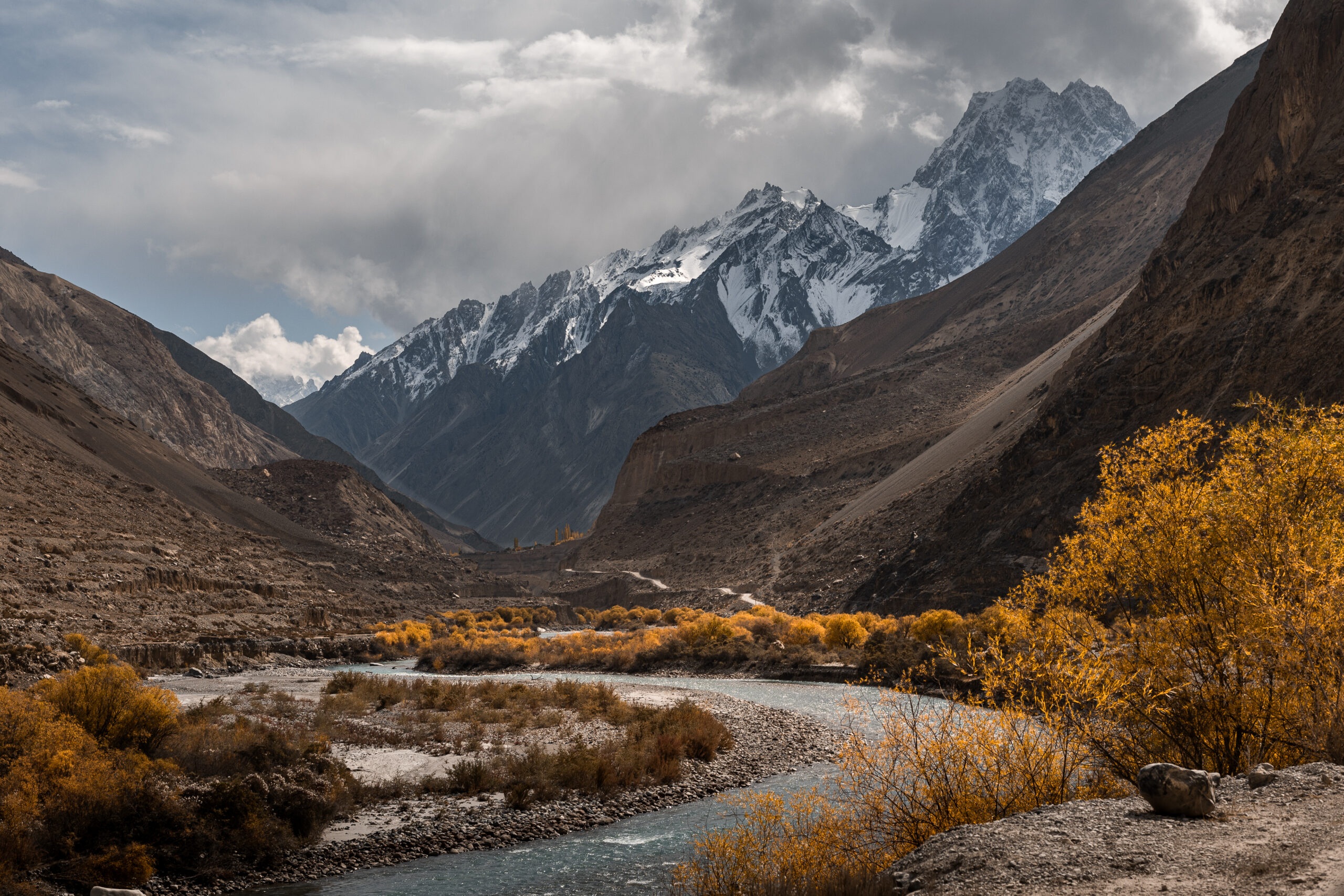
This Chapursan Valley travel guide is for the travellers who want to go further than Hunza, past Sost, and into a valley that genuinely feels like the edge of the world. Set at over 3,000 metres and bordered by Afghanistan’s Wakhan Corridor to the north, Chapursan is Gilgit-Baltistan at its most raw: wide open plains, scattered stone villages, yaks grazing, and a silence that settles over everything.
What Makes Chapursan Valley Different
Most valleys in northern Pakistan have a defining visual: Hunza has the fort and the apricot blossoms, Naltar has its coloured lakes, Shimshal has the road. Chapursan’s defining quality is harder to photograph. It’s the scale, and the emptiness, and the sense that you’ve arrived somewhere that exists entirely on its own terms.
The valley stretches roughly 60 kilometres from the KKH turnoff near Sost to Zood Khun, the last village before the Afghan border. Along the way there are eight settlements scattered across a wide, treeless valley floor, each one a cluster of stone and mud-brick houses surrounded by terraced fields and grazing land. The peaks that frame the valley exceed 6,000 metres on both sides. At this altitude, the light is extraordinary, sharp and cold in the mornings, golden and long in the late afternoons.
What Chapursan offers that almost nowhere else in the region can is a combination of extreme remoteness and genuine warmth. The Wakhi people who live here are Ismaili Muslims with a centuries-old tradition of receiving travellers. The valley sits on a branch of the old Silk Road, and that instinct for hospitality hasn’t faded. Within minutes of arriving, I was invited for chai. Within an hour, I was eating dinner with a family I didn’t know. This is not something you arrange or plan. It simply happens here.
When to Visit Chapursan Valley
Summer: June to August
Summer is the most popular season and the most accessible. The road is fully open, the valley floor turns green, wildflowers bloom across the meadows, and temperatures during the day are warm enough to walk comfortably. July and August bring the best conditions for trekking to high pastures and for seeing the shepherds at work above the valley.
The trade-off is that summer also brings the valley’s highest number of visitors, which by most standards is still extremely few. But the solitude that defines Chapursan is slightly diluted.
Autumn: September and October
This is the window I’d most recommend, and the one I visited in. October in particular is exceptional. The valley colours shift: the terraced fields turn gold, the light softens, the air sharpens, and the few other travellers who come in summer have gone. The shared jeeps still run from Sost, the road is still open, and accommodation is still available. Temperatures drop significantly at night, but days are clear and still.
Mid-October is the last reliable window before road conditions become unpredictable. If you want Chapursan at its most atmospheric and most empty, this is the answer.
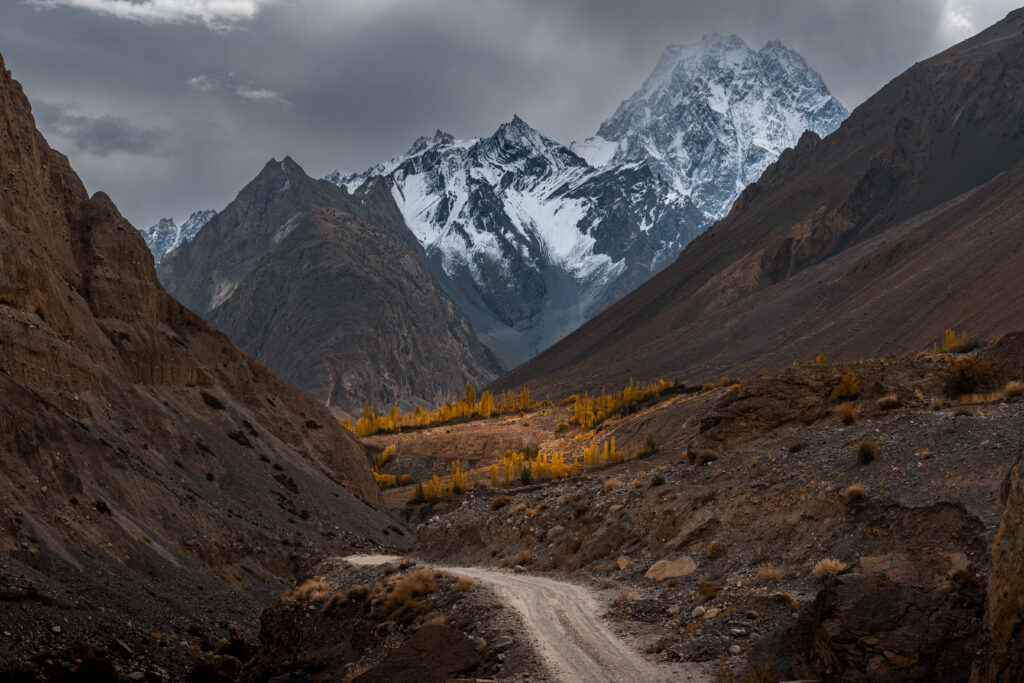 Autumn Colours in Chapursan Valley
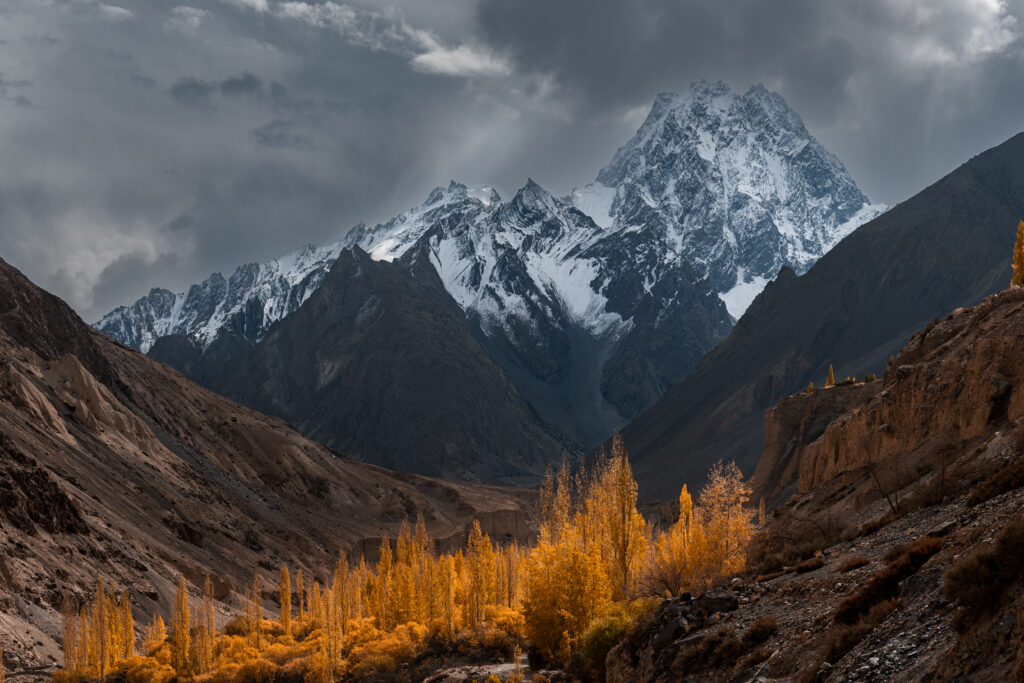 Autumn Colours in Chapursan Valley
Spring: May
May is the shoulder season: the snow is retreating, the road is usually open, and the valley is just beginning to wake up. It can be cold, pipes can still be frozen in guesthouses, and facilities are limited. But it’s quiet and the light is extraordinary. Worth considering if you’re travelling through the Hunza region in early May and have the flexibility.
Winter: November to April
The valley becomes largely inaccessible in winter. Heavy snow closes the road, most guesthouses shut, and temperatures drop to extreme lows. Unless you have specific reasons and experience for high-altitude winter travel in remote Pakistan, this is not the season to visit.
How to Get to Chapursan Valley
The valley branches off the Karakoram Highway near Sost, the last major town before the Chinese border at Khunjerab Pass. From Sost, the road climbs steadily into the valley, taking around 2-3 hours to reach the main settlements, and closer to 3.5-4 hours to reach Zood Khun at the far end.
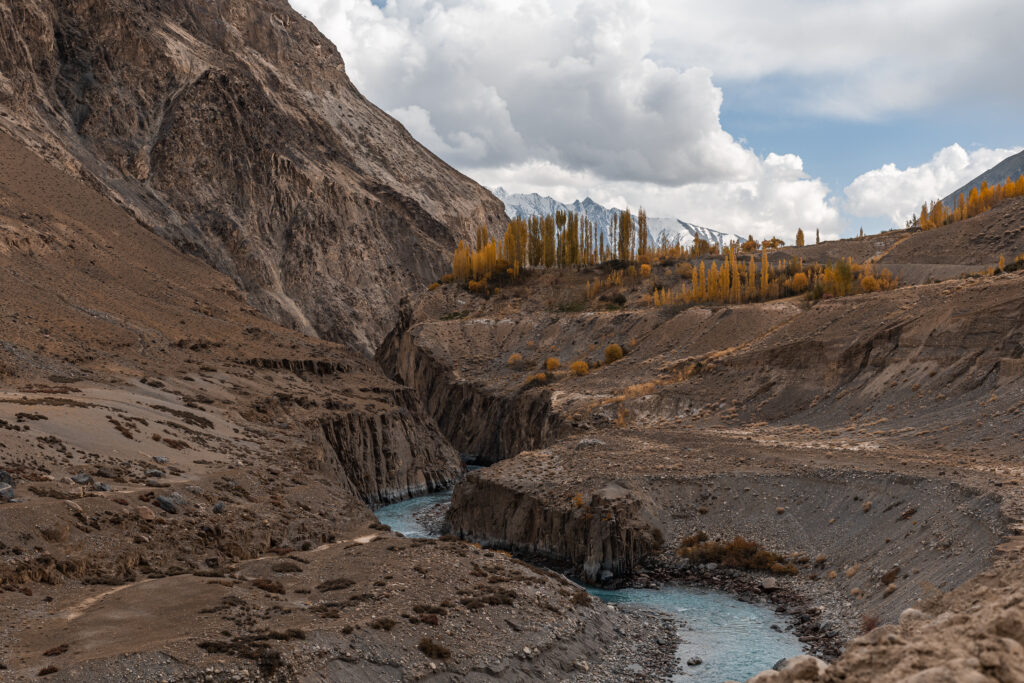 On the way to Chapursan Valley
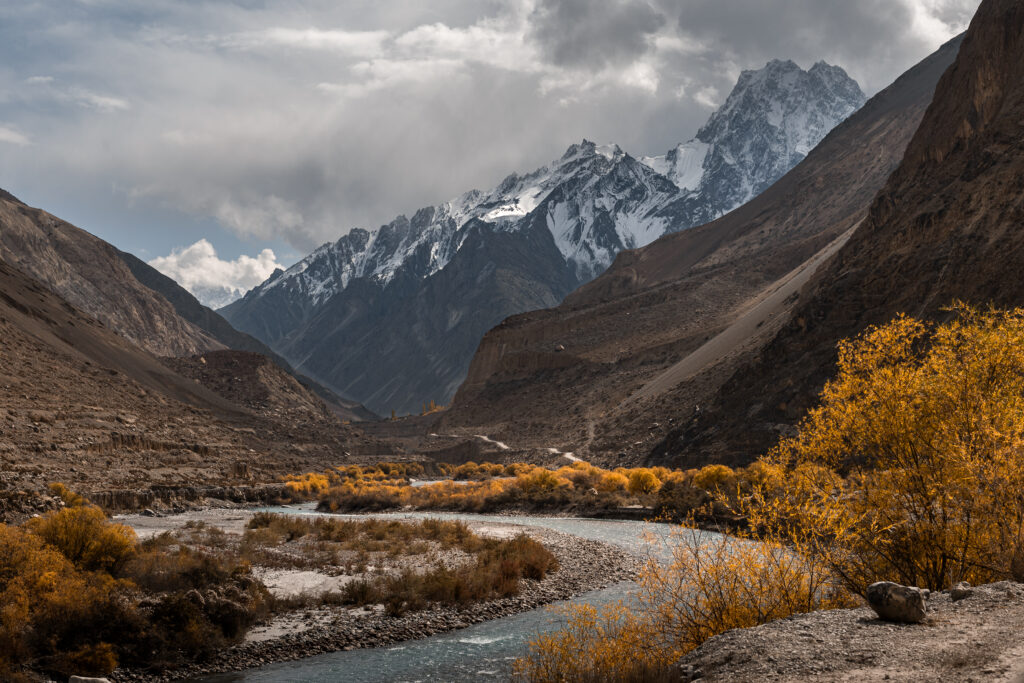 On the road in Chapursan Valley
Shared Public Jeep from Sost
The most affordable option. Shared jeeps run from Sost to Chapursan (ask at the jeep stand in the Sost bazaar). They depart when full, typically once or twice a day depending on demand, and leave earlier in the morning. The cost is around 300 PKR per seat. Patience is essential: if the jeep isn’t full by mid-morning, you may wait several hours or consider alternatives.
Ask at your guesthouse in Sost the evening before, they will often know if a jeep is going the next morning and can help you secure a seat.
Motorbike (recommended if you can)
The road into the valley: wide open plains, glaciers visible in every direction, the Hindu Kush rising to the north. It is one of the most extraordinary stretches of riding in northern Pakistan. On a motorbike you stop when you want, you feel the altitude and the cold and the quiet, and the journey becomes as significant as the destination.
Motorbikes can be rented in Gilgit or Karimabad. The road from Sost into the valley is rough in places but manageable on a standard 125cc bike. The deeper you go towards Zood Khun, the rougher the track. Take it slowly, don’t ride after dark, and carry basic repair tools.
Private Jeep/Car Hire
If you’re travelling in a group or want full flexibility over timing and stops, a private jeep from Sost can be arranged in the bazaar or through your guesthouse. Expect to pay over 10,000 PKR for a return trip with waiting time. This is significantly more expensive than the shared jeep but still reasonable if split between two or three people.
Hitchhiking
Hitchhiking into or out of Chapursan is possible but slow. Traffic on this road is light, and most vehicles are either locals or the occasional shared jeep. It works better as an exit strategy (hitching a lift on a jeep heading back to Sost) than as a way in.
Getting Around Inside the Valley
Once you’re in Chapursan, movement is on foot or by whatever local transport is heading further up the valley. The road from the first village, Yarzerech, runs all the way to Zood Khun and beyond to the Baba Ghundi shrine, passable by jeep for most of the route.
Walking between villages is entirely feasible. The valley floor is open and the distances are manageable. From Reshit (roughly the midpoint of the valley) to Zood Khun on foot takes a few hours at altitude. Walking gives you the space to stop, notice the landscape, and talk to people along the way.
If you’re based in Zood Khun and want to reach the small lakes or trekking routes beyond the shrine, horses can sometimes be arranged locally for longer excursions. Ask at your guesthouse or homestay.
The Villages of Chapursan Valley
Chapursan’s eight villages are spread across the valley floor, each with its own character and pace. You don’t need to reach them all, but understanding what’s where helps you plan how far in to go.
Yarzerech and Raminj
The first villages after the Sost turnoff. Raminj is larger and more visible from the road, with stone houses terraced above the valley floor. Most travellers pass through without stopping, but these villages are the gateway to the wider valley and worth a pause if you’re on a motorbike.
Reshit
Considered the central village of Chapursan, and historically the oldest settlement in the valley. The landscape opens up here, the peaks get closer, and the sense of being truly inside the valley rather than passing through it begins. Reshit is a reasonable place to stop for a night if you’re not going all the way to Zood Khun.
Zood Khun
The last village before the Afghan border and the one most travellers base themselves in. Zood Khun sits in a wide alpine bowl, surrounded on three sides by snow-covered peaks, with the Baba Ghundi shrine a short walk beyond the village. It’s the most dramatic setting in the valley and the best base for walking and exploring.
The Pamir Serai guesthouse in Zood Khun is the most storied accommodation in Chapursan. The owner is one of the most knowledgeable people in the valley about local culture, treks, and the mountains beyond.
What to Do in Chapursan Valley
Walking and Exploring the Valley Floor
The simplest and most rewarding activity in Chapursan is walking. The valley floor is open and easy to navigate, the scale of the landscape rewards slow movement, and the villages are close enough that a day’s walk can take you through several of them. There are no marked trails, you follow the road, diverge when something catches your attention, and trust your surroundings.
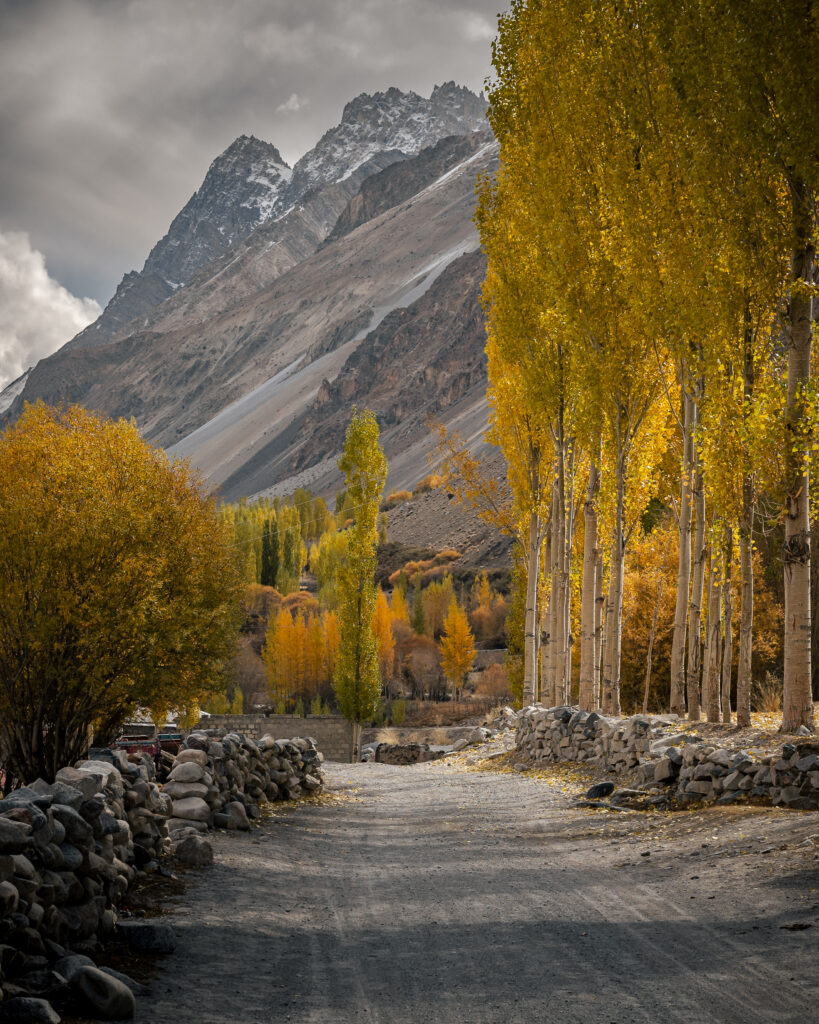 Quiet village roads in Chapursan Valley
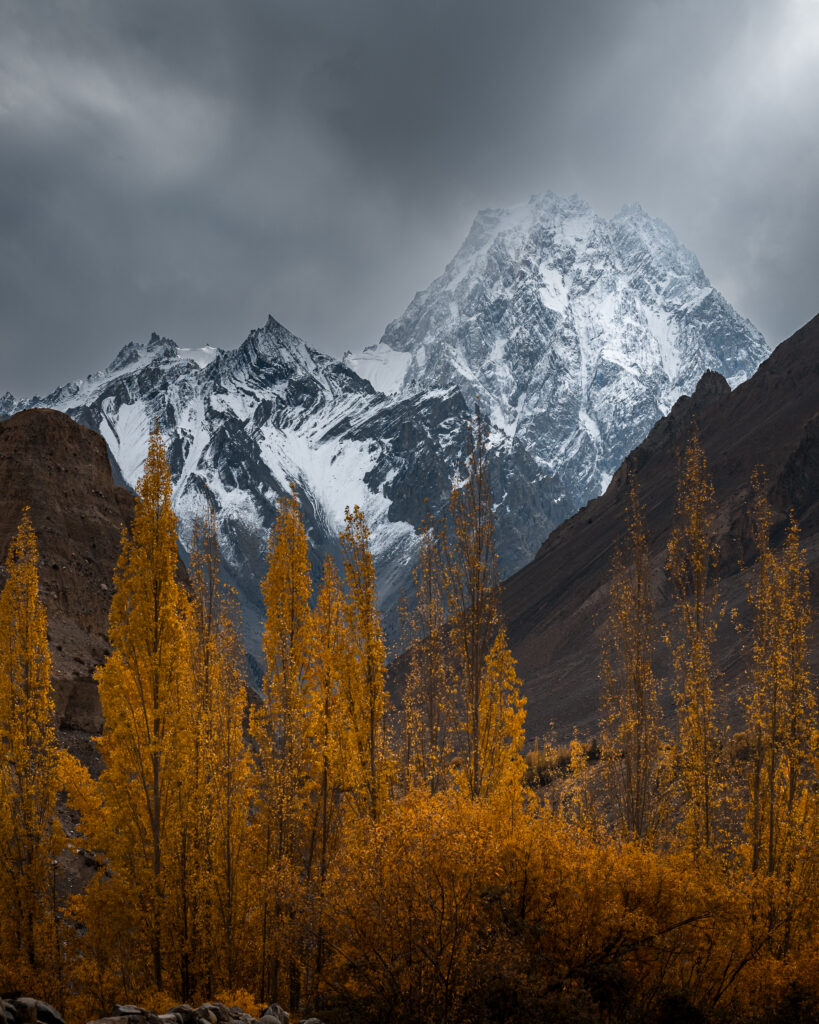 Autumn in Chapursan Valley
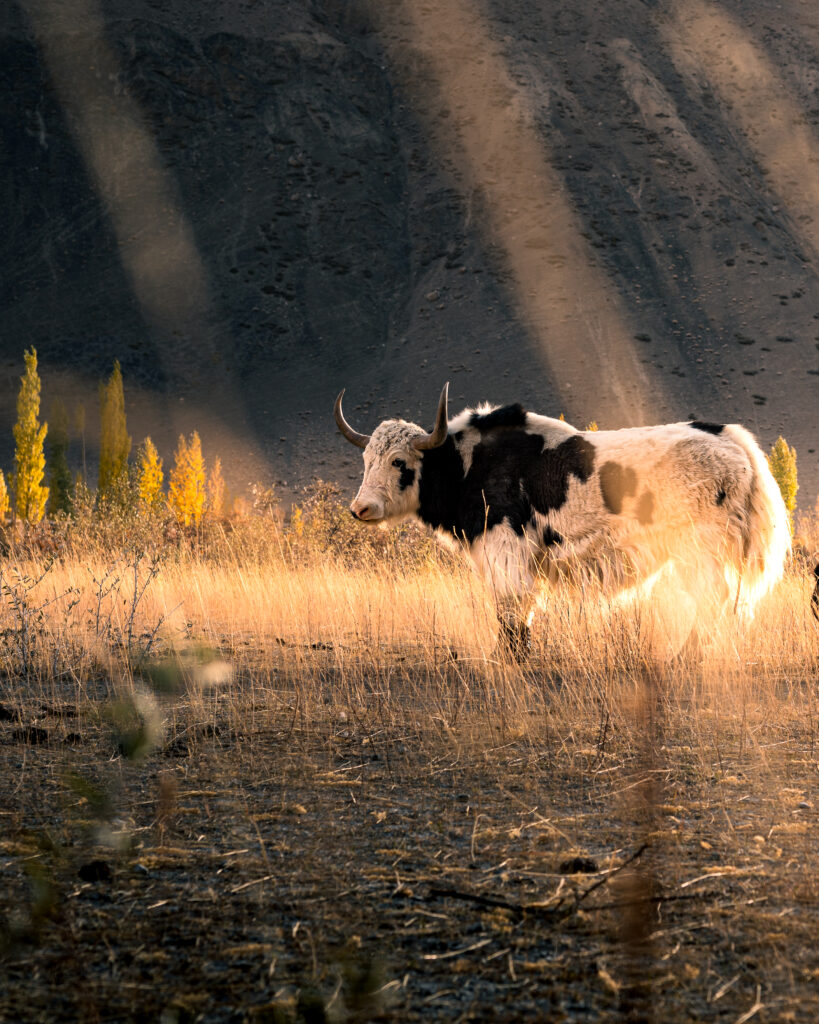 Yak grazing in Chapursan Valley
Baba Ghundi Shrine
Beyond Zood Khun, roughly a 45-minute walk, is the Baba Ghundi Ziarat, the shrine of a Tajik Sufi saint said to have brought Islam to the valley centuries ago. The shrine is a significant pilgrimage site for people across the region, and the meadows surrounding it are used by shepherds and, historically, by Kyrgyz traders who crossed the Irshad Pass from Afghanistan with horses and livestock.
There is an army checkpoint near the shrine, and you’ll need to show your passport. The crossing into Afghanistan is not open to foreign travellers, but the walk to the shrine itself is accessible and extraordinary. The landscape beyond Zood Khun is some of the most open and desolate in the valley.
The Lakes Near Zood Khun
A handful of small lakes sit about an hour’s walk from Zood Khun, beyond the road towards Baba Ghundi. They’re not on the same visual register as Naltar’s lakes, but they’re beautiful in their own quieter way, set in a hilly area with no facilities and very few visitors. Follow the road and look for a wooden bridge among the rocks on the right. Swimming is possible in summer.
Trekking and High-Altitude Pastures
Chapursan is surrounded by serious trekking terrain. The shepherds leave for high pastures in June and return in September. Routes go into the side valleys and up towards the passes, with views of peaks exceeding 6,000 and 7,000 metres.
Note: some routes beyond Baba Ghundi require a No Objection Certificate (NOC), which must be obtained in Gilgit before you travel to Chapursan. If trekking is your main goal, research specific routes and get the NOC sorted in advance.
Cultural Immersion and Wakhi Hospitality
This isn’t an “activity” in the usual sense, but it’s the thing most travellers remember most. The Wakhi people of Chapursan are some of the most openly hospitable people in Gilgit-Baltistan. Accept invitations for chai. Sit when someone gestures to you to sit. Bring small gifts from Sost if you like (biscuits, fruit, nothing elaborate). What you’ll get back is an evening of conversation, home-cooked food, and a sense of ordinary life at altitude that no tour can manufacture.
Where to Stay in Chapursan Valley
Accommodation in Chapursan is simple, scarce, and almost entirely home-based. There are no hotels, no booking platforms, and no Wi-Fi. You show up, ask around, and a room is usually found.
Pamir Serai, Zood Khun
The most well-known guesthouse in the valley. Clean rooms, simple meals, and a host with decades of knowledge about the valley, its people, and the mountains beyond. If you’re going all the way to Zood Khun, this is where to stay. Ask about it in Sost or simply arrive, rooms are generally available outside peak summer.
Homestays Throughout the Valley
In most villages (Reshit, Kirmin, Raminj) you can find a bed by asking locals or following a guesthouse sign. Rooms are basic: a cot, blankets, a shared bathroom (cold water only, and sometimes unavailable in spring when pipes are still frozen). Meals are eaten with the family: chapati, lentils, potatoes, local dairy, and strong chai. This is not a backup option; for many travellers, a village homestay partway up the valley is preferable to heading straight to Zood Khun.
Staying overnight is non-negotiable. Chapursan is too far from Sost and too rich in atmosphere to visit as a day trip. A minimum of two nights lets you reach Zood Khun, walk to the shrine, and spend an unhurried evening in the valley. Three nights is better.
How Much Does Chapursan Valley Cost?
Chapursan is one of the most affordable multi-day destinations in northern Pakistan. Costs are low not because it’s been developed for budget travellers but because there’s simply very little to spend money on.
| Expense | Cost (PKR) | Cost (approx. EUR) |
|---|---|---|
| Shared jeep from Sost (one way) | 300-1,000 | ~1-3 € |
| Private jeep from Sost (return, per person in group) | 2,000-3,500 | ~6-11 € |
| Homestay / basic guesthouse (per night) | 2,000-4,500 | ~6-14 € |
| Meals (home-cooked, per day) | 600-1,000 | ~2–3 € |
| Walk to lakes / Baba Ghundi shrine | 0 | — |
| Total for 2 nights / 3 days | ~5,500-10,000 PKR | ~17-30 € |
The main variable cost is transport. If you’re on a motorbike from Gilgit or Karimabad, the fuel cost is minimal. If you’re hiring a private jeep alone from Sost, it’s the dominant expense, worth splitting with other travellers wherever possible.
Budget Tips
Bring all your cash from Gilgit or Karimabad. There are no ATMs anywhere near Chapursan. Bank Alfalah in Aliabad is the most reliable option for foreign cards. Carry enough for your entire stay plus a buffer for unexpected extra nights or transport costs.
Avoid ATM fees with Wise
The card I use for all my travel withdrawals – real exchange rate, low fees.
Use Revolut to avoid ATM fees
Good alternative to Wise – I carry both as a backup.
Practical Tips for Visiting Chapursan Valley
Bring everything from Sost. There are minimal shops in the valley, and what exists is basic. Stock up on snacks, any medications, sunscreen, and anything else you might need before you leave Sost. Don’t count on being able to buy much once you’re in the valley.
Dress in layers. At over 3,000 metres, temperatures drop sharply once the sun goes down, even in summer. Mornings are cold, evenings are cold, and the wind off the glaciers has a bite to it at any time of year. Bring more warm layers than you think you need.
Mobile signal is essentially absent. SCOM fares better than other networks in Gilgit-Baltistan, but even with SCOM, connectivity in Chapursan is patchy to non-existent. Download offline maps (Maps.me works well for this region), save important phone numbers, and don’t plan on being reachable. This is a feature, not a problem.
An eSIM is useful before you get a local SIM. For the Islamabad leg or the early part of your Pakistan trip, before switching to a local SCOM SIM (far cheaper for extended use in GB), an eSIM bridges the gap.
Need data before you land? Try Saily eSIM
Use code RITAHE1486 for $5 off your first plan.
No NOC needed for the valley itself, but check for treks. You do not need a No Objection Certificate to visit Chapursan Valley or to walk to the Baba Ghundi shrine. However, trekking routes beyond the shrine and into the high passes may require one. Obtain your NOC in Gilgit before you travel if trekking is on your agenda.
Passport and visa with you at all times. There are army checkpoints near the shrine given the proximity to the Afghan border. Straightforward and quick, but have your passport and visa accessible.
Dress modestly. Chapursan is a conservative Ismaili community. Loose, modest clothing is appreciated and makes interactions noticeably warmer. This applies to everyone, not just women.
Don’t rush. The temptation on a Pakistan itinerary is to keep moving. Chapursan rewards the opposite. Give it at least two nights. Three is better. The valley doesn’t reveal itself on a day trip.
FAQ: Chapursan Valley
Can you visit Chapursan Valley without a tour?
Yes. The shared jeep from Sost costs around 500 PKR each way and it’s how locals travel. Everything covered in this guide is based on fully independent travel.
How do I get to Chapursan Valley from Hunza?
Travel from Hunza to Sost first (around 2-3 hours on the KKH by shared vehicle). From Sost, take the shared jeep into the valley or arrange a motorbike or private jeep. Total travel time from Hunza to Zood Khun is around 5-7 hours.
Do I need a permit or NOC for Chapursan Valley?
No permit or NOC is required to visit the valley or walk to the Baba Ghundi shrine. For trekking routes beyond the shrine and into the high passes, an NOC may be required. Obtain it in Gilgit before travelling.
How long should you spend in Chapursan Valley?
A minimum of two nights. Three is better, particularly if you want to walk to the shrine, explore the lakes, and spend unhurried time in the villages. A single day trip from Sost is possible but misses almost everything that makes the valley worth the journey.
Is October a good time to visit Chapursan Valley?
Yes, it’s arguably the best window. The autumn colours are exceptional, the valley is almost empty of other travellers, the road is still open, and the days are clear. Bring warm layers as temperatures drop significantly at night.
Is Chapursan Valley safe?
Yes. It is one of the safest places I’ve visited in Pakistan. Crime is essentially non-existent, locals are welcoming, and the community is close-knit. Solo female travellers visit without issues. Use common sense, be respectful, and you’ll be fine.
Don’t skip travel insurance!
I use SafetyWing for most trips – solid coverage for adventure travel.
Can you cross into Afghanistan from Chapursan Valley?
No. There is no open border crossing for foreign nationals at the Irshad Pass. The army checkpoint near the Baba Ghundi shrine is straightforward: show your passport and continue. Do not attempt to cross.
What is the Wakhi culture like in Chapursan?
The Wakhi are an Iranian ethnic group found across the Pamir region: in Pakistan, Afghanistan, Tajikistan, and China. In Chapursan, they are predominantly Ismaili Muslims, and the community is known for its exceptional hospitality, openness, and a culture shaped by centuries of mountain life and trade. Most older residents speak Wakhi and Urdu; some younger people speak some English.
Need help planning your Pakistan trip?
Custom itineraries, local guide sourcing, and on-trip support from someone who’s done it.
Final Thoughts
Chapursan doesn’t have a single iconic image that travels well on social media. There’s no turquoise lake to photograph from the perfect angle, no cable car to a viewpoint, no recognisable landmark on every travel account. What it has instead is something harder to compress into a single frame: the feeling of being somewhere genuinely remote, among people who are genuinely welcoming, in a landscape that operates entirely on its own scale.
Of all the valleys I visited across northern Pakistan, Chapursan is the one that stayed with me longest. Not because of what I saw but because of what I felt there: a kind of undiluted quiet rare to find nowdays, and the sense that this is what travel was originally supposed to feel like.
Go in October if you can. Drink the chai when someone offers it. Give it more time than you think you need.
More Pakistan Travel Guides
If you’re planning to travel Pakistan independently, these in-depth guides will help you navigate the country, travel on a budget, and explore far beyond the usual routes:
Have questions about Chapursan valley? Drop them in the comments. I read every single one.