Planning a trip to Central Asia entirely on your own can feel like staring into an informational black hole, especially when trying to figure out which land borders are open or how to navigate local minibuses. However, you don’t need a massive budget or an expensive private guide to experience this incredible region. This independent 3-weeks in Central Asia itinerary is designed specifically for budget-conscious backpackers who want to explore the absolute best of Kyrgyzstan, Eastern Kazakhstan, and Uzbekistan using mainly the local public transport.
By trading private tour vans for local marshrutkas and Soviet-style sleeper trains, you’ll experience the legendary hospitality of the region up close while saving a massive amount of money. This logistically seamless route kicks off amidst the raw, nomadic mountain culture of Kyrgyzstan, crosses overland into the dramatic canyon landscapes of Eastern Kazakhstan, and wraps up with a grand finale through the turquoise tiled domes of Uzbekistan’s ancient Silk Road cities.
Why This Specific Route Works
This route is logistically engineered to maximize your limited time. It avoids unnecessary backtracking by creating a straight overland trajectory. You start in Bishkek and move eastward around Lake Issyk-Kul. From there, you cross straight into the natural wonders of Eastern Kazakhstan. Finally, you board an overnight train to sweep through the historic heartland of Uzbekistan.
This flow provides an incredible cultural and visual narrative. You will begin with rugged, high-altitude alpine adventures. Next, you will transition into modern Kazakh city life and dramatic canyons. You will finish your journey surrounded by some of the most spectacular Islamic architecture in the world.
Essential Central Asia Transit 101
Navigating public transport in the region is easy once you understand the local systems. Here are the primary modes of transport you will use on this journey.
Visas and Border Crossings at a Glance
Most nationalities can enter Kyrgyzstan, Kazakhstan, and Uzbekistan visa-free for tourist stays up to 30 or 60 days. Always double-check your specific passport requirements before departure.
This itinerary includes two overland border crossings. You will cross from Kyrgyzstan to Kazakhstan at the Kordai border. Later, you will cross from Kazakhstan to Uzbekistan via the Chernayevka border. Both crossings are straightforward. You simply walk through passport control with your backpack and catch a new vehicle on the other side.
For a deeper dive into preparation, budget, and packing list essentials, check out my complete Kyrgyzstan Travel Guide and Uzbekistan Travel Guide.
Central Asia Itinerary Customiser
Use the interactive planner below to customise your travel logistics. Toggle between Kyrgyzstan, Kazakhstan, and Uzbekistan to instantly view tailored transportation modes, currency details for your chosen route.
Central Asia Route & Logistics Planner
Select the countries you are visiting and your travel style to generate a tailored logistical blueprint and budget estimation.
Estimated 21-Day Cost: €0
Estimated breakdown:
Custom Packing Essentials
3 Weeks in Central Asia Itinerary by Public Transport
Week 1 – Kyrgyzstan: Alpine Lakes & Nomadic Heartlands
Day 1: Arrival in Bishkek
Welcome to Kyrgyzstan. Arrive at Manas International Airport and catch Marshrutka #380 directly to the city centre. You can also use the YandexGo app to book a cheap taxi. Spend your first day adjusting to the local rhythm. Buy a local SIM card from a provider like O! or Megacom at a city kiosk. Walk through Ala-Too Square to view the towering Soviet monuments and changing of the guard. Eat a hearty bowl of local lagman noodles for dinner. For a complete city breakdown, read my comprehensive Bishkek Travel Guide.
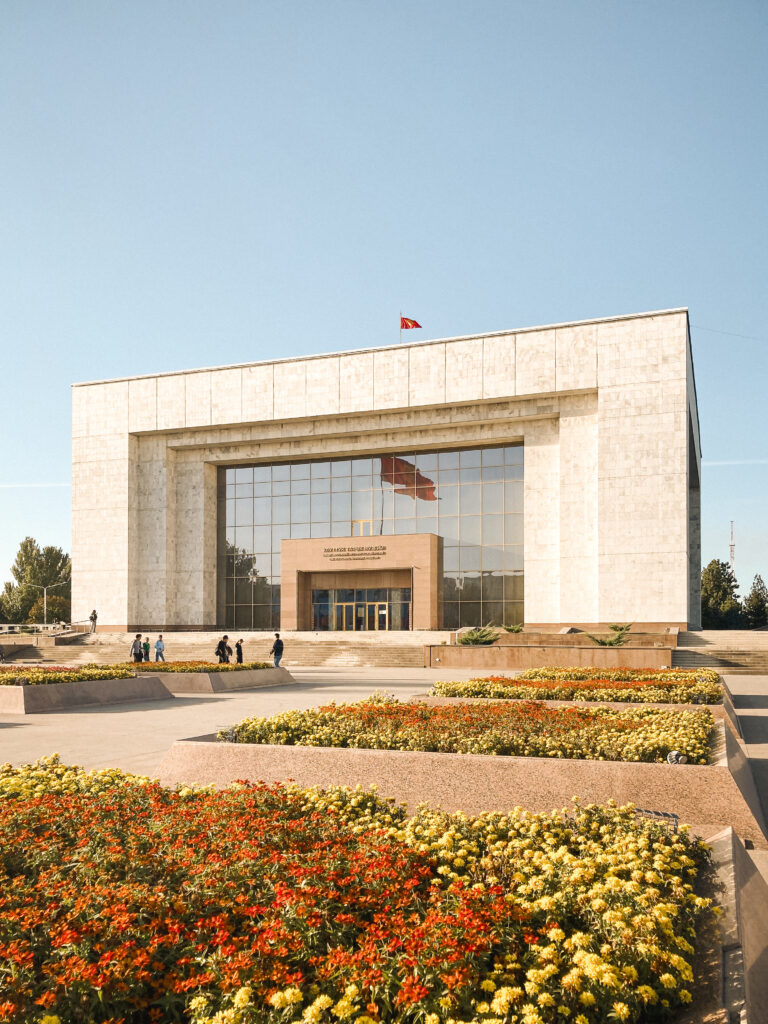 State Historical Museum
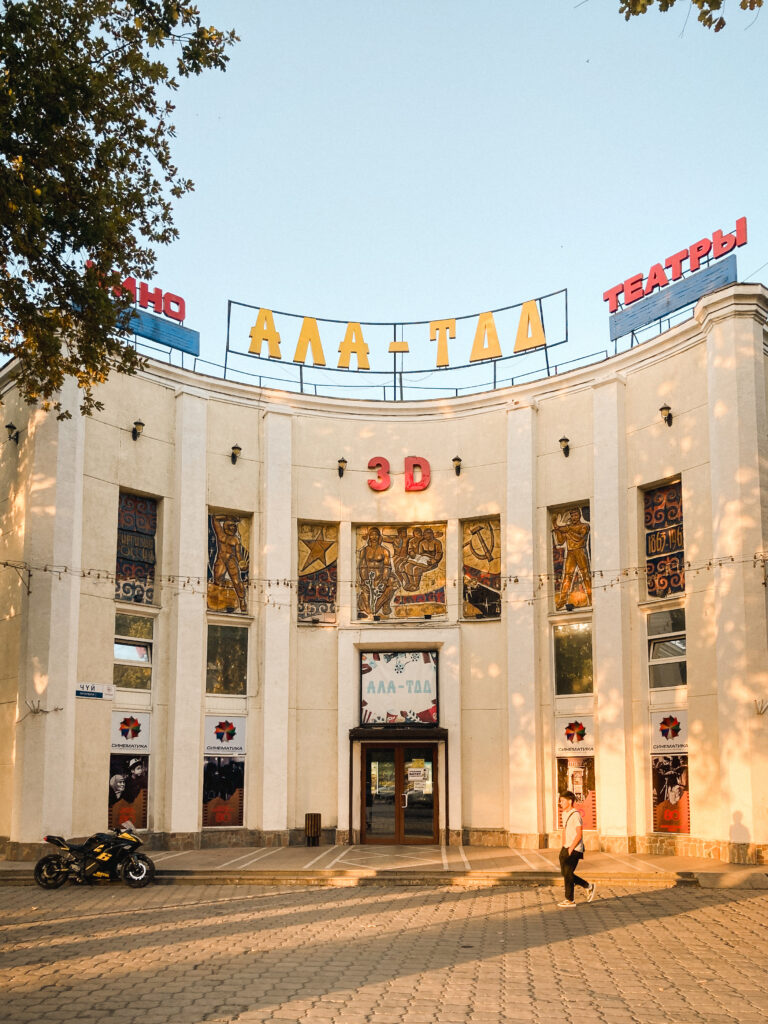 Ala-Too Cinema
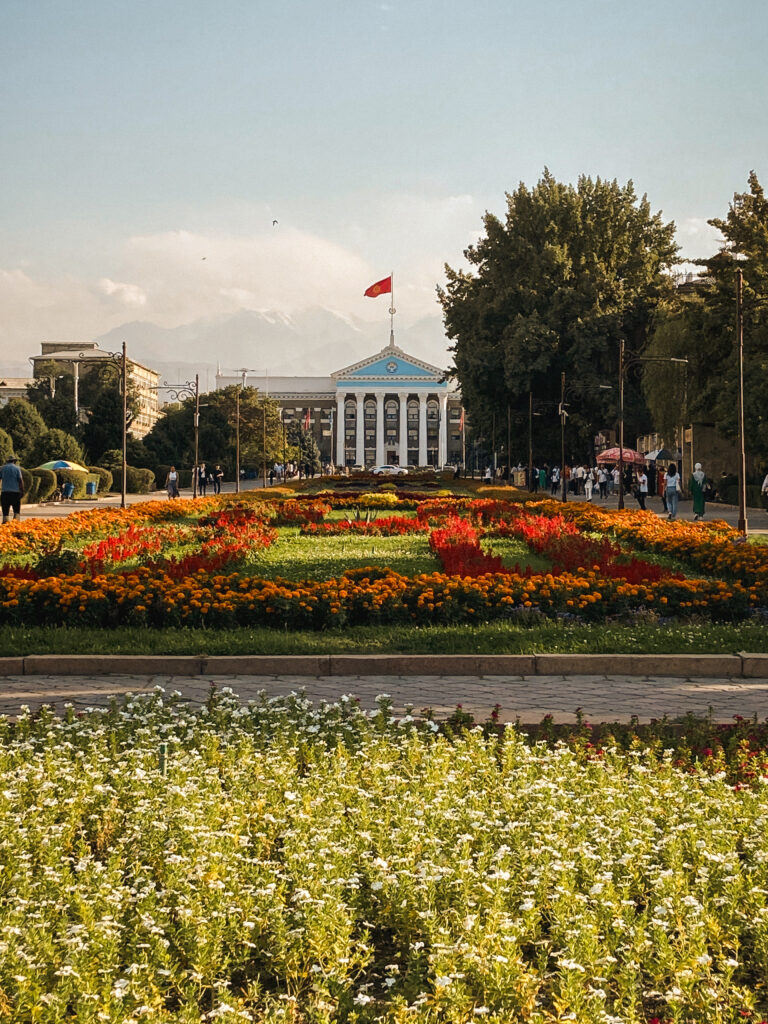 City Hall
Day 2: Day Trip to Ala Archa National Park
Escape the city concrete for the dramatic peaks of Ala Archa National Park. Go to the Osh Bazaar bus terminal early in the morning. Board Marshrutka #265 to Kashka-Suu village. From there, you can catch a shared ride or walk to the main park gate. Hike the stunning trail up to the waterfall. If you have the stamina, continue to the broken cabin site. Head back to Bishkek in the afternoon for another comfortable night in the capital.
Day 3: Bishkek to Karakol via the North Shore
Pack your bags and head to Bishkek’s Western Bus Station. Board a direct morning marshrutka bound for Karakol via the north shore of Lake Issyk-Kul. The journey takes roughly six hours. Keep your eyes on the window to enjoy views of the massive alpine lake. Arrive in Karakol by afternoon. Check into your guesthouse and do all the last minute preparations to go trek for the next couple of days.
Day 4 & 5: Hiking in Karakol
Karakol is the outdoor capital of Kyrgyzstan. Spend these two days exploring the jaw-dropping wilderness surrounding the town. You can take local Marshrutka #101 straight to the Ak-Suu trailhead. If you want to tackle one of the most famous mountain routes in the country, read my detailed guide on Trekking Ala-Kul Lake. If you prefer shorter day hikes, explore the famous red rock formations of the nearby Jeti-Oguz valley.
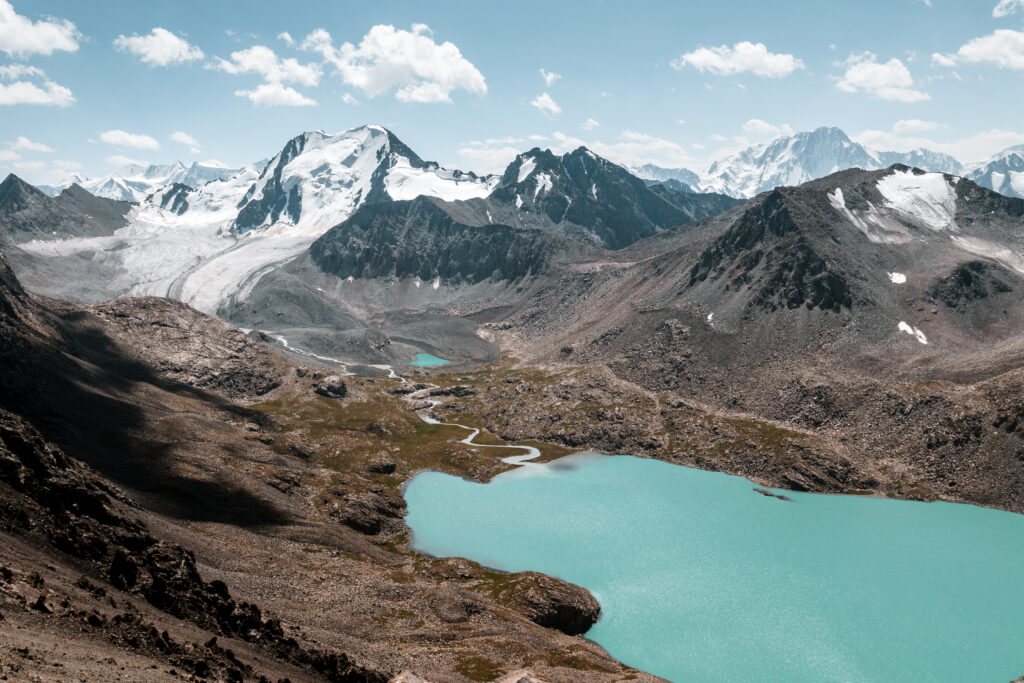 Ala-Kul
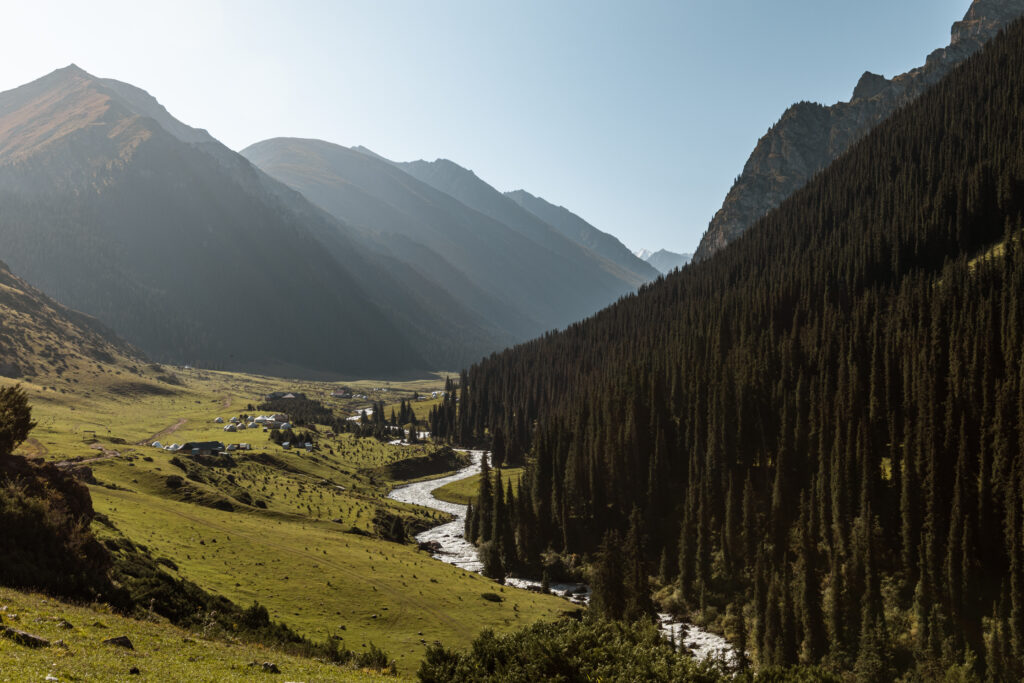 Altyn Arashan
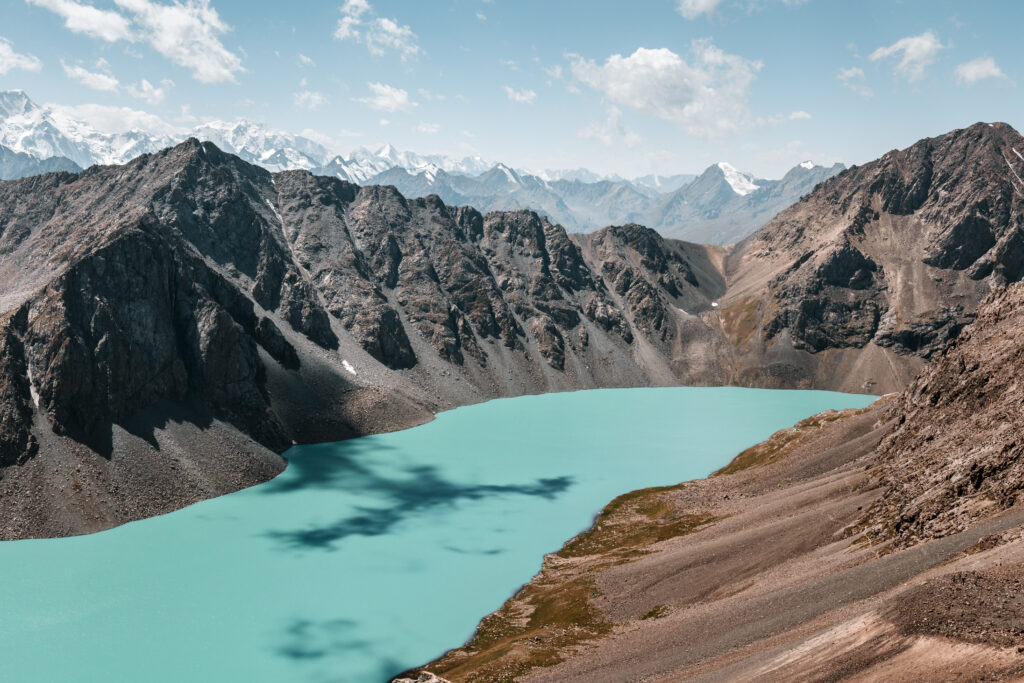 Ala-Kul
Day 6: Karakol to Bokonbaevo via the South Shore Canyons
Catch a morning marshrutka from Karakol heading along the south shore toward Bokonbaevo. This stretch of road holds incredible natural wonders. Ask your driver to drop you off at the turnoff for Skazka Canyon, also known as Fairytale Canyon. Hike into the canyon to photograph the surreal, melting red rock labyrinths. Afterward, walk back to the main road and flag down a passing vehicle towards Aksu Canyon. Continue on to Bokonbaevo to spend the night in a traditional guesthouse.
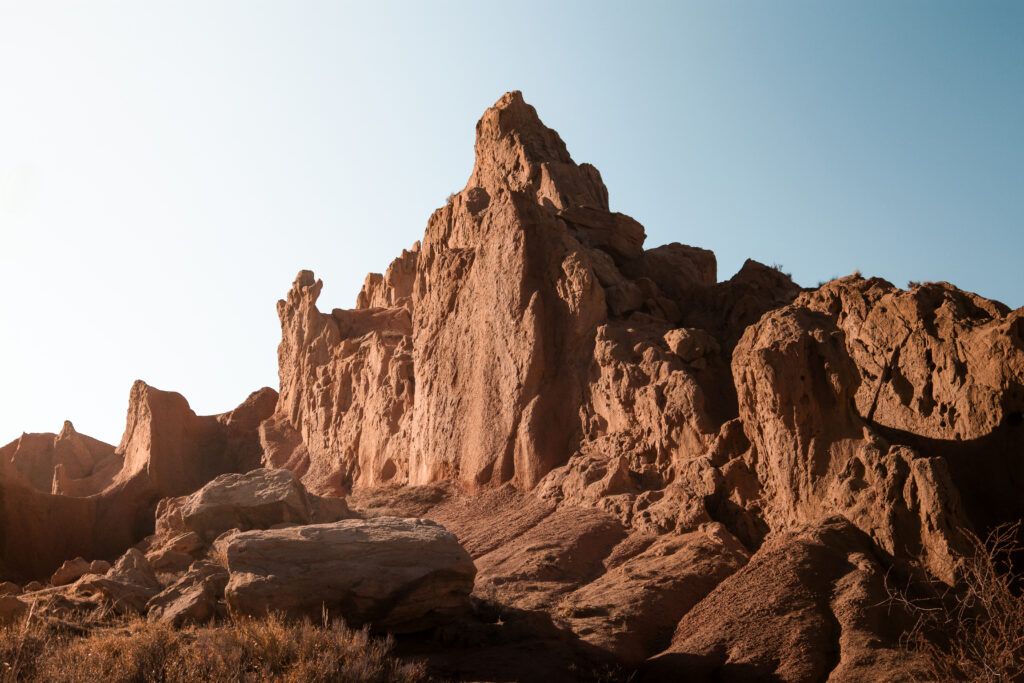 Skazka (Fairytale Canyon)
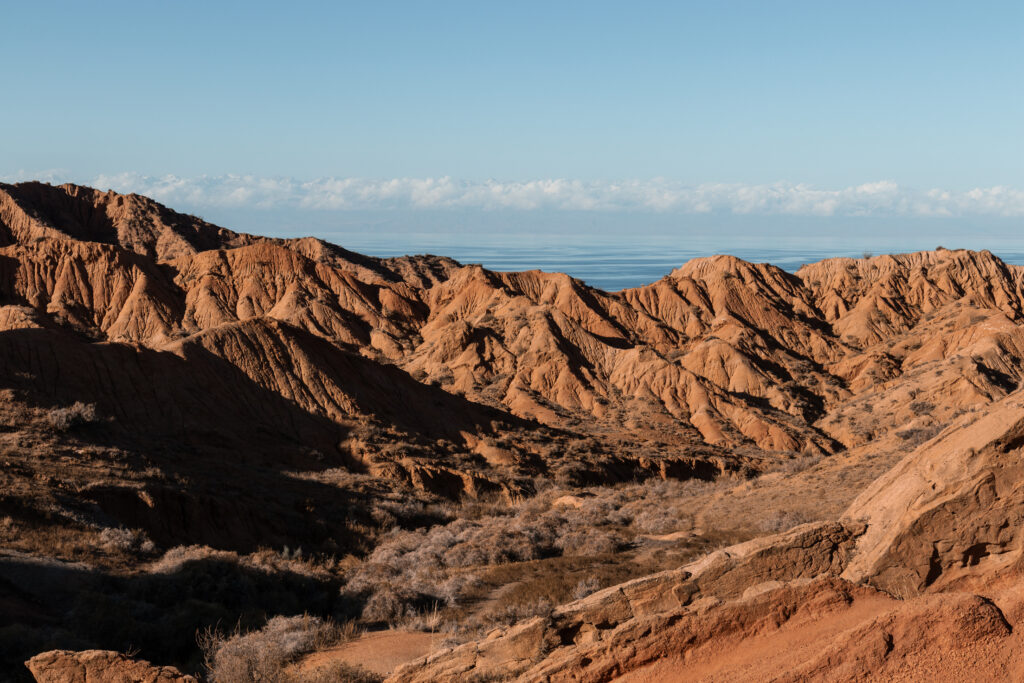 Skazka (Fairytale Canyon)
Day 7: Bokonbaevo to Kochkor
Board a morning marshrutka or shared taxi from Bokonbaevo to the transit hub of Balykchy. At the station, transfer directly to a shared taxi or another marshrutka heading south to Kochkor. You will arrive in the afternoon. Kochkor is the ultimate base for arranging community-based tourism (CBT office here) experiences. Spend your afternoon booking your horses and guide for the epic alpine trek tomorrow.
Week 2 – From High-Alpine Yurts to Cosmopolitan Kazakhstan
Day 8 & 9: Trekking from Kyzart to Song-Kul Lake
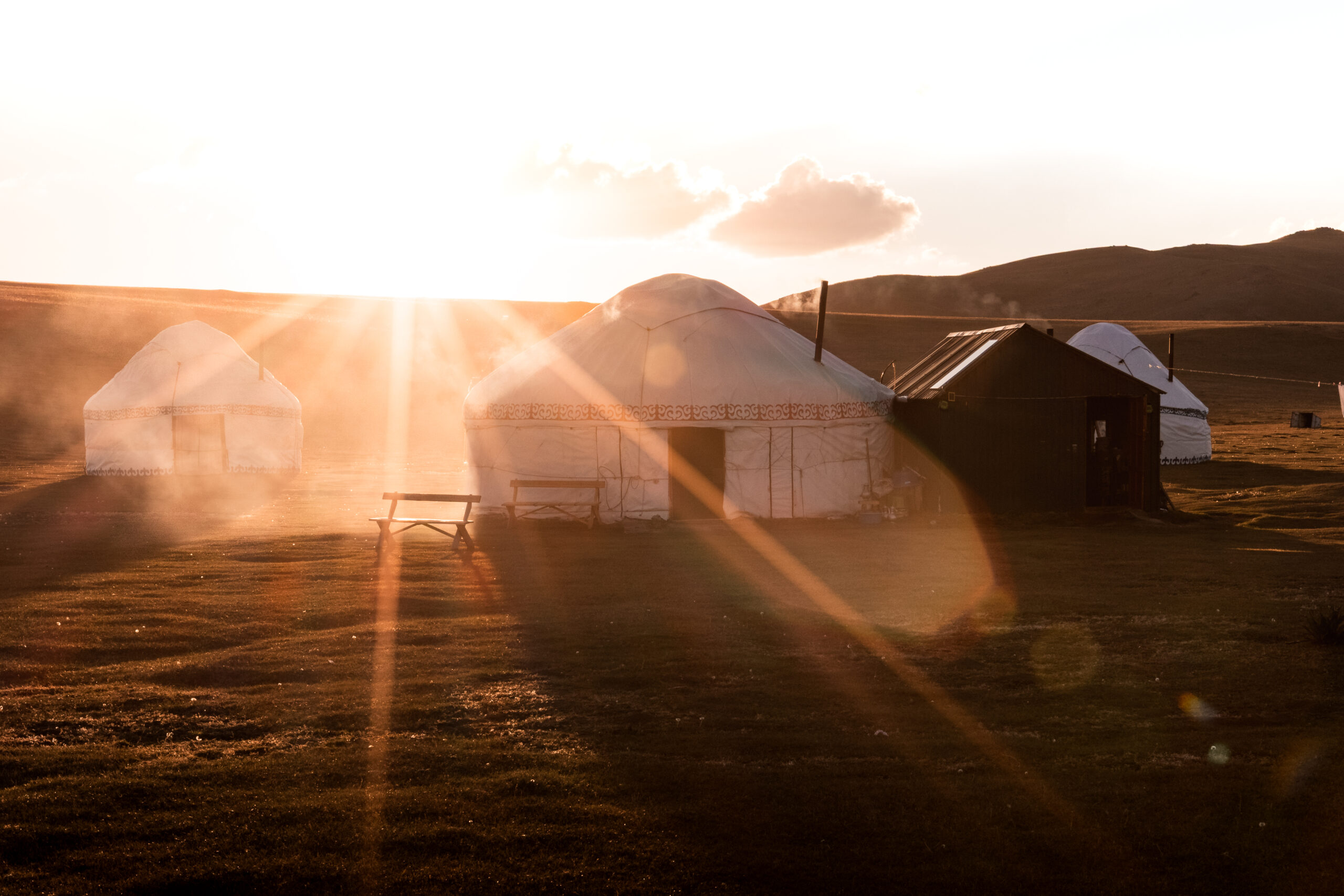
Take a local shared taxi from Kochkor to the small trailhead village of Kyzart. From here, begin your incredible trek up over the mountain pass to the high-alpine pastures of Song-Kul Lake. You can complete this route on foot, by horse, or by jeep. Spend the night sleeping in an authentic yurt camp hosted by a traditional nomadic family on the lakeshore. On Day 9, soak in the sunrise over the water, trek back down the pass to Kyzart, and catch a taxi back to Kochkor. I have documented every step of this journey in my guide on Trekking to Song-Kul Lake.
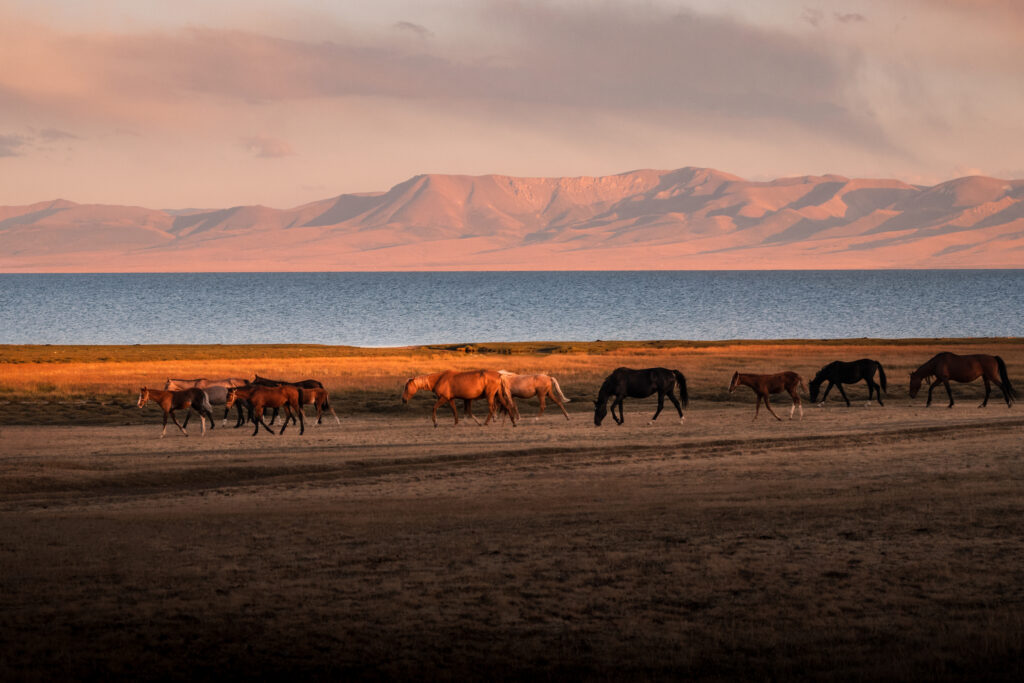 Horses at Song-Kul at sunset
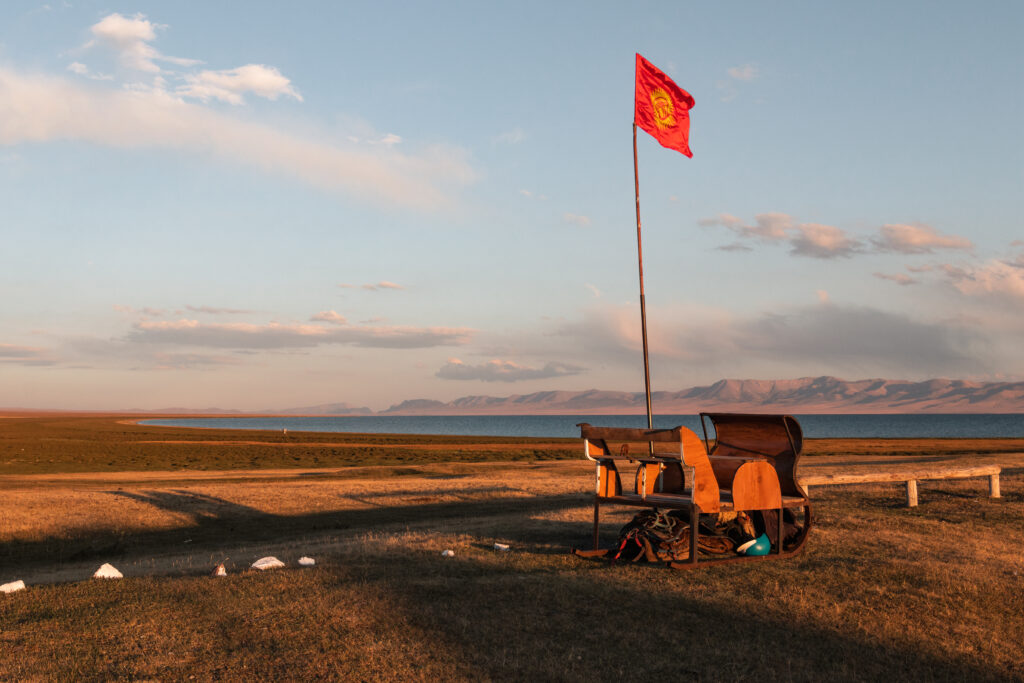 Views of Song-Kul from the Yurt Camp
Day 10: Kochkor to Bishkek
Walk to the main Kochkor transport stand. Hop into a frequent morning marshrutka heading back north to Bishkek. Use this afternoon in the capital to rest, do your laundry, and stock up on snacks. You have a long international transit day tomorrow.
For a comprehensive overview of budgeting and alternative routes for this country, view my full Kyrgyzstan Travel Guide.
Day 11: Bishkek to Almaty
Head back to the Western Bus Station in Bishkek. Board an international bus or a shared taxi bound for Almaty, Kazakhstan. The vehicle will drop you at the busy Kordai border crossing. Grab your backpack, walk through both customs checkpoints independently, and board your vehicle on the Kazakh side. You will arrive at Sayran Bus Station in Almaty. Spend your evening strolling down the leafy, modern pedestrian streets of Almaty.
Day 12: Day Trip to Kolsai Lakes and Kaindy Lake
Reaching these remote lakes independently in a single day is tough without your own car. The best budget option is to join an affordable minibus excursion from Almaty. Alternatively, take a shared taxi from Sayran Bus Station to Saty village and hire a local driver with a rugged Russian UAZ truck. Marvel at the pristine waters of Kolsai Lake. Afterward, visit Lake Kaindy to photograph the famous sunken spruce trees rising directly out of the turquoise water. Return to Almaty for the night.
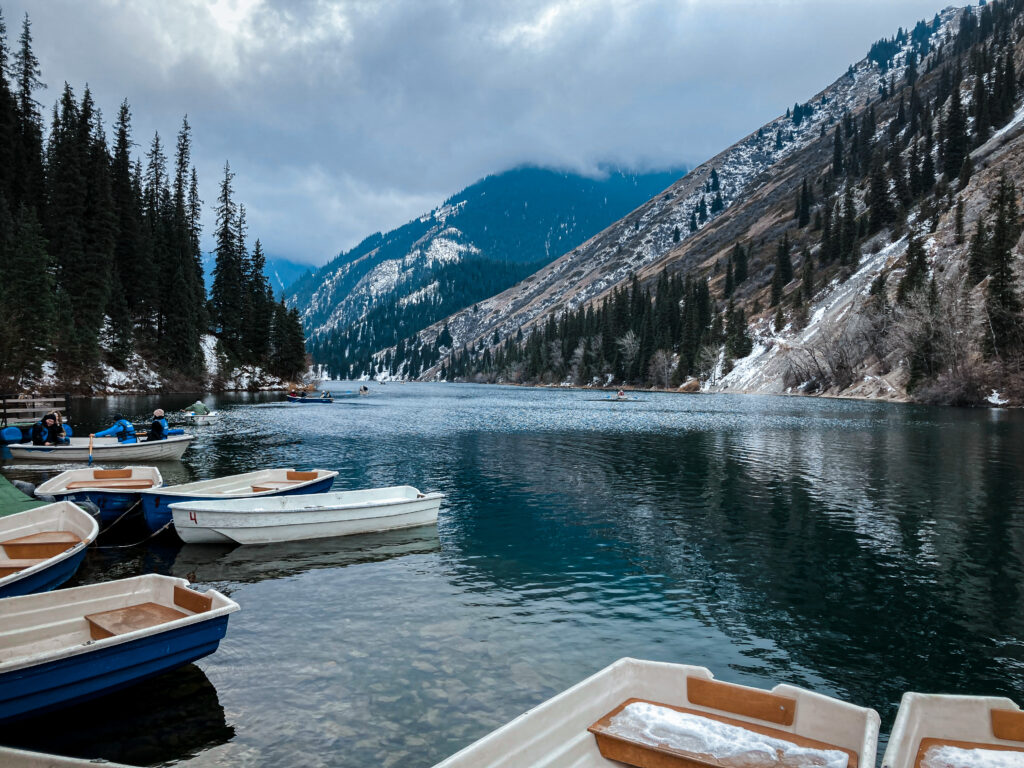
Day 13: Day Trip to Charyn Canyon
Head back to Sayran Bus Station. Find a shared taxi heading toward Chundzha. Ask the driver to drop you at the turnoff for Charyn Canyon. You will need to walk or hitch the remaining distance to the entrance. Hike through the spectacular Valley of Castles. The towering red rock formations look exactly like a miniature Grand Canyon. Catch a returning shared taxi to Almaty in the afternoon.
Day 14: Almaty Exploration & Overnight Train to Tashkent
Spend your final day in Kazakhstan enjoying the cosmopolitan charms of Almaty. Visit the colourful Zenkov Cathedral, which was built entirely of wood without a single nail. Ride the beautiful, art-filled metro stations. In the evening, head to the railway station to board the direct, cross-border international train to Tashkent. For essential tips on surviving this epic rail journey, check out my guide on Travelling Kazakhstan by Train.
Week 3 – Uzbekistan: The Silk Road Grand Finale
Day 15: Arrival in Tashkent & Train to Samarkand
Wake up as your train rolls across the border into Uzbekistan. Arrive at Tashkent’s Northern Station. Immediately transfer to the high-speed Afrosiyob or the standard train straight to Samarkand. Ensure you book this specific ticket online weeks in advance. Check into your hotel in Samarkand and head out to see the legendary Registan monument lit up beautifully under the night sky.
Day 16: The Architectural Wonders of Samarkand
Spend a full day exploring one of the most famous cities on the ancient Silk Road. Photograph the three massive madrassas of the Registan at sunrise to avoid the crowds. Wander through the jaw-dropping blue tile-work of the Shah-i-Zinda mausoleum avenue. Visit the colossal Bibi-Khanym Mosque before sunset. For more information on visiting Samarkand independently, check my Samarkand Budget Travel Guide.
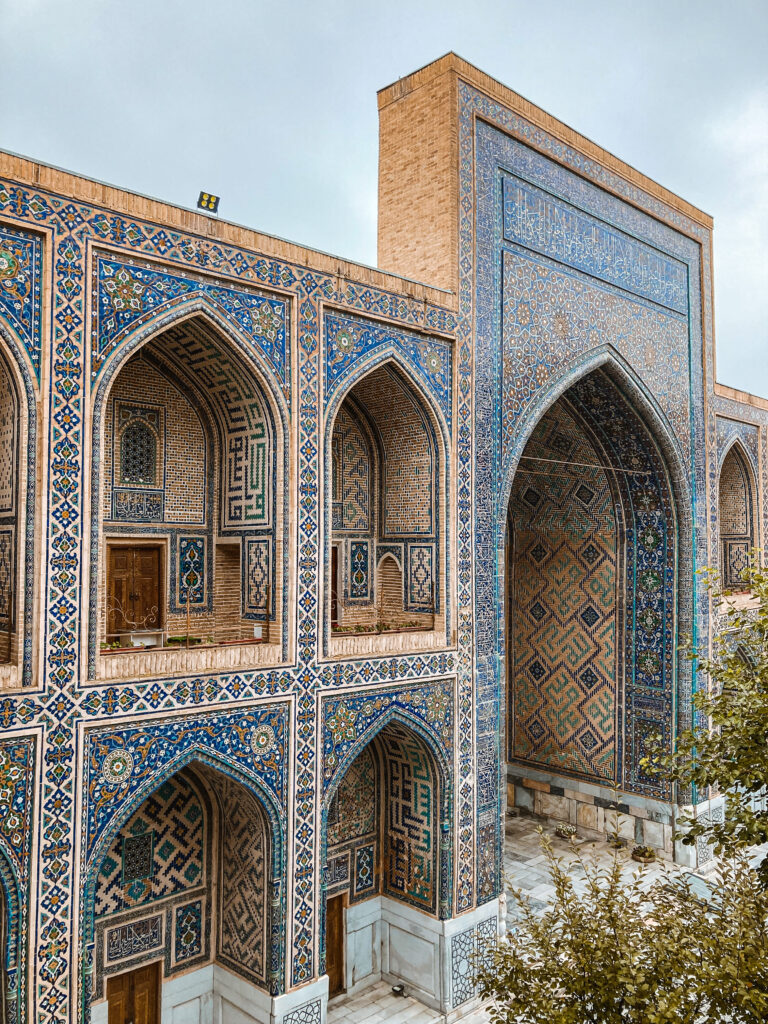 Courtyard inside the Ulugh Beg Madrasa
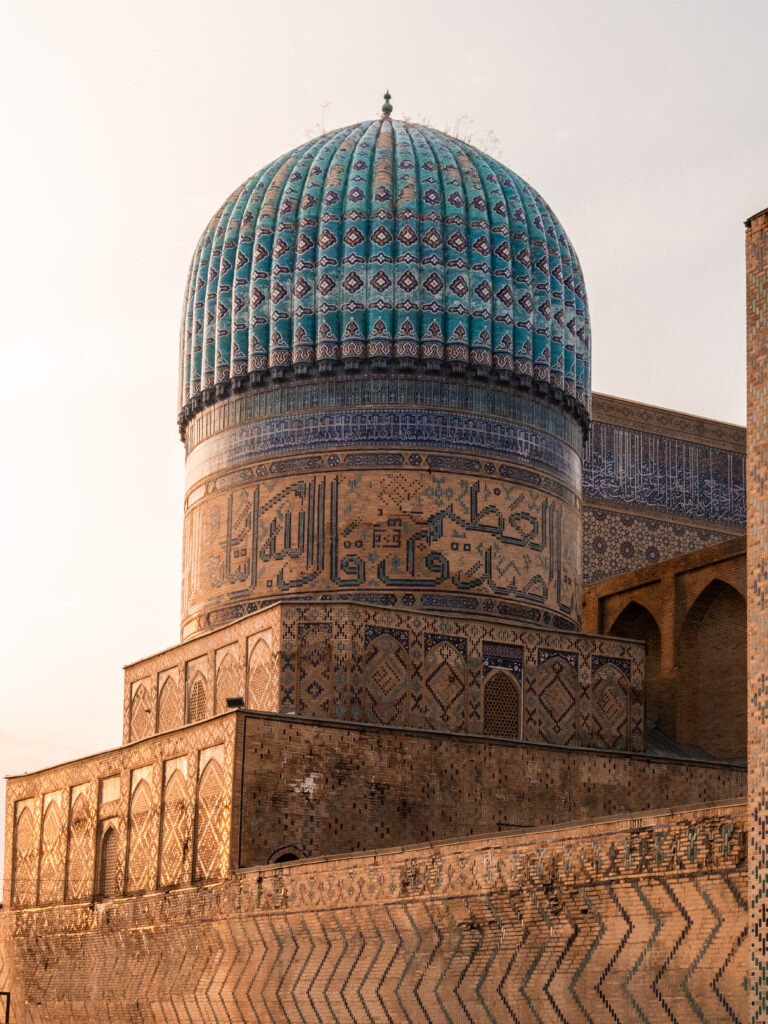 Bibi-Khanym Mosque at sunset
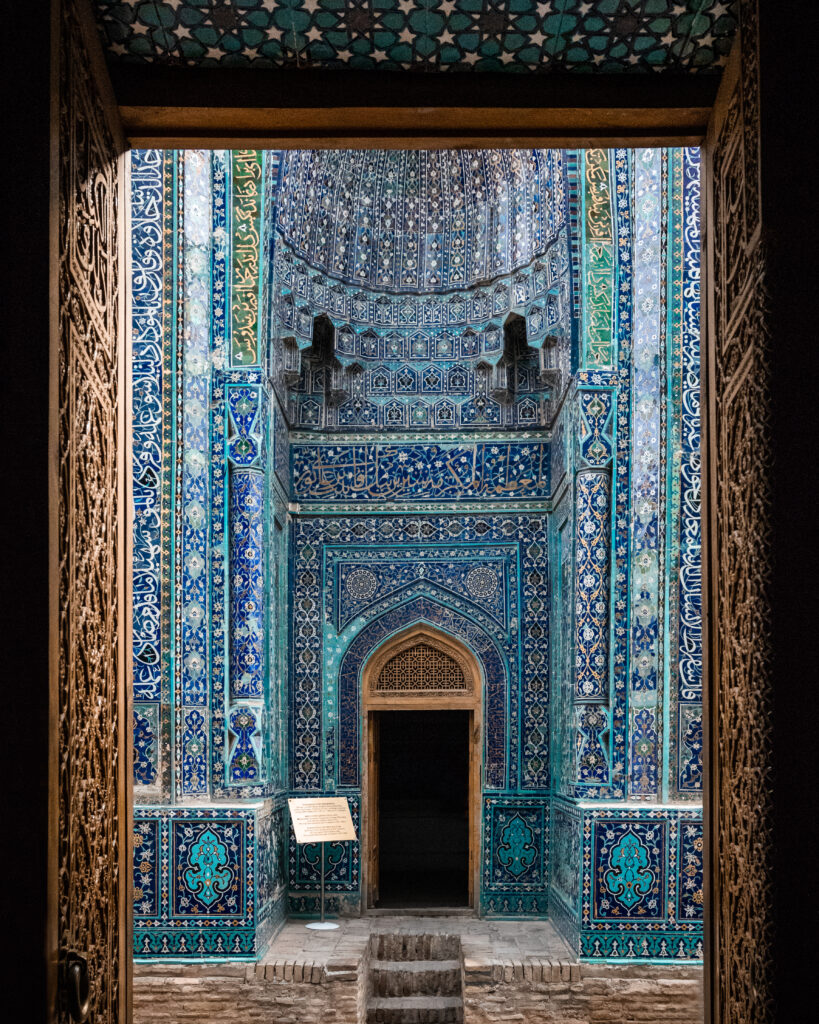 Tomb in Shah-i-Zinda
Day 17: Samarkand to Bukhara
Board a morning Afrosiyob or standard Sharq train from Samarkand to the historic oasis town of Bukhara. Check into a traditional mud-brick hotel in the old town. Unlike Samarkand’s grand monuments, Bukhara features a beautifully preserved, walkable ancient core. Spend your afternoon wandering through the historic trading domes.
Day 18: Bukhara to Khiva via the Desert Train
Spend your morning visiting the majestic Po-i-Kalyan mosque complex and the ancient Ark of Bukhara fortress. To help plan your time here, see my Bukhara Budget Travel Guide. In the afternoon, head to the train station to board the scenic train across the vast Kyzylkum Desert. Arrive in the remote, walled city of Khiva late in the evening.
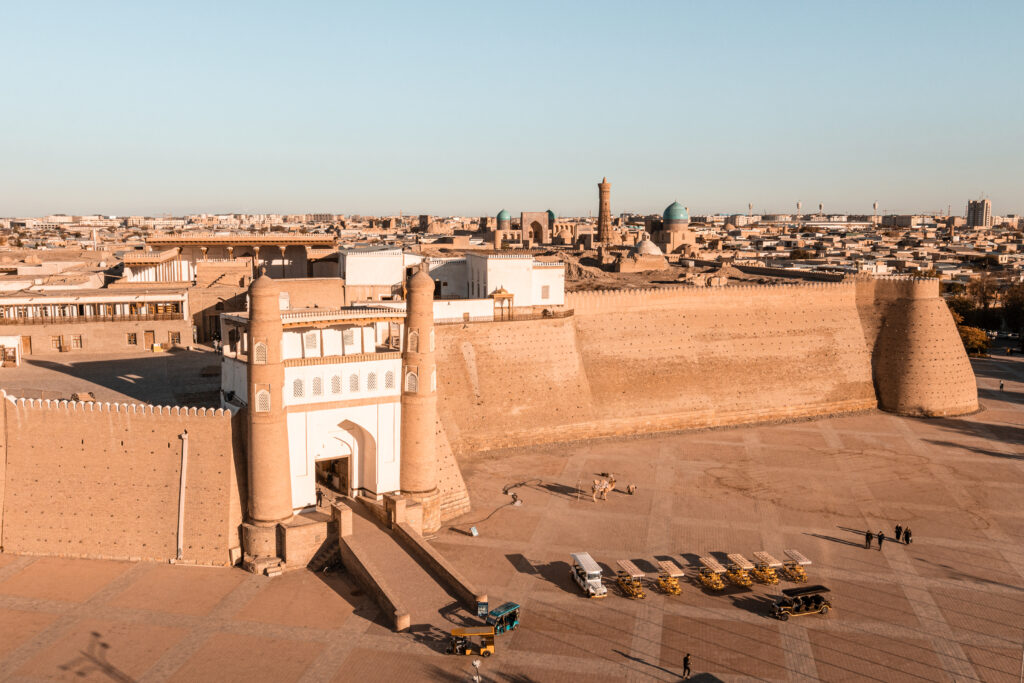 Ark of Bukhara
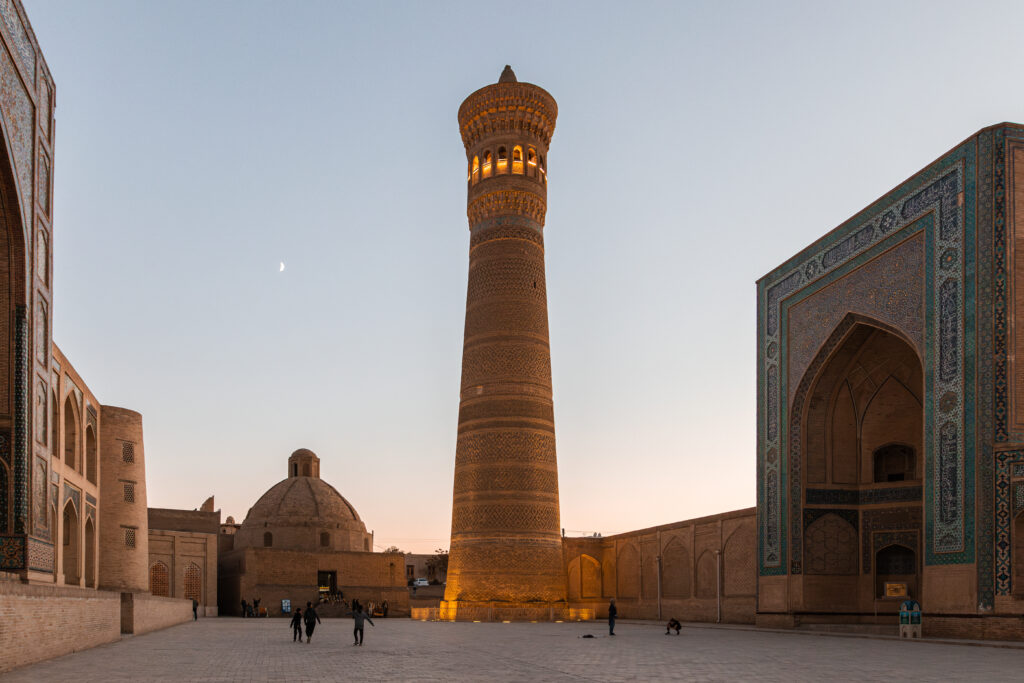 Po-i-Kalyan Complex at Dusk
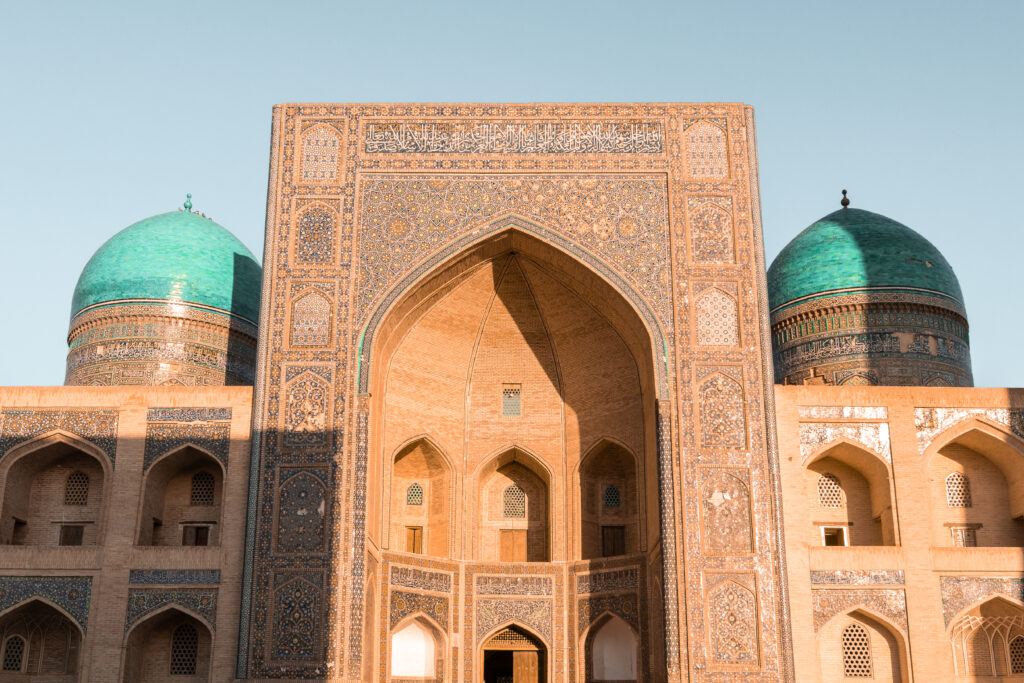 Mir-i-Arab Madrasa
Day 19 & 20: The Walled Magic of Khiva
Khiva is an open-air museum. The historic center, known as the Ichan Kala, is completely pedestrianised and surrounded by massive clay walls. Spend these two days getting lost in the narrow, sand-colored alleys. Climb to the top of the Islam Khodja Minaret for a panoramic view of the mud-brick city at sunset. On the evening of Day 20, board the overnight sleeper train from Khiva back to the capital city of Tashkent. Read my complete Khiva Budget Travel Guide for all the best locations and tips to avoid the crowds.
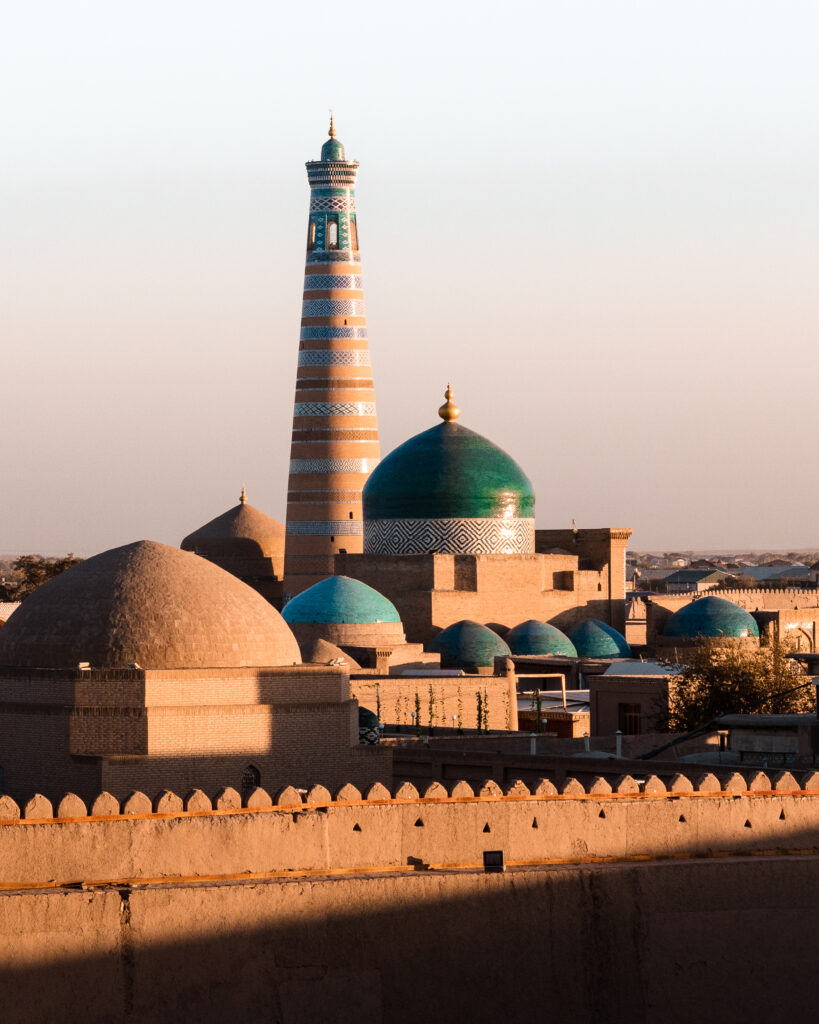 Islam Khodja
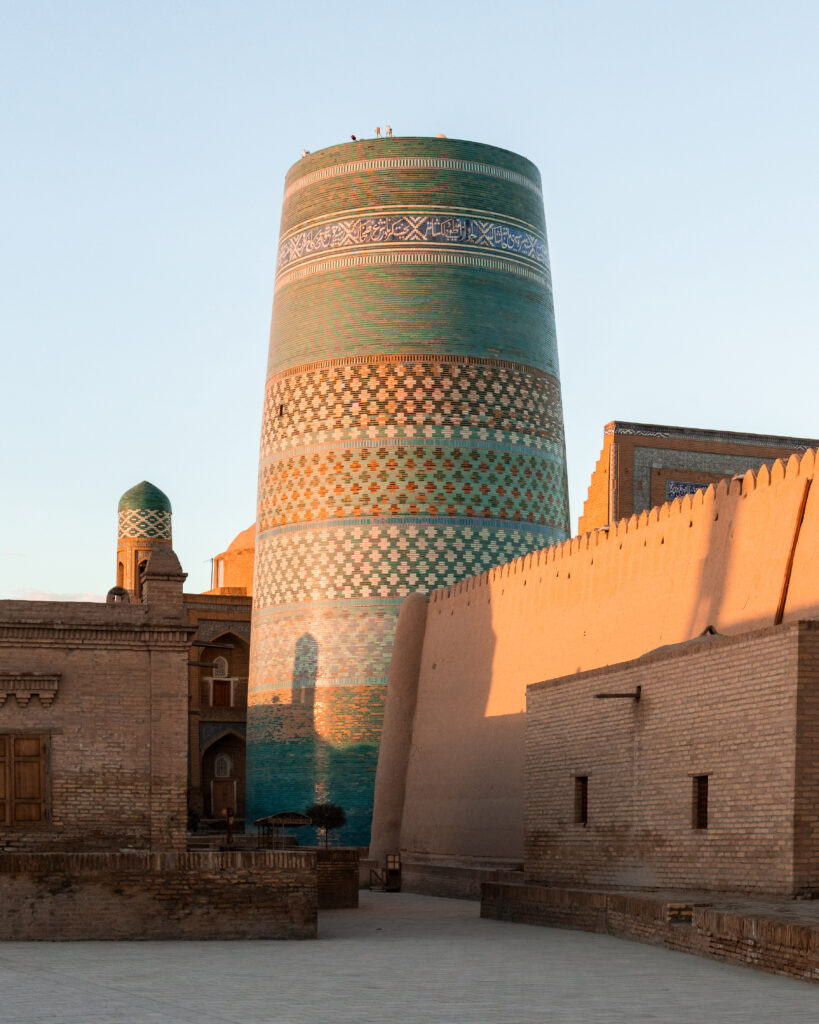 Kalta Minor Minaret at Sunrise
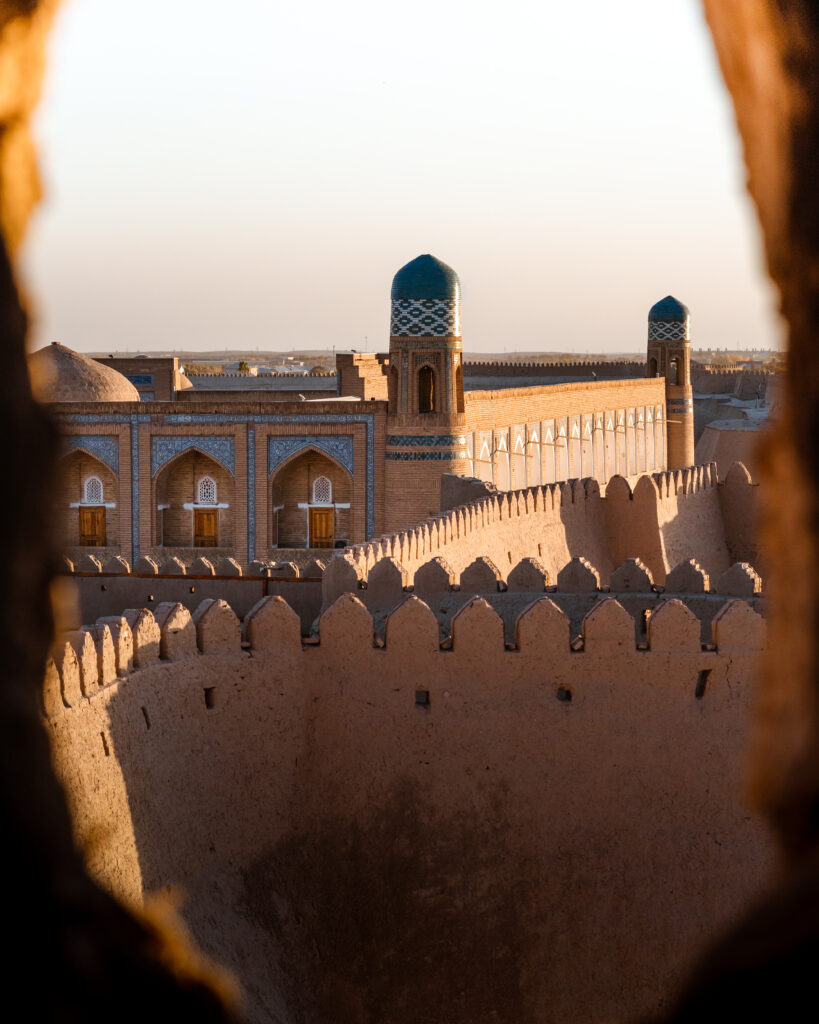 Walls of the Itchan Kala
Day 21: Explore Tashkent & Fly Out
Arrive at the Tashkent train station in the morning. Spend your final day exploring Uzbekistan’s capital using the stunning, ornate Tashkent Metro system. Photograph the massive turquoise dome of the bustling Chorsu Bazaar. For a complete list of things to do before your flight, see my Tashkent Budget Travel Guide. Head to Tashkent International Airport to fly home.
For a comprehensive overview of budgeting and alternative routes for this country, view my full Uzbekistan Budget Travel Itinerary.
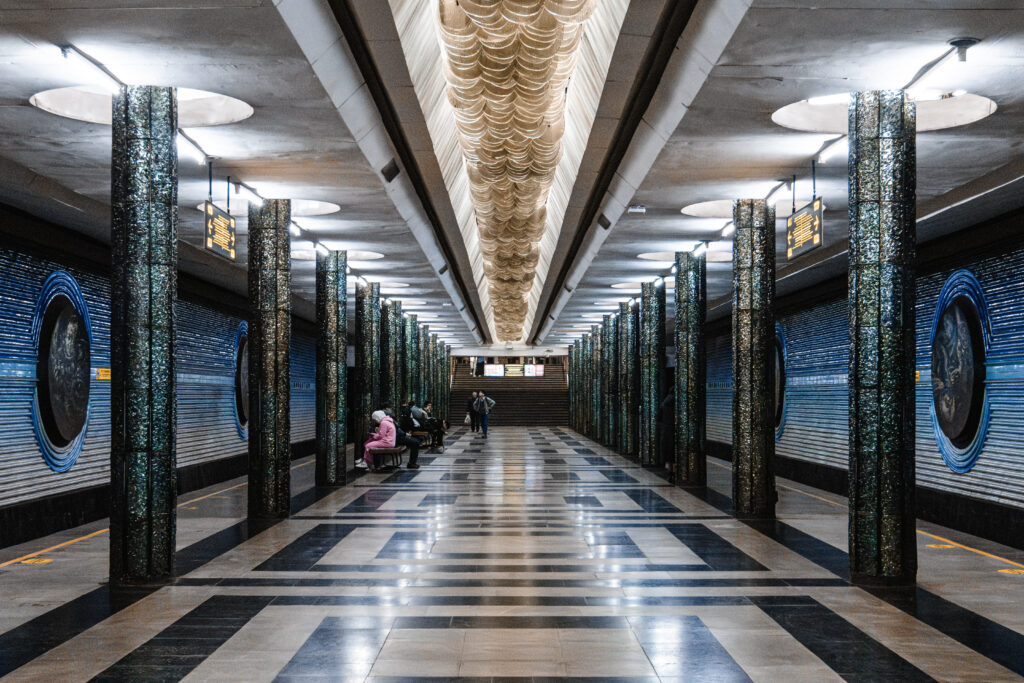 Kosmonavtlar Metro Station
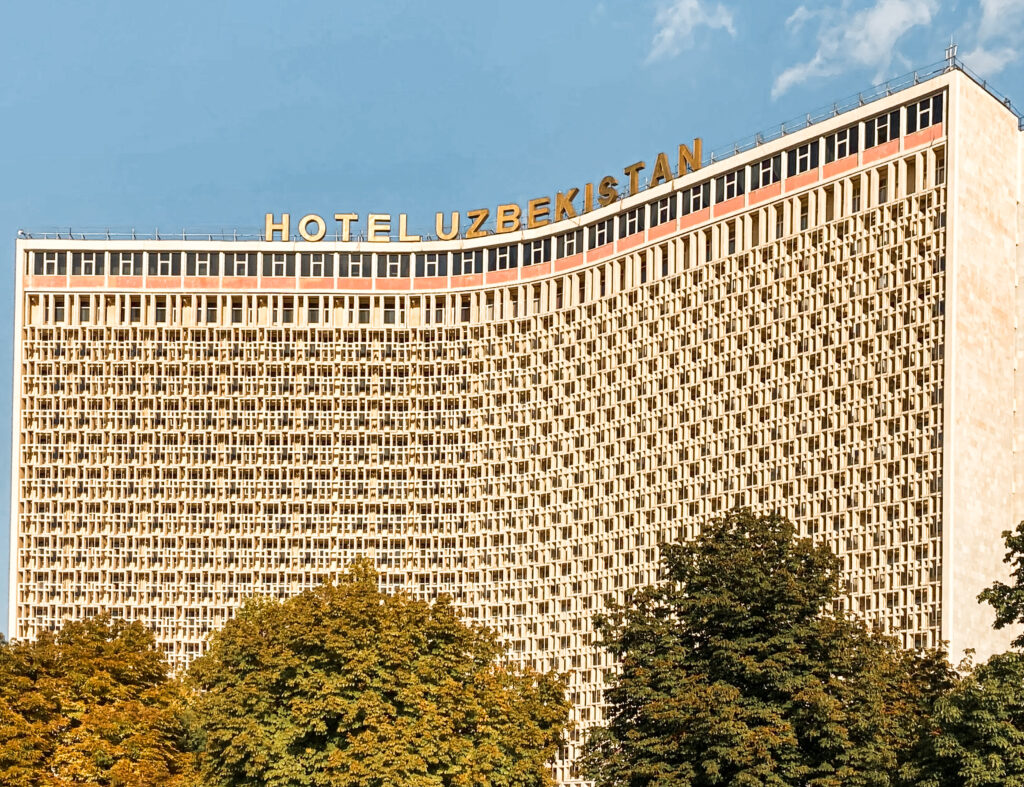 Hotel Uzbekistan
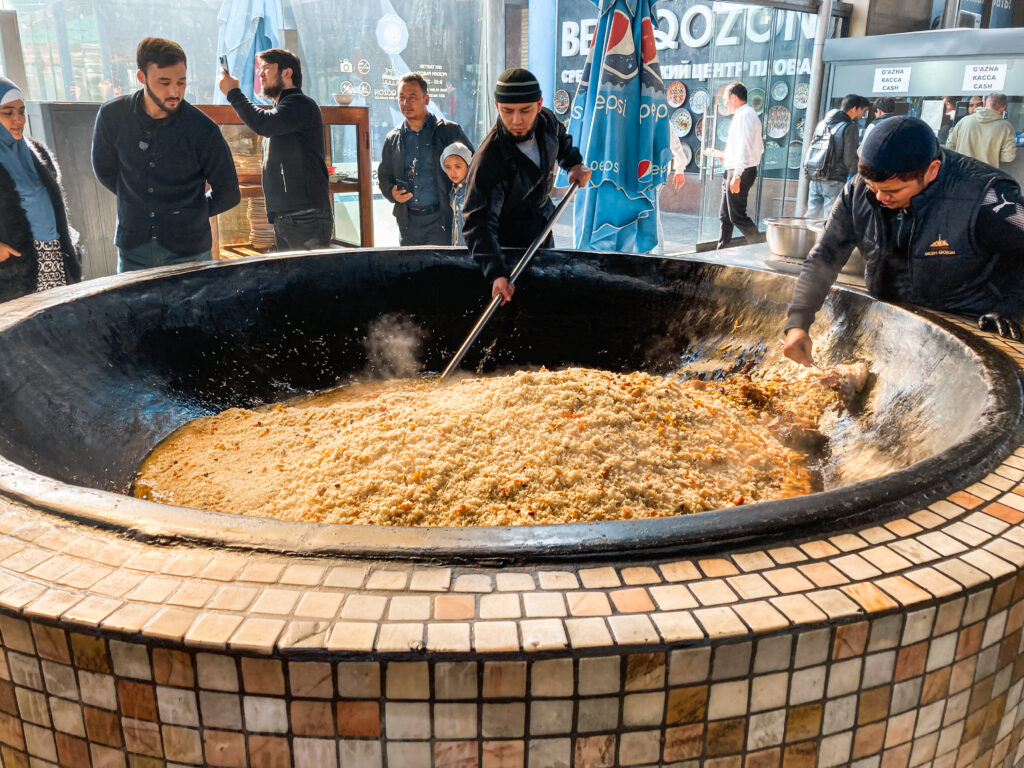 Cooking Plov, Uzbek’s National Dish
Have More Time in Central Asia? How to Extend Your Itinerary
If you are lucky enough to have a full month or more in the region, do not rush out of Kyrgyzstan. The standard three-week public transport route covers the absolute essentials, but with an extra 7 to 10 days, you can veer off the beaten path into some of the most remote, wild landscapes in the country. Here are the two best multi-day extensions to add to your route if you have more time:
Option 1: Trek to the Mystical Kel-Suu Lake
Tucked away in the Ak-Sai Valley near the Chinese border sits Kel-Suu, a dramatic, winding alpine lake trapped between sheer, towering rock cliffs. Reaching it is an adventure in itself. You will need to travel from Kochkor down to the frontier town of Naryn, secure a military border permit, and arrange a rugged 4×4 transport into the valley. Once there, you can hike or ride horses along the turquoise waters.
Ready to head to the Chinese border? Read my full, step-by-step guide on Trekking to Kel-Suu Lake in Kyrgyzstan for all the details on permits, packing, and yurt stays.
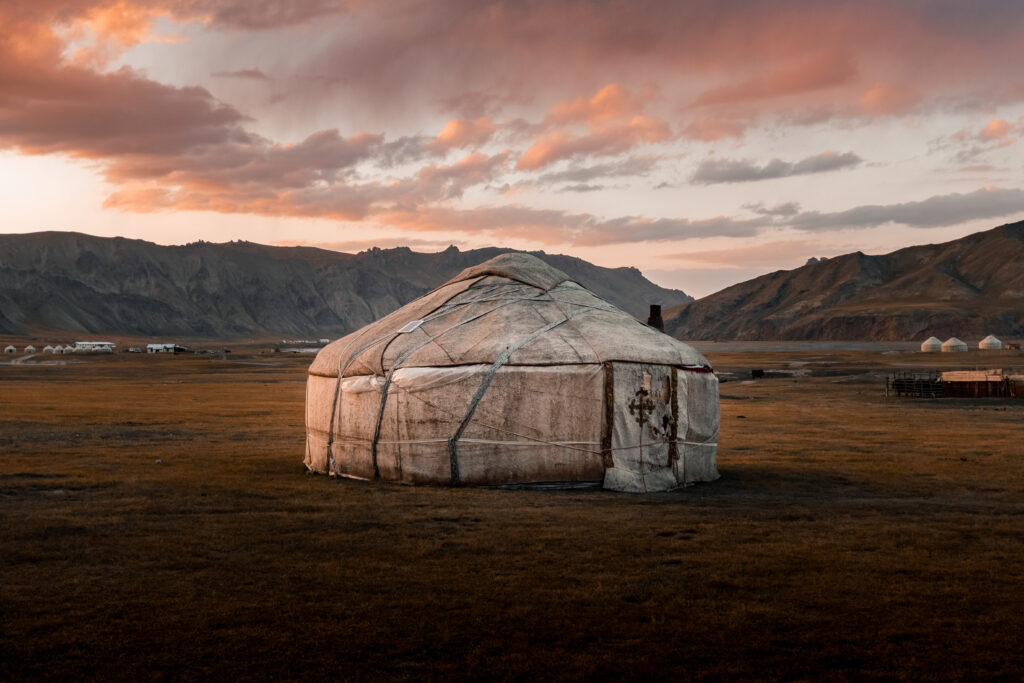 Yurt at Kok-Kiya Valley at sunset, Kyrgyzstan
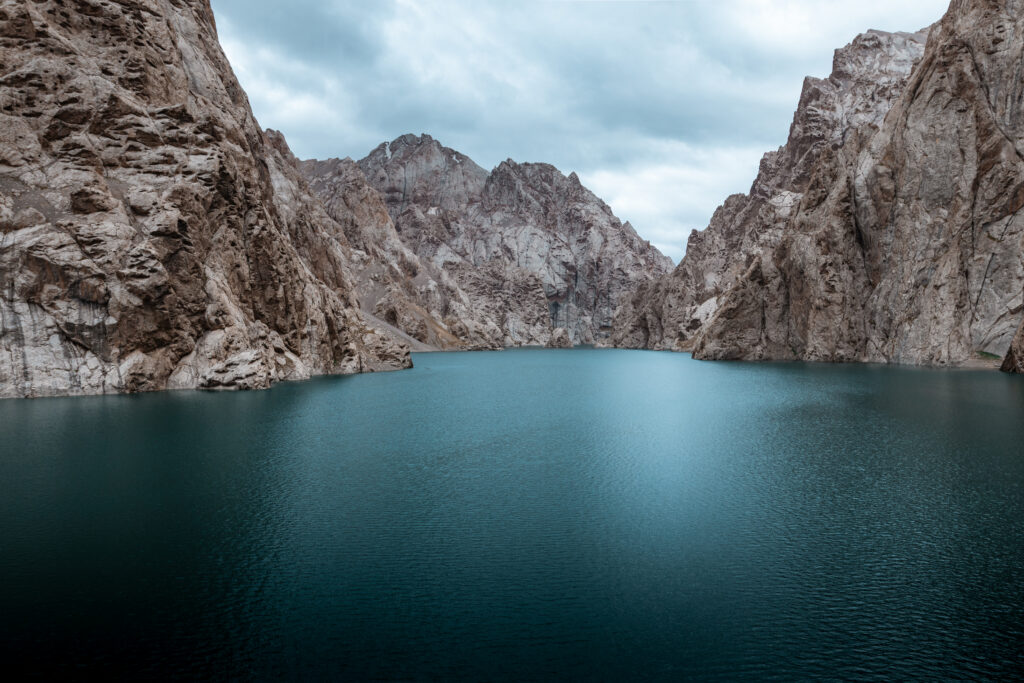 Kel-Suu Lake
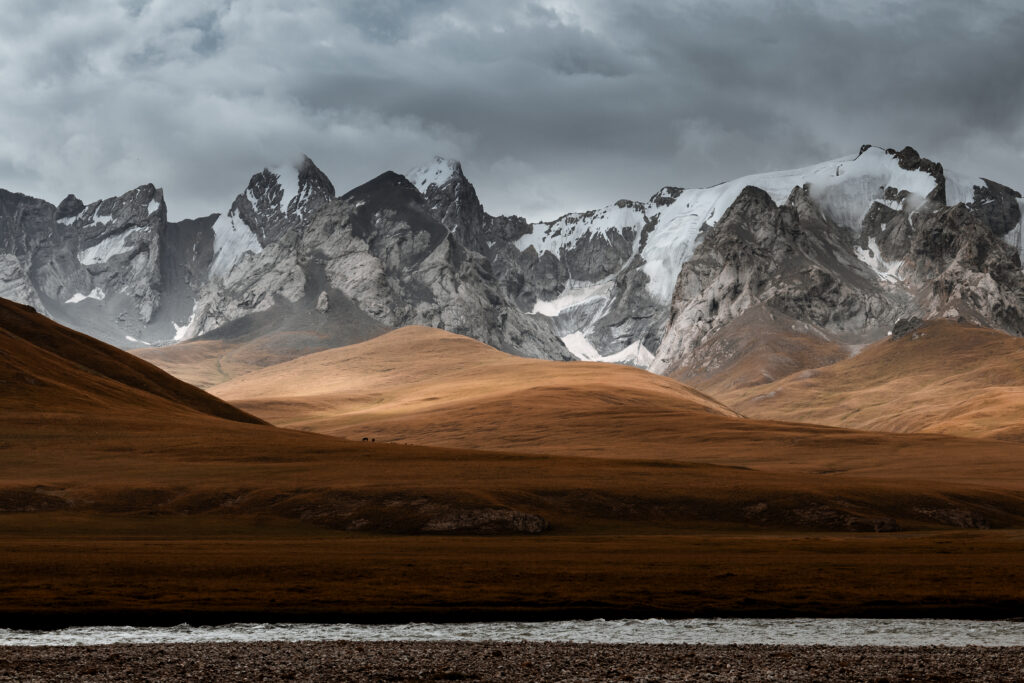 Kok-Kiya Valley
Option 2: Explore the Kyrgyz Pamir Mountains
If you want to experience the true meaning of isolation, head to the far south of Kyrgyzstan near the Tajikistan border. The Alay Valley and the Kyrgyz Pamirs offer staggering views of snow-capped 7,000-meter peaks, including Peak Lenin. This region feels completely different from the Tien Shan mountains around Karakol. The valleys are wider, the culture is a unique blend of Kyrgyz and Pamiri traditions, and the trekking routes are beautifully uncrowded.
Want to see the highest peaks in the country? Check out my comprehensive guide to Trekking to Lenin Peak in Kyrgyzstan to plan your route through this wild, high-altitude paradise.
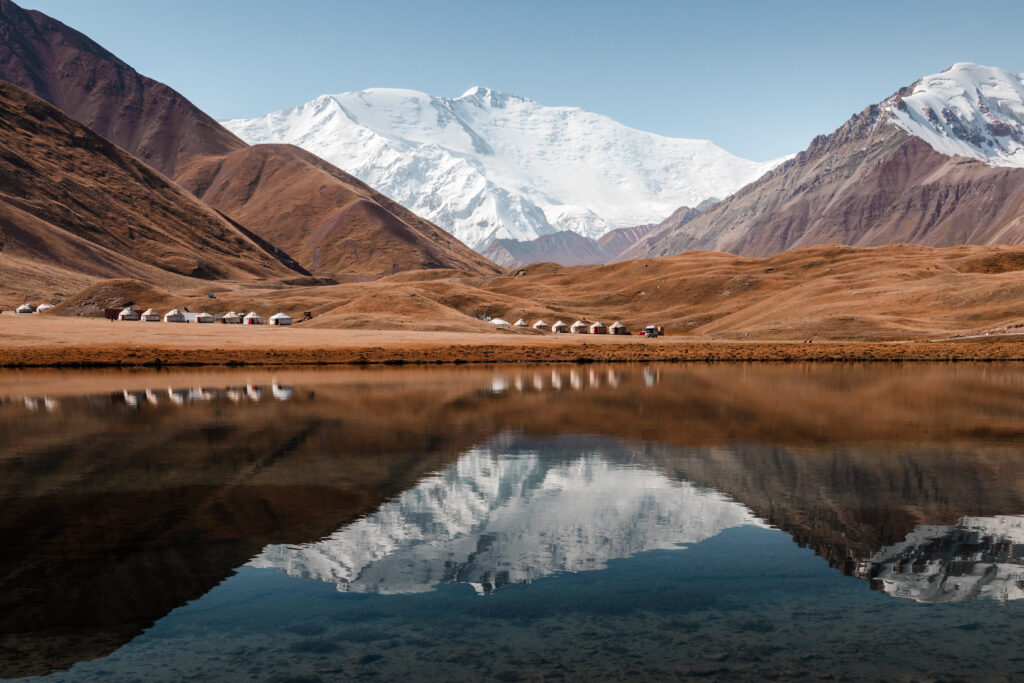 Yurt camps at Tulpar-Kul with Lenin Peak in the backgroun
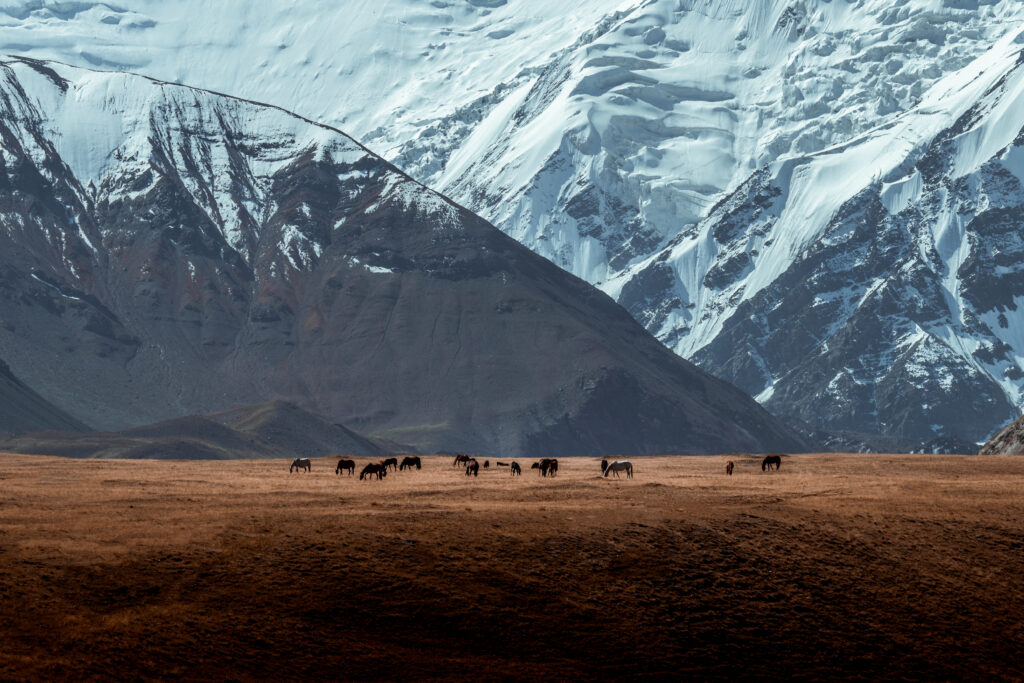 Horses grazing at the base of Lenin Peak
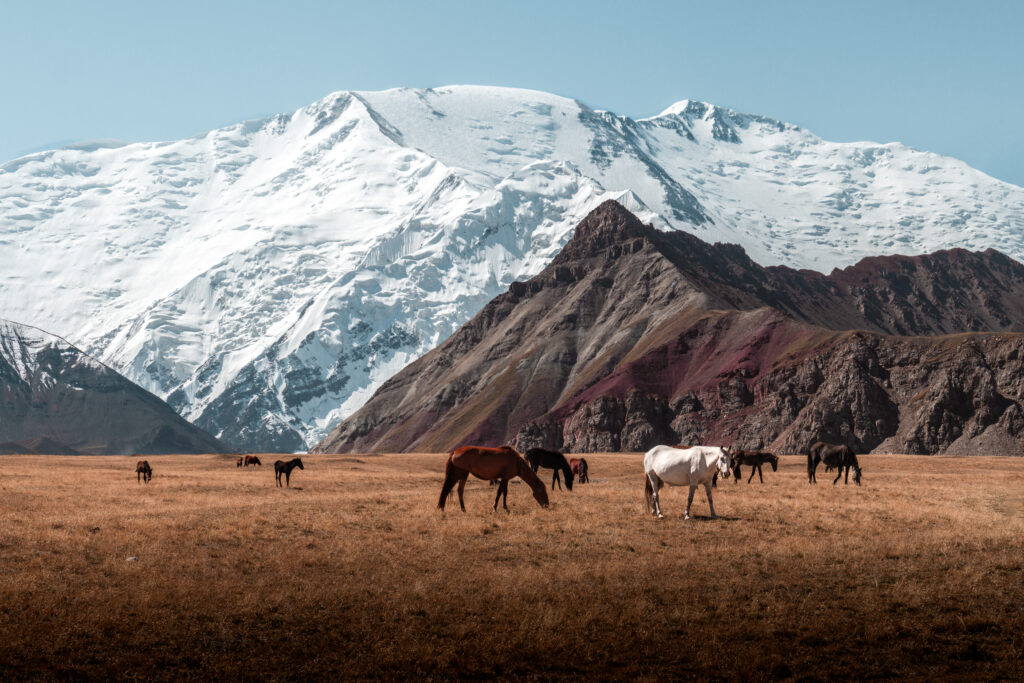 Horses grazing at the base of Lenin Peak
Best Time of Year to Travel Central Asia
Choosing the right season is crucial for this specific multi-country itinerary. You need to balance high-altitude mountain passes with scorching desert temperatures.
The absolute best times to visit are the shoulder seasons of May to June or September to October. During these months, the weather in the mountains of Kyrgyzstan is pleasant enough for hiking. Concurrently, the desert cities of Uzbekistan escape the punishing summer heat. If you travel in July or August, the hiking conditions at Song-Kul will be perfect, but temperatures in Khiva and Bukhara will routinely exceed 40°C (104°F).
Estimated Budget for 3 Weeks in Central Asia
Central Asia remains one of the most affordable regions in the world for independent travelers. By avoiding private tours and using public transport, your costs will remain relatively low.
| Expense Category | Estimated Cost (EUR) | Notes |
| Accommodation | €8 – €30 per night | Backpacker hostels, local guesthouses, and yurt stays |
| Transport | €4 – €18 per day | Incredibly cheap marshrutkas, shared taxis, and local trains |
| Food & Drink | €5 – €15 per day | Traditional meals like plov, somsa, and local tea |
| Activities & Entries | €5 – €10 per day | National park fees and Silk Road monument tickets |
| Total Daily Budget | €20 – €60 per day | A classic independent backpacker budget |
Connectivity & Money in Central Asia
SIM Cards: Do not rely on international roaming. Physical SIM cards are incredibly cheap in Central Asia. Buy a local card in Bishkek, Almaty, and Tashkent as you cross each border. You can also opt to get an eSIM that works for all 3 countries, if you can’t be bother to register for a SIM card in all the different countries.
Need data before you land? Try Saily eSIM
Use code RITAHE1486 for $5 off your first plan.
Cash is King: Credit cards are widely accepted in modern cities like Almaty and Tashkent. However, the second you step outside major hubs, you will need physical cash. Always carry a healthy supply of Kyrgyz Som, Kazakh Tenge, and Uzbek Som for marshrutkas, guesthouses, and market stalls.
Avoid ATM fees with Wise
The card I use for all my travel withdrawals – real exchange rate, low fees.
Use Revolut to avoid ATM fees
Good alternative to Wise – I carry both as a backup.
Solo Female Safety in Central Asia
Travelling solo as a woman in Central Asia is safe and highly rewarding. Local hospitality is a core cultural value across all three countries. You will find that locals go completely out of their way to help you find the right bus or navigate a station. Violent crime is extremely rare.
You should expect plenty of curious questions about your marital status or why you are travelling alone. Simply answer politely and firmly. It is wise to dress more modestly when visiting active religious sites in Uzbekistan by covering your shoulders and knees. Overall, navigating this region independently is an empowering experience.
Don’t skip travel insurance!
I use SafetyWing for most trips – solid coverage for adventure travel.
FAQs about Travelling Central Asia
Is Central Asia safe to visit, especially for solo travellers?
Yes, remarkably safe. Most travellers are surprised by how low the violent crime rates are across the region. Countries like Kazakhstan and Kyrgyzstan consistently rank as very safe for independent and solo female travellers.
The biggest safety factors aren’t geopolitical; they are environmental and infrastructural. If you are trekking in the Tien Shan or Pamir mountains, help is often days away. You need to be completely self-sufficient or hire a local guide. The road conditions: Potholes, unlit roads, and aggressive local driving styles mean long-distance road travel carries the highest actual risk.
Do I need a visa to visit the “Stans”?
Visa policies have loosened drastically over the last few years, making overland border crossing much easier than it used to be.
| Country | Visa Requirement (US / UK / EU Passports) | Max Stay |
| Kazakhstan | Visa-Free | 30 Days |
| Kyrgyzstan | Visa-Free | 60 Days |
| Uzbekistan | Visa-Free | 30 Days |
| Tajikistan | E-Visa required (apply via official portal) | Up to 45-60 Days |
| Turkmenistan | Strict. Requires a formal Letter of Invitation (LOI) and an organized tour. | Varies |
Note on Land Borders: Always check the current operational status of land borders before setting out, as bilateral borders (like Kyrgyzstan-Tajikistan) can occasionally close to foreigners due to regional tensions.
Can I use my credit card, or do I need cash?
Outside of major capital cities like Almaty, Tashkent, or Bishkek, Central Asia runs entirely on cash. ATMs are widely available in cities, but they frequently run out of cash or reject foreign cards in rural areas.
Do I need to speak Russian or the local languages?
English proficiency is growing rapidly among the younger generation in the capital cities, but it drops off significantly the moment you head into remote mountain regions or small villages. Because the region was part of the Soviet Union, Russian remains the undisputed lingua franca across all five countries. Learning the Cyrillic alphabet takes less than two hours and will save you immense frustration when reading signs, menus, and bus destinations.
What is the food like? Can vegetarians survive?
Traditional Central Asian cuisine is hearty, heavy, and designed to sustain life on the steppe or in harsh mountain climates. It relies heavily on mutton, beef, rice, and dough. Must-try dishes include Plov (savory rice with meat and carrots) and Lagman (hand-pulled noodle soup).
For Vegetarians/Vegans: It can be a challenging region because meat is often viewed as a basic component of hospitality, not just an ingredient. In rural homestays, you will often need to explicitly explain your dietary restrictions in Russian. Luckily, fresh bread (non), local cheeses, tomatoes, cucumbers, and seasonal fruits are abundant at every bazaar.
Final Thoughts
Completing a three-week overland journey across Kyrgyzstan, Kazakhstan, and Uzbekistan by public transport requires patience and a sense of adventure. However, the reward is an authentic look at one of the least commercialised regions on earth. By following this guide, you will successfully navigate the mountains, canyons, and Silk Road cities completely on your own terms.
Ready to Start Planning Your Central Asia Route?
Don’t forget to check out my specific, highly detailed regional breakdowns for this exact Silk Road loop to make sure your mountain logistics, train bookings, and border crossings are completely bulletproof before you go:
More Independent Mountain & Off the Beaten Track Destinations
If you thrive on rugged alpine landscapes, navigating remote borders via local public transport, and exploring wild destinations that are still blissfully free from mass tourism, check out these other deep-dive guides: