
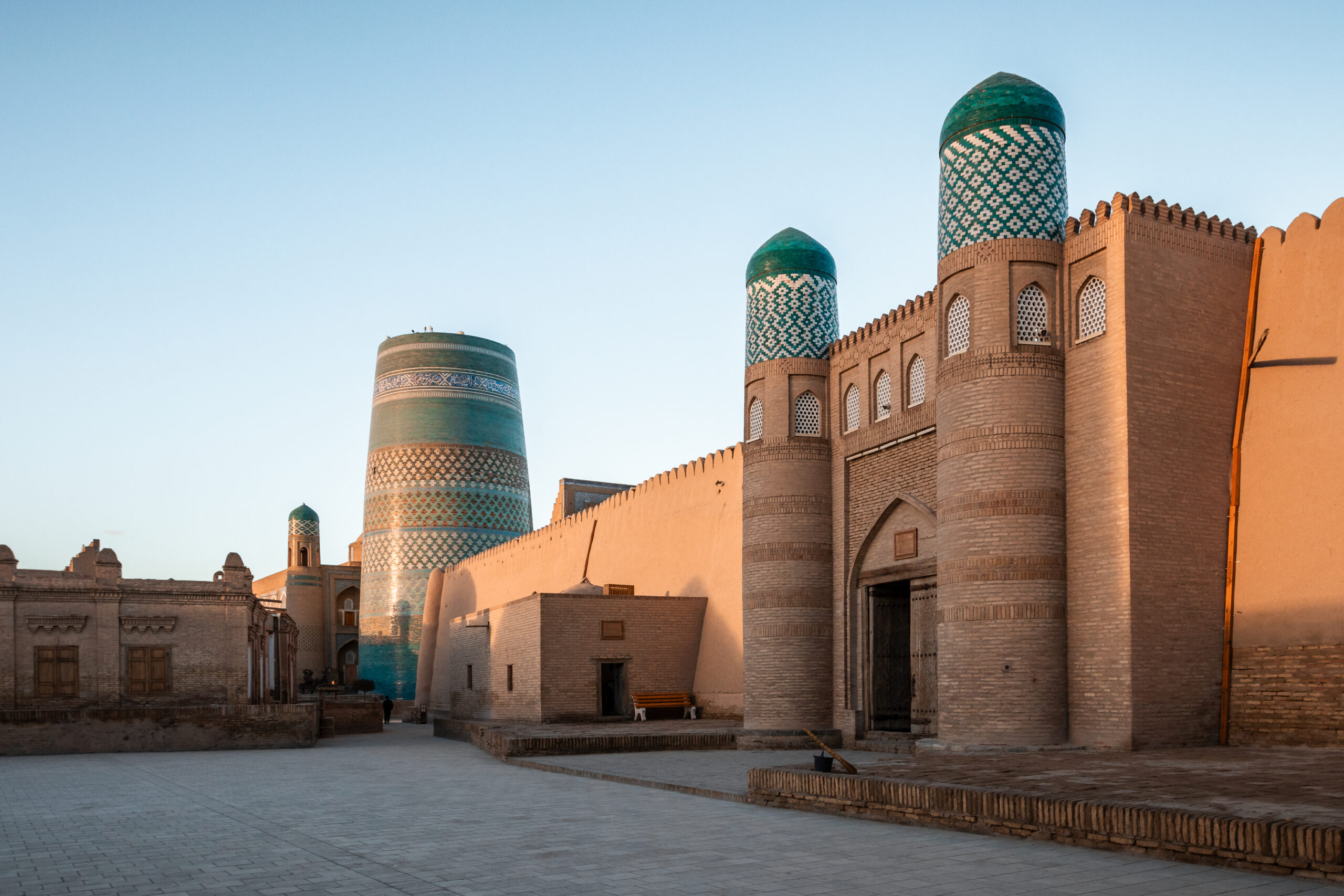
Khiva, Uzbekistan is one of Central Asia‘s most remarkable Silk Road cities, and this travel guide will show you exactly how to visit it independently on a budget, from getting there to exploring Itchan Kala. Tucked away in the far west of Uzbekistan, Khiva is a perfectly preserved Silk Road city that feels like stepping into a living museum. Despite its remote location, Khiva is absolutely worth the journey, especially for budget travellers.
It’s compact and easy to explore on foot, most of the sights are concentrated within the city walls, and you’ll find affordable accommodation and food options throughout. In this travel guide, I’ll show you exactly how to get to Khiva, how to explore it independently, where to eat and stay, and the must-see landmarks that will make you fall in love with this desert gem.
With its towering mud-brick walls, turquoise-domed mosques, and maze-like alleyways, Khiva’s old town – the Ichan Kala – is a UNESCO World Heritage Site that still retains its centuries-old charm. Whether you’re wandering through its quiet courtyards at sunrise or watching the sun set over the minarets, the city offers a truly magical atmosphere that’s hard to find elsewhere.
How to Get to Khiva on a Budget
Reaching Khiva used to be a bit of a challenge due to its remote location in western Uzbekistan, but things have become much easier in recent years with the addition of a train station serving the city. That said, there are still far fewer trains to Khiva compared to more connected cities like Bukhara or Samarkand, so it’s important to plan ahead.
From Bukhara, the journey takes around 8 hours, while from Tashkent it’s over 12 hours. For longer rides, I recommend booking a 2nd class sleeper (kupe) ticket for a more comfortable experience. You can check schedules and purchase tickets through the official Uzbek Railways website.
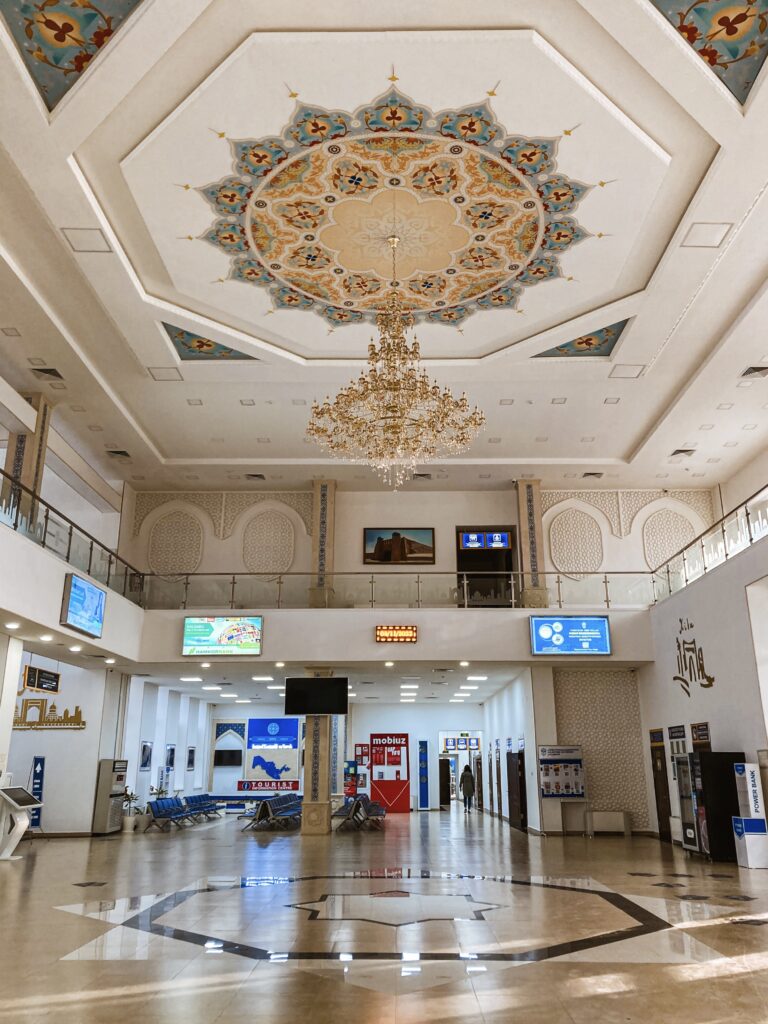 Khiva’s Train Station
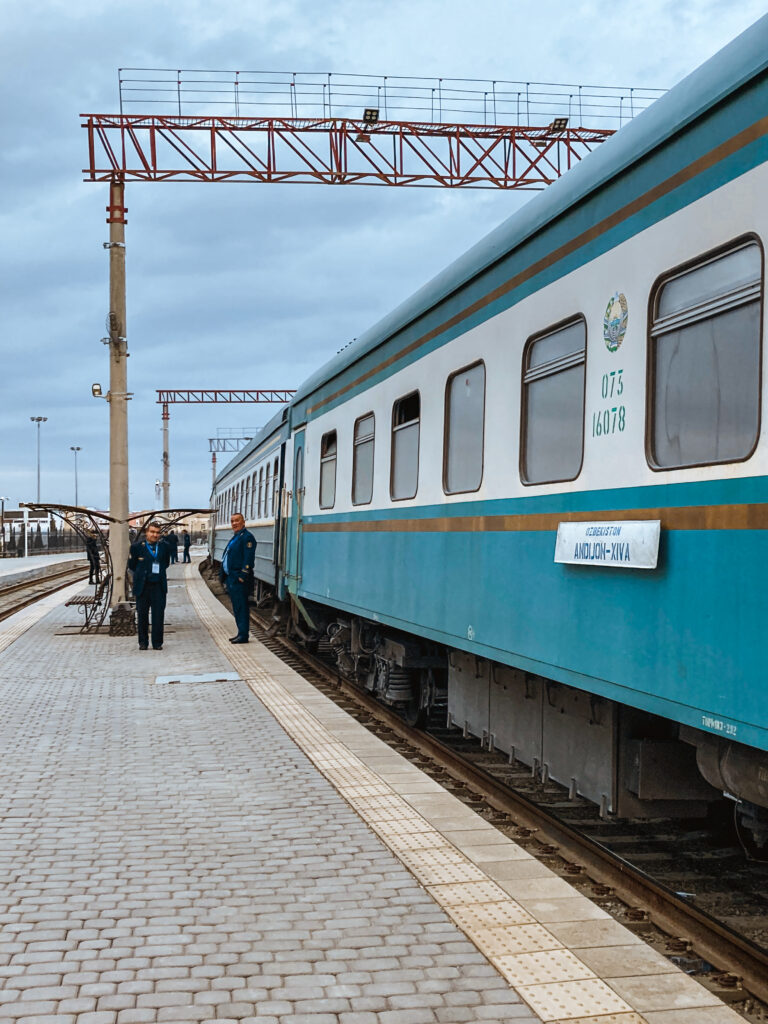 My Soviet Train from Khiva to Tashkent
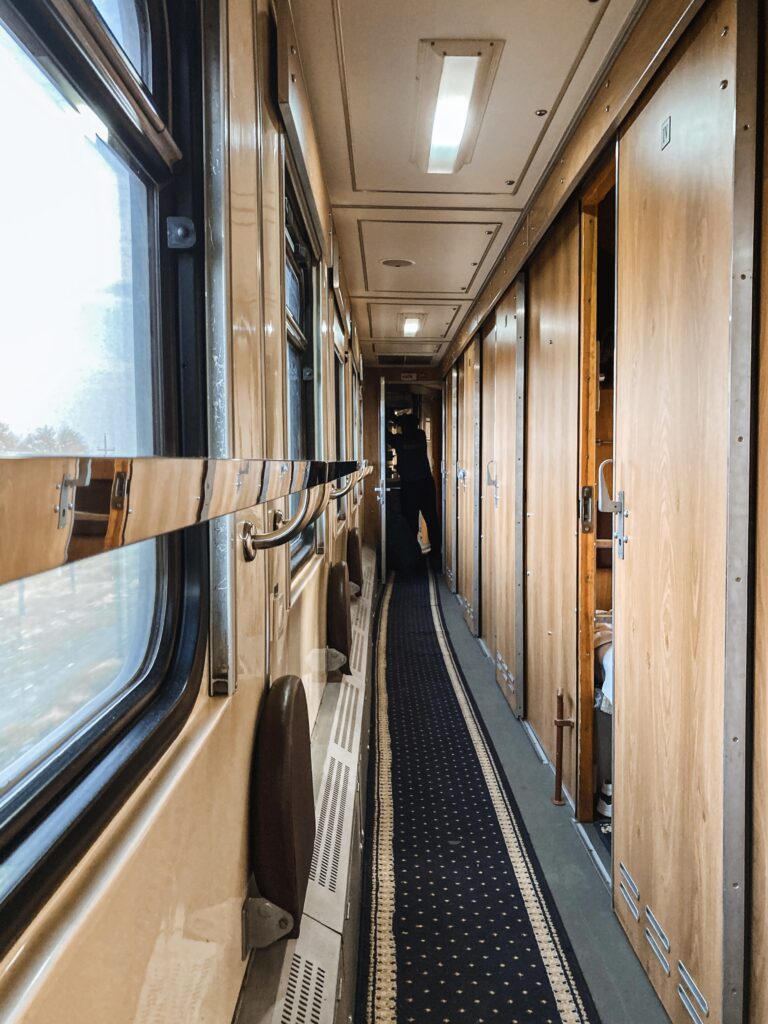 Corridor in 2nd Class (kupe)
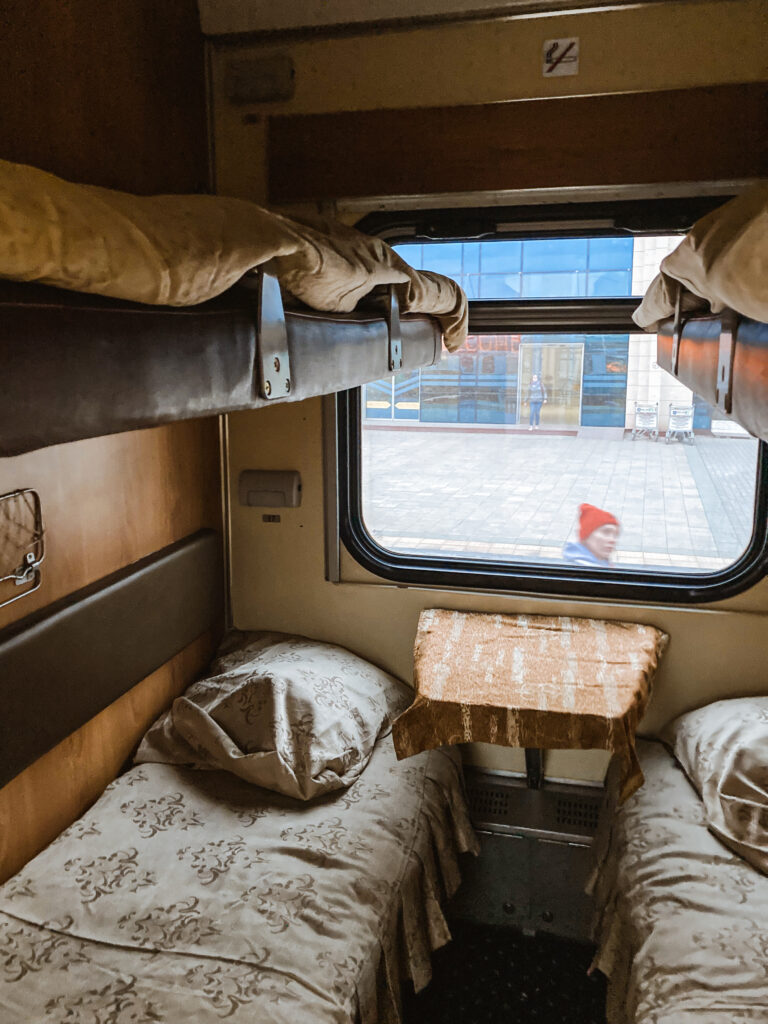 2nd Class (kupe) Compartiment
How to Get Around in Khiva
Getting around Khiva is incredibly easy. The Itchan Kala (old city) is compact, walkable, and completely enclosed by ancient mud-brick walls. You won’t need any transport once you’re inside, as all the major sights are within a short walking distance from each other. In fact, wandering through its narrow alleyways on foot is half the charm of exploring Khiva. If you’re staying outside the old city walls, you can easily walk in. Most guesthouses and budget hotels are within a 10-minute walk from the main gates.
Khiva Daily Budget Guide
The city is tiny, and almost all your expenses will happen within the city walls. Khiva can feel slightly more expensive than Bukhara because the “Itchan Kala” (Old City) is a tourist hub, but it’s still incredibly cheap.
The “One-Ticket” System: Explain that you buy one ticket at the West Gate that lasts for two days and gets you into almost everything. This is the ultimate budget tip for Khiva!
| Category | Shoestring Budget (€) | Comfort Budget (€) |
| Accommodation | €8 – €12 (Guesthouses outside walls) | €20 – €35 (Historic Boutique Hotels) |
| Meals | €5 – €9 (Chaykhanas & Plov) | €15 – €22 (Terrace restaurants with views) |
| Transportation | €0 (Entirely walkable) | €5 – €10 (Taxi to/from Urgench) |
| Entry Fees | €12 (One-time 2-day ticket) | €15 (Including Minaret climbs) |
| Total Daily | €25 – €33 | €40 – €67 |
Practical Tips for Visiting Khiva on a Budget
To make your trip to the Silk Road as smooth as possible, here is everything you need to know about the “logistics” of travelling in Uzbekistan.
Money & Budgeting in Khiva
Uzbekistan is still a very cash-heavy society. While things are changing, you should prepare for a “cash-only” lifestyle outside of major hotels.
The Cash Challenge: Local currency (Uzbek Som) comes in many bills. Because the value is low, a simple €50 withdrawal can result in a massive stack of paper. Bring a large wallet or a dedicated pouch for your money! Expect to spend between €20-€30 per day for a true budget experience.
ATM Struggles: There are very few ATMs inside the old city walls, and they frequently run out of cash. Use your Wise or Revolut cards to withdraw a large amount in Khiva’s “new town” before entering the walls.
Avoid ATM fees with Wise
The card I use for all my travel withdrawals – real exchange rate, low fees.
Use Revolut to avoid ATM fees
Good alternative to Wise – I carry both as a backup.
Health & Safety in Khiva
Khiva is generally very safe for travellers. Khiva is in the Khorezm desert and it gets incredibly hot. Buy your big water jugs at the small local shops just outside the North or East gates to save a few Euros compared to the stalls right next to the Kalta Minor Minaret. And because you can get hurt or sick, having solid travel insurance is a must.
Don’t skip travel insurance!
I use SafetyWing for most trips – solid coverage for adventure travel.
Internet & Connectivity in Khiva
Don’t rely on hotel Wi-Fi, which can be spotty and slow in older guesthouses. Instead of hunting for a local SIM card shop (which can be a headache with registration), I recommend using Saily. You can set up an eSIM before you even land, so you have data the second you arrive in Khiva.
Need data before you land? Try Saily eSIM
Use code RITAHE1486 for $5 off your first plan.
Culture & Etiquette in Khiva
Uzbek people are incredibly hospitable, but respecting local customs goes a long way. Dress Code: While Uzbekistan is a secular country, it is a Muslim-majority one. When visiting the religious sites, ensure your shoulders and knees are covered. Early Birds vs. Sunset: the best “budget” way to enjoy the city is to walk the walls at sunrise before the ticket booths open and the crowds arrive.
Top Things to See in Khiva
Khiva’s main attraction is its walled inner city, Itchan Kala, a UNESCO World Heritage Site that feels like stepping into a living museum. Enclosed by ancient mud-brick walls, this atmospheric maze of narrow alleyways, turquoise-domed mosques, and intricately tiled madrassas is a joy to get lost in. It’s the kind of place made for slow wandering, where every corner reveals something beautiful – be it a quiet courtyard, a hidden minaret, or a workshop selling handmade carpets and ceramics.
While you can walk through the city gates for free, you’ll need to purchase a ticket to access most of the monuments and historical sites inside. The general entrance ticket can be purchased at the main Ata Darvaza Gate (Western Gate) and should cost around 150,000 Uzbek Som (around €12). It’s valid for 48 hours, giving you plenty of time to explore.
Pro Tip: This is one of the most touristy spots in Uzbekistan, but it doesn’t have to feel that way. Visit at sunrise, and you might just have the silent, golden-lit streets all to yourself.
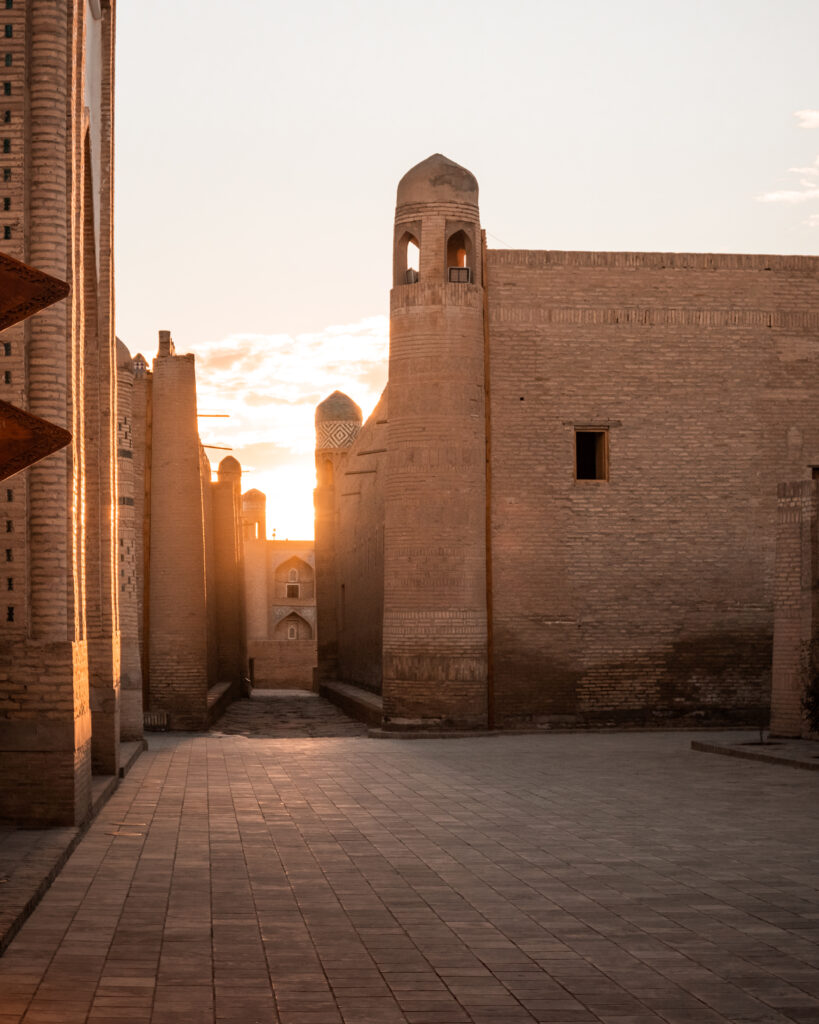 Empty Streets of the Itchan Kala at Sunrise
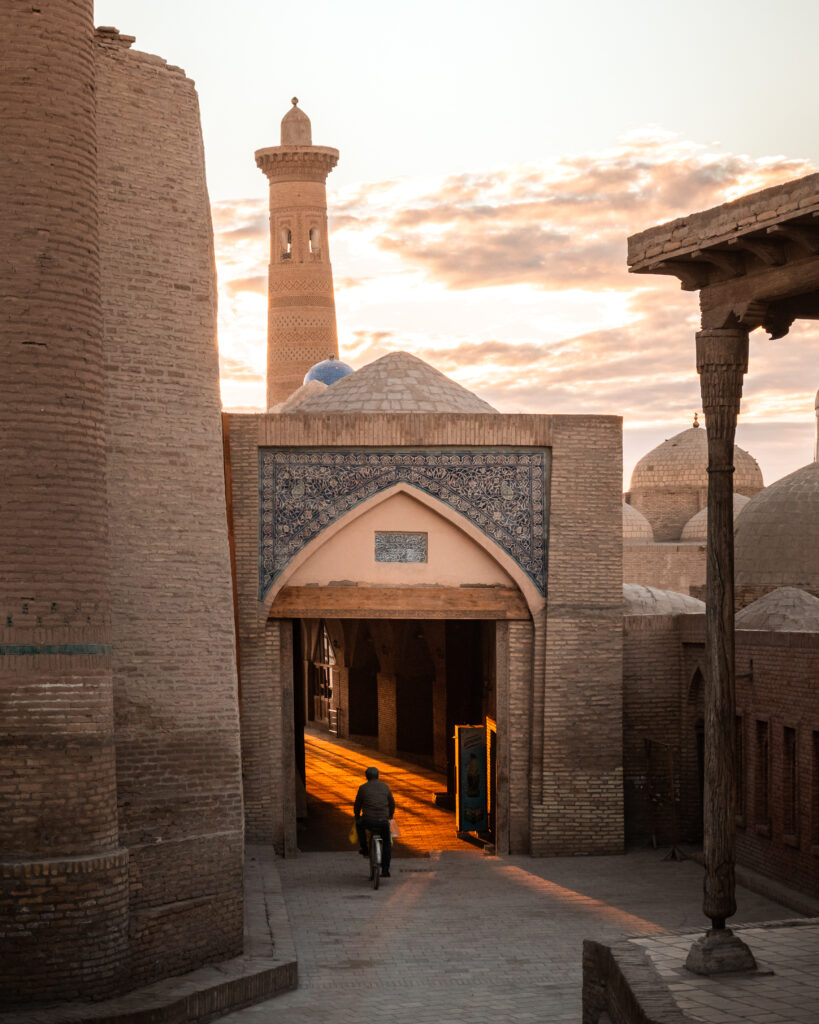 Empty Streets of the Itchan Kala at Sunrise
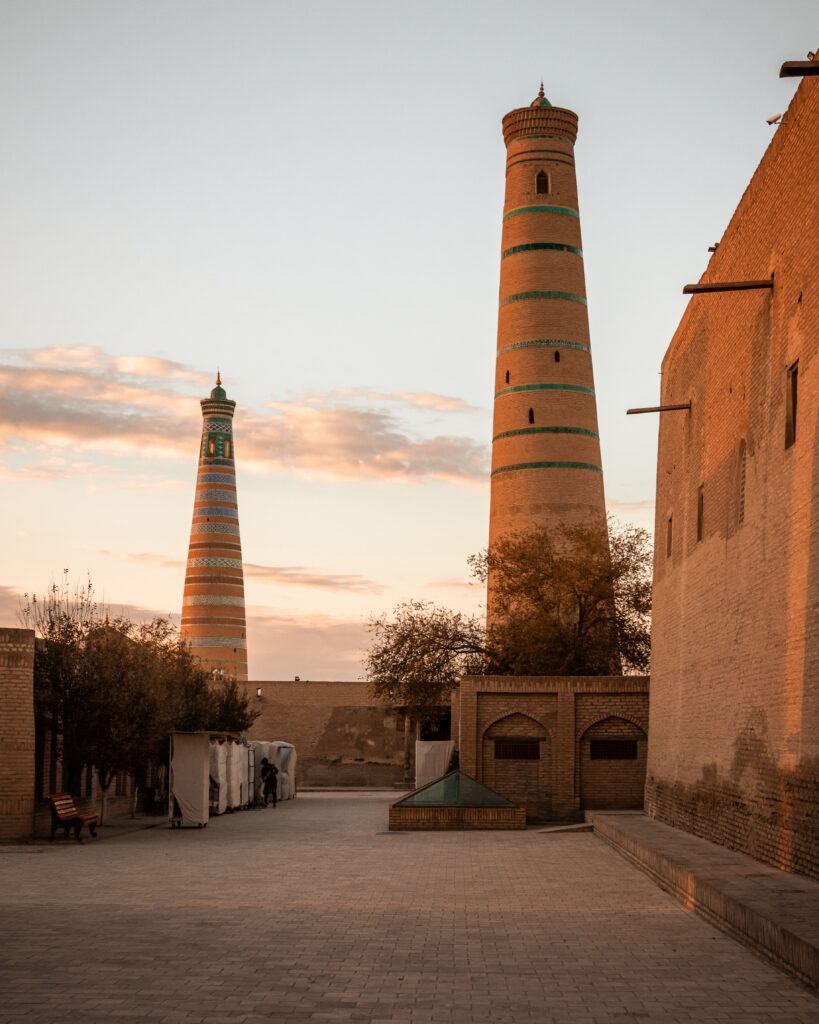 Empty Streets of the Itchan Kala at Sunrise
The old city is compact and easily walkable, but there’s more to see than first meets the eye. So take your time. Sit for a while in a quiet madrasah courtyard. Climb a minaret. Let yourself drift. Below are some of the must-see highlights to look out for.
Kalta Minor Minaret
Arguably the most iconic landmark in Khiva, the Kalta Minor Minaret stands at the heart of Itchan Kala, just inside the Ata Darvaza Gate. Its striking, unfinished structure, covered in vivid turquoise and blue tiles, was meant to be the tallest minaret in Central Asia. However, construction was abruptly halted after the death of its patron, Muhammad Amin Khan, in 1855, leaving the minaret at just 29 metres high. Despite never being completed, its colourful and wide form makes it one of the most photogenic spots in Khiva. You’ll find it right next to the Muhammad Amin Khan Madrasa, making it a perfect first stop as you enter the old town.
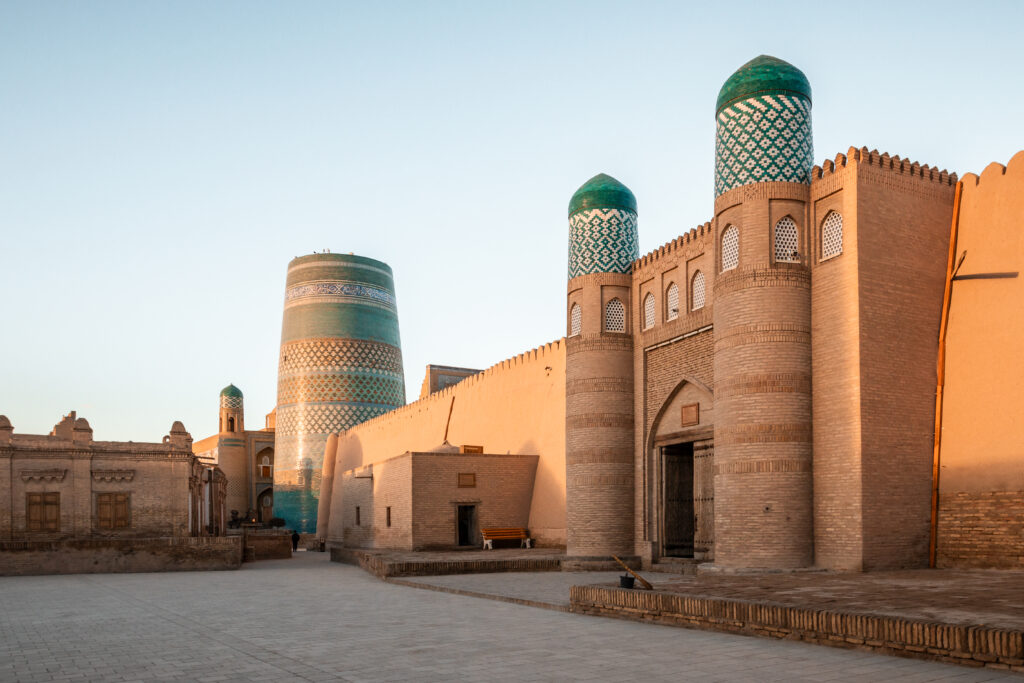 Entrance to the Kunya Ark Fortress and Kalta Minor Minaret
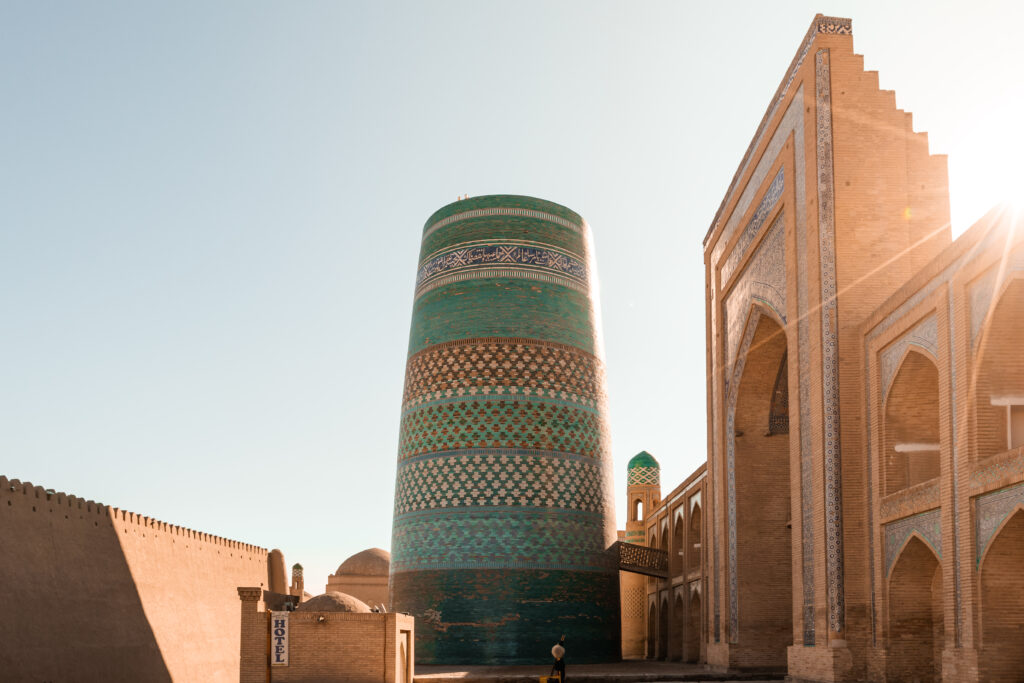 Kalta Minor Minaret
Kunya Ark Fortress
Located within the walls of Itchan Kala, the Kunya Ark Fortress was once the royal residence of Khiva’s khans. Built in the 17th century, this fortified complex functioned as a city within a city, containing a harem, stables, arsenal, mosque, and even a throne room.
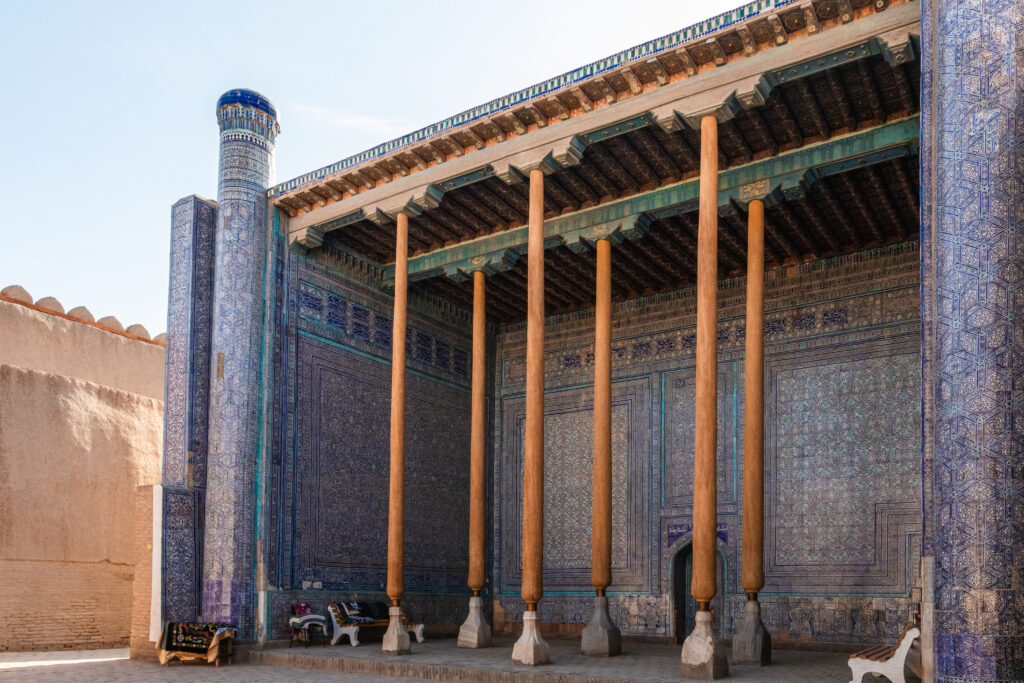 Inside the Fortress
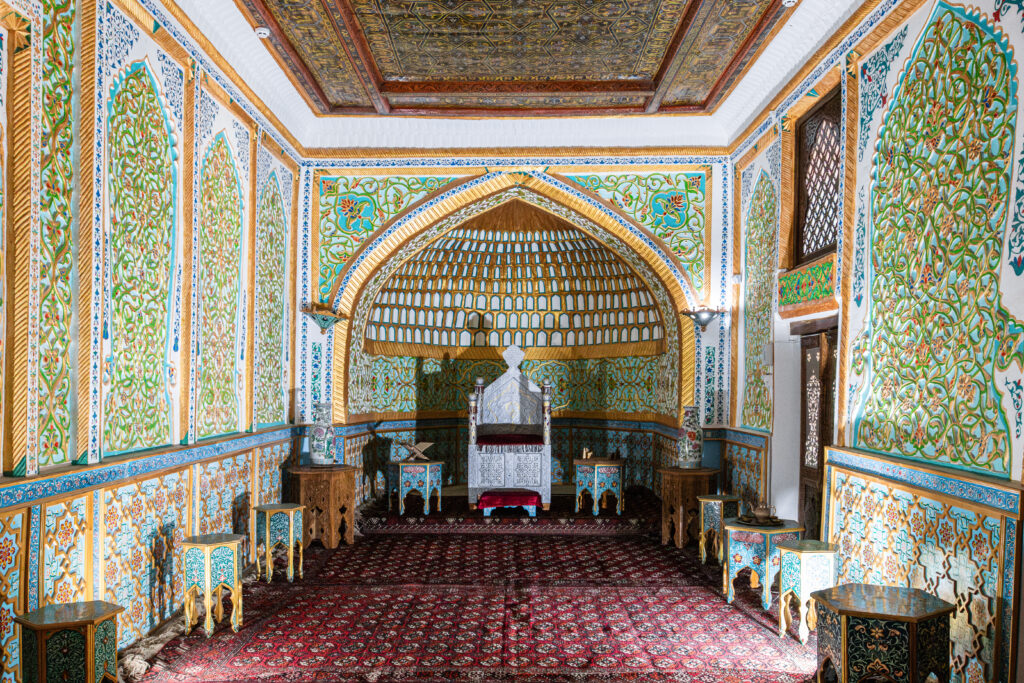 Throne Room
Climb up to the watchtower for panoramic views over the old city, it’s especially a great place for sunset. The fortress is included in the general entrance ticket to Itchan Kala.
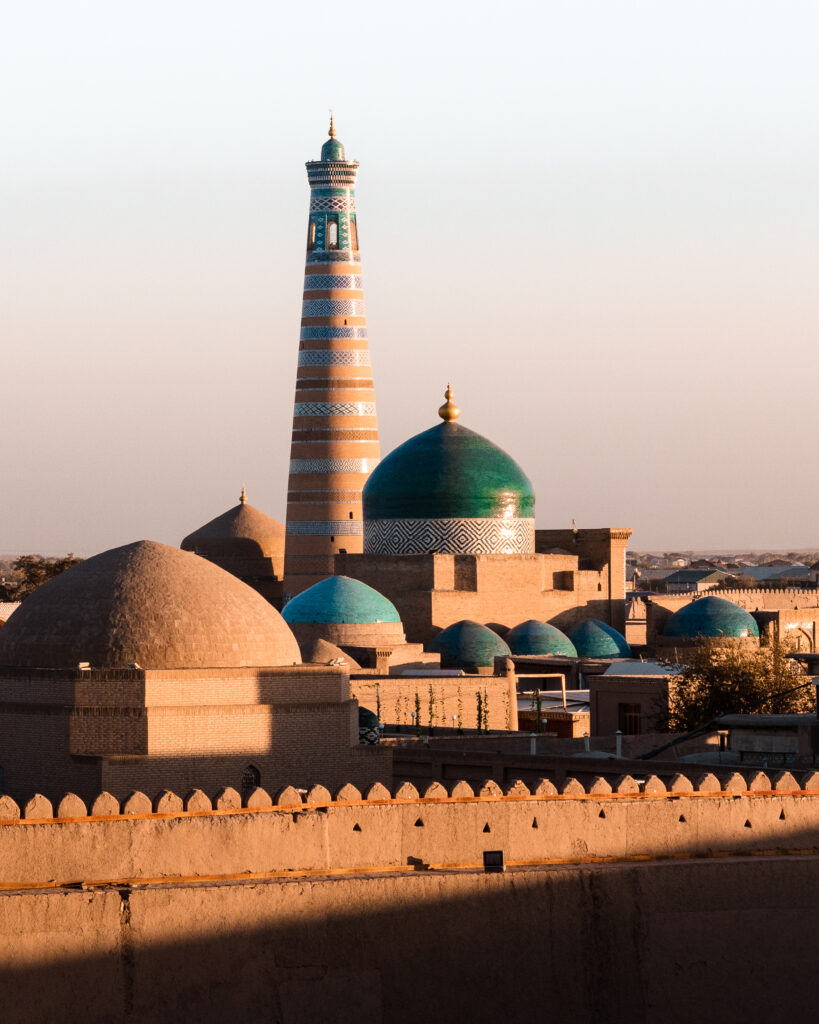 Views of Islam Khodja from the Watchtower
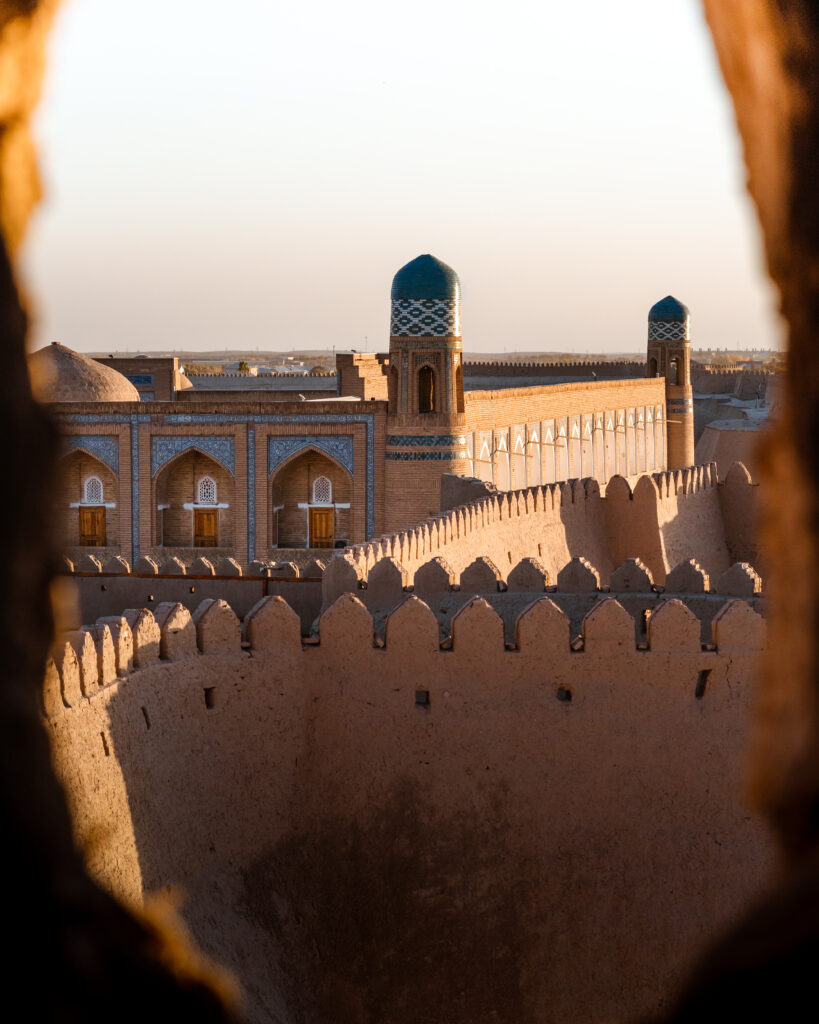 Views at Sunset from the Watchtower
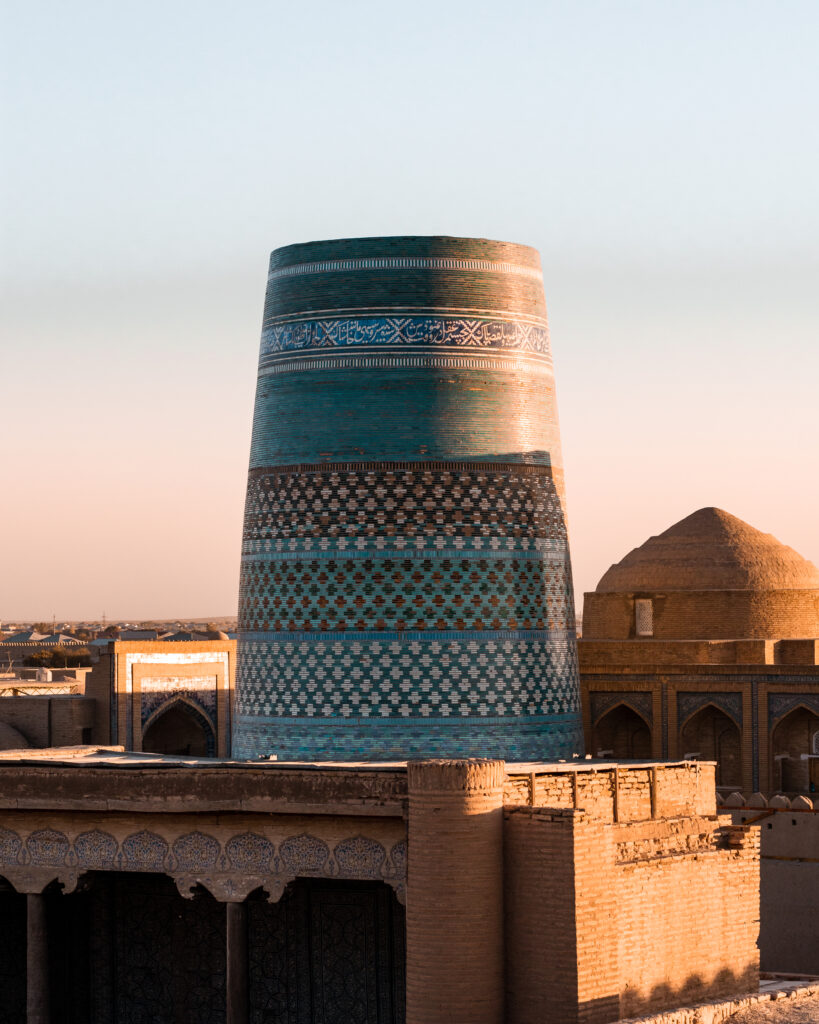 Views of Kalta Minaret from the Watchtower
Juma Mosque
Unlike the ornate, tile-covered mosques found elsewhere in Uzbekistan, Juma Mosque in Khiva stands out for its unique and minimalist design. Originally built in the 10th century and rebuilt in the 18th century, this atmospheric mosque is supported by 213 wooden columns, some of which date back over a thousand years. The forest of carved pillars creates a mystical, almost meditative atmosphere inside, a peaceful escape from the heat and crowds outside. There are no grand domes or elaborate decorations here, just timeless simplicity and silence. It’s one of Khiva’s most memorable sites and is included in the general ticket.
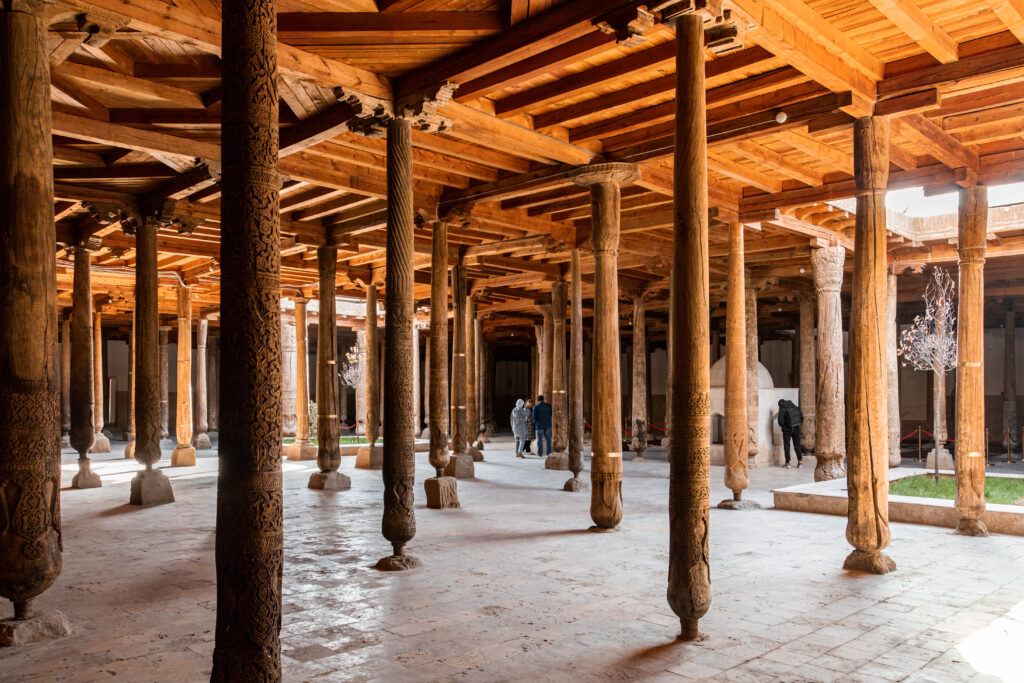 Juma Mosque
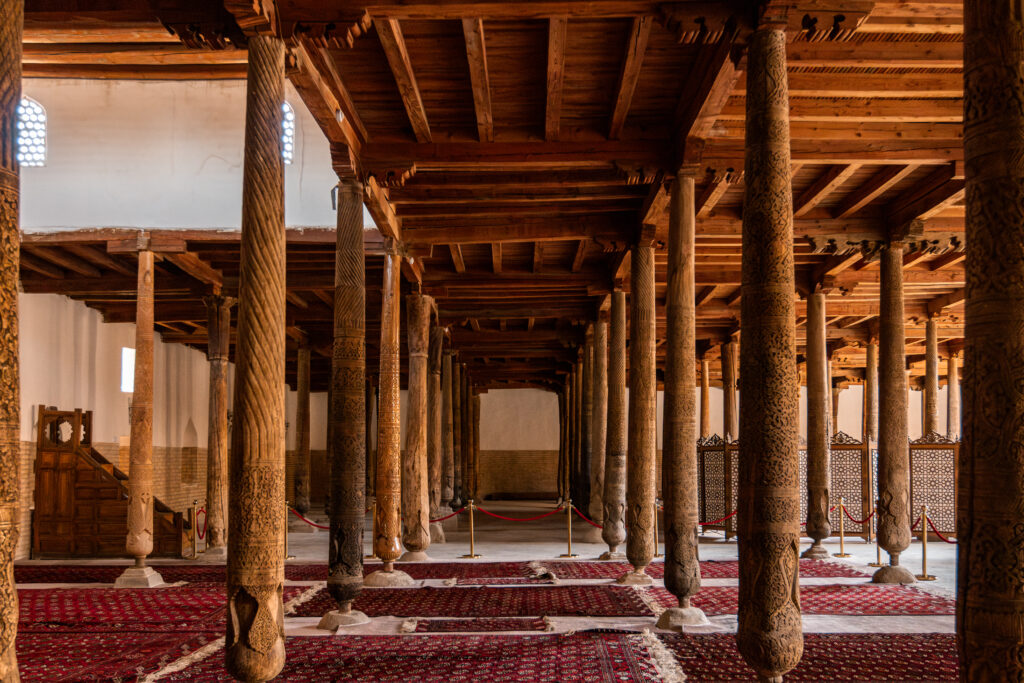 Juma Mosque
Tash Khauli Palace
Built in the 1830s as a more elaborate replacement for the Konya Ark, the Tash Khauli Palace was the royal residence of Khiva’s Khans during the 19th century. This sprawling complex features over 150 rooms arranged around several courtyards, including the harem, reception hall, and court of justice. The palace is a stunning example of Khivan architecture, with intricately carved wooden pillars, dazzling blue tile-work, and decorative ceilings that showcase the craftsmanship of the time. The palace is one of the highlights within Itchan Kala and is covered by the general entrance ticket.
Islam Khodja Complex
The Islam Khodja Complex is one of Khiva’s most striking and historically significant landmarks. Built in the early 20th century, it consists of a madrasa and a towering minaret, which is the tallest in Khiva. Standing at 45 meters, the Islam Khodja Minaret offers breathtaking views of the city and surrounding area, making it an essential stop for panoramic photos. The accompanying madrasah, though smaller in comparison, is also beautifully decorated, with elaborately carved wooden doors and ornamental arches. This complex adds a more modern chapter to Khiva’s rich architectural history. There’s an extra ticket to access to the top of the minaret.
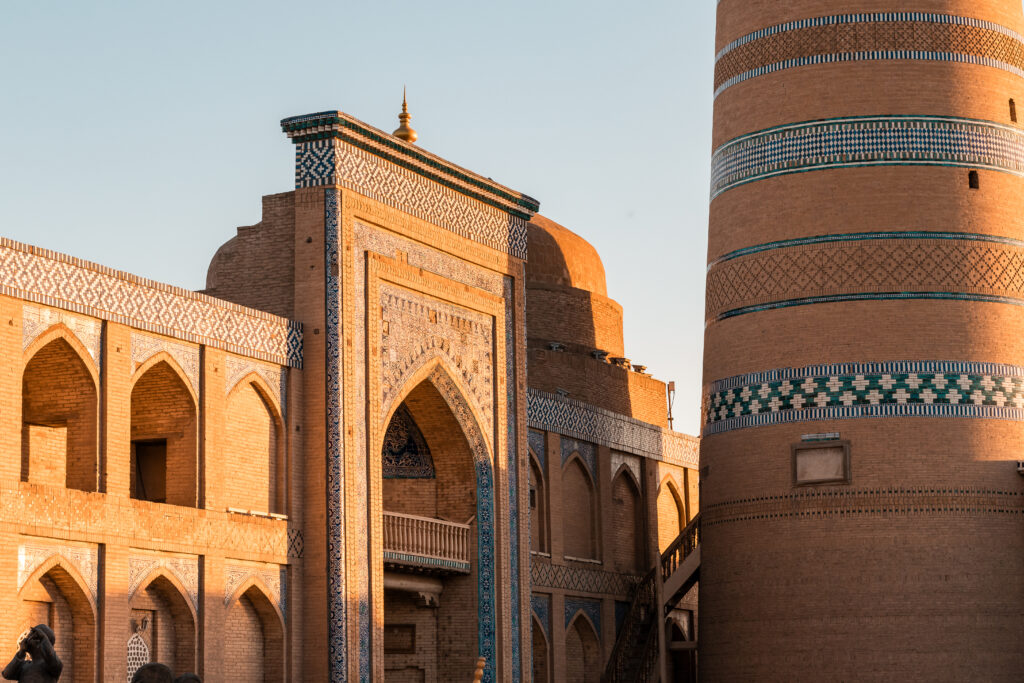 Islam Khodja Madrasah
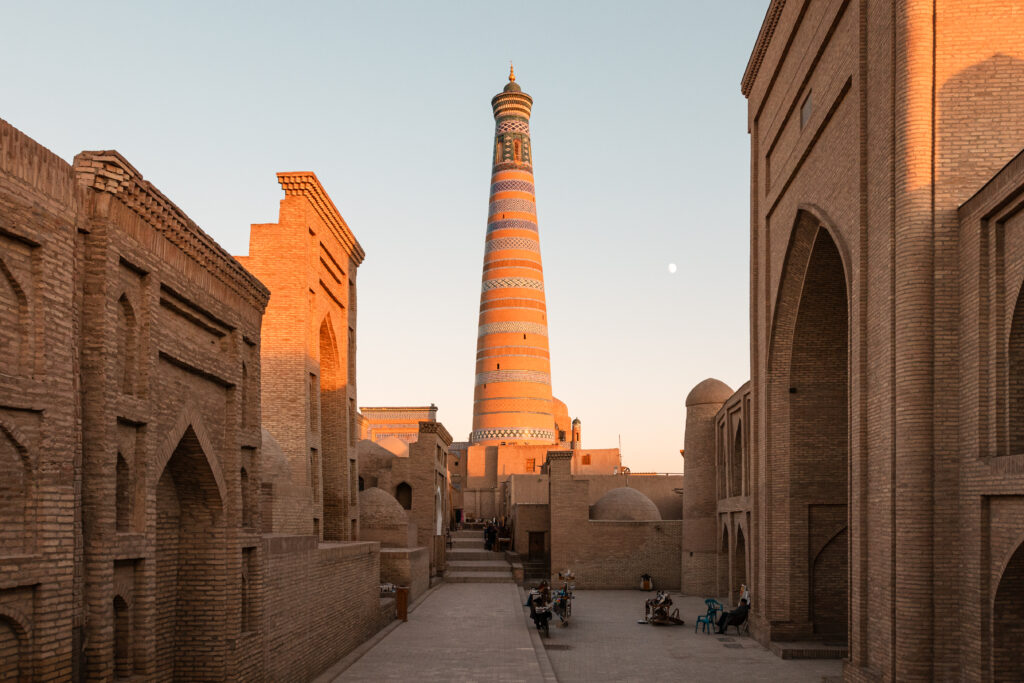 Islam Khodja Minaret
Pahlavon Mahmud Mausoleum
The Pahlavon Mahmud Mausoleum is one of Khiva’s most revered and visually striking sites. Dedicated to the legendary figure Pahlavon Mahmud, a revered poet, wrestler, and Sufi master, this mausoleum stands as a symbol of spiritual and cultural significance for the people of Khiva. Built in the 14th century and later expanded in the 18th century, the mausoleum is an exquisite example of Khivan architecture, with a stunning blue dome and intricate tilework that decorates the exterior. Inside, you’ll find the tomb of Pahlavon Mahmud as well as the tombs of other notable figures. This mausoleum is a key site to visit within the Ichan Kala but it requires an additional ticket you can purchase at the entrance.
City Walls
Khiva’s defensive walls are incredibly well-preserved, and walking along them provides a unique perspective of the city. Head up at sunset for an unforgettable view of the old city bathed in golden light.
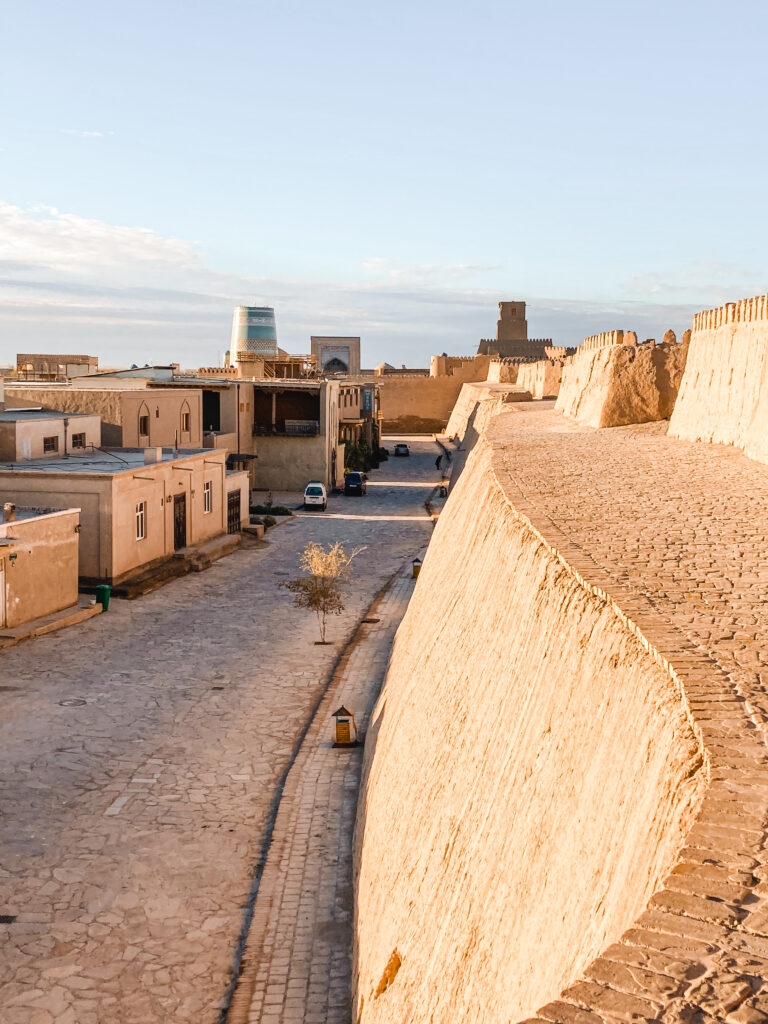 Walking in the City’s Walls
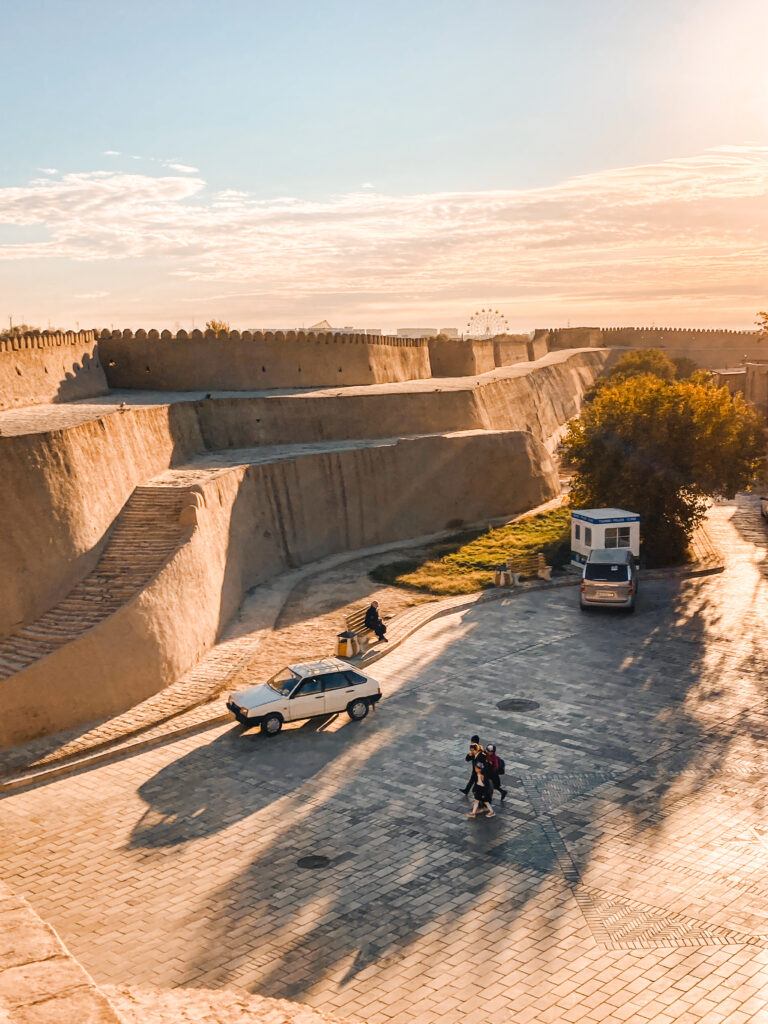 Walking in the City’s Walls
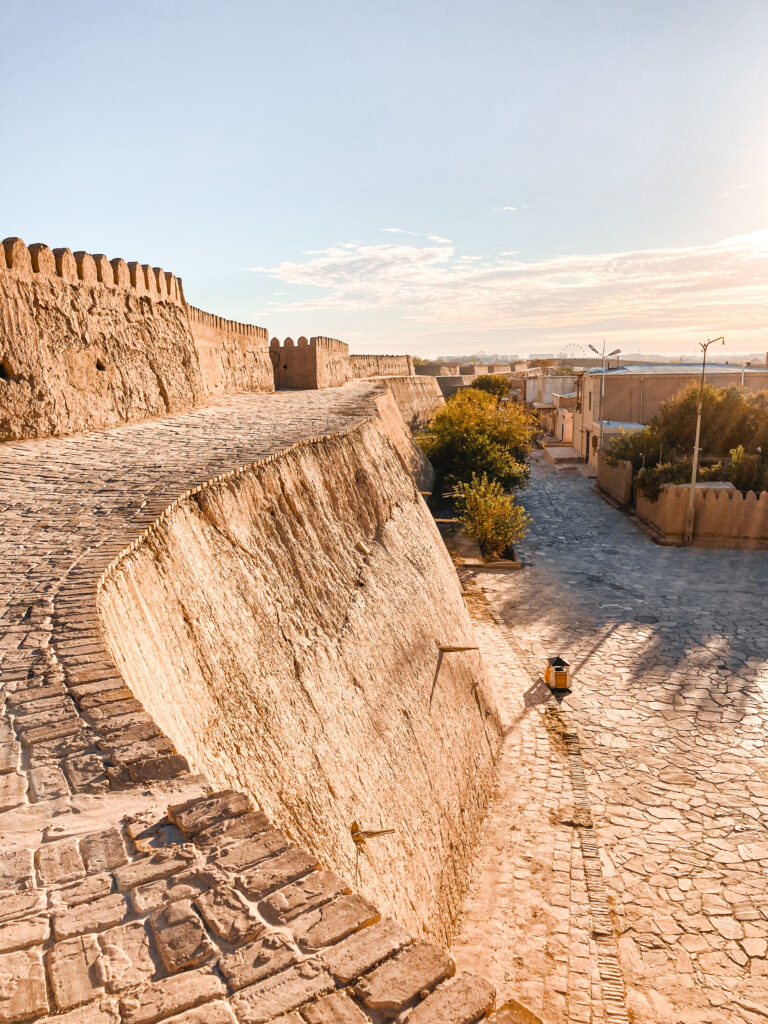 Walking in the City’s Walls
Where to Stay on a Budget
Khiva offers a wide range of accommodation options, catering to all budgets, and the number of choices continues to grow as Uzbekistan becomes an increasingly popular tourist destination. Whether you’re looking for budget-friendly hostels, mid-range hotels, or luxury stays, you’ll find something to suit your needs on the usual platforms like Booking.com.
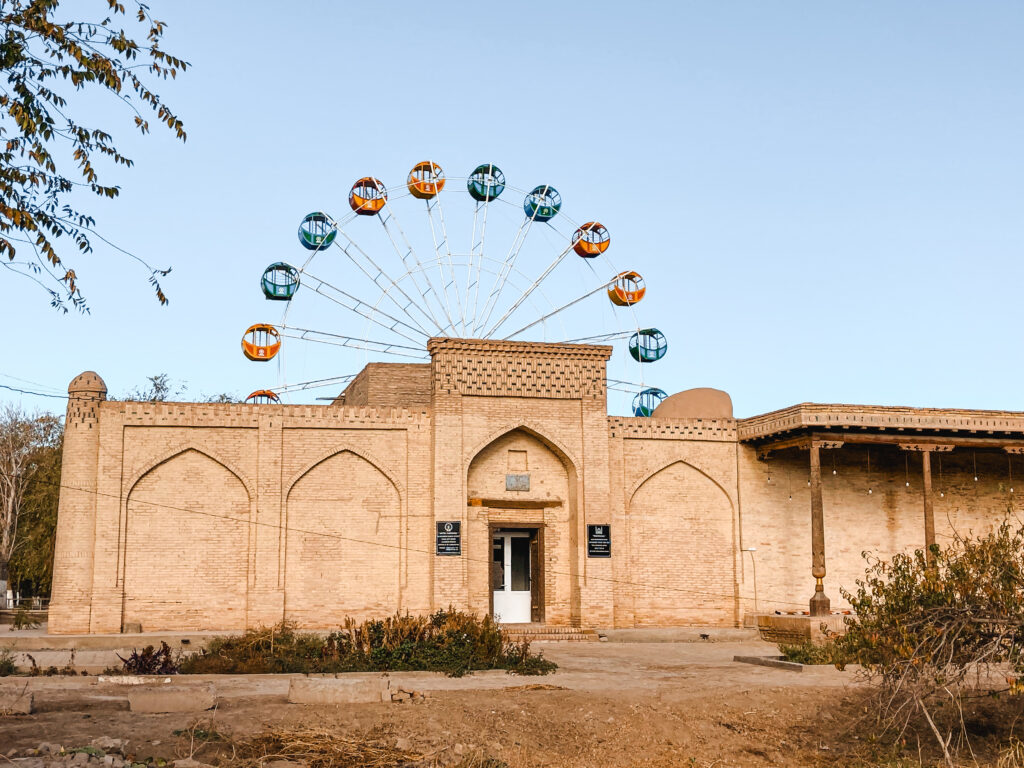
I stayed at Carousel, a welcoming, budget-friendly hostel conveniently located outside the walled city not too far from the East Entrance of the Itchan Kala.
Where to Eat on a Budget
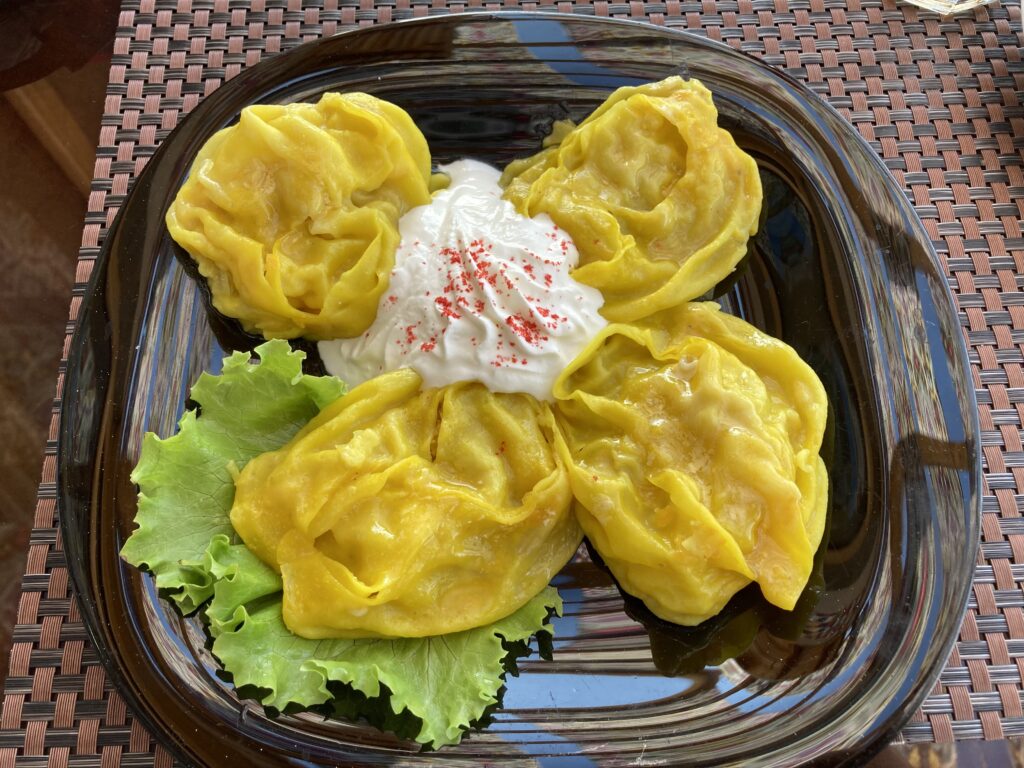
Khiva offers a range of dining options that let you experience the traditional flavours of Uzbekistan in unique settings. Here are some of the best places to eat while exploring this ancient city:
Frequently Asked Questions About Visiting Khiva
Absolutely. Khiva is unlike anywhere else in Uzbekistan. The entire old city, Itchan Kala, is a UNESCO World Heritage Site that has been remarkably preserved. It can feel more touristy than Bukhara, but arrive at sunrise and you’ll often have the golden-lit streets entirely to yourself. For anyone doing a full Uzbekistan circuit, Khiva is the most visually distinct stop and well worth the longer journey.
The most comfortable way is by overnight train from Bukhara (around 8 hours) or Tashkent (12+ hours). Book a 2nd class sleeper (kupe) for a comfortable night journey. You can also fly into Urgench Airport, which is around 30km from Khiva, and take a taxi or shared transport from there. Urgench is closer than Khiva’s own train station and may have better flight options depending on your route.
Two days is enough to see all the major sights within Itchan Kala without rushing. The old city is compact and walkable. One full day covers the highlights, but a second day lets you slow down, revisit at different times of day, and explore the quieter corners. If you’re short on time, one full day is doable, especially with an early start.
The general entrance ticket to Itchan Kala is purchased at the main Ata Darvaza Gate (Western Gate) and costs around 150,000 Uzbek Som (approximately €11). It’s valid for 48 hours and covers most of the monuments inside the walls, including Kunya Ark Fortress and Juma Mosque. Some sites like the Islam Khodja Minaret and Pahlavon Mahmud Mausoleum require additional tickets.
On a shoestring budget, expect to spend €25-€33 per day, which includes accommodation outside the walls (€8-€12), meals at local chaykhanas (€5-€9), and the entrance ticket spread across two days. Khiva is slightly pricier than Bukhara because tourism is concentrated within the walled city, but it’s still affordable by Western standards.
Staying inside Itchan Kala is atmospheric but significantly more expensive. Budget travellers typically stay in guesthouses just outside the walls, which are cheaper and usually within 10 minutes’ walk of the main gates. I stayed at Carousel Hostel, conveniently located near the East Entrance. You get the best of both worlds: affordable accommodation and easy access to the old city.
Spring (April-May) and autumn (September-October) are ideal. Khiva sits in the Khorezm desert and gets brutally hot in summer with temperatures regularly exceed 40°C. If you visit in summer, carry plenty of water, buy large bottles from shops outside the walls where they’re cheaper, and plan your sightseeing for early morning and late afternoon.
Yes, Khiva is safe and welcoming for solo women. Locals are curious and friendly. The main tourist sites are well-visited and you’re rarely truly alone. As elsewhere in Uzbekistan, dressing modestly (covered shoulders and knees) shows respect and keeps interactions smooth.
Where to Go After Khiva
After exploring the wonders of Khiva, you might be wondering where to head next in Uzbekistan. Luckily, this country is filled with fascinating destinations, each with its own unique charm. Here are a few ideas for your next adventure: