
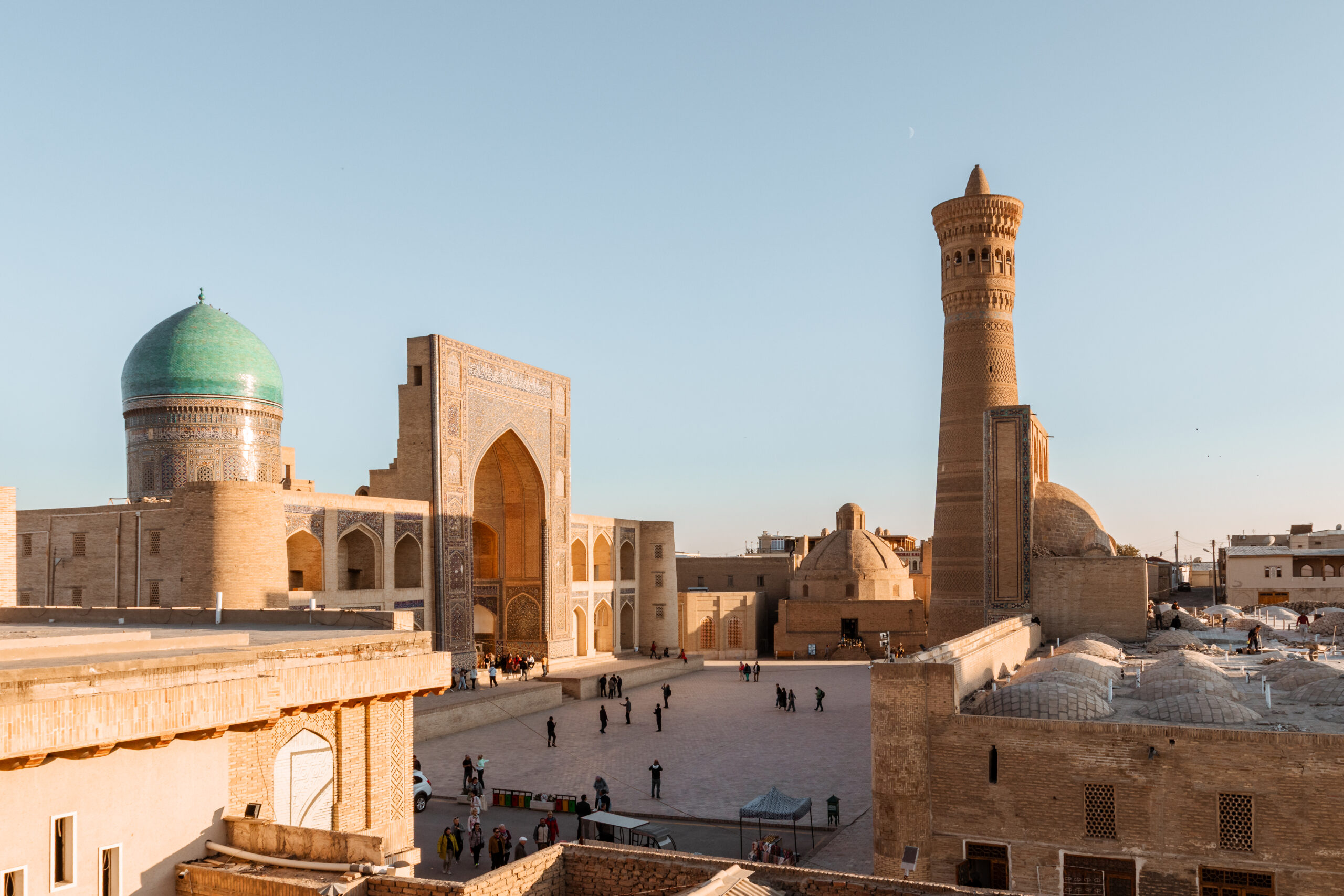
Backpacking Bukhara is one of the highlights of any Central Asia trip, and with its walkable old city, cheap guesthouses, and centuries-old bazaars, it’s also the most budget-friendly stop on the Silk Road. Bukhara is one of Uzbekistan’s most atmospheric cities, steeped in over two thousand years of history. In this travel guide, you’ll find everything you need to plan your trip to Bukhara on a budget – how to get there, where to stay, and all the must-see sights that make Bukhara one of the most unforgettable stops in Uzbekistan.
With its maze-like alleys, centuries-old madrasas, bustling bazaars, and clay-coloured domes, Bukhara offers a glimpse into a time when caravans passed through town trading spices, silk, and stories. Unlike the monumental flair of Samarkand, Bukhara charms with its lived-in feel, where locals sip tea in shaded courtyards and time seems to slow down. Best of all, it’s a very walkable and budget-friendly city, making it perfect for independent travellers and backpackers.
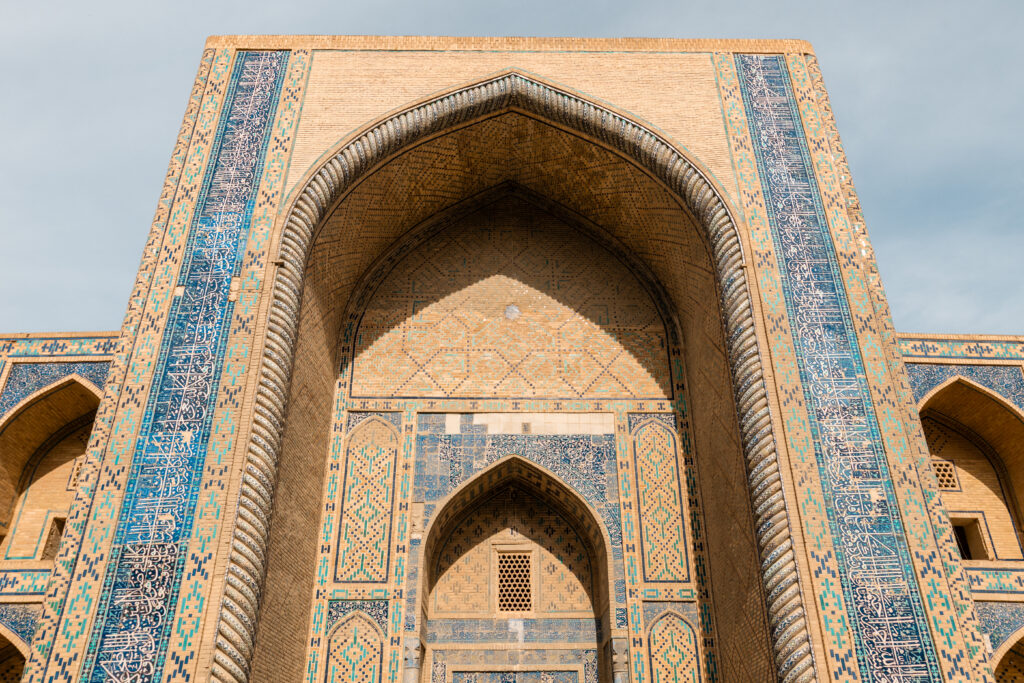 Ulugh Bek Madrasah
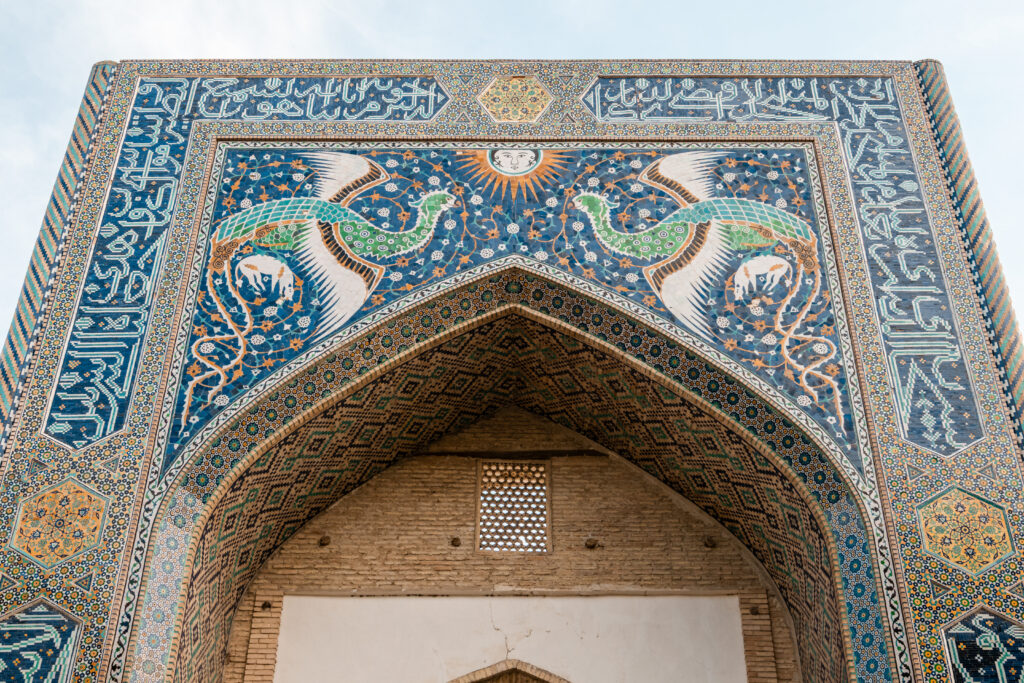 Nadir Divan Begi Madrasah
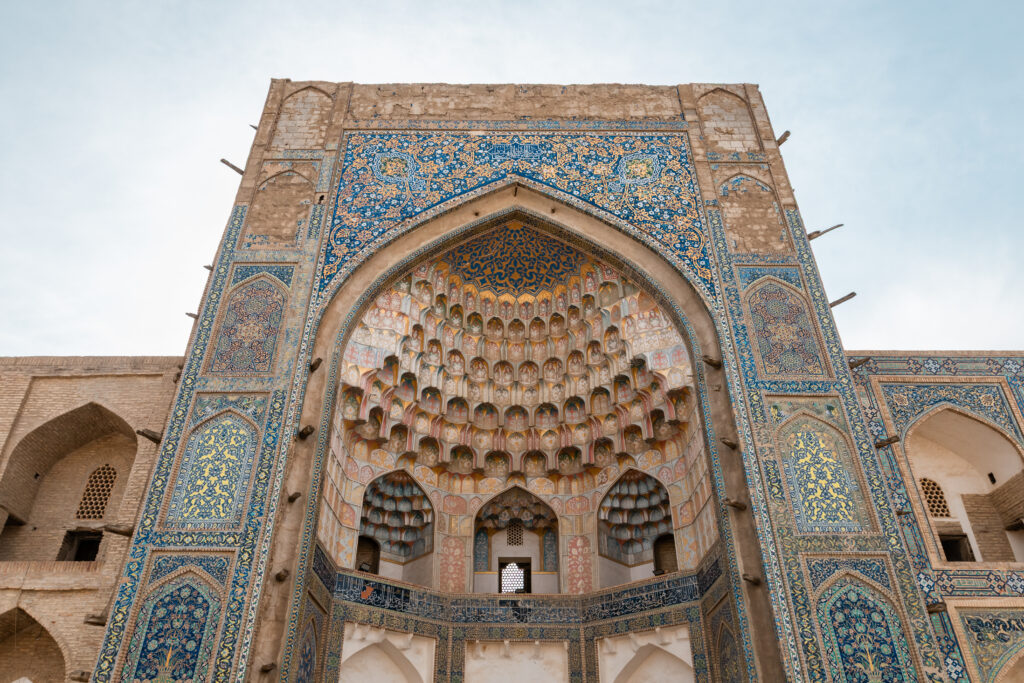 Abdulaziz Khan Madrasah
How to Get to Bukhara on a Budget
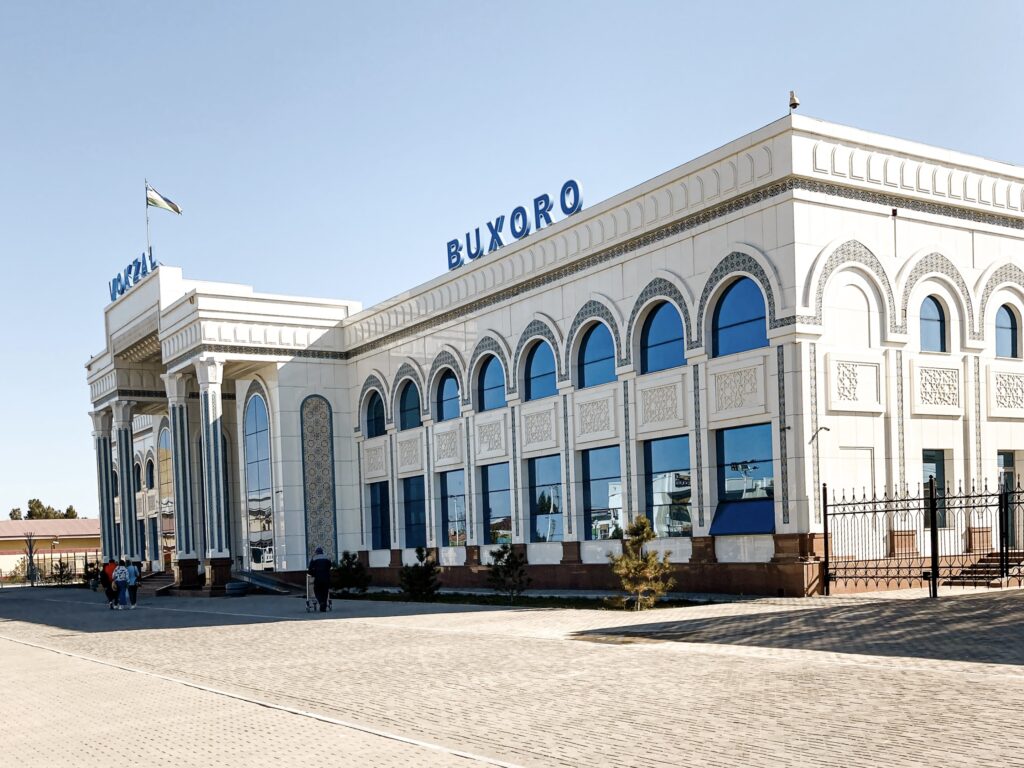
Getting to Bukhara is quick and easy, especially by train. The city is well connected to other major Silk Road destinations in Uzbekistan, including Tashkent, Samarkand, and Khiva. There are two main types of trains: the Afrosiyob, a high-speed modern train, and the Sharq, a slower but more budget-friendly option with traditional seating. You can check schedules and purchase tickets for all the trains through the Official Uzbek Railways website. It’s a good idea to book your tickets in advance, especially for the Afrosiyob, as it tends to sell out quickly during peak season.
How to Get Around Bukhara
Bukhara is incredibly easy to explore on foot – in fact, walking is the best way to soak in the city’s charm. Most of the major sights are all within walking distance of each other in the old town. The narrow alleyways, shaded courtyards, and clay-brick architecture are best enjoyed at a slower pace.
If you’re staying a bit outside the centre or don’t feel like walking, you can easily get a Yandex Go (the local version of Uber). It’s cheap, convenient, and saves you from the language barrier.
Bukhara Daily Budget Guide
Bukhara remains one of the most affordable stops on the Silk Road. Even with global inflation, the local costs for food and transport make it a paradise for budget travellers. Here is the breakdown of what I spent daily during my trip:
| Category | Shoestring Budget (€) | Comfort Budget (€) |
| Accommodation | €6 – €9 (Boutique Hostels) | €15 – €22 (Traditional Guesthouses) |
| Meals | €4 – €7 (Plov & Samsa) | €10 – €15 (Labi Hovuz area dining) |
| Transportation | €0 (100% Walkable Old Town) | €2 – €5 (Yandex for Train Station) |
| Entry Fees | €4 – €7 (Major Madrasahs) | €8 – €12 (Museums & Ark Fortress) |
| Total Daily | €14 – €23 | €36 – €54 |
Note: These prices reflect my experience in 2022. While the soul of Bukhara remains the same, please allow for slight inflation in local costs!
Practical Money-Saving Tips
Bukhara vs. Samarkand: Which is cheaper?
When planning a budget trip through Uzbekistan, many travelers wonder which of these two legendary cities will pull harder on their wallet. Having visited both, here is my honest take on how they compare:
The Verdict: Bukhara is the Budget King.
While both cities are incredibly affordable by Western standards, Bukhara is generally cheaper for the solo budget traveler. Here is why:
Which should you visit? If you only have time for one and budget is your absolute priority, Bukhara offers a more “timeless” and self-contained experience for less money. However, the grandeur of Samarkand’s Registan is something you truly cannot put a price on!
Practical Tips for Visiting Bukhara on a Budget
To make your trip to the Silk Road as smooth as possible, here is everything you need to know about the “logistics” of travelling in Uzbekistan.
Money & Budgeting in Bukhara
Uzbekistan is still a very cash-heavy society. While things are changing, you should prepare for a “cash-only” lifestyle outside of major hotels.
The Cash Challenge: Local currency (Uzbek Som) comes in many bills. Because the value is low, a simple €50 withdrawal can result in a massive stack of paper. Bring a large wallet or a dedicated pouch for your money! Expect to spend between €20-€30 per day for a true budget experience.
ATM Struggles: Some ATMs in Bukhara don’t accept foreign cards. Always keep some backup Euro or USD cash to exchange at a bank if the machines are down. I recommend using Wise or Revolut to manage your exchange rates.
Avoid ATM fees with Wise
The card I use for all my travel withdrawals – real exchange rate, low fees.
Use Revolut to avoid ATM fees
Good alternative to Wise – I carry both as a backup.
Health & Safety in Bukhara
Bukhara is generally very safe for travellers. However, because you can get hurt or sick, having solid travel insurance is a must.
Don’t skip travel insurance!
I use SafetyWing for most trips – solid coverage for adventure travel.
Internet & Connectivity in Bukhara
Don’t rely on hotel Wi-Fi, which can be spotty and slow in older guesthouses. Instead of hunting for a local SIM card shop (which can be a headache with registration), I recommend using Saily. You can set up an eSIM before you even land, so you have data the second you arrive in Bukhara.
Need data before you land? Try Saily eSIM
Use code RITAHE1486 for $5 off your first plan.
Culture & Etiquette in Bukhara
Uzbek people are incredibly hospitable, but respecting local customs goes a long way. Dress Code: While Uzbekistan is a secular country, it is a Muslim-majority one. When visiting the religious sites, ensure your shoulders and knees are covered.
Top Things to Do in Bukhara
Bukhara is a city that feels like a living museum: quieter, more compact, and more atmospheric than Samarkand. With its mud-brick alleys, centuries-old mosques, and laid-back vibe, it’s a place to slow down and wander, getting lost in its timeless charm.
Get Lost in the Old City
The best way to experience Bukhara is to just walk. Wander through narrow, winding streets, past crumbling madrasahs, and hidden courtyards. The Old City is small enough to explore on foot and full of surprises.
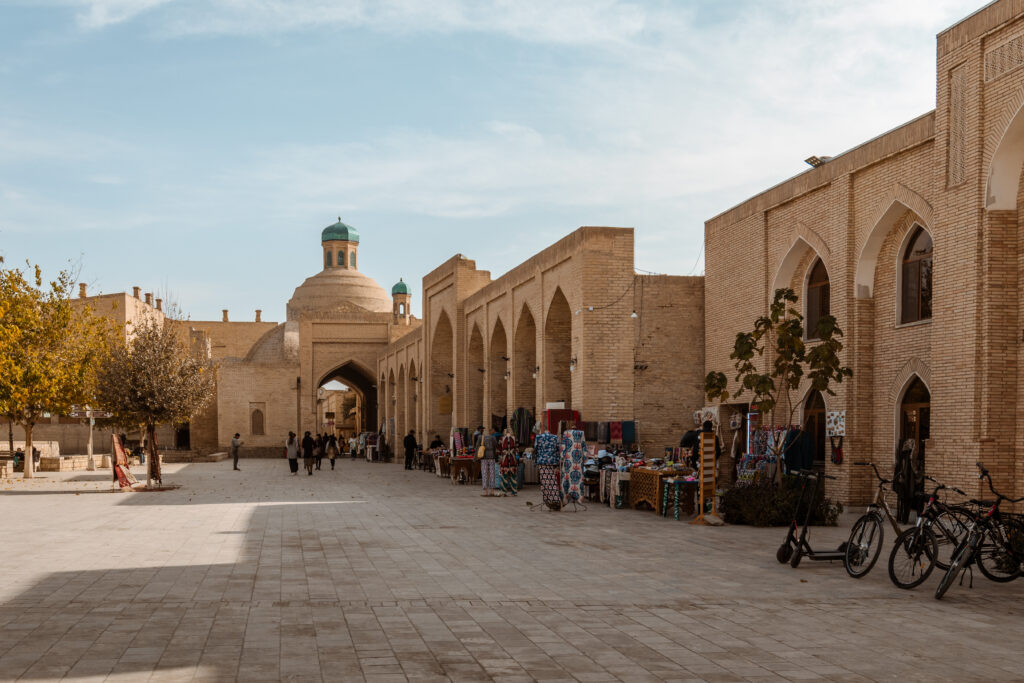 Streets of Bukhara
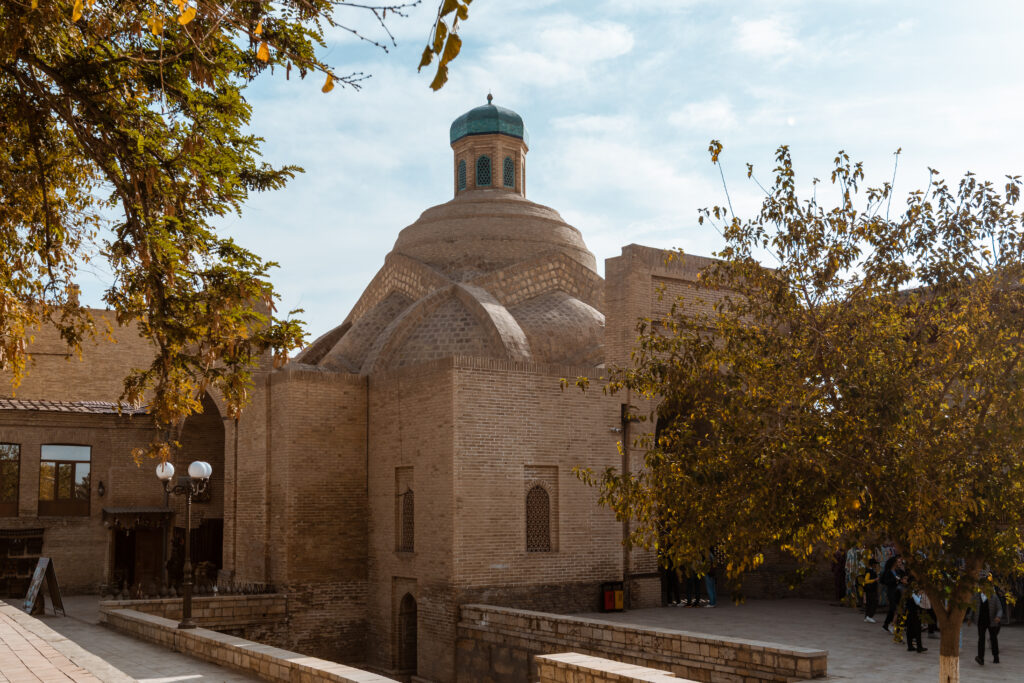 Streets of Bukhara
Admire the Kalyan Minaret and Po-i-Kalyan Complex
No trip to Bukhara is complete without visiting the Po-i-Kalyan Complex, the architectural heart of the old city and one of the most iconic landmarks in Uzbekistan. At its centre stands the Kalyan Minaret, a towering structure that has watched over Bukhara for nearly 900 years.
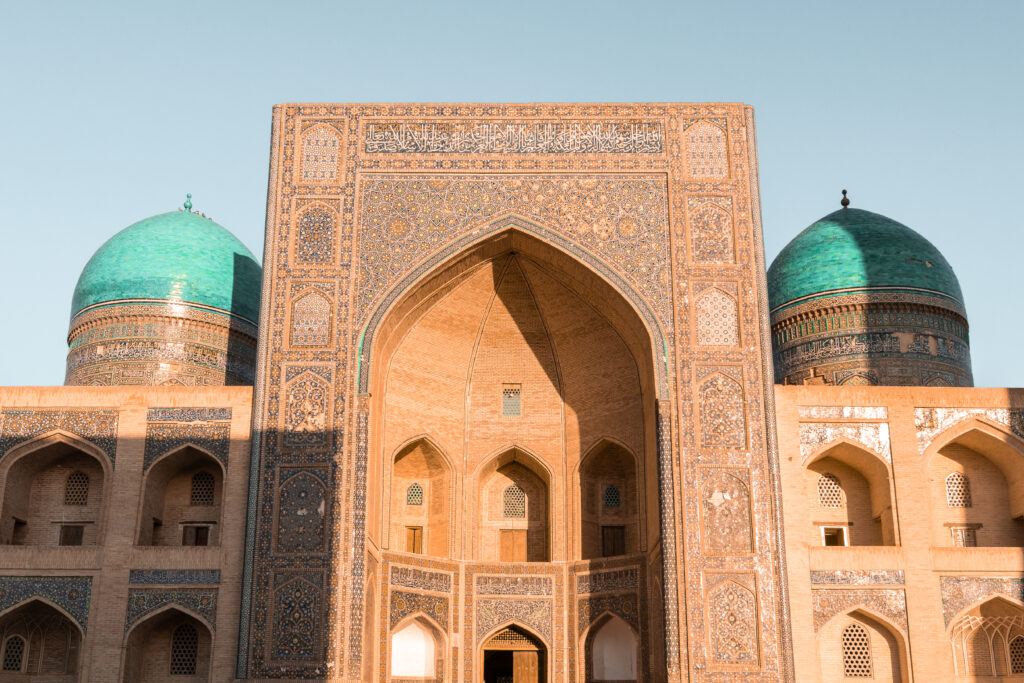 Mir-i-Arab Madrasa
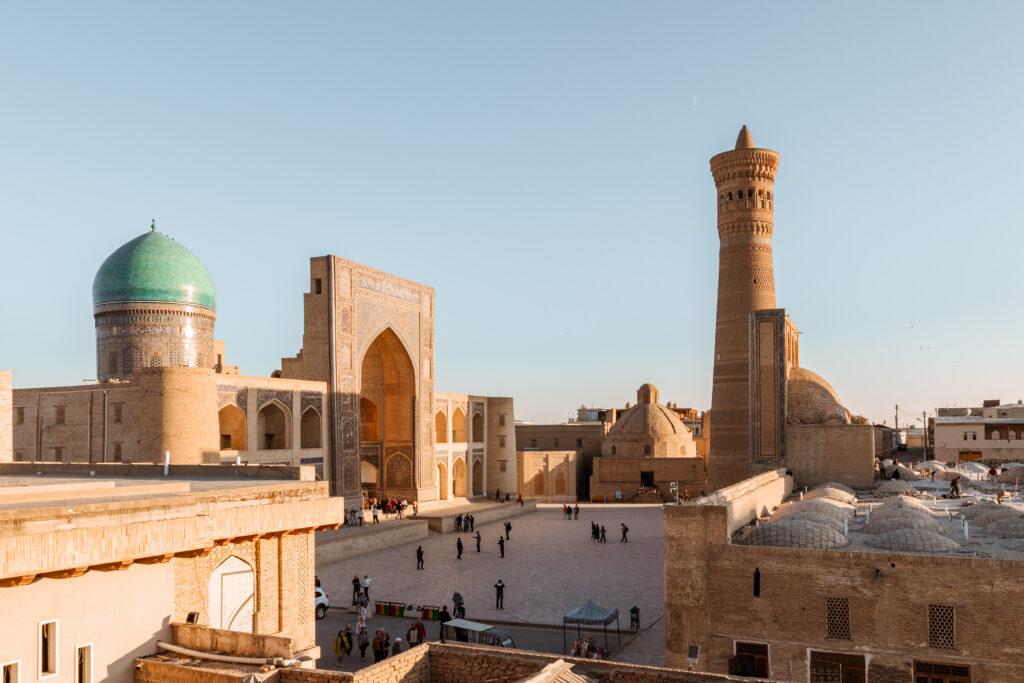 Views over the Po-i-Kalyan Complex
Built in 1127, the Kalyan Minaret rises nearly 46 metres high and was once the tallest building in Central Asia. Nicknamed the “Tower of Death”, legend has it that criminals were once thrown from the top, but today, it’s admired for its intricate brickwork and historic significance. Even Genghis Khan was so impressed by it that he spared the minaret while destroying much of the surrounding city.
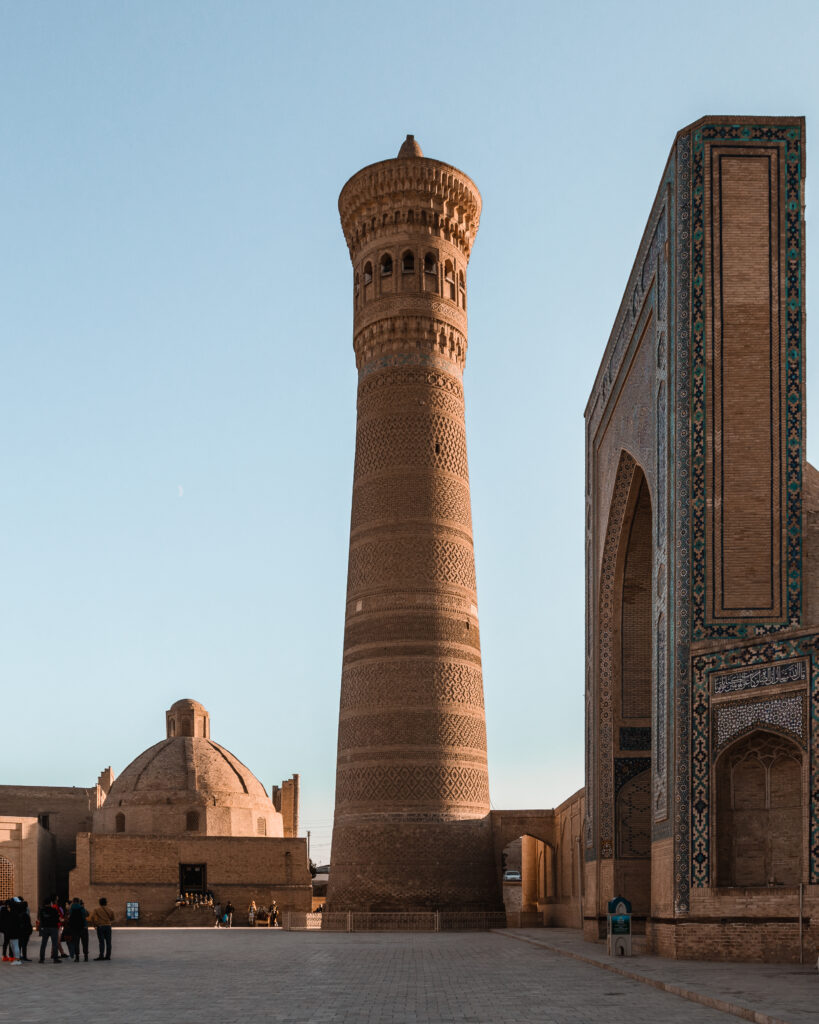 Kalyan Minaret
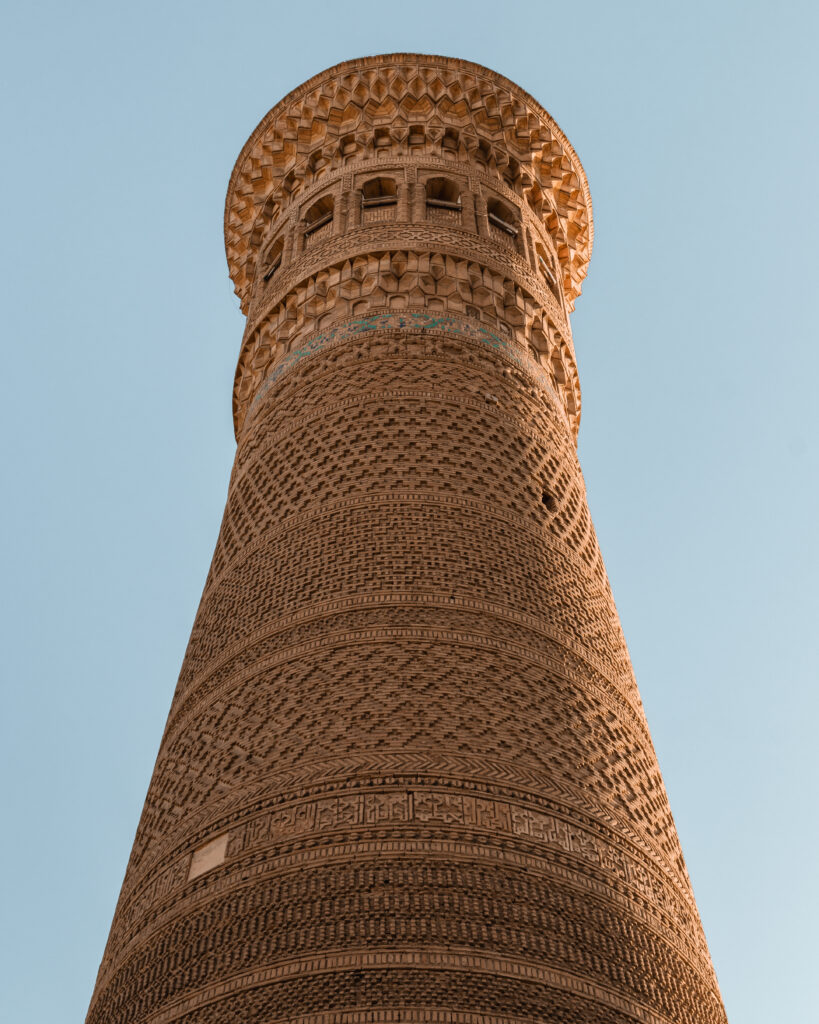 Kalyan Minaret
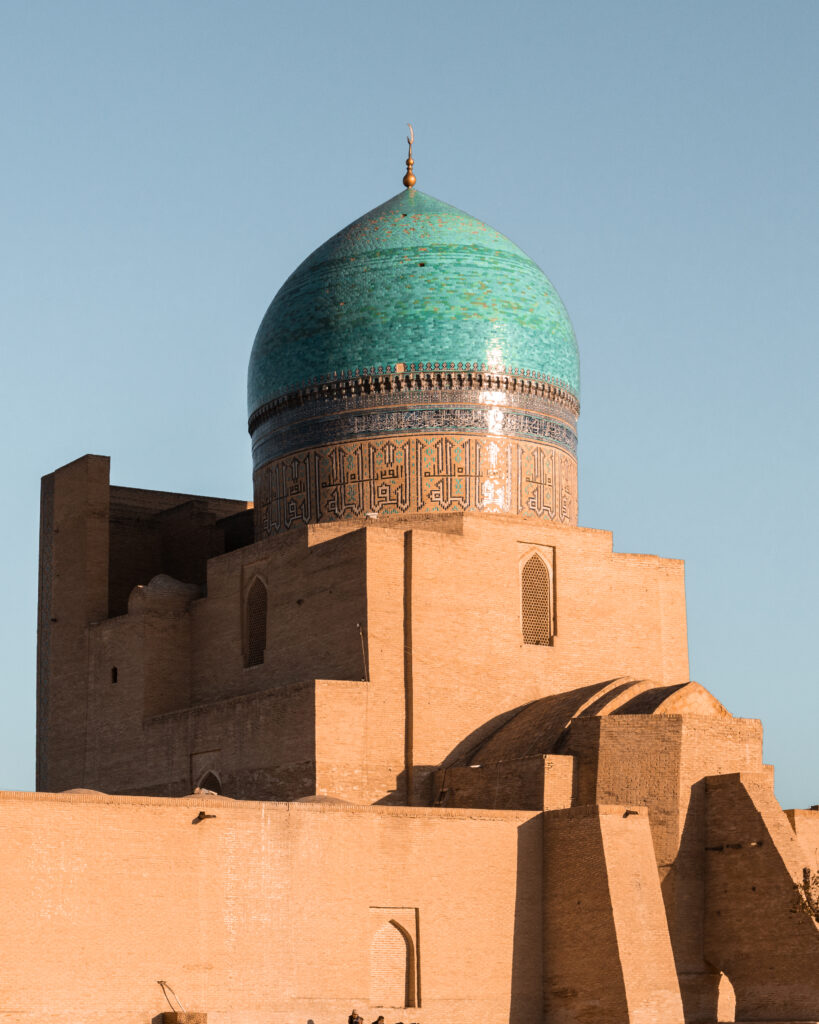 Dome of Kalyan Mosque
The minaret is flanked by two beautiful structures: the Kalyan Mosque, one of the largest in Central Asia, and the Mir-i-Arab Madrasa, still functioning as an Islamic school today. The vast square in front of the minaret is the perfect place to sit, rest in the shade, and take in the grandeur of Bukhara’s golden age.
Come at sunrise or sunset for the most magical light, when the bricks glow warm and golden, and the square is peaceful and quiet.
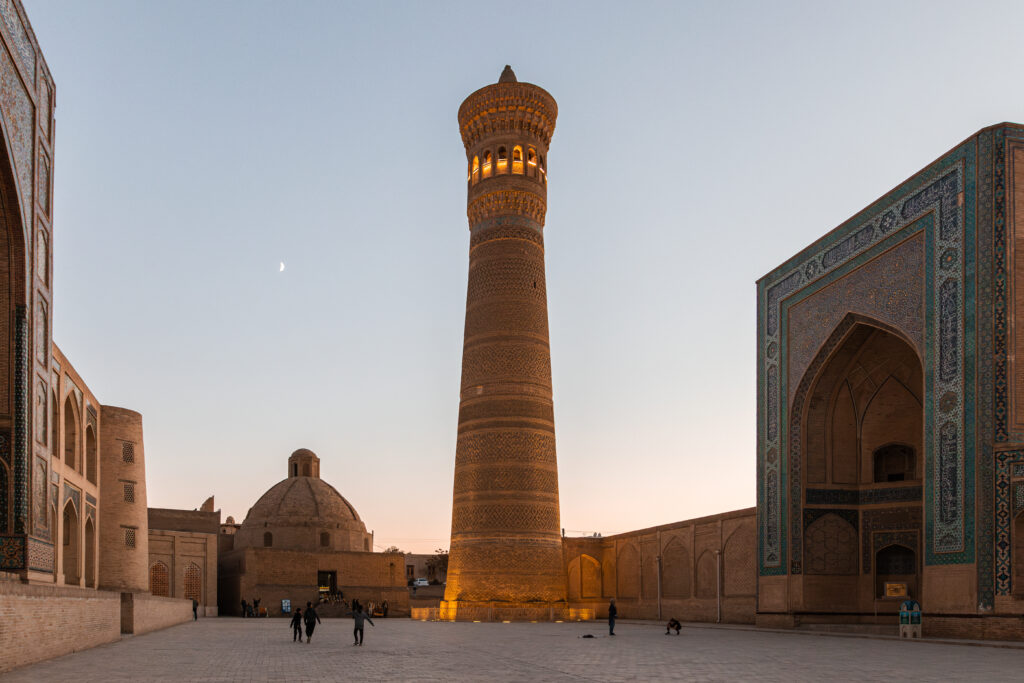 Po-i-Kalyan Complex at Dusk
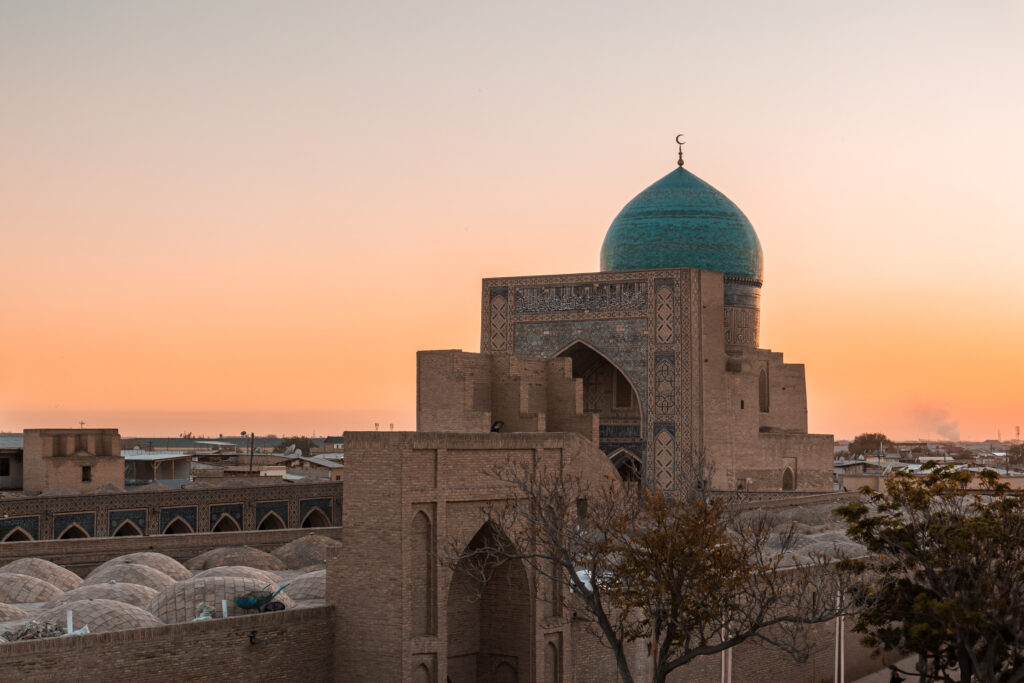 Kalyan Mosque at Sunset
Visit the Ark of Bukhara
Sitting proudly at the edge of the old town, the Ark of Bukhara is a massive fortress that once served as a royal residence for Bukhara’s emirs. With foundations dating back as early as the 5th century, this imposing citadel was not just a palace. It was a self-contained city, housing mosques, government buildings, and stables. Entrance Fee: The entry fee is approximately 40,000 Uzbek Som (about €3.50).
From the viewing platform, you can get sweeping views over the square and the surrounding city. It’s an atmospheric spot, especially in the early morning before the crowds arrive.
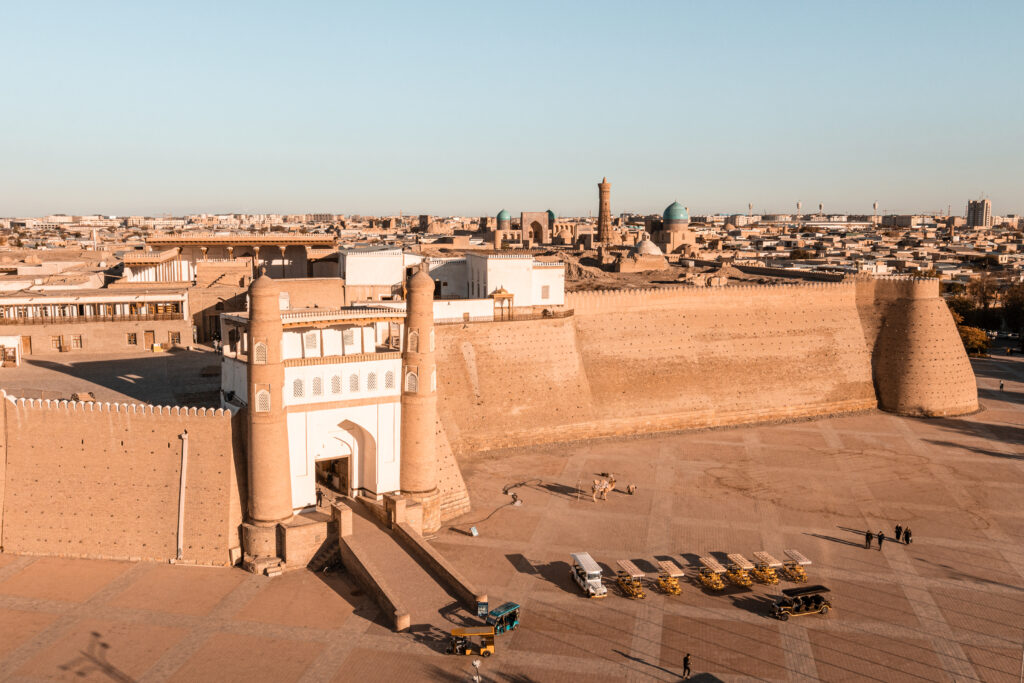 Views over the Arkof Bukhara from the platform
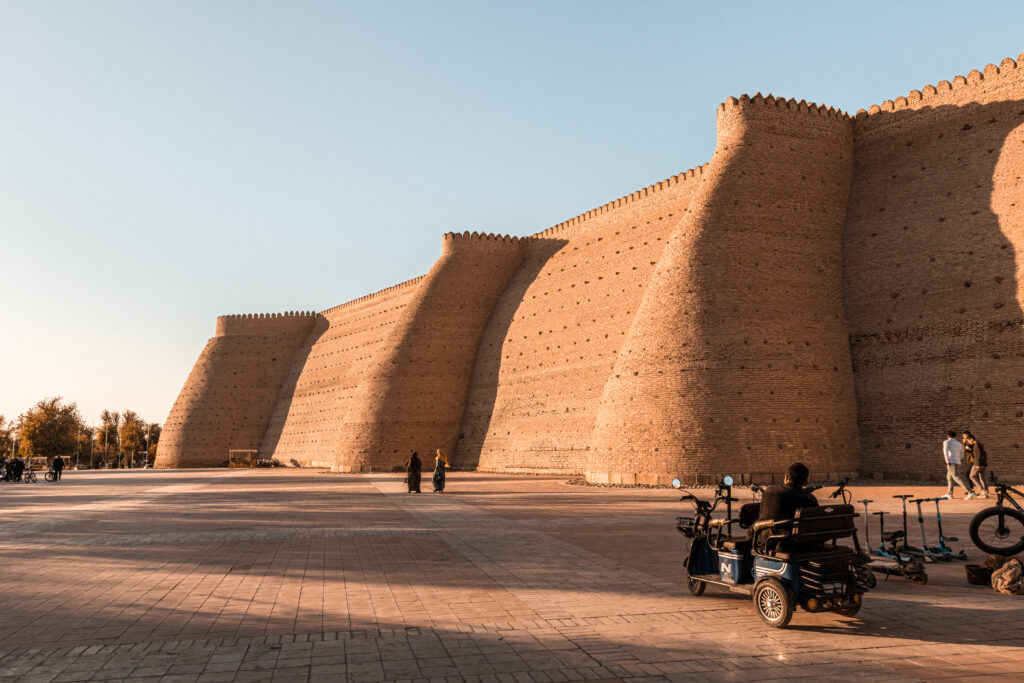 Walls of the Ark of Bukhara
Explore the Bolo Haouz Mosque
Just across the road from the Ark of Bukhara lies the elegant Bolo Haouz Mosque, a hidden gem that often surprises visitors with its delicate beauty. Built in 1712, this mosque was once the emir’s official place of worship, and today it continues to function as a working mosque, making it one of the most atmospheric spots in the city.
What makes Bolo Haouz stand out are the stunning wooden columns at its entrance – 20 intricately carved pillars rising to support the richly decorated ceiling of the iwan (entrance hall). Their elegant reflection in the adjacent haouz (water pool) gives the mosque its name, which translates to “Mosque of the Pool.”
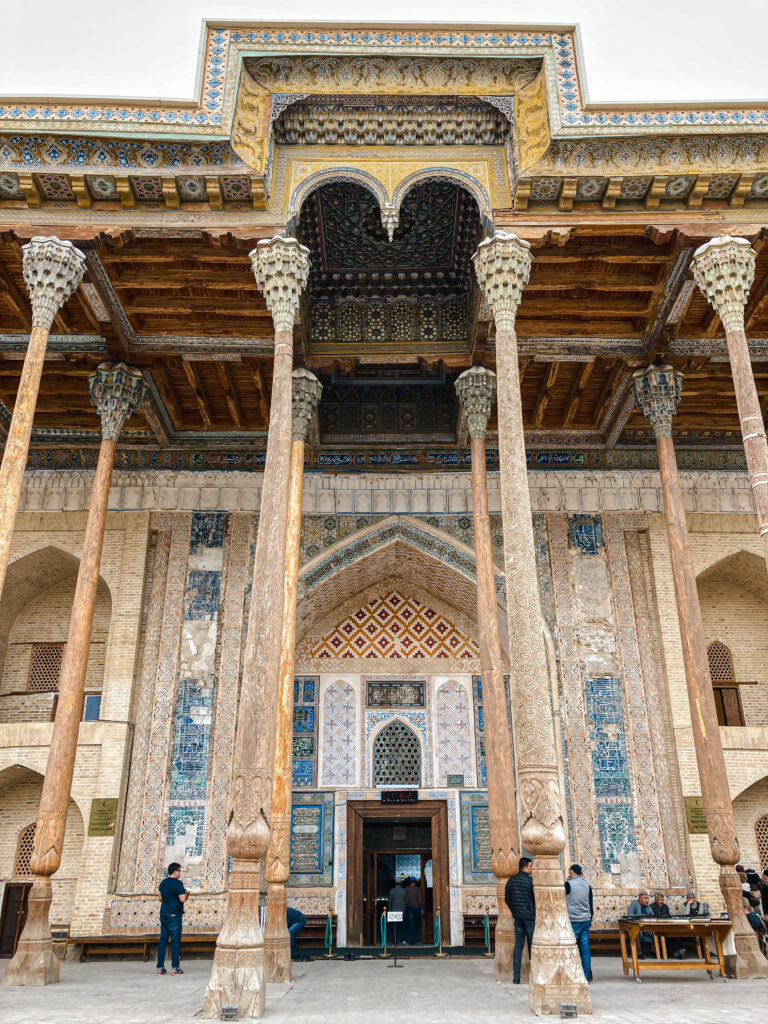 Bolo Haouz Mosque
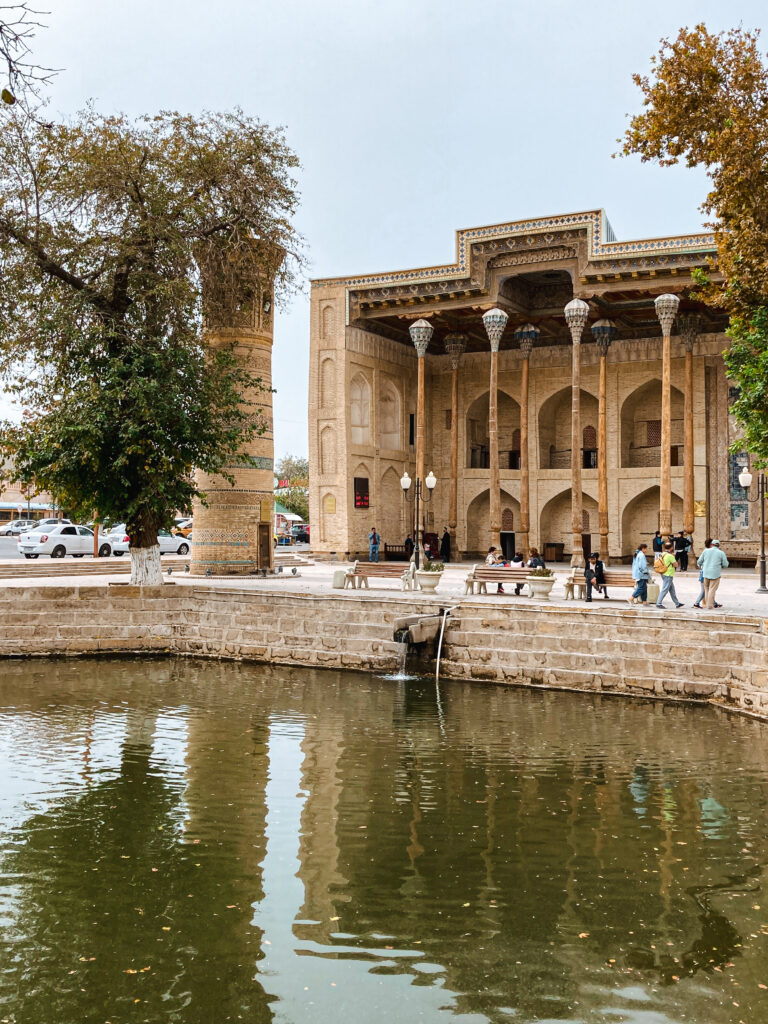 Adjacent Haouz
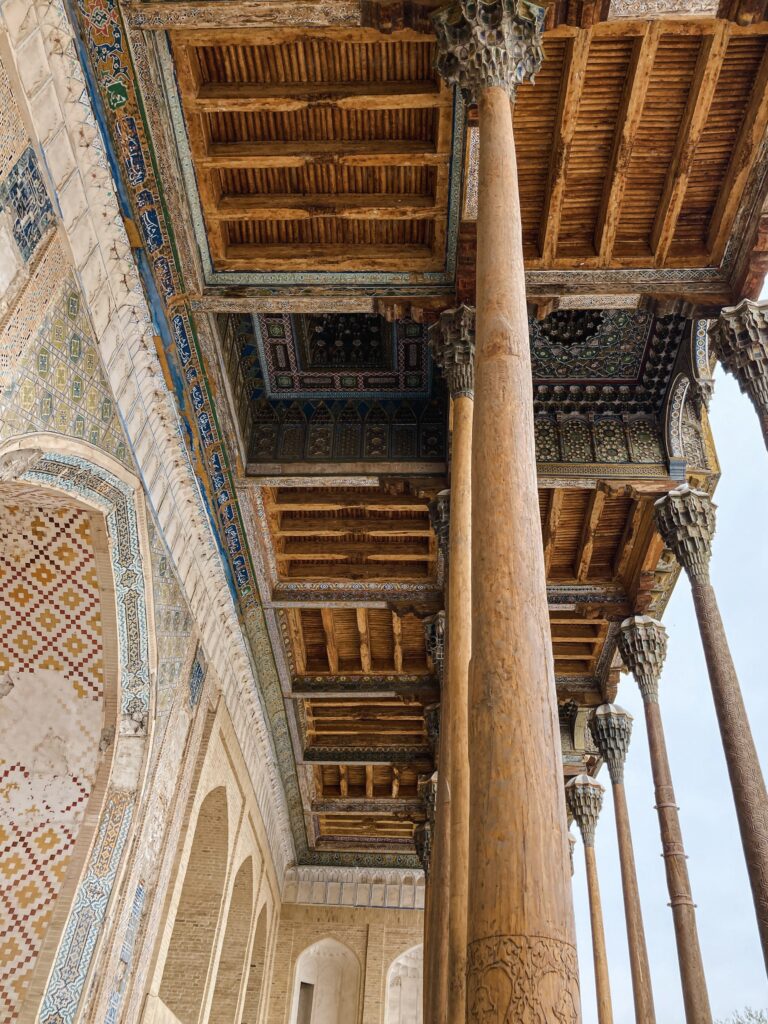 Bolo Haouz Mosque
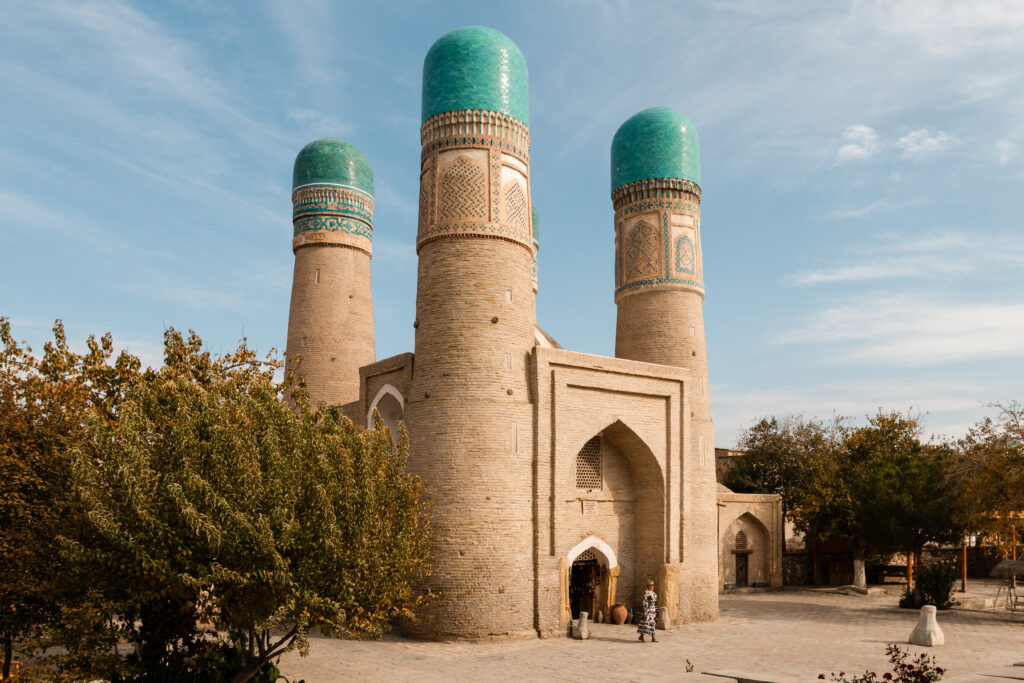
See the Chor Minor Madrasah
Tucked away in a quiet neighbourhood, Chor Minor is one of Bukhara’s most charming and unusual landmarks. Unlike the grand, symmetrical madrasas you’ll see elsewhere in Uzbekistan, this one is delightfully quirky. Its name means “Four Minarets,” and that’s exactly what you’ll find here: four small towers, each with a slightly different design.
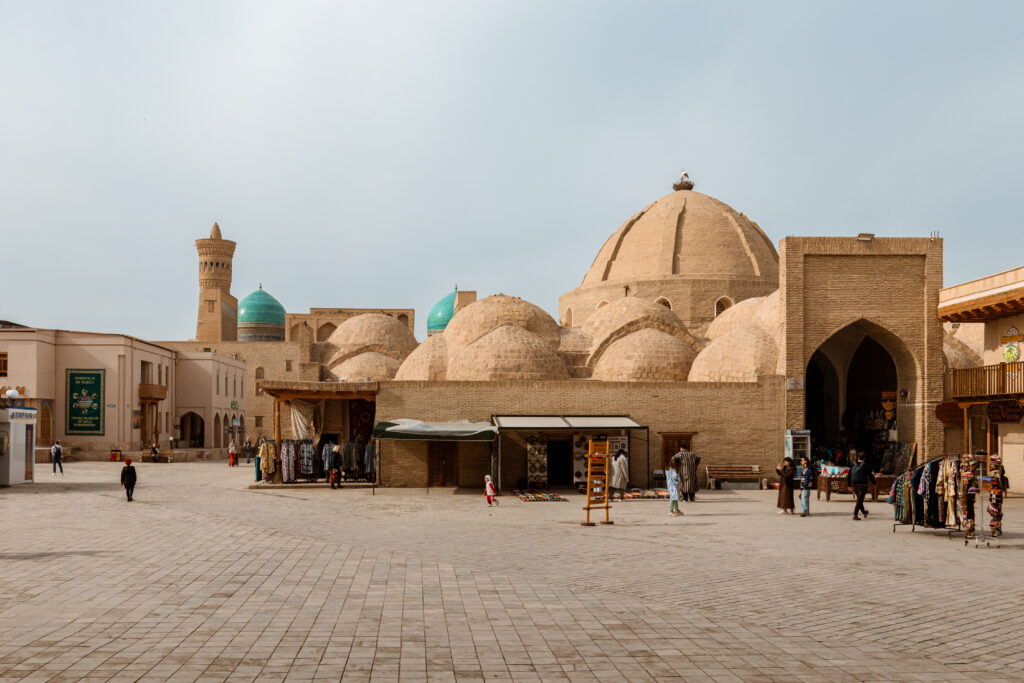
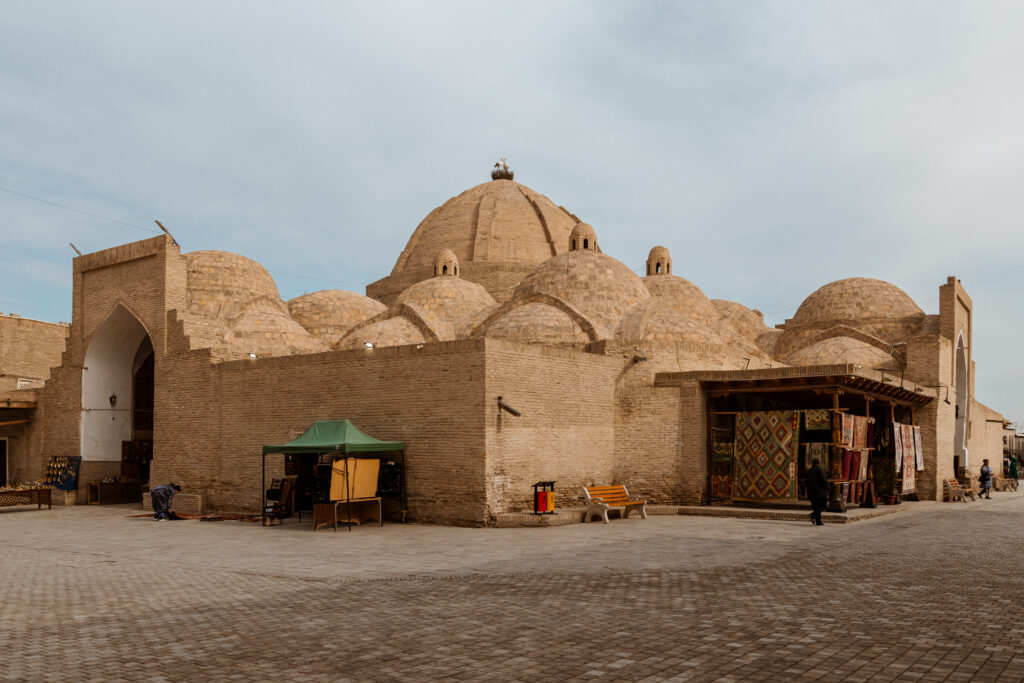
Shop at the Old Trading Domes
Bukhara’s domed bazaars are still full of life, selling handicrafts, scarves, jewellery, and ceramics. Even if you’re not shopping, they’re fun to wander around and imagine what the markets would’ve been like in the Silk Road days.
 Bukhara’s Domed Bazaars
 Bukhara’s Domed Bazaars
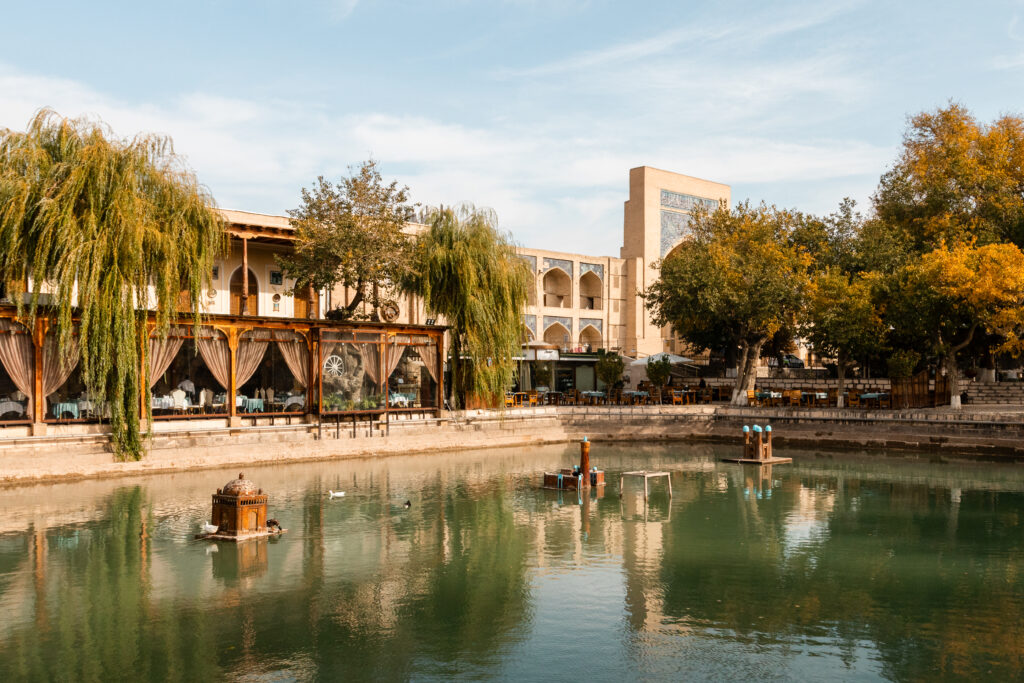
Catch the evening atmosphere at Lyabi-Hauz
This tree-shaded square around an old pool is the heart of Bukhara’s social life. Locals gather here in the evenings, and there are plenty of cheap cafes where you can a tea and just watch the world go by.
 Lyabi-Hauz Square
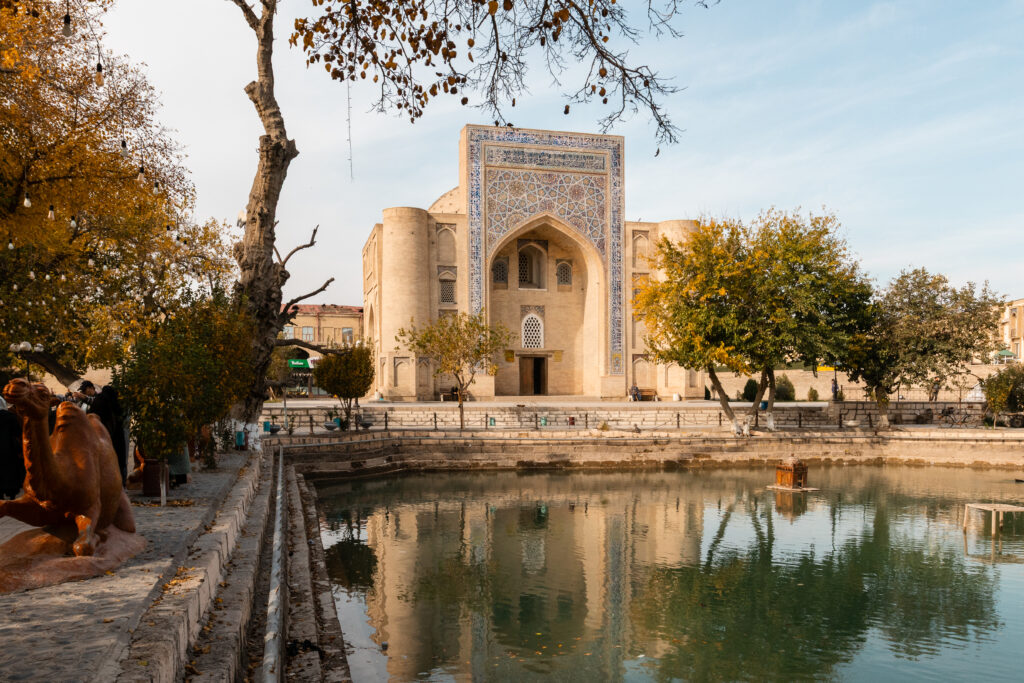 Lyabi-Hauz Square
Where to Stay
Bukhara offers a wide range of accommodation options, catering to all budgets, and the number of choices continues to grow as Uzbekistan becomes an increasingly popular tourist destination. Whether you’re looking for budget-friendly hostels, mid-range hotels, or luxury stays, you’ll find something to suit your needs on the usual platforms like Booking.com.
In Autumn 2022, I stayed at Dervish Hostel, which was welcoming, budget-friendly, and located within walking distance of all the major sites in Bukhara.
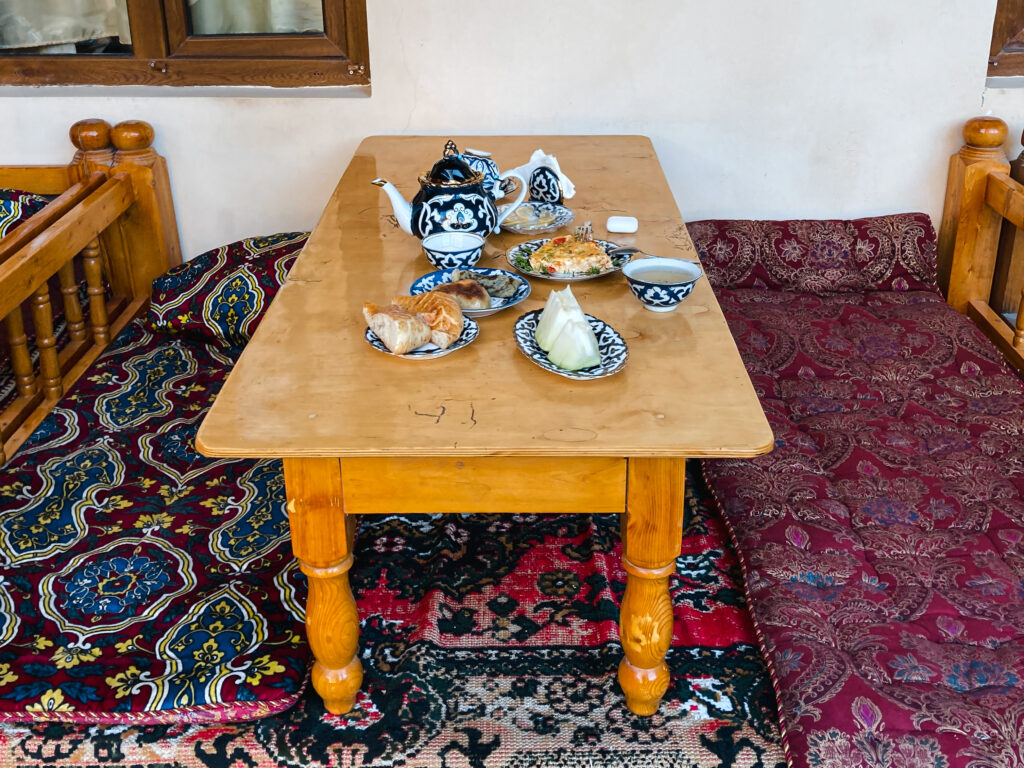 Breakfast table at the Hostel
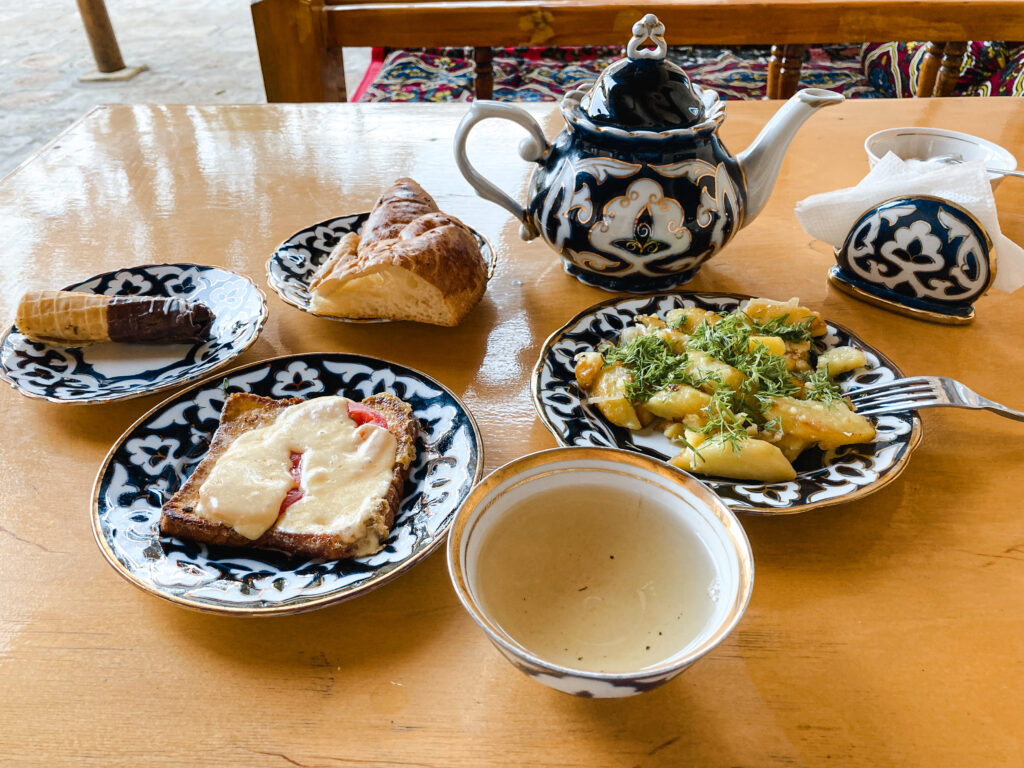 Included Breakfast at the Hostel
Where to Eat
Bukhara is known for its rich culinary heritage, offering a variety of traditional Uzbek dishes that reflect the city’s history as a Silk Road hub. Here are some places where you can enjoy authentic meals:
Frequently Asked Questions About Visiting Bukhara
Two days is the minimum to see the highlights comfortably. Three days is ideal if you want to explore at a slower pace, wander the lesser-known alleyways, and soak up the evening atmosphere at Lyabi-Hauz without rushing. Bukhara rewards those who slow down, it’s more about atmosphere than monument-ticking.
Bukhara is the cheapest of Uzbekistan’s major Silk Road cities. On a shoestring budget you can comfortably spend €14-€23 per day, covering a dorm bed in a courtyard hostel (€6-€9), cheap plov and samsa from local spots (€4-€7), and entry fees to the main sights. The old city is entirely walkable, so transport costs are effectively zero once you arrive.
Yes. Bukhara is consistently cheaper for budget travellers. The main reason is walkability, unlike Samarkand, where the monuments are spread out and taxis add up, Bukhara’s entire old town is compact enough to explore entirely on foot. You’ll also find a higher concentration of affordable family-run guesthouses here, often including breakfast, for €8-€15 per night.
By train is the easiest option. The high-speed Afrosiyob takes around 1.5 hours; the slower Sharq takes about 2 hours. Tickets can be booked online through the official Uzbek Railways website. Shared taxis are also available and can be faster door-to-door, though you’ll need to find them at the taxi stand near Samarkand’s train station.
Bukhara’s train station is around 10km outside the city centre, it’s not walkable. From the station, take a Yandex Go (the local ride-hailing app) or negotiate a shared taxi to the old town. The ride takes about 15-20 minutes and should cost a few thousand Som. Yandex Go is the most reliable option and avoids price negotiations.
Bukhara is famous for its remarkably well-preserved old city, which has been a centre of Islamic scholarship, trade, and culture for over two thousand years. Key landmarks include the Kalyan Minaret, the Po-i-Kalyan complex, the Ark of Bukhara fortress, and the atmospheric Lyabi-Hauz square. It’s one of the few Silk Road cities that still feels genuinely lived-in rather than restored for tourists.
Yes, Bukhara is one of the safer and more relaxed cities in Uzbekistan for solo women. The old town is compact, well-visited, and easy to navigate. As elsewhere in the country, dressing modestly around religious sites is appreciated. Locals are friendly and interactions are generally positive. I had no issues travelling here alone.
The single best thing you can do in Bukhara is simply wander. The old city rewards aimless exploration: duck into quiet courtyards, find the Chor Minor tucked away in a backstreet, sit at Lyabi-Hauz with a cup of tea and watch the evening unfold. The formal sights are worth seeing, but it’s the atmosphere between them that makes Bukhara special.
Where to After Bukhara
After exploring the wonders of Bukhara, you might be wondering where to head next in Uzbekistan. Luckily, this country is filled with fascinating destinations, each with its own unique charm. Here are a few ideas for your next adventure: