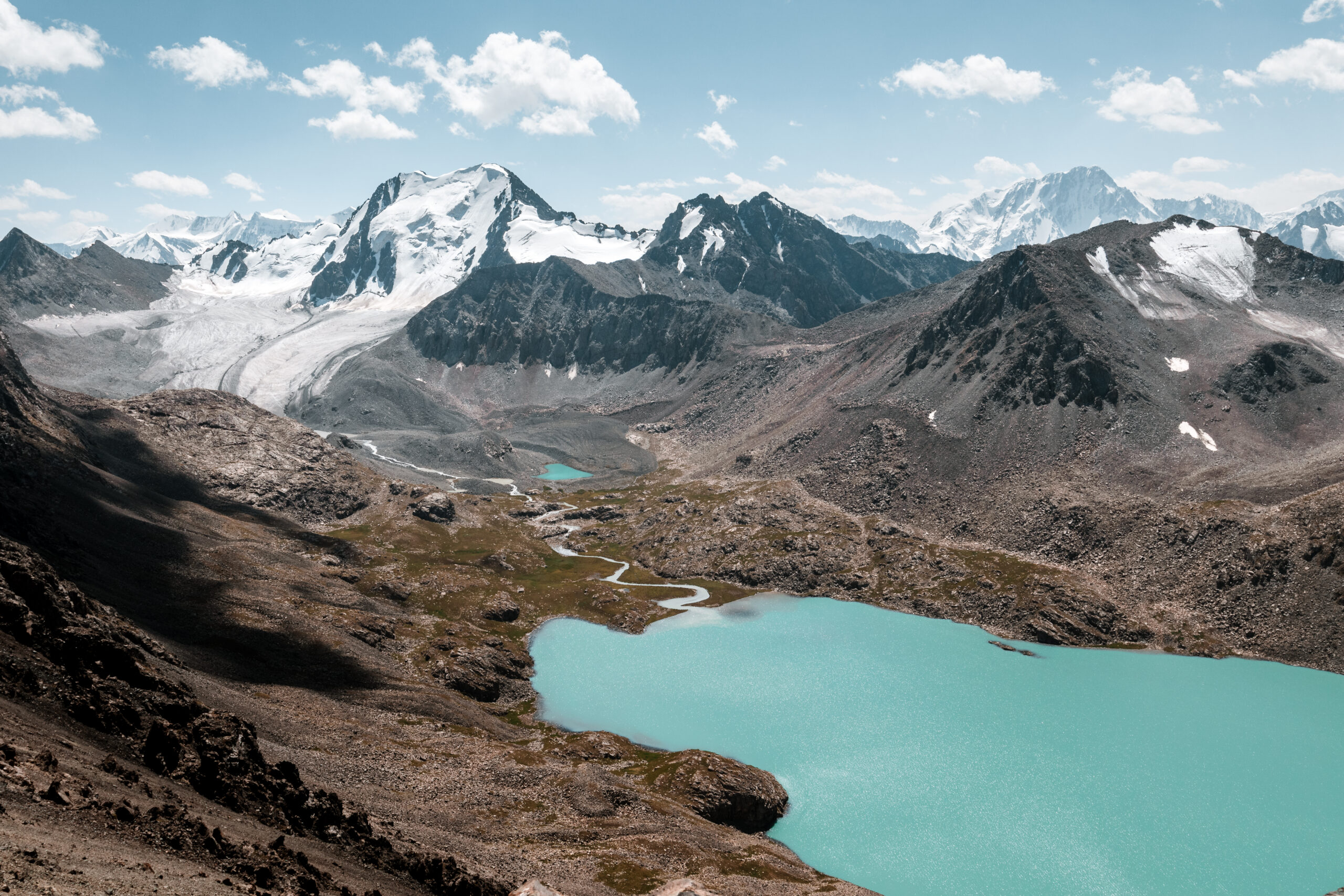
Trekking to Ala-Kul Lake is the ultimate adventure for independent hikers in Kyrgyzstan. Tucked away at 3,500 meters in the rugged Terskey Alatau mountains near Karakol, this stunning alpine lake is famous for its surreal turquoise waters and dramatic glacier views.
While many travellers rush this trail in three days, I spent four days trekking to Ala-Kul Lake independently to truly experience the wilderness. Carrying my own camping gear and food allowed me to spend a night right beside the lake, an experience that is physically demanding but incredibly rewarding.
Whether you want to stay in yurt camps or go fully self-sufficient, this guide covers everything you need to know about navigating the route, renting gear in Karakol, and conquering one of Central Asia’s most iconic treks.
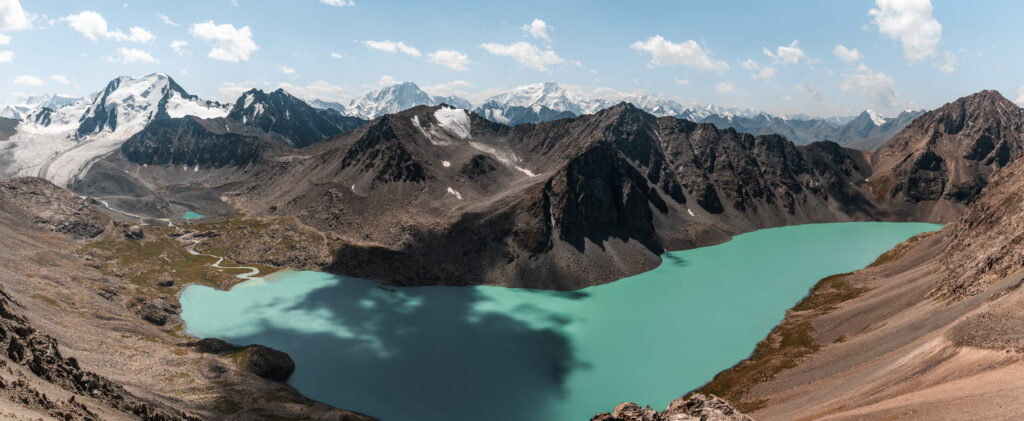
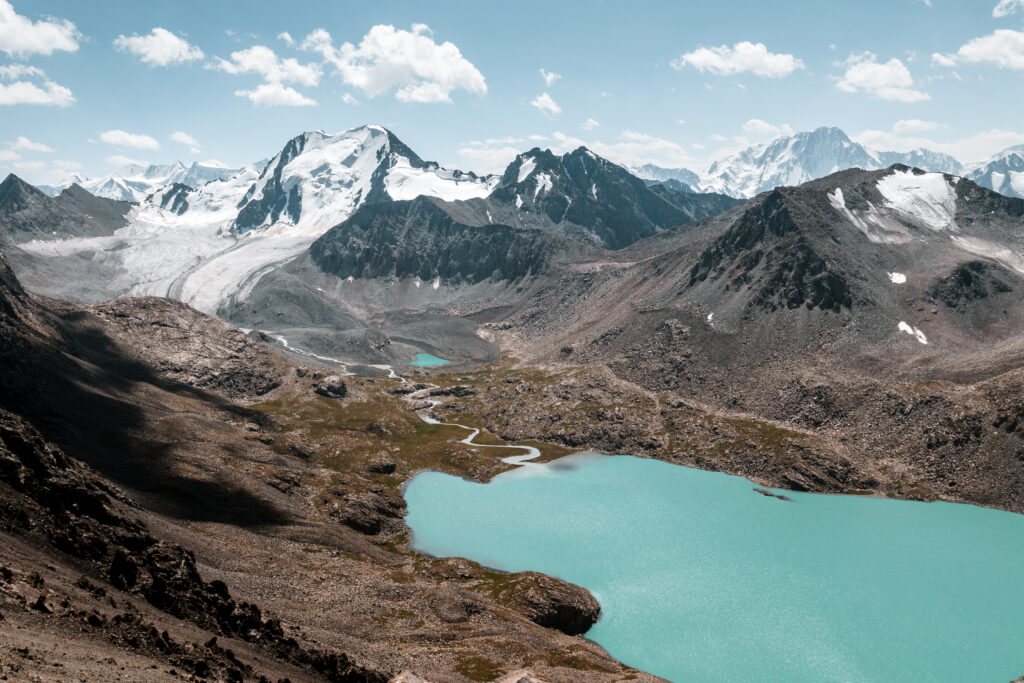 Views from above of Ala-Kul
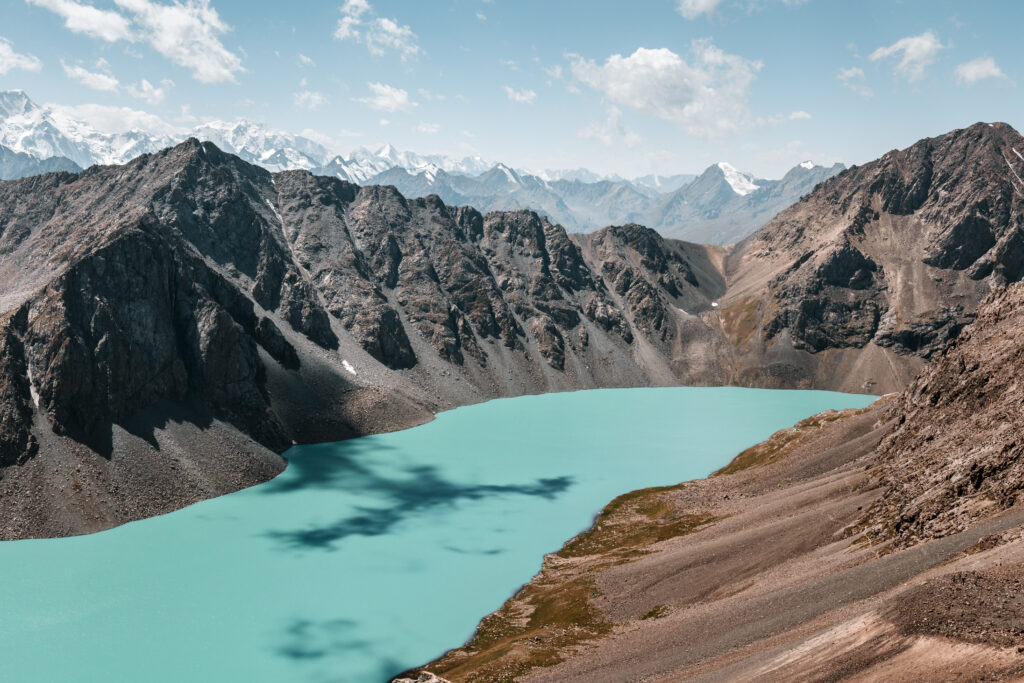 Views from above of Ala-Kul
Trek Overview
Before setting out, it’s helpful to understand what trekking to Ala-Kul Lake actually involves. While the route can be completed in as little as two or three days, the trek is physically demanding and takes you into high-altitude terrain. Slowing down and allowing extra time makes the experience far more enjoyable.
Trek Overview
Best Season: July to September (depends on weather)
Starting Point: Karakol Town
Distance: ~ 55 km
Duration: 4 days (3 nights)
Altitude: Max ~ 3900 meters
Total Elevation gain/loss: ~ +1650 / – 2095 meters
Difficulty: Moderate to Challenging (if solo, carrying your own gear)
Accommodation: Yurt Camps or Camping (self-sufficient)
Permit: Small entrance fee for Ala-Kul Nature Reserve
Guide? Not Mandatory, but recommended if you’re not an experienced trekker
How to Get to Karakol from Bishkek
Karakol is the main gateway for trekking to Ala-Kul Lake and the starting point for most hikes in the Terskey Alatau mountains. Located on the eastern edge of Lake Issyk-Kul, the town sits about 400 km from Bishkek, Kyrgyzstan’s capital. While the journey is long, it’s relatively straightforward and can easily be done using public transport.
Here are the main ways to travel from Bishkek to Karakol independently.
Marshrutka (Minibus)
The most common and budget-friendly way to reach Karakol is by marshrutka, Kyrgyzstan’s shared minibuses. Marshrutkas to Karakol depart from Bishkek’s Ak-Jol Bus Station, usually starting early in the morning. The journey takes around 6-7 hours, depending on traffic and how many stops the driver makes along the way.
Tickets typically cost around 400-500 KGS, making this the cheapest option for travellers. Several departures run daily, especially in the morning. The road follows the northern shore of Lake Issyk-Kul, and on a clear day you’ll get beautiful views of the lake with the snow-capped mountains of the Terskey Alatau rising in the distance.
Shared Taxi
Shared taxis are another popular way to travel between Bishkek and Karakol and are slightly faster than marshrutkas. These cars usually leave when all seats are filled, typically with four passengers. You can find shared taxis at Ak-Jol Bus Station or nearby taxi stands. The journey usually takes around 5-6 hours, and the price is generally 700-900 KGS per person. The cars are more spacious than marshrutkas, which can make the long drive more comfortable.
Private Taxi
If you prefer convenience, private taxis can be arranged through hotels or guesthouses in Bishkek. This is the fastest but most expensive option.
Preparations & Logistics for Trekking to Ala-Kul Lake
Before setting out on the trail, it’s worth spending some time preparing in Karakol. While trekking to Ala-Kul Lake independently is entirely possible, it is still a demanding multi-day hike through remote mountain terrain. Making sure you have the right gear, enough food, and proper navigation will make the trek far more enjoyable and much safer.
Renting Camping Gear in Karakol
If you’re travelling without your own camping equipment, Karakol has several outdoor shops where you can rent everything you need for the trek. Tents, sleeping bags, sleeping mats, trekking poles, and camping stoves are all widely available. Rental prices are generally affordable, and many shops are used to supplying hikers heading to Ala-Kul Lake. Most places will also explain how the equipment works if you’re unfamiliar with it. It’s better to rent your gear the day before starting the trek so you have time to check everything and pack properly.
Note: Expect to pay around 1,500 KGS (€15) per day for a full set (tent, stove, sleeping bag).
Download Offline Maps
Although the Ala-Kul trail is popular, the path isn’t always clearly marked and can occasionally split into smaller tracks. For this reason, having a physical paper map or offline map is essential when trekking to Ala-Kul Lake independently. Before leaving Karakol, download the route on Maps.me or another offline navigation app so you can follow the trail even without phone signal. Mobile reception quickly disappears once you enter the mountains, and relying on online maps simply won’t work. Having the trail saved on your phone allows you to check your position whenever the path becomes unclear and greatly reduces the risk of getting lost.
Food Supplies
Since you’ll be spending at least two nights on the trail, make sure you bring enough food for two days of hiking and two nights of camping. Lightweight and easy-to-cook meals work best, especially if you’re carrying your own stove. Karakol has several small supermarkets and local shops where you can buy supplies such as instant noodles, pasta, oats, bread, dried fruit, nuts, and chocolate. These are all common staples for multi-day treks in the region. If you’re following the classic route to Altyn Arashan, the final night of the trek ends in a small village with guesthouses and yurt camps. Many of them serve hot meals, so you don’t necessarily need to carry food for that last evening unless you plan to camp again. After two days of hiking, sitting down to a warm meal there can feel incredibly rewarding.
What to Pack: Gear Essentials to be Self-Sufficient
Once you leave the Karakol Valley and begin trekking to Ala-Kul Lake, you quickly enter remote mountain terrain where there are no shops, restaurants, electricity, or mobile signal for most of the route. For at least the first two days of the trek you’ll need to be completely self-sufficient, carrying everything you need with you.
Make sure you bring enough food for the duration of the trek, as well as a reliable water filter or purification tablets. While there are plenty of glacial streams along the trail, the water should always be filtered before drinking. A power bank is also essential, as you’ll need it to keep your phone charged for navigation and offline maps. Once you’re in the mountains there are no places to charge devices until you reach the guesthouses in Altyn Arashan at the end of the trek. Here’s a complete gear list of what you need to take with you.
Don’t Forget: High-Altitude Travel Insurance
While having the right boots is vital, the most important “gear” you can carry is a solid insurance policy. Trekking to Ala-Kul Lake takes you to 3,900 meters, an altitude where many standard travel insurance plans stop providing coverage.
I personally use and recommend SafetyWing for trekking in Kyrgyzstan. Their Nomad Insurance specifically covers “hiking up to 4,500 meters” in their standard policy, which is exactly what you need for the Ala-Kul Pass. It’s a small price to pay for the peace of mind that you’re covered for emergency evacuation in the Terskey Alatau mountains.
Don’t skip travel insurance!
I use SafetyWing for most trips – solid coverage for adventure travel.
Staying Connected (and Safe) Offline
Once you enter the Karakol Valley, mobile signal disappears completely until you reach the guesthouses in Altyn Arashan. This makes downloading your Maps.me or Gaia GPS data before you leave Karakol non-negotiable.
To ensure I had high-speed data to sync my maps and check the mountain weather forecast before heading out, I used a Saily eSIM. It’s much more convenient than hunting for a local SIM card in Bishkek, allowing you to activate your Kyrgyzstan data plan the moment you land so you can focus on the trail instead of the tech.
Need data before you land? Try Saily eSIM
Use code RITAHE1486 for $5 off your first plan.
Route Breakdown: Day by Day
Day 1: Karakol → Trailhead → First campsite in Karakol Valley
This hike begins just outside of Karakol, at the entrance of the Ala-Kul nature reserve. You can take marshrutka #101 in front of Duet Hostel in the center of Karakol. This mashrutka goes directly to the entrance of the park. After paying an entrance fee to the park of 300 som, you’ll start the trail.
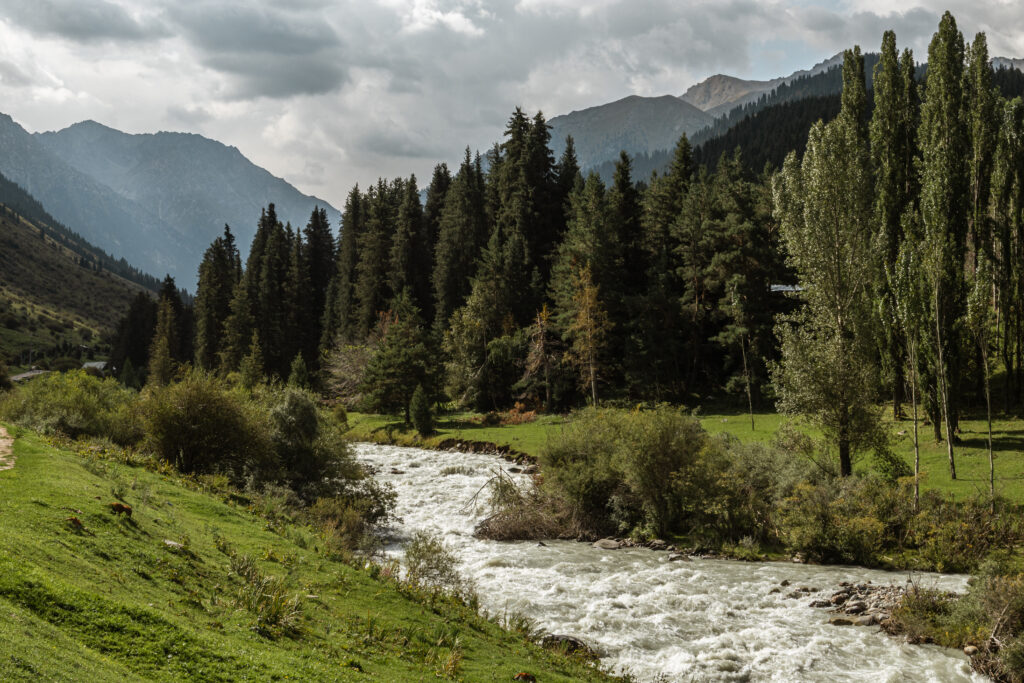 Start of the Ala-Kul Trail
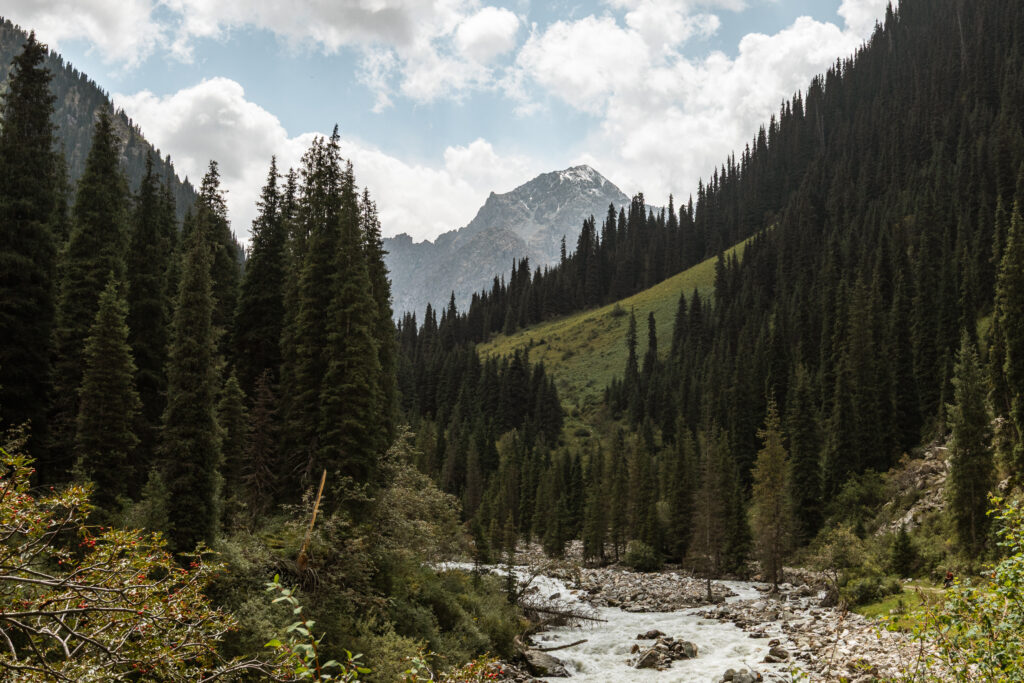 Start of the Ala-Kul Trail
The first day of trekking to Ala-Kul Lake follows the long and scenic Karakol Valley, gradually leading you deeper into the mountains. While this section of the trail is not particularly technical, it is still a long day of hiking, especially if you’re carrying a full backpack with camping gear and food.
After a few kilometres, the road slowly transitions into a proper hiking trail as the valley narrows and the mountains begin to rise higher around you. The sound of the rushing river accompanies you for much of the hike, and every so often the trees open up to reveal wide alpine meadows and dramatic views of the surrounding peaks.
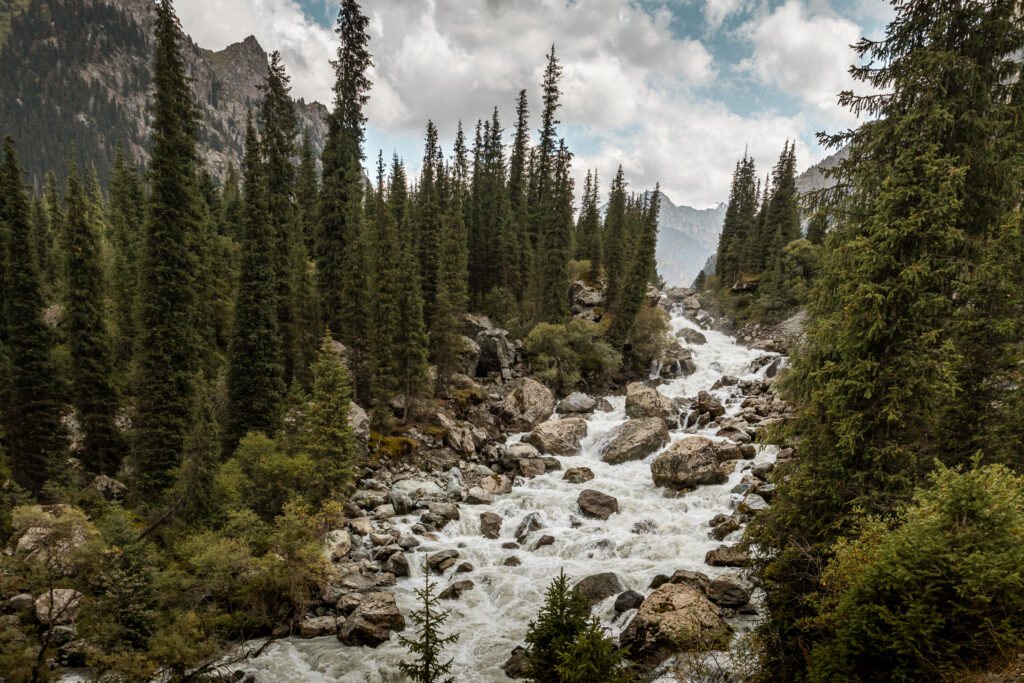 Gushing River in Karakol Valley
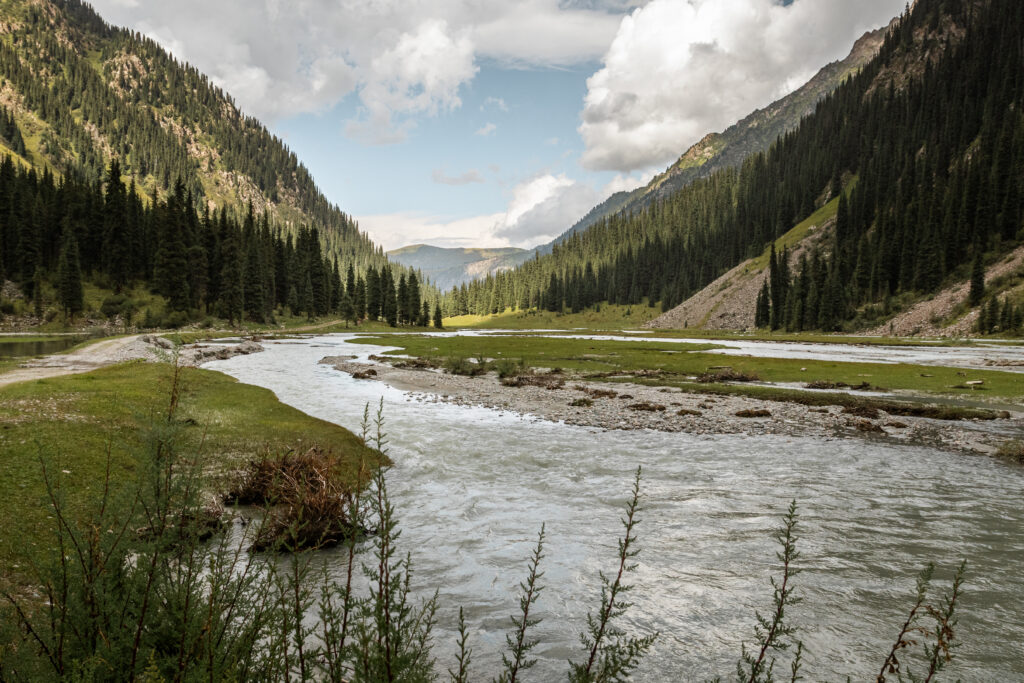 Karakol Valley
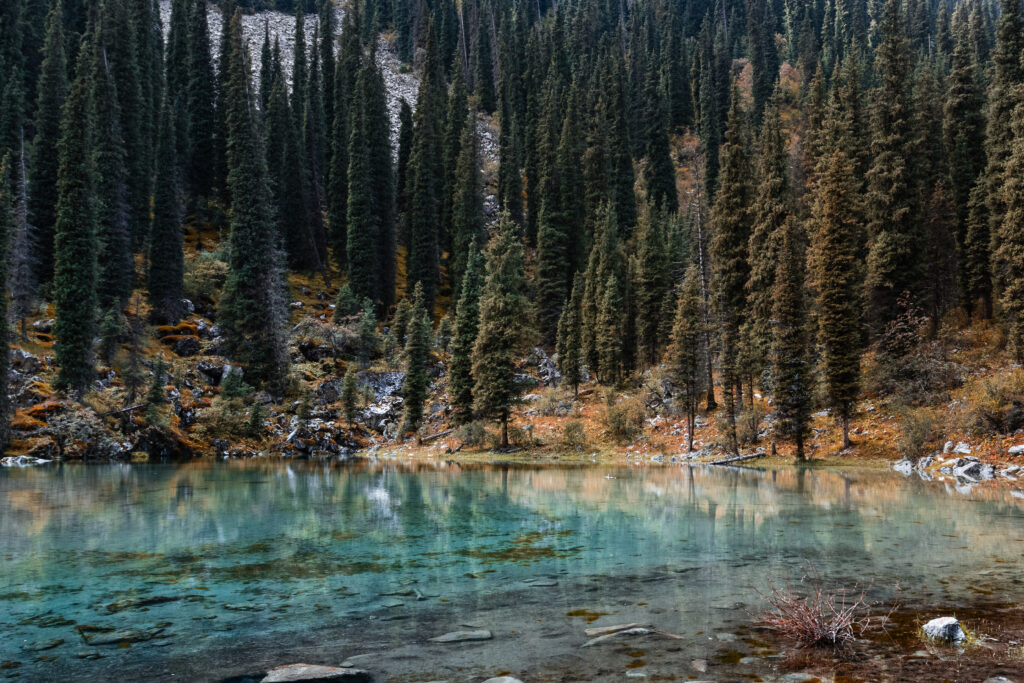 Blue Pond in Karakol Valley
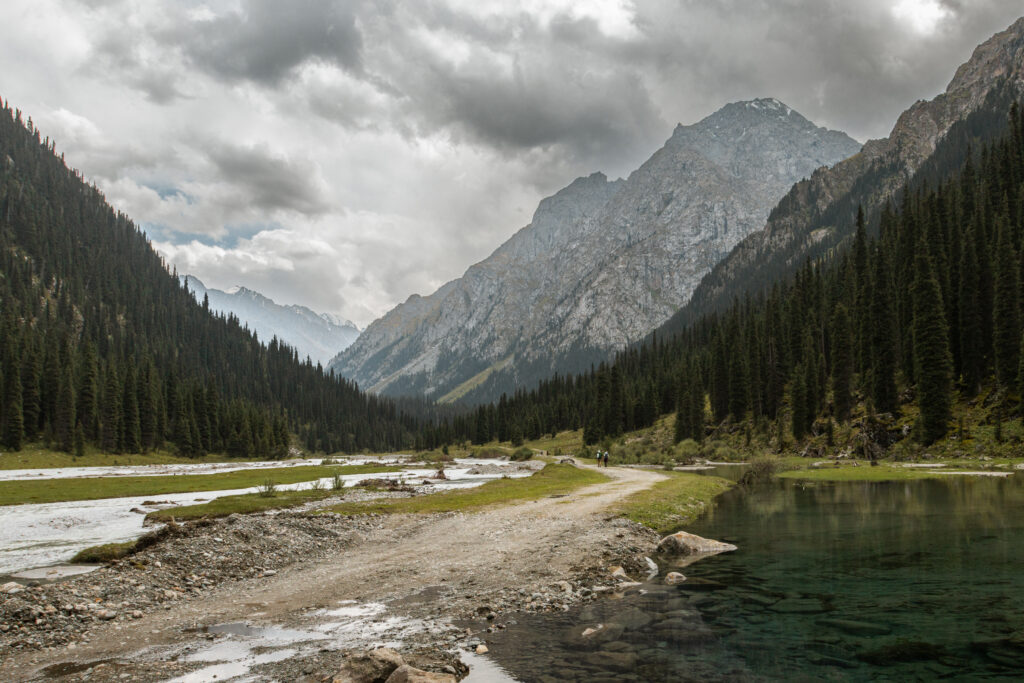 Karakol Valley
Along the way, you may pass summer pastures, where local shepherds bring their livestock during the warmer months. Horses and sheep graze freely across the valley, adding to the feeling of being in a remote mountain landscape that has changed little over time.
Despite being the easiest day of the trek, the distance can still feel long, particularly under the weight of a heavy pack. I decided to camp by the river before crossing the bridge and leave the steep ascent for the next day.
Day 2: Karakol Valley → Second campsite at Ala Kul Lake
The second day of trekking is when the trail starts to feel more challenging, as you leave the gentle slopes of Karakol Valley behind and begin the steady climb towards Ala-Kul Lake. The distance is shorter than the first day, but the elevation gain makes it physically demanding, especially with a fully loaded backpack. The path gradually narrows and winds through alpine meadows, crossing several small streams along the way. As you ascend, the surrounding peaks grow sharper and the valley walls steeper, creating breathtaking panoramas that make the effort worthwhile.
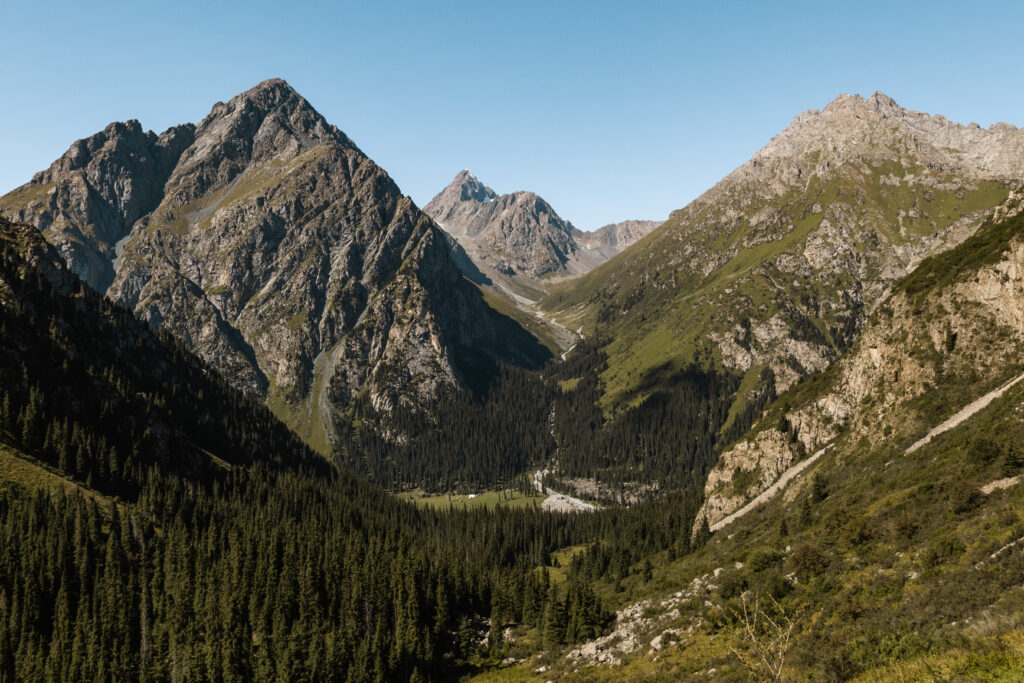 Views of Karakol Valley from Above
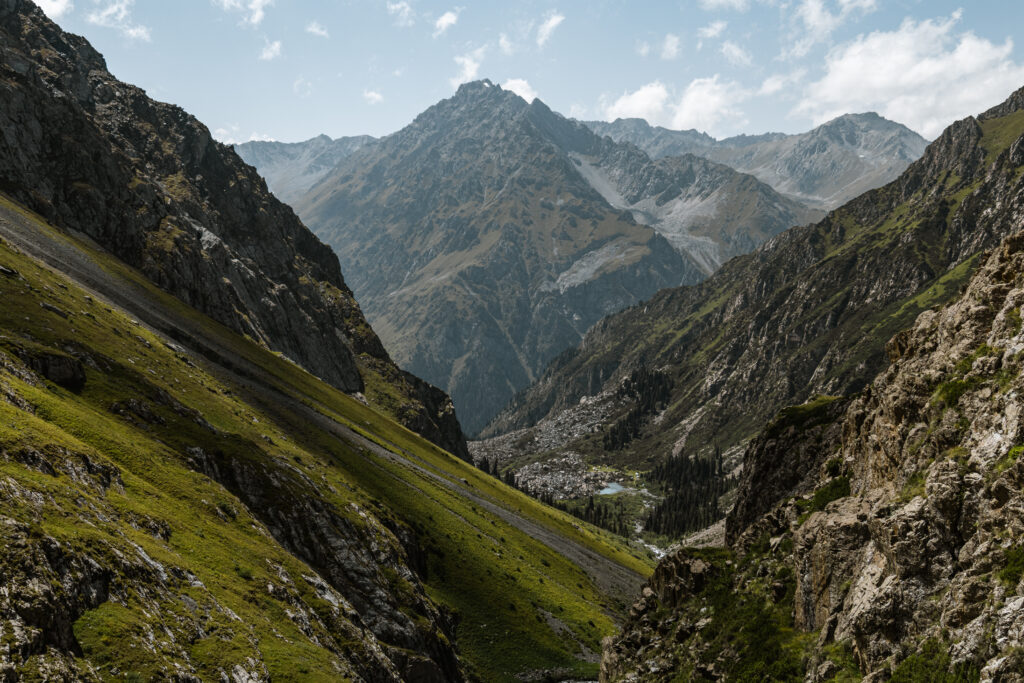 Continuing uphill towards the lake
Around midday, you’ll reach the tree line, where the forest gives way to open rocky slopes dotted with wildflowers in the summer. From here, the trail becomes more rugged, with loose stones and sketchy boulder sections requiring careful footing. But after hours of scrambling over rocks and scree, the turquoise waters of Ala-Kul Lake come into view for the first time, and you’ll instantly forget all the effort it took to get there.
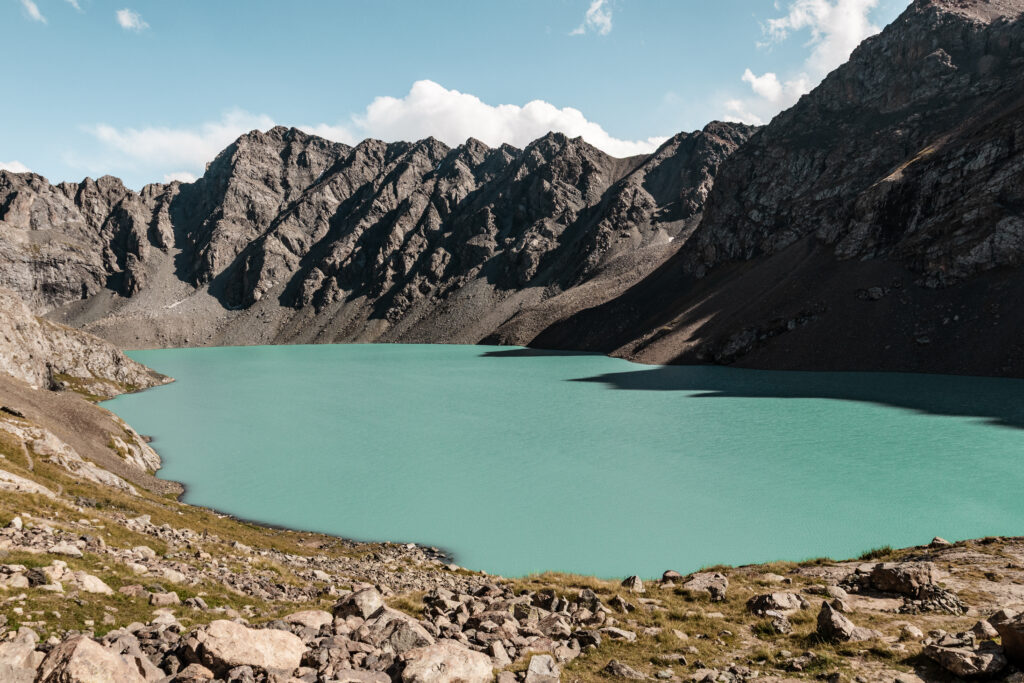 The first view of the turquoise waters of Ala-Kul
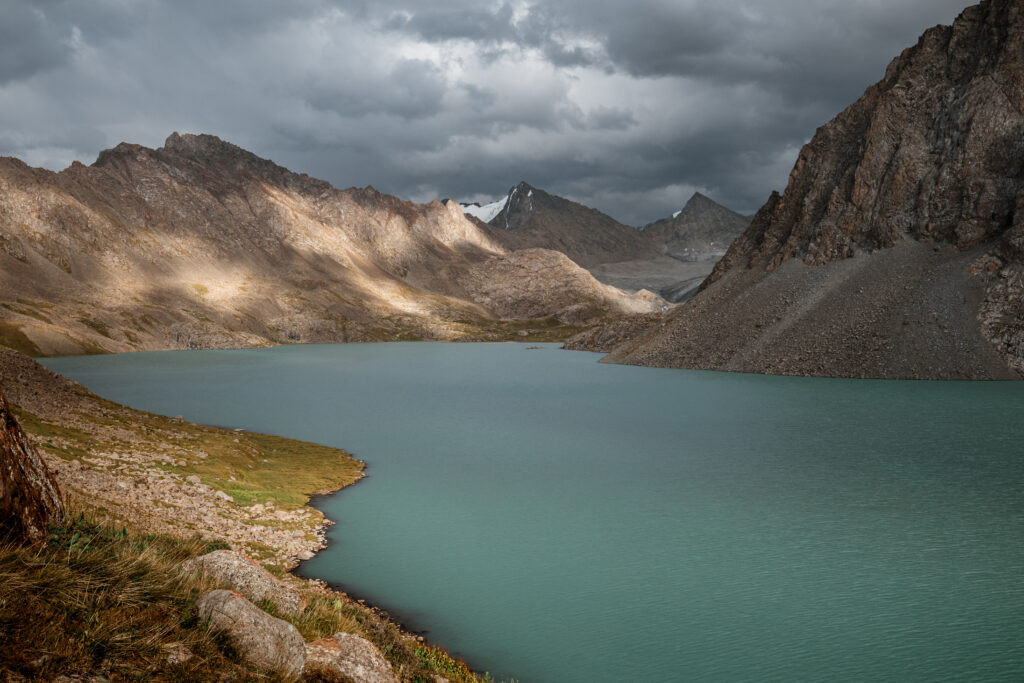 Ala-Kul at sunset
There are a couple of campsite spots marked on Maps.me. Choose the one that suits you best, set up your tent, and settle in for an incredibly quiet, starry night beside one of the most beautiful lakes in the world.
Day 3: Ala Kul Lake → High pass → Altyn Arashan
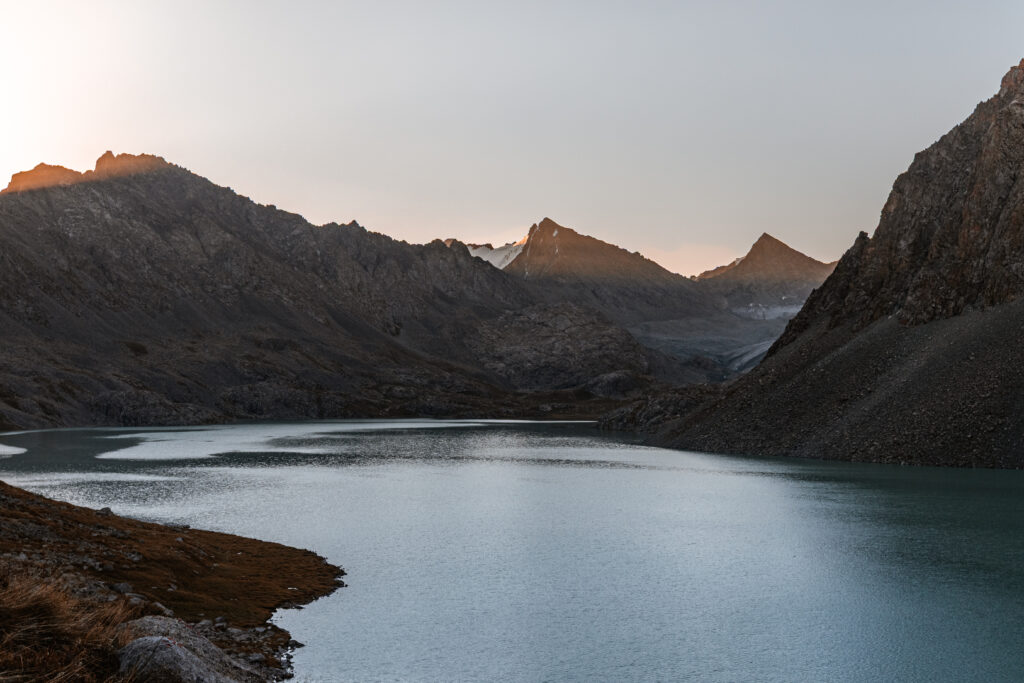
Day three is the most challenging and rewarding day of the trek, as you cross Ala-Kul Pass, the highest point of the route at around 3900 meters. After waking up by the tranquil lake, you’ll feel recharged and ready for the steep climb ahead, but don’t underestimate it, the ascent is long and can be physically demanding, especially with a full backpack.
The trail begins with a gentle climb out of your campsite, winding along the lake’s edge before starting the steady switchbacks up rocky slopes. As you gain altitude, the landscape transforms into rugged alpine terrain, with patches of scree and occasional snowfields even in summer. Take your time and pace yourself, there’s no rush, and stopping to admire the panoramic views of the surrounding peaks and valleys is a must.
Once you reach the pass, you’ll be rewarded with a spectacular 360-degree view of the Terskey Alatau mountains and the valleys below. On a clear day, you can see both the Karakol Valley you came from and the Altyn Arashan Valley stretching out in the distance. It’s one of those moments that makes the hard climb completely worth it.
⚠️ Warning: The Ala-Kul Pass Descent
Reaching the summit of the Ala-Kul Pass (3,900m) is a massive achievement, but for most people, the descent is the most nerve-wracking part of the entire trek. The first kilometre down toward the Altyn Arashan valley is incredibly steep and composed entirely of loose scree and slippery gravel. The path is extremely narrow, with a significant drop on one side, and it is very common for hikers to slide or fall multiple times in this section.
Safety Tips for the Descent:
Luckily, once you finish this section, the rest of the descent into Altyn Arashan is long but much more manageable. The terrain becomes gradual, and the trail winds through alpine meadows and rocky streams before finally reaching the valley’s hot springs and guesthouses. Here, you’ll have the option to camp again or enjoy a meal and warm shelter, a perfect reward after three days of trekking.
Day 4: Altyn Arashan – Return to Karakol
The final day of the Ala-Kul trek is much gentler than the previous days, offering a welcome opportunity to relax and reflect on the adventure. From Altyn Arashan, the trail winds down through the valley, past bubbling streams, alpine meadows, and summer yurts scattered along the slopes.
The descent is long but gradual, and you’ll quickly notice the difference after the terrifying scree section from the previous day. The path here is well-trodden and easy to follow, making it the perfect way to unwind after three days of climbing and camping in the high mountains.
Along the way, you may pass small guesthouses and yurt camps, where you can stop for tea, a warm meal, or even a soak in the natural hot springs before completing your journey. These friendly mountain spots are a comforting reminder that civilisation is near again.
By the time you reach the main road back to Karakol, the trek is officially over. From here you can wait on the side of the road for the marshrutka heading towards Karakol to pass or hitchhike back.
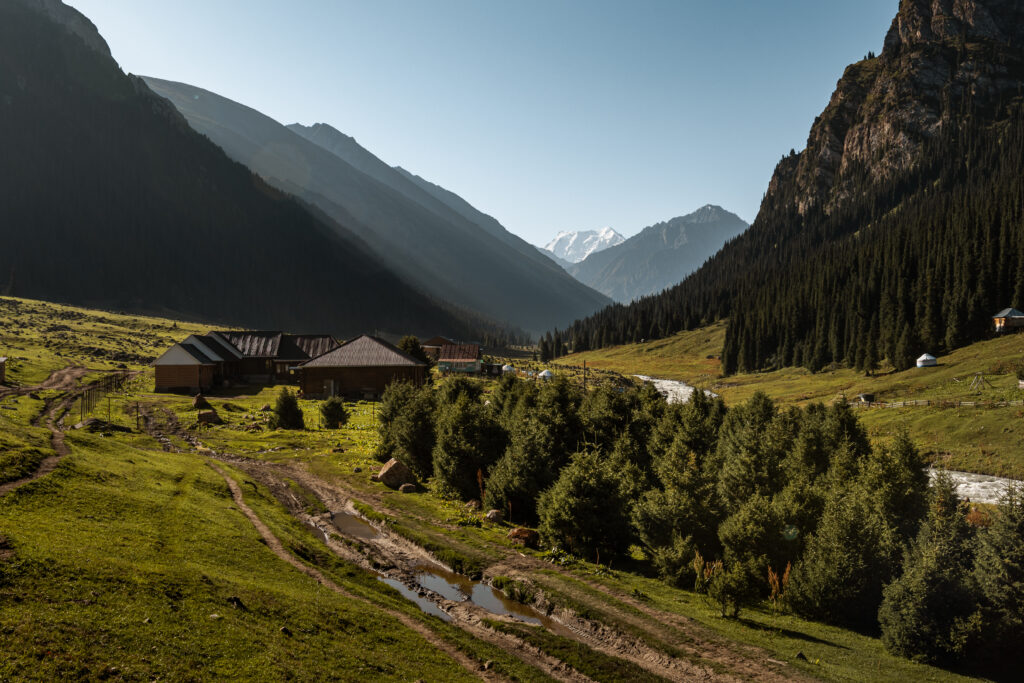 Altyn Arashan villages
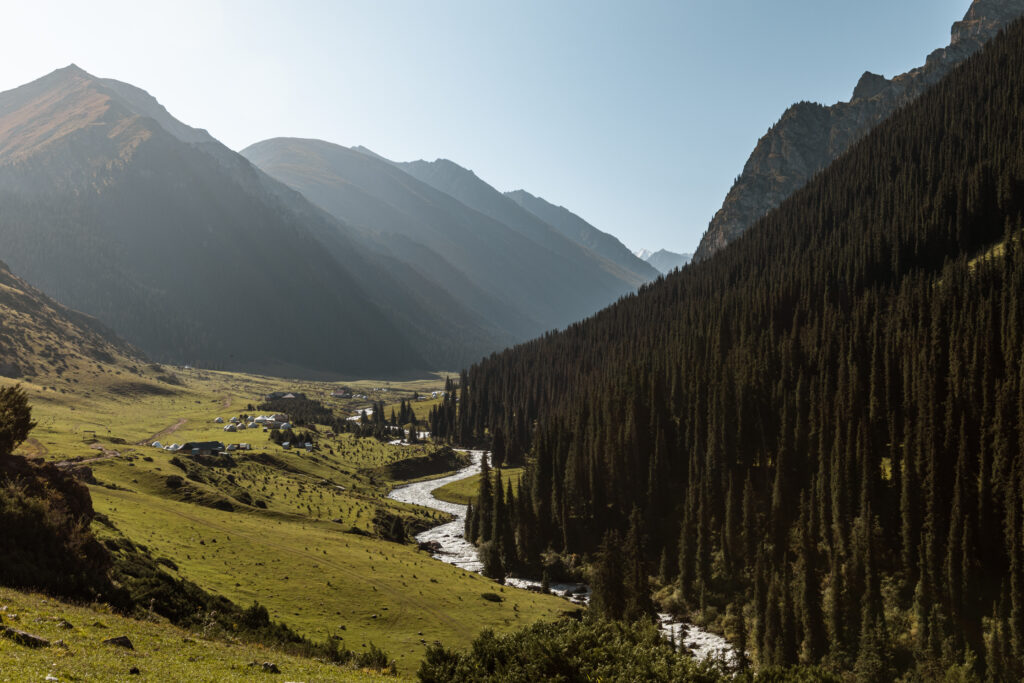 Views over Altyn Arashan
Trekking to Ala-Kul Lake: Budget & Costs
Backpacking to Ala-Kul Lake independently is incredibly affordable, especially if you are self-sufficient with your own camping gear. Below is a breakdown of what you can expect to pay for a 4-day trek (prices are based on local KGS rates).
| Item | Cost in KGS (Som) | Estimated Cost (€) |
| National Park Entrance Fee | 300 KGS | ~€3.00 |
| Marshrutka #101 (to trailhead) | 20 KGS | ~€0.20 |
| Gear Rental (Full set per day) | 1,500 KGS | ~€15.00 |
| Gas Canister (Small) | 400 KGS | ~€4.00 |
| Yurt Bed + Half Board (Optional) | 2,500 KGS | ~€25.00 |
| Hot Springs in Altyn Arashan | 400 KGS | ~€4.00 |
Money-Saving Tips for the Trail
Avoid ATM fees with Wise
The card I use for all my travel withdrawals – real exchange rate, low fees.
Use Revolut to avoid ATM fees
Good alternative to Wise – I carry both as a backup.
Is the Ala-Kul Trek for Everyone?
The Ala-Kul trek is not a walk in the park. It’s a quite challenging multi-day hike through high-altitude, remote mountain terrain. While the views and experiences are unforgettable, it requires a reasonable level of fitness, preparation, and self-sufficiency.
The trail involves long days of hiking, steep ascents, and, at times, scrambling over loose rocks and scree. The Ala-Kul Pass is the highest point at nearly 3,900 metres, and even the descent from the pass can be surprisingly difficult and nerve-wracking, with narrow paths and slippery terrain. Hikers carrying their own camping gear, food, and stove need to be prepared for two full days without access to shops, water, or electricity.
That said, the trek can be done independently by anyone with decent hiking experience who takes the time to prepare. Carrying a water filter, proper footwear, layers for changing weather, and a power bank is essential. Those who prefer a less demanding experience can also complete the trail over three days while staying in yurt camps instead of wild camping.
If you’re not a confident hiker, or not comfortable being self-sufficient and camping alone in the mountains, it’s better to hire a local guide or join a small tour group. Guides can provide route knowledge, help with carrying gear, and offer reassurance on tricky sections like the Ala-Kul Pass, making the experience safer and more enjoyable for those less experienced.
In short, the Ala-Kul trek is ideal for adventurous travellers who enjoy physical challenges, solitude, and camping in the wild. It’s not suited for casual walkers or those uncomfortable with high-altitude hiking, but for prepared and motivated hikers, it’s one of Kyrgyzstan’s most rewarding and memorable mountain adventures.
Explore More of Kyrgyzstan
If you loved the adventure of trekking to Ala-Kul Lake, there’s plenty more to discover in Kyrgyzstan. From stunning alpine lakes to high-altitude peaks and vibrant cities, the country offers countless opportunities for adventure, culture, and exploration. Check out some of my other Kyrgyzstan guides:
Exploring these destinations will give you a fuller picture of Kyrgyzstan’s wild landscapes, rich culture, and endless adventure opportunities.
Looking for the big picture? Check out my ultimate Central Asia Itinerary: 3 Weeks Across the Silk Road to see how to connect all these destinations, navigate remote borders using local transport, and budget for the ultimate mountain adventure.