
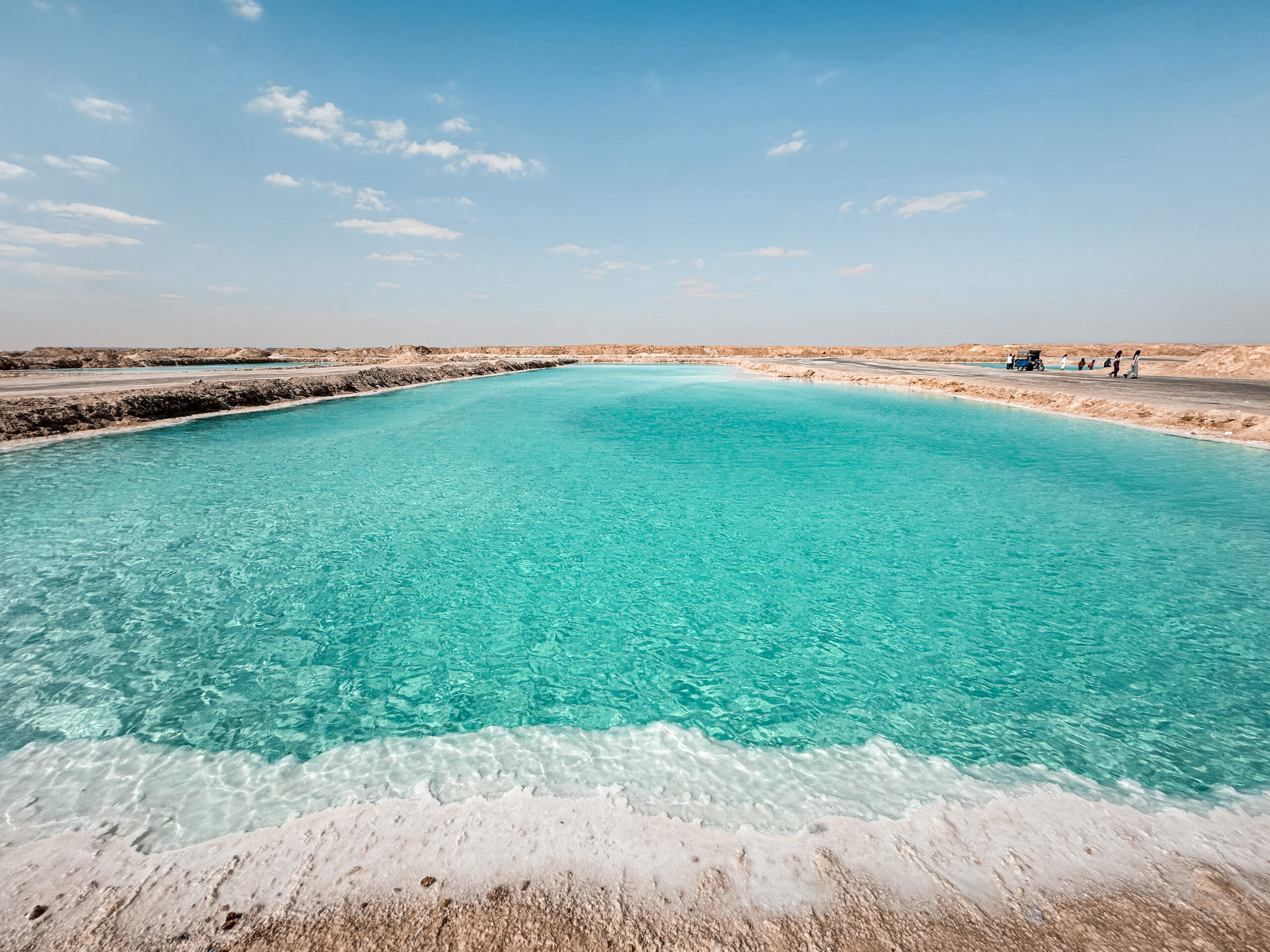
This Siwa Oasis travel guide is for the independent traveler who wants the “real” Egypt without the chaos. If you’re dreaming of a destination that is remote, authentic, and completely removed from the aggressive tourist trails of Luxor or Cairo, Siwa is your answer. Tucked deep in the Western Desert near the Libyan border, this isolated oasis feels like a world frozen in time. The best part? You don’t need a $500 tour to experience it. With the right planning, it is easy to visit Siwa independently and on a budget, and I’m going to show you exactly how to do it.
Imagine floating in shimmering turquoise salt lakes, exploring ancient mud-brick fortresses, and watching the sunset over vast sand dunes, all without a single pushy vendor in sight. Inhabited for over 4,000 years, Siwa’s unique Berber culture and Roman-influenced history offer a side of Egypt that most travellers never see. Whether you’re here to soak in the legendary Cleopatra’s Pool or cycle through lush palm groves, Siwa remains Egypt’s most captivating hidden gem. This guide covers the logistics, the “bus secrets,” and the budget hacks to make your desert escape a reality.
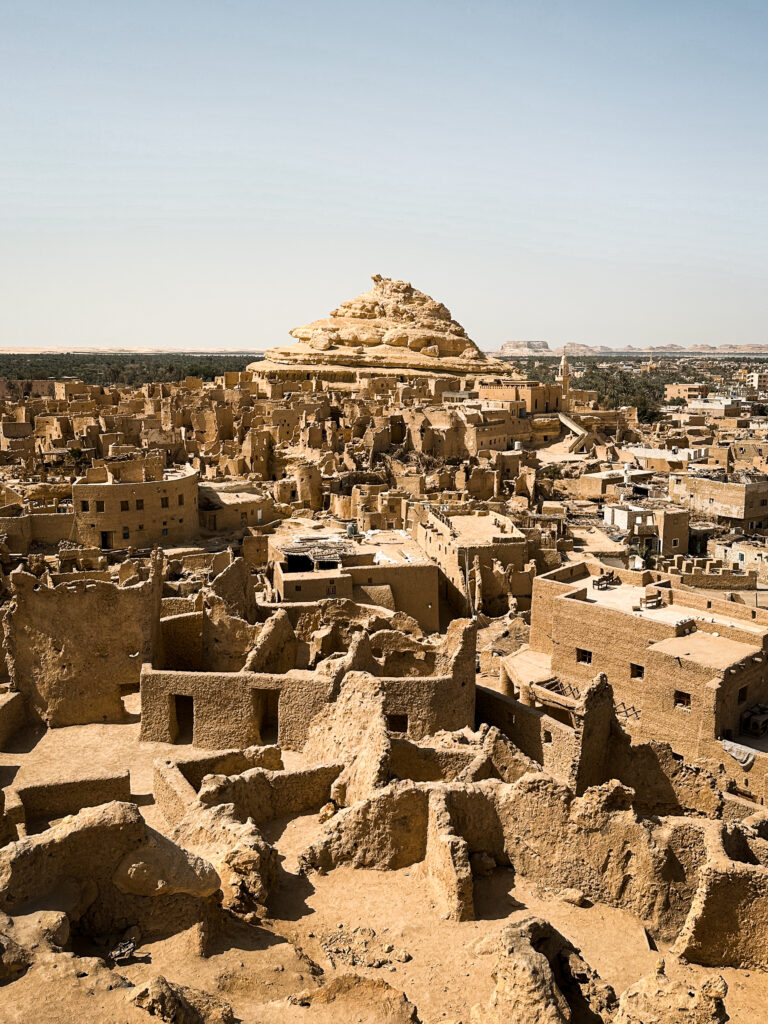 Views over Siwa’s Old Town
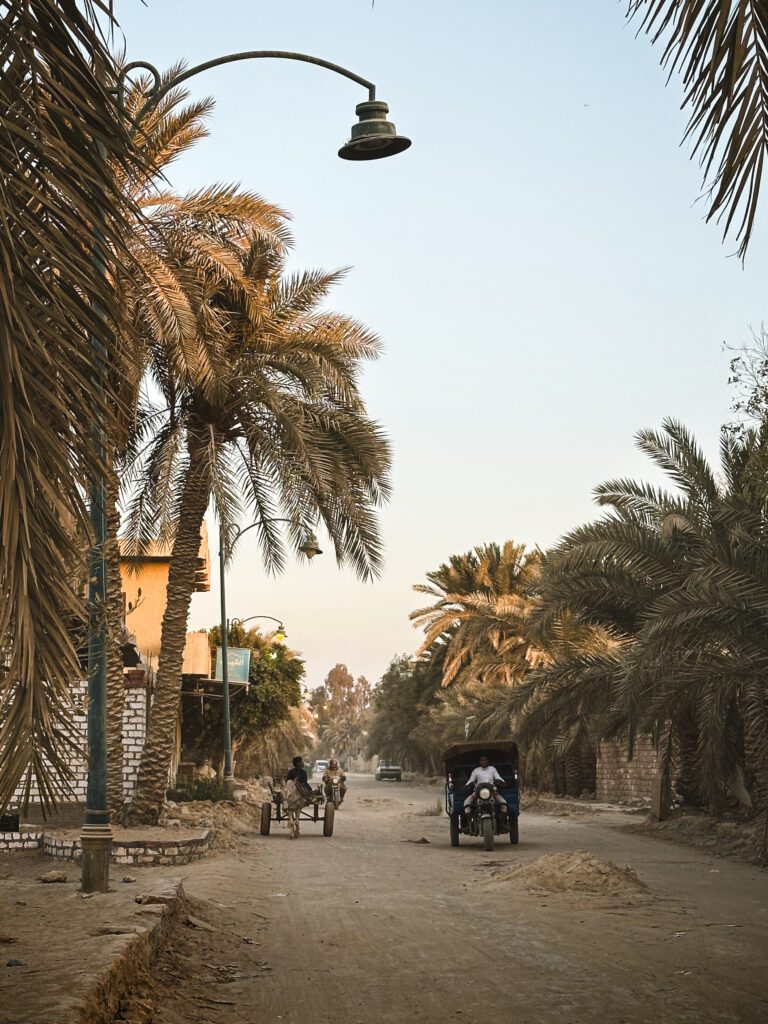 The Quiet Life of Siwa Oasis
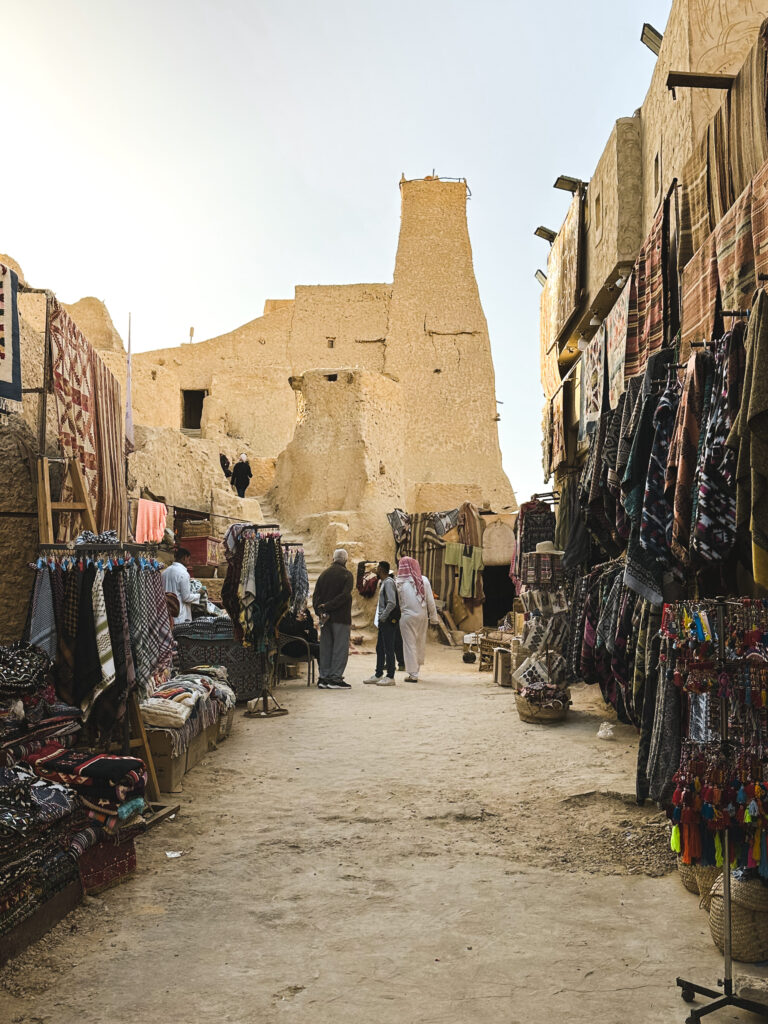 Market by Shali Fortress
Siwa Oasis at a Glance (2026 Update)
If you are short on time, here is the “cheat sheet” for visiting Siwa independently.
Siwa Oasis Overview
Best Time to Visit
October to April. Daytime is perfect (20-25°C), but desert nights are freezing.
Safety for Solo Women
10/10. It is significantly more peaceful than Luxor or Cairo.
The “Salt Pool” Secret
Most pools are free and DIY-accessible. Don’t pay for a tour; rent a bicycle.
Cash is King
ATMs in Siwa are notoriously unreliable. Withdraw all the cash you need in Alexandria or Cairo before you leave.
Vibe Check
No scammers, no haggling, just palm trees and salt lakes. It is the most authentic “off the beaten path” experience in Egypt.
Solo Female Travel & Safety in Siwa Oasis
As a solo female traveler, Siwa was the first place in Egypt where I truly felt I could let my guard down. Unlike the high-pressure environment of Luxor, the Berber culture here is naturally respectful and reserved.
However, because Siwa is a remote community near the Libyan border, there are a few specific things you need to know to stay safe and comfortable.
1. Cultural Modesty (The “Siwan Standard”)
Siwa is arguably the most conservative part of Egypt. Local women are almost always fully covered in a niqab or burqa. To avoid unwanted attention and show respect:
2. Checkpoints and the Libyan Border
You will pass several military checkpoints on the way to and from Siwa. These are not a sign of danger, but rather a sign of high security.
3. Why Travel Insurance is Non-Negotiable
Siwa is remote. If you get a bad case of stomachache, heatstroke, or have a bicycle accident on the salt flats, you are 10-12 hours away from the advanced medical facilities of Cairo or Alexandria.
Don’t skip travel insurance!
I use SafetyWing for most trips – solid coverage for adventure travel.
4. Walking at Night
I felt perfectly safe walking back to my guesthouse after dark. The streets are quiet, and the crime rate against tourists is virtually zero. However, many streets have no lighting, so keep a small flashlight or your phone charged to avoid tripping on the uneven mud-brick paths.
Siwa Oasis Budget Breakdown (2026 Prices)
Siwa is one of the most affordable destinations in Egypt because the “hustle” is non-existent. You won’t find yourself fighting over inflated “tourist prices” for every meal or ride. Here is what you can expect to spend as an independent backpacker.
Daily Budget Estimate
Backpacker Budget: €15 – €25 per day (approx. 950 – 1,200 EGP)
Flashpacker Budget: €40 – €50 per day (approx. 1,900 – 2,400 EGP)
Cost Table
| Category | Item | Estimated Cost (EGP) | Notes |
| Transport | West Delta Bus (One-way) | 320 – 550 EGP | Alex is cheaper; Cairo is longer. |
| Transport | Bicycle Rental (Daily) | 60 – 100 EGP | The best way to explore Siwa. |
| Transport | Tuk-tuk (Return Trip) | 250 – 400 EGP | To Salt Pools / Fatnas (includes waiting). |
| Stay | Budget Guesthouse | 600 – 900 EGP | Usually includes breakfast. |
| Sightseeing | Temple of the Oracle | 120 EGP | Foreigner adult price. |
| Sightseeing | Mountain of the Dead | 120 EGP | Foreigner adult price. |
| Sightseeing | Shali Fortress | FREE | Always open; best at sunset. |
| Sightseeing | Salt Pools / Lakes | FREE | No entry fee (only transport cost). |
| Food | Local Meal (Koshary/Street) | 50 – 90 EGP | Affordable and filling. |
| Food | Sit-down Dinner (nicer restaurant) | 250 – 400 EGP | Try the Siwa dates and olives! |
Money Saving Tips for Siwa Oasis
Avoid ATM fees with Wise
The card I use for all my travel withdrawals – real exchange rate, low fees.
Use Revolut to avoid ATM fees
Good alternative to Wise – I carry both as a backup.
How to Get to Siwa Oasis Guide (2026)
Getting to Siwa is a 750km journey through the Western Desert. While many travelers think a night bus is the only way, there are actually day-trip options and flexible transfers that make the trip much more manageable.
Option 1: The Direct Bus (West Delta Co.)
The West Delta Bus Company is the primary carrier for Siwa. For the best experience, I recommend departing from Alexandria rather than Cairo if you want to see the scenery.
From Alexandria (The Day Option):
From Cairo (The Night Option):
⚠️ The “Online Ticket” Trap: Do not buy tickets through third-party sites like Bookaway or 12Go. They often charge €15+ for a ticket that costs €6 at the window. Go to the station 24-48 hours in advance to buy your ticket in person.
Option 2: The “Marsa Matruh” Transfer (Most Flexible)
If the direct bus is sold out, or you want to break up the journey, use the Marsa Matruh “hub” method. This can be much faster.
1. Cairo/Alexandria to Marsa Matruh: Take a GoBus or Blue Bus (bookable online!). They leave every few hours.
2. Marsa Matruh to Siwa: Catch a local microbus from the “Souq” area or the main station.
Essential Logistics for the Journey
The Checkpoints: Since Siwa is near the Libyan border, keep your passport in your daypack. There will be a lot of police checkpoints on the way to Siwa after Marsa Matruh.
Day vs. Night: If you take the 10:00 AM bus from Alexandria, you’ll be treated to incredible views of the desert and salt flats as you approach the oasis.
How to Get Around Siwa
Since Siwa is small and compact, most of its attractions can be reached by walking, cycling, or taking a tuk-tuk. I walked to most places, but some attractions are quite far from the town centre. Tuk-tuks are a convenient option for getting around, but make sure to agree on the price before the ride to avoid overpaying. My preferred way to explore was by renting a bicycle from a guesthouse or a local shop. Cycling through the oasis, past palm groves and salt lakes, was not only budget-friendly but also a great way to take in the scenery at my own pace.
Top Things to Do in Siwa Independently
I spent four days in Siwa, simply enjoying the quiet and peacefulness, and I never once felt bored or out of things to do. The journey here is long, over 1400 km to go into the desert and back, so most travellers skip it. However, that’s exactly what makes it special.
Explore Shali Fortress
Built from locally sourced mud brick, this fortress was once the heart of Siwa’s ancient town. Its narrow, winding streets and tall, crumbling walls tell the story of a time when the fortress offered protection from invaders and harsh desert conditions. Though much of it has been eroded by time and weather, it’s still possible to climb to the top for stunning panoramic views of the oasis and surrounding desert at sunset.
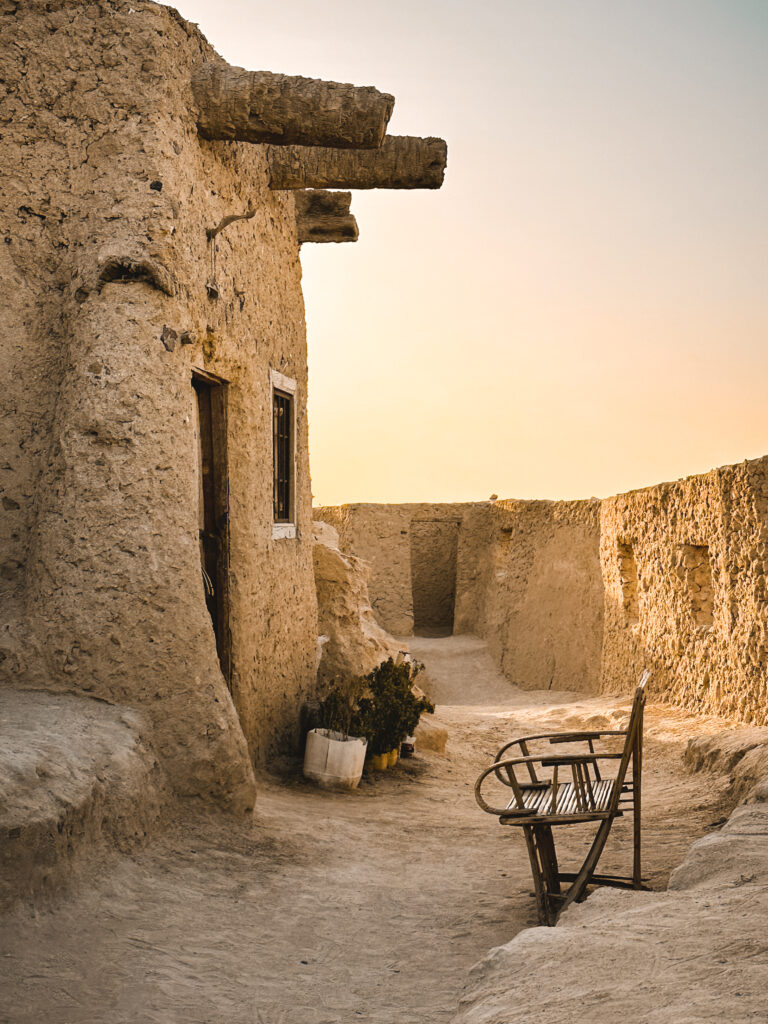 Exploring Shali Fortress
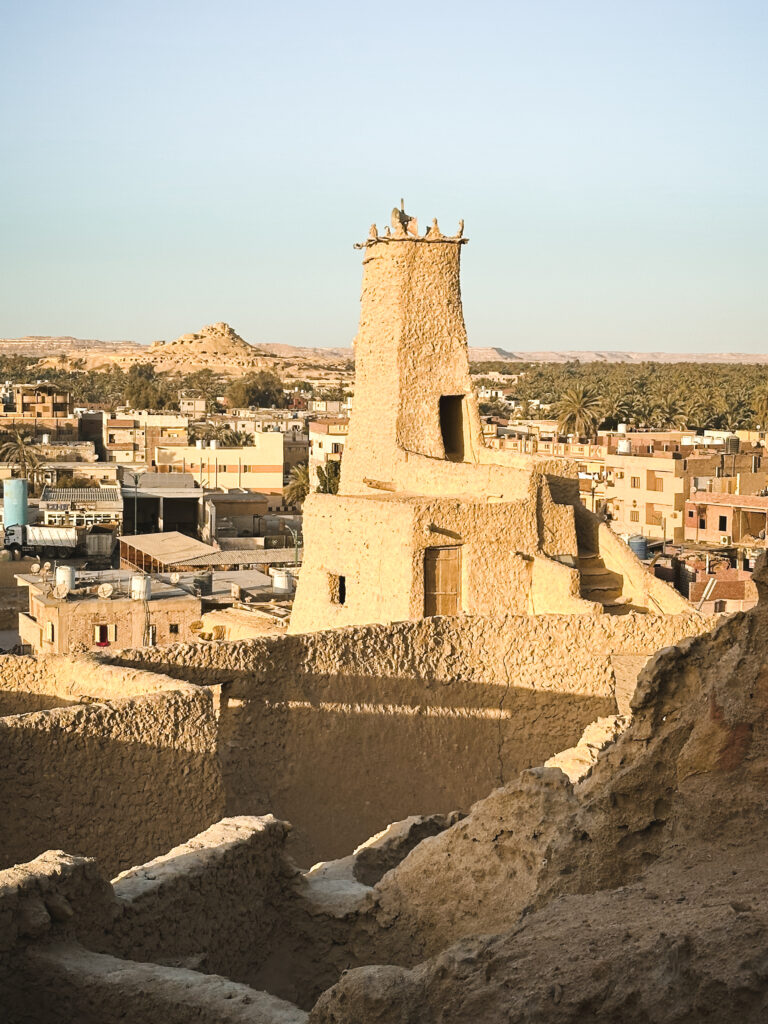 Exploring Shali Fortress
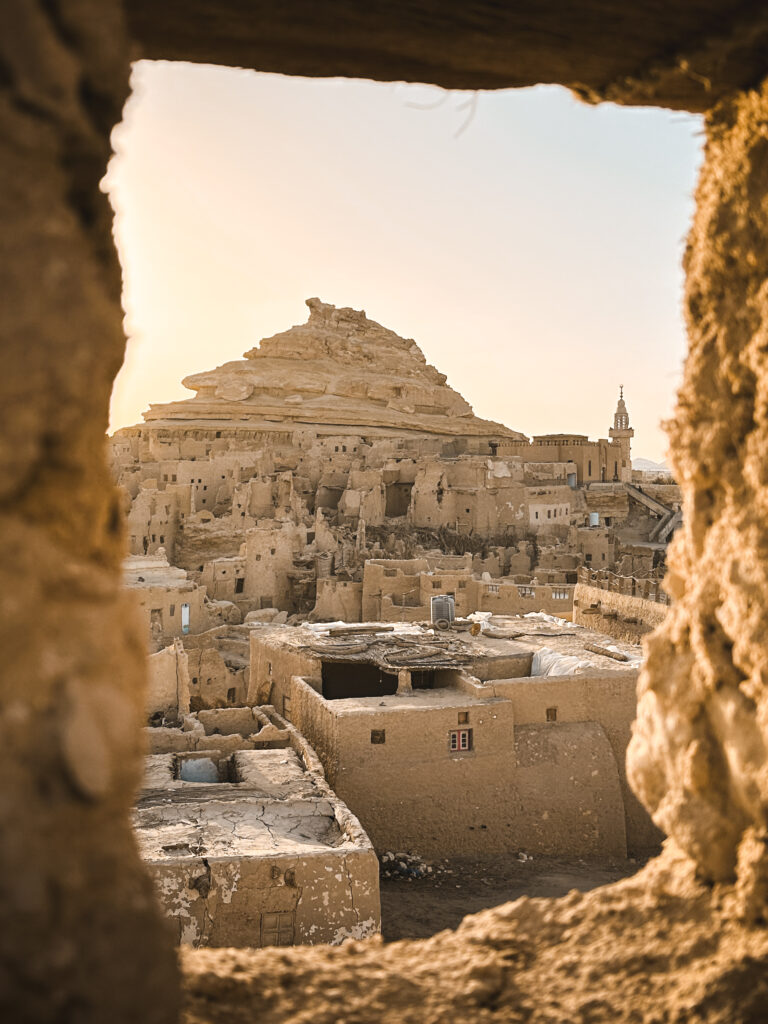 Views from Shali Fortress
Wander through Siwa Town
Wander around the old town and experience the local Berber culture, visit the market, and try traditional Siwan food.
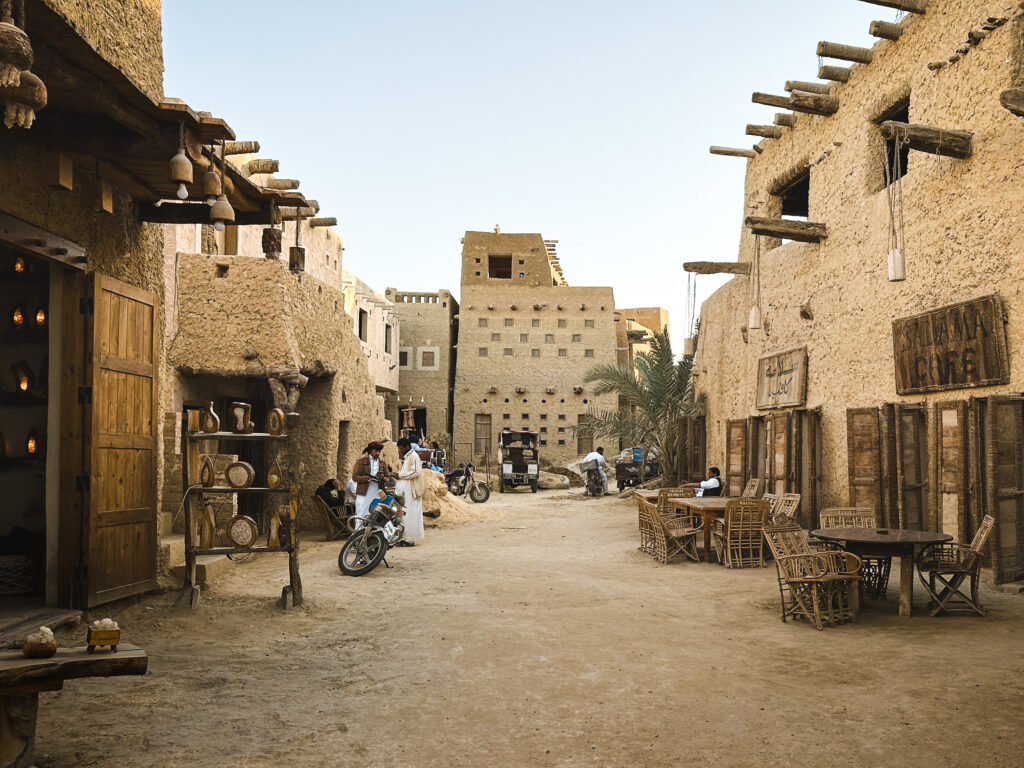 Shops and Cafes in Siwa Old Town
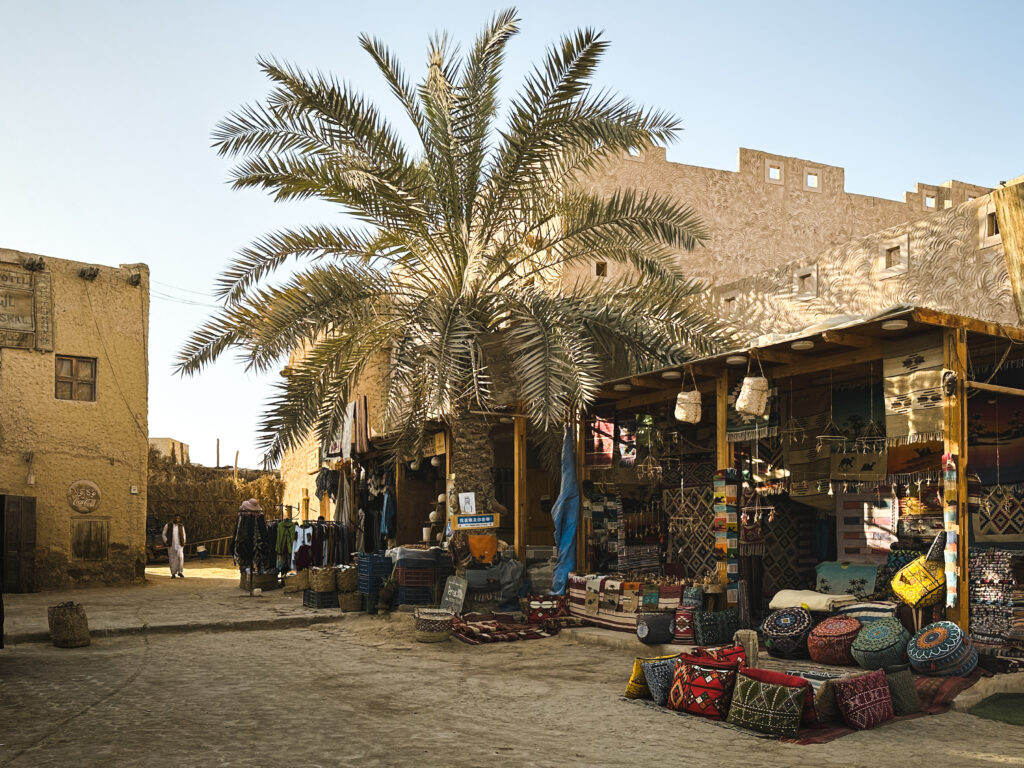 Siwa Old Town
Swim in Cleopatra’s Pool
Cleopatra’s Pool is a legendary natural spring where Queen Cleopatra is said to have bathed. Located just 3km from the town center, this deep stone-lined pool is filled with bubbling emerald water and surrounded by palm trees and small cafes. It’s completely free to visit and easily reachable by a 15-minute bike ride or a quick tuk-tuk. To avoid the crowds and enjoy the clearest water, try to arrive before 10:00 AM.
Because the pool is a central social hub for locals, modesty is key. I highly recommend swimming in a t-shirt and pants over your swimwear to respect the local Berber culture and feel more comfortable. It’s the perfect spot to stop for a fresh pomegranate juice and a refreshing dip on your way back from exploring the nearby Temple of the Oracle.
Temple of Oracle
The Temple of the Oracle of Amun was once a sacred place of worship dedicated to the god Amun. The temple is best known for its connection to Alexander the Great, who visited in 332 BCE to seek guidance from the oracle. It is said that the oracle declared him the son of Amun, a prophecy that greatly influenced his sense of destiny and his subsequent rise to power.
Float in Siwa’s Salt Pools
The salt pools of Siwa Oasis are man-made during salt mining which then is filled with the water from underground springs. The salt deposits along the edges of the pools give them a unique, white, crystalline appearance, making them particularly photogenic. Locals have used the pools for centuries, both for their salt production and for their therapeutic properties, as the mineral-rich waters are believed to have healing benefits for the skin. Visitors to the salt pools can enjoy a refreshing dip, float effortlessly in the buoyant water, and marvel at the beauty of the salt-encrusted surroundings, making it an unforgettable experience in Siwa’s desert landscape.
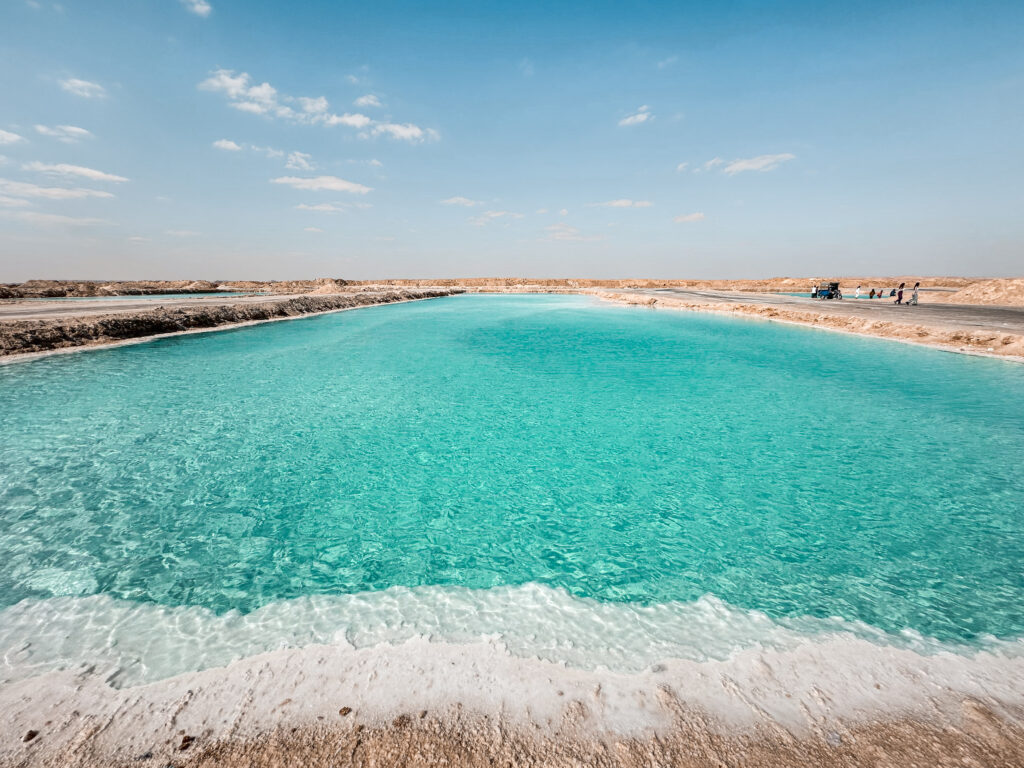 Salt Pools
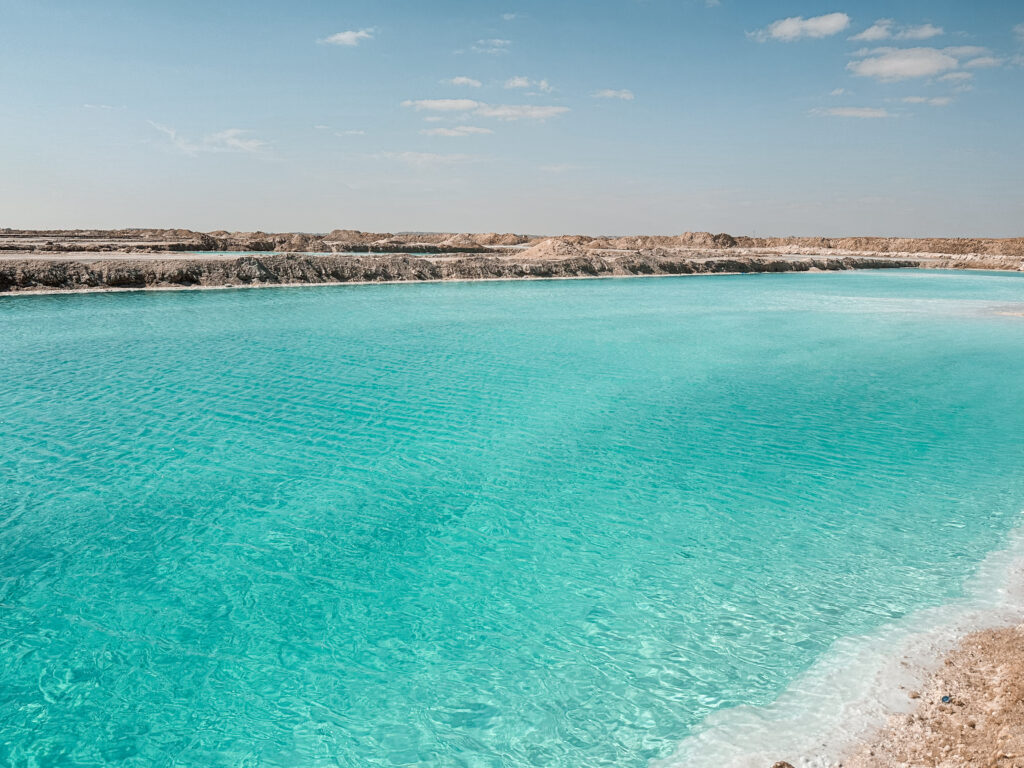 Salt Pools
Sunset in Fatnas Island
Fatnas Island, also known as Fantasy Island, is a small, picturesque oasis set on the tranquil shores of Lake Siwa, just a short bike ride from Siwa town. Surrounded by swaying palm trees and overlooking the saltwater lake, it’s one of the best places in Siwa to watch the sunset. There are small cafes on the island which serve traditional Siwan tea and fresh juices, making it the perfect spot to unwind after a day of exploring.
Visit Gebel al-Mawta (Mountain of the Dead)
This archaeological site, located just outside the main town, is an ancient necropolis, home to hundreds of tombs carved into the mountain’s limestone cliffs. The tombs, which vary in size and style, are decorated with intriguing wall paintings and inscriptions that offer glimpses into the spiritual beliefs and practices of the time.
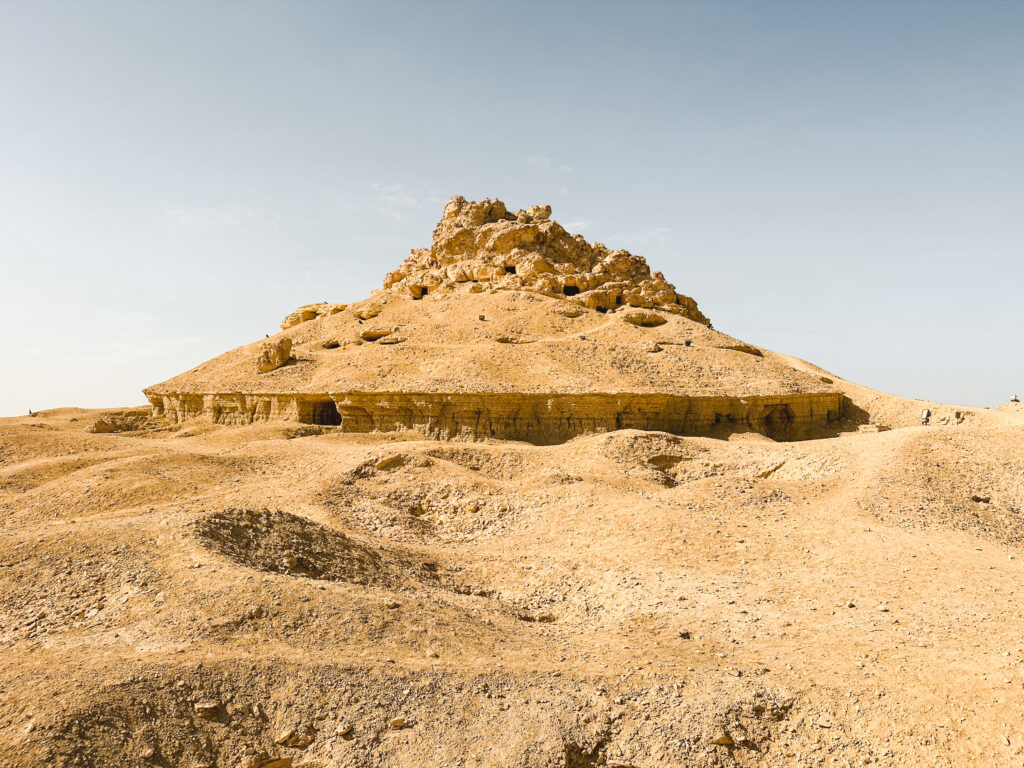 Mountain of the Dead
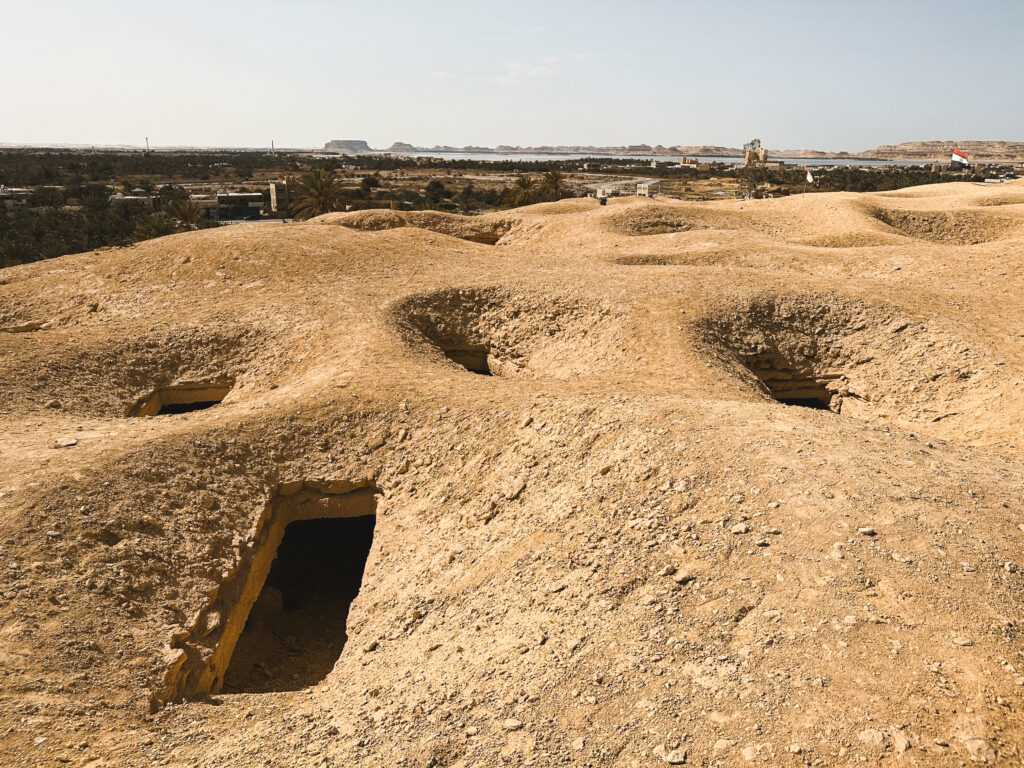 Tombs in Mountain of the Dead
Other Things to Do in Siwa
There are plenty of other activities and excursions to enjoy in Siwa Oasis, with the most popular being the desert tours into the Great Sand Sea. These tours typically include sandboarding down towering dunes, visiting the cold and hot springs hidden in the desert, and watching the sunset from breathtaking viewpoints. Many tours also stop at the fossilized seashells, remnants of an ancient ocean that once covered this region. While most guesthouses and local guides offer these tours, it’s also possible to arrange a private trip for a more personalised experience.
Where to Stay
Siwa offers a variety of picturesque accommodations to suit all budgets, from budget-friendly guesthouses to charming ecolodges. As a backpacker, I stayed at Olive Garden House Siwa, which I highly recommend. Tucked away from the bustle of the town, it truly felt like an oasis within the oasis. The courtyard is a lush garden filled with vibrant flowers, creating a peaceful and relaxing atmosphere. The family that owns it was incredibly hospitable and welcoming, making my stay feel more like a home than just accommodation.
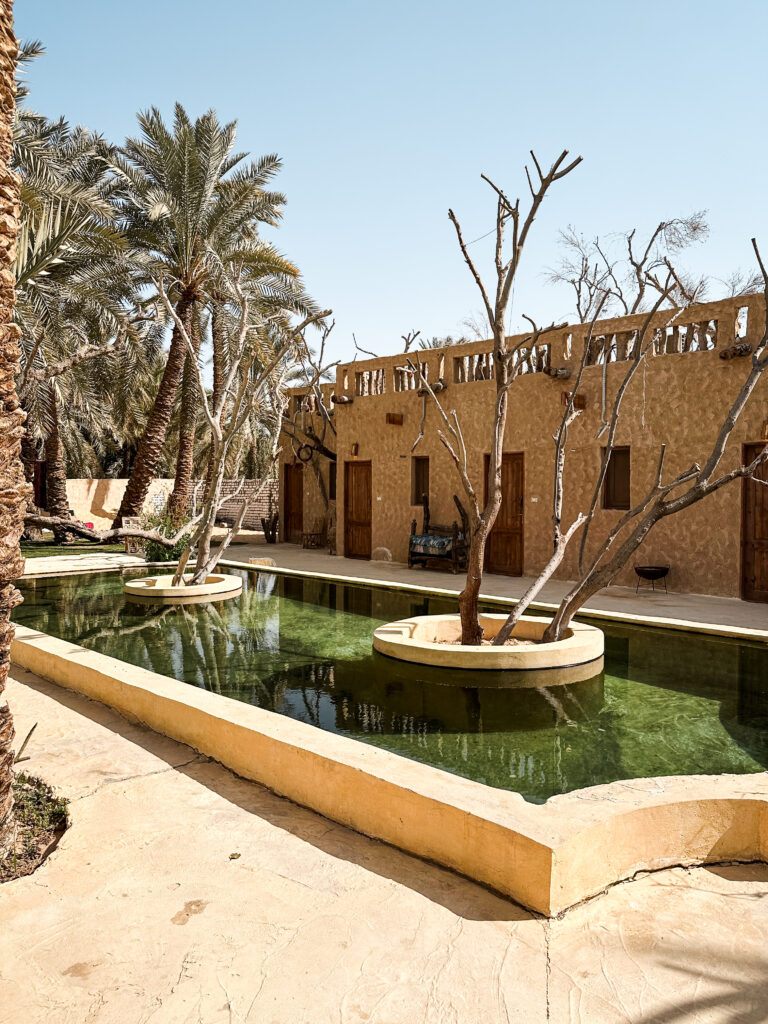 Peaceful and Lush Courtyard
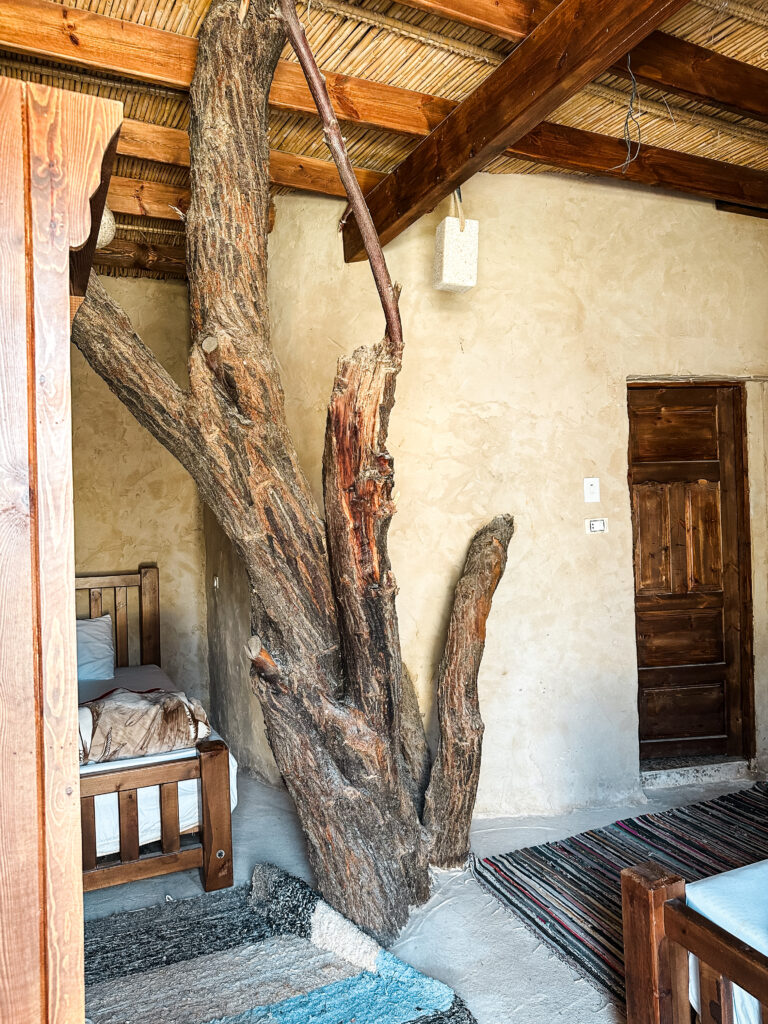 My room which had a cool tree in the middle
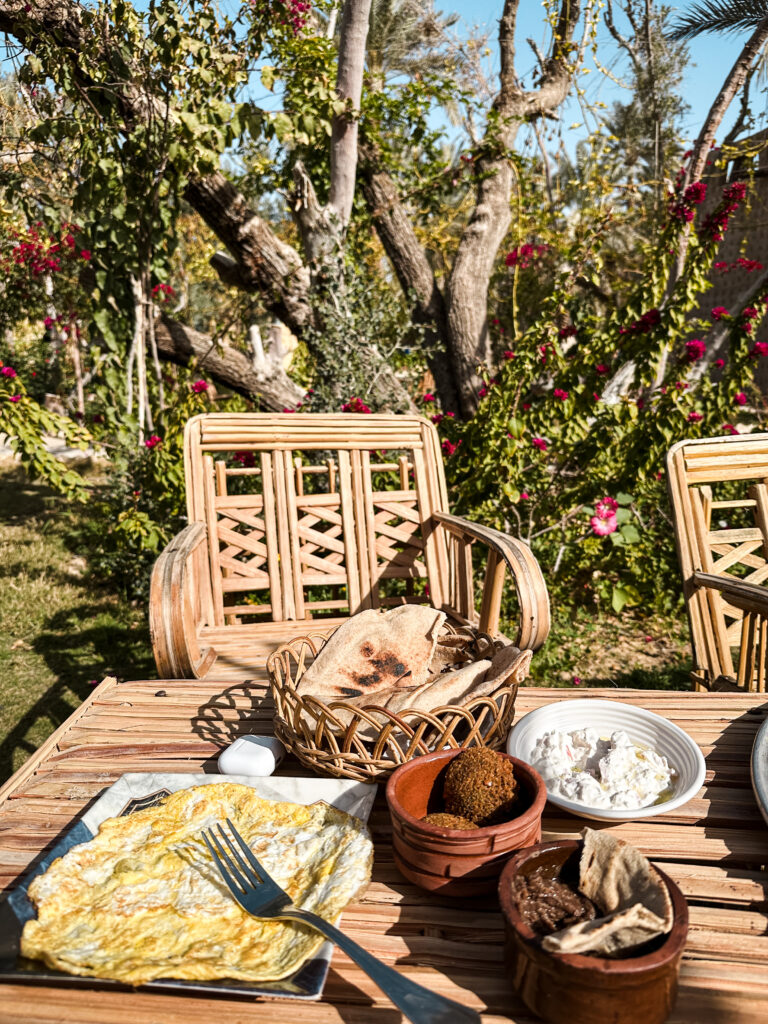 Delicious Breakfast Served in the Garden
Where to Eat
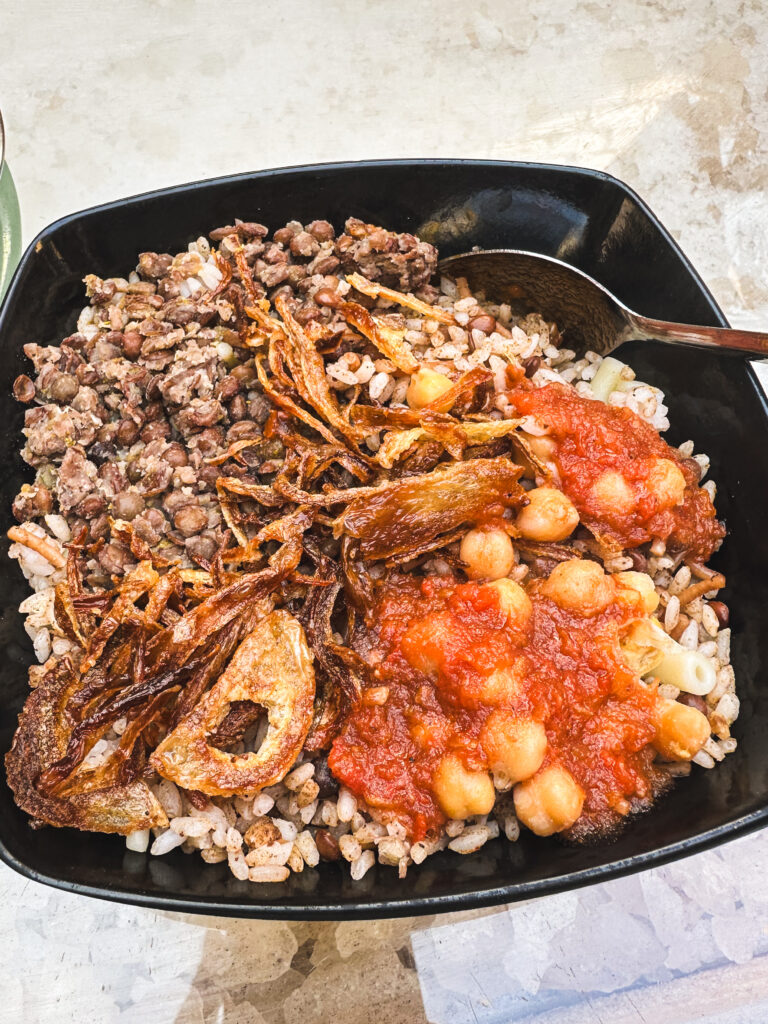
There are plenty of places to eat in the centre of Siwa, including charming cafés serving fresh fruit juices and local specialities. For a delicious and budget-friendly meal, I highly recommend Koshary Karim, where I enjoyed a hearty and affordable plate of koshary, Egypt’s beloved street food.
If you’re in the mood for something more refined, Tekeyet Elamir Restaurant & Café is an excellent choice. It stands out from other restaurants in Siwa with its beautifully designed interior, where the floor is uniquely made of salt, blending perfectly with the oasis’s natural aesthetic. The menu offers a variety of breakfast dishes, hearty meals, fresh juices, and desserts, and they even have a proper espresso machine—a rare find in Siwa. I definitely recommend trying one of their tagines, which are cooked to perfection. The restaurant also houses a small museum dedicated to Siwa’s history, making it a fantastic spot to enjoy a meal while learning more about the oasis’s rich heritage.
Essential Travel Tips
Best time to visit
Siwa experiences extreme desert temperatures, so the best time to visit is between October and April, when daytime temperatures are pleasant and evenings are cool. Summers can be scorching which makes outdoor exploration uncomfortable. If you visit in winter like me, be prepared for really pleasant temperatures during the day but very chilly nights. Bring a heavy jacket!
Cultural Considerations
Siwa is one of the most traditional and conservative regions in Egypt. Most local women wear burqas or niqabs, covering their entire faces. As a female traveler, you’ll naturally attract some attention, so it’s best to dress as modestly as possible, covering your shoulders and knees. While a headscarf is not required, wearing loose-fitting clothing is both respectful and helps ensure a more comfortable experience. Men should also dress conservatively, as wearing shorts is uncommon among locals.
Internet & Connectivity
Internet in Siwa is hit-or-miss, as most guesthouses rely on slow, unreliable Wi-Fi that often fails during desert winds. While 4G coverage is surprisingly decent within the town center and near the Shali Fortress, the easiest way to stay connected without hunting for a local mobile shop in the souq is to set up an eSIM. Having your own data is essential for navigating the salt flats on a bike or checking schedules, as you won’t find many public hotspots once you leave your accommodation.
Need data before you land? Try Saily eSIM
Use code RITAHE1486 for $5 off your first plan.
Final Thoughts & Personal Experience
After the chaos and intensity of other places in Egypt, I originally planned to visit Siwa for just a couple of days, but I kept extending my stay. The peaceful atmosphere of my oasis guesthouse, the delicious food, and the endless fascinating places to explore made it incredibly hard to leave.
In fact, Siwa was my favourite place in all of Egypt – crazy, right? Unlike anywhere else in the country, Siwa felt genuinely relaxing. No scammers, no pushy vendors, and the best part: barely any tourists. Without the usual crowds, there was no hassle – just warmth, kindness, and authenticity. It was the only place in Egypt where I truly felt the hospitality of the locals without the sense that they were expecting something in return.
Beyond the friendly people, Siwa’s raw beauty was unforgettable. The otherworldly salt pools, endless sand dunes, ancient ruins, and serene desert sunsets made it feel like a place frozen in time. The journey to get there may be long and remote, but I’d return in a heartbeat. Siwa is the kind of place that stays with you long after you leave. I’d urge everyone to go there before its authenticity gets ruined with mass tourism.
More Egypt Travel Guides
If you’re continuing your independent adventure through Egypt, these guides cover everything you need to travel the country on a budget without joining a tour: