
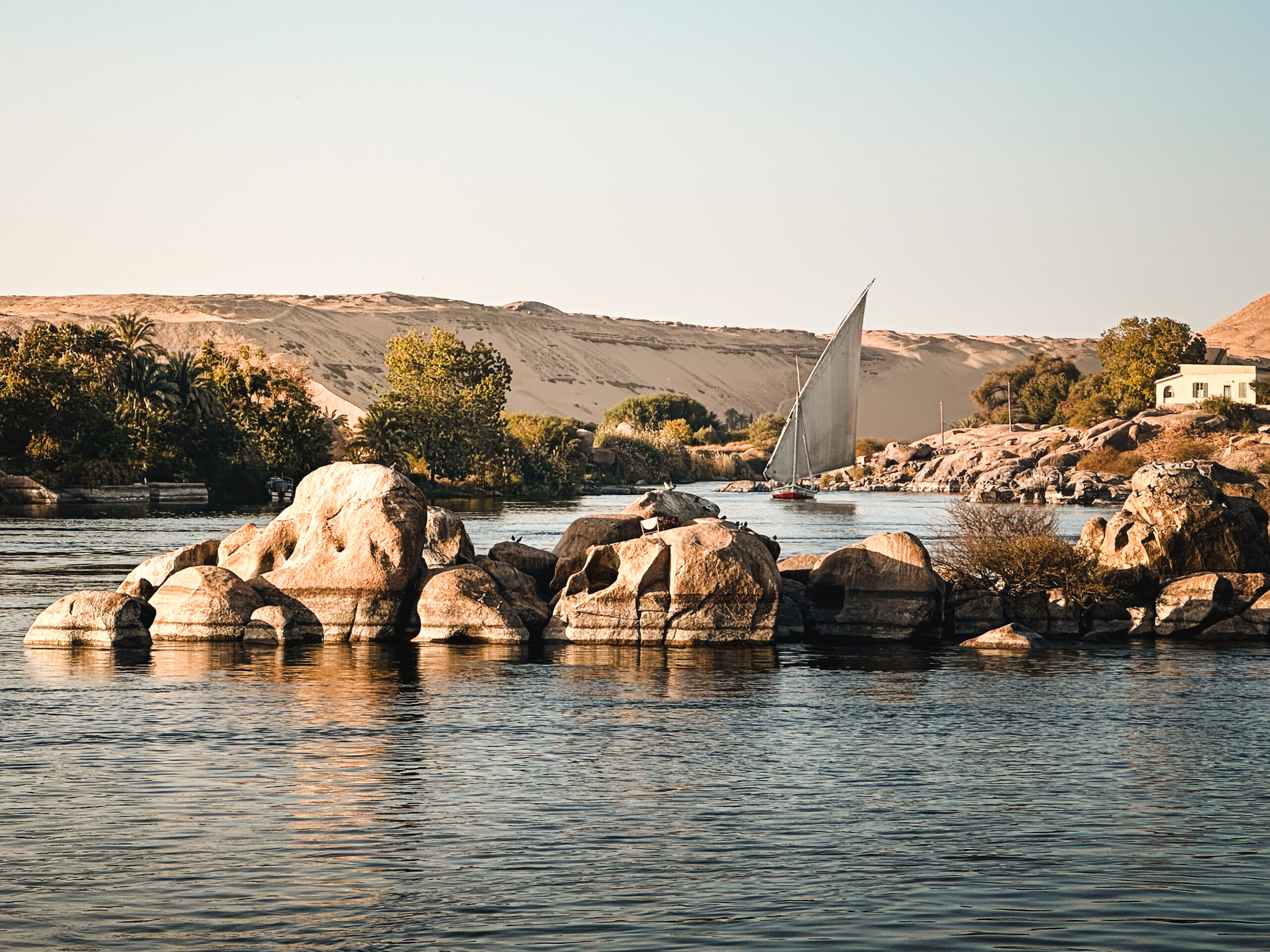
Visiting Aswan independently is to experience the true soul of the Nile, away from the rigid schedules of cruise ships and tour buses. While many travellers believe you need an expensive package to see the wonders of Egypt, Aswan is actually a backpacker’s paradise if you know the local secrets.
In this guide, I’ll show you exactly how to navigate Aswan independently in 2026, from catching the local ferry for pennies to reaching Abu Simbel on your own terms, all while keeping your backpacker budget intact.
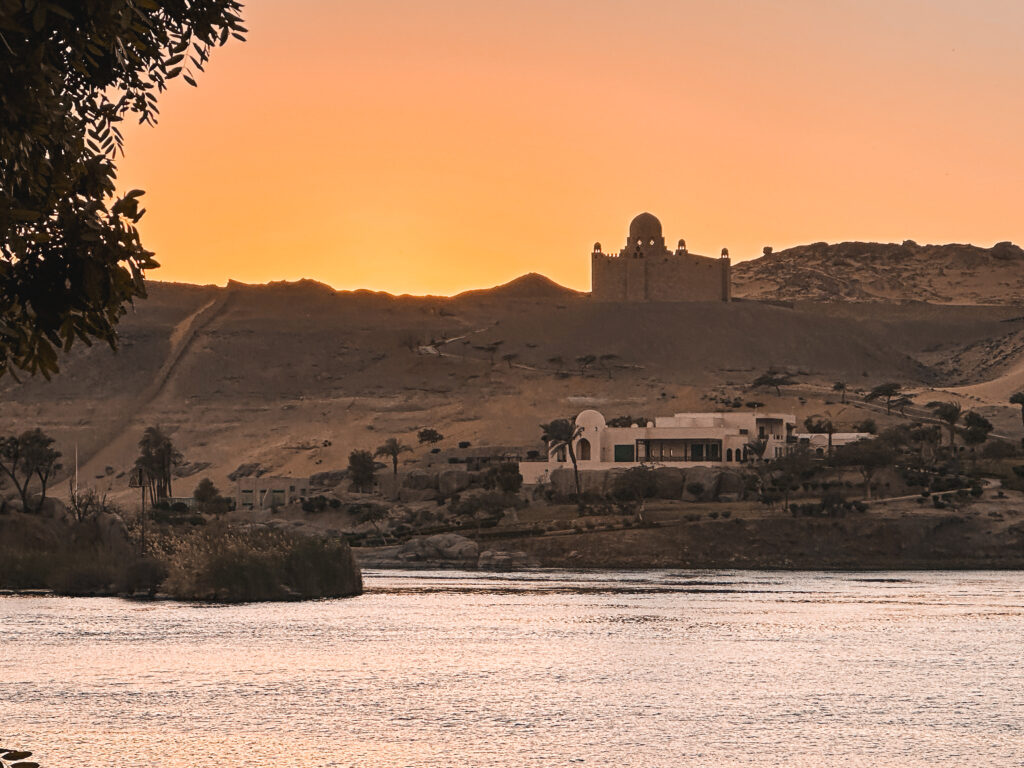 Sunset Views from Elephantine Island
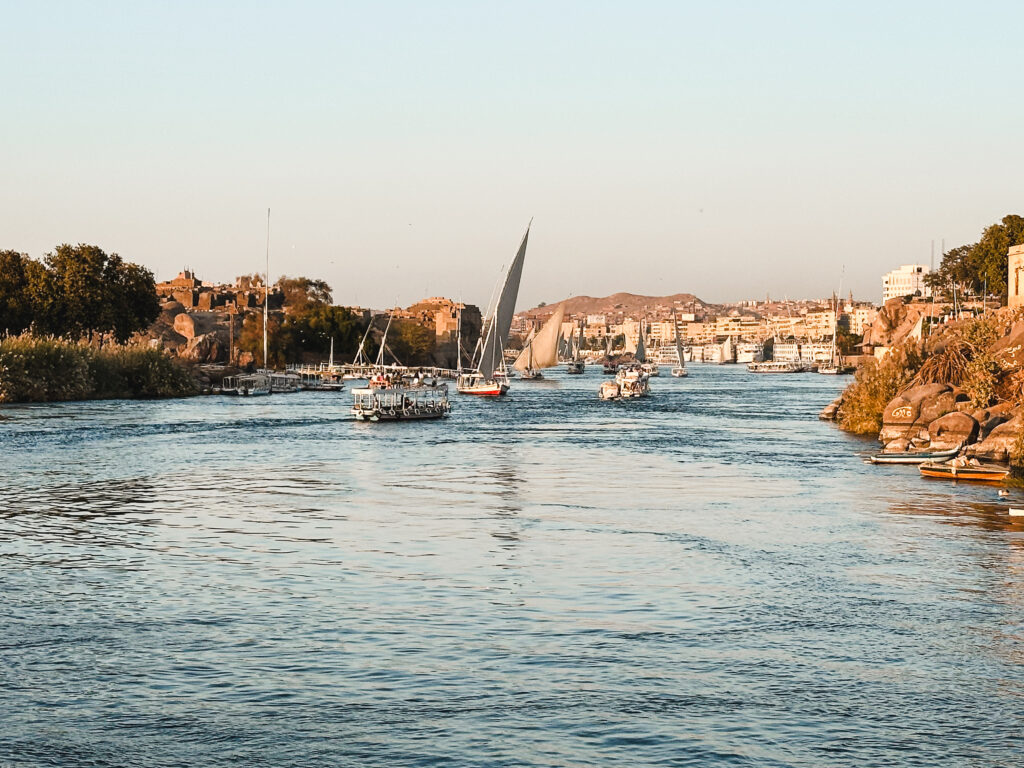 Feluccas sailing on the Nile in Aswan
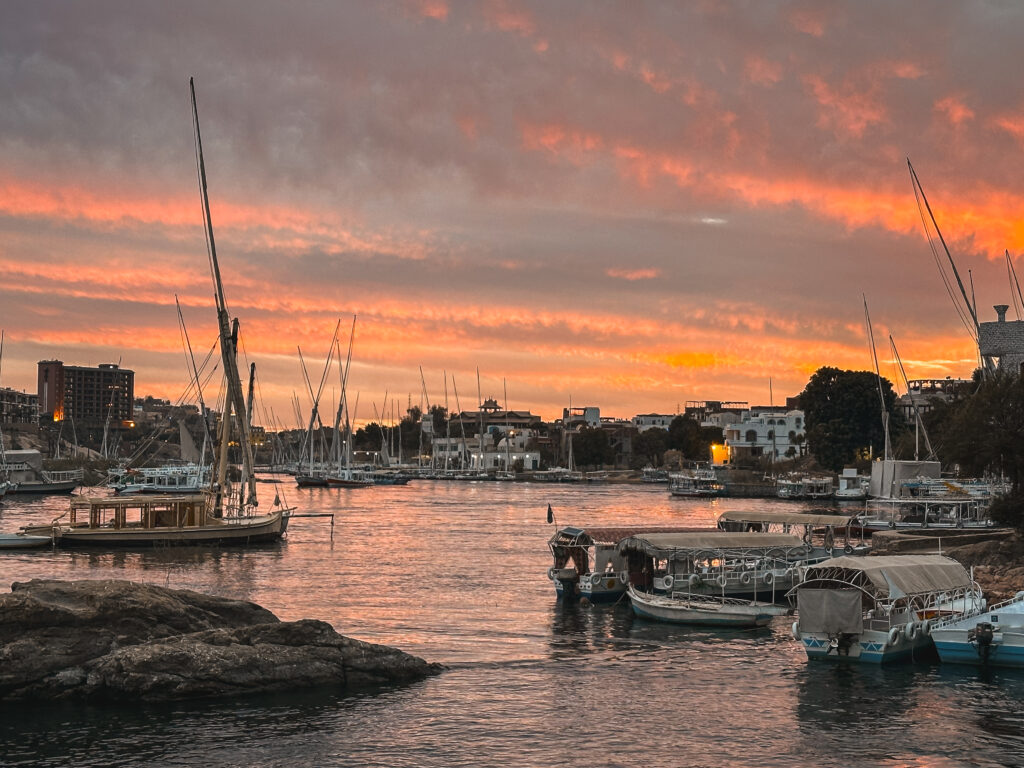 Sunset over the Nile in Aswan
Aswan Independent Travel: Essential Tips
Before you navigate the logistics of getting to Aswan, there are a few things you need to know about how this city operates. Aswan is much more laid back than Cairo or Luxor, but it has its own set of “independent traveler” rules.
1. Choose Your Base Wisely
If you want the true independent experience, stay on Elephantine Island. It’s a car-free, quiet Nubian village in the middle of the Nile. The Logistics: You’ll have to take a public ferry (10 EGP) every time you want to go to the mainland, but it’s worth it to escape the street touts of the Corniche.
2. The “Aswan Pace”
Aswan is famously slow. Don’t try to cram everything into one day. The heat here is more intense than in the north, and the city is best enjoyed by sitting in a riverside cafe or sailing a felucca at sunset.
3. Cash vs. Card (The 2026 Rule)
For Sites: You MUST have a card. The Ministry of Tourism has moved to a cashless system for all major temples.
For Daily Life: You MUST have cash (EGP). Local ferries, koshary shops, and felucca captains will almost never accept cards.
4. Avoid the Queues: Buy Your Tickets Online
If you want to visit Aswan independently with zero stress, do not wait until you reach the temple gates to buy your tickets. When the tour buses arrive at 8:00 AM, the ticket kiosks become a bottleneck.
Skip the Line: You can buy official tickets for all the temples and museums in advance through the Ministry of Tourism and Antiquities portal.
The Process: Simply show the QR code on your phone at the entrance. It’s faster, more secure, and ensures you don’t have to deal with the “cashless” kiosk malfunctions that occasionally plague the site.
5. Safety & Solo Travel
Aswan is generally very safe. However, as an independent traveler, you will be approached constantly by people offering “Taxi? Felucca? Tour?” A polite but firm “La Shukran” (No thank you) and walking away is the only way to handle it.
Don’t skip travel insurance!
I use SafetyWing for most trips – solid coverage for adventure travel.
6. Best Time to Visit
Avoid July and August at all costs as temperatures regularly hit 45°C. The “Sweet Spot” for budget travellers is October/November or March/April, when the weather is bearable but the peak-season prices haven’t fully kicked in. Personally, I visited Aswan in February and the weather was great.
7. Stay Connected: SIM Cards vs. eSIM
Navigating Aswan independently is nearly impossible without data. You’ll need it to call an InDrive (the local Uber equivalent) or to check if your train is actually delayed (it probably is).
The Local Option (Physical SIM): You can pick up a local SIM from Orange or Vodafone at the Aswan train station or in the Souq. It’s the cheapest route, but be prepared for a long wait and the requirement to show your passport.
The Seamless Option (eSIM): If you want to hit the ground running without hunting for a shop, I recommend using an eSIM. You can activate it the second you land in Egypt, so you have maps and translation ready immediately. It saves you the headache of negotiating with station touts the moment you arrive.
Need data before you land? Try Saily eSIM
Use code RITAHE1486 for $5 off your first plan.
Aswan Daily Budget Breakdown (2026 Estimates)
Managing your budget in Aswan is much easier than in Cairo or Luxor, but only if you know how to navigate the ‘tourist pricing’. Whether you’re staying in a traditional Nubian guesthouse on Elephantine Island or just stopping through for a DIY trip to Abu Simbel, here is a realistic breakdown of what you can expect to spend daily in Euros.
| Expense Category | Budget (Backpacker) | Mid-Range (Flashpacker) |
| Accommodation | €8 -€14 (Hostel Dorm / Guesthouse) | €28 – €55 (Boutique Stay) |
| Meals | €2 – €7 (Local street food) | €14 – €23 (Nile-view dining) |
| Public Transport | €0.50 – €1.50 (Ferry/Bus) | €4 – €9 (InDrive/Careem) |
| Attractions (Avg) | €11 – €14 (1-2 sites/day) | €23 – €38 (Major sites) |
| Daily Total | €20 – €35 | €69.00 – €125.00 |
⚠️ Essential Update for 2026: Egypt has shifted to a strictly “Cashless” system for all major historical sites. You cannot use cash to buy tickets at the kiosks in Aswan. Ensure you have a travel-friendly debit card to avoid high transaction fees.
Avoid ATM fees with Wise
The card I use for all my travel withdrawals – real exchange rate, low fees.
Use Revolut to avoid ATM fees
Good alternative to Wise – I carry both as a backup.
How to Get to Aswan on a Budget
Getting from Luxor (check the independent Luxor travel guide) to Aswan should be simple since they are major hubs only 200km apart. However, I quickly learned that the system is designed to funnel tourists into expensive Nile cruises or private transfers. If you want to visit Aswan independently, you have to work for it.
The Transportation Struggle
When I tried to book a bus, I found almost nothing. Most reputable companies don’t run this route, leaving only one “sketchy” 6:00 AM bus. Private transfers were quoted at astronomical prices, and local minivans (microbuses) are a “grey area”. Drivers often refuse foreigners to avoid trouble at police checkpoints.
The Train: My “Overpriced” Last Resort
After missing the early bus, I headed to the train station at 11:00 AM. I was told the next train wasn’t until 7:00 PM. Desperate to leave Luxor, I paid $36 (€33) for a ticket, a massive “tourist tax” compared to local prices. But the price was nothing compared to the chaos of the journey itself.
Platform Roulette: A Lesson in Chaos
If you are planning to visit Aswan independently, prepare for a total lack of information at the station.
I spent hours pacing the platform, asking locals if each arriving train was headed to Aswan. Most were unhelpful or expected money for an answer. Eventually, two hours after my scheduled departure, a local pointed to a pulling-in train and said, “Aswan.”
Jumping Off a Moving Train
I fought my way on, found my assigned seat, and saw someone already in it. Luckily, a ticket inspector was nearby. He looked at my ticket and dropped a bombshell: “Not this train. Next one.”
At that moment, the train started moving. I had to shove my way back to the door against a literal wall of people still trying to push their way on. I ended up having to jump off a moving train back onto the platform just as it gained speed.
The Onboard Experience
Three trains and 45 minutes later, my actual train arrived. Even though the ride is under three hours, it was the most confusing and unpleasant train experience of my life. The carriages were stuffy, filthy, trash littered the floors, and people were smoking freely inside.
The Verdict: I’ve traveled extensively by rail, including a 55-hour journey across Kazakhstan, and this short hop to Aswan was significantly more stressful. If you can find any other way to get there, take it.
Summary of Options from Luxor to Aswan
| Option | Estimated Cost | The Verdict |
| The 6 AM Bus | ~€15 – €22 | Best for Budget: If you can stomach the early start and the “no-frills” vibe. |
| The Train | €30 – €35 | Most Reliable: Check schedules and tickets via the ENR App to see real times and avoid station “gatekeepers.” |
| Private Transfer | €120+ | Convenience: Only worth it if you are a group of 3+ people. |
| Local Microbus | ~€5 | Risk/Reward: Very cheap, but expect to be turned away or told to “hide” from police. |
⚠️ Critical Warning: Forget Online Booking
As of 2026, the official Egyptian National Railways (ENR) website and app still frequently block foreign credit cards or explicitly state that online booking is for Egyptian nationals only. To visit Aswan independently, you usually have to go to the train station in person. Do not trust the station “helpers” who tell you the trains are full. Go directly to the ticket window yourself. If the window refused to sell you a “local” ticket, you might be forced into the $30+ VIP or Talgo seats specifically priced for tourists.
Things to Do in Aswan Independently
Aswan itself has plenty to offer, but it’s also a great base for day trips to some incredible nearby sites. However, I have to admit that after arriving from Luxor, I felt mentally drained from all the scams and pushy vendors. I desperately needed a break. So instead of going on a hectic sightseeing spree, I took things slow, spending my days reading by the Nile at my hostel and later moving to Elephantine Island for an even more peaceful atmosphere.
That said, if you’re ready to explore, here are some of the highlights to check out between your moments of relaxation!
How to visit Abu Simbel Independently
For most, Abu Simbel is the crown jewel of Aswan. Located near the Sudanese border on the banks of Lake Nasser, these 13th-century BC temples built by Ramses II are breathtaking. The four colossal statues of Ramses II (standing 20 meters tall) and the smaller temple dedicated to Queen Nefertari are sights you cannot skip.
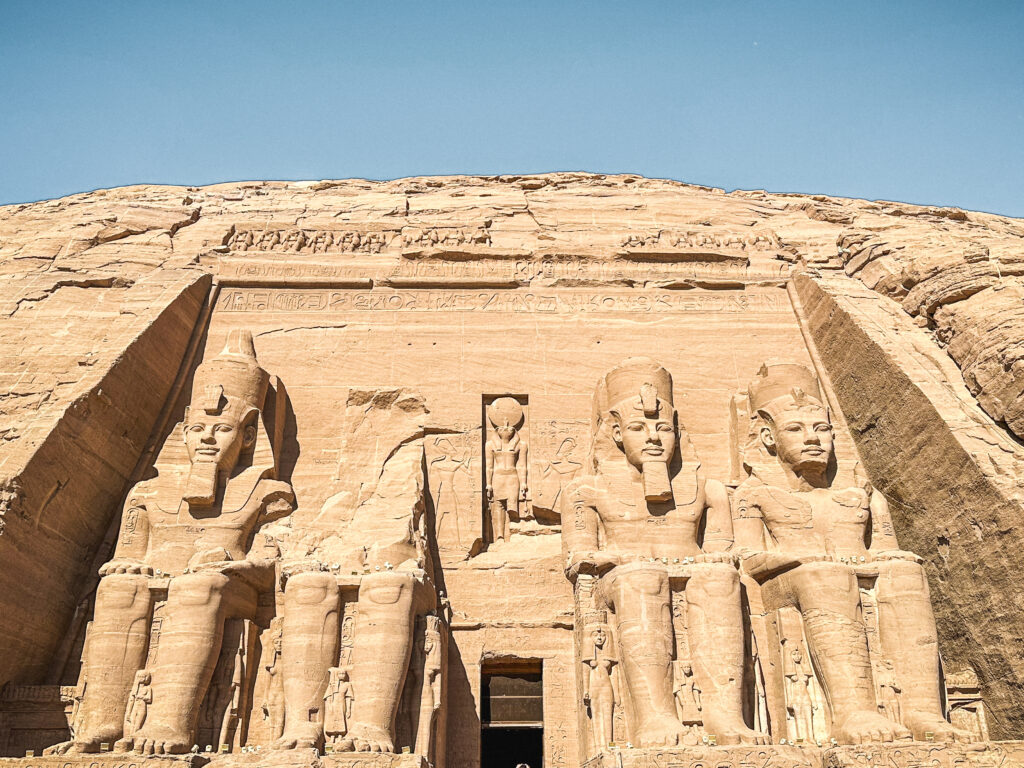 The Great Temple dedicated to Ramses II
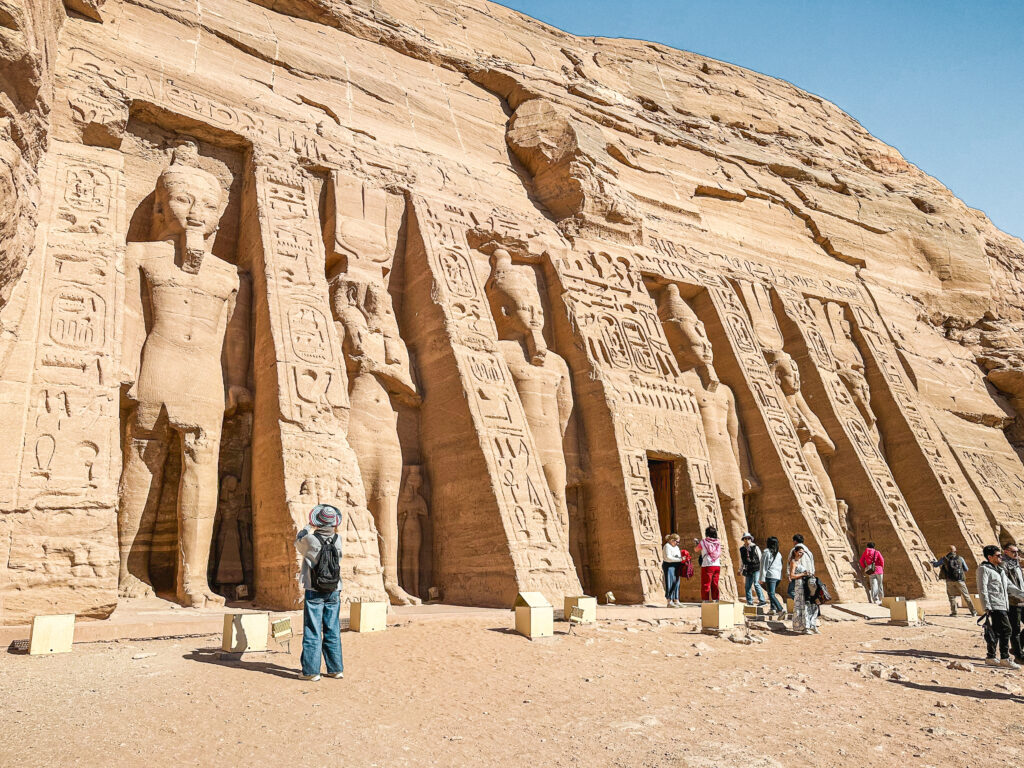 Smaller Temple dedicated to Queen Nefertari
One of the most fascinating aspects of Abu Simbel is its relocation in the 1960s. When the construction of the Aswan High Dam threatened to submerge the temples, UNESCO led a massive engineering project. They cut and moved them block by block to their current location, 65 metres higher and 200 metres further inland.
However, getting there independently is the ultimate “boss level” of Egyptian travel.
The Reality of Independent Transport
Originally, I wanted to take public transport and stay overnight. I quickly realized that the system is heavily rigged to push you into pre-booked tours.
The Public Bus: There is a public bus from the Aswan bus station (roughly 4:00 AM), but it is unreliable, and foreigners are sometimes discouraged from boarding due to “security” protocols.
Staying Overnight: Budget accommodation in Abu Simbel village is extremely limited. Most people visit on a 3-hour day-trip from Aswan and leave, meaning the town doesn’t cater well to independent backpackers.
The Compromise: The “Shared” Private Van
After the nightmare of the train from Luxor, I didn’t have the energy for another logistics battle. I chose the “middle ground”, a shared private van arranged through my hostel for $20 (€18.50).
While it’s technically a “tour,” it’s actually just a transport service. They pick you up at 4:00 AM, drive you the 3.5 hours to the site, give you 2-3 hours to explore independently, and bring you back. For the price, it saved me hours of stress and was the only “tour” in Egypt I felt was worth it.
Abu Simbel: Need to Know for 2026
| Detail | Info |
| Entrance Fee | 822 EGP (~€13.50) – Card only at the entrance (buy tickets online here instead) |
| Photography | Free with a smartphone; extra fee for professional cameras. |
| The UNESCO Move | In the 1960s, the entire site was moved block-by-block to save it from the rising waters of the Aswan High Dam. |
| Best Strategy | Go with the hostel van but skip the “guide.” Explore the Great Temple interior at your own pace. |
💡 Pro Tip: If you really want to be independent, you can fly from Aswan to Abu Simbel (45 mins). It’s expensive, but it avoids the 7-hour round-trip drive. However, for 90% of budget travelers, the $20 shared van is the best balance of cost and sanity.
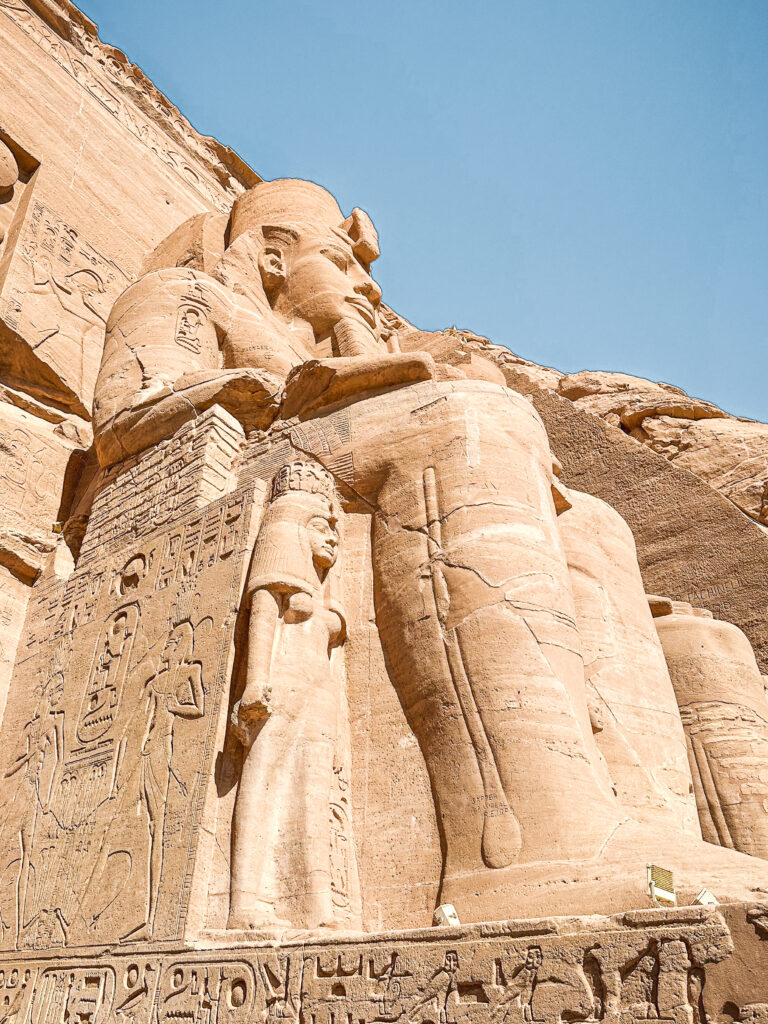 Details of the Statues of the Great Temple
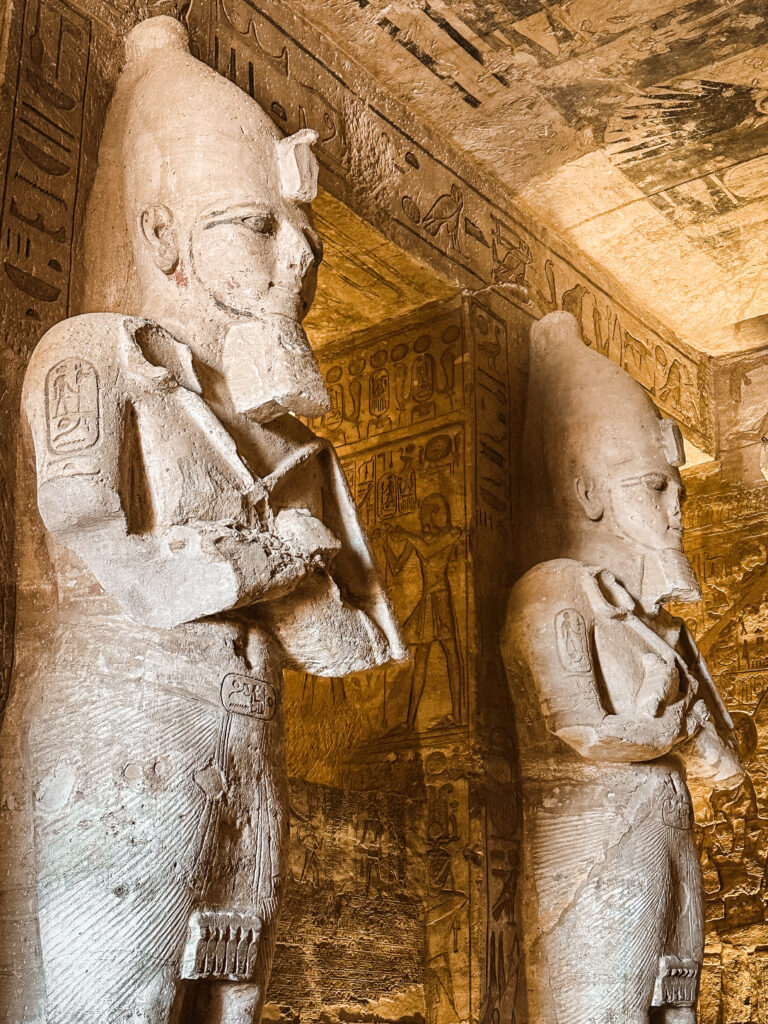 Inside the Great Temple
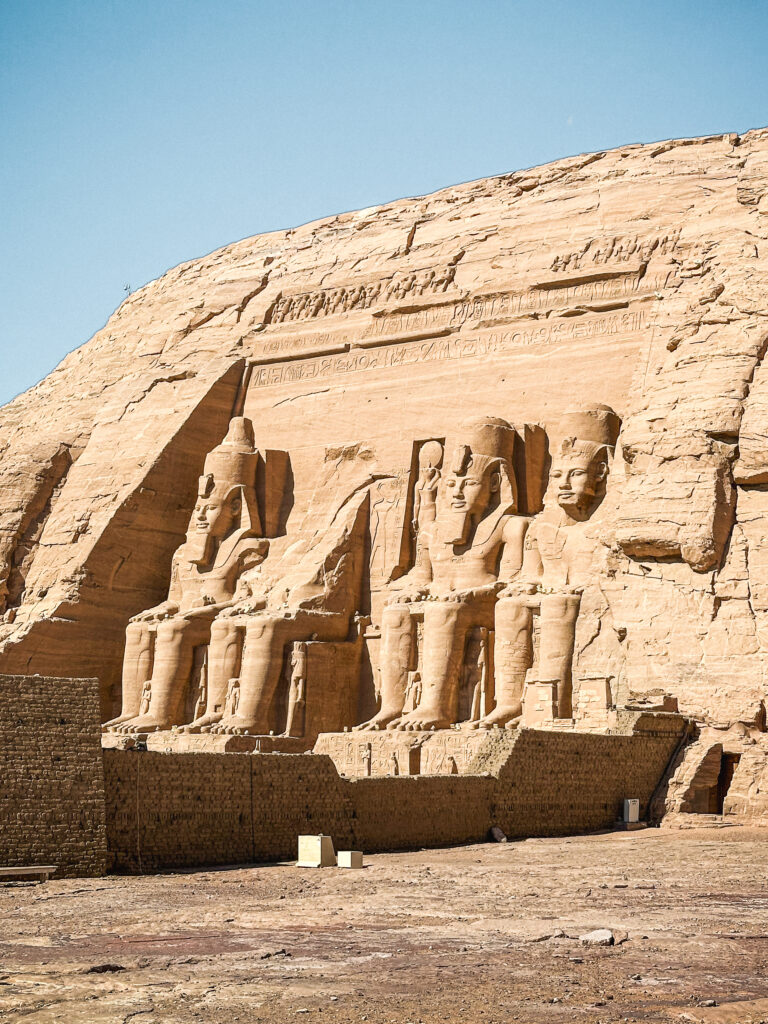 The Great Temple
The “Golden Hour” Secret: Staying Overnight in Abu Simbel
While most travellers visit Abu Simbel as a frantic day trip, there is a way to see the temples without the massive crowds: Stay overnight in the village.
Between 8:00 AM and 11:00 AM, the site is swamped by hundreds of tour vans arriving from Aswan simultaneously. By 1:00 PM, they all vanish. If you stay overnight, you can visit the temples at sunset or be the first through the gates at sunrise, often having the entire Great Temple to yourself.
The Trade-off: Cost vs. Experience
The Logistics: Getting there for an overnight stay is tricky. Since the shared budget vans are designed for same-day returns, you’ll likely need to book a private transfer or take a domestic flight from Aswan.
The Cost: Between the private transport and the limited accommodation options in town, this is significantly less “budget-friendly” than the standard day trip.
The Reward: You’ll see the Sound and Light Show at night without the stress of a 3.5-hour drive back in the dark, and you’ll experience the temples in near-total silence.
💡 My Verdict: If you have the extra time and a flexible budget, staying overnight is the ultimate way to experience Abu Simbel. But if you’re on a strict backpacker budget, the $20 shared van remains the most practical way to see the site.
Philae Temple: Why I Skipped the “Island of Isis”
Philae Temple is often cited as one of the most beautiful temples in Egypt. Dedicated to the goddess Isis and perched on Agilkia Island, it is only accessible by water. While it was high on my list, I ended up doing something most travel guides won’t admit to: I skipped it.
The Logistics of Frustration
To visit Aswan independently, you usually have to be a master negotiator. To reach Philae, you must first take a taxi to the Philae Marina and then hire a boat to the island. Here is where the system breaks down for solo travellers:
Travel Burnout is Real
After weeks of navigating scams, inflated “foreigner prices,” and the constant mental load of haggling in Cairo and Luxor, I simply hit a wall. When I realised that the boat ride alone would cost me upwards of €40, on top of the temple entrance fee, the “hassle-to-beauty” ratio just didn’t add up.
I met several other backpackers in Aswan who felt the exact same way. We were exhausted. If you have the patience and a group to split the cost, Philae is undoubtedly stunning. But if you’re traveling solo and feeling the weight of the “Egyptian hustle,” know that it is okay to say no.
How to Visit Philae Temple (If You Still Want To)
If you aren’t feeling the burnout and want to tackle the island, here is the most “independent” way to do it in 2026:
1. Buy the Temple Ticket Online: Use the Official Ministry Link to buy your entry ticket (550 EGP / ~€9) so you only have to deal with the boatmen at the dock.
2. Arrive Early: The best chance of finding a group to split a boat is around 8:00 AM when the first wave of independent travellers arrives.
3. The “Fixed” Rate: Look for the official blue sign at the marina with the current boat rates. Point to it. It likely won’t work, but it shows you aren’t a “fresh” tourist.
Unfinished Obelisk
The Unfinished Obelisk in Aswan offers a fascinating look into ancient Egyptian stone-working techniques. Carved directly into the bedrock of a granite quarry, this massive structure, which intended to be the largest obelisk ever built, was abandoned when cracks appeared in the stone. Had it been completed, it would have stood 42 metres tall and weighed over 1,200 tonnes.
Nubian Villages
A visit to the Nubian villages offers a glimpse into a unique and vibrant culture that has thrived along the Nile for thousands of years. The Nubians, an indigenous people of southern Egypt and northern Sudan, have a distinct language, traditions, and a history deeply tied to the river. Their villages, often painted in bright blues, pinks, and yellows, create a striking contrast against the desert landscape. Visit Elephantine Island and Gharb Soheil, where you can stroll through colourful streets, visit local markets, and enjoy a bit of Nubian culture. Just keep in mind that these villages have become pretty touristy hence it doesn’t feel like a very authentic experience.
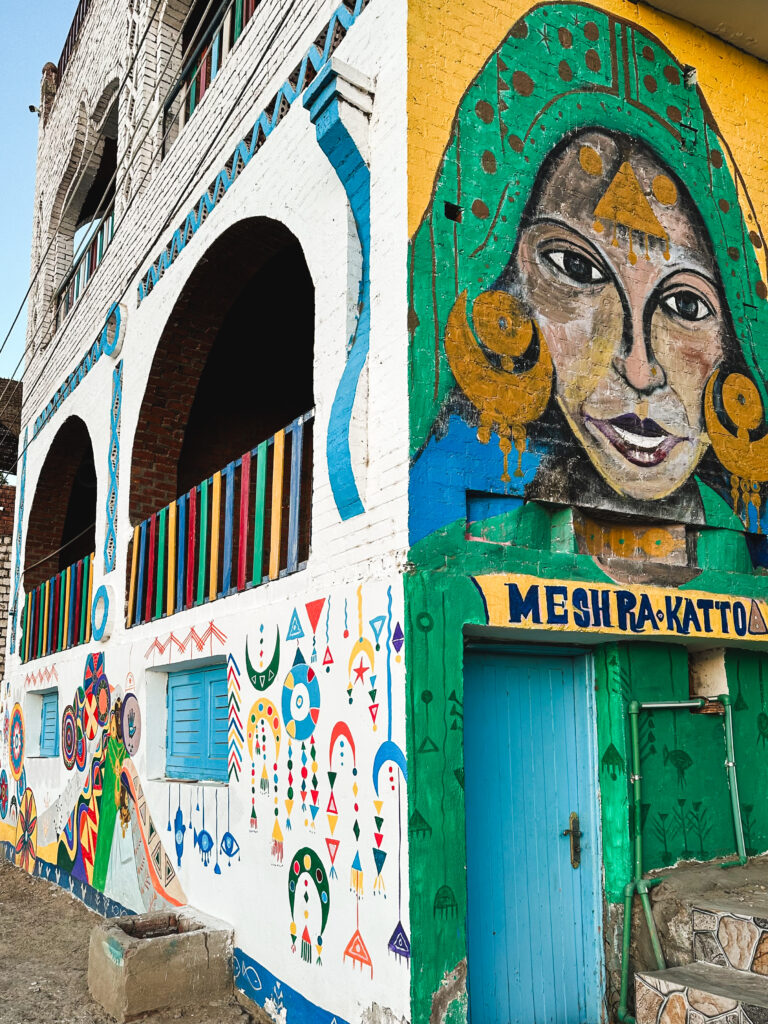 Colourful Nubian Houses in Elephantine Island
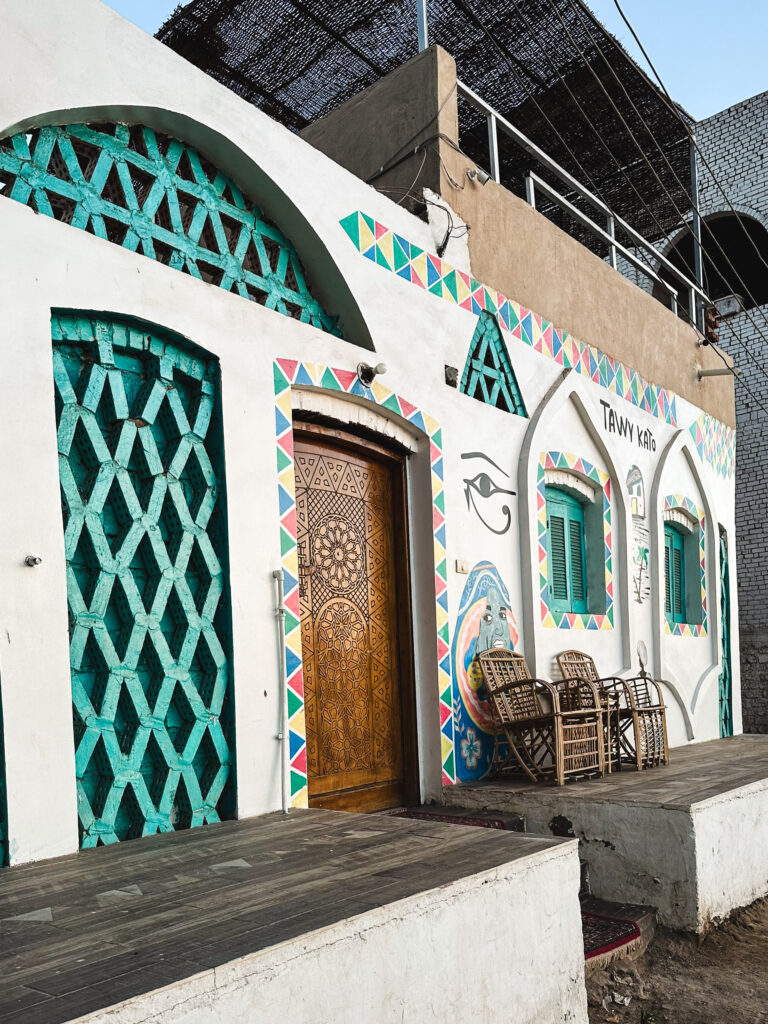 Colourful Nubian Houses in Elephantine Island
 Colourful Nubian Houses in Elephantine Island
Sail on a Felucca at Sunset
Experience the Nile at its most peaceful by taking a traditional felucca ride, especially at sunset. If this is something you want to do, don’t worry, you won’t have to look for a boat for long. Within seconds of walking along the river, someone will insistently offer (or rather, push) you onto theirs.
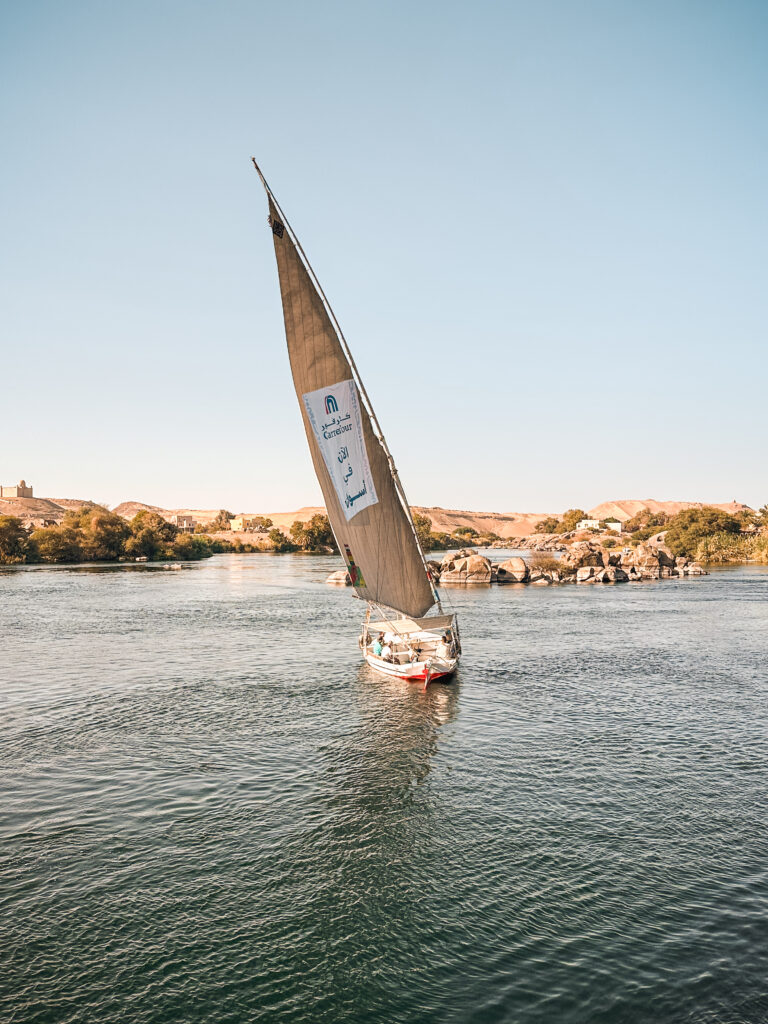 Traditional felucca
 Traditional feluccas on the Nile
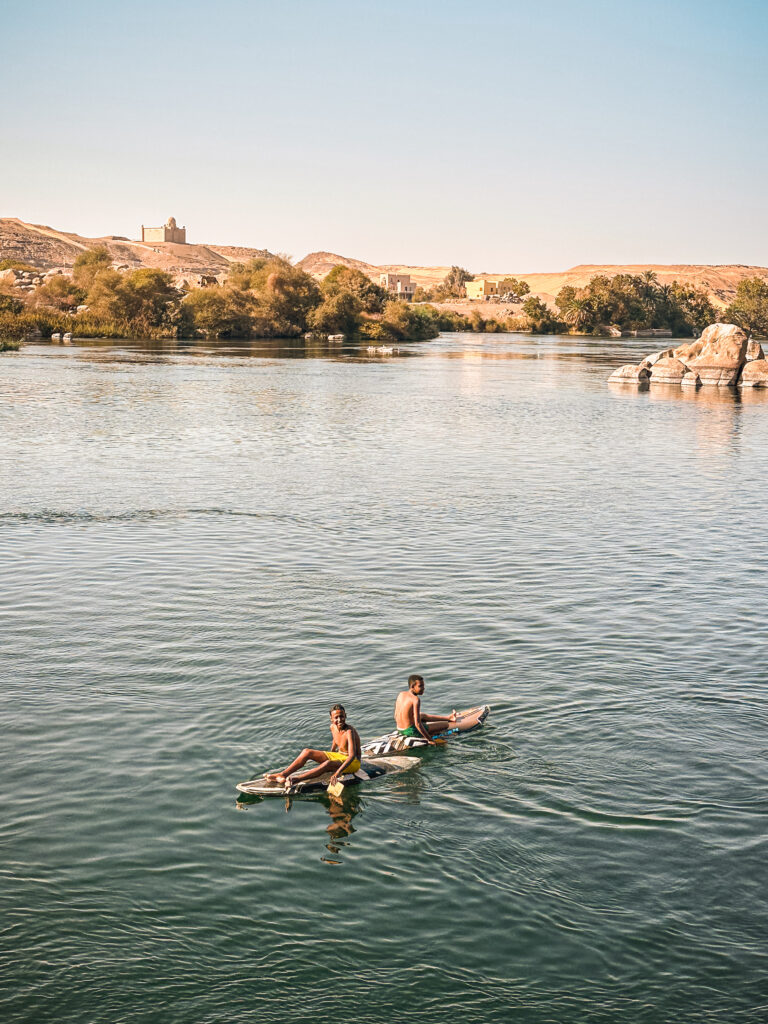 Children that paddle along the boats trying to get money
This was yet another experience I had planned to do but ultimately skipped, simply because I couldn’t be bothered with the endless haggling and inflated prices. Negotiation is unavoidable, and after a while, it just gets exhausting. If you do want to go, be prepared to bargain hard or try to join forces with other travellers to split the cost.
Where to Stay in Aswan on a Budget
I spent a few nights at the hostel Go Inn Backpackers, a solid budget option that I’d definitely recommend. They also offer some affordable tours, which can be helpful for reaching places that are harder to get to on your own. It’s a bit far from the city centre, making it quieter and a great spot to meet fellow travellers, something that can be rare in Egypt.
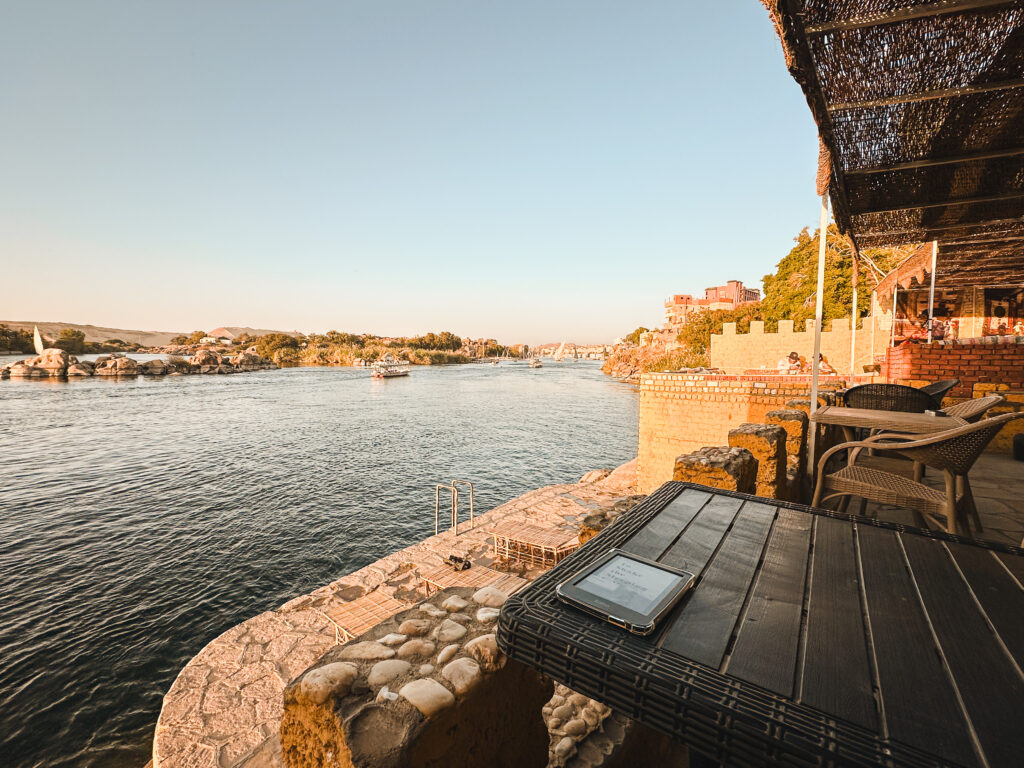 Relaxing by the Nile at Go Inn Backpackers Hostel
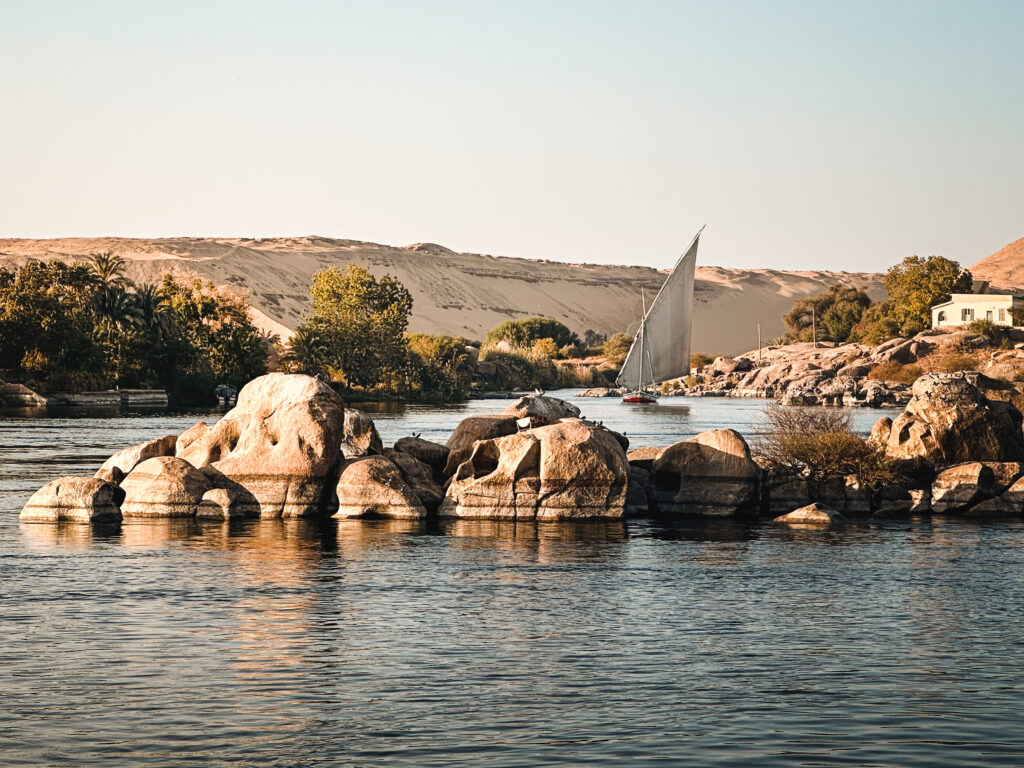 Views of the Nile from the Hostel
For an even more peaceful experience, I highly recommend spending a couple of nights in one of the guesthouses on Elephantine Island, right in the middle of the Nile. The atmosphere there is incredibly relaxing, and it feels worlds away from the chaos of the city. A public ferry, which costs 10 EGP, runs regularly between Aswan and the island, making it easy to get back and forth.
How I Left Aswan: The Kom Ombo & Edfu “Temple Detour”
After a few days soaking in the slow pace of Aswan, it was time to face the inevitable: the journey back north to Luxor. Still traumatized by my nightmare train experience from Luxor to Aswan, I knew one thing for certain: I was not getting back on that train.
The Logistics of the “Temple Run”
I wanted to visit the temples of Kom Ombo and Edfu on my way out. These are two of Egypt’s most spectacular sites, but visiting them independently is notoriously difficult. They are located between the two cities, and trying to navigate local microbuses with a backpack while timing train stops is a recipe for a headache.
The $20 Life-Saver
In the end, I found a “hack” that felt like a gift. My hostel in Aswan offered a shared van transfer to Luxor for $20 (€18.50). This wasn’t just a ride; it was a door-to-door service that included stops at both Kom Ombo and Edfu. For the same price as my “overpriced” tourist train ticket, I got:
Is it Worth It?
If you are backpacking Egypt independently, you usually pride yourself on avoiding “organised” transport. But in this case, the van is actually the most logical and budget-friendly choice. It turns a miserable transit day into a productive sightseeing day.
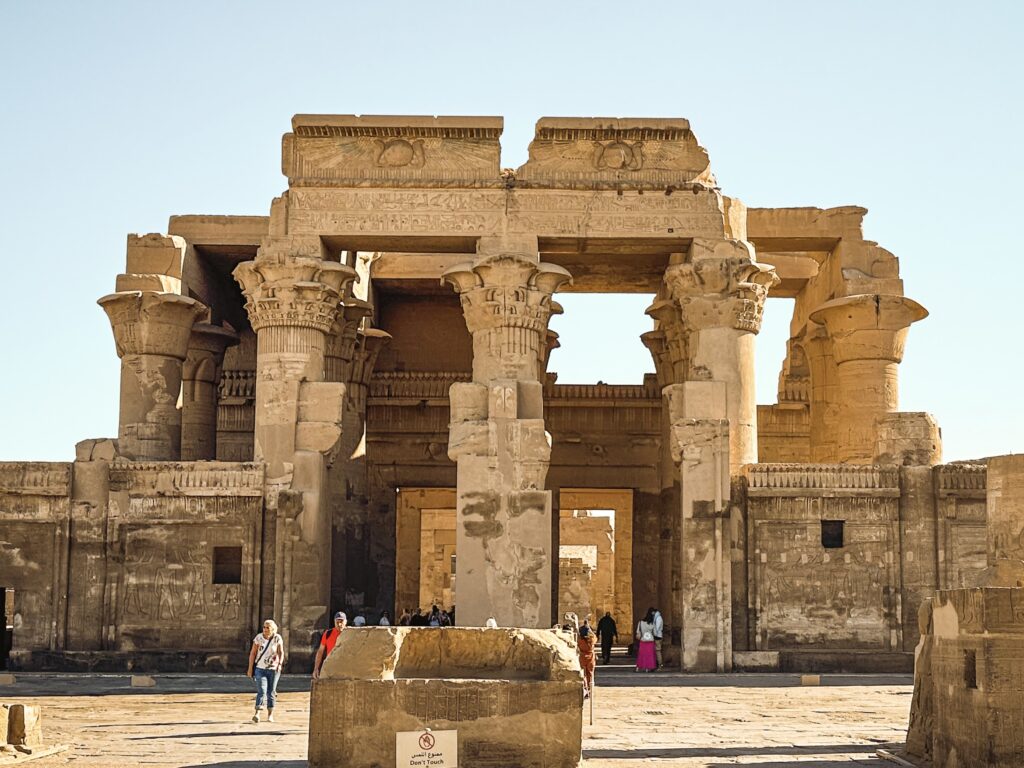 Kom Ombo Temple
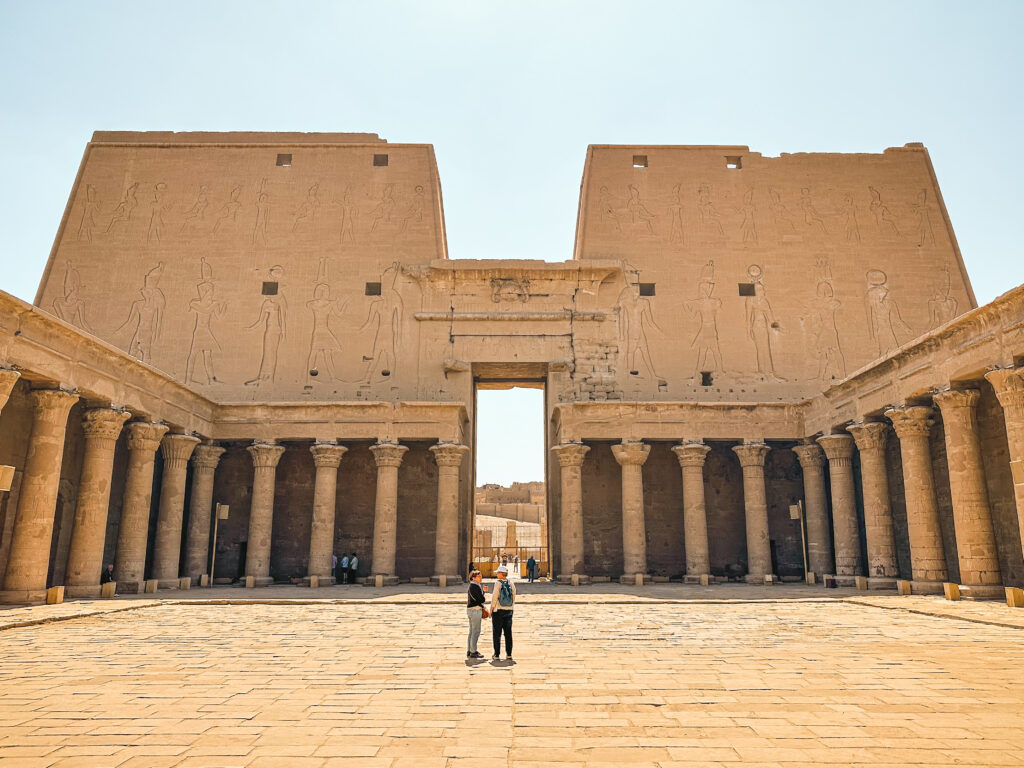 Edfu Temple
Frequently Asked Questions: Visiting Aswan Independently
1. Is it safe to visit Aswan solo?
Yes, Aswan is generally considered one of the safest cities in Egypt. While the street touts (especially on the Corniche) can be persistent, they aren’t aggressive. For solo female travellers, staying on Elephantine Island provides a much quieter and more respectful environment than the mainland.
2. Can I visit Abu Simbel without a tour in 2026?
Technically, yes. You can take a public microbus from the Aswan bus station at around 4:00 AM, but it is often unreliable for foreigners. Most independent travelers find that the $20 shared hostel van is the best balance of cost and sanity. Alternatively, you can fly, but this is the most expensive option.
3. How do I pay for temple tickets in Aswan?
As of 2026, all major archaeological sites in Aswan (Philae, Abu Simbel, High Dam) are cashless. You must pay with a credit or debit card. Cash is only used for local ferries, feluccas, and small food stalls. It’s always better to buy the tickets on the official website before.
4. How do I get to Elephantine Island?
There is a public ferry that runs 24/7 between the mainland (near the KFC on the Corniche) and Elephantine Island. It costs 10 EGP (about €0.15) for foreigners. Don’t let private boatmen convince you the ferry is closed.
5. Is Philae Temple worth the hassle?
Philae is visually stunning, but the boat negotiation at the marina can be exhausting. If you are traveling as a group to split the boat cost, it’s a must-see. If you are a solo traveller experiencing “Egypt burnout,” it is one of the most common sites to skip due to the high “hassle factor.”
6. How many days should I spend in Aswan?
For an independent trip, 3 days is the sweet spot. Day 1: Explore Elephantine Island and the Nubian Museum. On day 2: Early morning trip to Abu Simbel. And finally, day 3: Felucca ride at sunset or a visit to the Monastery of St. Simeon.
Final Thoughts on Aswan
Unlike my time in Luxor, I found a certain charm in Aswan that allowed me to find peace amidst the chaos. While the constant pressure of haggling and scams can be tiring, Aswan’s slower pace of life offered moments of quiet. My favourite part of the visit was undoubtedly the two days I spent on Elephantine Island, where I was able to relax by the Nile, surrounded by silence, and dive into a good book. The tranquility there was a welcome contrast to the constant noise of Egypt.
Aswan also brought me one of the most unforgettable experiences of my journey: the visit to Abu Simbel. The grandeur of the temples, carved from the mountainside, left me truly in awe.
In the end, Aswan became a much-needed break, and despite some frustrations along the way, it’s a place that left me with memories of calm, serenity, and a glimpse into the rich culture of the region.
More Egypt Travel Guides
If you’re continuing your independent adventure through Egypt, these guides cover everything you need to travel the country on a budget without joining a tour: