
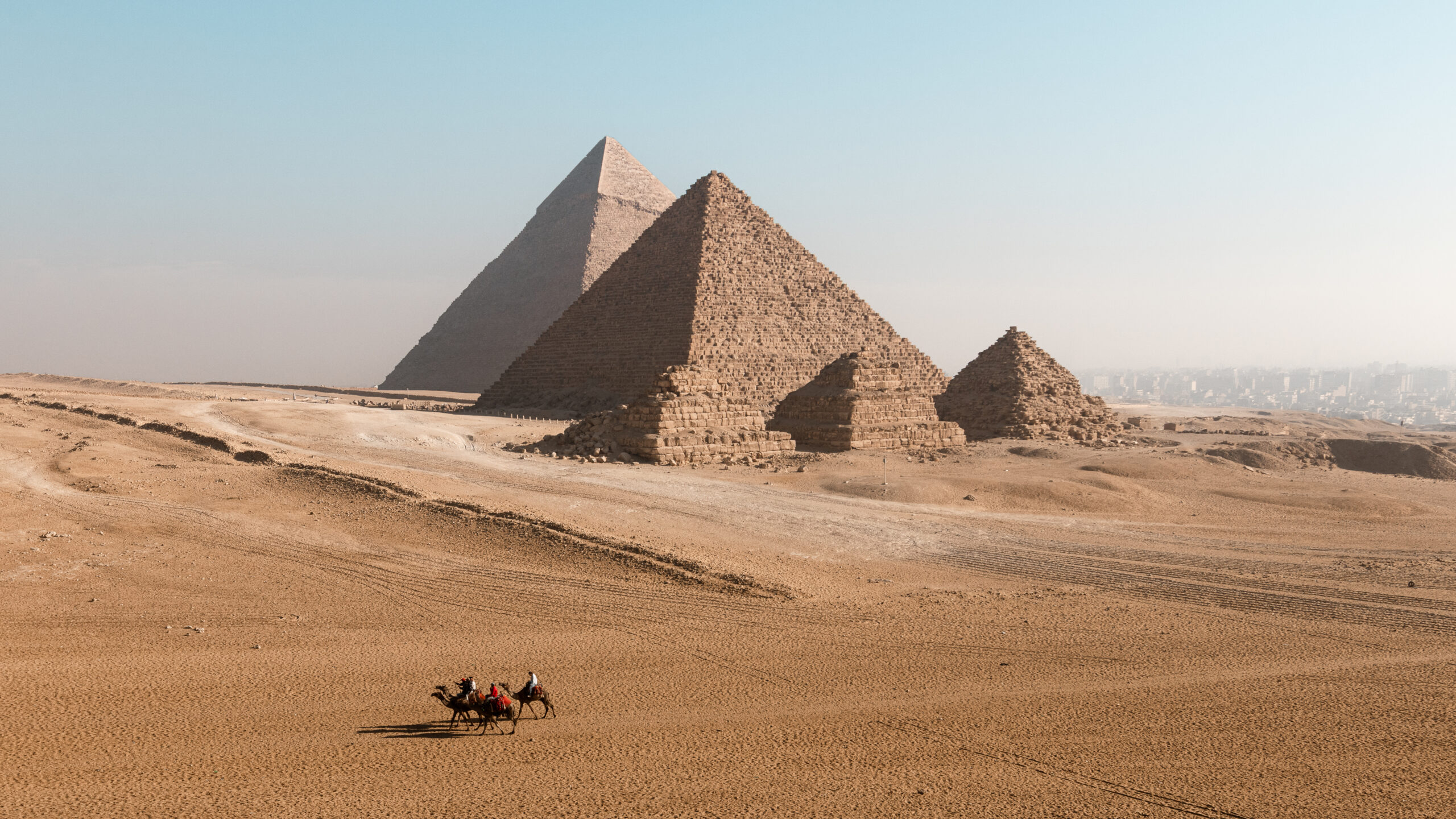
Deciding to backpack Egypt independently is a choice to see one of the world’s most spectacular destinations on your own terms, but it isn’t for the faint of heart. For a month, I backpacked across the country using public transportation, staying in hostels and guesthouses, and exploring all the ancient sites on my own terms. From the bustling and chaotic streets of Cairo to the remote beauty of Siwa Oasis, the timeless wonders of Luxor and Aswan, and the laid-back shores of Dahab, I discovered that Egypt can be done independently even as a solo female traveller.
To survive Egypt as an independent traveller, you need more than just a map; you need to know how to navigate the ‘hustle,’ the new 2026 cashless rules, and a transportation system that often feels rigged against you. This guide is a complete breakdown of how to travel Egypt on a budget without losing your mind or your savings.
Is Independent Travel in Egypt for Everyone?
I won’t sugar-coat it: Egypt is, unexpectedly, the hardest country I’ve ever traveled to. And I say this as someone who has wandered through remote places with almost no tourism infrastructure. Usually, that’s what makes a destination tough, but in Egypt, the problem isn’t a lack of infrastructure; it’s the wrong kind of infrastructure.
Everything is built around tour groups, where guides seamlessly usher tourists from one overpriced scam to the next. Try breaking out of that mould, and suddenly, the simplest tasks become exhausting battles of willpower.
The Daily “Hustle”
My Advice: If you are an experienced traveler used to navigating tricky destinations, you’ll manage just fine. But if Egypt is your first solo trip? Maybe start with something a little… gentler.
The Reward: Why the Struggle is Worth It
So, why do it? Because the rewards of backpacking Egypt independently almost make all the struggles worth it. Without being tied to a tour schedule, you have the freedom to experience breathtaking sites without the crowds:
If you’re up for the challenge, it is an incredibly rewarding experience. In this guide, I’ll share everything I learned to help you navigate Egypt as smoothly as possible, without blowing your budget on overpriced (and honestly, very rubbish) tours.
Budget and Daily Costs for Backpacking Egypt
I travelled independently in Egypt for a month and spent an average of 35€ per day.
This wasn’t an “extreme” budget; I chose slightly nicer accommodations, treated myself to better meals occasionally, and visited almost every major archaeological site. If you are travelling as a pair, your accommodation costs will likely be 40% lower as you can split the price of a private room.
2026 Price Breakdown
| Expense Category | Cost (in Euros) | Notes |
| Accommodation | €10 – €40 | From basic hostel dorms to nice Nubian guesthouses. |
| Meals (Local) | <€2 – €3 | Local staples like Koshary are incredibly cheap. |
| Meals (Sit-down) | €5 – €12 | Nice restaurants with a view (Nile/Pyramids). |
| Fresh Juice | ~€1.50 | A must-try at the local stands. |
| 1.5L Water | ~€0.30 | Always check the “local” price first. |
| Intercity Transport | €4 – €16 | Range from 2-hour buses to 12-hour long hauls. |
| Local Taxis | <€1 – €10 | From 10-min rides to 45-min airport runs. |
| SIM Card (18GB) | ~€10 | Valid for 30 days. |
Two Critical Ways to Save Money
The Student Card Hack: If you have a valid International Student Identity Card (ISIC), you can get 50% off entry fees to almost every historical site in Egypt. In a month of travel, this can save you hundreds of Euros.
Go Local with Food: You can travel even cheaper by eating exclusively at local eateries and street stalls. Not only is it budget-friendly, but it’s often the best food you’ll find in the country.
⚠️ 2026 Budget Alert: Remember that while street food and local transport still run on cash (EGP), all major temple entry fees are card only. Make sure your travel card has a low transaction fee, or these daily costs will creep up.
Best Time to Visit Egypt: Weather vs. Crowds
Choosing when to backpack Egypt independently is a balancing act. You have to decide what you hate more: oppressive 45°C heat or oppressive crowds of tour groups.
The “Sweet Spot”: October to April
This is the peak season for a reason. The weather is actually pleasant, making long walks through the Valley of the Kings or the Giza Plateau possible without melting.
The Shoulder Season: May & September
If you want a balance of lower prices and bearable heat, these are your months.
The Budget Gamble: June to August
Unless you are a lizard, think twice. Temperatures in Luxor and Aswan regularly exceed 40°C.
The Only Reason to Go: It is much cheaper. If you are on an extreme budget, you can find nicer hotels for hostel prices. You will have the temples almost entirely to yourself, but you risk heat exhaustion.
Special Consideration: Visit Egypt in Ramadan
I was there during Ramadan, since it usually overlaps with the “best time to visit”, you need to be prepared:
How to Get Around Egypt Independently (2026 Guide)
Navigating Egypt without a tour guide is where most travellers hit a wall. The system is designed to make you feel like you need a private driver, but if you’re willing to navigate a little “glorious chaos,” you can get anywhere in the country for a fraction of the tour price.
1. The Bus (My Recommended Choice)
For backpacking Egypt independently, the bus is hands-down the most reliable and budget-friendly option.
2. The Train (Platform Roulette)
The railway follows the Nile from Alexandria down to Aswan, offering spectacular views, but it’s a double-edged sword for independent travelers.
3. Ride-Sharing: Your Scam Shield
If you hate haggling as much as I do, your smartphone is your best friend.
4. Local Microbuses (The “Boss Level”)
These white minivans are everywhere. They are dirt cheap, have no schedules, and leave only when full.
The “Safety” Lie: Drivers might tell you foreigners aren’t allowed to board. This is often a lie to push you toward an expensive private transfer. If you have the patience and a few words of Arabic, these are the ultimate budget hack for short distances.
Summary of Transit in Egypt
| Mode | Cost | Reliability | Best For… |
| GoBus | €5 – €20 | High | Long distances (Cairo to Red Sea/Luxor). |
| Train | €15 – €40 | Medium | Scenic Nile views (if you don’t mind chaos). |
| InDrive | €1 – €10 | High | City travel (Cairo/Alexandria/Aswan). |
| Microbus | <€1 | Low | Short hops and remote villages. |
How to Visit Cairo Independently
For most backpackers, Cairo is likely where your Egyptian adventure begins and it’s a city that throws you straight into the deep end. Easily one of the most chaotic cities in the world, Cairo never slows down. Walking its streets can feel overwhelming, with relentless honking at all hours, thick air pollution, and traffic so wild that crossing the road feels like a leap of faith – traffic lights and pedestrian crossings are practically non-existent.
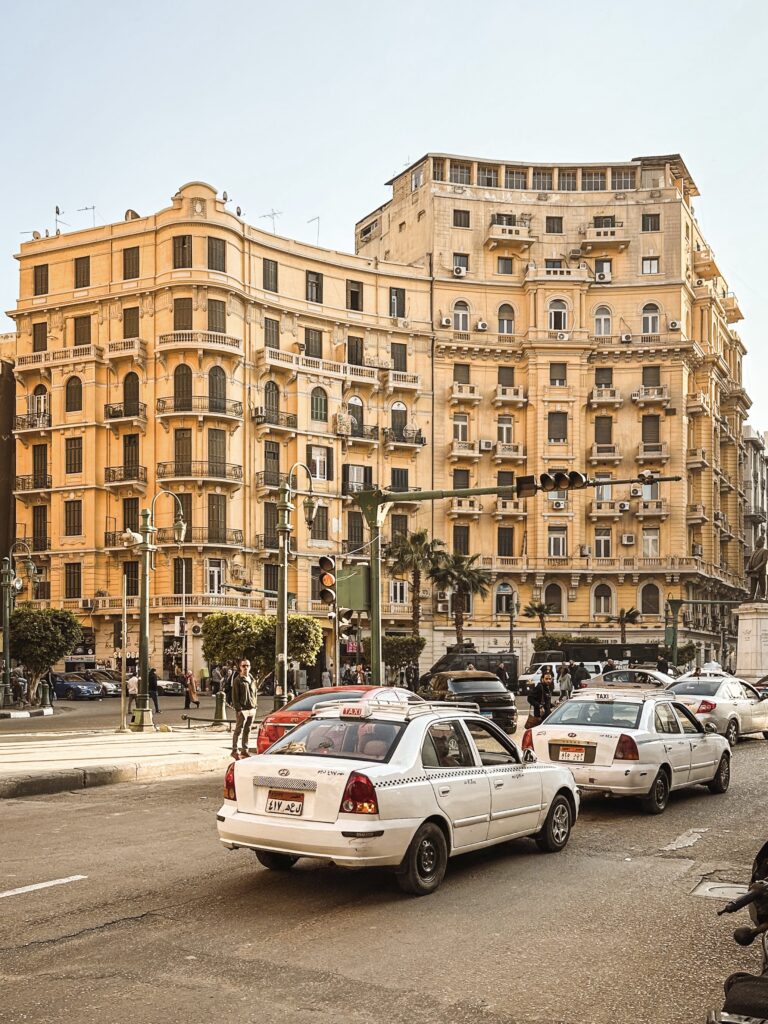 Downtown Cairo
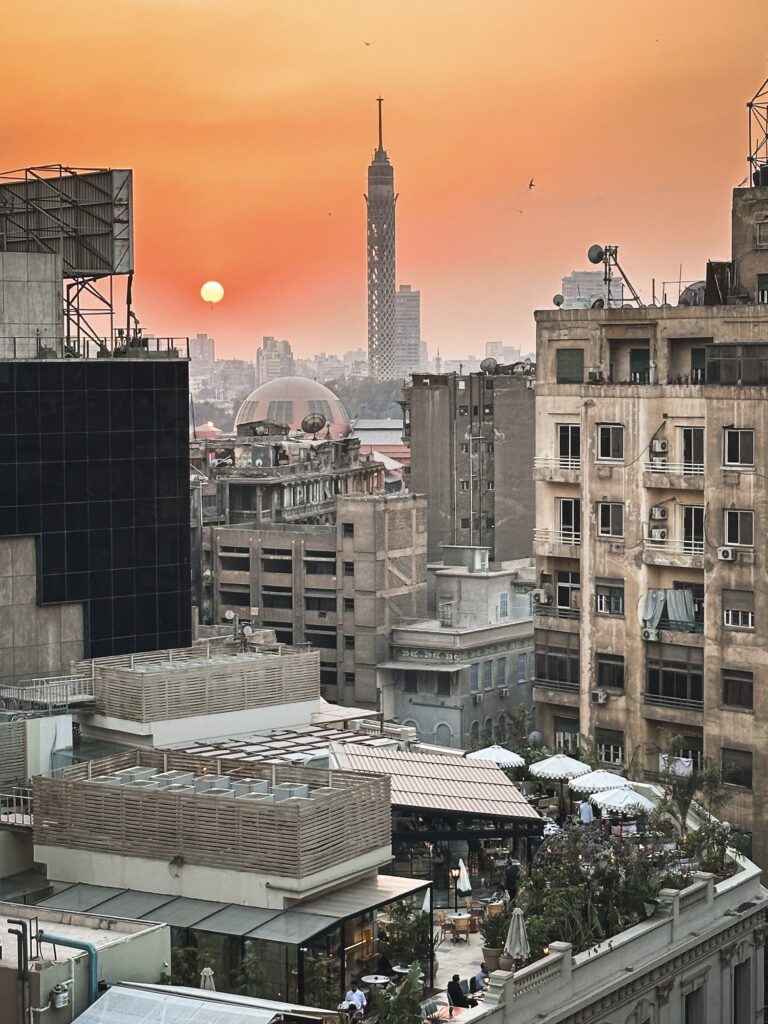 Sunset in Downtown Cairo
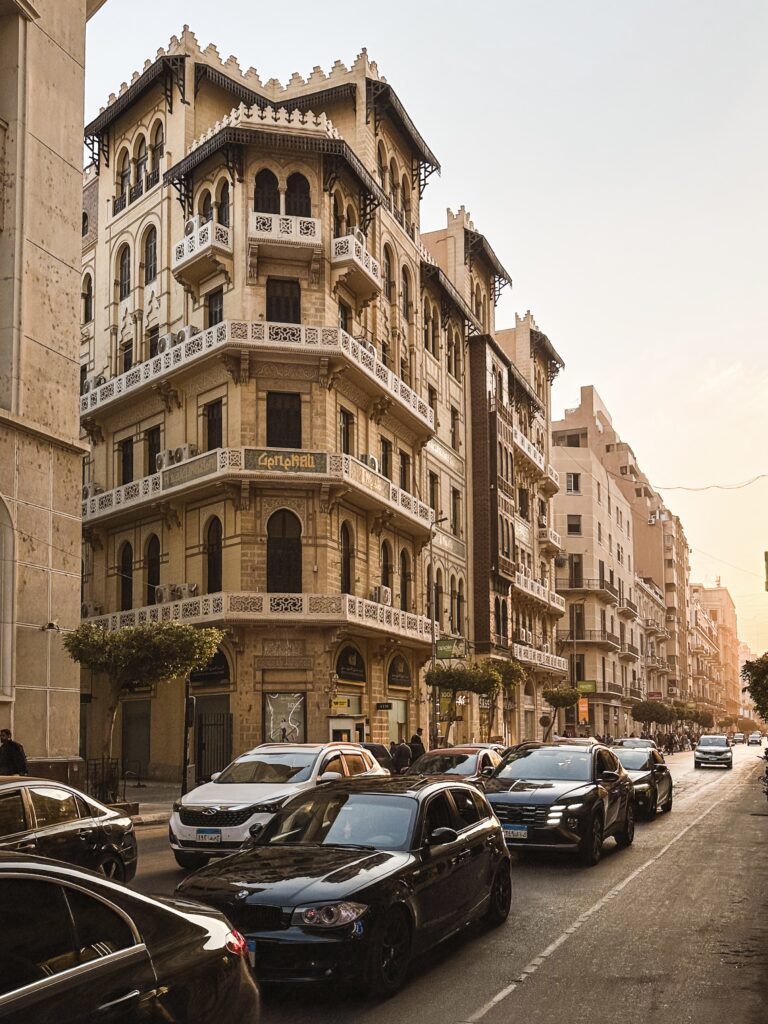 Downtown Cairo
Things to Do in Cairo Independently
Beneath the chaos, Cairo is a city of incredible history and culture, where ancient wonders stand alongside the energy of modern life. There’s enough to keep you busy for weeks, but if you only have a few days, here are some must-see highlights.
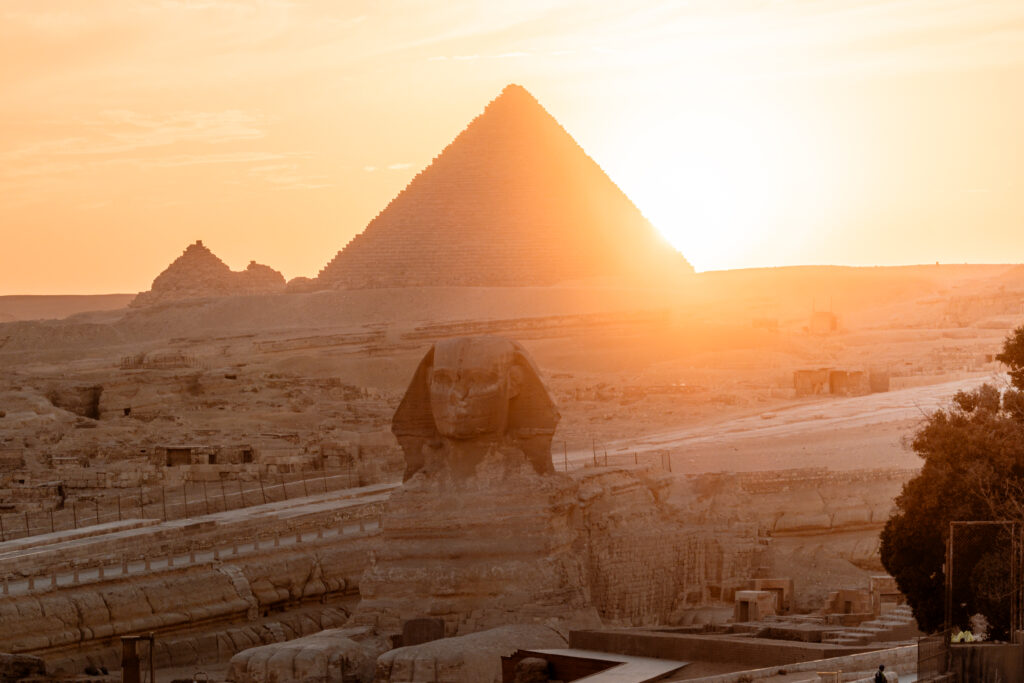 Sphinx at Sunset
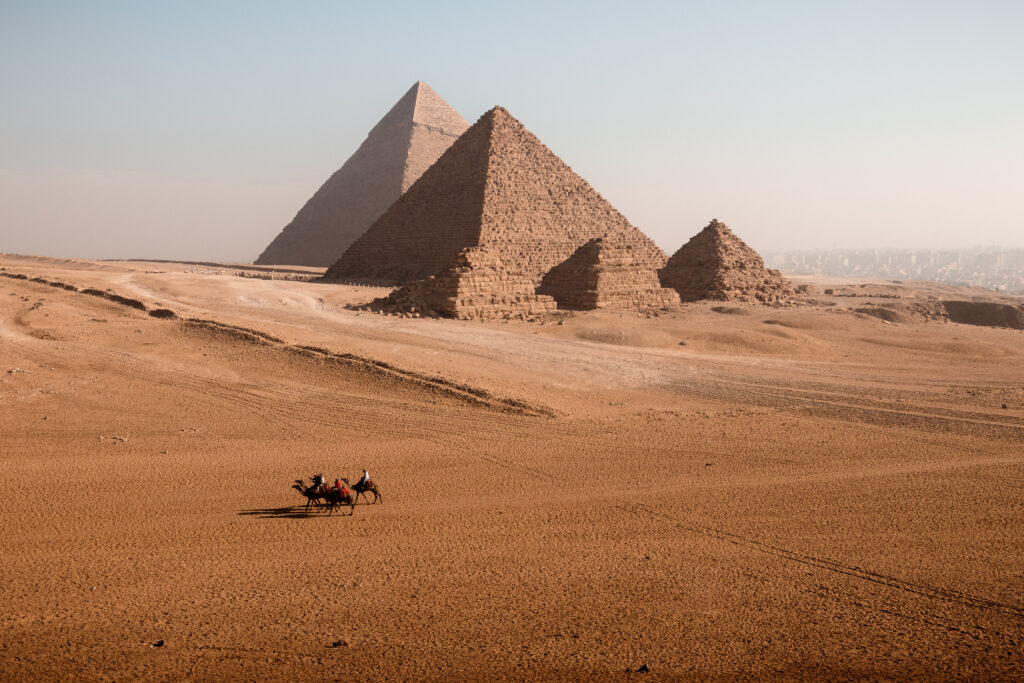 Pyramids of Giza
Where to Stay in Cairo on a Budget
Cairo has plenty of hotels and hostels to suit all budgets, but choosing the right area can make a big difference to your experience.
Staying in Giza for a night can be convenient if you want to visit the Pyramids of Giza early in the morning. Giza itself is quite run-down, not the cleanest, and full of pushy vendors and scammers, so be prepared for people persistently trying to sell you things.
For a more immersive experience, I’d recommend staying in downtown Cairo for at least a few nights. It’s chaotic, but it gives you a real feel for the city’s energy. A great budget-friendly option is Dahab Hostel, one of the oldest backpacker hostels in the city. It has a fantastic rooftop terrace where you can take in Cairo’s madness from the comfort of the seventh floor, and it’s one of the few places in Egypt where you’ll easily meet other independent travellers.
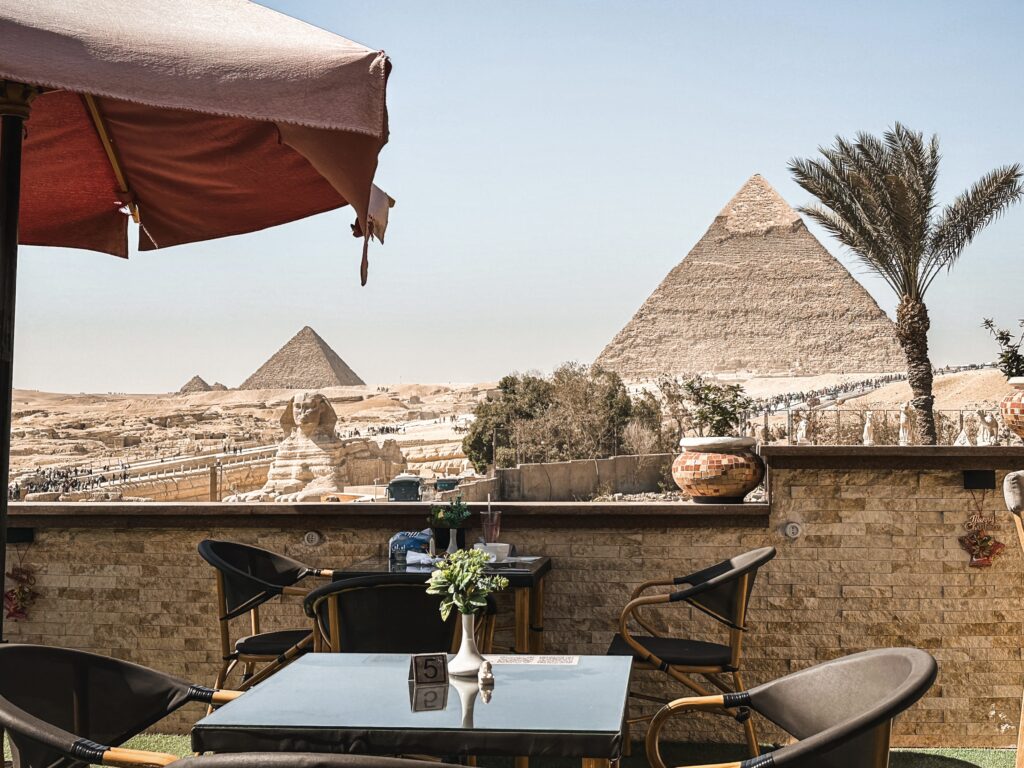 Terrace Views of my Hotel in Giza
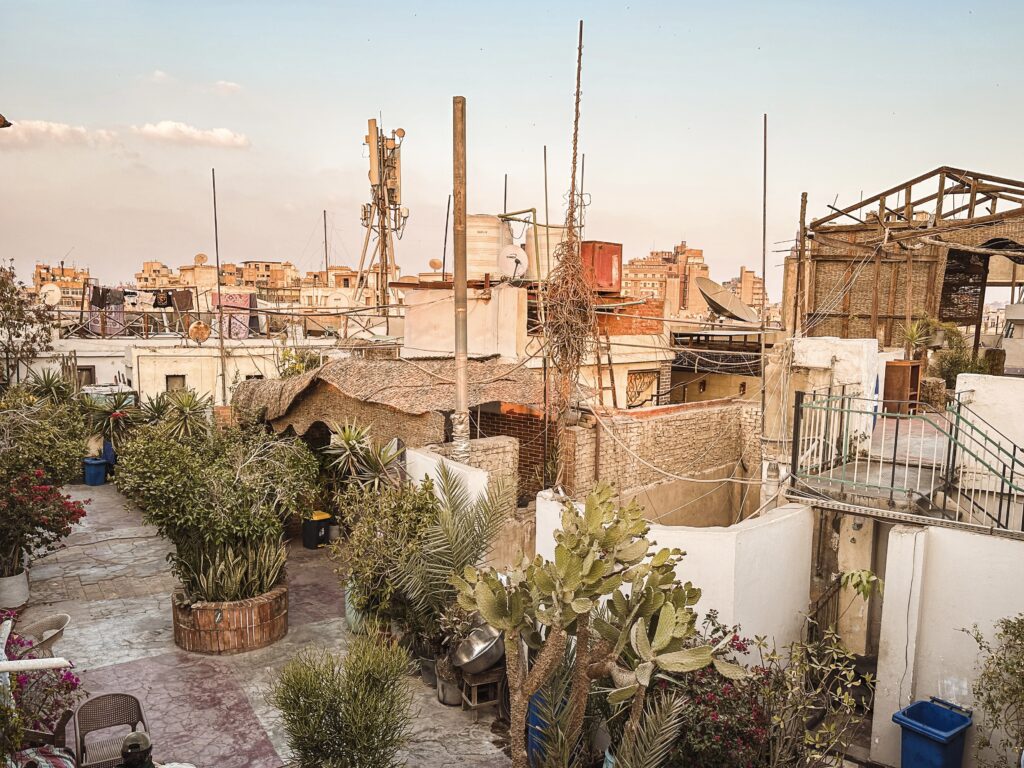 Terrace at Dahab Hostel in Downtown Cairo
Where to Eat
Cairo, like any major capital, offers an endless array of food options from diverse cuisines. Egypt’s national dish, koshary is a hearty mix of rice, lentils, pasta, and chickpeas, topped with tangy tomato sauce and crispy fried onions. If you’re looking to try it, one of the most famous spots is at Koshary Abou Tarek. It’s an affordable and filling local favourite.
How to Visit Alexandria Independently
After the chaos of Cairo, Alexandria offers a refreshing change of pace. Located on the Mediterranean coast, Egypt’s second-largest city is full of history, with a Greco-Roman heritage, seaside charm, and a more relaxed atmosphere. While little remains of its ancient wonders, Alexandria still has plenty to offer travellers looking for culture, history, a glimpse of local life by the sea, and a great place to try all sorts of seafood.
How to Get There on a Budget
Getting from Cairo to Alexandria is straightforward, with multiple buses and trains available each day. Trains are typically more expensive than buses, so I opted for a bus (company GoBus), which cost 210 EGP (around 4€).
Things to Do in Alexandria Independently
Visit Siwa Oasis Independently
After the chaos and hustle of Egyptian cities, Siwa Oasis feels like a world apart. Tucked away in the Western Desert near the Libyan border, the tranquility of this remote oasis is a haven of palm groves, salt lakes, and ancient fortresses. Rich in Berber culture and home to some of Egypt’s most stunning desert landscapes, Siwa offers travellers a chance to slow down, soak in natural hot springs, and explore a side of Egypt far removed from the usual tourist trail. Check my detailed guide to Visit Siwa Oasis Independently for all the information on how to get there independently, what to do, the costs and where to stay in this peaceful oasis.
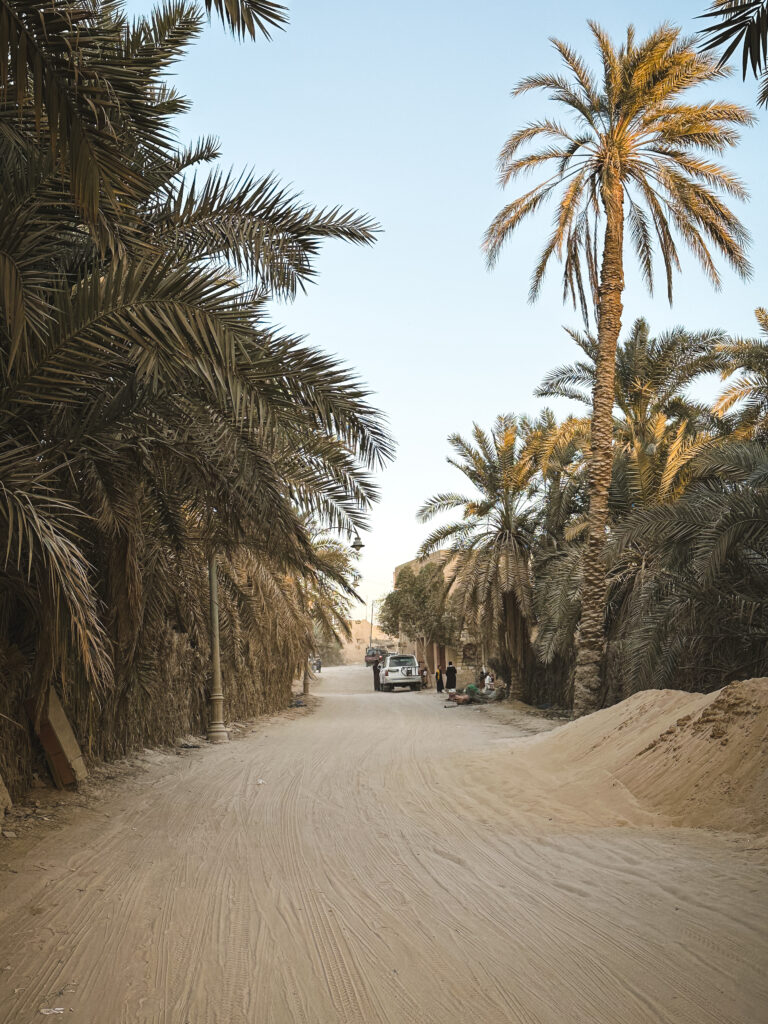 Roads in Siwa Oasis
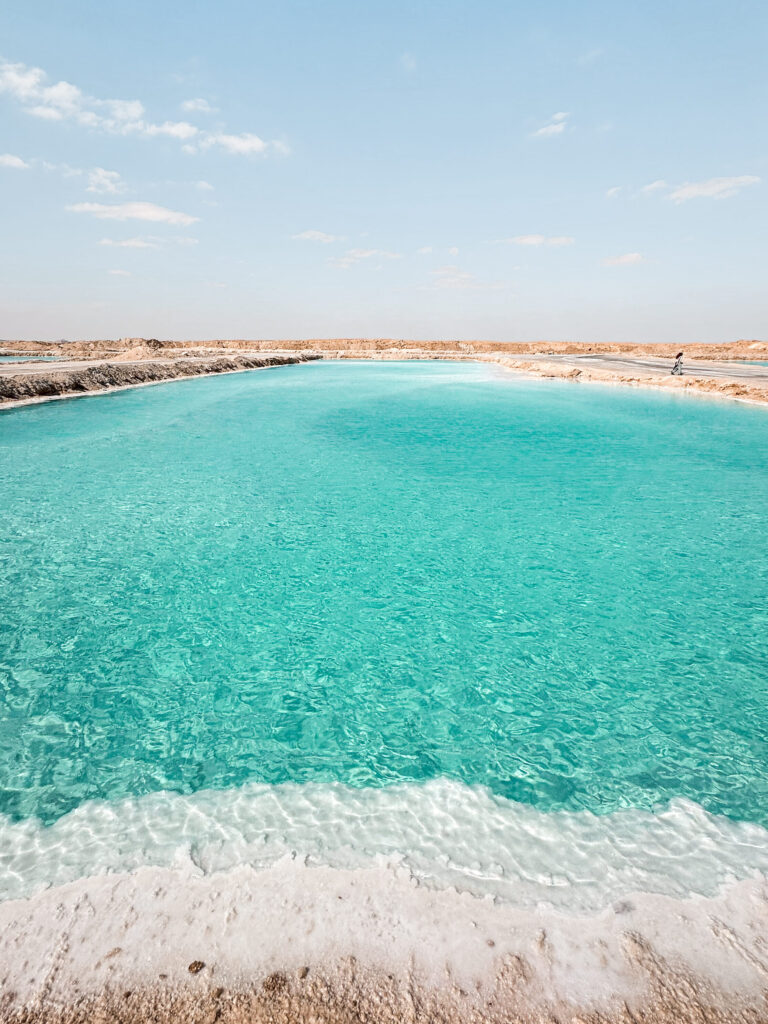 Salt Pools
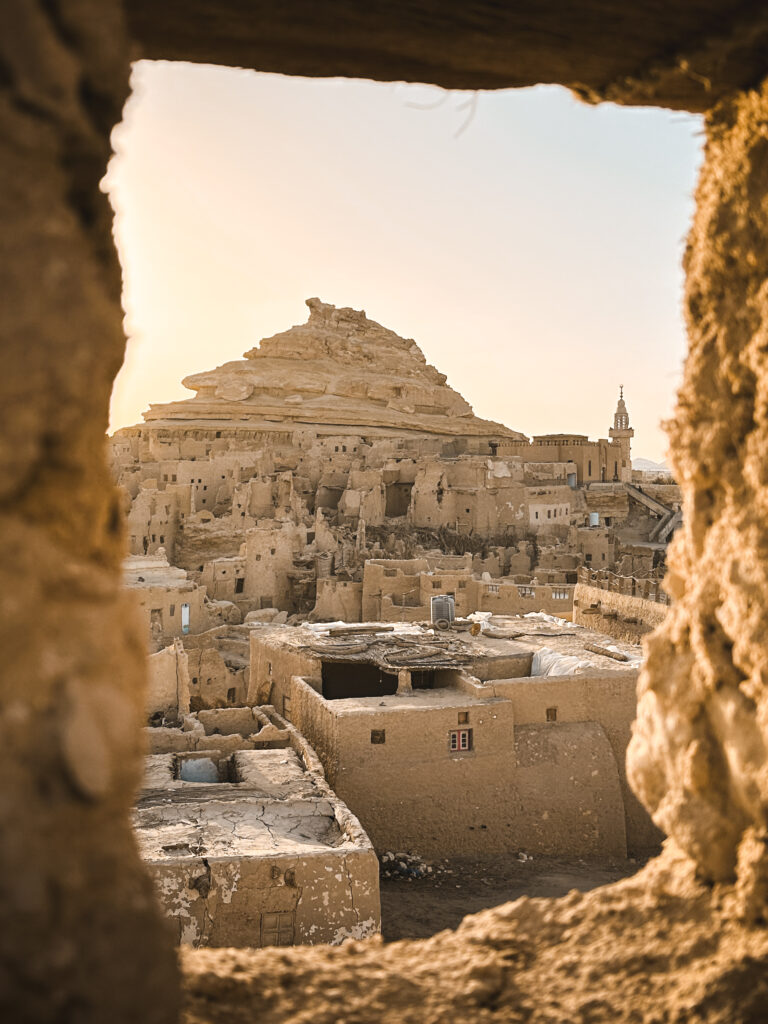 Views from Shali Fortress
How to Visit Luxor Independently
Luxor is often described as the world’s greatest open-air museum, and it’s easy to see why. Once the heart of ancient Thebes, this city on the banks of the Nile is home to some of Egypt’s most spectacular temples and tombs. From the grand columns of Karnak to the hidden chambers of the Valley of the Kings, history feels alive here. But beyond its rich history, Luxor also offers stunning Nile views, markets, and unique experiences like hot air balloon rides over the desert.
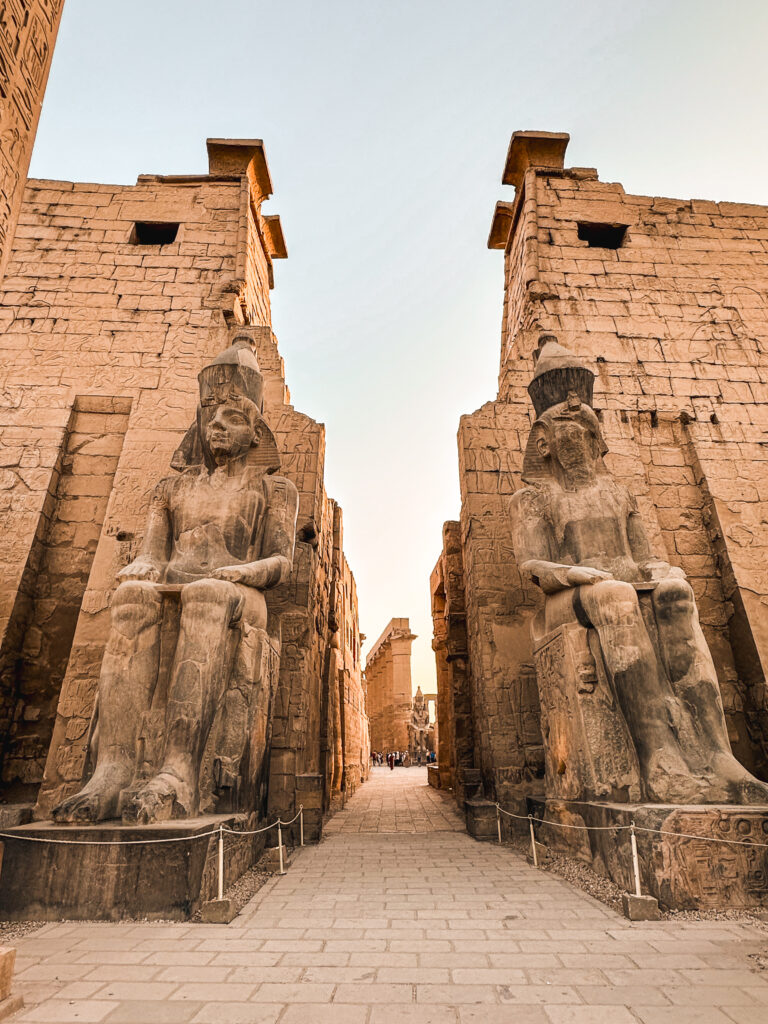 Luxor Temple
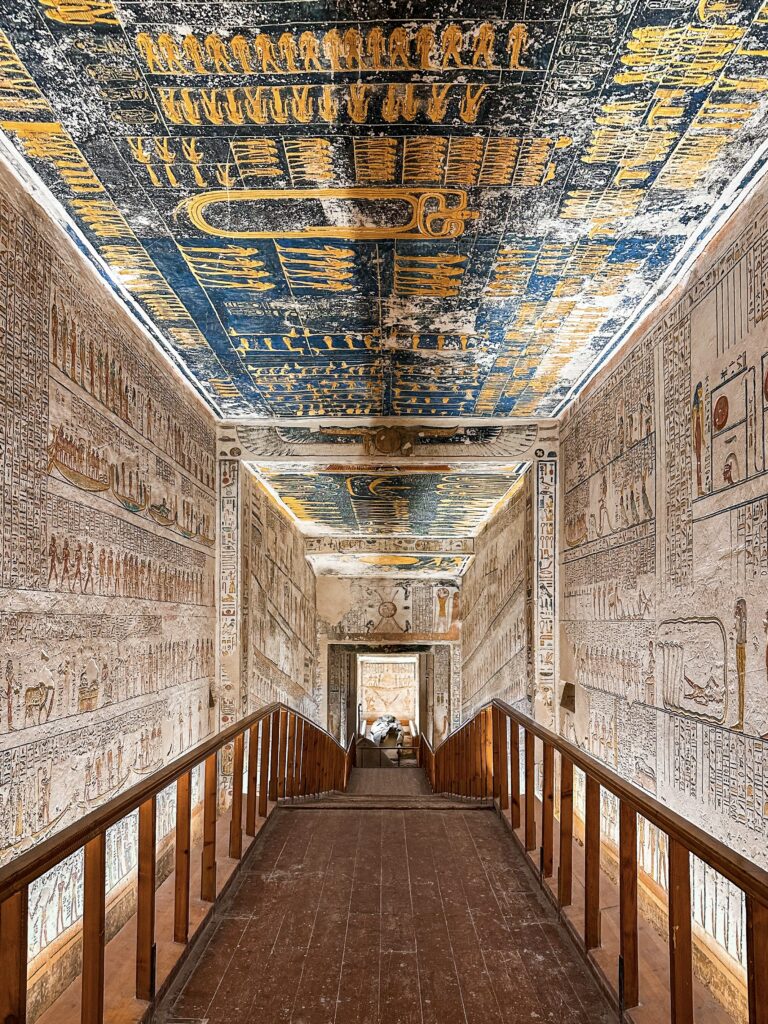 Valley of the Kings
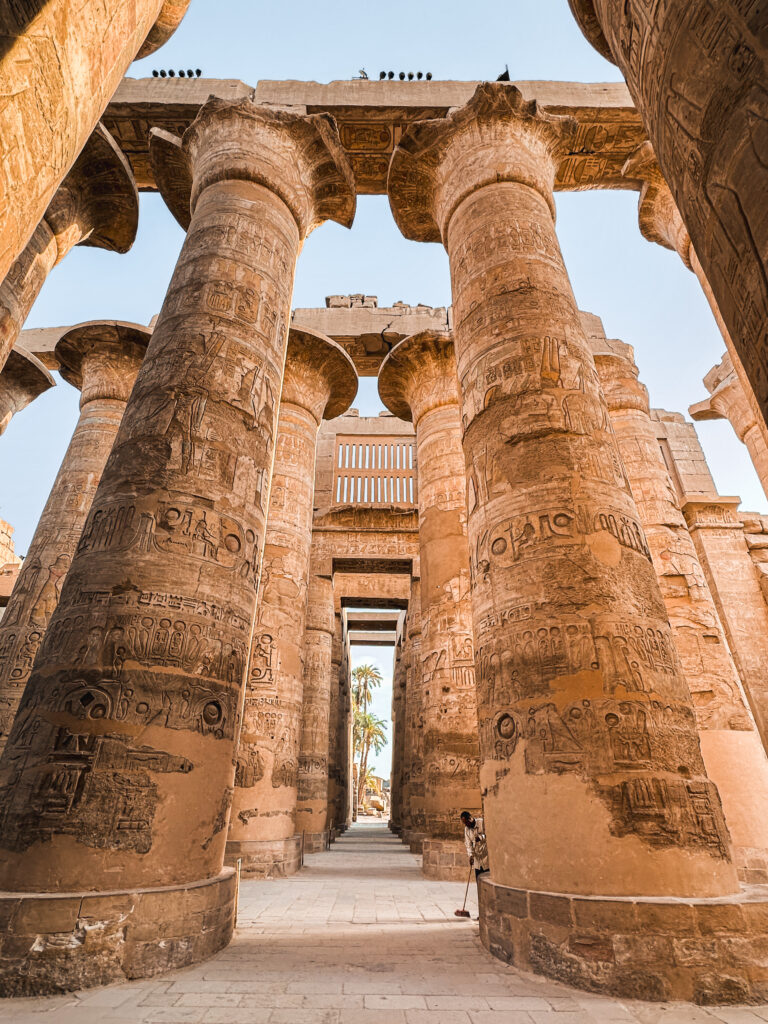 Karnak Temple Complex
How to Get There on a Budget
There are plenty of ways to reach Luxor, including day trains, night trains, and various bus companies. I took a 10-hour night bus from Cairo with GoBus, which cost me around €10. It was a budget-friendly option, but if you prefer more comfort, the sleeper train is also a popular choice, although a lot more expensive too.
Things to Do in Luxor Independently
Here are some of the highlights. To get a better understanding read my extensive guide on How to Visit Luxor Independently.
How to Visit Aswan Independently
Aswan is a gateway to ancient wonders like the majestic temples of Philae and Abu Simbel. Beyond its archaeological treasures, the city offers a glimpse into Nubian culture, with vibrant villages, traditional felucca sailing on the Nile, and bustling souqs. Whether exploring its rich history, cruising the Nile at sunset, or simply relax, Aswan is a destination that captivates travellers.
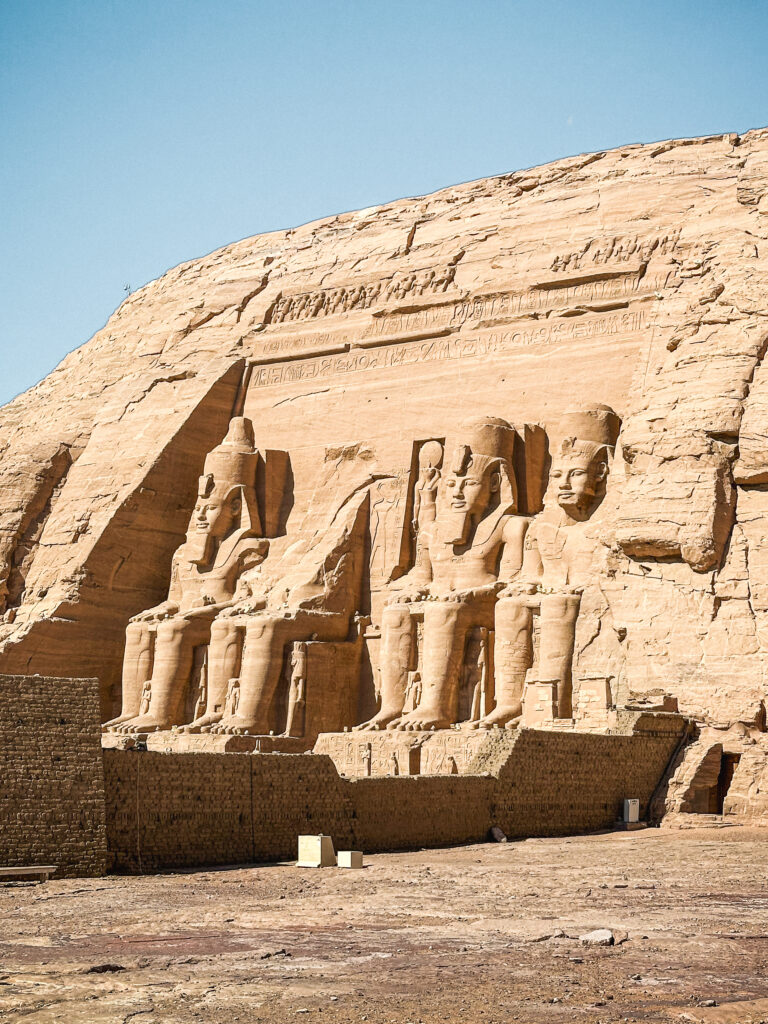 Abu Simbel
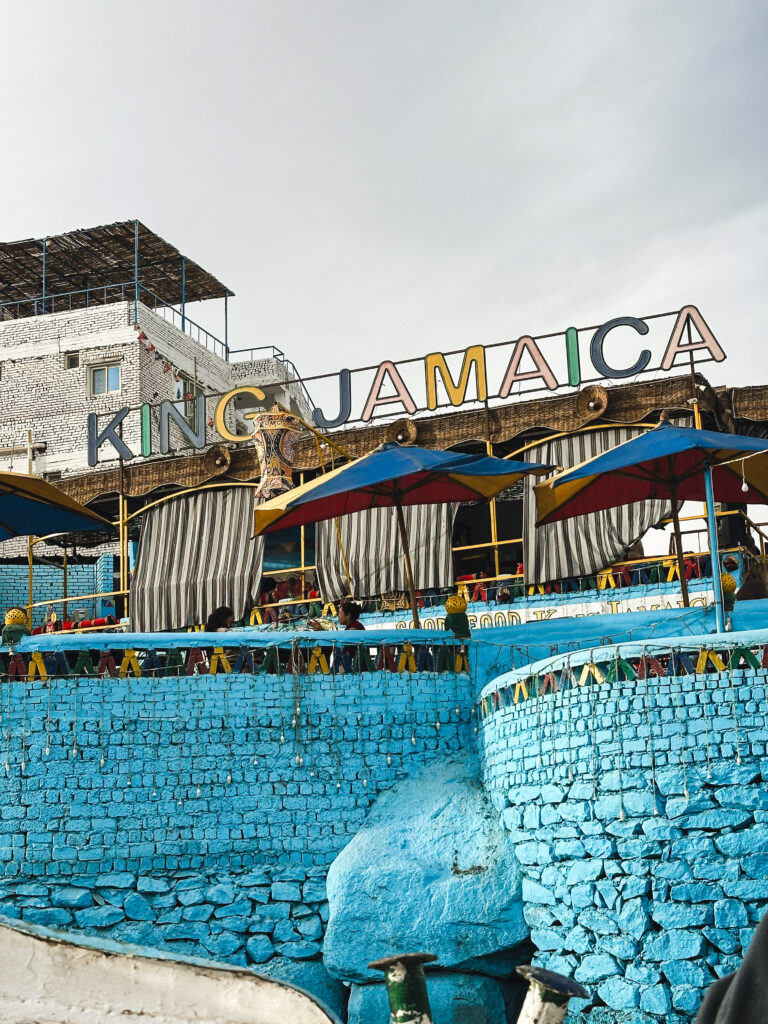 Colourful Nubian Houses in Elephantine Island
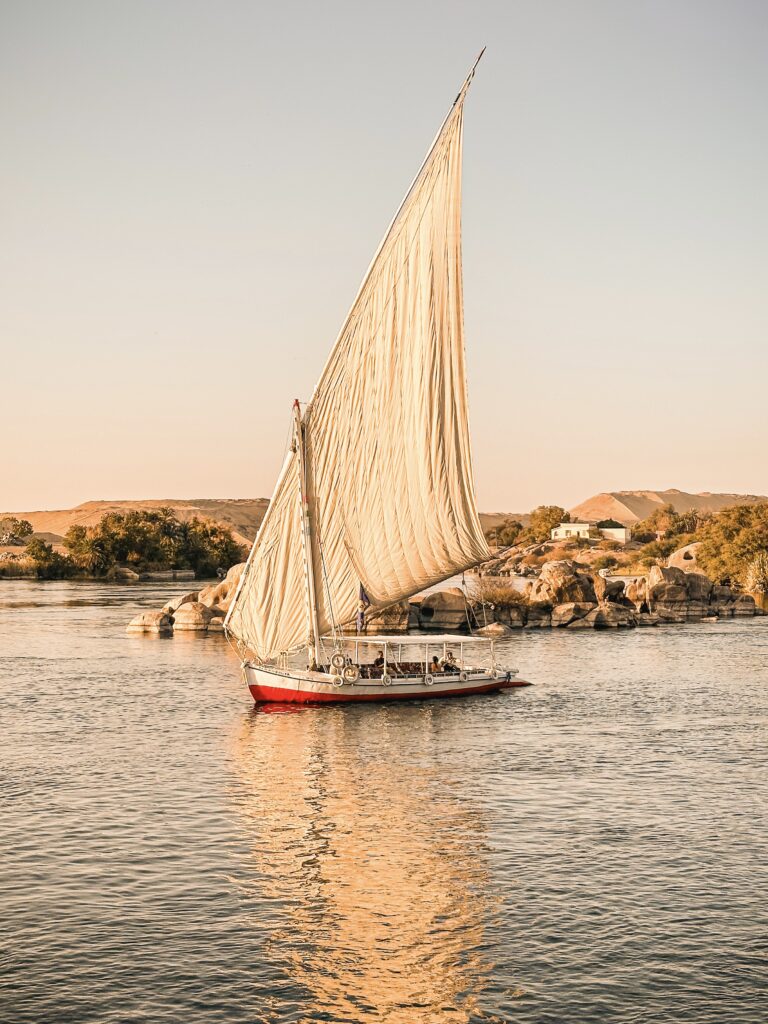 Traditional Felucca on the Nile
Things to Do in Aswan Independently
Aswan itself has plenty to offer, but it’s also a great base for day trips to some incredible nearby sites. Here are some of the highlights but for more information read How to Visit Aswan Independently.
Back to Luxor: Kom Ombo and Edfu Temples Detour
After spending a few days in Aswan, it was time to face the dreaded journey back to Luxor. Still traumatised from the previous train ride, I needed an alternative.
I had planned to visit some temples along the way, but by this point, I already knew how difficult it would be to do it independently. Luckily, the hostel I was staying in Aswan offered a transport option for $20, which included a van ride to Luxor with stops at Kom Ombo and Edfu Temples. It was by far the best choice, much cheaper than the train, and I’d finally get to visit these temples without the usual hassle.
Kom Ombo Temple
Kom Ombo Temple is one of Egypt’s most unique temples. It’s dedicated to two gods: Sobek, the crocodile god, and Horus the Elder. Standing on the banks of the Nile, this symmetrical temple was built during the Ptolemaic period and is divided into two identical sections, each devoted to one of the deities. What makes Kom Ombo even more fascinating is its connection to ancient medicine, with carvings depicting surgical instruments and medical practices from thousands of years ago.
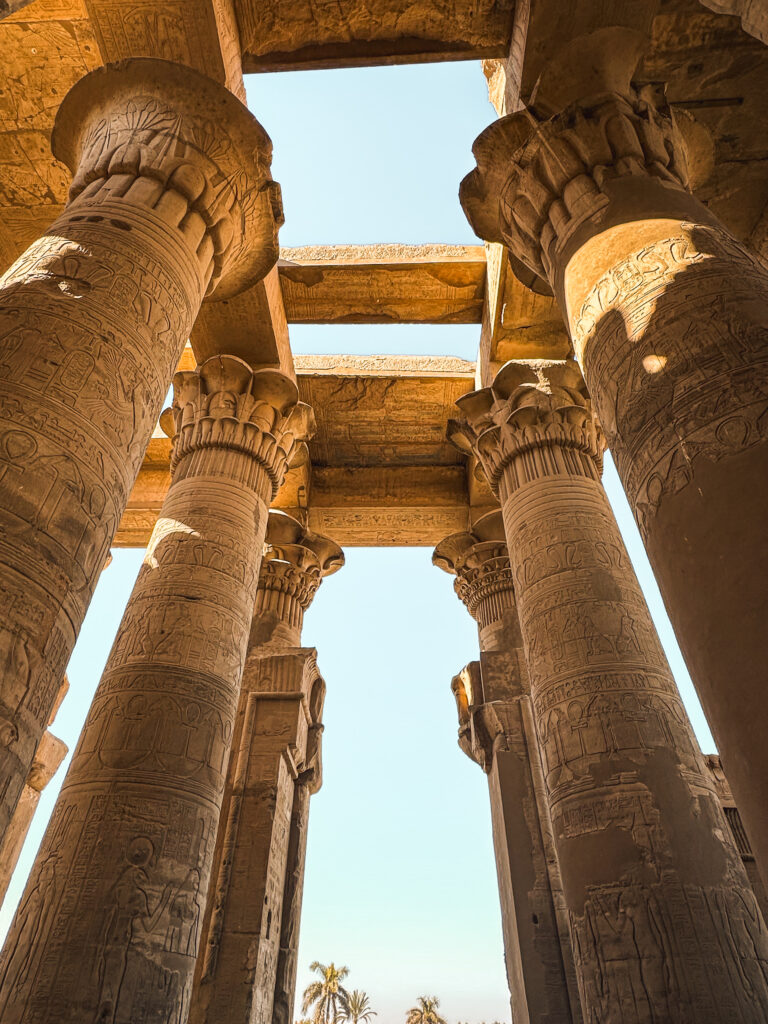 Kom Ombo Temple
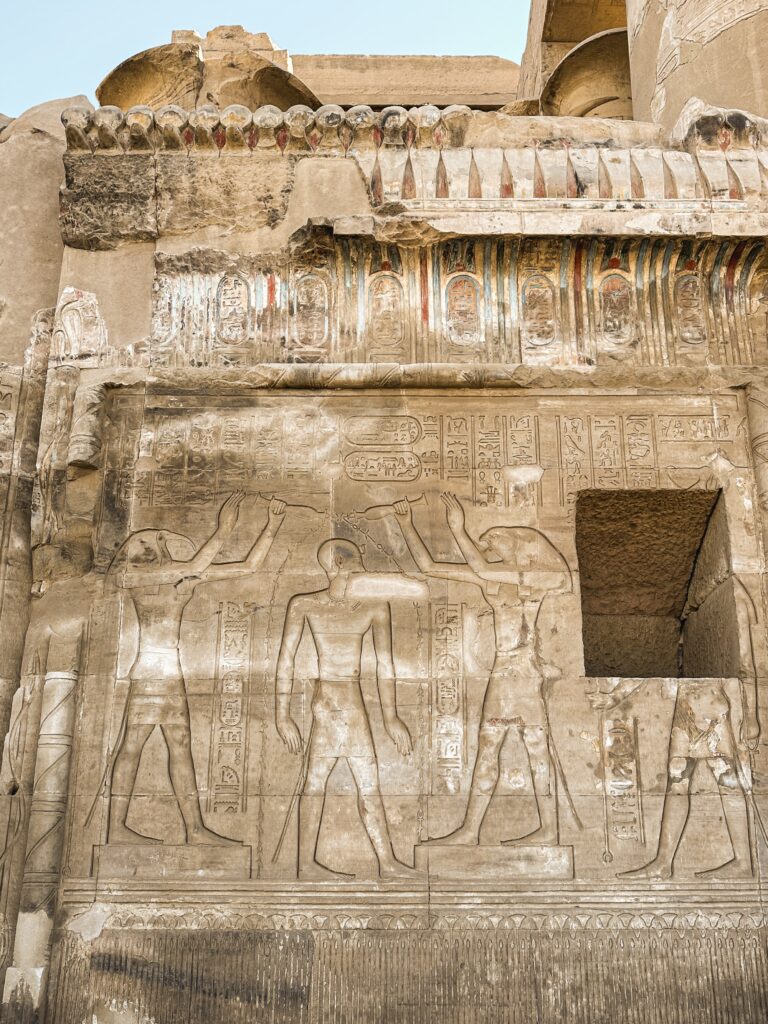 Intricate Wall Details
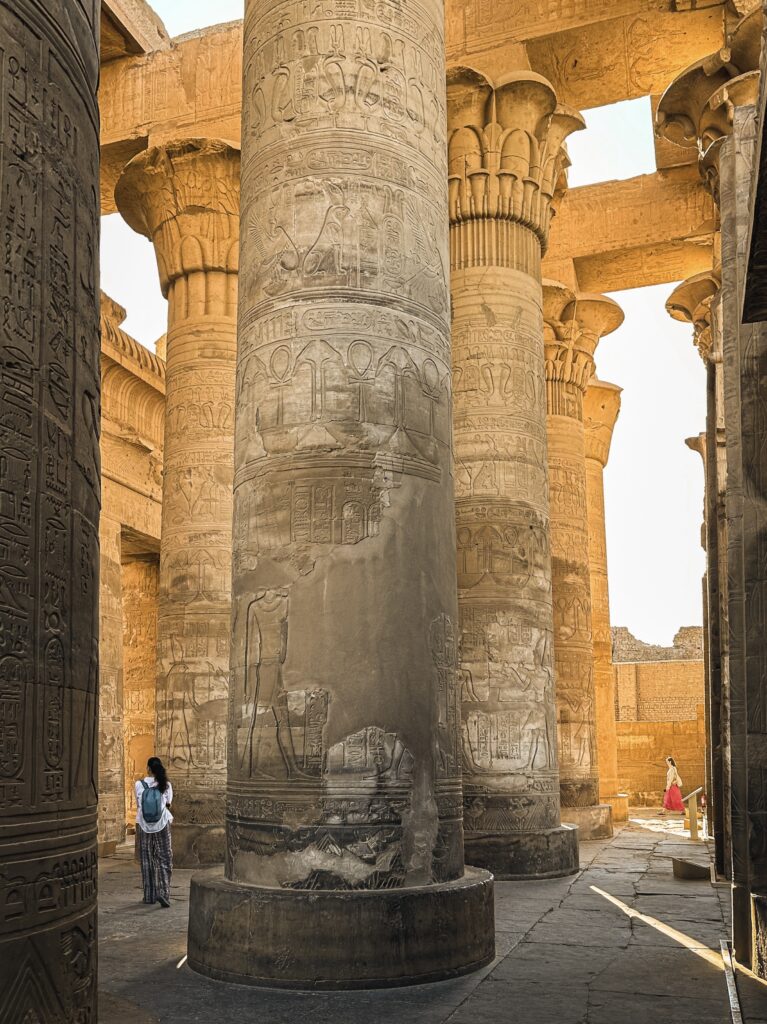 Kom Ombo Temple
The temple also features a Nileometer, an ancient device used to measure the river’s water levels and predict floods, which played a crucial role in managing agriculture. Nearby, the Crocodile Museum showcases a collection of mummified crocodiles, highlighting the sacred role these creatures once played in Egyptian mythology.
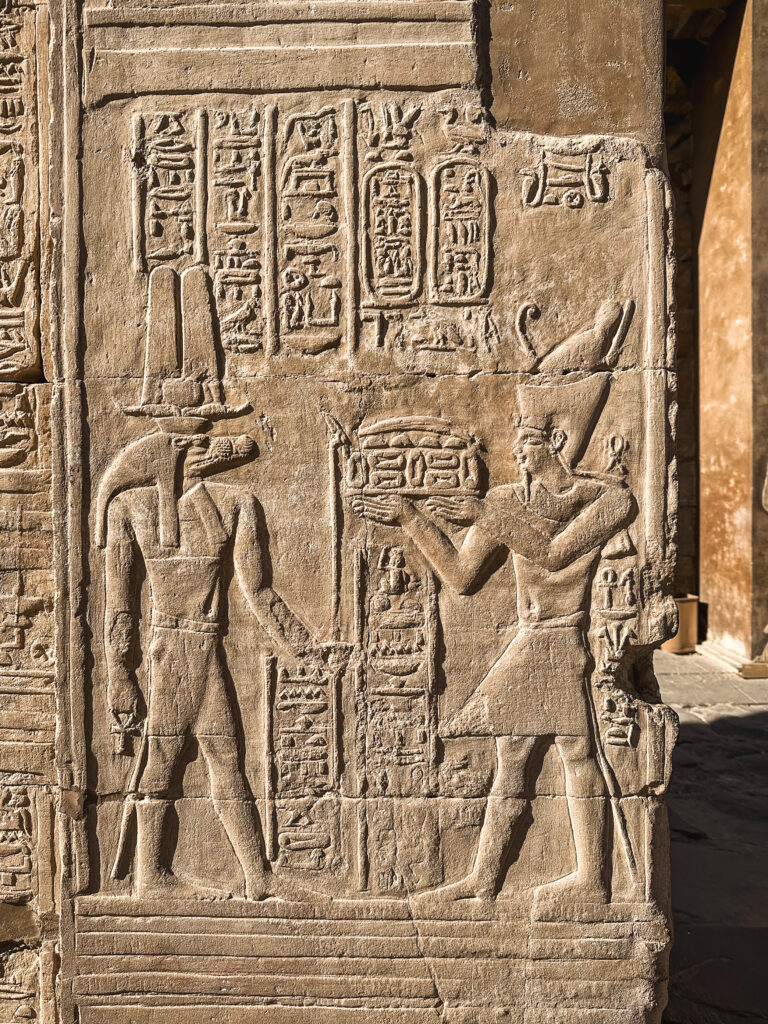 Wall Carvings of Crocodile God, Sobek
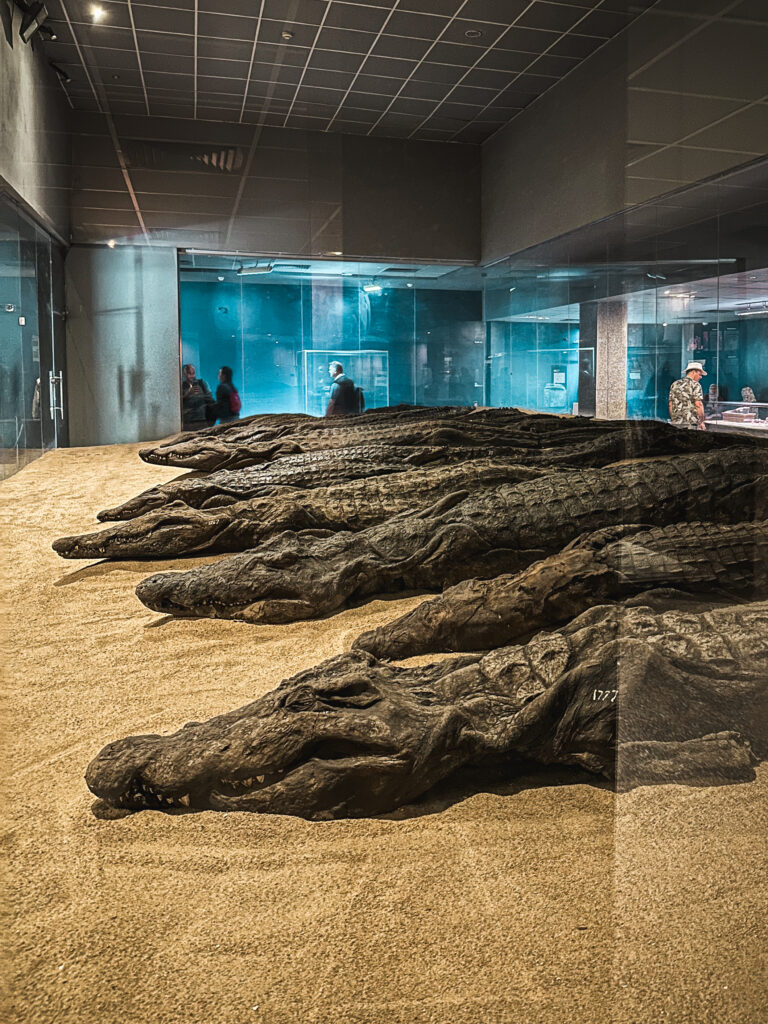 Crocodile Mummies
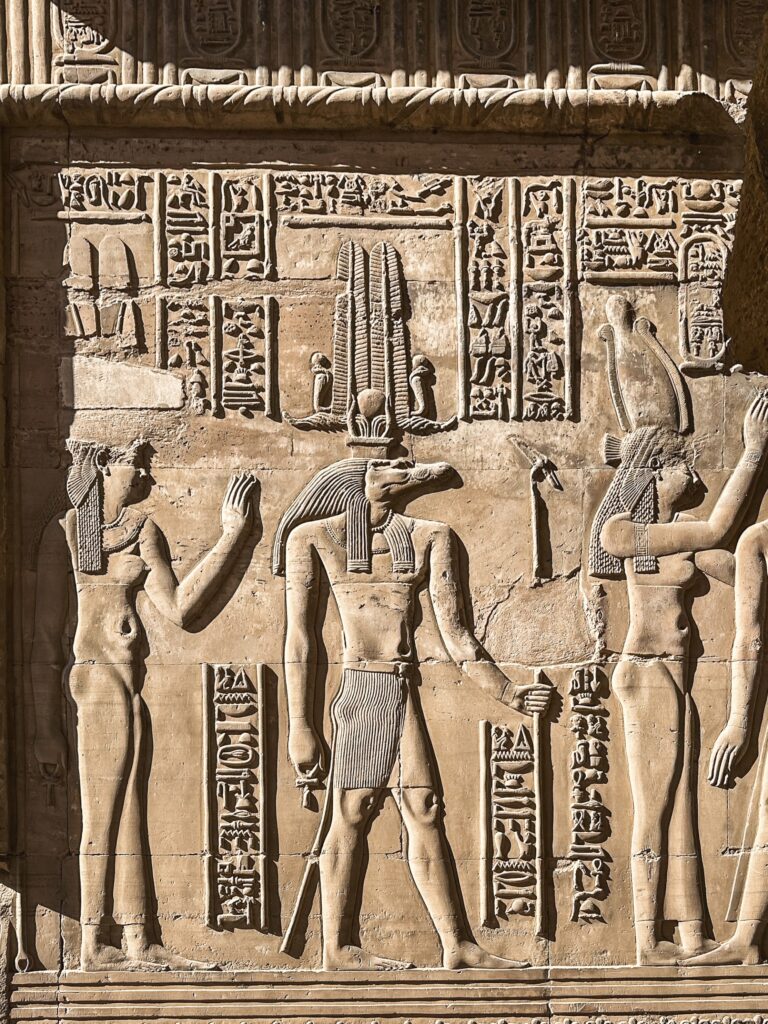 Wall Carvings of Crocodile God, Sobek
Edfu Temple
Edfu Temple, dedicated to the falcon-headed god Horus, is one of the best-preserved temples in Egypt. Built between 237 and 57 BC, it remains remarkably intact, with towering walls covered in intricate hieroglyphs that depict the eternal battle between Horus and his uncle Seth. The temple’s grand entrance is flanked by massive statues of Horus, and inside, visitors can explore the hypostyle hall, sacred chambers, and the sanctuary that once housed the god’s statue. Edfu Temple also provides valuable insights into ancient Egyptian religious rituals, as its inscriptions detail ceremonies and offerings made to Horus.
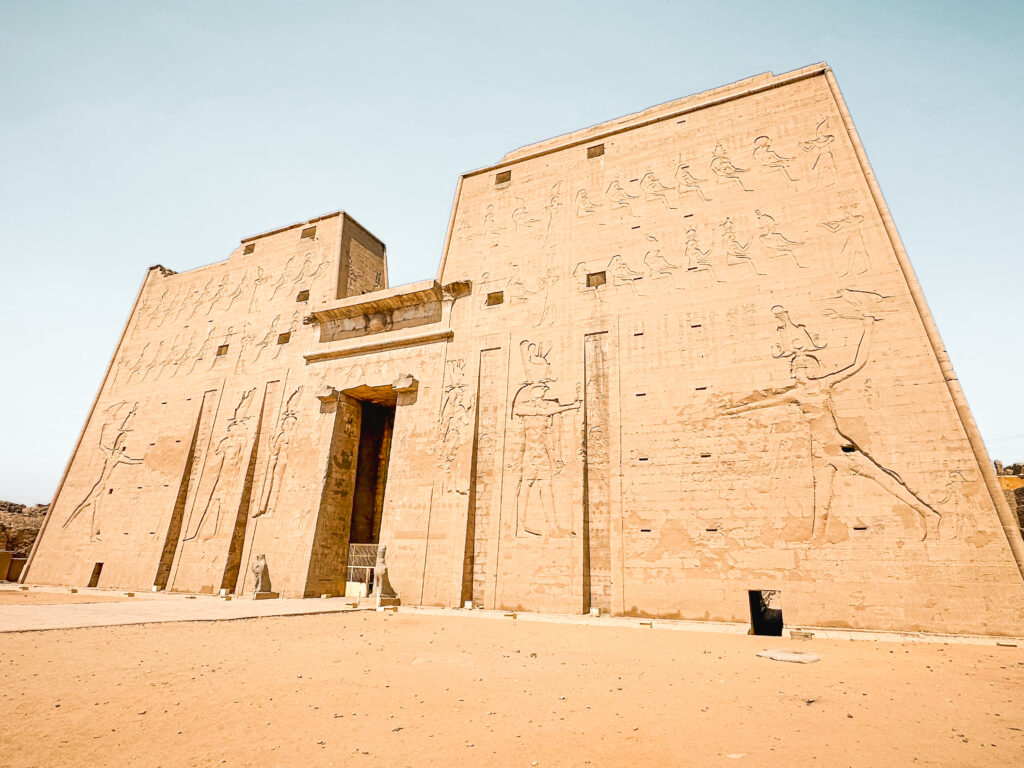 Edfu Temple
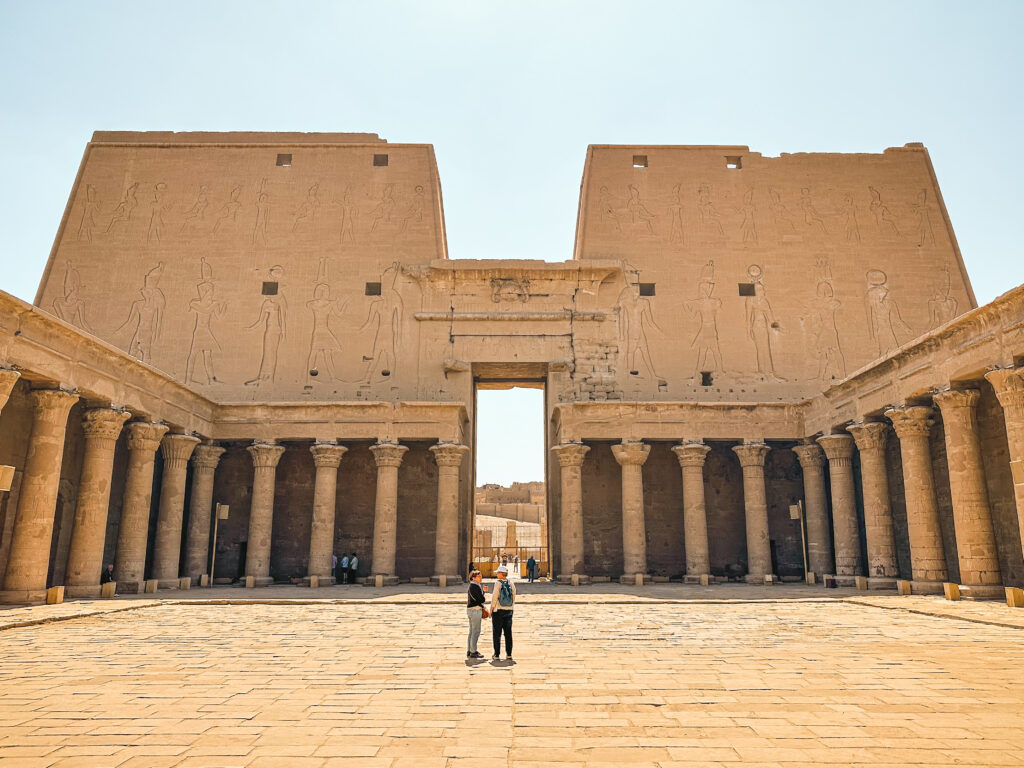 Edfu Temple
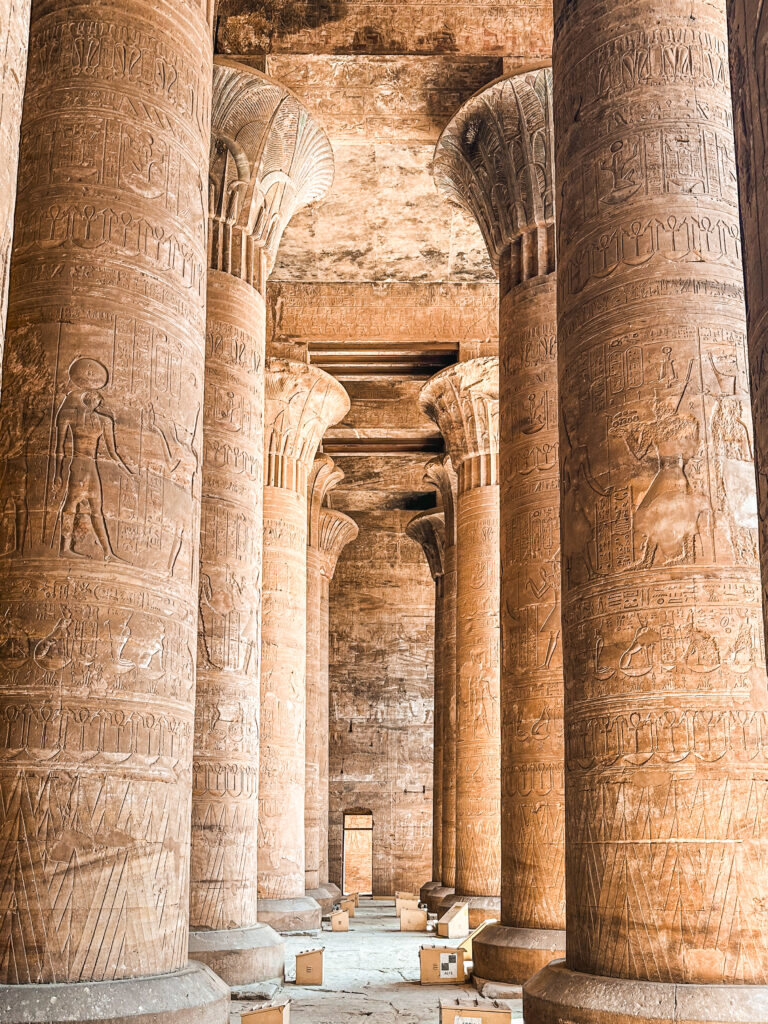 Details Edfu Temple
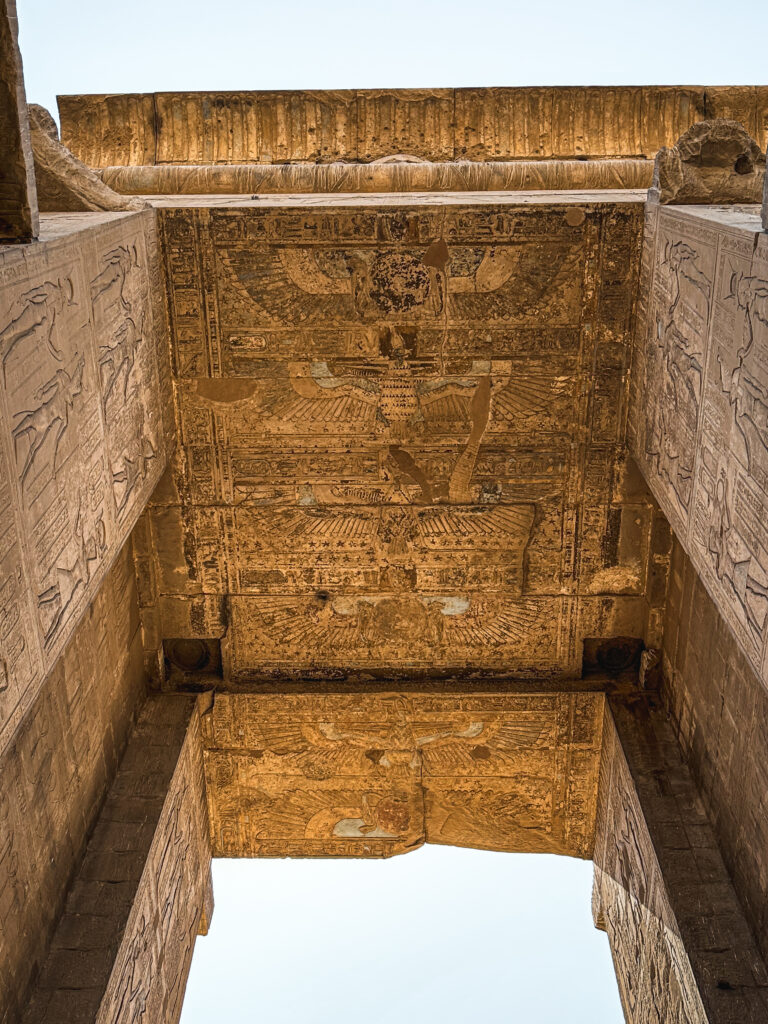 Details Edfu Temple
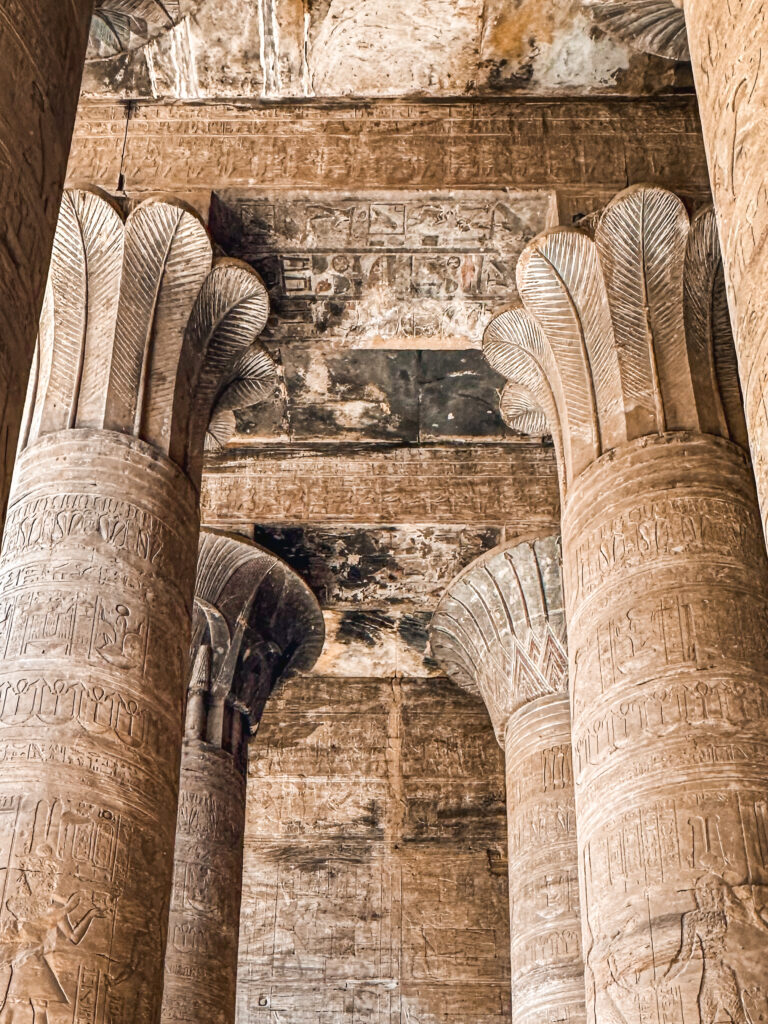 Details Edfu Temple
How to Visit Sinai Peninsula Independently
The Sinai Peninsula, located at the meeting point of Africa and Asia, is home to some of Egypt’s most stunning coastal destinations, including Dahab and Sharm El-Sheikh. Known for its crystal-clear waters, vibrant coral reefs, and world-class diving and snorkelling, it’s a paradise for underwater enthusiasts and adventurers alike.
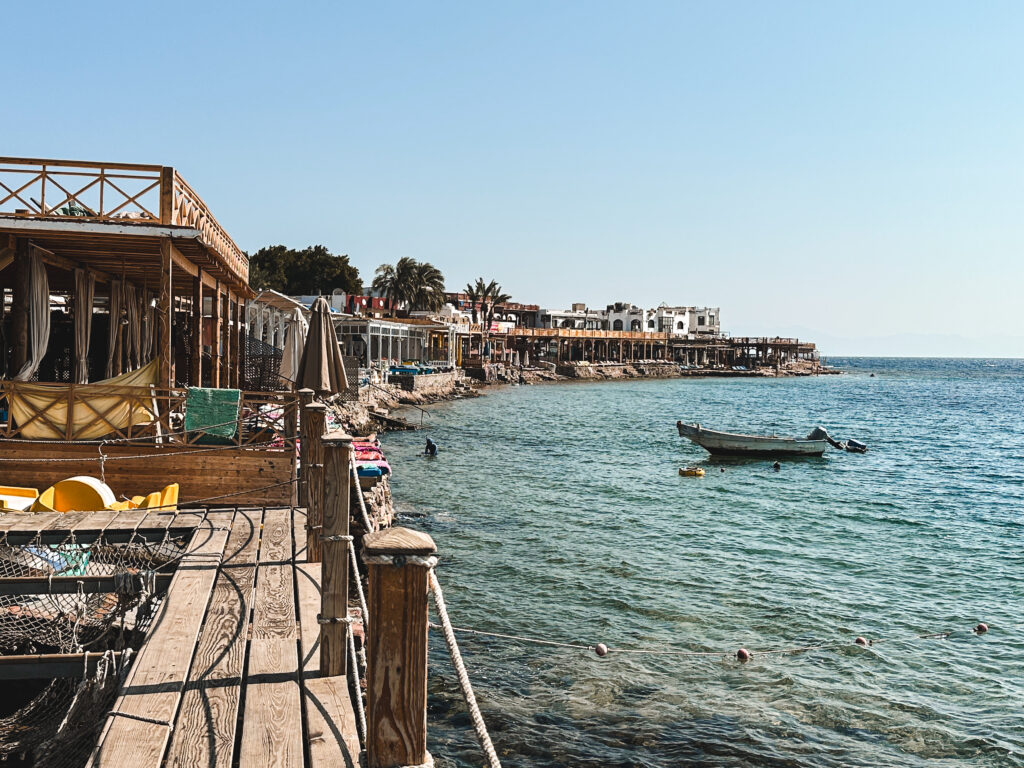 Dahab
Dahab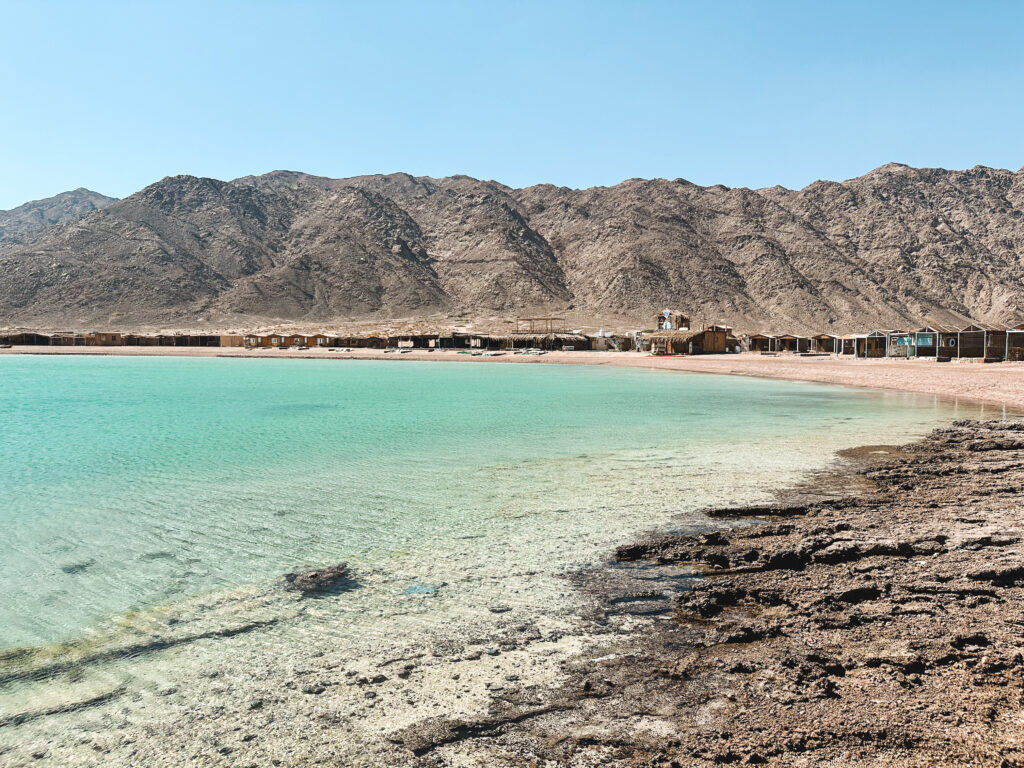 Blue Lagoon
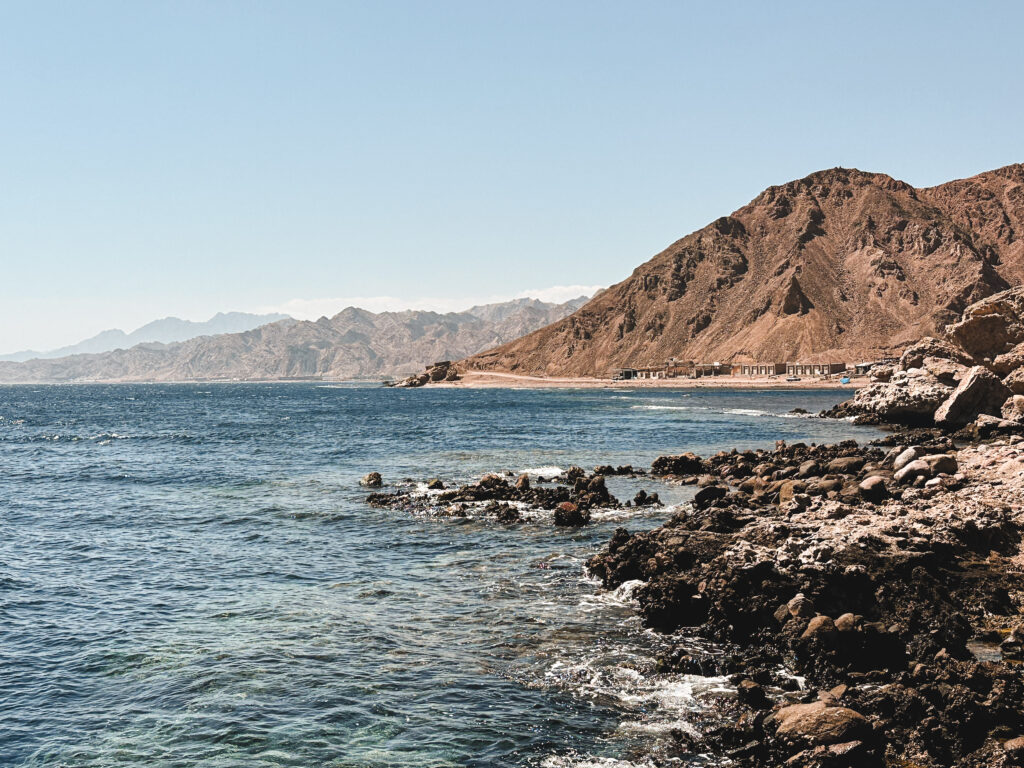 Dahab’s Coastline
How to Get There on a Budget
It’s fairly easy to reach the Sinai Peninsula from Cairo, with many buses running to both Sharm el-Sheikh and Dahab. I took an 8-hour night bus with GoBus, which cost 420 EGP (around €7.60).
What to Do in the Sinai Peninsula
The Sinai Peninsula is a fascinating region with a mix of stunning landscapes, historical sites, and incredible diving spots. These are some of the highlights to visit but check my detailed guide on How to Visit the Sinai Peninsula Independently.
Suggested Itineraries for Backpackers
1-Week Itinerary: Cairo and Luxor (Orange)
Spend the first 3 days exploring Cairo, where you’ll visit the iconic Giza Pyramids, the Sphinx, the Egyptian Museum, and wander through the historic streets of Old Cairo and the bustling Khan el-Khalili bazaar. On day 4, travel to Luxor by flight, train or bus. The next 2 days are dedicated to Luxor’s East and West Banks, home to breathtaking temples like Karnak and Luxor, the Valley of the Kings, and the Temple of Hatshepsut. The last day is to make your way back to Cairo for departure.
2-Week Itinerary: Cairo, Luxor, and Aswan (Orange + Green)
Spend the first 3 days in Cairo, exploring highlights like the Giza Pyramids, the Sphinx, the Egyptian Museum, and the historic quarters of Islamic and Coptic Cairo. On day 4, travel to Luxor by plane, train or bus. The next 3 days are dedicated to Luxor, where you’ll explore the East and West Banks, including Karnak Temple, Luxor Temple, the Valley of the Kings, and the Temple of Hatshepsut. From there, continue south to Aswan for 4 to 5 days, where you can unwind by the Nile, visit Philae Temple, the Nubian villages, and take a day trip to the magnificent Abu Simbel. On your way back to Luxor, stop to explore the temples of Kom Ombo and Edfu before returning to Cairo for your final night.
3-Week or more Itinerary: My Itinerary (Orange + Green + Purple)
With 3 weeks or more in Egypt, you’ll be able to experience the country’s incredible diversity. I was there for a month and this was roughly my itinerary.
Start your journey in Cairo, exploring the iconic pyramids, vibrant neighbourhoods, and world-class museums. Then head north to Alexandria for a glimpse of Egypt’s Mediterranean charm and Greco-Roman heritage. From there, journey west to the remote Siwa Oasis, where mud-brick villages, palm-filled landscapes, and ancient oracle temples offer a peaceful desert escape. Return to Cairo before travelling south to Luxor and Aswan. There you’ll explore the grand temples, royal tombs, and riverside villages along the Nile, perhaps even stopping at Kom Ombo and Edfu Temples on the way. End your adventure in the Sinai Peninsula, where you can unwind by the Red Sea in Dahab or Sharm El Sheikh before flying out from there.
Independent Travel Toolkit: Practical Essentials
Travelling Egypt without a tour means you are your own travel agent, security detail, and navigator. To survive the “glorious chaos” while keeping your budget intact, these are the exact tools and rules I used to stay sane.
1. Money & Payments: The “Cashless” Strategy
As I’ve mentioned, 2026 Egypt is a dual-economy country. You need Card for the history and Cash for the street. To avoid getting slaughtered by bank fees and terrible exchange rates, I use a two-card system:
Avoid ATM fees with Wise
The card I use for all my travel withdrawals – real exchange rate, low fees.
Use Revolut to avoid ATM fees
Good alternative to Wise – I carry both as a backup.
2. Connectivity: Saily eSIM
Don’t wait until you’re arguing with a taxi driver at 2:00 AM to realize you have no data. I highly recommend getting an eSIM before you land.
Need data before you land? Try Saily eSIM
Use code RITAHE1486 for $5 off your first plan.
3. Safety & Insurance: SafetyWing
Independent travel in Egypt often involves jumping off moving trains, riding in questionably maintained microbuses, and eating “mystery” street food. This is the only insurance I use. It’s designed for digital nomads and backpackers, covering you for unexpected medical emergencies or travel delays. It’s a small price to pay for total peace of mind in a chaotic country.
Don’t skip travel insurance!
I use SafetyWing for most trips – solid coverage for adventure travel.
4. Dress Code: What to Wear (Especially for Women)
How you dress in Egypt directly impacts the level of “hassle” you experience. Egypt is a conservative country, and dressing respectfully is both a sign of cultural awareness and a practical “safety shield.”
Frequently Asked Questions: Backpacking Egypt
1. How much does a visa for Egypt cost in 2026?
As of March 1, 2026, the single-entry Visa on Arrival (VoA) has increased to $30 USD (up from $25). You must pay this in cash at the bank windows before you reach the immigration desk. They accept USD, Euros, or GBP. 💡 Pro Tip: The e-Visa (applied for online) currently remains at $25, so applying in advance can save you a few Euros and the airport queue.
2. Is Egypt safe for solo female travellers?
Egypt is physically safe, but it is mentally challenging. As a woman travelling independently, you will likely experience catcalling and persistent attention. I recommend dressing modestly (covering shoulders and knees) and staying in hostels on Elephantine Island (Aswan) or in Dahab, where the vibe is much more relaxed and respectful.
3. Can I drink the tap water?
No. Even locals often avoid drinking it directly. To stay on budget and reduce plastic, bring a filtered water bottle (like a Grayl or LifeStraw) or buy the large 1.5L bottles for around €0.30. Always use bottled water to brush your teeth if you have a sensitive stomach.
4. Do I really need a card for everything?
For historical sites, yes. In 2026, the Ministry of Tourism is strictly cashless. You cannot buy a ticket to the Pyramids, Luxor Temple, or Abu Simbel with cash. However, you still need plenty of cash (EGP) for street food, local ferries, and tipping (baksheesh).
5. Is bringing an International Student Identity Card (ISIC) to Egypt worth it?
Absolutely. If you are under 30 or a full-time student, the ISIC card is the single best way to save money in Egypt. It gives you 50% off almost every entry fee. It usually pays for itself after just two days in Luxor.
6. How do I handle the “hassle” without being rude?
The most important phrase you will learn is “La, Shukran” (No, thank you). Say it firmly, don’t break your walking pace, and avoid making prolonged eye contact with touts in “high-pressure” zones like the Giza Plateau. Remember: Disengaging isn’t being rude; it’s necessary for your sanity!
This final section is where you “stick the landing.” After giving all the logistical “how-to,” you need to answer the biggest question in the reader’s mind: “Is all this effort actually worth it?”
This is also your last chance to encourage readers to check out your other city-specific guides.
Final Thoughts: Is Independent Travel in Egypt Worth the Struggle?
After a month of navigating the “glorious chaos,” jumping off moving trains, and debating the price of every single bottle of water, I’ll be honest: Egypt is the most exhausting country I have ever visited.
If you choose to backpack Egypt independently, you are choosing a path of high friction. You will be tired, you will be frustrated, and you will likely have at least one day where you want to lock yourself in your hotel room and hide from the world.
But here is the truth: I would do it all over again.
The moments of pure magic: standing alone in a silent tomb in the Valley of the Kings, watching the sunset over the Nile in Aswan, or seeing the Pyramids peak through the morning haze, are infinitely more powerful when you’ve earned them on your own terms. When you travel without a tour, you don’t just see Egypt; you experience it.
So, pack your patience, download your apps, and get ready for the challenge. Egypt isn’t easy, but for the independent traveller, it is undeniably, spectacularly worth it.
All the Egypt Travel Guides
If you’re continuing your independent adventure through Egypt, these guides cover everything you need to travel the country on a budget without joining a tour: