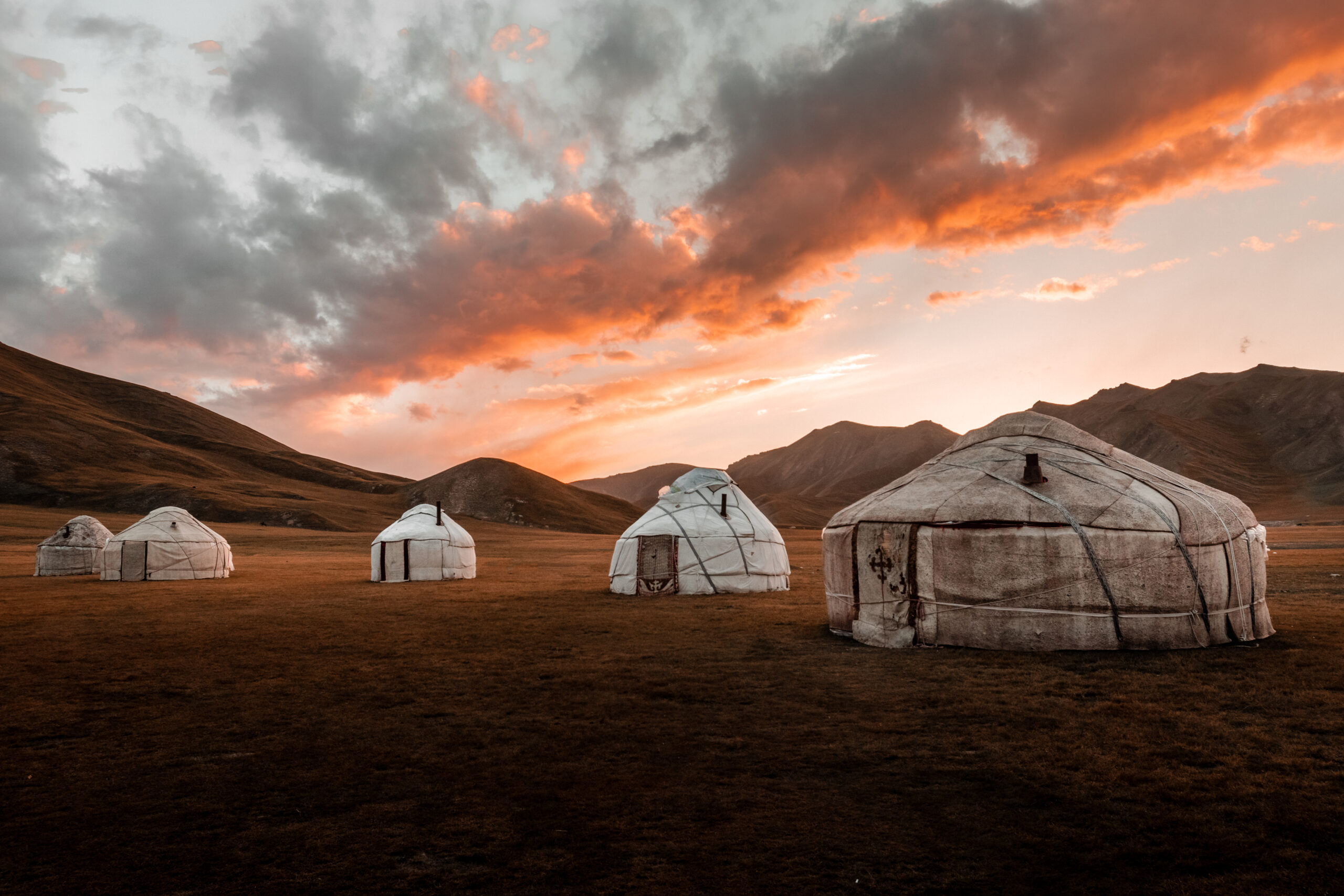
Travelling Kyrgyzstan is a journey into a land of soaring mountains, turquoise lakes, and vast, untouched valleys where nomadic traditions continue to thrive. This Kyrgyzstan travel guide will help you explore the country’s vibrant cities, remote yurt camps, and breathtaking natural landscapes. From the bustling streets of Bishkek to the high-altitude pastures of Son-Kul, I’ve spent over two and a half months travelling independently, hiking multi-day treks, camping in the mountains, and immersing myself in local life — from volunteering in the capital to staying with nomadic families in remote valleys.
For solo travellers seeking off-the-beaten-path adventures, Kyrgyzstan is a dream destination. Trekking in Ala-Kul, hiking around Son-Kul, and reaching the base of Lenin Peak offer unforgettable experiences for those willing to leave the tourist trails behind. Meanwhile, cities like Bishkek and Karakol provide cultural insights, bustling local markets, and gateways to the surrounding mountains. Whether you’re planning a short city-focused trip, a week-long trekking adventure, or an extended journey across the country’s remote regions, Kyrgyzstan promises a combination of adventure, solitude, and genuine encounters with its warm, welcoming people.
In this guide, I’ll share my experiences and provide itineraries, trekking tips, and practical advice for independent travellers. You’ll find everything you need to plan your own adventure, from day trips around Bishkek to solo multi-day treks across some of Kyrgyzstan’s most spectacular landscapes. This is your ultimate guide to exploring Kyrgyzstan on your own terms, discovering hidden gems, and experiencing the country like a local.
Quick Country Overview
Geography and Landscapes
Kyrgyzstan is a landlocked country in Central Asia, dominated by the towering Tien Shan mountains, vast alpine valleys, and pristine lakes. The country is known for its dramatic natural beauty: snow-capped peaks, rolling steppe, deep canyons, and turquoise lakes like Son Kul and Issyk Kul, which offer perfect spots for trekking, horseback riding, and camping. Much of Kyrgyzstan remains untouched, making it ideal for off-the-beaten-path travel.
Culture and Traditions
Kyrgyzstan is a country with a rich nomadic heritage. Yurt living, traditional horse games, and ancient festivals remain integral to daily life, especially in rural areas. Visitors can experience authentic Kyrgyz culture through yurt stays, local meals, and interactions with nomadic families. The people are known for their warmth and hospitality, making solo travel a rewarding experience.
Best Time to Visit
The best time to visit Kyrgyzstan is from June to September, when the weather is warm, mountain passes are mostly clear, and trekking conditions are ideal. Summer brings long days, vibrant alpine meadows, and accessible high-altitude trails like Ala-Kul, Song-Kul, Kel-Suu, and the Pamirs.
Spring (April-May) and autumn (late September-October) are quieter, offering fewer crowds and lower prices, but some high mountain passes may still be snowed in. Winter (November-March) is harsh, with heavy snow in the mountains, though it can be a great time for ski tourism in Karakol or short urban stays in Bishkek.
Practical Tips for Travelling Kyrgyzstan
Visas
Many nationalities can enter Kyrgyzstan visa-free for 30-60 days, including citizens of the EU, the US, Canada, and most Central Asian countries. If your country requires a visa, you can usually apply online via the eVisa system, which is quick and straightforward. Always check updated requirements before travelling, as rules can change.
Currency and Payments
The local currency is the Kyrgyzstani Som (KGS). Cash is essential in rural areas and smaller towns, while larger hotels, restaurants, and shops in Bishkek or Karakol often accept cards. ATMs are widely available in cities but less common in remote regions.
Health & Safety
Kyrgyzstan is generally safe, including for solo travellers, but standard precautions apply in cities and remote areas. Tap water is usually not recommended for drinking, so carry bottled water or a filter. Pharmacies are widely available in towns for basic medication and first aid.
Connection & SIM Cards
Kyrgyzstan has several affordable mobile providers, including Beeline and MegaCom. SIM cards are easy to buy in airports, cities, or local shops, and they come with data packages suitable for navigation and staying connected while travelling. Free Wi-Fi is available in many cafés, guesthouses, and hotels, but having a local SIM is essential in remote areas.
Communication & Language
Kyrgyz and Russian are the primary languages. English is limited outside major cities. Therefore, it’s very useful to know some Russian. Even more important is to learn the Cyrillic alphabet, which will help you read street signs, public transport signs, menus, and labels that are rarely written in the Latin alphabet. While pointing your camera at words using Google Translate can work sometimes, it won’t always be reliable. Learning the alphabet is not difficult and will make navigating the country much easier. Additionally, download the Russian language offline in Google Translate for areas with no mobile service.
Permits
Some regions, especially border areas like Kok-Kiya Valley, require permits from local CBT offices. These can usually be arranged in advance via email, WhatsApp, or in person at CBT offices in towns like Naryn.
Packing & Gear
These practical tips will help you travel independently, safely, and comfortably, whether you’re exploring cities, trekking in the mountains, or staying with nomadic families in Kyrgyzstan’s remote valleys.
Getting to Kyrgyzstan
Kyrgyzstan is well connected to Central Asia and beyond, with options to arrive by air or overland. While most travellers fly into Bishkek, overland routes from neighbouring countries are also possible for the adventurous.
Flying to Bishkek
Most international travellers arrive via Bishkek Manas International Airport (FRU). There are regular flights from Istanbul, Moscow, UAE, and other regional hubs. From the airport, it’s about 30-40 minutes by taxi or shuttle to the city centre. Booking flights in advance is recommended, especially during the summer trekking season, as availability can be limited.
Overland from Kazakhstan
Crossing from Kazakhstan is one of the easiest overland routes. Major border points include Chaldovar–Bishkek and Korday–Balykchy. Buses and shared taxis connect Almaty and border towns with Bishkek. Make sure to check visa requirements if you’re not a citizen of a visa-free country.
Overland from Uzbekistan
Overland travel from Uzbekistan usually involves crossing at Osh-Andijan (southern Kyrgyzstan). Roads can be rough and slower than other borders, but buses and shared taxis are available. This route is useful if you’re combining a trip through Samarkand, Bukhara, or Tashkent with Kyrgyzstan.
Overland from Tajikistan
Crossing from Tajikistan is possible but more challenging due to mountainous terrain and fewer public transport options. Popular entry points include the Tajik-Kyrgyz border near Sary-Tash. A 4×4 or private driver is often necessary, and permits may be required for border areas. This route is ideal for travellers seeking adventure and high mountain scenery along the Pamir Highway.
Getting Around in Kyrgyzstan
Travelling around Kyrgyzstan can be an adventure in itself. While distances between major towns are relatively short, the mountainous terrain means travel can take longer than expected. Here’s a breakdown of the main options:
Buses and Marshrutkas
Buses and marshrutkas are the most common and affordable way to travel between cities and towns. They connect Bishkek with Karakol, Naryn, Kochkor, and smaller villages. Tickets are inexpensive, often ranging from 200-500 KGS depending on distance. Marshrutkas tend to be crowded but are reliable, leaving when full. Always ask your guesthouse or hostel to confirm departure times, as schedules are not online.
Shared Taxis
Shared taxis are a faster and slightly more comfortable alternative to marshrutkas. They usually depart once full and cover the same main routes between cities and towns. Fares are higher than marshrutkas but still reasonable, and they can be useful for travellers who want a quicker journey or prefer a bit more comfort while still travelling on a budget.
Private Drivers and 4x4s
For remote areas and off-road destinations, such as Kel-Suu, Song-Kul Lake, and high mountain passes, a private 4×4 driver is usually necessary. Many travellers share the cost with other tourists to make it more affordable. Hiring a driver offers flexibility, safety, and the ability to reach areas not serviced by public transport.
Trains
There is also a new and comfortable train connecting Bishkek to Balykchy on the western shore of Issyk-Kul Lake. While the route is limited, it’s worth mentioning for travellers who want a more relaxed and scenic alternative to road travel along Issyk-Kul, especially during the peak summer months.
Domestic Flights
Domestic flights exist but are limited. They can save time on long routes, such as Bishkek to Osh or Karakol during peak season, but most travellers prefer overland travel for flexibility and scenic views.
Where to Stay in Kyrgyzstan
Accommodation in Kyrgyzstan ranges from modern hotels in the main cities to simple guesthouses in rural villages and traditional yurt camps in the mountains. While large cities like Bishkek and Osh offer plenty of options for every budget, smaller trekking hubs such as Karakol, Kochkor, and Naryn mostly have family-run guesthouses and hostels.
In remote regions, especially near popular trekking routes, the most memorable places to stay are often yurt camps run by local families, where you can experience Kyrgyz nomadic culture while sleeping in traditional felt tents.
Here’s what to expect depending on where you travel.
Hostels, Guesthouses & Budget Hotels
Across Kyrgyzstan, accommodation is generally very affordable, especially compared to Europe. Most budget travellers stay in hostels or small guesthouses, which are often run by local families and offer a welcoming atmosphere.
Bishkek
As the capital city, Bishkek has the largest range of accommodation in the country, from backpacker hostels to modern hotels and apartments. If you prefer a private room, there are also many budget guesthouses and small hotels available throughout the city. Popular budget options include:
Karakol
Karakol is the main base for exploring the Issyk-Kul region and the starting point for the Ala-Kul trek, so the town has plenty of guesthouses catering to hikers. Many guesthouses can also help arrange trekking logistics, gear rental, and transport to trailheads. Some popular budget options include:
Kochkor
Kochkor is a small town and the main gateway for trips to Song-Kul Lake. Accommodation is simple but welcoming, mostly consisting of family-run guesthouses. Good options include:
Naryn
Naryn is a quiet mountain town used as a base for visiting Tash Rabat and Kel-Suu Lake. Accommodation options are limited but affordable. Guesthouses in Naryn can also help arrange 4×4 drivers for trips to remote destinations. Recommended budget places include:
Osh
Osh, the largest city in southern Kyrgyzstan, offers a mix of hostels, guesthouses, and mid-range hotels. It’s also the gateway to the Pamir Mountains and Sary-Mogul. Good budget options include:
Staying in Yurt Camps
One of the most memorable experiences in Kyrgyzstan is spending the night in a traditional yurt camp. These circular felt tents have been used by nomadic families for centuries and remain an important part of Kyrgyz culture. You’ll find yurt camps in many mountainous regions such as Song-Kul Lake, Ala-Kul trek, Kok-Kiya Valley, Tulpar-Kul, and other trekking valleys.
A typical stay in a yurt camp usually includes dinner, breakfast, tea and snacks. Meals are homemade and often shared with other travellers around a communal table. Expect simple but hearty food such as soups, bread, porridge potatoes, and sometimes traditional Kyrgyz dishes.
Facilities are usually basic, with shared yurts, outdoor toilets, and sometimes solar-powered electricity, but the experience of sleeping in the mountains under the stars is unforgettable.
Camping in Kyrgyzstan
For travellers who prefer more independence, camping is another excellent option. Kyrgyzstan’s mountains are vast and sparsely populated, and in many places it’s possible to pitch a tent anywhere. You can carry your own camping gear, especially when hiking routes like Ala-Kul or other remote locations, where accommodation options are limited or non existent.
If you don’t want to travel with heavy gear, you can also rent camping equipment in Bishkek or Karakol, including tents, sleeping bags, and cooking equipment.
Camping gives you the freedom to explore remote valleys and set your own pace, but keep in mind that temperatures in the mountains can drop significantly at night, even during summer.
What to Eat in Kyrgyzstan
Kyrgyz cuisine is hearty, simple, and strongly influenced by the country’s nomadic traditions. Historically, the Kyrgyz people lived as pastoral nomads, so meals are often based around meat, dairy products, bread, and noodles.
If you’re vegetarian or vegan, it’s important to plan ahead. Kyrgyzstan can be a difficult country for vegetarians and especially for vegans, particularly outside the main cities. While Bishkek and Osh have a growing number of modern cafés and restaurants where vegetarian options are easier to find, in rural areas and small towns most traditional meals revolve around meat and dairy. In mountain yurt camps and local guesthouses, meals are usually prepared in advance and often include meat, so it’s worth communicating dietary restrictions clearly and carrying some extra snacks if needed.
Traditional Kyrgyz Dishes
As you travel around the country, you’ll come across many traditional dishes that reflect Kyrgyzstan’s nomadic heritage.
Beshbarmak is considered the national dish of Kyrgyzstan. It consists of boiled meat (usually lamb or beef) served over flat noodles and topped with onions and broth. Traditionally it’s eaten with your hands, the name literally means “five fingers”.
Lagman is another staple across Central Asia. This dish features hand-pulled noodles served in a rich broth with meat and vegetables, or sometimes as a stir-fried noodle dish.
Manty are large steamed dumplings filled with minced meat and onions and usually served with sour cream. They are very filling and commonly found in restaurants and local eateries.
Plov, a rice dish cooked with carrots, onions, and meat, is extremely popular across Central Asia and widely eaten in Kyrgyzstan as well.
One dish that it can be hard to find but definitely worth trying is oromo. This is a large steamed roll of dough filled with minced meat and onions or sometimes just onions, then sliced into portions before serving. It’s simple but incredibly tasty, and one of my personal favourite dishes in the country.
Street Food
Street food is common across Kyrgyz cities and towns, and it’s often the cheapest way to grab a quick meal while travelling.
You’ll find small roadside stalls and bakeries selling snacks such as shawarma, kebabs and pastries. One of the most common and delicious options is samsa, a baked pastry typically filled with minced meat, though some versions are filled with potatoes or vegetables. They’re cheap, filling, and make a perfect snack while travelling between places.
Local Drinks
As you walk through cities like Bishkek, you’ll notice small street stands with colourful barrels on many corners. These vendors sell traditional Kyrgyz drinks that locals consume daily, especially during the hot summer months.
One of the most common drinks is maksym, a slightly sour and refreshing beverage made from fermented grains such as barley or wheat. It has a malty flavour and is lightly carbonated through natural fermentation.
Another popular drink is chalap, a salty and tangy drink made from diluted fermented milk mixed with water and salt. Many locals drink it after a meal or during hot weather because it’s believed to help cool the body.
You’ll often see the brand Shoro written on these barrels. Shoro is a local company that produces these traditional drinks and sells them across Bishkek and other cities.
Another traditional drink is kvas, a mildly fermented drink made from bread that’s popular across many former Soviet countries. And then the most popular in yurt camps is kumis, fermented mare’s milk with a slightly sour taste.
Food in the Mountains
When trekking in Kyrgyzstan, especially if you stay in yurt camps, meals are usually simple. Most yurt stays include dinner and breakfast, and food is often shared around a communal table with other travellers. Typical meals include soups, bread, porridge, potatoes, salads, and always accompanied by some meat dishes. Tea is always served and is an important part of Kyrgyz hospitality. Since trekking routes rarely have restaurants or shops, it’s always a good idea to carry snacks and extra food for long hiking days.
10-Day Itinerary: Bishkek, Karakol & Issyk Kul
Day 1 & 2: Arrival in Bishkek and Day Trip to Ala-Archa
When you first arrive in Bishkek, take it easy and let the city introduce itself slowly. After landing at Bishkek Manas International Airport, check into your accommodation and spend a few hours wandering the streets near Ala-Too Square, taking in the Soviet-era architecture, leafy boulevards, and bustling local markets. The first day is perfect for adjusting to the time zone and soaking in the rhythm of the city. In the evening, enjoy dinner at one of Bishkek’s cafés or street food stalls, sampling local dishes like langman or manty. For a full guide to the best things to do, eat, and see in Bishkek, you can check out my detailed Bishkek travel guide.
On the second day, head out early for a day trip to Ala-Archa National Park, just a few hours drive from the city centre. This stunning alpine park is one of the most accessible ways to experience Kyrgyzstan’s mountains without leaving Bishkek. You can hike short trails to waterfalls and viewpoints or take longer treks into the gorge, enjoying the fresh mountain air and dramatic scenery. Ala-Archa is also a good introduction to the type of terrain you’ll encounter on multi-day treks later. After a full day exploring the park, return to Bishkek for the night, ready to set off towards Issyk-Kul the following morning.
Day 3 & 4: Issyk-Kul Highlights
Since you only have two days around Issyk-Kul, you’ll need to choose between the north shore or the south shore. The north shore is more developed, with easier access to towns, guesthouses, and public transport, making it ideal for travellers who prefer convenience and a relaxed lakeside experience. The south shore, on the other hand, is wilder and more rugged, with dramatic canyons, waterfalls, and remote yurt camps. It’s more challenging to navigate independently due to infrequent transport, but the landscapes are truly spectacular and offer a sense of adventure for those willing to explore off the beaten path.
Getting to Issyk‑Kul from Bishkek
North Shore (Balykchy & Cholpon‑Ata)
Travelling to the north shore of Issyk‑Kul is one of the easiest ways to start exploring the lake region from Bishkek. From the New Bus Station in Bishkek, frequent marshrutkas (shared minibuses) head to Cholpon‑Ata, with departures roughly every 30-60 minutes from around 7:00 a.m. until early evening. The journey takes about 4–5 hours, passing through Tokmok, Boom Gorge, and Balykchy before reaching Cholpon‑Ata on the lake’s northern shore. A one‑way ticket usually costs around 500-600 KGS, per person, making it a very affordable way to reach the lakeside towns.
South Shore (Tamga & Bokonbaevo)
If you prefer a quieter, more scenic stretch of Issyk‑Kul, head to the south shore, where dramatic landscapes and traditional villages await. Marshrutkas to Bokonbaevo also depart from Bishkek’s New Bus Station. They generally depart every 1-2 hours between morning and early afternoon, and the journey takes about 5-6 hours, often stopping once or twice for food and rest breaks.
The route follows the lake’s southern edge via Boom Gorge → Balykchy → Tamga → Bokonbaevo, offering quieter roads, sweeping mountain views, and stretches of open desert‑like steppe beside turquoise water.
Shared taxis to Bokonbaevo are also available from the same station; they depart when filled (typically 3-4 passengers) and usually cost around 800-1,000 KGS per seat. Once you arrive in Bokonbaevo, most guesthouses and yurt camps can meet you at the drop‑off point near the central market, and local taxis can take you further along the shore if needed.
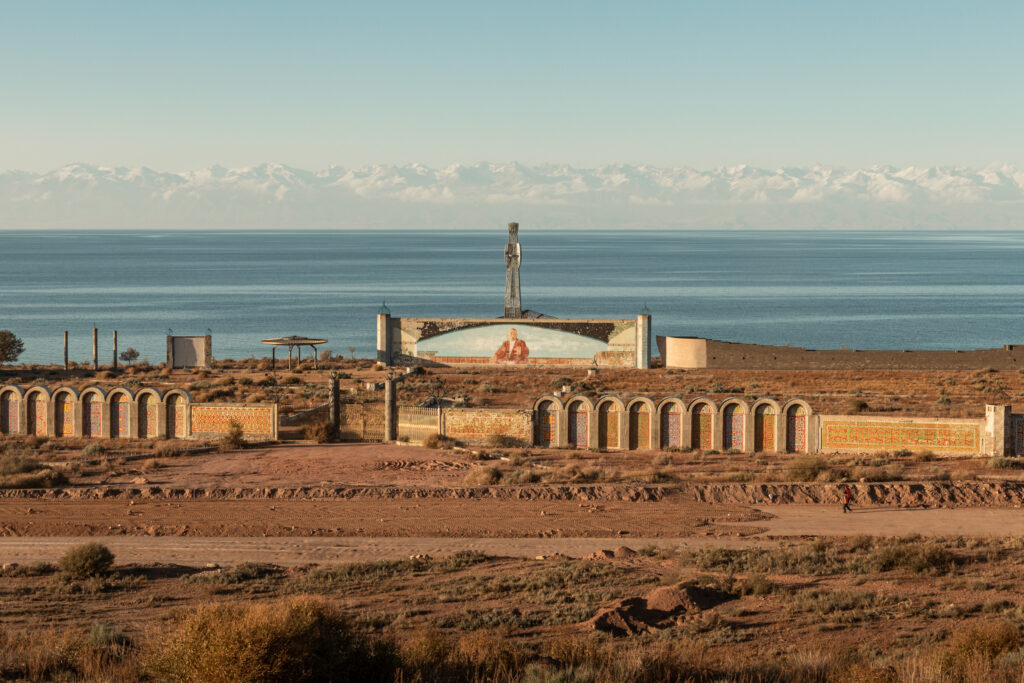 Aalam Ordo – abandoned ruins of centre of culture on the South shore.
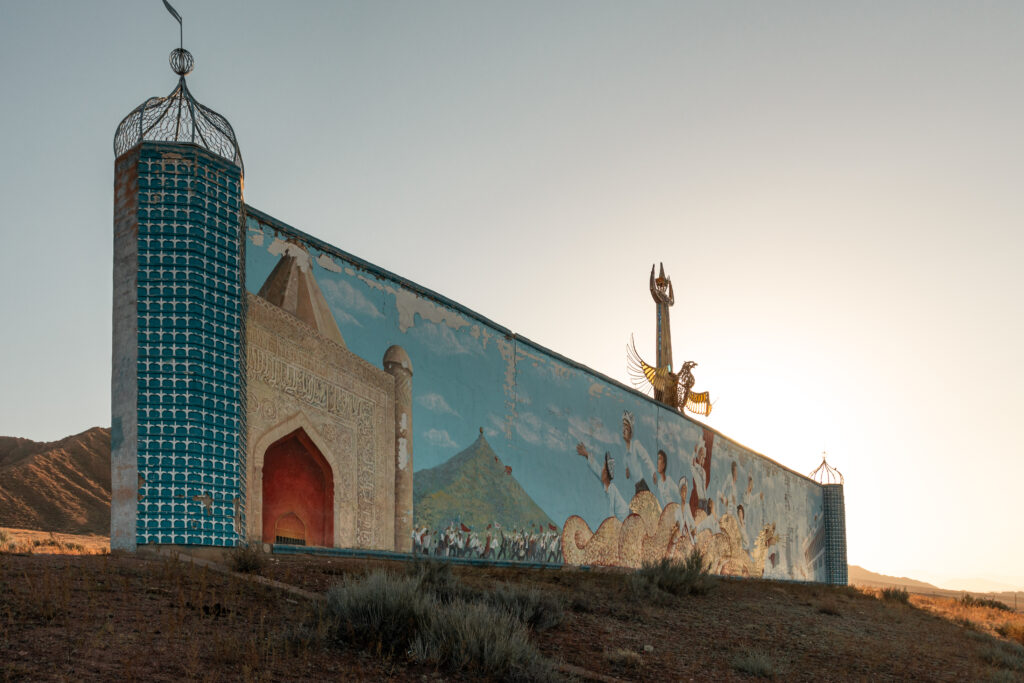 Soviet-feel mural part of the abandoned cultural complex
Highlights Around Issyk‑Kul
North Shore Highlights
On the north shore, Balykchy serves as a busy junction and gateway to the lake, while Cholpon‑Ata is one of the larger lakeside towns with sandy beaches and local markets. Beyond the developed towns, the north shore offers access to valleys and hiking trails such as Grigorievka and Semenovka, where glacier‑fed rivers, pine forests, and alpine lakes offer excellent day hikes and scenic views just a short drive from the main road.
South Shore Highlights
The south shore is quieter and more rugged, with dramatic canyons and natural features that make it a rewarding part of any Kyrgyzstan itinerary. Firstly, you’ll find the Ak‑Say Canyon (Canyon of Forgotten Rivers), a remote, rugged and offering breathtaking views and a sense of solitude. Another standout attraction is Skazka (Fairytale Canyon), named for its towering, wind-sculpted rock formations in vivid reds and yellows that feel almost unreal in the evening light. Another must-see is the Barskoon Waterfall, a stunning cascade set in a narrow gorge, perfect for a short hike.
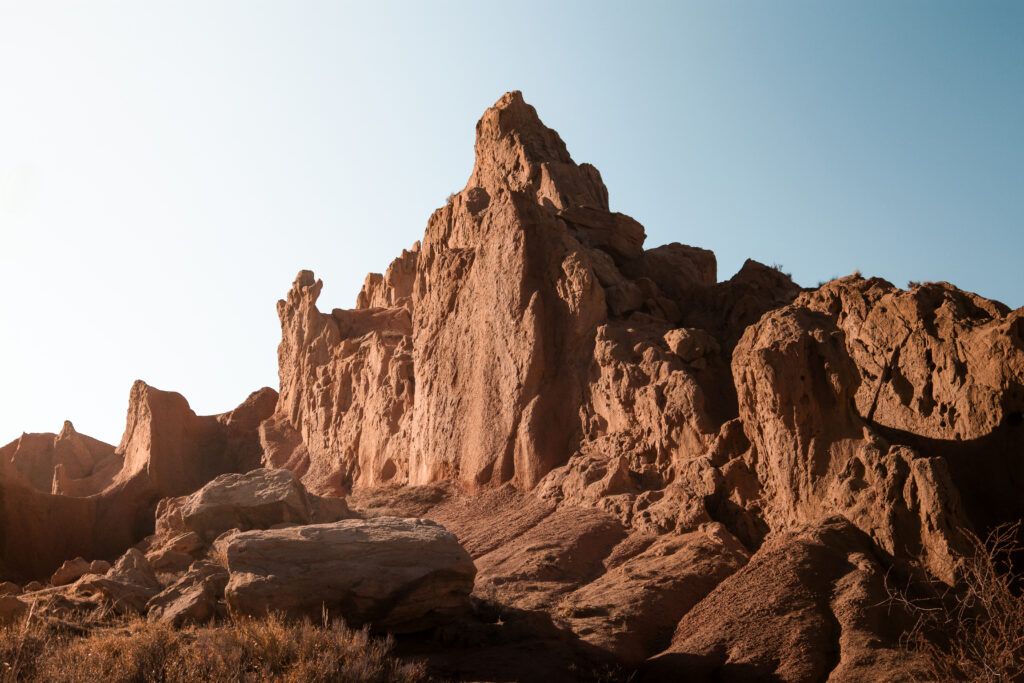 Skazka (Fairytale Canyon)
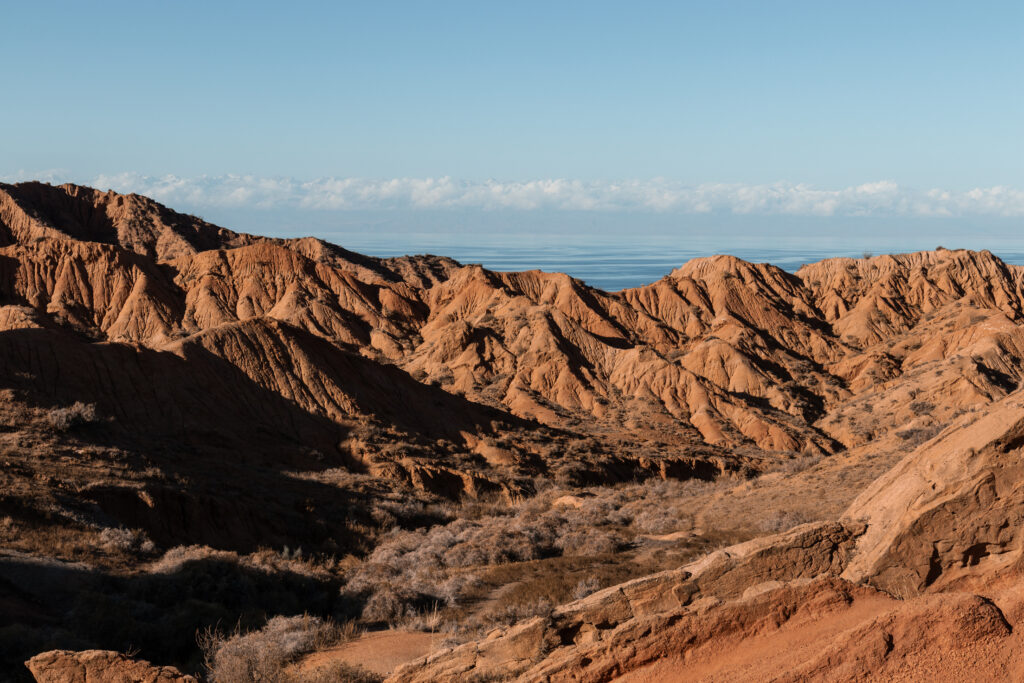 Skazka (Fairytale Canyon)
Because public transport is non-existent or infrequent along the south shore, many people choose to hire a private transport to access all the highlights. However, it’s also possible to hitchhike between villages if you have time.
Day 5: Journey to Karakol
On Day 5, after leaving Issyk-Kul, you’ll head east to Karakol, the gateway to the Ala-Kul trek. If you’re coming from the south shore, a shared taxi or marshrutka will take around 2-3 hours, while from the north shore the journey is slightly longer. On the way to Karakol, make a stop at Jeti-Oguz Canyon, famous for its striking red cliffs, and the nearby Seven Bulls rock formation, a natural monument of massive red rock pillars shaped like bulls. These stops offer short hikes and incredible photo opportunities, breaking up the drive before you reach Karakol. Once in town, stock up on trekking supplies, snacks, and water, and get any last-minute advice from locals or guesthouse staff.
Day 6-9: 3 or 4-day Ala-Kul Trek
Days 6-9 are dedicated to the 4-day Ala-Kul trek. If you’re short on time, it’s also possible to shorten the trek to a 3-day trek. From Karakol, the trail passes through alpine meadows, forested valleys, and rocky slopes, gradually climbing towards the stunning Ala-Kul Lake. You’ll camp along the way, cross the tree line, and enjoy panoramic mountain views. The trek can be done independently if you are comfortable with multi-day hiking, or with a guide if you prefer extra support. This section of your journey combines physical challenge with some of Kyrgyzstan’s most breathtaking landscapes. For a full day-by-day breakdown of the trek, including distances, altitude gain, and practical advice, check out my complete guide to the Ala-Kul trek in Kyrgyzstan.
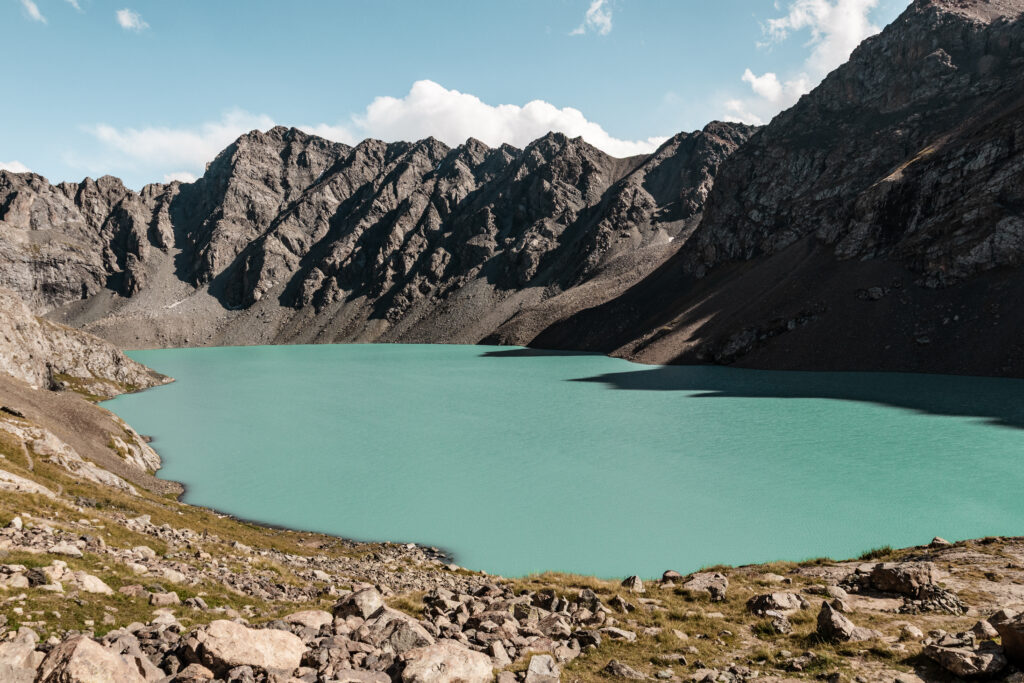 The first view of the turquoise waters of Ala-Kul
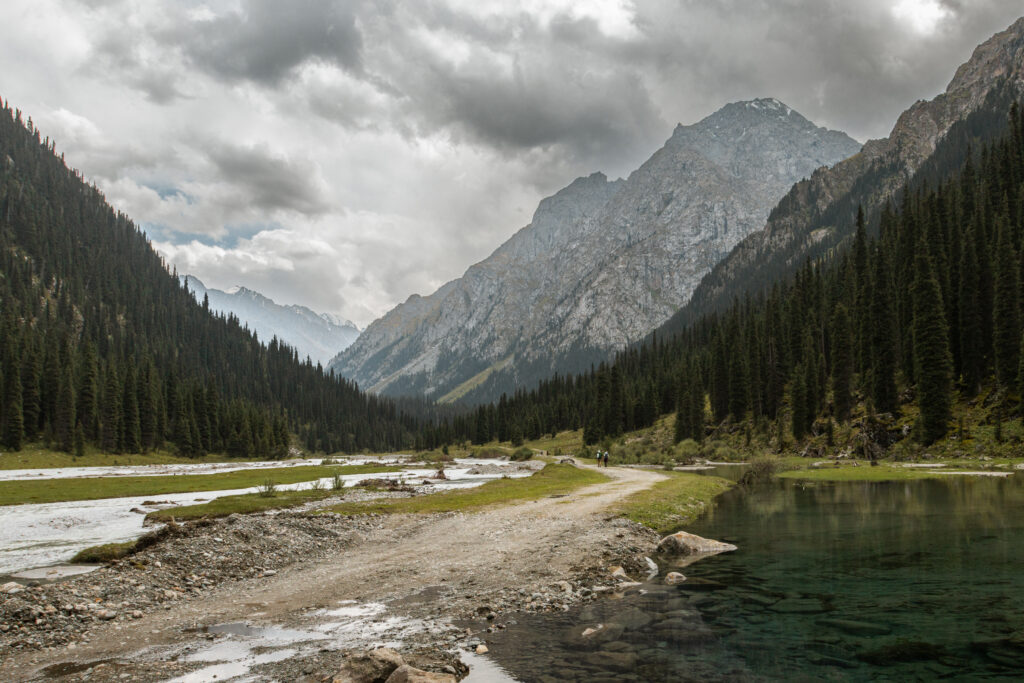 Karakol Valley
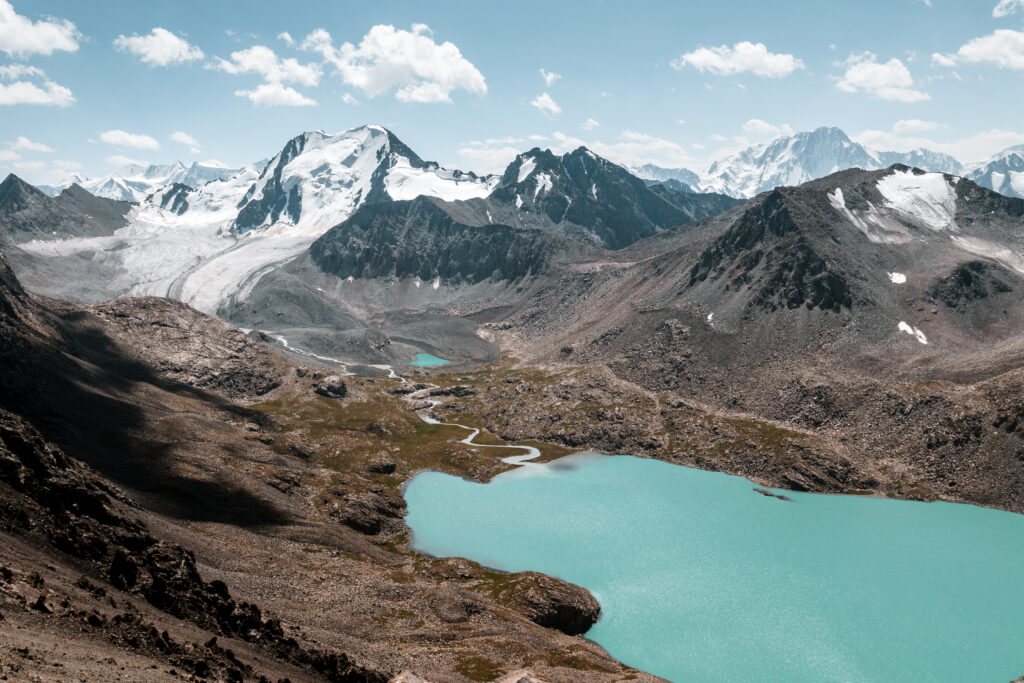 Views from above of Ala-Kul
Day 10: Return to Bishkek
On Day 10, after completing the Ala-Kul trek, it’s time to return to Bishkek. From Karakol, you can take a shared taxi or marshrutka, which typically takes around 6–7 hours to reach the capital. The drive passes through scenic valleys, river gorges, and mountain roads, giving one last glimpse of Kyrgyzstan’s alpine landscapes. Once back in Bishkek, you can relax, explore any areas of the city you missed at the start of your trip, or enjoy a final dinner at one of the cafés or restaurants highlighted in my Bishkek guide. This is the perfect opportunity to reflect on your journey, from the turquoise waters of Issyk-Kul to the rugged peaks of Ala-Kul, before departing the country or continuing to your next adventure.
2-Week Itinerary: Bishkek, Karakol, Issyk-Kul + Song-Kul
Day 1-9: Bishkek, Issyk-Kul & Ala-Kul Trek
Follow the same itinerary as the first 9 days: exploring Bishkek, a day trip to Ala-Archa National Park, 2 days at Issyk-Kul (north or south shore), Day 5 traveling to Karakol via Jeti-Oguz Canyon and Seven Bulls Rock, and Days 6-9 completing the 4-day Ala-Kul trek.
Day 10: Journey from Karakol to Kochkor
After finishing the Ala-Kul trek, begin your journey to Kochkor. Take a marshrutka from Karakol to Balykchy, then transfer to another marshrutka from Balykchy to Kochkor. The journey passes through scenic valleys and rivers and is a convenient and affordable way to move east to the central Kyrgyz highlands.
Day 11-13: Song-Kul Lake
Spend the next three days at Song-Kul Lake, experiencing the stunning high-altitude meadows and nomadic lifestyle. While most travellers visit Song-Kul on a horse trek, I chose to trek on foot and stay in yurt camps, which is significantly cheaper than hiring horses. The route typically passes through Kilemche Valley and over Jasgis-Karagi Pass (3325 m) before reaching the lake itself. Along the way, you’ll enjoy breathtaking alpine views, ride horses if you like, and immerse yourself in traditional Kyrgyz yurt life.
For a detailed day-by-day account, practical tips, and information on distances, altitude gain, and yurt stays, check out my full Song-Kul trekking guide.
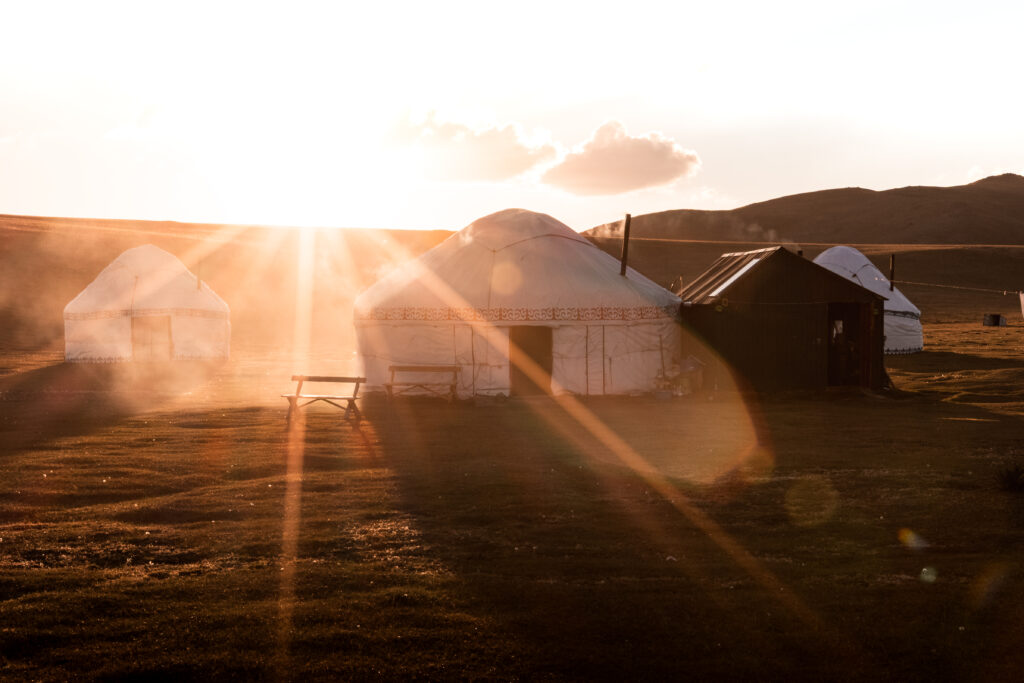 Yurt Camp at sunset by Song-Kul
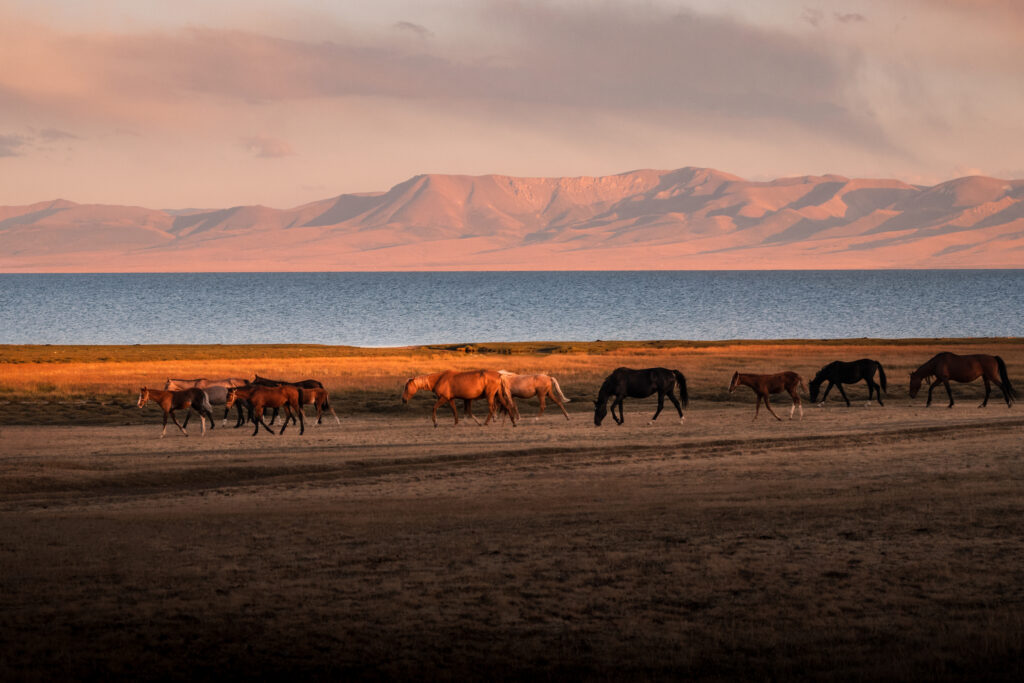 Horses at Song-Kul at sunset
Day 14: Return to Bishkek
On the final day, travel back to Bishkek from Kochkor. Marshrutkas run frequently and offer an affordable option, completing your two-week loop across Kyrgyzstan. Once in the capital, relax, explore any remaining sites, and reflect on your journey from the cities to alpine lakes and nomadic landscapes.
3+ Week Itinerary: Complete Kyrgyzstan Adventure
Days 1-13: Bishkek, Issyk-Kul, Karakol, Song-Kul
Follow the 2-week itinerary above.
Day 14: Travel from Kochkor to Naryn
Take a marshrutka from Kochkor to Naryn, the central hub for exploring Kyrgyzstan’s eastern highlands. The journey takes several hours and passes through scenic valleys, giving you a preview of the remote landscapes you’ll encounter over the next few days.
Day 15: Day Trip to Tash-Rabat
From Naryn, take a day trip to Tash-Rabat Caravanserai, a 15th-century stone inn nestled in the mountains. There is no public transport, so you’ll need to hire a private 4×4. It’s best to check with the CBT office in Naryn and try to find other travellers to split the cost. The scenery en route is spectacular, with alpine valleys and rivers, making it an unforgettable day trip.
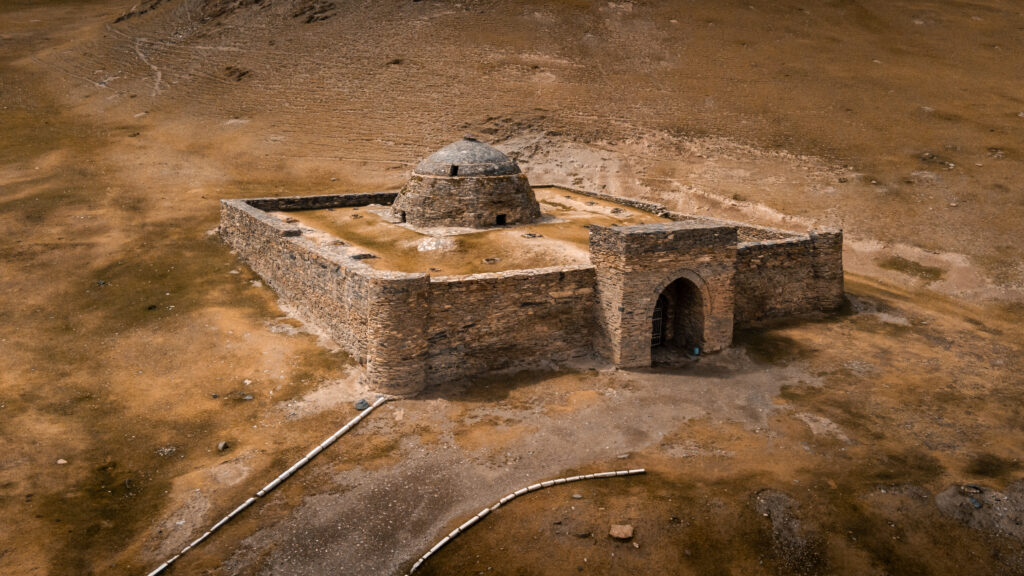 Tash-Rabat Caravanserai
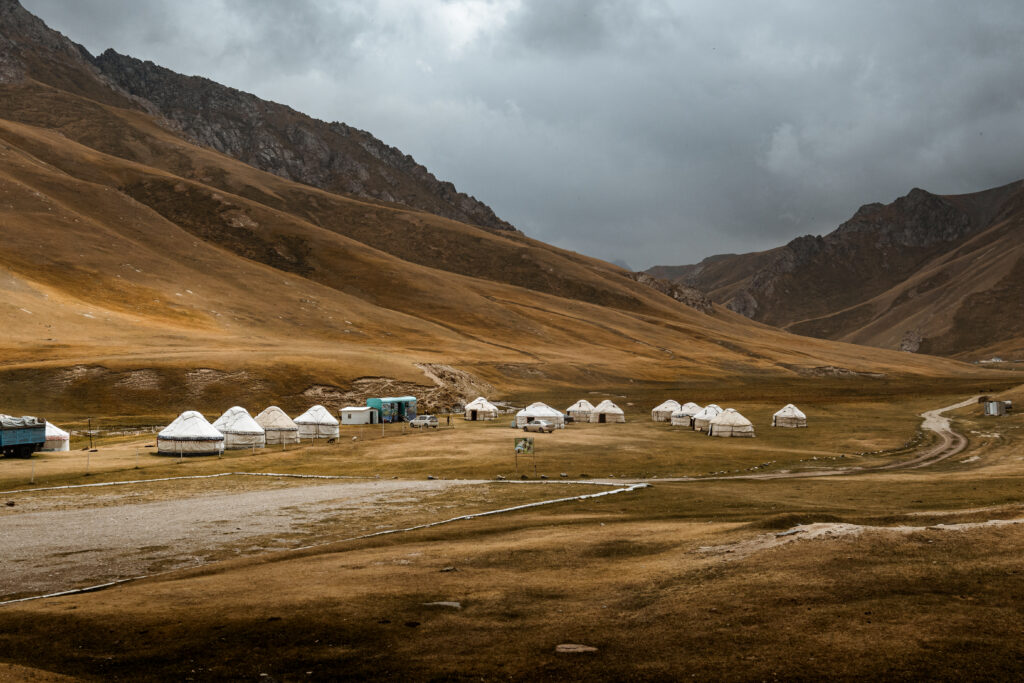 Yurt Camp at Tash-Rabat
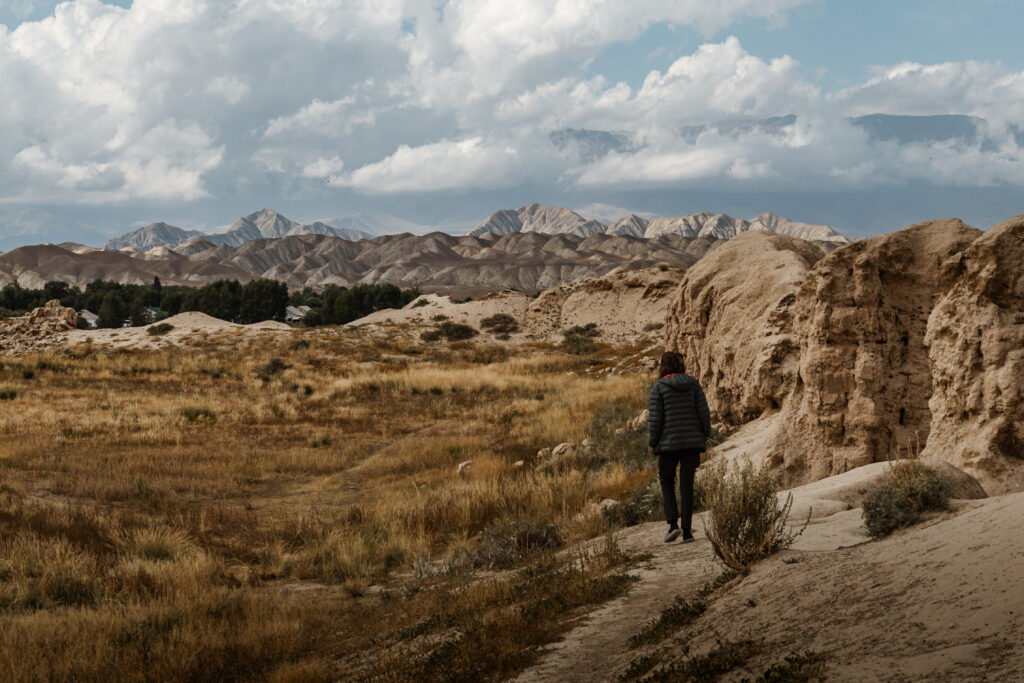 Random ruins on the way to Tash Rabat
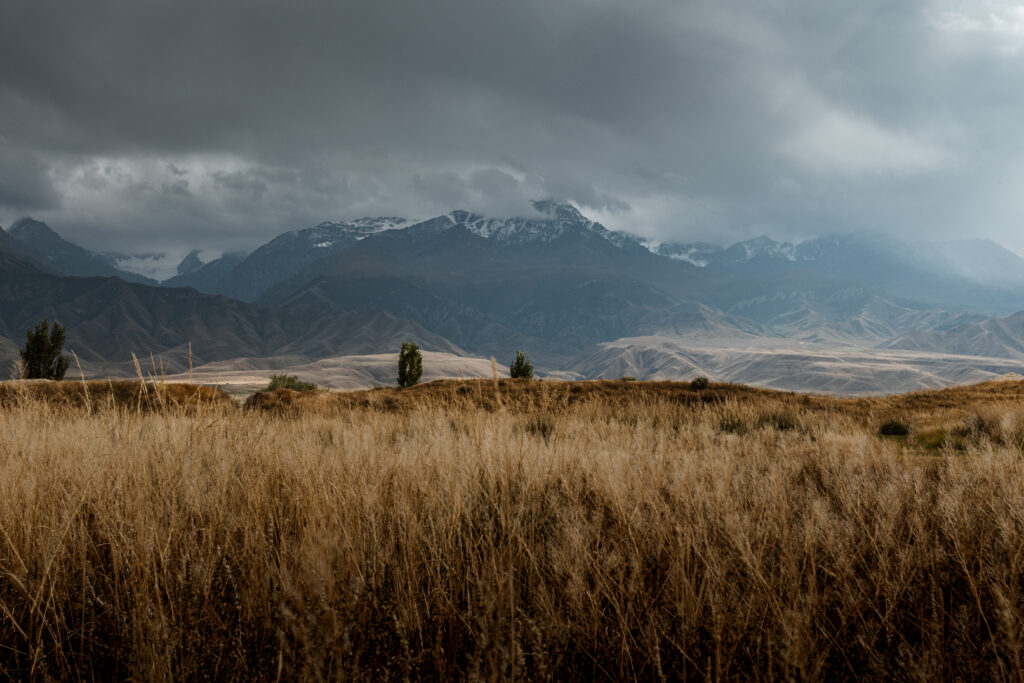 Landscapes on the way to Tash Rabat
Day 16-17: Kok-Kiya Valley & Kel-Suu Lake
Spend two days exploring Kok-Kiya Valley and trekking to Kel-Suu Lake, one of Kyrgyzstan’s most remote high-altitude lakes. This area also requires a private 4×4 due to rough off-road access. You’ll stay overnight in a yurt camp or camp in the valley and experience the stunning alpine scenery, turquoise lake waters, and jagged peaks.
For full details on permits, transport, trekking routes, and what to do, check out my complete Kel-Suu trekking guide.
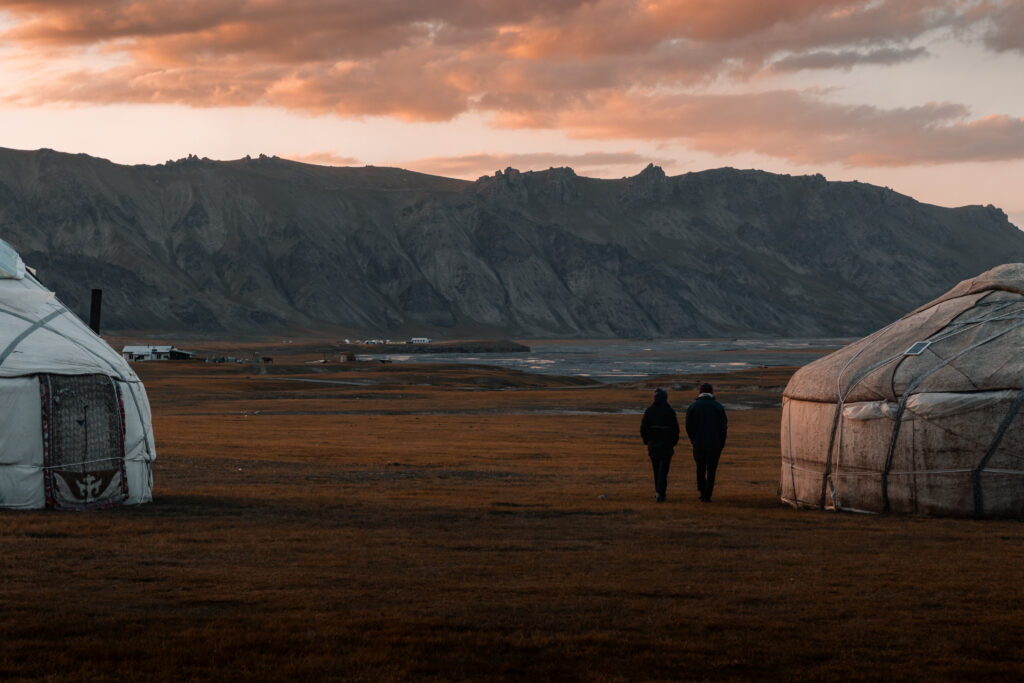 Yurt Camp at Kok-Kiya Valley
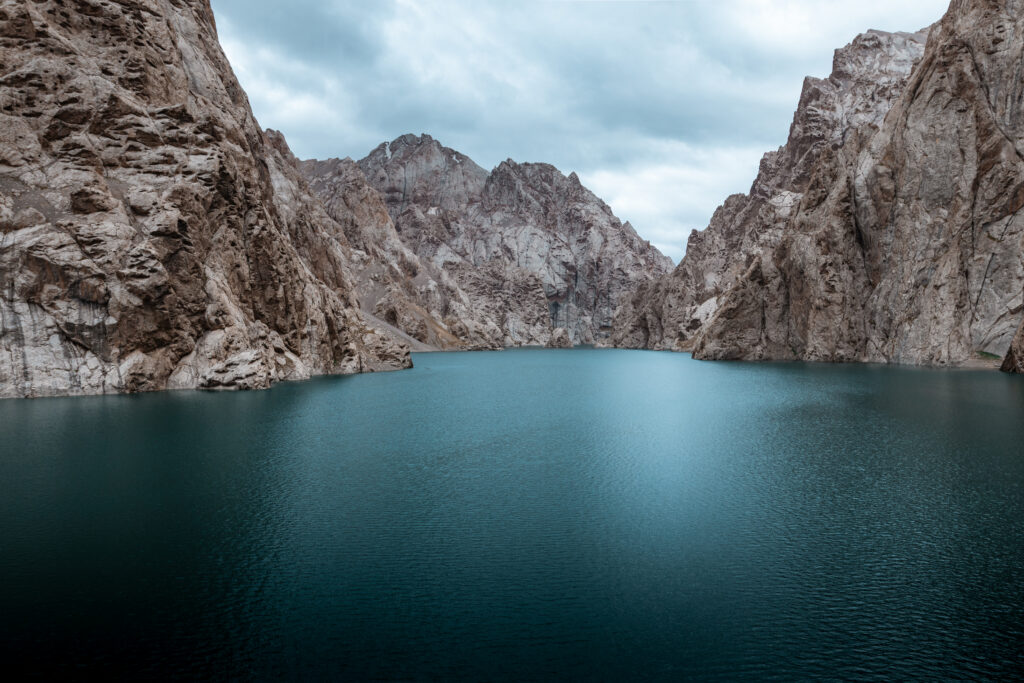 Kel-Suu Lake in Kyrgyzstan
Day 18: Travel from Naryn to Osh
Reaching Osh directly from Naryn is challenging. The road is extremely rough and remote, and there is no public transport along this route, so you’ll need to rent a private 4×4. The journey is very long and can be expensive, passing through high mountain valleys and rugged terrain. For travellers on a budget or without their own vehicle, the best option is to first return to Bishkek. From the capital, you can then reach Osh more easily either by domestic flight or a shared taxi, which is faster, safer, and significantly cheaper than attempting the overland 4×4 route.
Day 19-24+: Osh, Sary-Mogul & Kyrgyz Pamirs
Most travellers never make it to this region of Kyrgyzstan, which is a shame, because the Pamir Mountains here are absolutely insane and well worth the effort. From Osh, you can begin your journey into the Kyrgyz Pamirs, one of the country’s most remote and spectacular regions. Travel south to Sary-Mogul, the gateway to the Pamir Highway and the high-altitude lakes and peaks that few travellers reach. From here, you can explore Tulpar-Kul Lake and the Lenin Peak Basecamp, experiencing jagged alpine peaks, glaciers, and near-total solitude.
This part of the trip requires 4×4 access for most areas, and careful planning, as the roads are rough and facilities are minimal. Overnight stays are often in tents or small yurt camps, offering an authentic and adventurous experience in one of Kyrgyzstan’s most breathtaking corners.
For a detailed guide with all the practical information, transport, trekking routes, and tips for exploring the Kyrgyz Pamirs, check out my full post: Pamir Mountains in Kyrgyzstan: Tulpar-Kul & Lenin Peak Basecamp.
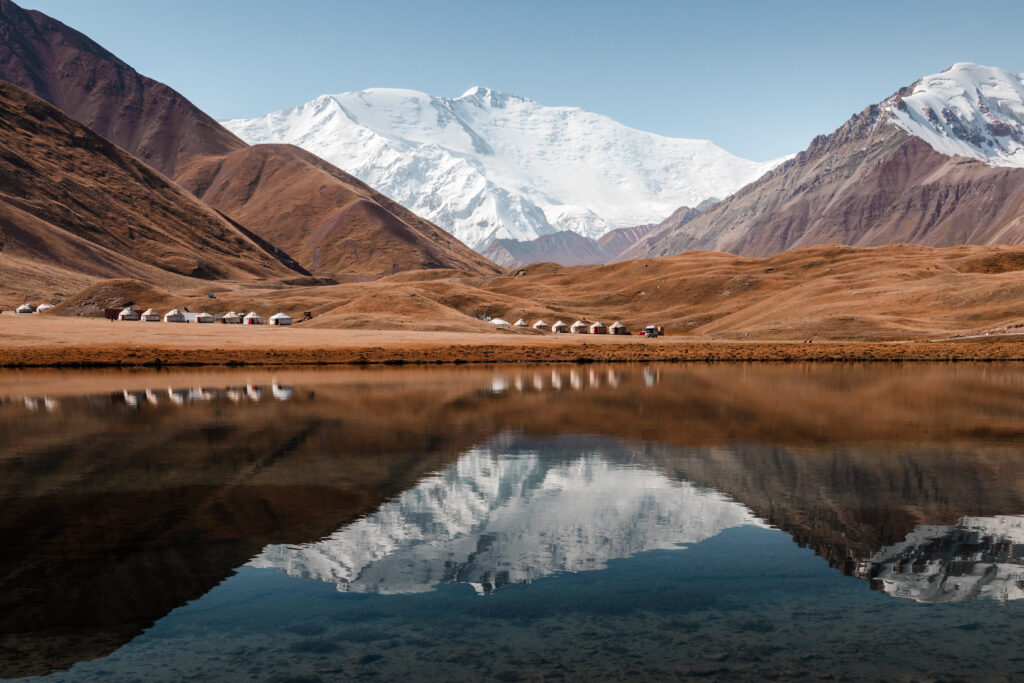 Yurt camps at Tupar-Kul with Lenin Peak in the backgroun
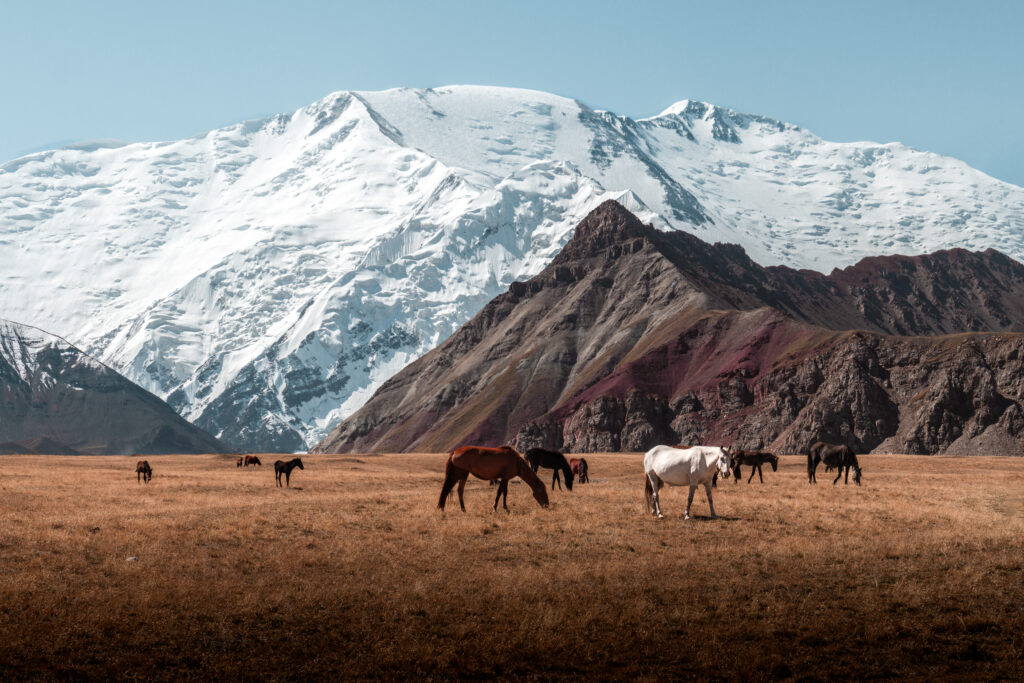 Horses grazing at the base of Lenin Peak
For adventurous travellers, there is also the possibility to continue from Sary-Mogul into Tajikistan and travel along the Pamir Highway, provided the border is open. This route offers some of Central Asia’s most spectacular high-altitude landscapes, connecting Kyrgyzstan’s Pamirs to the legendary road through Tajikistan.
Day 24+: Back to Osh
Osh is Kyrgyzstan’s second-largest city and one of the oldest settlements in Central Asia. The city has a strong Uzbek cultural influence, visible in its cuisine, architecture, and bustling markets, which gives it a distinct feel compared to Bishkek. Nearby lies the fertile Fergana Valley, a historic and culturally rich region that stretches into Uzbekistan and is central to the city’s vibrant trade and lifestyle.
A must-visit is Sulayman Mountain, a UNESCO World Heritage site that dominates the skyline. You can climb its terraced paths to explore ancient petroglyphs, shrines, and panoramic views of Osh and the surrounding valley.
The Osh Bazaar is the heart of the city, full of fresh produce, spices, dried fruits, textiles, and souvenirs. Wandering through its maze of stalls offers a real taste of local life. Osh also has remnants of Soviet-era buildings, mosques, and historic neighbourhoods, providing an interesting contrast to the lively market areas.
For travellers, Osh is also a convenient hub to connect your Kyrgyzstan trip to Uzbekistan. From here, you can cross into Uzbekistan and explore the Silk Road Cities. For more information, check out my guides on full guide to travel Uzbekistan, Samarkand, Bukhara, and Khiva.
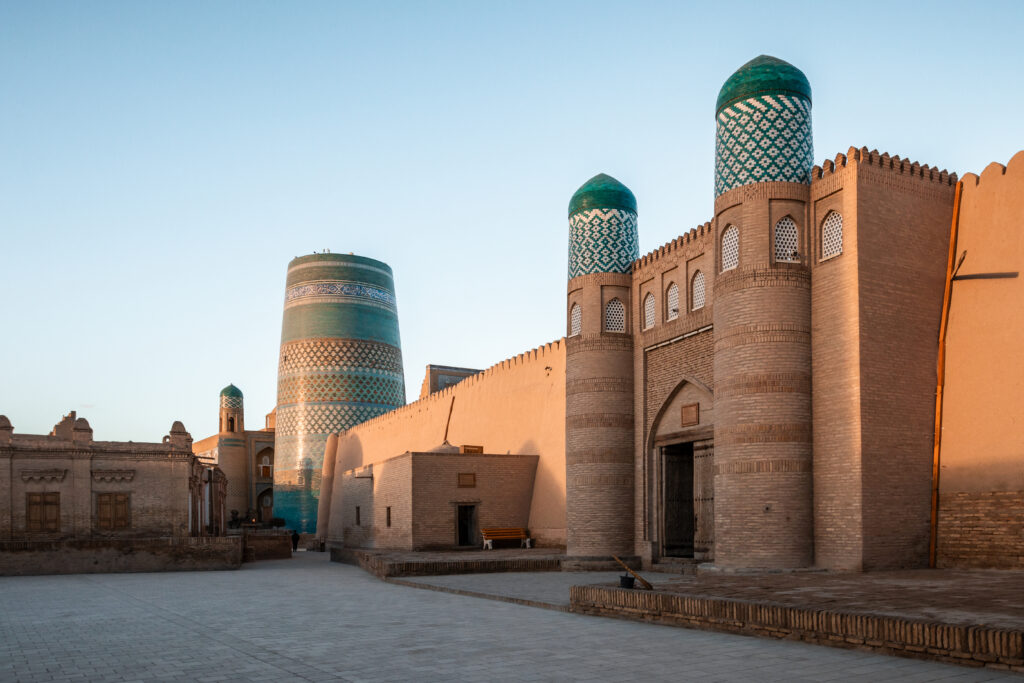 Khiva’s Itchan-Kala at sunrise
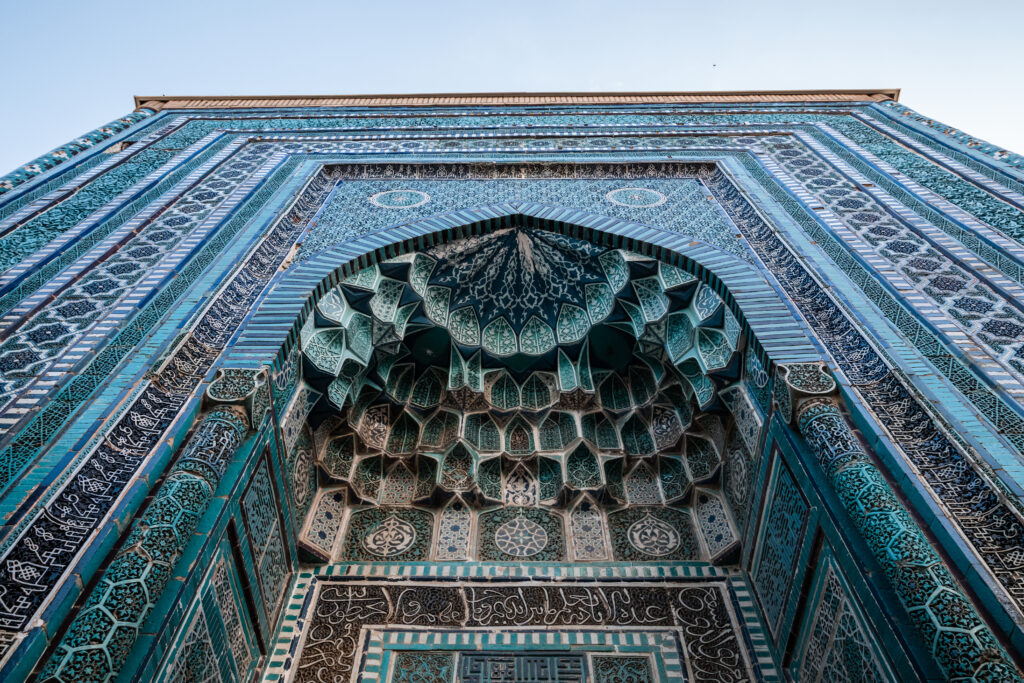 Shah-i-Zinda in Samarkand
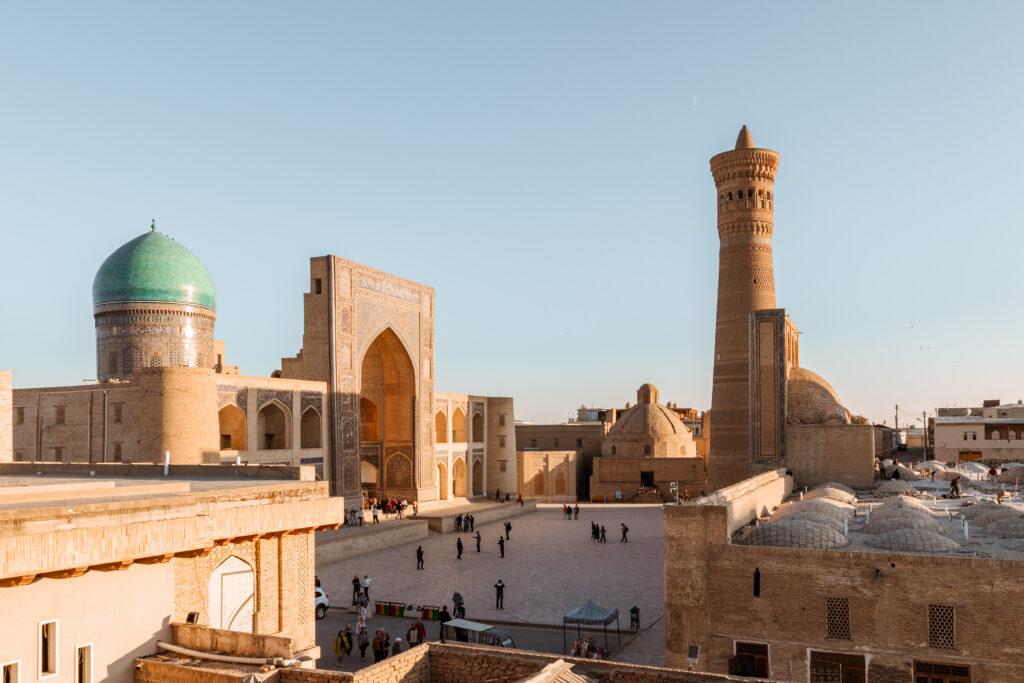 Views over the Po-i-Kalyan Complex in Bukhara
Final Thoughts
Travelling independently in Kyrgyzstan is not always easy. Roads can be rough, public transport limited in remote areas, and navigating permits or 4×4 logistics can take some planning. Yet despite these challenges, Kyrgyzstan is a truly rewarding destination for those willing to explore it on their own terms. From the bustling streets and Soviet-era squares of Bishkek to the turquoise waters of Issyk-Kul, the alpine meadows of Ala-Kul and Song-Kul, and the untamed landscapes of the Pamirs, this country offers experiences that are unforgettable and often completely off the typical tourist track.
For adventurous travellers, Kyrgyzstan is more than just a stopover; it’s a place to connect with nature, meet warm and welcoming people, and discover landscapes that feel untouched by time. Every trek, yurt stay, and mountain pass brings a new perspective on life in this incredible country, making the effort required to travel independently more than worth it.
Whether you have two weeks or over three, Kyrgyzstan rewards those who venture beyond the main cities, and it’s an adventure that will stay with you long after you leave its high-altitude valleys behind.