
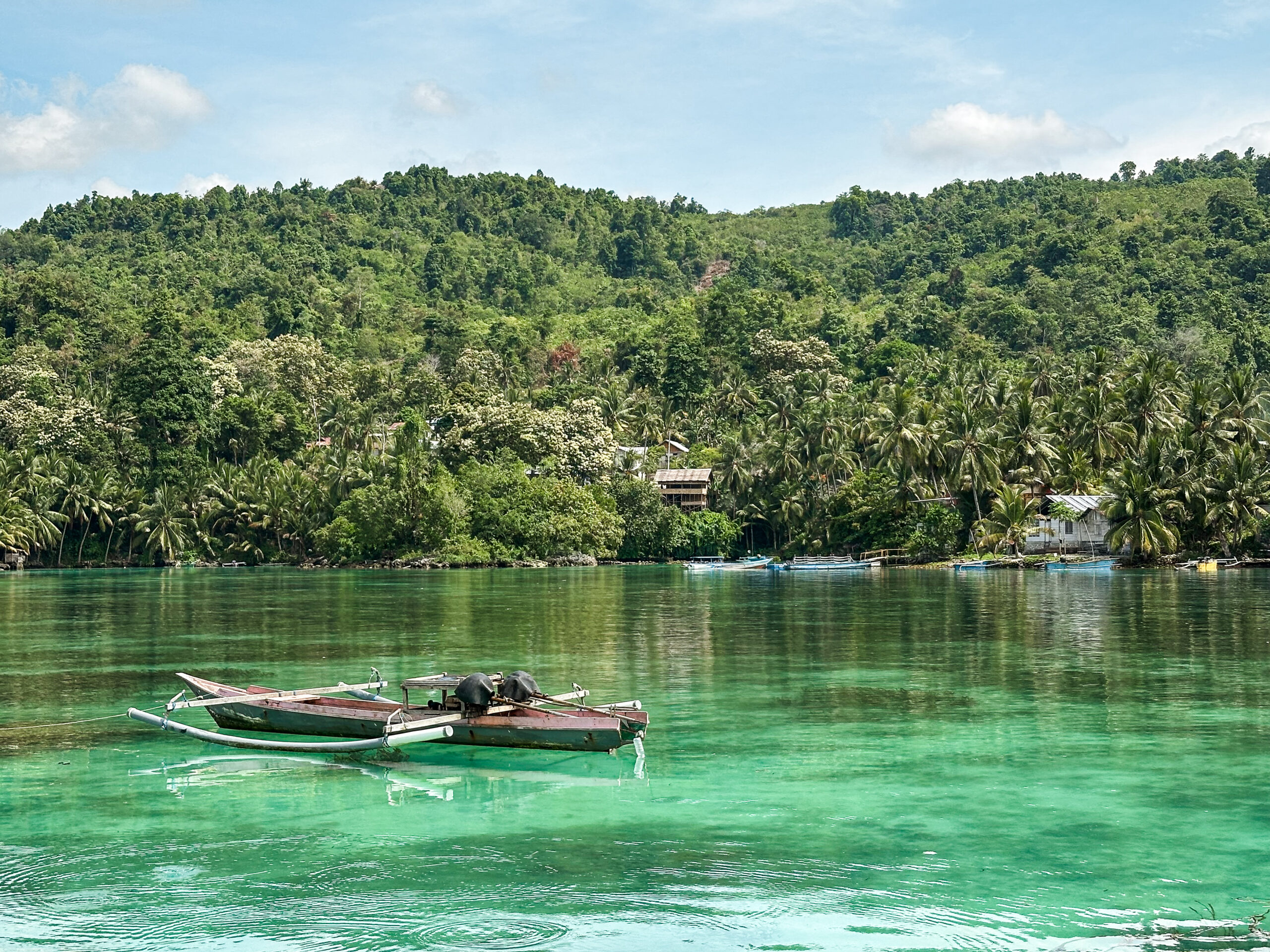
Where to stay in the Banggai Islands isn’t really a question of which hotel to book, it’s a question of which island, and which side of that island, actually fits what you’re after. Because “Banggai” refers to two separate places, Peleng Island and Banggai Laut, and each has its own sub-bases within it, picking wrong can mean days of expensive private transfers just to reach what you actually came here for.
This post breaks down the real differences between your options, so you can choose your base with confidence. If you haven’t already, read my full Banggai Islands guide first for the getting-there logistics, budget, and what to expect.
How to Think About Choosing Your Base in the Banggai Islands
Every base in the Banggai Islands trades off the same things:
With that framework in mind, here’s how the main bases stack up.
Paisu Pok Village (Peleng): Best for Lakes, Springs, and Waterfalls
Overview
Best for: travellers whose priority is Paisu Pok Lake, the freshwater springs, and a relaxed few days in one spot.
Getting there: local wooden boat direct from Luwuk (irregular schedule), or ferry to Leme Leme plus a 30-minute road transfer.
Vibe: quiet, scenic, village-focused, with easy walking access to the archipelago’s best-known attraction
Paisu Pok is the strongest base on Peleng, and staying in the village itself rather than commuting from Leme Leme makes a real difference: you can reach the lake early, before the daily speedboat tours of domestic tourists arrive and the drones come out. Homestays here are simple but include three meals a day, and several sit right on the water, Heppy Homestay, where I stayed four nights over Christmas, being one of the standouts.
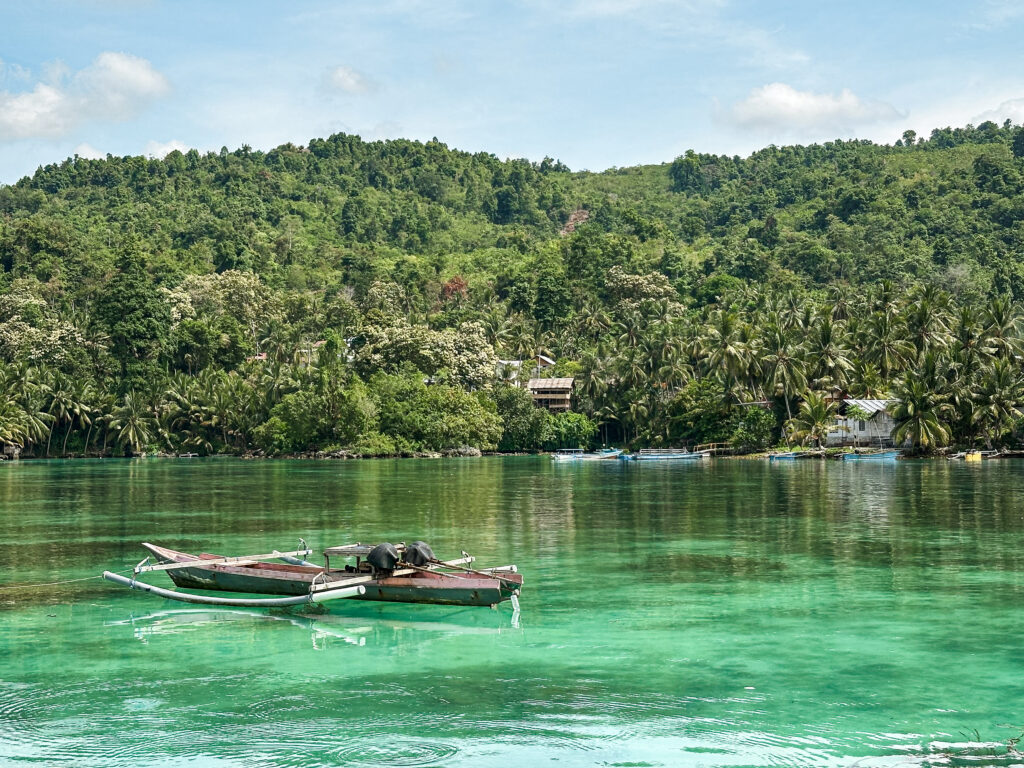 Views at Heppy Homestay
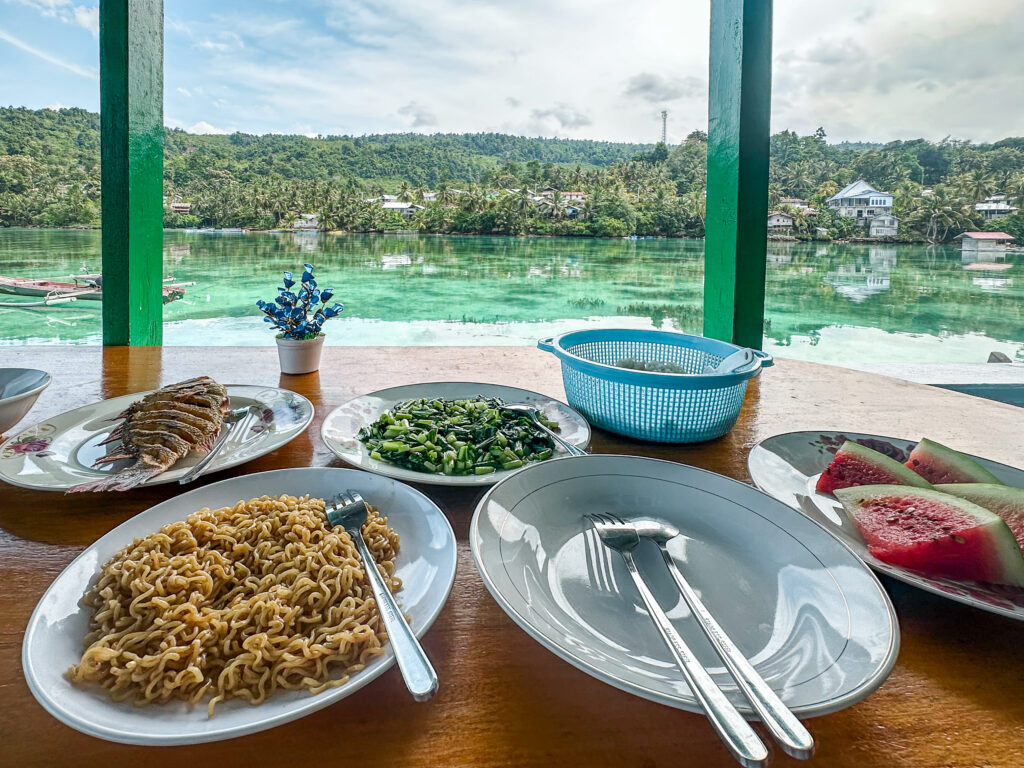 Lunch with a view at Heppy Homestay
Pro: closest possible access to Paisu Pok Lake and the surrounding springs, and genuinely pleasant if you go for the early mornings before the crowds show up. Con: Paisu Pok Lake itself is no longer a hidden secret, expect company by mid-morning, and it’s become something of an Instagram stop for domestic day-trippers.
Salakan (Peleng): Best for Scooter Exploring, Skip the Hype Beach
Overview
Best for: travellers who want to explore independently by scooter and don’t mind a pricier private transfer to get there.
Getting there: private transfer only from Leme Leme or Paisu Pok (no public transport between the two), or ferry direct from Luwuk (around 5 hours).
Vibe: more spread out, best explored at your own pace by scooter rather than on foot
Salakan works well if scooter exploring appeals more than basing yourself in one village. The catch is that its best-known Mandel beach doesn’t live up to its reputation: expect crowds, loud music, and litter rather than the quiet paradise the photos suggest. The quieter, less-visited beach nearby is the better call if that’s what you’re after. Options here are limited and mostly overpriced for what you get, but Azafa Guesthouse was a genuine exception, some of the nicest rooms I stayed in during my entire Sulawesi trip.
Pro: more independence to explore at your own pace, and accommodation quality here can genuinely surprise you. Con: getting here from Paisu Pok means an expensive private charter, and the headline beach is one of the more disappointing spots in the whole archipelago.
Banggai Laut: Best for Genuine Remoteness
Overview
Best for: travellers who want the most untouched, least-visited experience in the Banggai Islands and don’t mind the extra effort to get there.
Getting there: small domestic flight from Luwuk (routes not listed on standard booking platforms), local ferry (~8 hours), or speedboat from Peleng via Tobing.
Vibe: slow, remote, conservative, genuinely felt like the “middle of nowhere” compared to Peleng.
Banggai Laut is a noticeably different experience from Peleng: fewer travellers, a slower pace, and a real sense of isolation, especially the further you get from Banggai City. Homestays here tend to sit right on the water, with meals included and simple, basic rooms, Kia Homestay, about half an hour by scooter from Banggai City, is where I spent six nights including New Year’s. It’s also the best base for snorkelling straight off the beach, including a real chance of spotting the endemic Banggai cardinalfish without needing a boat.
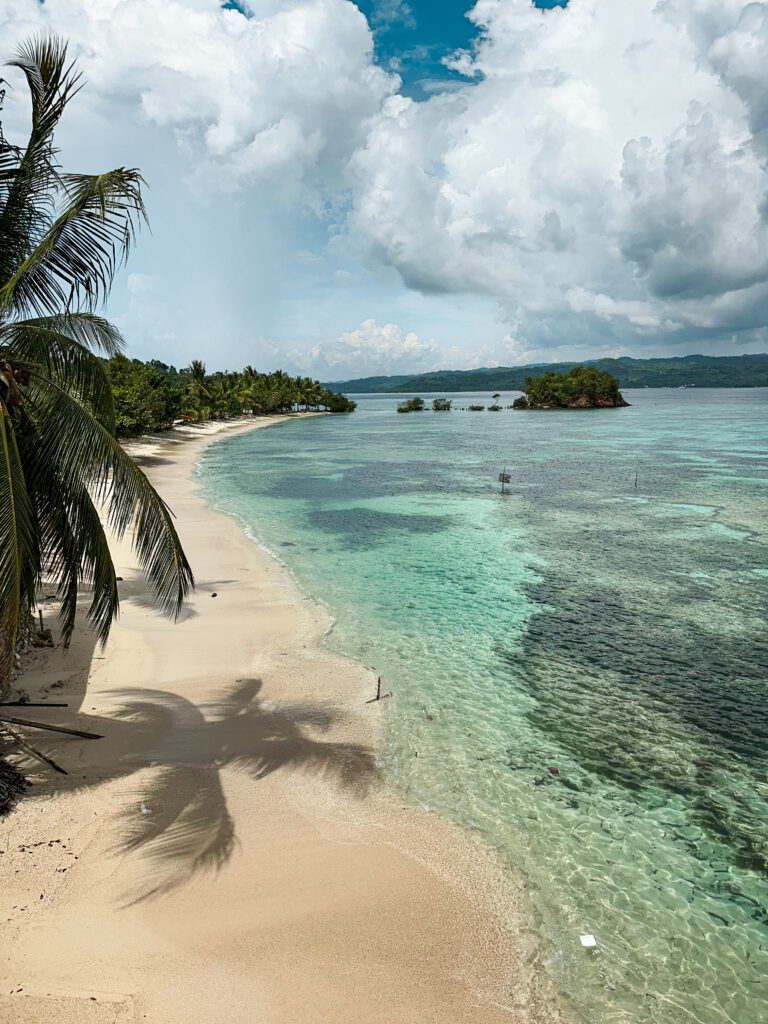 Views at Kia Homestay
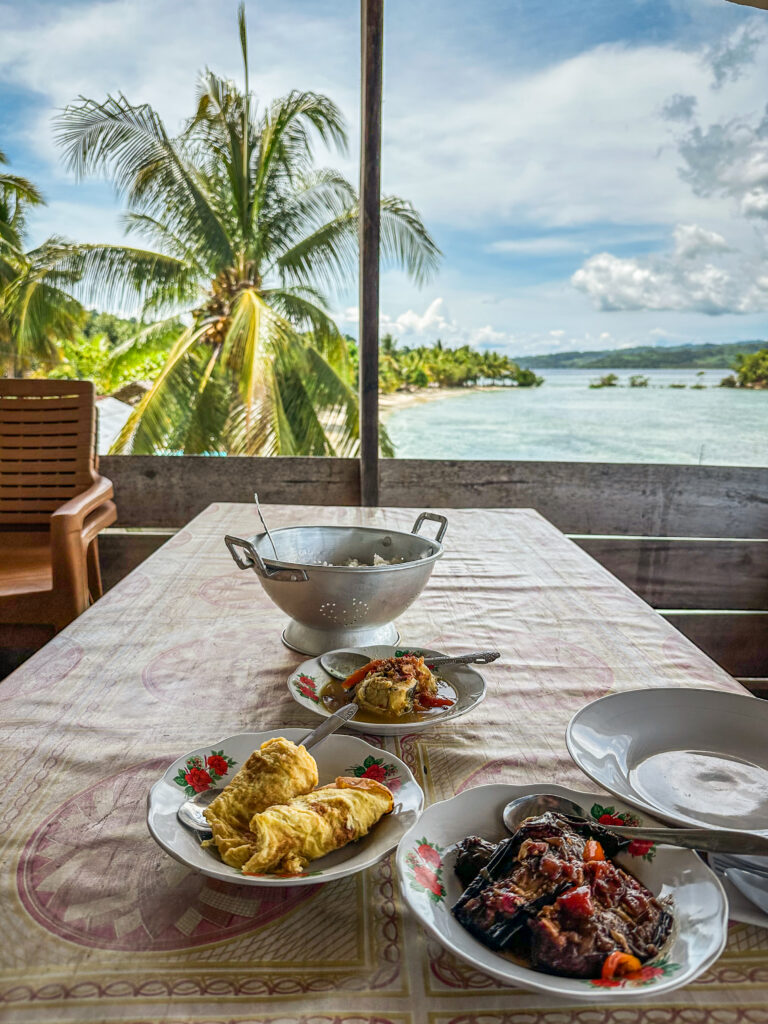 Lunch at Kia Homestay
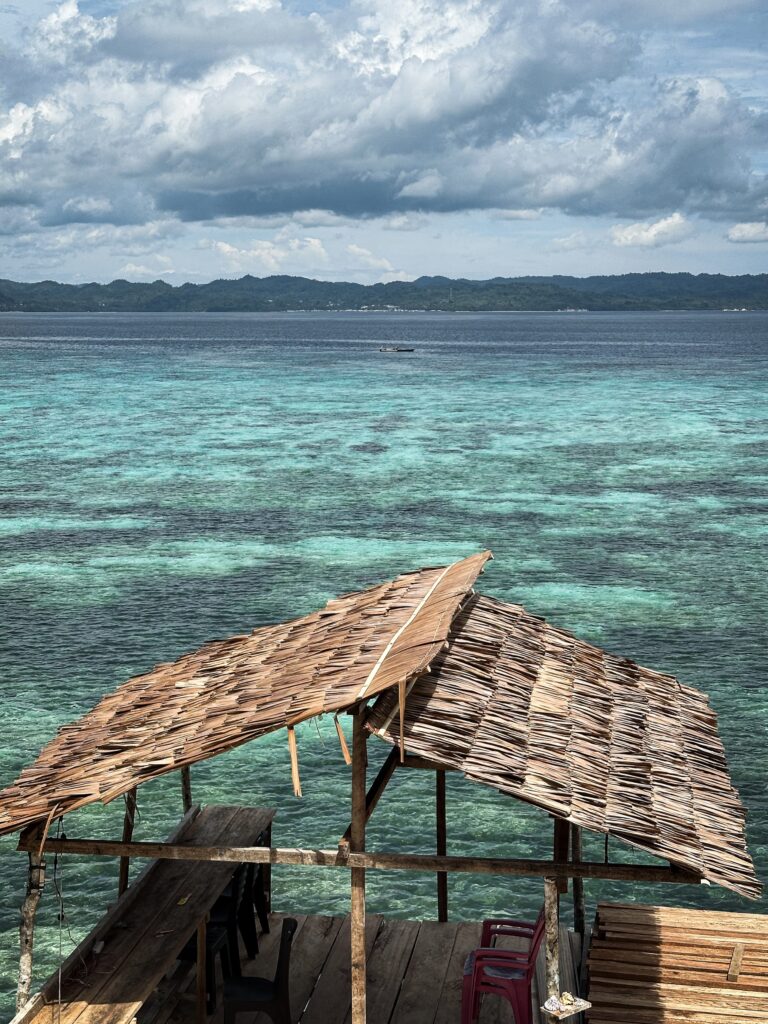 Deck over the water at Kia Homestay
Pro: the most genuinely remote, untouched experience of anywhere in the Banggai Islands, plus easy snorkelling access right from your homestay. Con: the hardest and most expensive to reach, and modest dress is expected given the more conservative, Muslim character of the area, worth planning for before you pack.
Peleng vs Banggai Laut: Quick Comparison
| Peleng (Paisu Pok) | Peleng (Salakan) | Banggai Laut | |
|---|---|---|---|
| Best for | Lakes, springs, easy village base | Scooter exploring, independence | Genuine remoteness, snorkelling |
| Getting there | Wooden boat or ferry + road transfer | Private transfer or direct ferry | Flight, ferry, or speedboat via Peleng |
| Crowds | Busy by mid-morning at the lake | Busy at the main beach, quieter elsewhere | Minimal, especially away from Banggai City |
| Culture/dress | Christian, relaxed | Christian, relaxed | Muslim, conservative, modest dress expected |
| Overall feel | Village life, natural attractions | More spread out, DIY exploring | Slowest pace, most isolated |
So, Where to Stay in the Banggai Islands?
Want the Full List of Homestays, Confirmed Rates, and Contacts?
I’ve named the three homestays above, but that’s a small slice of what’s out there, most Banggai homestays aren’t on Booking.com or Agoda, and contact details change hands often. Rather than sending you off to guess, I’ve compiled everything from my own trip into one operational guide: WhatsApp contacts and confirmed nightly rates for every homestay I found (not just the three named here), a full transport cost breakdown boat by boat, an offline interactive map, and three ready-made itineraries (5, 7, and 10 days).
What’s in the operational guide?
14 days solo, low season: ±€320.
Here’s exactly how.
Practical Tips Before You Go
Carry enough cash, and more than you think you’ll need. ATMs are unreliable to non-existent once you leave Luwuk, and none of the homestays across the islands take cards (although some of them allow you to do a wise transfer, ask beforehand). But mainly, every rupiah you spend on accommodation, food, boats, and activities needs to come from cash you’ve withdrawn in advance.
Avoid ATM fees with Wise
The card I use for all my travel withdrawals – real exchange rate, low fees.
Use Revolut to avoid ATM fees
Good alternative to Wise – I carry both as a backup.
Sort your data before you arrive. Wi-Fi is essentially non-existent at homestays across the Banggai Islands, so if you need to stay reachable, look anything up, or share photos while you’re out there, an eSIM with mobile data is genuinely the only reliable option. Set it up before you leave Luwuk rather than hoping you’ll find signal once you’re on the islands, because you likely won’t.
Need data before you land? Try Saily eSIM
Use code RITAHE1486 for $5 off your first plan.
Budget for travel insurance too, it’s easy to overlook when you’re totting up daily costs. The islands are remote, medical care is limited to non-existent locally, and the nearest proper facilities are back in Luwuk. It’s a small line item against your total trip cost, but one that matters far more here than on a standard Indonesia itinerary.
Don’t skip travel insurance!
I use SafetyWing for most trips – solid coverage for adventure travel.
FAQs: Where to Stay in the Banggai Islands
Should I stay on Peleng Island or Banggai Laut?
Peleng is the better base if you want easy access to Paisu Pok Lake and the freshwater springs, and it’s more straightforward to reach. Banggai Laut is the better choice if you want the most remote, untouched experience in the archipelago and don’t mind a longer, more involved journey to get there.
Is Paisu Pok or Leme Leme a better base?
Paisu Pok. Leme Leme has very little to offer beyond being a ferry stop, while Paisu Pok village puts you within walking distance of the lake, springs, and beach, and lets you reach the lake early before the crowds.
Do I need to book accommodation in advance in the Banggai Islands?
It helps, especially in July and August, but most homestays aren’t listed on booking platforms, so arranging things via WhatsApp or Google Maps ahead of time, or on arrival in Luwuk, is standard practice here.
Can I stay in both Peleng and Banggai Laut on one trip?
Yes, and many travellers do, but factor in the cost and time of the private transfers or speedboat connecting them, since there’s no direct public transport between the two.
Final Thoughts
There’s no universally “best” base in the Banggai Islands, only the one that matches what you’re actually there for. Paisu Pok gets you closest to the headline attractions, Salakan rewards independent scooter exploring, and Banggai Laut delivers the deepest sense of remoteness in the whole archipelago. Whichever you choose, build in flexibility: transport here runs on its own schedule, not yours.
For the full getting-there logistics, budget breakdown, and what to actually pack, head back to my full Banggai Islands guide. And if you want every contact, confirmed rate, and a ready-made itinerary so you’re not cross-referencing five browser tabs once you’re there, the Banggai Islands Operational Guide has it all in one place.
More of the Banggai Islands
More Independent Travel in Sulawesi
If you’re travelling through Sulawesi independently, Banggai Islands are just one piece of the puzzle. These posts dive deeper into some of the island’s most remote, rewarding, and lesser-visited regions, all explored without tours and on a backpacker budget:
Have questions about where to stay in the Banggai Islands? Drop them in the comments. I read every single one.