
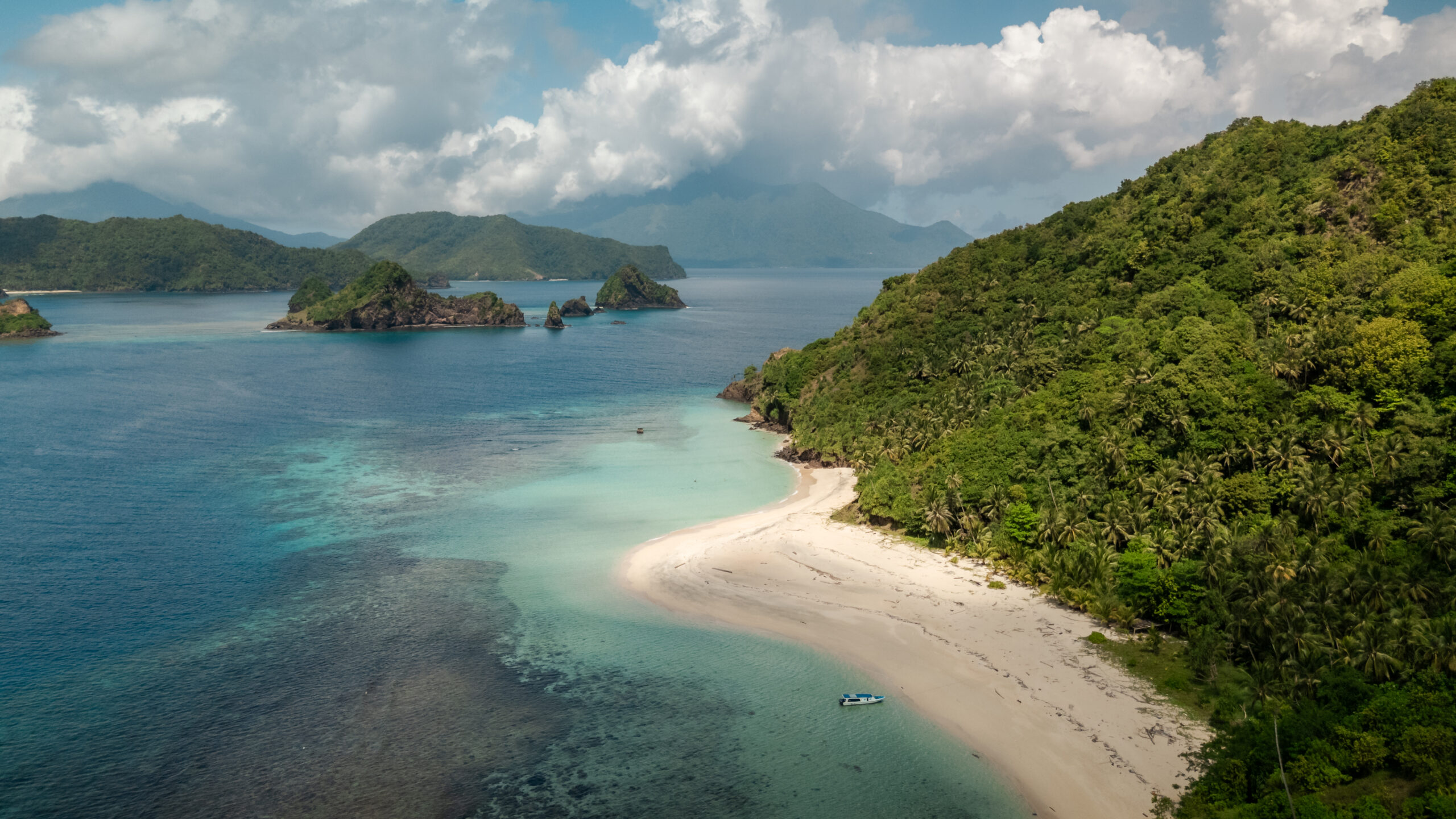
Siau Island lies north of Sulawesi, Indonesia, and is one of the country’s most remote and least visited destinations. This Siau Island travel guide explores an island dominated by Mount Karangetang, one of Indonesia’s most active volcanoes, where dramatic landscapes and everyday life coexist far from the country’s main tourist trail. With fewer than 200 visitors per year, Siau has no resorts, no established tourist routes, and little infrastructure aimed at outsiders.
Life on Siau is shaped by proximity to risk. Karangetang is almost always active, and local communities live with a constant awareness of the mountain’s behaviour. Evacuation routes are clearly marked, volcanic activity is monitored closely, and daily routines continue with a matter-of-fact resilience.
I travelled to Siau, drawn by its remoteness rather than its comfort. Travelling independently in Sulawesi requires flexibility and preparation, but visiting Siau Island offers a rare opportunity to experience a place where tourism has yet to redefine daily life.
Where Is Siau Island
Siau Island is part of the Sitaro Islands Regency, located in the Celebes Sea between northern Sulawesi and the Talaud Islands. Administratively, it belongs to North Sulawesi, though it feels far removed from the region’s main transport and tourism hubs. The nearest city is Manado, an half a day away by sea, depending on ferry schedules and weather conditions.
Despite its volcanic landscapes and coastal villages, Siau sees very little tourism. Access is limited to a small number of ferries from Manado, which run infrequently and are often affected by rough seas. There is not many flights, no organised tour industry, and minimal online information available in English.
The island’s defining feature, Mount Karangetang, also plays a role in its isolation. As one of Indonesia’s most active volcanoes, it places Siau under frequent monitoring and periodic evacuation alerts. While local communities have adapted to living with this risk, the presence of an active volcano discourages both mass tourism and large-scale development.
As a result, Siau remains largely absent from travel itineraries. Those who do make the journey tend to be independent travellers with flexible schedules, drawn not by comfort or convenience, but by curiosity and a willingness to navigate uncertainty.
Why Visit Siau Island?
Siau is not a destination for casual sightseeing. There are no headline attractions, curated experiences, or comforts designed for visitors.
The island offers a rare opportunity to observe daily life shaped by an active volcanic landscape. Mount Karangetang dominates the island both physically and psychologically, influencing settlement patterns, evacuation planning, and agricultural practices. For travellers interested in human adaptation to environmental risk, Siau provides an unfiltered case study.
Siau also remains largely untouched by tourism. With only a few hundred visitors per year, interactions with locals are not mediated by commercial expectations. There are only a few accommodation options on the island and perhaps one properly functioning restaurant, which seems to be the only place where everyone eats.
Therefore, Siau appeals to travellers drawn to remoteness for its own sake. Reaching the island requires time, flexibility, and self-reliance, and the rewards are rather spectacular.
Siau Island Survival Guide: Read This Before You Go
Siau is a volcanic paradise, but the infrastructure is minimal. Here is what you need to know to survive the logistics:
Cash & ATMs
Unlike the Banggai or Togean islands, there are working ATMs in Ulu (the main town). However, credit cards are virtually useless here. Always carry enough Rupiah for your homestay and motorbike rentals.
Avoid ATM fees with Wise
The card I use for all my travel withdrawals – real exchange rate, low fees.
Use Revolut to avoid ATM fees
Good alternative to Wise – I carry both as a backup.
Connectivity & Wi-Fi
Telkomsel has surprisingly good 4G coverage in Ulu and even near the base of the volcano. Don’t expect reliable Wi-Fi at homestays and hotels on the island. I recommend getting a local Telkomsel SIM card in Manado. If you don’t want the trouble of getting a physical SIM card, get an e-SIM instead.
Need data before you land? Try Saily eSIM
Use code RITAHE1486 for $5 off your first plan.
Electricity and Charging
Power is generally 24/7 in Ulu, but short outages are very common. Bring a power bank for those cases and if you plan on hiking.
Health and Safety
You are far from any major hospital. The sun in tNorth Sulawesi is incredibly strong. Please use reef-safe sunscreen to protect the fragile coral systems. Bring Ibuprofen and plenty of strong insect repellent. The mosquitoes in the evenings can be relentless.
Don’t skip travel insurance!
I use SafetyWing for most trips – solid coverage for adventure travel.
How to Get to Siau Island: Costs & Schedules (2026)
Siau Island is accessible only via Manado, the main transport hub of North Sulawesi. From there, travellers have three options: a slow ferry, a fast boat, or a small charter-style flight. All options are subject to weather conditions, and schedules should be treated as approximate rather than fixed.
| Method | Route | Approx. Price | Duration |
| Fast Ferry (Majestic Kawanua) | Manado ➔ Siau | 185,000 IDR – 330,000 IDR (Eco-VIP with AirCon) | 4-6 Hours |
| Night Boat (KM Mercy Teratai) | Manado ➔ Siau | 155,000 IDR (Bunk) | 8-10 Hours |
| Flights | Manado ➔ Siau | Varies | 1 Hour |
| Motorbike Rental | Per Day (Ulu) | 150,000 IDR | 24 Hours |
| Fuel | 1 Bottle (approx. 1L) | 15,000 IDR | Depends |
Slow Ferry (Daily)
The slow ferry is the most reliable and commonly used option. It departs Manado at around 5.00 pm and arrives in Siau during the early hours of the morning, typically between 1.00 and 2.00 am, though delays are common.
The journey is long and basic, but it is generally dependable. Seating is simple, and conditions can be rough in bad weather. For travellers with flexible schedules, this remains the most accessible way to reach the island.
Fast Boat (Three Times a Week)
A faster passenger boat operates on Mondays, Wednesdays, and Fridays, departing Manado at approximately 9.30 am, while The journey from Siau back to Manado operates on Tuesdays, Thursdays, and Saturdays, departing Siau around midday. Under calm conditions, the crossing takes around four to five hours, with arrival in Siau in the early afternoon. In rough seas, the journey can take significantly longer.
Although more comfortable than the slow ferry, the fast boat is also more prone to delays and cancellations, especially during periods of strong winds or high swell. There are several seating classes available, with prices ranging from 185,000 IDR for economy to around 330,000 IDR for the air-conditioned VIP section, which can be worth the extra cost if you struggle with heat and humidity.
Flights to Siau
Siau can also be reached by air via small aircraft with a capacity of around ten passengers. Flights operate only a few times per week and are not bookable online. Tickets are typically arranged through local contacts on the island, making this option inaccessible to most travellers without prior connections.
Due to limited availability and high dependency on weather, flying is the least predictable option.
Siau Island Budget: What to Expect (2026)
Siau is very affordable, but because it is so far off the tourist trail, there are no “backpacker hostels.” You will mostly be staying in local homestays, where prices are usually per room, but sometimes per person if meals are included. Here is a breakdown of the daily costs for a solo traveler in 2026:
| Category | Budget (Homestay) | Mid-Range (Guesthouse & Hotel) |
| Accommodation | 200,000 – 275,000 IDR | 300,000 – 600,000 IDR |
| Local Meals (Warungs) | 75,000 – 100,000 IDR | 150,000 – 200,000 IDR |
| Motorbike Rental | 100,000 – 150,000 IDR | 150,000 – 200,000 IDR |
| Activities | free – 500,000 IDR (shared) | 500,000 – 2,000,000 IDR |
| Daily Total (Approx.) | from 500,000 IDR (€25) | from 1,000,000 IDR (€50) |
Budget & Practical Tips for Siau
Sulawesi Budget Comparison: Siau vs. Togean vs. Banggai
If you’re trying to decide where to spend your time and budget, here is the quick breakdown of how Siau compares to the other “Big Two” island groups, when it comes to accommodation and food costs:
The Verdict: If you want the most “raw” experience for the lowest price, Siau is your best bet. If you want white-sand beaches and easy snorkeling from your porch, head to the Togeans or Banggai.
Things to Do in Siau Island
Siau Island is small, rugged, and dominated by the ever-present Mount Karangetang, one of Indonesia’s most active volcanoes. Life here revolves around its natural beauty, local culture, and the rhythm of the sea.
Tourism is still in its very early stages, and while this makes the island feel untouched and adventurous, it also means arranging activities independently can be tricky. there’s basically just one person who can arrange tours and boat trips. This local operator, Dominik, seems to have much of the island’s tourism network monopolised. For travellers, this means that it’s impossible to explore Siau independently, without having his input.
If you’re in need of his services, which most likely you will, this is Dominik’s number: +62 853-9866-6999.
Explore the Base of Mount Karangetang
While trekking to the crater edge is off-limits due to the volcano’s activity, you can hike on its base when conditions allow. Short treks offer views of the steaming slopes, volcanic rock formations, and the surrounding forest. Even a simple walk at the volcano’s foot gives a sense of its immense presence and power. For hiking the volcano, you’ll have to contact Dominik, since he’s the only guide on the island.
Scooter Around the Siau Island
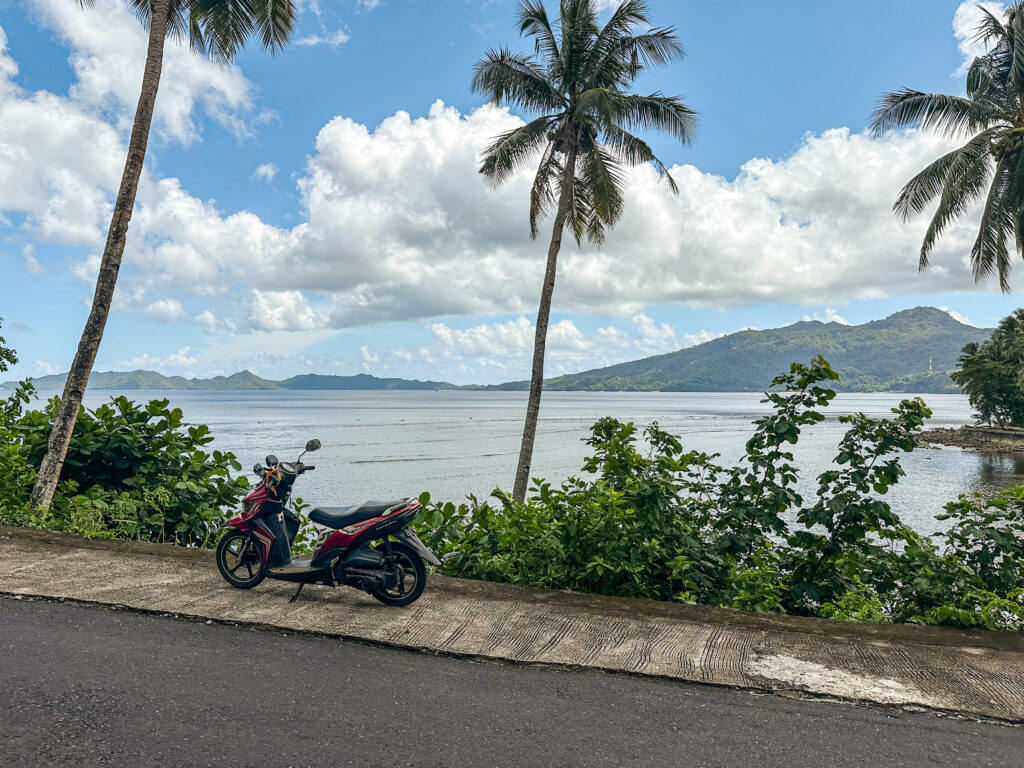
Renting a scooter is the perfect way to discover Siau’s hidden corners. Winding roads lead to quiet beaches, secret coves, and small villages where life moves slowly. Stop whenever something catches your eye to make the journey as memorable as the destination.
Day Trip to Mahoro and Masare Islands
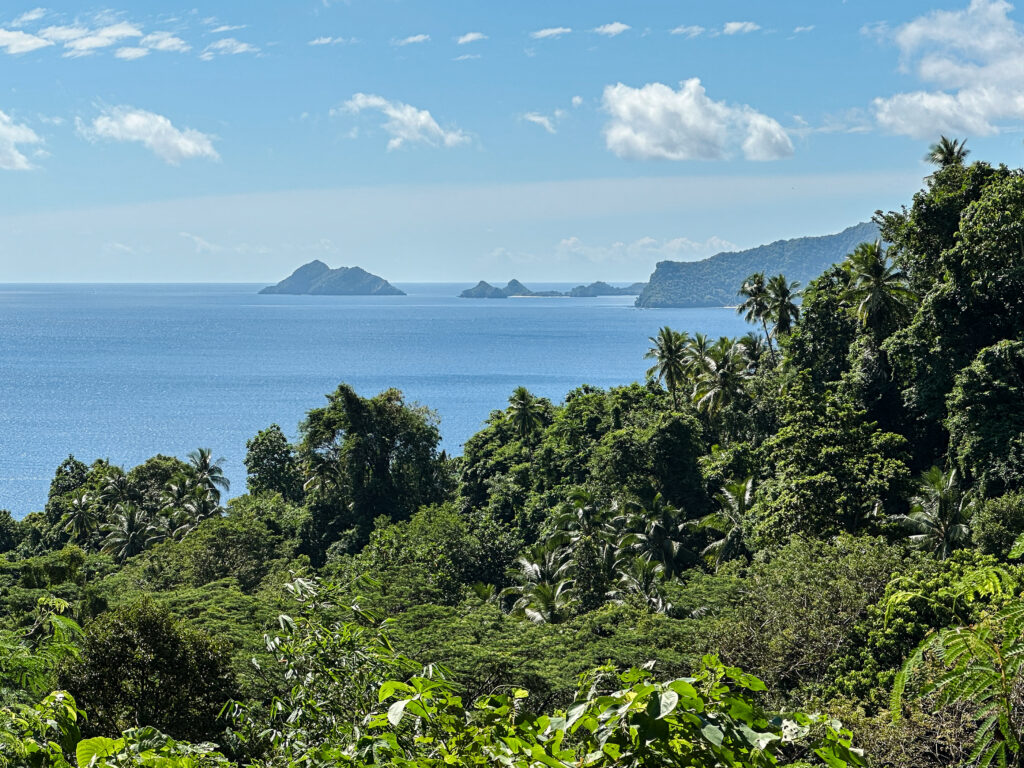
From Siau, you can take a boat to Mahoro and Masare, small islands famous for their pristine beaches and clear waters. Spend a day swimming in calm lagoons or simply relaxing on deserted sandbanks. Once again, Dominik is the only person on the island who can arrange the boat. The boat for a half-day trip will cost you 1.5 million IDR, so it’s better to find other travellers to share the costs.
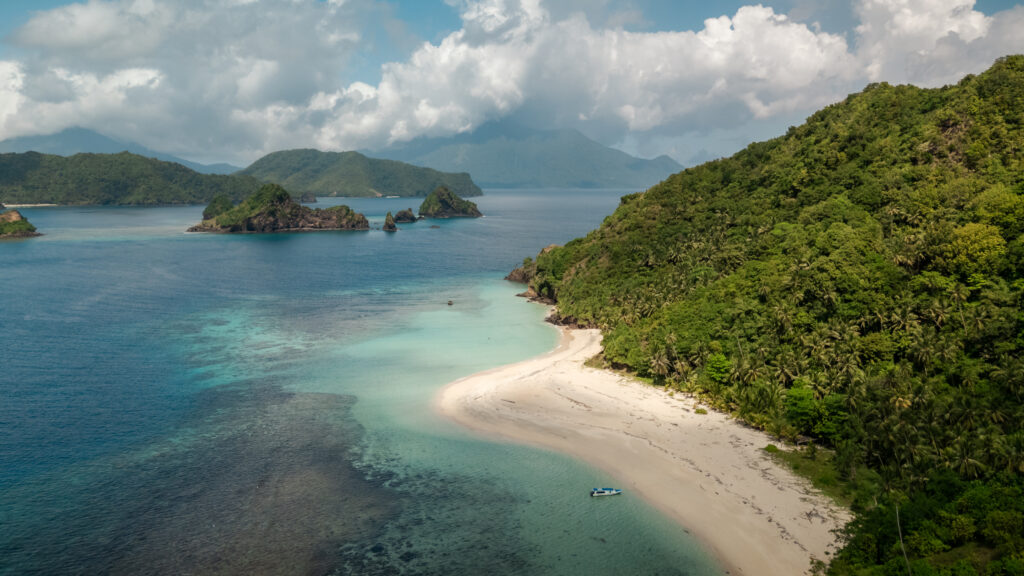 Mahoro Island
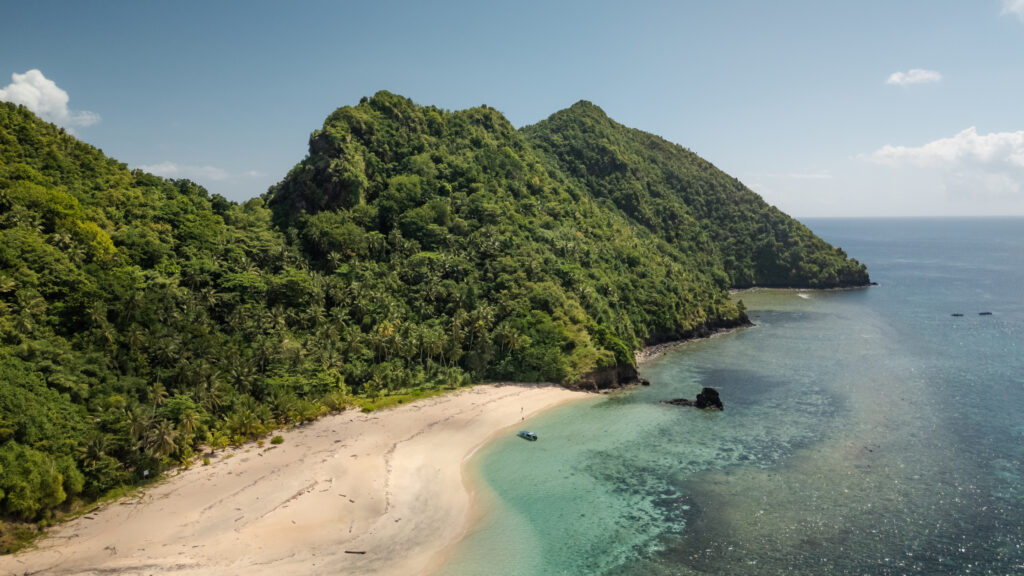 Mahoro Island
Discover Traditional Villages
Siau’s villages, like Ondong, offer a glimpse into authentic island life. Stilted houses, fishermen at work, and bustling village markets provide opportunities to meet locals and observe daily life that has changed little over generations.
Snorkelling and Diving in Siau
The waters around Siau and its neighbouring islands are home to vibrant coral reefs and tropical fish. While less frequented than Bunaken or Wakatobi, the underwater world here is equally rewarding for snorkellers and divers seeking quieter spots.
Hidden Beaches and Coves
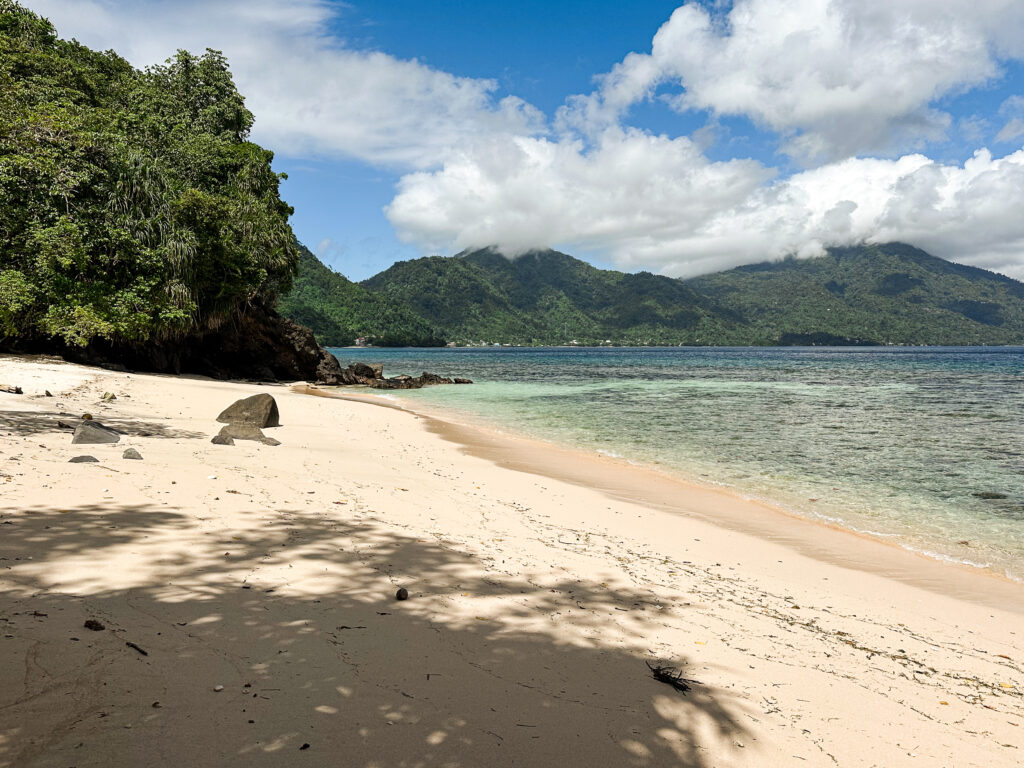
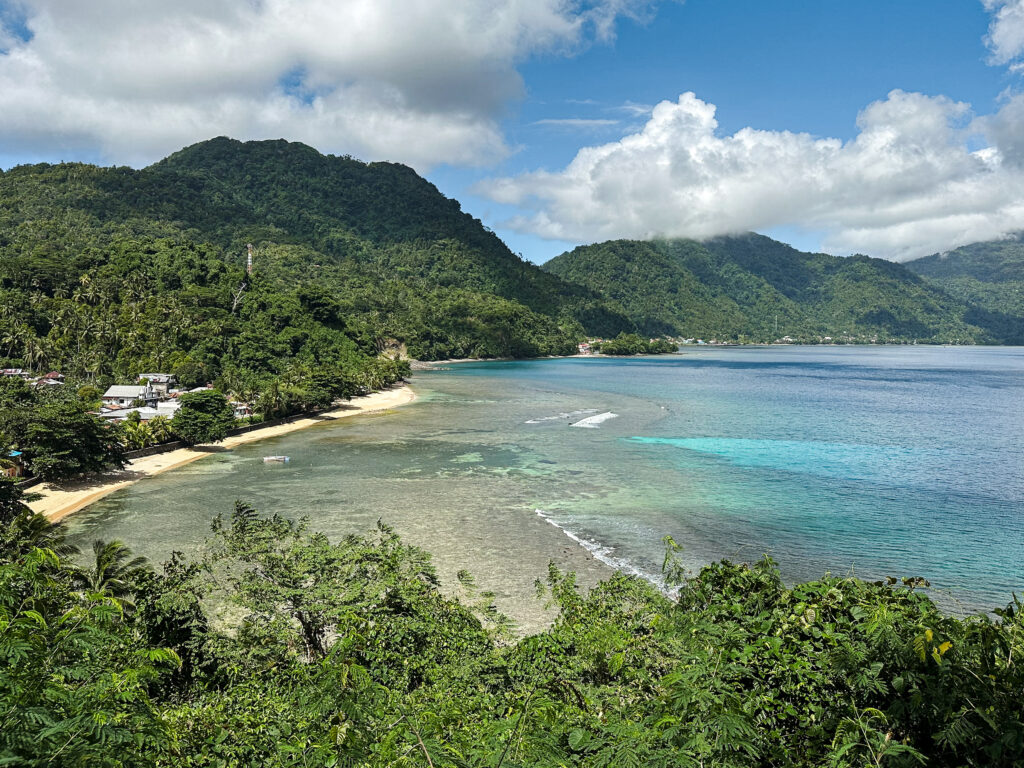
Siau’s coastline is dotted with secluded beaches. Many are accessible only by scooter or boat. Perfect for a quiet swim, sunbathing, or photographing dramatic volcanic backdrops meeting turquoise waters, these hidden spots feel like your own private paradise. I got to experience this hidden beach all by myself for hours.
Meet the Siau Tarsiers
Siau is home to the world’s rarest primates: the Siau Island tarsiers. These tiny nocturnal creatures are curious, wide-eyed, and incredibly delicate. Visiting them requires care and quiet respect, with a local guide who knows their habitat. Observing tarsiers in the wild is a magical experience, reminding you of the island’s unique biodiversity. And, once again, you’ll have to contact Dominik.
Where to Stay on Siau Island
Finding a place to stay on Siau can be surprisingly tricky. Options are very limited, basic, and often more expensive than what you’d expect elsewhere in Indonesia. Most hotels, guesthouses, and homestays are concentrated in the main town of Ulu, and they rarely appear on conventional booking platforms. Instead, you’ll need to search for places on Google Maps and contact them directly via WhatsApp to make a reservation.
Even though Ulu is small, the town can be unexpectedly noisy, with traffic, local markets, and daily life creating a constant background hum. If sleep matters to you, it’s worth prioritising accommodation a little away from the main street.
I stayed at the cheapest homestay I could find, called Karatu, which still cost 275,000 IDR per night. The owners were incredibly kind and welcoming, but the location on the main street made it quite noisy. Also I’m pretty sure there were rats on the ceiling that kept waking me up.
Overall, expect very basic and simple accommodations rather than luxury. That’s the price for travelling deep off-the-beaten-path.
Food in Siau Island
Like accommodation, food options on Siau are very limited. The Beach Cafe is essentially the hub for visitors, and most tourists end up eating all their meals here. Despite its popularity, the food is good. Standout dishes include the tuna woku and grilled tuna. The menu also features familiar Indonesian staples like nasi goreng and mie goreng, while freshly made tropical fruit juices are a refreshing highlight.
For a more local experience, wander through the town’s fruit and vegetable markets, where you’ll find a colourful array of produce, including exotic tropical fruits that are hard to find elsewhere.
Is Siau Island for you: Siau vs other remote islands (Banggai, Togean)
Siau Island is not for every traveller. Its tourism is still in the beginning, infrastructure is limited, and arranging activities requires local connections provided by Dominik. If you’re seeking luxury resorts, abundant dining options, or easy independent travel, Siau is not for you.
Compared to other remote Indonesian islands like Banggai or the Togean Islands, Siau stands out for its raw, rugged character and the omnipresent Mount Karangetang. While Banggai and Togean are quieter islands with more established tourist facilities, Siau feels wilder and less curated. Snorkelling and diving in Banggai and Togean are often easier to organise independently.
Siau’s appeal lies in its dramatic volcanic landscapes and hidden beaches and islands such as Mahoro and Masare. For travellers willing to embrace a more adventurous and hands-on approach, the island offers rewards that more developed destinations cannot match.
In short: if you crave solitude, adventure, and don’t mind improvising with limited facilities, Siau Island can be a magical destination. If you prefer convenience, a wider choice of food and accommodation, or easier access to activities, Banggai or Togean might be a better fit.
FAQs about Siau Island & Karangetang Volcano
Is it safe to visit Siau Island with an active volcano? Yes, Siau is generally safe for travel. The local population lives in harmony with Karangetang, and the “danger zones” are typically restricted to a 1.5-2.5 km radius from the craters. However, because it is one of the world’s most active volcanoes, you must stay alert to local sirens and instructions from the Volcano Observation Post (PGA).
Can I climb to the summit of Mount Karangetang? Occasionally, authorities strongly advise against climbing to the summit due to recent incandescent lava eruptions and unstable crater walls. always check with the locals on the island beforehand. It’s usually possible to hike partway up to view the activity from a safe distance.
Do I need any special gear for Siau? If you plan on hiking near the volcano, sturdy hiking boots are a must due to the sharp, loose volcanic rock. I also recommend a high-quality face mask; volcanic ash and sulfur gases can shift quickly with the wind and irritate your lungs.
What should I do if the volcano erupts while I’m there? Don’t panic. The island has well-established evacuation routes. Stay away from riverbanks and move toward the southern part of the island. Follow the lead of your homestay hosts, they are experts at reading the mountain.
Where can I see the Siau Tarsier? The endemic Siau Tarsier is critically endangered and only found here. You can usually find them in the forested areas near the base of the volcano or in the northern part of the island. You must go at night with a local guide who knows their nesting trees.
How many days should I spend on Siau? I recommend at least 3 to 4 days. Siau is not a place you want to rush. You need one day for the volcano/tarsiers, one day for boat trips to nearby islands like Mahoro, one day to take the scooter around the island, and one day to simply soak in the local vibe and recover from the long ferry ride.
Final Reflections
Siau Island is unlike anywhere else I’ve ever visited. It’s raw, untamed, and a little chaotic, but that’s also what makes it memorable. Life here moves at its own pace, dictated by the volcano, the sea, and the local community. For a traveller, it’s not about comfort or convenience, but about curiosity, patience, and a willingness to embrace the unexpected.
There’s a certain magic in riding a scooter along winding roads and discovering hidden beaches. Tasting freshly caught tuna and wandering through lively markets reminds you that even the smallest islands are rich with culture, history, and life.
Siau doesn’t feel like a destination that’s ready for mass tourism, and perhaps that’s why it has retained its charm. It challenges you to slow down, to rely on local guidance, and to appreciate simplicity. For those willing to take the leap, it’s an island that rewards curiosity, resilience, and a sense of adventure.
More Independent Travel in Sulawesi
If you’re travelling through Sulawesi independently, Siau Island is just one piece of the puzzle. These posts dive deeper into some of the island’s most remote, rewarding, and lesser-visited regions, all explored without tours and on a backpacker budget: