
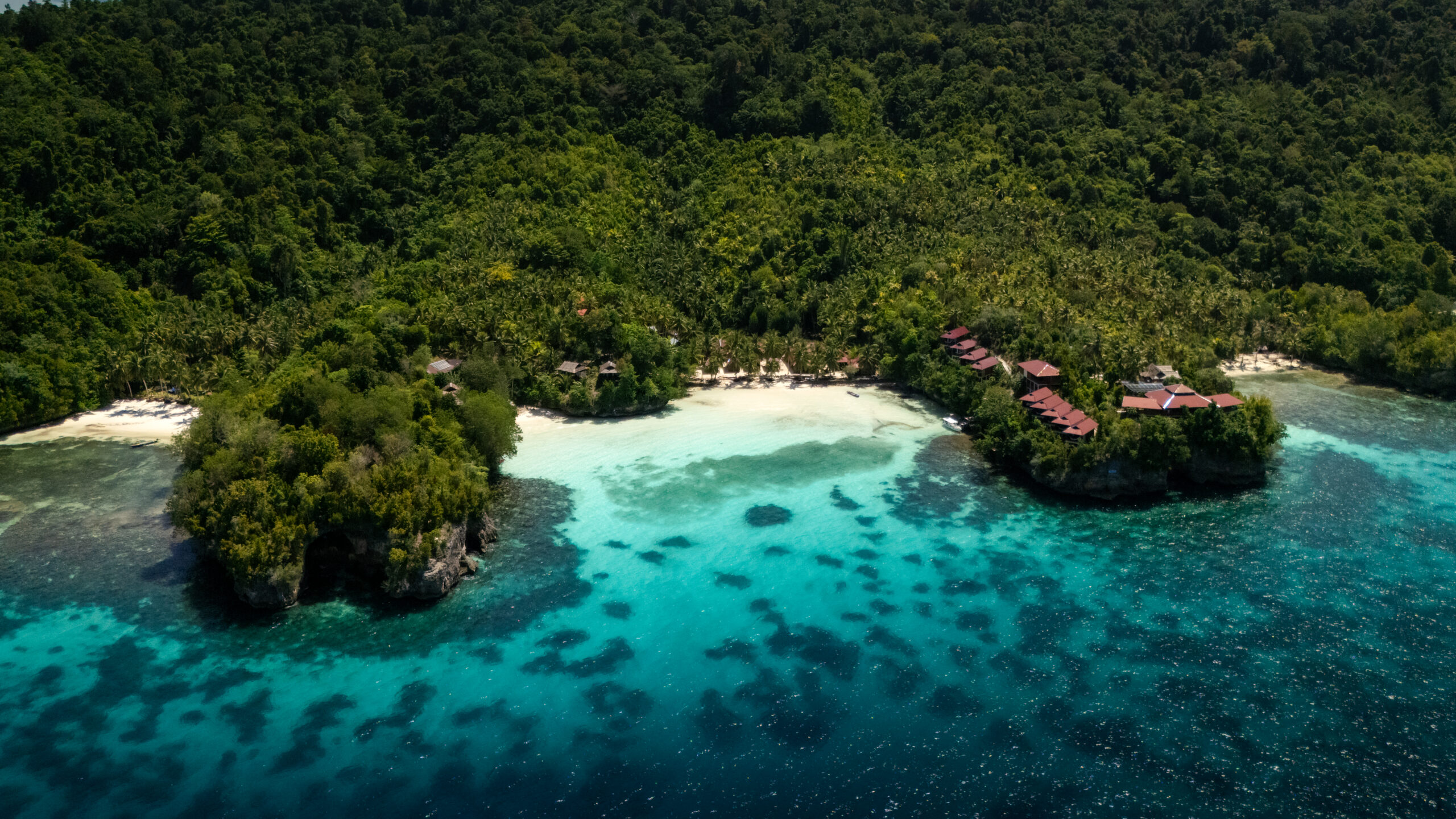
Tucked away in the heart of Central Sulawesi, the Togean Islands, Indonesia, are a hidden paradise for travellers seeking peace, adventure, and off-the-beaten-path experiences. Budget backpacking Togean Islands is an unforgettable way to explore turquoise waters, vibrant coral reefs, and pristine white-sand beaches without the crowds found in Bali or Lombok.
Unlike more touristy destinations, the Togeans remain largely undiscovered, offering independent travellers the freedom to snorkel in crystal-clear lagoons, wander through traditional villages, or simply relax on quiet beaches.
In this guide, I’ll cover everything you need to know for budget backpacking the Togean Islands, Sulawesi, from how to get there and where to stay, to moving around the islands, must-see activities, and practical tips to make your trip smooth and memorable.
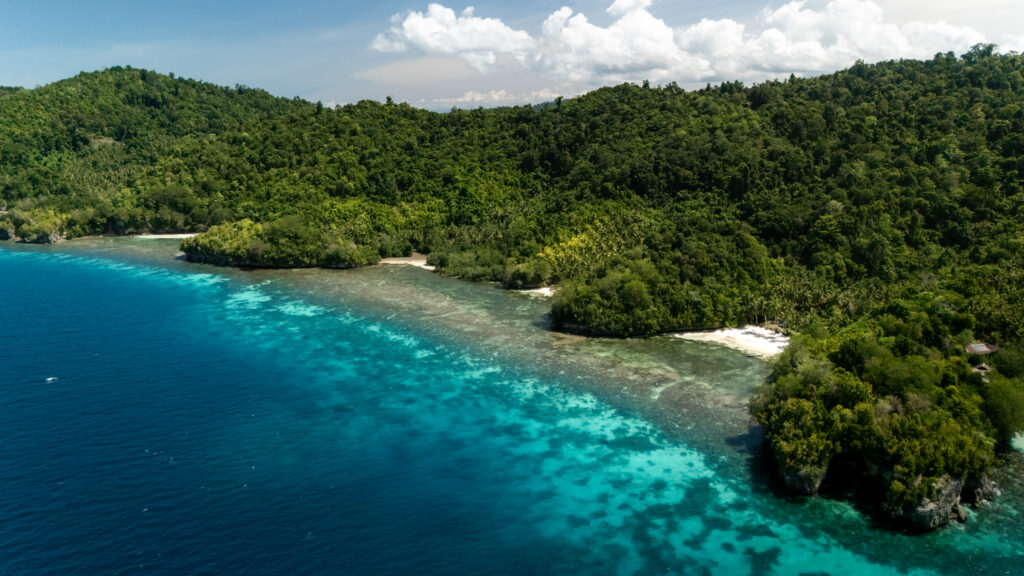 Coastline Malenge, Togean Islands
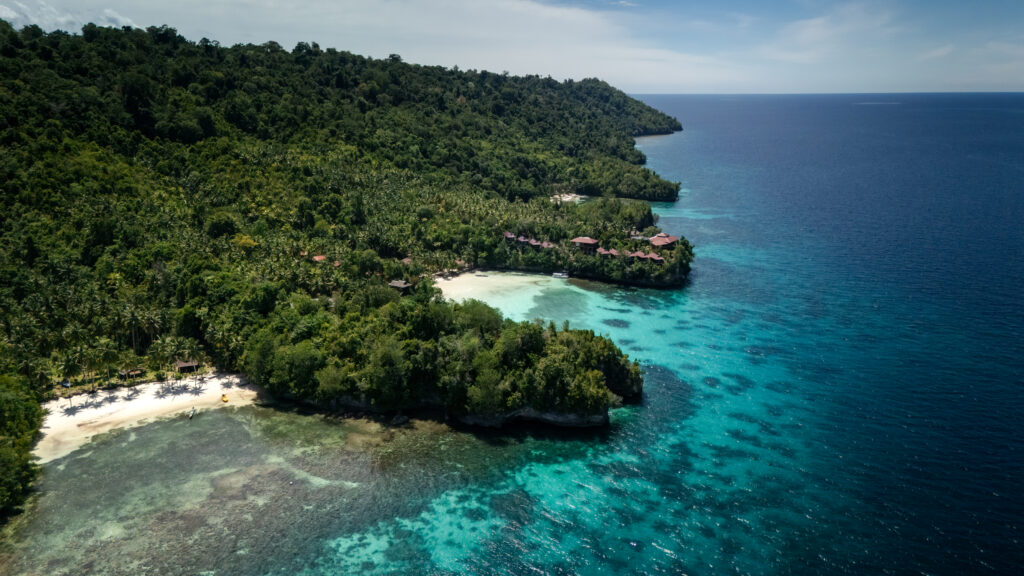 coastline
Why Visit the Togean Islands
The Togean Islands are a hidden gem in Central Sulawesi, offering a rare mix of natural beauty, tranquillity, and authentic local life. With dozens of islands scattered across the Gulf of Tomini, there’s something for every type of traveller. From vibrant coral reefs perfect for snorkelling and diving, to quiet villages where life moves at a completely different pace.
What makes the Togeans truly special is how unspoiled and remote they still feel. Unlike Indonesia’s more popular destinations, the islands haven’t been overrun by tourism, so you can enjoy beaches, lagoons, and underwater landscapes largely to yourself. The islands also offer a glimpse into traditional fishing communities and local culture, making every stop more than just a scenic photo opportunity.
Whether you’re chasing adventure, seeking relaxation, or looking for a slow-travel experience off the beaten path, the Togean Islands reward those who take the time to explore and those willing to embrace a little unpredictability along the way.
Best Time to Visit the Togean Islands
Technically, you can visit the Togeans year-round, but your experience will change drastically depending on when you arrive.
The standard “Best Time” is the dry season from May to September. During these months, you’ll get the calmest seas and the clearest blue skies. However, this is also peak tourism season. In July and August, the most popular resorts (especially in Kadidiri and Una-Una) can book up weeks in advance, and the “remote island” vibe can feel a little more like a busy backpacker trail.
Why I Actually Recommend Visiting in the “Low Season” (December-March)
Most guides will tell you to avoid the Togeans between December and March due to the rainy season. However, having visited in early January, I think the “low season” is actually the Togeans’ best-kept secret. If you are a solo traveler or someone who hates “over-tourism,” here is why the rainy season is secretly the best time to go:
The Verdict: If you don’t mind a 20-minute rain shower and want a world-class paradise for a fraction of the price, don’t be afraid to book your trip for January or February.
Overview Togean Islands: Which Island is Right For You
The Togean Islands aren’t just one island but an archipelago of over 50 islands, each with its own character and level of accessibility. Picking your base depends on your budget, your timeframe, and whether you’re here to dive or just relax in a hammock.
| Island | Best For… | Vibe | Pro/Con |
| Malenge | Nature & Culture | Remote, quiet, and authentic. | Pro: Best base for Jellyfish Lake & Bajo villages. Con: Longest boat ride from Wakai. |
| Kadidiri | Socializing & Convenience | The “backpacker hub” of the Togeans. | Pro: Easiest to reach; great house reefs. Con: Can feel “crowded” (by Togean standards). |
| Una-Una | World-Class Diving | Volcanic, black sand, and underwater magic. | Pro: Best diving in Sulawesi (barracuda tornados!). Con: Most expensive island, very remote; mostly for serious divers. |
| Bomba | Short Trips / Relaxation | Close to the mainland; white sand beaches. | Pro: Shortest ferry from Ampana. Con: Further away from “iconic” spots like the Jellyfish Lake. |
| Batu Daka | Local Life | Large island with traditional villages. | Pro: Great for trekking and birdwatching. Con: Fewer “resort-style” beaches than Malenge. |
Finding Your Perfect Base
While the table gives you the quick facts, here is the “boots-on-the-ground” reality of choosing an island:
Ultimately, the islands you pick depend on your priorities, whether it’s budget, isolation, diving, snorkelling, or access to activities and day trips. I decided to pick Malenge as my base to give me the best balance between convenience, activities, and accommodation options. If you want a full breakdown of each island’s pros and cons, plus a complete list of resorts and homestays with contact details and price bands, check out my dedicated guide:
Where to Stay in the Togean Islands
How to Get There Independently
Reaching the Togean Islands requires planning – there’s no direct flight or fast route, and boats run on fixed but limited schedules. Most travellers enter the archipelago either from Ampana in Central Sulawesi or all the way from Gorontalo in the north. For a full breakdown check this guide:
How to Get to the Togean Islands?
From Ampana to Wakai and Beyond:
The main jumping-off point for the Togeans is Wakai, the central harbour in the island group. From Ampana, you have a few options, depending on how much time you have and where you’re staying:
Keep in mind that boat schedules often shift due to weather or mechanical issues, and ticket prices and departure times are usually only confirmed on the day at the harbour. These boats are by no means luxurious: they feel like a sauna, with barely-opening windows, no air conditioning, and fans that often don’t work. I took the public boat from Ampana straight to Malenge, and it was honestly the longest seven hours of my life. The boat was scorchingly hot, crammed full of people and all sorts of packages, and the rough seas made some passengers sick, leaving puke bags everywhere. Not exactly a fun ride, but part of the reality to reach the Togeans.
From Gorontalo to Wakai:
If you’re coming from Gorontalo, there’s a ferry called Tuna Tomini that links the city to Wakai:
This ferry isn’t luxurious: seating is basic and many travellers choose a mattress space if they want slightly more comfort for the overnight journey, but it’s the only regular north–south connection between the Togeans and Gorontalo.
Tips for Getting Around Once You Arrive
Once in Wakai, most islands don’t have regular public ferries. Instead, resorts and local boat operators will take you to your destination, often with an extra charge. Many resorts offer pickup boats from Wakai to their private jetties, hence the importance of booking your accommodation ahead.
Togean Islands Daily Budget (Per Person)
Because there are no ATMs on the islands, you need to be precise with your math. Most costs in the Togeans are predictable because your accommodation includes all meals. Here is a breakdown of what you can expect to spend per person, per day.
| Category | Budget (Homestay) | Mid-Range (Resort) |
| Accommodation (+ 3 Meals) | 300,000 IDR | 500,000 – 800,000 IDR |
| Public Boat Transport | 50,000 – 150,000 IDR | 150,000 – 300,000 IDR |
| Snorkel/Boat Trip (Shared) | 100,000 – 200,000 IDR | 250,000 – 500,000 IDR |
| Fun Dive (per dive) | 650,000 IDR | 700,000 – 1,000,000 IDR |
| Snorkel Gear Rental | 50,000 IDR (or Free) | 50,000 IDR (or Free) |
| Daily Total (Approx.) | from 500,000 IDR (€25) | from 1,000,000 IDR (€50) |
Money Saving Tips for the Togeans Islands
Budget Accommodation Options
Unlike larger towns in Sulawesi, the Togean Islands have no restaurants or cafés, so all your meals will be provided by your chosen resort or homestay. Most accommodations include all meals in the nightly rate, making it easy to plan your budget. Don’t expect fancy dining: meals are simple, traditional Indonesian staples, such as nasi goreng, fresh fish, white rice, vegetables, fruits, and the occasional pancakes for breakfast. Drinking water, tea, and instant coffee are usually unlimited, but the focus is on practicality rather than luxury.
All the resorts here are very basic. Bungalows are mostly made of wood, often with a hammock on the porch. Air conditioning or fans are rare, as most places only have electricity for a few hours in the evening via generators. Similarly, cell service is nonexistent, and Wi-Fi, if available, is usually only accessible for a few hours per day and sometimes for an extra fee. This setup makes the Togeans perfect for a digital detox, allowing you to fully disconnect and immerse yourself in the islands’ natural beauty.
In short, staying on the Togean Islands is about simplicity, serenity, and enjoying the surroundings. The focus isn’t on luxury, but on the experience of being surrounded by pristine beaches, crystal-clear waters, and slow island life.
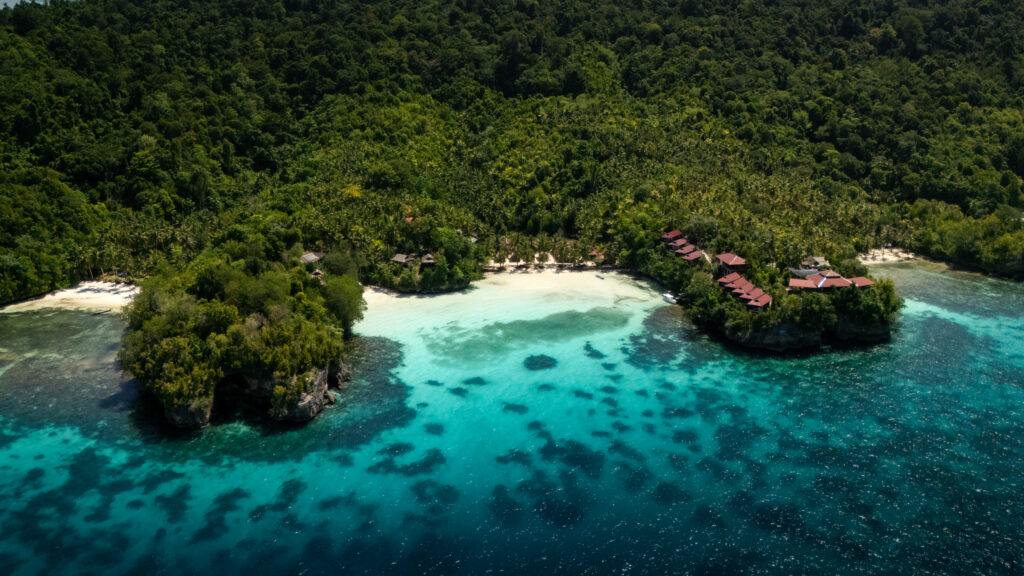 Sera Beach Resort in Malenge
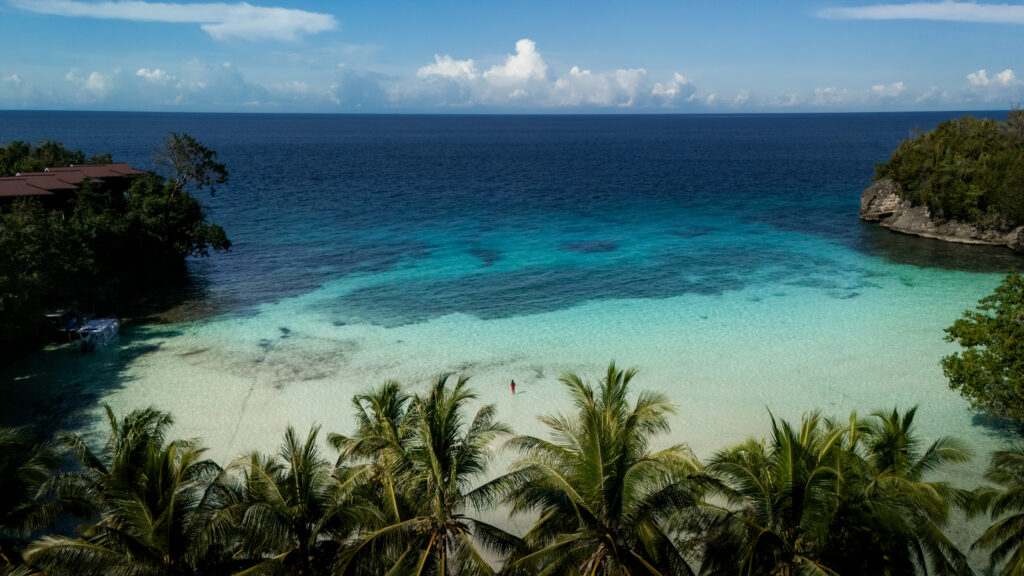 The Turquoise-water Bay at Sera Beach Resort in Malenge
For my stay in Malenge, I chose Sera Beach Resort, mainly because it’s one of the few resorts located right on the beach in Malenge, alongside Sandy Bay Resort. I had imagined having a bungalow with a hammock by the sand, and it didn’t disappoint. I truly enjoyed my time there. The staff were incredibly friendly, and the food was delicious, probably the best I had during my seven weeks in Sulawesi. Since it was low season, I had the entire resort almost to myself, which made the experience even more special. Another perk of travelling in low season was that the staff kindly gave me a Wi-Fi voucher for free (usually paid during high season) and even lent me a snorkel mask at no extra cost, which was perfect since I hadn’t brought one.
What to Do in the Togean Islands
Most activities in the Togean Islands that take you beyond your resort require a boat, although you can of course snorkel and swim right off the beach of your accommodation. It’s also possible to go on short hikes around Malenge itself, perfect for sunsets and quiet mornings.
Boat trips can become costly if you’re travelling solo, but a perk of staying at resorts like Sera Beach or nearby ones is that you can often team up with other guests to share the cost for snorkelling trips, visits to Pulau Papan, or excursions to reefs.
Snorkelling and Diving Excursions
Snorkelling and diving are the main draws of the Togeans. Reefs 1-5 are easily accessible from Malenge, and for me, reefs 1 and 5 were the favourites, full of colourful coral and tropical fish. Depending which reefs you pick, the boat cost will be different, but for 2 reefs that are far away (like 1 & 5), the cost should be around 800,000IDR.
Mariona Lake – Jellyfish
A visit to the jellyfish lake is truly magical. Millions of two different types of jellyfish float in the dark, very warm, and salty waters, creating an otherworldly experience. Don’t worry about getting stung! These jellyfish have lost their stinging cells over thousands of years of evolution, so they’re completely harmless to humans.
I’d read that in past summers, the lake sometimes had no jellyfish at all because the water got too hot, a reminder of global warming. Luckily, visiting in low season meant it was full of jellyfish, though the water was so warm it felt like a hot tub and could get uncomfortable after a while. Despite that, it remains one of the coolest and most magical experiences of the trip.
Pulau Papan Village
For a taste of local life, consider a trip to Pulau Papan, a small Bajo village nearby. Here you can see traditional stilt houses, meet local fishermen, and experience the daily rhythm of island life. Snorkelling near Pulau Papan is another highlight, with vibrant red corals making it a spectacular spot for underwater exploration.
Overall, the Togeans are less about structured tours and more about choosing your own pace: snorkel, swim, wander the beaches, or just read in a hammock by the water.
Practical Tips for the Togean Islands: Read This Before You Go
The Togean Islands are the definition of “off the grid.” While the isolation is what makes them magical, it also means you cannot wing it when it comes to logistics. Here is your essential survival toolkit for a stress-free trip.
Money: Withdraw in Ampana or Gorontalo
There are absolutely no ATMs in the Togean Islands. Once you leave the mainland (Ampana or Gorontalo), you are entering a cash-only economy. It’s important to calculate your total cost for accommodation (usually per person/night), boat transfers, and snorkelling trips, then add a 30% “emergency buffer”. Some resorts allow you to pay via an international transfer with Wise. Check with your accommodation beforehand. In any case, it’s better to carry enough physical cash for transportation, activities, and emergencies.
Avoid ATM fees with Wise
The card I use for all my travel withdrawals – real exchange rate, low fees.
Use Revolut to avoid ATM fees
Good alternative to Wise – I carry both as a backup.
Connectivity & Wi-Fi
Don’t be fooled by websites claiming “Wi-Fi available.” In the Togeans, Wi-Fi is either non-existent or limited to a slow, and occasional expensive satellite connection for an hour a day at certain resorts. Your best bet is a Telkomsel SIM. It is the only provider with any semblance of a signal in the archipelago. Even then, expect it to only work in certain islands. If you don’t want to hunt for a SIM shop in Gorontalo or Ampana, I recommend getting an e-SIM.
Need data before you land? Try Saily eSIM
Use code RITAHE1486 for $5 off your first plan.
Health & Safety
You are far from any pharmacy or hospital. The nearest medical help is a long, bumpy boat ride away in Ampana or Gorontalo. The sun in the Gulf of Tomini is incredibly strong. Please use reef-safe sunscreen to protect the fragile coral systems you’re coming here to see. Bring Ibuprofen and plenty of strong insect repellent. The mosquitoes in the evenings can be relentless.
Don’t skip travel insurance!
I use SafetyWing for most trips – solid coverage for adventure travel.
Electricity & Charging
Almost every resort in the Togeans runs on a generator. Expect power mainly only between 6:00 PM and 10:00 PM. Bring a powerful power bank to charge your electronics during the day. If you have many devices, a small multi-plug adapter is a lifesaver, as most bungalows only have one outlet.
FAQs about the Togean Islands
How do I get to the Togean Islands? Getting to the Togean Islands is a bit of a journey. The main way to reach the Togean Islands by public transport are either from Ampana or Gorontalo to Wakai, the main hub in the islands. From Wakai, you’ll usually need to arrange another small boat to reach your final island or accommodation.
Are the Togean Islands worth visiting? Yes, if you’re looking for a truly remote island experience. That said, this isn’t a destination for everyone. The long journey, lack of comfort, and limited facilities mean it’s best suited to patient, independent travellers.
Is it safe to travel to the Togean Islands? Yes, the Togean Islands are generally very safe. The main challenges aren’t safety-related, but practical: things like unreliable transport, limited medical facilities, and the remoteness of the islands.
What is the best time to visit the Togean Islands? The best time to visit is during the dry season, when sea conditions are calmer and travel between islands is more reliable. Because everything depends on boats, weather plays a huge role in your experience. Rough seas can delay or cancel transport, so visiting outside the rainy season will make your trip much smoother.
How much does it cost to visit the Togean Islands? The Togean Islands are relatively budget-friendly, but costs depend heavily on how you travel and where you stay. Check the budget section above for a more detailed breakdown.
Final Thoughts
The Togean Islands are one of Sulawesi’s most remote and magical destinations, offering a rare combination of pristine beaches, vibrant reefs, and slow island life. Travelling here requires a bit of planning, from ferry schedules to boat trips between islands, but the reward is a truly off-the-beaten-path experience that few travellers get to enjoy.
Travelling in low season, as I did, adds an extra layer of magic: fewer crowds, more personal space, and the chance to truly disconnect in a serene environment. Whether it’s snorkelling in reefs 1 and 5, exploring the red corals near Pulau Papan, or floating among millions of jellyfish in the lake, the Togeans offer experiences that feel almost untouched by time.
If you’re planning a trip to Sulawesi, the Togean Islands are a must-visit for travellers who enjoy nature, solitude, and adventure, and are happy to embrace the simplicity and unpredictability of life on these remote islands. For more tips on exploring other places in Sulawesi on a budget and off the beaten path, check out my full Sulawesi guide here.
More of the Togean Islands
More Independent Travel in Sulawesi
If you’re travelling through Sulawesi independently, Banggai Islands are just one piece of the puzzle. These posts dive deeper into some of the island’s most remote, rewarding, and lesser-visited regions, all explored without tours and on a backpacker budget:
Have questions about the Togean Islands? Drop them in the comments. I read every single one.