
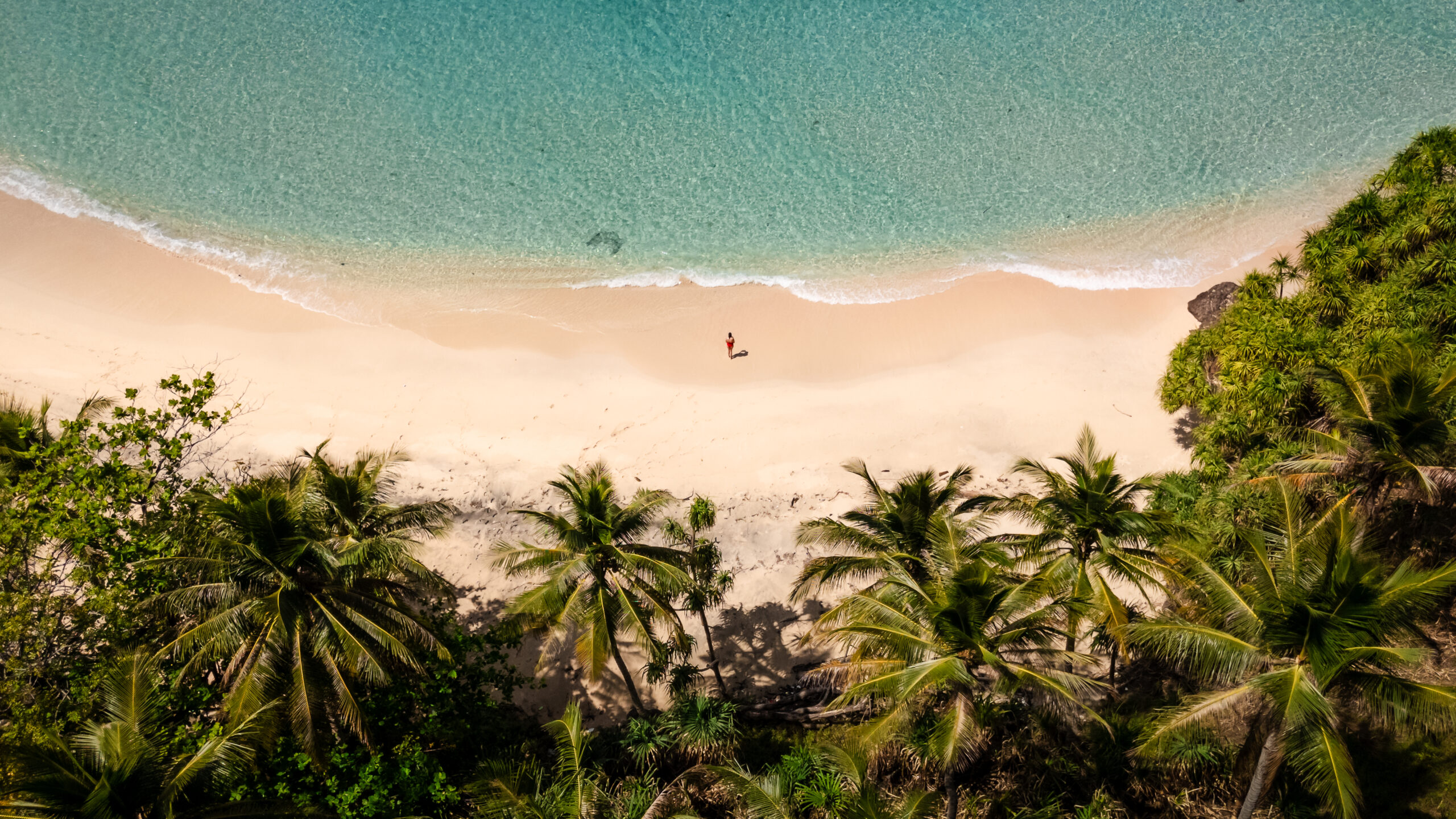
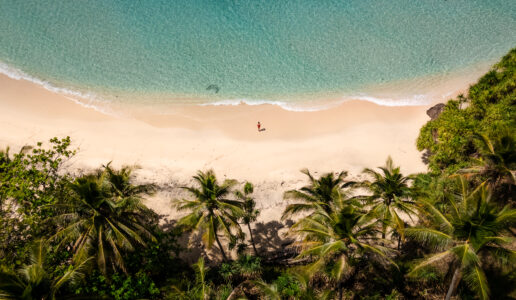
The best remote islands in Sulawesi aren’t interchangeable, even though they get lumped together in most “off the beaten path Indonesia” roundups. Togean, Banggai, and Siau are three genuinely different trips: different logistics, different costs, different reasons to go. If you’re trying to work out which one actually fits the time and budget you have, this is the comparison that walks you through it.
I’ve spent time independently backpacking all three, and written a full guide to each (linked throughout below). This post is the shortcut: read this first to decide where you’re going, then use the dedicated guides to actually plan the trip once you’ve picked.
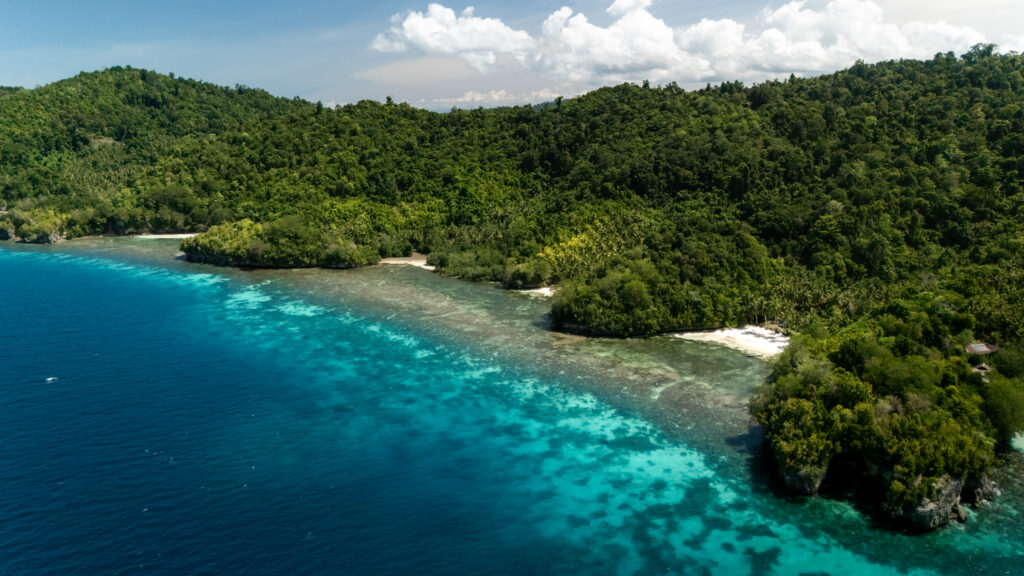 Coastline Malenge, Togean Islands
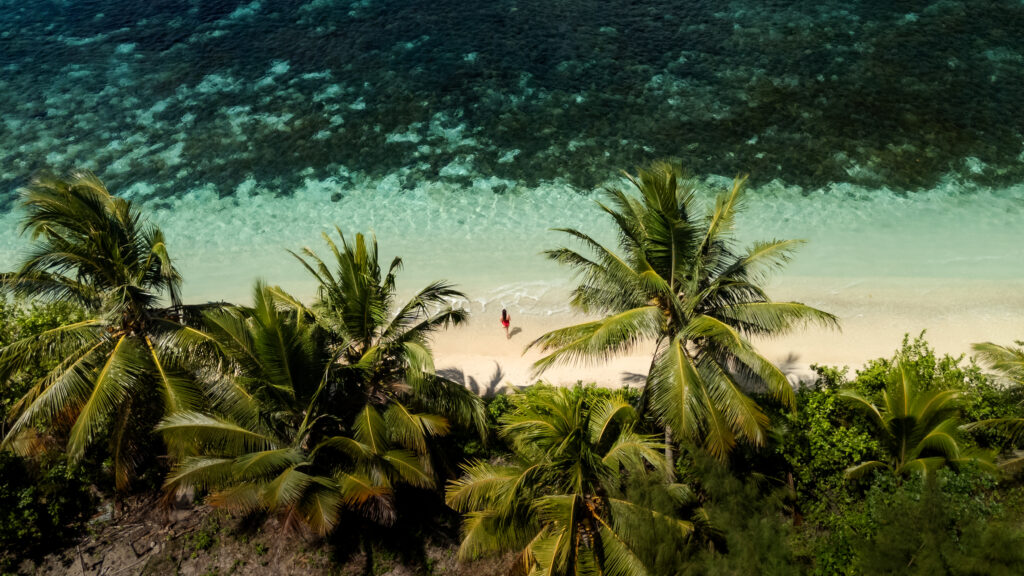 Numirah Beach in Banggai Laut
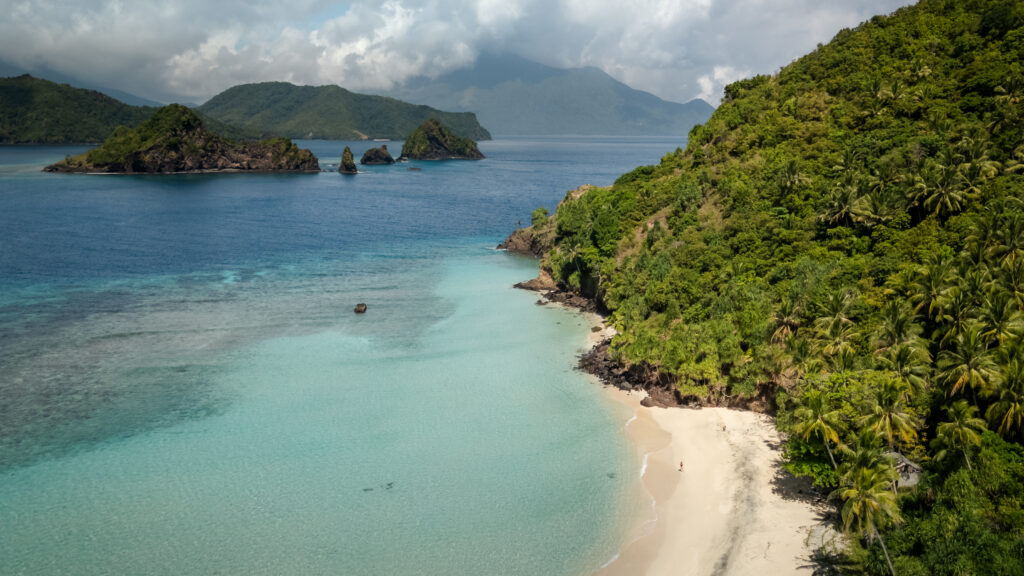 Aerial View Mahoro island
The Quick Answer
These three don’t actually rank cleanly on a single “easy to hard” scale: each is easiest or hardest depending on what you’re measuring, getting there, getting around once you’ve arrived, or how remote it feels day to day. That nuance matters more than a simple ranking, so here’s the full picture before you decide.
If you already know enough to pick, jump straight to that island’s full guide below. If you want the reasoning, keep reading.
Togean Islands: Best for Beach-Bungalow Time
Overview
Best for: travellers who want a proper beach-and-snorkel base with real accommodation choice, and don’t mind a longer journey.
Getting there: first reach Ampana or Gorontalo on the mainland, then a boat (~4+ hours from Ampana) or overnight ferry (~12-13 hours from Gorontalo), the most logistically involved journey of the three.
Cost: the most expensive of the three, since most accommodation is full-board resort-style, typically 350,000-1,000,000+ IDR per person per night plus all the transportation costs add up
Togean has the most accommodation options of the three by a clear margin: a cluster of islands (Kadidiri, Malenge, Una-Una, Bomba, and others) each with a handful of resorts and homestays, and enough travellers passing through that you’ll usually have people around. If the trip you want is beach bungalow, hammock, snorkel off the beach, repeat, this is the strongest of the three for that. Check this guide for Where to Stay in the Togean Islands, which will help you decide which island to base yourself in and the accommodation options on that island.
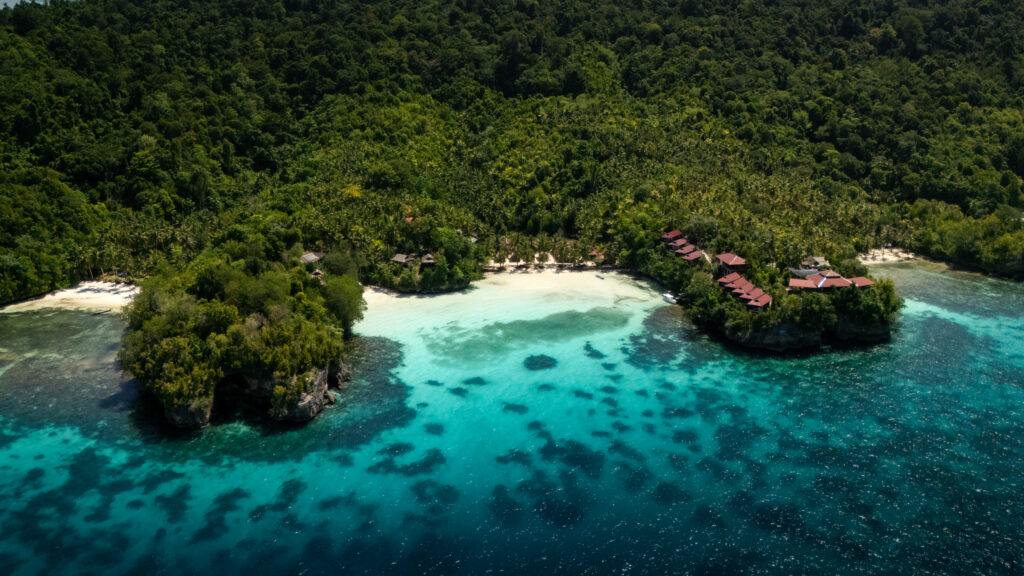 Sera Beach Resort in Malenge
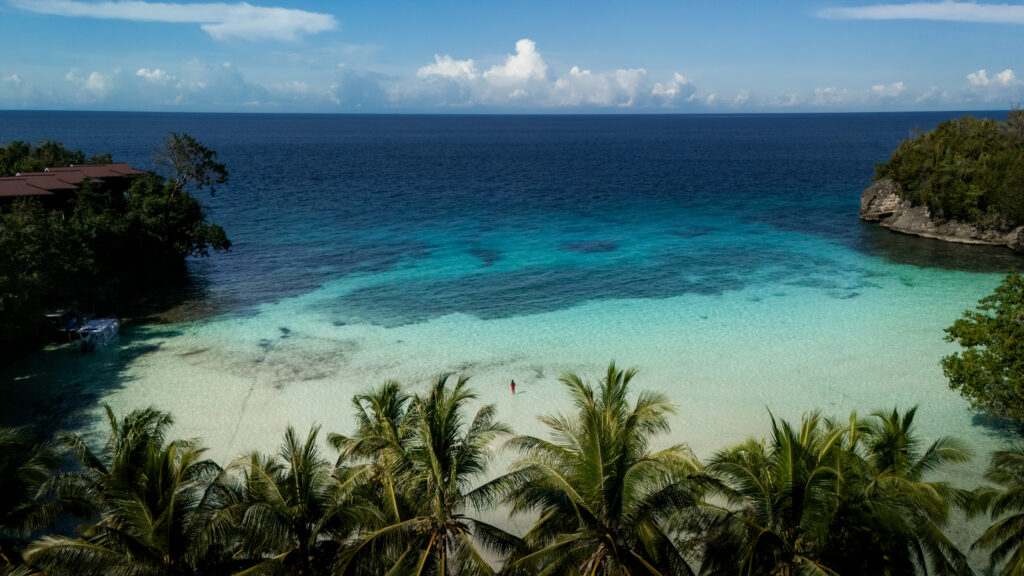 Bay at Sera Beach Resort in Malenge
The trade-off is that once you’re based on one island, you’re fairly restricted: there’s no scooter to hop around on, so exploring beyond your own resort’s house reef means chartering a boat to the other islands or reefs, which can start to feel a bit claustrophobic, and gets expensive fast if you can’t find other travellers to split the cost with.
The archipelago’s headline draws are the Jellyfish Lake (home to stingless jellyfish) and the reefs around Malenge and Kadidiri, which rank among the best diving and snorkelling in Sulawesi.
Read the full guide: Budget Backpacking the Togean Islands
Banggai Islands: The Hardest to Reach
Overview
Best for: experienced independent travellers who want the toughest journey of the three and a genuinely remote experience once they’re past the crowds.
Getting there: fly or overland to Luwuk, then a ferry or local wooden boat onward, or, if you want to skip that leg entirely, a small domestic flight straight from Luwuk into Banggai Laut
Cost: variable, driven up by the number of transport connections needed rather than accommodation itself
Banggai is the hardest of the three to actually reach, and public transport once you’re there is minimal, with English limited outside the handful of homestays. The geography also takes some untangling: “Banggai” refers to two separate islands: Peleng Island and Banggai Laut, and mixing them up is an easy mistake to make when you’re planning.
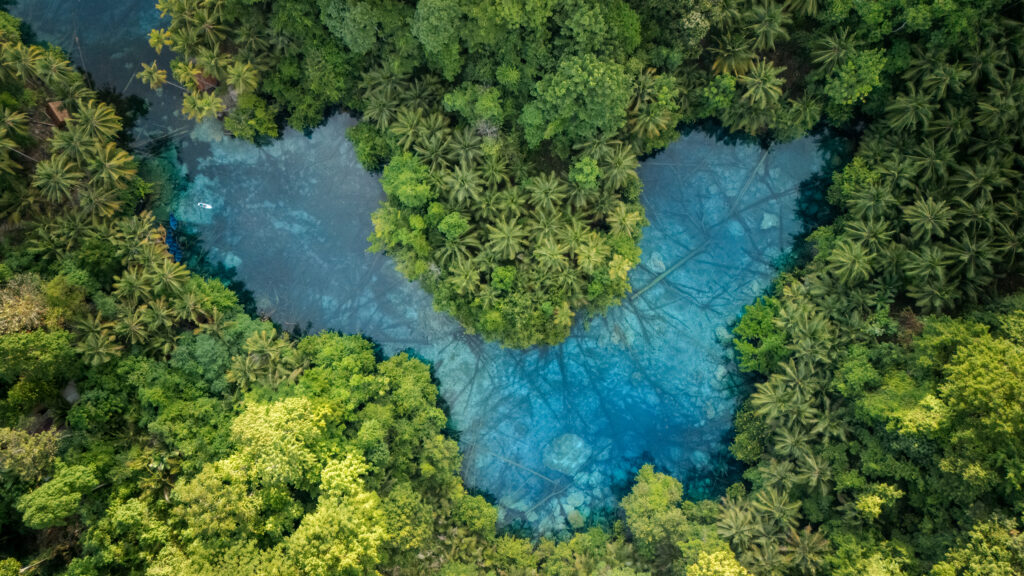 Paisu Pok Lake, Banggai islands
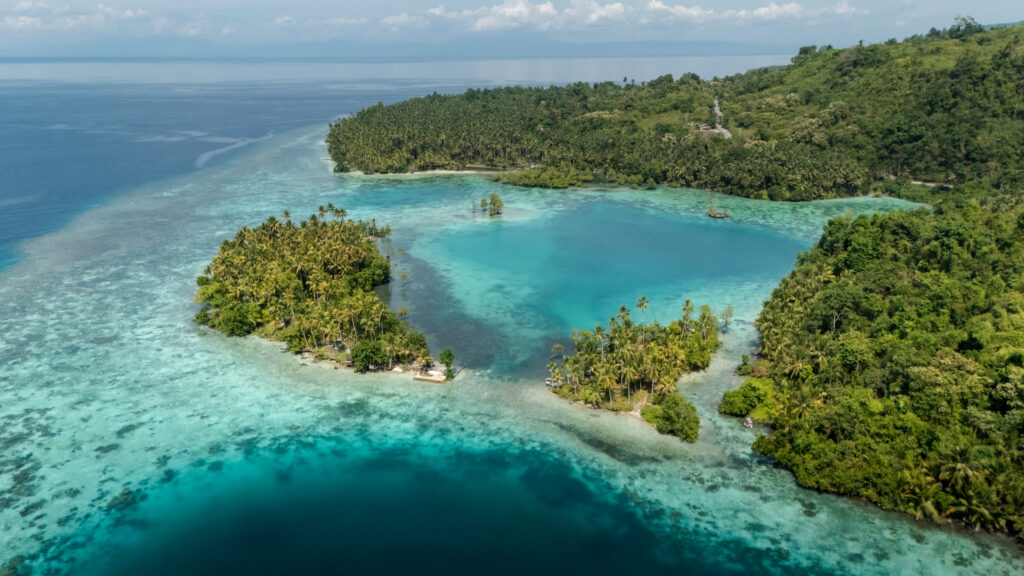 Kawalu Bay, Banggai Islands
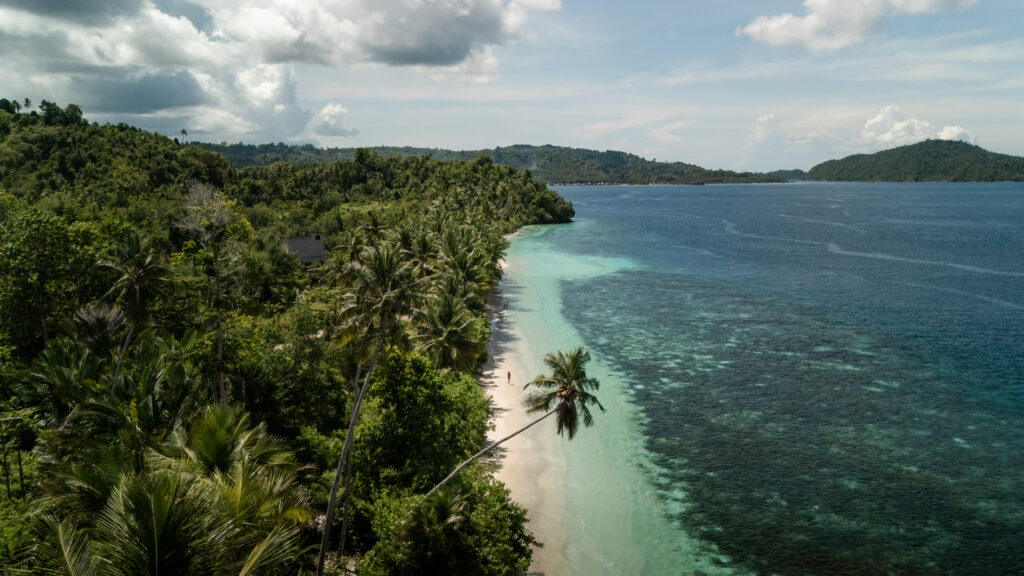 Numirah Beach, Banggai Islands
Worth being upfront about: Banggai’s “remote and untouched” reputation isn’t uniform across the whole archipelago. Paisu Pok, the striking blue crater lake that’s the region’s best-known attraction, actually gets a steady stream of daily domestic tourism and can feel genuinely crowded. The real remote-island feeling here is elsewhere, particularly on Banggai Laut, which lives up to the reputation far more than Paisu Pok does. Diving and snorkelling are also strong draws, home to the Banggai cardinalfish, a species famous enough in the aquarium trade that some travellers come specifically to see it in the wild. Once you’re on the ground, a rented scooter makes exploring both islands easy.
Read the full guide: Banggai Islands Travel Guide
Siau Island: The Most Remote-Feeling
Overview
Best for: budget travellers, volcano hikers, anyone who wants a genuinely rare wildlife encounter, and anyone who wants the least hassle getting there of the three
Getting there: the most straightforward of the three, land in Manado and take either the fast boat (around 5 hours, roughly 3 times a week, and genuinely comfortable compared to the boats to the other islands) or the daily ferry
Cost: the cheapest of the three, since you’re staying in local guesthouses and eating at warungs rather than paying resort full-board rates
Siau is a genuine contradiction: it’s the easiest of the three to physically get to, but it feels the most remote once you’re there. Infrastructure is genuinely limited, one hotel and a couple of guesthouses/homestays, and it sees fewer than 200 visitors a year. Mount Karangetang, one of Indonesia’s most active volcanoes, dominates the island, and life here exists in a matter-of-fact relationship with that: marked evacuation routes, close monitoring, and locals who’ve simply adapted to living beside it.
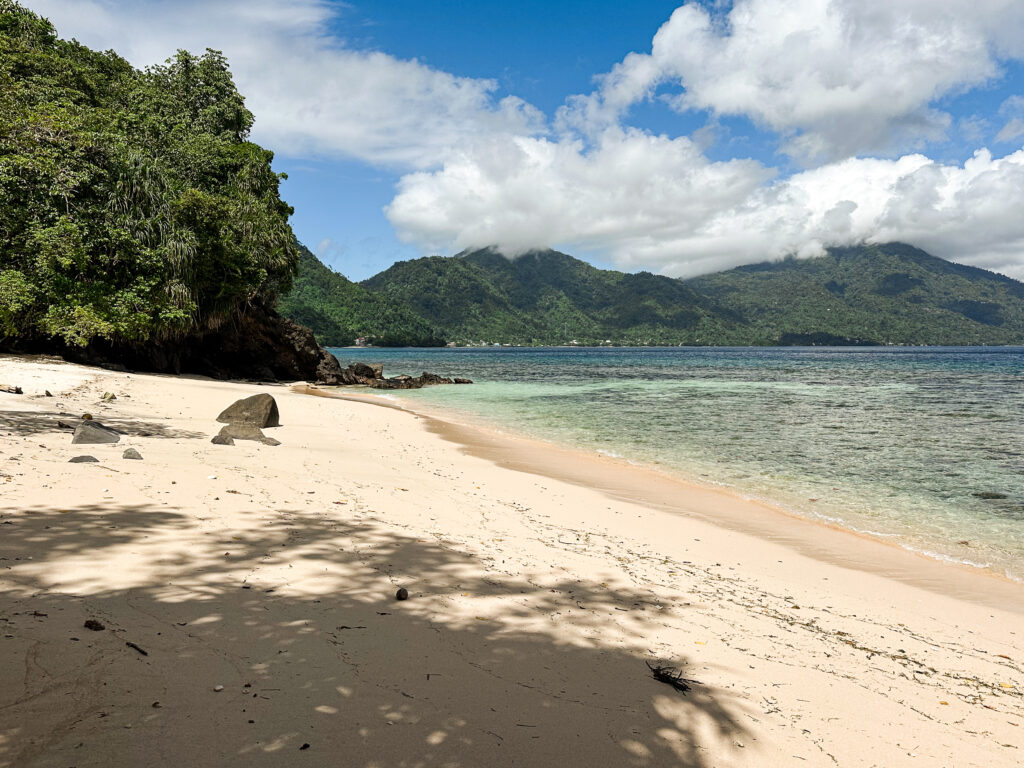 Hidden Beach in Siau
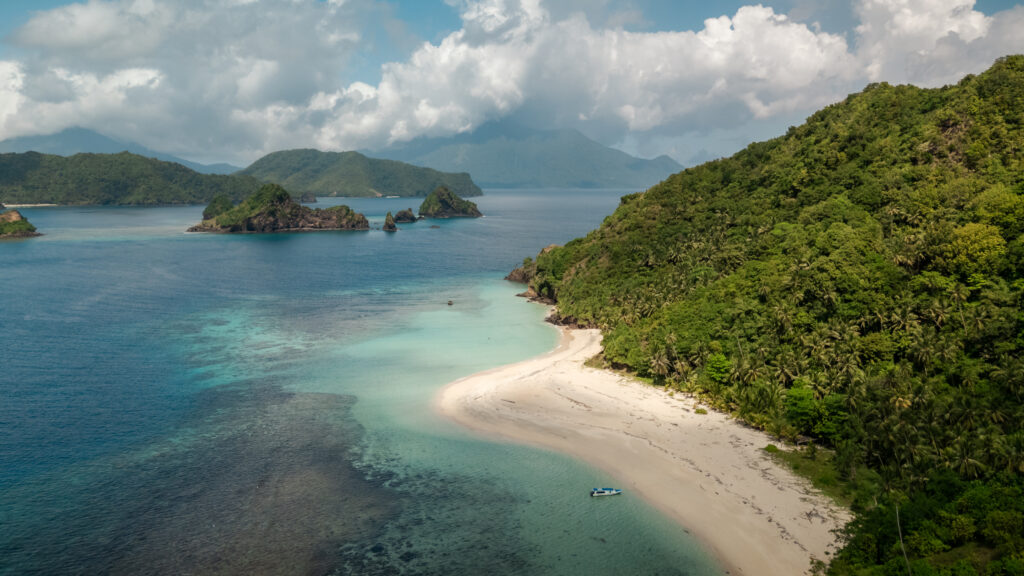 Mahoro Island
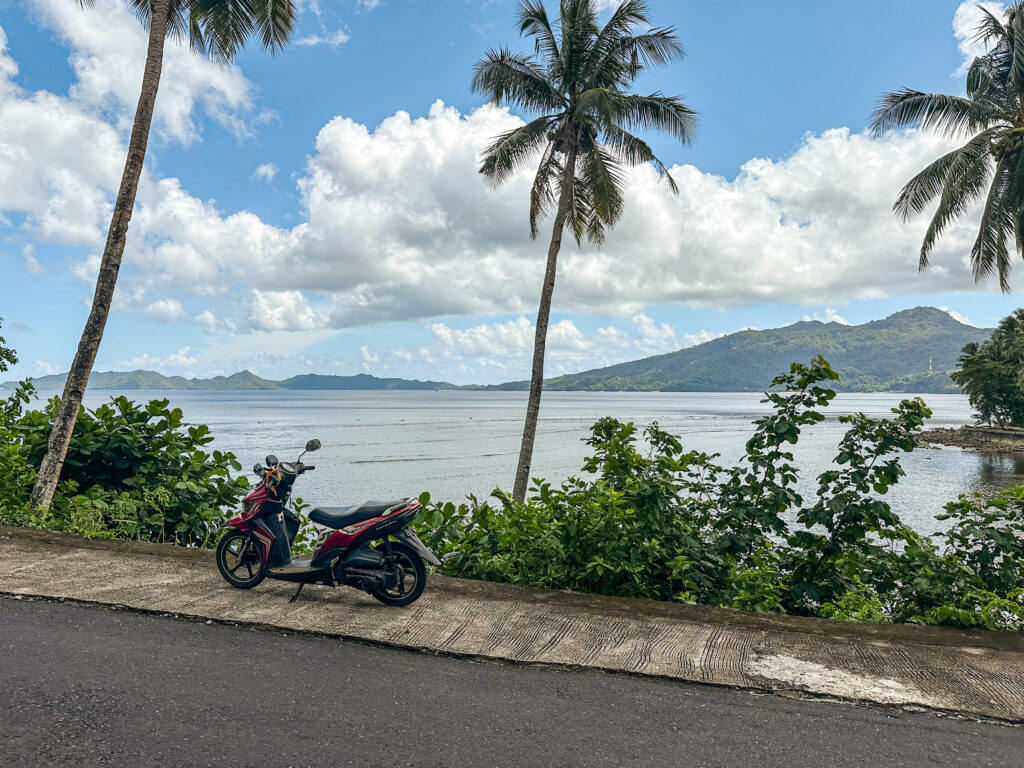 Scootering around in Siau
The island’s other major draws are the Siau Island tarsier, a species found only here, and volcanic wall diving that’s still almost entirely unknown outside dedicated dive circles. One of the standout experiences on the island is a boat trip out to Mahoro Island, a small volcanic islet just off Siau’s coast, genuinely one of the best experiences from two months spent travelling Sulawesi. There’s only one local guide on the island for hiking Karangetang or tracking down the tarsier, so prices for that aren’t very negotiable, though teaming up with other travellers (easy to do, since you’ll keep running into the same handful of people) helps split the cost.
Read the full guide: Siau Island Travel Guide
Comparison at a Glance
| Togean | Banggai | Siau | |
|---|---|---|---|
| Getting there | Reach Ampana/Gorontalo first, then a long boat/ferry: most involved journey | Flight or overland journey to Luwuk, then local boat, or a small domestic flight straight into Banggai Laut | Easiest and quickest: fast boat or daily ferry direct from Manado |
| Remoteness once there | Some remote-feeling, larger resorts and other travellers | Mixed: Paisu Pok gets daily domestic tour crowds, but Banggai Laut feels genuinely remote | Most remote-feeling of the three despite being easiest to reach |
| Getting around | Chartered boats only, costly solo, can feel restrictive | Scooter rental, easy to explore independently | Scooter rental, easy to explore independently |
| Cost level | Mid-range (resort full-board) | Variable, transport-driven | Cheapest (guesthouses & warungs) |
| Signature draw | Jellyfish Lake, reefs | Paisu Pok Lake, cardinalfish | Karangetang volcano, endemic tarsier, Mahoro Island |
| Infrastructure | Most of the three: resorts | Scattered homestays | Least of the three: one hotel, a couple of guesthouses |
So, Which One Should You Actually Visit?
Practical Tips Before You Go
A few things apply no matter which of the three you pick:
Carry enough cash. None of these islands apart from Siau have ATMs, so withdraw everything you’ll need for your whole stay before you leave the mainland (Ampana, Gorontalo, Luwuk, or Manado, depending on your route), and add a buffer for boat transfers and activities you decide on once you’re there.
Avoid ATM fees with Wise
The card I use for all my travel withdrawals – real exchange rate, low fees.
Use Revolut to avoid ATM fees
Good alternative to Wise – I carry both as a backup.
Sort your data before you land. Wi-Fi is limited to non-existent on all three islands, so getting connectivity sorted before you arrive on the mainland saves you hunting for a local SIM shop once you’re already short on time.
Need data before you land? Try Saily eSIM
Use code RITAHE1486 for $5 off your first plan.
Don’t skip travel insurance. All three islands are genuinely remote, with the nearest proper medical care a long boat ride away, so proper cover matters more here.
Don’t skip travel insurance!
I use SafetyWing for most trips – solid coverage for adventure travel.
FAQs: Remote Islands in Sulawesi
It depends on priorities. Togean is the most accessible and best for diving/snorkelling with other travellers around. Banggai offers the most solitude but is the hardest to navigate independently. Siau is the cheapest and centres on an active volcano and an endemic tarsier species.
It depends what “easy” means to you. Siau is the quickest and most comfortable to actually reach, via a direct fast boat or daily ferry from Manado, but has very limited infrastructure once you’re there. Togean takes longer to reach but has the most accommodation options and other travellers around, making it feel the most forgiving day to day.
Siau, by a clear margin. It’s a direct fast boat or daily ferry from Manado, compared to the longer, more involved journeys required to reach Togean or Banggai.
Yes, generally. Mount Karangetang is closely monitored, evacuation routes are clearly marked, and dangerous eruptions have been rare in recent decades. Local guides and communities are well-practised at managing the day-to-day reality of living beside it.
Yes, though it takes time given the boat-dependent logistics of each. Togean and Banggai are both reachable via Central Sulawesi, while Siau is accessed from Manado in the north, so a route through all three works best as part of a longer Sulawesi itinerary rather than a short trip.
Final Thoughts
None of these three islands is objectively “the best”: they’re built for different kinds of travellers. Togean is the easiest way into Sulawesi’s remote-island world, Banggai rewards those who can handle genuine unpredictability with real solitude, and Siau offers the most extreme value and the rarest wildlife encounter of the three. Whichever you choose, you’re picking from a shortlist that barely registers on most travellers’ radar, which is exactly the point.
More of the Banggai, Siau and Togean Islands
More Independent Travel in Sulawesi
These posts dive deeper into some of the island’s lesser-visited regions, all explored without tours and on a backpacker budget:
Have questions about travelling to any of these islands? Drop them in the comments. I read every single one.