
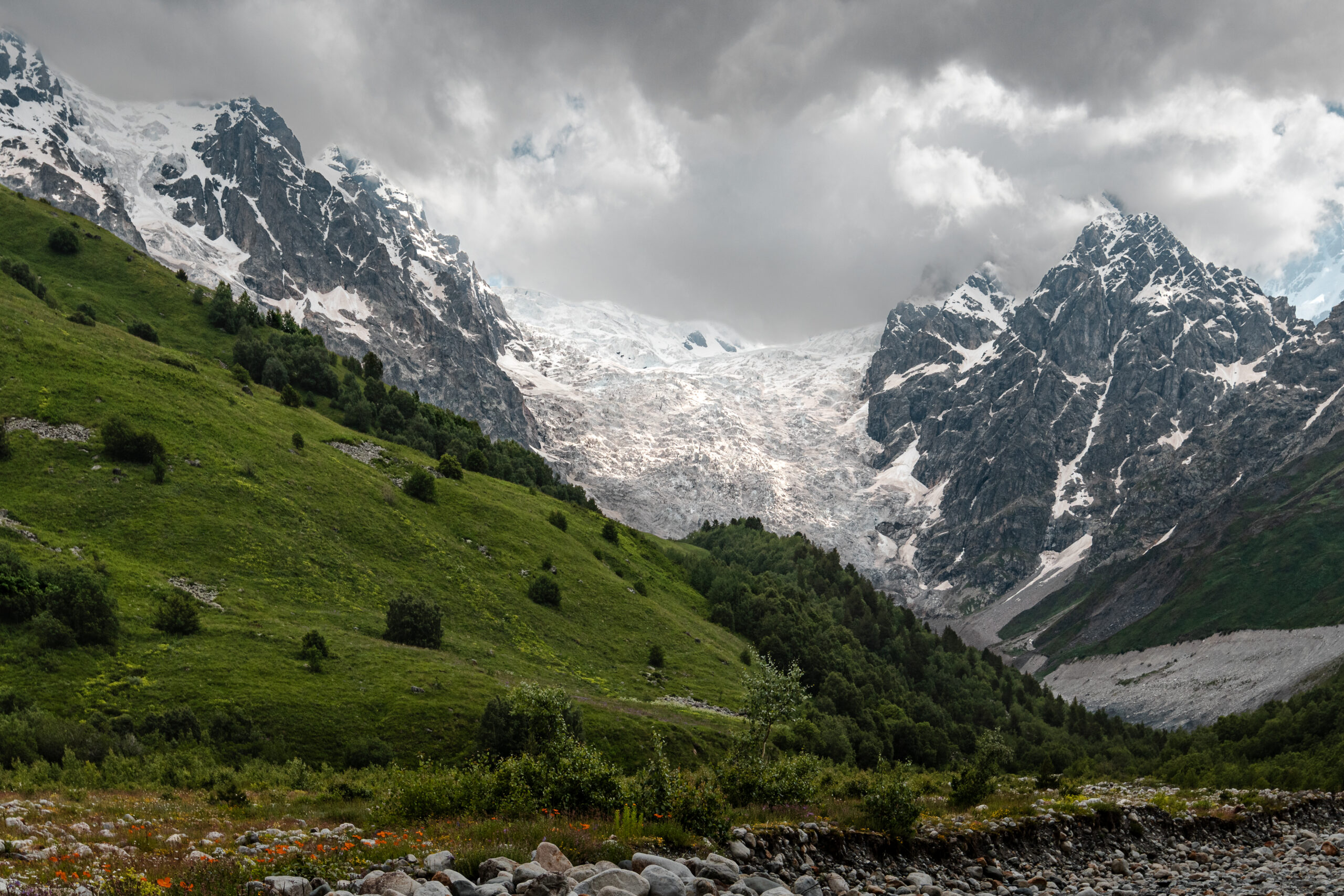
Backpacking Georgia independently is one of the best decisions you can make in the Caucasus, and I say that having done it four times. From the lively streets of Tbilisi to the alpine towers of Svaneti and the dramatic peaks above Kazbegi, Georgia keeps pulling me back. This guide covers the whole country: how to get around by marshrutka, what each region actually offers, where to stay on a budget, and why Georgia deserves far more than a rushed week.
Whether you’re planning a two-week trip combining Georgia with Armenia, or you want to go deep into one region at a time, this guide will help you do it independently, without a tour operator, and without spending more than you need to.
Best Time to Visit Georgia
Georgia is a year-round destination, but the experience varies depending on where you go. Spring (April to June) and autumn (September to early November) are widely considered the best times to visit. In spring, the countryside blooms, mountain passes gradually clear of snow, and the weather is pleasantly mild. Autumn brings warm, golden landscapes, perfect for hiking and wine region visits.
Summer (July-August) is popular, especially in Tbilisi and Batumi, but it can get hot in the lowlands and crowded at tourist hotspots. Mountain regions like Kazbegi and Svaneti are ideal during this season, with long days and clear skies. Winter is excellent for skiing in Gudauri or Mestia, and the snow-covered mountains create a dramatic, scenic experience, though some remote trails may be inaccessible.
Overall, if you’re planning a mix of city exploration, hiking, and cultural experiences, spring and autumn strike the best balance between comfortable weather, accessibility, and avoiding the busiest tourist periods.
Getting to Georgia
Georgia is well connected by both air and overland routes, making it easy for independent travellers to plan a visit.
Flying: The main international gateway is Tbilisi International Airport, with direct flights from some European capitals, Istanbul, and the Middle East. Budget airlines frequently operate routes from cities like Istanbul, Kyiv, and Vienna, making flying an affordable option. Batumi International Airport and Kutaisi International Airport also receive flights, mainly from Europe, and are convenient if you plan to start your trip on the coast or in western Georgia.
Overland: Many travellers enter Georgia by land, especially from Turkey, crossing at the Sarp border near Batumi. This route is straightforward, scenic, and popular with budget travellers. I’ve personally used it multiple times to both enter and exit the country.
From Armenia and Azerbaijan, overland connections are also convenient. Buses and marshrutkas run regularly to Tbilisi, and there are also sleeper trains connecting Tbilisi with Yerevan and Baku. Trains are slower but comfortable, offering a scenic and relaxed way to travel across borders. Note that the Armenia-Turkey border is closed, so crossing that way is not possible.
Getting Around Georgia Independently
Getting around Georgia is relatively easy and affordable, whether you’re travelling between cities or exploring smaller towns. In Tbilisi and Batumi, walking is often the simplest way to see the main sights, while Bolt and Yandex Go are convenient for short taxi rides, allowing you to see prices in advance and avoid haggling.
For longer distances, marshrutkas (minivans) are the most common and budget-friendly option. Major stations include Didube in Tbilisi for destinations like Kazbegi, Svaneti, and Kutaisi, and Avlabari for buses heading to Armenia. Georgia also has a reliable train network connecting major cities, including routes from Tbilisi to Kutaisi and Batumi, which are comfortable, scenic, and a slower but relaxing alternative to road travel.
Renting a car is possible, especially for exploring remote areas like Tusheti or the Kakheti wine region, but driving in the mountains can be challenging if you’re inexperienced.
How much does it cost to travel Georgia?
Georgia is one of the most affordable countries in the Caucasus for independent travellers. Daily costs vary significantly depending on the region, Tbilisi and Batumi are slightly more expensive than rural areas like Svaneti or Kakheti.
| Category | Budget (backpacker) | Mid-range | Notes |
|---|---|---|---|
| Accommodation | €8-16 | €25-50 | Hostel dorms; guesthouses in mountain regions |
| Food | €2-10 | €15-25 | Local cafés, khachapuri, khinkali |
| Transport | €2-8 | €10-20 | Marshrutkas; higher on long routes like Tbilisi–Mestia |
| Activities | €0-5 | €5-20 | Most monasteries free; Martvili boat ride ~€5 |
| Miscellaneous | €2-4 | €5-10 | SIM, coffee, snacks |
| Daily total | €17-41 | €60-125 |
On typical city days in Tbilisi, I’d stay well under €30. Mountain regions like Svaneti are similar, guesthouses include dinner and breakfast, so food costs are absorbed.
Where to Go in Georgia
Tbilisi
Tbilisi is the vibrant capital, full of history, culture, and energy. Wander through the Old Town with its winding streets, explore hilltop viewpoints like Narikala Fortress, check out the street art around Fabrika, and enjoy the local markets, museums, and opera. For a complete guide to the city, including where to stay and what to eat, check out my Tbilisi Travel Guide.
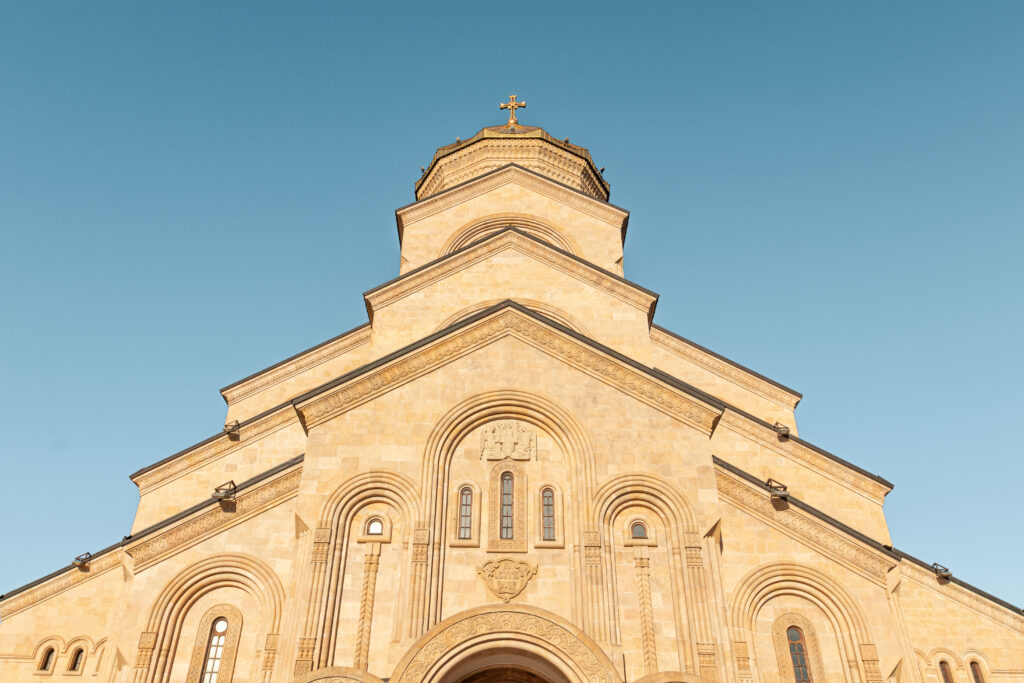 Holy Trinity Cathedral in Tbilisi
Kakheti Region
Kakheti, in eastern Georgia, is the country’s premier wine region and a must-visit for anyone interested in Georgian food, wine, and countryside landscapes. Rolling vineyards, rustic villages, and historic wineries make it a perfect destination for a day trip or an overnight stay from Tbilisi.
The charming town of Sighnaghi, often called the “City of Love,” is perched on a hilltop with cobbled streets, colourful houses, and panoramic views of the Alazani Valley and Caucasus Mountains. Walk along the city walls, enjoy local cafés, and take in the peaceful atmosphere, it’s one of Georgia’s most picturesque towns.
Kakheti is also famous for its wine-making traditions, including qvevri wine, where wine is fermented in large clay pots buried underground. Visiting a local winery is a must, both to taste the wine and to learn about this ancient technique. Many tours combine stops at Sighnaghi, local vineyards, and historic monasteries, making for a full, authentic experience of eastern Georgia.
Where to Stay in Kakheti
In Kakheti, most visitors base themselves in Sighnaghi, the charming hilltop town with cobbled streets and great views over the Alazani Valley. Accommodation ranges from cozy guesthouses and boutique hotels to a few mid-range options, many of which are family-run and include breakfast or wine tastings.
If you prefer staying closer to the vineyards, several wineries and countryside lodges offer overnight stays, giving a more authentic rural experience. Booking in advance is recommended during peak season, as Sighnaghi can get busy with tourists exploring the wine region.
Kazbegi Region
The Kazbegi region, in northern Georgia near the Russian border, is a destination for mountain lovers and adventure seekers. The town of Stepantsminda serves as the main base for exploring the area, with dramatic views of the towering Caucasus peaks and iconic Gergeti Trinity Church perched on a hilltop. Visitors can hike to waterfalls, alpine meadows, and remote villages, or take shorter trips to see the region’s natural beauty from the comfort of a 4×4 vehicle. The Georgian Military Highway, which winds through the mountains, offers incredible scenery and historical stops along the way, making the journey to Kazbegi as memorable as the destination itself.
Whether you’re planning a day trip from Tbilisi or a longer stay to explore the trails and valleys, Kazbegi is a must-visit for anyone looking to experience Georgia’s raw mountain landscapes. For a more detailed look at hiking routes, practical tips, and where to stay in Stepantsminda, check out my full Kazbegi Travel Guide.
Kutaisi and Surroundings
Kutaisi, in western Georgia, combines natural wonders with historic charm. The city itself has lively markets, historic churches, and relaxed cafés, but the surrounding area is where the real adventure lies. Visitors can explore canyons, waterfalls, and the famous Tskaltubo sanatoriums, once a Soviet-era spa destination. Kutaisi is also close to the cave where wine-making is said to have originated, making it a great stop for those interested in Georgian food and wine culture. For a deeper look at the city and nearby attractions, check my Kutaisi Travel Guide.
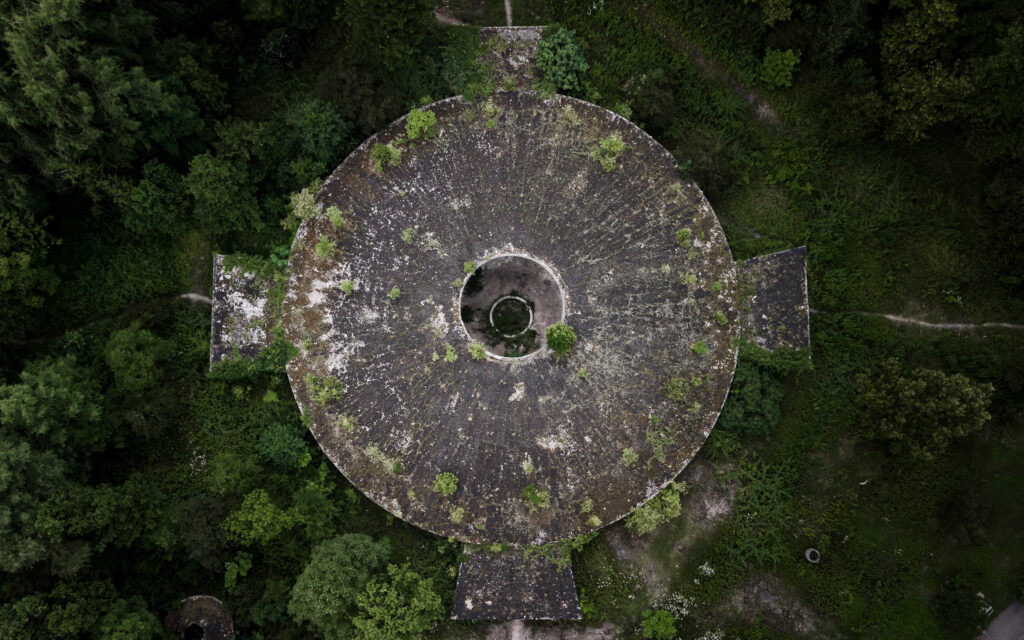 Top-down view of bandoned Bathhouse no. 8
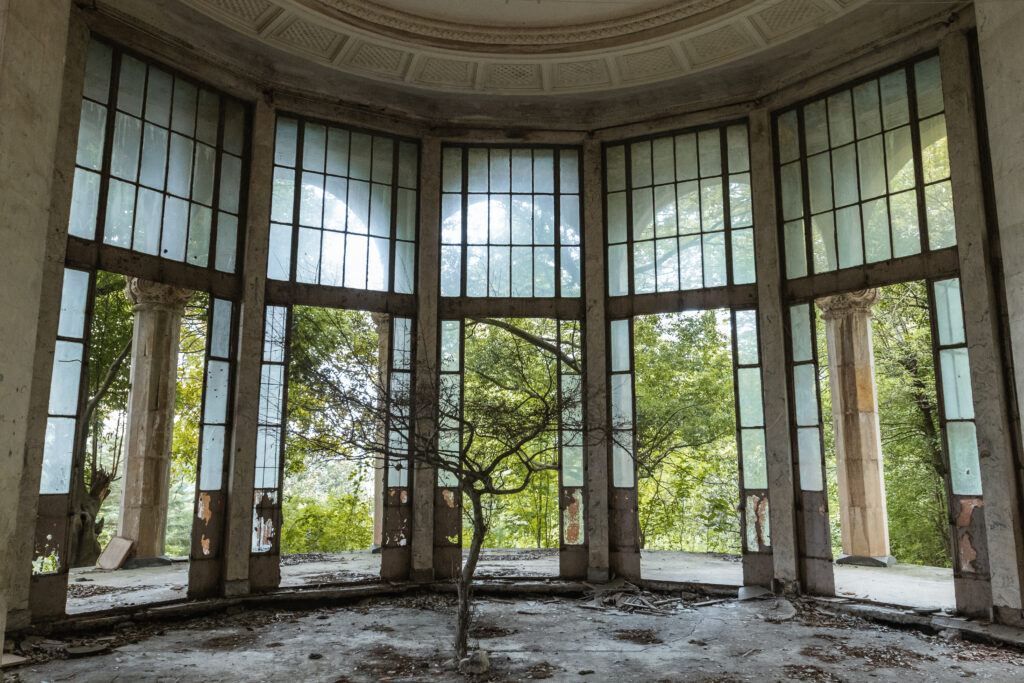 Tree growing inside the Sanatorium Metalurgist
Svaneti Region
Svaneti is some of Georgia’s most remote and striking regions, nestled deep in the Caucasus Mountains. Famous for their medieval stone towers, glaciers, and alpine landscapes, they are a paradise for trekkers and adventure travellers. The village of Ushguli, one of the highest continuously inhabited settlements in Europe, is particularly iconic, offering dramatic mountain views and a glimpse into traditional Svan life. Multi-day treks through Svaneti allow you to experience wild nature, isolated villages, and centuries-old churches that feel untouched by modern tourism. For more detailed hiking routes, accommodation tips, and local insights, see my Svaneti Travel Guide.
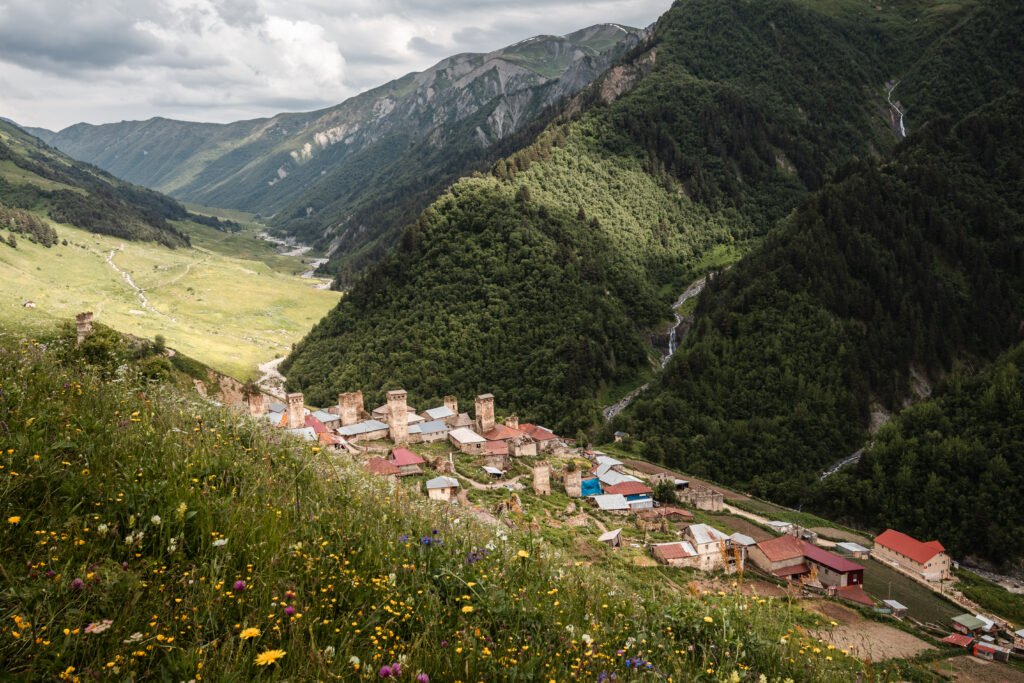 Traditional Svan towers in Adishi village
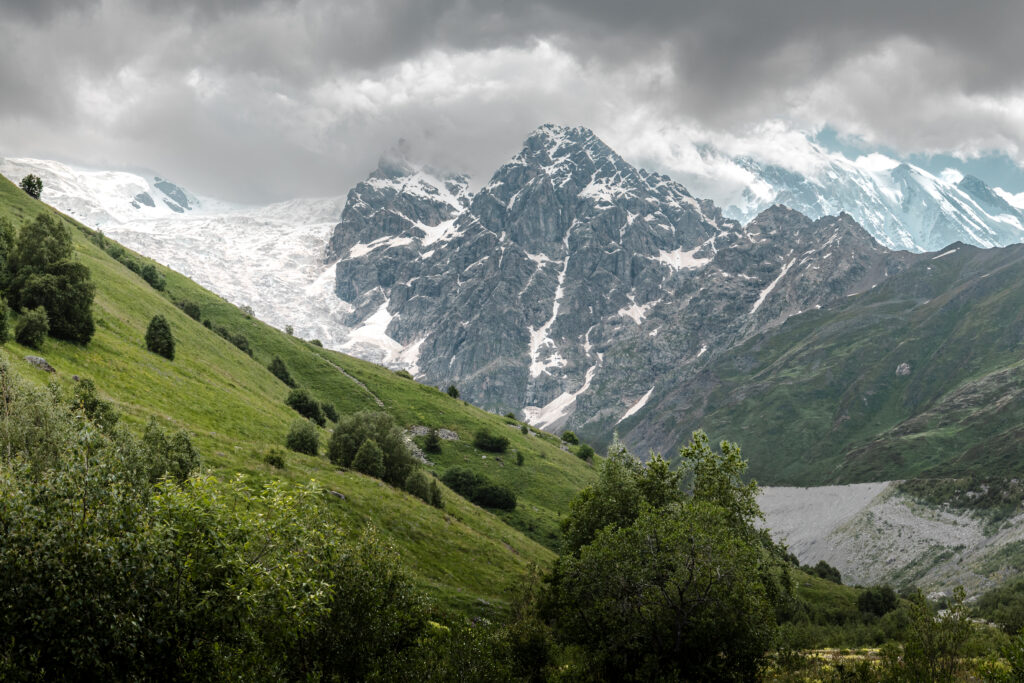 Glacier in Mestia-Ushguli Trek
Batumi
Batumi, on Georgia’s Black Sea coast, is a city of contrasts, blending modern architecture, seaside promenades, and a relaxed beach-town vibe. It’s a popular destination in summer, attracting both local and international visitors, but it also has plenty to offer outside the peak season.
The Batumi Boulevard is the heart of the city, a long seaside promenade lined with cafés, sculptures, and gardens. It’s perfect for walking, cycling, or simply relaxing by the water. Along the boulevard, you’ll find landmarks like the Alphabet Tower, celebrating the Georgian script, and the futuristic Piazza Square, with cafés and live music.
For architecture lovers, Batumi offers an eclectic mix of styles: from sleek modern buildings and glass towers to historic 19th-century European-style façades. The city also has several interesting parks, including the Botanical Garden, which sits on cliffs above the sea and boasts thousands of plant species from around the world.
Batumi is also a great place to sample Black Sea cuisine, especially fresh fish and seafood. Local markets offer affordable produce, and cafés along the boulevard serve traditional Georgian dishes like khachapuri, khinkali, and grilled meats. For nightlife, Batumi has plenty of bars and clubs, particularly near the boulevard and the city centre.
Beyond the city, the surrounding region offers natural attractions such as Mtirala National Park, beaches, and the nearby mountains, making Batumi a versatile stop for both relaxation and adventure. Even if you’re only passing through Georgia’s coastal region, spending a couple of days in Batumi gives you a taste of the country’s diversity, from modern city life to stunning coastal and mountain scenery.
Where to Stay in Batumi
Batumi has options for every budget. Staying near Batumi Boulevard or the city centre keeps you close to the promenade, cafés, and nightlife. For budget travellers, there are clean, welcoming hostels and guesthouses that make it easy to explore the city and nearby beaches.
If you prefer something quieter or more modern, beachfront hotels or the northern areas of Batumi offer a more relaxed stay with sea views. Mid-range and luxury options are also plentiful along the coast, so it’s easy to find accommodation that fits your comfort level.
Other Places Worth Going in Georgia
Georgia is full of hidden gems beyond the well-known destinations, and there are plenty of places I haven’t visited yet but are high on my list for future trips. Borjomi, famous for its mineral water and beautiful surrounding forests, is perfect for a relaxing break, hiking, and exploring the Borjomi-Kharagauli National Park.
For more adventurous travellers, Tusheti in the far northeast offers some of Georgia’s most remote and untouched landscapes. This high-altitude region is ideal for multi-day treks, mountain villages, and an authentic look at traditional Georgian mountain life. Accessibility is limited and often seasonal, which makes it a true off-the-beaten-path experience.
Other regions worth exploring include Adjara beyond Batumi, with its rivers, waterfalls, and coastal towns, as well as smaller mountain villages along the Caucasus spine. While I haven’t been to all of these yet, they are often recommended by locals and fellow travellers, and they highlight just how diverse and unspoiled Georgia can be for those willing to venture beyond the usual tourist routes.
Backpacking Georgia Independently Itineraries
Georgia rewards however much time you give it, but the regions are spread out enough that routing matters. The itineraries below are built around public transport (marshrutkas and trains), so no car rental needed. Each one is a suggested framework; adjust based on your pace and which regions interest you most.
10 Days in Georgia Itinerary
Ten days is enough for the eastern highlights and one western region. This itinerary skips Svaneti, since the travel time alone (9-10 hours each way) makes it hard to justify on a short trip, and prioritises Tbilisi, Kazbegi, and the Kutaisi area, with Batumi as an optional exit point.
| Days | Base | Focus |
|---|---|---|
| 1–3 | Tbilisi | Old Town, Narikala, Fabrika, food and wine |
| 4 | Sighnaghi, Kakheti | Day trip: vineyards, town walls, Alazani Valley views |
| 5–6 | Kazbegi | Marshrutka from Didube; Gergeti hike, valley walks |
| 7 | Tbilisi → Kutaisi | Return to Tbilisi, overnight train west |
| 8–9 | Kutaisi + surroundings | Tskaltubo sanatoriums, Martvili Canyon boat ride |
| 10 | Batumi | Half-day or full day on the Black Sea coast before leaving |
2 Weeks in Georgia Itinerary
Two weeks is the sweet spot for a well-rounded trip. This routing adds Svaneti, which deserves at least three nights, enough for Mestia itself and an Ushguli day trip by shared 4×4, without committing to the full four-day trek.
| Days | Base | Focus |
|---|---|---|
| 1–3 | Tbilisi | Old Town, day trips, eat everything |
| 4 | Sighnaghi, Kakheti | Day trip: wine, Sighnaghi town, Alazani views |
| 5–6 | Kazbegi | Mountain hiking, Gergeti Trinity Church |
| 7 | Tbilisi → Mestia | Long marshrutka day (~9-10 hrs from Didube) |
| 8–10 | Mestia + Svaneti | Mestia towers and day hikes; Ushguli day trip on day 10 |
| 11 | Mestia → Kutaisi | Marshrutka day (~4-6 hrs) |
| 12–13 | Kutaisi + surroundings | Tskaltubo, Martvili Canyon, Prometheus Cave |
| 14 | Batumi | Black Sea exit |
3+ Weeks: Georgia and into Armenia Itinerary
Three weeks gives you time to do everything without rushing, including the full Mestia to Ushguli trek in Svaneti, one of the best multi-day treks in the Caucasus and worth building the itinerary around. From Tbilisi at the end, the crossing into Armenia is straightforward: a marshrutka to Yerevan takes 5-6 hours and costs around €15.
| Days | Base | Focus |
|---|---|---|
| 1–3 | Tbilisi | City base, Old Town, food, orientation |
| 4 | Sighnaghi, Kakheti | Day trip east into wine country |
| 5–6 | Kazbegi | Mountains, hiking, Georgian Military Highway |
| 7 | Tbilisi | Buffer day / rest before the west |
| 8 | Tbilisi → Mestia | Full travel day |
| 9–13 | Svaneti | Mestia to Ushguli trek (4 days) + rest day in Ushguli |
| 14 | Ushguli → Kutaisi | Via Mestia |
| 15–16 | Kutaisi + surroundings | Tskaltubo, Martvili, caves |
| 17–18 | Batumi | Coast, Botanical Garden, Mtirala National Park |
| 19 | Batumi → Tbilisi | Train or marshrutka back east |
| 20 | Tbilisi | Final day / Borjomi day trip if time allows |
| 21+ | → Yerevan, Armenia | Marshrutka from Avlabari: see the Armenia travel guide |
Georgian Food and Wine
Georgia is famous for its food and wine. The country has one of the oldest wine-making traditions in the world, with natural wines produced across every region. Eating here is a cultural experience as much as a culinary one: meals are hearty, flavourful, and meant to be shared. Some of the classic Georgian dishes to try include:
For local restaurants, I highly recommend Pasanauri, which has several locations in the city and serves affordable, traditional Georgian dishes. It’s mostly locals who eat here, which is always a good sign. Another solid option is Mafshalia, known for homestyle Georgian food.
Beyond restaurants, almost any local bakery or café will have khachapuri, lobiani, and other staples, perfect for a snack or quick lunch. Pair your meal with a glass of Georgian wine or a shot of chacha (local grape brandy).
Practical Tips for Backpacking Georgia Independently
Connectivity: Getting a local SIM card is easy and affordable. You can purchase one at major providers like Magti, Beeline, or Geocell in Tbilisi, Batumi, and other cities. Having mobile data is useful for navigation, booking taxis via Bolt or Yandex Go, and accommodations. If you can’t bother getting a physical SIM card, you can always opt to get an eSIM, which allows you to get data as soon as you land in Georgia.
Need data before you land? Try Saily eSIM
Use code RITAHE1486 for $5 off your first plan.
Getting Around: Walking works well in most city centres, while taxis and rideshare apps like Bolt and Yandex Go are cheap and convenient. For intercity travel, marshrutkas (minibuses) and trains connect Tbilisi with major destinations like Kazbegi, Svaneti, Kutaisi, Batumi, and even across borders to Armenia and Azerbaijan.
Money: The local currency is the Georgian Lari (GEL). Cash is widely used, especially in smaller towns, though credit cards are accepted in most hotels, restaurants, and shops. ATMs are widely available in cities and towns, but non-existent in mountain villages. It’s better to withdraw large amounts of cash before heading to the mountains.
Avoid ATM fees with Wise
The card I use for all my travel withdrawals – real exchange rate, low fees.
Use Revolut to avoid ATM fees
Good alternative to Wise – I carry both as a backup.
Language: Georgian is the official language, and Russian is commonly understood, especially outside Tbilisi. English is increasingly spoken in tourist areas, hostels, and hotels.
Safety and Health: Georgia is generally safe for independent travellers. Standard precautions apply: keep an eye on your belongings in crowded areas and follow local advice when trekking in remote regions. Tap water is safe in Tbilisi and most cities, but in mountain villages, bottled water is recommended.
Don’t skip travel insurance!
I use SafetyWing for most trips – solid coverage for adventure travel.
FAQs on Backpacking Georgia Independently
Is Georgia safe to travel solo?
Yes, Georgia is one of the safer countries in the Caucasus for solo travellers. Violent crime is rare, and locals are genuinely hospitable. Solo female travellers generally feel comfortable here, though standard awareness applies in Tbilisi’s nightlife areas. The border regions with Russia (South Ossetia) and the occupied territory of Abkhazia should be avoided.
Do I need a visa for Georgia?
Citizens of most European, North American, and Australian countries can enter Georgia visa-free for up to 365 days. Check your specific passport requirements before travelling.
What currency does Georgia use?
The Georgian Lari (GEL). Cash is widely used, especially in rural areas and for marshrutkas. Cards are accepted in Tbilisi and larger towns. ATMs are widely available, use Wise or Revolut to avoid fees.
Can I travel Georgia without a car?
Yes. Marshrutkas connect all major towns and most tourist regions. Tbilisi, Kutaisi, Batumi, Kazbegi, and Mestia (Svaneti) are all reachable by public transport. Remote areas like Tusheti are harder without a 4×4, but the main tourist circuit is very doable independently.
How many days do I need in Georgia?
Two weeks is the minimum for a well-rounded trip covering Tbilisi, Kazbegi, and one western region (Kutaisi or Svaneti). Three weeks lets you do everything without rushing, including the Mestia-Ushguli trek.
Can I combine Georgia and Armenia in one trip?
Absolutely. The Tbilisi–Yerevan marshrutka takes 5-6 hours and costs around €15. Most travellers do 2-3 weeks in Georgia then cross south, or vice versa. See my Armenia travel guide for how to continue the trip.
Final Thoughts
Georgia is a country that surprises at every turn. From the vibrant streets and cafés of Tbilisi to the dramatic peaks of Kazbegi, the remote villages of Svaneti, the historic sites around Kutaisi, and the coastal charm of Batumi, there’s a mix of culture, adventure, and natural beauty for every type of traveller.
The combination of friendly locals, rich history, stunning landscapes, and affordable food and accommodation makes Georgia an ideal destination for independent travellers, solo adventurers, and budget-conscious explorers. Whether you’re trekking in the mountains, sampling wine in Kakheti, or wandering cobbled streets in Sighnaghi, Georgia leaves a lasting impression that keeps you coming back.
Use this guide to plan your route, pick the regions that excite you most, and discover both the well-known highlights and hidden gems of the country. With its diversity and accessibility, Georgia is a place that rewards curiosity, adventure, and a willingness to explore beyond the usual tourist paths.
Explore More of the Caucasus
Georgia is just one highlight of the Caucasus, and there’s so much more to explore nearby. For travellers heading south, Armenia Travel Guide shows how to experience Yerevan, Dilijan, Lake Sevan, and the country’s incredible monasteries on a budget.
Here are the detailed guides I’ve written for Georgia’s top regions.
Tbilisi Travel Guide: Where to stay, what to eat, and how to spend your time in one of the most underrated capitals in the region. Also your most likely entry and exit point for Armenia.
Kutaisi Travel Guide: Georgia’s second city and a good base for the caves, canyons, and monasteries of western Georgia. Easy to reach by overnight train from Tbilisi.
Kazbegi: The Caucasus Mountains: The most dramatic day trip from Tbilisi, or a destination in its own right. Gergeti Trinity Church, big hikes, and the kind of mountain scenery that makes you want to stay longer.
The Mestia to Ushguli Trek, Svaneti: One of the best multi-day treks in the Caucasus. Remote, stunningly beautiful, and entirely doable independently. If you’re already this deep into the region, don’t skip it.
Whether you’re planning a short trip or an extended journey through the Caucasus, these guides will help you discover the best of the region’s landscapes, culture, and off-the-beaten-path experiences.