
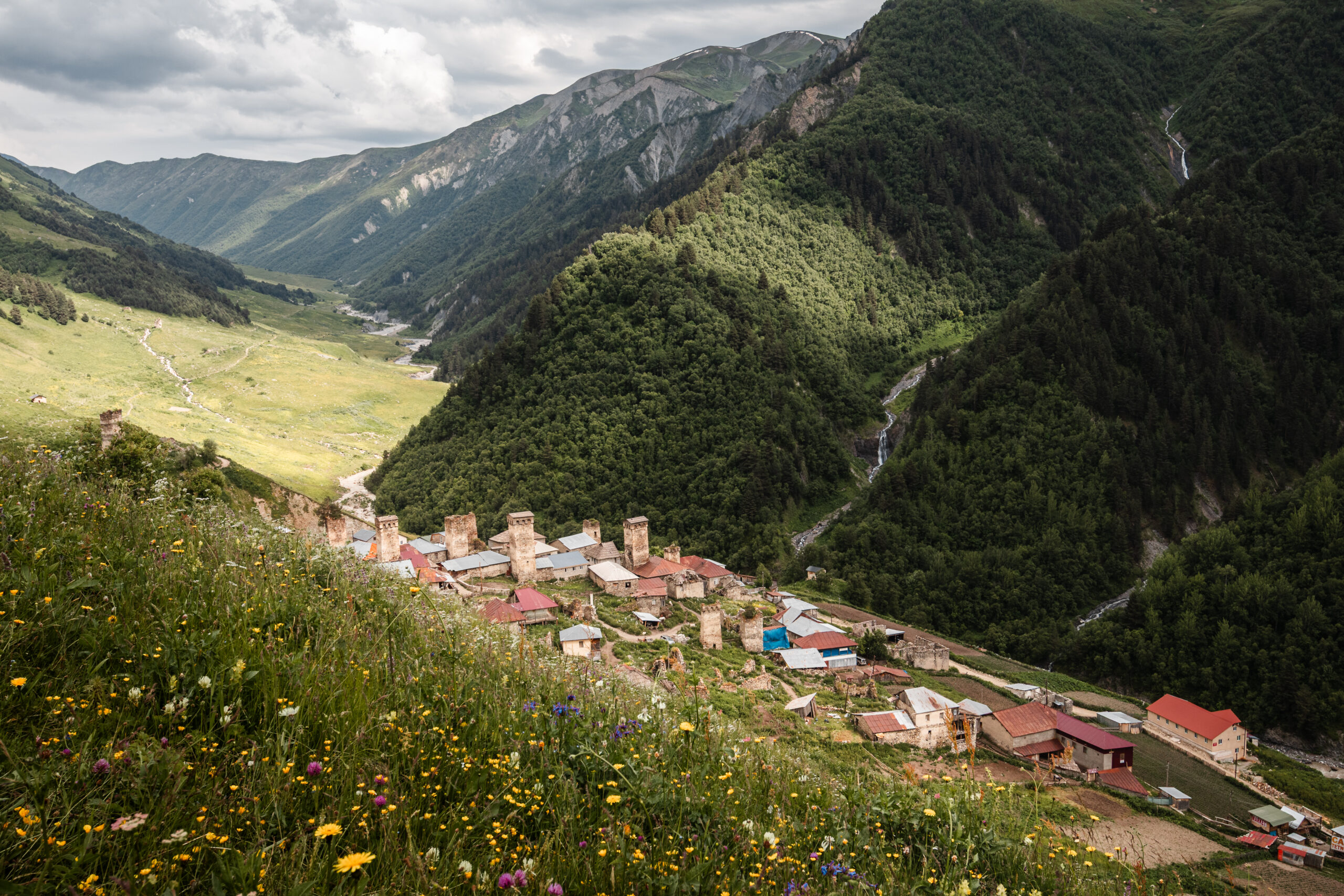
The Mestia to Ushguli trek is one of the best multi-day hikes in the Caucasus, and one of the most rewarding I’ve done anywhere. Four days through remote Svan villages, alpine meadows, glaciers, and mountain passes, ending at one of the highest inhabited settlements in Europe. I did it in July 2022, and this guide covers everything: daily distances, altitude gain, guesthouses I actually stayed in, and the river crossing on day three that nobody mentions until you’re standing in front of it.
Svaneti itself, the far northwest corner of Georgia, is like nowhere else. Medieval stone towers rise from village rooftops, the mountains are enormous, and the communities along the trail have barely changed in centuries. If you’re planning a trip to Georgia and you have four spare days, this trek should be on the list.
How to Get to Mestia
Reaching Svaneti requires a bit of planning since it’s a remote mountainous region. Most travellers base themselves in Mestia, the main town, which serves as a hub for exploring the surrounding villages, trails, and peaks.
From Tbilisi: The journey from Tbilisi to Mestia takes roughly 10-12 hours by road. You can take a marshrutka (minibus) from Didube Station in Tbilisi, which is the most budget-friendly option.
From Kutaisi: Kutaisi is closer, about 6-8 hours by road. Marshrutkas leave regularly from the main bus station, and private taxis or transfers are also available. This route is often scenic, passing through mountain valleys and small towns along the way.
From Batumi: Travelling from Batumi to Mestia is longer, around 10-12 hours, and usually involves a combination of marshrutkas via Zugdidi. While it’s possible to do this entirely by public transport in one long day, sometimes people choose to break up the journey with an overnight stay in Zugdidi.
Road Conditions: The roads to Svaneti are mountainous and winding, with some stretches of unpaved road. During winter and early spring, snow can make the journey slower or inaccessible without a 4×4. Always check local conditions before setting out, particularly if travelling independently.
How much does the Mestia-Ushguli trek cost?
The trek itself is very affordable. Guesthouses along the route typically charge a fixed rate that includes dinner and breakfast, exceptional value given the remoteness.
| Category | Approximate cost | Notes |
|---|---|---|
| Guesthouse (per night, with dinner + breakfast) | €15-25 | Price per person; includes two meals |
| Lunch/snacks on trail | €3-7 | Limited options: bring food from Mestia |
| Tbilisi to Mestia marshrutka | €10-14 | ~10-12 hours from Didube Station |
| Horse crossing assistance (day 3 river) | €2-5 | Optional but strongly recommended |
| Total trek cost (4 nights guesthouses) | €60-100 | Excluding transport to/from Mestia |
Pro Tip: Mestia itself has a few cafés and shops. Stock up on snacks and any supplies before starting the trail, as options on the route are very limited.
What to Do in Svaneti
Svaneti is a region made for trekking, history, and immersive mountain experiences. Most travellers use Mestia as a base to explore the surrounding mountains and villages, with the highlight being the trek to Ushguli, one of Europe’s highest inhabited villages.
Mestia (The Main Town)
Mestia itself is small and doesn’t have many attractions, but it’s the perfect base for planning treks and exploring the region. The town has guesthouses, shops, and a few cafés, but one spot stands out: a cozy bar/café with an impromptu cinema on the top floor. They screen the Georgian film Dede every day.
The film is set in Ushguli and other similar villages, and watching it is a wonderful introduction to Svaneti life, showing the isolation, traditions, and mountain culture that you’ll see along the trek. It’s a thoughtful way to contextualize what you’re about to experience in the villages and landscapes surrounding Mestia. The film is also shown in Ushguli but I’d recommend to watch it before trekking.
Where to Stay in Mestia
Mestia is the main hub for exploring Svaneti and the starting point for the trek to Ushguli. Accommodation here ranges from small guesthouses to budget-friendly hostels and a few mid-range hotels. The guesthouses and small hotels are convenient for arranging guides, transportation, and last-minute trekking supplies. Staying in Mestia allows you to get acclimatised to the mountain environment and enjoy a relaxed evening before heading out on multi-day treks.
Mestia to Ushguli Trek
The trek from Mestia to Ushguli is the most famous in Svaneti and one of the most popular in all of Georgia. I did it in July 2022, and while it wasn’t very crowded, the days could get quite hot under the summer sun. The trails were absolutely stunning, with wildflowers blooming everywhere, adding bursts of colour to the dramatic mountain scenery.
The trek usually takes 4 days, passing through traditional Svan villages, alpine meadows, rivers, and glaciers. It’s a mix of cultural immersion and outdoor adventure, giving you a real sense of life in these remote mountain communities.
Trek Overview
Duration: 4 days
Elevation gain: ~2,100 metres
Difficulty: Moderate to challenging (river crossing)
Season: Late June to early September (it gets hot during the day in summer)
Accommodation: Small guesthouses in the villages along the trek. Basic but comfortable and provide you with delicious Georgian breakfasts and dinners
Guide? Not necessary, but recommended for unexperienced trekkers
Day 1: Mestia to Chvabiani
The first day of the trek, from Mestia to Chvabiani, is about 15 km with an altitude gain of around 500 meters. The trail winds through forests, streams, and small farmland patches, gradually ascending as you leave the town behind. Along the way, you can admire traditional Svan towers and scattered hamlets, giving a first taste of the region’s architecture and culture.
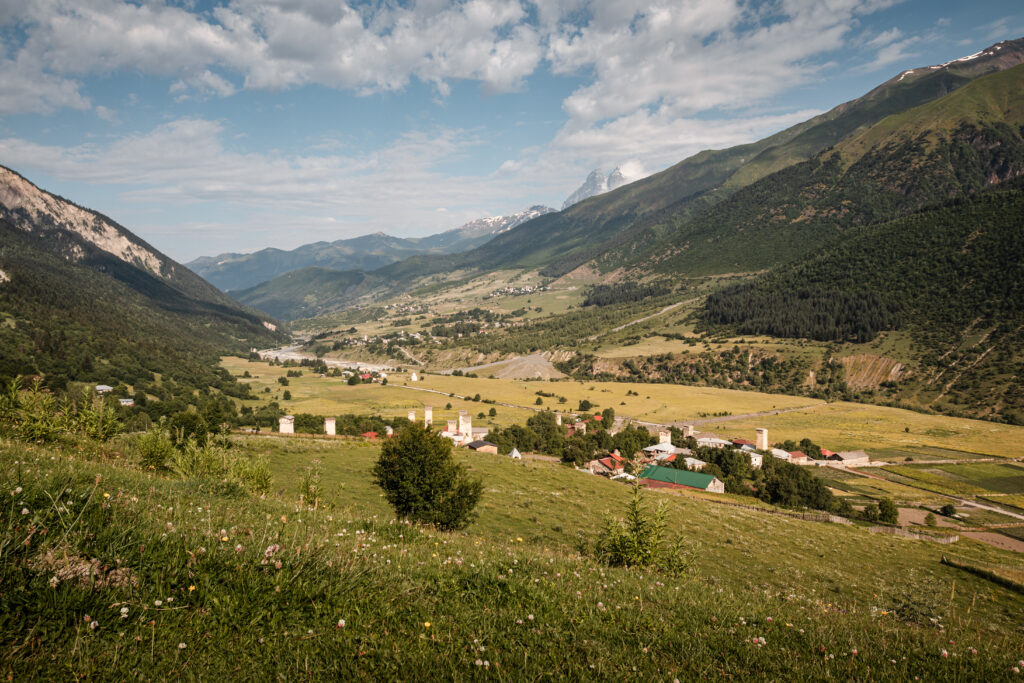 Arrival to Chvabiani village
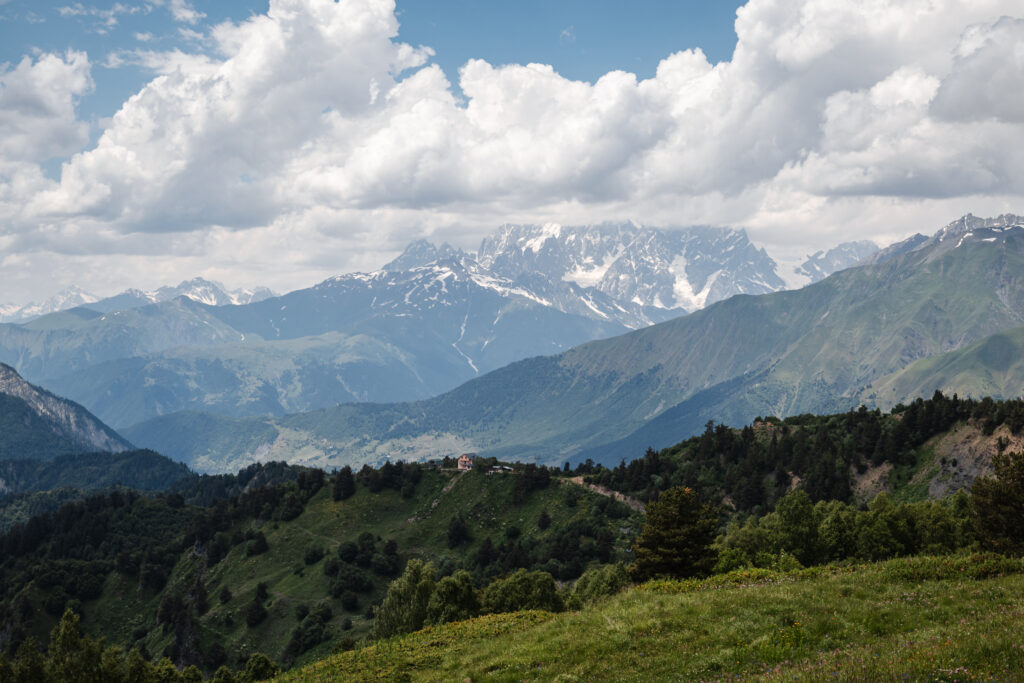 Views of the Caucasus mountains
I stayed at Maizer Qaldani Guesthouse in Chvabiani, which I loved. The hosts were incredibly friendly, the food was hearty and delicious, and the cozy rooms were perfect after a day on the trail. It’s a great first stop to settle into the rhythm of the trek.
Day 2: Chvabiani to Adishi
On the second day, the trek continues from Chvabiani to Adishi, covering roughly 12 km with an altitude gain of 600 meters. The path climbs steadily through open meadows and forests, with increasingly dramatic mountain views. Rivers and glaciers come into view, hinting at the high peaks ahead. Adishi is a tiny village full of charm, with medieval stone towers and traditional Svan houses.
I stayed in a small guesthouse here, which offered a warm meal and a comfortable place to rest before the next day’s longer hike.
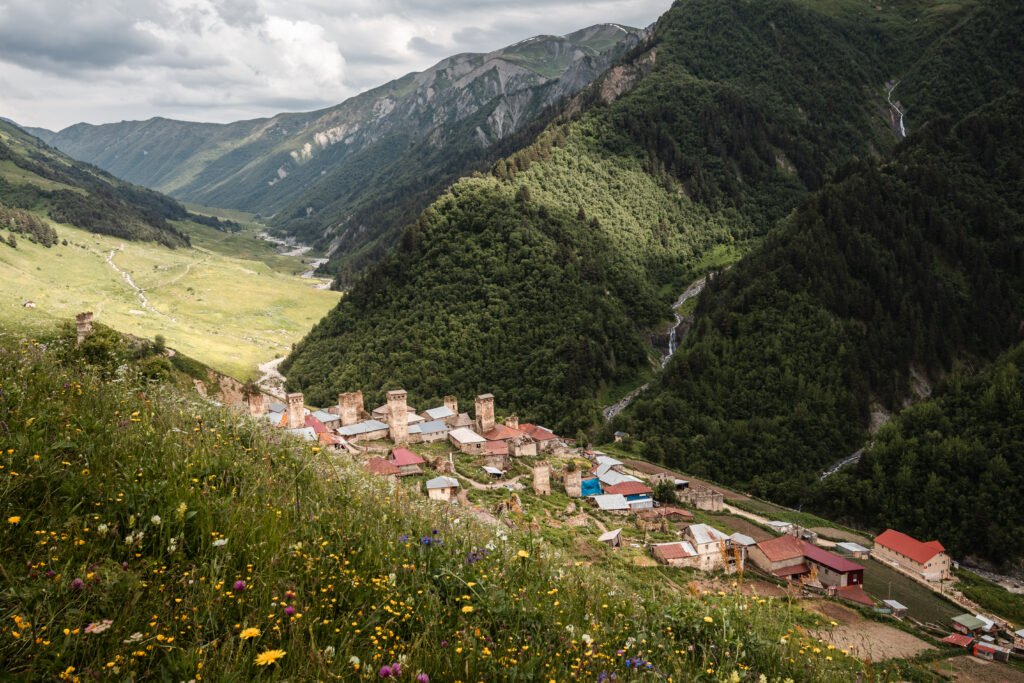 Adishi Village with traditional Svan towers
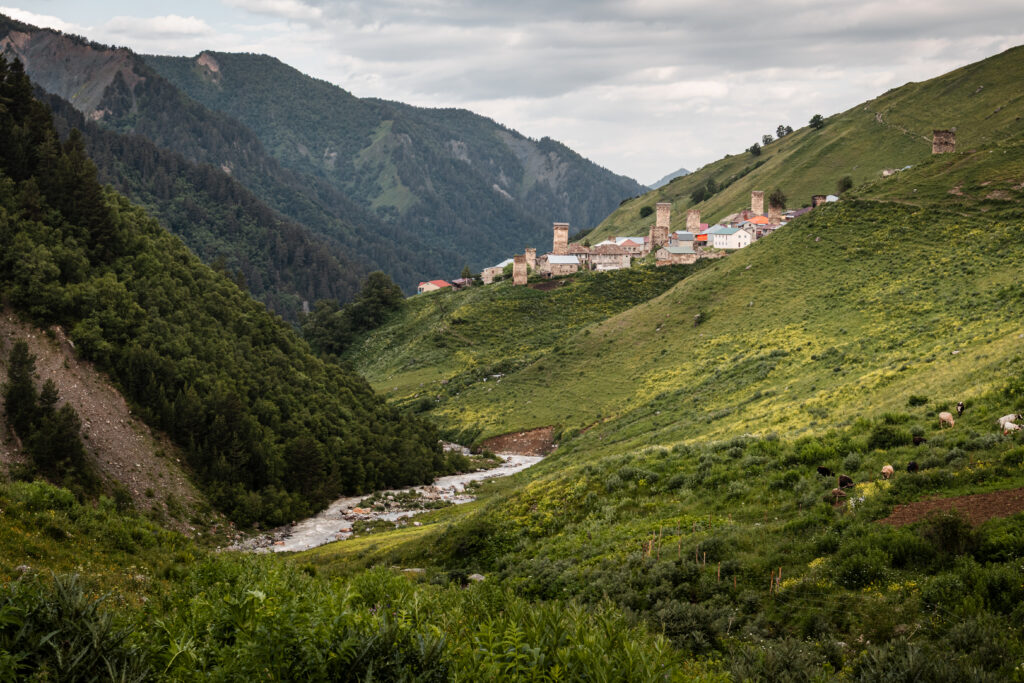 Adishi Village with traditional Svan towers
Day 3: Adishi to Betegi Guesthouse
Day three takes you from Adishi about 10 km with an altitude gain of 800 meters. This is one of the more challenging sections, crossing higher valleys and walking alongside rivers while the mountains loom closer. There is a strong river crossing on this day, which can be dangerous, so I highly recommend waiting for the locals by the river with horses, they can safely help you across. Villages are sparse, making it easy to feel the remoteness of Svaneti and the traditional lifestyle of its residents.
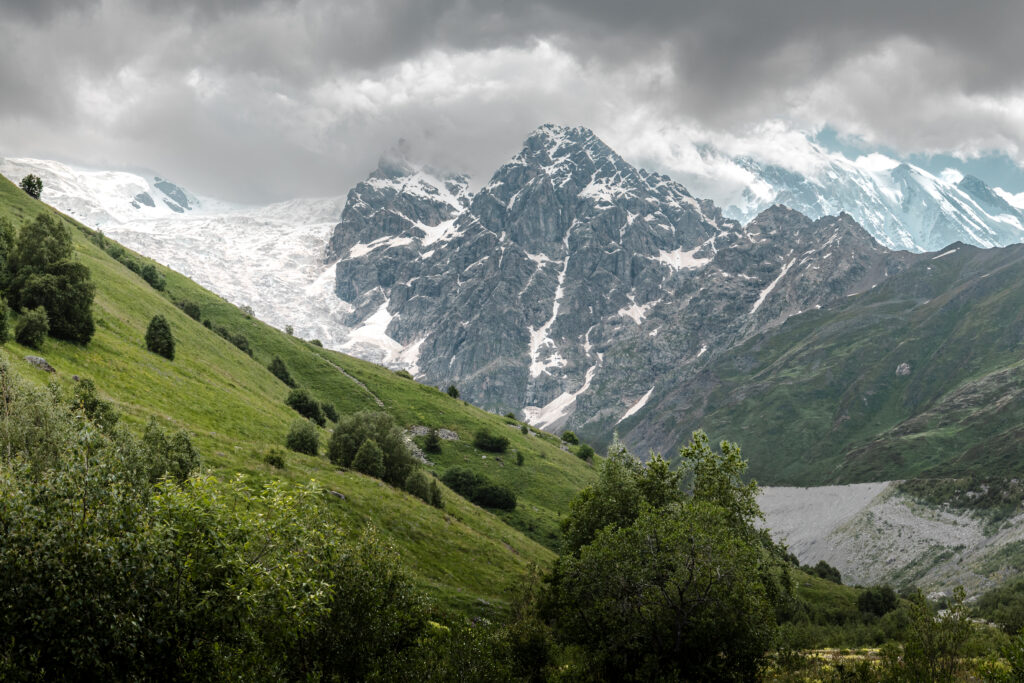 First views of the glacier
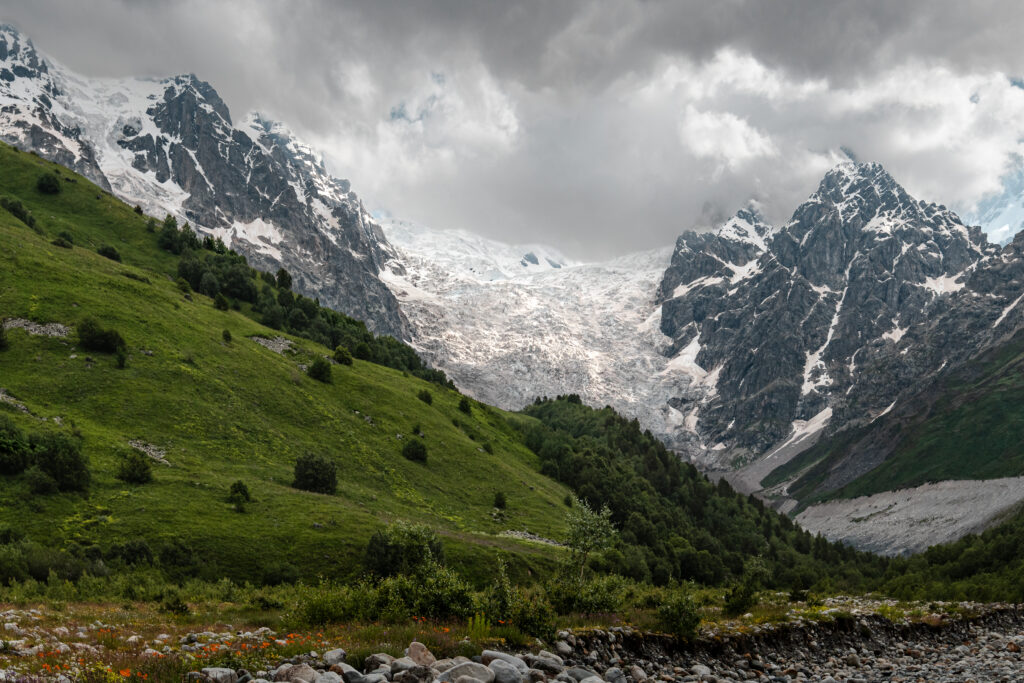 Views of the glacier before the river crossing
I stayed at Betegi Guesthouse and can’t recommend it enough. The owners were incredibly kind, the food was delicious and even got to drink some Georgian wine and chacha. It provided a welcoming stop with hearty food and a cozy place to recharge for the final day.
Day 4: To Ushguli
The fourth and final day of the trek, until Ushguli, is roughly 15 km with a moderate altitude gain of 300 meters, mostly a gradual climb into the village. Ushguli sits over 2,100 meters above sea level and is a UNESCO World Heritage site. The trail passes glaciers, alpine meadows, and remote hamlets before reaching the iconic village. Walking into Ushguli, with its towers and traditional houses set against Mount Shkhara, is an unforgettable experience and the perfect reward after four days in the mountains.
What to Pack for the Mestia-Ushguli Trek
Packing well is essential for the Mestia to Ushguli trek, as you’ll be spending several days in remote mountain terrain with variable weather. Even in summer, temperatures can fluctuate between hot afternoons and chilly mornings or evenings, and the trail includes river crossings, rocky paths, and alpine meadows. This is a list of what to pack, if like me you’re staying at the guesthouses in the villages. You can also opt for camping, but that would add a lot more weight to your backpack.
Other Things to Do in Svaneti
1. Explore Mestia’s Svan Towers and Museums – Even if you’re not trekking, wandering around Mestia to see its medieval Svan stone towers is fascinating. You can also visit the Svaneti Museum of History and Ethnography, which houses unique icons, religious artifacts, and exhibits on local life, giving context to the villages and traditions you’ll see on the trek.
2. Short Day Hikes – There are several smaller hikes around Mestia that don’t require trekking to Ushguli. For example, trails to the Koruldi Lakes offer stunning mountain views, wildflowers in summer, and a manageable day hike with minimal elevation gain.
4. Mountaineering and Glacier Views – For experienced climbers, Svaneti offers high-altitude hikes and glacier excursions. Even if you don’t climb, vantage points along the trails give incredible views of Mount Shkhara and nearby peaks.
5. Cultural Immersion – Spend time with local Svans, many of whom still follow traditional lifestyles. Visiting a family home, seeing local cheese-making, or helping with chores can give a deeper understanding of life in these isolated villages.
Practical Tips for Travelling in Svaneti
Best Time to Visit: The ideal months are late June to early September, when the weather is warm, trails are clear, and wildflowers are in bloom. Summer days can get quite hot, especially on exposed sections of the trek, so start early and carry sun protection. Winter and early spring are not recommended due to snow and potentially dangerous roads.
Guides and Navigation: Hiring a local guide is optional but recommended for first-timers. Guides can help with navigation, offer insights into local culture, and assist with river crossings, which can be dangerous if attempted alone.
Connectivity: Getting a local SIM card is simple and affordable. You can buy one at most convenience stores in the city. Once on the trek, mobile service is spotty or non-existent. Make sure you use your data before to download offline maps in Maps.Me or Gaia.GPS. If you can’t bother getting a physical SIM card, you can always opt to get an eSIM, which allows you to get data as soon as you land in Georgia.
Need data before you land? Try Saily eSIM
Use code RITAHE1486 for $5 off your first plan.
Food and Water: Guesthouses provide meals, so you don’t need to carry much food, but bringing some snacks or trail food is helpful for long hiking stretches. Water is generally safe at guesthouses, but carrying a small filter or purification tablets can be wise if hiking to more remote spots.
Money: There are no ATMs on the trail once you leave Mestia. Make sure you withdraw enough Georgian Lari (GEL) before, since you’ll need to pay for everything in cash. Check the budget breakdown section above to help you estimate the amount of cash you’ll need.
Avoid ATM fees with Wise
The card I use for all my travel withdrawals – real exchange rate, low fees.
Use Revolut to avoid ATM fees
Good alternative to Wise – I carry both as a backup.
Health & Safety: Svaneti is remote, so always tell someone your plans, carry a fully charged phone, and be prepared for sudden weather changes. Respect local customs and traditions, especially in smaller villages where people maintain traditional ways of life.
Don’t skip travel insurance!
I use SafetyWing for most trips – solid coverage for adventure travel.
FAQs about the Mestia to Ushguli Trek
Is the Mestia to Ushguli trek hard?
Moderate difficulty. The daily distances are manageable (10-15 km), but the altitude gain on day 3 is significant and the river crossing can be dangerous in high water. No technical climbing required, but you need to be comfortable with full hiking days and variable mountain weather.
Do I need a guide for the Mestia–Ushguli trek?
Not strictly necessary, the trail is well-used and generally followable. That said, if you’re an inexperienced hiker or going early/late season, a guide adds real safety value, especially for the river crossing on day 3. Your guesthouse in Mestia can help arrange one.
When is the best time to do the Mestia–Ushguli trek?
Late June to early September. Snow can block higher sections before mid-June, and conditions deteriorate again in October. July and August are the most popular months: trails are open and guesthouses are reliably staffed, though it can get hot during the day.
Can I do the trek in reverse (Ushguli to Mestia)?
Yes. Some people prefer it as it means you reach the most dramatic scenery earlier. Logistically it requires getting to Ushguli first, which means you need to arrange a 4×4 taxi from Mestia (~€30-40 one way).
How do I get from Tbilisi to Mestia?
By marshrutka from Didube Station in Tbilisi. The journey takes 10-12 hours and costs around €10-14. There are also flights from Tbilisi to Mestia (Mestia Airport), which are weather-dependent and can be cancelled, don’t rely on them with a tight itinerary.
Is there mobile signal on the trek?
Patchy at best. Mestia and Ushguli have some coverage, but you’ll be largely offline between villages. Download offline maps (Maps.me or Google Maps offline) before you start.
Final Thoughts
Svaneti is a truly magical region of Georgia, where dramatic mountain landscapes, medieval stone towers, and centuries-old villages combine to create an unforgettable experience. Trekking from Mestia to Ushguli offers both adventure and cultural immersion, with alpine meadows, glaciers, and traditional Svan communities along the way. Even if you don’t trek, exploring Mestia, visiting local museums, and enjoying the remote villages give a real sense of life in this unique corner of the Caucasus.
Visiting Svaneti rewards curiosity, patience, and a love of the outdoors. The region is remote but accessible, and the mix of breathtaking scenery, warm hospitality, and centuries-old traditions makes it one of Georgia’s most memorable destinations. Whether you’re planning a short visit or a multi-day trek, Svaneti leaves a lasting impression and is a must-see for anyone looking to experience the wild, authentic side of the Caucasus.
Explore More of the Caucasus
After trekking from Mestia to Ushguli, you can either go to Tbilisi, Batumi or explore other regions of Georgia. Here are all the guides I’ve created to help you plan your trip:
Tbilisi Travel Guide: Where to stay, what to eat, and how to spend your time in one of the most underrated capitals in the region. Also your most likely entry and exit point for Armenia.
Backpacking Georgia: Independent Travel Guide: The full overview: how to get around, where to go, what it costs, and why Georgia deserves more than a rushed week.
Kutaisi Travel Guide: Georgia’s second city and a good base for the caves, canyons, and monasteries of western Georgia. Easy to reach by overnight train from Tbilisi.
Kazbegi: The Caucasus Mountains: The most dramatic day trip from Tbilisi, or a destination in its own right. Gergeti Trinity Church, big hikes, and the kind of mountain scenery that makes you want to stay longer.
For those crossing the border south, my Armenia Travel Guide explains how to get there by public transport, where to stay, and the highlights of Yerevan, Dilijan, and the surrounding region.