
If you’re looking to travel the Karakoram Highway by public transport, this is the complete guide: exact routes, costs, and how to do it independently without a tour. I travelled this route solo using local buses, shared vans, and hitchhiking, and everything in this guide is based on firsthand experience.
Carved through three of the world’s greatest mountain ranges and reaching 4,693 metres at the Chinese border, the KKH is one of the most spectacular roads on Earth, and one of the easiest in Pakistan to navigate without a private driver or organised tour.
What is the Karakoram Highway? (Route Overview & Map)
Often dubbed the “Eighth Wonder of the World,” the Karakoram Highway is the highest paved international road on the planet. Stretching over 1,300 kilometres, it connects the city of Hasan Abdal near Islamabad to Kashgar in China, crossing through the dramatic mountains of northern Pakistan and the Khunjerab Pass at an altitude of 4,693 metres.
Built jointly by Pakistan and China between the 1960s and 1970s, the highway is not only a feat of engineering but also a symbol of cross-border cooperation and a modern echo of the ancient Silk Road. Along the way, it cuts through three of the world’s greatest mountain ranges: the Himalayas, the Hindu Kush, and the Karakoram.
Travellers on the KKH are treated to an ever-changing landscape of snow-capped peaks, turquoise rivers, hanging glaciers, and vibrant villages, with every bend in the road offering a new perspective. The route also serves as the main access point to some of Pakistan’s most iconic destinations, including Hunza Valley, Gilgit, and the Khunjerab Pass.
The KKH is open year-round up to Sost, but the section beyond leading to the Khunjerab Pass and the Chinese border is typically closed during winter months (November to April) due to heavy snowfall. The best time to travel is from May to October, when the weather is mild and the views are the most breathtaking.
Can You Travel the Karakoram Highway Without a Tour?
Yes. You absolutely can travel the Karakoram Highway without a tour, and it’s far easier than most people think. Despite its remote location in northern Pakistan, the Karakoram Highway is a vital transport route connecting major towns like Islamabad, Gilgit, and the Hunza Valley. Because of this, there is a surprisingly well-established network of local buses, shared vans, and jeeps running along the highway every day.
You don’t need to book anything in advance, and you definitely don’t need to join an organised tour. In fact, travelling the Karakoram Highway independently is not only cheaper, but also a far more immersive experience. Instead of moving quickly from one viewpoint to another, you travel alongside locals, stop in small villages, and experience the rhythm of life in the mountains.
That said, it does require a bit more flexibility. Public transport in northern Pakistan isn’t always predictable: buses don’t run on fixed schedules, roads can be affected by landslides or weather, and journeys often take longer than expected. But if you’re comfortable with a bit of uncertainty, it’s all part of the experience.
During my own journey, I travelled the entire route using a mix of local buses, shared taxis, and the occasional hitchhiked ride. At no point did I feel like I needed a tour, and I found it surprisingly straightforward to navigate. For independent travellers, especially those on a budget, this is without a doubt the best way to experience one of the most spectacular roads in the world.
How to Reach the Karakoram Highway
From Lahore
If you’re arriving in Pakistan via Lahore and plan to travel north, your first stop will be Islamabad. Getting there is straightforward, with frequent departures throughout the day. Several bus companies operate this route from Lahore, offering a range of comfort levels. You can find the bus companies on this road in Lahore and I recommend Faisal Movers. The journey takes around 5 hours and typically costs around 1,500 PKR, depending on the company and the type of bus you choose.
Check out my Lahore detailed guide on what to do in the city, where to stay and how to navigate it as a woman.
From Islamabad
Islamabad is the capital of Pakistan and the main jumping-off point for anyone heading north along the Karakoram Highway. Clean, green, and surprisingly modern, it offers a soft landing into the country before the wild mountain roads begin, but it doesn’t fully reflect what most people imagine a Pakistani city to be.
Check out the Islamabad full guide on what to do in the city, where to stay and eat, and how to go north independently.
Stocking Up Before You Go
Need data before you land? Try Saily eSIM
Use code RITAHE1486 for $5 off your first plan.
Getting from Islamabad to the Karakoram Highway
Most travellers heading north take a long-haul bus to Gilgit, the first major hub along the KKH. The journey takes around 18-20 hours and passes through the dramatic Babusar Pass or the longer, lower-altitude route via Besham and Chilas. The bus cost 5000 PKR (around 16€).
You can also opt for a shared taxi – it’s a bit more expensive but significantly faster (around 12 hours). Just keep in mind that it’s much harder to get any sleep. The shared taxi will cost 6000 PKR (back seat) and 10000 PKR (front seat).
Update 2026: Now other companies besides NATCO can take foreigners like, for example, Faisal Movers. Check at the bus station in Rawalpindi for updated information.
Getting from Skardu to the Karakoram Highway
You can also choose to fly from Lahore or Islamabad directly to Skardu to save time and avoid a long road journey. Flying to Skardu is generally more reliable than flying to Gilgit, as flights to Gilgit are cancelled very frequently. If you’re looking for ideas on what to do in Skardu and practical tips for visiting the region, check out my detailed guide to Skardu & nearby valleys.
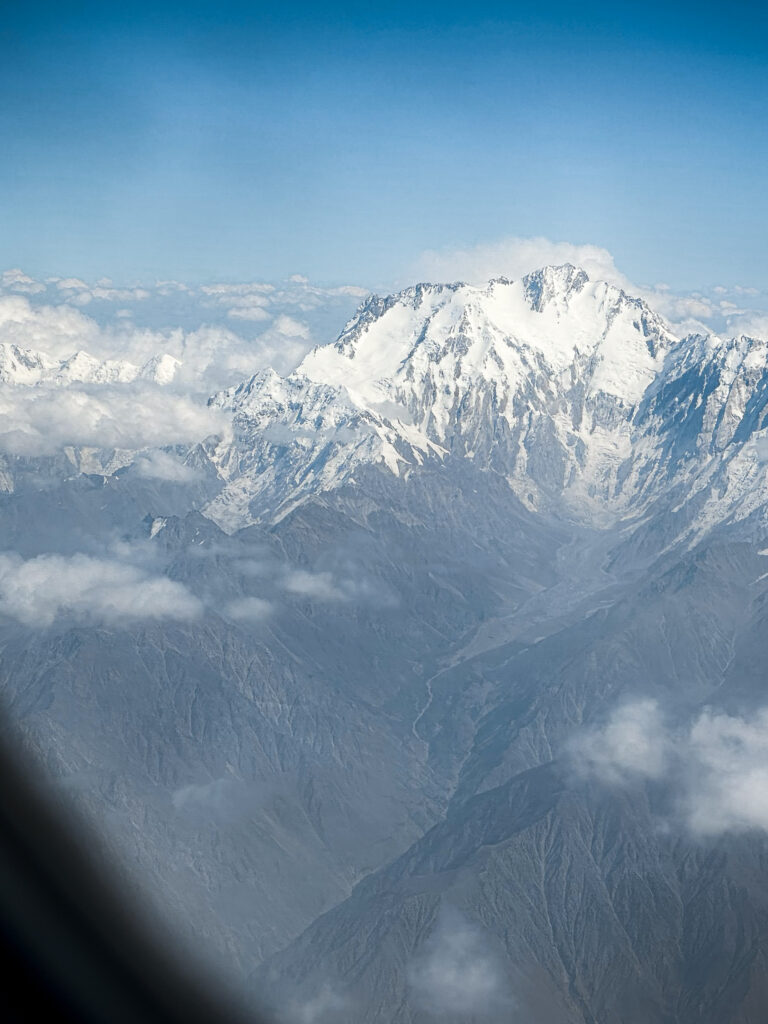 Views of Nanga Parbat from while flying to Skardu
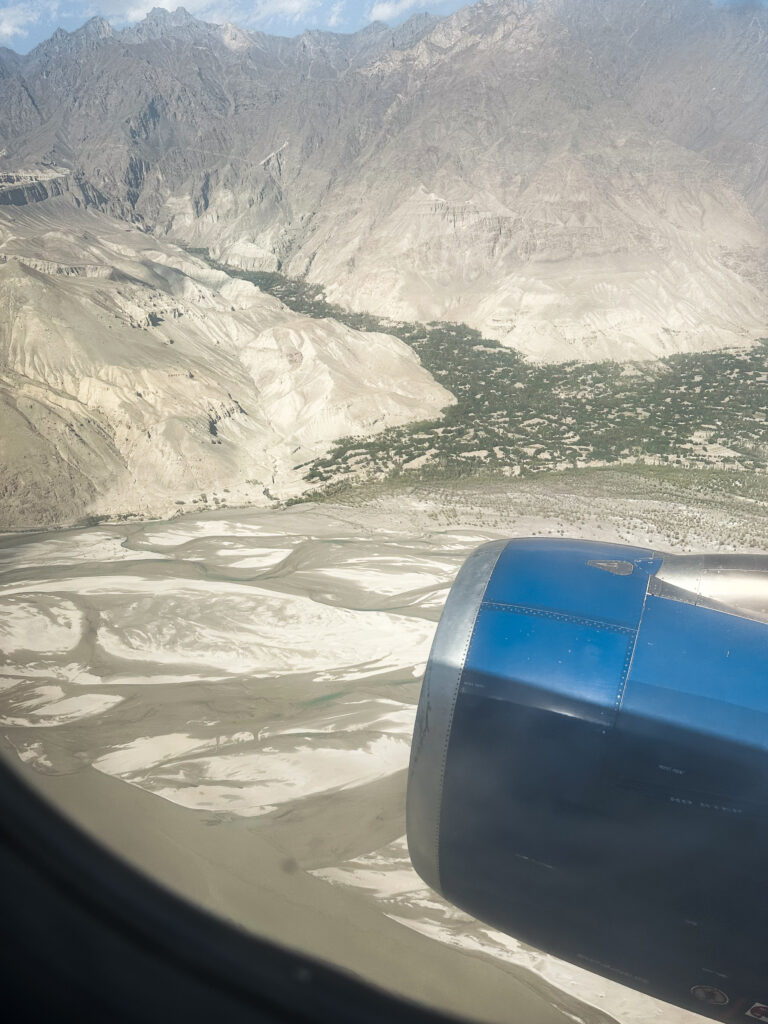 Flying over Skardu Valley
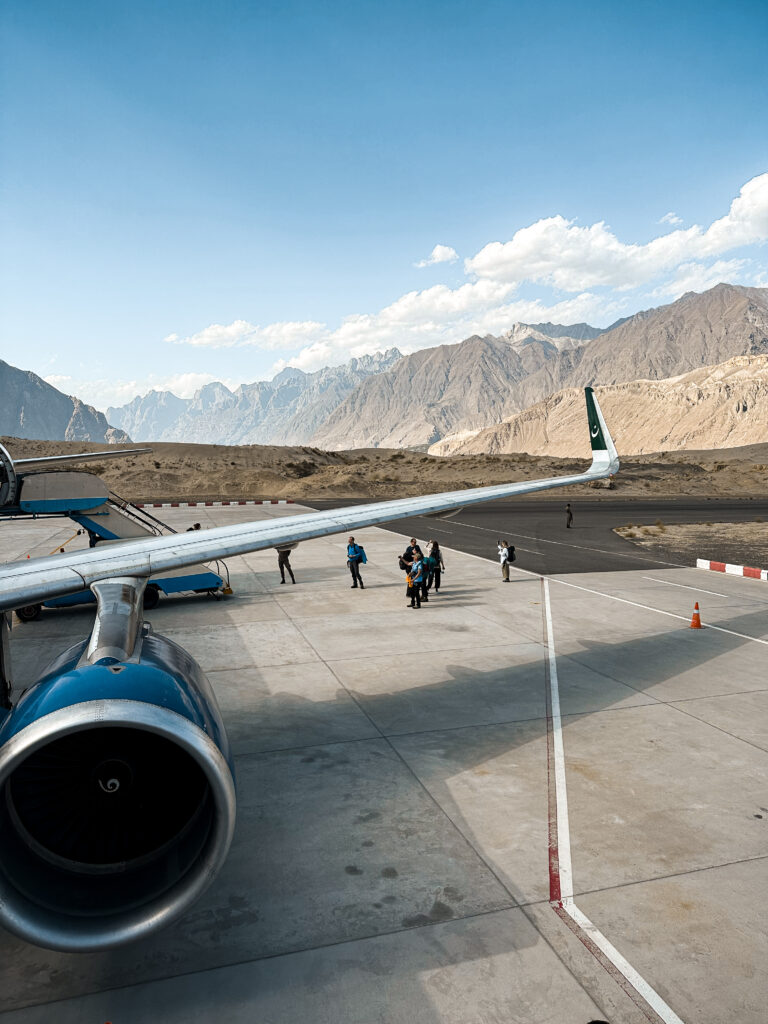 Landing in Skardu Airport
From Skardu, reaching the Karakoram Highway is straightforward. There are plenty of minibuses and shared cars running between Skardu and Gilgit. Simply head to the main transport station and choose whichever option suits you best. There are no fixed schedules, vehicles usually depart once full, so it’s best to arrive in the morning. The journey typically takes around 8-10 hours by bus and 5-6 hours by shared-car, depending on road and weather conditions.
How to Travel the Karakoram Highway by Public Transport (Step-by-Step)
Travelling the Karakoram Highway by public transport is surprisingly straightforward once you understand how the route works. You don’t need to organise everything in advance, just move step by step, using local buses and shared transport between each destination. Here’s exactly how to do it:
Islamabad → Gilgit
This is the longest and most demanding part of the journey.
From Islamabad, you have two main options: long-distance buses or shared taxis. The most common and budget-friendly option is to take a NATCO or public bus heading north towards Gilgit.
The journey is long, winding, and at times exhausting, but also incredibly scenic as you gradually leave the plains behind and enter the mountains.
Update 2026: Now other companies besides NATCO can take foreigners like, for example, Faisal Movers. Check at the bus station in Rawalpindi for updated information.
Gilgit → Hunza (Karimabad / Aliabad)
From Gilgit, it’s easy to continue onwards to the Hunza Valley.
Shared vans and minibuses run frequently throughout the day, leaving once they’re full. You’ll find them at local bus stands. just ask around, and someone will point you in the right direction.
This is one of the easiest sections of the journey, with regular transport and stunning views the entire way.
Hunza → Passu / Upper Hunza / Sost
To explore further along the Karakoram Highway, you can continue north from Hunza towards Passu, Gulmit, and Sost.
Transport here is a bit less frequent, but still available daily in the form of shared vans and occasional jeeps.
This stretch is one of the most beautiful parts of the Karakoram Highway, passing iconic landscapes like Passu Cones and the Attabad Lake.
Getting Around Locally
Within towns and between smaller villages, you can rely on a mix of shared vans, local jeeps, and hitchhiking (very common and often easy). In more remote areas, hitchhiking is sometimes the most practical option, and it’s very common along the Karakoram Highway.
Public Transport on the Karakoram Highway (What to Expect)
NATCO Buses: The Northern Areas Transport Corporation runs reliable long-distance buses, especially from Rawalpindi/Islamabad to Gilgit and Aliabad, and onwards to Sost and the Khunjerab Pass. It’s a good option for longer legs of the trip.
Minibuses: These are the most common way to get between towns. There are no schedules, they leave when full and are cheap, fast, and somewhat frequent on popular routes like Gilgit to Hunza.
Vans and Shared Jeeps: Often used for short, local hops, especially between villages or for detours off the main highway. Expect to squeeze in with locals and luggage.
Hitchhiking: In the most popular areas, like Hunza, it’s incredibly easy to hitchhike. I felt very safe, even as a solo female traveller, but always trust your instincts.
Main Transport Hubs on the Karakoram Highway
Rawalpindi (Pir Wadhai Bus Terminal): Major departure point for buses and shared taxis heading north. This is the location of the NATCO office where to can purchase your tickets.
Gilgit: This is the location of the main transit hub in Gilgit, with minibuses, NATCO counters, and shared vans going in every direction (like Islamabad, Skardu, Fairy Meadows, etc). There’s also this other location for local vans heading north to Aliabad and so on. So depending where you’re going you might need to go to a different location. Ask previously in your hotel or to the locals to be sure.
Aliabad (Hunza): There’s one location for the local vans heading north towards Passu and Sost and another for the ones heading south back to Gilgit. Once again everyone is very helpful so just ask the locals for directions. This is the location of the one that goes north.
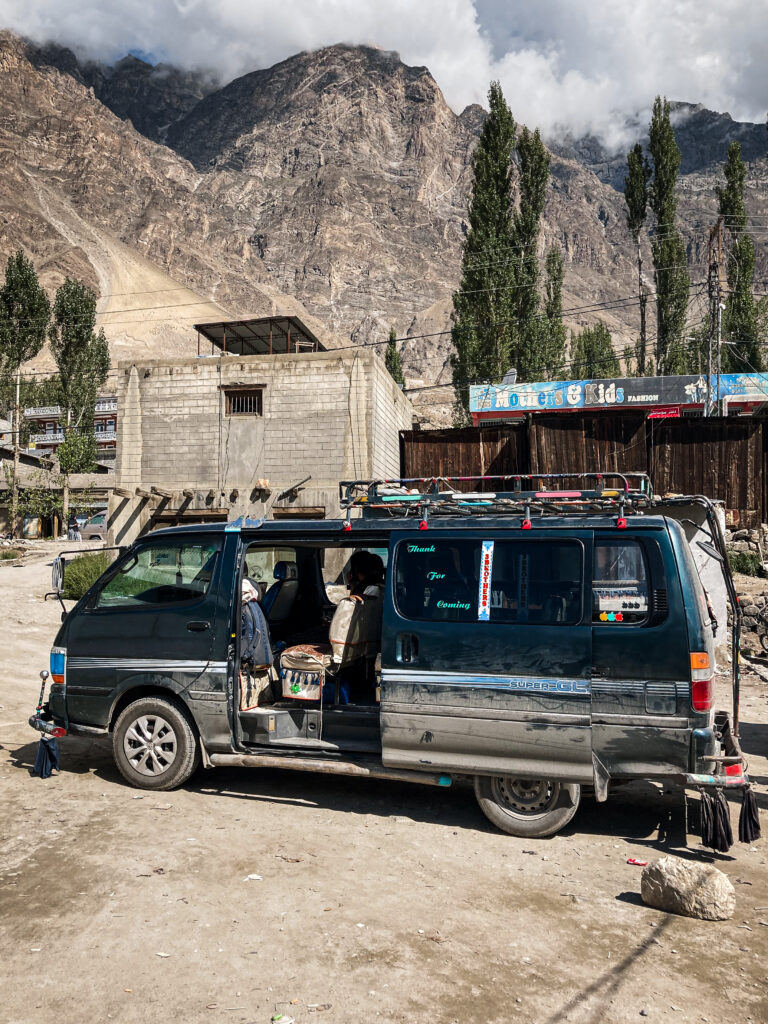 Local Minibus for travelling the Karakoram Highway
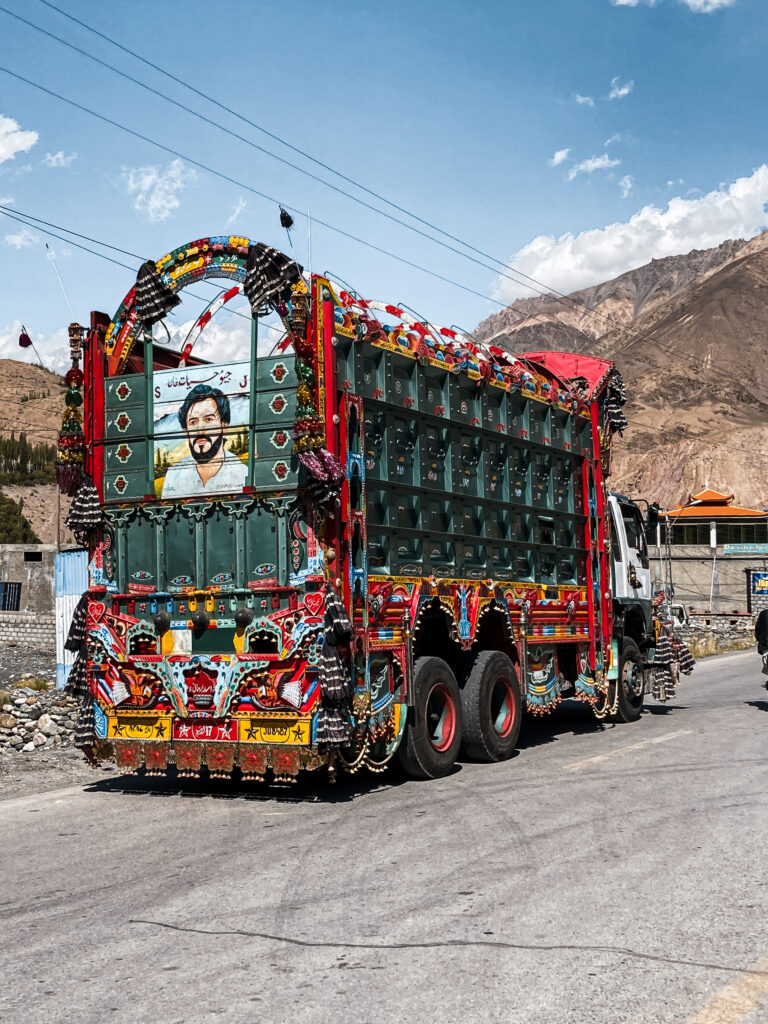 Pakistani Truck on the Karakoram Highway
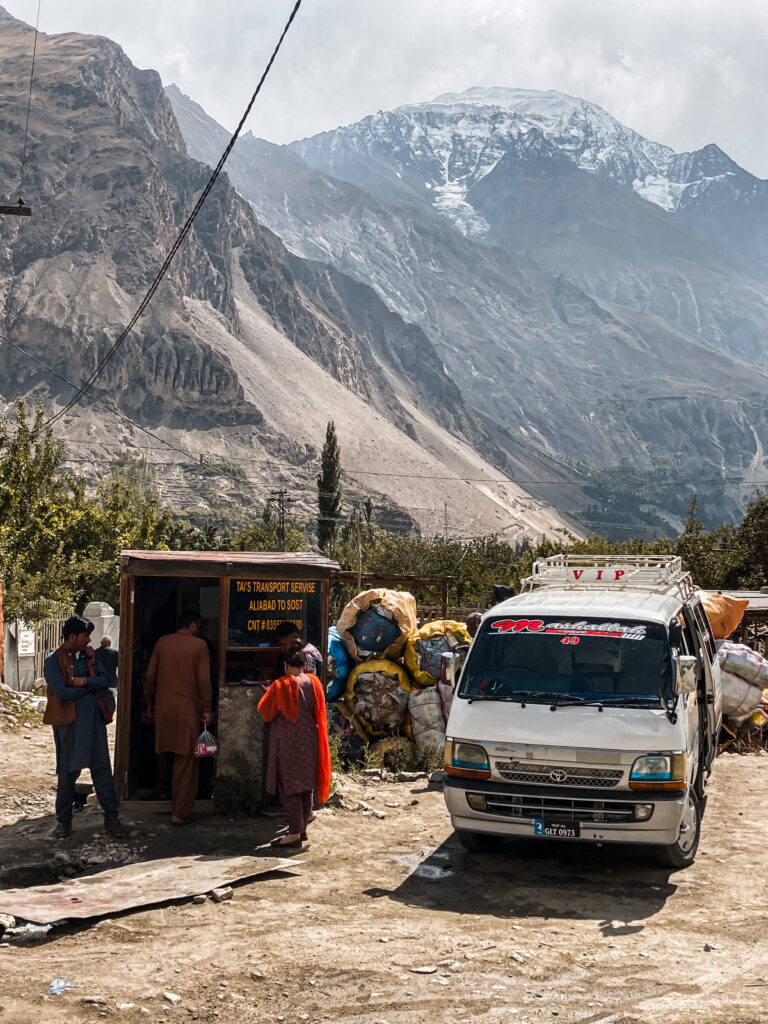 Local Minibus Station for travelling the Karakoram Highway
Cost of Travelling the Karakoram Highway
Travelling the Karakoram Highway by public transport is surprisingly affordable, especially compared to organised tours. If you’re travelling independently through northern Pakistan, this is one of the best-value experiences you can have.
Here’s a rough breakdown of what you can expect to spend:
| Expense | Budget | Mid-range |
|---|---|---|
| Islamabad → Gilgit (bus or shared taxi, one-way) | 5,000 PKR (~€16) | 10,000 PKR (~€33) |
| Gilgit → Hunza (minibus or shared van) | 300 PKR (~€1) | 500 PKR (~€1.60) |
| Hunza → Passu / Sost (shared van or jeep) | 500 PKR (~€1.60) | 1,000 PKR (~€3.5) |
| Local hops (between villages, short journeys) | 200 PKR (~€0.65) | 500 PKR (~€1.60) |
| Accommodation (per night) | 1,500–2,000 PKR (~€5–6.50) | 4,000–6,000 PKR (~€13–20) |
| Food (per day) | 600–1,200 PKR (~€2–4) | 1,500–3,000 PKR (~€5–10) |
| Khunjerab National Park entrance (one-off fee, foreigners only) | 5,600–8,000 PKR (~€18–26) | |
| Daily total (excluding long-haul transport) | ~3,000 PKR (~€10) | ~6,000–10,000 PKR (~€20–33) |
Total Daily Budget
For a comfortable budget trip along the Karakoram Highway, you can expect to spend roughly ~3,000-6,000 PKR per day as a budget traveller and ~6,000-10,000 PKR per day as a more mid-range traveller.
Compared to booking a tour, travelling the Karakoram Highway independently costs a fraction of the price, while giving you far more flexibility and a much more authentic experience. If you’re travelling through Pakistan on a budget, this is easily one of the most rewarding (and affordable) routes you can take.
Avoid ATM fees with Wise
The card I use for all my travel withdrawals – real exchange rate, low fees.
Use Revolut to avoid ATM fees
Good alternative to Wise – I carry both as a backup.
Is It Safe to Travel Karakoram Highway Solo?
Yes, travelling the Karakoram Highway is not only safe, it’s one of the easiest and most straightforward things you can do in northern Pakistan.
This is one of the most popular travel routes in the country, connecting places like Islamabad, Gilgit, and the Hunza Valley. There’s a constant flow of locals and travellers along the highway, which makes it feel far less remote than it might seem. As a solo female traveller, I found it incredibly easy to get around using public transport, and I consistently felt safe throughout the journey. People were welcoming, helpful, and used to seeing travellers on this route.
If you want a more in-depth look at what it’s like travelling here alone, I’ve written a full guide on solo female travel in Pakistan based on my 5 months in the country, where I cover safety, cultural norms, and what to realistically expect.
For the Karakoram Highway specifically, though, there’s very little to worry about. It’s one of the most accessible and rewarding experiences you can have in Pakistan.
Don’t skip travel insurance!
I use SafetyWing for most trips – solid coverage for adventure travel.
Best Stops Along the Karakoram Highway
Gilgit: The Gateway to the North
Gilgit is the unofficial capital of Gilgit-Baltistan and a major hub for anyone travelling along the KKH. While the town itself isn’t the most exciting destination, it’s an essential stop for organising transport and resting after the long journey from Islamabad or Skardu.
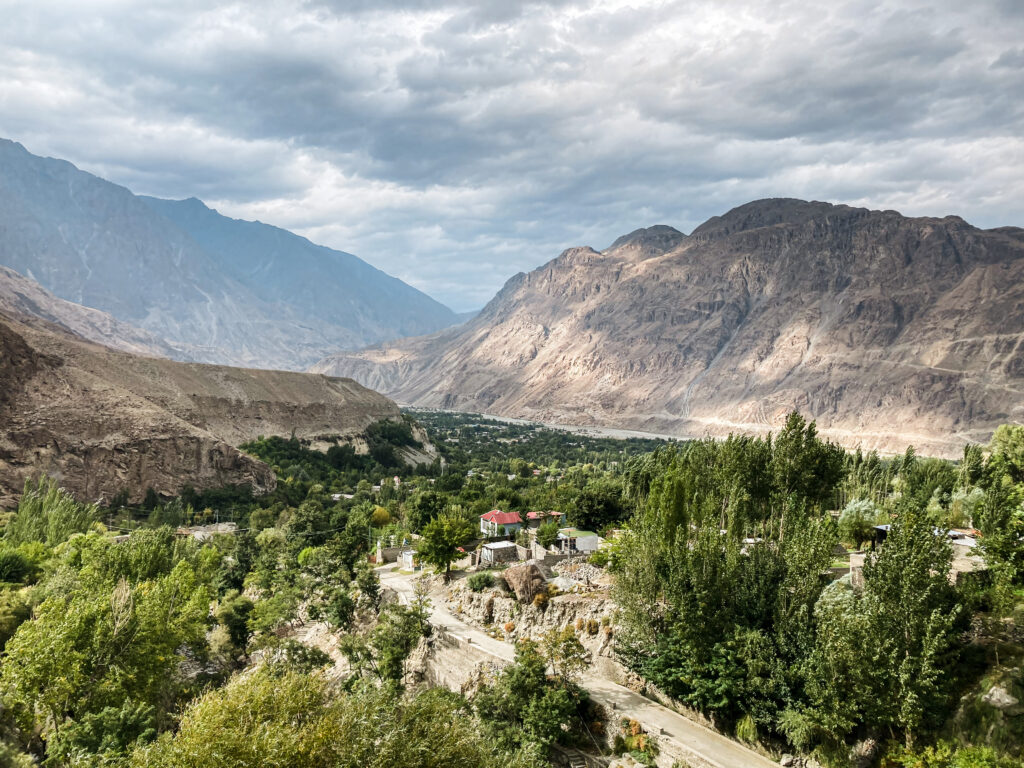
Transport Hub: From Gilgit, you can catch minibuses, shared taxis, and jeeps to all the iconic destinations along the KKH and beyond – Hunza, Passu, Sost, and even places like Fairy Meadows (via Raikot Bridge).
Things to Do in Gilgit
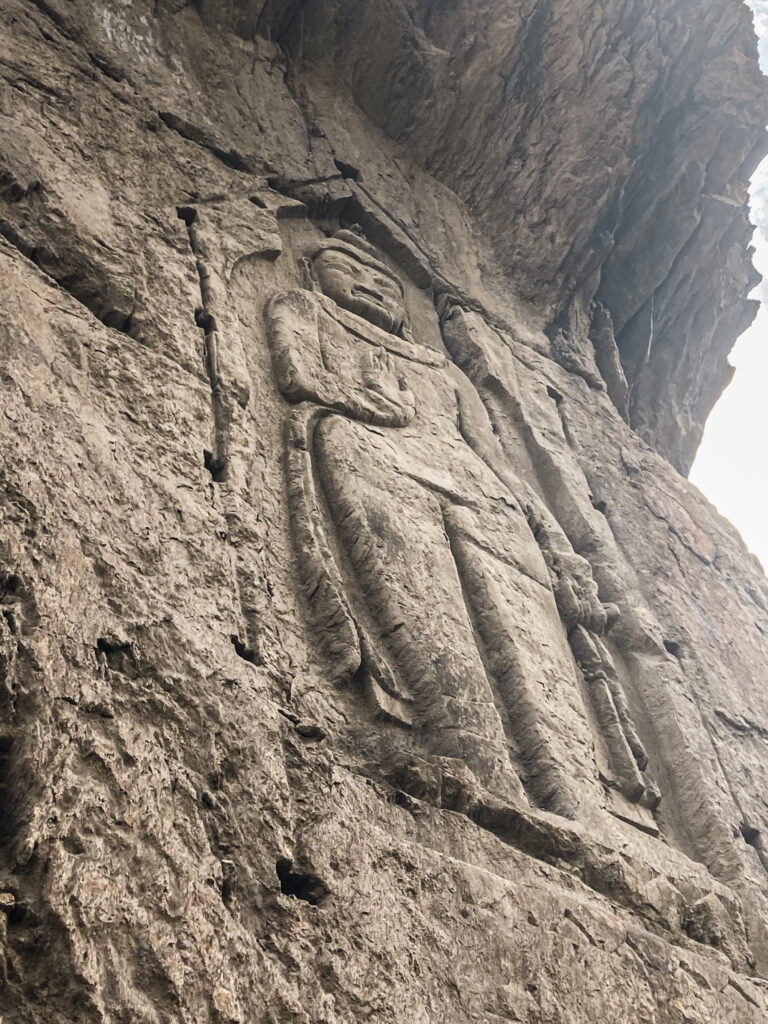
If you spend a night in Gilgit, there are a few low-key but worthwhile things to check out. Just outside town, the Kargah Buddha, an ancient rock carving dating back to the 7th century, sits tucked into a dramatic cliffside and makes for a quick cultural stop. Within the town itself, a stroll along the Gilgit River is a peaceful way to unwind, especially around sunset. You can also explore the local bazaar, where you’ll find everything and can get snacks, fresh fruits and some basic trekking supplies.
Where to Stay in Gilgit
Gilgit is the main transport hub of Gilgit-Baltistan and a convenient base before heading further along the Karakoram Highway. While it’s not the most scenic town in the region, it has a decent selection of budget guesthouses and mid-range hotels, plus plenty of small eateries within walking distance.
For budget travellers, there are several simple guesthouses near the bus stand and along the main road. Rooms are usually basic, with private bathrooms and hot water available in the evenings.
When I was in Gilgit I stayed at Madina 2 Hotel, which is one of the most popular stops for backpackers and budget travellers. It’s more on the expensive-ish side for Pakistan at around 4500 PKR (15€) for a double room, but it has a nice courtyard to relax and escape the bustling chaos of the city.
Detours from the KKH: Side Trips from Gilgit
While the Karakoram Highway itself is legendary, some of the most unforgettable places lie just a short detour away from it and Gilgit is the perfect jumping-off point.
Fairy Meadows
One of Pakistan’s most famous trekking spots, Fairy Meadows offers stunning views of Nanga Parbat (8126 meters), the world’s ninth-highest mountain. To get there, take a shared van along the KKH from Gilgit to Raikot Bridge, which costs 500 PKR (around 1.64€). There you’ll transfer to a local jeep. Hold on tight – it’s one of the most dangerous roads in the world. The jeep has a fixed price around 16000-20000 PKR but you can try to share with other travellers so it becomes cheaper.
After the a hot and bumpy ride, it’s a 2-3 hour uphill hike to reach the meadows, where you’ll find basic cabins, tents, and panoramic alpine scenery straight out of a dream.
Note: Fairy Meadows is usually accessible from mid-May to October, depending on weather conditions. For more information on how to get there, where to stay, and trekking details check out my Fairy Meadows and Nanga Parbat Base Camp trek detailed guide.
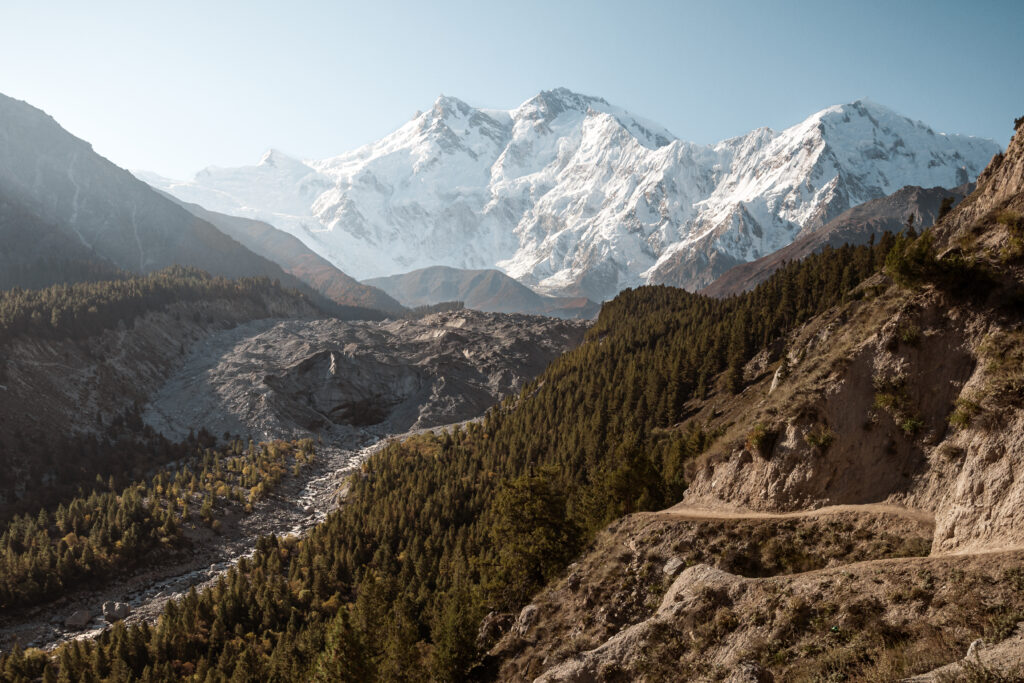 Trekking with views of Nanga Parbat (8126 meters)
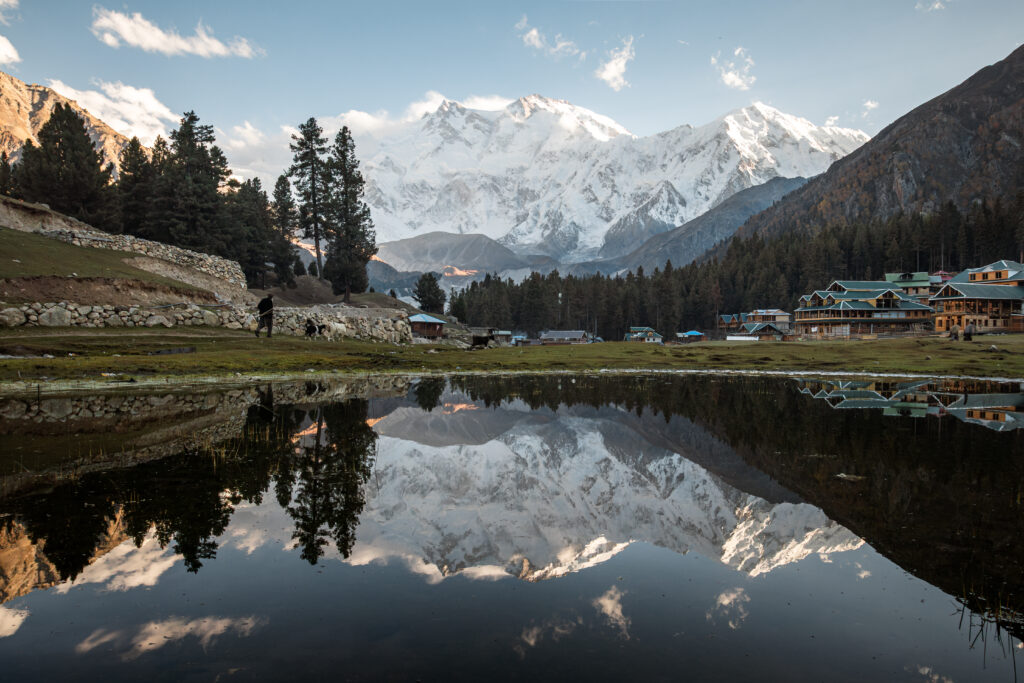 Fairy Meadows with the reflection of Nanga Parbat
Naltar Valley
Just outside Gilgit, Naltar Valley makes for a rewarding detour from the Karakoram Highway. Known for its alpine landscapes, pine forests, and striking turquoise lakes, Naltar feels worlds away from the dusty highway below. Reaching the valley is part of the adventure: the rough jeep track from Gilgit takes around 2-3 hours. Once there, you’ll find cool mountain air, simple guesthouses, short hikes, and a slower pace that’s perfect for a night or two. If you have extra time while passing through Gilgit, Naltar is one of the easiest and most scenic side trips in the region.
For more information on how to get there independently, where to stay, and what to do, check my detailed Naltar Valley travel guide.
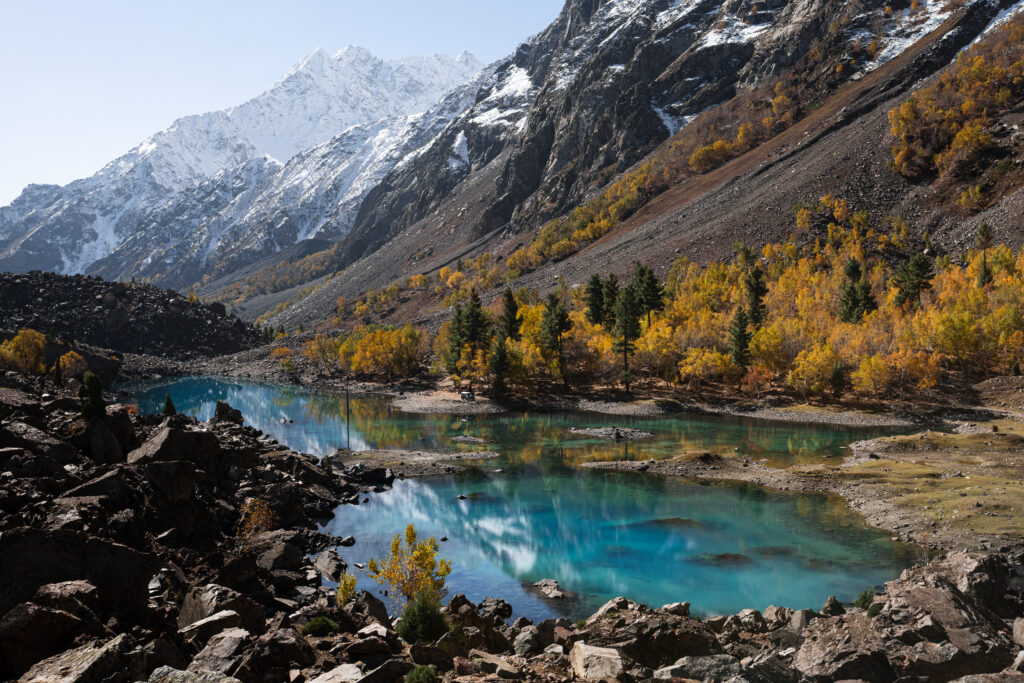 Blue Lake in Naltar Valley in Autumn
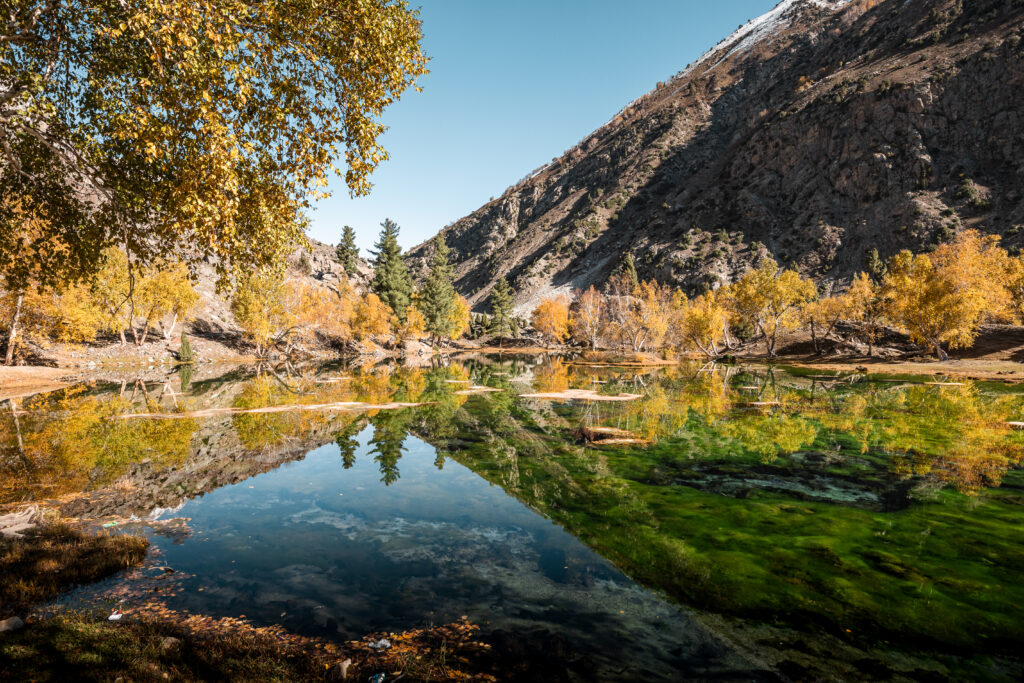 Green Lake in Naltar Valley in Autumn
Hunza Valley: The Crown Jewel of the KKH
No journey along the Karakoram Highway is complete without a stop in the legendary Hunza Valley. Framed by dramatic peaks and glacial rivers, this high-altitude region is not only visually stunning but also rich in history, culture, and warm hospitality. Whether you’re here for trekking, photography, or simply to slow down and soak in the views, Hunza never disappoints. For more detailed information check my detailed travel guide of Hunza Valley.
Minapin and the Rakaposhi Basecamp Trek
Just before reaching central Hunza, a small road branches off the KKH toward Minapin, a peaceful village nestled in the Nagar Valley. While it’s often overlooked by those rushing toward Karimabad, Minapin is a hidden gem, especially for trekkers. This is the starting point for the Rakaposhi Basecamp trek, one of the most accessible multi-day hikes in the Karakoram region.
Rakaposhi towers at 7,788 metres, making it the 27th highest mountain in the world. The trek to its basecamp at around 3,500 metres offers unbeatable views of Rakaposhi’s icy southern face, one of the tallest mountain walls in the world rising over 5000 vertical metres from base to summit.
The trail begins directly from Minapin and climbs steadily through a shady forest of pine and juniper before opening into alpine meadows. Most hikers spend 1 night camping at Hapakun Campsite. The hike is considered moderate in difficulty, with a round trip of approximately 18-23 km and an elevation gain of around 1500 metres.
For more information on how to get there, where to stay, and trekking details check out my detailed guide to Rakaposhi Basecamp Trek.
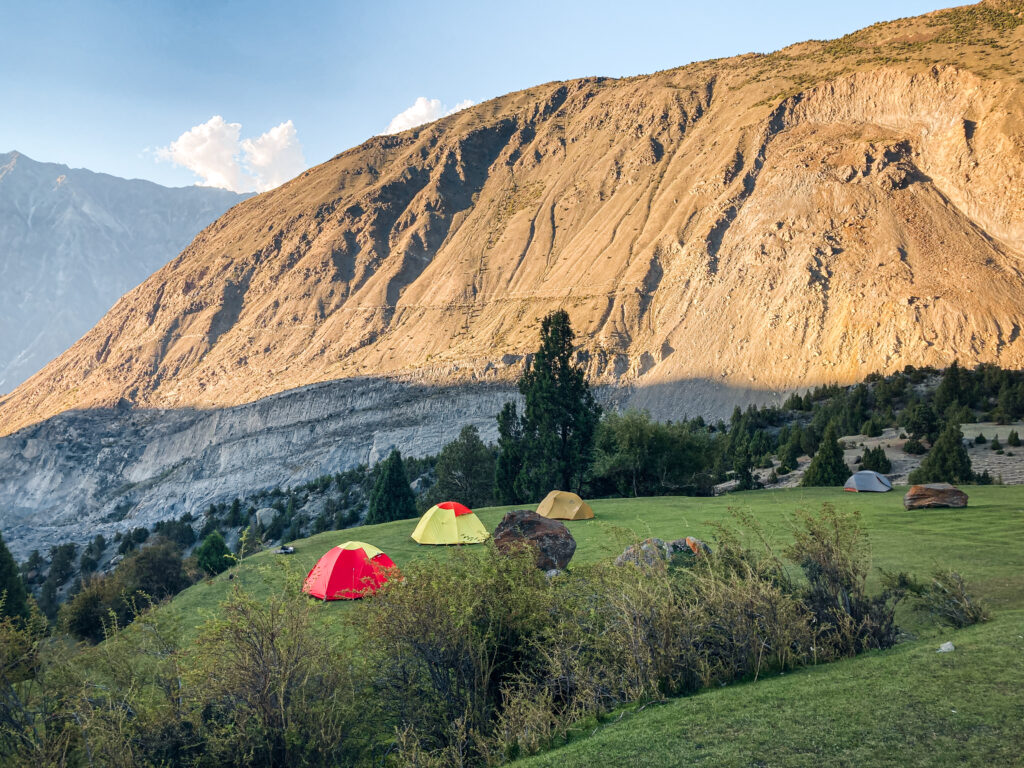 Hapakun Campsite
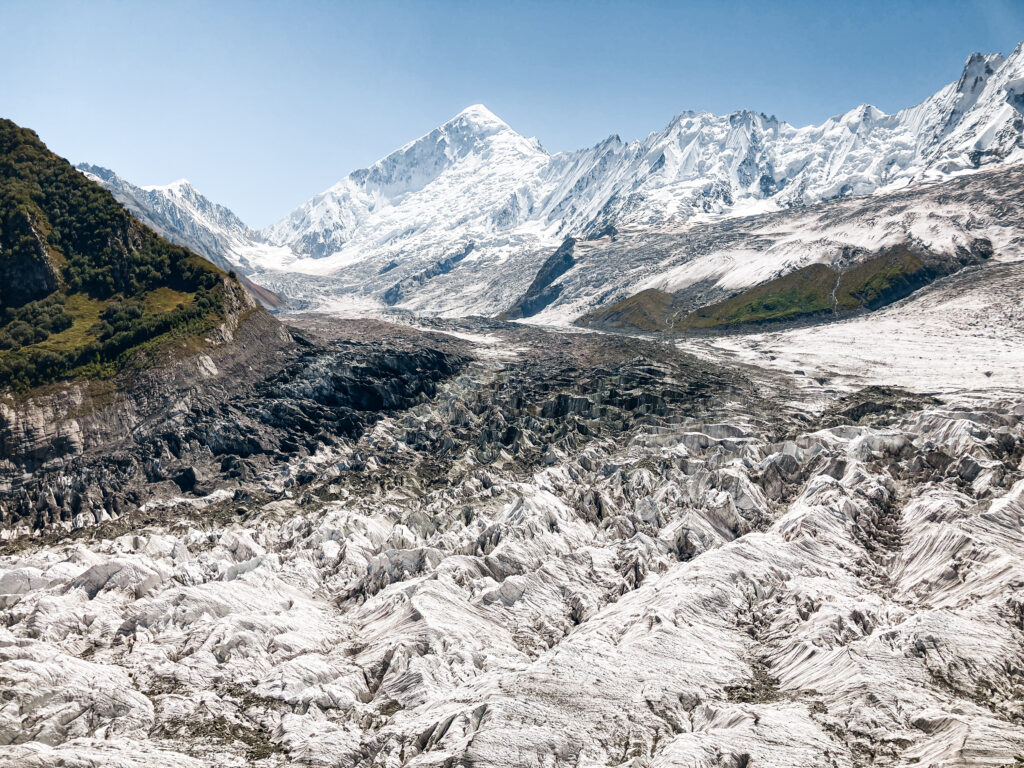 Viewpoint of Diran Peak and glaciers
Aliabad and Karimabad
After Minapin, the next major stop is Aliabad, the central transport hub of Hunza. From here, a short ride uphill takes you to Karimabad, the cultural and historical heart of the valley. Here, you’ll find two of the most iconic landmarks in Hunza: the 700-year-old Baltit Fort, perched dramatically on a cliff edge, and the beautifully restored Altit Fort, with its serene gardens and panoramic views.
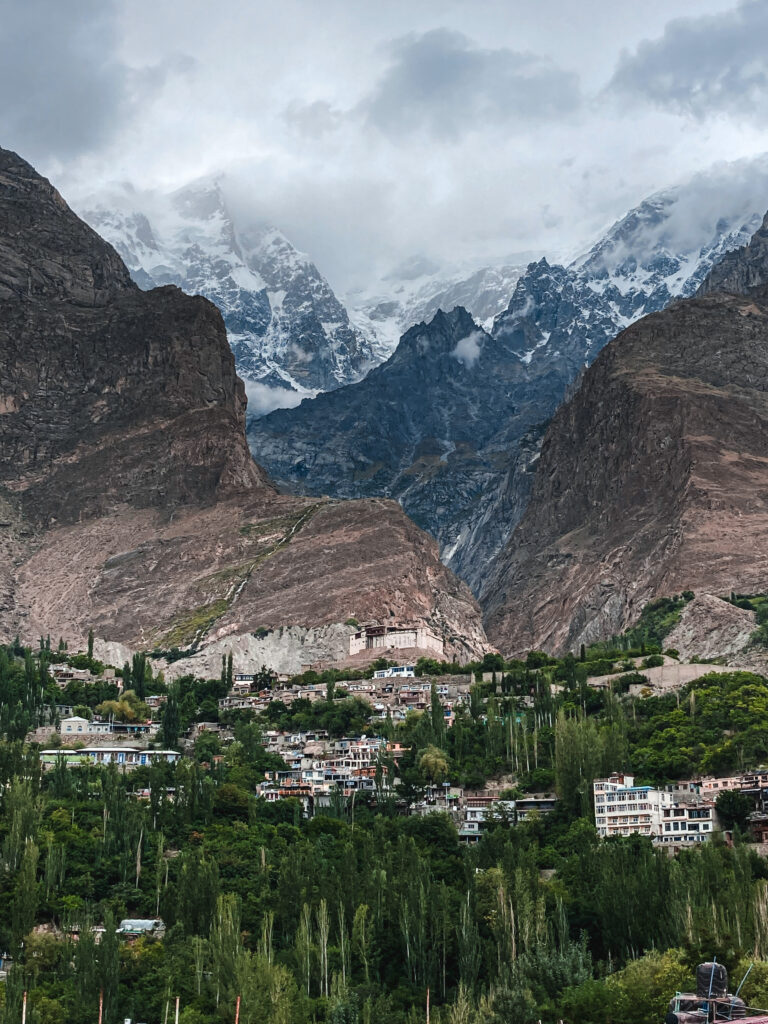
Karimabad is also a great place to relax and slow down – whether you’re sipping apricot juice on a guesthouse terrace, wandering through stone alleys, or hiking up to Eagle’s Nest for unforgettable sunset views.
For more detailed information on what to do in Hunza Valley, how to get there, where to stay and what to eat, check out my detailed travel guide of Hunza Valley.
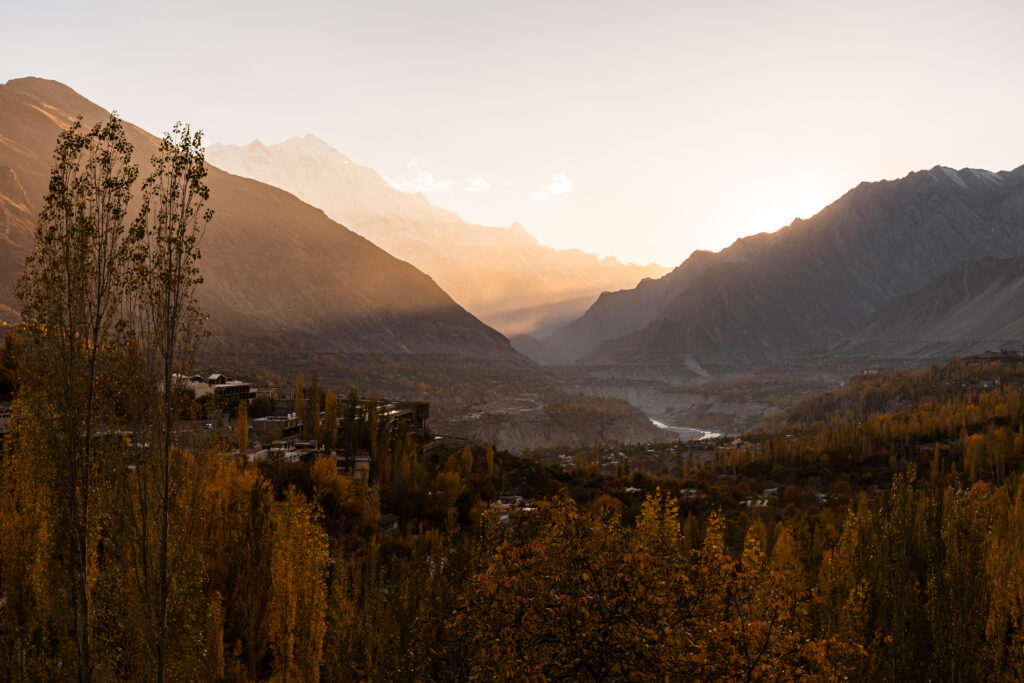 Hunza Valley at Sunset in Autumn
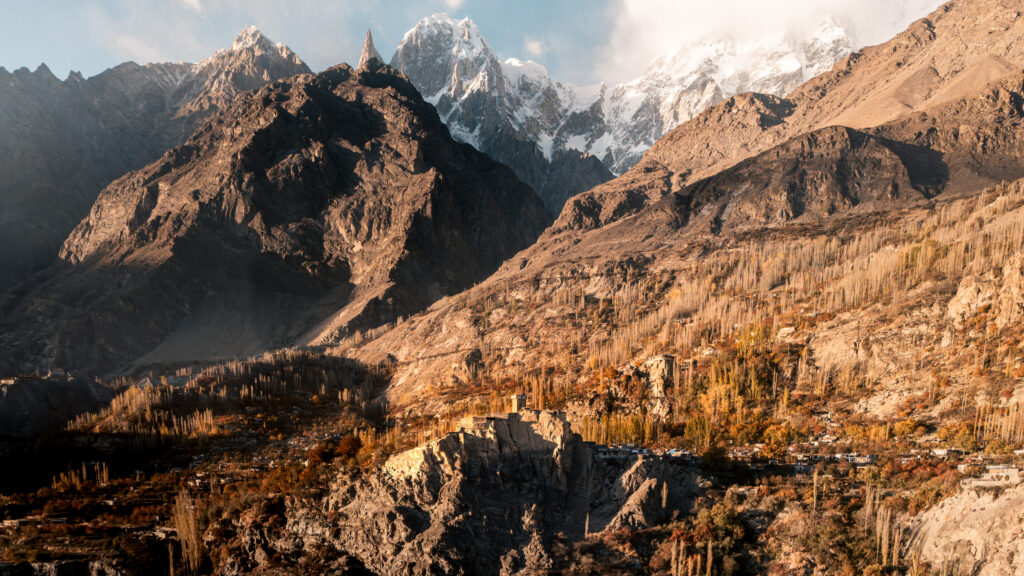 Altit Fort in Hunza Valley in Autumn
For more information on trekking in Hunza and other regions of Pakistan, check out my Ultimate Guide to Trekking in Pakistan.
Attabad Lake and Baskoshi Meadows Trek
Further north along the KKH lies Attabad Lake, a surreal body of turquoise water formed after a massive landslide in 2010. The disaster buried part of the old highway, and today, new tunnels cut dramatically through the cliffs beside the lake, offering some of the most scenic driving views in the country. You can stop here for a boat ride on the lake, grab tea at a lakeside café, or just marvel at the scenery. It’s touristy, yes, but undeniably beautiful.
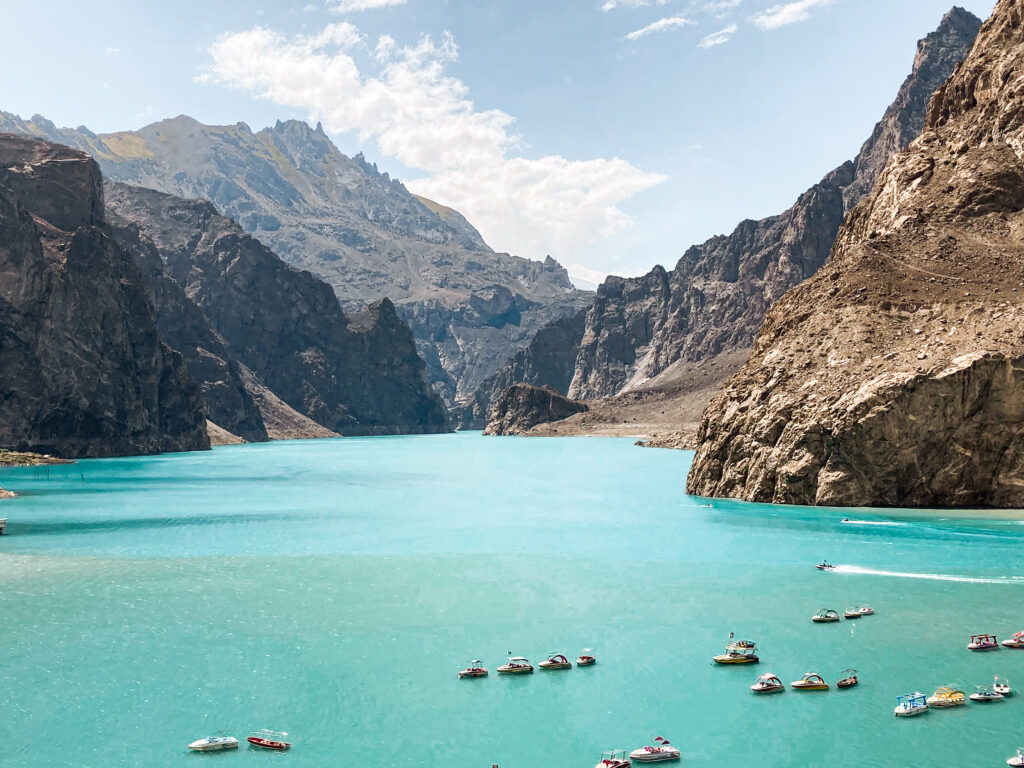 Attabad Lake
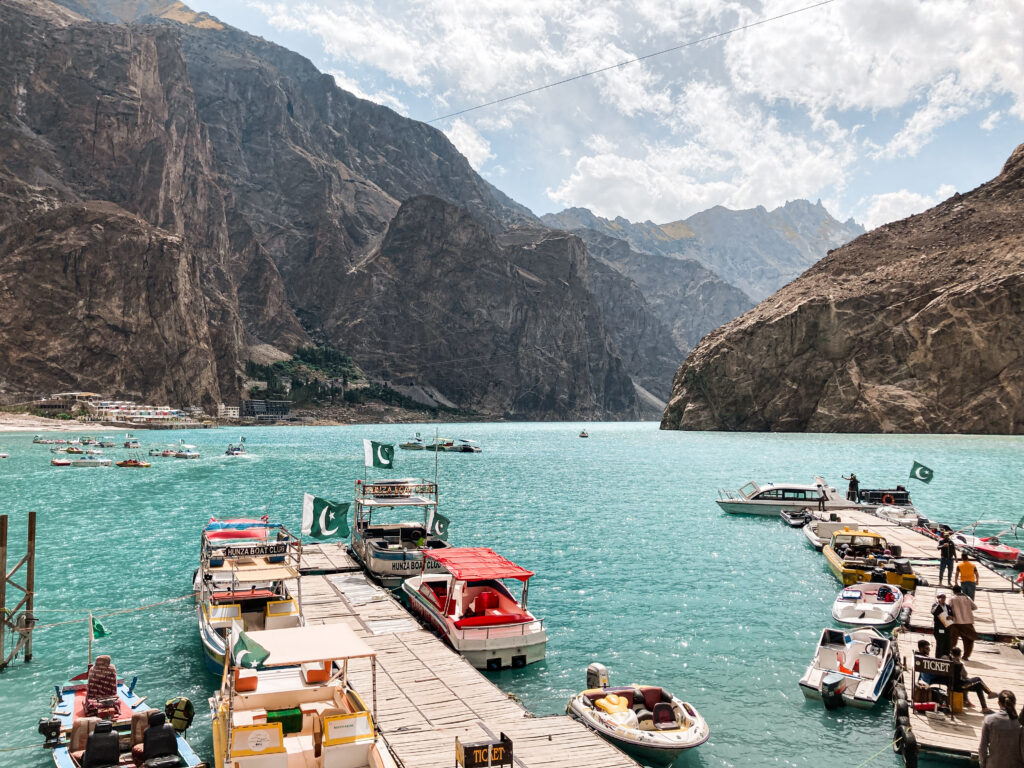 Boats for tourists at Attabad Lake
For those seeking a quieter experience away from the crowds, the trek to Baskochi Meadows is a hidden treasure. The trail begins right off the KKH, just south of Attabad, and climbs steadily to reach a high, grassy plateau overlooking the vibrant turquoise lake. It’s a half-day to full-day hike, depending on your pace, and doesn’t require a guide or technical gear – just water, snacks, and a decent level of fitness. Few travellers know about this trail, which makes the views feel even more special.
Gojal: Passu Cones & Ghulkin
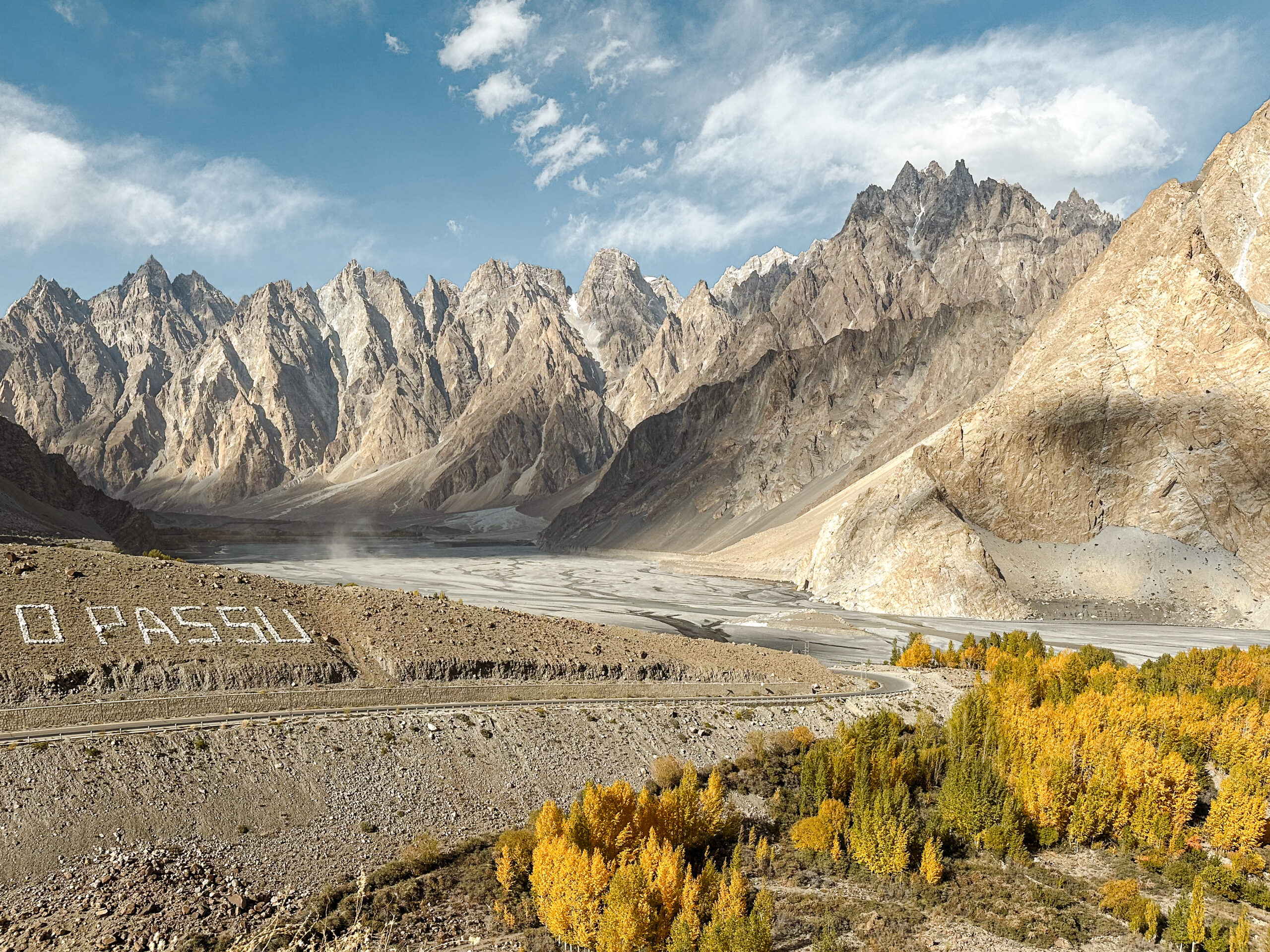
Beyond Attabad, the landscape opens into Gojal, Upper Hunza, home to some of the most dramatic scenery on the entire KKH and my personal favourite section. Passu is instantly recognisable thanks to the jagged, cathedral-like Passu Cones, which rise up like a crown behind the village. It’s a peaceful place to spend a night, especially if you want to hike to Passu Glacier Viewpoint or the nearby Hussaini Suspension Bridge.
Check out my detailed Upper Hunza Travel guide for all the information on travelling this region, where to stay, what to do and where to eat.
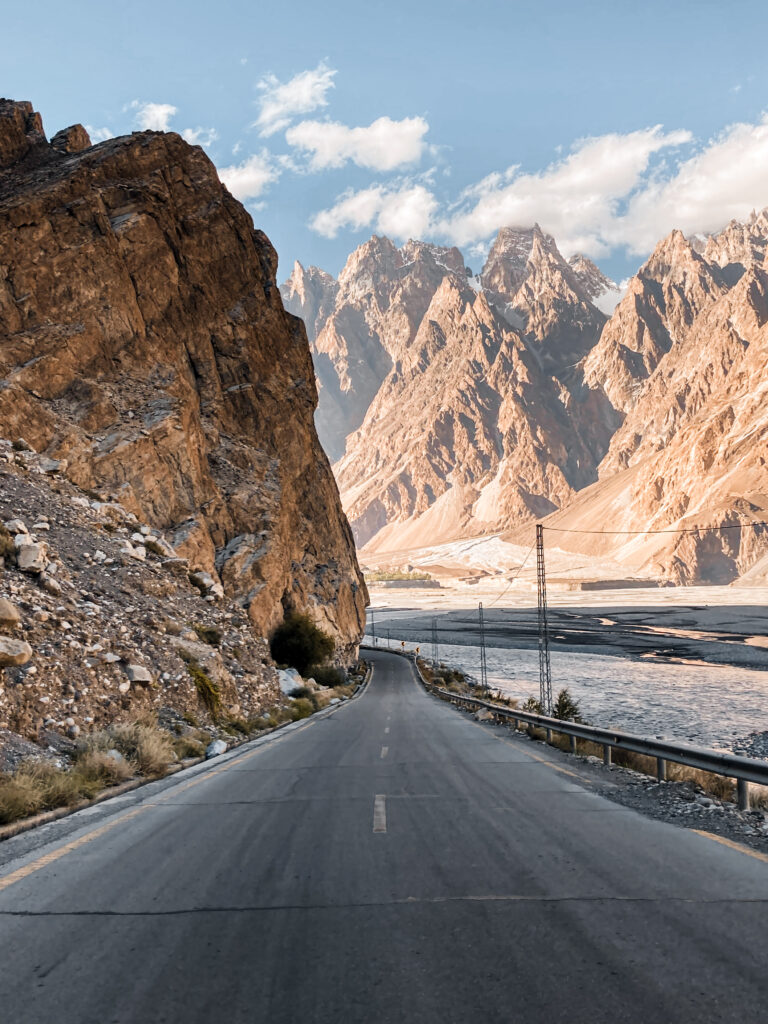 KKH – Passu Cones
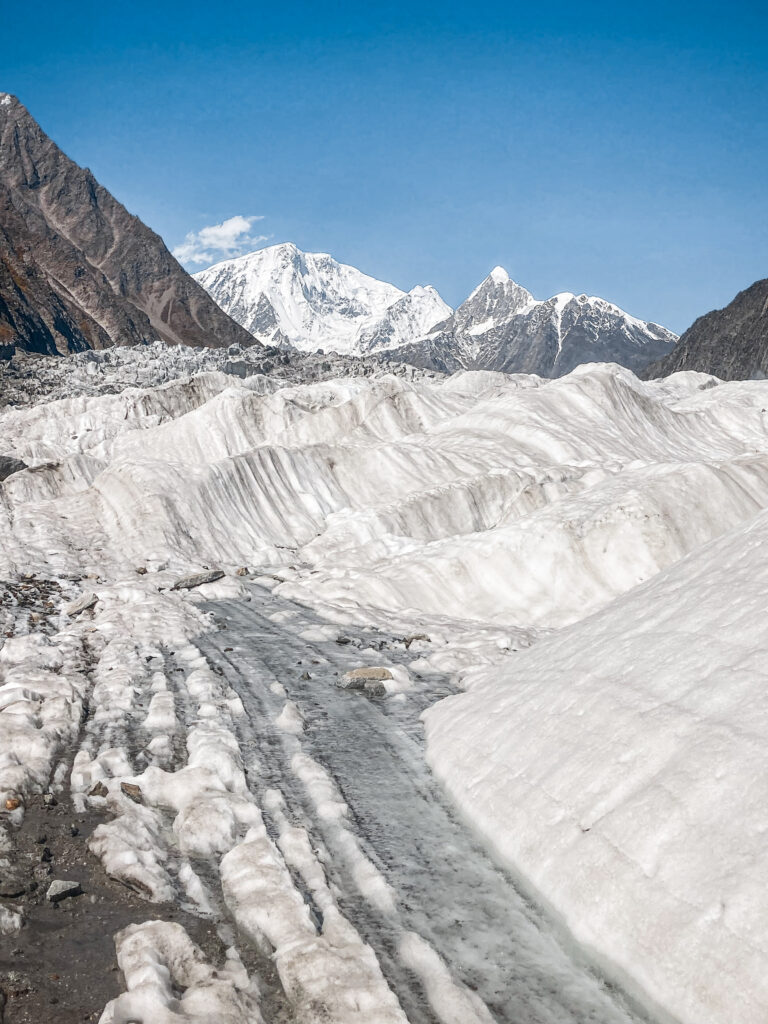 Crossing the Passu Glacier
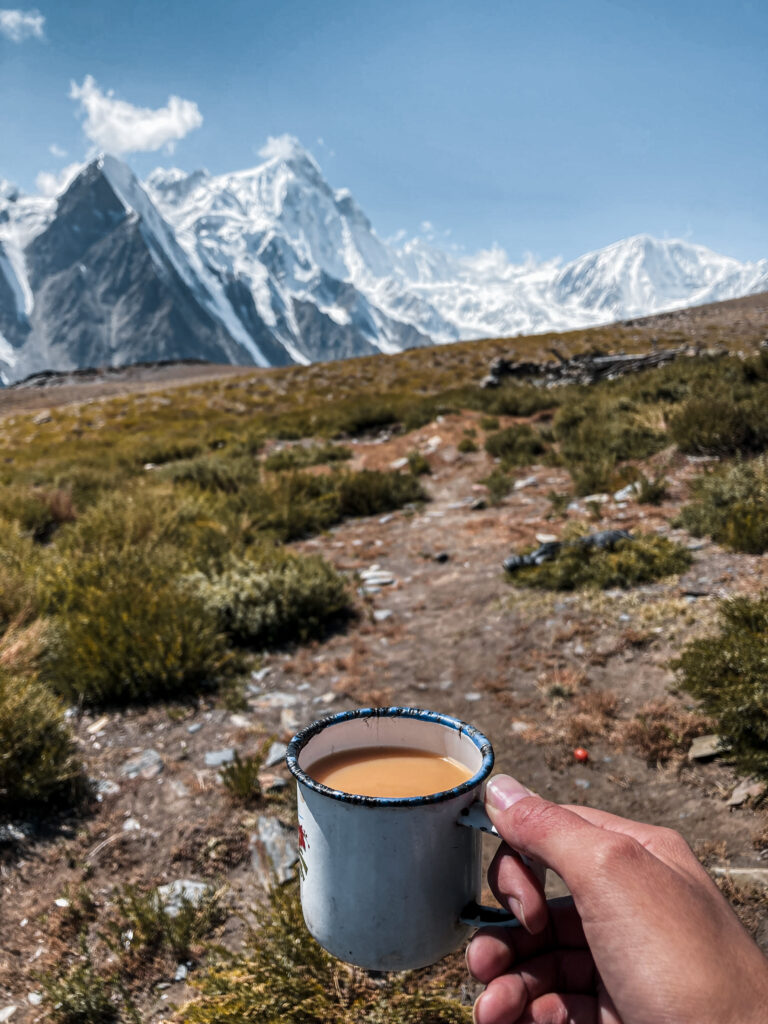 Trekking near Passu – Patundas Meadows
Just before reaching Passu, the villages of Gulmit and Ghulkin offer a more authentic, lived-in feel. With traditional stone houses, warm guesthouses, and sweeping views over the Ghulkin Glacier, this area is perfect for those looking to slow down. It’s a wonderful place to stay a night or two, soak in the mountain silence, and experience the rhythms of daily life in these remote communities.
Patundas Meadows is one of the main treks in the area and one of my favourite treks ever. It’s a three-day trek, where you the chance to cross the Passu Glacier (twice) and hike up to a ridge at 4,200m where you’re surrounded with 360-degrees views of 6,000+ meters mountains. Check out my detailed guide to Patundas Meadows Trek.
For more information on different treks you could do while staying in the Passu region and others, check out my Ultimate Guide to Trekking in Pakistan.
Detour from Passu to Shimshal Valley
Shimshal Valley is one of the most extraordinary detours you can make from Passu. Sitting at 3,100 metres in the far northeastern corner of Hunza, it’s the most remote valley in Gilgit-Baltistan, surrounded by peaks above 7,000 metres and known as the Valley of Mountaineers. The road in is half the experience: a 56-kilometre track carved into sheer cliffs above the Hunza River, built by the community itself, with drop-offs and blind corners that make it one of the most dramatic drives in Pakistan.
Check the full Shimshal Valley travel guide for everything on getting there, where to stay, and what to do.
Sost and Khunjerab Pass (Chinese Border)
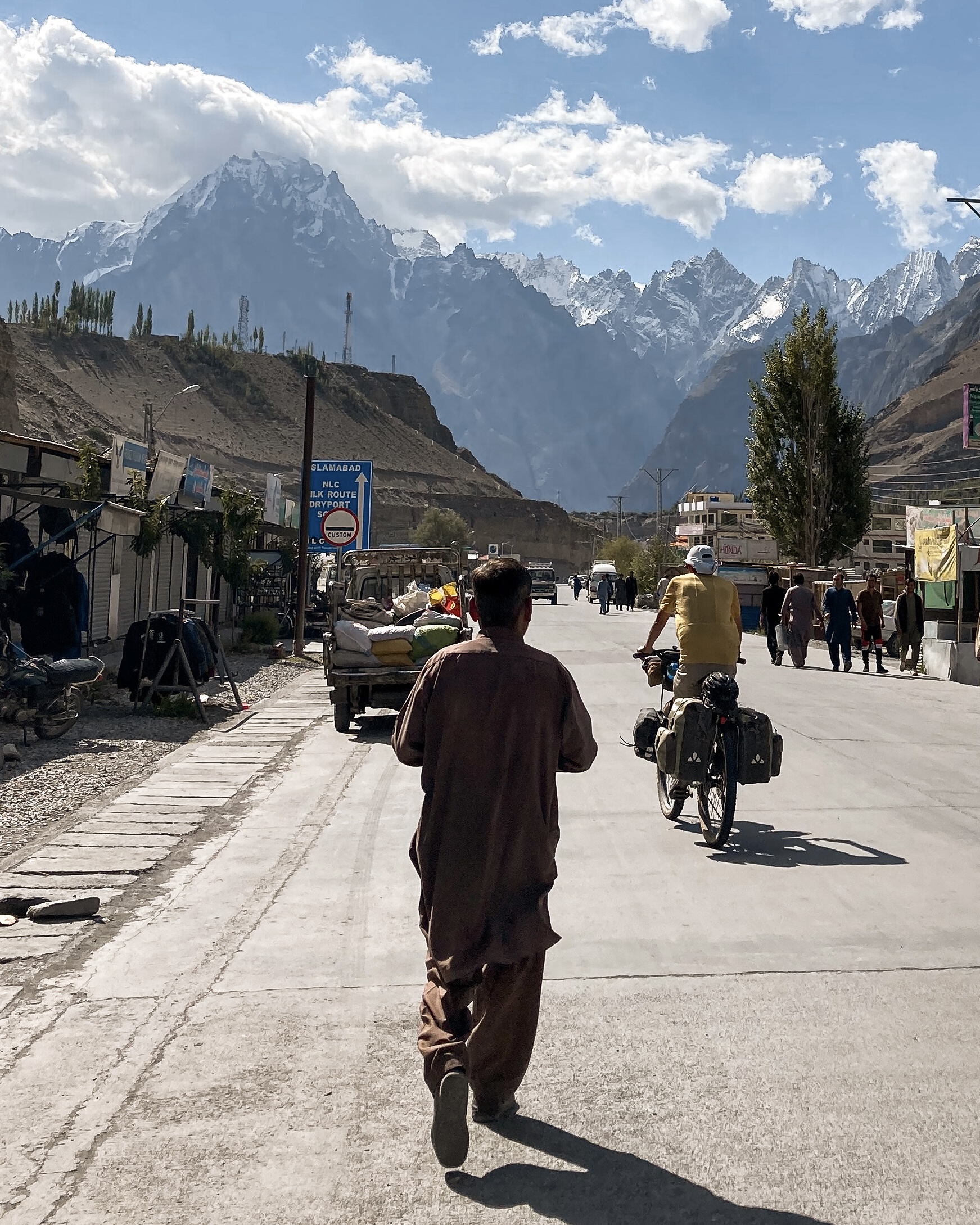
Sost is the final town along the Karakoram Highway before the Chinese border. Though not the most scenic stop, it’s an important logistical hub, this is where immigration formalities for travellers heading into China are handled, and where cargo trucks rumble through from the Khunjerab Pass. There are a few basic guesthouses and restaurants here, but most travellers use Sost as a short stopover or a base for a day trip to the border. I hitchhiked from Passu to Sost and then from Sost to the border and back.
From Sost, it’s a stunning 90-kilometre drive to the Khunjerab Pass, the highest paved international border crossing in the world at 4,693 metres. The landscape transforms dramatically: narrow gorges and terraced fields give way to wide alpine plateaus, yaks grazing beside the road, and snow-dusted peaks stretching into the sky. To enter this area, you’ll need to pay a Khunjerab National Park entrance fee, collected at the park gate before the ascent. The amount varies depending on whether you’re a local or a foreigner, but expect to pay the steep fee of 5600 PKR (20$) or more (40$) as a tourist (cash only).
At the border, you’ll find a large gate marking the official entrance into China’s Xinjiang region. While the air is thin and the winds sharp, the sheer remoteness and grandeur of this high-mountain frontier make it a memorable highlight and a powerful end (or beginning) to your Karakoram journey.
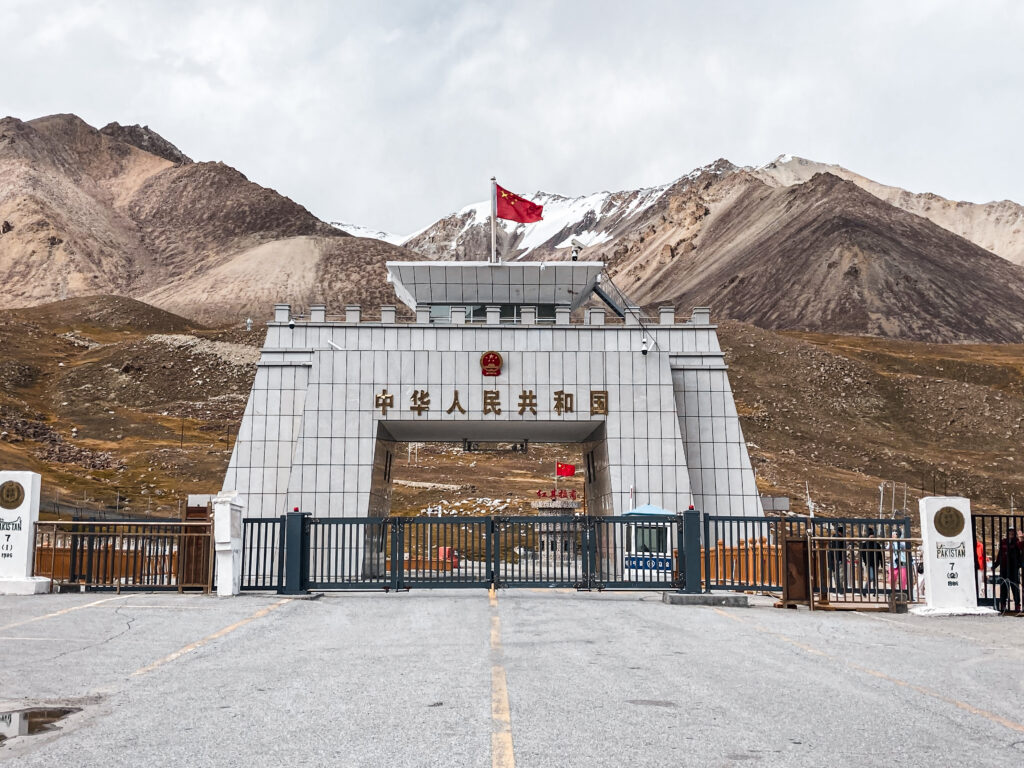 Chinese Border
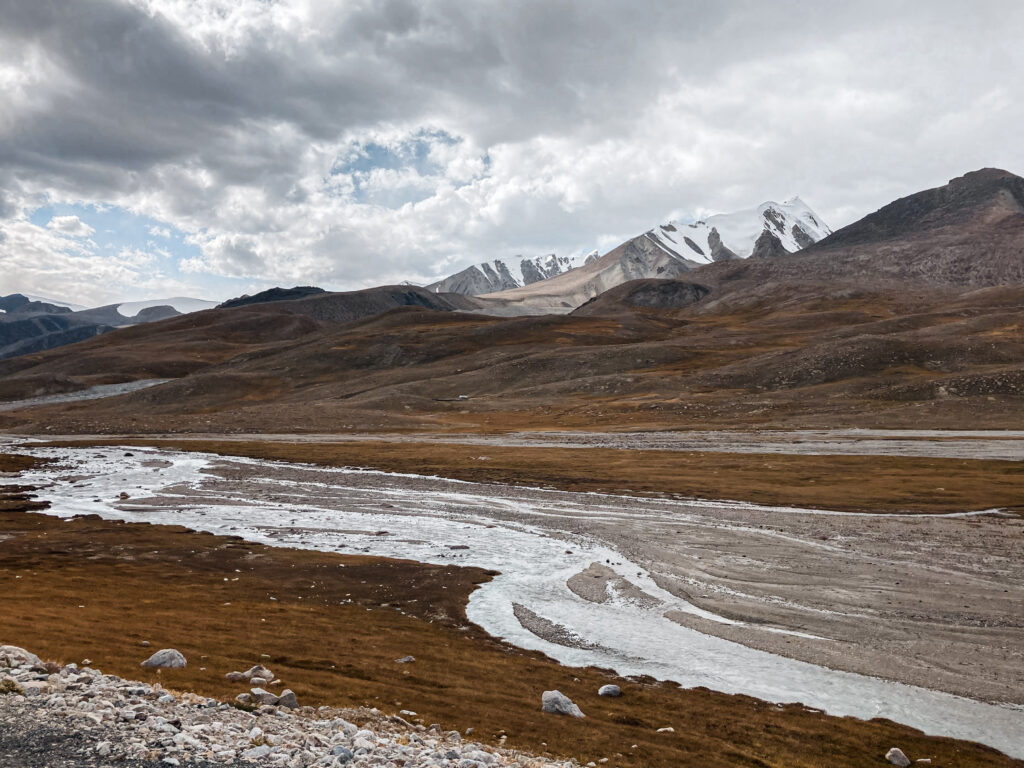 Khunjerab Pass
Detours to Misgar and Chapursan Valleys
If you’re looking to venture even further off the beaten path, the area around Sost offers access to some of the most remote and untouched valleys in Pakistan.
One of the most intriguing is Misgar Valley, a rugged and windswept region nestled near the tri-border intersection of Pakistan, China, and Afghanistan. This high-altitude valley once lay along a branch of the ancient Silk Road and today remains home to a small Wakhi-speaking community. Misgar’s expansive meadows and surrounding mountains offer a stark beauty that feels worlds away from the more travelled parts of Hunza. For more details on Misgar and other valleys check out my post on visiting remote valleys in Northern Pakistan.
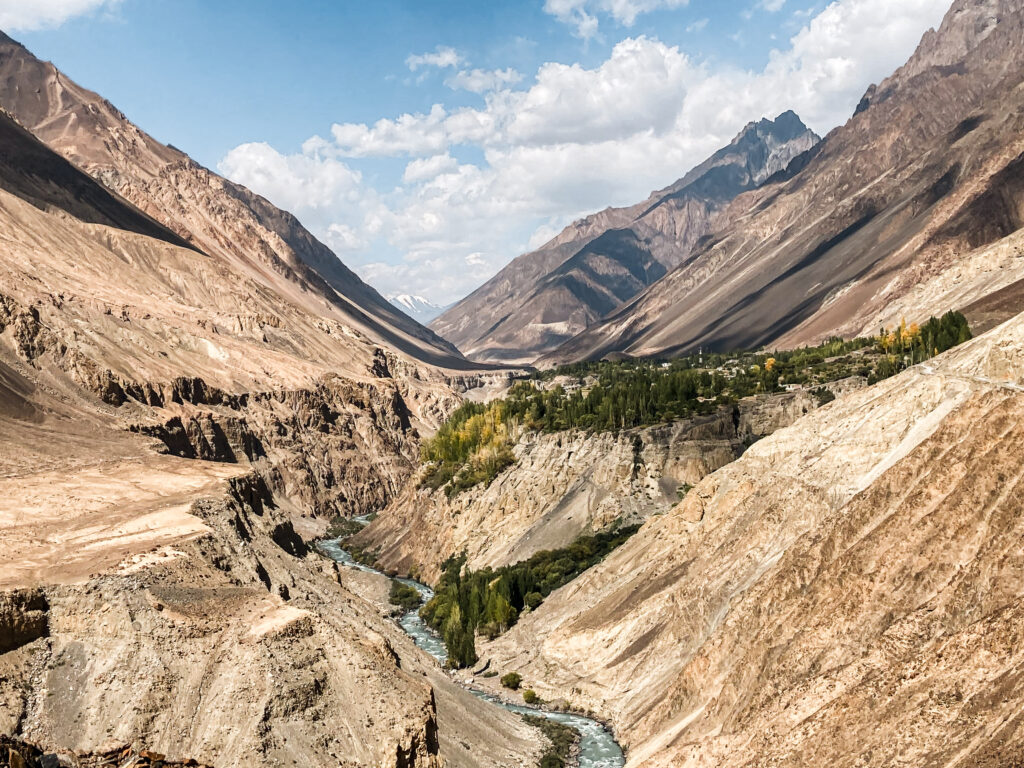 Journey towards Misgar Valley
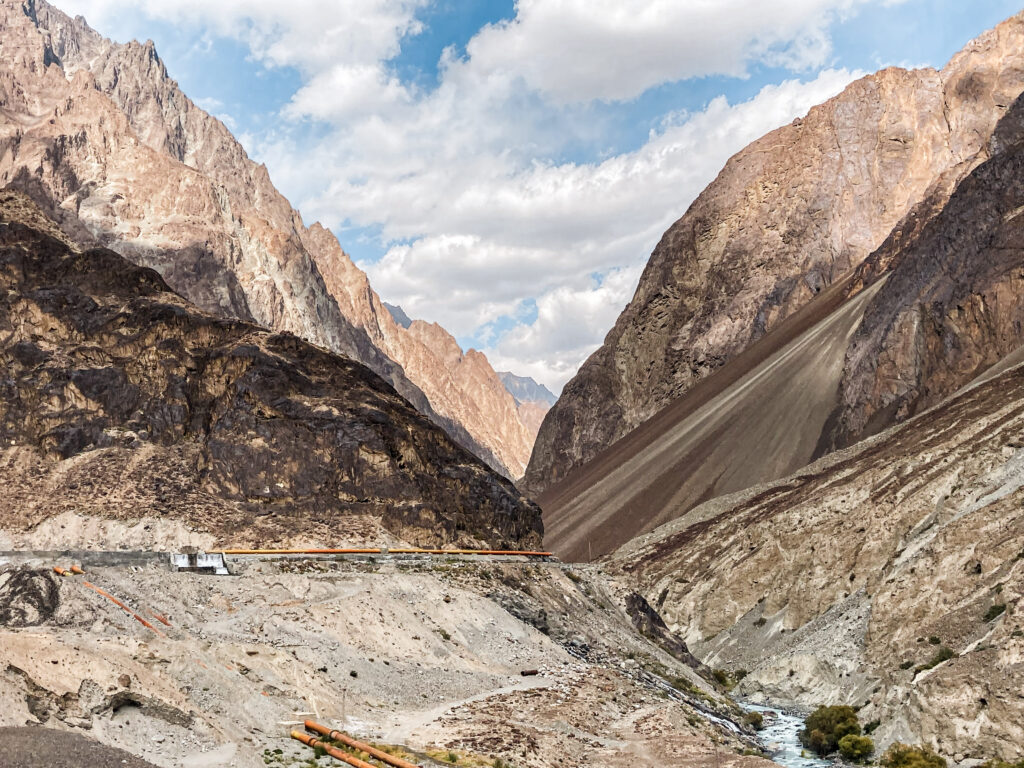 Deep into Misgar Valley
Another rewarding detour is Chapursan Valley, located west of Sost near the Afghan border. It’s a long and bumpy ride to reach the final village, but the incredible landscapes and the warm hospitality of the community make it well worth the effort. Check my detailed guide on how to visit Chapursan valley independently.
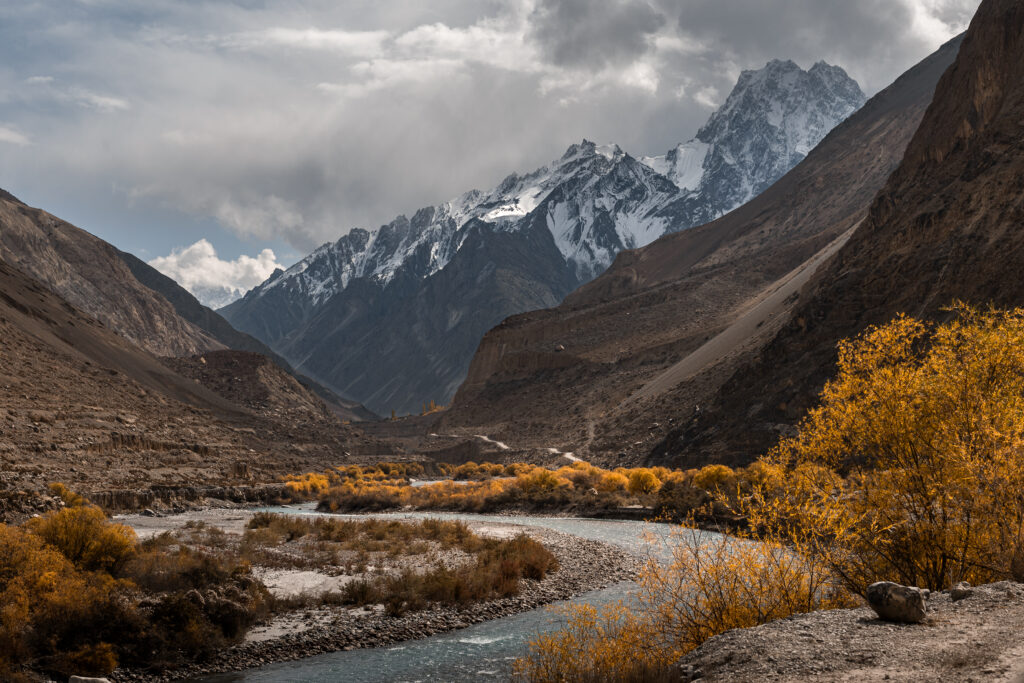 On the road in Chapursan Valley
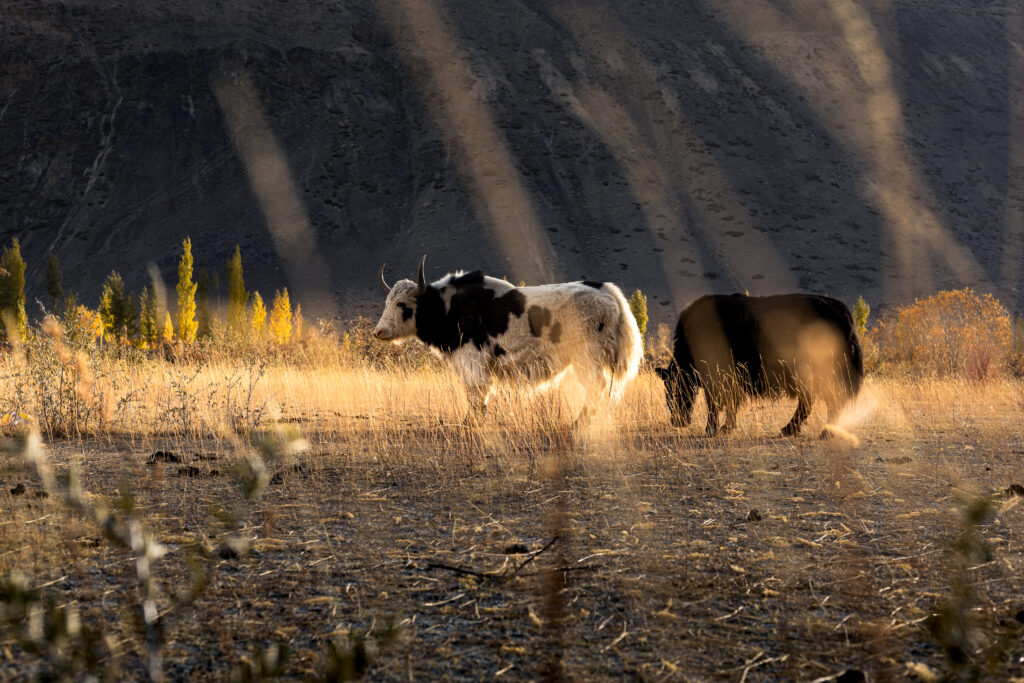 Yaks Grazing in Chapursan Valley
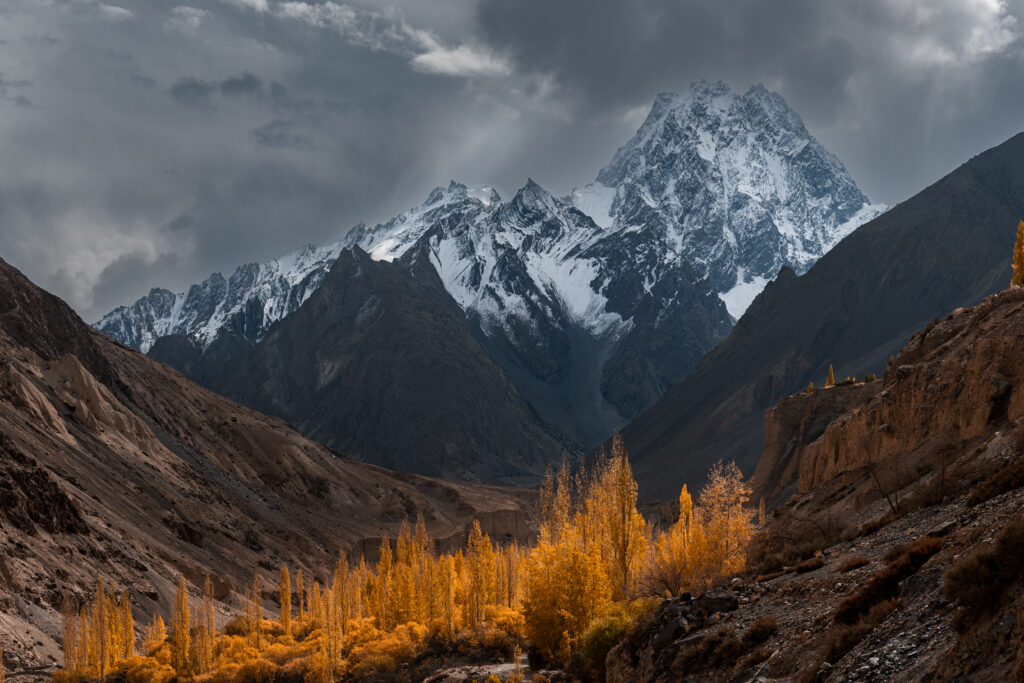 Autumn Colours in Chapursan Valley
These valleys offer a deeper look into life in Pakistan’s far north – untouched by tourism, rich in culture, and full of raw natural beauty. If time and conditions allow, they’re among the most rewarding detours you can take from the Karakoram Highway.
Things to Know Before Travelling the Karakoram Highway
Money on the Karakoram Highway
Cash is essential when travelling the Karakoram Highway and ATMs that take foreign cards don’t exist outside the major towns of Islamabad, Gilgit, Aliabad and Skardu. It’s best to withdraw a large amount of Pakistani Rupees in these major cities before heading to more remote areas. Also sometimes the ATMs even in larger towns can run out of cash or be temporarily offline, so don’t rely solely on them.
I tried a few different banks but the only one that would work to withdraw money with foreign cards is Bank Alfalah. Make sure you’re withdrawing with a card that doesn’t charge high foreign transaction fees.
Avoid ATM fees with Wise
The card I use for all my travel withdrawals – real exchange rate, low fees.
Use Revolut to avoid ATM fees
Good alternative to Wise – I carry both as a backup.
Internet and Mobile Data on the Karakoram Highway
Wi-Fi access along the Karakoram Highway is generally limited and mostly found in hotels, guesthouses, and some cafes in larger towns like Islamabad, Gilgit, and Karimabad. In smaller villages and remote areas, internet connectivity is often weak or non-existent, so don’t rely on Wi-Fi for staying connected. And keep in mind that even in places with Wi-Fi speeds can be slow and unreliable.
Therefore, it’s best to get a local SIM card with a data plan. Regarding mobile connectivity, you’ll need to purchase a local SIM card in Gilgit as the ones that work in Islamabad won’t work very well here. I’d recommend SCOM (office in Gilgit) for the best coverage along the KKH but the signal strength can vary in more remote valleys. Data packages are pretty affordable and convenient. I paid a total of 1100 PKR (around 3.5€) for the SIM card and data plan of 20GB for 1 month.
Need data before you land? Try Saily eSIM
Use code RITAHE1486 for $5 off your first plan.
Other Tips for Travelling the KKH by Public Transport
FAQs About the Karakoram Highway
Can you travel the Karakoram Highway without a tour?
Yes, completely. Local buses, shared vans, and taxis run regularly between all the main stops. You don’t need to book anything in advance, and you don’t need a private driver. This entire guide is based on doing exactly that.
How long does it take to travel the Karakoram Highway?
Most travellers take between 7 and 14 days to travel the full route from Islamabad to Khunjerab Pass, including stops. If you’re only going as far as Hunza, 4-5 days is enough for the journey itself, though most people stay longer once they arrive.
How much does it cost to travel the Karakoram Highway by public transport?
Transport costs are low. The most expensive leg is Islamabad to Gilgit at around 5,000–10,000 PKR (€16-33) depending on whether you take a bus or shared taxi. From Gilgit onwards, most legs cost a few hundred PKR. A budget traveller can cover the full route for well under €50 in transport costs.
Do you need a permit to travel the Karakoram Highway?
No permit is needed for the main route through Hunza and up to Sost. To enter Khunjerab National Park and reach the Chinese border, you pay an entrance fee at the gate (currently around 20$-40$ for foreigners). Some remote side valleys near the Afghan or Chinese borders may have additional restrictions, check locally before going.
Is public transport reliable on the Karakoram Highway?
Reliable in that transport is always available, unreliable in that there are no fixed timetables. Buses and vans leave when full, and delays from landslides or road conditions are common. Build flexibility into your plans and don’t book onward flights with tight connections to Gilgit.
Is it safe to travel the Karakoram Highway?
Yes. The KKH is one of the most travelled routes in northern Pakistan, with a constant flow of locals and travellers. As a solo female traveller, I found it straightforward and consistently felt safe throughout. For a full breakdown of safety, cultural norms, and what to expect, read my guide on solo female travel in Pakistan.
Can solo female travellers travel the KKH independently?
Yes and I’d argue it’s one of the easier parts of Pakistan to do so. People along the route are used to seeing foreign travellers, public transport is reliable enough to avoid depending on anyone, and guesthouses are accustomed to hosting solo women. The usual common sense applies: dress modestly, trust your instincts, and don’t be afraid to ask for help from guesthouse owners if anything feels off.
When is the best time to travel the Karakoram Highway?
May to October is the main window, when the road is fully open and weather is stable. Spring brings blossom season in Hunza and fewer crowds. Autumn has the best light and the valley colours. Summer is peak season: more tourists but all routes fully accessible.
Need help planning your Pakistan trip?
Custom itineraries, local guide sourcing, and on-trip support from someone who’s done it.
Final Thoughts
Travelling the Karakoram Highway by public transport is one of the best decisions I made in five months in Pakistan. It’s slow, unpredictable, occasionally exhausting, and completely worth it. Moving at local pace, sharing vans with people heading home to their villages, stopping when something looks interesting rather than when a tour schedule says to: that’s the version of this road you’ll actually remember.
You don’t need a tour, a private driver, or a big budget. You need patience and the willingness to let the journey take longer than planned. It usually does. And it’s always better for it.
More Pakistan Travel Guides
If you’re planning to travel Pakistan independently, these in-depth guides will help you navigate the country, travel on a budget, and explore far beyond the usual routes:
Have questions about travelling the Karakoram Highway? Drop them in the comments. I read every single one.