The Pamirs don’t ease you in gently. Trekking the Pamirs in Kyrgyzstan means entering one of the most remote and dramatic mountain landscapes in all of Central Asia: vast, severe, and almost impossibly open. The mountains here feel older and heavier than anywhere else in the region, their flanks stripped bare by altitude and wind, their glaciers spilling slowly into wide valleys where almost no one lives.
Most people who make it to this corner of Kyrgyzstan come as part of an organised expedition: a guided trek, a rented 4×4, a package built around Lenin Peak. And that’s understandable. The Pamirs are remote in a way that takes some commitment. But getting here independently, by public transport, with nothing but a backpack and a rough plan, turns out to be entirely possible and it makes the whole experience feel more earned.
This guide covers how I got there, from the small village of Sary-Mogul into the Pamir mountains, sleeping at Tulpar-Kul, and trekking to Lenin Peak Base Camp. At 7134 metres, Lenin Peak is one of the highest summits in the former Soviet Union, and the scale of it dominates everything around it. If you’re looking for somewhere that still feels genuinely wild and unvisited, the Pamirs will deliver.
Why the Pamirs? Where Is This?
If you’ve been researching Kyrgyzstan for a while, you’ll already know the classic trekking areas: Karakol and the Tien Shan in the north, Song-Kul and its nomadic pastures in the centre. The Pamirs are something else entirely, and most travellers planning a Kyrgyzstan trip never make it down here at all.
The Pamir mountain range stretches across the far south of Kyrgyzstan, forming a natural border with Tajikistan. The area around Sary-Mogul sits just a short distance from the Tajik frontier, and the landscape reflects that sense of being at the edge of things: enormous, austere, and stripped of anything unnecessary. Where the Tien Shan can feel green and lush in summer, the Pamirs are rawer and more exposed, with wide rocky valleys and permanent snowfields that linger long after the rest of the country has thawed.
Compared to the more popular trekking destinations in Kyrgyzstan, the south sees a fraction of the visitors. The trails around Tulpar-Kul and Lenin Peak Base Camp are not set up for tourism in the way that Ala-Kul or Song-Kul are. There are no rows of guesthouses and no steady stream of trekkers on the path ahead of you. What you get instead is a genuine sense of remoteness that is increasingly hard to find anywhere in Central Asia.
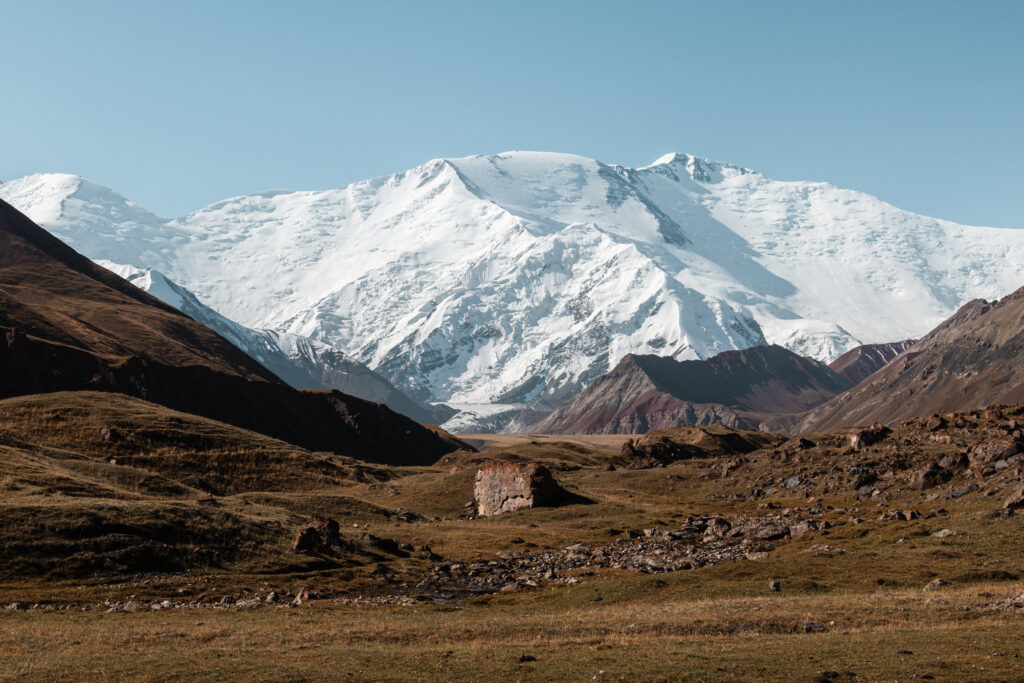 Views of Lenin Peak from Base Camp
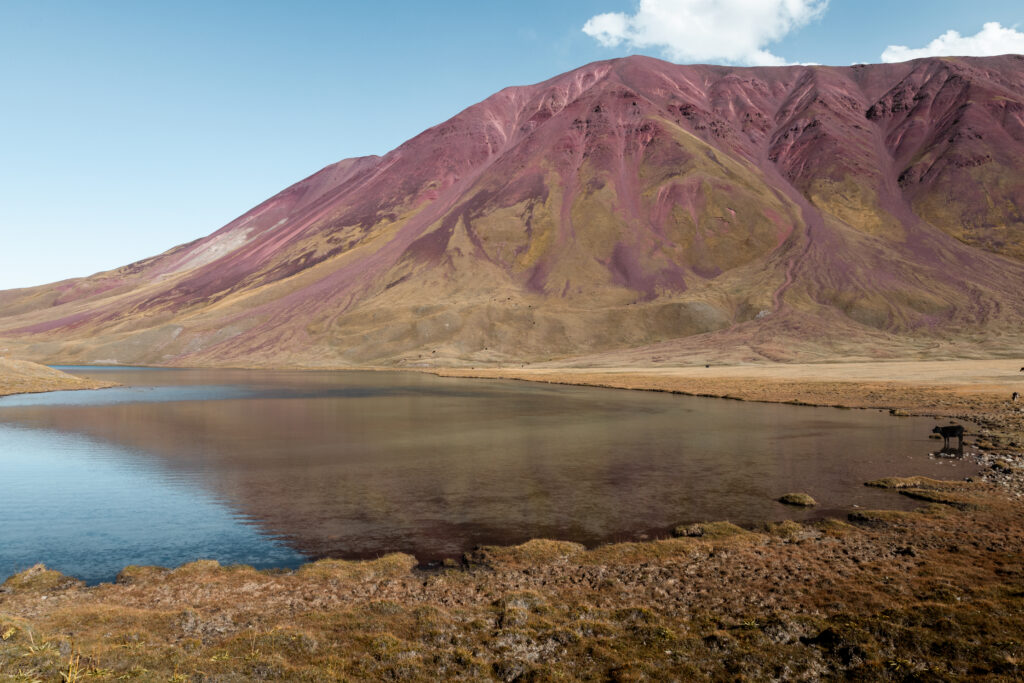 Unique red-coloured mountains of the Pamirs
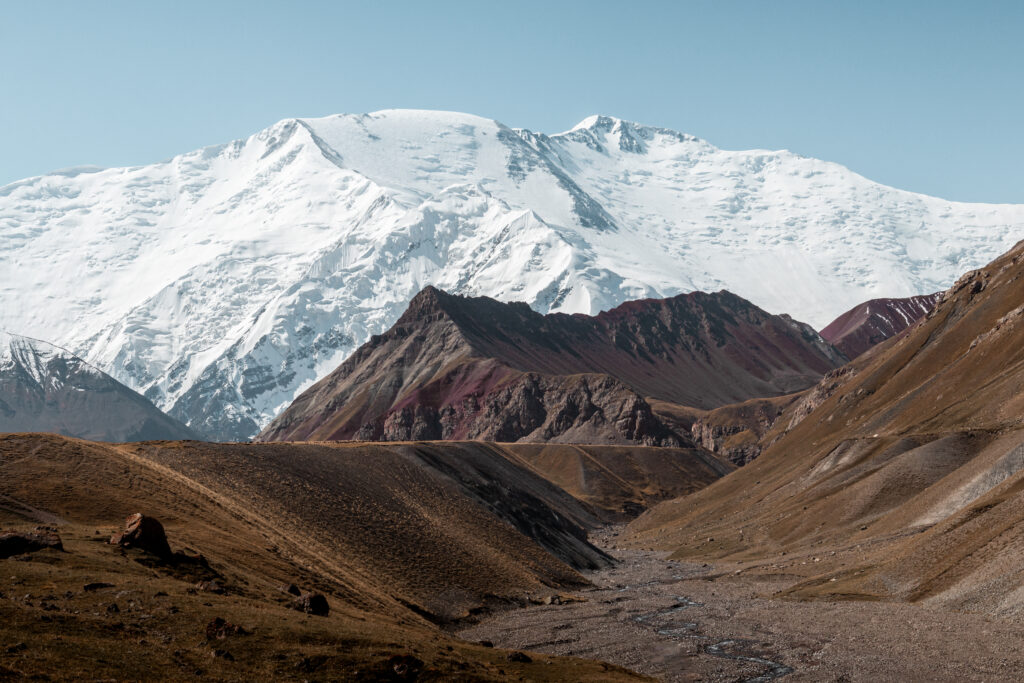 Trekking in the valley towards Lenin Peak
Getting to the Pamirs
Bishkek to Osh
Osh is the gateway to the Kyrgyz Pamirs and your first major stop before heading south. There are two ways to get there from Bishkek.
The fastest option is to fly. Several domestic flights operate daily between Bishkek’s Manas International Airport and Osh Airport, with the journey taking just over an hour. Tickets are relatively affordable by European standards and can be booked in advance through local carriers. This is the most comfortable option if you’re short on time.
The alternative is to travel overland by shared taxi, which is the choice of most independent travellers on a budget. Shared taxis depart from Bishkek’s western bus station and cover the roughly 700 kilometres to Osh in around 10-13 hours depending on stops and road conditions. The route crosses the Toktogul reservoir and winds through some striking mountain scenery, making the journey worthwhile in itself. Expect to pay around 1000 to 1500 KGS per seat. There are also overnight buses available if you’d rather sleep through the journey and arrive in the morning.
Osh to Sary-Mogul
From Osh, you need to reach Sary-Mogul, the small village that serves as the jumping-off point for treks into the Pamirs. The most straightforward option for independent travellers is to take a marshrutka. These depart from Osh’s southern bus station, departures tend to happen when the vehicle is full rather than at fixed times. It’s worth arriving early in the morning to avoid waiting for hours. The journey takes around 4 to 5 hours and costs roughly 400 to 600 KGS.
Alternatively, you can hire a shared taxi for the same route, which is faster and more comfortable but costs more. Either way, tell the driver you want to be dropped at Sary-Mogul. Once you arrive, the village has a handful of basic guesthouses where you can sleep, stock up on supplies, and get your bearings before heading into the mountains.
Sary-Mogul into the Mountains
There is no public transport beyond Sary-Mogul. From here, your options are to arrange a 4×4 lift through your guesthouse or CBT office, which is the most common approach and can often be shared with other trekkers to split the cost, or to try your luck hitchhiking on one of the occasional vehicles heading up towards the base camp area. The roads beyond the village are rough and require a capable vehicle, so walking the full distance from Sary-Mogul is not practical for most itineraries.
Where to Stay in the Pamirs
Sary-Mogul
You’ll most likely have to spend at least one night in Sary-Mogul before heading into the mountains. The village has a few basic guesthouses offering simple rooms, home-cooked meals, and the chance to arrange onward transport. It’s nothing fancy, but it’s a practical base to rest after the long journey from Osh, stock up on any last supplies, and sort out your 4×4 for the following morning.
Tulpar-Kul Yurt Camp
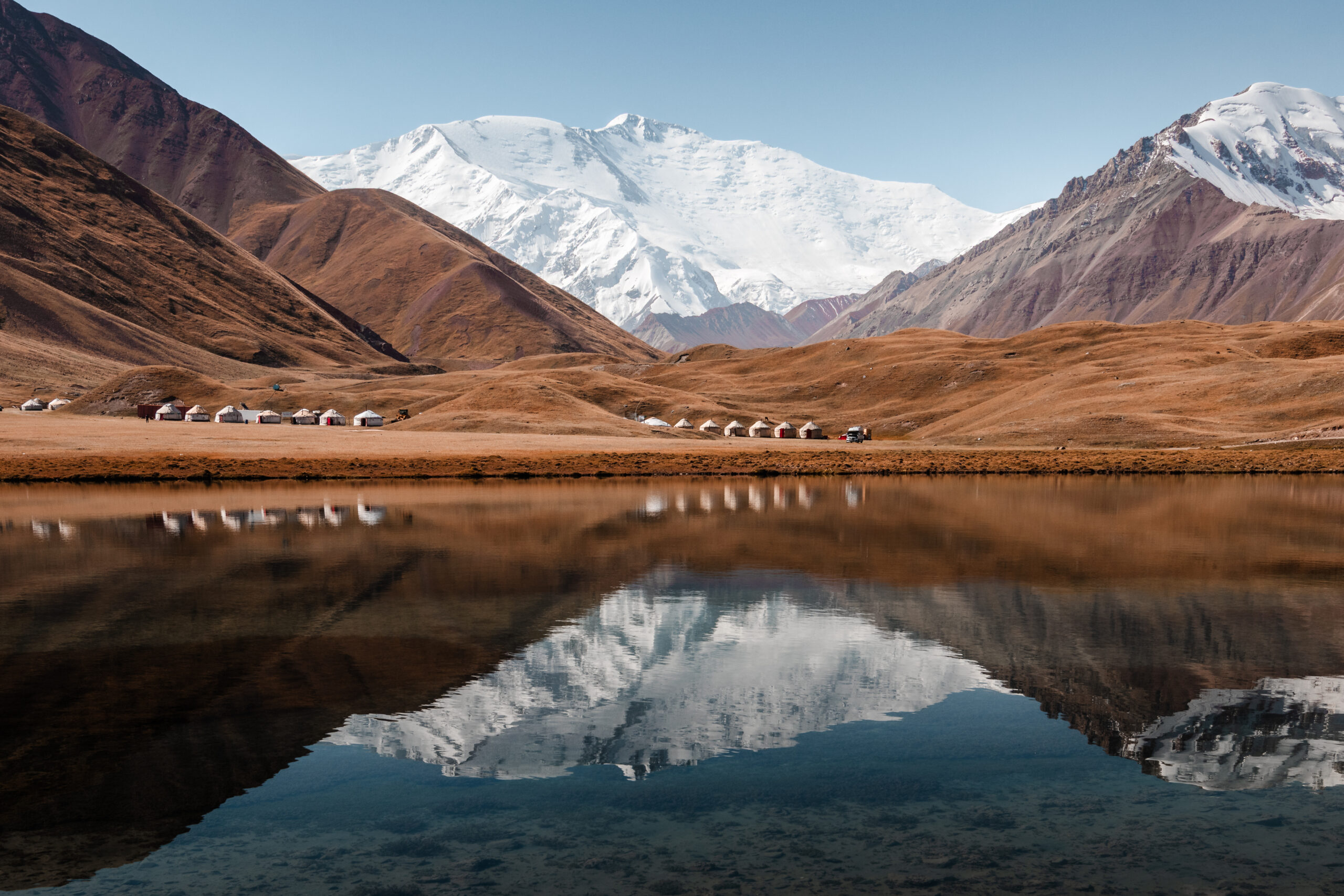
For anyone looking to properly explore the Pamirs, the yurt camps at Tulpar-Kul is by far the best place to base yourself. Sitting beside the lake with Lenin Peak looming in the background, it’s one of the most spectacular settings you’ll sleep in anywhere in Kyrgyzstan. The camp offers simple accommodation in traditional yurts, with meals provided by the hosts.
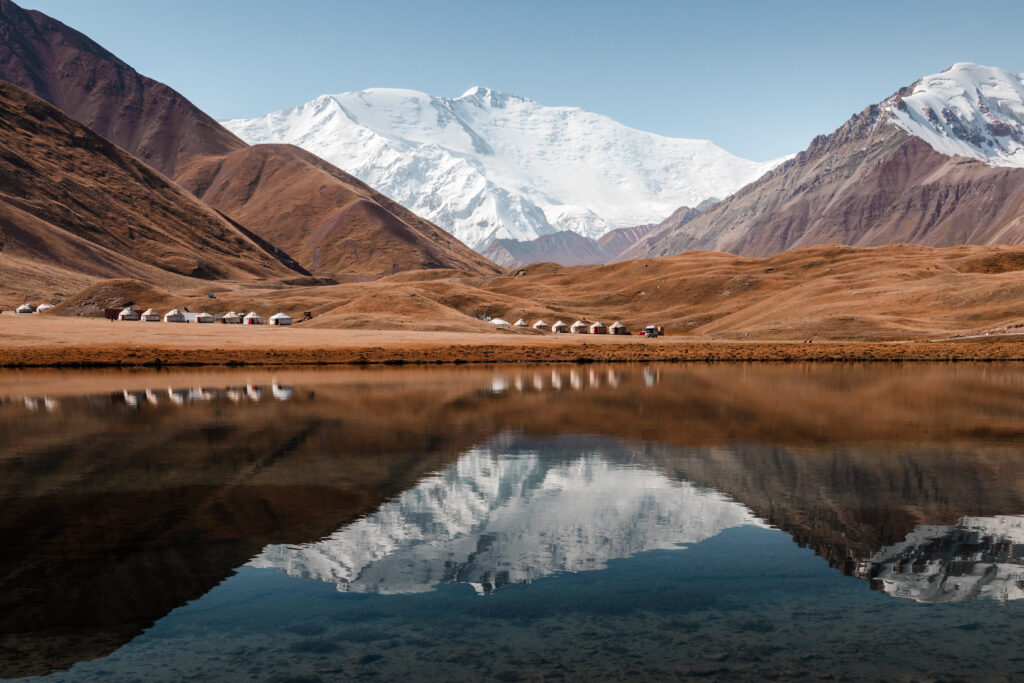 Yurt camps at Tupar-Kul with Lenin Peak in the background
From here you are perfectly placed to trek up to Lenin Peak Base Camp, which makes for an outstanding full day out. If you want to push further, it’s also possible to continue beyond Base Camp all the way to Traveller’s Pass, a serious undertaking but one of the most rewarding routes in the area.
If you’re carrying your own camping gear, you can also pitch a tent beside the lake rather than staying in the yurt camp. The setting is extraordinary and camping here gives you even more flexibility over your days in the mountains.
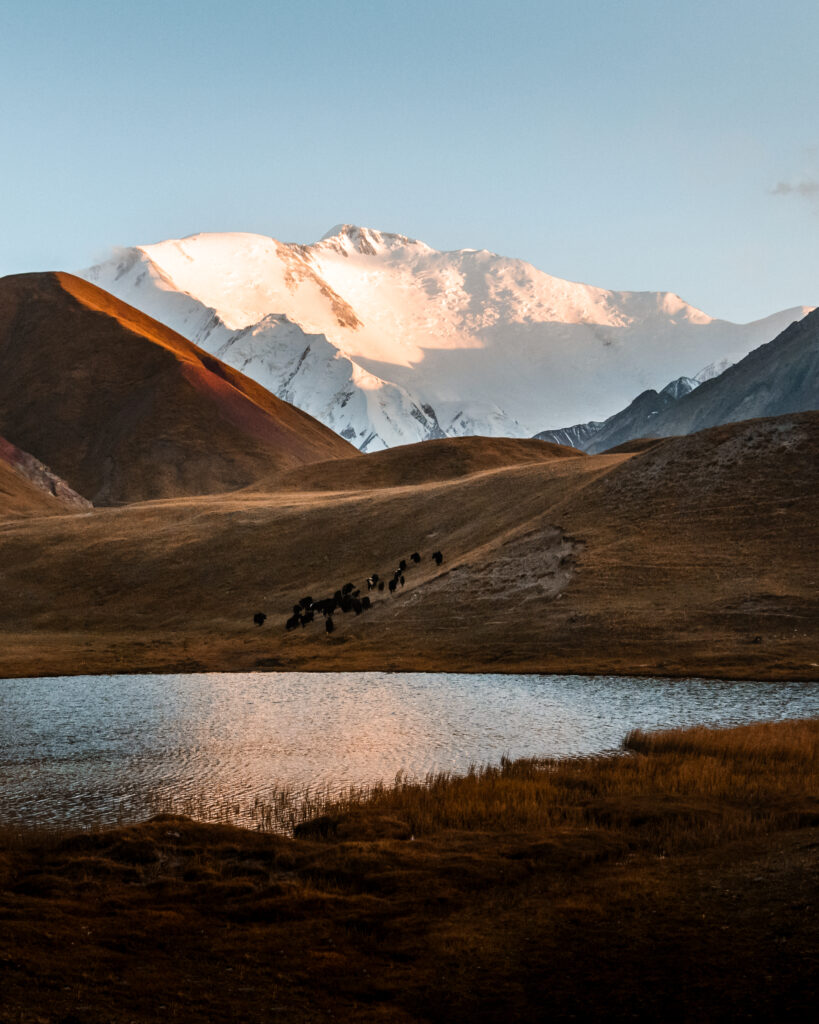 Lenin Peak at Sunset
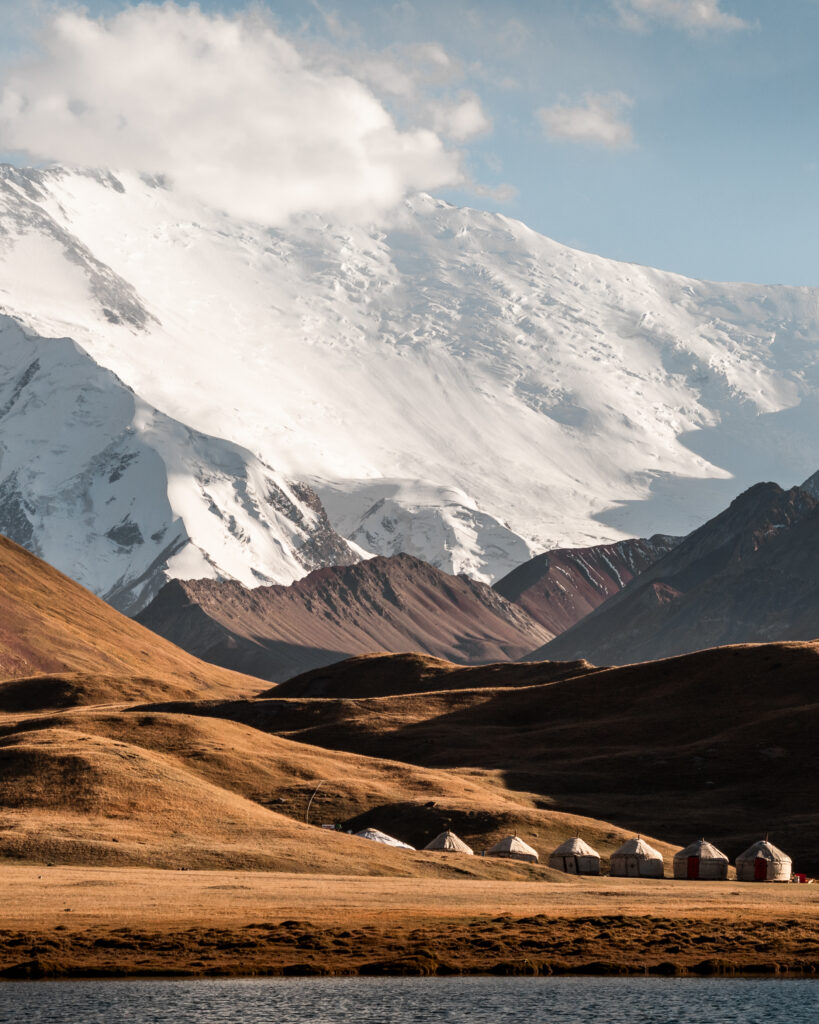 Yurt Camp in the shadow of Lenin Peak
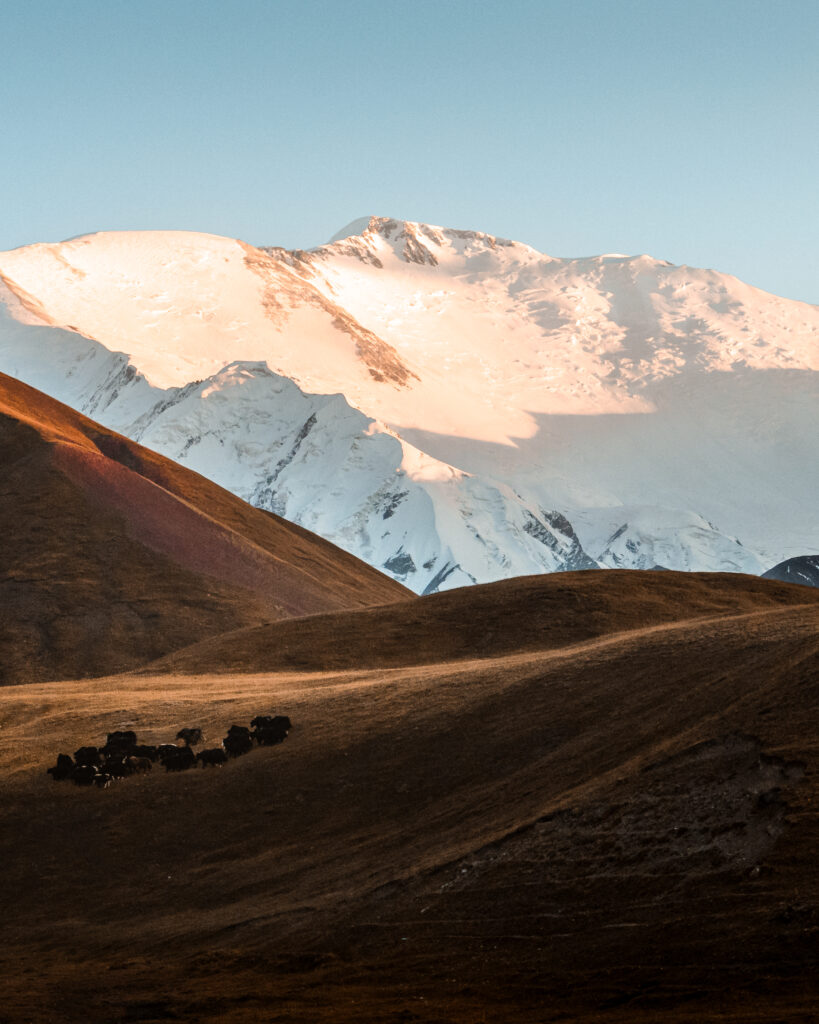 Lenin Peak and yaks grazing at sunset
What to Do from Tulpar-Kul
Tulpar-Kul itself is worth a day of simply being in. The lake sits at around 3,500 metres, with Lenin Peak filling the skyline. Walking along the shoreline, watching the light change across the water, and taking in the sheer scale of the surrounding mountains is an experience in itself.
Trekking to Lenin Peak Base Camp
The most popular day out from the yurt camp is the trek up to Lenin Peak Base Camp, which sits at around 3600 metres. The trail follows the valley upwards through wide moraine fields, with the enormous north face of Lenin Peak growing larger with every hour. Base Camp is a fascinating place to reach: during the summer climbing season you’ll find expedition tents, mountaineers acclimatising for their summit attempts, and a atmosphere unlike anything on the regular trekking circuit.
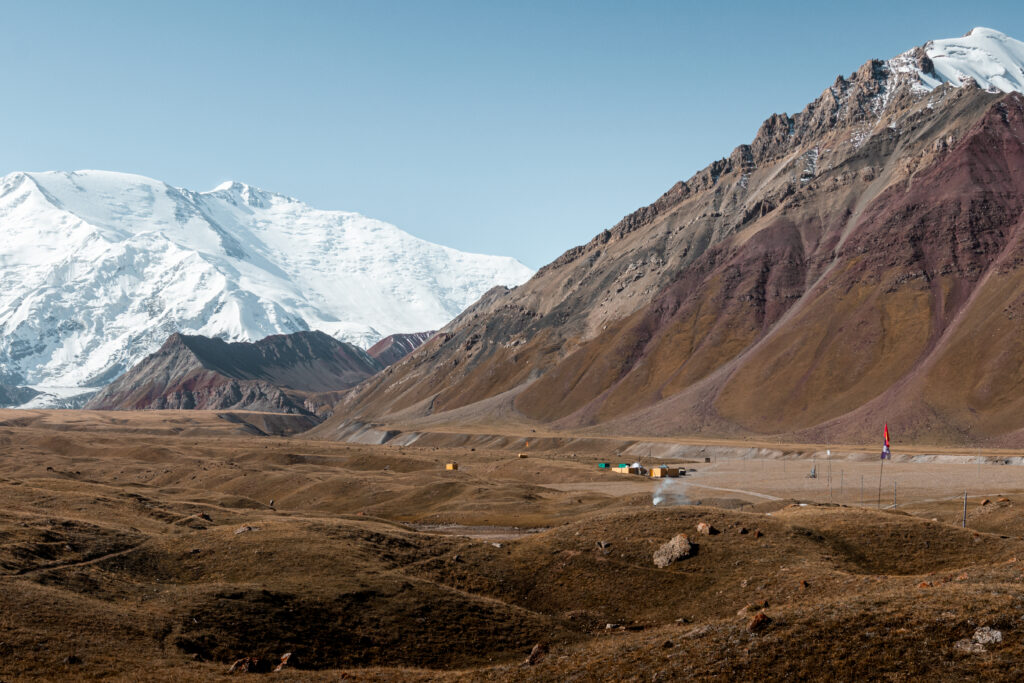 Lenin Peak Base Camp
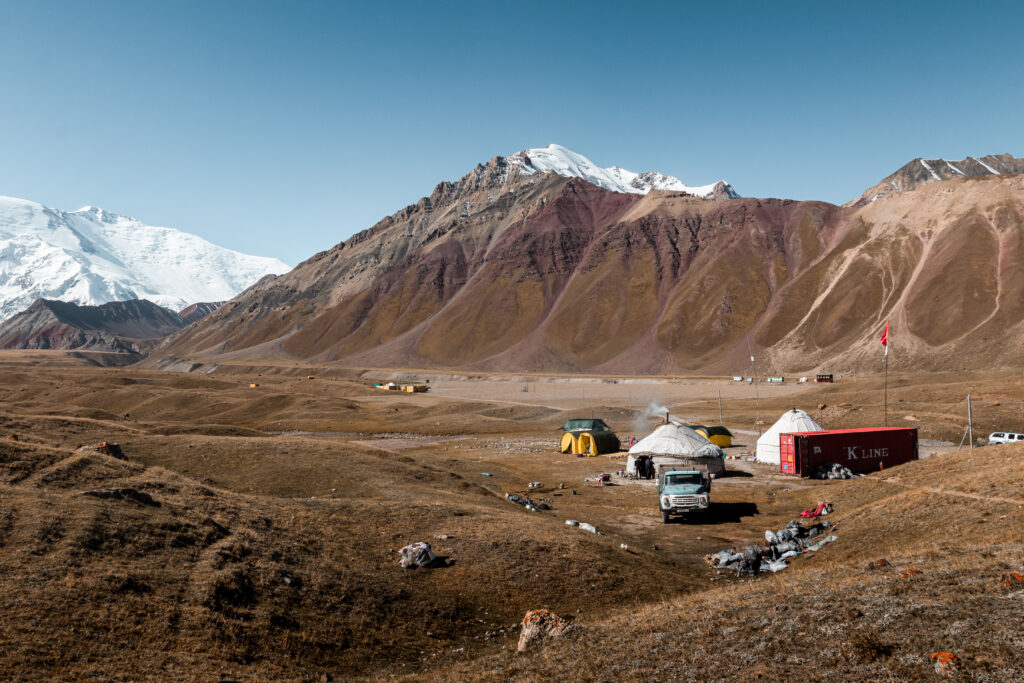 End of climbing season at Lenin Peak Base Camp
Continuing to Travellers Pass and Beyond
For those wanting to push further than Base Camp, it’s possible to continue up to Traveller’s Pass, which sits above 4000 metres. This is a significantly harder undertaking than the Base Camp day trek, requiring a good level of fitness and careful attention to weather conditions and how your body is responding to the altitude. The views from the pass are extraordinary and the sense of achievement on returning to the lake that evening is hard to match. It’s a long but very rewarding day out from the yurt camp.
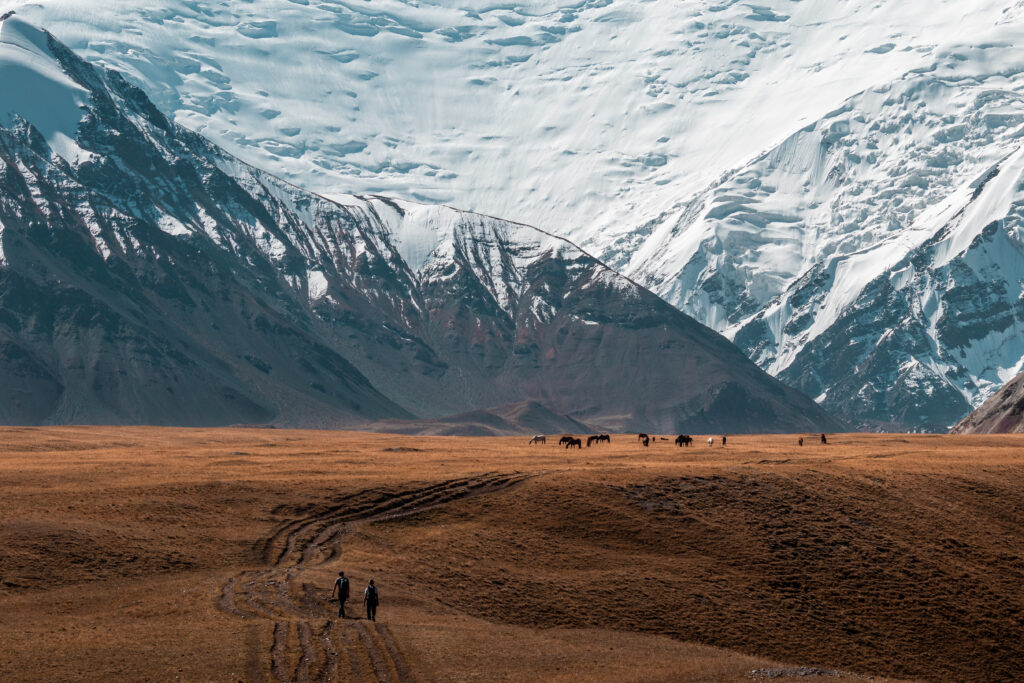 Trekking towards Traveller’s Pass
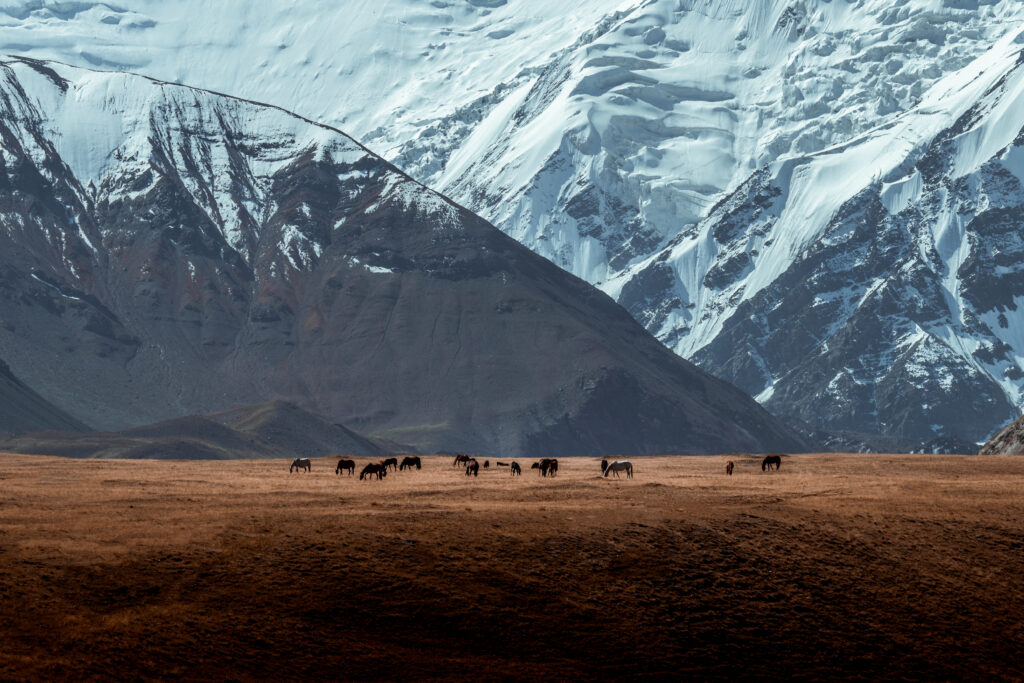 Horses grazing at the base of Lenin Peak
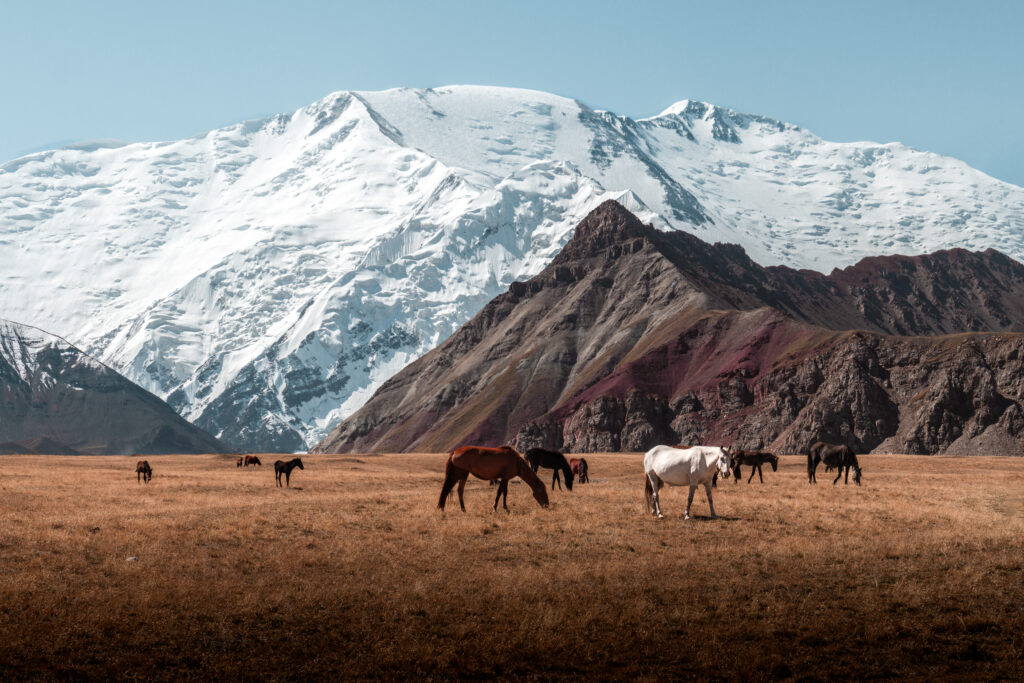 Horses grazing at the base of Lenin Peak
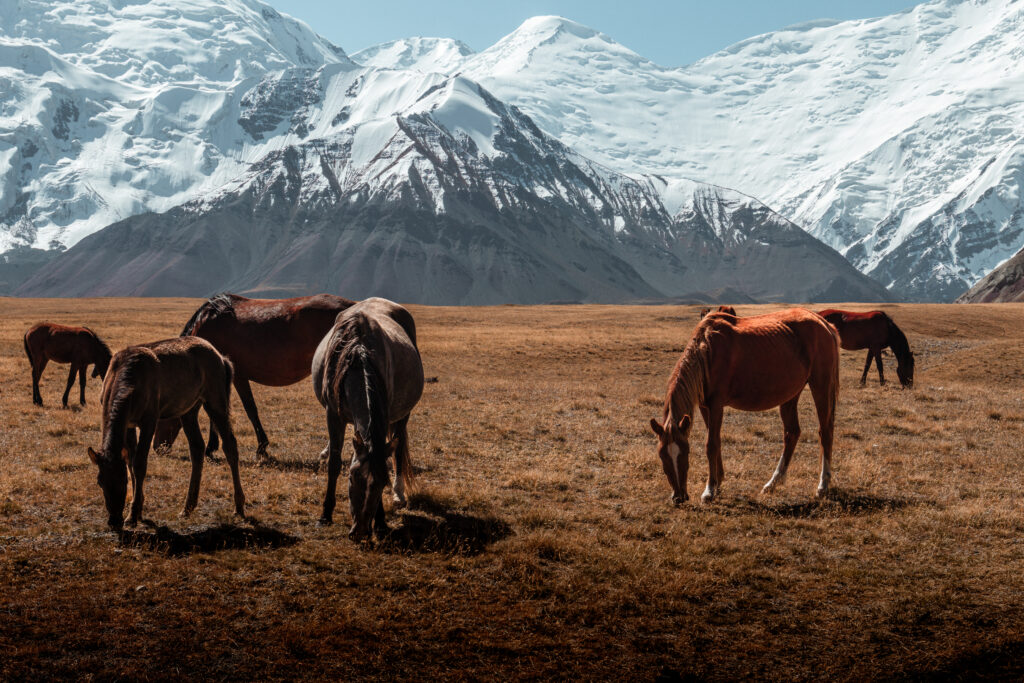 Horses grazing at the base of Lenin Peak
Beyond Travellers Pass, it’s also possible to continue independently further up the mountain towards Camp 1 and Camp 2. I know independent travellers who have done exactly this, with no guide or organised expedition required. However, this is a serious undertaking that is nothing like a day hike from Tulpar-Kul. The distances involved mean you’ll need to carry full camping gear and be entirely self-sufficient, as there are no facilities. Altitude sickness becomes a real and serious risk at these elevations, and you should be very honest with yourself about your experience level, physical condition, and how well you have acclimatised before deciding to push higher. Ascending too quickly above 4000 metres without proper acclimatisation can be genuinely dangerous.
Exploring Around the Lake
If you’d rather spend a quieter day closer to camp, the area around Tulpar-Kul rewards slow exploration. The lake has a raw, almost lunar quality to it, and walking the shoreline or climbing the surrounding ridgelines for views across the valley makes for a peaceful alternative to the longer routes above.
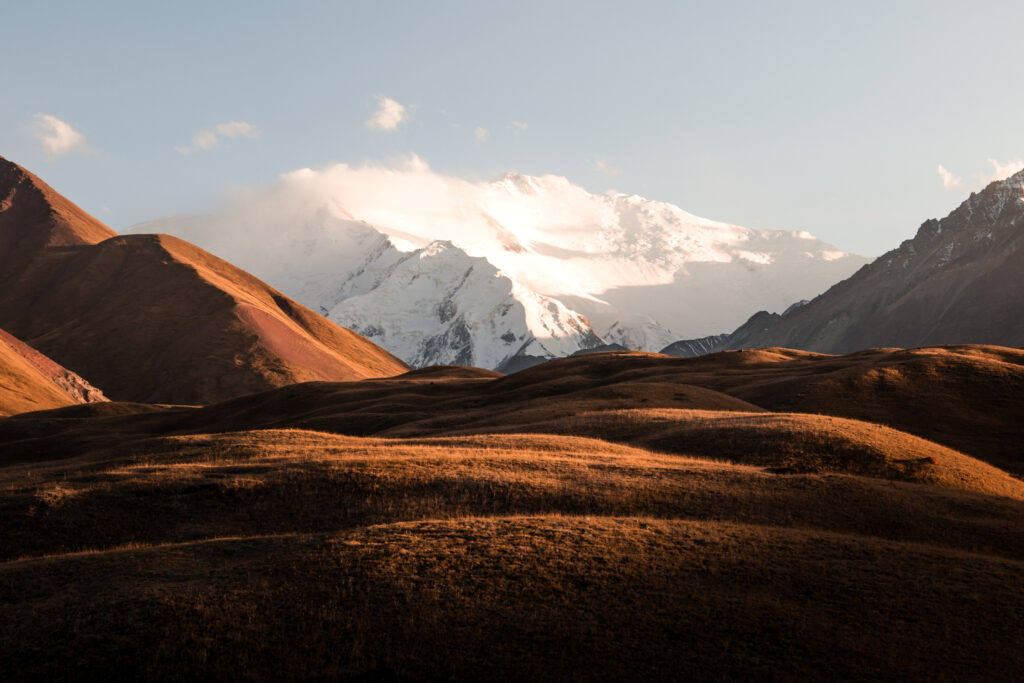 Lenin Peak at sunset
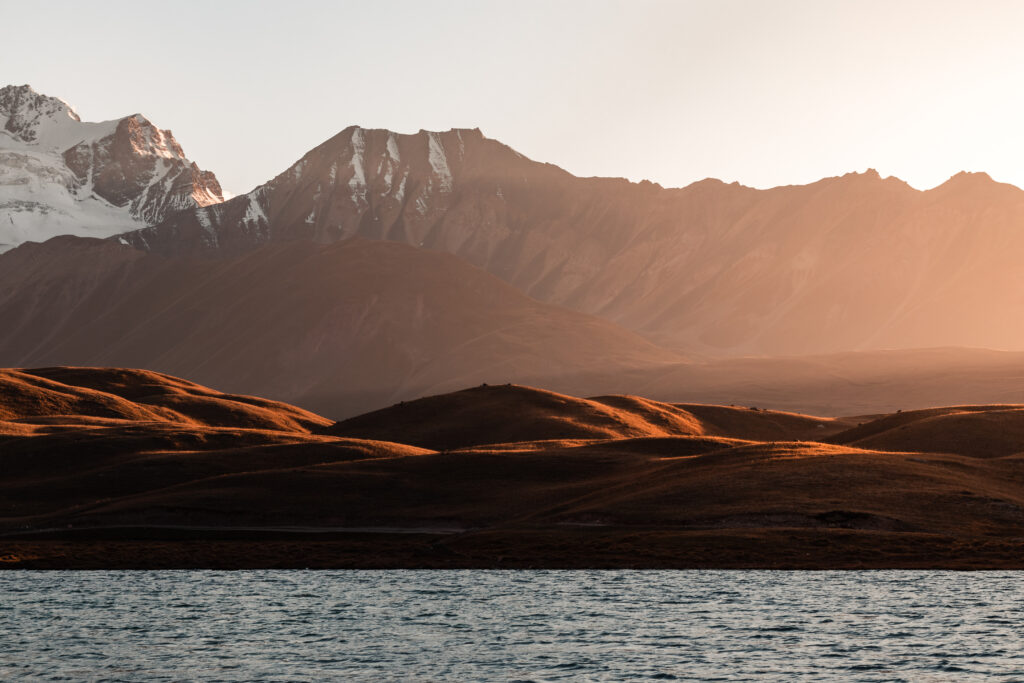 Tulpar-Kul at Sunset
Practical Information
Permits
Technically, the area around Lenin Peak falls within a border zone due to its proximity to Tajikistan, and a permit is required to trek here. In practice, enforcement is inconsistent at best. I did not obtain a permit before my trip and encountered no checkpoints or officials asking for one throughout my time in the mountains. That said, the situation can change, and it’s worth checking the current state of affairs before you go. If you want to be on the safe side, permits can be arranged by emailing the CBT offices before your trip.
Altitude
This is not a trek to take lightly from an altitude perspective. Tulpar-Kul sits at around 3500 metres and Traveller’s Pass is above 4000 metres. If you’ve come straight from Bishkek, spending at least one night in Osh and another in Sary-Mogul before heading into the mountains gives your body a chance to adjust. Take it slowly on your first day at the lake, stay well hydrated, and pay attention to how you’re feeling. Headaches and fatigue are common at this altitude and usually manageable, but they’re a signal to slow down rather than push on.
What to Bring
The weather in the Pamirs can change quickly and temperatures drop sharply once the sun goes down, even in summer. Warm layers, a decent fleece or down jacket, and a hat and gloves are essential regardless of how warm it feels when you set off in the morning. Good hiking boots with ankle support are important given the rocky and uneven terrain above the lake. Bring plenty of snacks for days on the trail, a water filter or purification tablets for refilling from streams, and sunscreen, as the UV exposure at this altitude is intense. Download offline maps on Maps.me before leaving Osh as mobile signal disappears quickly once you’re in the mountains.
Costs
The yurt camp at Tulpar-Kul cost around 1700 KGS per night, which includes dinner and breakfast. Beyond that, there are no restaurants or shops once you leave Sary-Mogul, so it’s important to bring your own snacks and food for lunches when you’re out on the trail. Stock up properly in Osh before making the journey south, as options in Sary-Mogul itself are also very limited.
The 4×4 from Sary-Mogul into the mountains is an additional cost, though the price per person drops significantly if you share the vehicle with other trekkers, which is usually easy enough to arrange through the CBT office. I’d recommend asking around the evening before you plan to leave.
Getting Back
Getting back from Tulpar-Kul is straightforward to arrange. The yurt camp can organise a 4×4 to take you back down to Sary-Mogul, and as with the journey up, sharing the vehicle with other trekkers at the camp brings the cost down considerably.
From Sary-Mogul, I’d recommend spending one more night in the village before heading back rather than trying to connect all the way to Osh in a single day. It gives you a chance to decompress after the mountains and makes for a much more relaxed journey home.
The following morning, catch the marshrutka back towards Osh from the village. As with the journey down, departures are not on a fixed schedule and the vehicle leaves when full, so position yourself early and be prepared to wait a little. The journey back to Osh takes around 4 to 5 hours and from there you can pick up onward connections to Bishkek by shared taxi or bus, or fly back if you prefer.
For the more adventurous, Sary-Mogul also sits close to the Tajik border, making it a potential jumping-off point onto the famous Pamir Highway, one of the great overland routes in the world. In theory, crossing into Tajikistan from here would allow you to continue your journey along this legendary road rather than retracing your steps to Osh. However, this border crossing can be volatile and unreliable. When I was there it was completely closed, making the crossing impossible. Before building any plans around it, check the current situation carefully as the status can change without much warning.
Final Thoughts
The Kyrgyz Pamirs are not the easiest place to get to, and that’s precisely the point. The long journey south from Bishkek, the dusty marshrutka to Sary-Mogul, the rough 4×4 track up to the lake: all of it is part of what makes arriving at Tulpar-Kul feel so rewarding. By the time you’re sitting outside a yurt watching the last light fade on Lenin Peak, you’ve genuinely earned the view.
What struck me most about this part of Kyrgyzstan was how untouched it still feels. The more popular trekking areas in the north are wonderful, but they’re increasingly well-trodden. Down here in the south, the infrastructure is minimal, the crowds are virtually non-existent, and the landscape is on a scale that’s difficult to fully prepare yourself for. It’s the kind of place that reminds you why you started travelling off the beaten path in the first place.
Getting here independently is entirely possible with a bit of patience and flexibility. You don’t need a guide, you don’t need a tour, and you don’t need an expensive private vehicle booked weeks in advance. What you do need is a willingness to go slowly, adapt to circumstances, and embrace the uncertainty that comes with travelling in one of the most remote corners of Central Asia. If that sounds like your kind of trip, the Pamirs will not disappoint.
Explore More of Kyrgyzstan
If you enjoyed trekking in the Pamirs, there are plenty more wild and beautiful places to discover in Kyrgyzstan. From remote alpine lakes to high valleys and charming towns, the country offers countless opportunities for adventure and independent travel. Check out some of my other Kyrgyzstan guides: