
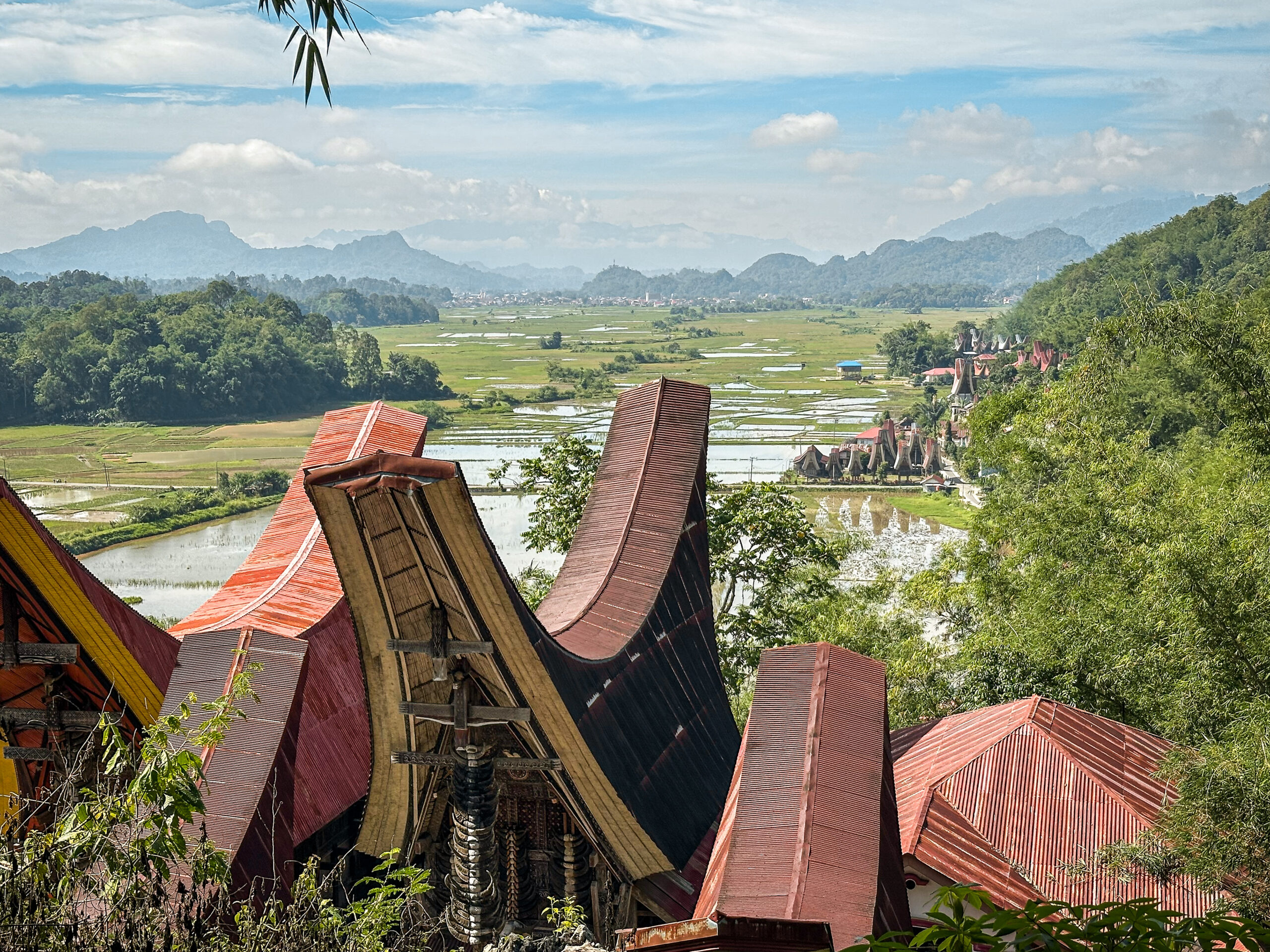
Tucked away in the misty highlands of South Sulawesi, this Tana Toraja travel guide will help you navigate one of Indonesia’s most culturally unique destinations. Known for its dramatic landscapes of rice terraces and limestone cliffs, the region is most famous for its elaborate funeral rituals, cliffside graves, and striking tongkonan houses with their boat-shaped roofs.
But Tana Toraja is far more than just its ceremonies. This is a place where ancient animist beliefs coexist with Christianity, where death is treated as a long, communal journey rather than an ending, and where traditions have remained deeply rooted despite the slow arrival of tourism. Travelling here feels less like sightseeing and more like stepping into a living cultural world that operates on its own rhythm.
Unlike much of Indonesia, Tana Toraja isn’t about beaches or island hopping. Instead, it rewards travellers who are curious and willing to explore a different culture. Whether you come to learn about Torajan funeral customs, hike through lush highland scenery, or simply experience a side of Indonesia that few travellers truly understand, Tana Toraja is unforgettable: challenging, confronting at times, but deeply enriching.
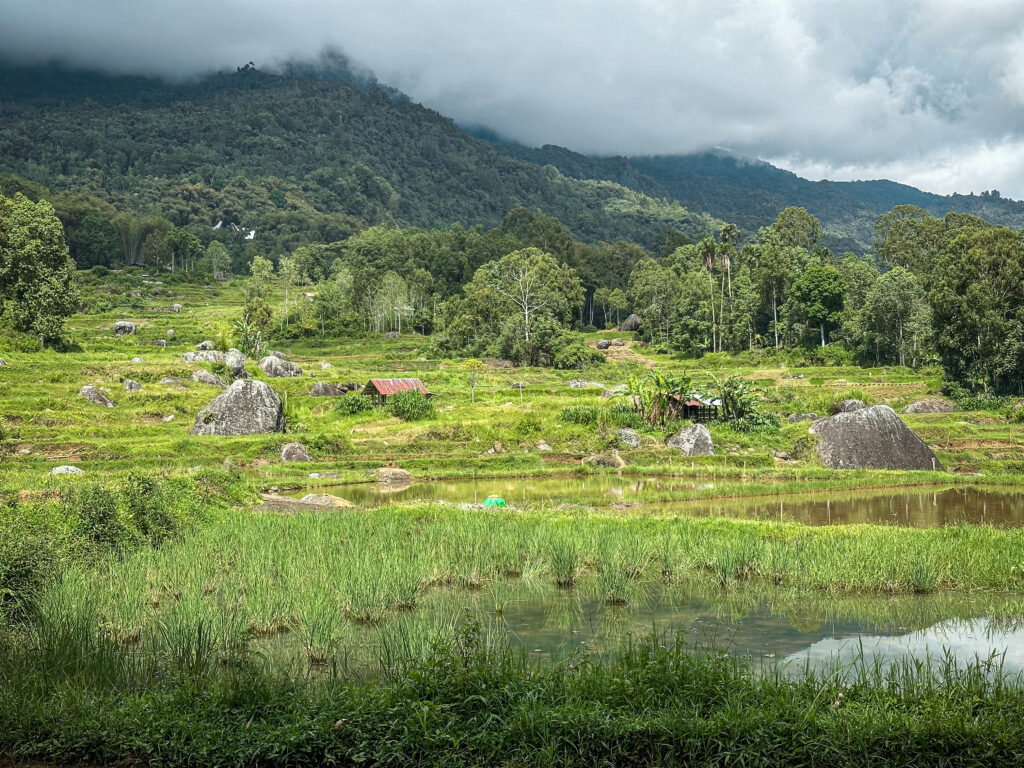 Rice terraces in Tana Toraja
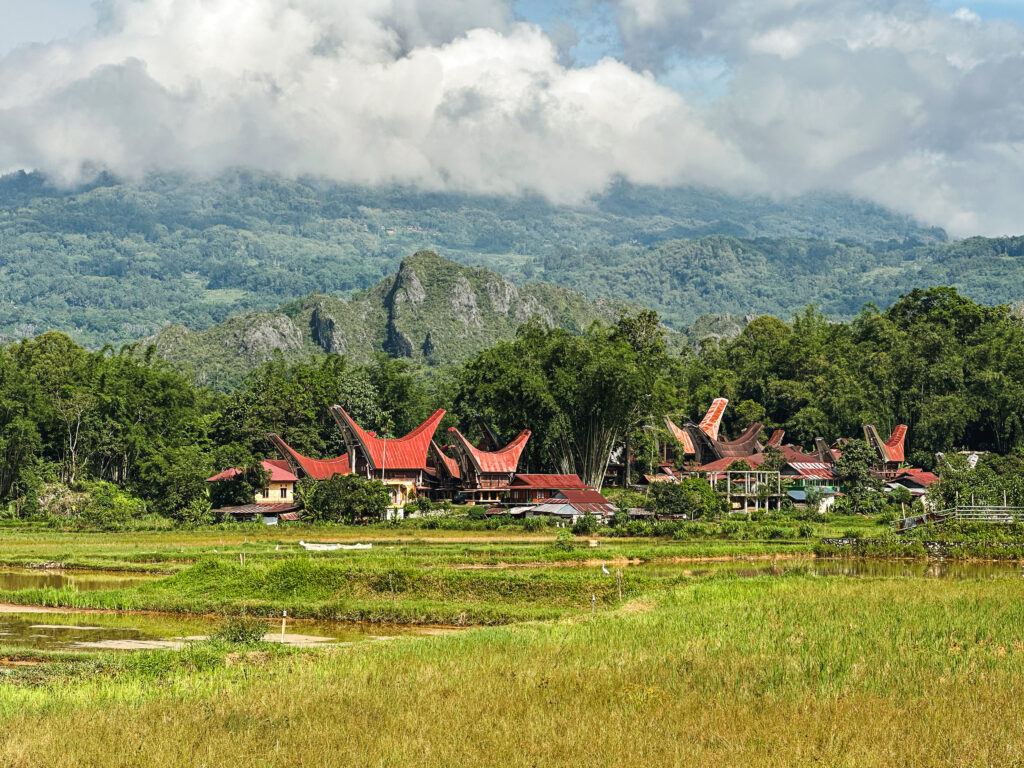 Traditional Tongkonan houses
Understanding Torajan Funeral Ceremonies
In Tana Toraja, death is a long, carefully observed process rather than a sudden event. When someone passes away, they are initially considered “a sick person,” and the body may remain at home for months or even years while the family prepares and saves for a proper funeral. During this period, relatives maintain a close connection with the deceased, treating them as part of daily life.
Funeral ceremonies are the most important social and spiritual events in Torajan life, often lasting several days and bringing together entire villages and extended families from near and far. The scale and complexity of a funeral reflect the deceased’s social status, with larger, more elaborate ceremonies signalling higher standing.
For visitors, Torajan funerals can be intense and deeply moving. The communal gatherings, rituals, and symbolic acts — from animal sacrifices to the display of tau tau effigies — reveal a culture that honours its dead openly and collectively. Approached with respect and humility, witnessing a funeral offers a rare glimpse into a society where life, death, and family are inseparably connected.
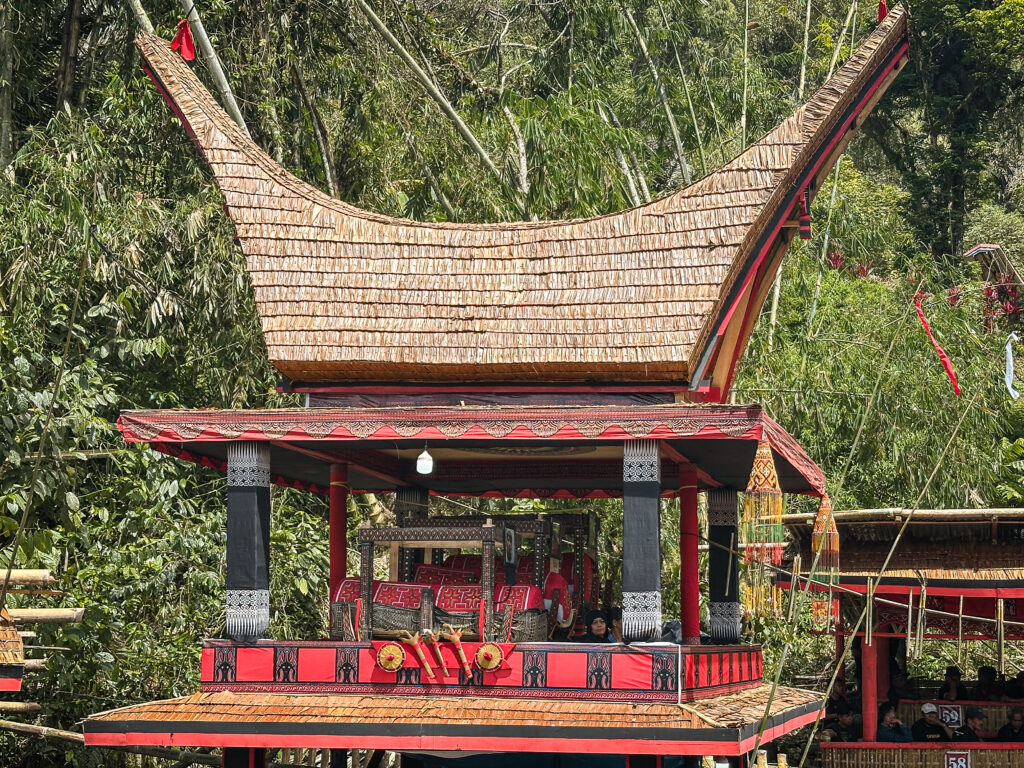 Where the coffins are located during the funeral
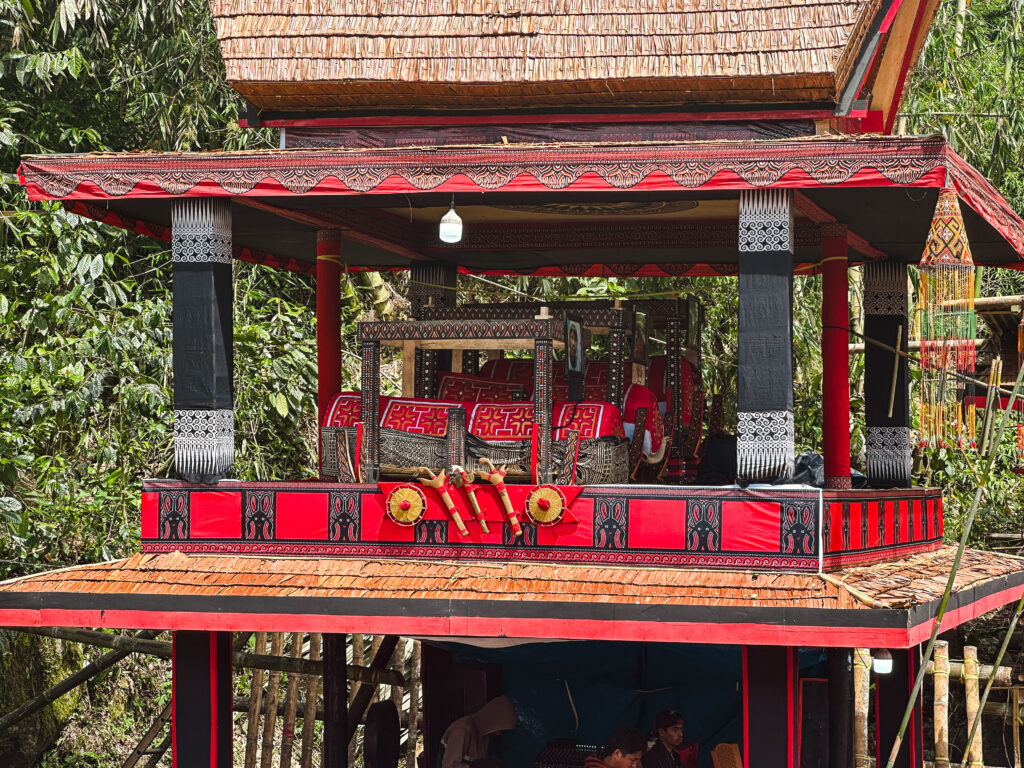 This was a triple funeral
Best Time to Visit Tana Toraja
The best time to explore Tana Toraja is during the dry season, from May to September, when roads are easier to navigate and the weather is generally pleasant for trekking and visiting villages. Rain is more frequent between November and March, which can make travel on the mountainous, winding roads slower and slippery, though it rarely stops you from exploring entirely.
I visited in December, during the wet season, and found the weather manageable. There were occasional showers, sometimes heavy, but they often passed quickly and allowed plenty of time to explore the highlands, rice terraces, and villages. Travelling in the off-season also meant fewer tourists, giving a more intimate experience of the local culture.
While many travellers assume Torajan funerals mainly happen in July and August, they actually occur year-round, depending on the family’s schedule and finances. During my stay in December, I managed to witness a few different funerals taking place in various villages. However, the famous Ma’Nene ritual, where corpses are exhumed, cleaned, and redressed, typically takes place in August.
The Different Torajan Rituals & Traditions
Traditional Houses and Rice Storage
Torajan culture extends beyond funerals into daily life. The tongkonan, traditional boat-shaped houses, are intricately carved with symbolic motifs that represent family history and social status. For example, the buffalo horns stacked in the front record a family’s history, each represents a buffalo sacrifice made at a funeral. Each tongkonan usually has a nearby rice house (alang), reflecting the importance of rice cultivation both for sustenance and as a ceremonial offering in local rituals.
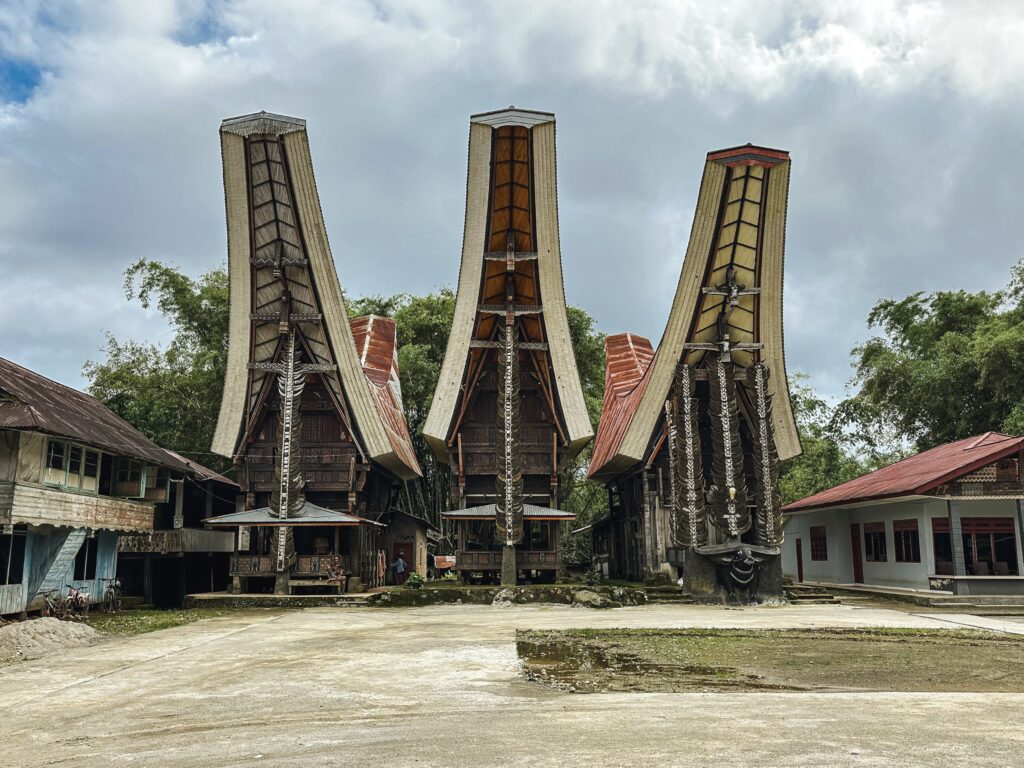 Traditional Tongkonan houses
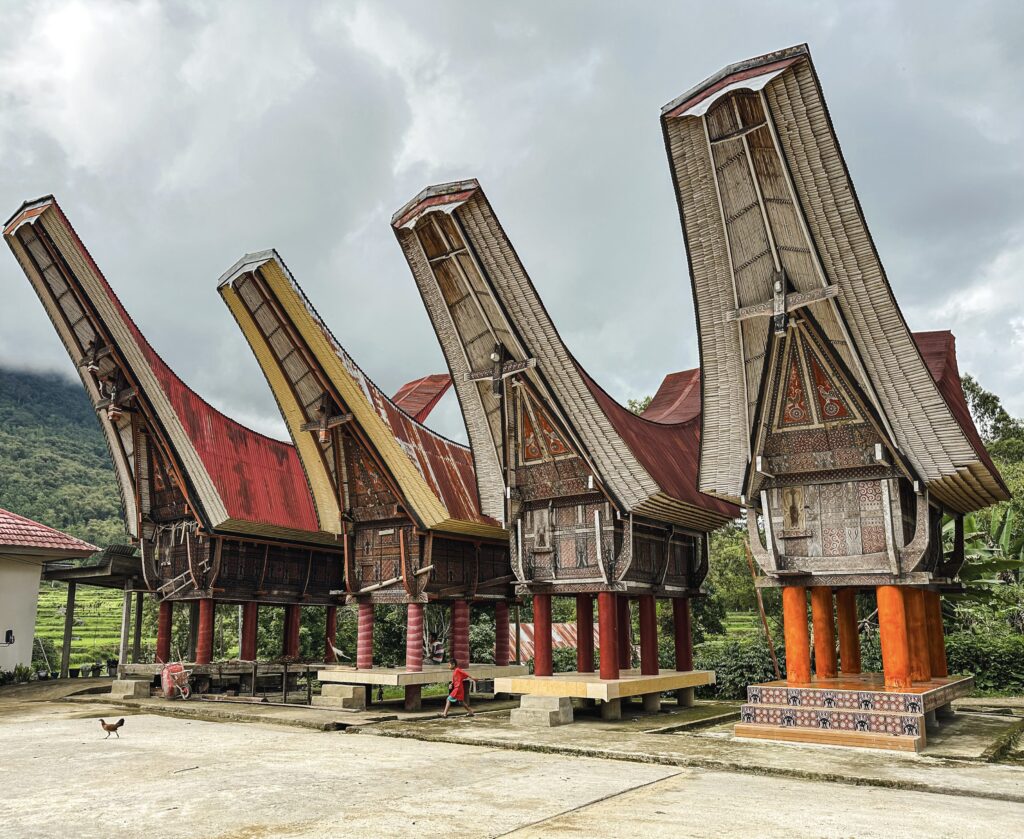 And their respective alang (rice house)
Tau Tau: Wooden Effigies of the Deceased
Tau tau are intricately carved wooden effigies created to resemble the deceased. They are placed on cliffside balconies overlooking the village, acting as guardians and a reminder of ancestral presence. These effigies are a deeply symbolic part of Torajan funerals, representing both the identity and the status of the person who has passed.
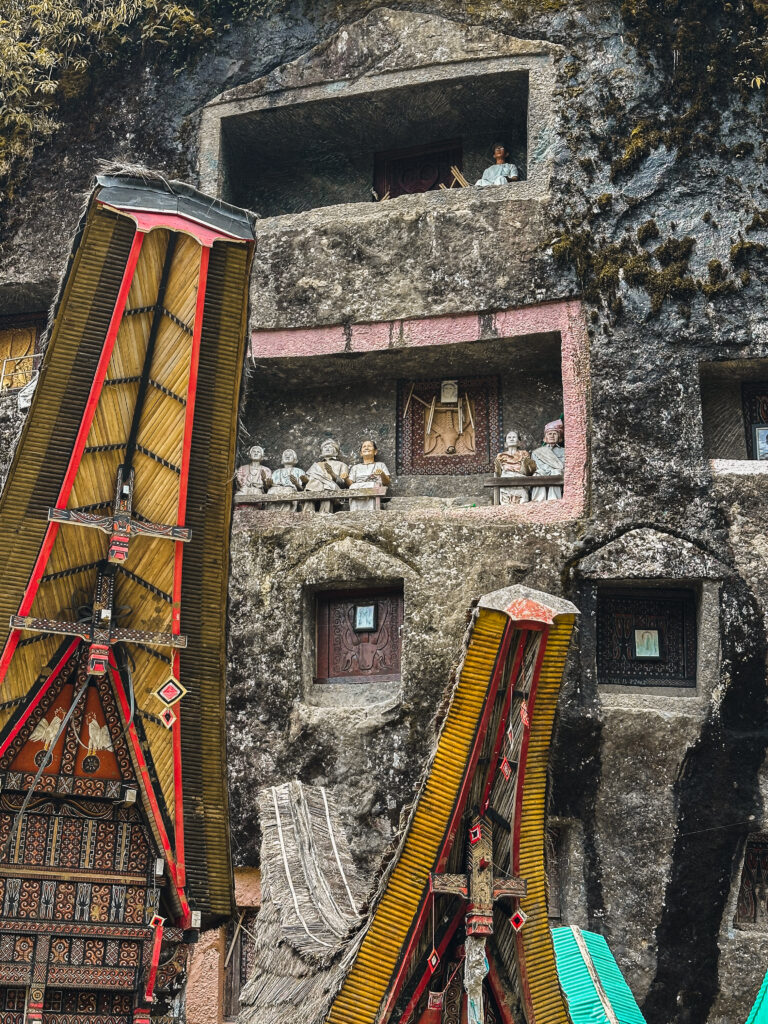 Tau Tau figurines
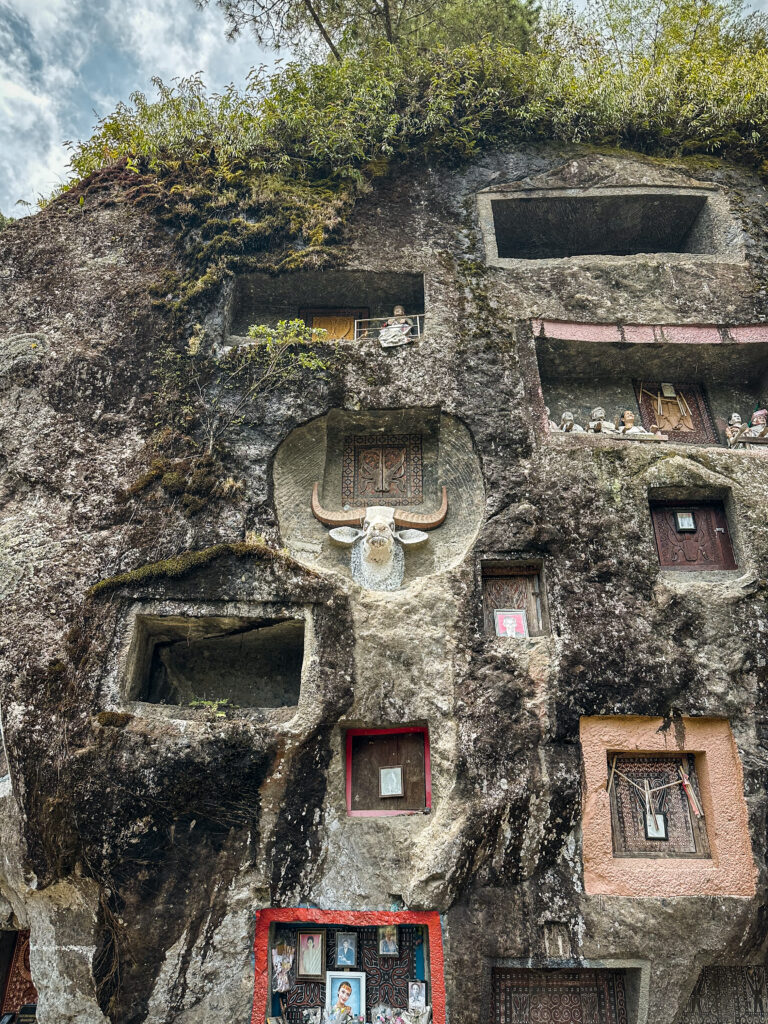 Close-up examples of graves and respective Tau Tau
Graves and Coffins
Torajan graves are one of the most striking aspects of their culture, reflecting both spiritual beliefs and social hierarchy. Many graves are carved into cliffs, caves, or even ancient trees, with coffins placed in niches or inside natural caves. The location and style often reflect the status of the deceased: high-ranking families may have elaborate cliffside tombs, while smaller or lower-status families have simpler burial sites. Here is one of the largest rock where graves are carved.
In most villages, coffins are suspended on cliffs or placed in caves, sometimes accompanied by tau tau effigies that watch over the living. These graves are treated with immense care, and local families often maintain them for generations.
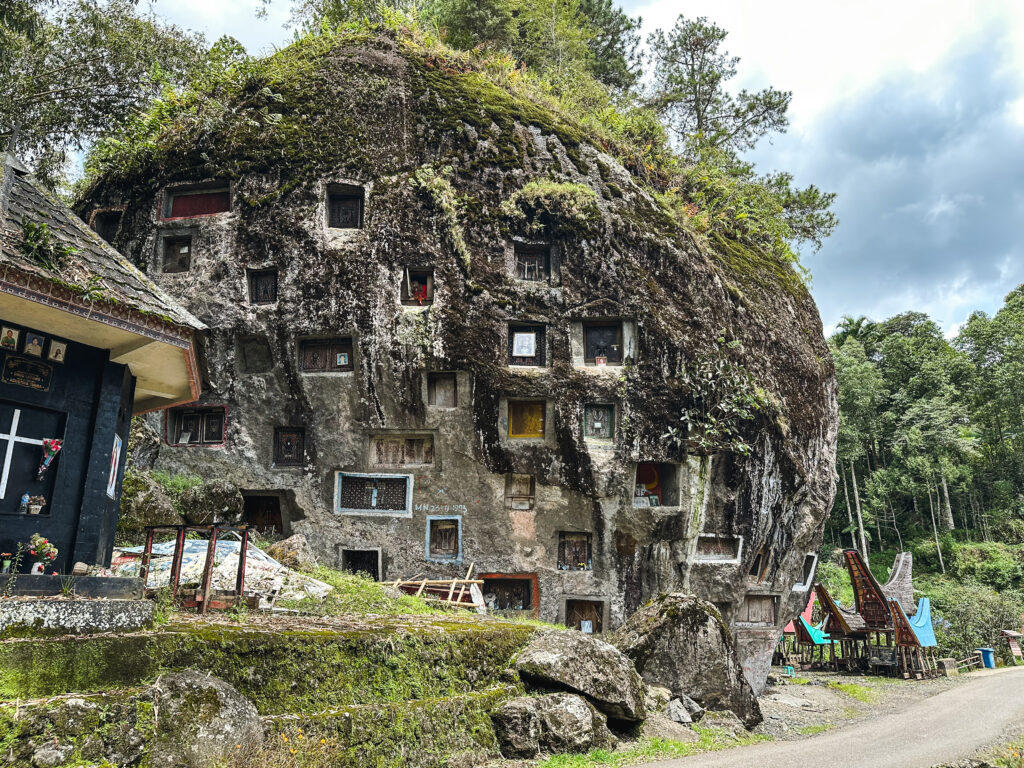 Largest rock in the area used as a burial site
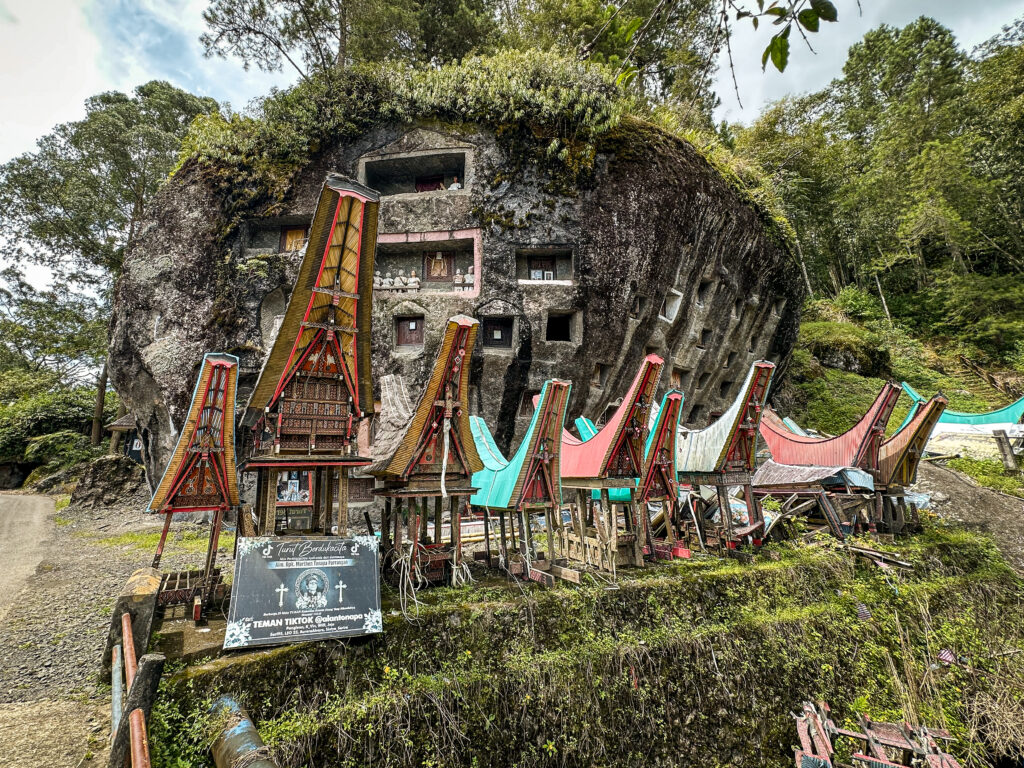 Largest rock in the area used as a burial site
Ma’Nene: The Ceremony of Cleaning Corpses
One of the most extraordinary Torajan traditions is the Ma’Nene ritual, also called the Ceremony of Cleaning Corpses. During this event, families exhume the bodies of deceased relatives from their coffins, clean them, and dress them in fresh clothes. This is done as a deeply symbolic act of love and ongoing care, honouring ancestors and reaffirming family bonds.
Ma’Nene usually takes place every few years, around the harvest season in August. During the ritual, the coffins are opened, the remains are gently cleaned, any damaged coffins are repaired or replaced, and the bodies may even be laid out in the sun or dressed in new garments with personal items.
Funeral Costs and Monoliths
Funerals in Tana Toraja are expensive, primarily due to the cost of buffaloes, which are central to the ceremony. Wealthy families may also commission the erection of massive stone monoliths to memorialise important individuals – a rare event that I got to witness. These monoliths serve as lasting markers of respect and status in the community.
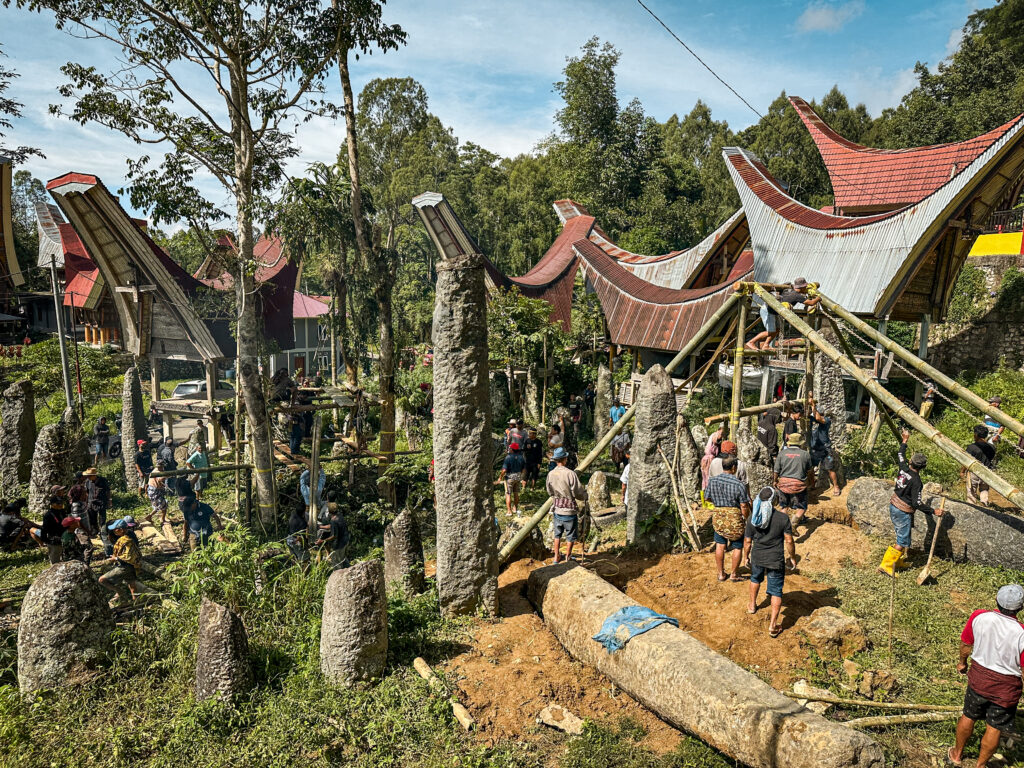 Local community erecting a couple of monoliths
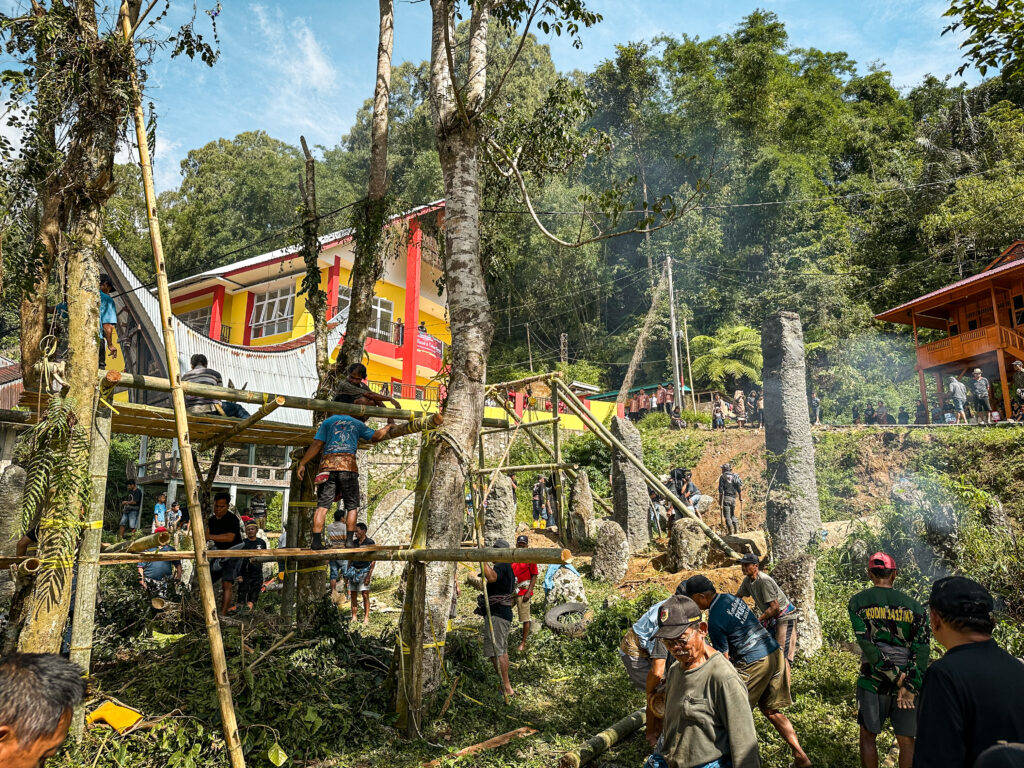 Local community erecting a couple of monoliths
Animal Sacrifice and Sharing of Meat
One of the most striking aspects of Torajan funerals is the sacrifice of animals: typically buffaloes, pigs, and sometimes dogs. These sacrifices are deeply symbolic. The buffaloes, for example, are believed to help guide the soul of the deceased to the afterlife. The animals sacrifice also serve a social function: the meat is shared among family, friends, and the community, reinforcing bonds and reciprocity.
Buffaloes, in particular, are central to this tradition and their cost reflects their importance. A “regular” water buffalo usually costs around 60 million IDR, while rarer varieties, such as those with blue eyes or the extremely rare albino buffalo, can cost over 100 million IDR. Albino buffaloes are especially prized because they are believed to “light the way” while guiding the deceased’s soul.
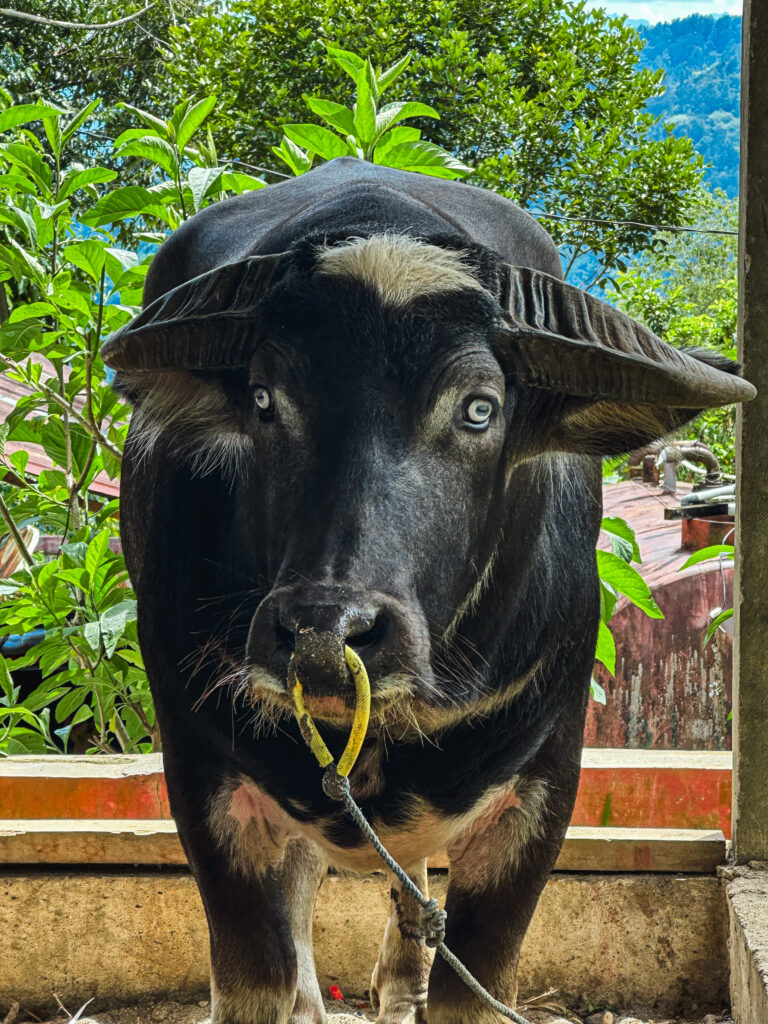
The number of buffaloes sacrificed also signals the status or ranking of the deceased. More buffaloes mean a more prestigious individual, with wealthier families often sacrificing dozens of animals to demonstrate honour, respect, and social standing. Witnessing this part of a funeral can be intense, but it is also one of the clearest expressions of the Torajans’ deep connection between life, death, and community.
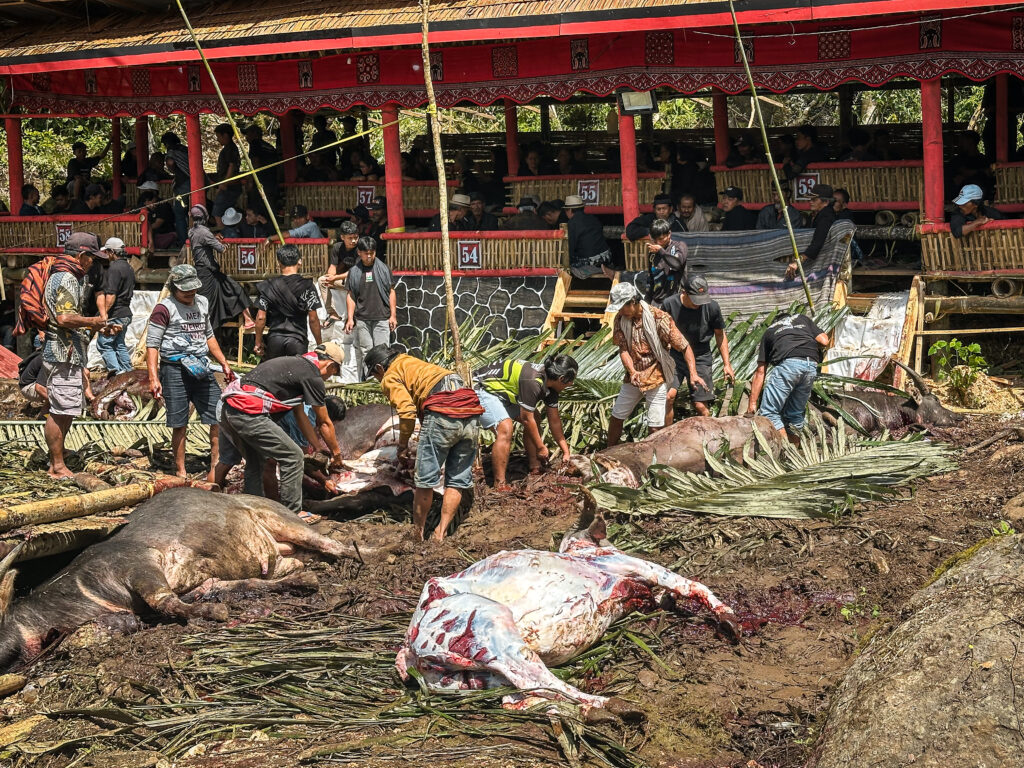 Multiple Buffalo Sacrfice
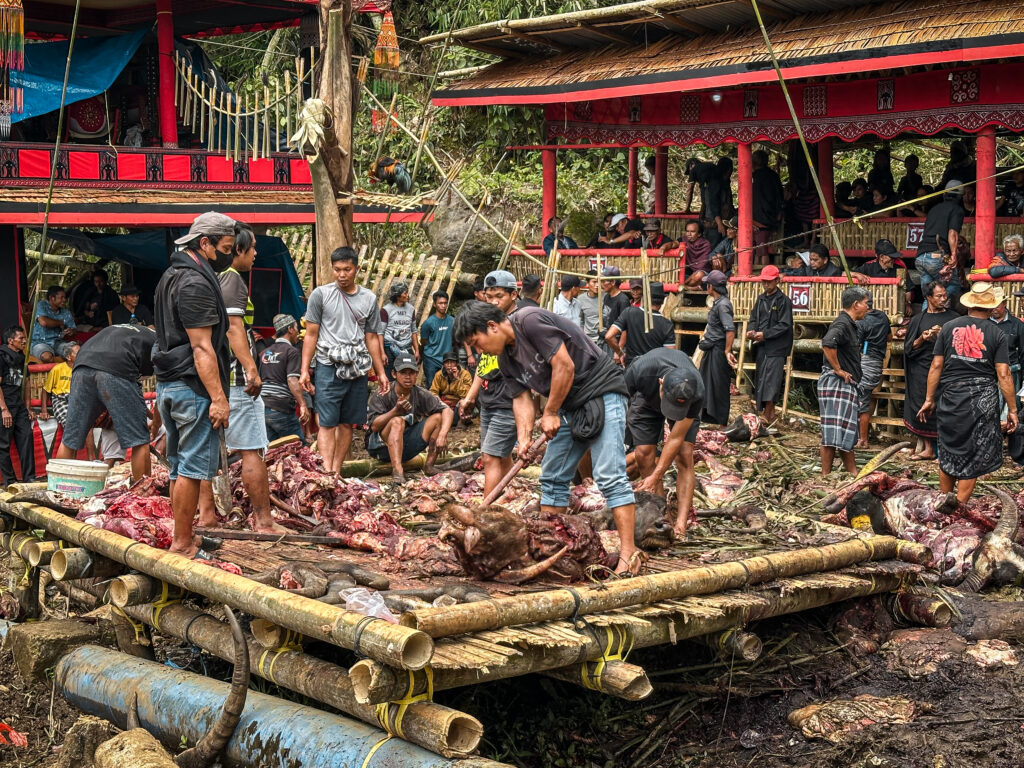 Butchers cup up and distribute the Buffalo meat within the community
Attending Torajan Funeral Ceremonies as a Foreigner
Attending a Torajan funeral ceremony as a foreigner is not only possible but surprisingly common. Visitors are generally welcomed with warmth and curiosity, as Torajans see funerals as communal events rather than private affairs. That said, it’s essential to approach these ceremonies with deep respect and awareness: this is not a tourist attraction, but a sacred farewell.
Can you attend without a guide?
Technically, yes. Torajan funerals are public events, and you’re free to attend without a guide. If you’re confident riding a scooter, you can simply drive through the highlands and villages around Tana Toraja, where ceremonies often take place in plain sight. Large crowds, bamboo structures, and rows of parked motorbikes are usually a clear sign that something is happening.
However, it’s important to note that most locals don’t speak English, which can make it difficult to locate ceremonies in the first place or understand what’s going on once you arrive. Unless you’re already familiar with Torajan culture and rituals, you’ll likely miss much of the meaning behind what you’re witnessing.
If, like me, you arrive with limited knowledge but a genuine desire to learn, hiring a local guide for the day is highly recommended. A guide can explain the symbolism behind the rituals, translate conversations, and help with introductions. It transforms the experience from simply observing to truly understanding.
How to attend respectfully
The most respectful and easiest way to attend a ceremony is through your guesthouse or homestay. Many hosts have family or village connections and will know when funerals are taking place and whether visitors are welcome. Often, they can accompany you or help arrange a local guide.
Funerals don’t follow strict schedules. Ceremonies can last several days, and events start when everyone is ready and not at a fixed hour. Flexibility and patience are essential.
What to wear
When attending a Torajan funeral ceremony, it’s important to dress modestly and conservatively. Long trousers or a long skirt are essential, along with clothing that covers your shoulders. Neutral or darker colours are generally preferred, though wearing black isn’t strictly necessary. Avoid shorts, tight-fitting clothes, sleeveless tops, or anything that feels more appropriate for the beach. Dressing respectfully not only shows cultural awareness but also helps you blend in more easily and signals to locals that you’re there with genuine respect rather than as a spectator.
What to bring
It’s customary (though not required) to bring a small contribution, usually cigarettes or a monetary donation, which your host or guide can help organise. This gesture shows respect and helps families cover the immense costs of the ceremony.
Bring water, sun protection, and snacks. The ceremonies are outdoors and can last hours under the sun.
Behaviour & etiquette
The Torajan funeral ceremonies are often heavily photographed and filmed by locals and family members, and it’s common to see people posing for photos or videos. As a visitor, you can also take photos and record, but always do so respectfully. Never point your camera directly at someone’s face without permission, especially if they are grieving. Avoid smiling selfies, sit where you’re directed, since seating reflects social hierarchy, and follow the lead of your guide or locals.
Buffalo, or even worse, dog sacrifices are a central part of the ceremonies and can be confronting.
How to Get to Tana Toraja
From Makassar:
Travelling from Makassar to Tana Toraja is straightforward, and most independent travellers opt for a night bus to save time and a night’s accommodation. I took a bus with Bus Litha & Co, which departed from this bus station at around 8 pm and arrived in Rantepao at roughly 6:30 am the next morning.
Tickets can be purchased directly at the bus station, but there are also offices in the city centre if you prefer to organise it before heading to the station. My fare was 100,000 IDR, which is typical for this route. Don’t expect a perfectly smooth ride – the roads are bumpy, full of twists and turns, and the drivers seem to use the horn every few seconds. Bring a good pair of noise-cancelling headphones, and if you’re prone to motion sickness, it’s best to take some medication beforehand.
How to Move Around Independently
Getting around Tana Toraja independently can be a bit of a challenge, but it’s definitely doable. The region is mountainous with winding roads, so travel between villages can take longer than expected.
The best way to explore is by renting a scooter, which gives you the freedom to visit villages, rice terraces, cliff graves, and markets at your own pace. Roads are generally paved but narrow, so be cautious if you’re not experienced on hilly terrain. Fuel is widely available in towns, and daily rental rates are reasonable.
Where to Stay & Eat in Tana Toraja
For accommodation in Rante Pao, I highly recommend Riana Homestay. The rooms are simple but incredibly clean, and the family running it are warm and welcoming. Breakfast is included – think banana pancakes with tea or coffee and the rate is excellent, coming in at less than €10 per night. It’s great value for money and the perfect base for exploring Tana Toraja.
When it comes to food, Café Aras stood out for me as a good budget option. The menu offers a mix of Indonesian staples alongside a few international options, making it a nice spot if you want a break from local cuisine. The café is beautifully decorated in Torajan style, with touches of local art that give it a unique cultural vibe, and the atmosphere makes it a pleasant place to relax after a day of exploring.
Rantepao has plenty of other cafés and warungs, but these two spots gave me a combination of comfort, culture, and value that I think most travellers will appreciate.
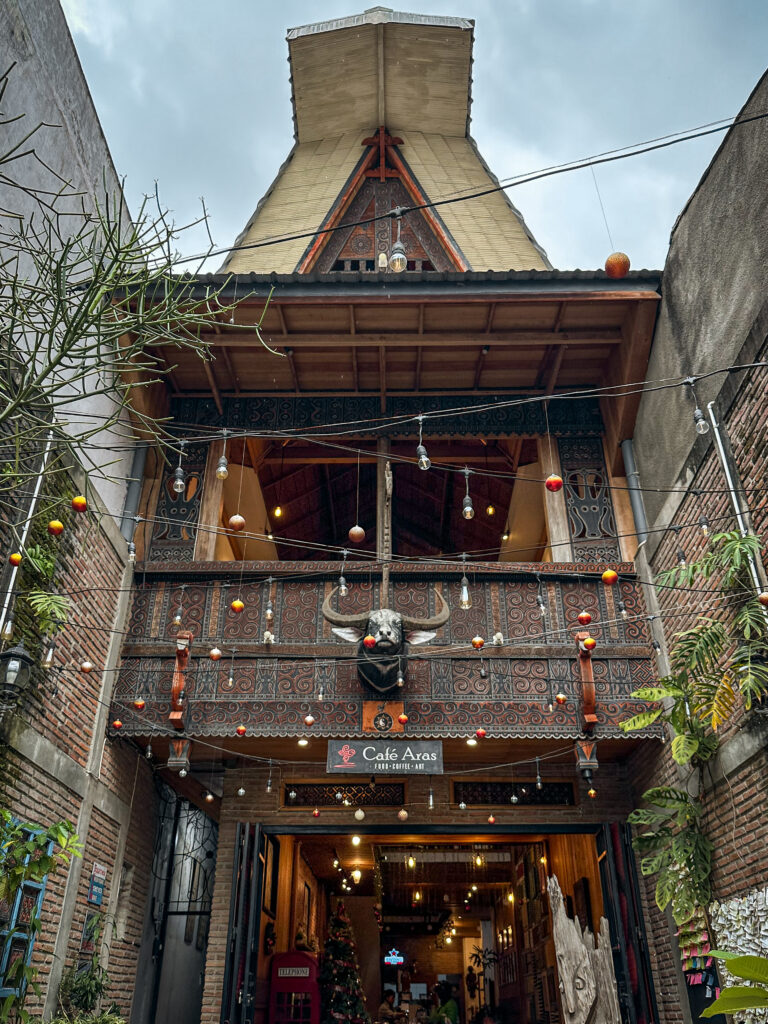 Cafe Aras in Rante Pao
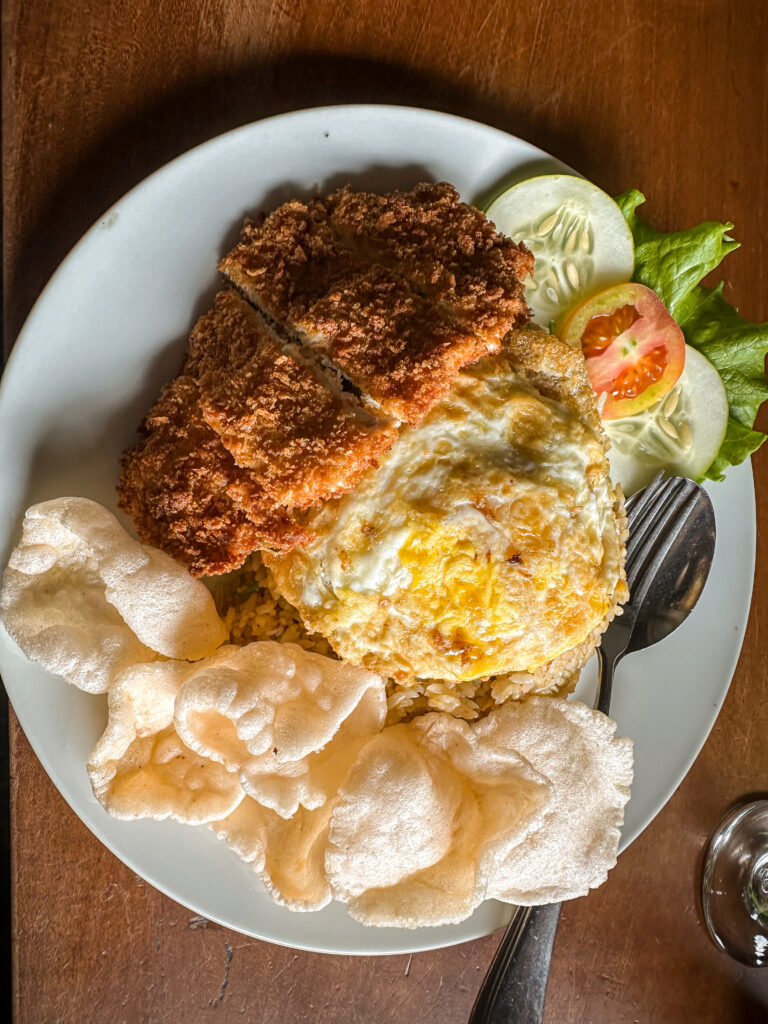 Nasi Goreng with Chicken Katsu
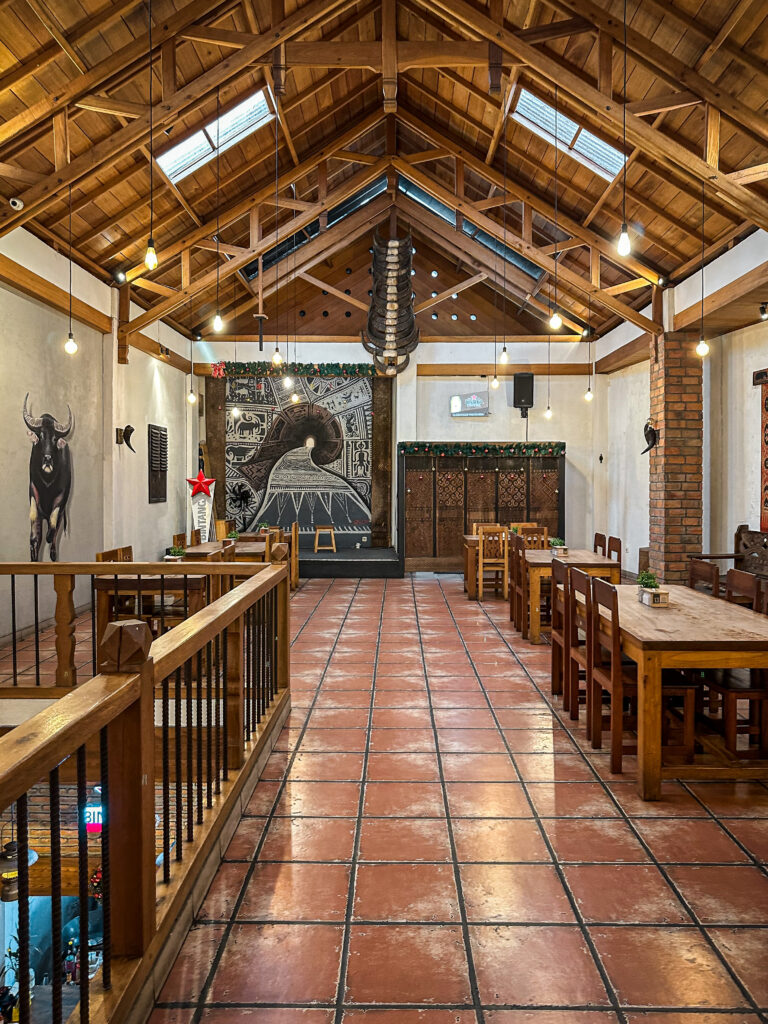 Interior of Cafe Aras in Rante Pao
Final Thoughts
Tana Toraja is a destination unlike anywhere else in the world, where death is woven into daily life and every aspect of culture carries deep meaning. Witnessing a Torajan funeral, exploring the traditional villages, and seeing the cliffside graves and tau tau effigies provides an unforgettable insight into a society that honours its ancestors with profound devotion and care.
For those willing to approach the region with respect and curiosity, Tana Toraja offers both a deeply moving cultural experience and a chance to connect with a community that views life and death as inseparably linked. Whether you’re drawn by its unique rituals, traditional architecture, or dramatic scenery, Toraja leaves a lasting impression that lingers long after you’ve left.
More Independent Travel in Sulawesi
If you’re travelling through Sulawesi independently, Rante Pao just one piece of the puzzle. These posts dive deeper into some of the island’s most remote, rewarding, and lesser-visited regions, all explored without tours and on a backpacker budget: