
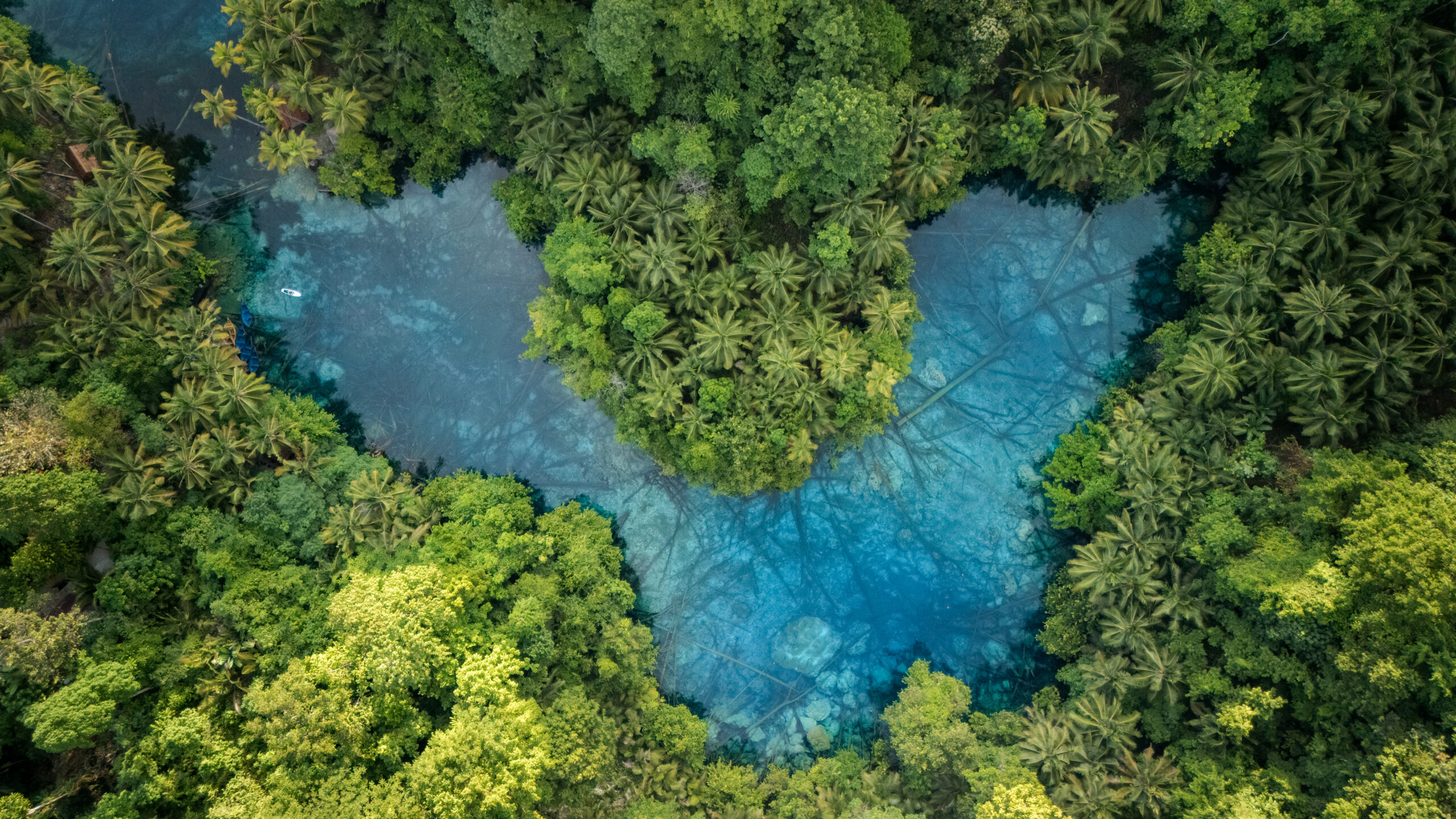

Tucked away in the far reaches of Central Sulawesi, this Banggai Islands travel guide explores one of Indonesia’s most remote and least-visited archipelagos. The Banggai Islands in Indonesia are made up of dozens of small islands, pristine beaches, and crystal-clear waters, and they remain largely untouched by mass tourism.
For independent travellers and budget backpackers, the Banggai Islands offer a rare opportunity to experience Indonesia’s natural beauty without the crowds. From vibrant coral reefs teeming with marine life to quiet villages where fishing is still the main way of life, the region rewards those willing to travel slowly and independently. With some planning and a flexible mindset, budget travel in the Banggai Islands is not only possible but deeply rewarding.
Unlike more popular destinations, travelling around the Banggai Islands requires a bit of effort. Accommodation is limited, transport can be unpredictable or non existent, and many activities rely on local knowledge. But for travellers willing to embrace the challenge, the rewards are unmatched: untouched nature, authentic local culture, and the rare feeling of being somewhere truly off the beaten path.
Why Visit the Banggai Islands?
The Banggai Islands are remote, quiet, and almost untouched by tourism. White-sand beaches, hidden coves, and crystal-clear waters make it a paradise for snorkelling, diving, and island-hopping. Life here moves slowly, giving travellers a chance to experience authentic village life, colourful coral reefs, and rare wildlife like the Banggai cardinal-fish. For those seeking adventure, solitude, and simplicity, the archipelago is a hidden gem well worth the effort.
What Are the Banggai Islands?
The term “Banggai Islands” actually refers to an archipelago in the Banggai Regency divided into two main areas: Peleng and Banggai Laut. Because everything is called “Banggai,” it can be a little confusing for first-time travellers, so here’s a quick guide:
Peleng – The largest island in the archipelago, Peleng is home to most of the smaller villages and the main towns of Leme Leme and Salakan. Life here is slow and village-focused, with fishing as the main livelihood.
Banggai Laut – This group of smaller islands includes Banggai City, the main administrative hub. It’s where you’ll find a handful of services, local markets, and transport connections to other islands. Banggai Laut also offers great opportunities for island-hopping, snorkelling, and discovering hidden coves.
How to Get to the Banggai Islands?
Getting to the Banggai Islands takes a bit of planning and some effort, but it’s all part of the adventure.
Step 1: Reach Luwuk
The journey starts in Luwuk, the gateway to the archipelago. You can get there by:
Flying: Most flights come from Makassar.
Overland: From Ampana, shared cars take around 7 hours and cost roughly 200,000 IDR.
Once in Luwuk, it’s worth spending a night or two to rest and explore some nearby waterfalls.
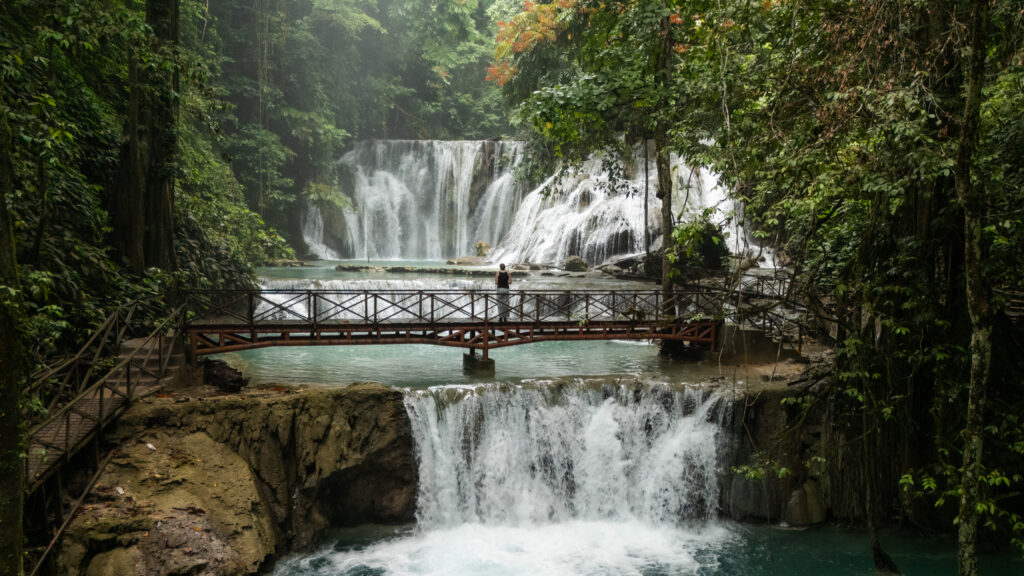 Piala Waterfall
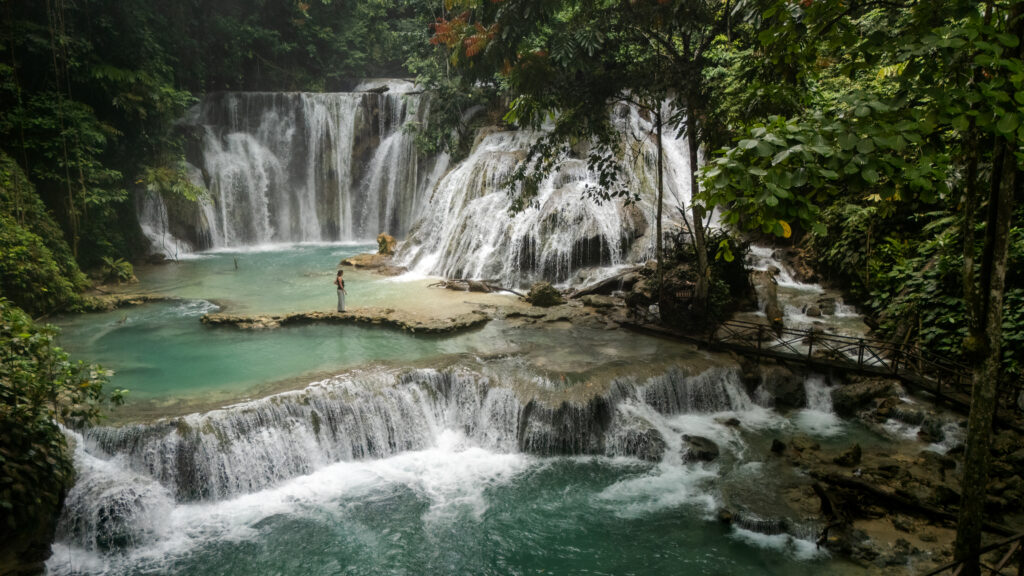 Piala Waterfall
Step 2: Stay in Luwuk
For the best experience, I highly recommend 88 Happy Homestay. Ika, the lady who runs it, is incredible, warm, hospitable, and attentive. She helped me plan my Banggai trip, arranged a scooter rental, and even dropped me off and picked me up at the harbour free of charge.
The rooms are basic but very clean, with AC, and every morning I was treated to a huge breakfast: fried rice, omelettes, crepes, pancakes, biscuits, fruit – you name it. Ika genuinely cares about her guests, and her knowledge of the islands and willingness to help makes her an invaluable resource.
Step 3: Continue to the Islands
From Luwuk, there are a few options depending on your destination and what places you want to go.
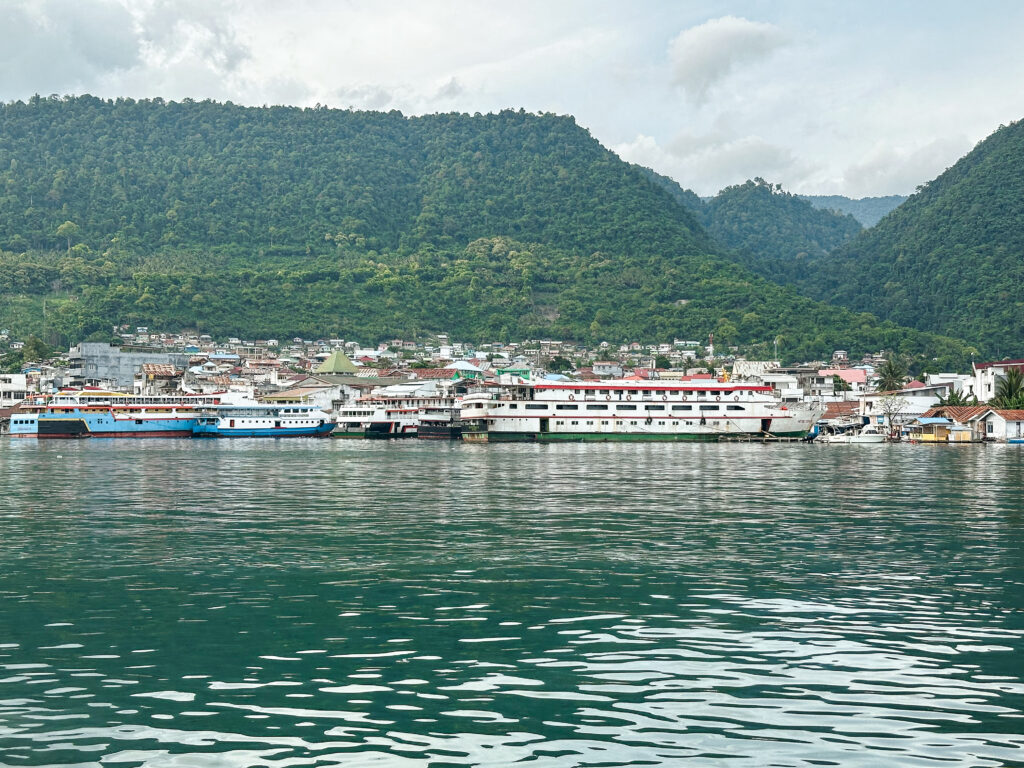 Leaving the harbour in Luwuk
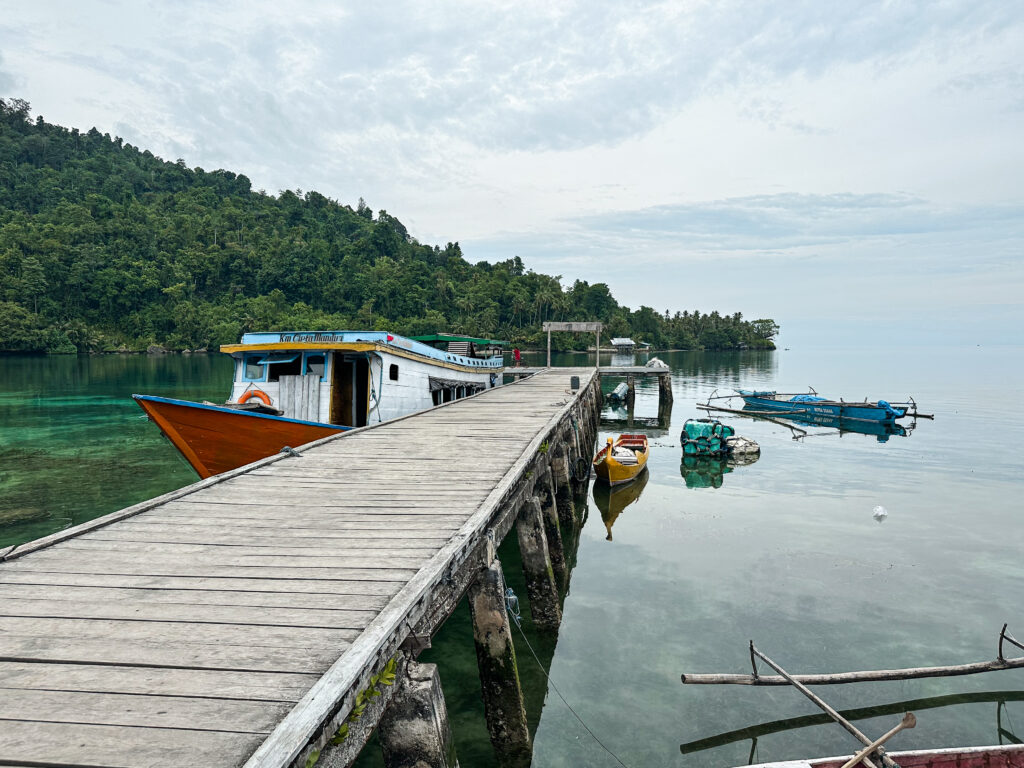 Taking this local boat directly to Paisu Pok village
If you’re starting with Banggai Laut, here are your options how to reach it:
However, If you’re starting at Peleng Island instead, these are the ways to get there:
Getting Around the Banggai Islands
Exploring the Banggai Islands requires a bit of planning, as public transport is very limited.
Short Distances: Rent a Scooter
For small distances and exploring locally, the easiest option is to rent a scooter, which usually costs between 100,000 – 150,000 IDR per day. Scooters are perfect for discovering hidden beaches, village paths, and scenic spots at your own pace.
Longer Distances: Private Cars
On Peleng Island, there’s essentially no public transport. If you want to travel between towns, say, from Paisu Pok to Salakan, your only option is to charter a private car, which can be costly, around 800k – 1 million IDR. It’s much more economical to travel with friends and share the cost.
Island Hopping: Speedboats
To get from Peleng Island to Banggai Laut, the only option is a speedboat from Tobing to Banggai City, which should cost around 150,000 IDR. However, reaching Tobing itself from Salakan requires chartering a private car for about 300,000 IDR, so again, sharing transport with other travellers can save a lot.
Where to Go in the Banggai Islands
The Banggai Islands are more spread out and diverse than most travellers expect. Where you base yourself will shape your experience entirely, so it’s worth understanding the main areas before deciding where to go. Most travellers focus on Peleng Island, the largest island, while fewer make it all the way to Banggai Laut, which feels even more remote.
Peleng Island
Peleng is where most of Banggai’s highlights are found, but even here the island is big enough that choosing the right base matters.
Base: Paisu Pok Village
Paisu Pok is the best base on Peleng Island and for good reason. It’s close to many of Banggai’s most famous natural attractions and works well if your focus is freshwater lakes, waterfalls, and springs.
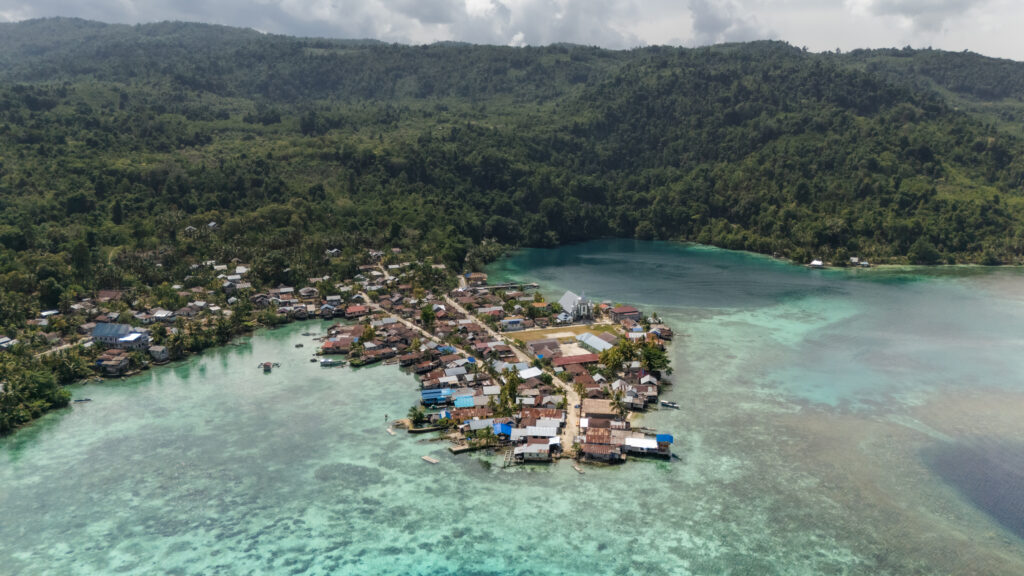 Paisu Pok Village
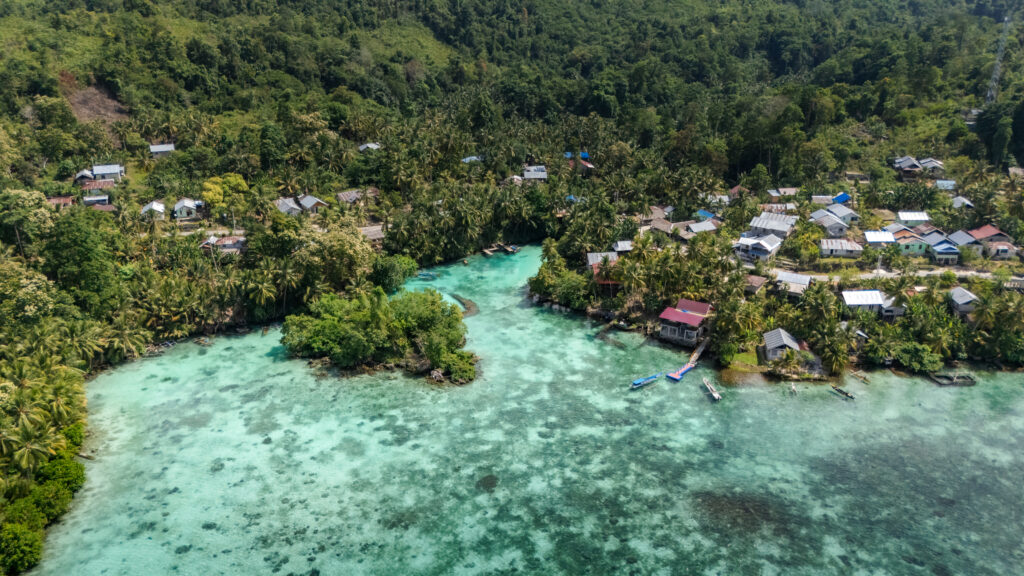 Paisu Pok Village
The daily ferries from Luwuk arrive in Leme Leme, which is still around 30 minutes away from Paisu Pok by road. Because of this, some travellers choose to base themselves in Leme Leme and visit Paisu Pok as a day trip. However, I personally wouldn’t recommend this. Leme Leme itself has very little to do, while Paisu Pok village is far more scenic, peaceful, and better suited for staying a few days and exploring the surrounding area at a relaxed pace.
From the village, you can easily visit Paisu Pok Lake, one of the most iconic spots in Banggai, with its crystal-clear turquoise water surrounded by jungle. Nearby are several freshwater springs with impossibly blue water, as well as Poganda Beach, a quiet stretch of white sand perfect for a relaxed afternoon.
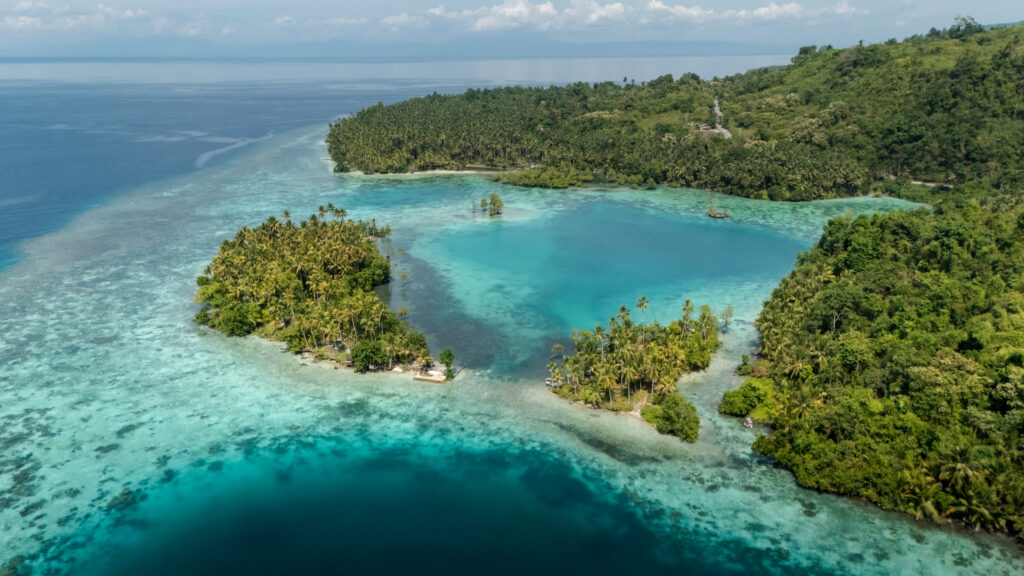 Kawalu Bay
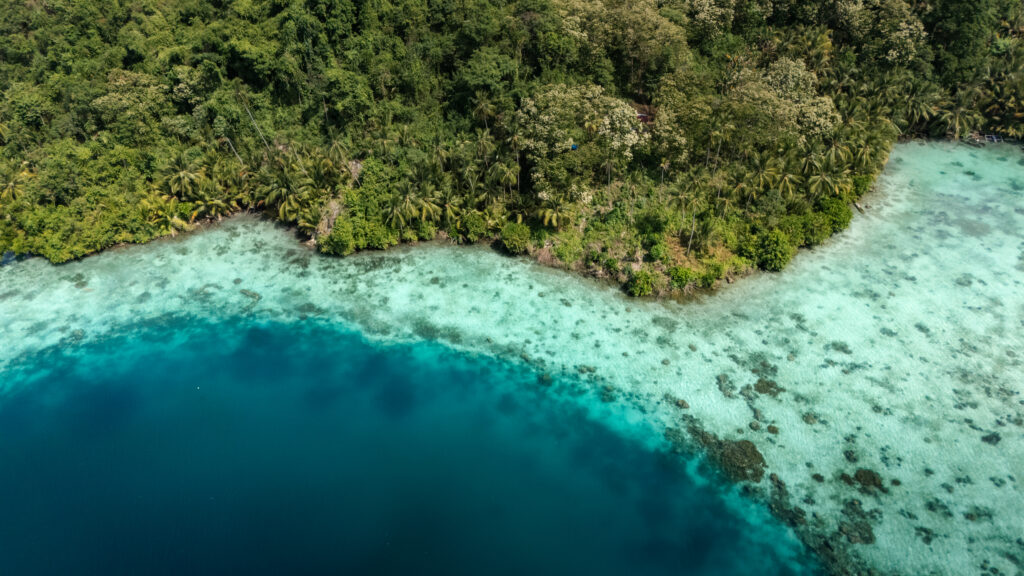 Turquoise water in Kawalu Bay
Paisu Pok Lake
Paisu Pok Lake is one of the highlights of central Peleng and walking distance if you’re staying in Paisu Pok village. The lake’s water is impossibly clear and turquoise, framed by lush green hills and jungle, making it feel like a hidden tropical gem. It’s peaceful and quiet, especially compared to more touristy lakes elsewhere in Indonesia.
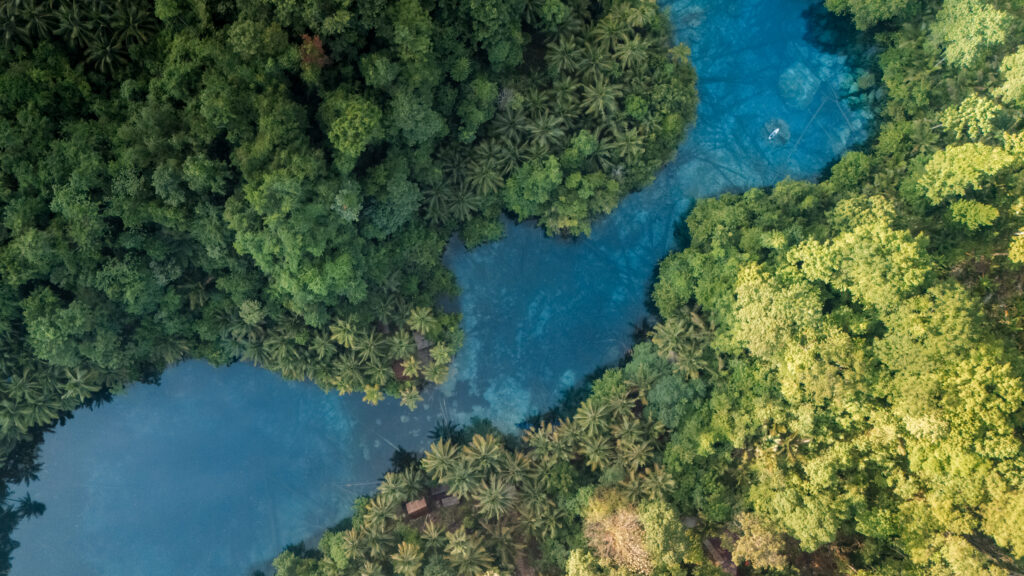 Paisu Pok Lake from Above
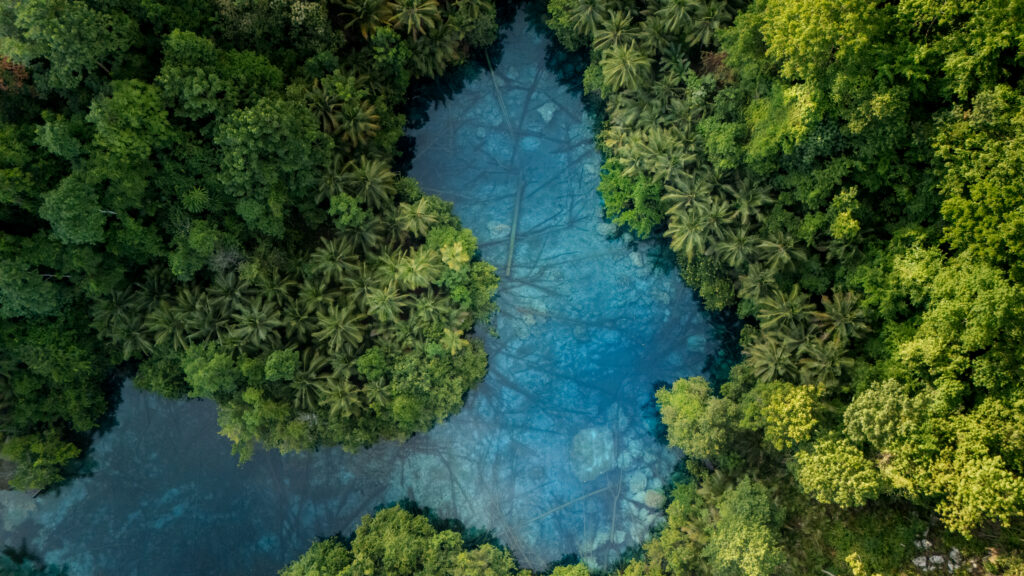 Paisu Pok Lake from Above
However, if you want to truly enjoy the calm, it’s best to go very early in the morning, which is another reason staying in the nearby village is a better option. After around 9 a.m., the lake gets crowded with locals arriving on daily tours by speedboat. On top of that, since Paisu Pok Lake has become somewhat of an Instagram hotspot, there are often several drones buzzing overhead while locals pose on paddleboards and boats. My advice: go early, enjoy a peaceful swim, and leave before the crowds arrive.
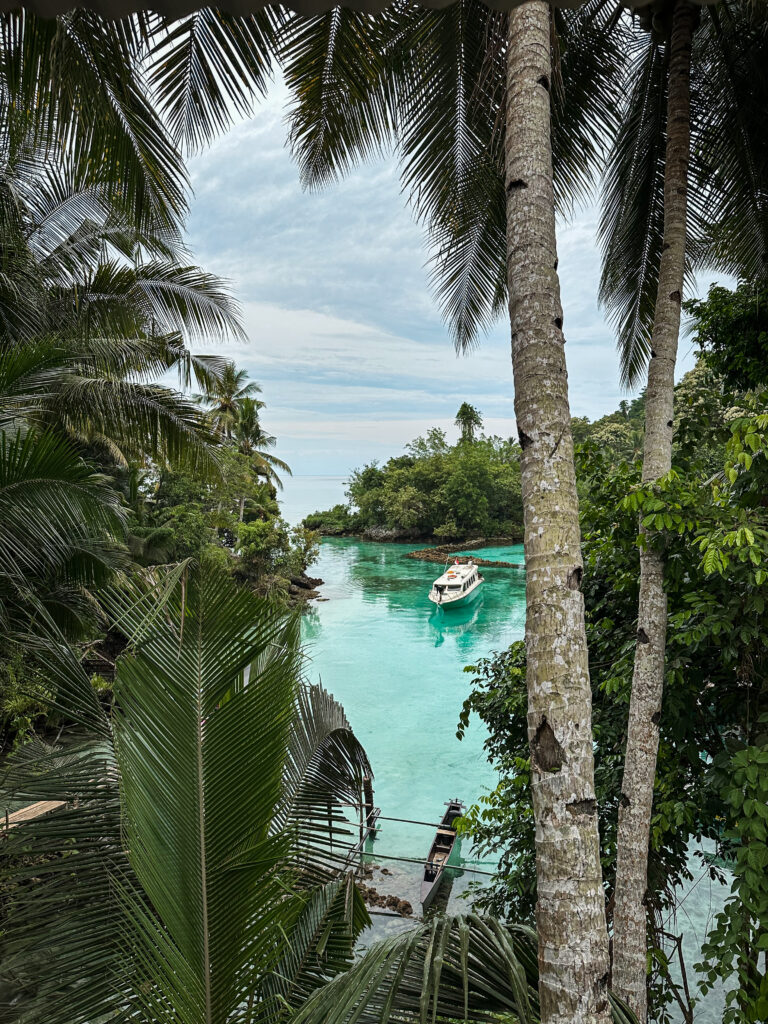 Speeadboat tour from Luwuk
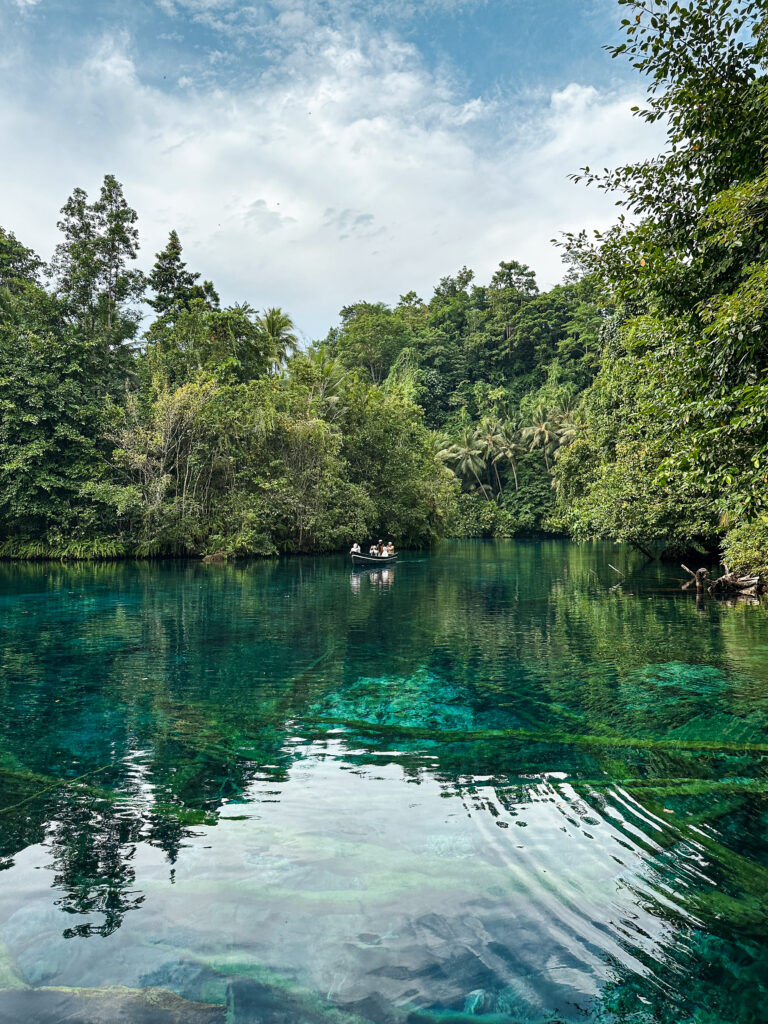 The clear water of Paisu Pok Lak
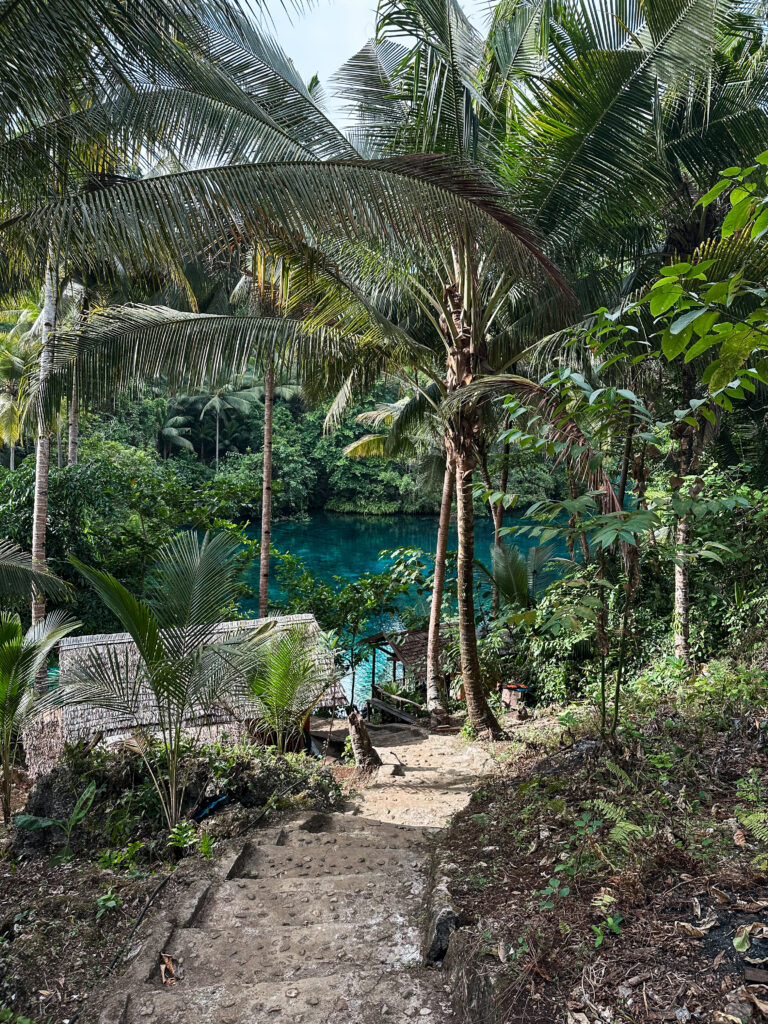 Descending to Paisu Pok Lake
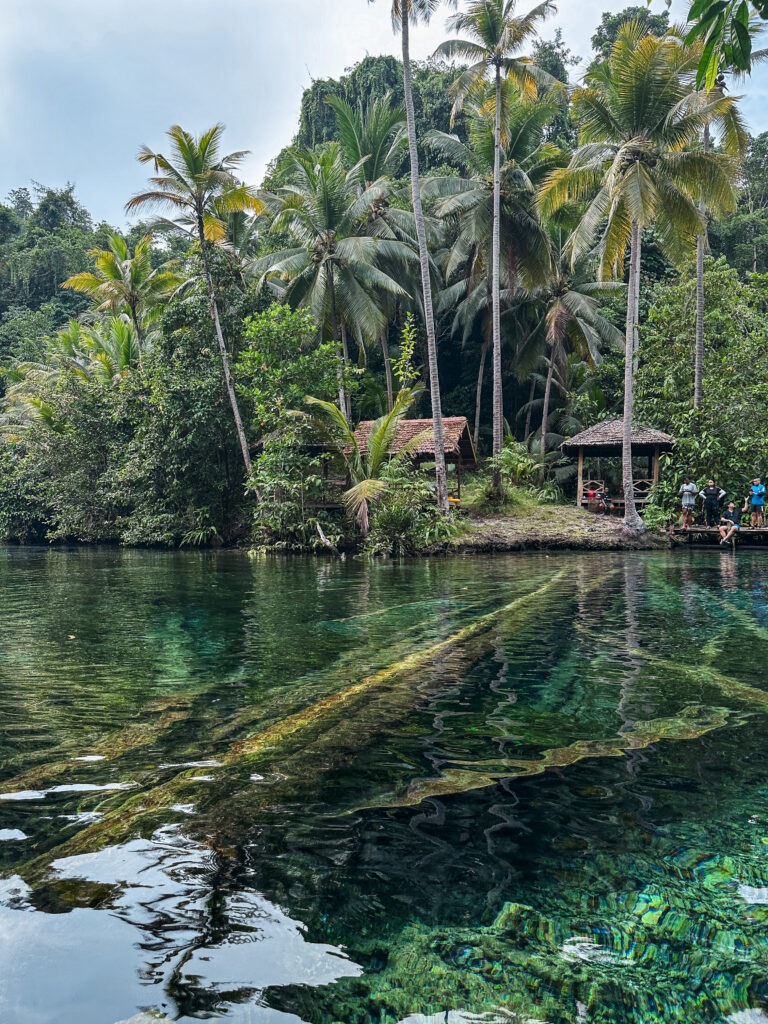 Paisu Pok Lake
Freshwater springs
Just a short walk from the lake, this freshwater spring are another highlight. The water is impossibly clear and bright blue, forming natural pools perfect for a refreshing dip. It’s a serene spot, surrounded by jungle and small rock formations, giving it a very secluded, almost magical feel. However, locals use it to shower, brush their teeth and wash their clothes with detergents, which causes the water not to be as clear. Just like the lake, it’s best to visit early in the day if you want to enjoy the springs without too many visitors.
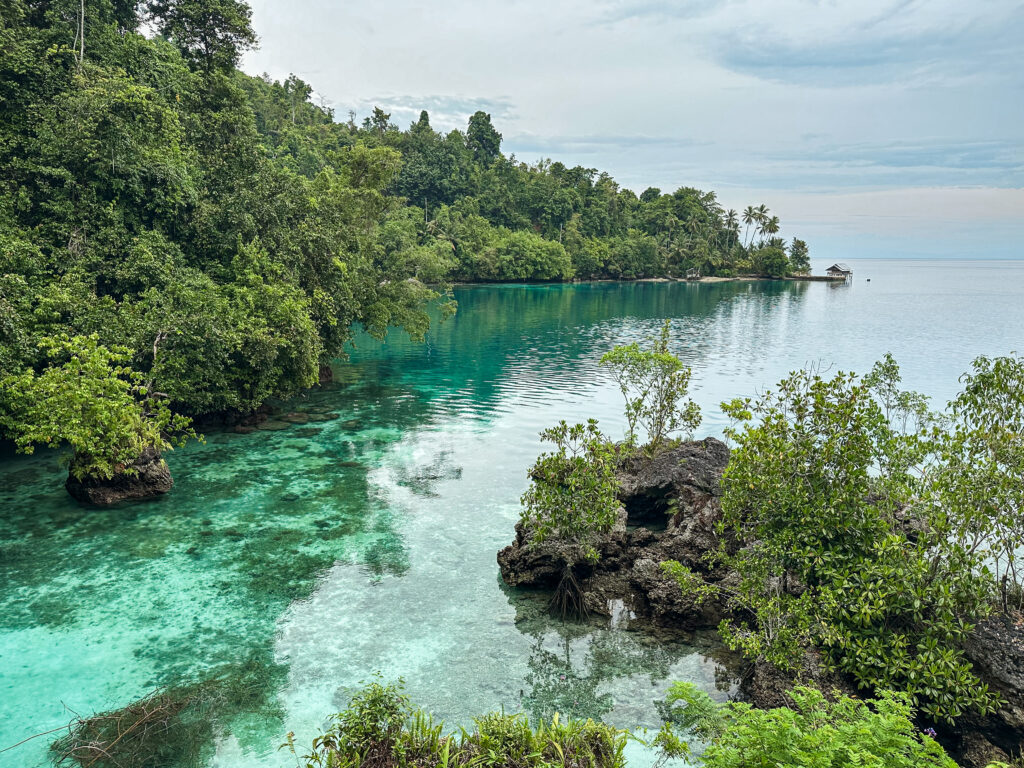 On the way to the freshwater spring
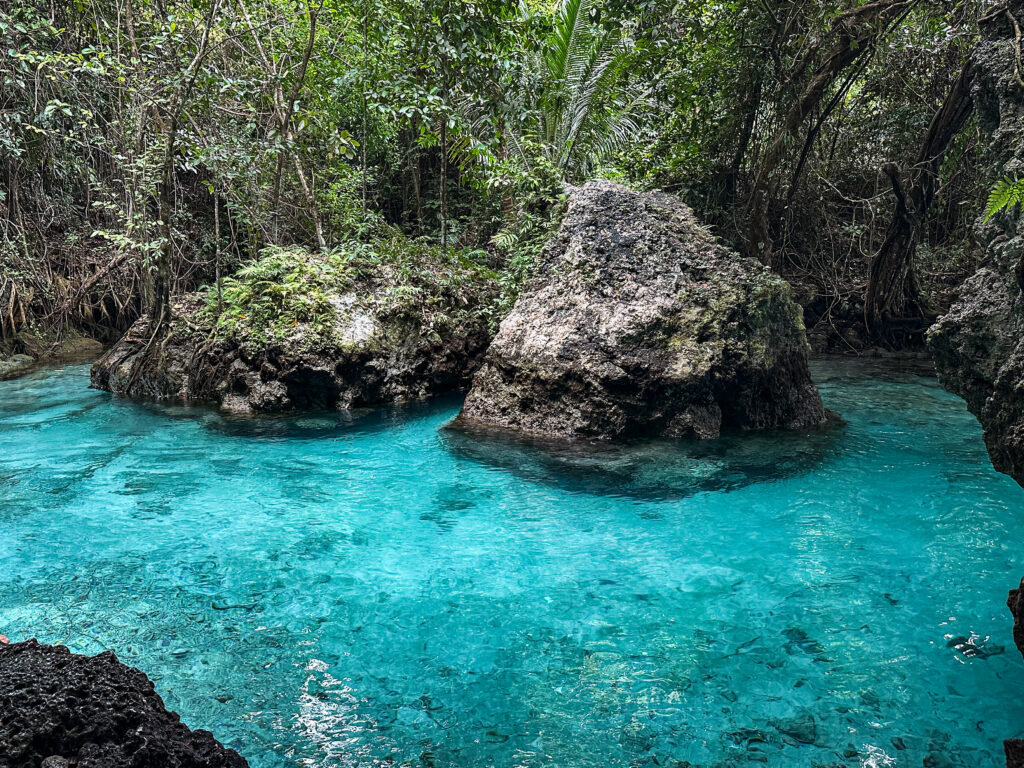 Freshwater spring
Poganda Beach
Poganda Beach is a 25 min scooter ride away from the village. You can rent a scooter (100k-150kIDR per day) and go explore independently. The beach is a quiet, sandy stretch that offers a perfect spot to relax after exploring the lake and springs. The sand is soft and pale, and the surrounding waters are calm and shallow, making it ideal for a gentle swim or just sitting by the shore.
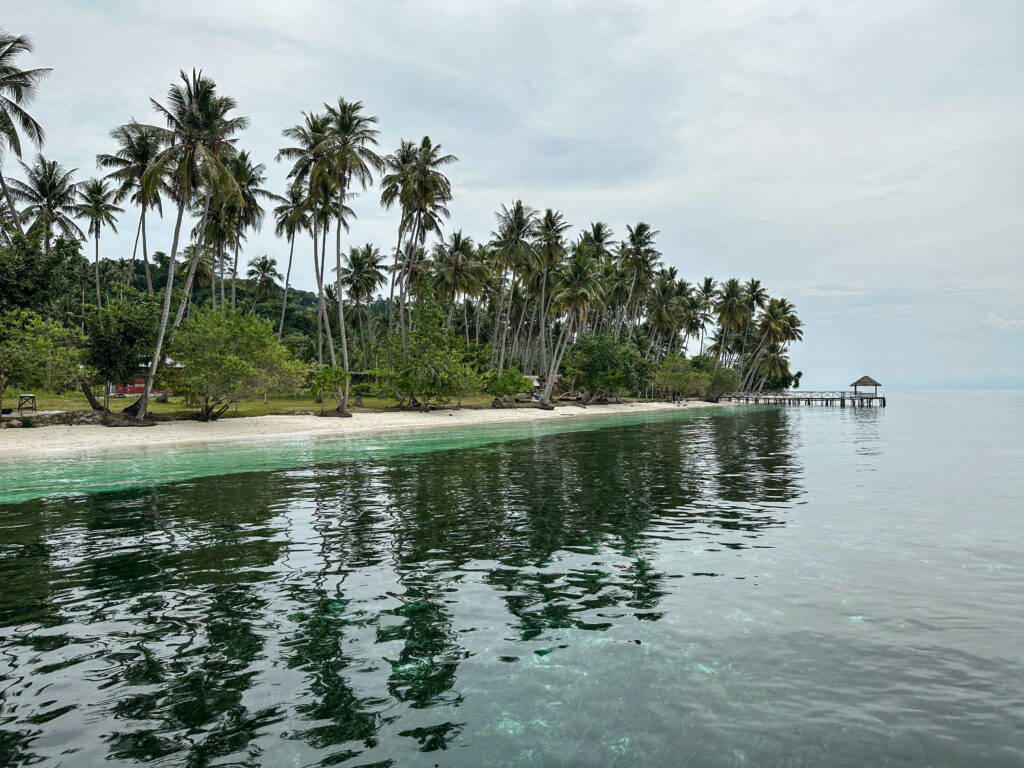 Poganda beach on a cloudy afternoon
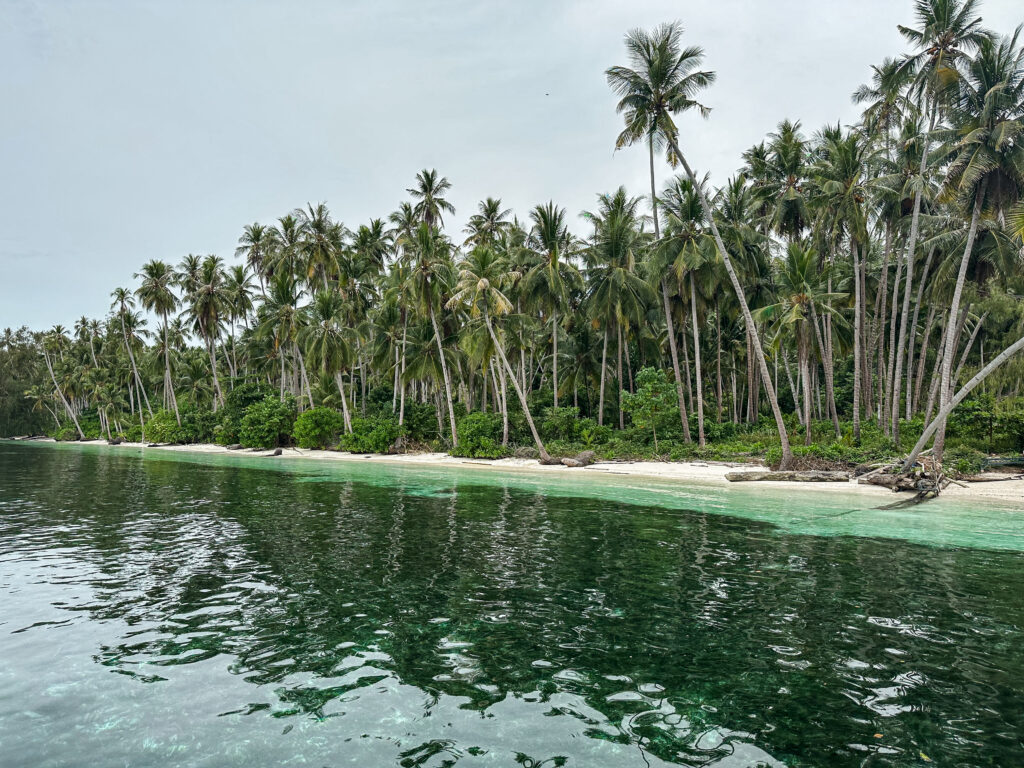 Poganda Beach
Where to Stay in Paisu Pok Village
There are quite a few homestays in Paisu Pok, but keep in mind that most are simple, basic accommodations. Rates usually include three meals per day, which are simple Indonesian dishes like rice, fish, vegetables, and occasionally some cake for breakfast. Most of these homestays won’t be listed on Booking.com or Agoda, so you’ll usually find them via Google Maps and contact them directly on WhatsApp. If you want to book or check availability, the WhatsApp number is +62 851-8795-2644.
I stayed four nights during Christmas at Heppy Homestay, and it was a fantastic experience. The homestay sits right above the water, with wooden stairs leading straight into the bay at the back, making it easy to swim or just enjoy the view. The rooms are simple but clean and comfortable, and the owner, Heppy, is incredibly friendly and an excellent cook. The rate was 350k IDR per night during low season, though it may rise to around 400k or more in high season.
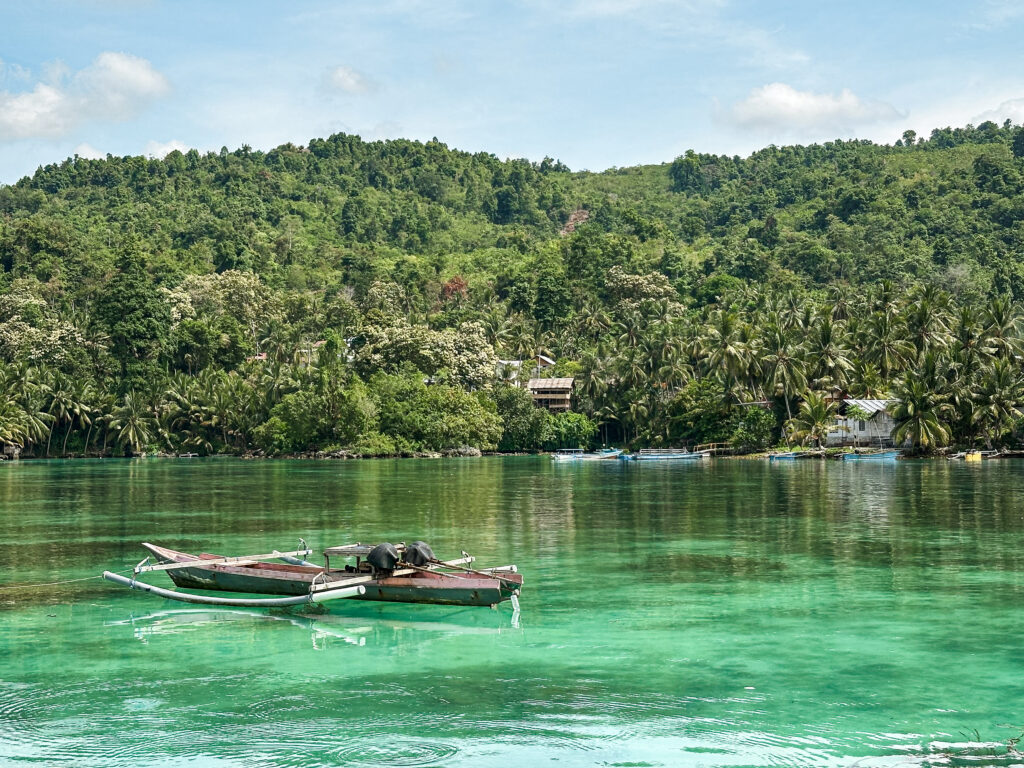 Views at Heppy Homestay
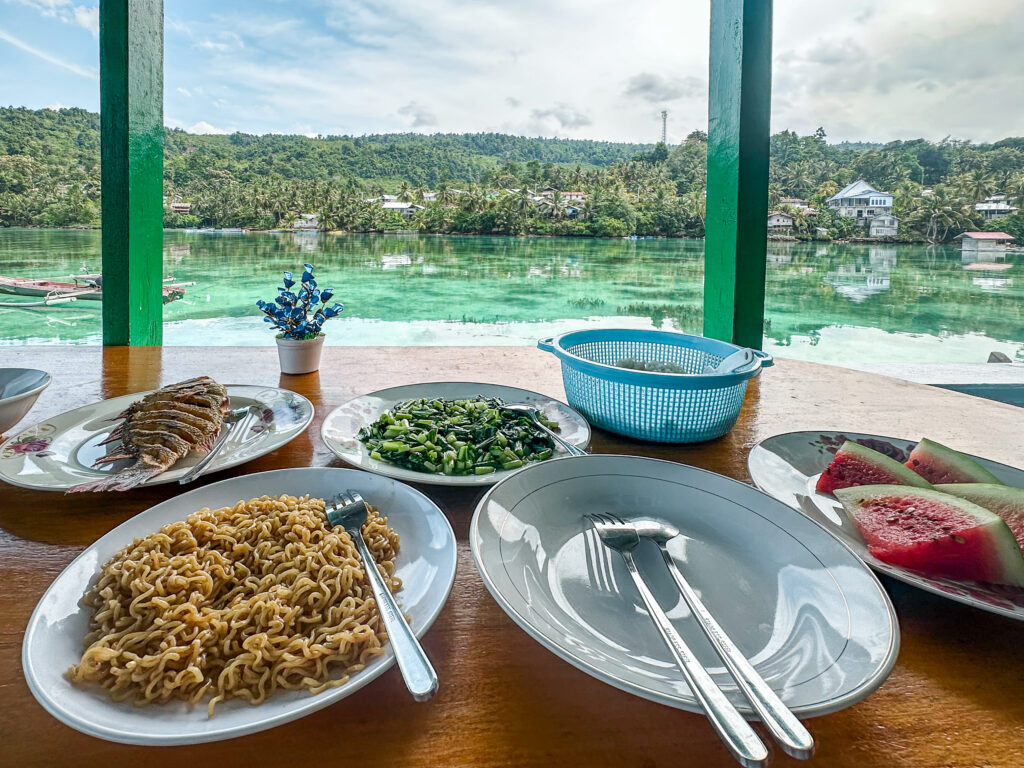 Lunch with a view at Heppy Homestay
Base: Salakan
How to Get to Salakan from Paisu Pok
There aren’t any public transportation between Paisu Pok and Salakan, so the only option is a private transfer. It’s usually easy to find a local driver willing to take you, but it can be quite pricey, around 1 million IDR for the journey. To save money, it’s best to share the cost with friends or other travellers if possible.
The route itself is scenic, and on the way you can make a stop at Teduang Beach, a quiet stretch of sand perfect for a short break or a swim before continuing to Salakan. Also if you have a drone you can see that there’s a heart-shaped reef here.
What to Do in Salakan
The best way to explore Salakan and its surrounding beaches is to rent a scooter for the day, as the main highlights are a bit spread out. Mandel Beach is usually considered the top spot, with Bonbon Beach just a short stop along the way.
However, I really didn’t enjoy Mandel Beach. When I visited during the holidays, it was very crowded with locals, who were playing loud music everywhere. On top of that, the area has become a bit of an Instagram hotspot, with multiple drones flying overhead while influencers ran around posing on the sand. The reality didn’t match the idyllic photos: the once-beautiful white sand full of rubbish everywhere, which made it hard to appreciate the scenery. Bone Pompon Beach is smaller and less visited, so it’s a better option if you want a quieter spot for a swim or to relax for a bit.
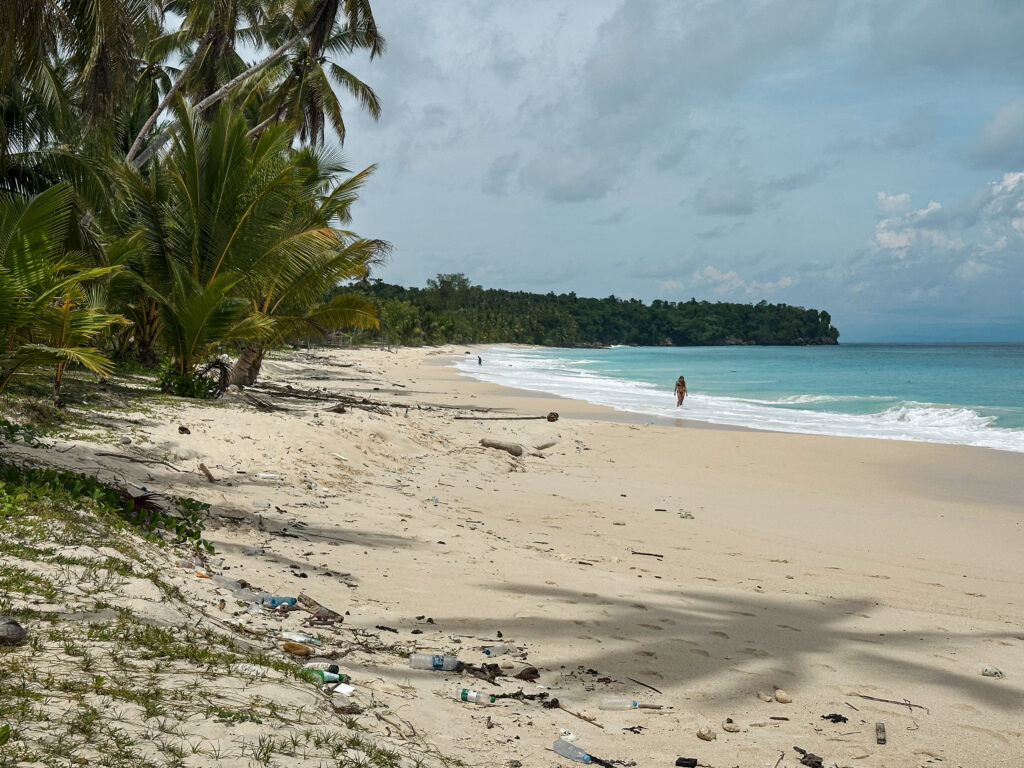 Rubbish at Mandel Beach
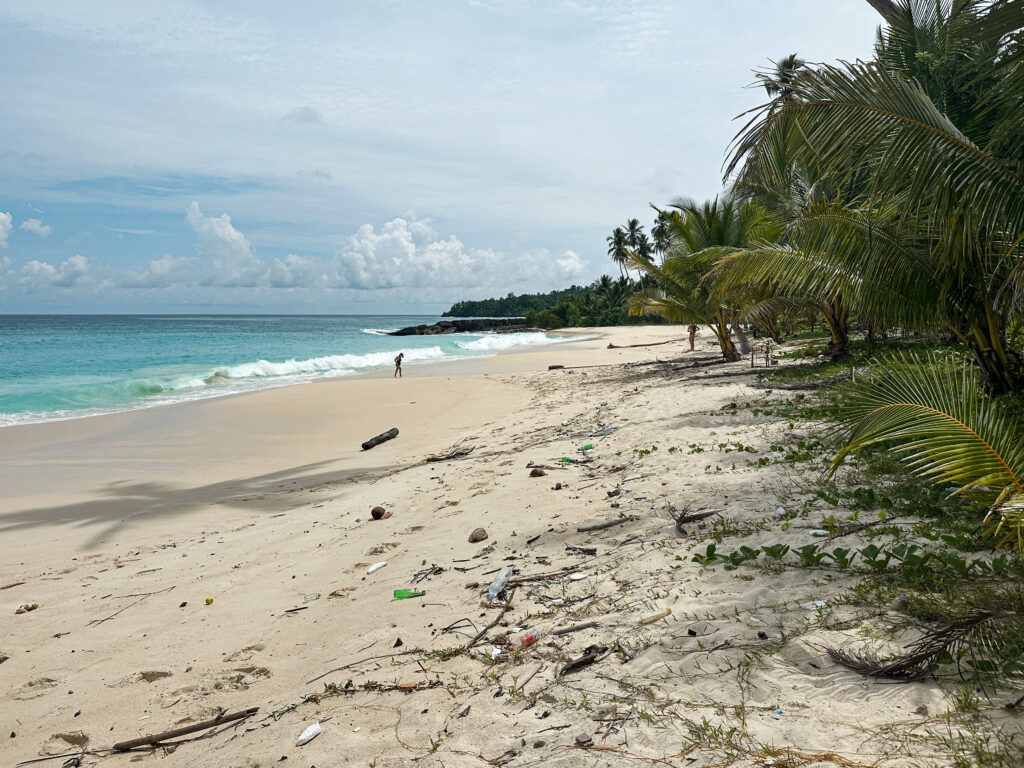 Rubbish at Mandel Beach
Where to Stay in Salakan
Accommodation options in Salakan are limited, and many of them are very basic and overpriced. After messaging a few places, I was happy to find Azafa Guesthouse. While it’s still more expensive than most other options everywhere, the rooms were probably the nicest I stayed in during my entire Sulawesi trip.
The guesthouse offers large rooms with a separate AC bedroom, a living area, and a fridge, making it feel more like a proper home than a standard homestay. The rate was 375k IDR per night with breakfast included, which felt worth it for the comfort. They also arranged a scooter rental for me the next day for 100k IDR, which made exploring around much easier. If you want to book or check availability, the WhatsApp number is +62 823-4978-5660.
Banggai Laut
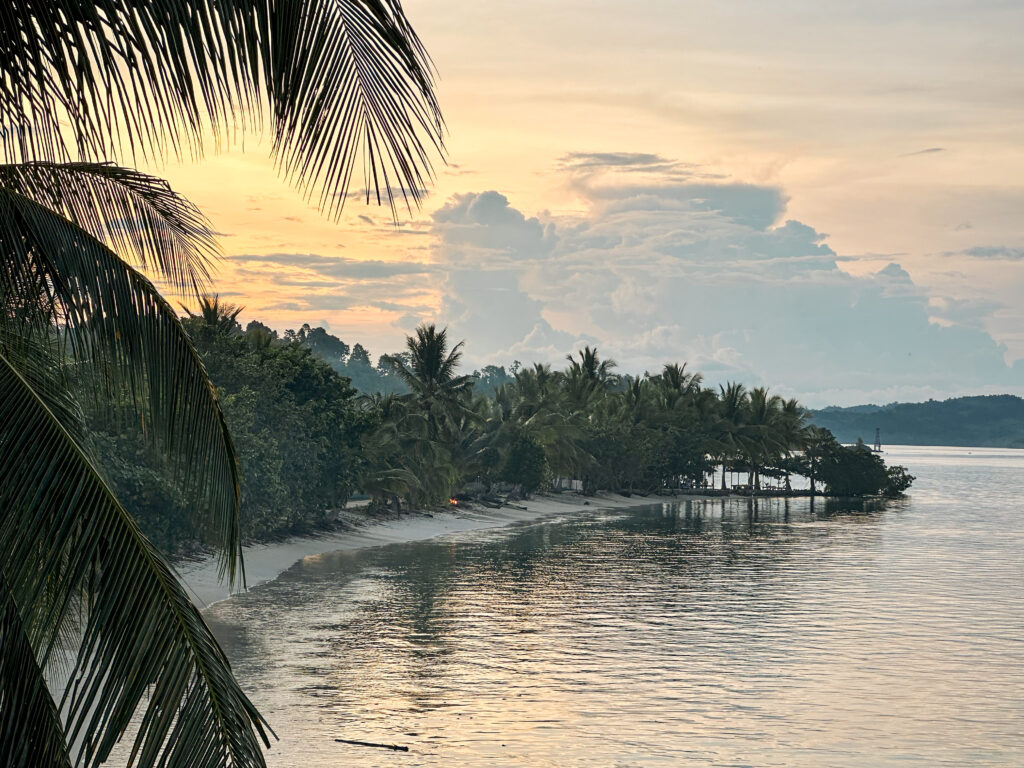
Banggai Laut is less visited and feels noticeably more remote and untouched than Peleng. It’s ideal if you’re looking for fewer travellers, quiet coastal villages, and a slower pace of life. The scenery here is stunning, with turquoise water, coral reefs, and small islands scattered offshore.
Getting here requires more time and planning, but that’s exactly why it feels so special. Accommodation is very limited and basic, but the sense of isolation and authenticity makes the effort worthwhile for those who make it this far.
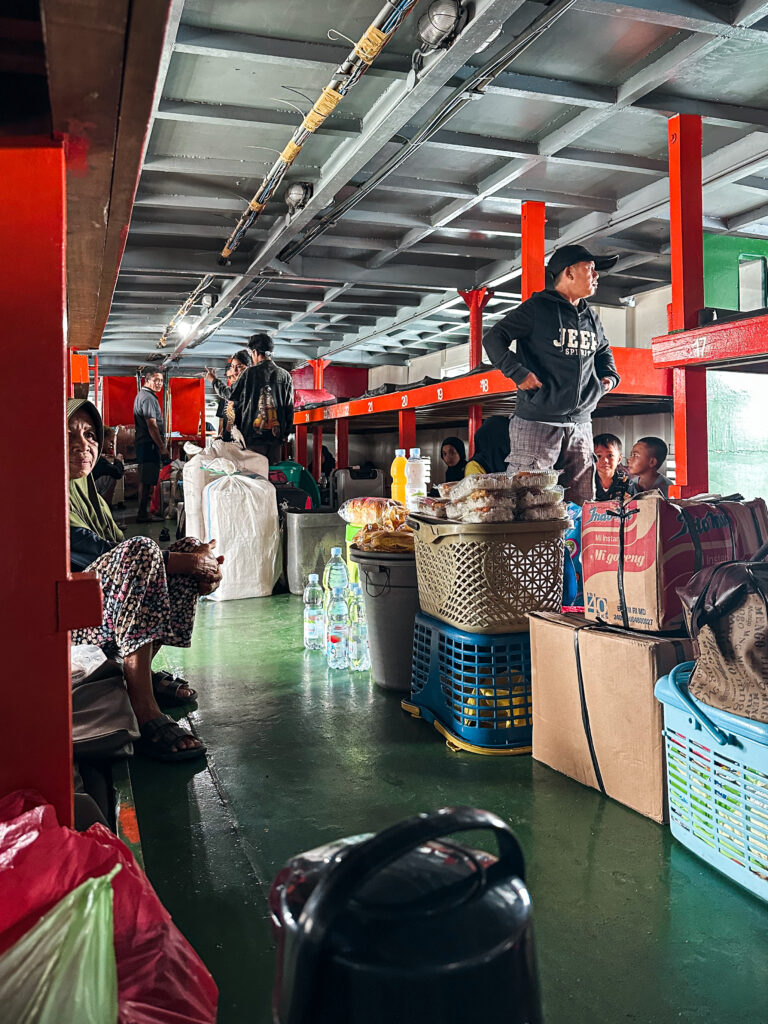 Ferry that connects Banggai City and Luwuk
 Each passenger gets assigned a “bed”
Where to Stay in Banggai Laut
There are a few hotels and guesthouses in Banggai city, but I was looking for something more local and away from the city noise. I ended up staying at the main homestay on the entire island: Kia Homestay, which is about half an hour by scooter from the city.
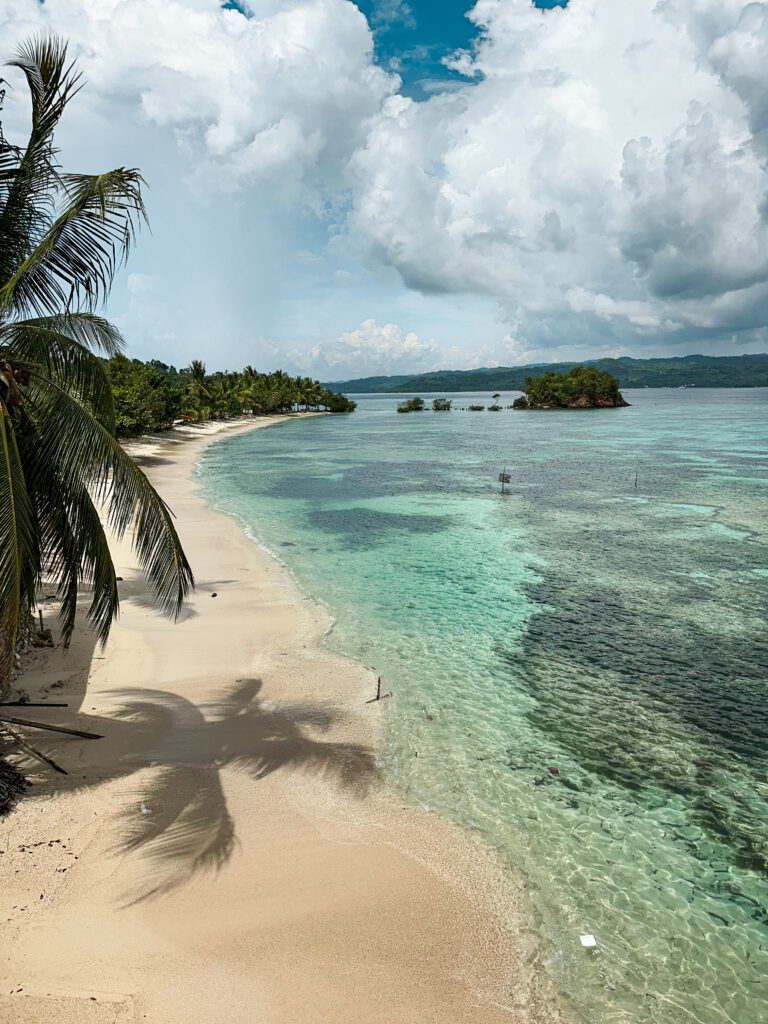 Views at Kia Homestay
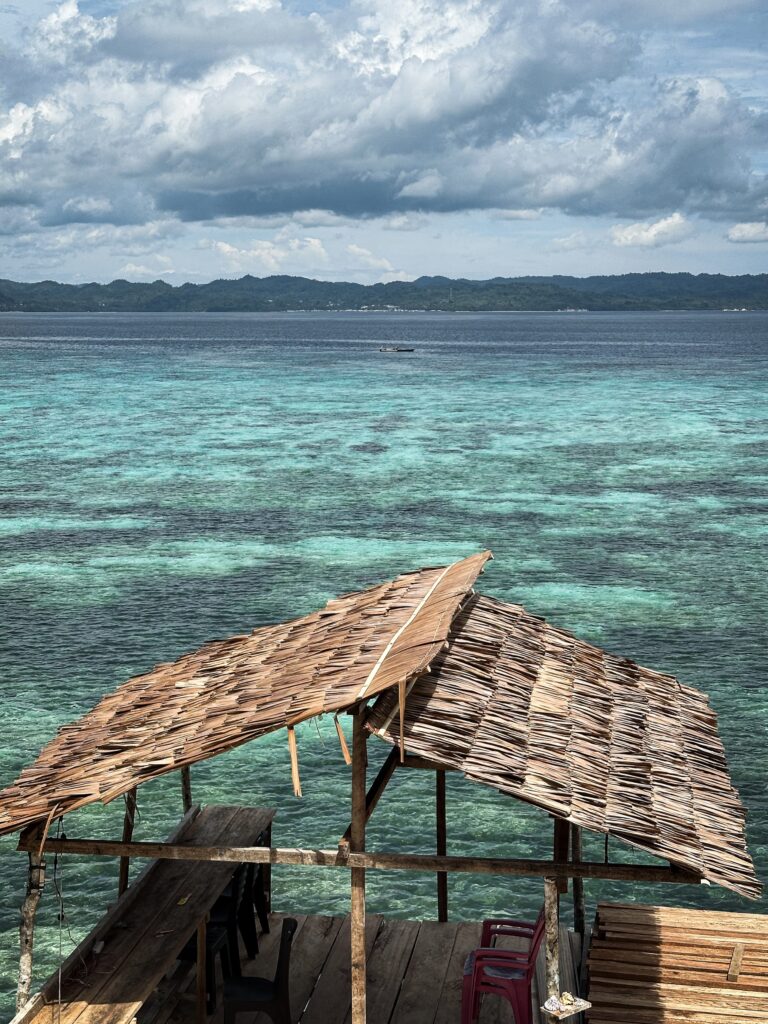 Deck over the water at Kia Homestay
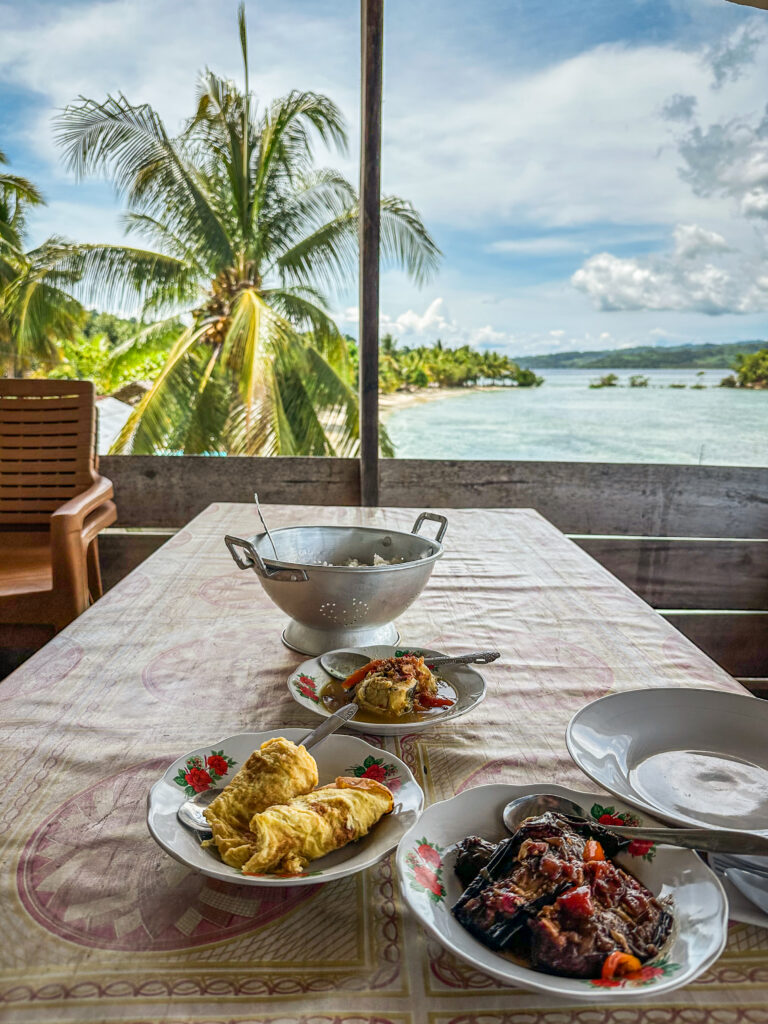 Lunch at Kia Homestay
Since it’s a bit remote, the nightly rate of 350k IDR includes breakfast, lunch, and dinner, which is very convenient. The food is basic Indonesian fare: typically omelette or pancakes with fruit for breakfast, and rice or noodles with fish, egg, and fruit for both lunch and dinner.
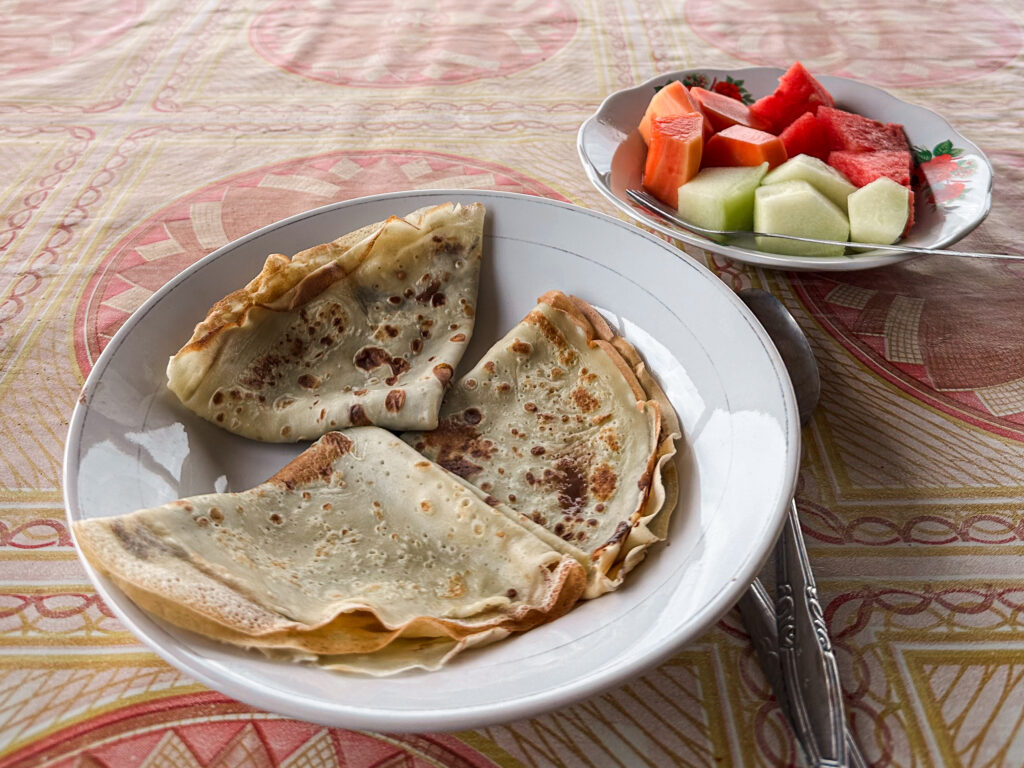 Breakfast at Kia Homestay
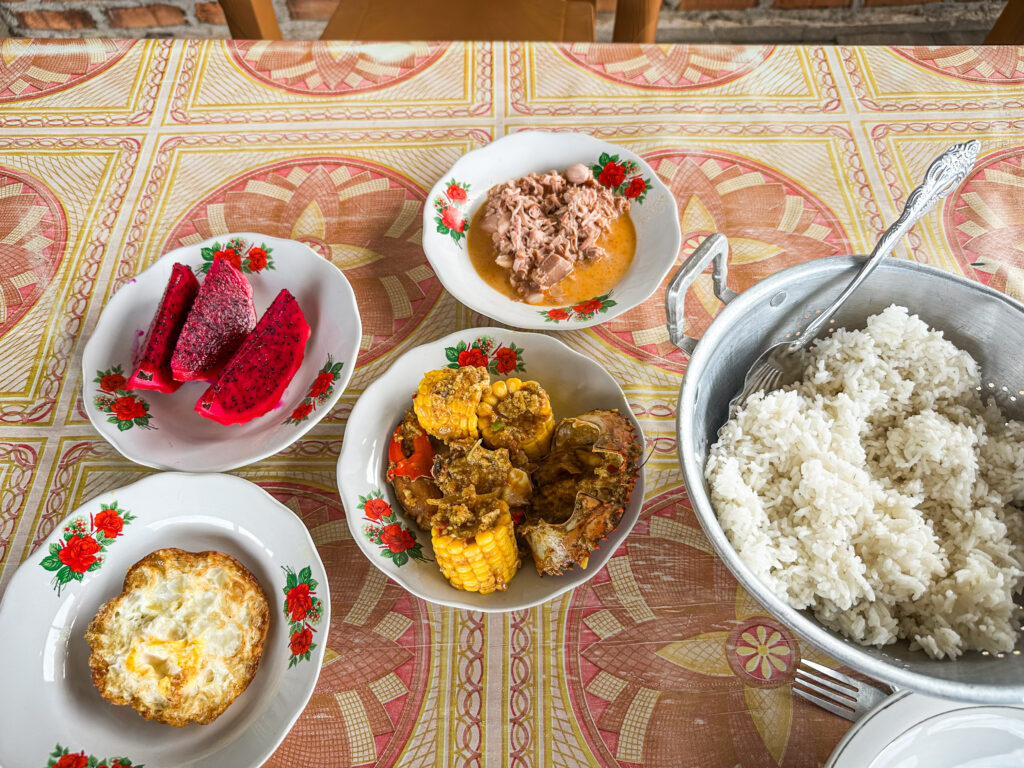 Lunch at Kia Homestay
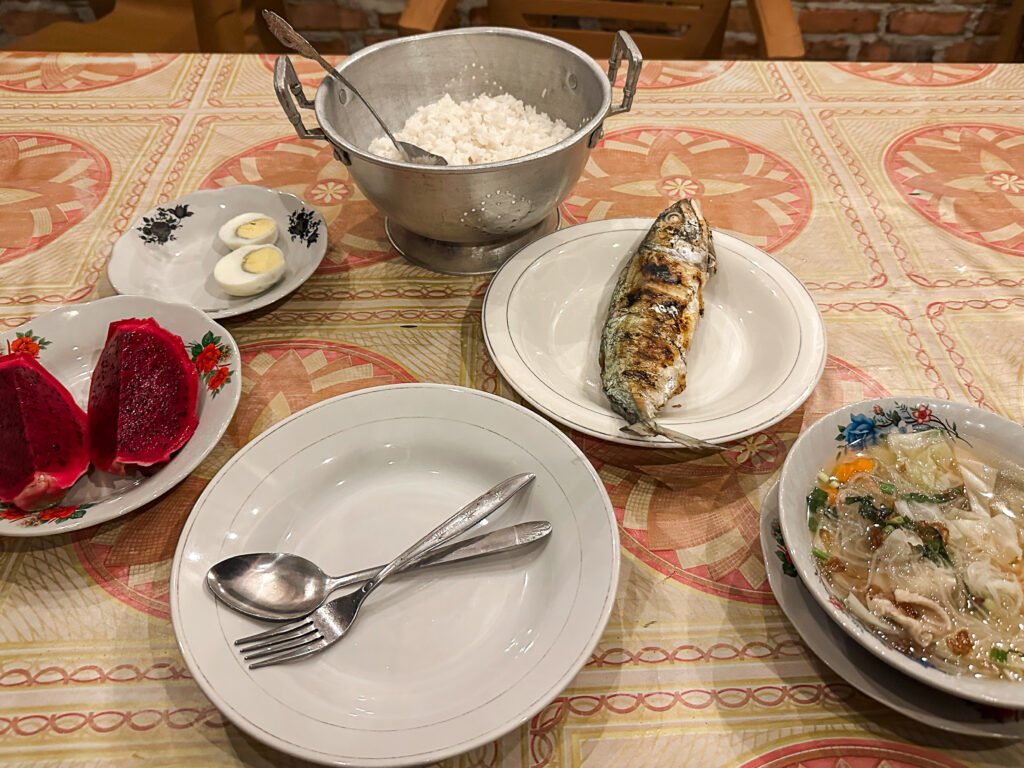 Dinner at Kia Homestay
The rooms are very basic, in a simple wooden building, with a mattress on the floor, mosquito net, and a fan. I spent six nights here, including New Year’s, and it was a great way to relax and enjoy some peaceful, chilled-out days. The homestay sits right by the water on a quiet beach, so you can snorkel directly from the shore. They also provide scooters for rent if you want to explore the island. If you want to book or check availability, the WhatsApp number is +62 821-2633-4667.
What to Do in Banggai Laut
Snorkelling Right by the Homestay
One of the biggest highlights of staying at Kia Homestay is that you can snorkel straight from the beach. The coral here is healthy, and the shallow waters are home to the famous Banggai cardinal-fish, a species endemic to this region and found nowhere else in the wild. These small silver fish with black stripes are usually seen hovering around sea urchins, which they use for protection. Besides cardinal-fish, you’ll also spot colourful reef fish and decent coral without needing a boat, which perfect for relaxed, low-effort snorkelling.
Explore the Island by Scooter
Renting a scooter is the best way to explore Banggai Laut independently. The rate for scooter rental should be around 150k IDR per day. The island is scenic, quiet, and easy to navigate, making riding around a real pleasure. Some worthwhile stops include:
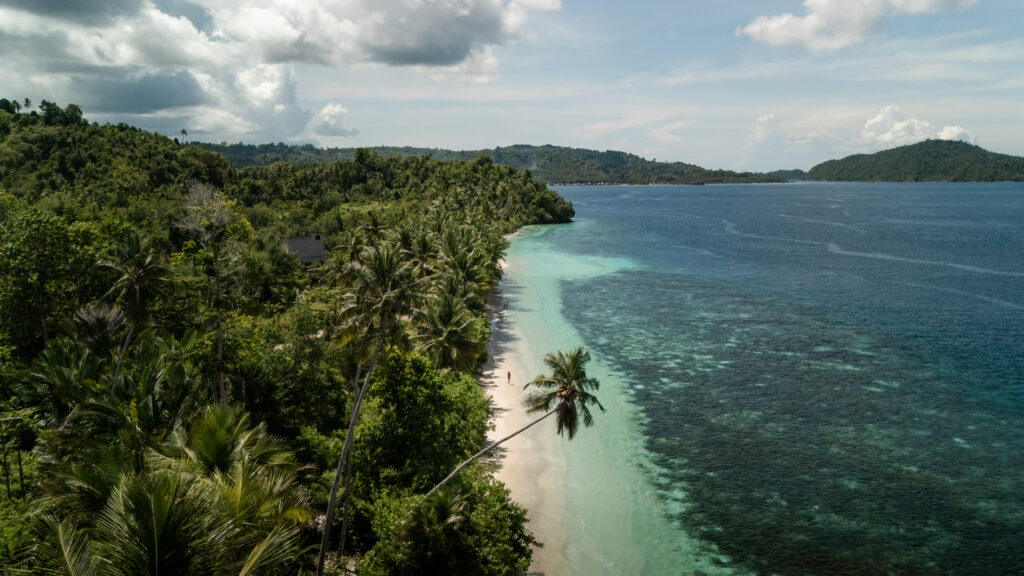 Numirah Beach
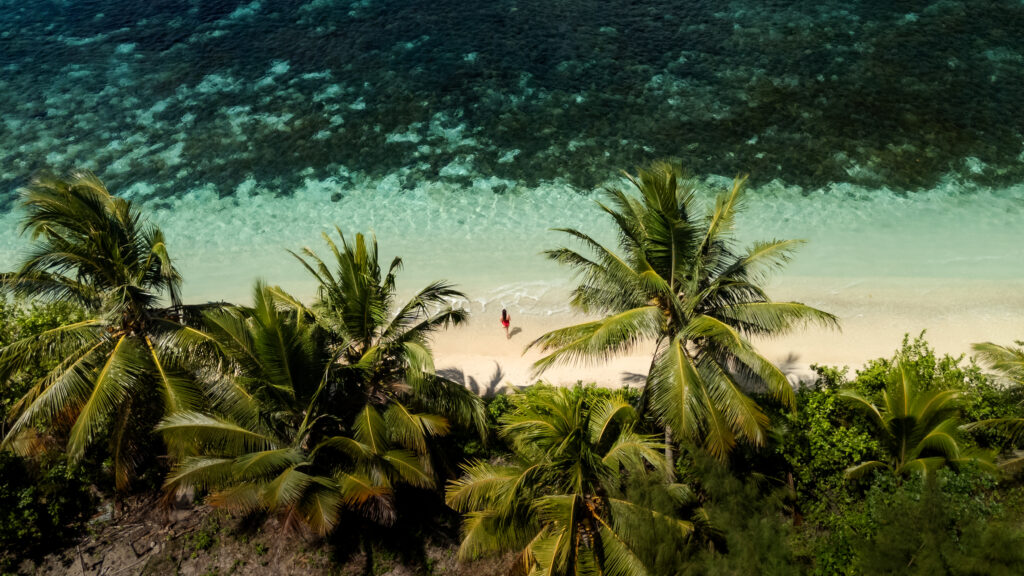 Numirah Beach
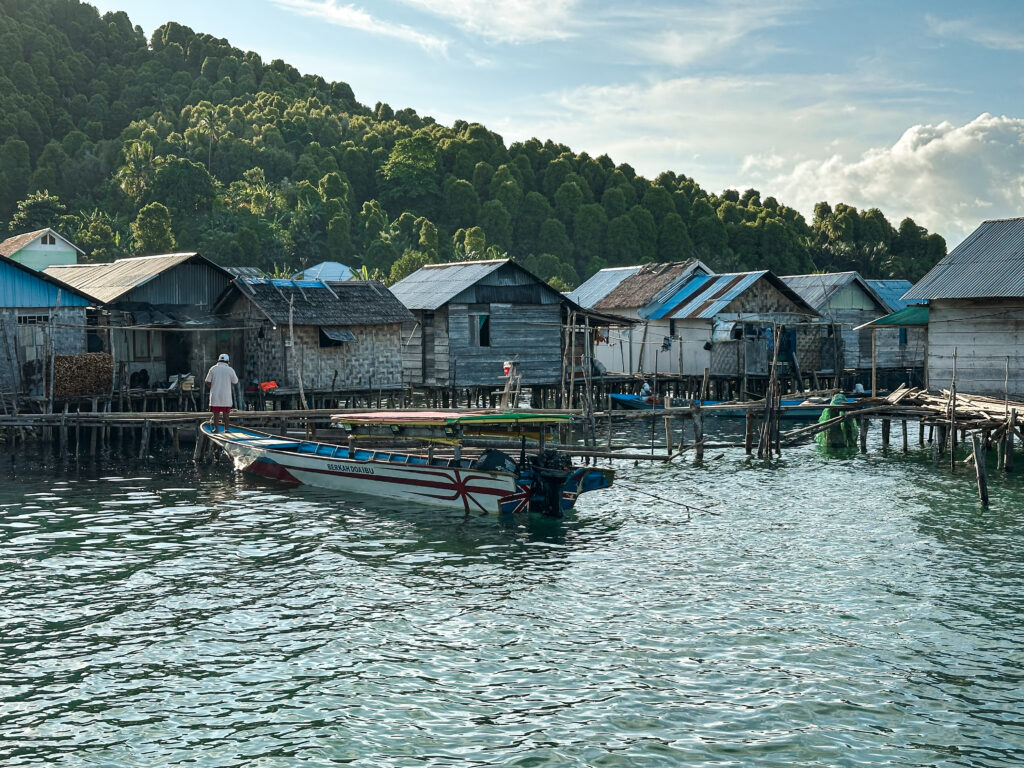 Bajo village
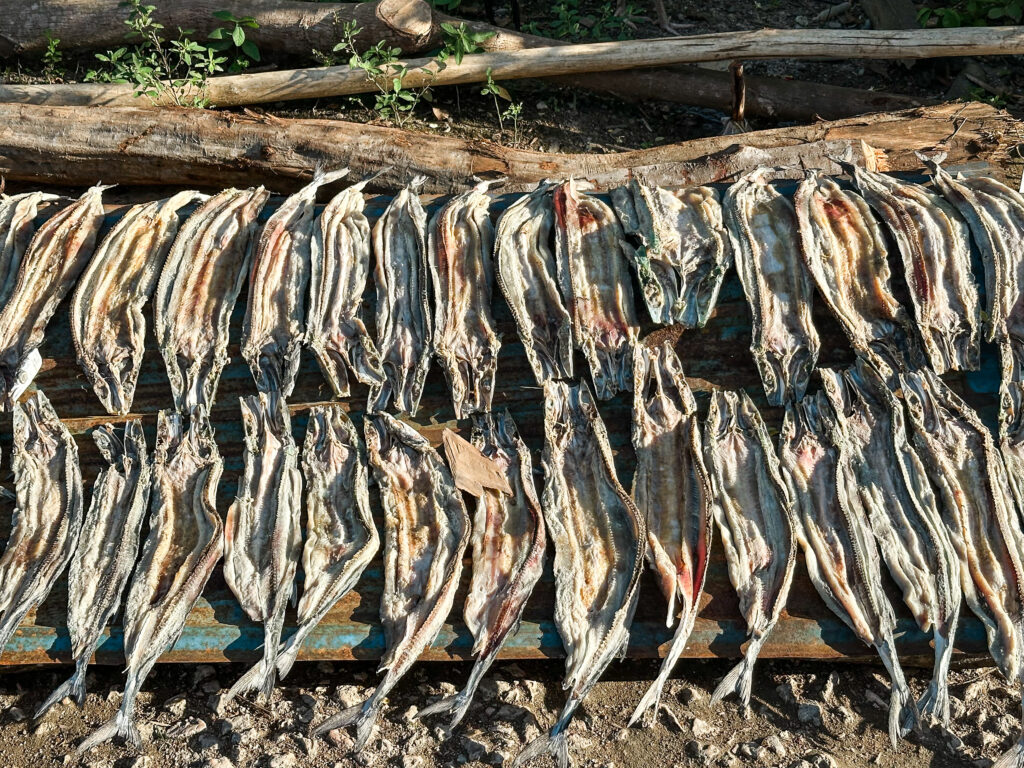 Drying fish at bajo village
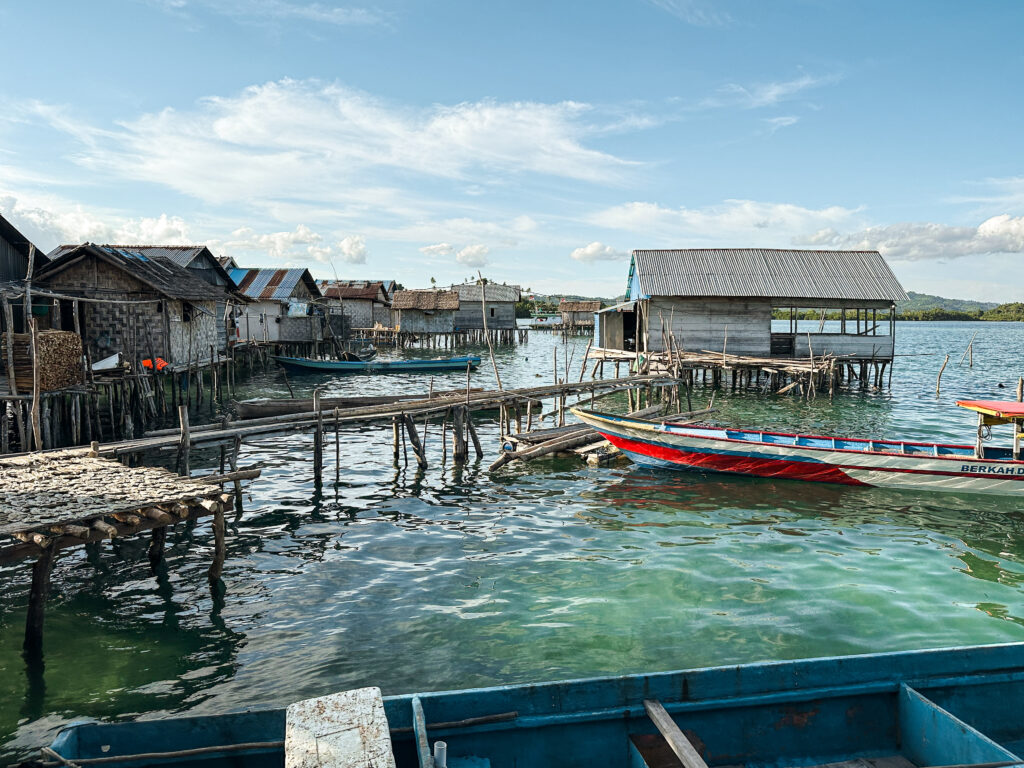 Bajo village: houses built on stillts
Day Boat Trip to Oyama & Long Beach
A popular day trip from Banggai Laut is a boat trip to Oyama Island and Long Beach. These spots are only reached by boat and they’re known for turquoise water and white sand. Expect to pay around 1 million IDR or more for the boat, though the final price depends on how many stops you include and your negotiation skills. Sharing the boat with other travellers can help keep costs down.
Even More Off the Beaten Path: Mbuang Mbuang
If you have plenty of time and a strong sense of adventure, it’s possible to go even further off the beaten path by visiting Mbuang Mbuang, home to a jellyfish lake. I didn’t go myself, mainly because it would take too long using public transport and there’s no real tourism infrastructure to stay there for a few days. It’s technically possible as a day trip from Banggai Laut by private speedboat, but I found it too expensive and not worth it for the limited time available.
Is Banggai right for you? (Practical Tips)
With the growing attention the Banggai Islands are getting on social media, it’s easy to fall for the idea of an untouched tropical paradise. Polished photos and short videos often paint a picture of palm-lined beaches, white sand, and effortless island life. The reality, however, is very different.
This is not a destination for luxury travellers or influencers looking for resort-style comfort and easy content. There are no fancy beach resorts, no infinity pools, and no curated experiences. Tourism infrastructure in Banggai is extremely basic, and accommodation is limited to simple homestays, often with no air conditioning, cold showers, no wifi, and very minimal facilities.
That said, if travelling off the beaten path excites you, Banggai can be incredibly rewarding. This is a place for travellers who don’t mind uncomfortable boat journeys, long travel days, staying in local homes, eating whatever is cooked that day, and slowing down to adapt to island life. If you’re happy to trade comfort for authenticity, solitude, and raw natural beauty, Banggai delivers in spades.
Outside of peak season (July and August), it’s common to have beaches, snorkelling spots, and even entire villages almost to yourself. Even during busier months, crowds remain minimal compared to most Indonesian destinations.
Cultural awareness is also important. While places like Paisu Pok village are predominantly Christian and tend to feel more relaxed, Banggai Laut is Muslim and fairly conservative. Modest dress is expected, especially for women. Locals swimming at beaches are usually fully clothed, so wearing a bikini, particularly revealing styles, can feel uncomfortable or inappropriate. A full-body swimsuit or modest swimwear is strongly recommended.
If what you’re really after is a laid-back paradise island vibe with hammocks, reef snorkelling straight from your bungalow, and the option to properly relax without logistical challenges, you might be better off heading to the Togean Islands, which offer a more established (yet still remote) backpacker and eco-resort scene.
Banggai isn’t easy, but for the right traveller, that’s exactly the point.
Final Thoughts
The Banggai Islands aren’t an easy destination, and that’s precisely their appeal. Travel here is slow, accommodation is basic, and plans often depend on the weather, the sea, and local logistics. But for independent travellers willing to embrace that uncertainty, Banggai offers something rare in Indonesia: genuine remoteness, quiet beaches, and a way of life that still feels untouched by mass tourism.
This isn’t a place for luxury or polished experiences. It’s about simplicity, patience, and connection. If you’re travelling on a budget, enjoy going off the beaten path, and value authenticity over comfort, the Banggai Islands can be deeply rewarding. It may not be for everyone, but for the right kind of traveller, it’s a place that stays with you long after you leave.
More Independent Travel in Sulawesi
If you’re travelling through Sulawesi independently, Banggai Islands are just one piece of the puzzle. These posts dive deeper into some of the island’s most remote, rewarding, and lesser-visited regions, all explored without tours and on a backpacker budget: