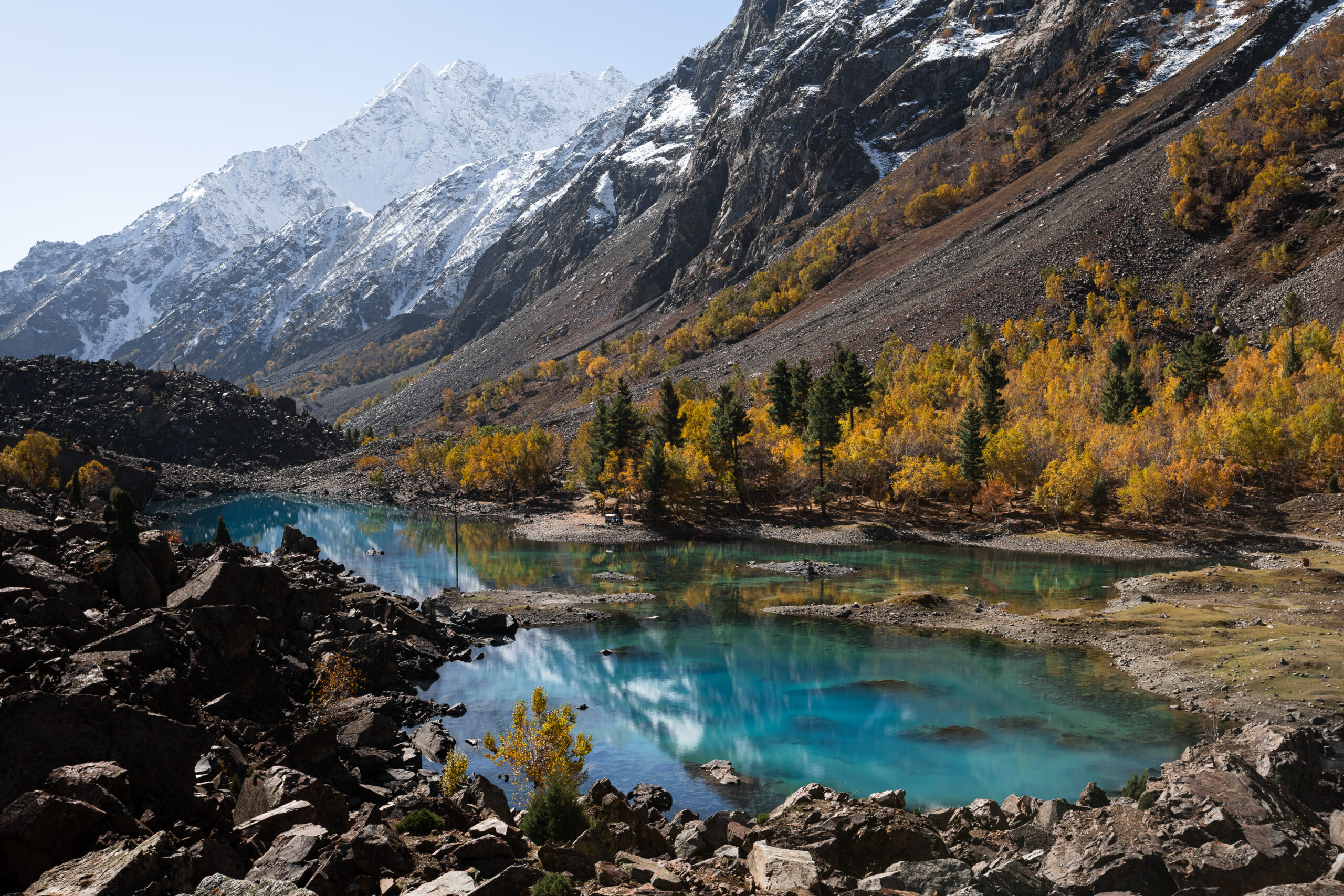
This Naltar Valley travel guide focuses on what most others skip: how to get there without a tour. Reached by shared jeep from Gilgit, the valley offers something rare for northern Pakistan: thick pine forests, glacial lakes in shades of blue and green that seem almost unreal, and a quietness that deepens the further you go. I took the shared public jeep up and hitchhiked back down, and it remains one of the most unexpectedly gentle corners of the Karakoram.
What Makes Naltar Valley Worth the Trip
After weeks of travelling through the raw, bare landscapes of the upper Karakoram: the dust of the KKH, the open scree of Chapursan, the cliff-edge roads to Shimshal, Naltar Valley feels like stepping into a different world entirely. Dense pine forests close in around you as you climb, the air shifts, and the light softens. It is, by Gilgit-Baltistan standards, almost gentle.
The valley sits at around 2,900 metres and is tucked into the Karakoram range southwest of Gilgit. What defines it is the contrast: forest where everywhere else is rock, colour where everything else is grey. The lakes, Blue Lake and the aptly named Green Lake, sit higher up in the valley and are the main draw, and they deserve every bit of attention they get. Their colours are not a photographic trick. In the right light, at the right time of day, they glow.
But Naltar isn’t only about the lakes. The pine forests are thick enough to actually walk through, the valley floor meadows are wide and open, and the sense of space, without the crowds you get in Hunza or Skardu, makes it easy to stay longer than planned.
When to Visit Naltar Valley
Summer: May to September
Summer is the main season, and for good reason. The snow melts, the road opens fully, the lakes are accessible, and the valley turns a vivid green. Daytime temperatures are pleasantly cool (usually between 10°C and 22°C) making it comfortable for walking and spending time outside. July and August are the busiest months, especially with domestic tourism. This is the best time for the lakes, forest walks, and clear sky photography.
Autumn: October
October is the window I’d most recommend, and the one I visited in. The crowds thin out almost completely, the temperatures drop to something brisk and clear, and the trees shift into gold and amber. The lakes are still accessible in early October, and the colours, both in the forests and reflected in the water, are extraordinary. Pack warmer layers and expect cold nights, but the trade-off in atmosphere and solitude is worth it entirely.
Winter: November to March
In winter, Naltar becomes a different valley. Snow covers everything, the upper road to the lakes closes, and the Pakistan Air Force ski resort comes into its own. Naltar has the country’s longest ski lift and some of the best conditions in Pakistan for skiing. If you’re coming for winter sports, this is the season. Just be prepared for very limited accommodation options and road closures that can affect access from Gilgit.
How to Get to Naltar Valley from Gilgit
Shared Public Jeep (recommended)
The most affordable and most interesting way to reach Naltar is by shared public jeep from Gilgit. The jeeps departs from Gilgit (find it here on Google Maps) and leave when full, which usually means early morning. The cost is around 350 PKR each way, making it one of the cheapest transport options in the region. The journey takes around 2-3 hours depending on road conditions.
As with most shared transport in northern Pakistan, schedules are informal. Arrive early, ask around, and be prepared to wait. The jeep fills up with locals heading into the valley, and the journey itself, climbing through pine forest on a rough track, is already worth the fare.
Private Jeep Hire
If you’re travelling with others and want more flexibility, a private jeep from Gilgit can be arranged. Prices vary but expect to pay more than 20,000 PKR for the trip. This gives you control over timing and allows you to stop along the road at will.
Hitchhiking
Hitchhiking to and from Naltar is relatively straightforward. I returned to Gilgit by hitchhiking from Naltar to Nomal, waiting outside the hotel while the owner kindly helped me secure a ride. Locals are incredibly helpful, and although traffic is not particularly heavy, there are usually enough vehicles passing through during daylight hours to make hitchhiking manageable.
Nomal is a larger town further down the valley, and from there it was easy to catch public transport back to Gilgit. Hitchhiking onwards to Gilgit would also be simple, as the road from Nomal connects to the paved Karakoram Highway and sees a steady flow of traffic heading towards the city.
As always with hitchhiking in Pakistan, patience and an early start are key. Standing near the jeep parking area in Naltar Bala is the best place to find a ride.
Getting Around Inside the Valley
The main settlement, Naltar Bala (Upper Naltar), is where most guesthouses and the ski resort are located. From here, the lakes lie roughly 13-17 km further up the valley along a rough jeep track that requires a 4×4 vehicle. Local jeeps can easily be arranged in the village to take you to the lakes and back.
Prices for the return journey vary depending on the type of jeep, and costs can usually be shared with other travellers. At the time of my visit, there were three price categories: 7,000 PKR, 9,000 PKR, and 11,000 PKR, with the more expensive options generally being newer and more comfortable vehicles. I chose the 7,000 PKR jeep, which was definitely the oldest of the lot, but it still managed the journey there and back without any problems.
The forest walks around Naltar Bala itself are completely accessible on foot and require nothing more than a decent pair of shoes and some time to explore. The valley floor is wide, peaceful, and easy to navigate independently without a guide. Reaching the lakes, however, genuinely requires a vehicle, as the track is extremely rough and the distance too long for a comfortable day hike.
The Naltar Lakes
The lakes are the highlight of any visit to Naltar, and they fully earn that status. Set in a high alpine bowl above the tree line, surrounded by snow-dusted peaks, they have a quality that photographs struggle to fully capture. The colours shift depending on the time of day and the angle of light: vivid turquoise in the midday sun, a deeper blue-green in the early morning.
Blue Lake
Blue Lake is the larger of the two main lakes and the one most photographs show. Its colour in summer and early autumn is a striking, saturated blue, the kind that looks almost artificially vivid. The surrounding terrain is mostly open rock and alpine scrub, which makes the colour of the water even more striking by contrast. It’s a good spot to sit quietly for an hour, especially once any other visitors have moved on.
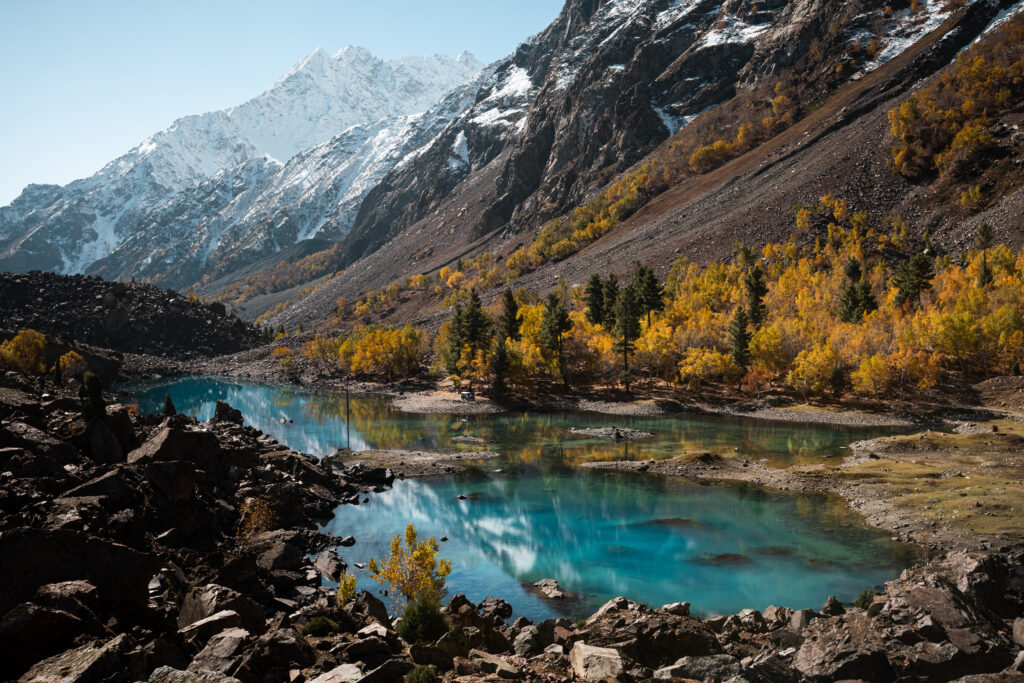 Blue Lake in Naltar Valley in Autumn
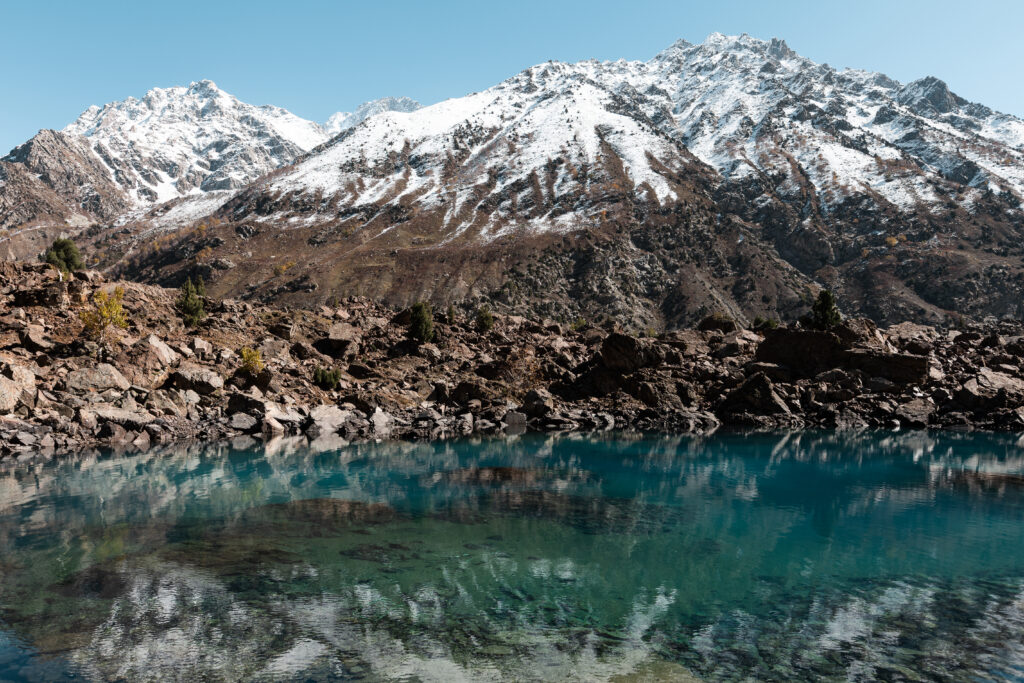 Blue Lake in Naltar Valley
Green Lake
Smaller and, in some ways, more beautiful than Blue Lake, Green Lake sits nearby and glows in a deeper, more emerald shade. The contrast between the two, standing at a point where both are visible, is one of those moments that stays with you. Early morning light is the best time to visit if you’re staying overnight in the valley.
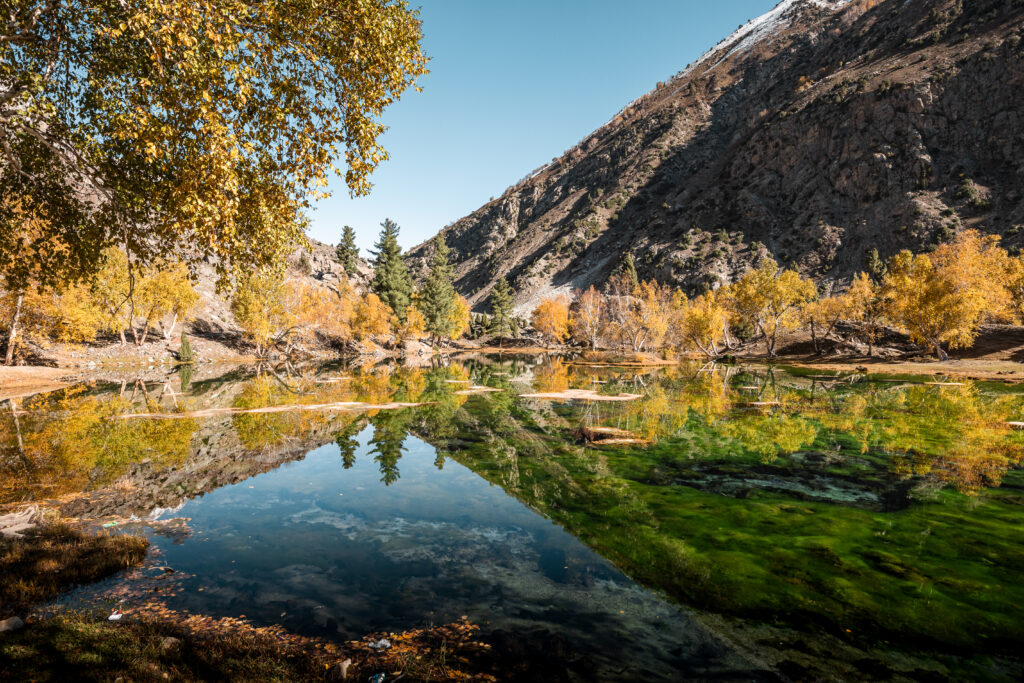 Green Lake in Naltar Valley in Autumn
Getting to the Lakes from Naltar Bala
The track from Naltar Bala up to the lakes takes over one hour by jeep on a rough, rocky road. Arrange a jeep the evening before in the village, or ask your guesthouse to help, most can sort this easily. Factor in at least 2-3 hours at the lakes to do them justice.
What to Do in Naltar Valley
Walking and Forest Trails
The pine forests around Naltar Bala are the most accessible part of the valley and one of its most underrated features. Unlike almost everywhere else in northern Pakistan, Naltar has actual shade, tall, dense stands of pine and cedar that you can walk through for hours. There are no marked trails, but the terrain is open enough to navigate on instinct. Follow the streams, climb through the trees, and you’ll find viewpoints that most visitors never reach.
Sarmad Shafa Snow Leopard Sanctuary
Tucked away on the mountainside above the valley, the Sarmad Shafa Snow Leopard Sanctuary offers a rare chance to see these elusive animals up close. Reaching it is part of the experience itself: the sanctuary is not signposted and can be tricky to find, with only a narrow walking path leading up the hillside. Locals are usually happy to point you in the right direction, or even guide you there.
Inside the enclosure are two snow leopards: Lovely, a 10-year-old female, and Leo, a young male. Seeing them behind fences can feel bittersweet, especially in such a wild and open landscape where you’d expect animals to roam freely. However, from what I understood, these leopards were already in captivity before arriving in Pakistan, gifted by another country, and are not suited to surviving in the wild.
While spotting a snow leopard in its natural habitat is incredibly rare, the sanctuary provides what is, for most travellers, the only realistic opportunity to see one of these extraordinary animals. It’s a complex experience (part privilege, part discomfort), but one that adds another layer to understanding the region and its wildlife.
Naltar Ski Resort
The PAF (Pakistan Air Force) ski resort in Naltar is the oldest in the country and still one of the best. The chairlift, installed in 2016, runs 1.5 km up the slope and functions both as access for skiers in winter and as a viewpoint ride in summer. The slopes are well-maintained by PAF standards, and the resort has basic equipment rental in season. Even if you don’t ski, the resort area offers some of the widest open views in the valley.
Photography
Naltar is quietly one of the best photography destinations in Gilgit-Baltistan. The combination of forest, lake, meadow, and high peaks in close proximity gives you a range of subjects within a small area. The lakes photograph best in the morning before the sun is overhead. The forest light in late afternoon — filtering through the pines — is worth staying for specifically.
Where to Stay in Naltar Valley
Accommodation in Naltar Bala is limited but has improved in recent years. There are several guesthouses along the main track, ranging from very basic to reasonably comfortable.
I stayed at Nexus Naltar, which I’d recommend for budget travellers. The rooms were clean and comfortable, the staff was helpful with arranging the jeep to the lakes, and the price, around 5,000 PKR per night, is hard to argue with for what you get.
A handful of other guesthouses operate in the village, and in summer it’s generally not possible to turn up without a booking. Outside of peak season (July-August), you’ll have options. That said, calling ahead or asking your guesthouse in Gilgit to make contact is always worth doing.
Staying overnight is strongly recommended. Most visitors come as a day trip from Gilgit, which means the valley empties out by late afternoon. If you stay, you get the lakes in the morning light, the forest in the golden hour, and the valley entirely to yourself by evening. The extra night costs almost nothing and changes the experience completely.
How Much Does Naltar Valley Cost?
Naltar is one of the more affordable side trips in northern Pakistan. Here’s a realistic daily budget breakdown:
| Expense | Cost (PKR) | Cost (approx. EUR) |
|---|---|---|
| Shared jeep from Gilgit (one way) | 350 | ~1 € |
| Hitchhike to Nomal + public transport to Gilgit | 500 | ~1.50 € |
| Accommodation + Meals (1 night) | 4,750 | ~15 € |
| Private Jeep hire to the lakes and back | 7,000-11,000 (cost can be shared) | ~20-35 € |
| Total Cost for 1 night / 2 days | ~ 9,100-14,000 PKR | ~ 27-40 € |
Naltar is considered a resort town, and accommodation tends to be more expensive than elsewhere in Pakistan. However, visiting in the off-season not only helps you save money but also means you’ll have the valley almost entirely to yourself.
Budget Tips
Travelling independently rather than on a tour saves a significant amount. Bring cash from Gilgit as there are no ATMs in the valley. Bank Alfalah in Gilgit is the most reliable option for foreign cards.
Avoid ATM fees with Wise
The card I use for all my travel withdrawals – real exchange rate, low fees.
Use Revolut to avoid ATM fees
Good alternative to Wise – I carry both as a backup.
Practical Tips for Visiting Naltar Valley
Bring cash from Gilgit. There are no ATMs or money changers in Naltar. Carry enough for accommodation, food, the jeep to the lakes, and a buffer for unexpected costs.
Start early. The shared jeep from Gilgit fills up in the morning, often by 8-9am. If you miss it, you’re waiting for the next one or hiring a private vehicle. Get to the jeep stand early.
Connectivity is limited. Mobile signal in Naltar Bala is patchy. SCOM works better than other networks in Gilgit-Baltistan, but don’t rely on being online. Download offline maps before you leave Gilgit.
The road requires a 4×4. The track into the valley, especially the upper section to the lakes, is rocky and rutted. The jeeps are appropriate vehicles. Don’t attempt the upper section in a standard car.
Pack layers even in summer. At 2,900 metres, temperatures drop quickly once the sun goes behind the peaks. Evenings are cold year-round, and mornings at the lakes can be genuinely chilly even in August.
Respect the forest. Naltar’s pine forests are one of its rarest features in the context of northern Pakistan. Leave no trace, don’t light fires, and take all litter out with you.
Need data before you land in Pakistan or for the Islamabad leg? An eSIM can be useful as a bridge before switching to a local SCOM SIM — local SIMs are much cheaper for extended use in GB, but eSIMs work well for short stays or as backup.
Need data before you land? Try Saily eSIM
Use code RITAHE1486 for $5 off your first plan.
Safety & solo travel
Despite the remoteness, Naltar valley is very safe and welcoming. Crime is extremely rare, and locals often go out of their way to help travellers. Use common sense, trust your instincts, and don’t rush.
Don’t skip travel insurance!
I use SafetyWing for most trips – solid coverage for adventure travel.
FAQ: Naltar Valley
Can you visit Naltar Valley without a tour?
Yes. The shared jeep from Gilgit costs around 300 PKR each way and is how locals travel. You don’t need a guide or a tour operator to visit the valley or the lakes.
How long should you spend in Naltar Valley?
A minimum of one night is strongly recommended. Most day-trippers miss the morning light at the lakes and the quiet that settles over the valley in the evening. Two days gives you enough time to visit the lakes, walk through the forest, and not feel rushed.
Is Naltar Valley worth visiting in autumn?
October is arguably the best month. The colours are exceptional, the crowds are gone, the road is still open, and the lakes are still accessible. Temperatures are cold but manageable with the right layers.
Do you need a guide for Naltar Valley?
No. The valley is easy to navigate independently, the locals are helpful, and the main points of interest (the lakes and the forests) require no specialist knowledge to reach. A local jeep driver for the upper track is enough.
What are the lakes in Naltar Valley called?
The two most visited lakes are Blue Lake and Green Lake (also called Satrangi or Rainbow Lake). Other smaller lakes in the area include Firoza Lake and Bodlok Lake.
Is Naltar Valley safe?
Yes. Like most of Gilgit-Baltistan, Naltar is safe and welcoming for independent travellers, including solo travellers. Crime is extremely rare and locals are genuinely helpful.
How do I get from Hunza to Naltar Valley?
Return to Gilgit first (2 hours on the KKH) and pick up the shared jeep to Naltar from there. The total journey from Hunza to Naltar is over 4 hours.
Need help planning your Pakistan trip?
Custom itineraries, local guide sourcing, and on-trip support from someone who’s done it.
Final Thoughts
Naltar doesn’t announce itself the way the more famous parts of northern Pakistan do. There’s no dramatic peak framing the horizon as you arrive, no iconic viewpoint that every travel account has already photographed. What it offers instead is something quieter and, in its own way, more lasting — forests that smell of pine and cold air, lakes that glow in colours that don’t quite make sense, and a pace that makes it easy to stay longer than you planned.
It’s a valley that rewards the travellers who arrive independently, stay overnight, and give it time. For anyone travelling through Gilgit-Baltistan who wants a contrast to the open, exposed landscapes of the upper Karakoram, Naltar is the place.
More Pakistan Travel Guides
If you’re planning to travel Pakistan independently, these in-depth guides will help you navigate the country, travel on a budget, and explore far beyond the usual routes:
Have questions about Naltar valley? Drop them in the comments. I read every single one.