
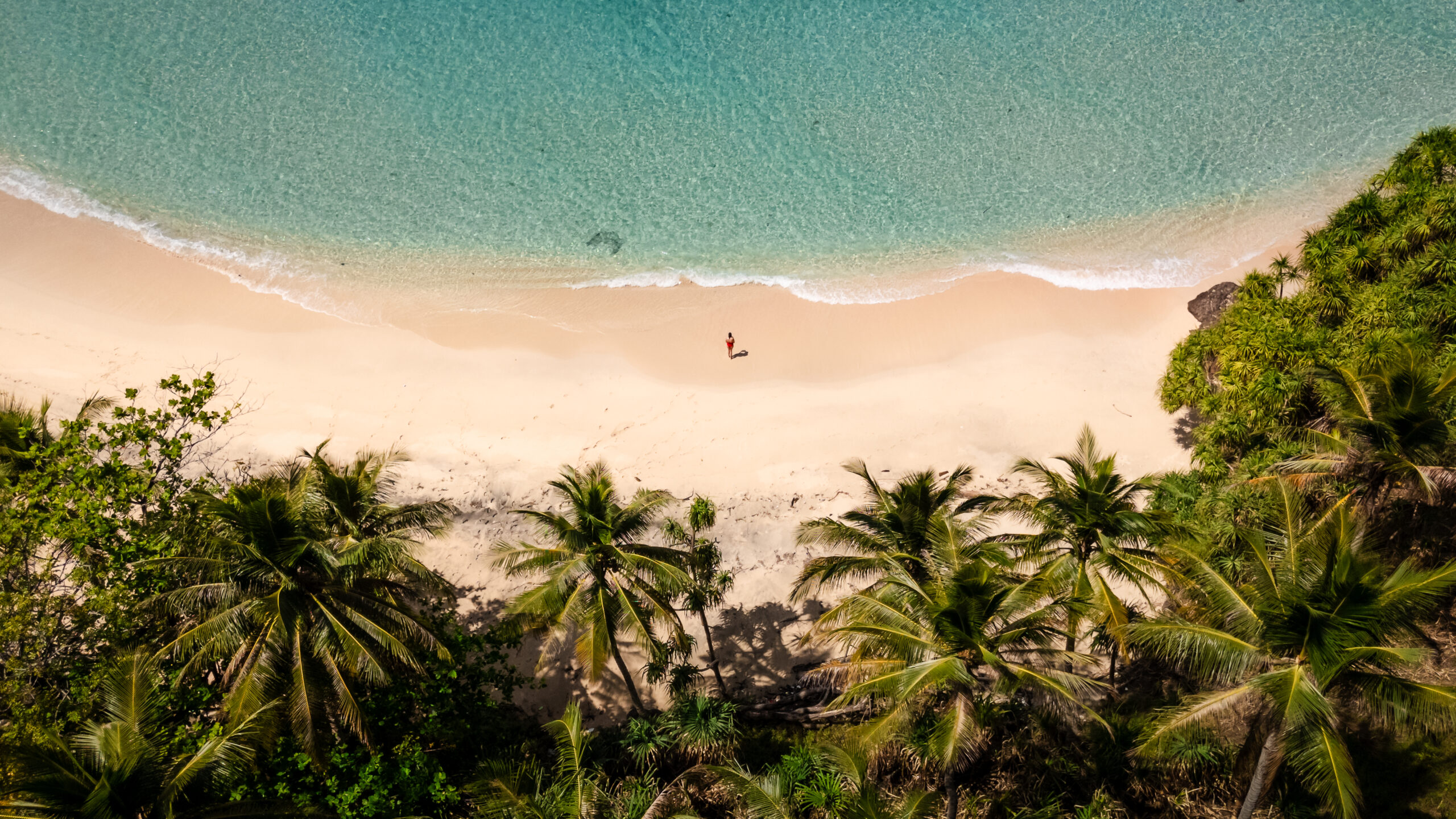
Wild, rugged, and refreshingly untouched by mass tourism, Sulawesi is one of Indonesia’s most fascinating destinations. With its spider-like shape, dramatic mountains, traditional cultures, and remote islands scattered far from the usual backpacker trail, Sulawesi rewards travellers who are willing to slow down, be patient, and embrace the unpredictable. I spent nearly two months budget backpacking Sulawesi independently, travelling entirely by public transport and local boats, often taking routes that felt more like logistical puzzles than straightforward journeys. My route began in Makassar, continued north to the highlands of Tana Toraja, and then zigzagged across Central and North Sulawesi through places most travellers skip entirely. From quiet lakeside towns and jungle-covered coastlines to remote islands with no ATMs, no signal, and very few foreign visitors.
This guide is for travellers who want to backpack Sulawesi on a budget, without tours, luxury resorts, or rushed itineraries. It covers practical transport advice, realistic costs, what to expect on the ground, and how to navigate Sulawesi’s more challenging, but deeply rewarding, routes. For detailed island guides, I’ve written separate posts on the Banggai Islands and Siau Island, but this post focuses on the bigger picture: how to travel Sulawesi independently, slowly, and affordably.
Choosing Your Route: North vs. South vs. Central
Sulawesi is a massive, star-shaped island that can take months to fully explore. Because transport is slow and distances are vast, most independent travellers focus on one or two regions. Here is the breakdown of what each area offers:
North Sulawesi: Volcanoes & Wildlife
The North is the most “action-packed” region and is very easy to navigate starting from Manado.
Central Sulawesi: The Island-Hopper’s Paradise
If you are looking for turquoise water, “off-grid” living, and a total digital detox, this is your region. This area is the most logistically challenging but offers the highest rewards for beach lovers.
South Sulawesi: Culture & Landscapes
You’ll start your South Sulawesi trip, flying into the bustling port city of Makassar.
Why Travel to Sulawesi
Sulawesi is one of Indonesia’s least-visited major islands, and that’s exactly what makes it so special. While most travellers stick to Bali, Lombok, or Java, Sulawesi remains largely untouched by mass tourism. Travelling here takes time and patience: long distances, slow transport, and occasional changes of plan are all part of the experience – but the reward is a rare sense of genuine exploration.
From the cultural heartland of Tana Toraja to the remote islands of Central and North Sulawesi, Sulawesi offers raw landscapes, living traditions, and warm hospitality without the crowds. It’s also surprisingly budget-friendly if you travel independently, with cheap local transport, affordable guesthouses, and simple local food. If you’re looking for off-the-beaten-path travel that still feels authentic and adventurous, Sulawesi delivers.
Practical Tips for Travelling Sulawesi Independently
Travelling independently in Sulawesi is rewarding but requires some preparation. Here are the key practical tips to make your journey smoother:
Visa
Apps
Transport:
Accommodation & Flights:
Other Useful Apps:
Money
Avoid ATM fees with Wise
The card I use for all my travel withdrawals – real exchange rate, low fees.
Use Revolut to avoid ATM fees
Good alternative to Wise – I carry both as a backup.
General Travel Tips
How to Get Around Sulawesi Independently
Getting around Sulawesi independently is slow, often chaotic, and usually exhausting, but it’s also entirely doable without tours or private drivers. Public transport exists almost everywhere; it just doesn’t always run on fixed schedules, and journeys often take much longer than the distances suggest.
Buses, minibuses, and shared transport
Most overland travel in Sulawesi is done by shared minibuses and cars rather than large public buses. These usually depart when full, stop frequently to pick up passengers, and follow very lose timetables. Long-distance routes, such as Makassar to Tana Toraja, or Gorontalo to Manado, can take an entire day or overnight.
In smaller towns like Tentena, Ampana, and Luwuk, transport hubs are informal but somehow easier to navigate. You can simply ask at your guesthouse or homestay about getting to your next destination, and if you’re staying in the right place, they’ll usually organise a transfer for you in a shared car. These vehicles typically pick you up directly from your accommodation and drop you off at your next guesthouse, making travel surprisingly straightforward. I’ll go into more detail later on where to stay in each town in order to make your life as easy as possible.
Ferries and local boats
If you’re heading to the islands, boats are unavoidable. Public ferries connect major routes, but for places like the Banggai and Togean Islands, you’ll rely on smaller public boats, which are a full on adventure by itself. But more on those lovely experiences later. Schedules change frequently, and boats may only run a few times a week, so flexibility is essential.
Flights: if time matters more than money
For long distances or when schedules don’t align, domestic flights can be a useful backup. Flying between hubs like Makassar, Luwuk, Gorontalo, Manado or even to the islands can save days of overland travel and is often reasonably priced if booked in advance.
A note on patience and flexibility
Travelling Sulawesi independently requires a different mindset from more developed backpacking routes. Expect delays, breakdowns, sudden changes of plans and occasional absolute chaos. If you travel with time rather than strict deadlines, getting around Sulawesi, apart from some time to time frustration, becomes part of the adventure.
Best Time to Visit Sulawesi
The best time to visit Sulawesi is generally during the dry season from May to October, when rainfall is lower and travel conditions are more predictable. This period is ideal for island hopping, long overland journeys, and trekking in the highlands, with calmer seas and fewer transport disruptions. That said, Sulawesi is very much a year-round destination, and travelling in the wet season can still be a great option, especially for budget backpackers.
Why I Actually Recommend Visiting Sulawesi in the Low Season (December-March)
I travelled through Sulawesi in December and January, which is considered low season, and found the weather far more manageable than expected. While there was the occasional rain, it rarely lasted all day, and most mornings were clear enough to explore, travel, and island-hop without major issues.
The biggest advantage of visiting during the low season is the lack of crowds. Guesthouses were quiet, transport felt less rushed, and I often had entire beaches, viewpoints, and islands to myself. As long as you build in flexibility, especially for boats and ferries, travelling Sulawesi in December or January is absolutely doable and still incredibly rewarding.
How Much Does It Cost to Backpack Sulawesi Independently?
Sulawesi is one of the most affordable regions in Indonesia, but your budget will fluctuate depending on how fast you travel. Slow travel is cheap; trying to see the whole island in two weeks is expensive due to flight costs. On average, a budget backpacker should plan for €24 – €35 USD (475,000 – 715,000 IDR) per day. Travelling independently and slowly, I spent an average of around €28 per day, including accommodation, food, transport, and activities.
Daily Budget Breakdown (2026 Estimates)
| Category | Budget (Backpacker) | Mid-Range (Flashpacker) |
| Accommodation | 150,000 – 250,000 IDR | 350,000 – 600,000 IDR |
| Food & Water | 100,000 – 150,000 IDR | 200,000 – 300,000 IDR |
| Local Transport | 150,000 IDR (Scooter rental) | from 700,000 IDR (Private Car) |
| Activities | free – 50,000 IDR (Entry fees) | 250,000+ IDR (Diving/Tours) |
| Daily Total | from 400,000 IDR (€20) | from 950,000 IDR (€45) |
These figures reflect solo travel during low season (December/January). Accommodation and food were consistently cheap, but transport occasionally pushed my daily average higher. In some remote areas, public transport is limited or non-existent, and the only option is a private or semi-private transfer. When travelling alone, and with very few other backpackers around to split costs, these journeys can add up.
Sulawesi is a destination where travelling with a partner or friends can significantly reduce your budget. Not only can you split accommodation costs (as anywhere), but you can also share guides and private transfers in places where shared transport simply doesn’t run. In busier months, solo travellers may also find others to split costs with more easily, which wasn’t always possible during my trip.
Where Your Money Goes: The Big 3
1. Accommodation: The “Resort” vs. “Guesthouse” Split
In places like Toraja, Siau, or Tomohon, you pay for a room (usually 150k-250k IDR) and buy your meals separately at local warungs. However, in the Togean Islands, you pay a per-person daily rate (300k–600k IDR) that includes three meals. While it looks more expensive upfront, it often works out cheaper since you aren’t paying for individual meals in a remote area.
2. Transport: The Distance Tax
Transport will be the most significant “spike” in your budget because Sulawesi is massive. A public bus from Makassar to Toraja costs around 200,000 IDR, while the fast ferry from Manado to Siau sits at about 185,000 IDR. If you are short on time and choose to fly, for example, from Makassar to Luwuk to reach the Banggai Islands, expect to pay from €70 to €100. If you have the patience, taking overnight buses or ferries is the ultimate budget hack, as it saves you the cost of a night’s accommodation.
3. Activities & Guide Fees
Sulawesi is an activity-heavy destination where the best experiences often require a local expert. While wandering through a village is free, iconic experiences have relatively fixed costs. Hiring a guide for a funeral ceremony in Tana Toraja generally costs around 600,000 IDR per day, which is best shared with other travellers. Scuba diving in the north or central regions typically costs between 600,000 and 900,000 IDR per dive, while a specialized wildlife tour in Tangkoko to see the Tarsiers will set you back about 150,000 to 250,000 IDR.
Money-Saving Tips for Sulawesi
My 7-Week Sulawesi Backpacking Itinerary
Sulawesi is not a destination you rush through. Distances are long, transport is slow, and some of the most rewarding places require patience and flexibility to reach. I spent seven weeks travelling Sulawesi independently, moving gradually north from South Sulawesi through Central and North Sulawesi, combining well-known highlights with quieter, lesser-visited stops along the way.
My route began in Makassar, continued into the highlands of Tana Toraja, and then zigzagged through Central Sulawesi via Tentena, Ampana, and Luwuk before island-hopping through the Banggai Islands and the Togean Islands. From there, I travelled north through Gorontalo, Tomohon, and Manado, finishing on the volcanic island of Siau Island.
I’ve embedded a Google Maps itinerary in this section so you can visualise the route and distances between each stop. Below, you’ll find a practical overview of each place I visited, including why I went, how long I stayed, and who each stop is best suited for.
Makassar
Makassar is the main gateway to Sulawesi and where most travellers begin their journey, but it’s a place many people, myself included, pass through rather than linger in. I only stayed briefly, partly because the weather in South Sulawesi wasn’t great at the time, and partly because Makassar didn’t strike me as a city with a huge amount to do for independent backpackers. That said, it does have a few highlights if you have time: Losari Beach is popular at sunset, Fort Rotterdam offers a glimpse into the city’s colonial past, and the striking Masjid 99 Kubah Asmaul Husna, with its colourful domes, is worth a visit. For me, Makassar worked best as a practical stop to recover from flying, organise onward transport, and ease into Sulawesi before heading straight to the far more atmospheric highlands of Tana Toraja.
Where to Stay and Eat in Makassar
Makassar is a big city, so finding accommodation or food is easy – there’s something for every budget and style. You can take your pick from a range of hotels, guesthouses, and hostels, depending on how long you’re stopping and what kind of comfort you want.
If you’re craving a taste of home after travelling for a while, I highly recommend La Piccola Italy, a small Italian restaurant in the city. The pizza here is delicious – seriously, it felt like a treat after months of local asian cuisine. It’s perfect for a comforting meal if you’ve been on the road and are missing western food. Otherwise, Makassar’s street food and seafood spots are easy to find and worth trying if you want to sample local flavours.
Rante Pao – Tana Toraja
Once you leave Makassar behind, the highlands of Tana Toraja feel like stepping into another world. The region is famous for its dramatic landscapes of rolling hills and rice terraces, but even more so for its living cultural traditions. Rante Pao serves as the main town and base for exploring the area, with colourful markets, traditional tongkonan houses, and the world-famous Torajan funeral ceremonies.
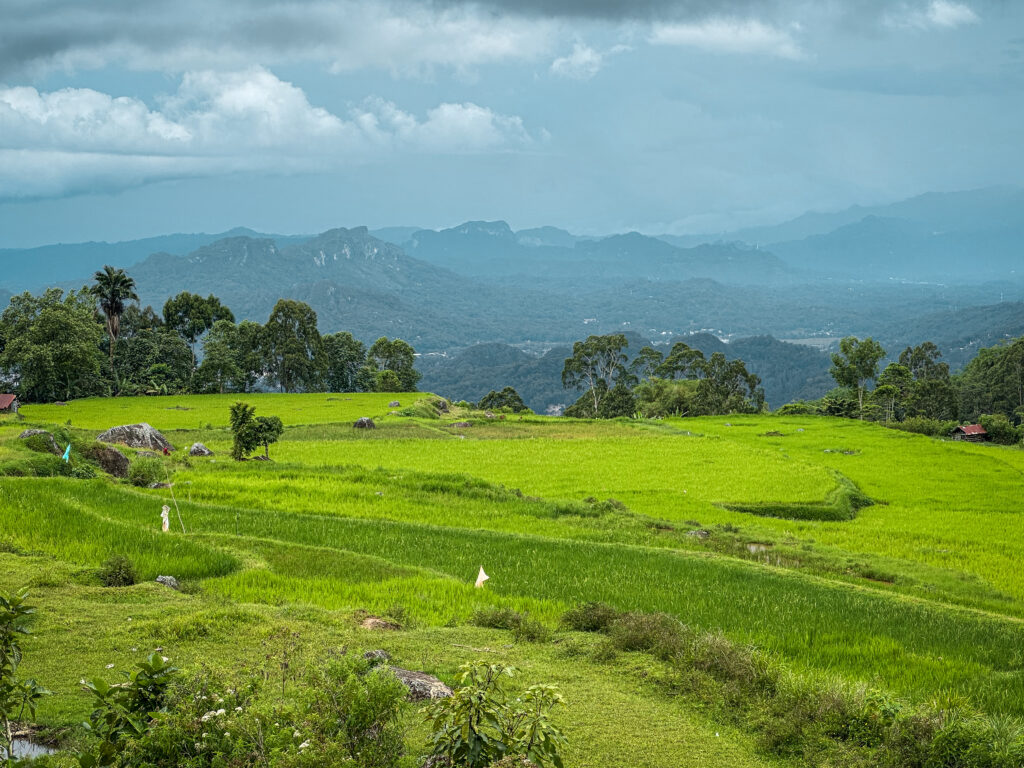 Rice terraces in Tana Toraja’s Highlands
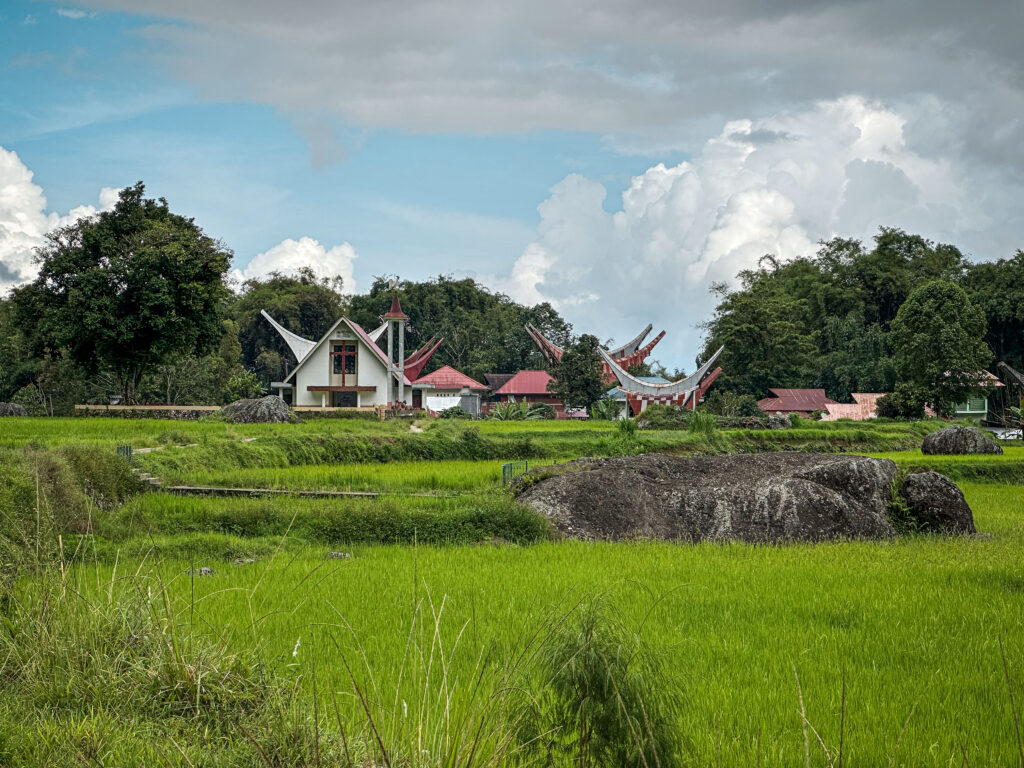 Traditional Tongkonan Houses
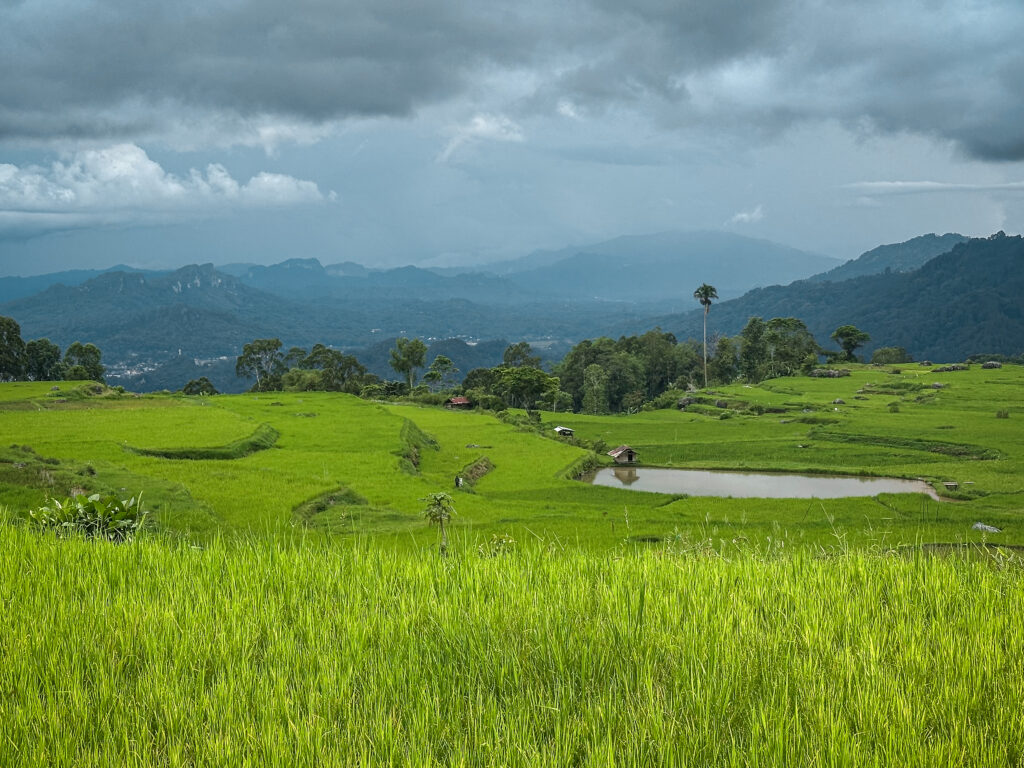 Rice terraces in Tana Toraja’s Highlands
How to Get to Rante Pao
Travelling from Makassar to Tana Toraja is straightforward, and most independent travellers opt for a night bus to save time and a night’s accommodation. I took a bus with Bus Litha & Co, which departed from this bus station at around 8 pm and arrived in Rantepao at roughly 6:30 am the next morning.
Tickets can be purchased directly at the bus station, but there are also offices in the city centre if you prefer to organise it before heading to the station. My fare was 100,000 IDR, which is typical for this route. Don’t expect a perfectly smooth ride – the roads are bumpy, full of twists and turns, and the drivers seem to use the horn every few seconds. Bring a good pair of noise-cancelling headphones, and if you’re prone to motion sickness, it’s best to take some medication beforehand.
What to Do in Rante Pao
Rantepao is the gateway to Tana Toraja, offering a mix of cultural sights, scenic landscapes, and local markets. The town itself is charming to wander through, with colourful markets and traditional tongkonan houses nearby that give a glimpse into Torajan life and architecture.
Beyond the town, the surrounding highlands are dotted with rice terraces, rolling hills, and small villages perfect for a short hike or motorbike ride.
Tana Toraja is also famous for its unique funeral traditions and cliff-side burial sites. These experiences can be a bit unusual and intense, so if you want to explore them in detail, I’ve written a dedicated guide to Tana Toraja covering ceremonies, villages, and practical tips.
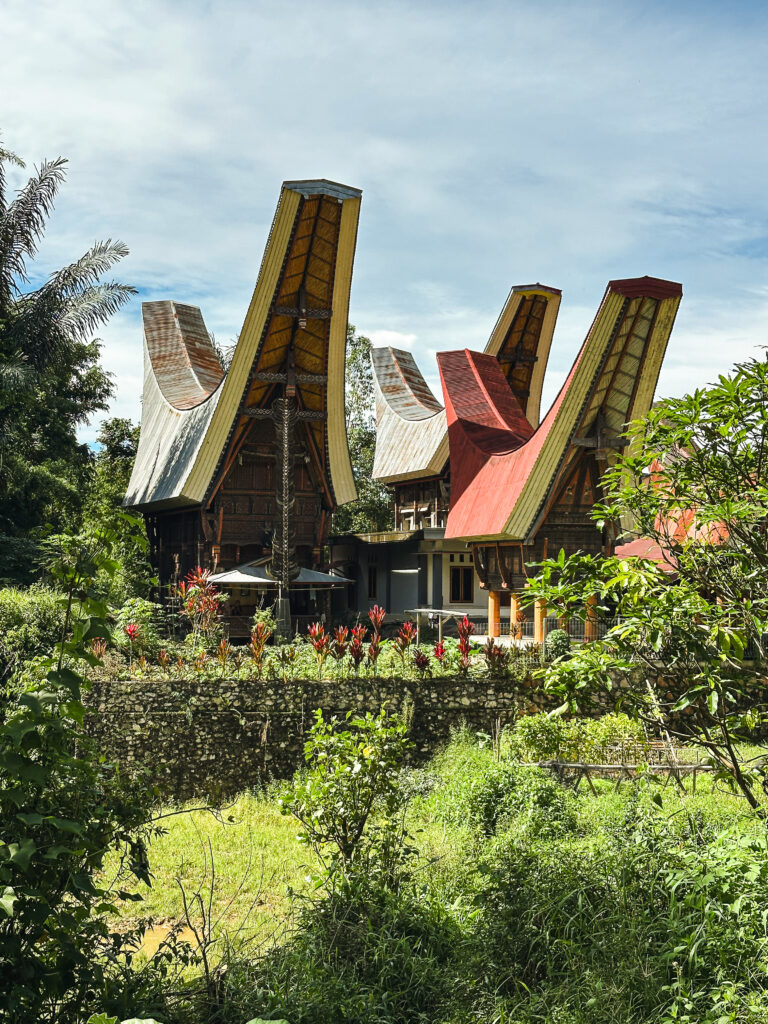 Traditional Tongkonan Houses
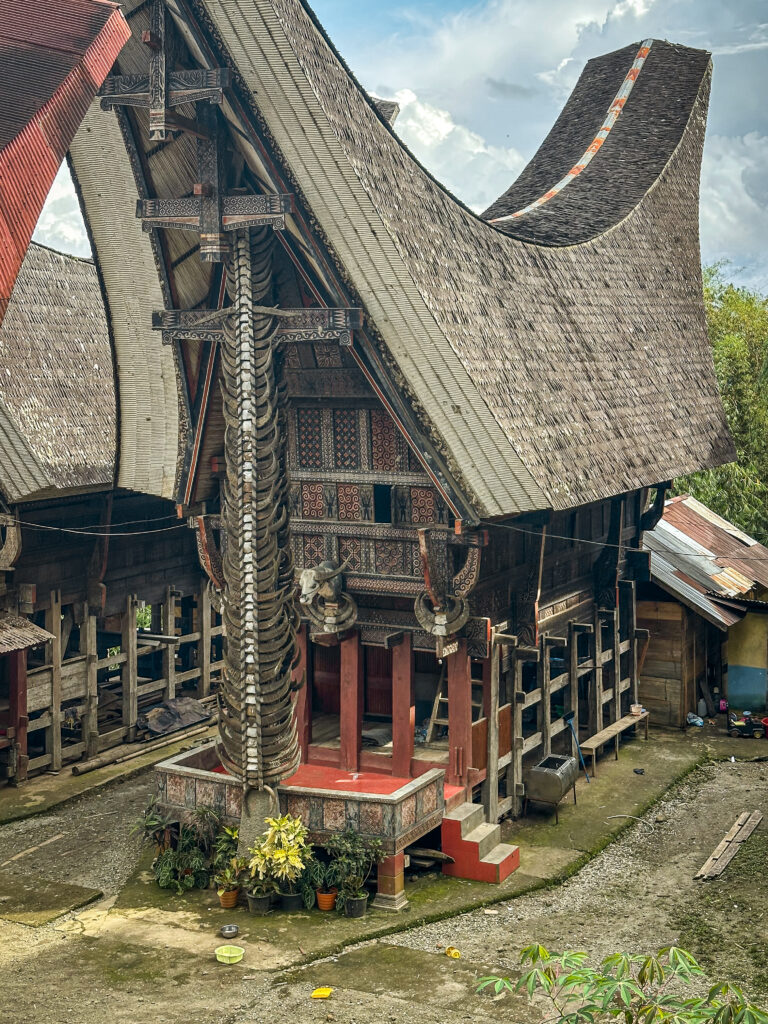 Traditional Tongkonan House with lots of buffalo horns
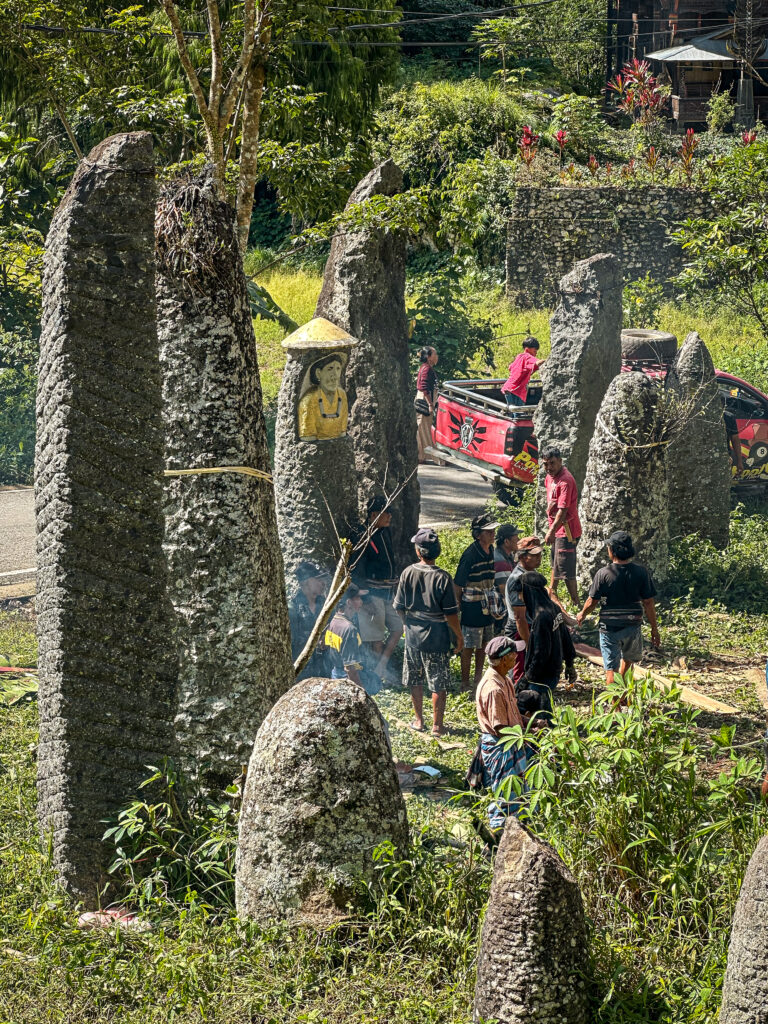 Local ceremony where they erect one of these monoliths
Where to Stay and Eat in Rante Pao
For accommodation in Rante Pao, I highly recommend Riana Homestay. The rooms are simple but incredibly clean, and the family running it are warm and welcoming. Breakfast is included – think banana pancakes with tea or coffee and the rate is excellent, coming in at less than €10 per night. It’s great value for money and the perfect base for exploring Tana Toraja.
When it comes to food, Café Aras stood out for me as a good budget option. The menu offers a mix of Indonesian staples alongside a few international options, making it a nice spot if you want a break from local cuisine. The café is beautifully decorated in Torajan style, with touches of local art that give it a unique cultural vibe, and the atmosphere makes it a pleasant place to relax after a day of exploring.
Rantepao has plenty of other cafés and warungs, but these two spots gave me a combination of comfort, culture, and value that I think most travellers will appreciate.
Tentena
From the highlands of Tana Toraja, the journey east leads to Tentena, a quiet lakeside town on the shores of Lake Poso. Tentena is small and unassuming, but it’s a great base for exploring some of Central Sulawesi’s most scenic spots, including the lake itself, surrounding villages, and waterfalls hidden in the nearby hills. Life here moves at a slower pace than the highlands or the cities, giving travellers a chance to relax, enjoy nature, and experience a more local side of Sulawesi.
How to Get to Tentena
The most common way to reach Tentena from Rantepao is by bus. I took a bus that departed around 8 am and arrived in Tentena at roughly 8 pm. Yes, it’s a very long winding journey, so brace yourselves. The bus makes several short stops for bathroom breaks, as well as longer lunch and dinner stops at roadside warungs, which gives you a chance to stretch your legs and try some local snacks. The fare for this route was 100,000 IDR.
It’s a full day of travel, but the ride passes through beautiful highland and lowland scenery, giving a real sense of Central Sulawesi’s landscapes. Bring snacks, water, and something to keep you entertained, and maybe some motion-sickness medication if you’re prone to it!
Note: The bus then continues to Poso so it doesn’t go all the way to Tentena but it stops at this intersection instead, which is around 3km from the town.
What to Do in Tentena
Tentena is a small lakeside town on the shores of Lake Poso, making it a great base for exploring Central Sulawesi’s natural beauty. The lake itself is stunning, with clear waters perfect for swimming or simply relaxing by the shore. Walking through Tentena and its local markets gives a glimpse of everyday life in this part of Sulawesi, with friendly locals and a slower pace of life that makes it a relaxing stop before heading further east.
Where to Stay and Eat in Tentena
This is the part of the itinerary where choosing the right place to stay can make a huge difference. In Tentena, I can’t recommend Victory Tentena Hotel enough. The woman who runs it, Noni, is incredibly kind, and just meeting her is reason enough to go there. The rooms range from 150,000IDR to 225,000IDR per night with delicious breakfast, which makes them very budget friendly. She even picked me up free of charge from the intersection where the bus dropped me off and instantly made everything easier.
Noni knows the area inside out: she can recommend what to see, how to get there, and where to eat. When I was ready to leave Tentena for Ampana, she organised all my transport and even drove me to the road where I could catch a shared car toward Poso. Her hospitality and generosity made my time in Tentena far more enjoyable and stress-free than it would have been otherwise.
For food, Tentena has a few small local warungs and cafés, but staying at Victory Tentena also means you’ll get Noni’s tips for where to eat nearby, making it easy to enjoy the town without spending time figuring it out yourself.
Ampana: Gateway to the Togean Islands
After leaving Tentena, the journey east brings you to Ampana, a coastal town that serves as the gateway to the Togean Islands and the Banggai Regency as well. Ampana itself is quiet and low-key, with a few markets, cafés, and guesthouses, but its main appeal lies in its strategic location for island-hopping. It’s also a convenient spot to rest and stock up on supplies and cash before heading out to more remote destinations, making it an important stop on any Central Sulawesi itinerary.
How to Get to Ampana
There’s no direct bus or other transport from Tentena to Ampana, so the journey requires a bit of local knowledge. The usual method is to first take a shared car heading toward Poso, then get off at an intersection near the Alfamidi supermarket. From there, another shared car will pick you up and take you to Ampana.
This isn’t something you can easily plan on your own – the roads are hot, humid, and most cars are often packed to the brim, so hitchhiking isn’t reliable. Luckily, because I stayed at Victory Tentena Hotel, Noni was able to make calls and organise the entire connection for me. She arranged the first car toward Poso and also ensured the second car would be waiting at the intersection, so when I arrived I had a guaranteed spot.
What to Do in Ampana
To be honest, there isn’t much to do in Ampana itself. I tried going for a walk along the beach and around town, but the amount of trash and the city’s noisy, crowded streets made it less than enjoyable. Ampana is loud, dirty, and not particularly interesting for sightseeing, so most of my time here was spent on practical errands like getting cash, doing laundry, and sorting out logistics for the next leg of the journey.
In short, Ampana is best approached as a gateway to the nearby islands rather than a destination in its own right. It’s a convenient place to rest, stock up on supplies, and prepare for travel further east, especially to the Banggai or Togean Islands.
Where to Stay and Eat in Ampana
Accommodation in Ampana is surprisingly more expensive than in other parts of Central Sulawesi, and many hotels aren’t great (check the reviews if you’re unsure). I stayed at Ampana Permai Guesthouse, located at the far end of the city, and it was an excellent budget-friendly choice at 250,000 IDR per night, with breakfast included. The rooms were large, clean, and comfortable, and the property is surrounded by a pleasant garden. As it’s common in Sulawesi, this guesthouse doen’t appear on usual booking platforms so it’s better to contact them directly on WhatsApp (+62 82349951833).
The owner is friendly and helpful, and can assist with planning your next leg of the journey. He can arrange shared cars to Luwuk or advise on schedules for boats to the Togean Islands, making travel logistics much easier in an otherwise confusing town.
Luwuk: Gateway to the Banggai Islands
From Ampana, the next stop on a Central Sulawesi route is Luwuk, a small port town that serves as a hub for reaching the Banggai Islands. Luwuk itself is primarily used as a logistical base rather than a tourist hotspot.
How to Get to Luwuk
Travelling from Ampana to Luwuk again requires some local knowledge. The owner of Ampana Permai Guesthouse arranged a shared car for me, which picked me up around 10 am. True to typical Sulawesi travel, the journey was long and I didn’t arrive at my homestay in Luwuk until around 5 pm. The fare was around 200,000 IDR.
Be prepared for a hot, sweaty ride along narrow, winding roads, where drivers often push the limits. These shared cars are also used to deliver packages, so expect frequent stops along the way. It’s a slow and sometimes chaotic journey. Patience, water, and a good sense of humour are key!
What to Do in Luwuk
Luwuk serves mainly as a hub for travellers heading to the Banggai Islands. There isn’t much in the town itself, but the surrounding area offers some natural attractions worth a short visit. You can rent a scooter and explore a few waterfalls in the nearby hills which provide a refreshing escape from the town and a chance to enjoy Central Sulawesi’s lush scenery. Warning: the roads to these waterfalls are very rough and sketchy so if you’re not a experienced rider maybe get a gojek there instead.
The rest of your time in Luwuk will likely be spent organising transport, stocking up on supplies and cash, and preparing for the islands or your next leg of the journey.
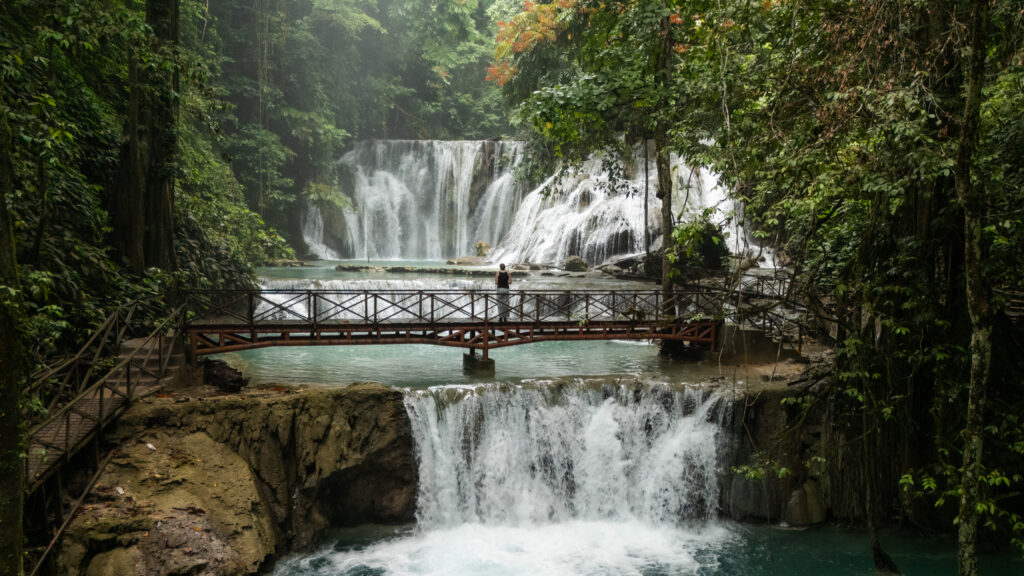 Piala Waterfall
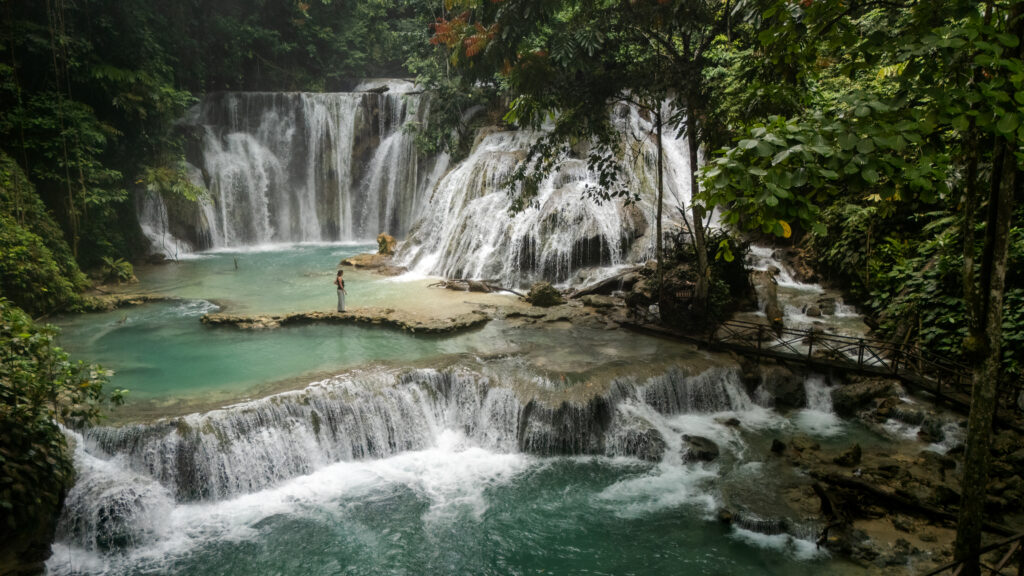 Piala Waterfall
Where to Stay and Eat in Luwuk
For the best experience, I highly recommend 88 Happy Homestay. Ika, the lady who runs it, is incredible, warm, hospitable, and attentive. She helped me plan my Banggai trip, arranged a scooter rental, and even dropped me off and picked me up at the harbour free of charge.
The rooms are basic but very clean, with AC, and every morning I was treated to a huge breakfast: fried rice, omelettes, crepes, pancakes, biscuits, fruit – you name it. Ika genuinely cares about her guests, and her knowledge of the islands and willingness to help makes her an invaluable resource.
Banggai Islands
From Luwuk, the Banggai Islands are a stunning, remote escape known for crystal-clear waters, colourful reefs, and quiet beaches. For a full guide on how to get there, move around independently, and where to stay, check out my dedicated Banggai Islands Guide, which covers all the details you’ll need to plan your visit.
Planning this trip?
This operational guide has everything this post doesn’t: exact contacts, real costs, interactive map, itineraries, and what I genuinely wish I’d known before going.
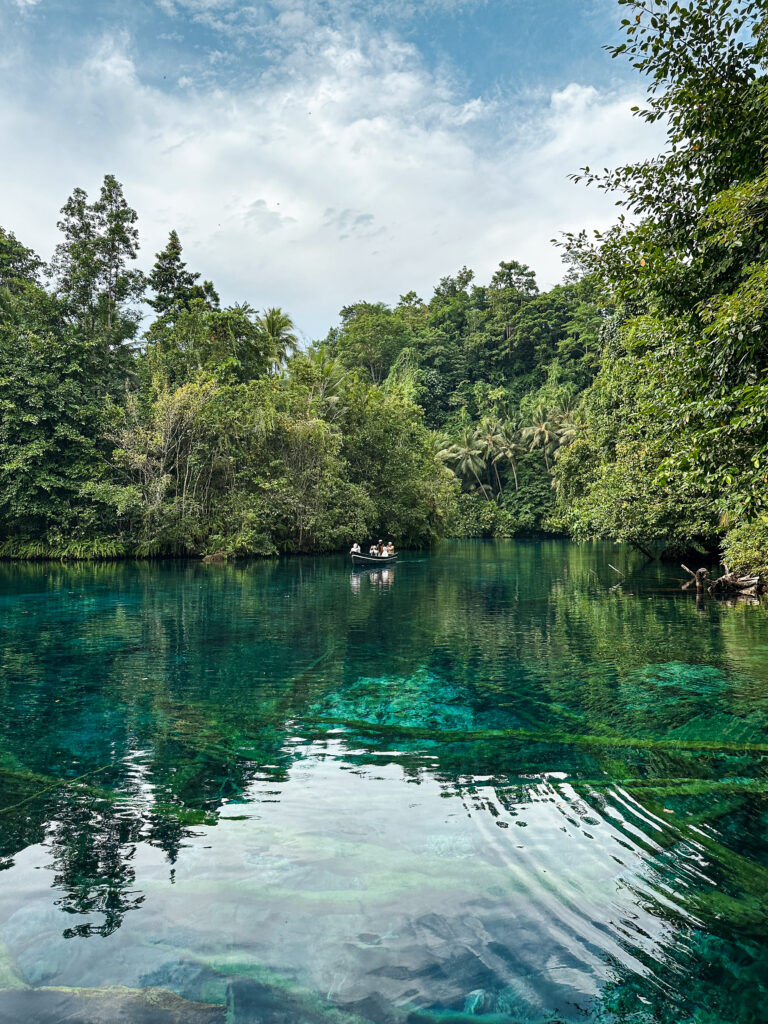 The clear water of Paisu Pok Lak
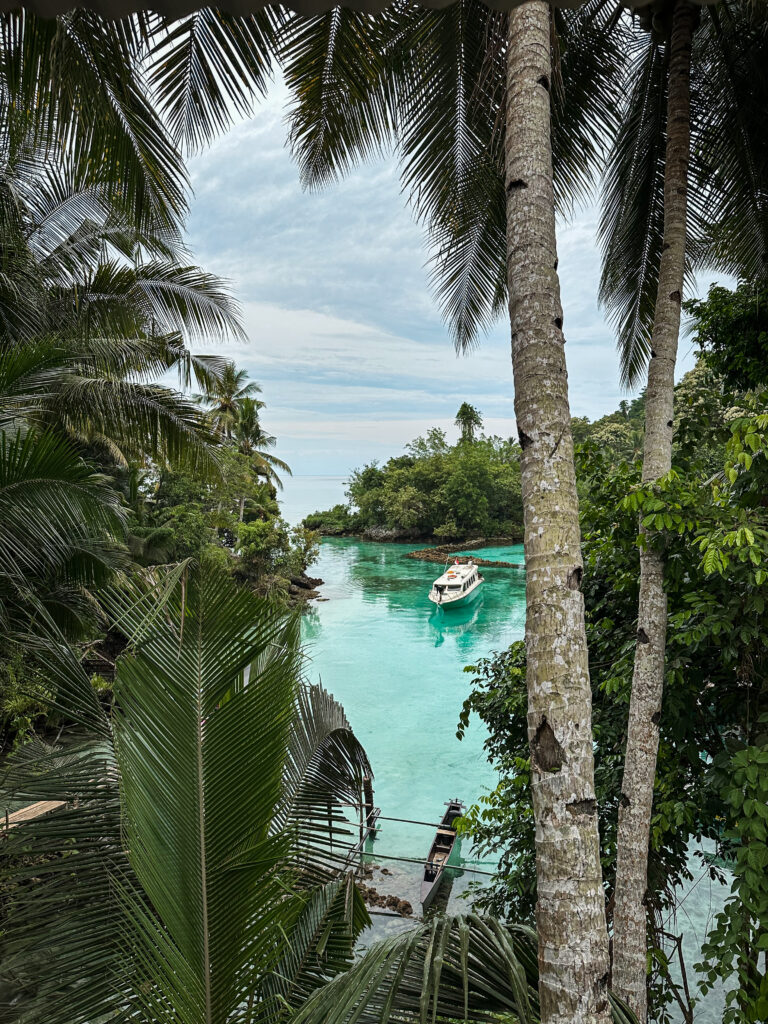 Speeadboat tour from Luwuk
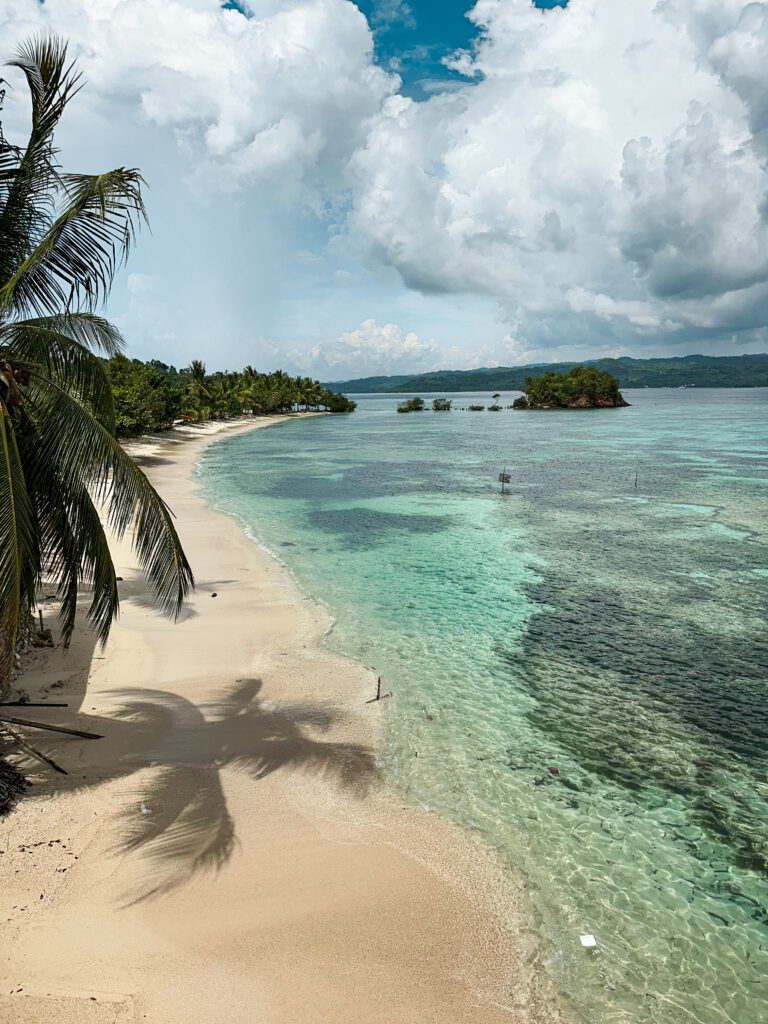 Views at Kia Homestay
Togean Islands
The Togean Islands are an archipelago of dozens of remote islands scattered across the Gulf of Tomini, each with its own character, beaches, and marine life. Some islands are inhabited, while others remain completely wild, making the Togeans a paradise for snorkelling, diving, and island-hopping. While I only spent time on Malenge, this brief stop gave a taste of the turquoise waters, quiet beaches, and relaxed island life that make the archipelago so special. For a full guide on how to get there, move around independently, and where to stay, check out my dedicated Togean Islands Guide.
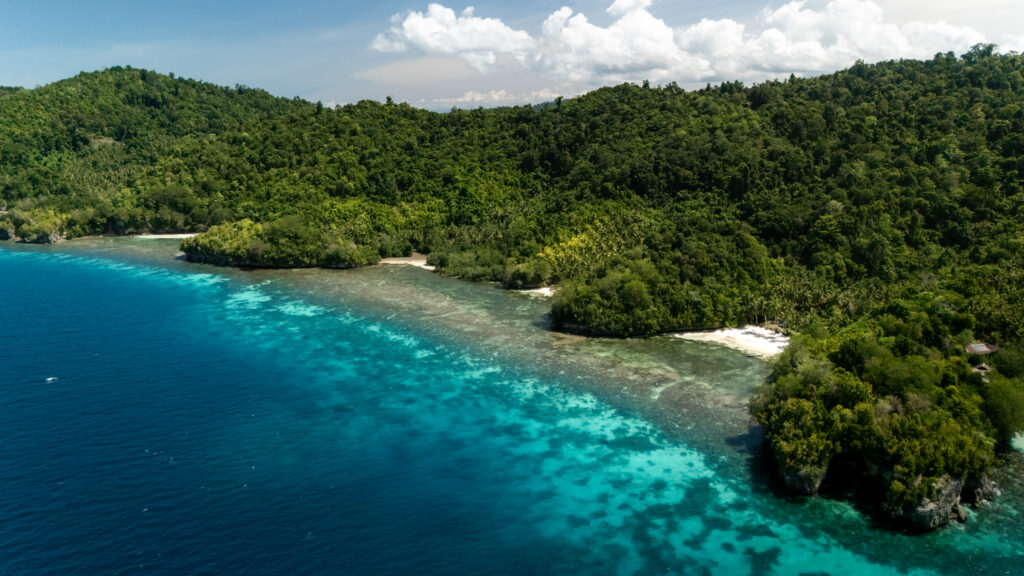 Coastline Malenge, Togean Islands
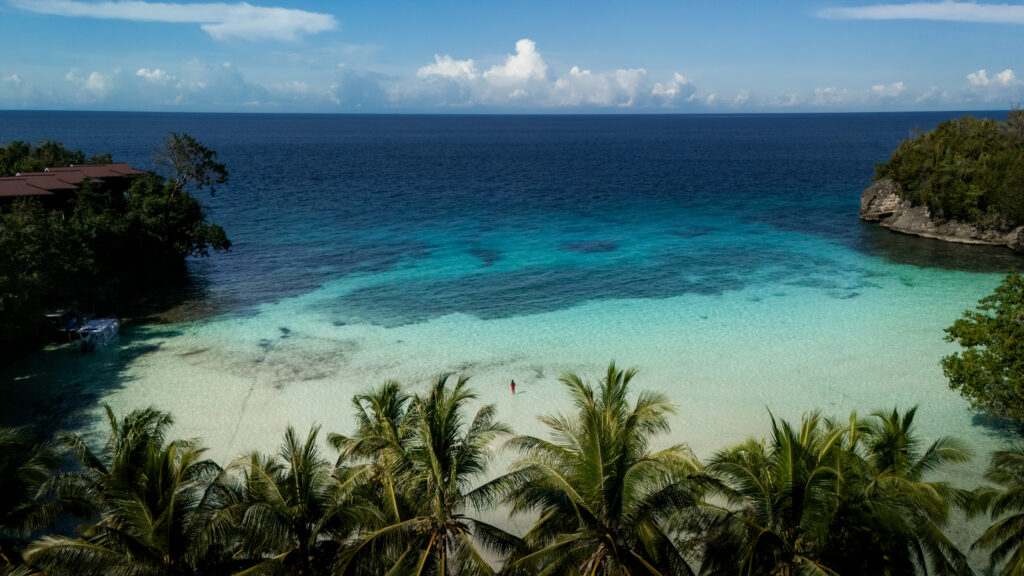 The Turquoise-water Bay at Sera Beach Resort in Malenge
Gorontalo
After the islands, the journey continued north to Gorontalo, a quiet coastal city on the northern peninsula of Sulawesi. I only stayed there briefly and while not a major tourist hotspot, Gorontalo offers a slower, more authentic side of northern Sulawesi before heading further to the highlands and Manado.
How to Get to Gorontalo
Getting to Gorontalo requires a bit of planning, especially if you’re travelling independently. If you’re arriving from the Togean Islands, there are only two ferries per week connecting Wakai to Gorontalo, so timing is crucial. The ferry arrives early in the morning, usually around 6 am, which is something to keep in mind when booking accommodation.
If you’re coming from Manado, you’ll need to either arrange a private transfer or take the public bus, which runs only once per day. Because connections are limited on both routes, Gorontalo is one of those places in Sulawesi where flexibility and advance planning really pays off.
What to Do in Gorontalo
To be honest, Gorontalo itself doesn’t offer much in terms of sightseeing. The city is mostly used as a base, but the surrounding area does have some natural attractions, including jungles, waterfalls, and rural landscapes that can be explored on short trips outside town.
The most advertised activity in Gorontalo is swimming with whale sharks, and you’ll see tours promoted everywhere – in homestays, on the streets, and through local operators. However, this isn’t an activity I feel comfortable supporting. The whale sharks are deliberately fed to attract them for tourism, which disrupts their natural behaviour and feeding patterns. While the experience may look appealing, it comes at a cost to the animals.
If swimming with whale sharks is a lifelong dream and you genuinely care about these incredible creatures, I’d strongly suggest choosing a destination where encounters happen naturally and ethically, without manipulation or feeding. Sometimes the most responsible choice as a traveller is knowing when to skip an experience altogether.
Where to Stay and Eat in Gorontalo
There are a few accommodation options in Gorontalo, but most budget backpackers end up staying at Harry & Mimin Homestay and for good reason. The rooms are simple but comfortable, with air conditioning, a private bathroom, and breakfast included, all for around 250,000 IDR per night.
What really makes this place stand out is how helpful the hosts are. They helped me sort out my onward transport to Manado, calling a shared car that picked me up directly from the homestay, which made leaving Gorontalo easy and stress-free.
Manado & Tomohon
How to Get to Manado & Tomohon
If you’re starting your trip in North Sulawesi, you’ll most likely arrive in Manado by plane. However, if you’re travelling overland like I was and coming from Gorontalo, the best option is to take a shared car. There is a public bus that departs very early in the morning (around 4 am), but it takes longer and is far less comfortable. My homestay in Gorontalo arranged a shared car for me, which, while still a long journey, was a much better option. It took around 8 hours to reach Manado.
Depending on your plans, there are also shared cars that go directly to Tomohon instead of Manado, which can save time if you’re heading straight to the highlands. It’s worth asking locally which option makes the most sense for your route.
Getting from Manado to Tomohon is very easy. There’s regular public transport departing from the main transport station in Manado, or you can take a Grab if you want more convenience. The distance isn’t far, and a ride-share won’t cost much, making Tomohon one of the easiest connections in Sulawesi.
What to Do in Manado
Manado itself doesn’t offer much in terms of sightseeing and is mainly used as a transport hub. Most travellers pass through to connect to other destinations, whether that’s taking boats to popular islands like Bunaken or heading to more remote places such as Siau Island. If you have extra time, it’s also worth considering an overnight trip to Tangkoko National Park, famous for its wildlife and forest walks, though I didn’t manage to fit it into my itinerary.
What to Do in Tomohon
Just an hour or so inland, Tomohon offers a completely different experience. Set in the cool highlands, it’s surrounded by volcanoes, lush hills, and farming villages. One of the main draws is trekking to the crater of Mount Lokon, although I wasn’t able to do it due to high volcanic activity at the time. The region is also home to other volcanoes and scenic viewpoints, making it a great base for hiking and exploring nature.
Beyond trekking, Tomohon is a great place to rent a scooter and explore the surrounding highlands at your own pace. You can visit waterfalls, ride through quiet mountain roads, and stop at viewpoints overlooking valleys and lakes. The bizarre local market is also worth a visit, making Tomohon one of the more touristy stops in North Sulawesi.
Where to Stay and Eat in Tomohon
I stayed at Talaga Tomohon Homestay, which is a budget-friendly and very peaceful place, something that’s surprisingly rare in Sulawesi. The rooms themselves were nice, quiet, and comfortable, making it a good option if you’re mainly looking for rest and a calm environment away from traffic and noise.
That said, the hospitality aspect was disappointing. The owners didn’t seem particularly interested in making guests feel welcome and appeared to focus only on transactions rather than the guest experience. At first, I thought this might just have been my personal impression, but after speaking with other travellers staying there at the same time, they shared the exact same feelings. The place felt more like a small chain hotel than a local homestay.
They insisted on full payment upfront before even showing me the room, which is very uncommon in Indonesia. When I asked about scooter rental, they also required immediate payment. Although they did refund me the money the next day when I didn’t end up using the scooter due to bad weather, the interactions throughout my stay felt awkward and transactional. Nothing went “wrong” as such, but the lack of warmth was noticeable, especially disappointing since one of the main reasons I choose homestays is for the local hospitality that usually comes with them. Personally, I wouldn’t return.
Siau Island
If you’re craving something truly off the beaten path, Siau Island is one of the most rewarding detours you can make in Sulawesi. Dominated by a dramatic active volcano and surrounded by quiet fishing villages, black-sand beaches, and rich coral reefs, Siau feels raw, untamed, and refreshingly untouched by mass tourism. Getting there isn’t straightforward, and that’s exactly why it’s so special. I’ve written a detailed Siau guide covering how to get to Siau, where to stay, how to get around independently, costs what to do, and why it’s absolutely worth the effort. If you’re curious about slow travel, volcanic landscapes, and places that still feel genuinely remote, this is one island you shouldn’t skip.
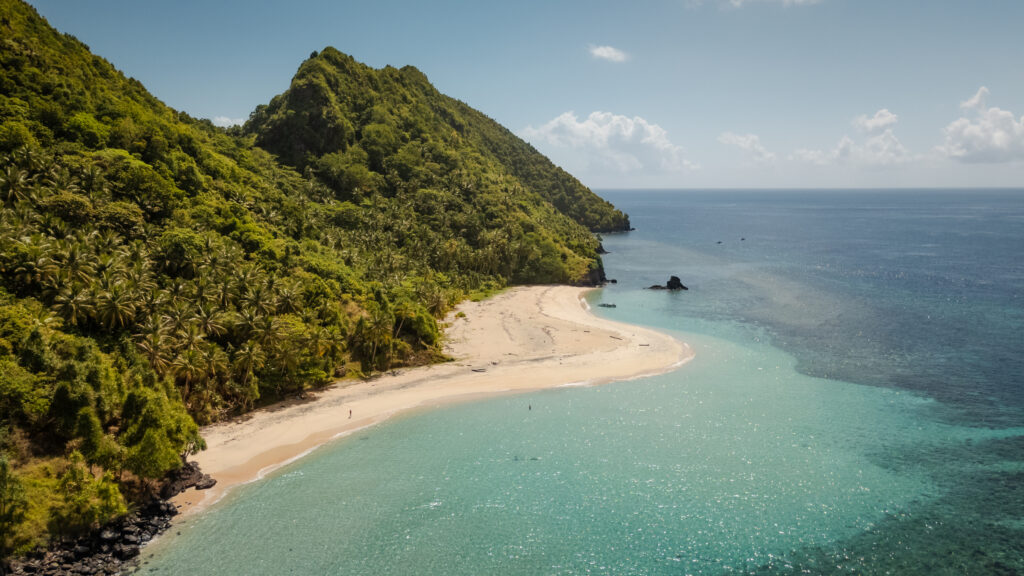 Mahoro Island near Siau
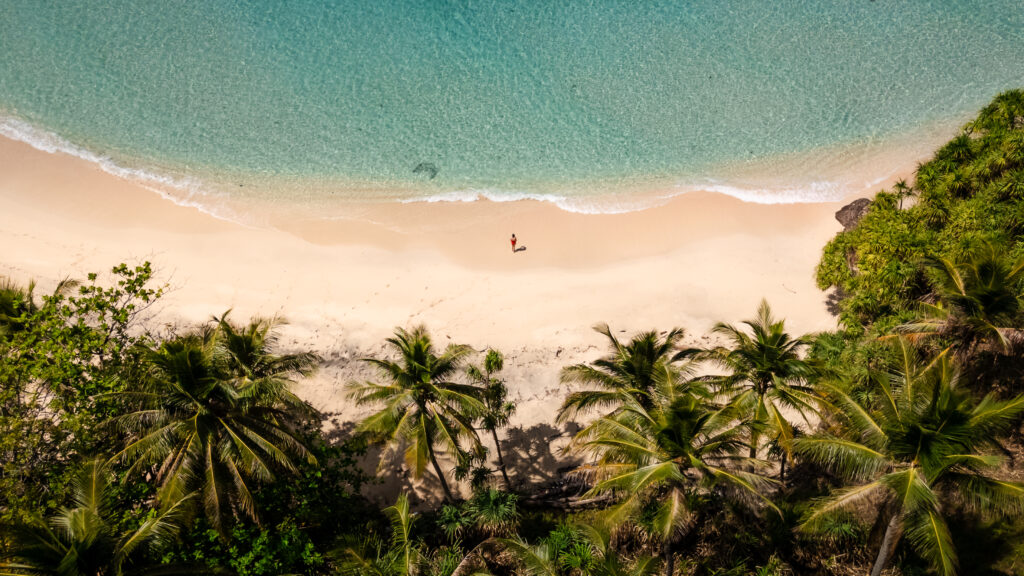 Top down view of the beach at Mahoro Island
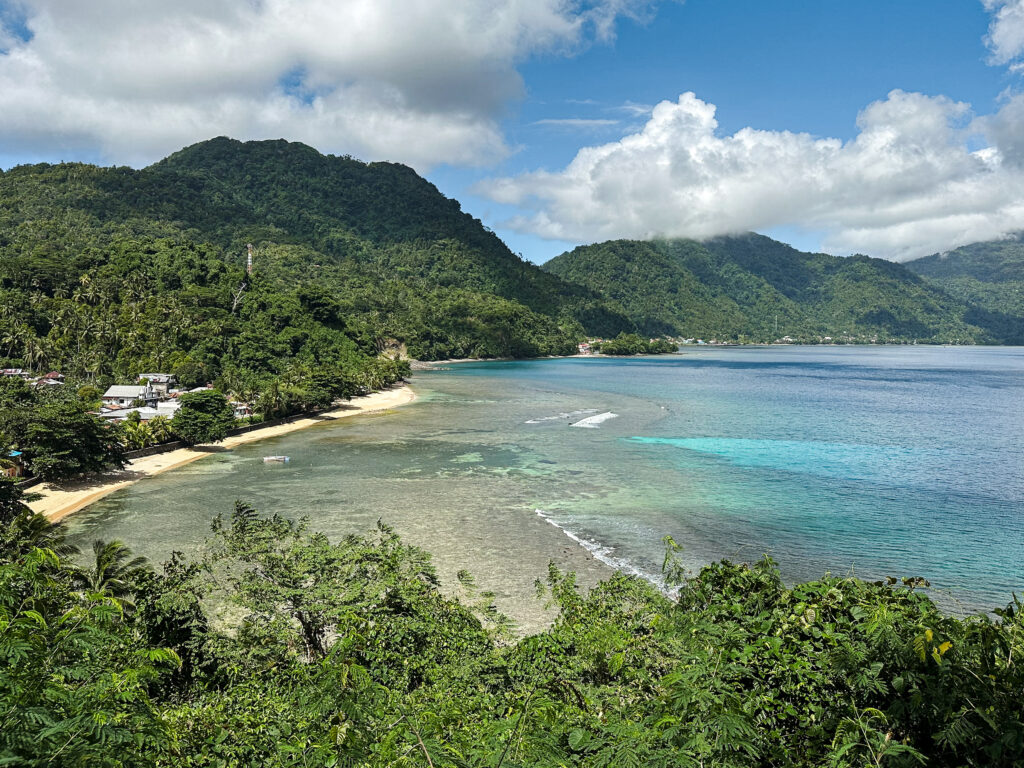 Lush Green Landscapes of Siau
The Sulawesi Survival Guide: The “Hard Truths”
Beyond the ferries and the budget, independent travel in Sulawesi comes with a few unique challenges. Here is how to handle the “unpredictable” side of the island.
1. The Malaria & Health Reality
Unlike Bali, parts of Sulawesi (especially the remote jungles of the North and Central archipelagos) are still considered moderate-risk malaria zones.
The Fix: I highly recommend consulting a travel clinic before you go. At a minimum, bring high-quality DEET repellent and long-sleeved clothes for sunset. If you develop a fever in the weeks after your trip, tell your doctor you were in Sulawesi.
Don’t skip travel insurance!
I use SafetyWing for most trips – solid coverage for adventure travel.
2. Mastering Schedules
In Sulawesi, schedules are more like “suggestions.” A ferry listed for 2:00 PM might leave at 1:15 PM because it’s full, or 6:00 PM because the engine is acting up.
The Fix: Never book a tight connection. If you have a flight out of Manado or Makassar, aim to be back on the mainland at least 24-48 hours before your departure.
3. Digital Survival: Offline is Everything
Outside of Makassar and Manado, Google Maps will fail you. In Banggai or the deep Togeans, signal can disappear for days.
The Fix: Download Offline Maps for the entire island. More importantly, have your data sorted before you land in the remote ports. I use Saily eSIM because it connects to the strongest local network (usually Telkomsel) as soon as you arrive, so you aren’t hunting for a SIM shop in a village where no one speaks English.
Need data before you land? Try Saily eSIM
Use code RITAHE1486 for $5 off your first plan.
4. Cultural Etiquette: Respecting the Rituals
Sulawesi is a deeply religious and traditional island, split between conservative Islam in the cities and unique Christian/Animist traditions in the highlands.
The Fix: When visiting Tana Toraja, consider hiring a local guide for funerals. It is not just about finding the location; it’s about knowing where to sit and ensuring you bring a respectful gift. In the North and Central regions, dress modestly, keep your shoulders and knees covered when traveling through local villages.
Final Thoughts
To wrap it all up, travelling across Sulawesi independently is not an easy journey but that’s exactly what makes it so rewarding. Long travel days, chaotic transport, early mornings, and constant reliance on local knowledge are simply part of the experience here. This is a destination that demands patience, flexibility, and a willingness to give up control, and in return, it offers raw landscapes, genuine human connections, and places that still feel wildly untouched.
From Toraja’s powerful traditions to the quiet calm of Tentena, from gritty transit hubs like Ampana to remote islands and volcanic highlands in the north, Sulawesi is less about ticking sights off a list and more about the journey itself. You’ll spend hours bouncing along winding roads, waiting at intersections, sweating in crammed local boats, and those moments often become the most memorable.
If you’re the kind of traveller who enjoys travelling slowly, independently, and far from the usual backpacker trail, Sulawesi will challenge you in all the right ways. It’s not always comfortable, it’s rarely convenient, and it’s definitely not polished – but it’s honest, intense, and unforgettable.
More Independent Travel in Sulawesi
If you’re travelling through Sulawesi independently, you’ll probably need more detailed information on certain destinations. These posts dive deeper into some of the island’s most remote, rewarding, and lesser-visited regions, all explored without tours and on a backpacker budget: