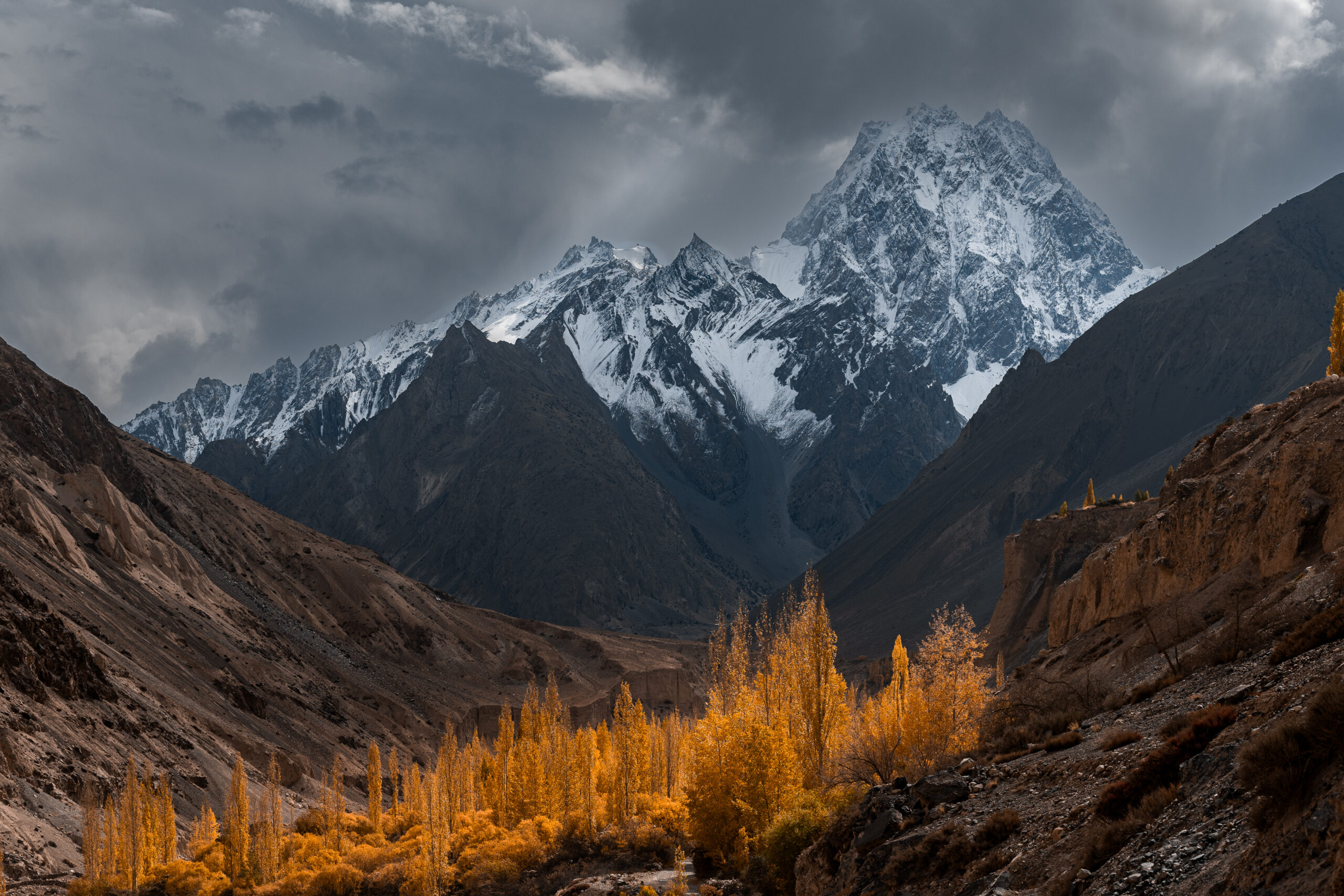
Tucked high in the rugged mountains of Northern Pakistan, far from the bustling tourist trails, lie some of the world’s most breathtaking and remote valleys. Many of which are still difficult to reach without a tour. This guide focuses on how to visit these valleys independently, using public transport where possible. Misgar, Chapursan, Shimshal, Naltar, Barah, Thalley, and Kalash each hold a world of their own – towering peaks, glacial streams, and a serenity that feels almost untouched by time.
For those willing to travel independently, using local buses, shared jeeps, or even hitchhiking, these valleys offer a glimpse of Pakistan few outsiders ever see. From hiking across emerald meadows and glaciers to discovering ancient cultures, every valley promises adventure and discovery. This guide shares how to get there, what to do, where to stay, and how to navigate these remote pockets of Northern Pakistan on your own, whether you’re chasing solitude, natural beauty, or the thrill of stepping off the beaten path.
Travelling Independently in Northern Pakistan
Travelling independently in northern Pakistan is absolutely possible, but it requires patience, flexibility, and realistic expectations. While organised tours dominate the region, many remote valleys can still be reached without a guide by using a combination of public transport, shared jeeps, hitchhiking, and local connections.
The main transport hubs in the north are Gilgit, Hunza, Skardu, and Chitral. From these towns, travel becomes progressively more challenging the further you go. Buses usually run only as far as main valleys, after which you’ll need to rely on shared jeeps or arrange transport locally. Schedules are informal and often change depending on road conditions, weather, or passenger numbers.
In many cases, there is no fixed public transport to the most remote valleys. Places like Chapursan, Shimshal, Barah, or Thalley often require either: a shared jeep (if locals are travelling that day), hitchhiking with locals, or splitting the cost of a private jeep with other travellers.
Flexibility is key. You may need to wait hours, or even an extra day, for transport to materialise. Asking around in bazaars, guesthouses, or tea shops is often the most effective way to find a ride.
Travelling independently also means being comfortable with uncertainty. Roads can close without warning, vehicles break down, and plans frequently change. However, this is also what makes travelling through northern Pakistan so rewarding. Locals are incredibly helpful, and it’s often through chance encounters that transport, accommodation, and invitations are arranged.
Misgar Valley: A Remote Day Trip from Passu
Just a short drive from Passu or Sost, Misgar Valley feels like the edge of the Karakoram. Rugged mountains rise sharply on either side of a narrow river, and the road winds along cliffs and past traditional stone villages that look almost frozen in time. Even as a day trip, Misgar offers a sense of remoteness that’s rare so close to the Karakoram Highway.
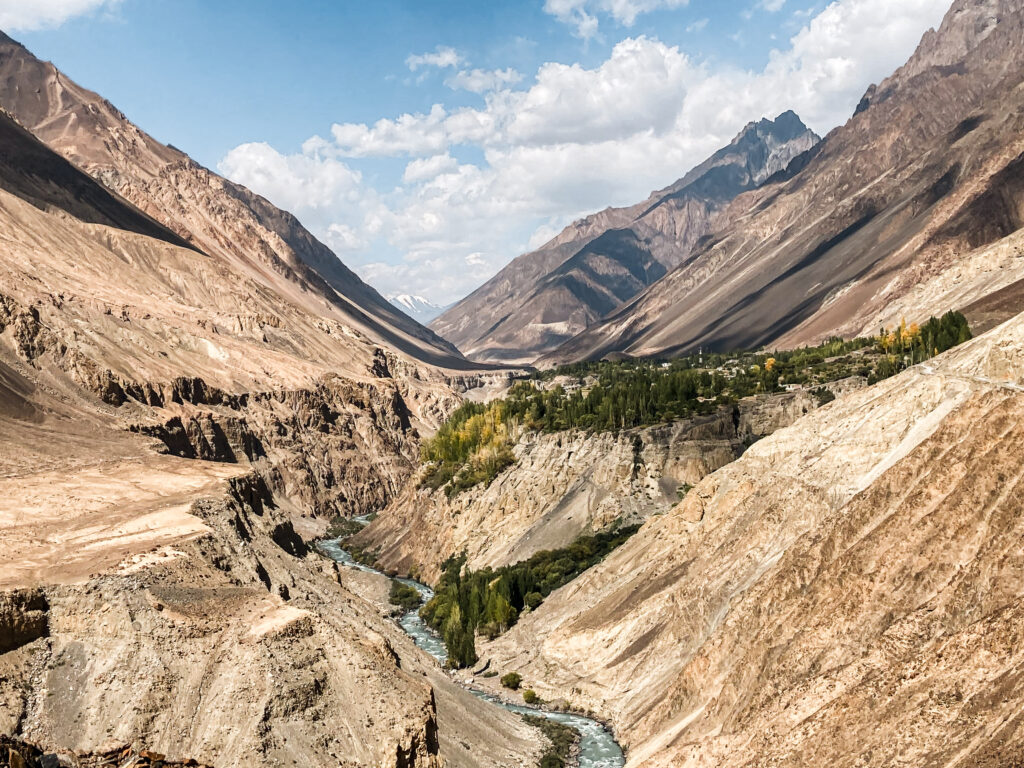 Journey towards Misgar Valley
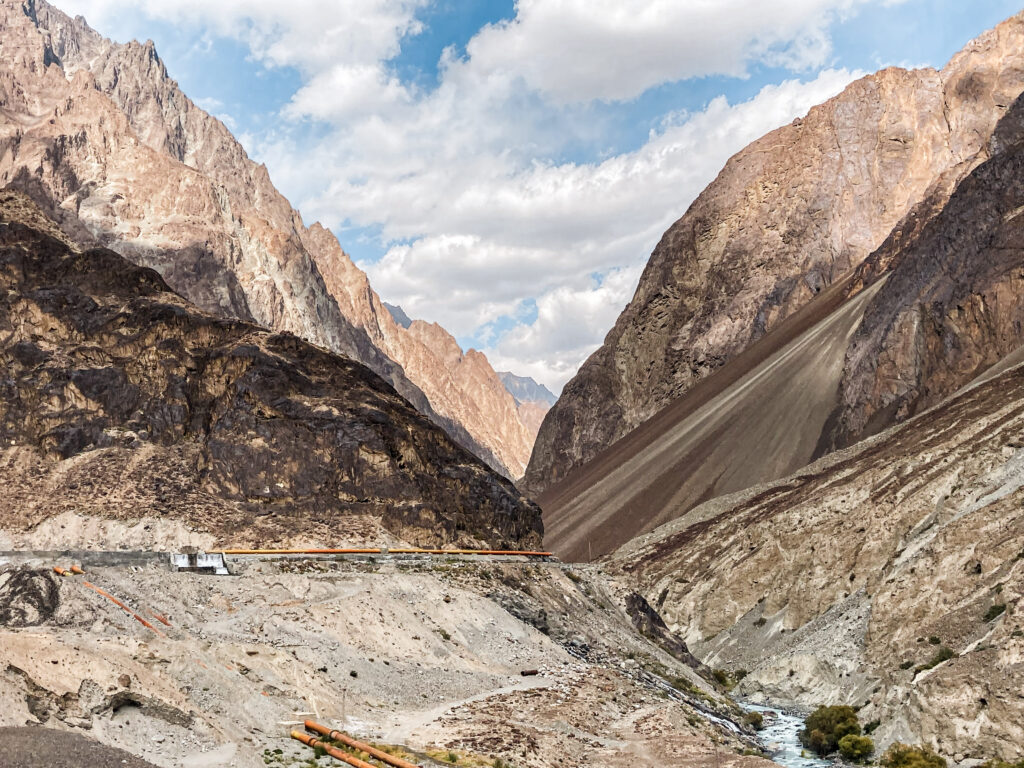 Deep into Misgar Valley
Why Go to Misgar Valley?
Misgar is perfect for travellers who want mountains, history, and quiet adventure without venturing too far from Hunza. The valley is historically significant as a point where the old Silk Roads from Afghanistan, China, and Pakistan once connected, making it an important crossroads for traders and travellers over centuries.
There’s also a British fort as a reminder of the valley’s strategic importance in the 19th century. From the fort, you can look across the valley to the distant peaks of Afghanistan and China. The valley’s past as a frontier outpost and gateway to the Wakhan Corridor gives it a sense of depth beyond its natural beauty.
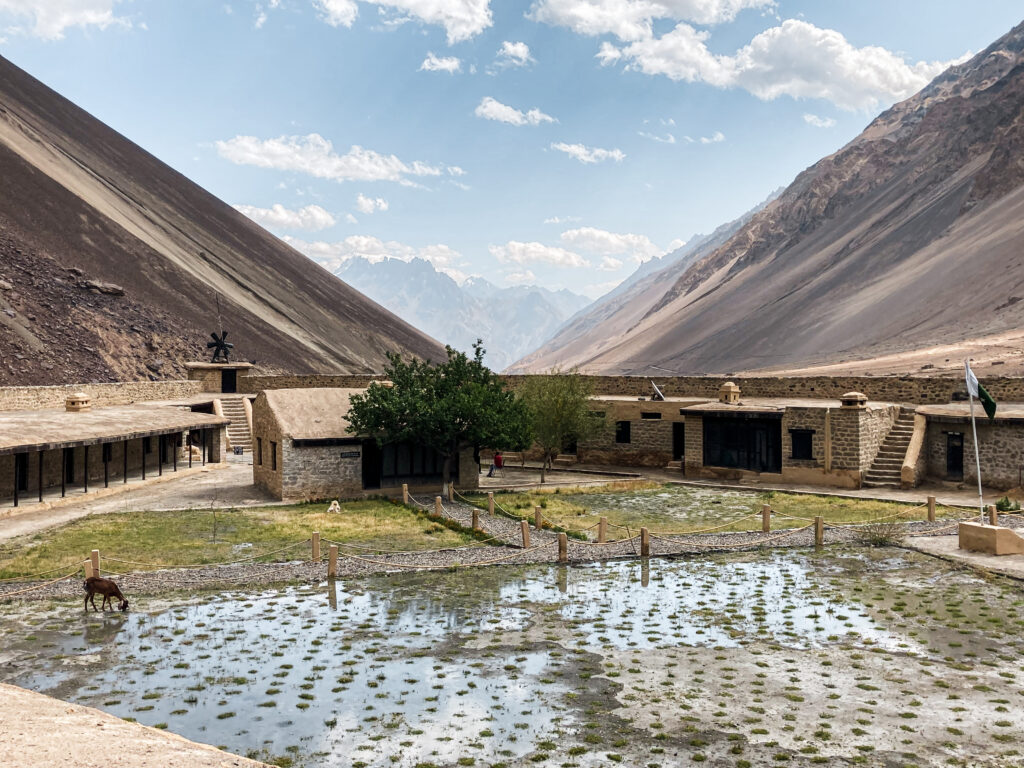
Getting to Misgar Valley
Misgar is accessible from Sost or Passu, either by shared jeep or private vehicle. The road is rough in places but manageable, and the journey itself is part of the experience, with cliffside views, river crossings, and the occasional glimpse of the historic fort. A day trip is entirely feasible, but travelling early in the morning is recommended to make the most of light and time.
Chapursan Valley: Where the Road Quietly Ends
Tucked away in the far north of Hunza, just a short distance from the Afghan border, Chapursan Valley feels like the edge of the world. A narrow dirt road snakes through wide open plains, scattered stone Wakhi villages, and endless views of snow-covered peaks. Yaks graze freely and the silence is broken only by the wind.
Unlike its more famous neighbours, Chapursan sees very few travellers. There are no souvenir shops, no cafés catering to tourists, and no curated viewpoints. Just a vast, high-altitude landscape that operates entirely on its own terms. And the hospitality of the Wakhi people is some of the most genuine I’ve encountered anywhere in northern Pakistan.
Best time to visit: May to October, with mid-October offering the best colours and fewest visitors.
Read the full Chapursan Valley travel guide
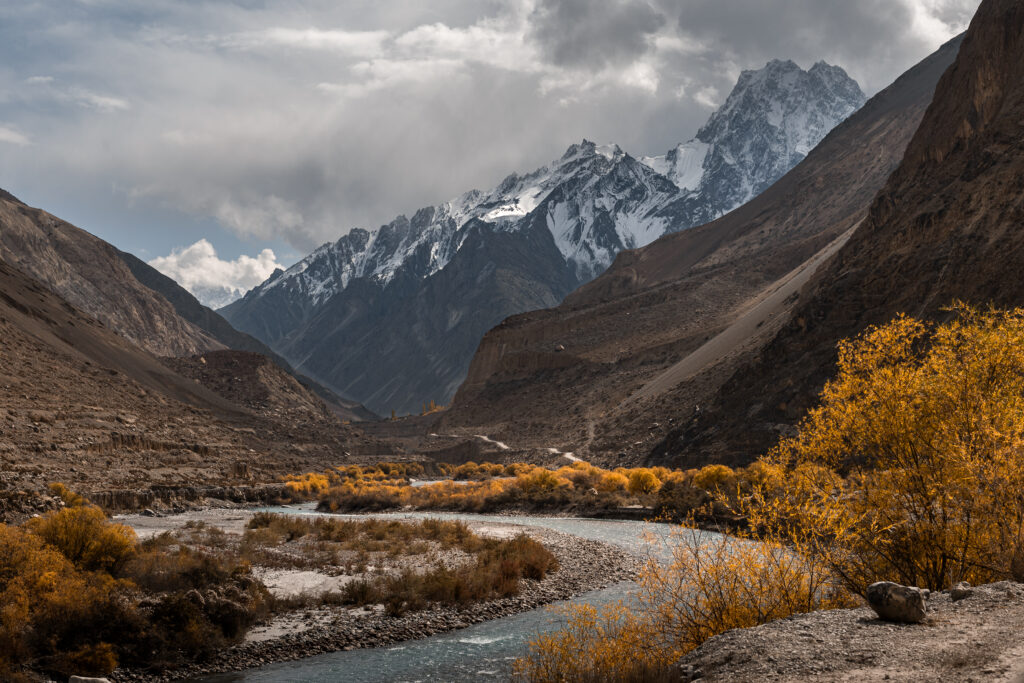 On the road in Chapursan Valley
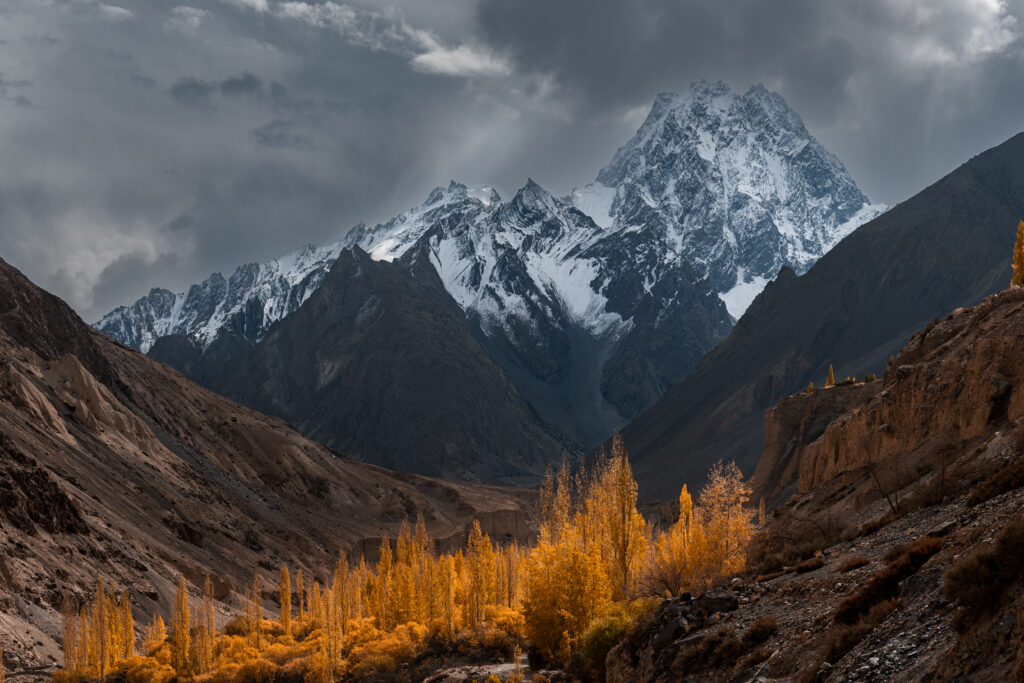 Autumn Colours in Chapursan Valley
Shimshal Valley: The Road That Changes Everything
If Chapursan feels like the end of the road, in Shimshal the road is the experience. Fifty-six kilometres of track carved into sheer cliffs above the Hunza River, completed in 2003 entirely by the community. The drive to Shimshal is one of the most extraordinary journeys in northern Pakistan before you even arrive. The drop-offs are immense, the turns are relentless, and the landscape is so vast it demands full attention. This is not a road you rush.
The valley itself sits at 3,100 metres and it is known across Pakistan as the Valley of Mountaineers. The community here has produced an extraordinary number of high-altitude climbers who have summited 8,000-metre peaks, often without wider recognition. Shared jeeps depart from Aliabad in central Hunza daily around midday.
Best time to visit: June to October, with late September and early October ideal for the yak herds returning from high pastures.
Read the full Shimshal Valley travel guide
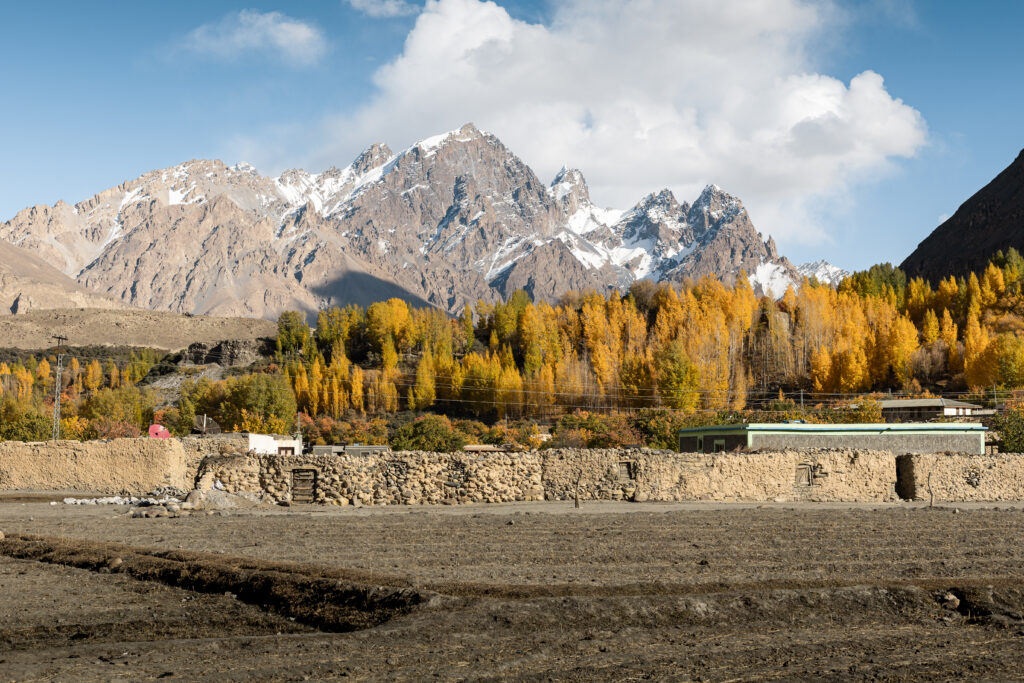 Village in Shimshal Valley
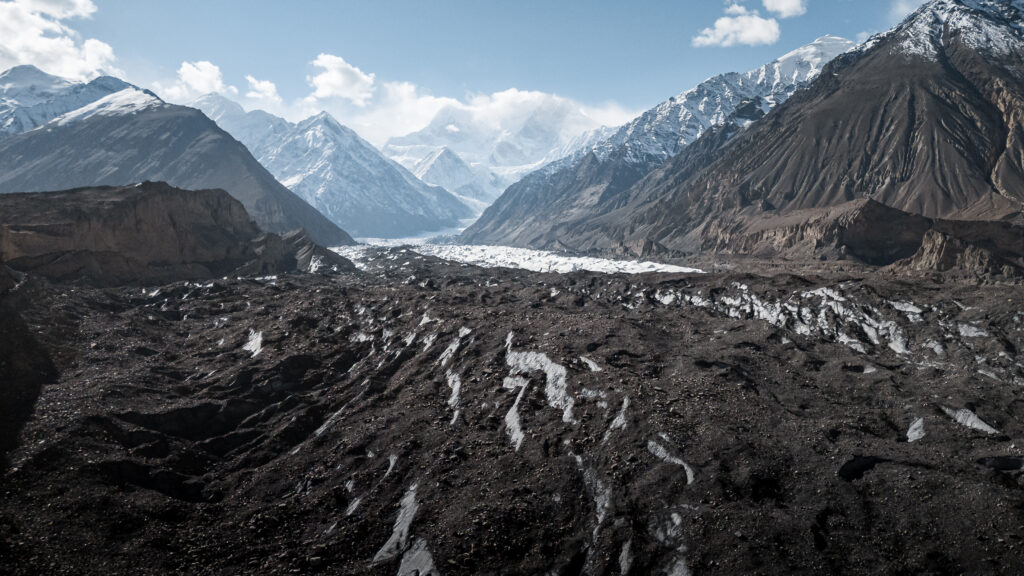 Massive Glacier in Shimshal Valley
Naltar Valley: Forests, Lakes, and a Softer Side of the Karakoram
After the raw vastness of Chapursan and the intensity of Shimshal’s cliff-hugging road, Naltar Valley feels almost gentle by comparison. Dense pine forests replace barren rock, glacial lakes glow in impossible shades of turquoise and green, and the air carries the sharp, clean scent of trees rather than dust and stone.
Located southwest of Gilgit, Naltar is one of the few valleys in northern Pakistan where lush greenery dominates. Blue Lake and Green Lake are the main draw, and they earn the attention.
Getting there is straightforward: a shared public jeep from Gilgit costs around 500 PKR each way. Most visitors come as a day trip, which means the valley empties out by late afternoon. Once they leave, it’s yours.
Best time to visit: May to October for the lakes and forest; November to March for skiing.
Read the full Naltar Valley travel guide for getting there independently
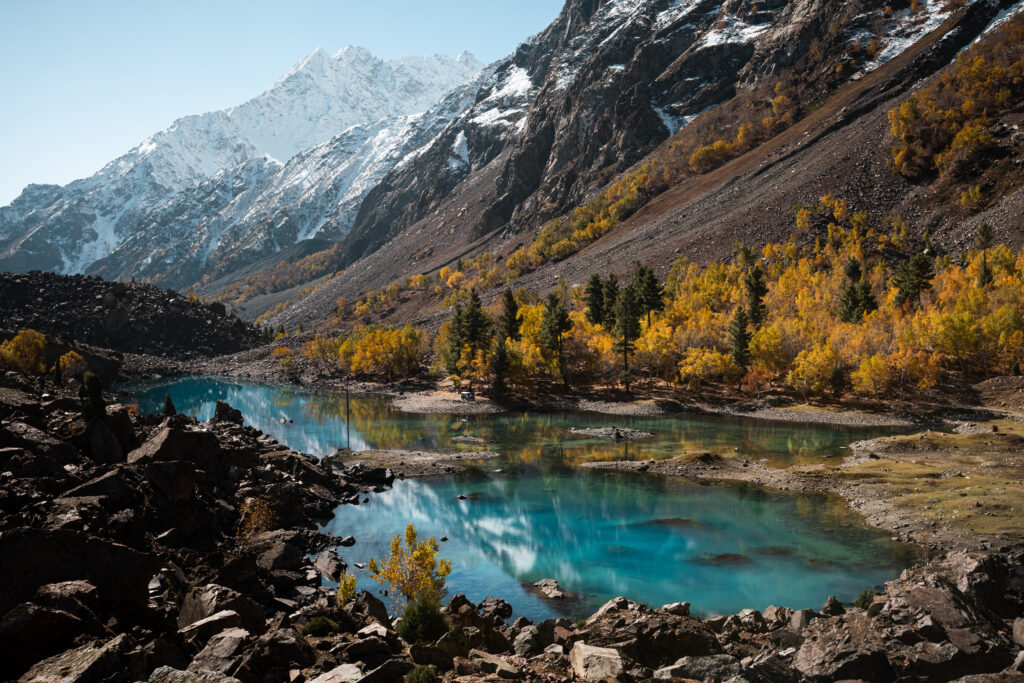 Blue Lake in Naltar Valley in Autumn
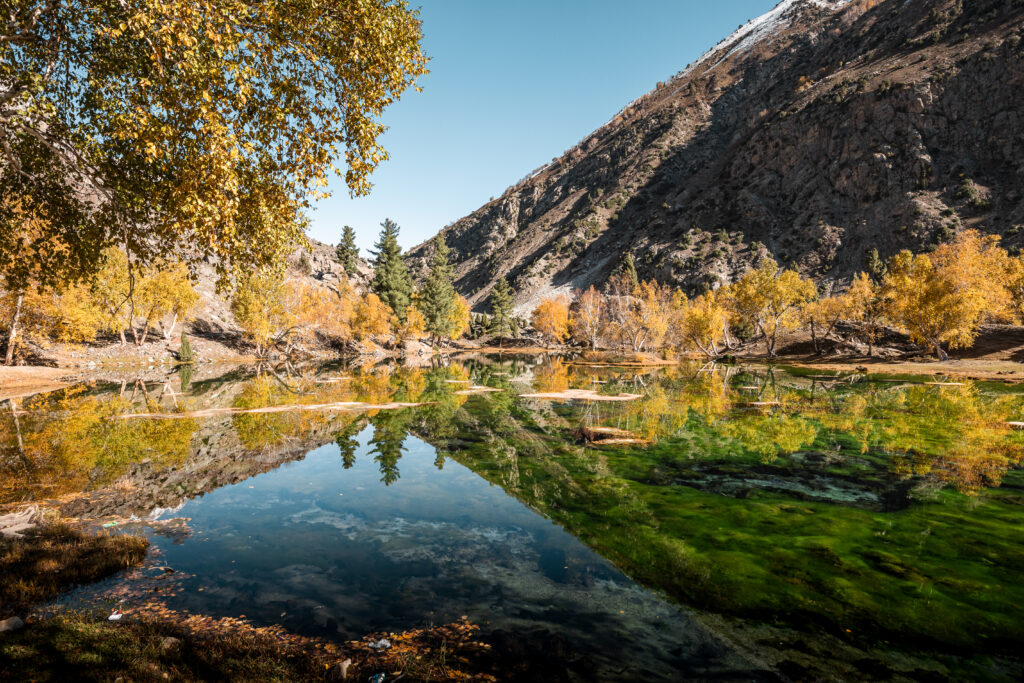 Green Lake in Naltar Valley in Autumn
Barah Valley – Quiet Villages Beyond Khaplu
Tucked away in the mountains near Khaplu, in the Skardu region of Gilgit-Baltistan, Barah Valley is one of those places that exists almost entirely outside the usual travel narrative.
Compared to the wide, dramatic landscapes around Skardu, Barah feels more enclosed and intimate. Steep valley walls rise sharply on either side, and life unfolds at a slower, more inward pace. It’s the kind of place where time stretches, and days are measured by light, weather, and the movement of people rather than plans.
Why Go to Barah Valley?
Barah Valley is a destination for travellers who are drawn to places that still exist on their own terms.
The valley is the gateway to one of the most spectacular and least-known treks in the region: the route to Moses Peak at 5350 meters. From the peak on a good day you’ll have views of K2 and other giants of the Karakoram, a reminder of just how deep into the mountains you’ve travelled. For trekkers, this alone makes Barah extraordinary.
Culturally, the valley offers a rare glimpse into traditional Balti life. Homes here are a lot more rustic: animals are kept on the lower floor, while families live above. Balti is the primary language spoken, and staying with a local family gives you the chance to try traditional Balti food, often cooked slowly over simple stoves using local ingredients like apricots and apricot oil.
Barah is not for everyone. Infrastructure is extremely basic, facilities are simple, and comfort is minimal. But what the valley lacks in convenience, it more than makes up for in hospitality. The warmth and generosity of the people here are among the most genuine you’ll encounter in the Skardu region.
Getting to Barah Valley
Barah Valley is on the road that connects Skardu to Khaplu. It’s possible to take the public minibus from Skardu and just stop in Barah or alternatively you can opt to take it all the way to Khaplu, since it’s a bigger town with better infrastructure.
Where to Stay in Barah Valley
Like I mentioned you can opt to stay in Khaplu instead which has better infrastructure with plenty of hotels and guesthouses and visit Barah on a day-trip from Khaplu.
Accommodation in Barah is extremely limited. There are no formal hotels, and options are generally restricted to homestays. Therefore staying with a local family is the only option and, in my opinion, the main reason to go here. Expect simple rooms, shared bathroom, and home-cooked meals made from what’s available. Electricity and mobile reception can be unreliable or absent altogether.
Thalley Valley – An Hidden Day-Trip Gem
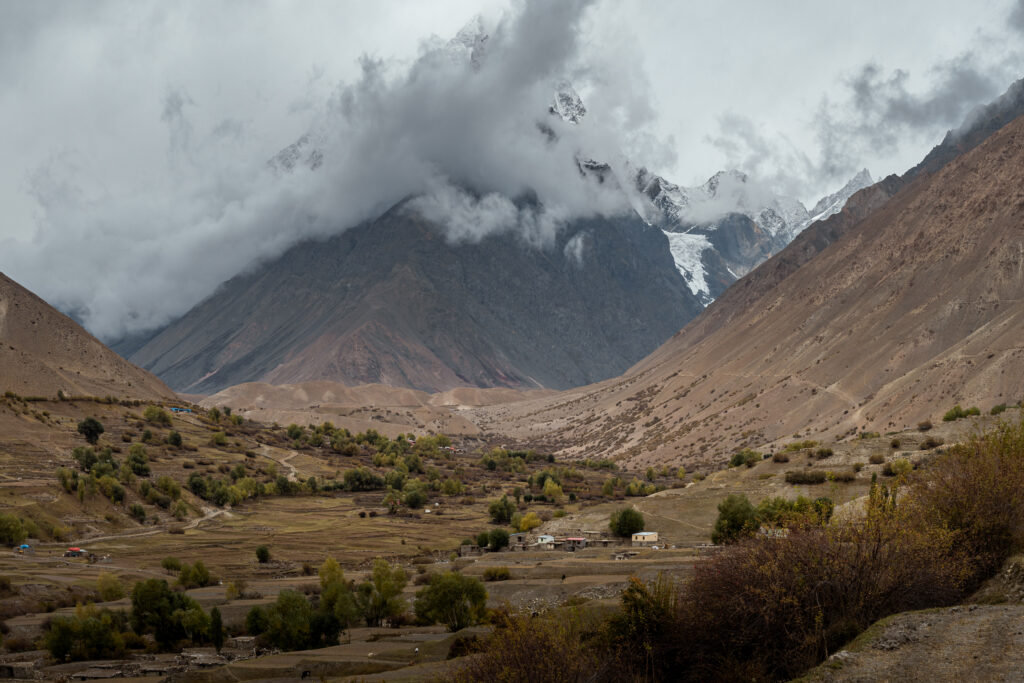
Just a short journey from Barah, Thalley Valley feels like stepping even further off the map. At around 4,000 metres, it is a landscape of extremes. Small rivers weave through the valley floor, framed by massive peaks and glaciers, while a few yaks graze quietly among the rocks. Despite its proximity, the valley gives a strong sense of remoteness, the kind that makes you feel the mountains are yours alone, if only for a few hours.
During the four hours I spent trekking there, the only other human I saw this local shepherd, moving his belongings with the help of a few donkeys. The sense of isolation is profound, it’s the kind of place where the mountains feel entirely yours, and the silence is absolute.
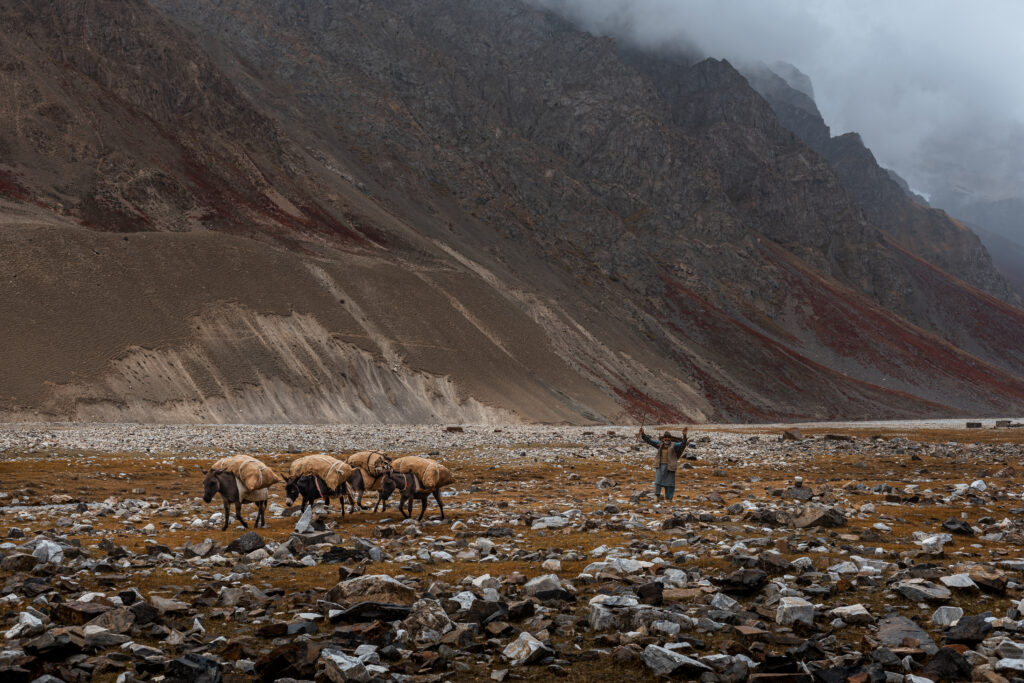
Why Go to Thalley Valley?
Thalley is perfect for travellers seeking raw beauty and solitude without committing to a multi-day trek.
For those curious about local life, the valley is home to a few small villages, where families still live in traditional homes and speak Balti, much like in Barah. Visits here are unobtrusive, and the locals’ hospitality is quietly generous. It’s a rare chance to witness daily life in an incredibly remote setting, all in a single day.
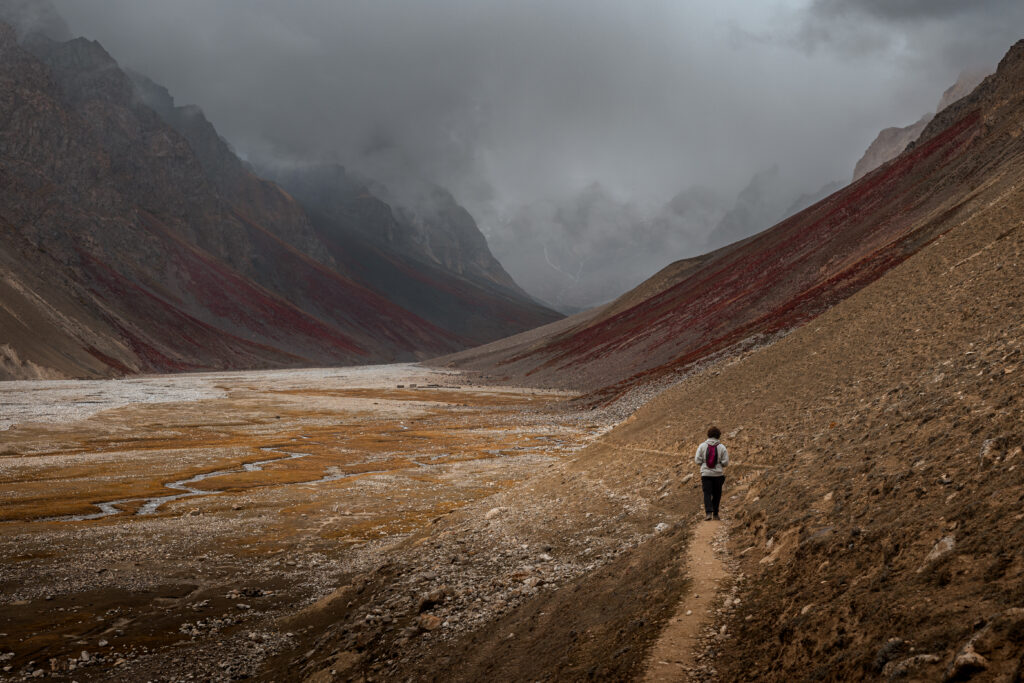 Trekking deeper into Thallay Valley
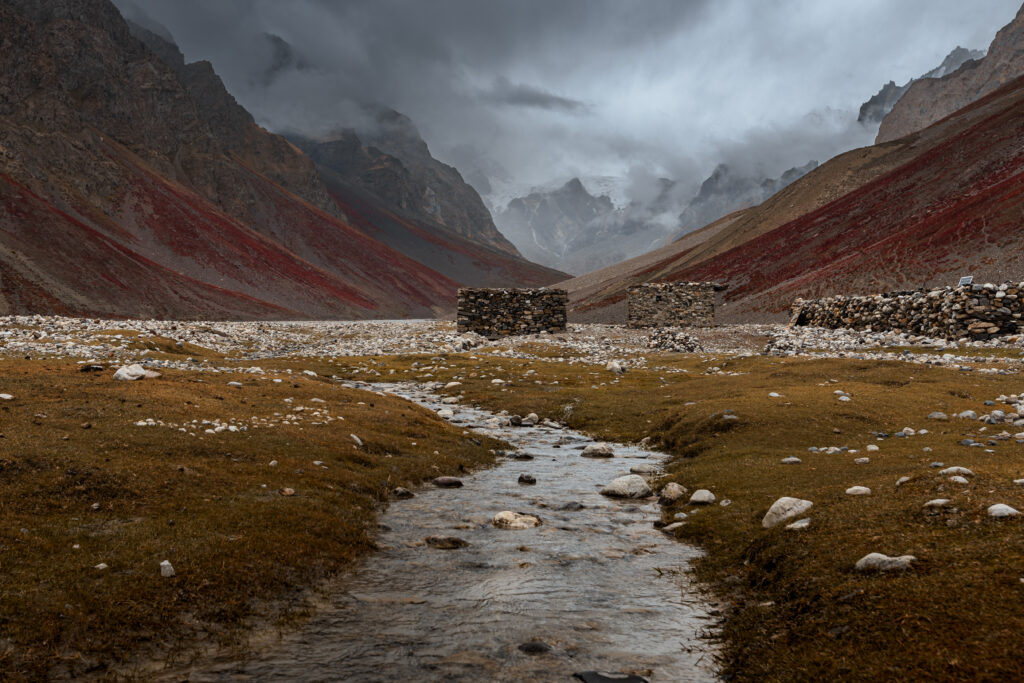 Ruins of old shepherd huts in Thallay Valley
Getting to Thalley Valley
Thalley Valley can be accessed from Khaplu or Barah, making it a perfect day trip. The road is rough and rustic, best navigated with a local jeep or driver, especially for travellers unfamiliar with mountain tracks. Even a short drive feels like leaving the world behind, with every turn revealing new, untouched scenery.
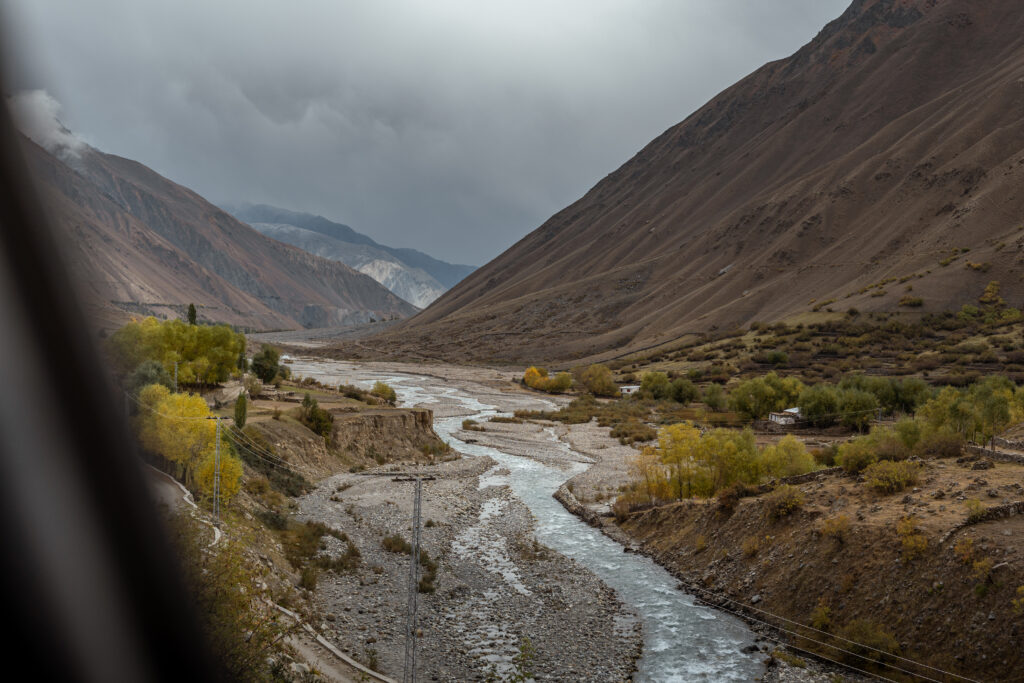 On the road to the remote Thalley Valley
 Remote Thalley Valley
Where to Stay
I didn’t stay overnight in Thalley, as accommodation is extremely limited. For a day trip, it’s best to return to Khaplu or Barah. However, those who do choose to stay briefly will find basic homestays, where simple meals and genuine local hospitality are the main draw.
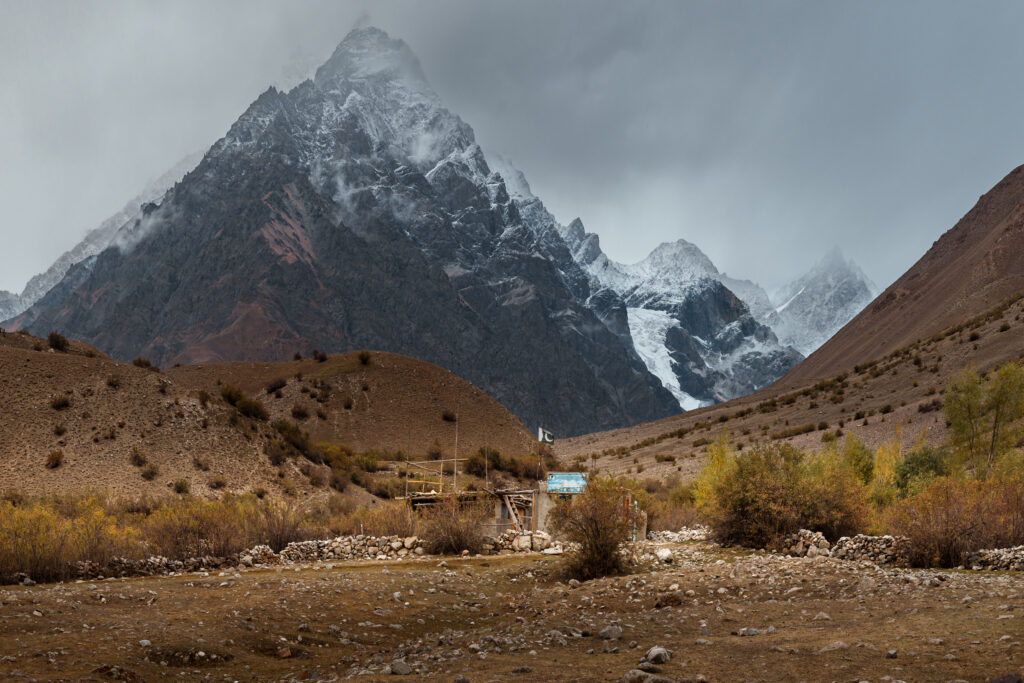 Rustic guesthouse where we had some homemade lunch
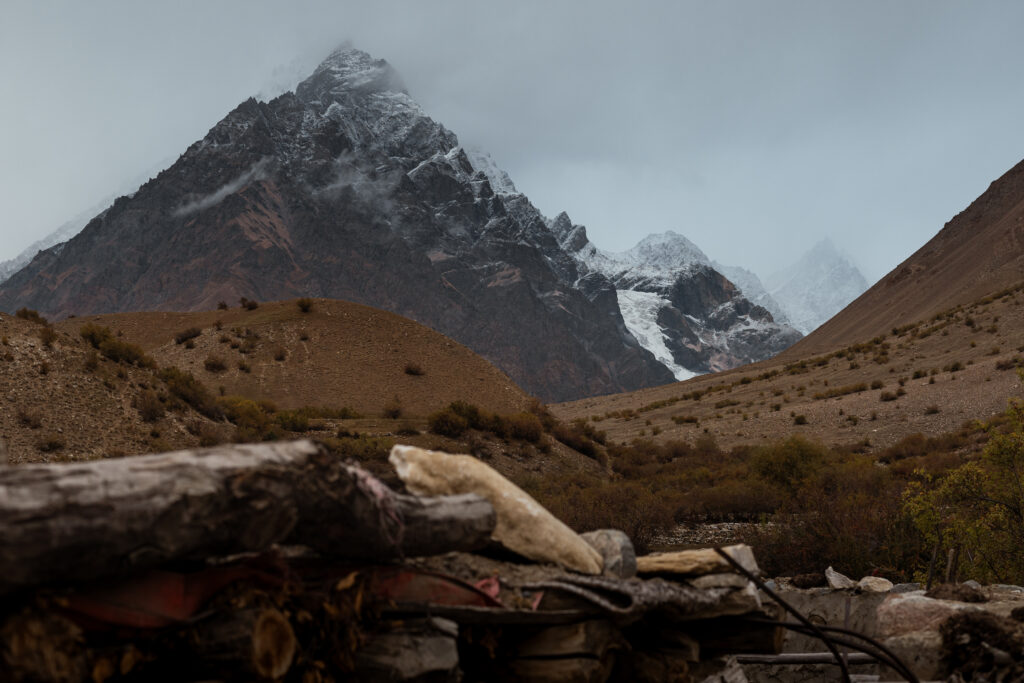 Mountain and glacier views from the guesthouse
Phander Valley, Shandur Pass & Kalash Valley
While much of northern Pakistan is defined by high mountains, glaciers, and remote valleys, the Kalash Valley stand out for their strong cultural identity. Home to the Kalash people, the valleys are known for their traditional wooden houses, distinctive festivals, and a way of life that differs from surrounding regions.
Reaching Kalash is part of the experience. The valleys can be accessed via long and remote routes that pass through areas such as Phander Valley and over Shandur Pass, or more directly via Chitral. These roads cross some of the least-visited landscapes in Khyber Pakhtunkhwa and require time, planning, and flexibility.
I share a detailed account of this two-day journey to Kalash via Shandur Pass, along with practical transport advice and my time spent in the valleys, in a separate post dedicated entirely to the route and experience.
Practical tips for visiting remote valleys in Northern Pakistan
Visiting remote valleys in northern Pakistan requires more preparation than sticking to the main tourist route. These tips will help you avoid common pitfalls and travel more smoothly.
Build extra time into your itinerary
Distances are deceptive, and delays are normal. Landslides, weather, road damage, or lack of transport can easily add days to your plans. Never schedule tight connections or fixed onward travel.
Cash is non-negotiable
ATMs are non existent outside major towns, especially for foreigners’ cards, where the bank that works is usually only Bank Alfalah. Carry enough cash to cover accommodation, food, transport, and emergencies for several days. Make sure you’re withdrawing with a card that doesn’t charge high foreign transaction fees.
Avoid ATM fees with Wise
The card I use for all my travel withdrawals – real exchange rate, low fees.
Use Revolut to avoid ATM fees
Good alternative to Wise – I carry both as a backup.
Expect basic accommodation
In most remote valleys, accommodation is limited to simple guesthouses or homestays. Rooms are basic but usually clean, and hospitality is often exceptional. Electricity, hot water, and Wi-Fi are non existent so plan accordingly.
Connectivity is limited or non-existent
Mobile signal drops quickly once you leave main towns. Even where there is coverage, internet speeds are slow. Download offline maps, save contact numbers, and don’t rely on being online. SCOM works best in Gilgit-Baltistan in general, but even then, expect limited coverage. Download offline maps and save important information in advance. If you want a backup option before arriving in Pakistan or for the Islamabad leg before switching to SCOM, an eSIM can be useful.
Need data before you land? Try Saily eSIM
Use code RITAHE1486 for $5 off your first plan.
Dress modestly and respectfully
Northern Pakistan is conservative, especially in smaller villages. Loose, modest clothing is appreciated and helps you blend in. This is particularly important for solo female travellers.
Ask before taking photos
Always ask before photographing or filming people, especially women or private homes. In many valleys, people are friendly but value privacy.
Food options are limited
Meals are usually simple and home-cooked: chapati, lentils, vegetables, rice, and tea. Bring snacks if you have dietary restrictions or plan to stay multiple days.
Road conditions can be rough
Expect long, uncomfortable journeys on rough roads, especially to valleys like Shimshal or Chapursan.
Safety & solo travel
Despite their remoteness, these valleys are very safe and welcoming. Crime is extremely rare, and locals often go out of their way to help travellers. Use common sense, trust your instincts, and don’t rush.
Don’t skip travel insurance!
I use SafetyWing for most trips – solid coverage for adventure travel.
FAQ: Remote Valleys in Northern Pakistan
Which remote valleys are covered in this guide?
This guide focuses on lesser-visited valleys in Northern Pakistan that offer a more off-the-beaten-path experience compared to popular destinations like Hunza and Skardu.
Are these valleys difficult to reach?
Yes. Getting to these valleys usually involves long travel days, multiple connections, and rough mountain roads. Reaching them is part of the experience.
Can you visit these valleys without a tour?
Yes, everything in this guide is based on independent travel. You don’t need a tour, but you do need patience, flexibility, and a willingness to figure things out as you go.
Is there internet or phone signal in these areas?
In most of these valleys, connectivity is limited or non-existent. You should be prepared to be offline for extended periods.
What makes these valleys different from places like Hunza?
Unlike more popular destinations, these valleys are far less developed and see very few tourists, offering a quieter and more raw travel experience.
Who are these remote valleys suitable for?
These places are best suited to experienced or adventurous travellers who are comfortable with uncertainty, basic conditions, and travelling without a fixed plan.
Need help planning your Pakistan trip?
Custom itineraries, local guide sourcing, and on-trip support from someone who’s done it.
Final Reflections
Travelling through Misgar, Chapursan, Shimshal, Naltar, Barah, Thalley, and Kalash Valleys, one thing becomes clear: northern Pakistan is a land where remoteness is a treasure, not a barrier. Each valley has its own rhythm, its own character, and its own lessons, from the winding cliffside roads of Shimshal to the quiet pastures of Thalley, and the centuries-old cultural traditions of Kalash.
These valleys are more than destinations; they are experiences. They test patience, reward curiosity, and offer a perspective few other places can. The landscapes are vast, often untouched, and always humbling. And perhaps the most remarkable thing is the people: the shepherds, mountaineers, and families who live here. Their warmth, resilience, and hospitality make the mountains feel less lonely, even in the most isolated corners.
For travellers willing to venture beyond the familiar, these valleys provide a rare gift: the chance to witness life in its simplest, most authentic form, to walk paths few have walked, and to return home with stories that stay with you long after the journey ends.
Northern Pakistan’s remote valleys are not just about the mountains, glaciers, and rivers. They are about connection. And in that sense, every valley, every road, and every quiet moment here is unforgettable.
More Pakistan Travel Guides
If you’re planning to travel Pakistan independently, these in-depth guides will help you navigate the country, travel on a budget, and explore far beyond the usual routes:
Have questions about any of these valleys? Drop them in the comments. I read every single one.