
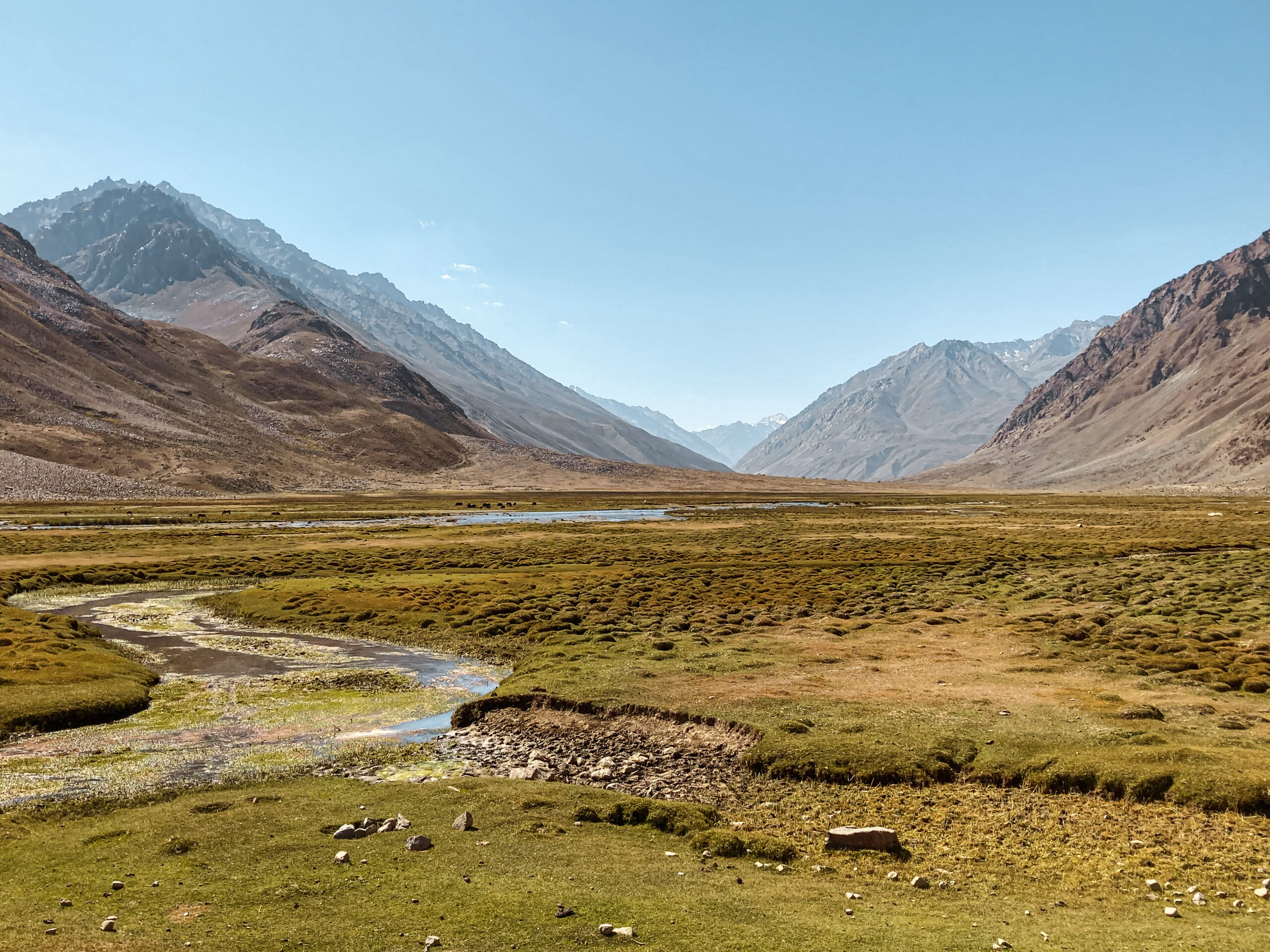
From the jagged peaks of Hunza to the hidden enclaves of Kalash Valley, this journey is as much about the road beneath your wheels as the destination itself. Over two days and over 30 hours of rugged jeep travel, I crossed some of the most remote and breathtaking landscapes northern Pakistan has to offer – winding through narrow mountain passes, traversing wild rivers, and climbing to dizzying heights above the clouds.
Starting in the picturesque village of Passu, the road carried me first to the tranquil Phander Valley, where I rested before embarking on the next leg. The second day was a true test of endurance and spirit: a 15-hour drive that took me over the legendary Shandur Pass and into the mystical Kalash Valley, home to a unique culture and untouched natural beauty.
This post tells the story of that unforgettable journey: the challenges, the landscapes, and the moments of awe, as well as my first impressions of the Kalash people and their extraordinary homeland.
Day 1: From Passu to Phander Valley
The morning sun casts a warm glow over Passu as I climb into the jeep, ready to leave the relative bustle of Hunza Valley behind. Today’s journey is long – over 14 hours of driving.
We follow winding mountain roads flanked by soaring cliffs and deep gorges, with views that make every slow mile worth it. The terrain is rugged but mostly steady, and the road is intermittently interrupted by construction work. Several stretches are reduced to single lanes of loose gravel, requiring patience and cautious manoeuvring. Along the way, we pass through a handful of military checkpoints, where soldiers review the paperwork.
As the day wears on, the landscape changes subtly – terraced fields give way to denser forests and calmer rivers. By evening, we reach Phander Valley, a quiet pocket of green nestled among the rugged peaks. The valley’s tranquil rivers and meadows offer a peaceful contrast to the day’s long hours on the road. And it’s in this quiet valley is where I settle in for the night in a local guesthouse for some much needed rest.
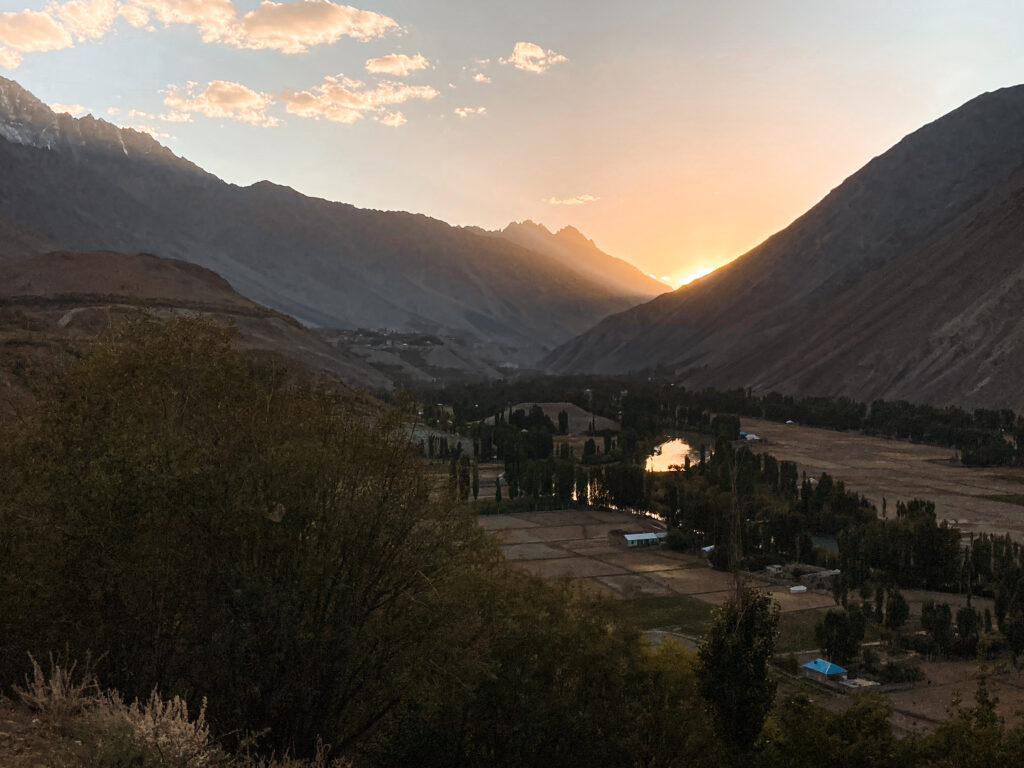 Phander Valley at Sunset
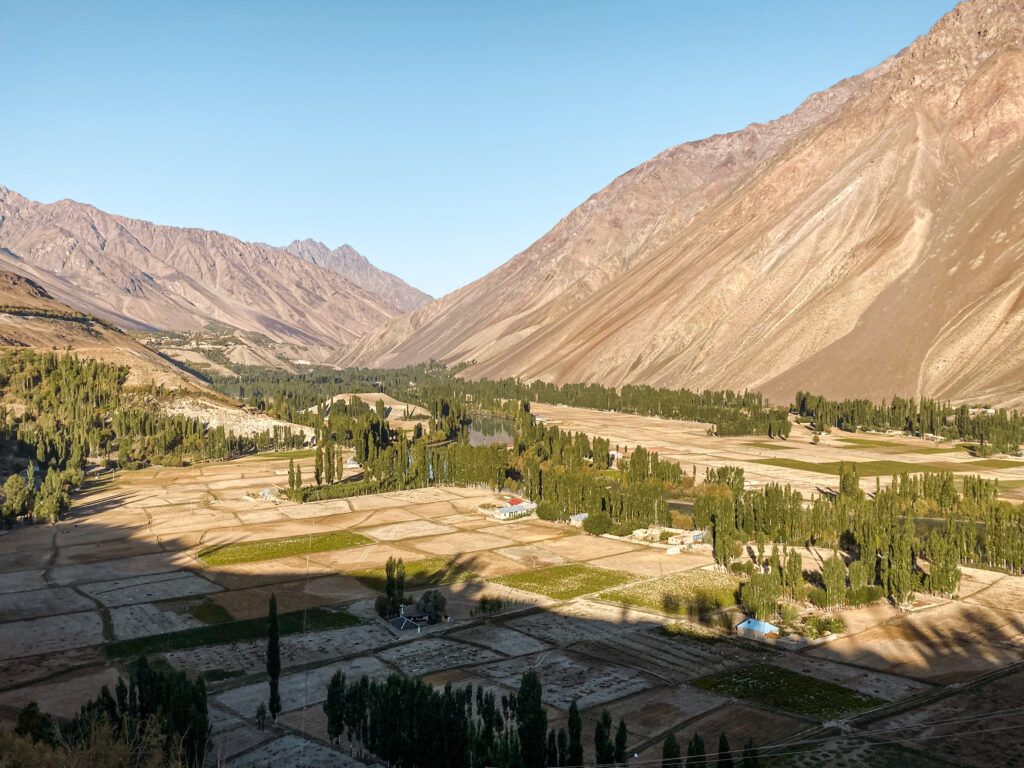 Pander Valley
Day 2: Across Shandur Pass to Kalash Valley
We leave Phander Valley just after 7am, the sun slowly creeping over the mountains, casting golden light on the still water of the lake. Spirits are high: yesterday was long but relatively smooth, and we’re eager to push on towards Kalash Valley, still many rugged hours away.
A few hours into the drive, we stop in a tiny village for tea. It’s one of those blink-and-you-miss-it places – just a cluster of homes, a dusty shop, and a roadside chai stall where time seems to move a little slower. It’s only when we’re getting ready to leave that we notice the rear tire has gone flat.
The driver, unfased, sets to work while we linger in the village. It takes a couple of hours to find someone who can patch the punctured tire – time we spend wandering the dusty lanes, sipping another round of tea, buying a few snacks, and chatting with curious locals. It’s quiet here, peaceful in a way that makes the delay feel less like a hassle and more like an unplanned pause in the journey.
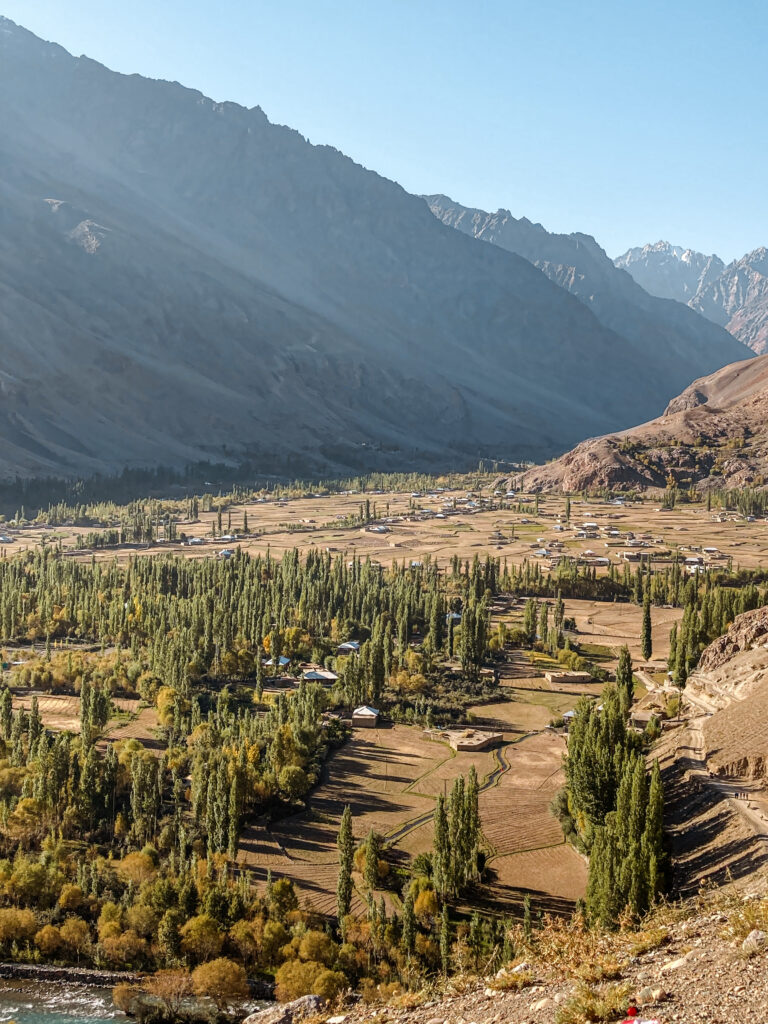 On the road after leaving Phander Valley
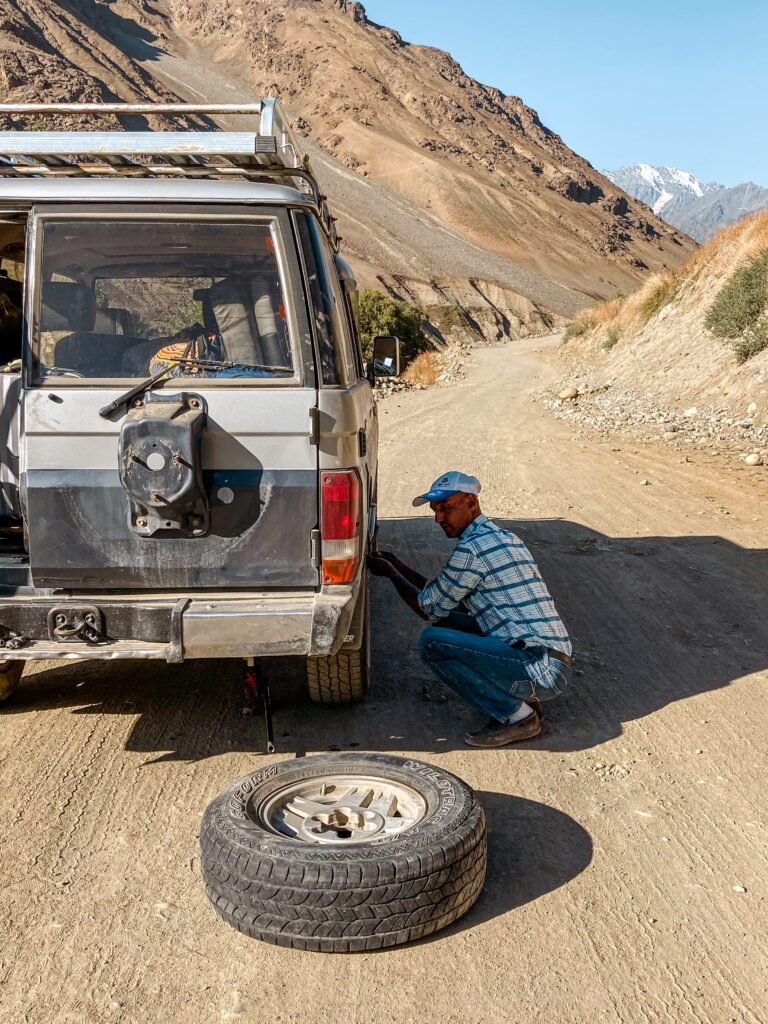 Our driver fixing the flat tire
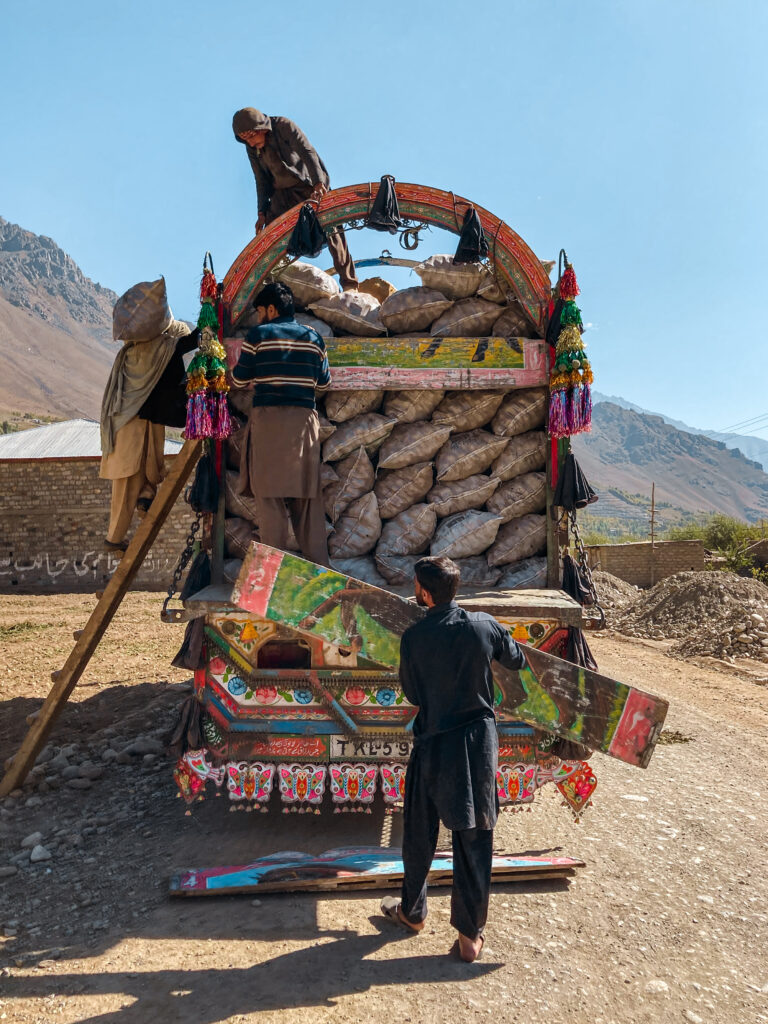 Locals load traditional truck with potatoes
Back on the road, we pass more scattered military checkpoints. Each one means a few more questions, a bit more waiting, but nothing unexpected. Then comes the ascent to Shandur Pass – the “Roof of the World” – and everything feels more remote, more wild. The road snakes through vast, empty landscapes, windswept plateaus, and herds of grazing yaks. At the top, there’s a significant checkpoint marking our entry into Khyber Pakhtunkhwa (KPK) province. Paperwork is checked, IDs are inspected, and we’re waved on.
Crossing Shandur feels like leaving one world and entering another. The landscape begins to shift: greener valleys roll into view, but the roads get dramatically worse. Dirt tracks broken by streams, loose gravel, and potholes slow our pace.
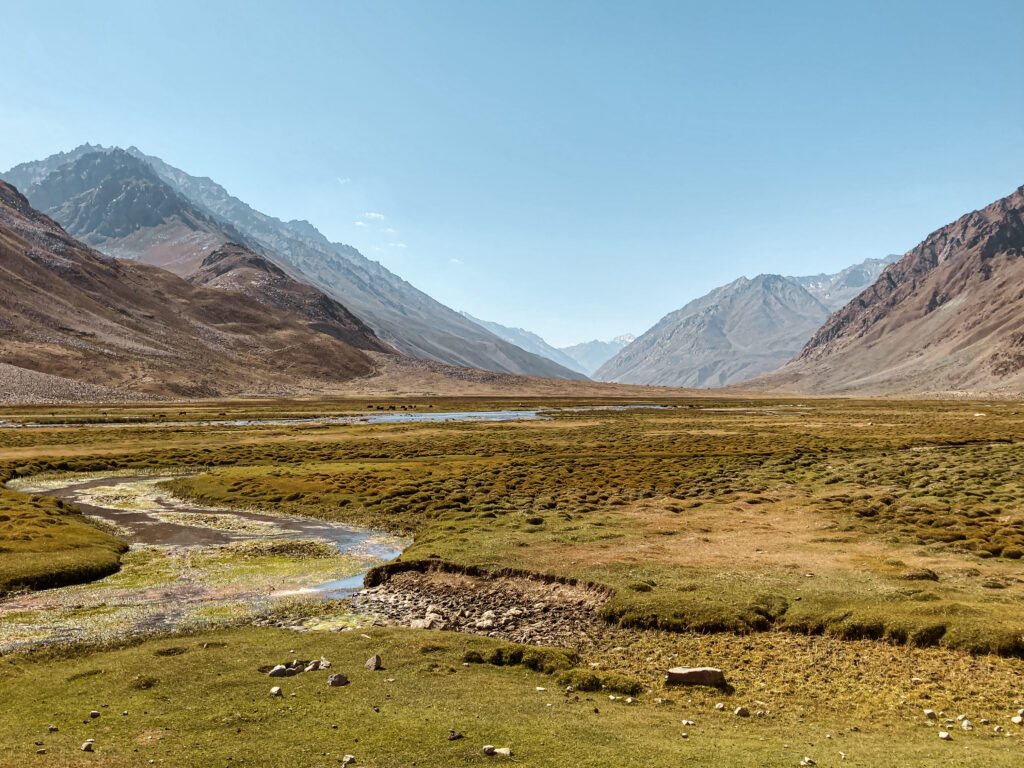 Approaching Shandur Pass
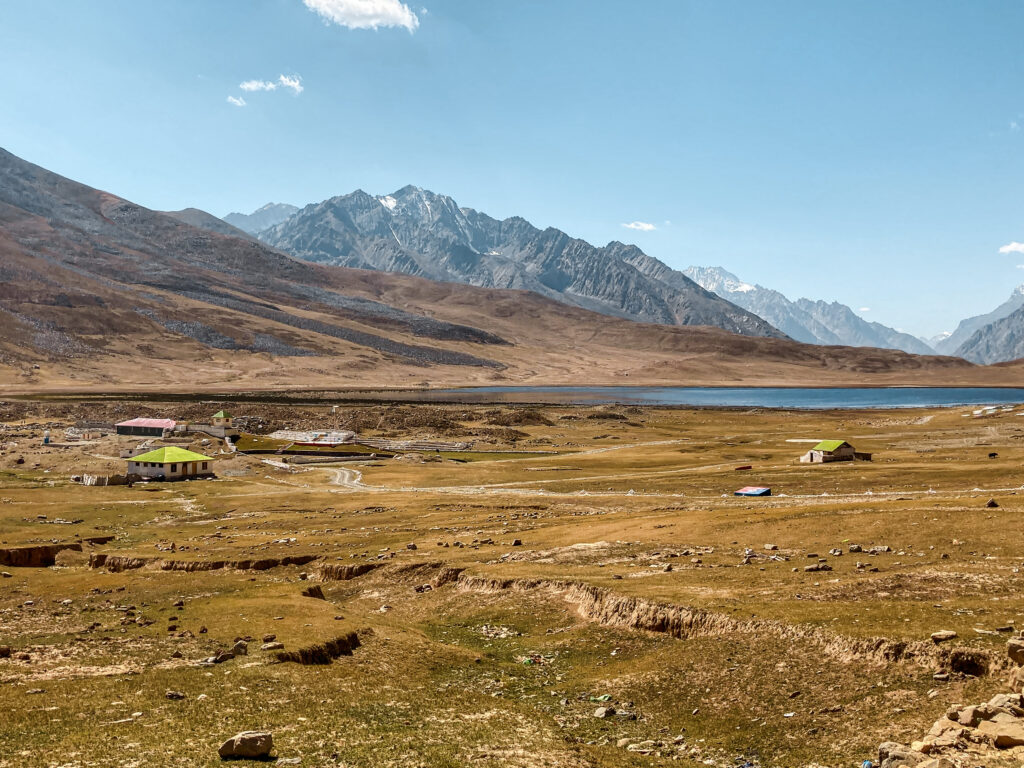 Shandur Polo Ground – highest polo ground in the world
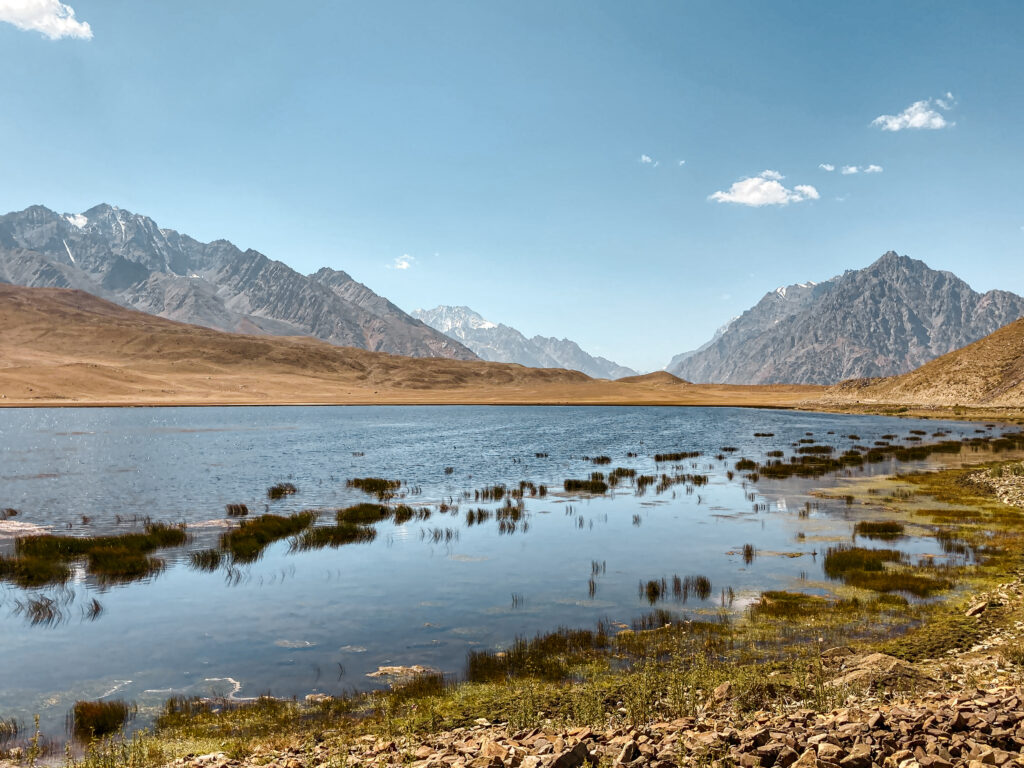 Shandur Pass
As night falls, the lights of Chitral appear. After hours of silence and stone, the sudden rush of traffic and honking rickshaws feels almost surreal. We pull over briefly on the side of the road, drawn by a stand of fresh mango shakes: cold, fragrant, and refreshing after a dusty day.
But we’re not done yet.
The final stretch from Chitral to Kalash is the most demanding of all. The dirt roads narrow to the width of a single vehicle, carved into the sides of steep cliffs. In the darkness, with barely enough space to pass oncoming jeeps, the drive becomes tense and exhausting.
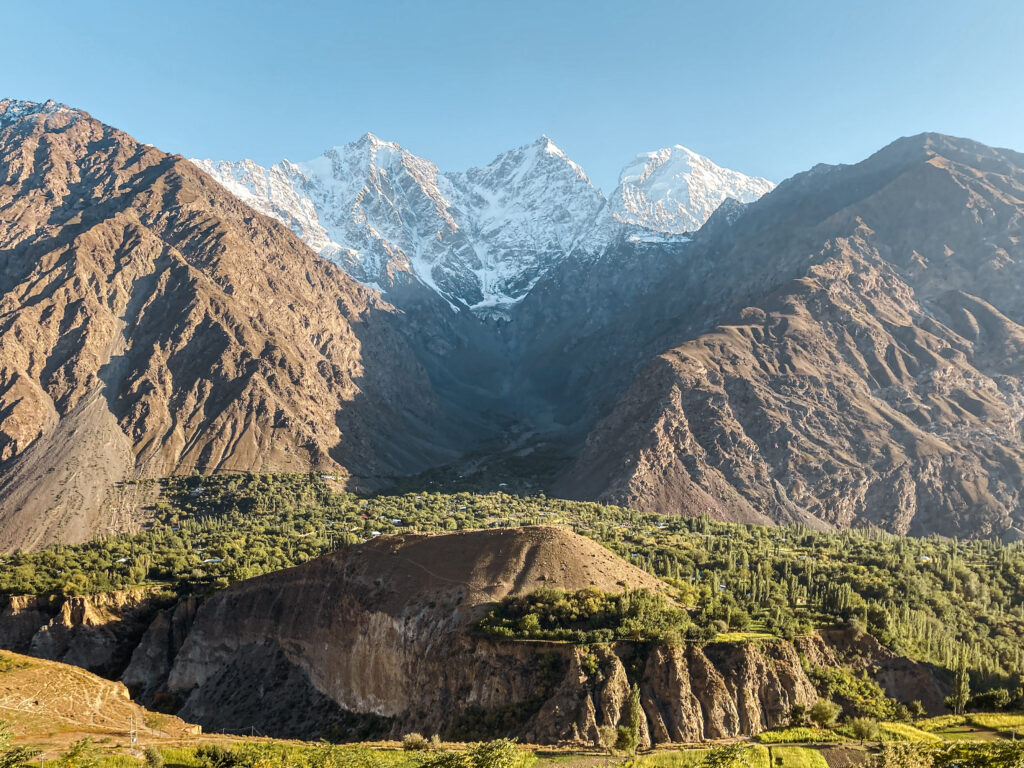 Remote Valleys along the route
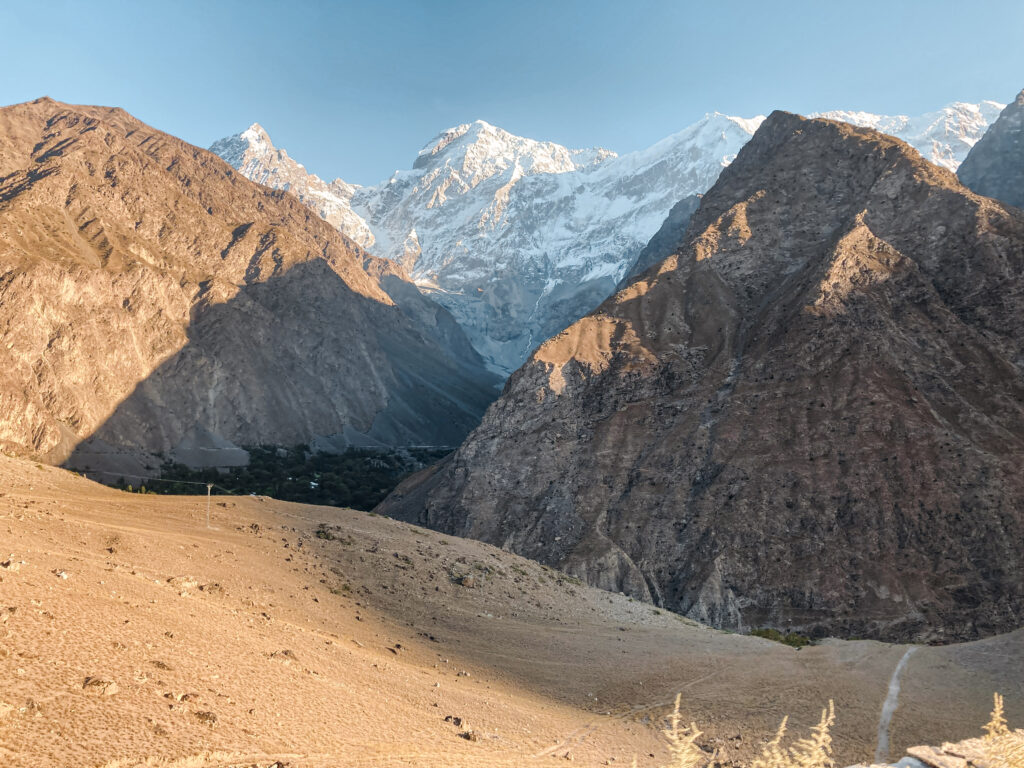 Mountain Landscapes on the way
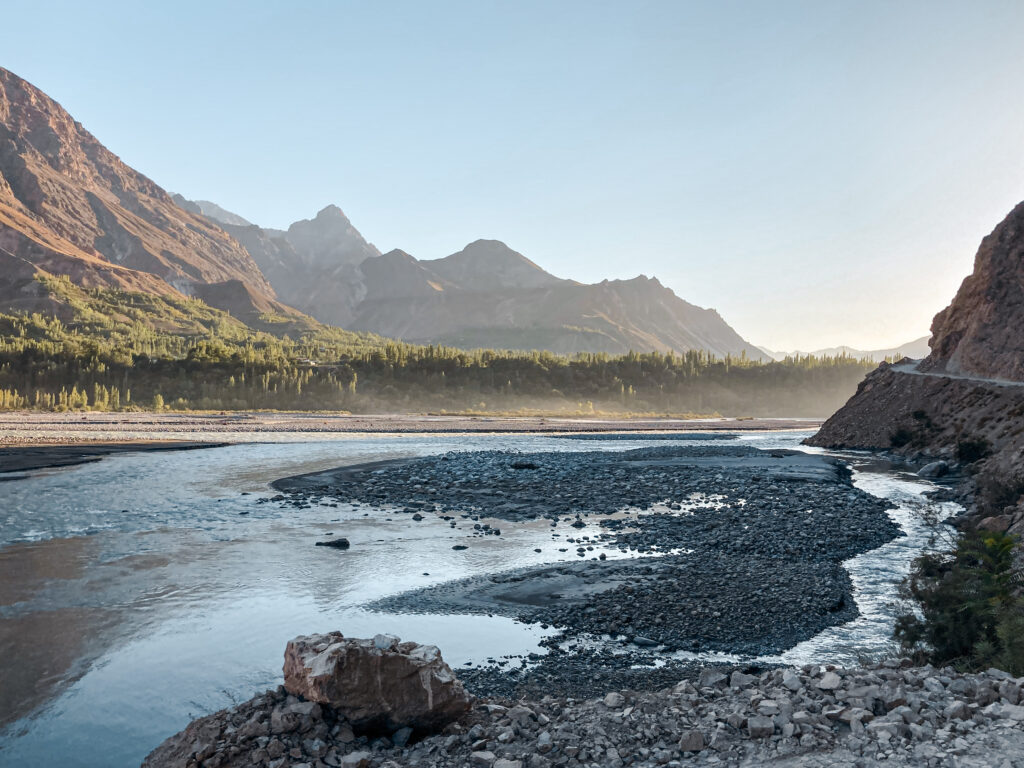 River valley seen from the road
Finally, close to 11pm, we pull into Kalash Valley. Tired, dusty, and stiff from the ride, I step out into the cool night air, and suddenly, it’s quiet again. It’s pitch dark; there hasn’t been electricity in the valley for the past three days, something not uncommon in these remote corners of Pakistan. We grab our backpacks from the trunk and follow the guesthouse’s owner through narrow dirt pathways tucked between old wooden houses, using our phone’s flashlights as the only source of light. When we reach the guesthouse, they show us to our simple rooms and kindly serve a light dinner. With our bodies aching from the endless bumps and jolts of the road, we finally get to rest.
Two days. Nearly 30 hours on the road. Flat tires, military checkpoints, landslides, construction zones, and high mountain passes. We’ve arrived and the journey itself already feels like a story I’ll never forget.
Life in Kalash Valley
The next morning, after a long 2-day journey, we finally get to explore the Kalash Valley, a remote region near Chitral in northern Pakistan. The Kalash Valley consist of different villages one after another.
The Kalash are a distinct ethnic and religious minority, known for their animist beliefs, unique language, and traditional dress. Unlike most of Pakistan, Kalash society follows its own customs, festivals, and social rules, which have remained largely unchanged due to the region’s isolation. Daily life revolves around farming, herding, and strong community ties rather than tourism, especially outside festival periods.
Travelling independently in the Kalash Valleys requires time and flexibility. Accommodation options are basic and facilities are minimal compared to other parts of northern Pakistan.
What to do in Kalash
Explore the villages on foot
The best way to experience the Kalash Valleys is simply by walking. Villages are small and compact, with narrow paths connecting houses, fields, and communal spaces. Walking allows you to observe daily life, farming, herding, cooking, and social gatherings, without needing organised activities or guides.
Learn about Kalash culture and traditions
The Kalash are an animist community with customs distinct from surrounding regions. Visiting the local museum or cultural centres can help you understand their beliefs, festivals, and social structure. These visits are useful for context, especially if you’re travelling independently without a guide.
Attend a Kalash festival (seasonal)
If your visit coincides with one of the main festivals, it’s a rare opportunity to see traditional music, dancing, and communal celebrations. During festivals, the valleys are busier and accommodation fills up quickly. Outside these periods, life is much quieter.
Go hiking between villages and valleys
There are several informal hiking routes connecting villages. These walks are generally short but can be steep. No permits are required, but asking locally about routes and conditions is recommended.
Visit local handicraft and handicraft stalls
Kalash women produce traditional handicrafts, including embroidered dresses, belts, jewellery, and headpieces. Buying directly from locals supports the community and helps preserve traditional craftsmanship.
Spend time doing very little
Facilities in the Kalash Valleys are basic, and that’s part of the experience. There are no major sights to tick off, no packed itineraries, and limited internet or phone signal. Most visitors spend their time sitting, walking, drinking tea, and observing everyday life.
Where to Stay & Eat in Kalash
Accommodation in the Kalash Valleys is basic and limited. There are no proper hotels or independent restaurants. Most travellers stay in small guesthouses or family-run homestays, which also provide all meals. Comfort levels are simple, with modest rooms, occasional power cuts, and limited facilities, but accommodation is generally sufficient for a short stay.
The largest concentration of guesthouses and homestays is in Bumburet. Homestays, in particular, offer the most practical option for independent travellers and provide a direct way to experience daily Kalash life.
Eating in the Kalash Valleys is straightforward. Meals are prepared by the family running the guesthouse or homestay and are usually included in the price. There is little choice or variety, but the food is fresh and filling. During my visit, which coincided with the walnut harvest season, walnuts featured heavily in local cooking. Kalash villages are surrounded by walnut trees, and some dishes are specific to the region and hard to find elsewhere in Pakistan, such as chapati filled with crushed walnuts and local cheese.
Most other meals are simple and vegetable-based, often using produce grown directly in the household garden. Dishes typically consist of chapati, rice, lentils, beans, seasonal vegetables, and tea, with meat served occasionally rather than daily. The food reflects what is available locally rather than what travellers might expect.
Unlike most of Pakistan, the Kalash are not Muslim and produce their own wine and local spirits. Homemade wine is common in the valleys and is often offered to guests in homestays, particularly in the evenings. Drinking alcohol is culturally accepted within the Kalash community, though visitors should follow local cues and drink respectfully.
How to Reach Kalash Valley Independently
Reaching the Kalash Valleys independently requires planning and flexibility, but it is entirely possible without joining a tour.
I reached Kalash by travelling with friends in a private 4×4 jeep and a local driver, taking the long and remote road over Shandur Pass. This route is slow, rough, and only suitable for four-wheel-drive vehicles. There is no direct public transport along this road, and traffic is extremely limited, which makes relying on hitchhiking difficult and unpredictable. While some travellers do manage to hitchhike parts of the route, it should not be considered a reliable option due to the remoteness and lack of regular vehicles.
The most practical independent route is via Chitral, which is well connected to Islamabad by public transport. Buses and shared transport run regularly, making Chitral relatively easy to reach compared to other remote areas in northern Pakistan.
From Chitral, public jeeps and vans travel daily to the Kalash Valleys, mainly to Bumburet, which is the most accessible and developed of the three villages. Transport usually departs in the morning once vehicles fill up, and schedules are informal rather than fixed.
Practical Tips for Visiting Kalash Valley
Money and facilities
There are no ATMs in Kalash and everything operates on a cash-only basis. Shops are few and sell only basic items. Mobile phone signal is unreliable, and internet access is slow or unavailable. Electricity cuts are common, especially in the evenings, so carrying a power bank is mandatory.
Dress and Behaviour
Although Kalash culture differs from the rest of Pakistan, visitors are still expected to dress modestly. Long trousers and covered shoulders are appropriate for both men and women. Practical clothing is also important, as paths between villages can be steep and uneven.
Photography
Photography should be done with care. Always ask before taking photos of people, especially women, children, religious spaces, or private homes. Some locals are comfortable being photographed, while others are not. Respecting this is essential and helps avoid unnecessary tension.
Alcohol
The Kalash are not Muslim, and alcohol is part of daily life in the valleys. Homemade wine and local spirits are commonly produced and may be offered to guests in homestays. If you choose to drink, follow local cues and do so respectfully. Alcohol should not be treated as a novelty or consumed publicly in excess.
Best Time to Visit
Festival periods bring more activity and cultural events but also attract more visitors and put pressure on accommodation and transport. Outside festival dates, the valleys are quieter and feel more local, though services and transport options are more limited.
Travel Mindset
Independent travel in the Kalash Valleys requires patience and flexibility. Transport is irregular, comfort is basic, and plans may change. Approaching the experience with realistic expectations makes travelling here independently much easier.
Final Thoughts
Visiting the Kalash Valleys is not a typical tourist experience. The valleys are remote, infrastructure is basic, and travel requires patience and flexibility. Independent travellers need to plan carefully, whether navigating public transport from Chitral, arranging a local jeep, or managing accommodation in simple homestays.
For me, the journey to Kalash was as much a part of the experience as the valleys themselves. Crossing Shandur Pass and passing through some of the most remote landscapes of Khyber Pakhtunkhwa offered dramatic scenery, long stretches of empty roads, and a sense of isolation that set the stage for the valleys ahead. Travelling through these areas reminded me that in northern Pakistan, the journey often holds as much value as the destination.
Once in Kalash, the unique culture becomes the focus. The Kalash people live on their own terms, and visitors are treated as guests observing daily life rather than participating in a curated tourist experience. Meals are home-cooked and largely vegetarian, often featuring local ingredients such as walnuts and fresh vegetables from household gardens. Wine and other local spirits are produced here, reflecting a lifestyle different from the rest of Pakistan.
Overall, the Kalash Valley, and the journey to reach it, is a destination for travellers who value authenticity and independence over convenience. Planning carefully, respecting local customs, and being prepared for remote travel are the keys to making the most of this unforgettable experience.
More Pakistan Travel Guides:
If you’re planning to travel Pakistan independently, these in-depth guides will help you navigate the country, travel on a budget, and explore far beyond the usual routes: