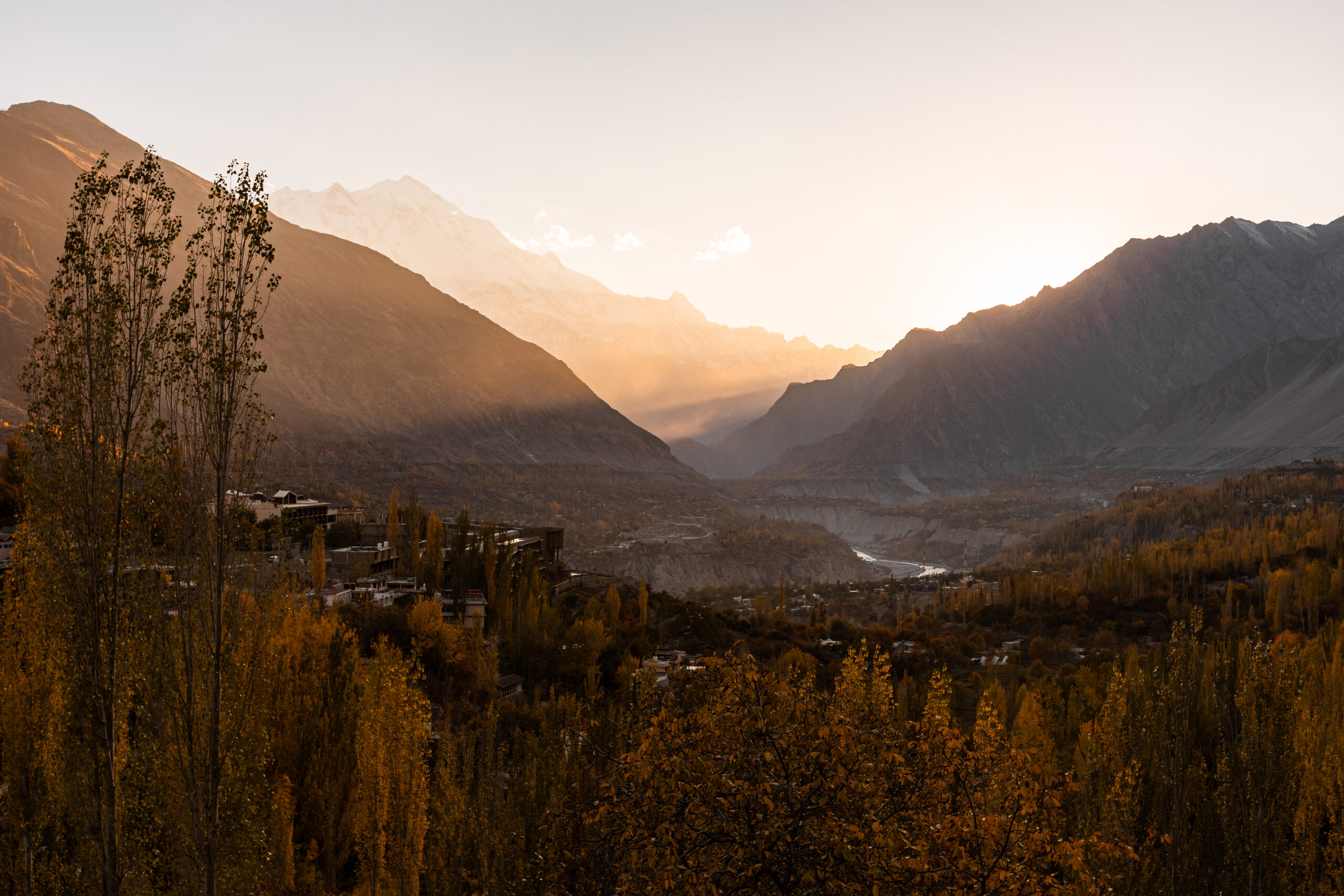
Located in northern Pakistan’s Gilgit-Baltistan region, Hunza Valley is one of the most accessible mountain destinations in the country for independent travellers. Hunza can easily be visited without a tour. Public transport is widely available, accommodation ranges from budget guesthouses to comfortable homestays, and moving between villages is straightforward with shared vans, jeeps, or on foot. This Hunza Valley travel guide focuses on how to travel independently, covering transport, where to stay, things to do, costs, and practical tips based on first-hand experience of someone who has spent over 3 months there.
Whether you’re visiting Hunza as part of a longer journey through northern Pakistan or as a standalone destination, travelling independently allows for more flexibility and a deeper understanding of daily life in the valley. The following sections break down everything you need to know to plan your trip without relying on organised tours.
Best Time to Visit Hunza
The best time to visit Hunza Valley depends on weather conditions, road accessibility, and what you want to experience. Hunza is one of the few mountain regions in Pakistan that remains accessible throughout most of the year, though conditions vary significantly by season.
Spring (April to May)
Spring is known for its blossom season, when apricot and cherry trees flower across the valley. Temperatures are mild, snow still covers the higher peaks, and crowds are relatively low compared to summer. Some high-altitude areas and hiking routes may still be inaccessible due to snow, but road access along the Karakoram Highway is usually reliable.
Summer (June to August)
Summer is the most popular time to visit Hunza. Weather is generally stable, hiking trails are open, and all villages are easily accessible. This is also peak tourist season, particularly in Karimabad and Passu, with higher accommodation prices and more traffic on the Karakoram Highway. Occasional landslides can occur during monsoon periods, but Hunza is less affected than other parts of northern Pakistan.
Autumn (September to October)
Autumn is considered by many to be the best overall time to visit. The weather remains clear, crowds decrease, and the valley turns shades of gold and red during the harvest season.
Winter (November to March)
Winter brings snow, colder temperatures, and very few visitors. While Hunza remains accessible by road most of the winter, travel can be slow, and some guesthouses close or reduce services. This season suits travellers looking for solitude rather than hiking or sightseeing.
Overall, late spring and autumn offer the best balance of good weather, accessibility, and fewer crowds for independent travellers visiting Hunza Valley.
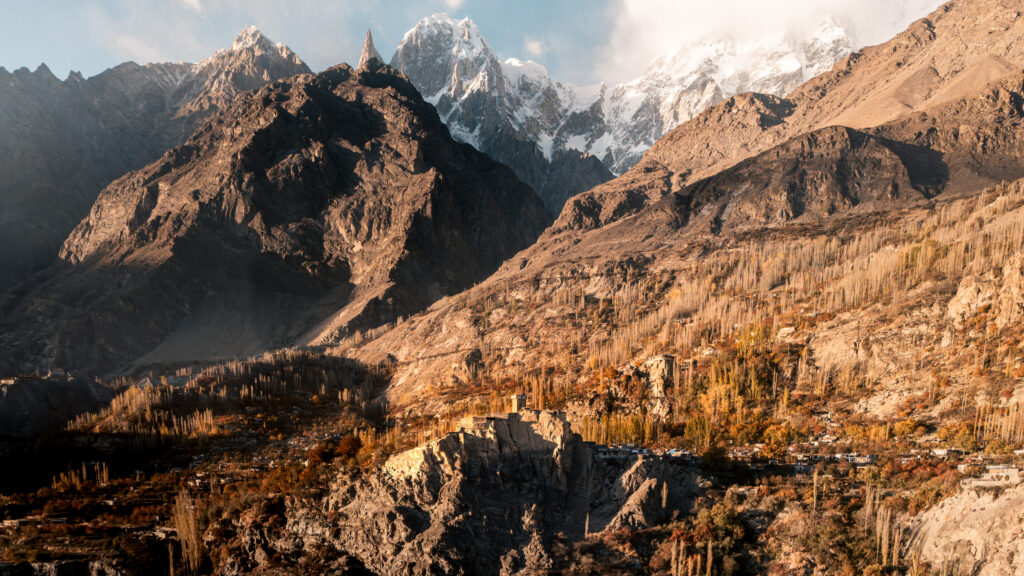 Altit Fort in Hunza Valley in Autumn
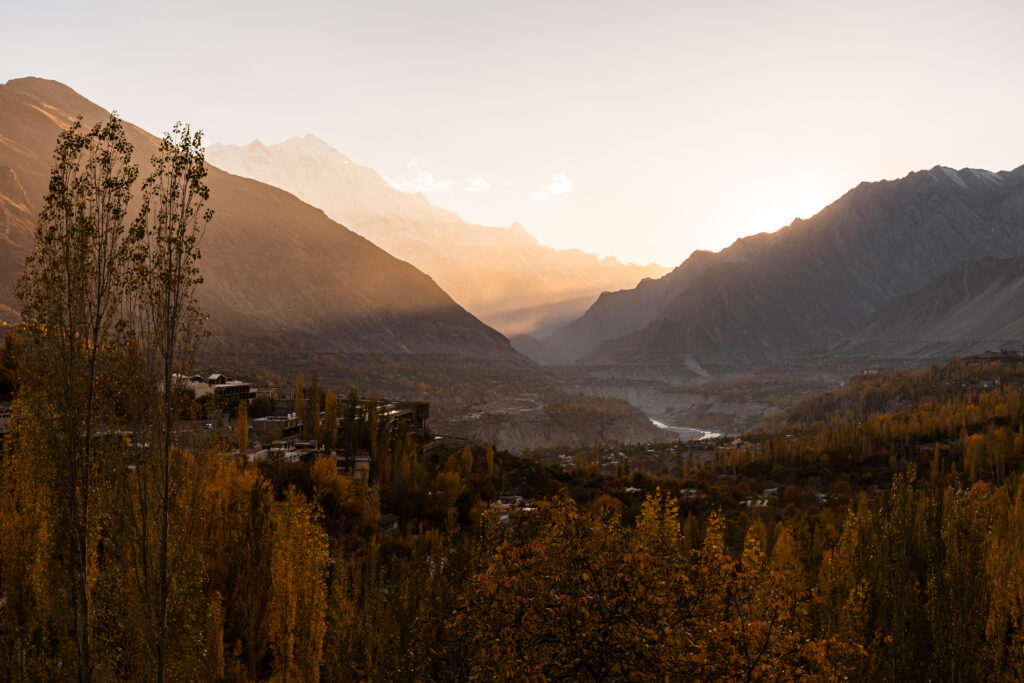 Hunza Valley at Sunset in Autumn
How to Get to Hunza Valley Independently
Reaching Hunza Valley independently is relatively straightforward compared to other destinations in northern Pakistan. Most travellers first make their way to Gilgit, the main transport hub for the region, before continuing north into Hunza via the Karakoram Highway.
1st Leg: Getting to Gilgit
Islamabad to Gilgit
The fastest way is to reach Gilgit is to fly from Islamabad, but flights are frequently cancelled, so they should not be relied on if you are short on time.
Therefore, the most common and reliable way to reach Gilgit from Islamabad is by road, along the Karakoram Highway. The journey on a long-haul bus takes around 18-20 hours and passes through the dramatic Babusar Pass or the longer, lower-altitude route via Besham and Chilas. The bus should cost around 6000 PKR.
You can also opt for a shared taxi – it’s a bit more expensive but significantly faster (around 12 hours). Just keep in mind that it’s much harder to get any sleep. The shared taxi will cost 7000 PKR (back seat) and 10000 PKR (front seat).
Update 2026: Now other companies beside NATCO can take foreigners like, for example, Faisal Movers. Check at the bus station in Rawalpindi for updated information.
Skardu to Gilgit
You can also choose to fly from Lahore or Islamabad directly to Skardu to save time and avoid a long road journey. Flying to Skardu is generally more reliable than flying to Gilgit, as flights to Gilgit are cancelled very frequently. If you have time and you’re looking for ideas on what to do in Skardu and practical tips for visiting the region, check out my detailed guide to Skardu & nearby valleys.
From Skardu, reaching Gilgit is straightforward. There are plenty of minibuses and shared cars running between Skardu and Gilgit. Simply head to the main transport station and choose whichever option suits you best. There are no fixed schedules, vehicles usually depart once full, so it’s best to arrive in the morning. The journey typically takes around 8-10 hours by bus and 5-6 hours by shared-car, depending on road and weather conditions.
2nd Leg: Gilgit to Hunza Valley
From Gilgit, Hunza Valley is easily accessible by public transport. Regular shared vans and minibuses travel north along the Karakoram Highway toward Karimabad, Aliabad, Gulmit, and Passu. Transport usually runs throughout the day and departs once vehicles fill up rather than on fixed schedules. Check here for vans going north towards Aliabad and Karimabad.
Road conditions and seasonality
The Karakoram Highway is paved and generally in good condition, though landslides and roadworks can cause delays, particularly in summer after heavy rain. In winter, snow can occasionally disrupt travel, but Hunza remains accessible year-round more reliably than many other mountain regions in Pakistan.
Travelling independently to Hunza does not require a private driver or tour. With patience and flexibility, public transport provides a reliable and affordable way to reach the valley and move between its villages.
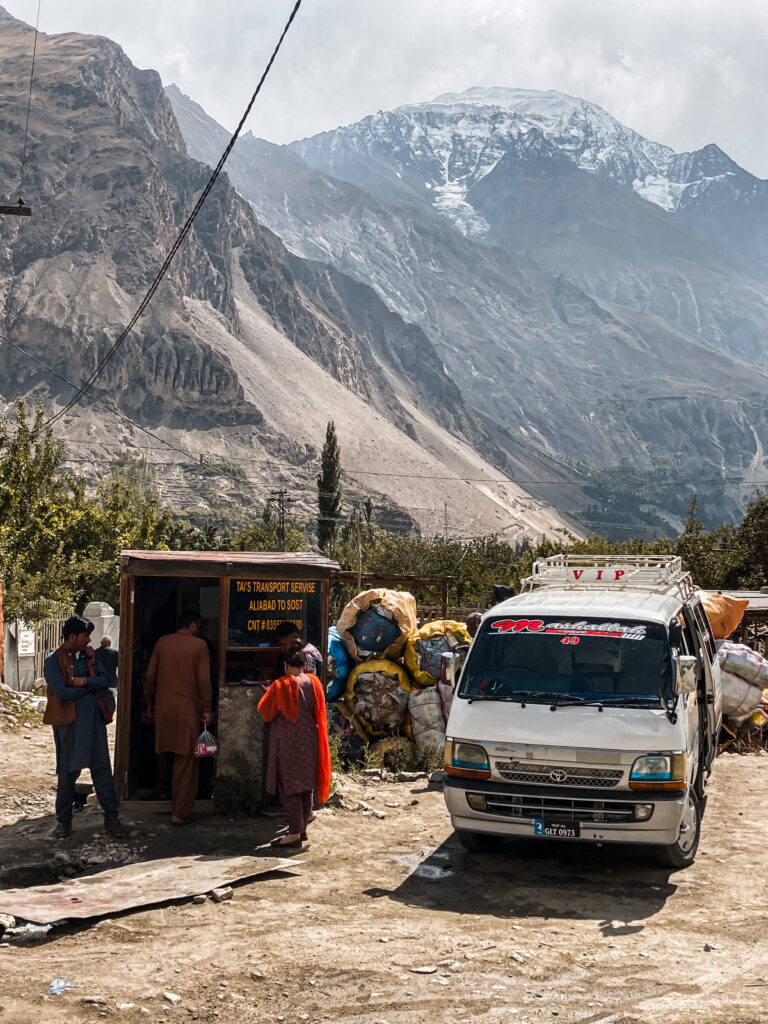
Getting Around Hunza Valley
Getting around Hunza Valley is relatively easy. Most villages are connected by the Karakoram Highway or smaller side roads, and a combination of public transport and hitchhiking is usually sufficient.
Public vans and minibuses
Shared vans and minibuses run regularly along the Karakoram Highway, connecting Gilgit with Hunza villages such as Aliabad, Karimabad, Gulmit, and Passu. Vehicles usually depart when full rather than on fixed schedules, and fares are inexpensive. This is the most common way to move between villages for independent travellers.
Shared and private jeeps
For destinations away from the main road, such as viewpoints, trailheads, or more remote valleys, you can use shared or private jeeps. These can be arranged locally through guesthouses or at transport stands. Sharing with other travellers or locals helps keep costs down.
Hitchhiking
Hitchhiking is common and widely accepted in Hunza, particularly along the Karakoram Highway. Traffic is regular, and locals are often willing to offer lifts. While it is generally safe, it requires patience and flexibility and should not be relied on if you are short on time.
Bicycles and motorbikes
Bicycles and motorbikes can be rented in some parts of Hunza, though availability is limited. Cycling is physically demanding due to altitude and gradients, while motorbikes offer more flexibility for exploring side roads if you are experienced riding in mountainous terrain.
What to Do in Hunza Valley
Lower Hunza
Lower Hunza is the cultural and historical centre of the valley and the best place to base yourself if you’re interested in Hunza’s history as well as short hikes that can be done independently.
The two most important historical sites are Baltit Fort and Altit Fort. Baltit Fort sits above Karimabad and offers sweeping views over the Hunza Valley, while Altit Fort, located in the older settlement of Altit, gives a deeper look into traditional Hunza architecture and village life.
Karimabad is also a convenient base for several short treks and walks that don’t require guides or special permits. One of the most popular hikes is to Ultar Meadows, a steep climb through forest and alpine pasture that leads to open meadows beneath the dramatic Ultar massif. While demanding, it can be done as a long day hike by reasonably fit hikers.
Another well-known walk leads up to Eagle’s Nest. The trail can be done entirely on foot from Karimabad or combined with local transport. The viewpoint is especially popular for sunrise and sunset, with views over the Hunza River, Rakaposhi, Ladyfinger Peak, and surrounding valleys. Shorter, informal trails also lead to viewpoints above Karimabad, often passing through terraced fields and apricot orchards.
Aliabad, located just below Karimabad, serves as Hunza’s transport and commercial hub. While not particularly scenic, it’s useful for buses, shared vans, markets, and practical errands.
Upper Hunza – Gojal
Upper Hunza feels noticeably more remote and dramatic than the lower valley. Villages are more spread out, the landscapes are harsher and more open, and daily life feels quieter and less tourist-oriented. This part of Hunza is defined by wide river valleys, glaciers spilling down from towering peaks, and small Wakhi villages scattered along the Karakoram Highway.
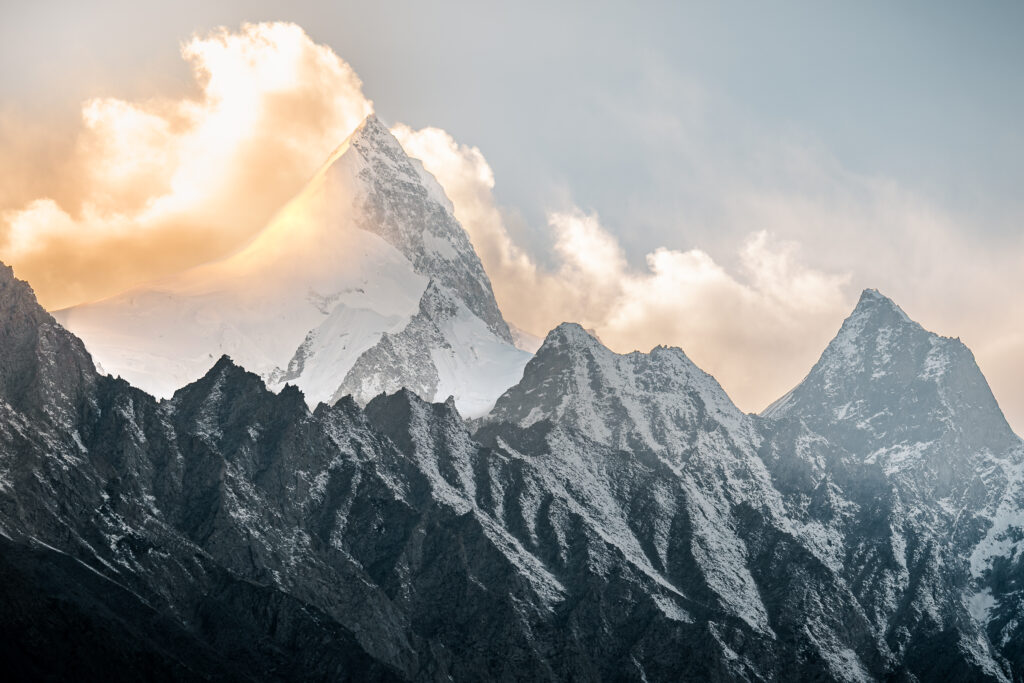 Sunset Shispare Peak at 7611 meters
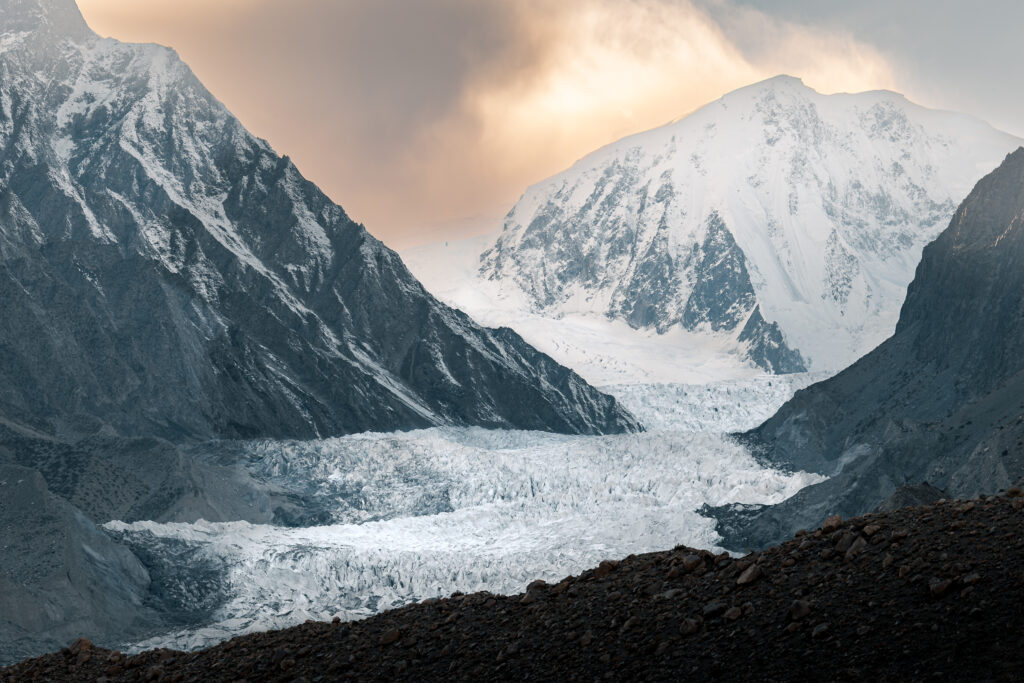 Passu Glacier Sunset
Attabad Lake
One of the main landmarks in Upper Hunza is Attabad Lake, created after a massive landslide in 2010 that blocked the Hunza River. The lake stretches for several kilometres, its turquoise waters contrasting sharply with the barren mountains surrounding it. While many travellers visit the lake briefly from the road, a rewarding way to experience it is to hike to Baskoshi Meadows, a viewpoint above the lake. The trek rises steeply to a vantage point that offers sweeping views over Attabad Lake and the surrounding valleys. This short to moderate hike can be done independently and gives a perspective of the lake that few casual visitors see.
Gulmit and Ghulkin
The villages along the Karakoram Highway, such as Gulmit and Passu, are the most accessible settlements in Upper Hunza, while smaller villages tucked higher into the mountains feel more remote. My favourite is Ghulkin, hidden above the highway and surrounded by mountains, where life feels quieter and more traditional. Transport between villages like Gulmit and Passu is limited, but hitchhiking along the Karakoram Highway is common and straightforward, making independent travel easy.
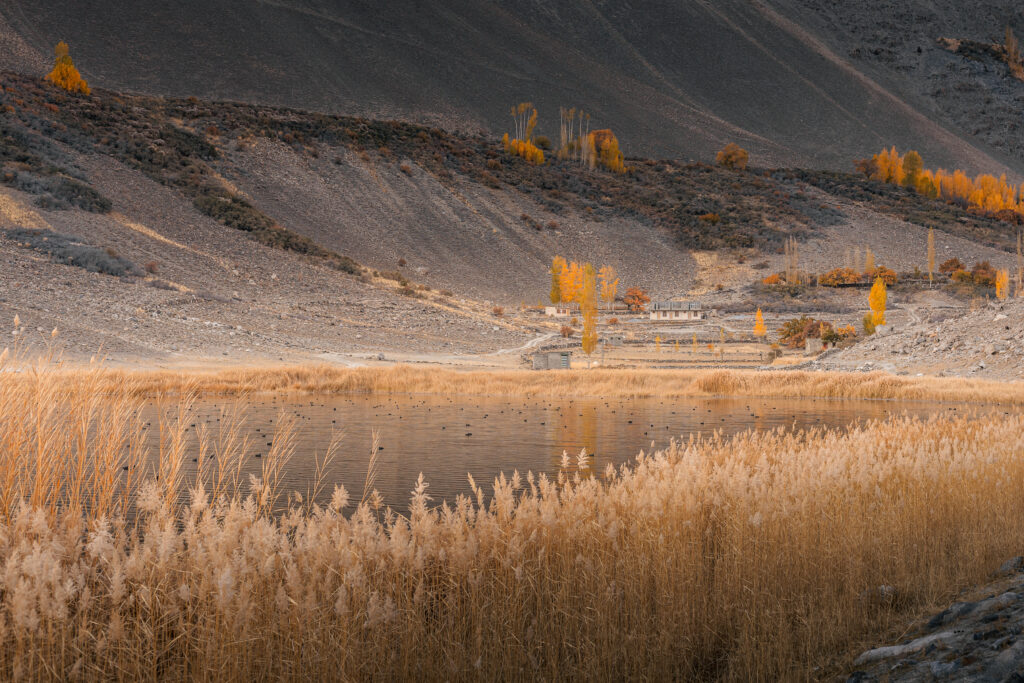 Borith Lake
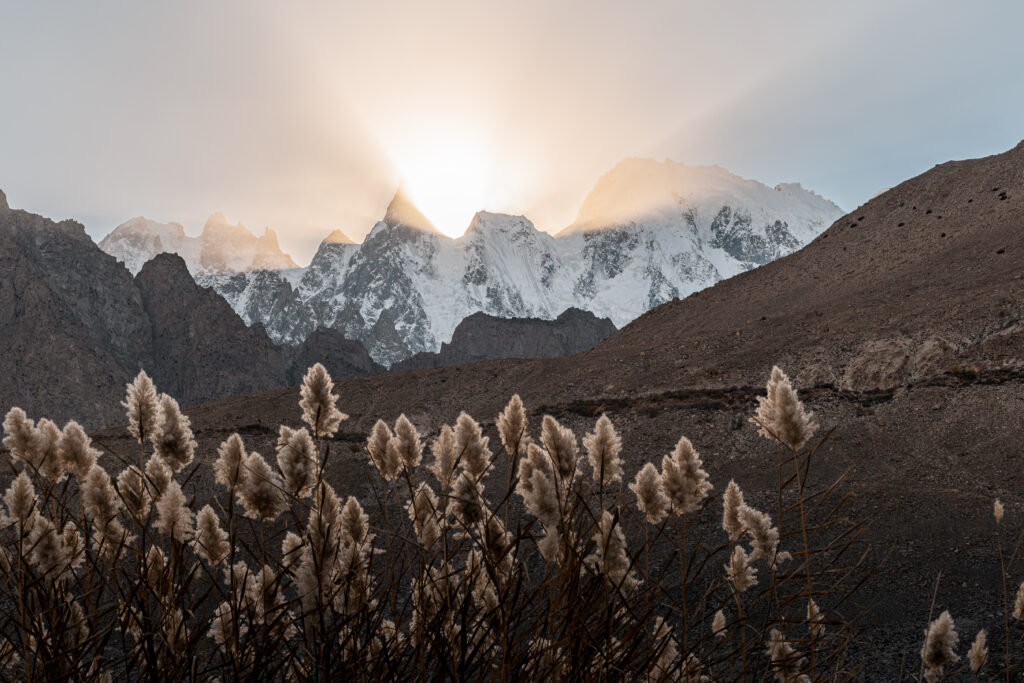 Sunset at Borith Lake
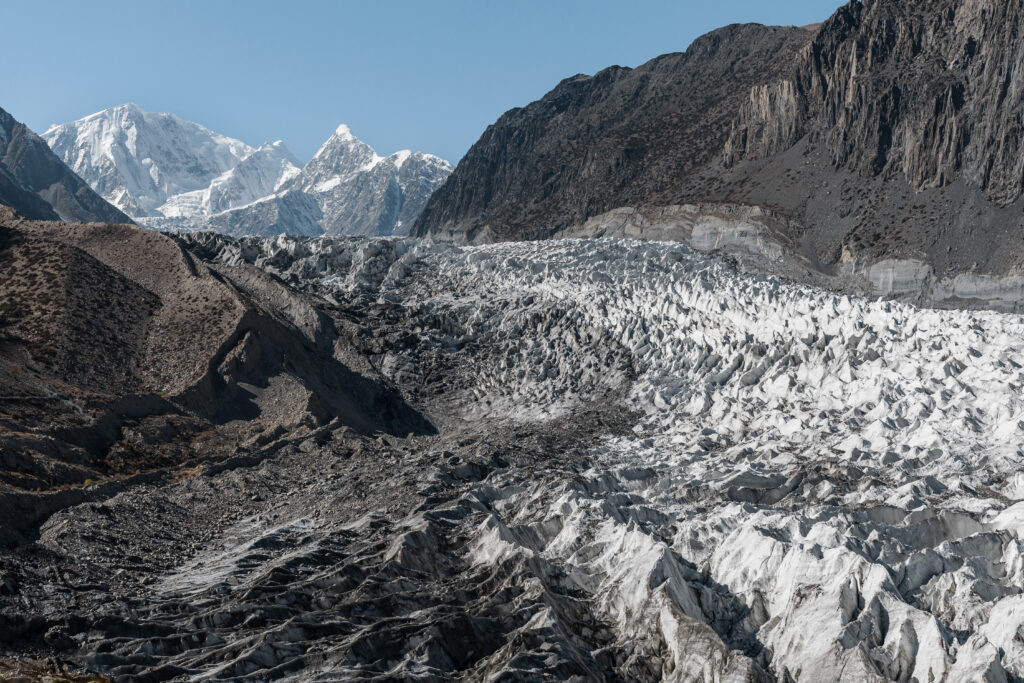 White Glacier Viewpoint
For short excursions off the highway, Borith Lake is just a brief detour and offers a peaceful spot to walk along the shoreline. About half an hour further north along the road is the start of the White Glacier Viewpoint Trek, a moderately challenging trail that climbs to dramatic glacier views. This hike starts in the same place as the longer 3-day Patundas Meadows Trek.
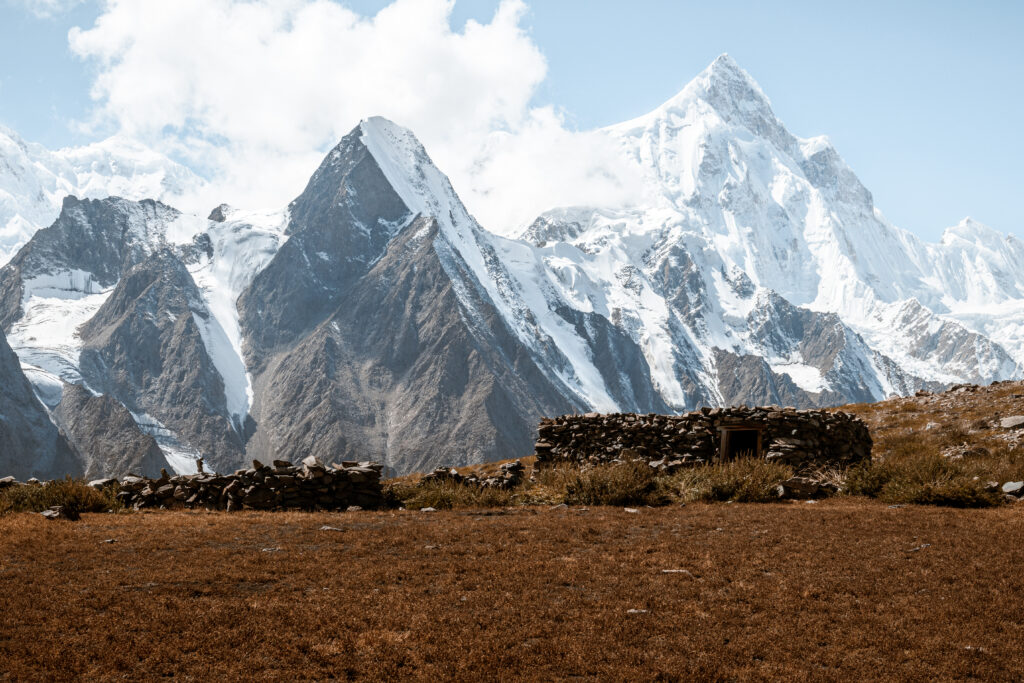 Old Shepherd’s Huts at Patundas Meadows
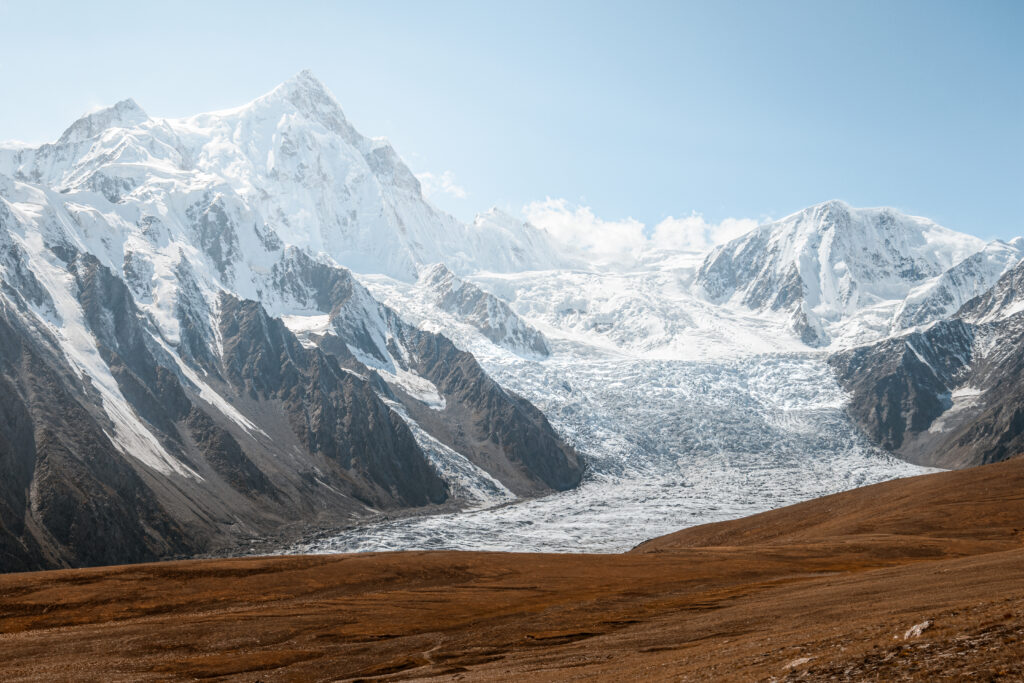 Views of Shispare Peak and Passu Glacier at Patundas Meadows
Passu
Passu is one of the northernmost villages of Hunza Valley along the Karakoram Highway, renowned for its dramatic scenery and the jagged Passu Cones. While the village itself is small, the surrounding area offers several highlights for independent travellers.
Two suspension bridges over the Hunza River are the main draws here. The Hussaini Bridge is the more famous of the two and is often busy at sunset, with tour buses bringing visitors to watch the cones glow in the fading light. It’s an iconic photo spot but rarely feels remote. The Passu Bridge, by contrast, is longer and sketchier, with sections that feel precarious, making it far more thrilling. Most travellers who walk it will likely have the bridge to themselves, and it offers spectacular views of the river and the surrounding peaks. The trail to reach the Passu Bridge starts here, a dirt path from the main highway.
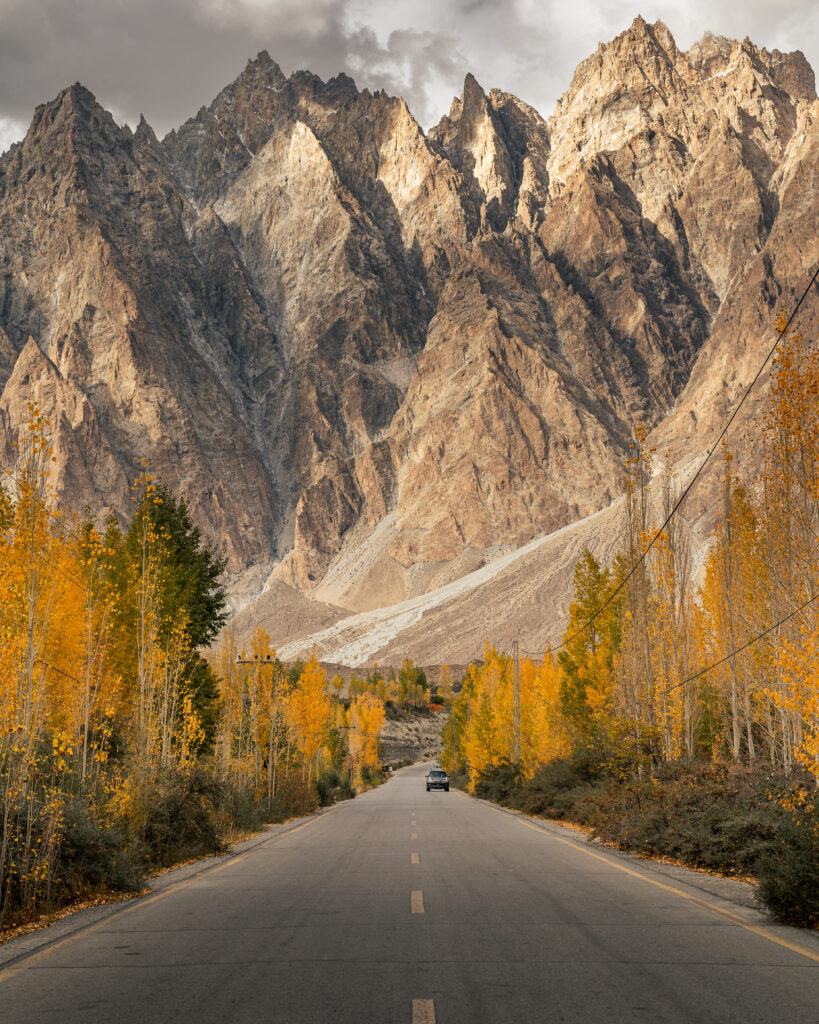 Passu Cones while on the Karakoram Highway
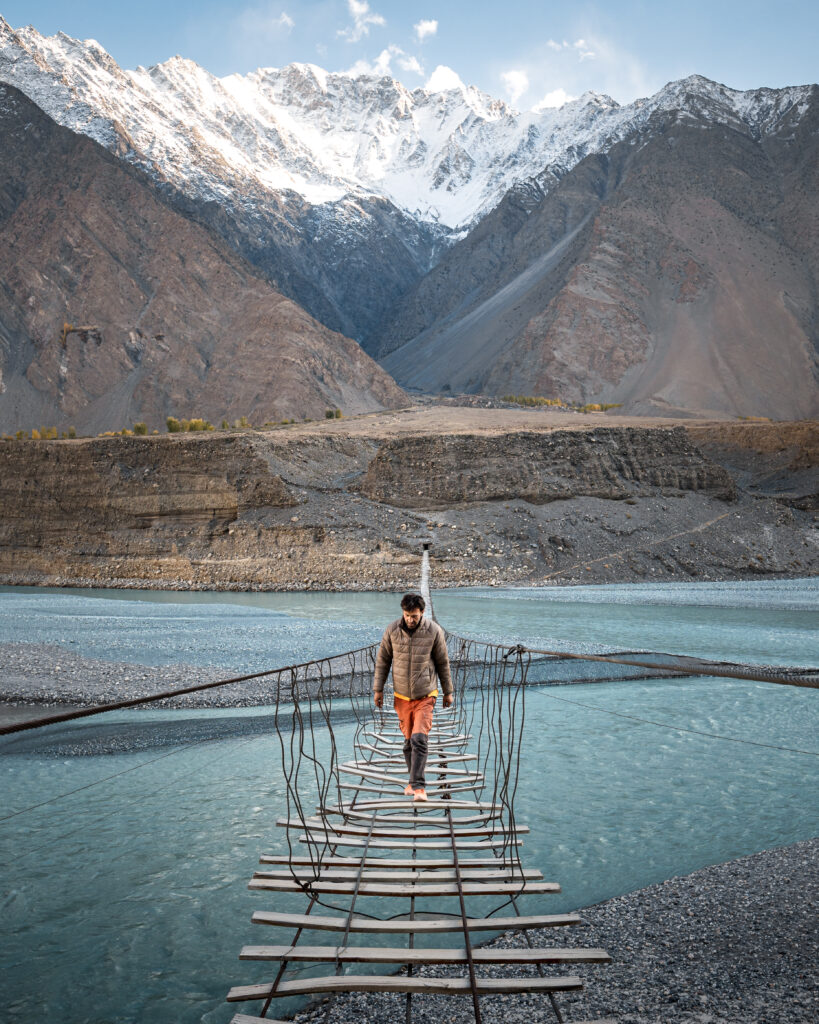 Passu Bridge
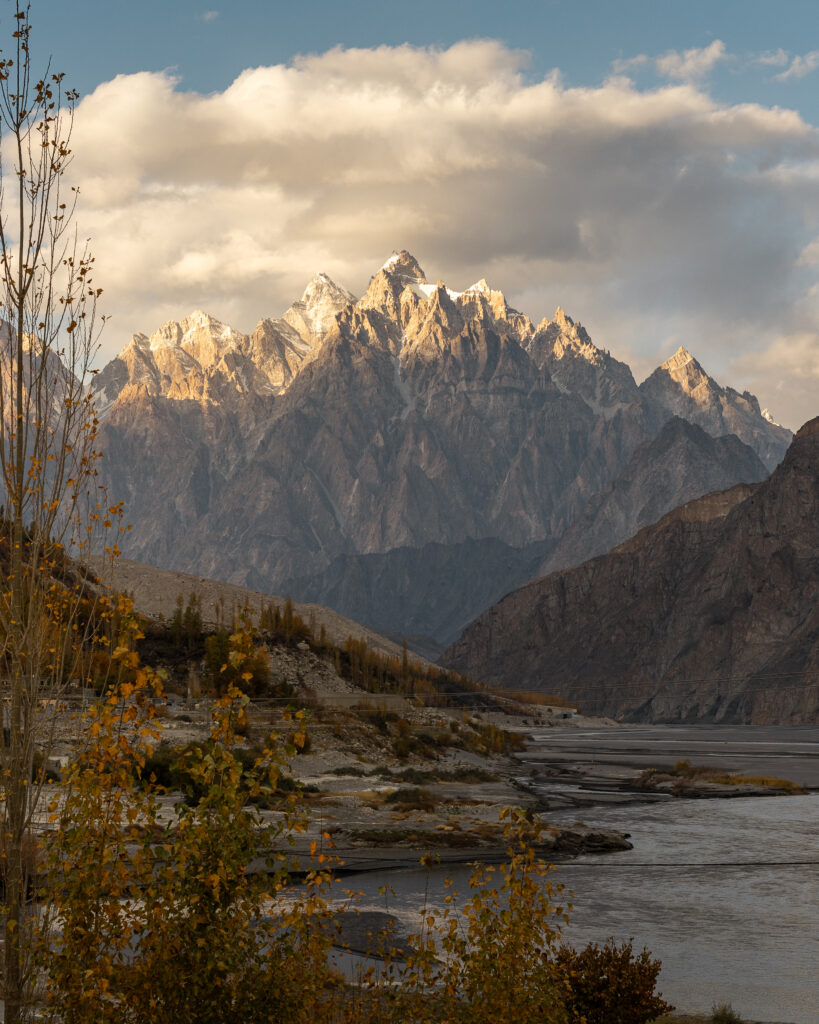 Passu Cones (Cathedral) at Sunset
Where to Stay in Hunza Valley
Lower Hunza
In Lower Hunza, some travellers base themselves in Aliabad, which is close to the main transport connections and practical for catching shared vans and jeep rides. Backpackers often stay at Hostel Nomads, which is convenient and budget-friendly.
I prefer to stay in Karimabad, which is more beautiful and quieter than Aliabad. Karimabad provides easier access to the major sights, including Baltit and Altit Forts, and the starting points for popular hikes like Ultar Meadows and Eagle’s Nest. It also has a better selection of cafés and restaurants catering to tourists. Accommodation here ranges from budget guesthouses to higher-end hotels like Serena Hotel Hunza. My favourite is The Old Hunza Inn, tucked slightly away from the centre with stunning views over the valley, offering a quiet retreat while still being within walking distance of Karimabad’s cafés and trails.
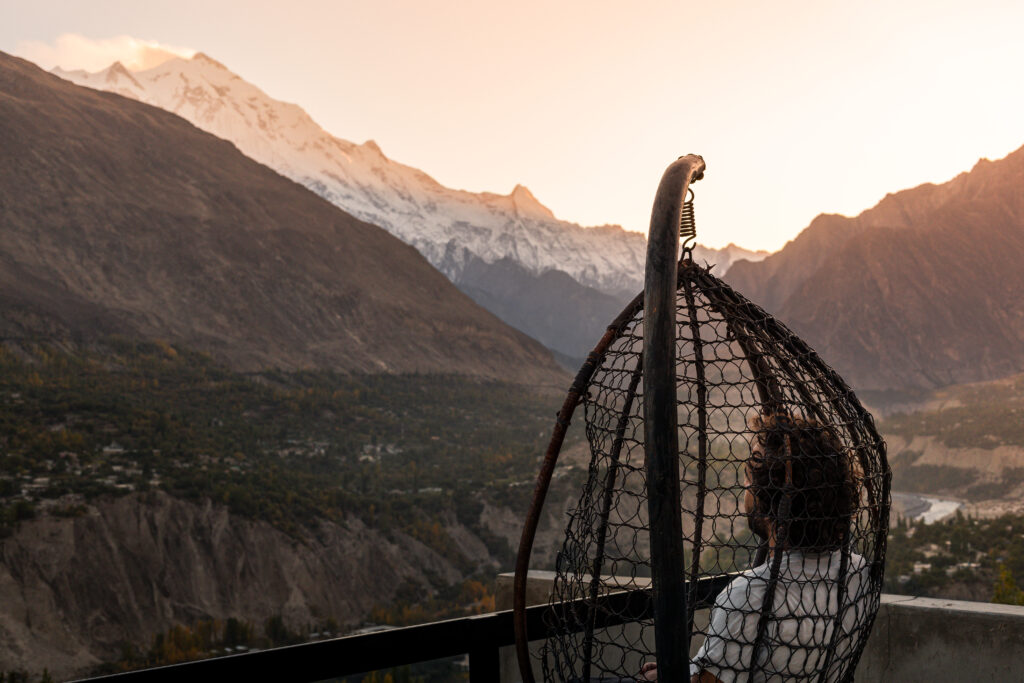 Sunset Views from the terrace at Old Hunza Inn
Upper Hunza
In Upper Hunza, if you prefer staying along the Karakoram Highway for convenience, Gulmit is a practical choice, with basic guesthouses and homestays. Between Gulmit and Passu, Rehman Backpacker’s Hostel provides affordable accommodation right on the highway. Passu also has a few basic guesthouses and homestays, including The Cathedral, which cater to travellers passing through.
However, my favourite place to stay in this region is Ghulkin village. Tucked away about 10 minutes’ drive up into the mountains from the highway, it’s much quieter and more scenic. From Ghulkin, there are several treks starting right from the village, and it’s not uncommon to spot ibexes in the surrounding slopes, even from your bed in the morning. It’s a truly peaceful, almost paradisiacal setting. My friends run Rehman’s Homestay, and I always stay there; it feels like being part of the family, which makes it even more special.
Usually homestays in Upper Hunza include meals which are made with fresh local ingredients. Staying in Ghulkin offers both comfort and an authentic connection to village life, while Gulmit or Passu remain better for those who prefer being close to the main highway and transport options.
Eating in Hunza Valley
Lower Hunza
If you’re travelling through northern Pakistan and need a break from the usual biryani, daal, and standard Pakistani dishes, Karimabad is probably the best place in the region to find a variety of cafés, restaurants, and traditional Hunza options. The town has plenty of choices to satisfy whatever you’re craving, from hearty local dishes to coffee, baked goods, and light meals.
For authentic Hunza cuisine, Hunza Pavilion is the place to go. Here, you can try local specialties such as Chap Shuro, a doughy pastry filled with meat or vegetables; Burutz Berikutz, a chappati made with fresh cheese and herbs; a local spinach-based “pasta” dish (unique to Hunza); and Giyaling, my personal favourite, a pancake served with honey and apricot oil. These dishes showcase the valley’s fresh, local ingredients, including dairy, grains, and garden vegetables.
For more traditional Pakistani food, Rainbow Restaurant and Dawat-e-Hunza are reliable choices, offering hearty meals with a range of curries, rice, and grilled items.
Karimabad also has several cafés ideal for breakfast, coffee, or desserts. Café de Hunza is well-known for its traditional walnut cake, while Tree House Café and Mountain Cup Café provide cosy spots for coffee, pastries, and light meals. These cafés are perfect for relaxing after a morning of sightseeing or trekking.
Overall, Karimabad has the best combination of authentic Hunza dishes, Pakistani staples, and cafés for independent travellers. Aliabad, while convenient for transport, is not really a food destination, so most visitors choose to eat and spend their time in Karimabad.
Upper Hunza
Food options in Upper Hunza are more limited than in Lower Hunza and tend to be basic, traditional Pakistani eateries rather than places catering to tourists. For ease, I strongly recommend staying in a homestay that includes breakfast and dinner, especially in villages like Ghulkin, Gulmit, or Passu, so you don’t have to worry about finding meals in remote areas.
That said, there are a few spots that stand out and are worth seeking out. In Passu, Yak Grill is probably one of my favourite places to eat in Pakistan. They serve delicious yak burgers, and the restaurant itself has a fun, expedition-road vibe with stickers on the doors, typical of establishments along popular trekking and driving routes. From here, the view over the Passu Cones is incredible.
Just across the street, up a few stairs, is Glacier Breeze. This café has excellent views of both the cones and the Passu Glacier, and it’s worth stopping here for tea and the most delicious apricot cake, a traditional Hunza dessert.
In Gulmit, there’s also a beautiful café built entirely out of wood, with stunning craftsmanship and a warm, cosy atmosphere, perfect for a quiet coffee break while enjoying the mountain scenery.
While meals in Upper Hunza are simpler and fewer in number than in Karimabad, combining homestay meals with stops at these standout cafés and restaurants allows you to enjoy both traditional Hunza flavours and a few unique culinary experiences with incredible views.
Practical Tips for Travelling in Hunza Valley
Hunza Valley is one of the easiest regions in northern Pakistan for independent travel, but a few practical considerations can make your trip smoother and more enjoyable.
Money
Cash is king in Hunza. The only ATM that works for foreigner’s cards is Alfalah Bank, which is only available in Aliabad. However, this bank isn’t available anywhere norther of Aliabad so plan accordingly to make sure you have enough money before going North.
Connectivity
Mobile data is essential because Wi-Fi isn’t always reliable, especially in Upper Hunza, and often runs very slowly. Power outages are frequent, so Wi-Fi may be unavailable altogether. The company with the best coverage in Gilgit-Baltistan is SCO, and you can get a local SIM card for just a few euros from their office in Aliabad. Mobile data coverage exists along the Karakoram Highway but is patchy in remote villages and trekking areas.
Permits & Regulations
No special permits are needed for Lower and Upper Hunza for independent travellers. Always respect local customs, especially when visiting more remote villages, and dress modestly in accordance with local norms.
Health & Safety
Altitude in Hunza can affect some travellers, particularly in Upper Hunza and trekking areas. Stay hydrated and take it slow during hikes. Roads are generally safe, but mountain driving can be tricky, especially in rain or snow.
Final Thoughts
Hunza Valley is a region that rewards independent travellers who take the time to explore. From the historical forts and cafés of Lower Hunza to the remote villages, glaciers, and peaks of Upper Hunza, the valley offers a mix of natural beauty and traditional life.
For those travelling independently, the journey is just as memorable as the destinations, whether hitchhiking along the Karakoram Highway, hiking to Baskochi Meadows or the Passu Glacier, or crossing sketchy suspension bridges with the Passu Cones in view.
Lower Hunza is convenient and lively, while Upper Hunza feels quieter and more remote. Staying in homestays, walking through villages, and taking short treks lets you experience the valley at your own pace. Hunza isn’t just a place to see, it’s a place to feel, explore, and easily one of my favourite places on the planet.
More Pakistan Travel Guides
If you’re planning to travel Pakistan independently, these in-depth guides will help you navigate the country, travel on a budget, and explore far beyond the usual routes: