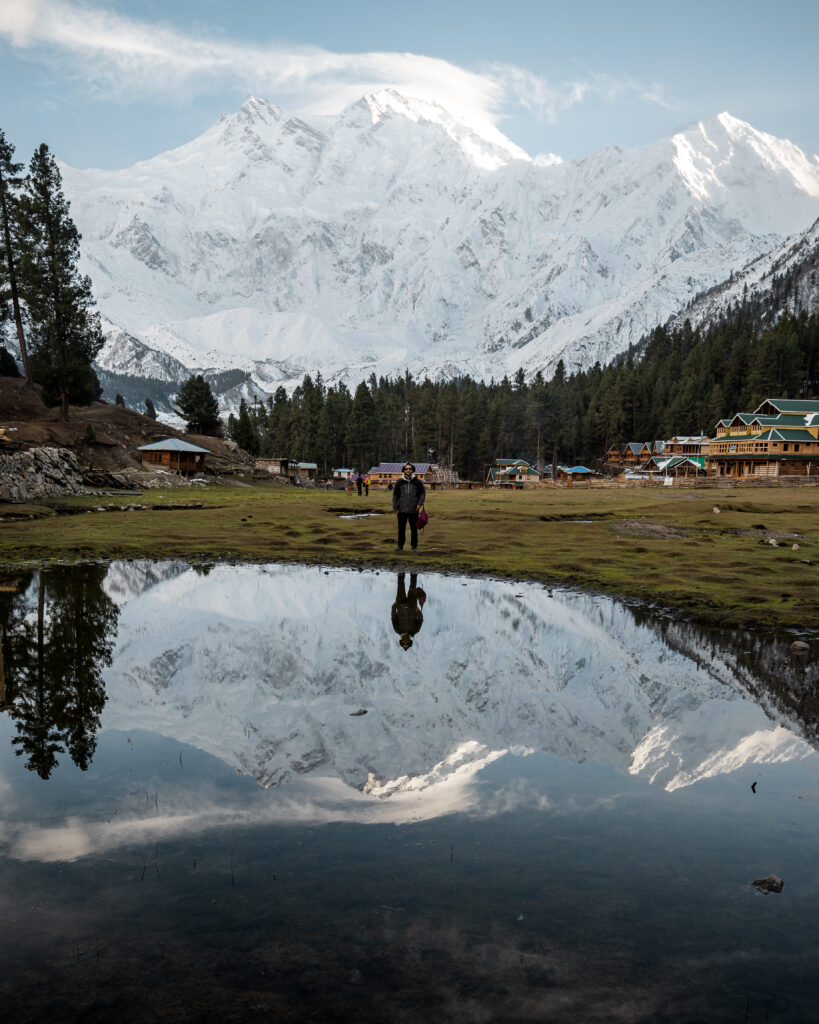
The Fairy Meadows trek is one of Pakistan’s most spectacular high-altitude adventures, offering dramatic views of lush alpine forests, expansive meadows, and the towering Nanga Parbat, famously known as the “Killer Mountain” and the ninth-highest peak in the world at 8,126 metres. Unlike many other 8,000-metre mountains, its base camp is surprisingly accessible, making this trek ideal for independent travellers seeking breathtaking mountain scenery without technical climbing.
The trail winds through pine forests and open meadows, gradually rising toward Beyal Camp and the glacier viewpoint, before splitting toward either the German Viewpoint or the full Nanga Parbat Base Camp. Along the way, you’ll witness magical sunrise and sunset views, tranquil meadows with wood guesthouses, and a rare sense of solitude. Whether you’re a seasoned trekker or attempting your first high-altitude adventure in Pakistan, the Fairy Meadows trek delivers unforgettable landscapes and a close-up encounter with one of the world’s most iconic and formidable peaks.
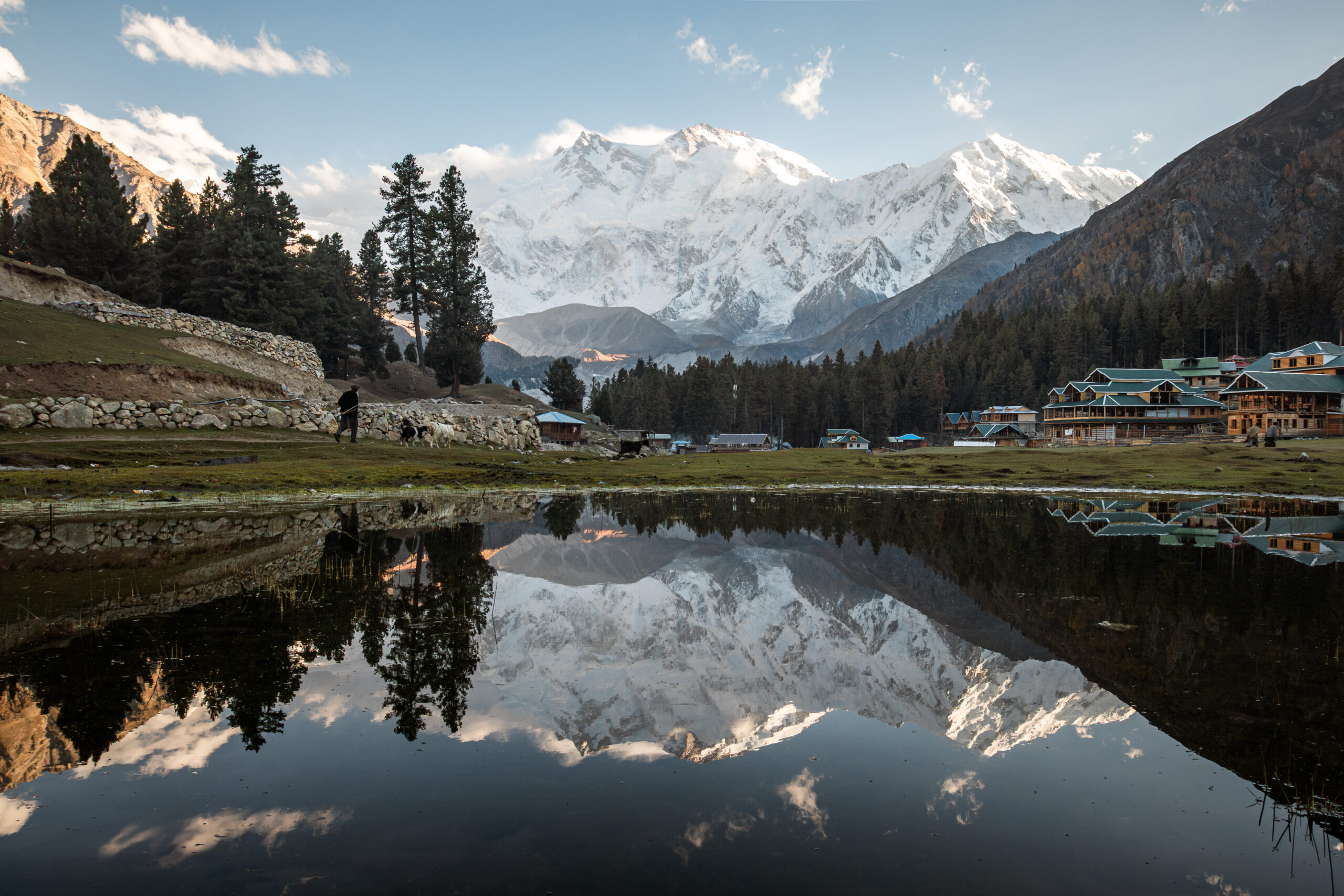
 Fairy Meadows with Nanga Parbat reflection
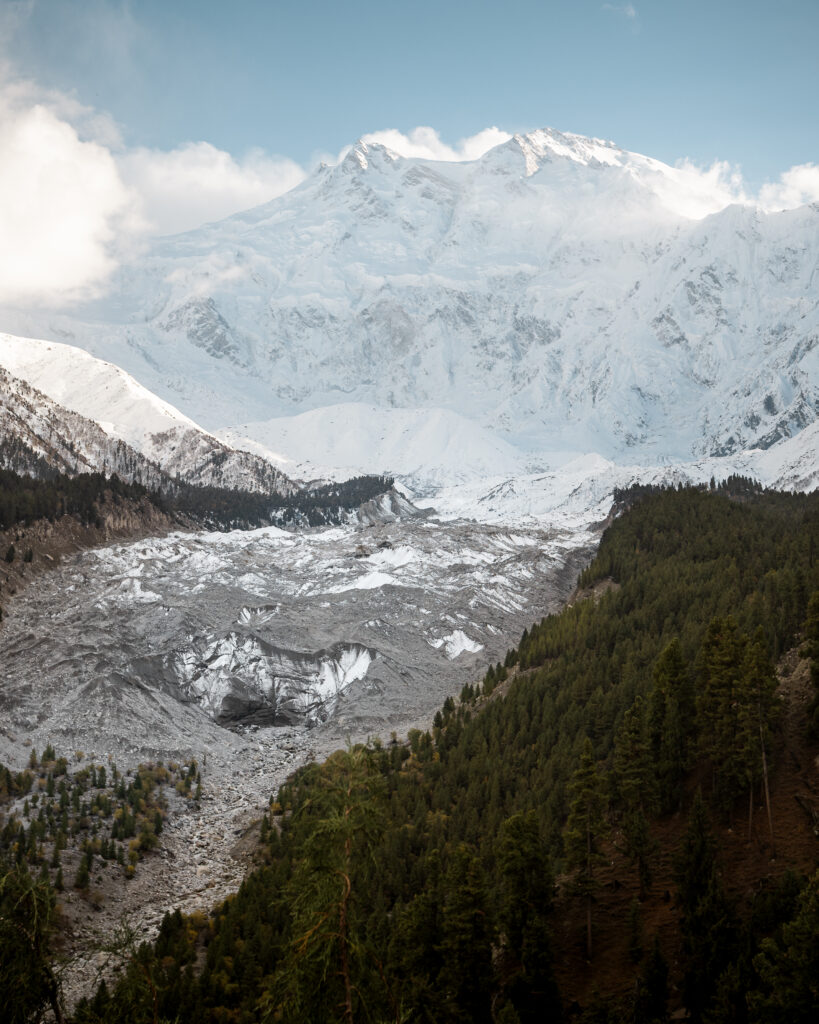 Fairy Meadows
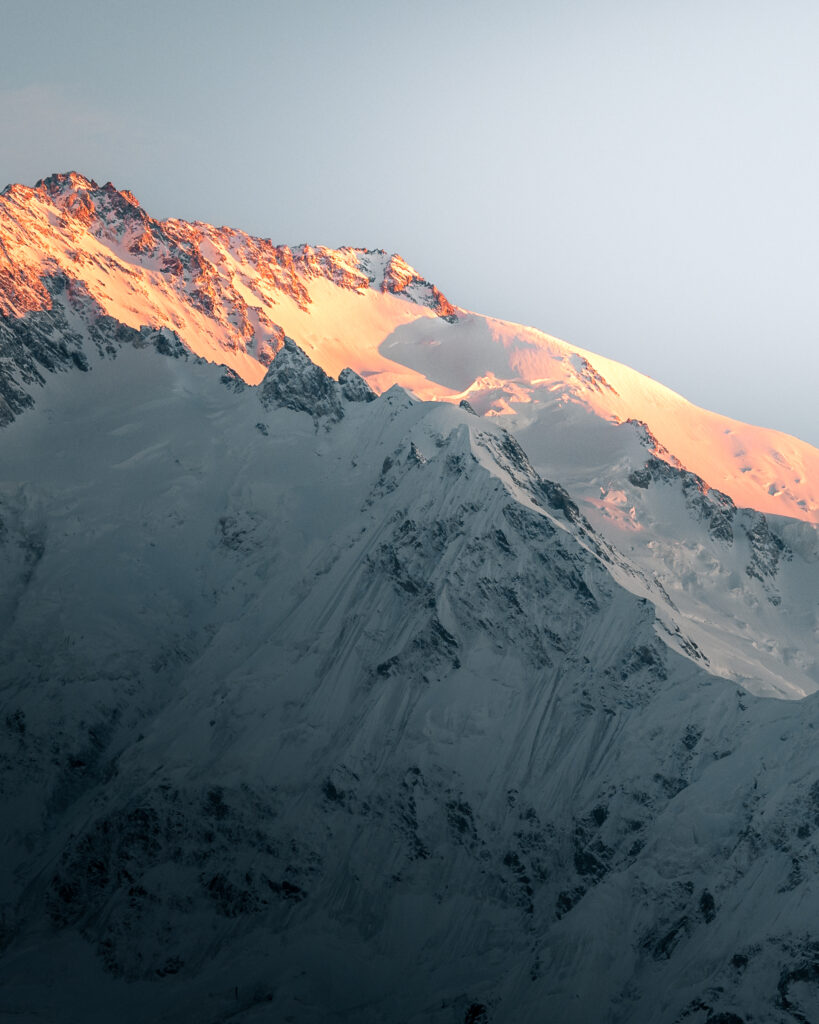 Nanga Parbat at Sunset
Quick Overview
The trek to Fairy Meadows and onwards to Nanga Parbat Base Camp is one of the most accessible high-mountain hikes in Pakistan, and one of the easiest ways in the world to stand at the foot of an 8,000-metre peak. Rising to 8,126 metres, Nanga Parbat is the ninth-highest mountain on Earth, yet reaching its base camp requires 2 days, no technical climbing, and can be done independently.
The journey begins at Raikot Bridge, where a dramatic jeep ride climbs high above the Indus River before a short hike leads you into the forested plateau of Fairy Meadows. From here, the trail continues through alpine scenery to Beyal Camp and eventually to the base camp, where the landscape opens up beneath the immense face of Nanga Parbat.
While Fairy Meadows has become increasingly popular, especially with local tourists, continuing towards base camp offers a very different experience: quieter, more remote, and surrounded by some of the most impressive mountain scenery in Pakistan.
Trek Overview
Location: Gilgit-Baltistan, Pakistan
Best Season: May to October
Starting Point: Raikot Bridge (on the Karakoram Highway)
End Point: Nanga Parbat Base Camp (via Fairy Meadows)
Duration: 2-3 days
Elevation gain: ~1,100 metres from Tatu Village to Base Camp
Maximum Altitude: ~4,100 m
Difficulty: Moderate
Accommodation: Guesthouses in Fairy Meadows & Beyal Camp
Guide? Not necessary, the trail is very clear
Note: While Fairy Meadows itself is no longer a hidden gem, its beauty still feels otherworldly, especially, if you stay in one of the quieter guesthouses on the edge of the forest. Just try to avoid weekends and holidays, when domestic tourists often flood the area.
Is It Worth Going to Fairy Meadows?
This is probably the most common question when it comes to Fairy Meadows and the answer isn’t completely straightforward.
There’s no denying that Fairy Meadows is one of the most beautiful places I’ve ever been. Standing in a lush alpine meadow, surrounded by pine forest, with the massive face of Nanga Parbat rising in front of you, it almost doesn’t feel real. There’s something surreal about it, especially in the early morning or late evening when the light hits the mountain and everything goes quiet.
But it’s also important to be honest: Fairy Meadows is no longer a hidden gem.
During the summer months, it gets very crowded with domestic tourism, and the atmosphere can feel far from remote. Guesthouses fill up, the trails are busy, and the sense of wilderness that draws many travellers to Pakistan can feel diluted.
That said, timing makes all the difference.
I’ve been there twice, both in October, and had completely different experiences. The first time was in early October: perfect conditions, golden autumn colours, clear views, and very few people. The second time was in mid-October: fresh snow had already fallen, making the trail to base camp more difficult and potentially dangerous.
Based on this, I’d strongly recommend visiting in late September to early October. You’ll likely get stable weather, beautiful autumn colours, and far fewer crowds. When I went during this period, there were fewer than 25 people in total around Fairy Meadows, which made the experience feel peaceful and almost untouched.
If you go at the right time, then yes: it is absolutely worth it.
However, it’s hard to ignore how quickly things are changing. Each year, more accommodation is being built, and development appears largely unregulated. It’s clear that Fairy Meadows is growing in popularity fast, and there’s a real possibility that overtourism could take away some of its magic in the coming years.
But for now, it still holds onto that sense of wonder, and if you catch it at the right moment, it’s a place that will stay with you long after you leave.
How to Get to Fairy Meadows
Reaching Fairy Meadows is part of the adventure, and getting there involves a mix of long-distance travel, a dramatic jeep ride, and a short hike into the mountains.
Islamabad → Chilas / Raikot Bridge
Most travellers begin their journey in Islamabad. You have a few options:
If you’re travelling independently and on a budget, the bus to Chilas is usually the most straightforward option. From Chilas, it’s about a 1-hour drive to Raikot Bridge, the starting point of the trek. You can take a local bus, shared jeep, or hitchhike to Raikot Bridge.
Gilgit → Raikot Bridge
If you’re coming from Gilgit, you’ll need to travel back along the Karakoram Highway towards Raikot Bridge. You can take the public mini bus from the main station in Gilgit. The journey will take 2-3 hours and cost around 500 PKR. You can also opt for arraging your own private transfer in Gilgit or hitchhiking to Raikot bridge instead.
Raikot Bridge → Tatu Village (Jeep Ride)
From Raikot Bridge, you’ll need to take a jeep to Tatu Village in the infamous Fairy Meadows road. It’s a narrow dirt track carved into the mountainside, with steep drop-offs and no barriers. It’s often described as one of the most dangerous roads in the world. The jeep ride takes around 2h and costs from 16,000-20,000 PKR. The price is fixed for all the jeeps are the same, there is no negotiating, but it can vary depending on the season.
Pro Tip: You can share the jeep with other travellers in order to split the cost. I recommend you to try to arrive to Raikot Bridge as early as you can, so if you’re travelling solo, you can wait there and join other independent travellers.
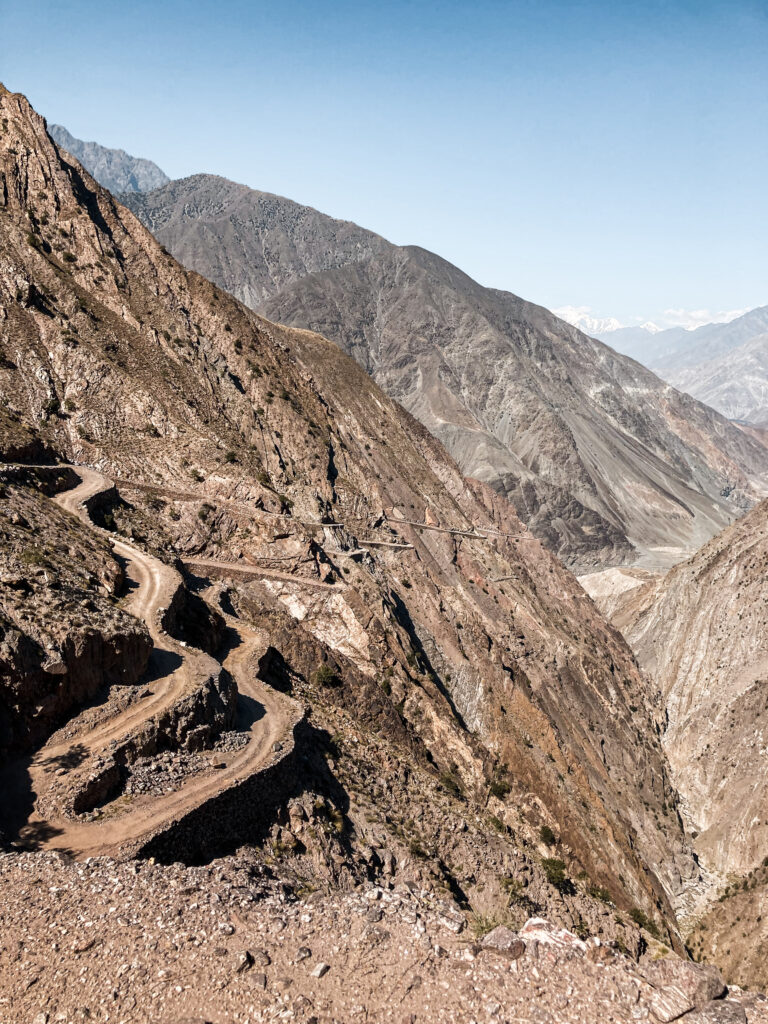 Dangerous Road to Fairy Meadows
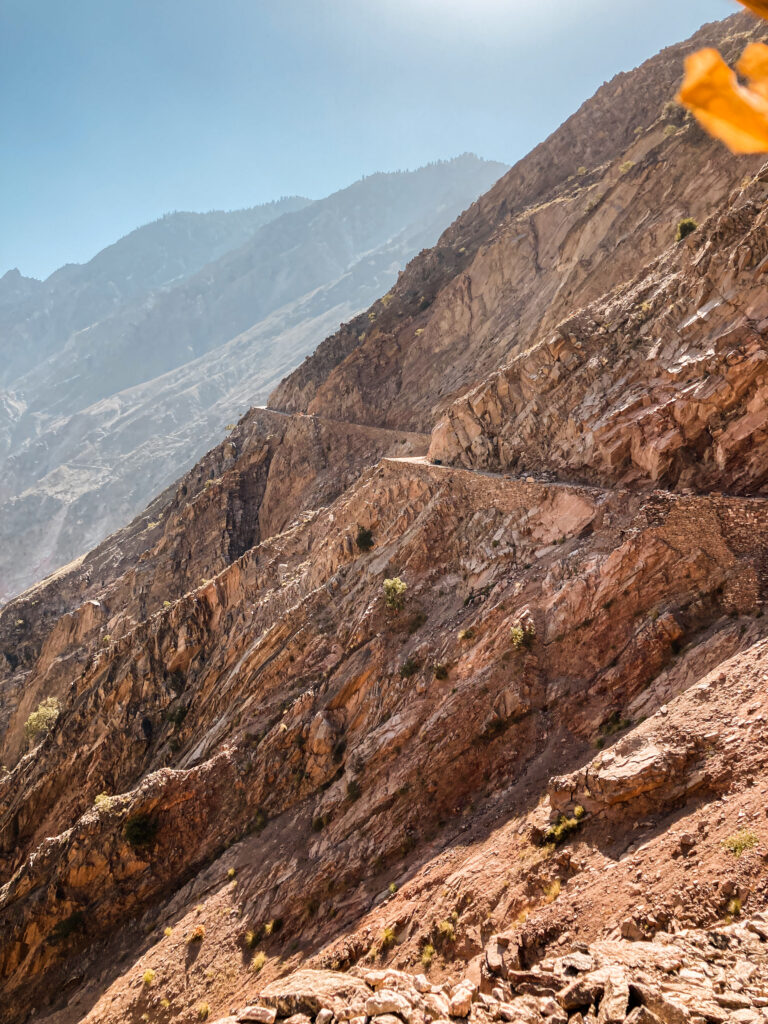 Dangerous Road to Fairy Meadows
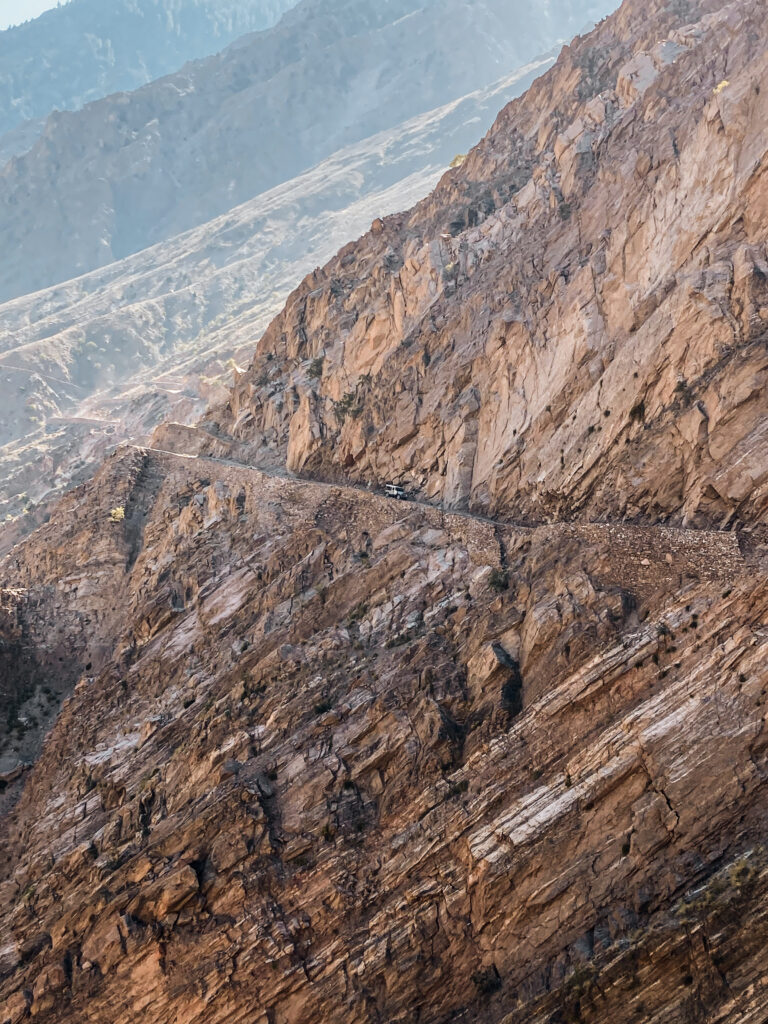 Dangerous Road to Fairy Meadows
Tatu Village → Fairy Meadows (Hike)
From Tatu, the only way forward is on foot. The trail climbs gradually through pine forest, with a steady incline but no technical difficulty. The trail is very well marked and nearly impossible getting lost. Use offline Maps.Me when in doubt. Along the way, you’ll pass a few small tea huts where you can rest.
It’s around 5km and it’ll take you around 2-3h. Eventually, the forest opens up and you step into Fairy Meadows, a wide alpine clearing dotted with wooden cabins, with the towering face of Nanga Parbat rising in front of you. After the long journey to get here, the view feels incredibly rewarding.
Note: There are also the option of taking a horse to Fairy Meadows for the people that can’t or don’t feel like hiking up. This is, however, more popular in high season, since most of the domestic tourism tends to take the horse. But you’ll still find some locals with horses there in shoulder season too.
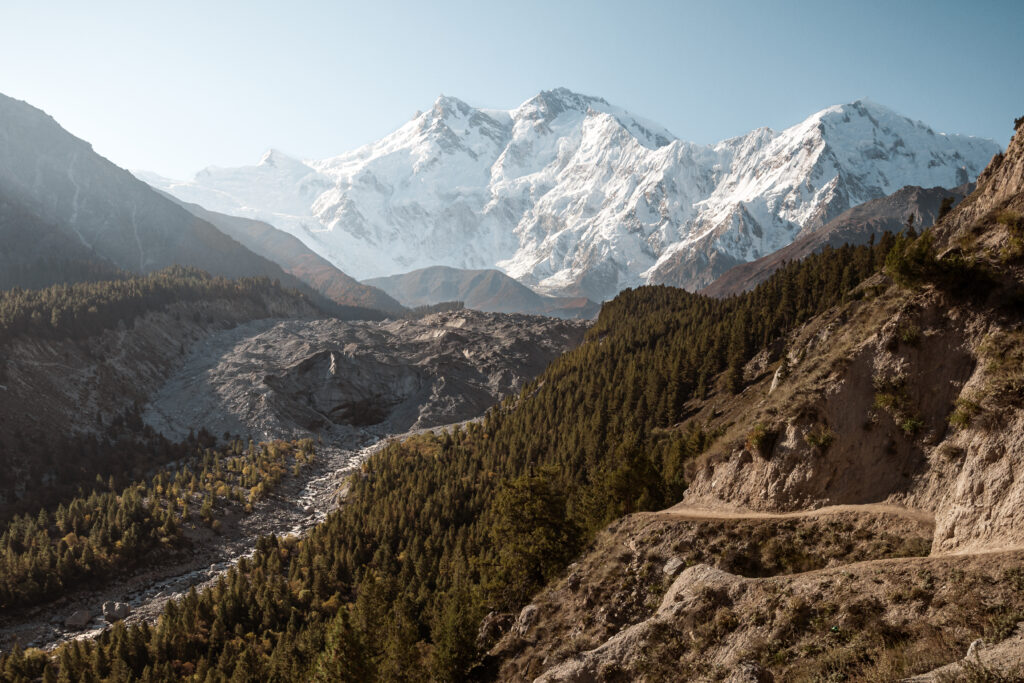 Trekking to Fairy Meadows
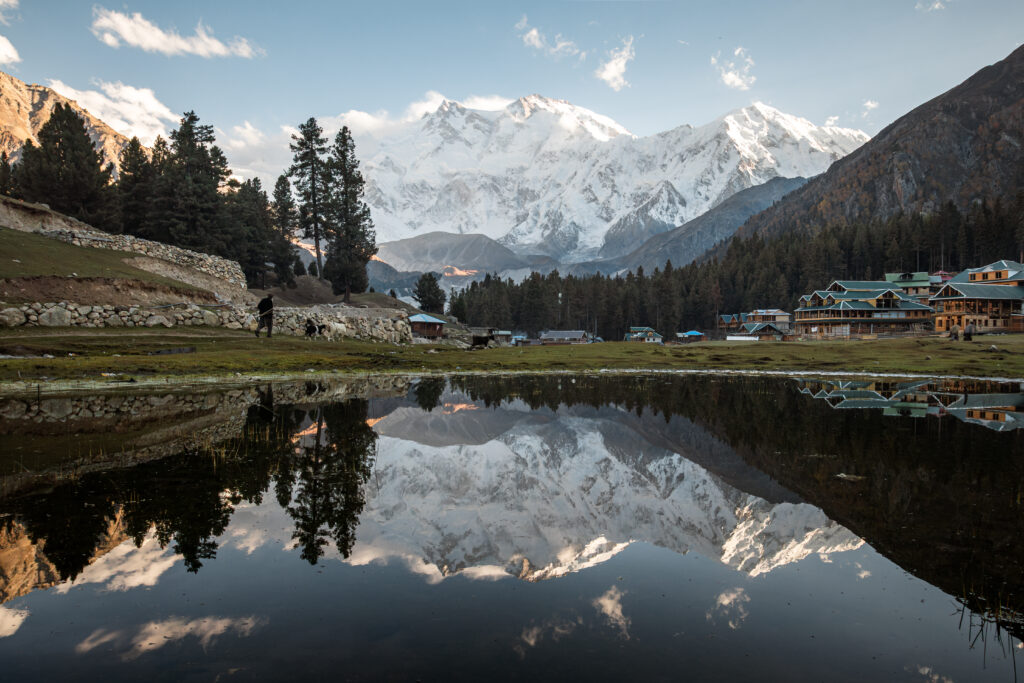 Fairy Meadows at sunset with Nanga Parbat reflection
Trek to Nanga Parbat Base Camp (And Alternatives)
The hike from Fairy Meadows towards Nanga Parbat is the real highlight of this area, but reaching base camp isn’t always guaranteed. Weather, snow conditions, or confidence on exposed terrain can all play a role.
The good news is that you don’t have to go all the way to base camp to experience something incredible. There are a few natural stopping points along the way, each offering its own reward.
Fairy Meadows → Beyal Camp
From Fairy Meadows, the trail begins with a gentle walk through pine forest before opening into wide alpine meadows. After about 1.5 to 2 hours, you reach Beyal Camp, a small cluster of huts where you can rest and have tea before continuing.
Beyal Camp → Glacier Viewpoint
From Beyal, the trail continues with a gradual climb across open terrain. After about 1.5 hours, you’ll reach a viewpoint overlooking the glacier, where the landscape starts to feel much more rugged and alpine. Up to this point, the trail is still relatively easy and can usually be reached even in less ideal weather or light snow. If conditions aren’t great, this is a solid and worthwhile turnaround point.
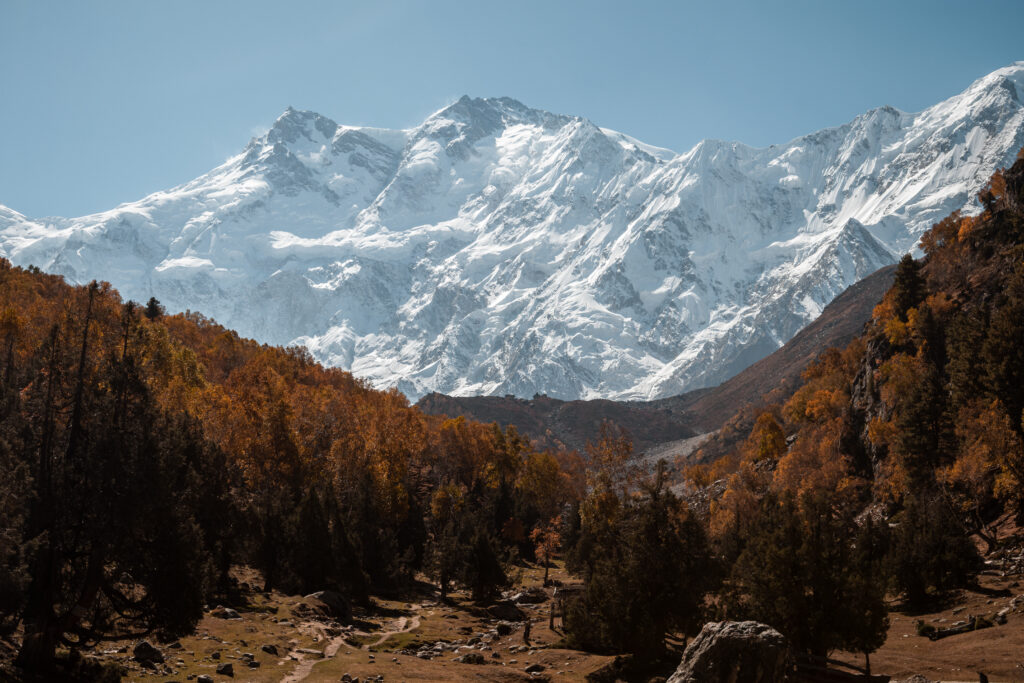 Views of Nanga Parbat
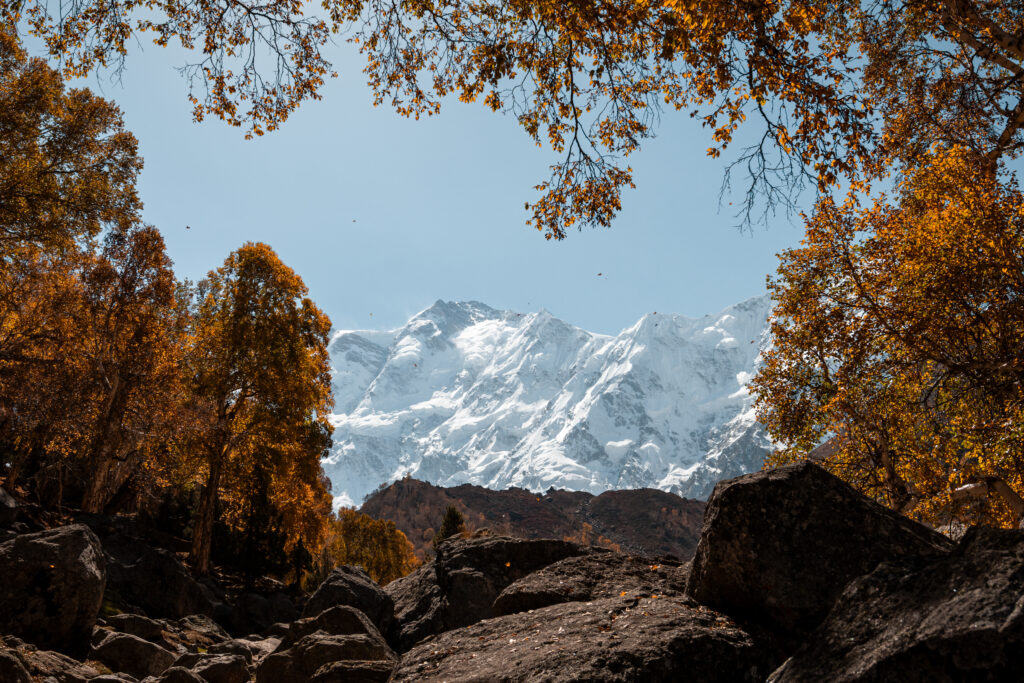 Views of Nanga Parbat through the autumn leaves
From the Glacier Viewpoint: Two Options
This is where the hike becomes more of a decision. Depending on the weather conditions or on how you’re feeling you can either choose to trek back to Fairy Meadows or carry on and choose one of these two options:
Option 1: German Viewpoint (Recommended)
The first is the German Viewpoint, which is a steep ascent of around 45 minutes to an hour. The climb is moderate but rewarding, offering arguably one of the best views of Nanga Parbat. From this vantage point, the massive face of the mountain feels incredibly close and imposing, and in my opinion, the view here can be even more striking than from base camp itself. This is an excellent choice for those short on time, less confident on exposed terrain, or simply seeking the most dramatic panorama without committing to the full hike.
Option 2: Continue to Nanga Parbat Base Camp
The second option is to continue all the way to Nanga Parbat Base Camp, which adds another two to three hours from the glacier viewpoint. The trail becomes narrower, with some exposed sections over rocky and uneven ground. While it is still non-technical, it requires more confidence, especially if trekking solo. If you’re unsure, hiring a guide from Fairy Meadows that morning can make the final section safer and more comfortable. At around 4,100 metres, you’ll reach base camp, a raw and rugged environment at the foot of the mountain. The destination is impressive, but the journey itself is equally memorable.
Important Note: there is almost no infrastructure at Nanga Parbat Base Camp. Very few climbers attempt this mountain, so unlike Fairy Meadows or Beyal Camp, there are no guesthouses, huts, or food options. If you plan to reach base camp, it’s best to carry your own food and water for the trek. And if you intend to camp or stay overnight, you need to be fully self-sufficient, bringing all your gear and supplies.
Regardless of which option you choose, the return is along the same trail, retracing your steps to Fairy Meadows. The total round-trip time can vary: five to six hours if you stop at the glacier viewpoint, six to eight hours if you continue to the German Viewpoint, and seven to ten hours for those who make it all the way to base camp.
Even stopping at the glacier viewpoint, or pushing on to the German Viewpoint, gives you a powerful sense of the scale and beauty of Nanga Parbat. Depending on the conditions and your comfort level, choosing not to continue to base camp can be both the safer and the smarter decision, without compromising the awe-inspiring experience of this trek.
Can You Do It Without a Guide?
One of the best things about the Fairy Meadows to Nanga Parbat Base Camp trek is that you absolutely can do it independently. Unlike many other 8,000-metre peaks, the trail here is well-trodden, clearly marked, and doesn’t require technical climbing skills. For solo travellers or small groups, this makes it one of the most accessible high-mountain experiences in the world.
That said, there are a few things to keep in mind. The jeep ride from Raikot Bridge to Tatu is unavoidable, and the road is notoriously rough and narrow. Beyond that, the hike from Tatu to Fairy Meadows is easy and can be done without a guide. From Fairy Meadows to Beyal Camp and the glacier viewpoint, the path remains gradual and straightforward, even if there’s some snow.
Once you reach the glacier viewpoint, however, the trail splits. The German Viewpoint involves a short but steep ascent, and continuing all the way to base camp includes some narrow, exposed sections over rocky terrain. If you’re not confident on these final sections, hiring a guide for the morning can be a wise precaution, particularly for solo hikers or those unfamiliar with high-altitude trails.
Even without a guide, the trek is highly manageable for anyone in decent physical condition. With proper preparation, including starting early, bringing enough water and snacks, and being aware of weather conditions, it’s entirely possible to enjoy this incredible journey independently while soaking in some of the most breathtaking mountain scenery in Pakistan.
For those seeking the full experience, the independence adds to the sense of adventure, letting you move at your own pace, pause wherever you like, and truly connect with the wilderness around Nanga Parbat.
Where to Stay: Fairy Meadows vs Beyal Camp
When it comes to accommodation on this trek, you essentially have two main options: staying in Fairy Meadows itself or at Beyal Camp, closer to the trailhead for Nanga Parbat Base Camp. Both have their advantages, but your choice depends on what you value most: convenience for trekking or the atmosphere and views.
Beyal Camp is closer to the glacier viewpoint and base camp, which means staying there can shorten the hike the next day. It’s quieter and more remote, giving you an early start for base camp, but it doesn’t offer the same magical surroundings as Fairy Meadows. The cabins are simple, and the views of Nanga Parbat aren’t as dramatic from here.
I personally prefer to stay in Fairy Meadows, even though it adds a few hours to the hike to base camp. Waking up or watching the sunset from the meadows is absolutely otherworldly. The golden light on Nanga Parbat, the way the clouds drift over the valley, and the peacefulness of the alpine forest all make the extra trek worth it. The experience feels surreal in a way that staying closer to the base camp just can’t match.
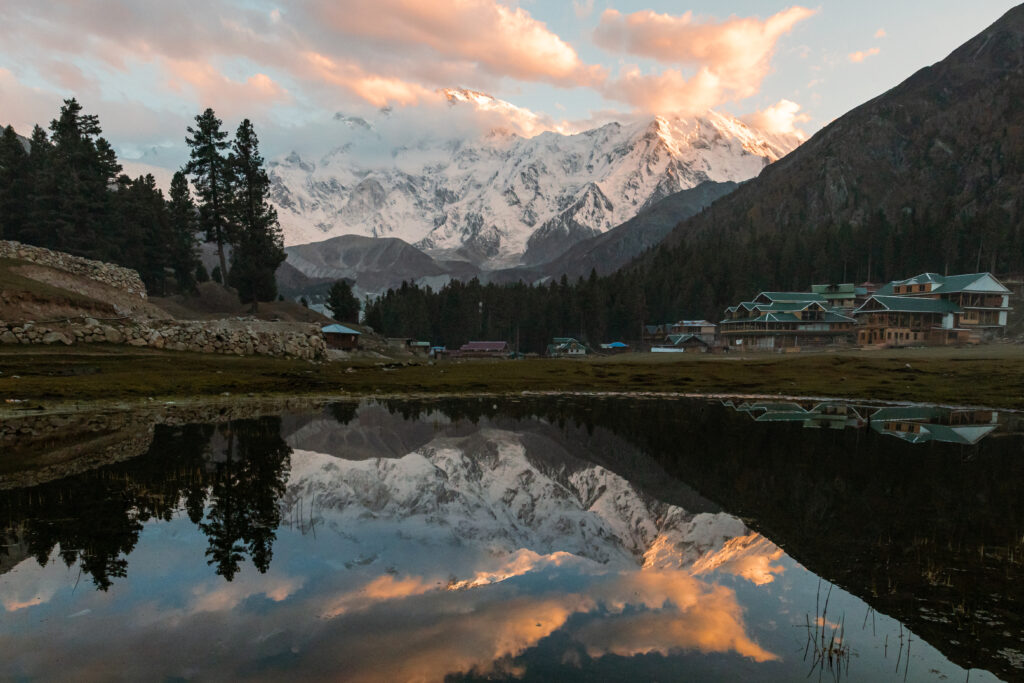 Sunset at Fairy Meadows
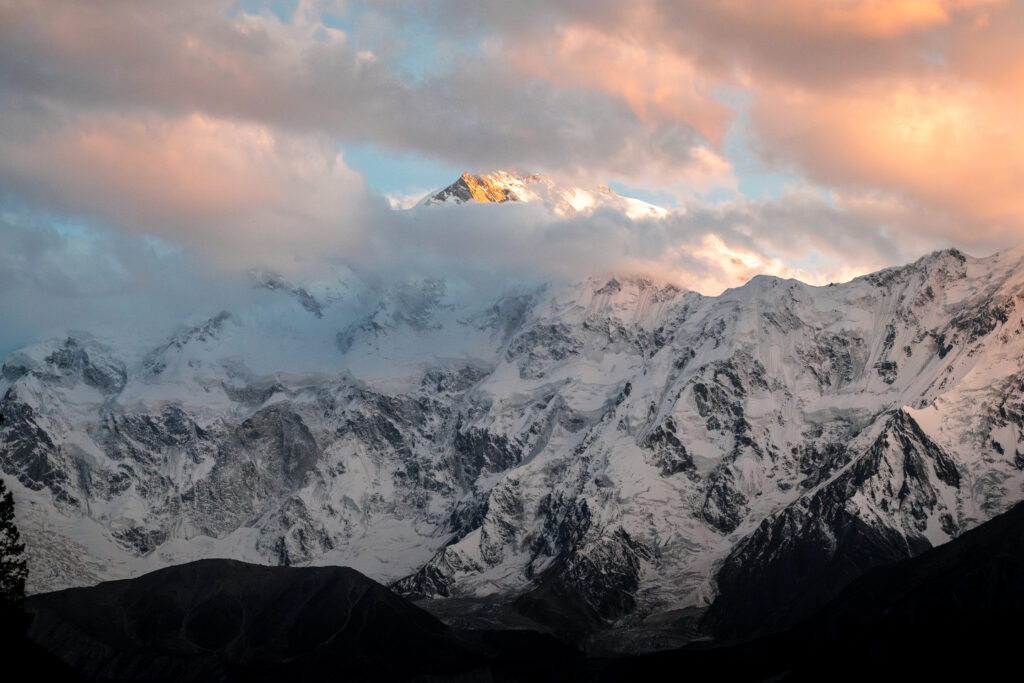 Nanga Parbat at Sunset
Both times I’ve stayed at the same budget guesthouse, called Greenland, which I highly recommend. The guesthouse includes breakfast and dinner, which is convenient after a long day of trekking. I paid a total of 5,250 PKR per night, and the comfort and hospitality made the stay very enjoyable.
In short, if your priority is spectacular views, atmosphere, and sunrise or sunset magic, Fairy Meadows is the place to stay. If your priority is cutting the hike to base camp as short as possible, Beyal Camp is the practical option, but you’ll miss out on the extraordinary setting of the meadows themselves.
Costs of Trekking to Fairy Meadows & Nanga Parbat Base camp
While trekking in Pakistan is generally very affordable, the journey to Fairy Meadows and onwards to Nanga Parbat Base Camp involves a few specific costs to plan for.
| Item | Cost | Notes |
|---|---|---|
| Reaching Raikot Bridge | 500-3,500 PKR | Depending if you’re coming from Gilgit or Islamabad |
| Jeep Raikot Bridge → Tatu | 16,000-20,000 PKR | Depending on season: can be cheaper if shared with other travellers |
| Accommodation (Fairy Meadows) | 5000-10000 PKR per night | Depends if budget or mid-range accommodation; it usually includes breakfast and dinner |
| Accommodation (Beyal Camp) | Slightly Cheaper | Basic huts and guesthouses; closer to base camp |
| Meals | – | Usually breakfast and dinner included in guesthouse rate |
| Other food or snacks | Varies | Must carry some snacks when trekking to base camp; buy before coming to Fairy Meadows |
| Total (3 days – 2 nights trek, independent) | 20,000 – 40,000 PKR | Covers transport, accommodation, and meals |
The total cost of the trek can vary depending on a few key choices. Sharing the jeep from Raikot Bridge is the biggest factor, splitting it with others can significantly reduce your expenses. Choosing budget accommodation keeps costs reasonable, while staying at Beyal Camp or more basic huts might save a little more.
For those who prefer maximum independence and are properly equipped, it’s also possible to wild camp along the trail, which would make the trek even cheaper. Ultimately, with careful planning, this incredible journey to Fairy Meadows and Nanga Parbat Base Camp can be done on a modest budget without compromising the experience.
What to Pack
Packing thoughtfully can make or break your trek to Fairy Meadows and Nanga Parbat Base Camp. Even though the hike is non-technical, you’ll be spending time at high altitude, walking on uneven trails, and experiencing rapidly changing weather. Having the right gear ensures comfort, safety, and the ability to fully enjoy the incredible scenery without being weighed down by unnecessary items.
In the following section, I’ll break down the essentials for the trek, from clothing and footwear to food, water, and optional equipment for those planning to continue all the way to base camp or camp overnight.
Things to Know Before Going to Fairy Meadows
Before heading to Fairy Meadows and Nanga Parbat Base Camp, it’s helpful to be aware of a few practical considerations. From the road to local infrastructure, understanding these details will make your trek safer and more enjoyable.
Road Safety
You’ve probably seen plenty of videos online calling the jeep ride from Raikot Bridge to Tatu “the most dangerous road in the world.” While the footage looks dramatic, the reality isn’t quite as extreme. Yes, the road is sometimes very narrow, with steep drop-offs and no barriers, but the jeep drivers here are experts. They’ve been driving these mountains for years and accidents are extremely rare.
The more realistic hazard comes from landslides, which occasionally make sections of the road impassable. When this happens, drivers will usually take you as close as possible to the landslide, and you’ll walk that section on foot, which, surprisingly, can feel more intimidating than the jeep ride itself. On the other side, another jeep awaits to continue the journey. Overall, with experienced drivers and some caution, the ride is thrilling but safe.
Don’t skip travel insurance!
I use SafetyWing for most trips – solid coverage for adventure travel.
Infrastructure
Accommodation along the trek is basic. Fairy Meadows and Beyal Camp have simple wooden huts, and electricity is not always available. Some guesthouses rely on solar power, which can be intermittent, especially at night. Don’t expect modern conveniences; the focus here is on the natural beauty and remote setting.
Wi-Fi & Connectivity
Connectivity is very limited. There’s no Wi-Fi at Fairy Meadows or Beyal Camp. Occasionally, you might get mobile data in the evenings with an SCOM SIM card, just before sunset, when the small solar-powered antenna is still active. After dark, the signal usually drops completely. For most of your trek, expect to be offline, which, honestly, is part of the charm. Download offline maps before you leave (Maps.me or Gaia GPS). Get a local SCOM SIM card from their office in Gilgit.
Need data before you land? Try Saily eSIM
Use code RITAHE1486 for $5 off your first plan.
Money
There are no ATMs along the trek, and most services only accept cash. Make sure you withdraw enough cash before leaving Gilgit or Islamabad. Bank Alfalah is the only one that takes foreign cards.
Avoid ATM fees with Wise
The card I use for all my travel withdrawals – real exchange rate, low fees.
Use Revolut to avoid ATM fees
Good alternative to Wise – I carry both as a backup.
Best Time to Visit
The ideal period to trek to Fairy Meadows and Nanga Parbat Base Camp is late September to early October. During this time, the weather is generally stable, autumn colours are at their peak, and the crowds are minimal. Early October often brings perfect conditions, while mid to late October can already see snow, making the path to base camp more challenging or even risky. Summer should generally be avoided if you want to avoid the heavy influx of domestic tourists, which can make Fairy Meadows feel crowded. Timing your visit carefully ensures you experience the trek at its most beautiful and peaceful.
FAQ About Trekking to Fairy Meadows
Here are some common questions travellers have before attempting this trek, along with practical answers based on experience.
Do I need a guide for this trek?
No, the trail from Fairy Meadows to Beyal Camp and the glacier viewpoint is well-marked and can be done independently. Beyond the glacier viewpoint, the trail to base camp becomes narrower and more exposed. If you’re not confident, hiring a guide for that final section is recommended, but most solo trekkers manage safely.
Do I need a permit?
No official permit is required for independent trekkers to Fairy Meadows or Nanga Parbat Base Camp. You just need to pay for the jeep from Raikot Bridge and accommodation at Fairy Meadows or Beyal Camp. Local authorities and guesthouses handle all informal permissions for the area, so you can trek independently without extra paperwork. Always carry with you your passport and visa though.
What’s the best time to visit?
Late September to early October is ideal. The weather is stable, autumn colours are at their peak, and crowds are minimal. Early October is usually perfect, while mid to late October can bring snow. Summer should be avoided due to heavy domestic tourism.
Is it safe to do the jeep ride from Raikot Bridge?
Yes. While the road is narrow with steep drop-offs, the jeep drivers are highly experienced and accidents are extremely rare. Landslides are the more common hazard, but drivers will get you as close as possible, and you can walk past any blocked sections safely.
How difficult is the hike?
The trek to Fairy Meadows is moderate and accessible to anyone in decent physical condition. The hike from Fairy Meadows to Beyal Camp and the glacier viewpoint is easy, with a gradual incline. The German Viewpoint is steeper but short, while continuing to base camp is longer and involves some exposed rocky terrain. Overall, it’s non-technical but requires stamina.
Can I trek in snow or bad weather?
The trail up to the glacier viewpoint is usually manageable even with some snow. Beyond that, the path to base camp can become exposed and slippery. Check the forecast, and consider hiring a guide if conditions are uncertain.
Are there places to eat along the trail?
Fairy Meadows and Beyal Camp have simple guesthouses with breakfast and dinner. Beyond Beyal, including base camp, there are no food facilities, so carry your own supplies if you plan to continue.
Can I camp anywhere?
Yes, wild camping is possible if you have the gear and are self-sufficient. This can reduce costs and give you more flexibility, but you must be prepared for cold nights and no facilities.
Can I stay at Nanga Parbat Base Camp?
Yes, but be aware there are no facilities there: no huts, food, or electricity. If you plan to camp overnight, you need to be fully self-sufficient with your own gear and supplies. Most trekkers do a day trip from Fairy Meadows and return the same day.
How much cash should I carry?
There are no ATMs along the trek, and most services only accept cash. Make sure to withdraw enough before leaving Gilgit or Islamabad to cover jeeps, accommodation, meals, and any small purchases. Check the Costs section above in order to estimate how much money to take to trek to Fairy Meadows and beyond.
Need help planning your Pakistan trip?
Custom itineraries, local guide sourcing, and on-trip support from someone who’s done it.
Final Thoughts
Trekking to Fairy Meadows and Nanga Parbat Base Camp is one of the most surreal experiences in Pakistan. The combination of alpine forests, vast meadows, and the sheer scale of Nanga Parbat makes it an unforgettable journey. Even if you don’t make it all the way to base camp, stopping at the glacier viewpoint or the German Viewpoint is more than enough to feel the power of the mountains. Timing your visit carefully (late September to early October) and planning your trek independently allows you to enjoy this place in relative solitude, before it becomes overrun with domestic tourists in the summer.
If you’re planning multiple treks in Pakistan, consider combining this adventure with my Patundas Meadows trek guide for a different kind of alpine experience, or check out my more general Trekking in Pakistan guide to see all the options I recommend for independent trekking in the country. Planning your trips strategically allows you to experience a variety of landscapes, altitudes, and challenges while making the most of your time in this incredible country.
More Pakistan Travel Guides
If you’re planning to travel Pakistan independently, these in-depth guides will help you navigate the country, travel on a budget, and explore far beyond the usual routes:
Have questions about travelling to Fairy Meadows? Drop them in the comments. I read every single one.
Hi. Very nice article. You mention 20k for jeep ride is it one way or both ways per car ? How can I book a hut in Beyal camp ? Or just simply we go there and ask at the reception ?
The 20k jeep ride is for both ways. To book accommodation there are a few options on Booking.com but the easiest way would be to contact the guesthouse directly via WhatsApp.