
Visiting Peshawar as a solo female traveller is one of the most intense, surprising, and rewarding travel experiences Pakistan has to offer, and one that almost nobody writes about honestly. Most people pass through quickly, shaped by headlines and preconceived ideas, but Peshawar has far more to offer than its reputation suggests. One of the oldest continuously inhabited cities in South Asia, it sits at the crossroads of history, culture, and resilience: a place where Mughal architecture, Silk Road bazaars, and deep Pashtun traditions collide in a way you won’t find anywhere else in Pakistan.
As a solo female traveller, Peshawar can feel daunting at first. The security situation is real, accommodation rules for foreigners can be unpredictable, and the city operates very differently from Hunza or Islamabad. But step into its narrow alleys, sit down for tea, or lose yourself in the labyrinth of Qissa Khwani Bazaar, and something shifts. The city is vibrant, warm, and endlessly fascinating once you stop bracing for it.
In this guide, I share practical tips, safety advice, and my favourite experiences to help you explore Peshawar independently and confidently, fully immersed in its unique culture.
Why Visit Peshawar?
Peshawar is one of the oldest continuously inhabited cities in South Asia, with a history stretching back over 2,000 years. Its strategic location at the crossroads of South and Central Asia made it a key hub on the Silk Road, connecting empires, traders, and cultures for centuries. Over time, Peshawar absorbed influences from the Persians, Mughals, Sikhs, and British, leaving a rich cultural tapestry visible in its architecture, bazaars, and cuisine.
Today, the city feels closer in spirit to Afghanistan than to the rest of Pakistan, with traditional Pashtun culture dominating language, dress, food, and daily life. For solo travellers willing to explore beyond the main roads, this offers an authentic glimpse into a vibrant and living culture shaped by centuries of history.
Peshawar is also famous for the generosity and hospitality of its people. Pashtun traditions of welcoming guests are legendary. It’s not unusual to be offered chai or a meal by strangers, and locals often go out of their way to make visitors feel safe and cared for.
Walking through the city, every alley and market corner whispers centuries of history, making Peshawar a living museum of culture, resilience, and human connection. Visiting Peshawar isn’t just about seeing landmarks. It’s about experiencing a city that has survived empires, conflict, and change, yet remains proud, vibrant, and welcoming. For travellers seeking history, culture, and authentic encounters, Peshawar is a place that surprises, fascinates, and leaves a lasting impression.
Is Peshawar Safe for Travellers?
Peshawar often carries a reputation for danger, shaped by headlines about conflict and political unrest. While it’s true the region has faced serious challenges in the past, much of the city is far safer than many outsiders assume, particularly in areas frequented by travellers. That said, the security situation in Peshawar can change quickly, and it’s essential to stay informed before and during your visit.
I visited Peshawar in December 2025 and spent four days in the city. Just a couple of weeks before my arrival, there had been a suicide bombing. As a direct result, when I went to check into a guesthouse in the city centre where I had planned to stay, they were not allowed to accept foreign guests at that time. This is a good example of how volatile the situation can be, and why checking the latest local developments is crucial when travelling here.
Foreigners in Peshawar are often assigned an armed police escort by their hotel when going out. This practice is usually more about caution and protocol than an indication of immediate danger. Not all accommodation is authorised to host foreigners, and generally speaking, mid-range and higher-end hotels are more likely to accept international guests and coordinate security arrangements if required.
That said, experiences can vary. If you arrive by public transport and stay in more basic guesthouses, it’s sometimes possible to avoid a police escort altogether, especially if you keep a low profile. I prefer this for the freedom it offers, while others might feel more comfortable with an escort. Neither option is right or wrong; it comes down to personal preference and the situation at the time of your visit.
Despite its reputation, Peshawar’s warmth and hospitality left the strongest impression on me. The generosity of the Pashtun people is remarkable, from shared tea to spontaneous conversations in the bazaars. Travellers who approach the city with respect, cultural awareness, and flexibility are often met with genuine kindness.
In short, Peshawar is not a place to visit without doing your homework, but fear alone shouldn’t deter you. Stay informed, remain adaptable, and respect local rules and customs. For those willing to do so, Peshawar offers a deeply rewarding and eye-opening travel experience.
Don’t skip travel insurance!
I use SafetyWing for most trips – solid coverage for adventure travel.
How to Get to Peshawar Independently
Peshawar is well connected by road and air, making it accessible from various parts of Pakistan. Depending on where you’re coming from, here’s what you need to know:
Flying to Peshawar
Domestic flights connect Peshawar with major cities like Islamabad and Lahore, making air travel the fastest option. Islamabad is only around 1 hour away by plane, while flights from Lahore take roughly 1.5 hours.
By Road from Islamabad and Lahore
If you prefer travelling overland, buses and private vans run regularly between Islamabad and Peshawar. The journey takes around 8-10 hours from Lahore and 3-4 hours from Islamabad (mini-vans to Peshawar depart from here in Islamabad), depending on traffic. You’ll most likely arrive at this huge transport station, which is a quick taxi ride away from the city centre.
From Northern Pakistan
Travellers coming from Hunza or other northern regions will generally need to pass through Islamabad first. From Islamabad, you can either take a bus or a shared car to reach Peshawar.
Getting Around Peshawar
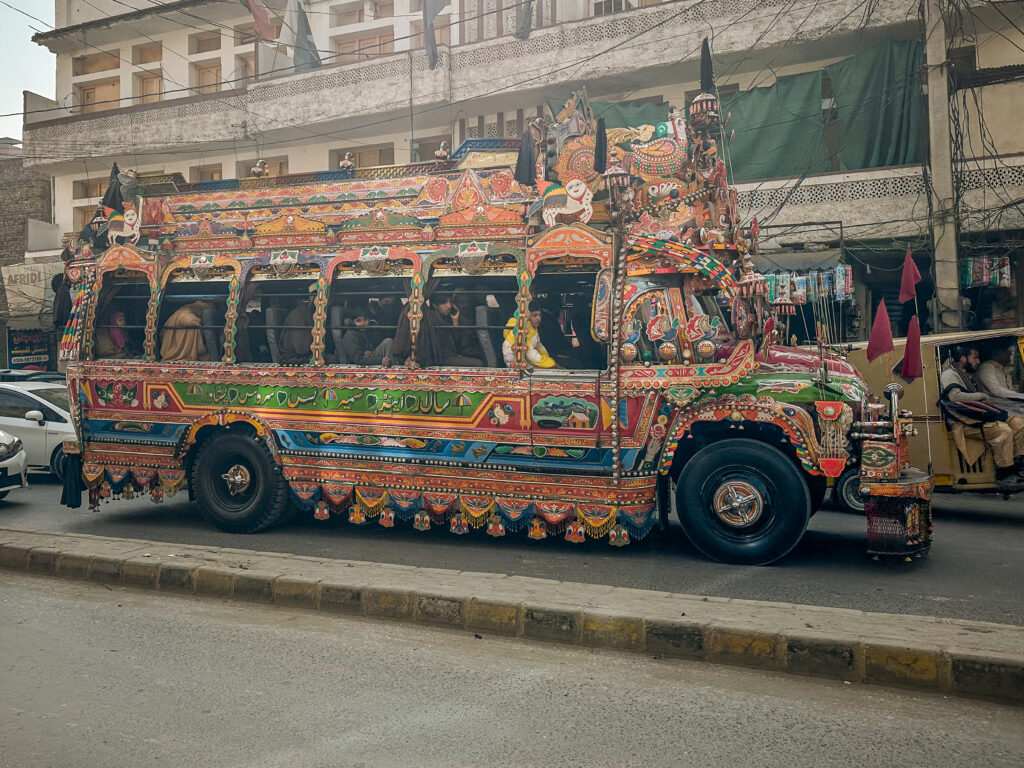
Once you’re in the city, navigating Peshawar is easier than many expect. While the streets can feel chaotic at first, options for transport are simple and budget-friendly.
For convenience and safety, it’s easier to rely on InDrive, which allows you to negotiate fares directly with drivers and track your ride. It’s a reliable way to get around the city without worrying about overcharging.
Rickshaws are another convenient option for short trips. They are cheap and nimble, perfect for weaving through busy streets, though always agree on a fare beforehand.
Costs of Travelling Peshawar Independently
Peshawar is one of Pakistan’s more affordable cities for independent travellers. Transport is cheap, local food is incredibly good value, and most of the things worth seeing, bazaars, mosques, the old city streets, cost nothing to visit. The main variables are accommodation (since not all guesthouses can host foreigners, you may end up paying slightly more than expected) and whether you end up with a police escort, which doesn’t cost you anything directly but can affect how freely you move around.
Here’s a rough breakdown based on travelling independently:
| Expense | Budget | Mid-range |
|---|---|---|
| Accommodation | 1,500-3,000 PKR (basic guesthouse) | 4,000-8,000 PKR (mid-range hotel) |
| Food | 300-700 PKR (local dhabas, street food) | 1,000-2,000 PKR (sit-down restaurants) |
| Local transport | 100-400 PKR (rickshaw, InDrive short trips) | 800-2,000 PKR (InDrive longer trips) |
| Activities/entry fees | 0-500 PKR (most sights are free or very cheap) | 500-1,500 PKR (museums, guided access) |
| Daily total | ~2,000-4,600 PKR (€6-15) | ~6,300-14,000 PKR (€20-45) |
A few things worth knowing: most of Peshawar’s highlights: Qissa Khwani Bazaar, Namak Mandi, Mahabat Khan Mosque, and the old city streets, are free to wander. The Peshawar Museum has a small entry fee but is worth it. Eating at local dhabas and street stalls is incredibly cheap; chapli kebabs, karahi, and qabili pulao at local spots will rarely set you back more than 1000 PKR for a full meal. The main budget spike comes if your accommodation situation forces you into a mid-range hotel, which can happen depending on the security situation at the time of your visit.
Things to do in Peshawar
Explore Historic Sites
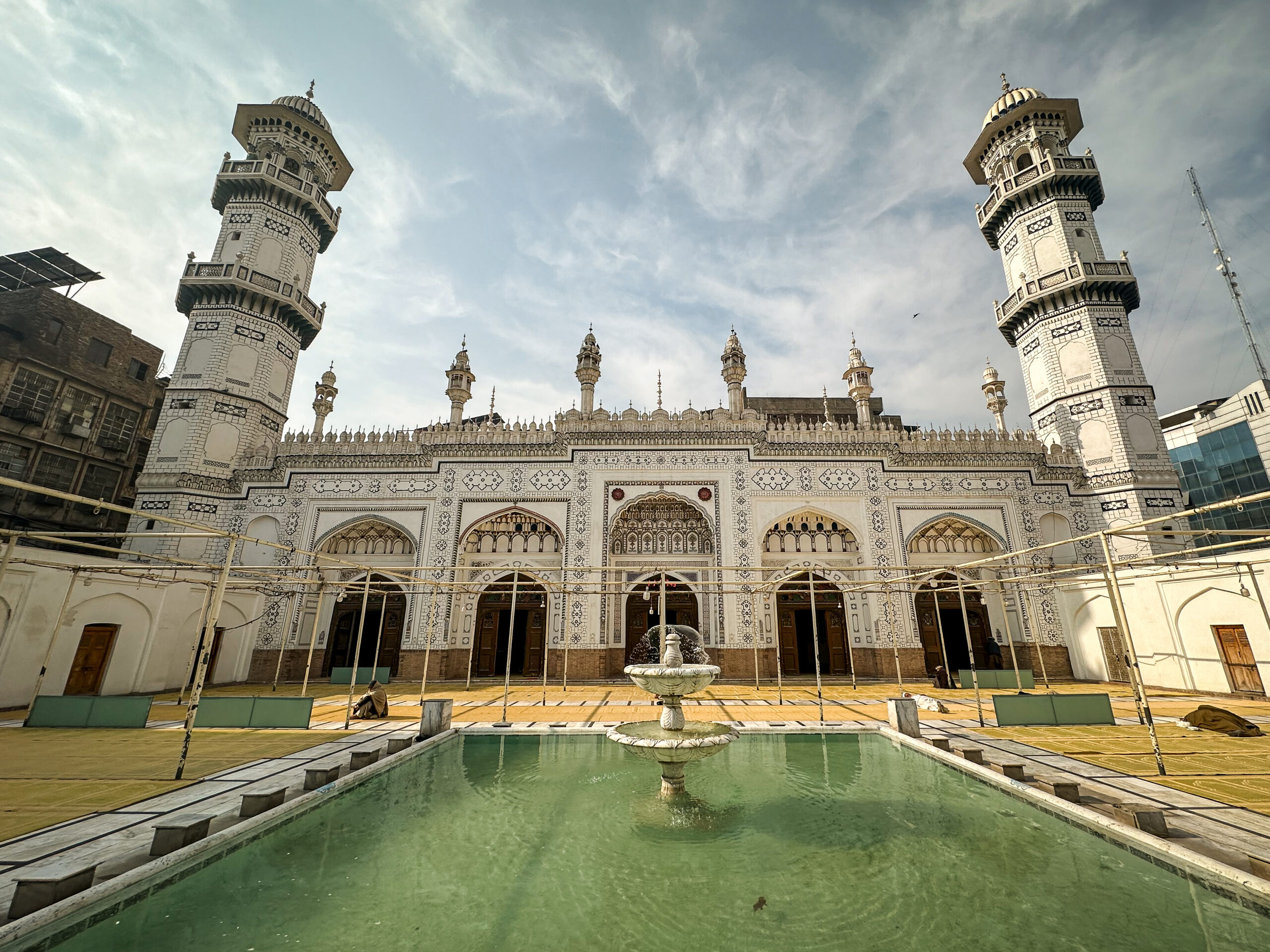
Peshawar’s history is alive in its centuries-old architecture. The Mahabat Khan Mosque, a 17th-century Mughal masterpiece, is a must-see for its intricate design and vibrant interior.
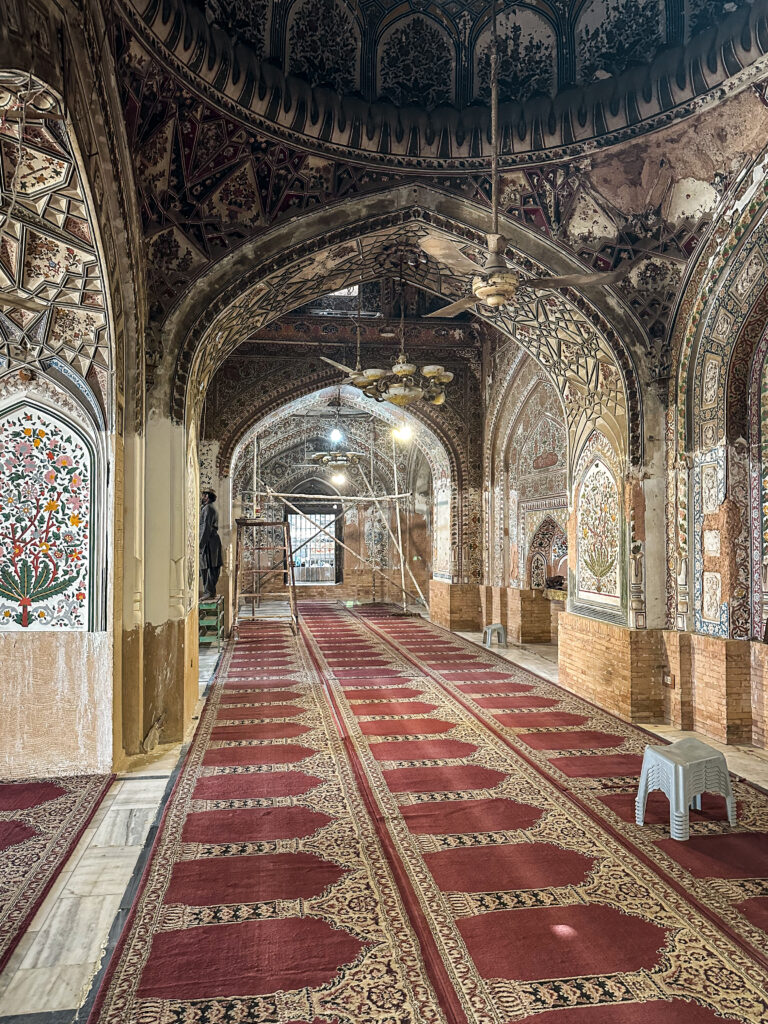 Interior of the Mahabat Khan Mosque
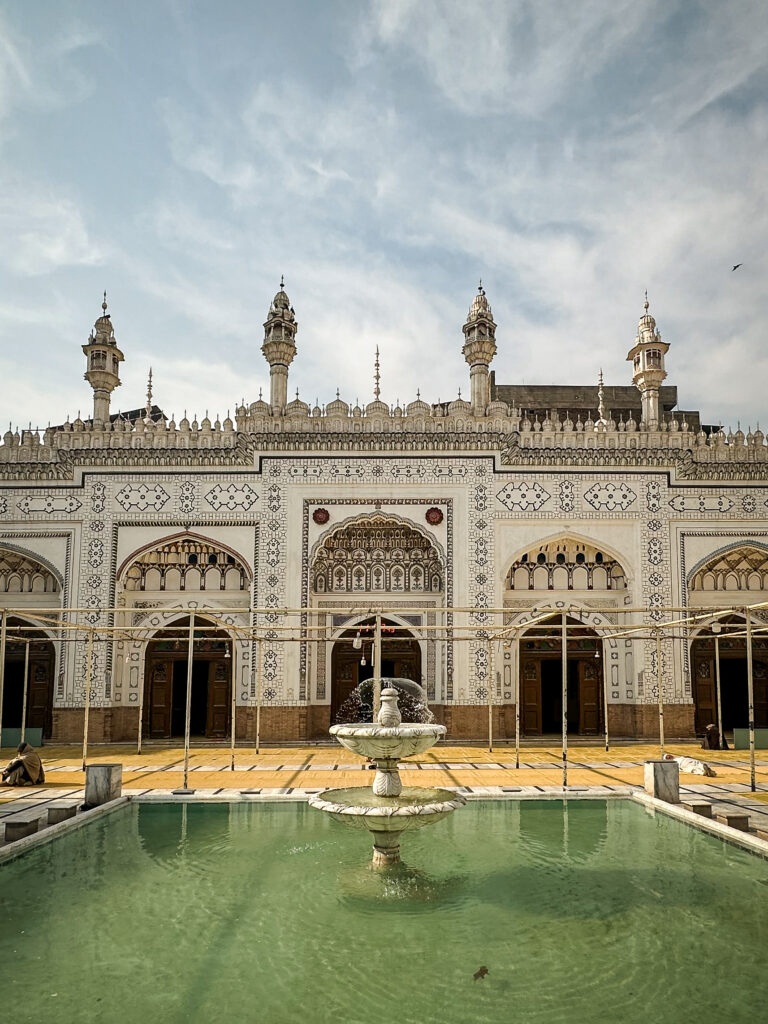 Mahabat Khan Mosque
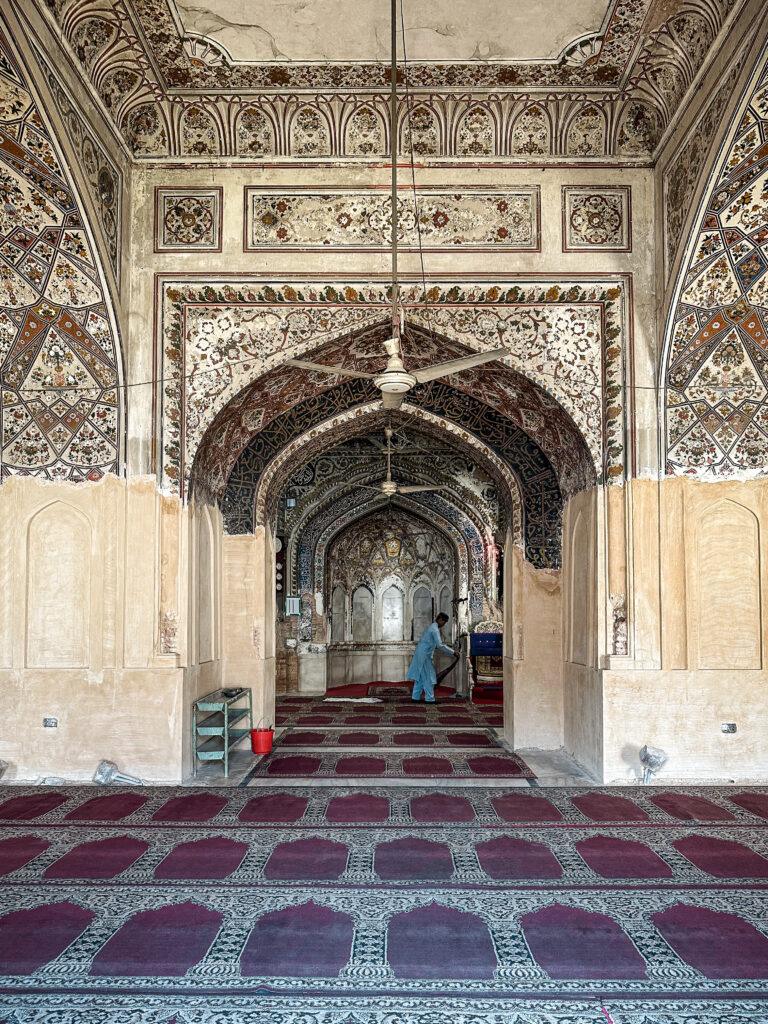 Inside the Mahabat Khan Mosque
Bala Hisar Fort dominates the skyline. While it’s an active military base and you can’t enter, it’s worth viewing it from the outside.
Another highlight is Islamia College, a stunning example of British-era Islamic architecture. You can’t go inside, but the exterior, with its elegant domes, arches, is impressive and photogenic from the outside.
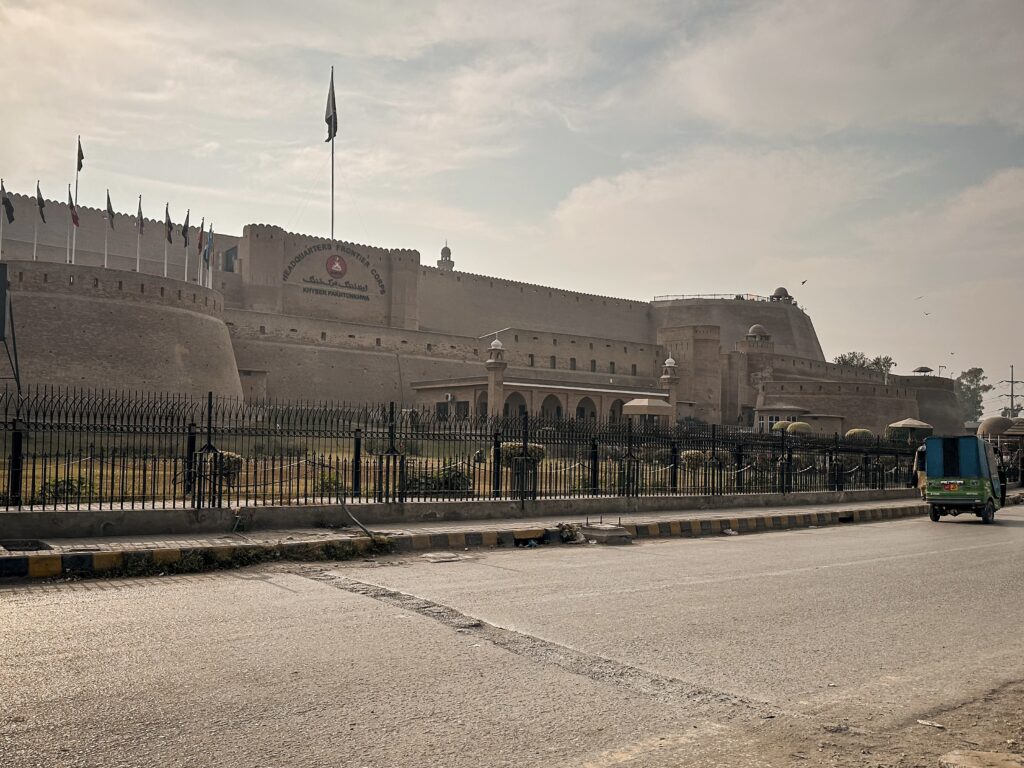 Bala Hisar Fort
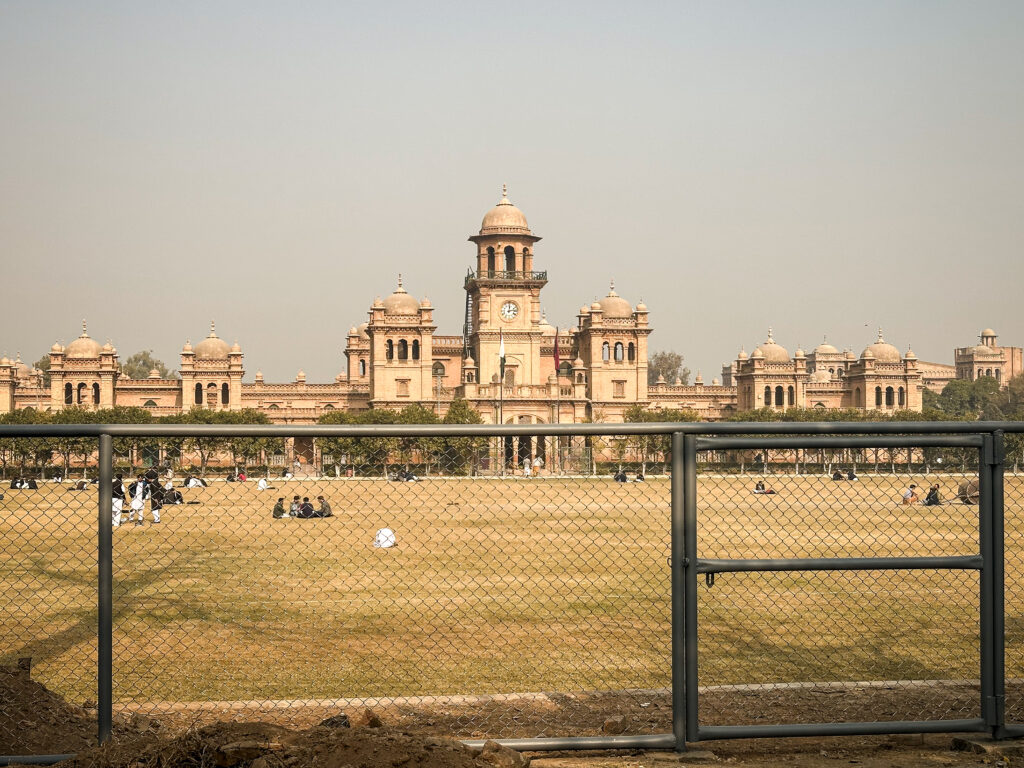 Islamia College
Wander Qissa Khwani Bazaar
Known as the “Storytellers’ Bazaar”, Qissa Khwani has been at the heart of Peshawar for centuries. Its name comes from the tradition of storytellers (qisse khwan) who would gather here to entertain locals with epic tales, poetry, and folklore. Walking through the bazaar today, you can almost imagine these storytellers weaving stories as traders and shoppers move around them.
The bazaar has also seen its share of history, from Mughal-era traders to British colonial times, and even the upheavals of the 20th century, including political conflicts and resistance movements. Despite everything, it remains the city’s cultural heartbeat, bustling with spice shops, gold jewellery, traditional fabrics, street food, and cafes. Sampling Peshawari chapli kebabs, wandering the alleys, and watching daily life unfold gives you a vivid sense of the city’s living history.
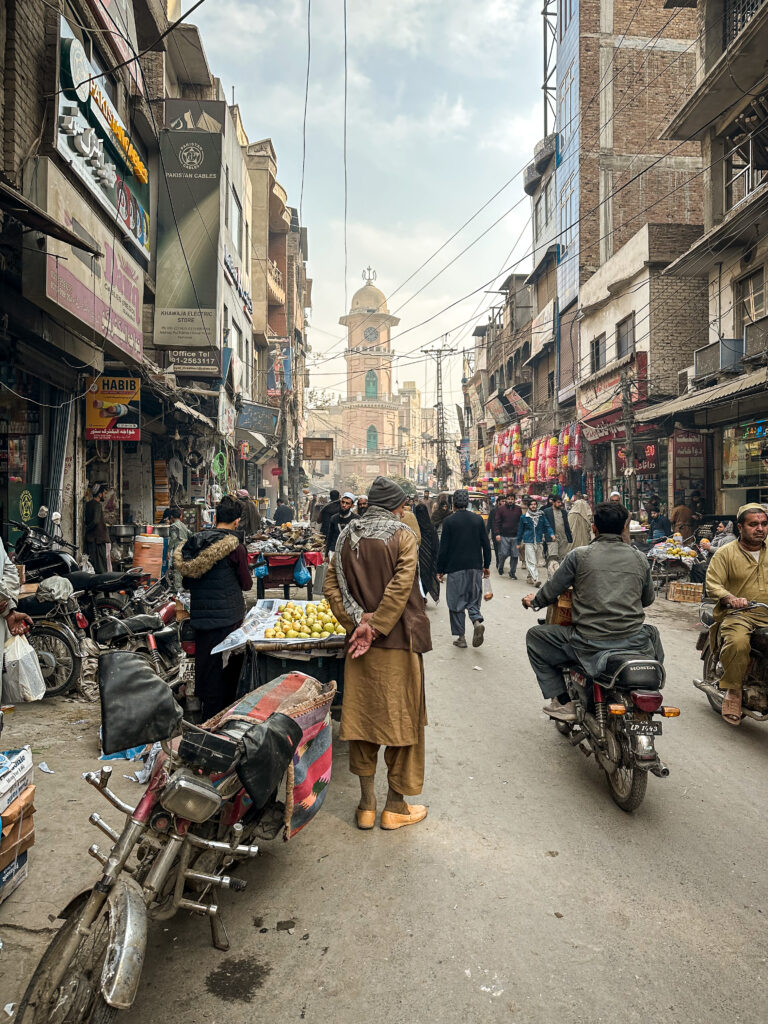 Wandering around the Qissa Khwani Bazaar
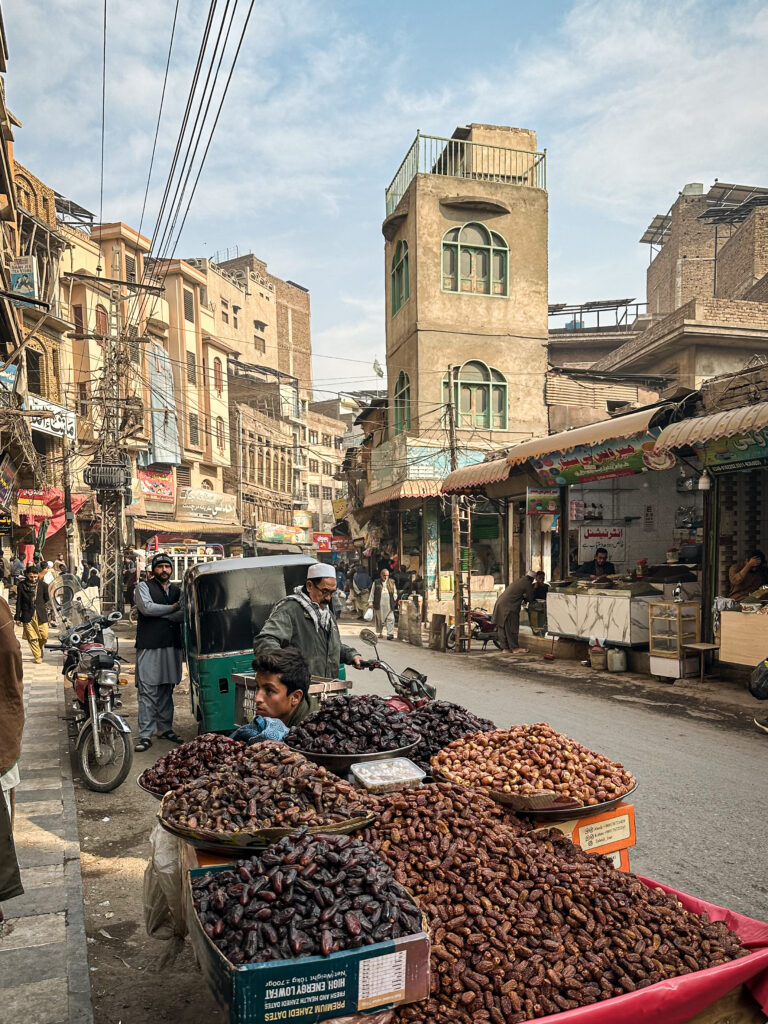 Dates vendor in Qissa Khwani Bazaar
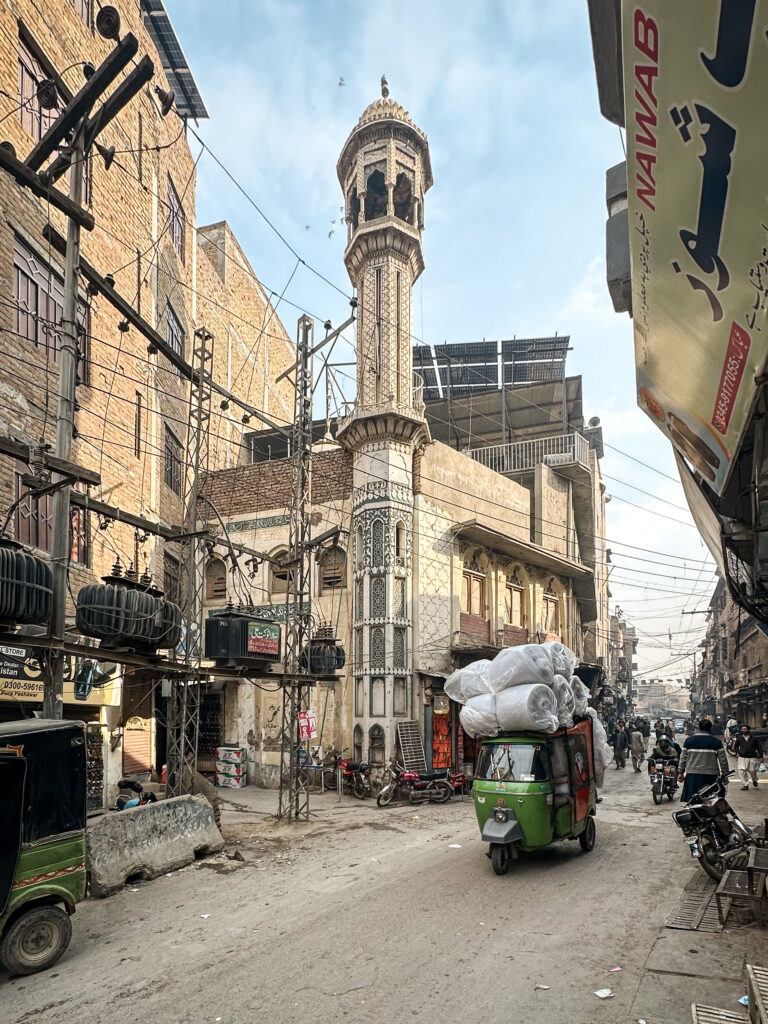 Loaded tuk-tuk in the old city streets
Walk Through Old City Streets
Beyond the main landmarks, Peshawar’s old city streets are where its true character shines. Narrow alleys open into hidden courtyards, centuries-old mosques, and bustling markets, giving you a real sense of daily life in this historic city.
One area not to miss is Namak Mandi, a lively neighbourhood famous for its spice shops, traditional sweets, and vibrant street scenes. Walking here, you can watch locals go about their routines, sample street food, and experience the authentic rhythm of Peshawar away from tourist hotspots.
Exploring on foot allows you to stumble upon unexpected gems: small tea houses, artisan workshops, and quiet corners that tell stories of the city’s rich history. Moving slowly and respectfully through these streets is both safe and immensely rewarding.
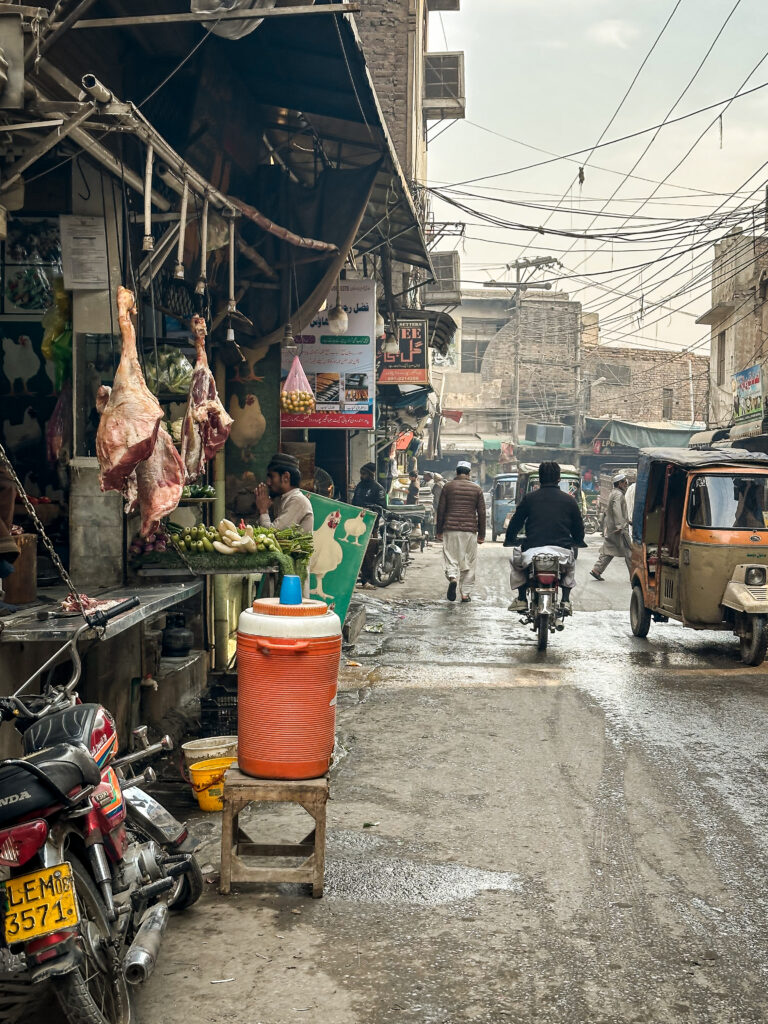 Local markets in Qissa Khwani Bazaar
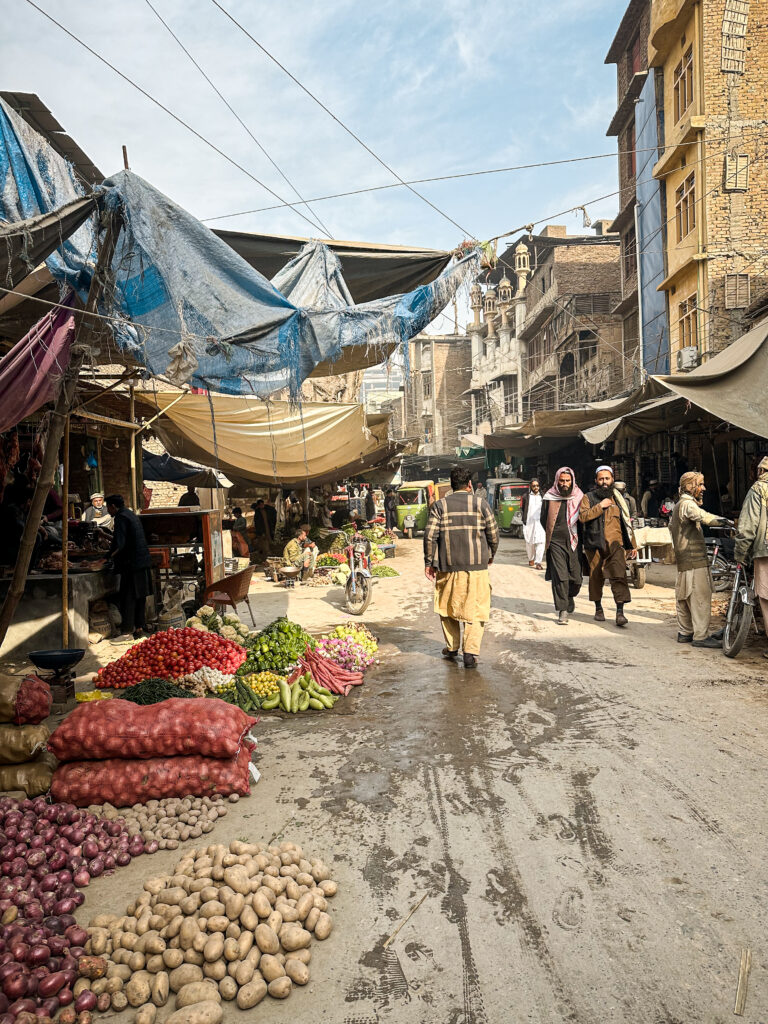 Local fresh vegetables market in in Qissa Khwani Bazaar
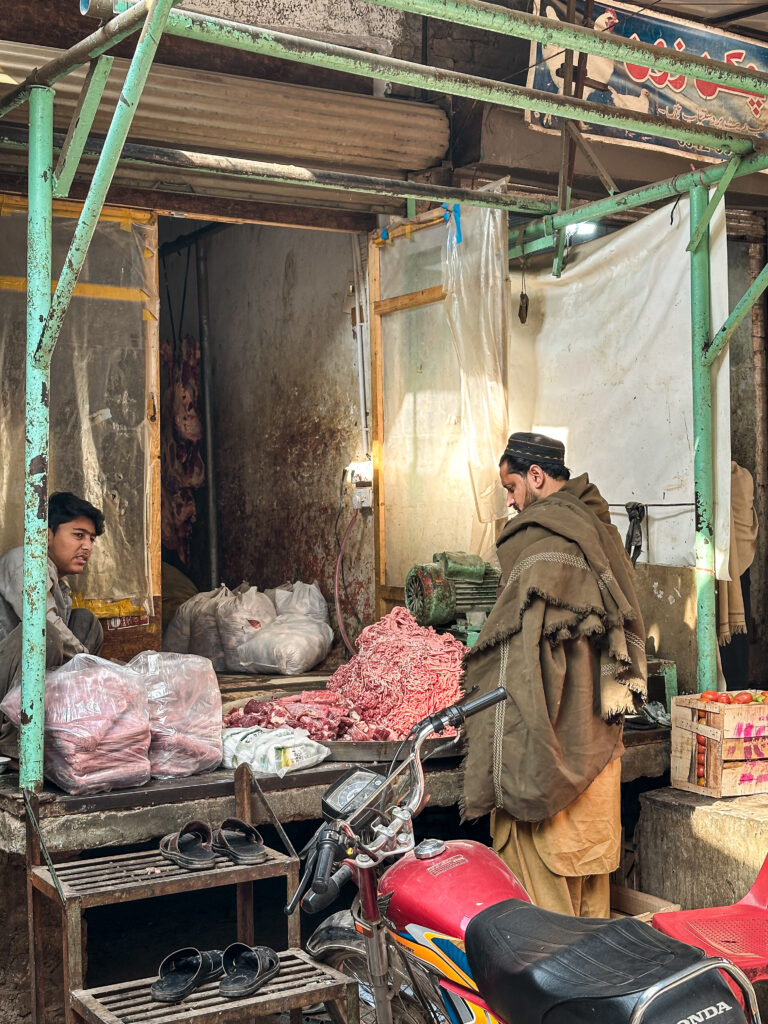 Local butcher shop in the old city in Peshawar
Taste Local Cuisine
Peshawar is a paradise for food lovers. Try insane amounts of green tea, chapli kebabs, all sorts of mutton dishes, and sweet treats. Many local eateries are very welcoming to travellers, and sharing a meal is a great way to connect with locals and experience Pashtun hospitality firsthand.
Discover Culture at Museums
For a deeper understanding of the region, visit the Peshawar Museum, famous for its Gandharan Buddhist artifacts. For a glimpse into traditional local life, visit the Sethi House, a beautifully restored 19th-century merchant mansion. Its carved wooden balconies and courtyards showcase the lifestyle of wealthy Pashtun traders, offering a quiet contrast to the bustling streets of the old city. Both offer fascinating insight into Peshawar’s layered history and cultural richness.
Where & What to Eat in Peshawar
Peshawar is a paradise for food lovers, especially if you enjoy rich, hearty flavours and traditional Pashtun cuisine. The city’s streets and small eateries are full of culinary treasures waiting to be discovered.
Famous Street Foods
Chapli Kebab: Peshawar’s signature dish: spiced minced meat patties, crispy on the outside and fragrant with coriander, garlic, and pomegranate seeds.
Qabili Pulao: A fragrant rice dish with tender meat, raisins, and carrots, influenced by Afghan cuisine.
Sweets: Traditional treats, often sold at small sweet shops around Qissa Khwani Bazaar.
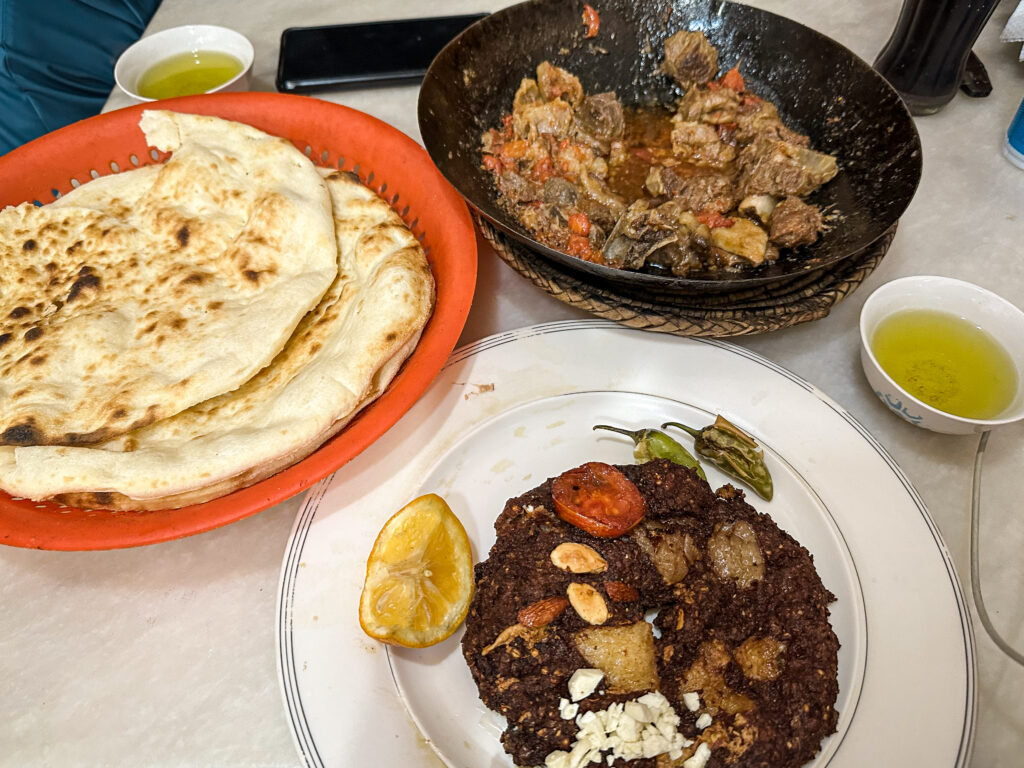 Traditional food of Lamb Karahi, chapli kebab and tea
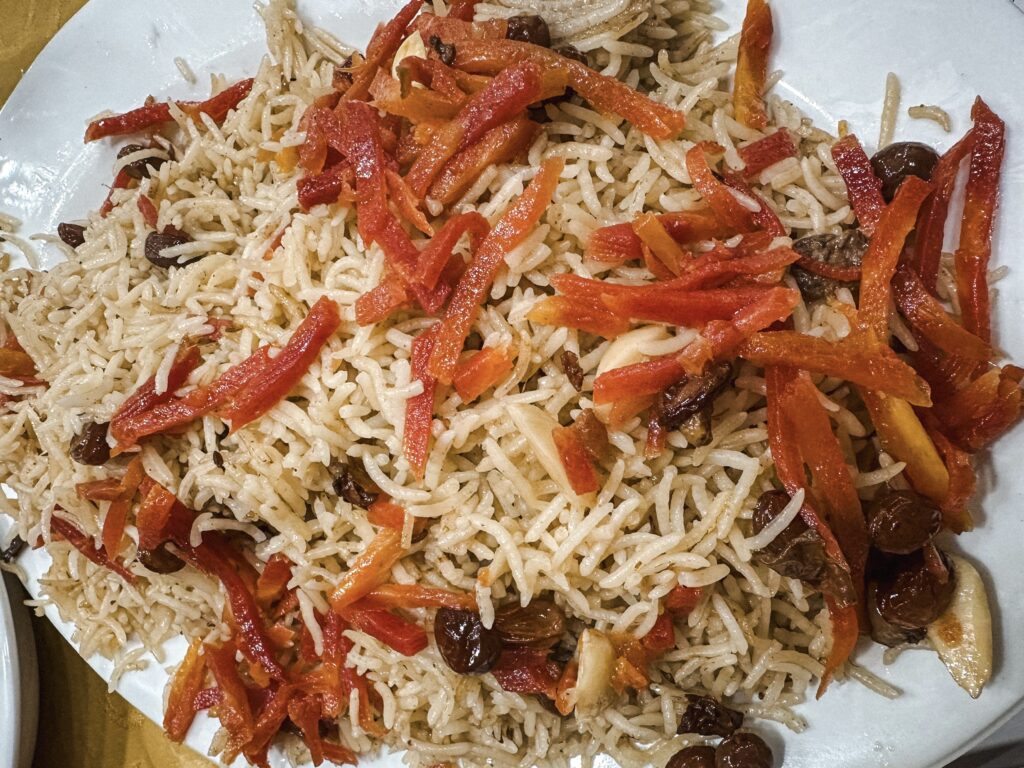 Qabili Pulao
Lamb Delights Everywhere
Lamb is king in Peshawar. Lamb karahi, cooked in a wok with spices, tomatoes, and ghee, is served in almost every restaurant. You’ll also find an insane variety of lamb barbecue sizzling in street stalls and eateries throughout the city. For meat lovers, Peshawar is truly a culinary heaven.
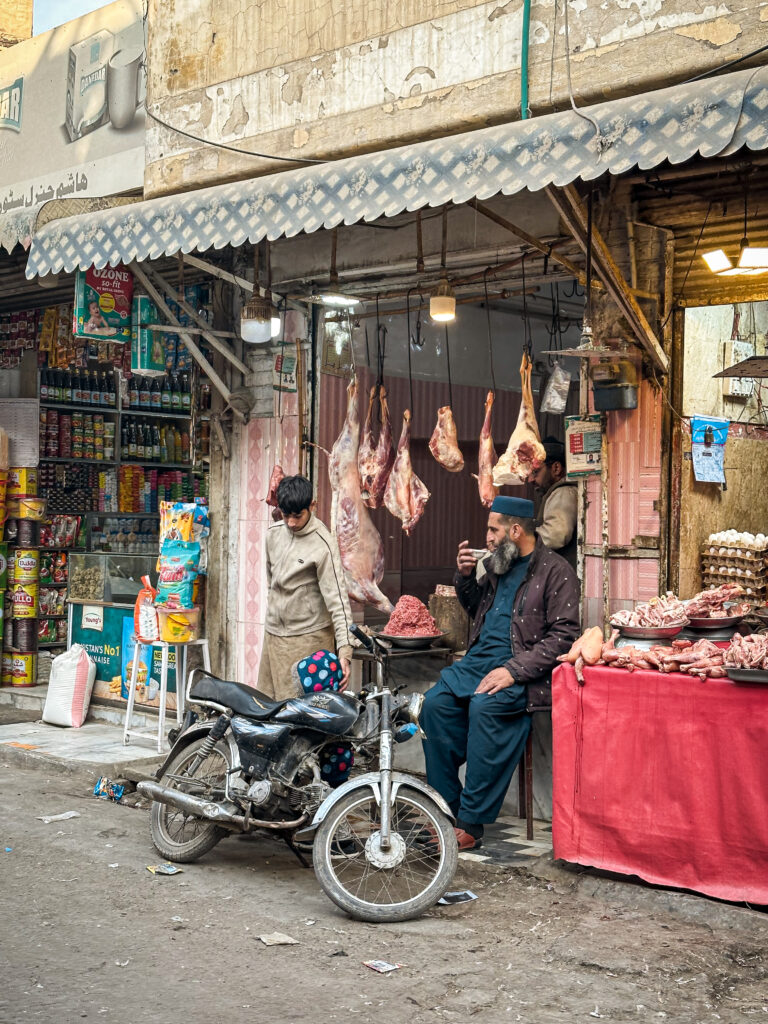 Lamb Butcher shop
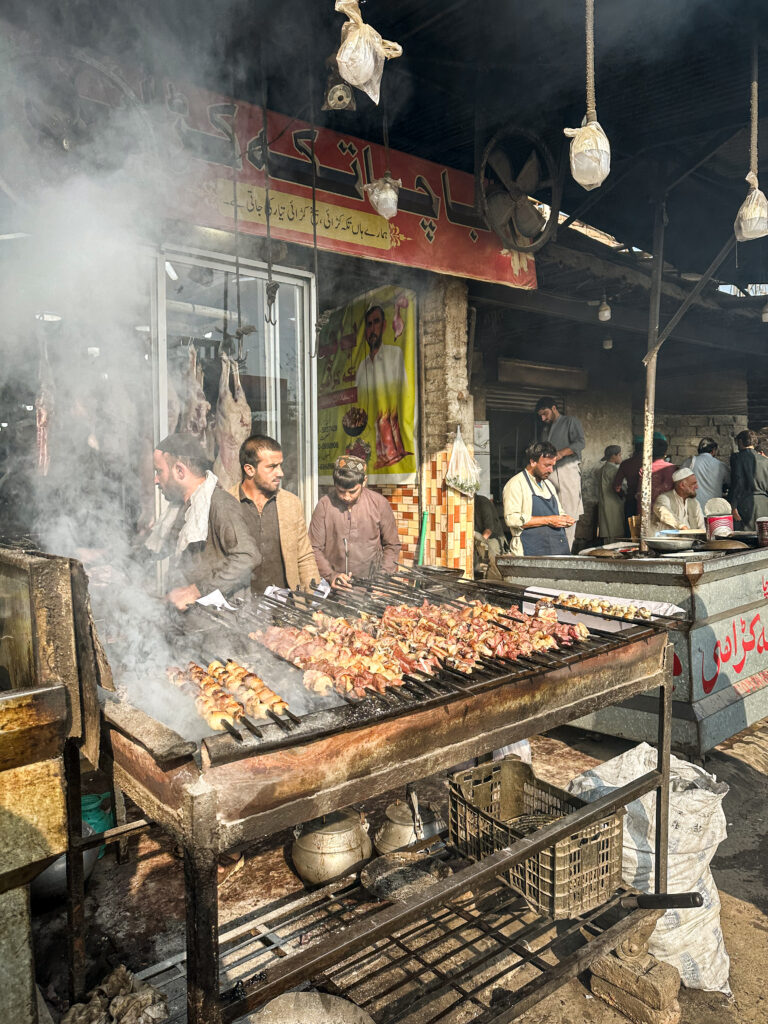 Lamb barbecue on the famous Namak Mandi
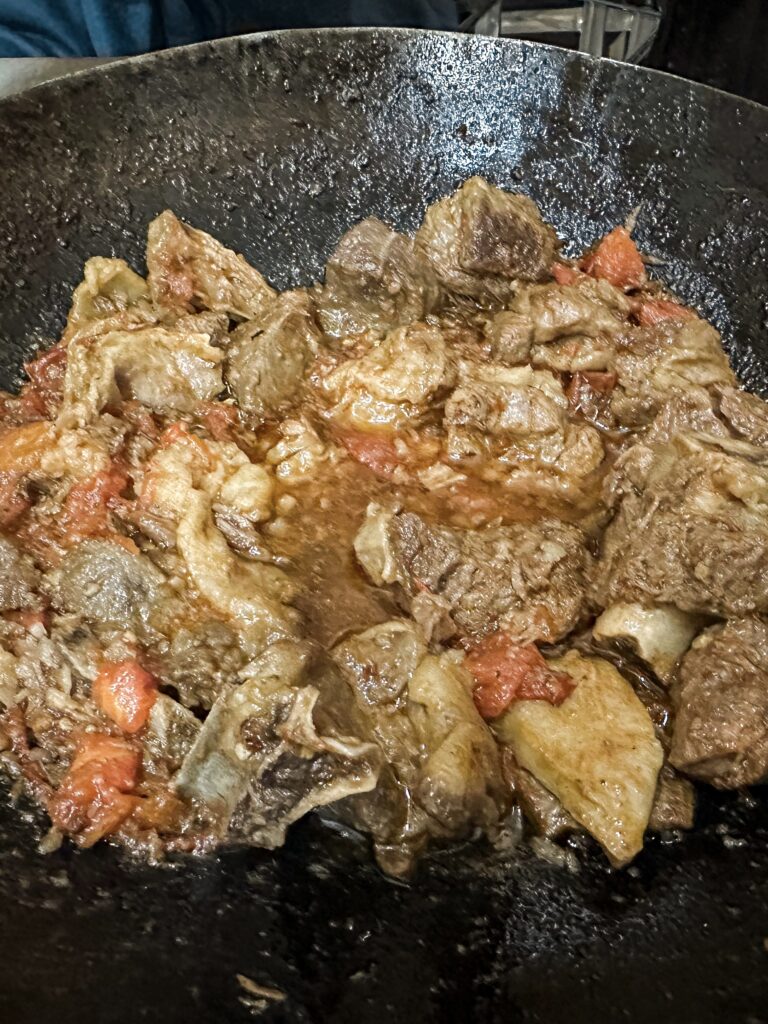 Traditional food: Lamb Karahi
Eat Like a Local
Skip the fancy restaurants and head to small cafes, dhabas, and family-run eateries to experience authentic Peshawari hospitality. These spots serve traditional meals at budget-friendly prices.
Experience Local Tea Culture
Tea is central to Peshawar’s social life. Stop by a chai khana or roadside tea stall to enjoy the famous green tea, qahwa, often served in small bowls, just like in Central Asia, rather than the normal cups common elsewhere in Pakistan.
Sitting down with locals over tea is not just about drinking, it’s a window into the city’s culture, traditions, and daily rhythm, and a perfect opportunity to experience Peshawar’s legendary hospitality firsthand.
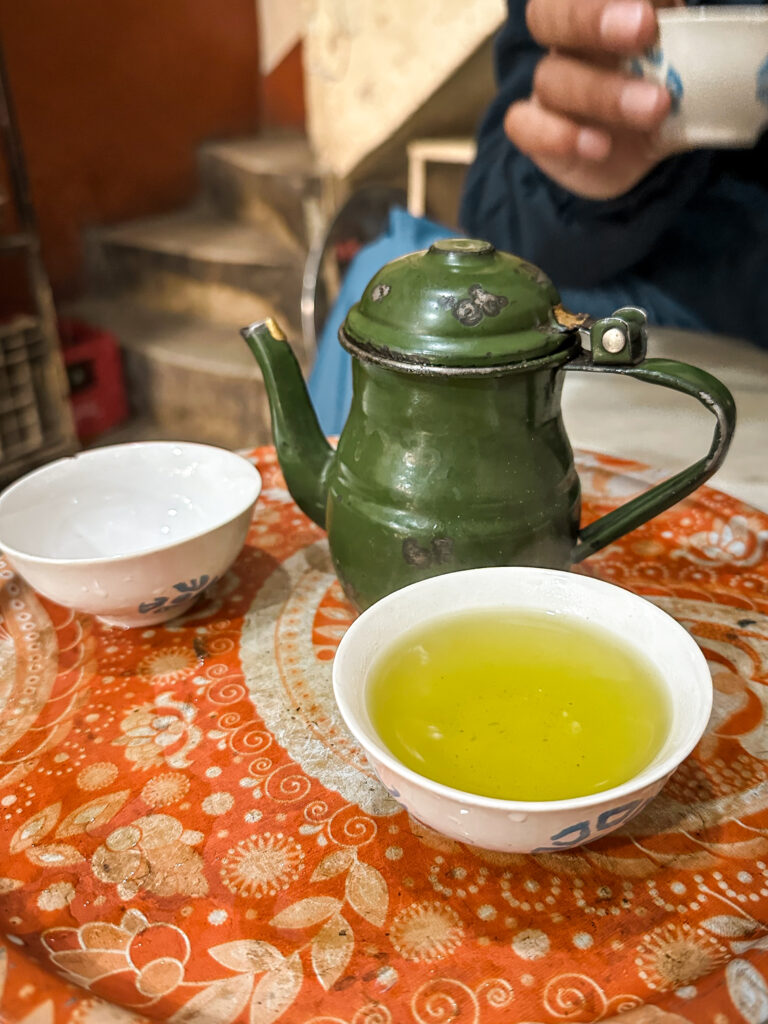 Traditional Qahwa Tea in Peshawar
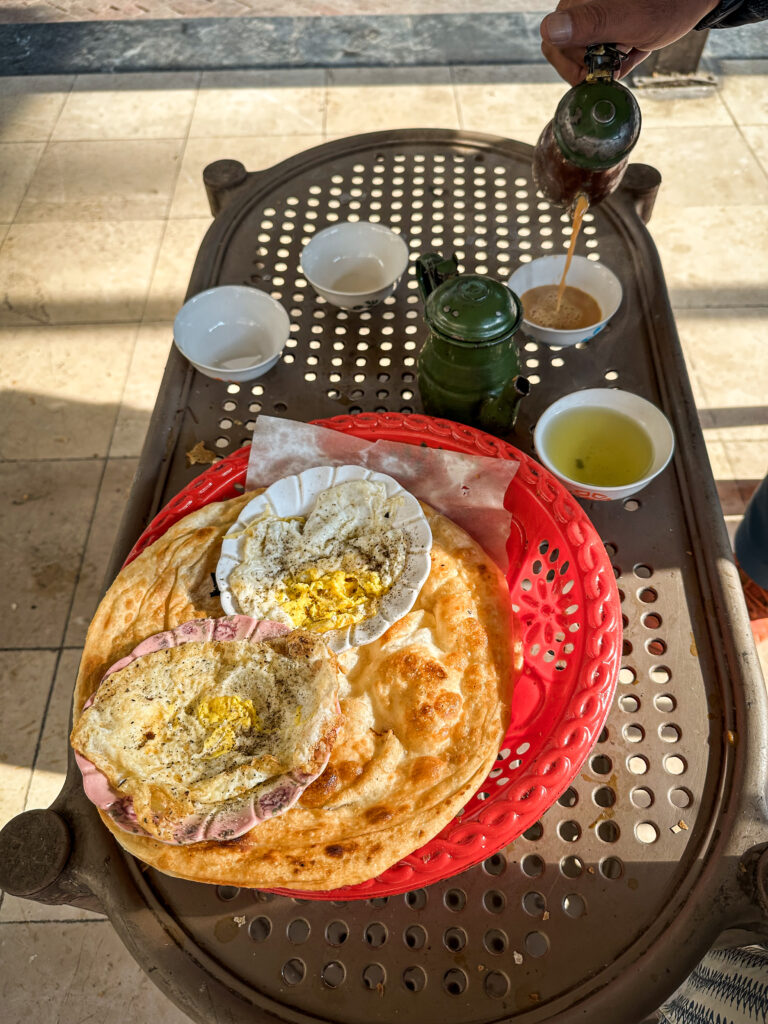 Traditional breakfast with paratha, eggs and local tea in Peshawar
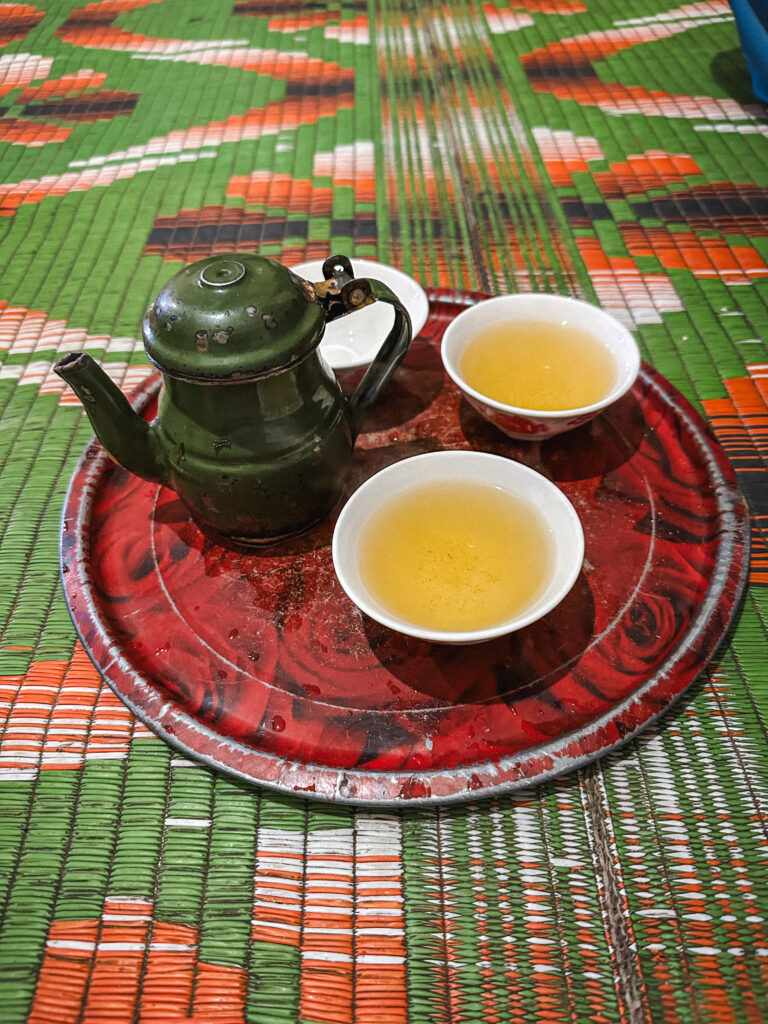 Traditional Qahwa Tea in Peshawar
Practical Tips for Visiting Peshawar
Respecting Local Customs: Dress Like a Local
Clothing in Peshawar is more conservative than in northern Pakistan, Islamabad, or Lahore. Women especially wear shalwar kameez with a scarf or dupatta, and many locals wear a burqa in public. While you won’t get in trouble if you don’t dress this way, wearing a shalwar kameez with a scarf over your head helps you blend in and show respect for local culture. Even then, you won’t completely blend in, since most women you see are locals and have a different style of covering, but it makes interactions smoother and often earns smiles from locals.
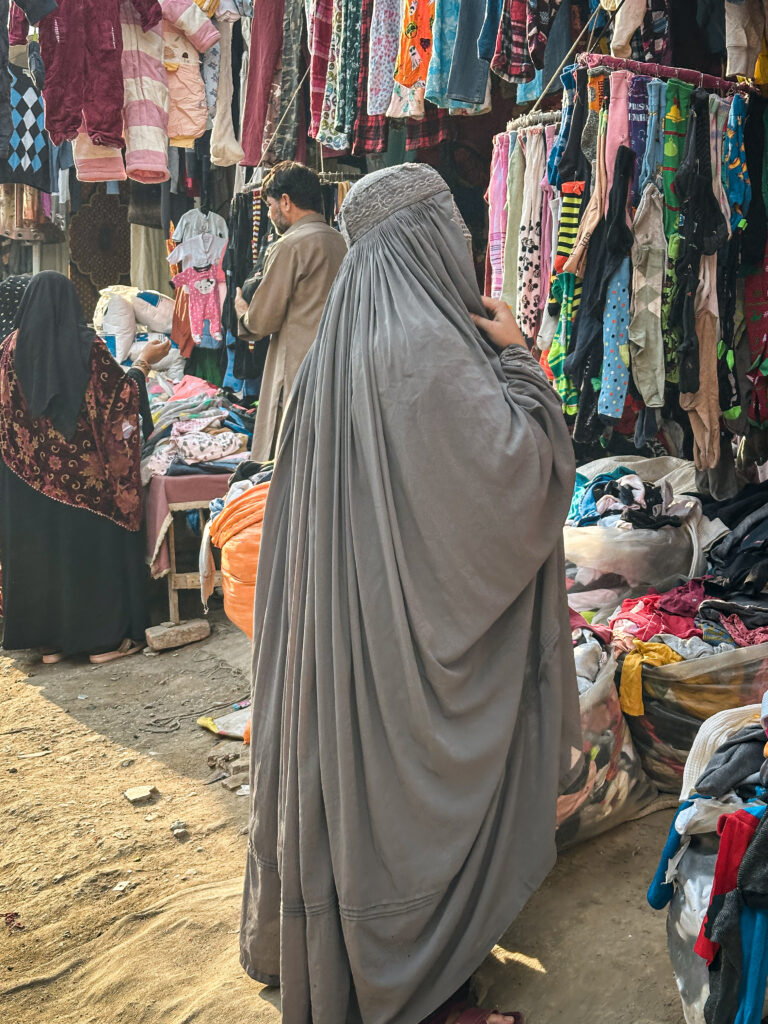 Local woman wearing a burqa
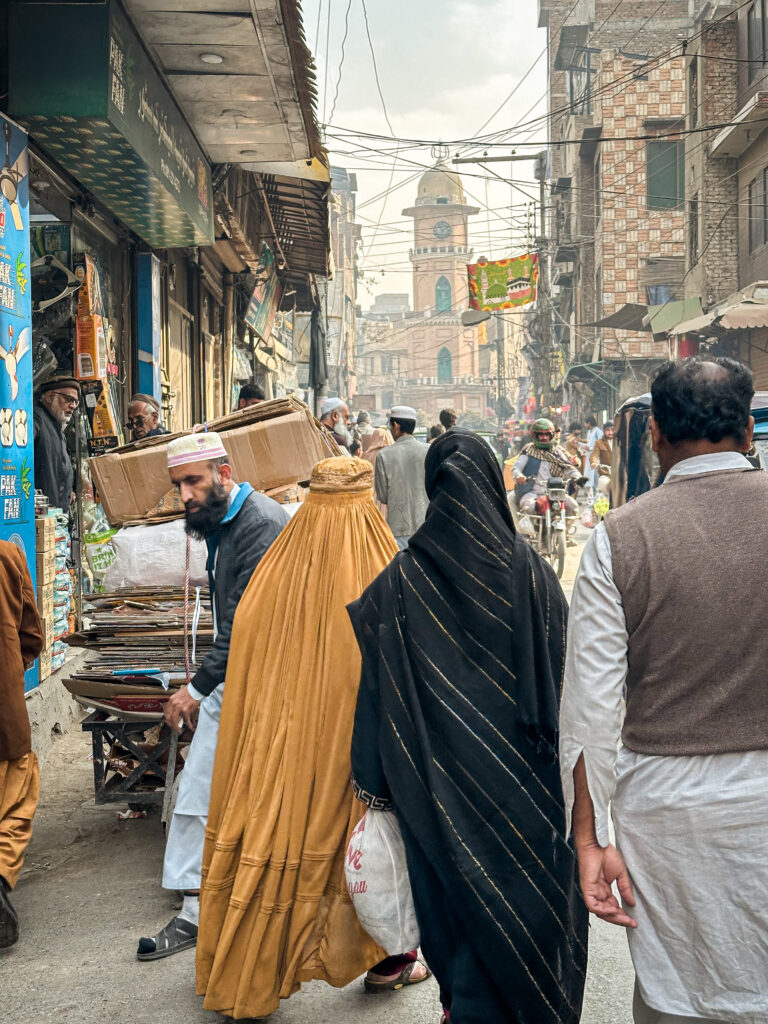 Local women in the old city in Peshawar
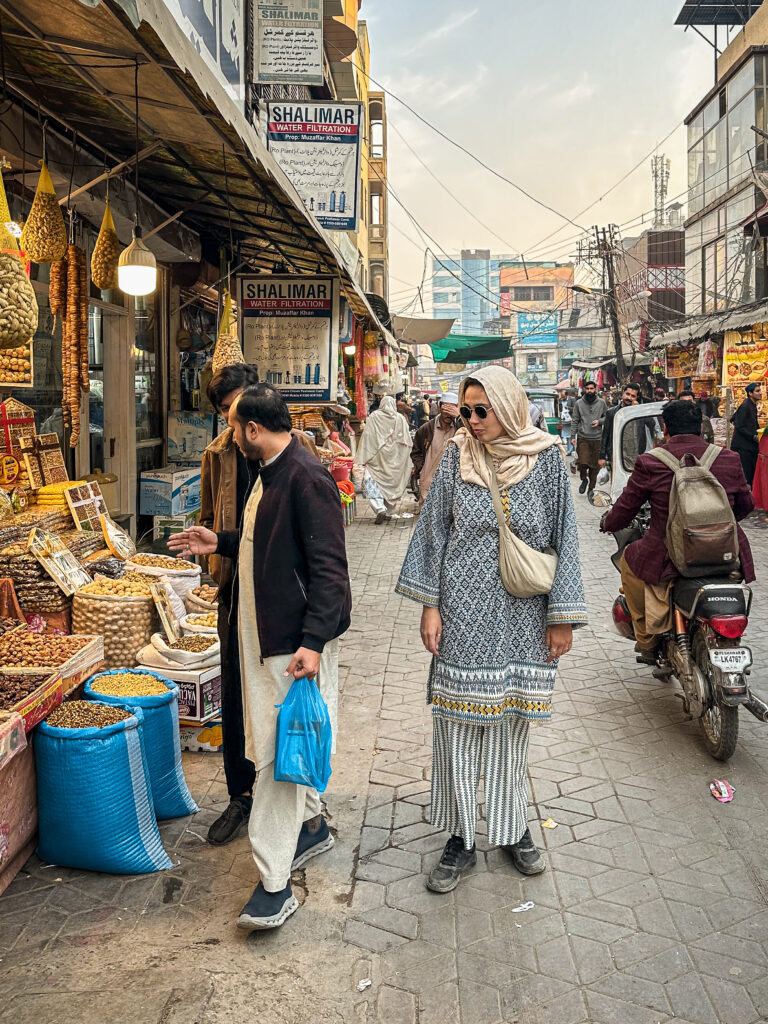 Me trying to blend in the Qissa Khwani Bazaar
For men, wearing a shalwar kameez is also recommended. My Pakistani friend from Hunza, who had never owned one before, bought a shalwar kameez as soon as we arrived in Peshawar.
Dressing appropriately isn’t about restriction, it’s about showing respect and making your experience easier and more enjoyable while navigating a city that is culturally unique in Pakistan.
Where to Stay in Peshawar
Peshawar has plenty of hotels listed on Booking.com and other platforms, ranging from budget guesthouses to high-end luxury properties. However, choosing accommodation here can be a bit tricky, especially for foreigners. Not all hotels are allowed to host foreign guests, and rules can change frequently depending on local regulations.
For example, when I tried to stay at a budget guesthouse in the city centre, they were temporarily not permitted to host foreigners. They were still incredibly friendly, served us tea, and went out of their way to help us find an alternative solution. This kind of flexibility and hospitality is typical of the city, but it also shows why it’s important to keep an open mind and be ready to adapt if plans don’t go exactly as expected.
At the other end of the spectrum, luxury hotels will almost certainly provide an armed escort when you go outside. This is something I personally wanted to avoid, so I opted for simpler accommodation that allowed more freedom.
Ultimately, where you stay depends on your comfort level, budget, and the political situation at the time of your visit. For solo travellers, the key is to remain flexible, ask questions in advance, and choose a place that balances safety with the kind of experience you want in Peshawar.
FAQ: Visiting Peshawar as an Independent Traveller
Is Peshawar safe for solo female travellers? Peshawar can feel intimidating at first, especially due to its reputation. However, many areas are safer than expected if you stay informed and respectful. The situation can change quickly, so always check recent updates before arriving. Travelling with cultural awareness, dressing modestly, and keeping a low profile can significantly improve your experience.
Do I need a police escort in Peshawar? In some cases, yes. Certain hotels may arrange a police escort for foreign visitors as a precaution. This is often protocol rather than a reflection of immediate danger. If you prefer more independence, staying in smaller guesthouses and maintaining a low profile may allow you to explore without one, depending on current regulations.
Can foreigners stay in any hotel in Peshawar? No. Not all accommodation is authorised to host foreign guests, and rules can change quickly. Mid-range and higher-end hotels are more likely to accept foreigners, while budget guesthouses may sometimes be restricted. It’s important to stay flexible and have backup options.
What should I wear in Peshawar? Peshawar is more conservative than many other parts of Pakistan. Wearing a shalwar kameez with a scarf (for women) or dressing modestly helps you blend in and shows respect for local culture. While not strictly required, it makes interactions smoother and more comfortable.
How do you get around Peshawar independently? Getting around is relatively straightforward. Apps like InDrive are useful for negotiating fares and tracking rides, while rickshaws are cheap and widely available for short distances. Always agree on a price beforehand if using local transport.
How many days do you need in Peshawar? Around 2-4 days is ideal. This gives you enough time to explore the old city, visit key sites, experience the food scene, and adjust to the city’s pace without feeling rushed.
Is Peshawar worth visiting? Yes, absolutely, if you’re an experienced and open-minded traveller. Peshawar offers a unique cultural experience shaped by centuries of history, strong Pashtun traditions, and remarkable hospitality. It’s not the easiest destination, but that’s exactly what makes it so rewarding.
What’s the biggest challenge when visiting Peshawar? The unpredictability. Security situations, accommodation rules, and local regulations can change quickly. Flexibility, patience, and doing up-to-date research are essential for travelling here independently.
Need help planning your Pakistan trip?
Custom itineraries, local guide sourcing, and on-trip support from someone who’s done it.
Final Reflections
Peshawar is a city that will surprise most visitors. It carries a reputation that can feel intimidating, but for those willing to explore respectfully, it offers a depth of history, culture, and hospitality few other cities can match. From the bustling bazaars and centuries-old mosques to the bustling streets of Namak Mandi and the stories whispered in Qissa Khwani, every corner has a tale to tell.
What struck me most was the warmth and generosity of the locals. Despite its reputation, I never felt unwelcome. People went out of their way to offer guidance, tea, and smiles, small gestures that made navigating the city much easier and more rewarding.
For solo travellers, Peshawar is a city of learning, immersion, and perspective. It challenges preconceptions, rewards curiosity, and leaves you with stories that will stay long after you leave. Yes, it’s different from other parts of Pakistan, and yes, it can feel intense at times, but that’s exactly what makes it unforgettable.
If you approach Peshawar with respect, open-mindedness, and a sense of adventure, you’ll leave not only with memories of a fascinating city, but also with a deeper understanding of its people, culture, history, and perhaps a newfound appreciation for what it means to travel beyond the familiar.
More Pakistan Travel Guides
If you’re planning to travel Pakistan independently, these in-depth guides will help you navigate the country, travel on a budget, and explore far beyond the usual routes:
Have questions about Peshawar? Drop them in the comments. I read every single one.