This guide is for anyone who wants to visit Skardu independently, without a tour group, without a private agency, and without spending a fortune. It covers everything from getting here and getting around, to the best day trips, nearby valleys, where to sleep, and what things actually cost on a backpacker’s budget.
Skardu is usually framed as the gateway to K2 and the Karakoram, and while that’s true, it undersells what’s here. The region around Skardu is one of the most dramatically varied in all of Pakistan: surreal cold deserts, the vast high-altitude plains of Deosai National Park, crystal-clear mountain lakes, and, if you’re willing to go a bit further, remote valleys like Khaplu, Barah, Thallay, and Machulo that see almost no foreign visitors at all.
Everything in this guide is based on firsthand experience travelling Baltistan independently, using public transport, staying in budget guesthouses, and finding ways to do even the expensive parts (like Deosai) without paying tour prices.
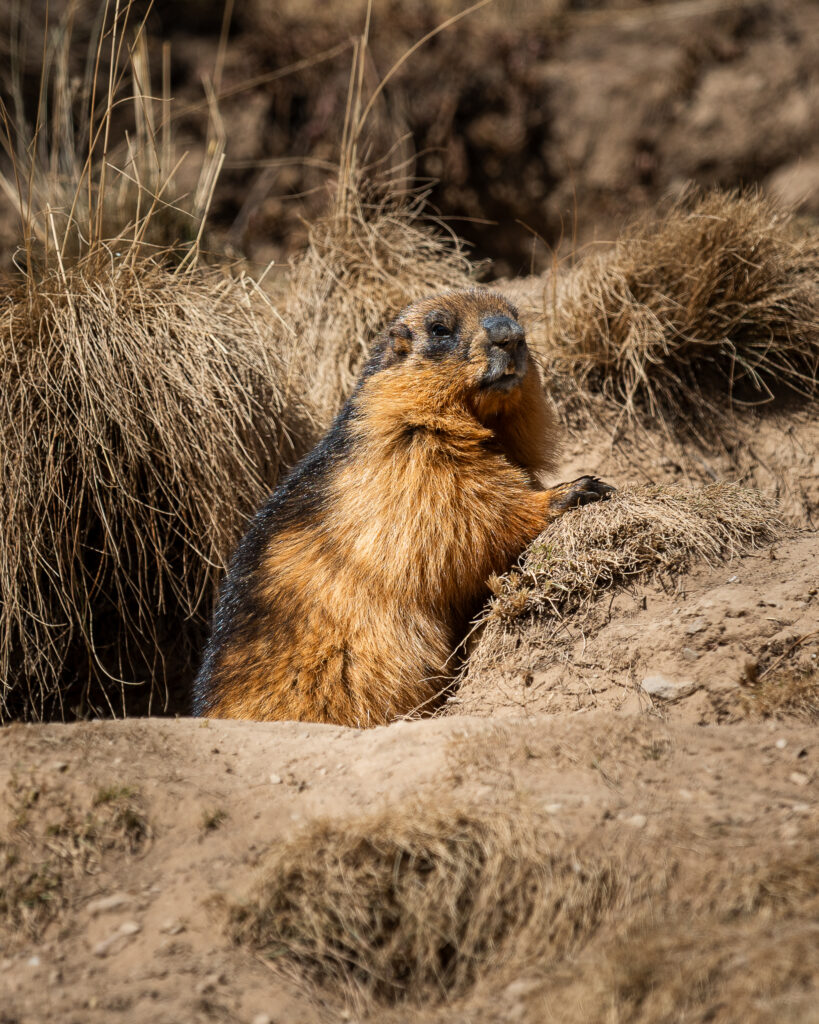 Marmot in Deosai National Park
How to Get to Skardu
Flying to Skardu from Islamabad or Lahore
The quickest (and most unforgettable) way to reach Skardu is by domestic flight from Islamabad or Lahore.
If the weather is clear, this is easily one of the most scenic flights in the world. The plane flies directly over the Karakoram range, and on a good day you can see Nanga Parbat rising above the clouds. Snow-covered peaks stretch endlessly beneath you, close enough to make you forget you’re on a commercial flight.
And then comes the landing.
Skardu airport sits in a narrow valley surrounded by dramatic mountains. The descent is steep, the plane banks sharply between peaks, and for a few moments your heartbeat will almost certainly pick up. It’s thrilling, slightly nerve-wracking, and unforgettable.
Things to know:
By Public Transport from Gilgit
If you’re travelling overland (or your flight gets cancelled), you can reach Skardu from Gilgit by road.
Shared vans and buses run daily between Gilgit and Skardu. The journey takes around 5-7 hours, depending on road conditions. The route follows the Indus River and offers dramatic mountain scenery along the way.
It’s much cheaper than flying and therefore a great option for budget travellers but less predictable in terms of comfort. If you’re already exploring Gilgit or the Hunza region, this is the most practical and affordable way to reach Skardu.
Best Time to Visit Skardu
The best time to visit Skardu is between late May and early October, when the weather is relatively mild and most roads, passes, and nearby valleys are accessible. Outside of these months flights are frequently cancelled due to poor visibility.
June to September is the peak season. During these months, days are generally sunny, with warm temperatures during the day and cool evenings. This is the ideal time for sightseeing, hiking, and day trips to places like the Cold Desert, Marsur Rock, and Deosai National Park, which is only fully accessible in summer.
May and October are shoulder-season months. May can still be chilly, with snow lingering at higher elevations, while October brings colder nights and the risk of early snowfall, but both months are great if you want fewer crowds.
Winter (November to April) is not ideal for first-time visitors, unless you’re prepared for extreme cold, limited transport, and very basic services.
Costs of Travelling Skardu
Travelling Skardu using public transport and staying in budget guesthouses can be quite affordable, especially compared to organised tours. However, the costs rise a bit mainly due to activities. Places like Deosai National Park require a private jeep transfer and a steep entry fee, for example. Sharing the costs of the private jeeps with other travellers will help you keep the costs a bit lower.
Here’s a rough breakdown of what you can expect to spend:
| Expense | Budget | Mid-range |
|---|---|---|
| Accommodation | 1,500-3,000 PKR (hostel/basic guesthouse) | 3,500-6,000 PKR (nicer hotels and guesthouses) |
| Food | 200-600 PKR (local eateries and cafes) | 1,000-3,000 PKR (nicer and more western restaurants) |
| Local transport | 200-800 PKR (short-distance local vans) | 2,500-9,000 PKR (private taxis and private jeep to Deosai National Park) |
| Activities/entry fees | 200-500 PKR (forts, trails entry fees) | 8,500 PKR (Deosai National Park entrance fee) |
| Daily total | ~2,100-4,900 PKR (€7-15) | ~15,500-26,500 PKR (€50-80) |
Things to do in Skardu
Skardu Bazaar
Wander through the busy bazaar in the heart of town, a colourful mix of local life, Balti handicrafts, dried fruits, and apricot oil. It’s a great place to sample food, find some souvenirs and soak in the rhythms of everyday Skardu.
Polo & Football at Skardu Ground
If you time it right, head to the Skardu Polo Ground to catch a traditional polo match. This centuries-old sport is fast-paced and played with raw local energy against a mountainous backdrop. Locals also play football here, and joining the crowd for a match is a great way to feel the community vibe.
Kharpocho Fort
Perched above Skardu town on Kharpocho Hill, this ancient fort lets you combine light hiking with panoramic views over the Indus, Skardu Valley and surrounding peaks. A short climb from the bazaar makes it accessible even on a budget.
Katpana & Sarfaranga Cold Deserts
Just outside Skardu, sand dunes rise unexpectedly against a backdrop of snow-covered peaks. The Katpana Cold Desert is especially striking at sunrise and sunset, when the golden sand contrasts beautifully with the Karakoram mountains. Further out, Sarfaranga Desert feels more remote and expansive, offering wide-open landscapes and fewer crowds. Both are easy half-day trips from town and showcase one of Baltistan’s most surreal landscapes.
Day Trips from Skardu
Day Trip to Kachura Lakes
A short drive from Skardu takes you to the stunning Kachura Lakes, a pair of crystal-clear mountain lakes surrounded by lush forests. Upper and Lower Kachura are the main highlights, with Lower Kachura hosting the well-known Shangrila Resort.
The lakes are perfect for a day trip: you can walk along the shore, take photos of the turquoise water, or simply sit and soak in the scenery. That said, Kachura Lakes can get quite busy, especially with domestic tourists during the high season, so plan accordingly if you want a quieter experience.
Hike to Marsur Rock
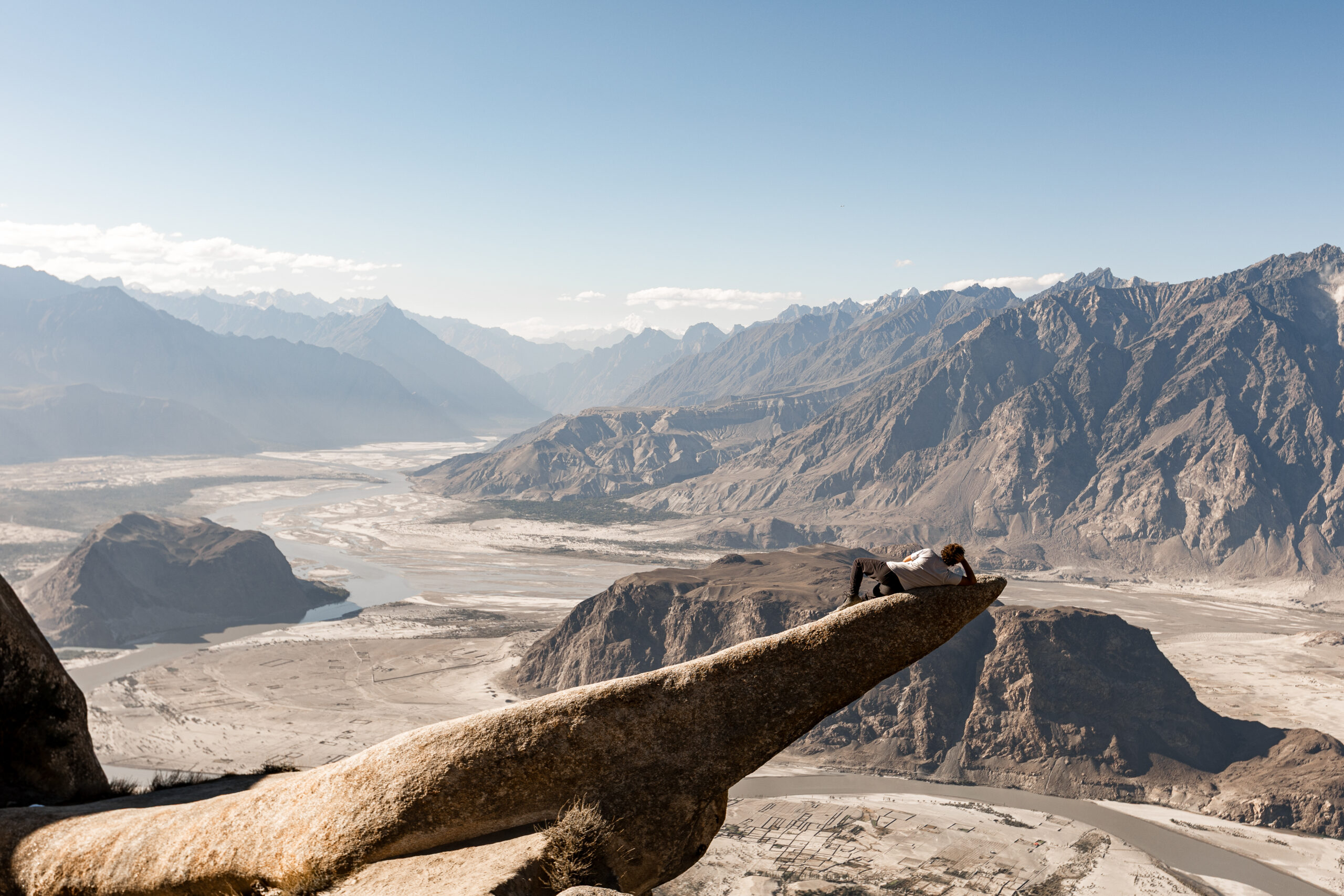
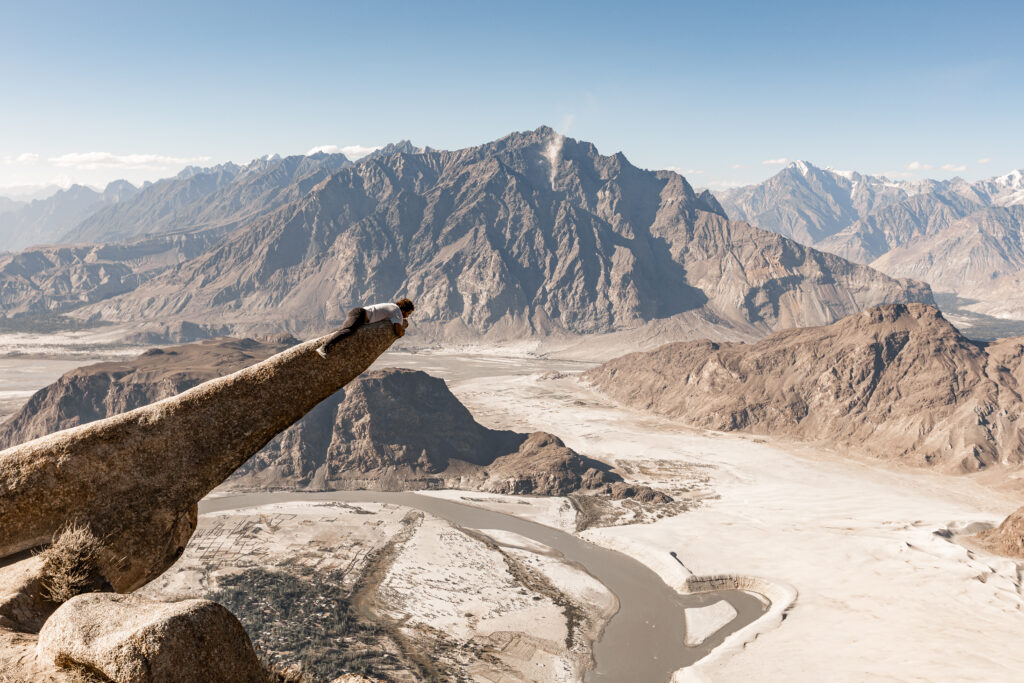
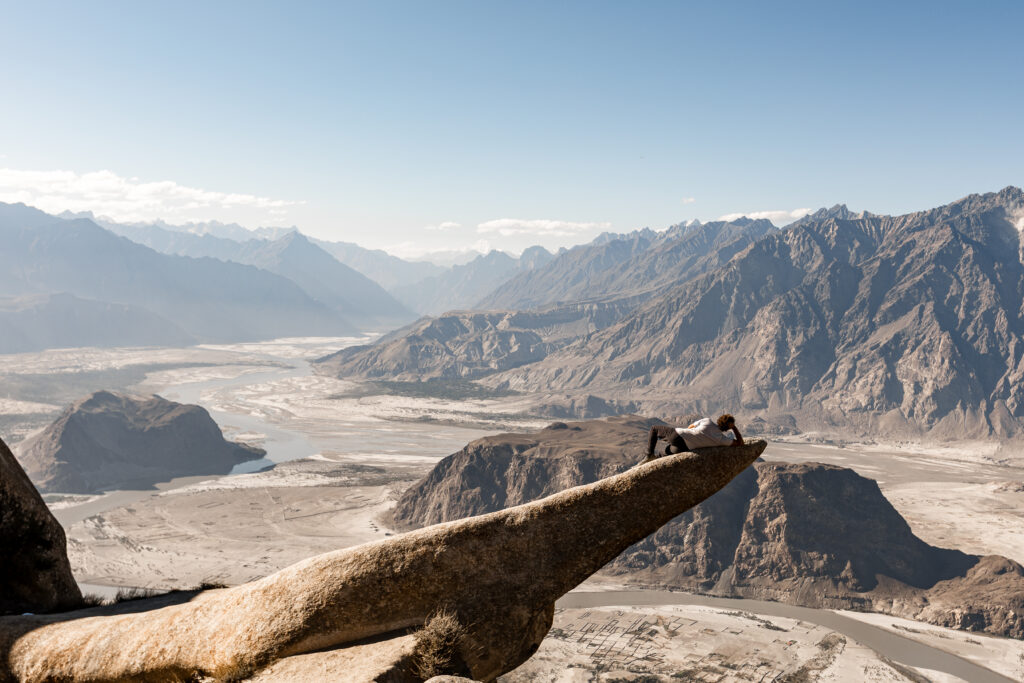
For a more adventurous outing, hike up to Marsur Rock (often compared to Trolltunga for its dramatic profile). The trail from Hussainabad rewards you with wide valley views and is a fantastic half-day challenge if you’re up for it. The hike starts just outside Skardu town and takes about 3-4 hours return. The trail climbs through rocky slopes before reaching the iconic rock ledge. It’s an incredibly steep but rewarding hike, and thanks to its relatively low profile, you’ll likely have the place all to yourself. To reach the trailhead you can take a private taxi from Skardu city and it’ll cost you around 5,000 PKR. There’s an entrance fee of 500 PKR to enter the trail.
Day Trip to Deosai National Park
No visit to Skardu is complete without seeing Deosai National Park, one of the highest plateaus in the world (above 4000 meters). Vast grasslands stretch endlessly beneath open skies, with Sheosar Lake shimmering against a backdrop of distant peaks. I visited it as a day trip by jeep, but you can also choose to spend the night camping on the plains. Staying overnight not only lets you experience Deosai’s incredible silence and star-filled skies, but also increases your chances of spotting Himalayan brown bears, which are more active towards the evening and night.
The only way to reach Deosai National Park in on a private 4×4 vehicle. Hiring a local driver to take you there from Skardu as a day trip it’s not too cheap and it will cost around 18,000 PKR. Therefore, it’s better to share the cost with friends or other travellers. The entrance fee to the park for foreigners it’s also not the cheapest and it costs 8,500 PKR.
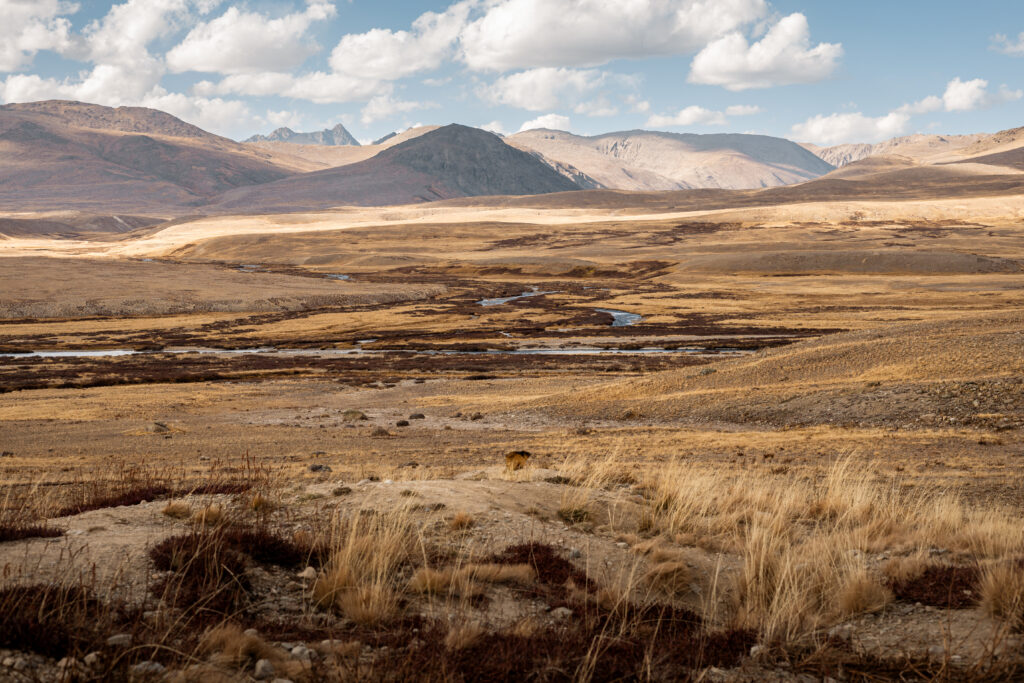 Deosai National Park, the 2nd highest plateau in the world
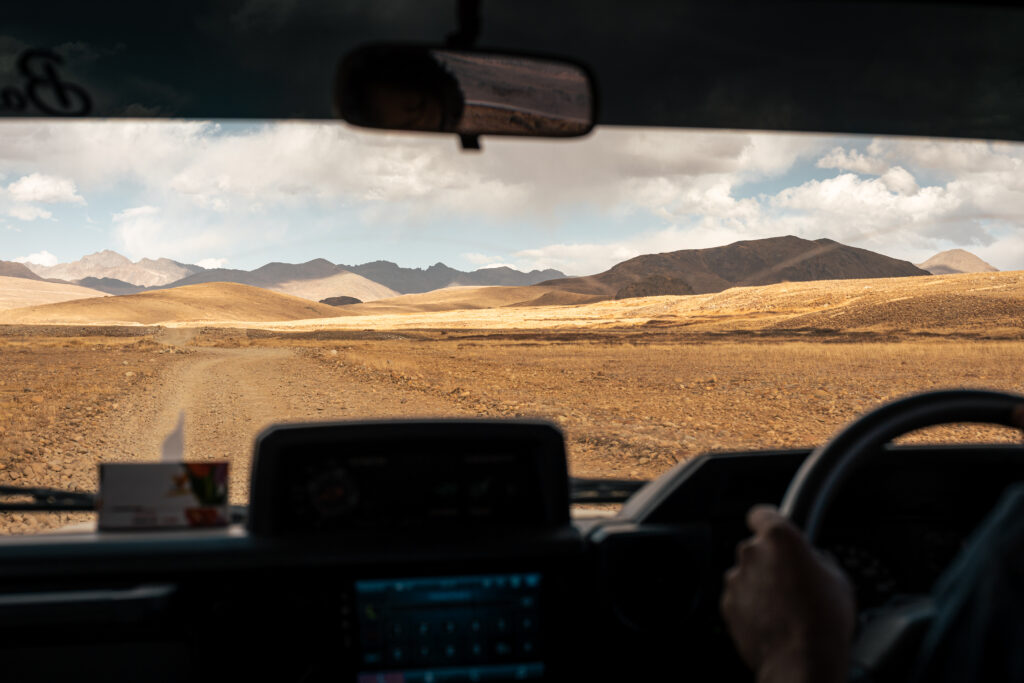 Road Trip to Deosai National Park
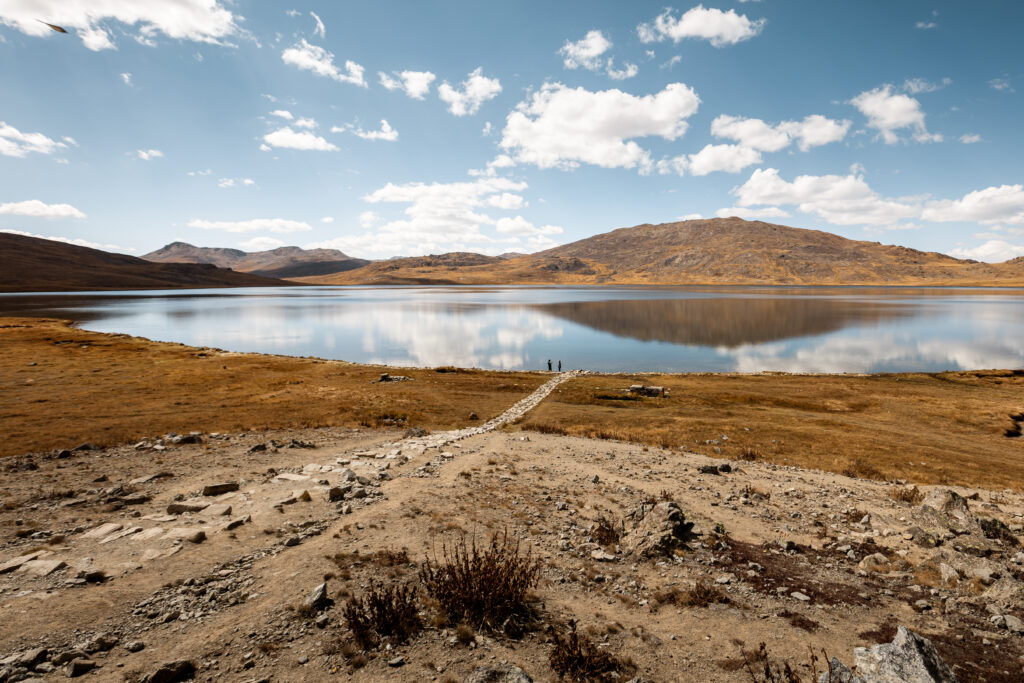 Sheosar Lake in Deosai National Park
Nearby Valleys & Villages from Skardu
Beyond Skardu and its town sights, Baltistan is dotted with stunning valleys that feel almost untouched by time. From historic towns to remote villages, each place has its own character and natural beauty.
If you’re looking for a deeper dive into some of Pakistan’s most remote and lesser-known valleys, check out my detailed guide here. This section focuses on the main highlights around Skardu for easy exploration.
Khaplu
Around 2-3 hours from Skardu, Khaplu feels calmer, greener, and more traditional. Once an important kingdom in Baltistan, the town still carries a distinct cultural identity, with narrow lanes, stone houses, and views of the Shyok River winding through the valley.
The highlight is the beautifully restored Khaplu Fort, which offers insight into the region’s history and some of the best views in town. Beyond the palace, simply wandering through the old village, visiting local mosques, and sitting beneath apricot trees is reason enough to come.
Khaplu makes an easy overnight trip from Skardu and is well connected by public transport and shared vans, making it ideal for independent budget travellers. The shared minivan from Skardu to Khaplu costs around 700 PKR.
Machulo Village
For a quieter, more off-the-beaten-path experience, Machulo lies about 1.5-2 hours from Khaplu, deeper into the mountains along the Hushe River. The small village is surrounded by dramatic, jagged peaks and feels completely untouched by tourism.
Life here moves slowly: children play in the fields, farmers tend their crops, and snow-covered summits rise in every direction. One highlight is the village’s very old mosque, which offers a glimpse into Machulo’s deep historical and spiritual roots.
Machulo is less about sightseeing and more about soaking in the atmosphere: wandering the village lanes, following trails along the river, and enjoying uninterrupted mountain views. It makes a great overnight trip for anyone seeking a remote, authentic taste of Baltistan beyond the main towns.
Barah Valley
Just about an hour from Khaplu, Barah Valley is a lush, peaceful escape tucked between towering mountains. The valley is dotted with terraced fields, apricot orchards, and flowing streams, creating a vibrant contrast to the rugged high-altitude surroundings.
Unlike busier towns, Barah remains quiet and largely untouched by tourism, offering a glimpse of authentic village life. Friendly locals, narrow walking trails, and panoramic views make it a perfect spot to slow down, explore on foot, and soak in the natural beauty of Baltistan. It works well as a half-day or overnight trip from Khaplu for anyone seeking tranquillity beyond the main valleys.
Thallay Valley
Thallay Valley, about 2 hours from Khaplu, is one of Baltistan’s most remote and untouched destinations. Surrounded by towering peaks and crisscrossed by clear streams, it’s the kind of place where nature dominates and human presence feels almost non-existent, you’ll definitely be the only visitor there.
The valley is sparsely populated, with a few traditional villages tucked among the mountains. Walking along trails, following the river, or simply sitting and taking in the scenery gives a rare chance to experience the calm, unspoiled rhythm of rural mountain life. Thallay is perfect for a day trip from Khaplu if you’re seeking complete solitude and truly remote landscapes.
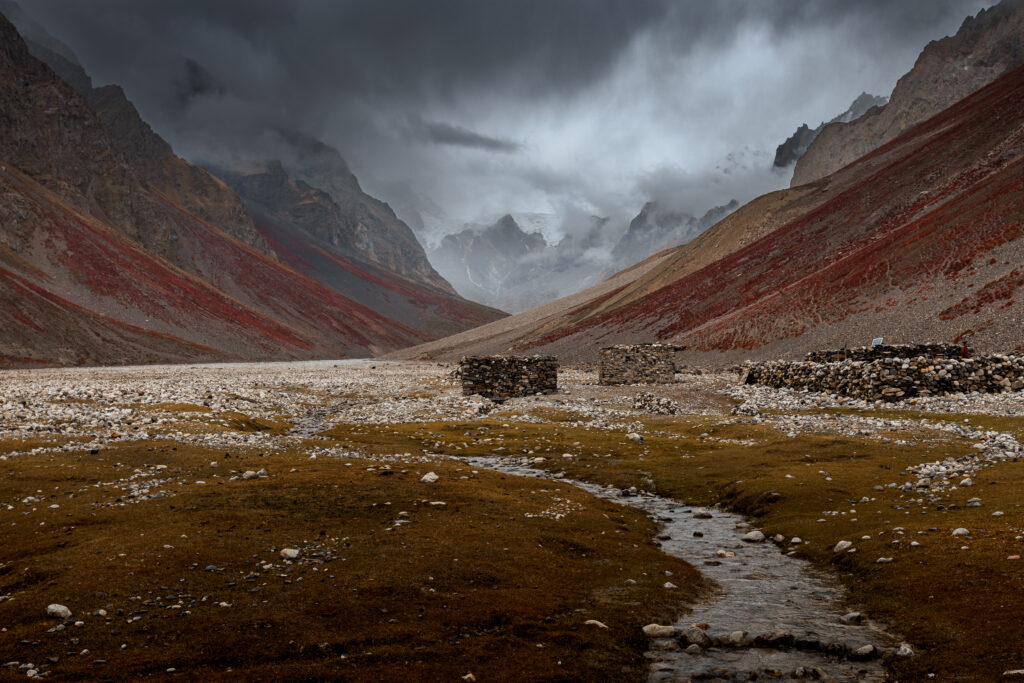 The Remote Thallay Valley
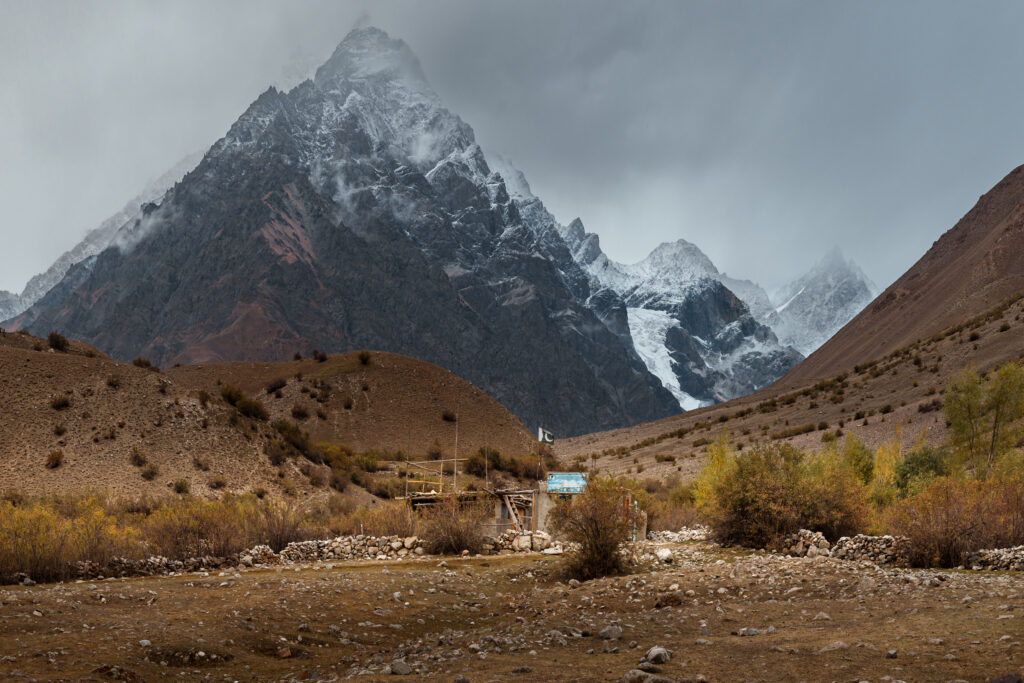 A lonely guesthouse in an epic setting in Thallay Valley
Where to Stay in Skardu
Skardu is a large city, and with that comes a wide range of accommodation options to suit every budget, from basic guesthouses and mid-range hotels to more luxurious options. If you’re travelling independently and looking for something affordable, clean, and quiet, there are plenty of good budget-friendly choices.
Two solid options I recommend are Skardu Lodge and Pyramid Lodge. Both offer nice, clean rooms at reasonable prices, making them ideal for backpackers and long-term travellers. An added bonus is their location, slightly outside the chaotic centre of Skardu, which means less noise and a more relaxed atmosphere. A double private room will cost less than 10€.
Where to Eat in Skardu
Being a large city, Skardu has no shortage of places to eat, from small local eateries to more modern cafés. You’ll find plenty of traditional Pakistani food around town, and while local restaurants are worth trying, there may come a point, especially if you’ve been travelling in Pakistan for a while, when you’re craving something a little different.
If you’re anything like me and in need of a break from endless biryani and daal, Skardu has a few more “Western-style” options that are well worth checking out.
One place I kept going back to was The Grind Cafe & Eatery. It was close to my accommodation, which didn’t hurt, and offered a welcome change from local food. While it’s slightly more expensive than eating at traditional restaurants, the menu includes a good variety of non-Pakistani dishes, making it a great option when you’re craving something a bit more familiar.
Another spot I’d highly recommend is Yak Grill Skardu. This branch opened recently, but it lives up to the reputation of the famous Yak Grill Passu. They serve hands-down the best yak burgers I’ve ever had, and it ended up being one of my favourite meals in Pakistan. If you eat here once in Skardu, make it this place. It’s absolutely worth it.
Practical Tips for Visiting Skardu Independently
Skardu is one of the easiest places to visit in northern Pakistan, but independent travel here still requires a bit of planning. These tips will help you avoid common frustrations.
Flights vs road travel
Flying from Islamabad to Skardu is fast but unreliable, flights are frequently cancelled due to weather. If you’re on a tight schedule, build in buffer days. Travelling by road takes much longer but is far more dependable.
Cash is essential
ATMs exist in Skardu, but only one usually works with foreign cards: Bank Alfalah. One you get out of Skardu and go into the different valleys, there are no ATMs so it’s important to carry enough cash to cover accommodation, food, and transport for several days. Guesthouses and restaurants out of the cities don’t accept cards. Make sure you’re withdrawing with a card that doesn’t charge high foreign transaction fees.
Avoid ATM fees with Wise
The card I use for all my travel withdrawals – real exchange rate, low fees.
Use Revolut to avoid ATM fees
Good alternative to Wise – I carry both as a backup.
Getting around
Skardu town itself is walkable, but for places like the cold desert, Marsur Rock, Deosai, or nearby valleys, you’ll need a shared jeep, private jeep, or motorbike. Prices are negotiable, always agree on the fare beforehand.
Connectivity & SIM cards
Internet is slow and unreliable. SCOM works best in Skardu and in Gilgit-Baltistan in general, but even then, expect limited coverage. Download offline maps and save important information in advance. You can get a SCOM SIM card in Skardu here. If you want a backup option before arriving in Pakistan or for the Islamabad leg before switching to SCOM, an eSIM can be useful.
Need data before you land? Try Saily eSIM
Use code RITAHE1486 for $5 off your first plan.
Altitude & pace
Skardu sits at around 2,200 metres, which is manageable for most travellers, but you may feel slightly breathless on arrival. Take it easy on your first day and stay hydrated.
Clothing & packing
Even in summer, evenings can be cold. Pack layers, especially if you plan to visit Deosai or higher-altitude valleys. Sun protection is also essential: the sun is strong at this elevation.
Safety & solo travel
Skardu felt safe and welcoming, including as a solo female traveller. Locals are curious but respectful, and hospitality is a big part of the culture. Dress modestly, be polite, and you’ll likely be met with nothing but kindness.
Don’t skip travel insurance!
I use SafetyWing for most trips – solid coverage for adventure travel.
Respect local customs
This area of Gilgit-Baltistan is culturally more conservative than Hunza for example. You won’t see many women around on the streets. Therefore wearing modest clothing is important (even for men) and respecting local traditions go a long way.
FAQ: Skardu Travel Guide
Is Skardu worth visiting? Yes! Skardu is one of the best bases for exploring Northern Pakistan, especially if you’re interested in dramatic landscapes, lakes, and access to more remote regions.
How do you get to Skardu? You can either fly from Islamabad or travel by road. Flights are much faster but often unreliable due to weather, while the road journey is long and physically demanding.
Can you travel around Skardu independently? Yes, Skardu is easy to explore independently. You can arrange transport locally, visit nearby valleys on your own, and don’t need to join a tour.
How many days do you need in Skardu? You’ll need at least a few days to explore Skardu and its surroundings properly, especially since distances are large and travel times can be slow.
What should you expect when visiting Skardu? Expect incredible scenery, but also slow travel, basic infrastructure in some areas, and plans that may change due to weather or road conditions.
Need help planning your Pakistan trip?
Custom itineraries, local guide sourcing, and on-trip support from someone who’s done it.
Final Thoughts
Skardu and its surrounding valleys are more than just a gateway to the Karakoram, they are destinations in their own right. From the bustling bazaar and high desert landscapes to the quiet villages of Khaplu, Machulo, and Barah, this region offers a mix of adventure, culture, and natural beauty that’s accessible even on a budget.
Beyond the highlights, Baltistan is a hiker’s paradise, with endless treks and trails that remain completely unexplored. Every valley, ridge, and plateau holds the promise of discovery, from hidden villages to secret lakes and panoramic mountain views untouched by tourists. For a deeper look at some of Pakistan’s most remote and off-the-beaten-path valleys, check out my full guide here.
Whether you’re chasing dramatic landscapes, wandering secluded trails, or soaking in local life, Skardu and its surroundings reward travellers who venture independently. With careful planning, local transport, and a sense of adventure, you can experience some of Pakistan’s most breathtaking and untouched regions without the need for expensive tours.
More Pakistan Travel Guides
If you’re planning to travel Pakistan independently, these in-depth guides will help you navigate the country, travel on a budget, and explore far beyond the usual routes:
Have questions about travelling Skardu? Drop them in the comments. I read every single one.