
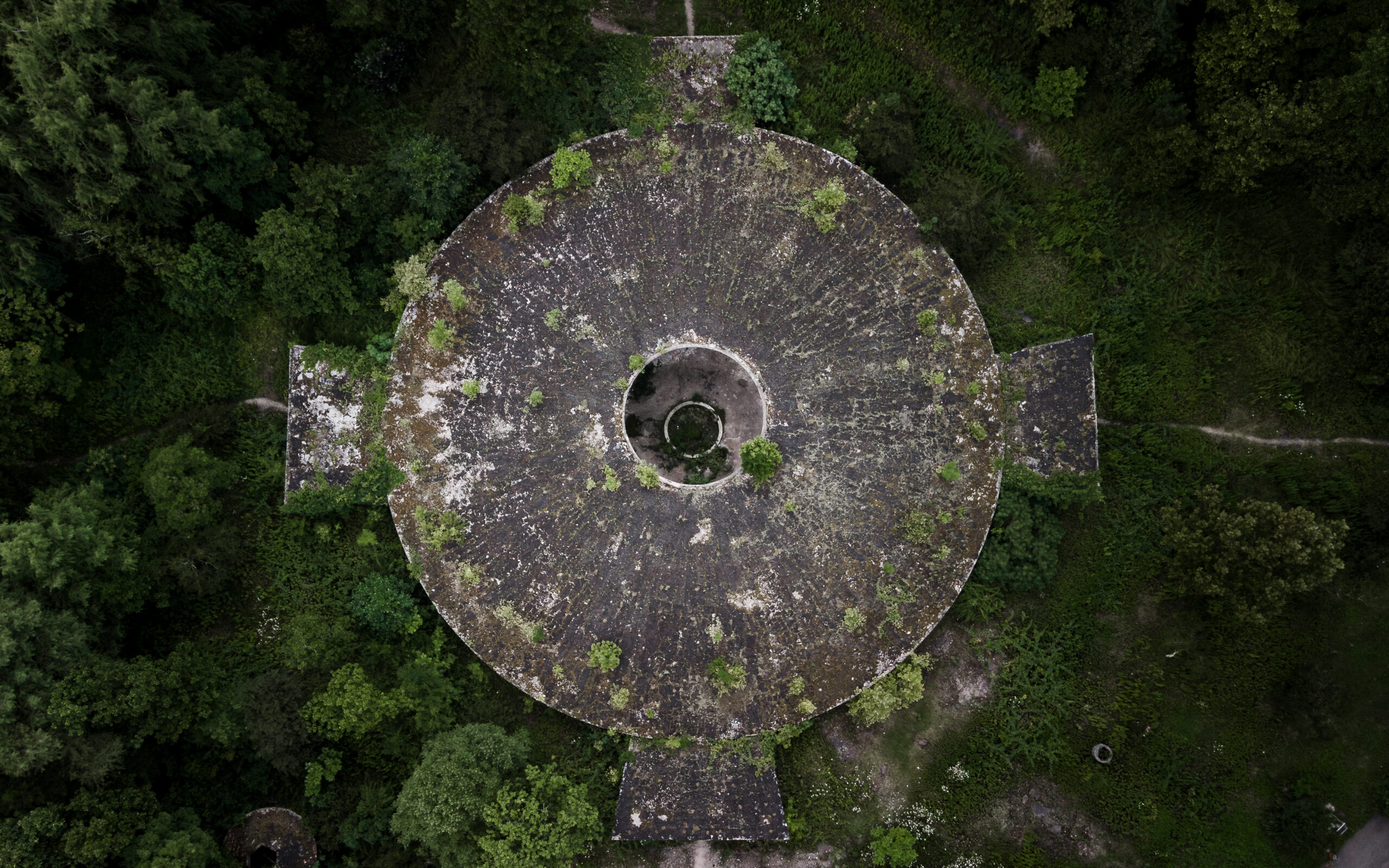
Kutaisi is the most underrated base in Georgia, and this Kutaisi travel guide covers exactly why. Most visitors treat it as a transit stop between Tbilisi and Batumi, which means they miss Martvili Canyon’s turquoise water, the eerie collapsed grandeur of Tskaltubo’s Soviet sanatoriums, and one of the oldest wine-producing regions in the world. I spent several days here exploring all of it independently, without a tour, using marshrutkas and taxis. Here’s everything you need to do the same.
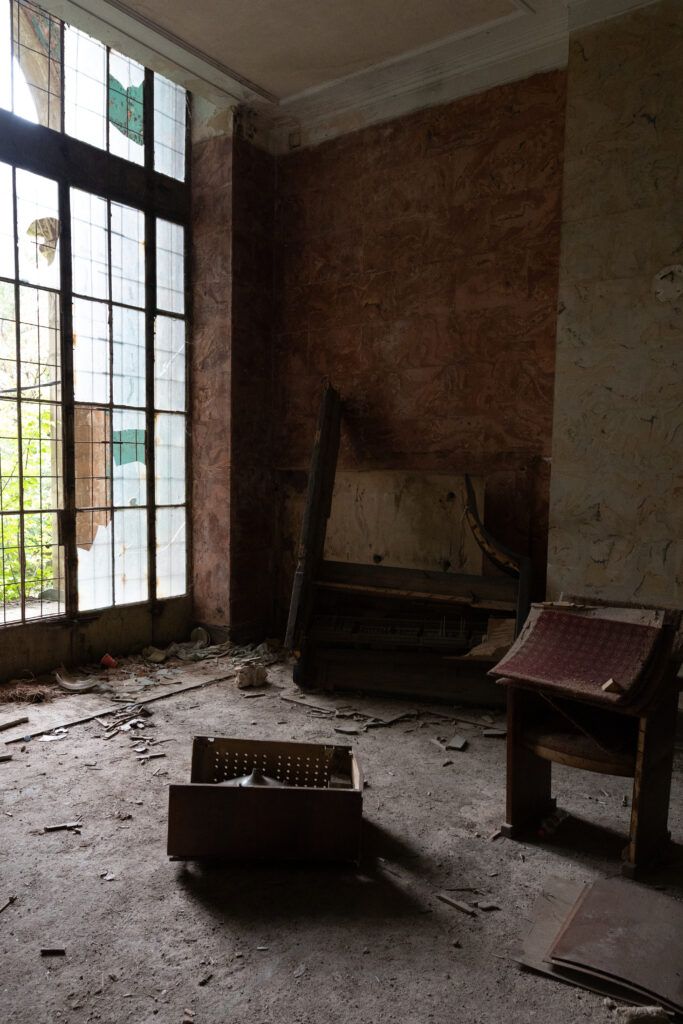 Remains of a piano in the abandoned theater in the Sanatorium Metalurgist
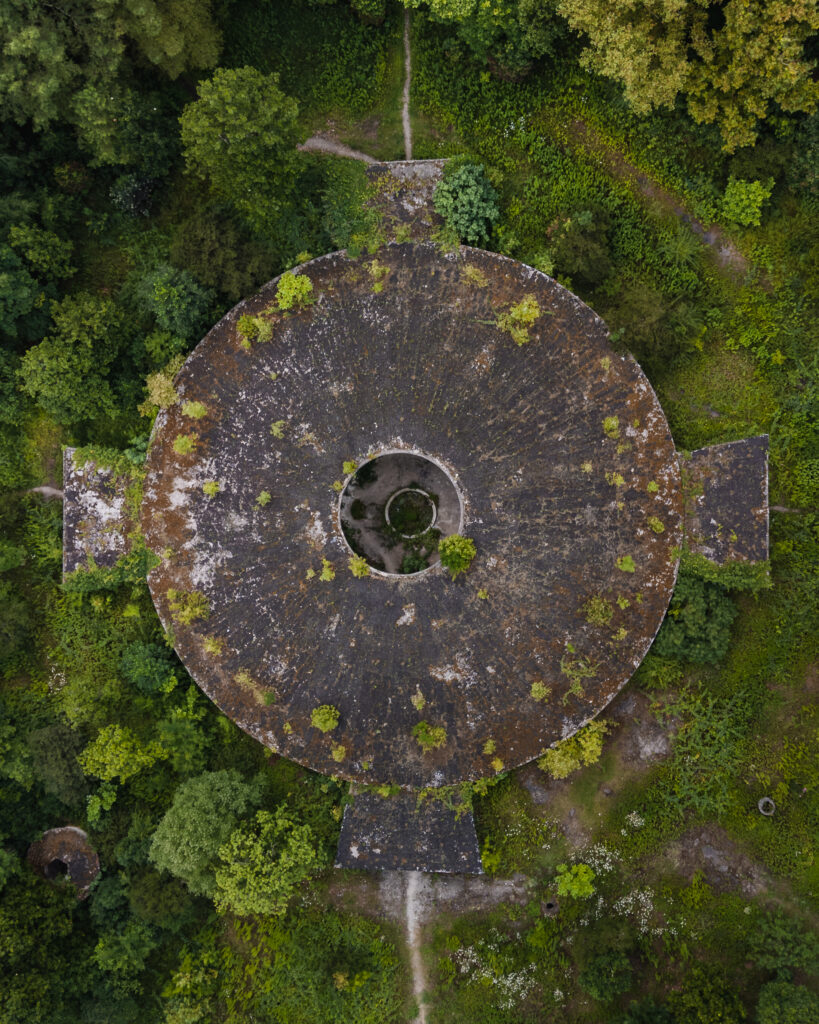 Top-down view of abandoned Bathhouse no. 8
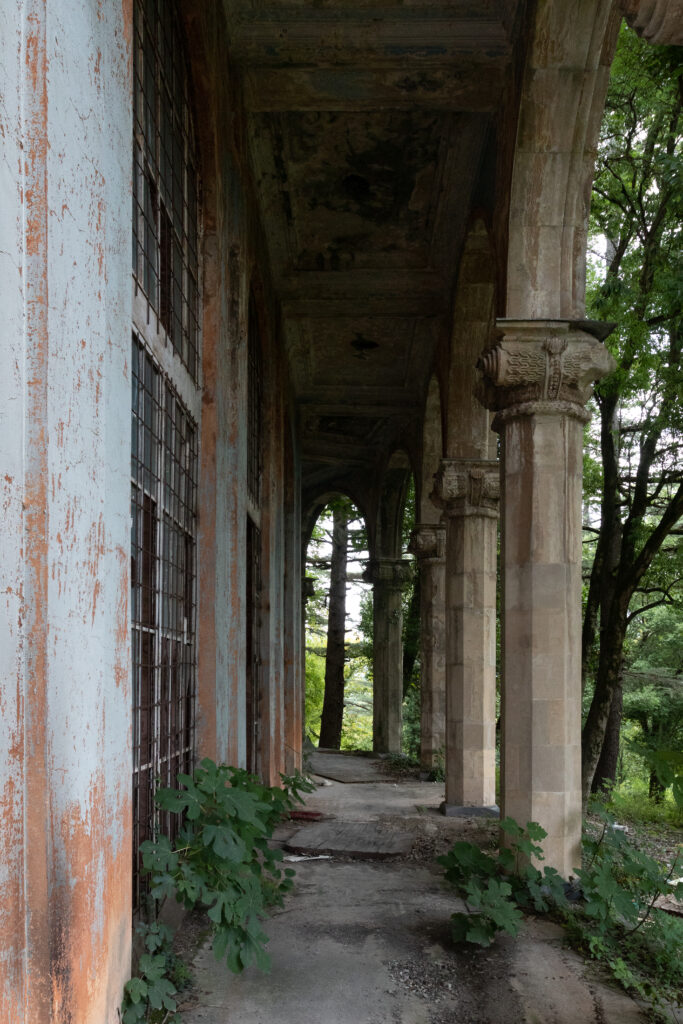 Abandoned Exterior of the Sanatorium Metalurgist
How to Get to Kutaisi by Public Transport
From Tbilisi
The easiest and most common way to reach Kutaisi from Tbilisi is by marshrutka (minibus). These depart frequently throughout the day from Didube Bus Station in Tbilisi and take around 3.5 to 4 hours, depending on traffic and stops along the way. The journey crosses central Georgia and offers occasional views of rolling countryside and small villages.
Another comfortable option is the train, which leaves from Tbilisi Central Railway Station. The ride takes roughly 4-5hours, and while it is slightly slower than the marshrutka, it is generally more comfortable and gives you more space to relax during the journey.
From Batumi
Travelling from Batumi to Kutaisi is even easier since the two cities are relatively close. The journey takes about 2 to 2.5 hours by marshrutka, with regular departures from Batumi Bus Station. The route passes through lush green landscapes and small towns typical of western Georgia.
There is also a train connection between Batumi and Kutaisi, though schedules are less frequent. Some trains stop at Rioni Station, located just outside the centre of Kutaisi, so you may need a short taxi ride to reach the city itself.
Getting Around Kutaisi
Kutaisi is a relatively small and walkable city, and most of the main sights in the centre can easily be explored on foot. The historic area around the Kutaisi Central Square, the Bagrati Cathedral, and the riverside promenades along the Rioni River are all within walking distance of each other, making it easy to wander the city at a relaxed pace.
For destinations slightly further away, such as the Gelati Monastery or the nearby town of Tskaltubo, marshrutkas are the cheapest and most common form of transport. These usually depart from the Kutaisi Central Bus Station or smaller stops around the city centre. They don’t always run on strict schedules, but departures are frequent enough that you rarely have to wait long.
Taxis are also widely available and very affordable compared to Western Europe. The easiest way to order one is through the mobile apps Bolt or YandexGo, which work reliably in Kutaisi and avoids the need to negotiate prices.
If you plan to visit natural attractions like Okatse Canyon or Martvili Canyon, it’s also possible to reach them using marshrutkas. Shared minibuses run from Kutaisi Central Bus Station to nearby towns and villages such Martvili. From there, you may need to walk, hitchhike, or take a short taxi ride to the canyons. It’s a slower but very affordable way to visit these places and fits well with a backpacker-style trip.
How much does Kutaisi cost per day?
Kutaisi is noticeably cheaper than Tbilisi. It’s a real working Georgian city rather than a tourist hub, and prices reflect that.
| Category | Budget | Mid-range | Notes |
|---|---|---|---|
| Accommodation | €8–12 | €20–35 | Hostels and guesthouses; fewer options than Tbilisi |
| Food | €4–8 | €10–18 | Local cafés, bazaar food, bakeries |
| Transport | €1–5 | €5–12 | Marshrutkas to canyons; Bolt within city |
| Activities | €2–8 | €8–20 | Martvili boat ride ~€5; Okatse Canyon entry fee ~€3 |
| Miscellaneous | €2–3 | €4–8 | Snacks, coffee |
| Daily total | €17–36 | €47–93 |
Canyon days will push toward the higher end due to transport and entry fees, but even those rarely exceed €35 total.
Things to Do in Kutaisi
Bagrati Cathedral
Standing proudly on a hill overlooking the city, Bagrati Cathedral is Kutaisi’s most iconic landmark. Originally built in the 11th century during the reign of King Bagrat III, the cathedral symbolised the unification and strength of medieval Georgia.
The church was heavily damaged during an Ottoman invasion in the 17th century and remained in ruins for centuries before being restored in recent years. Although the modern reconstruction sparked some debate, the cathedral remains an important symbol of Georgian history. The hilltop location also offers one of the best panoramic views over Kutaisi, especially at sunset when the city glows in warm golden light.
Wander the Old Town and White Bridge
Kutaisi’s Old Town is small but charming, filled with pastel-coloured houses, wooden balconies, and quiet cobbled streets. It’s the perfect area to explore on foot without any particular plan. One of the city’s most recognisable landmarks is the White Bridge, which crosses the Rioni River. At the centre of the bridge stands a small statue of a boy wearing two hats, a beloved local symbol. From here you can stroll along the riverside promenade, stop at cafés, or simply watch daily life unfold in the city.
Green Bazaar
For a glimpse into everyday life in western Georgia, head to the Kutaisi Green Bazaar. This bustling market is packed with stalls selling fresh vegetables, herbs, homemade cheeses, spices, dried fruits, and the famous Georgian sweet Churchkhela. It’s a great place to try local snacks, pick up picnic supplies, or simply wander among the colourful displays of produce while chatting with friendly vendors.
Gelati Monastery
Located just 15 minutes from Kutaisi, Gelati Monastery is one of the most important historical and religious sites in the country. Founded in 1106 by King David IV of Georgia, the monastery quickly became one of the main cultural and intellectual centres of medieval Georgia. Scholars from across the region studied here, earning it the nickname “the second Jerusalem.”
Inside the main church, you’ll find stunning medieval frescoes and a magnificent golden mosaic of the Virgin Mary, dating back to the 12th century. The peaceful hilltop setting also offers beautiful views over the surrounding countryside. Because of its historical significance and well-preserved architecture, the monastery is recognised as a UNESCO World Heritage Site and is one of the most rewarding cultural visits near Kutaisi.
Prometheus Cave
Another popular attraction near Kutaisi is Prometheus Cave, one of the largest cave systems in Georgia. Discovered in 1984, the cave stretches for several kilometres underground and features enormous chambers filled with stalactites, stalagmites, underground rivers, and vast limestone formations. A walking path leads visitors through a series of dramatic caverns illuminated with colourful lighting.
At the end of the tour, it might be possible to take a short underground boat ride along the cave river, depending on water levels.
Sataplia Nature Reserve
Located about 10 km from Kutaisi, Sataplia Nature Reserve is a protected natural area known for its forests, caves, and prehistoric dinosaur footprints. The reserve takes its name from the Georgian word sataplia, meaning “place of honey,” as wild bees historically nested in the limestone cliffs here. Today, visitors come to explore the reserve’s short walking trails, scenic viewpoints, and underground cave system.
One of the most fascinating attractions is the preserved dinosaur footprints, believed to date back more than 120 million years. The footprints are protected under a covered structure and offer a rare glimpse into the region’s prehistoric past. The reserve also features Sataplia Cave, a smaller but atmospheric cave filled with stalactites and stalagmites, as well as a glass panoramic viewing platform suspended above the forest with sweeping views over the surrounding hills and the Kutaisi valley.
Martvili & Okatse Canyons
A trip to Kutaisi wouldn’t be complete without visiting the spectacular canyons of western Georgia, two of the most impressive natural attractions in the region. Both Martvili Canyon and Okatse Canyon can easily be visited as day trips from Kutaisi and are often combined in the same day.
Martvili Canyon is famous for its vivid turquoise water, lush vegetation, and small waterfalls cascading down moss-covered cliffs. The highlight here is the short boat ride through the canyon, where you glide along the emerald river between towering rock walls. There’s also a well-maintained walking path with viewpoints overlooking the waterfalls and pools below.
Okatse Canyon, on the other hand, offers a completely different experience. Instead of walking at the bottom of the canyon, visitors follow a long elevated walkway suspended along the cliffside, high above the gorge. The path leads to a panoramic viewing platform with dramatic views across the forested valley below. The walk from the entrance to the canyon viewpoint is fairly long, but the scenery makes it worthwhile.
Both canyons are located about one to two hours from Kutaisi, depending on transport. While many travellers visit with organised tours, it’s also possible to reach them independently by marshrutka, which is how I visited. If you’re spending a couple of days in Kutaisi, these two canyons are among the best nature experiences in western Georgia and are well worth adding to your itinerary.
Tskaltubo: Exploring Georgia’s Abandoned Soviet Spa Town
Just 20 minutes from Kutaisi, the small town of Tskaltubo is one of the most fascinating and surreal places to visit in western Georgia. Once a glamorous Soviet spa resort, Tskaltubo is now famous for its abandoned sanatoriums, crumbling architecture, and eerie atmosphere, making it a unique destination for urban explorers and photographers.
A Soviet Spa Resort
During the Soviet era, Tskaltubo was one of the most prestigious spa destinations in the USSR. The town became famous for its naturally warm mineral waters, which were believed to have healing properties. Visitors from across the Soviet Union travelled here for medical treatments, relaxation, and holidays funded by the state.
At its peak in the 1950s and 60s, the town welcomed thousands of visitors every day. Massive sanatorium complexes were built in grand Soviet style, surrounded by parks, fountains, and colonnaded walkways. Each sanatorium specialised in different treatments, and visitors would spend weeks here bathing in mineral pools and undergoing therapies. One of the most famous visitors was Joseph Stalin, who reportedly had a private bathhouse built in Tskaltubo.
Decline After the Soviet Union
After the collapse of the Soviet Union in 1991, tourism to Tskaltubo collapsed almost overnight. The once luxurious sanatoriums were abandoned, and the town quickly fell into decay.
In the 1990s, many of the empty buildings were used to house internally displaced people from the conflicts in Abkhazia, and some families still live in parts of the sanatoriums today. Walking through Tskaltubo, it’s not unusual to see laundry hanging from balconies or small gardens outside otherwise crumbling buildings. This mixture of grand Soviet architecture, abandonment, and everyday life gives the town a unique and slightly haunting atmosphere.
What to Do in Tskaltubo
Sanatorium Iveria
Sanatorium Iveria was one of the most prestigious in Tskaltubo during the Soviet era. Today, it is mostly abandoned, but some sections are occasionally used by staff for maintenance. Inside, you’ll find long hallways lined with faded murals, ornate staircases with cracked railings, and empty treatment rooms. Old signage in Georgian and Russian still hangs above doors, and in some areas, rusted bath fixtures remain. It’s a quiet, slightly eerie place, and visitors can wander freely, making it ideal for photography.
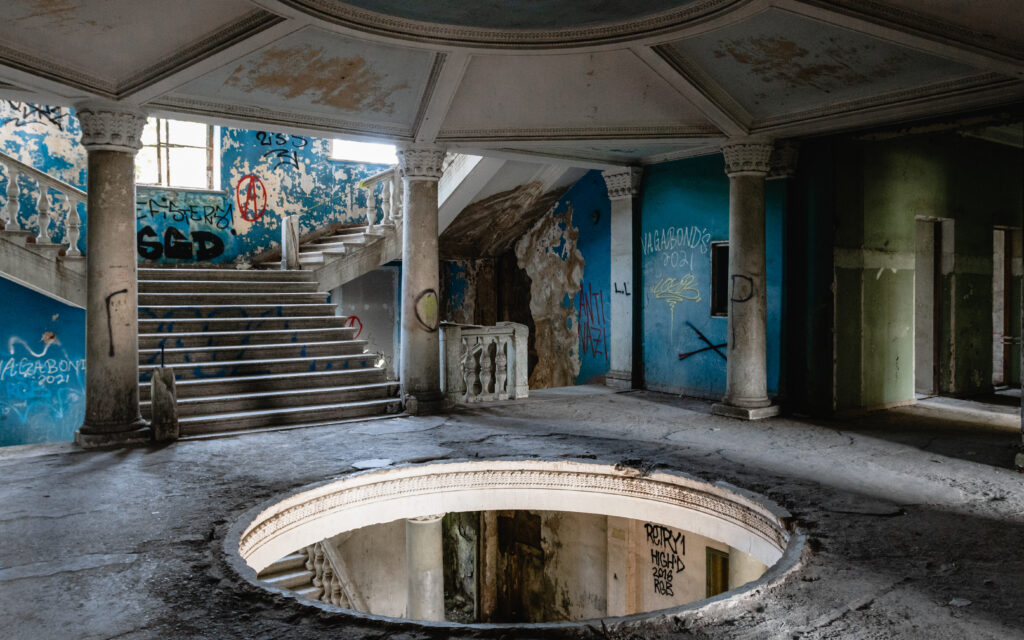 Iveria Sanatorium
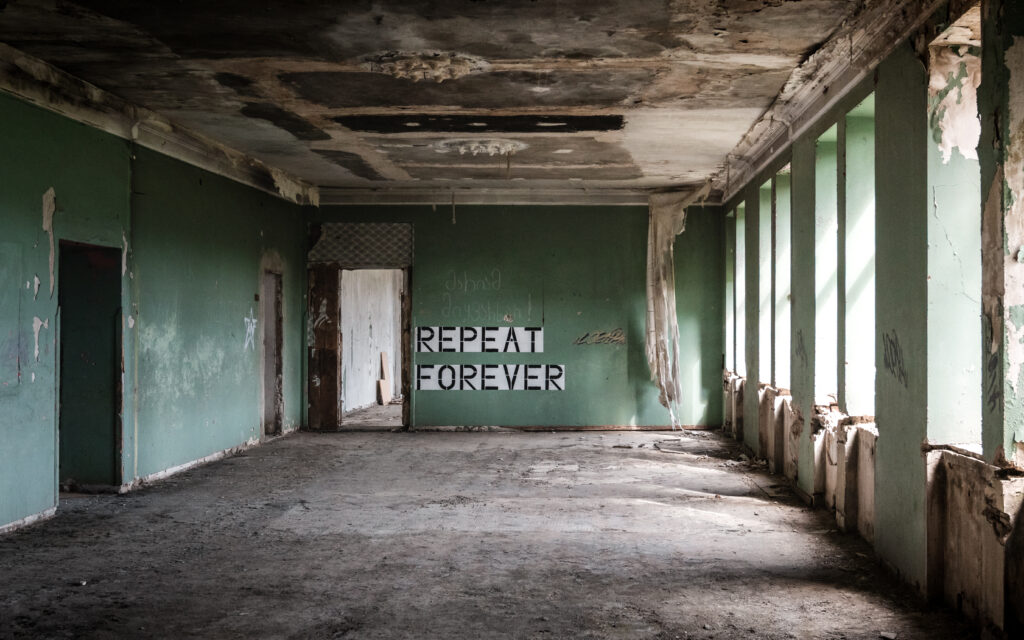 Iveria Sanatorium
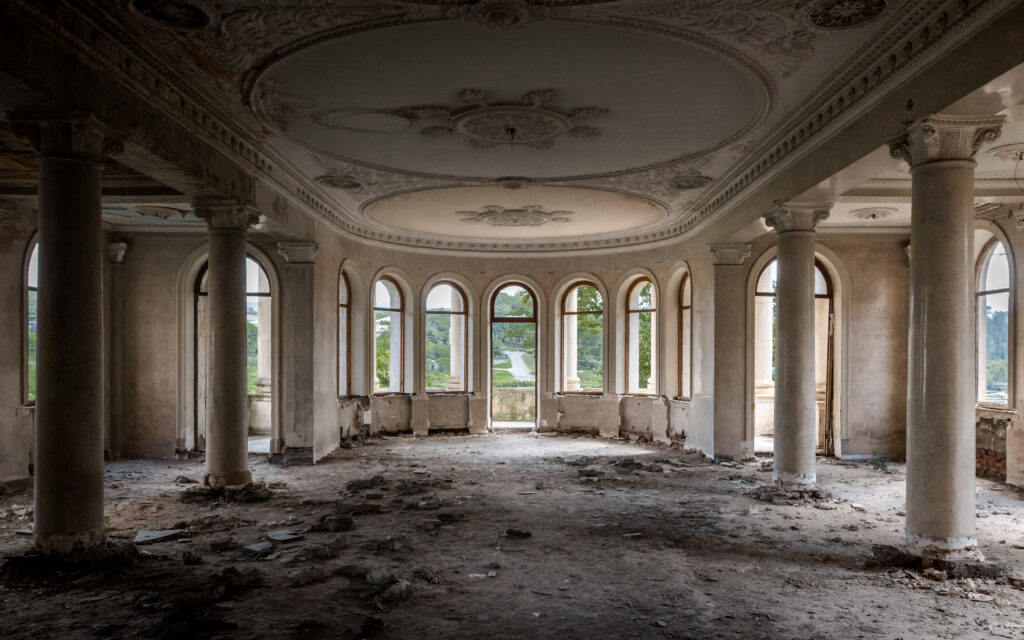 Iveria Sanatorium
Sanatorium Metalurgist
Metalurgist is one of the largest complexes in Tskaltubo and is partly abandoned. Walking through it feels like stepping into a post-apocalyptic Soviet world. You’ll encounter vast empty dining halls, enormous guest rooms, and pools drained of water, with tiles falling off walls and nature creeping in through broken windows. Some areas still have remnants of furniture, old Soviet medical equipment, and even newspapers from decades ago. The scale of the building gives a real sense of how bustling and alive Tskaltubo once was.
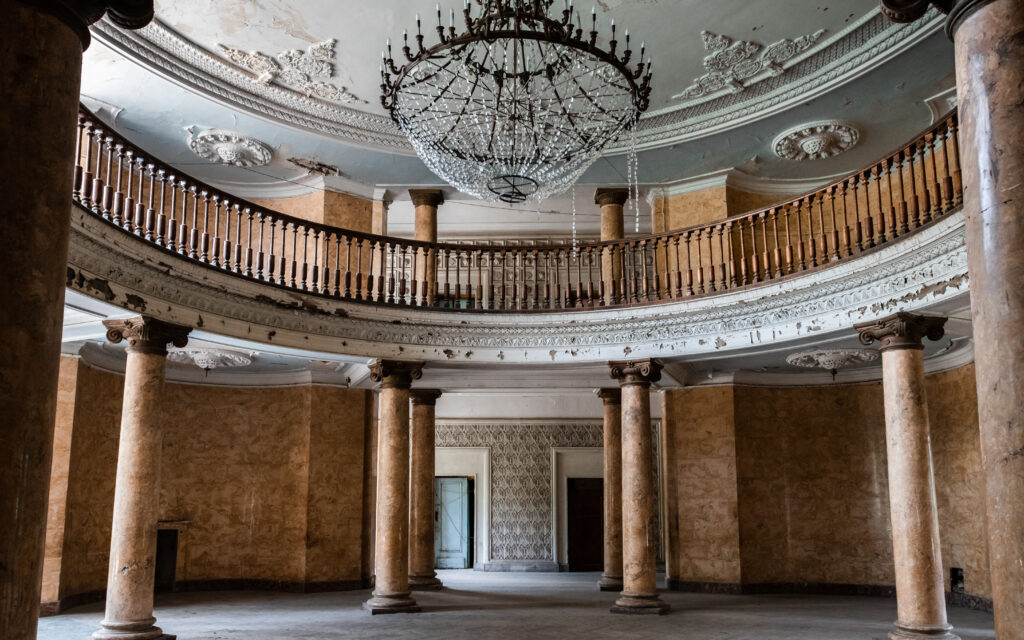 Main Hall in the Sanatorium Metalurgist
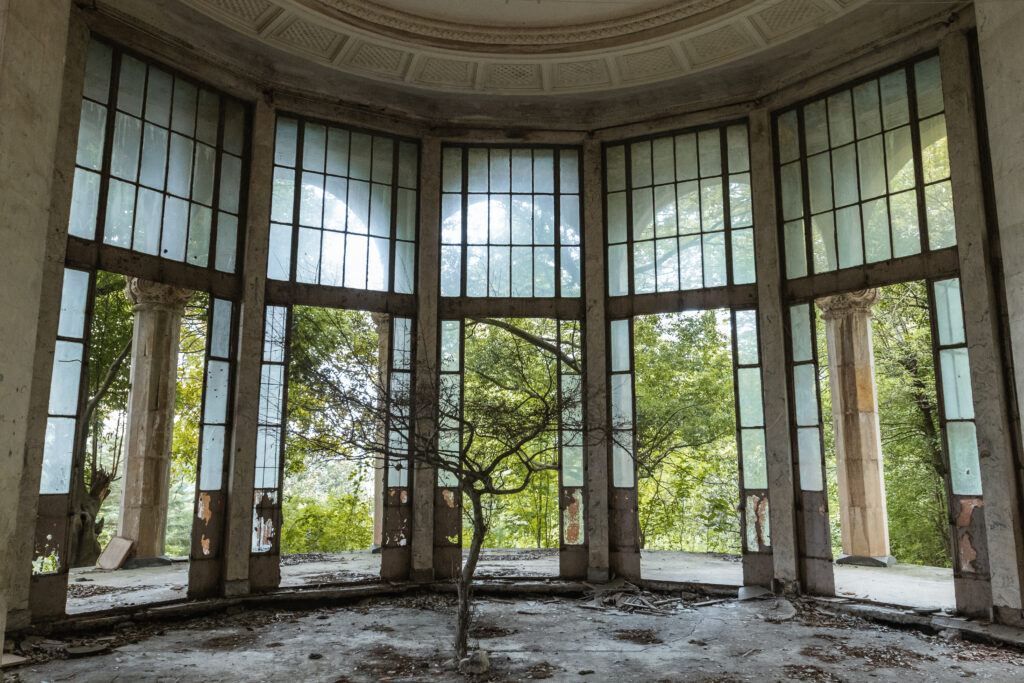 Tree growing inside the Sanatorium Metalurgist
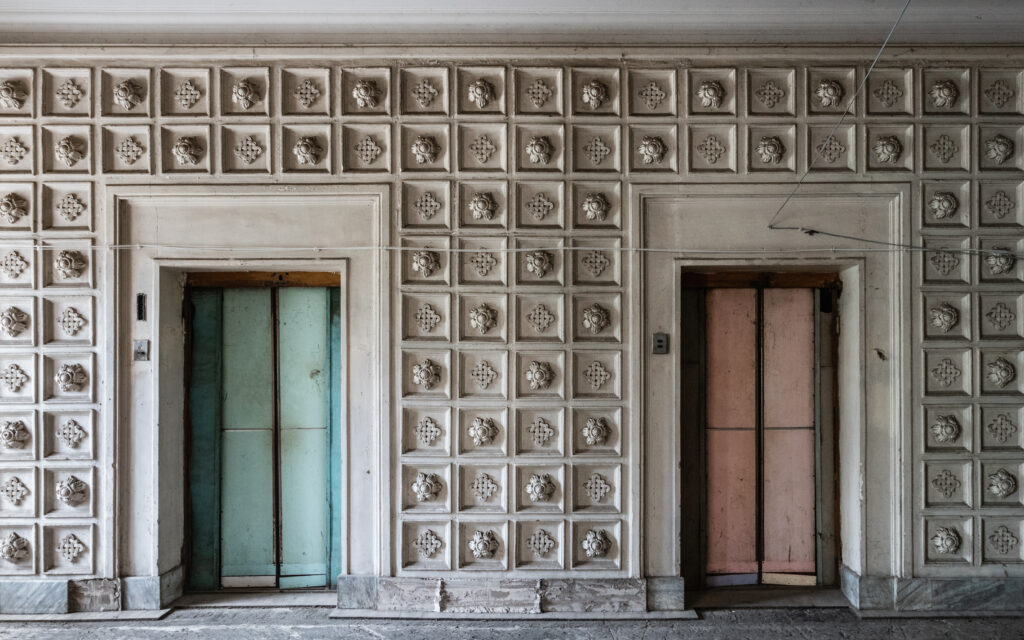 Old elevators in the Sanatorium Metalurgist
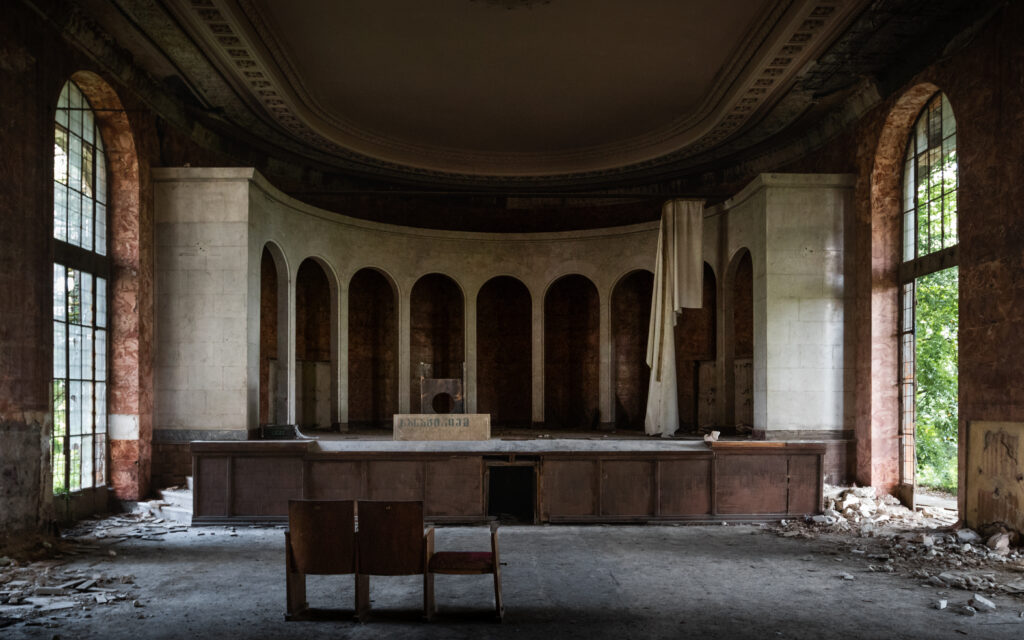 Abandoned Theater Hall in the Sanatorium Metalurgist
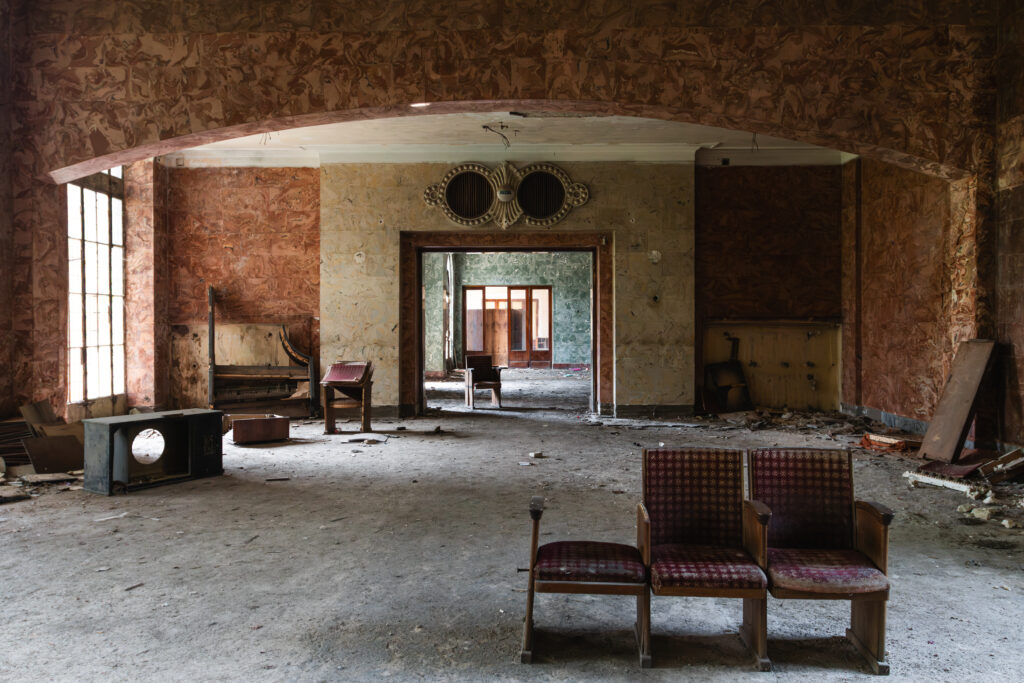 Abandoned Theater Hall in the Sanatorium Metalurgist
Medea Sanatorium
The Medea Sanatorium is often considered the most photogenic and atmospheri of Tskaltubo’s abandoned buildings. It is fully abandoned, with large, ornate staircases, arched windows, and ceilings that were once richly decorated. Inside, you’ll find faded murals, rusted spa equipment, and empty treatment rooms. Some hallways are dark and require a flashlight to navigate safely. The combination of decay and elegant Soviet-era architecture makes it a favourite for photographers and urban explorers.
Tskaltubo Spa Resort (Military Sanatorium)
The Military Sanatorium differs from the others because parts of it are still in use. Some bathhouses and treatment rooms operate, primarily for locals or visiting pensioners who come for mineral water therapy. Other sections are abandoned, showing peeling paint, empty pools, and rusted medical equipment. Walking through, you can see the contrast between the functioning spa areas with staff and guests, and the crumbling abandoned wings frozen in time.
Sanatorium Imereti
Sanatorium Imereti is partially inhabited, with some rooms still used for accommodation by locals, while the majority of the complex is abandoned. Inside, you’ll find empty treatment halls, long corridors with peeling paint, and cracked tiles, alongside areas where displaced families have made makeshift homes. In some rooms, you might see personal belongings, furniture, and laundry drying, creating a stark contrast to the deserted wings of the building. It’s one of the more atmospheric places in Tskaltubo for experiencing both history and ongoing life.
Bathhouse No. 8
Bathhouse No. 8 is one of the few still operational bathhouses in Tskaltubo. Here, visitors can actually bathe in the therapeutic mineral waters that made the town famous. The architecture is typical of Soviet spa design, with large tiled pools, high ceilings, and changing rooms. It gives a sense of how Tskaltubo functioned at its height, and it’s an excellent way to experience a living part of the spa town’s history.
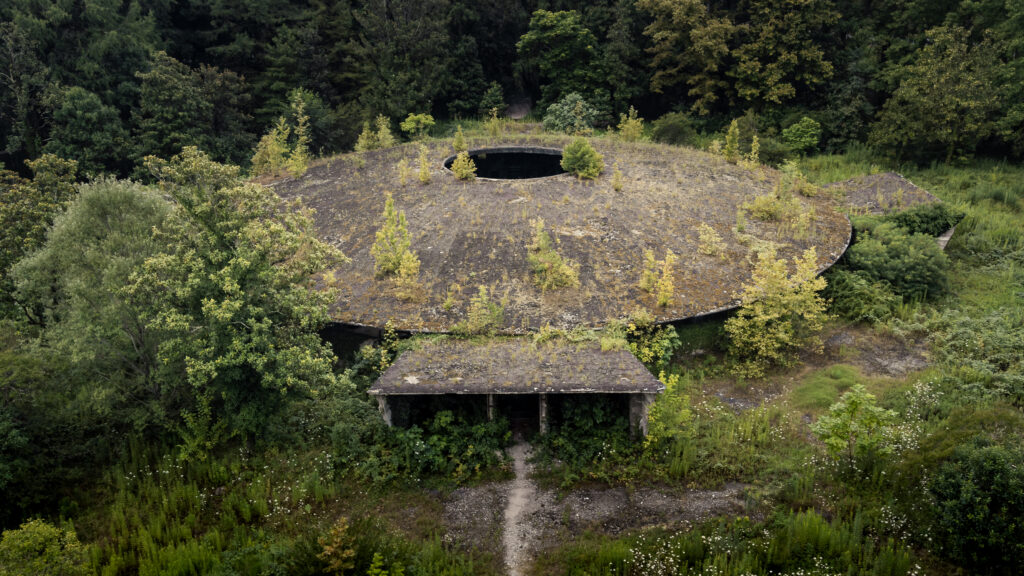 Abandoned exterior of Bathhouse no. 8
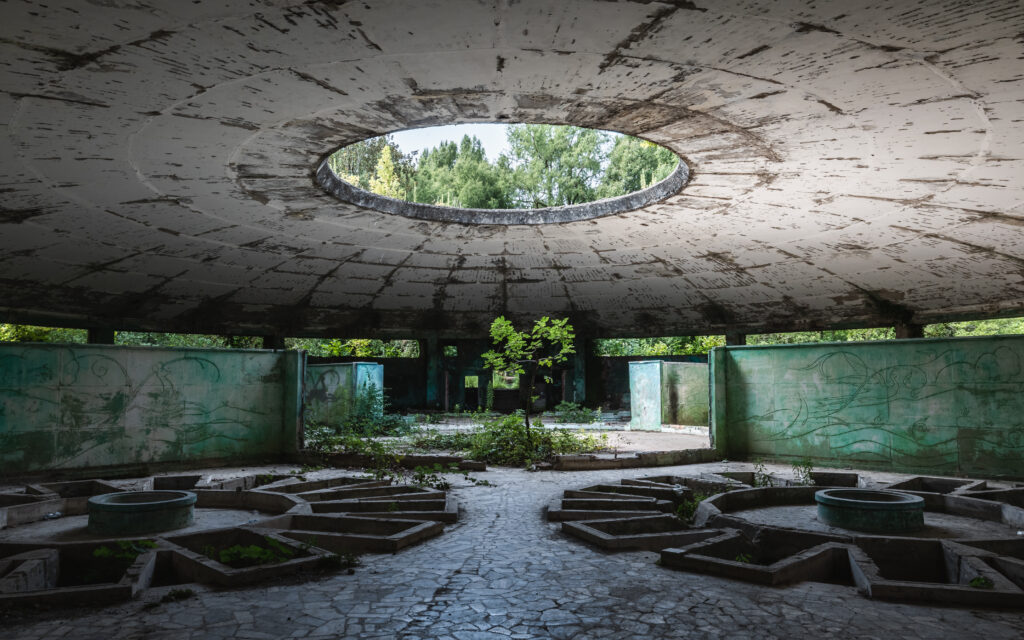 Abandoned interior of Bathhouse no. 8
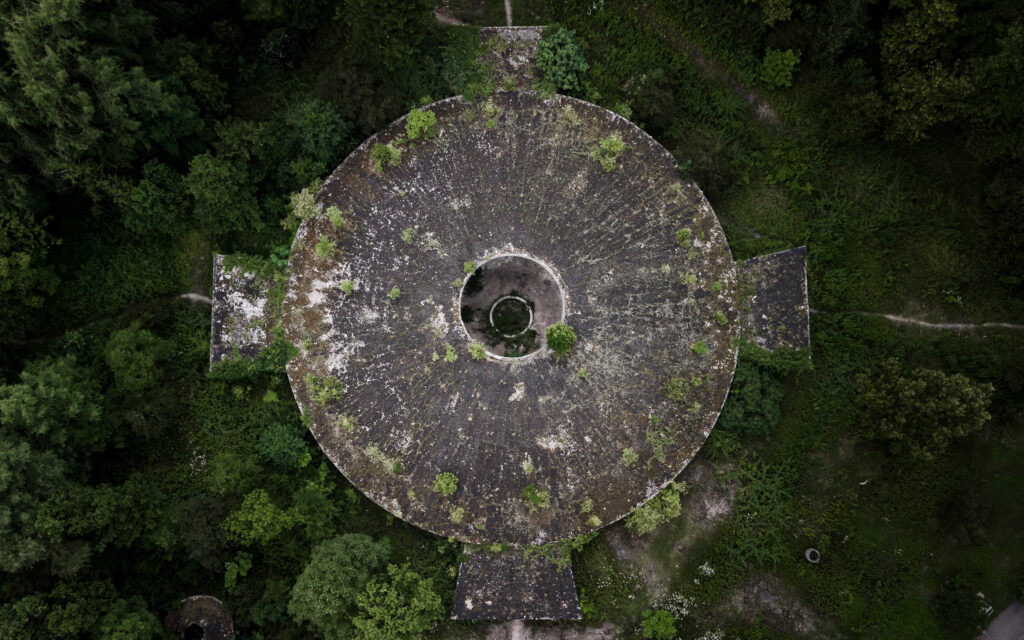 Top-down view of abandoned Bathhouse no. 8
Bathhouse No. 6
Bathhouse No. 6 is mostly abandoned, though parts may be used occasionally by locals. Inside, you’ll find empty pool rooms, cracked tiles, fading murals, and rusted bath equipment, giving a haunting impression of the town’s former glory. Walking through, it’s easy to imagine the crowds that once flocked here for relaxation and treatment. The mix of abandonment and traces of ongoing use by nearby residents adds to its mysterious atmosphere.
Other Soviet-Era Landmarks in Tskaltubo
Tskaltubo isn’t just about the sanatoriums and bathhouses. Scattered throughout the town are smaller, often overlooked remnants of the Soviet era, each with its own character and charm. These make the town feel like an open-air museum of mid-20th-century Georgian life.
Café Magnolia is one of the few functioning cafés in town and a great place to experience a slice of local life. Its interior still carries a distinctly Soviet aesthetic, with retro furniture, old signage, and a timeless feel that makes it feel frozen in another era.
The train station and post office are classic examples of functional Soviet architecture. Both are mostly abandoned, but the structures themselves showcase stark lines, concrete facades, and geometric designs typical of the period. Even small details like old ticket counters, faded timetables, and signage in Cyrillic contribute to the nostalgic atmosphere.
Former Hotel No. 2 and Stalin’s Dacha (KGB building) are reminders of Tskaltubo’s prestigious past. The hotel was once used by VIP visitors, while Stalin’s Dacha served as a secure retreat for high-ranking officials. Today, both buildings are abandoned, their crumbling walls and overgrown gardens offering a glimpse into the secrecy and grandeur of Soviet life.
The Center of Culture and old photo studios in the park give a sense of the town’s social life during the Soviet period. The photo studios, now mostly shuttered, still have faded signage and old cameras inside, preserving the feel of a time when capturing memories was a central part of community life.
Even small details like weird bus shelters scattered around town reflect the unique design sensibilities of the era. Walking through Tskaltubo, it’s easy to see how every corner, large or small, tells a story from a very different time. Combined with the sanatoriums, these landmarks make Tskaltubo an incredible destination for urban exploration, photography, and history enthusiasts.
Exploring Tskaltubo Safely
Tskaltubo is fascinating, but it’s important to approach it with care and awareness, especially when exploring the abandoned sanatoriums and bathhouses. Over the past few years, some buildings have been bought by private companies, restored, or fenced off, so not all sites are freely accessible anymore. Conditions can also change quickly, so it’s best to stay informed before heading out.
General Safety Tips:
By following these guidelines, you can fully enjoy the eerie beauty and history of Tskaltubo while staying safe and respecting current residents and property owners. For more up-to-date information on visiting Tskaltubo, including which sanatoriums are currently accessible, check here.
Where to Stay in Kutaisi
Kutaisi has a variety of accommodation options, from budget hostels to mid-range hotels, making it easy for travellers to find something that suits their style and budget.
For budget travellers, hostels in the city centre are the best choice. I stayed at Bao Hostel, which was affordable, clean, and perfectly located. The hostel is within walking distance of the White Bridge, Green Bazaar, and Old Town, making it easy to explore the city without relying on transport. The staff were friendly and helpful, and the social atmosphere made it a great place to meet other travellers.
If you prefer something a bit more private or comfortable, Kutaisi also has plenty of mid-range hotels and guesthouses scattered throughout the city centre. Many of these options provide modern amenities like Wi-Fi, private bathrooms, and sometimes breakfast included. Staying near the Old Town or the White Bridge is ideal if you want to be close to cafes, restaurants, and markets.
Georgian Food in Kutaisi
Kutaisi is a fantastic place to dive into traditional Georgian cuisine, with plenty of local eateries, bakeries, and markets offering hearty and affordable meals. The city is less touristy than Tbilisi, which means you often find restaurants where locals eat, giving an authentic taste of the region.
In Kutaisi, you’ll also find bakeries selling khachapuri and lobiani, ideal for a quick snack or picnic. The region has its own take on khachapuri, often made with local cheese and fresh dough, and lobiani is available both plain with beans or mixed with cheese. These are cheap, delicious, and give a real taste of Georgian daily life.
For something hearty and unique to western Georgia, try ojakhuri, a mix of fried meat, potatoes, and spices, or shkmeruli, garlic chicken cooked in cream, both perfect examples of local comfort food. Walking through Kutaisi, don’t miss the Green Bazaar, where you can sample fresh produce, nuts, dried fruits, and Georgian sweets like churchkhela.
Practical Tips for Visiting Kutaisi
Visiting Kutaisi is relatively straightforward, but a few tips can help make your trip smoother and more enjoyable:
Cash and Payments: Many small restaurants, bakeries, and markets only accept cash (Georgian Lari – GEL), so it’s good to carry some with you. ATMs are widely available in the city centre.
Avoid ATM fees with Wise
The card I use for all my travel withdrawals – real exchange rate, low fees.
Use Revolut to avoid ATM fees
Good alternative to Wise – I carry both as a backup.
Language: Georgian is the official language, and Russian is also commonly spoken. English is understood in hostels, hotels, and tourist-facing restaurants, but not everywhere, so learning a few basic phrases in Georgian or Russian can be helpful.
Connectivity: Buying a local SIM card is easy and affordable. You can get one in Kutaisi at shops of major providers like Magti or Beeline. This is particularly useful if you plan to use maps for hiking or public transport. If you can’t be bothered getting a physical SIM card, you can always opt to get an eSIM, which allows you to get data as soon as you land in Georgia.
Need data before you land? Try Saily eSIM
Use code RITAHE1486 for $5 off your first plan.
Timing: Kutaisi is quieter than Tbilisi, and attractions like the canyons or Tskaltubo sanatoriums are best visited early in the morning to avoid crowds and the heat in summer.
Weather: Summers can get hot, particularly in July and August, so bring sun protection if you’re exploring outdoors. Winters are mild in the city but can be colder and snowier in the surrounding mountainous areas.
Safety: Kutaisi is generally safe for travellers, but when exploring abandoned sanatoriums in Tskaltubo, always be cautious. Some buildings are unstable, and others may have private security or fenced-off areas. Never enter restricted zones.
Don’t skip travel insurance!
I use SafetyWing for most trips – solid coverage for adventure travel.
FAQs about Kutaisi
How many days do I need in Kutaisi?
Two to three days is ideal. One day for the city itself (Bagrati, Old Town, Green Bazaar, Gelati), one day for the canyons (Martvili and Okatse work well combined), and optionally a half day in Tskaltubo. You can do it in two days if you move efficiently.
Is Kutaisi worth visiting?
Yes, especially if you’re already travelling through western Georgia. It’s not as immediately striking as Tbilisi, but the surrounding region (the canyons, Tskaltubo, Gelati) makes it one of the most varied day-trip bases in the country.
Can I visit the Kutaisi canyons without a tour?
Yes. Marshrutkas run from Kutaisi central bus station toward Martvili, and from there you can walk or take a short taxi to the canyon entrance. Okatse is trickier independently but still doable with a combination of marshrutka and local taxi. It’s slower than a tour but very cheap.
How do I get from Tbilisi to Kutaisi?
By marshrutka from Didube Station (~3.5-4 hours, very frequent) or by train from Tbilisi Central Station (~4-5 hours, more comfortable). Both are affordable.
Is Tskaltubo safe to explore?
Generally yes, though the abandoned sanatoriums are decaying structures and some areas have unstable floors or ceilings. Go during daylight, don’t enter buildings that look structurally unsafe, and ideally go with someone who knows the site. Locals are generally around and used to tourists exploring.
Final Thoughts
Kutaisi is often overlooked by travellers rushing between Tbilisi and the mountains, but it’s a city with history, culture, and convenient access to some of Georgia’s most incredible natural and historical sites. From exploring the vibrant Old Town and sampling local Georgian cuisine, to day trips to the Martvili and Okatse Canyons or the surreal abandoned sanatoriums of Tskaltubo, the area offers something for every type of traveller.
Whether you’re on a short visit or a longer Georgian adventure, Kutaisi provides an excellent base to discover the western regions of Georgia, while still feeling authentic and less touristy than the capital. Its combination of urban charm, Soviet-era history, and proximity to nature makes it a highlight of any Georgian itinerary.
Explore More of the Caucasus
After trekking from Mestia to Ushguli, you can either go to Tbilisi, Batumi or explore other regions of Georgia. Here are all the guides I’ve created to help you plan your trip:
Tbilisi Travel Guide: Where to stay, what to eat, and how to spend your time in one of the most underrated capitals in the region. Also your most likely entry and exit point for Armenia.
Backpacking Georgia: Independent Travel Guide: The full overview: how to get around, where to go, what it costs, and why Georgia deserves more than a rushed week.
The Mestia to Ushguli Trek, Svaneti: One of the best multi-day treks in the Caucasus. Remote, stunningly beautiful, and entirely doable independently. If you’re already this deep into the region, don’t skip it.
Kazbegi: The Caucasus Mountains: The most dramatic day trip from Tbilisi, or a destination in its own right. Gergeti Trinity Church, big hikes, and the kind of mountain scenery that makes you want to stay longer.
For those crossing the border south, my Armenia Travel Guide explains how to get there by public transport, where to stay, and the highlights of Yerevan, Dilijan, and the surrounding region.