Backpacking Armenia on a budget is more straightforward than most people expect, and far more rewarding than the quick Georgia extension most travellers treat it as. This is an independent travel guide written from two weeks on the ground: no car rental, just marshrutkas, good hostels, and the kind of slow travel that actually lets a place sink in. I arrived overland from Tbilisi with almost no expectations. By the time I left, it had become one of the most surprising countries I’d visited in the Caucasus.
Armenia is still largely overlooked by mainstream travellers. What I found was a country with an incredibly rich and layered history, dramatic mountain landscapes that feel raw and untamed, and a capital far more interesting than it first appears. Yerevan may not be conventionally beautiful, but it has depth: Soviet-era architecture, wide boulevards built from pink volcanic stone, vibrant café culture, and constant views of Mount Ararat on clear days.
In this guide, I’ll cover exactly how I spent two weeks travelling independently: how to get there from Georgia by public transport, what a realistic daily budget looks like, where to base yourself, and when a local day tour actually makes sense.
How to Get to Armenia
Armenia isn’t difficult to reach, but your options will depend on where you’re coming from and how you like to travel. Most travellers arrive either by air from nearby hubs like Istanbul, or overland from Georgia, which is exactly how I did it and the route most independent backpackers use.
Flying into Armenia
If you’re travelling from Europe, the Middle East or further afield, you can fly directly into Yerevan’s international airport. There are a growing number of budget flight options depending on your departure city. For example, direct flights from Istanbul, Turkey to Yerevan have recently become available as regular scheduled routes.
Overland into Armenia
You can’t cross into Armenia directly from Türkiye, that border has been closed since the early 1990s due to longstanding political tensions. The border with Azerbaijan is also closed for regular travellers because of ongoing conflict and security concerns.
Optional land access from Iran: There is a border crossing between southern Armenia and Iran (Agarak-Norduz), and theoretically it’s possible to enter by land that way. However, it’s barely used by backpackers because it requires complicated logistics.
So if you’re travelling overland from Europe or Türkiye, you’ll need to go through Georgia first.
Tbilisi to Yerevan by Bus / Marshrutka
This is the route most independent travellers take, because it’s cheap, straightforward, and gives you a stronger sense of place before you even arrive in Armenia.
Where it starts: Tbilisi is the most common launch point. If you’re already in Georgia (after exploring the Caucasus or as part of a wider trip), heading south into Armenia is logical and simple.
How it works:
There are also train options, but they tend to be much slower so most travellers prefer the minivan for a quicker, more straightforward crossing.
In short, this overland route is budget-friendly, immersive and often more scenic than flying, and it’s exactly how I chose to enter and exit Armenia.
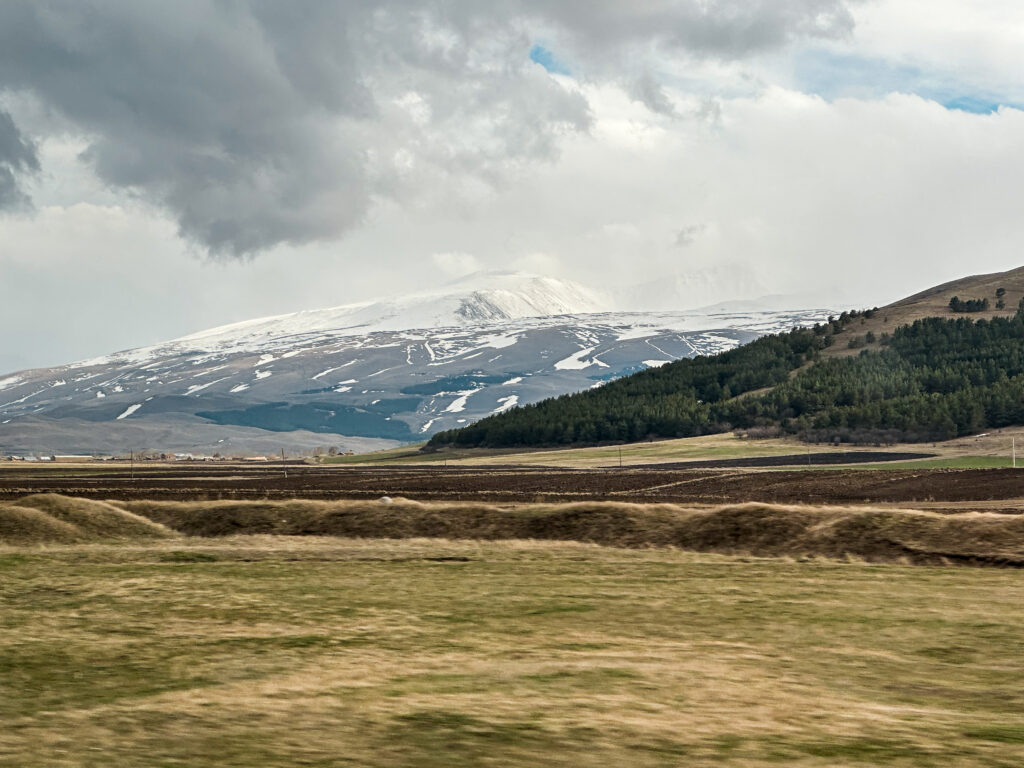
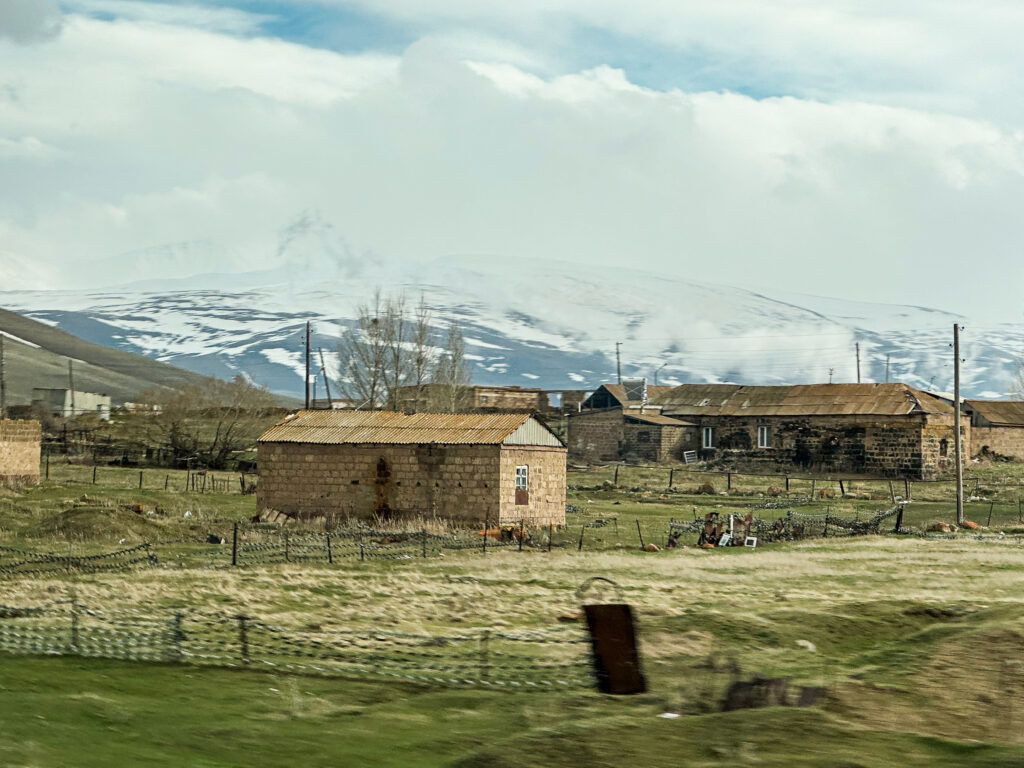 Views on the road from Georgia to Yerevan
 Views on the road from Georgia to Yerevan
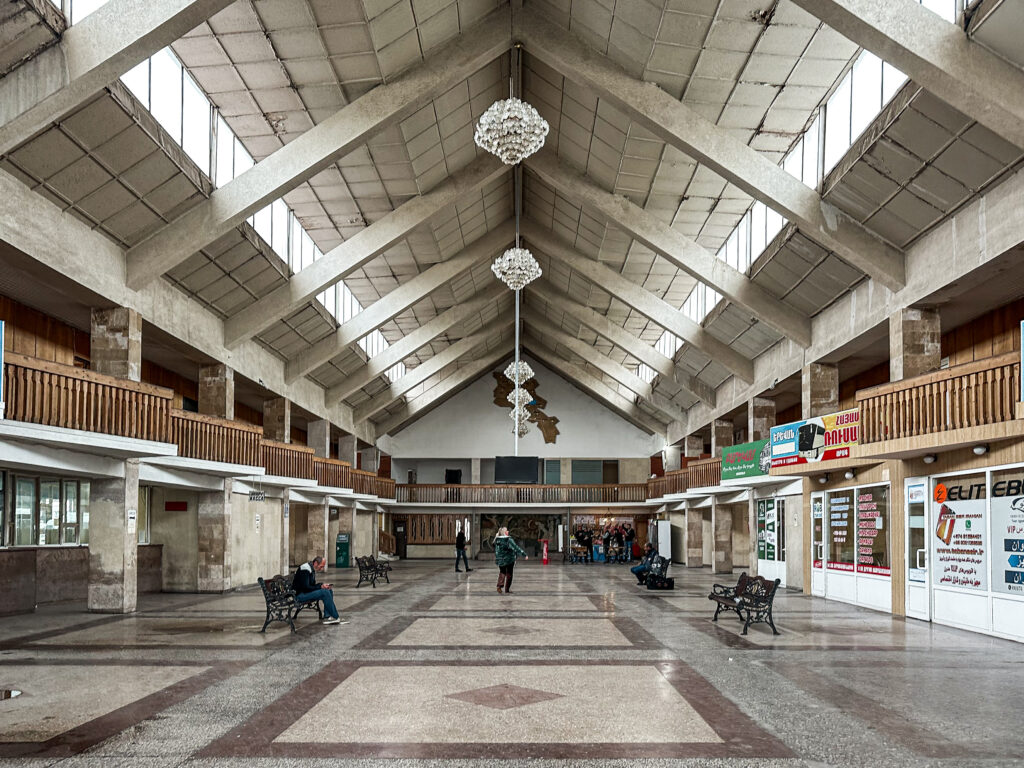 Arrival station from Georgia
Best Time to Visit Armenia
Armenia is a year-round destination, but the experience changes significantly depending on the season, especially if you plan to explore beyond Yerevan.
Spring (April-June)
Spring is one of the best times to visit, particularly from late April onwards. I travelled in April, and it felt like a transition season. In Yerevan, the weather was mild and pleasant, ideal for walking around the city, sitting in cafés, and exploring without summer heat. Trees were beginning to bloom and the city felt relaxed but not empty. However, once you head into the mountains, it’s a different story. In Dilijan and around Lake Sevan, it was snowing, which is apparently unusual for the time of the year though. If your main goal is trekking, early spring can be unpredictable.
Best for: Fewer tourists, comfortable city weather, lower prices
Be prepared for: Snow and cold in higher elevations
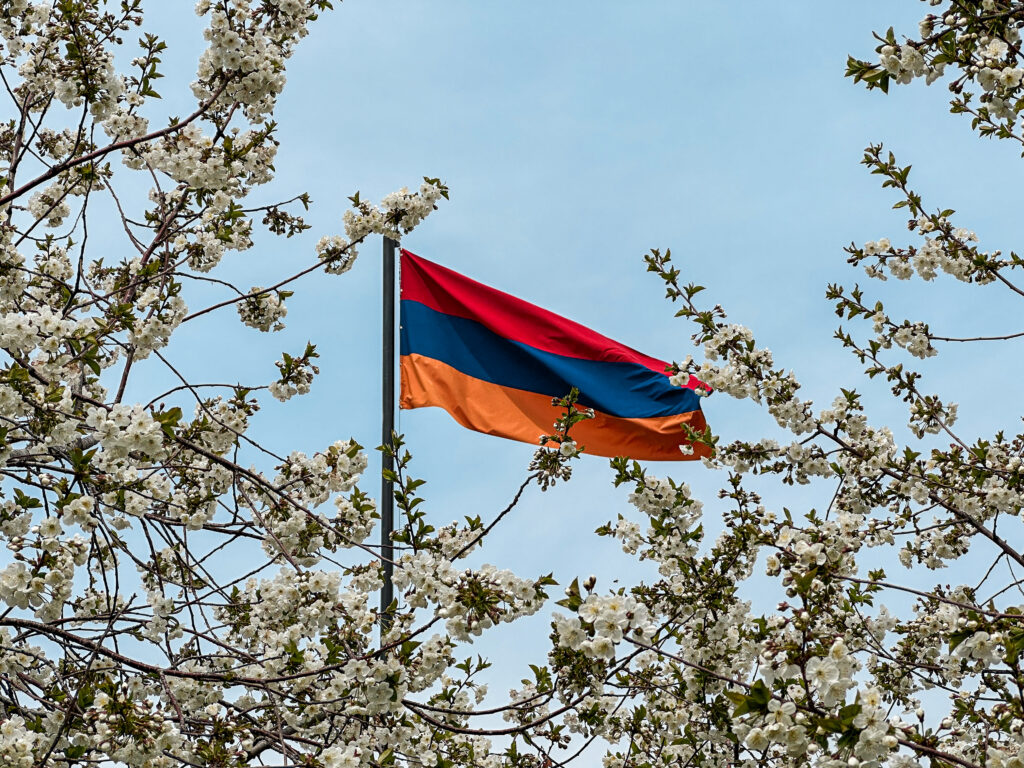 Armenia in the Spring
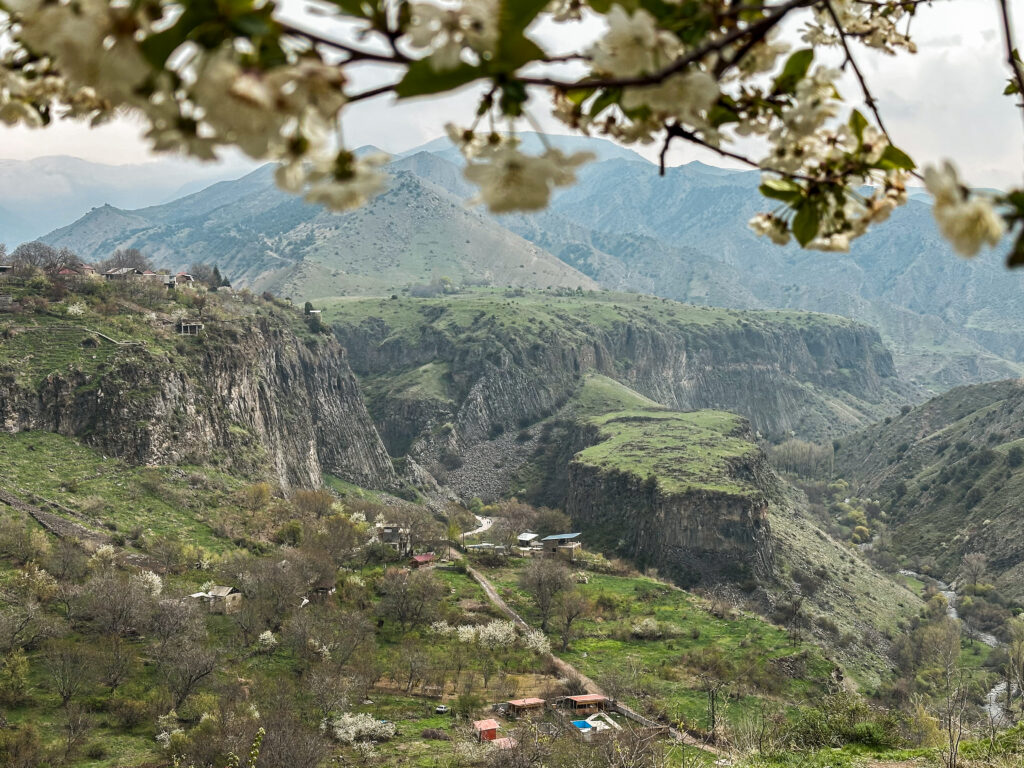 Armenia in the Spring
Summer (July-September)
Summer is peak season. The weather is dry and sunny, and mountain trails are fully accessible. This is the best time for hiking and exploring remote regions without worrying about snow or road closures. The downside? Yerevan can get very hot, temperatures regularly climb above 30°C, and popular sites become busier.
Best for: Hiking, road trips, full access to monasteries and mountains
Be prepared for: Heat in Yerevan and higher accommodation prices
Autumn (October-November)
Autumn is another excellent time to visit. The heat fades, landscapes turn golden, and it’s harvest season in wine regions. Southern Armenia in particular is beautiful at this time of year. It’s a good balance between pleasant weather and fewer crowds.
Best for: Comfortable temperatures, photography, wine regions
Be prepared for: Cooler evenings, shorter daylight hours
Winter (December-March)
Winter is the quietest season and can be harsh outside the capital. Snow covers much of the countryside, and some mountain roads may become difficult to access. However, Yerevan remains relatively active, and there are ski resorts in the country if that’s your focus. For general sightseeing and hiking, winter is more limiting unless you specifically enjoy snowy landscapes.
How Much Does It Cost to Travel Armenia? Daily Budget Breakdown
Armenia is one of the more affordable countries in the Caucasus, and travelling independently keeps costs low. During my two weeks, I stayed comfortably under €30/day on most days, sometimes less in Dilijan, slightly more on days with paid tours or entry fees. Below is a realistic breakdown of what to expect at different budget levels.
All figures are approximate and based on independent travel (no car rental, no private tours). Prices are in euros for easier reference; the local currency is the Armenian Dram (AMD).
| Category | Budget (my style) | Mid-range | Notes |
|---|---|---|---|
| Accommodation | €8–15 | €20–35 | Hostel dorm vs. private room/guesthouse |
| Food | €3–10 | €12–20 | Local cafés, shawarma, markets |
| Transport | €1–4 | €5–12 | Marshrutkas; higher on day-trip days |
| Activities & entry | €0–5 | €5–15 | Most monasteries are free or under €2 |
| Miscellaneous | €2–4 | €4–8 | SIM, coffee, snacks |
| Daily total | €17–35 | €46–90 |
On a typical day in Yerevan (walking the city, eating at local places, taking the metro) I’d spend closer to €20. Days that included a paid day tour (like the southern Armenia circuit to Khor Virap, Noravank, and Tatev) pushed it toward €40-45 including lunch. But those were intentional and well worth it.
If you’re trying to keep costs down, the biggest lever is accommodation: Yerevan hostels range from €8–12 for a dorm, which is what makes everything else manageable. Food is already cheap enough that you don’t need to sacrifice much there.
Things to Do in Armenia
What to Do in Yerevan
I didn’t expect to like Yerevan as much as I did. It’s not a city that overwhelms you with obvious landmarks. It’s not polished, and it’s not conventionally beautiful. But spend a few days here and it starts to grow on you. Most of the city centre is built from pink volcanic tuff stone, which gives Yerevan its warm colour, especially at sunset. It feels spacious, slightly Soviet in layout, but lively at street level. Here’s what I recommend focusing on:
Wander the Cascade Complex
The Cascade is a massive staircase connecting central Yerevan to higher neighbourhoods. Climb to the top for one of the best views over the city, and on a clear day, Mount Ararat dominates the horizon. Inside the complex you’ll also find modern art installations, and around it there are sculptures and cafés. It’s one of the few places where Yerevan feels both contemporary and creative.
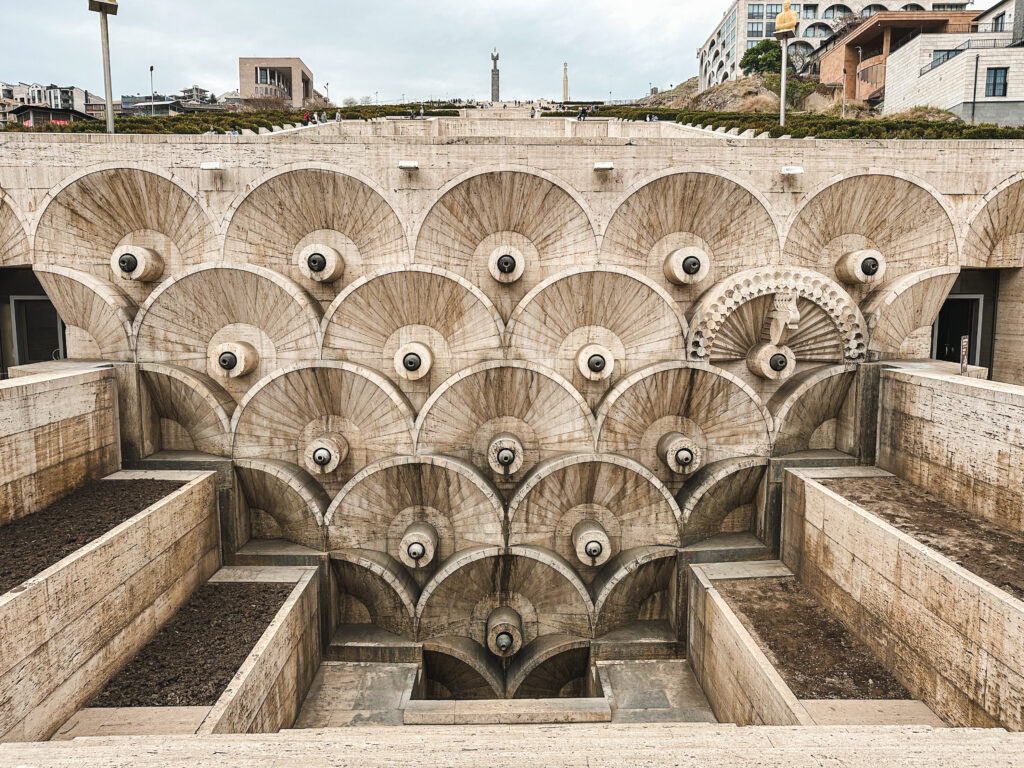 Cascade Complex
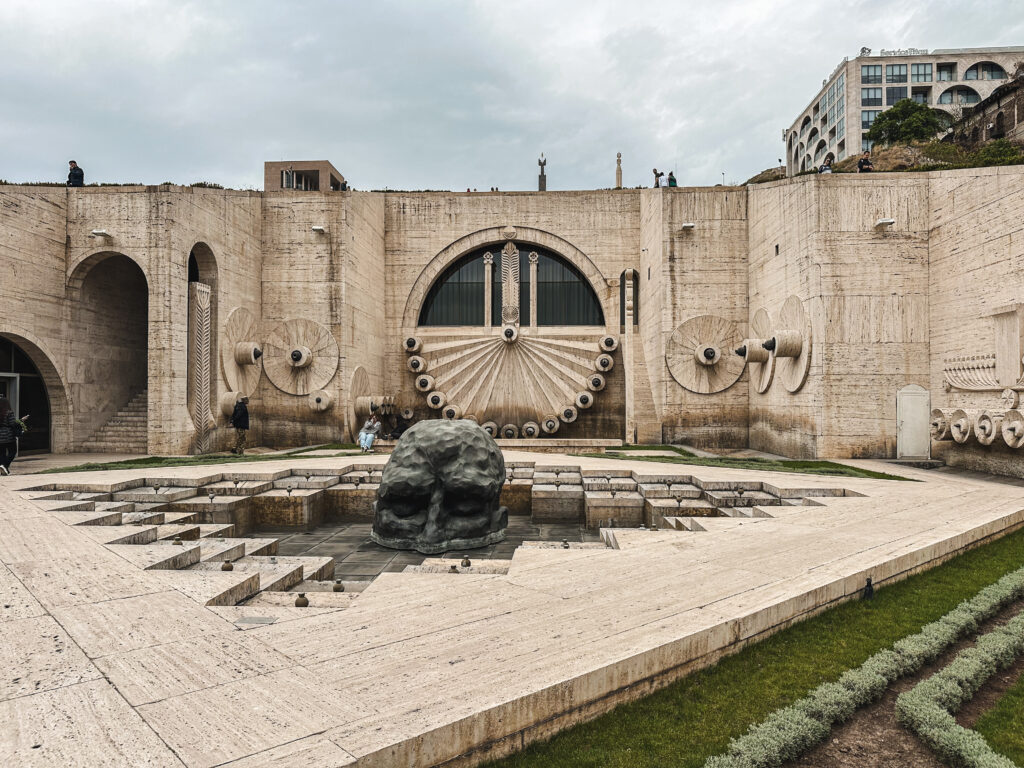 Cascade Complex
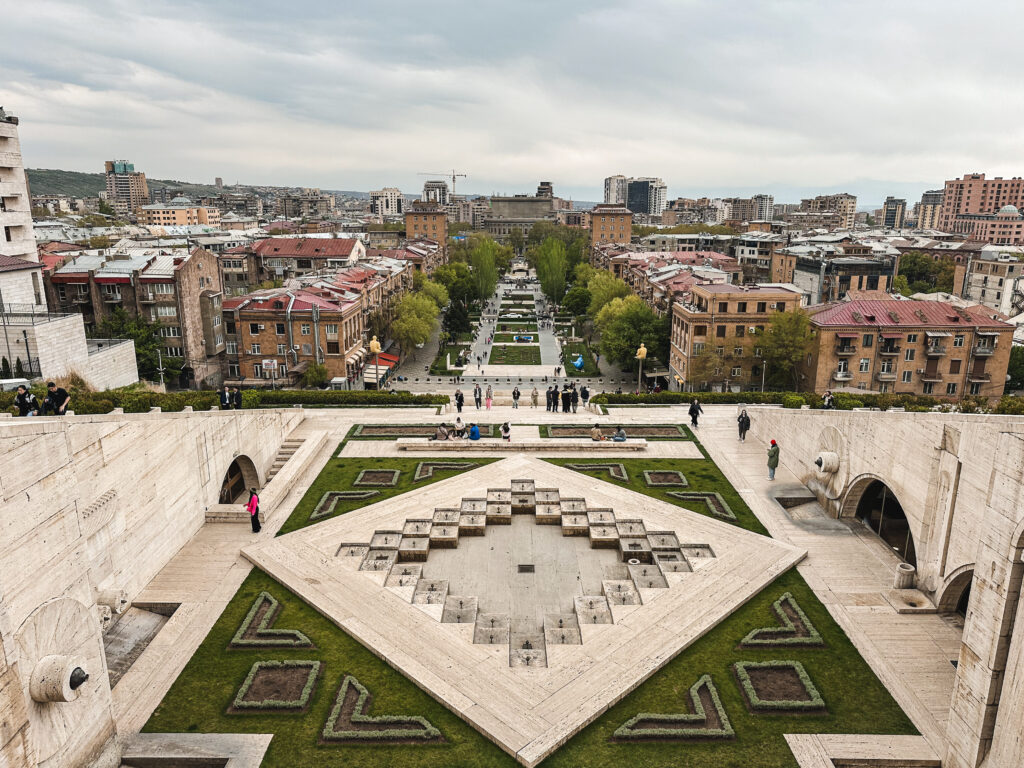 Cascade Complex
Spend an Evening in Republic Square
This is the heart of the city. During the day it’s impressive but understated. At night, the atmosphere changes completely. Locals gather, music plays, and in warmer months there are dancing fountains. It’s a good place to sit and observe daily life rather than rush through.
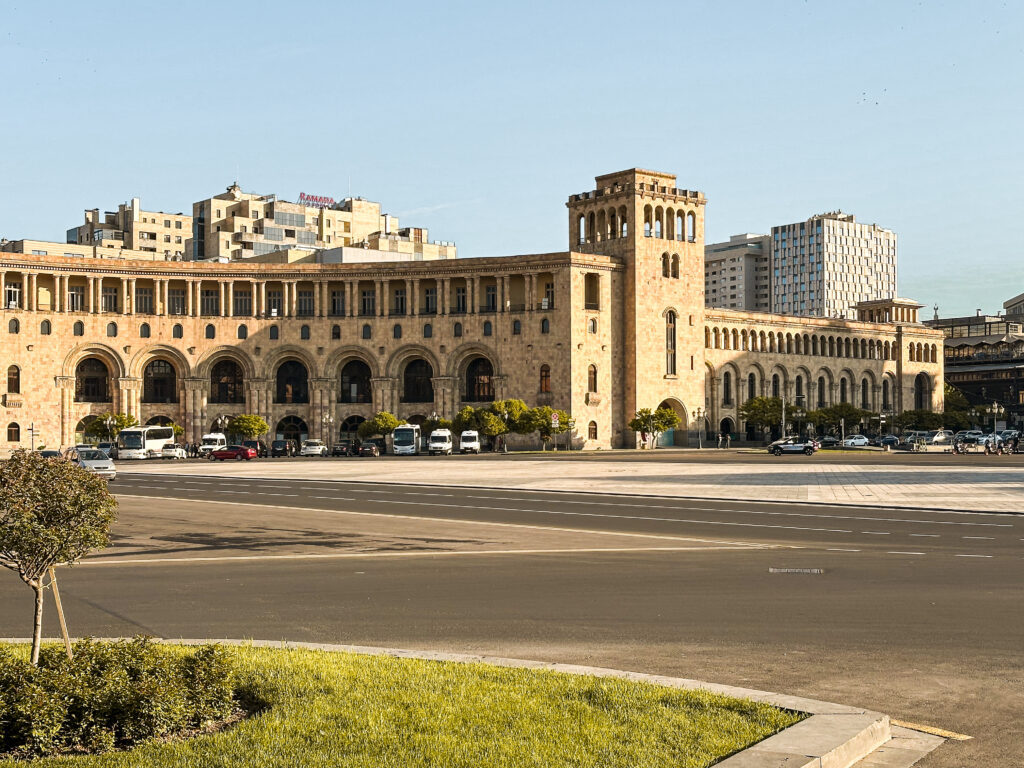 Republic Square
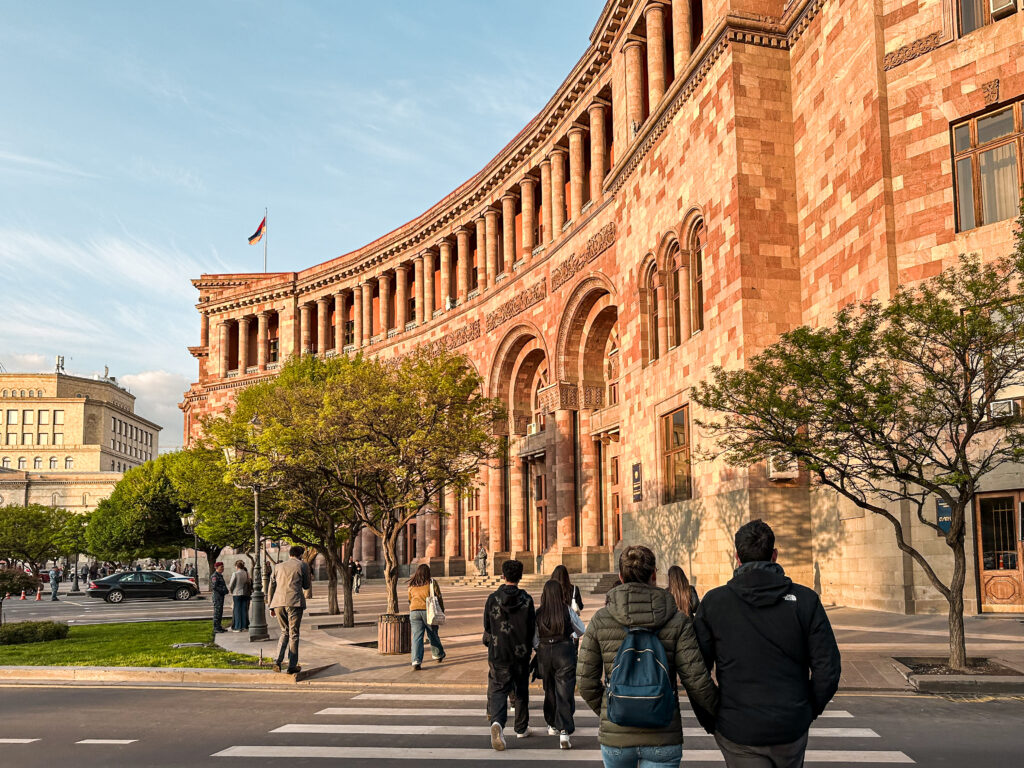 Republic Square built with pink volcanic stone
Walk Through the City Centre
Some of my favourite moments in Yerevan were unplanned. Stroll along Northern Avenue and the side streets, pause at Aznavour Square, a small but charming space dedicated to Charles Aznavour with a café and statues, and look up at Soviet-era balconies. Yerevan has a strong café culture, and even on weekdays the terraces are full. It’s a city that rewards slowing down and just noticing the details.
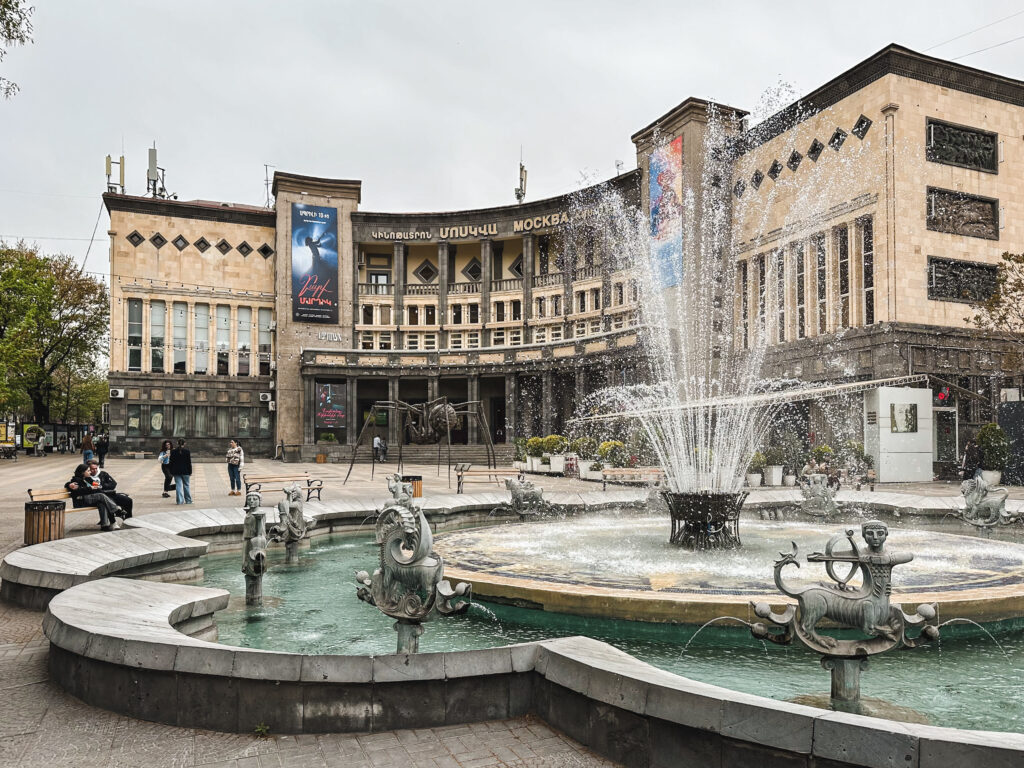 Squares of Yerevan
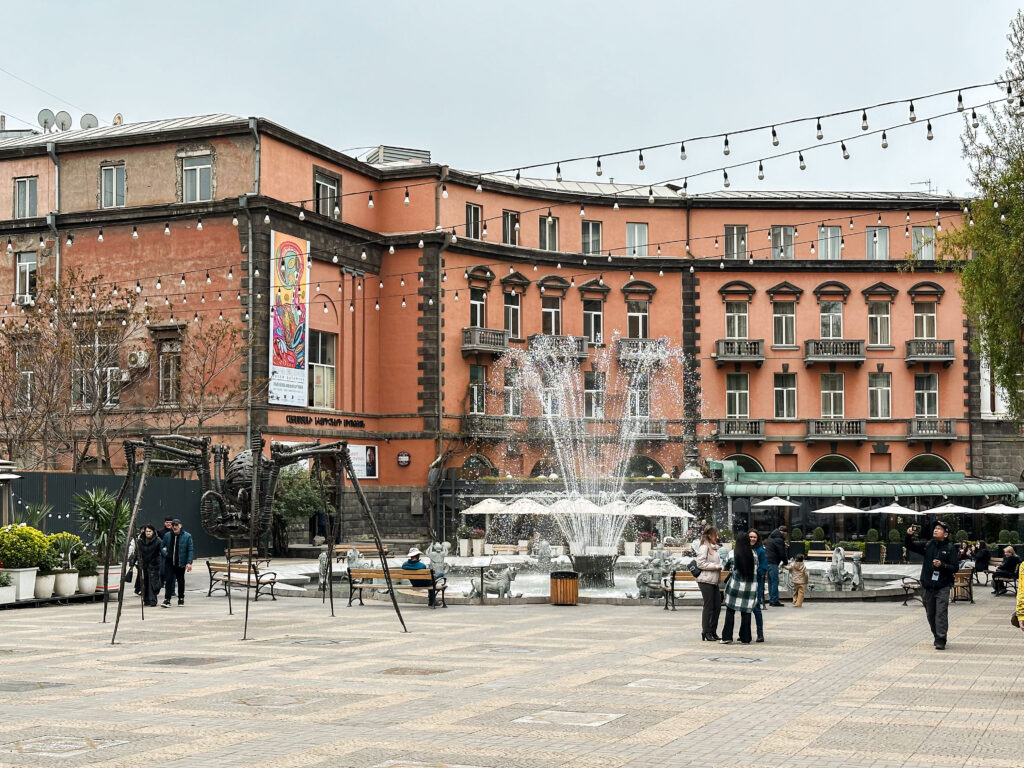 Squares of Yerevan
Cultural Highlights
Yerevan has a surprisingly active cultural scene that’s easy to explore even on a budget. The Armenian National Academic Theatre of Opera and Ballet hosts regular operas, ballets, and concerts, and tickets are often very affordable. Even if you don’t speak the language, the performances are world-class and give a real insight into Armenian culture.
The city is also dotted with green spaces that locals use to relax, socialise, and enjoy the outdoors. Lovers’ Park and English Park are perfect for an afternoon stroll or just sitting with a coffee. Together, these cultural spaces make the city feel lively and layered, offering more than just the typical tourist sights.
Yerevan is home to several museums that offer deep insight into Armenia’s past. The Matenadaran houses one of the world’s largest collections of ancient manuscripts, reflecting the country’s long tradition of scholarship and Christianity. The Armenian Genocide Memorial and Museum (Tsitsernakaberd) is a sobering but essential visit, commemorating the victims of the 1915 genocide and providing historical context through photographs, documents, and personal stories.
Finally, the History Museum of Armenia, located in Republic Square, presents a broader overview of the country’s development from prehistoric times to the present, with archaeological artefacts, medieval treasures, and detailed exhibits on Armenia’s cultural heritage. Visiting these three museums gives a comprehensive view of the nation’s resilience, history, and identity.
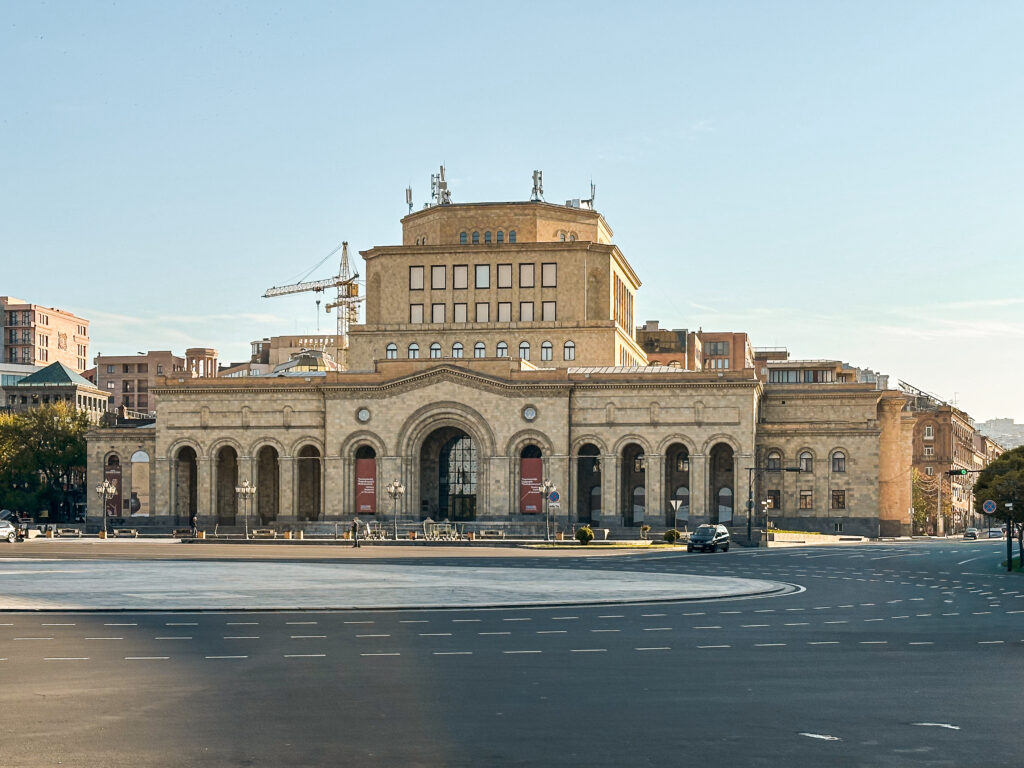 History Museum of Armenia
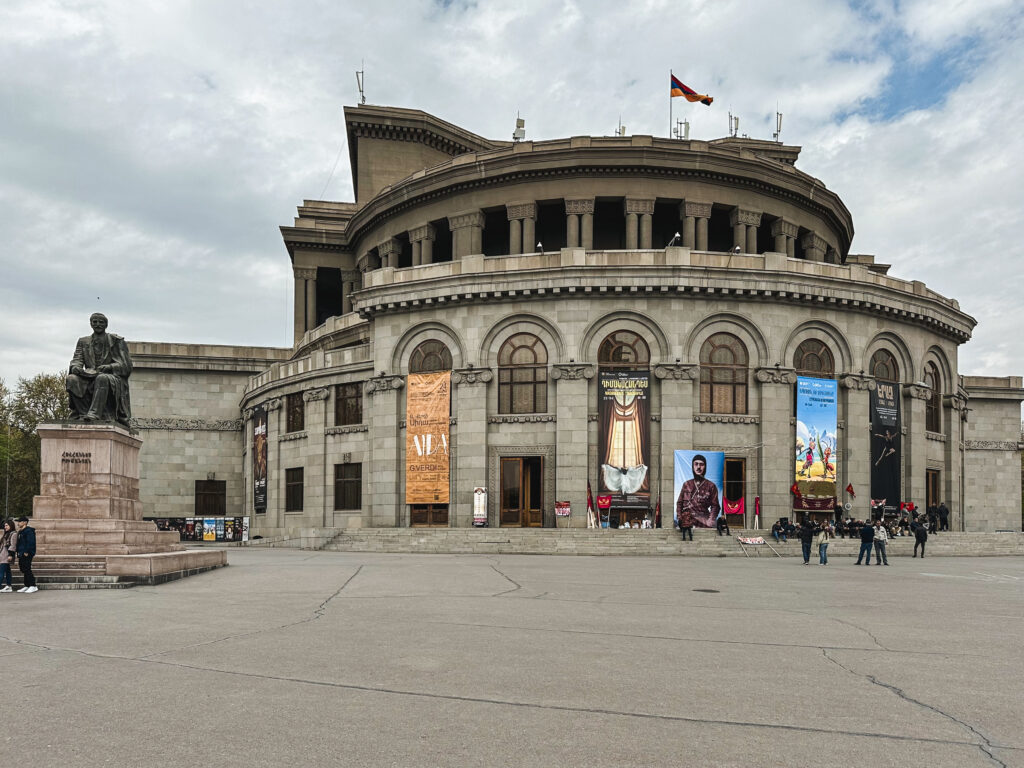 Armenian National Theater
Day Trips from Yerevan
Armenia is dotted with monasteries, gorges, and historic sites that are technically accessible without a car, but getting to them independently can be time-consuming and unpredictable. Public transport exists to some destinations, but for many of the most interesting spots, it either doesn’t run frequently, requires multiple transfers, or involves long waits and hitchhiking in the mountains isn’t always reliable.
Since I only had two weeks and wanted to make the most of my time, I decided to take a couple of well-priced day group tours with the local company Hyur. They run daily tours both half-day and full-day trips, for affordable prices, both in English and Russian. These tours allowed me to see some of Armenia’s most iconic sites efficiently, without worrying about transport logistics, while still travelling on a budget and supporting a local business. Sometimes the smartest way to explore is to combine self-guided days with strategic local tours.
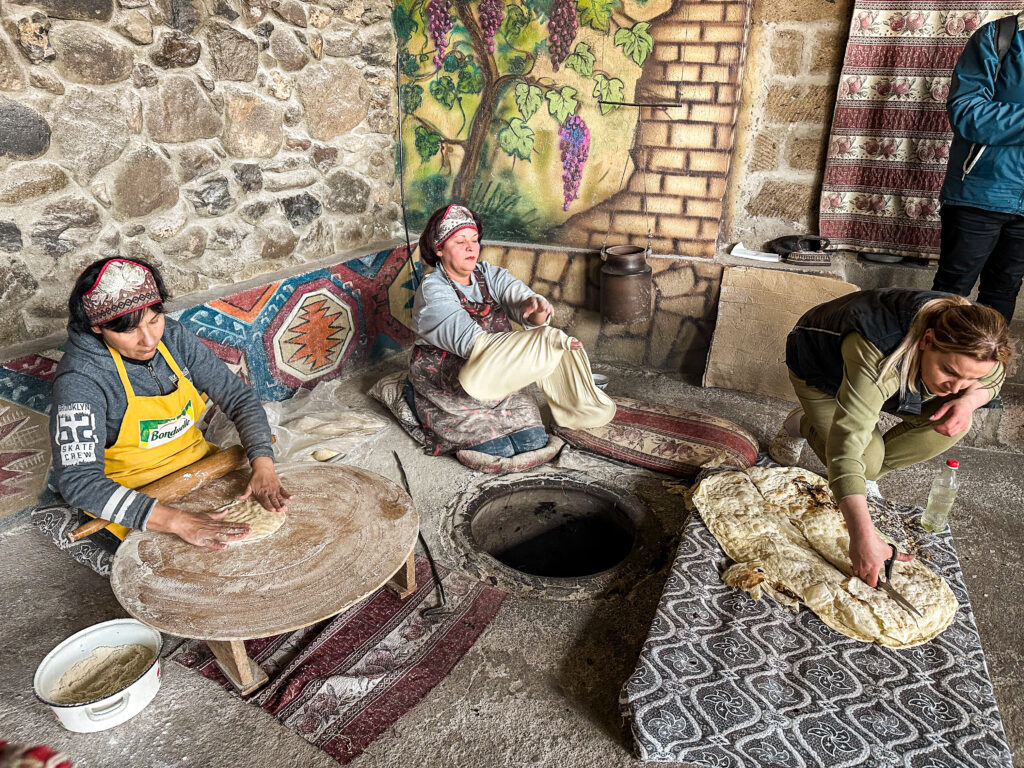
I did two tours with this company and found I actually enjoyed not having to worry about logistics, while also learning plenty of historical facts about the monasteries that I would never have discovered on my own. The first was a half-day trip to Garni, Geghard, and the Symphony of Stones, which also included a traditional lavash bread-making class. The second was a full-day excursion to Khor Virap, Noravank, and Tatev, including the Wings of Tatev cable car and a traditional Armenian lunch in a winery.
Garni, Gehard, and Symphony of Stones
Garni Temple
The first stop on the half-day tour was Garni Temple, a striking Hellenistic-style temple that dates back to the 1st century AD. Unlike most of Armenia’s famous monasteries, Garni was built as a pagan temple dedicated to the sun god Mihr, long before the country adopted Christianity in the early 4th century. Its classical columns and dramatic position overlooking the Azat River gorge make it one of the most photogenic spots in the region.
When I visited, the nearby trees were in full blossom, adding a soft, almost ethereal feel to the rugged surroundings. Walking around the temple and looking out across the gorge, it was easy to see why this site has captivated visitors for centuries. The combination of history, architecture, and natural beauty made it a memorable introduction to Armenia’s rich heritage.
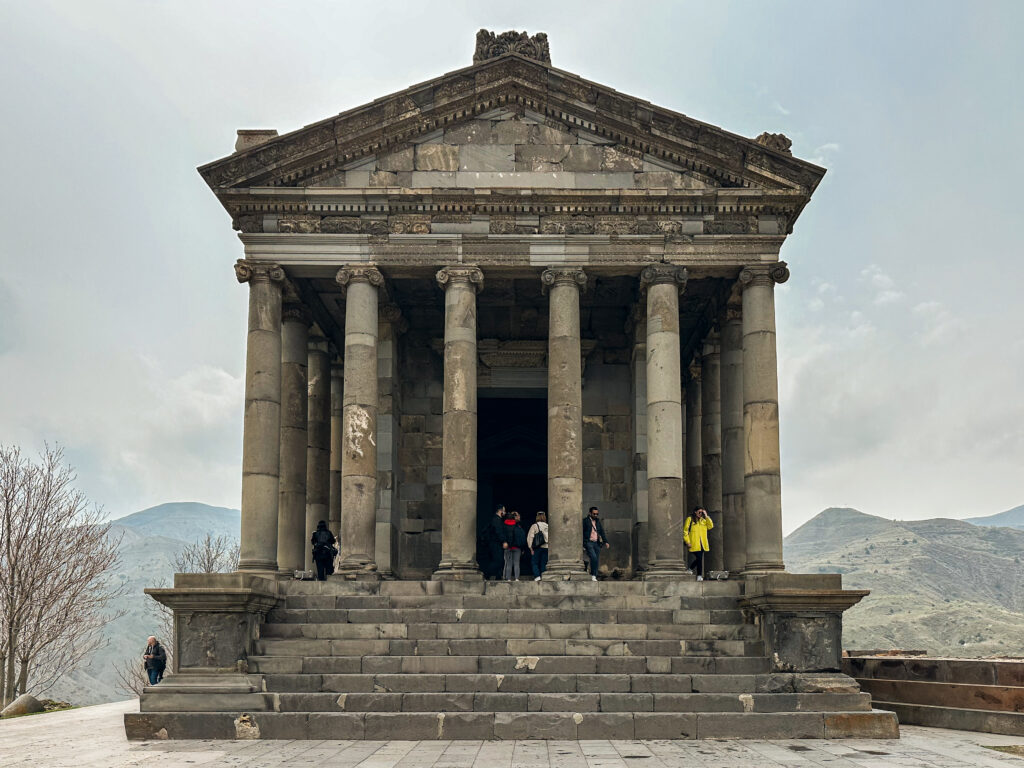 Garni Temple
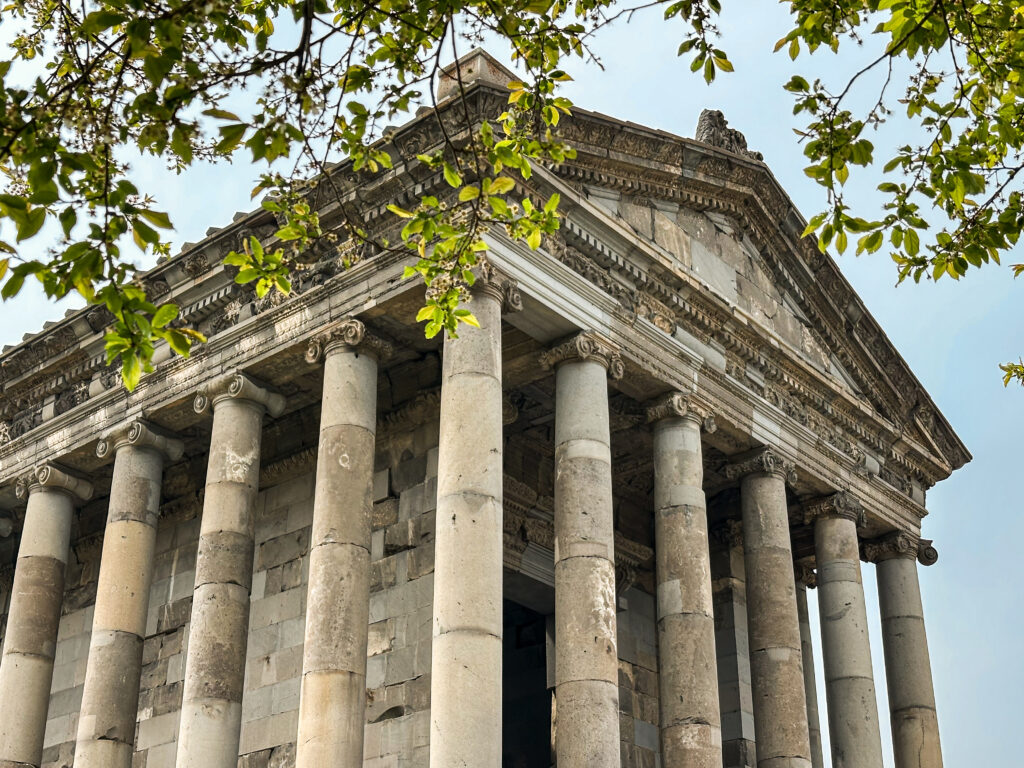 Garni Temple
Symphony of Stones
Just a short walk from Garni Temple is the Symphony of Stones, a natural geological formation that feels almost otherworldly. The cliffs are made of perfectly hexagonal basalt columns, formed by ancient volcanic activity, and they line the edge of the gorge like a natural cathedral. Standing there, it’s impossible not to marvel at the scale and precision of nature’s design.
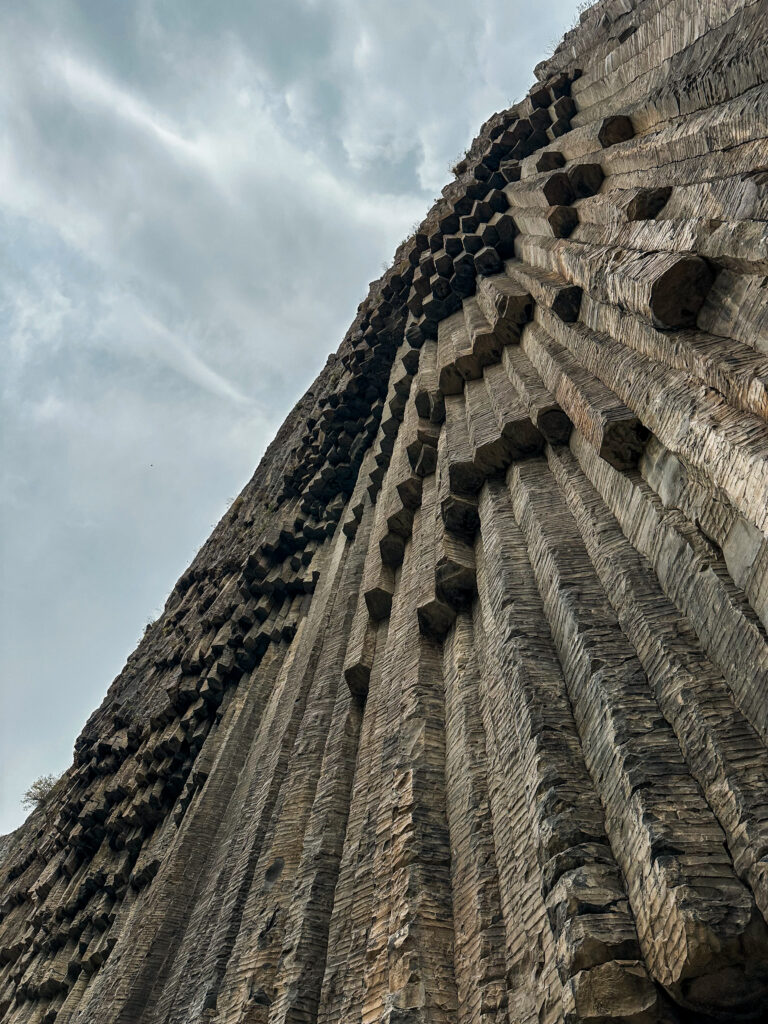 Symphony of Stones
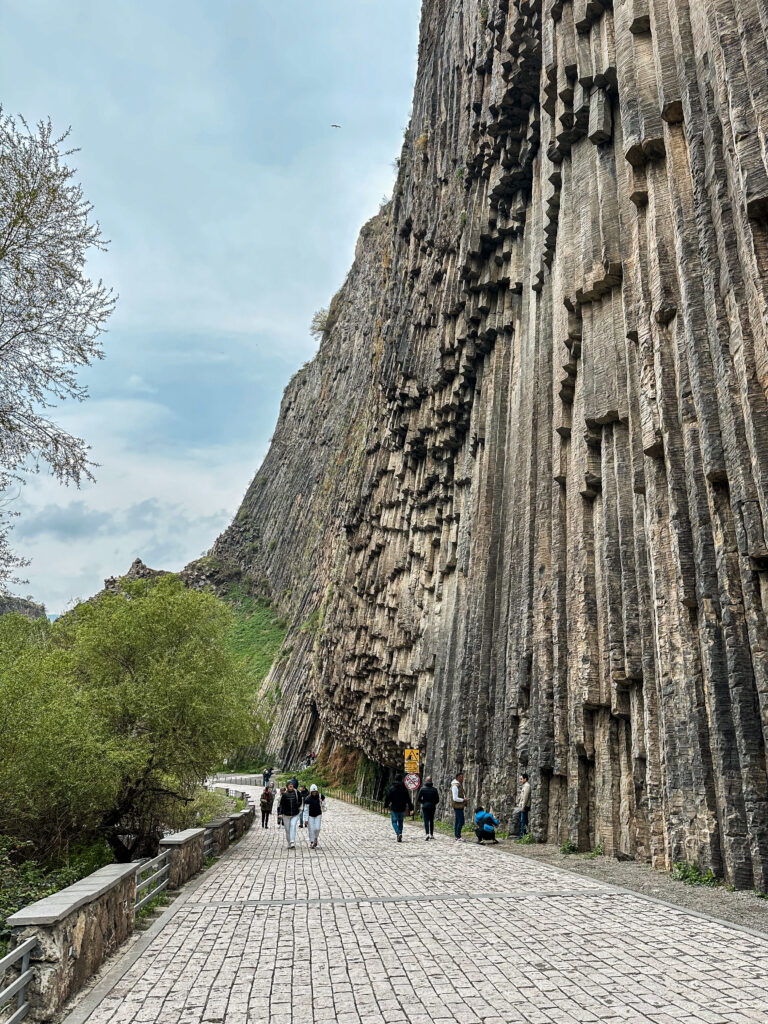 Symphony of Stones
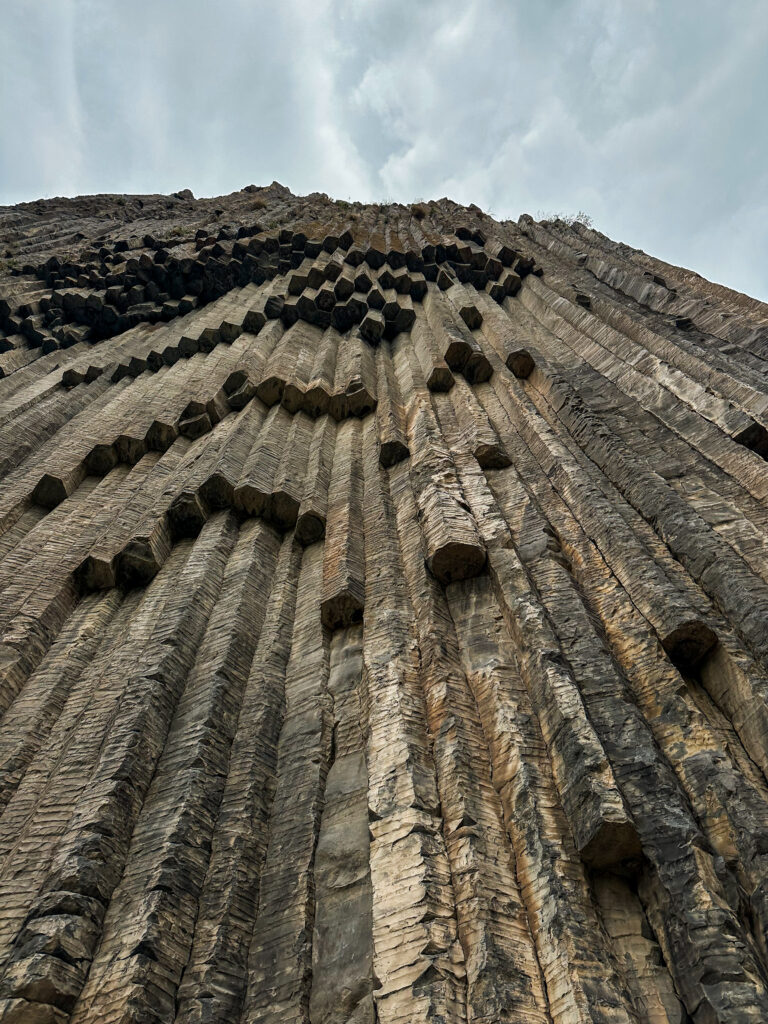 Symphony of Stones
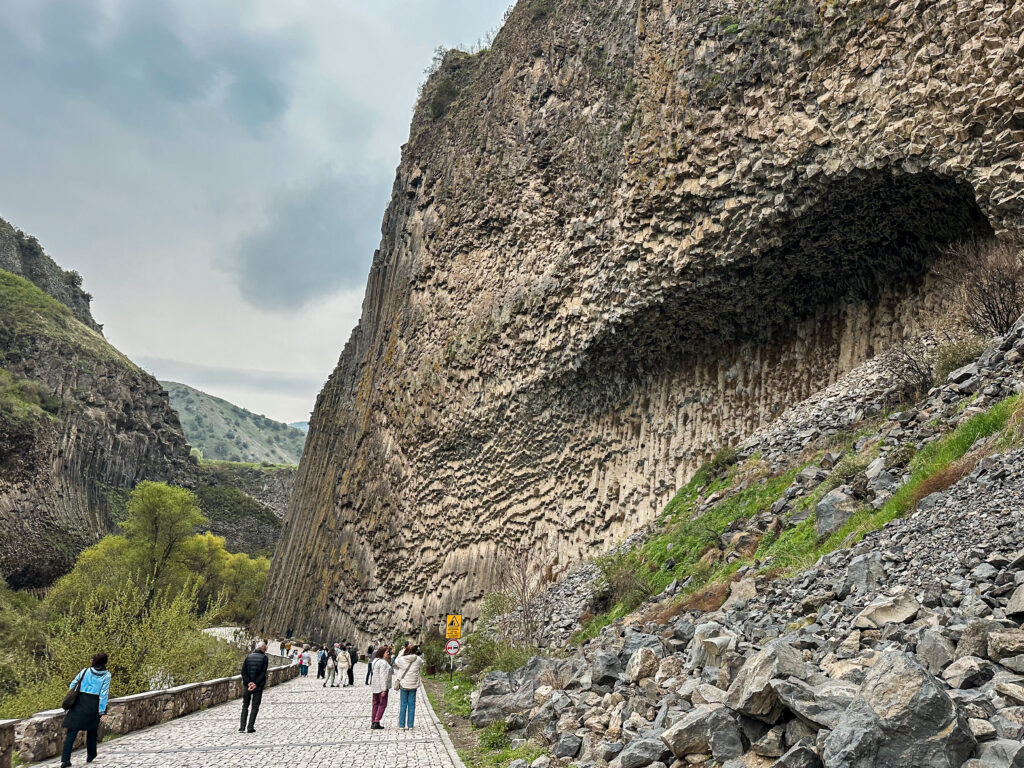 Symphony of Stones
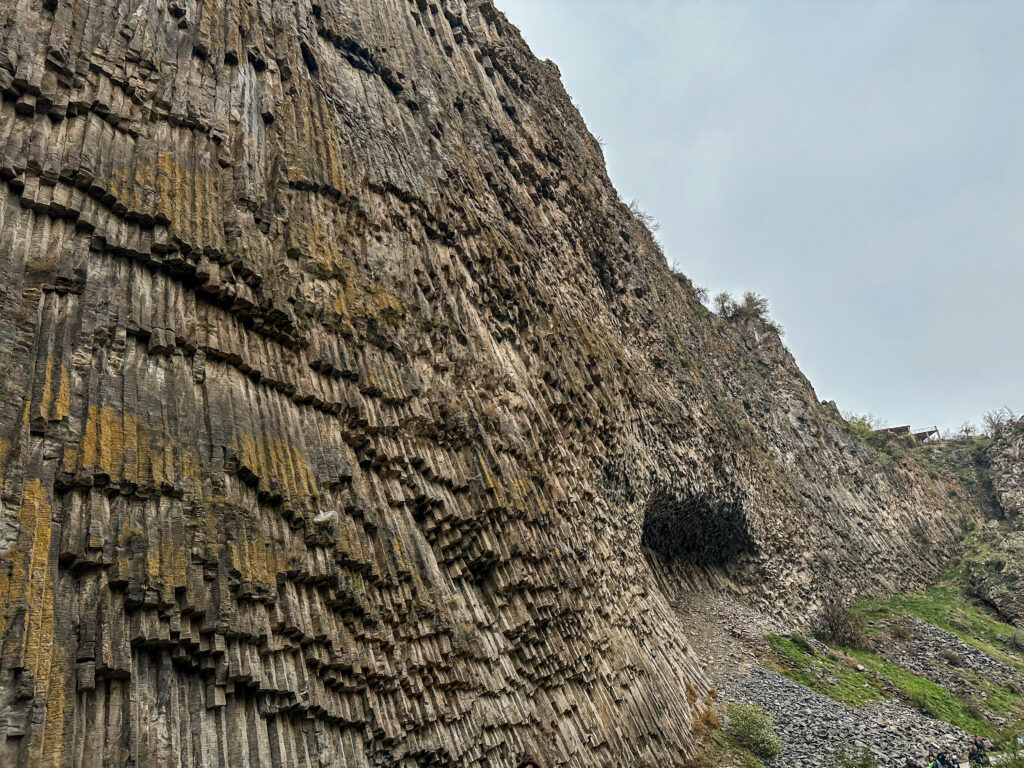 Symphony of Stones
Geghard Monastery
A short drive from Garni brings you to Geghard Monastery, a UNESCO World Heritage site partially carved into the surrounding cliffs. Its name, Geghard, means “the Spear,” and refers to the Holy Lance that pierced Christ’s side. It’s said to have been brought to Armenia by Apostle Thaddeus and kept at the monastery for centuries. The relic is now housed in the treasury of Etchmiadzin Cathedral, but the monastery’s association with it has made Geghard a site of immense historical and spiritual significance.
Founded in the 4th century, Geghard became an important pilgrimage site and played a central role in the spiritual life of medieval Armenia. Many of its churches and chapels were carved directly from the rock in later centuries, creating a striking combination of natural and architectural artistry.
The complex also contains intricately carved khachkars (cross-stones), some dating back to the 12th and 13th centuries. Walking through Geghard, it’s easy to understand why it has held spiritual significance for Armenians for over a thousand years, symbolising both devotion and the remarkable craftsmanship of medieval Christian architecture.
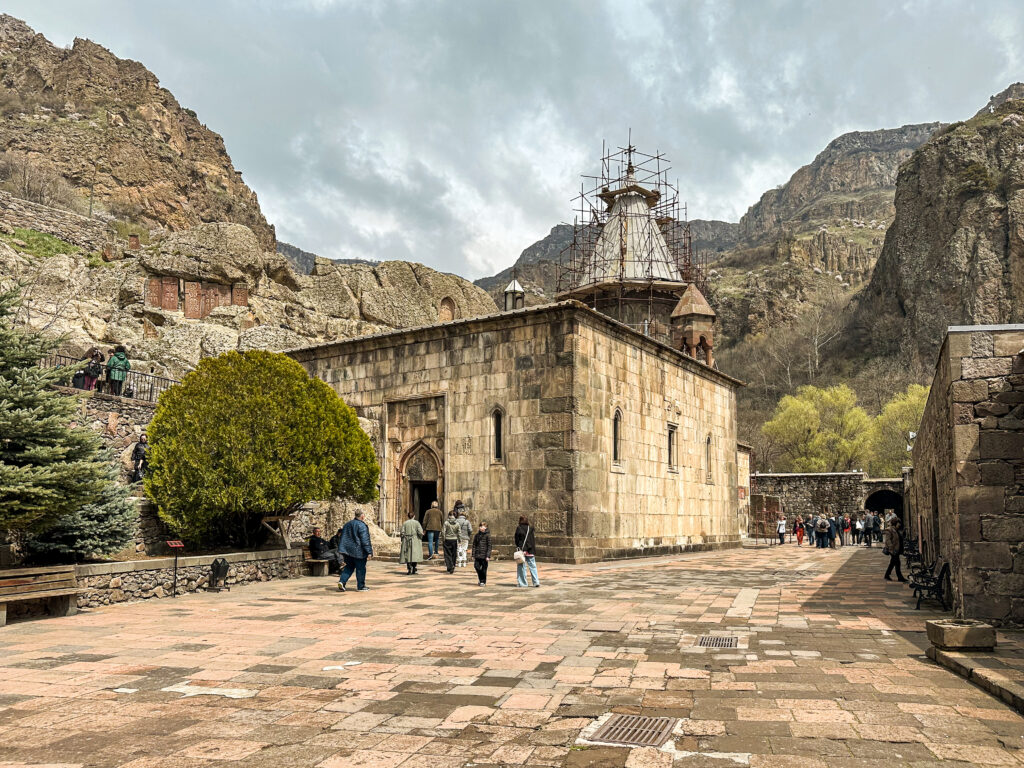 Geghard Monastery
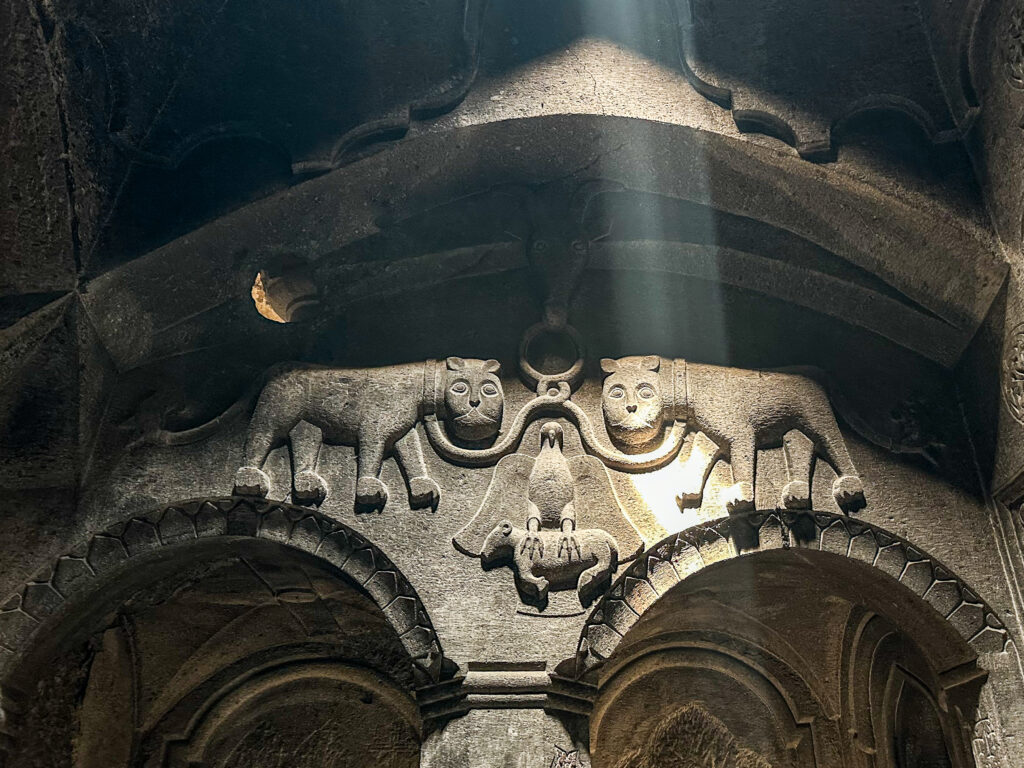 Interior of Geghard Monastery
Khor Virap, Noravank, and Tatev
Khor Virap Monastery
Located just south of Yerevan near the border with Turkey, Khor Virap Monastery is one of Armenia’s most iconic religious sites. Its name means “deep dungeon,” referring to the underground pit where Saint Gregory the Illuminator was imprisoned for 13 years before curing King Trdat III of a disease and helping him convert to Christianity. This pivotal moment led to Armenia becoming the first nation to adopt Christianity as a state religion in 301 AD.
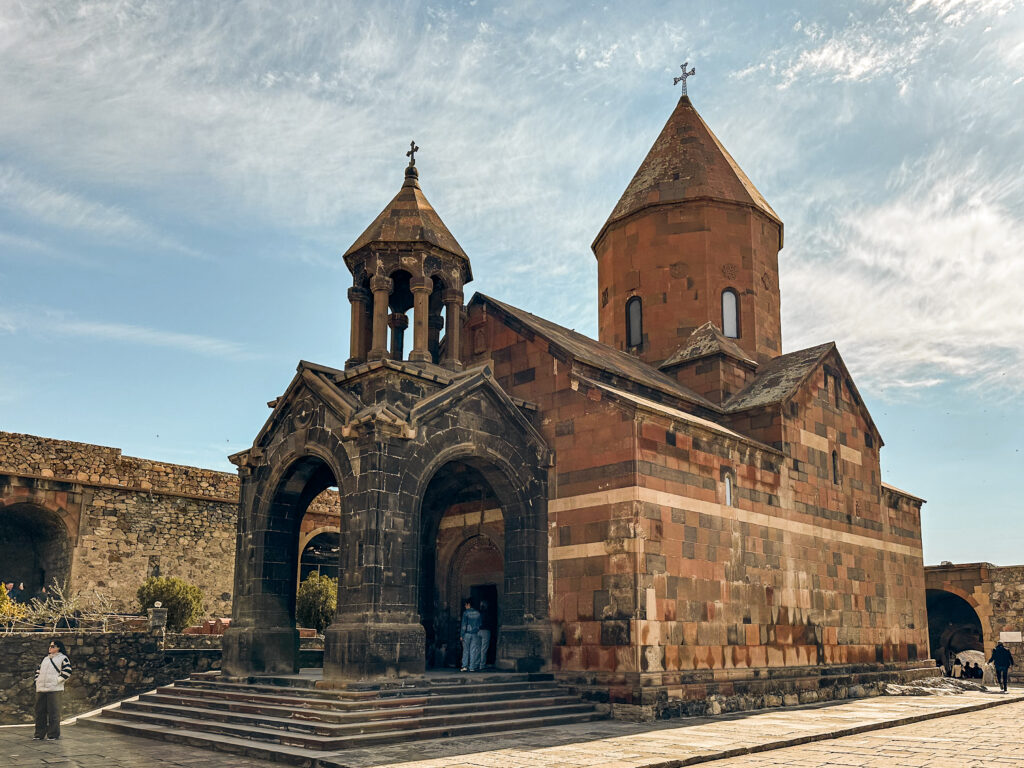 Khor Virap Monastery
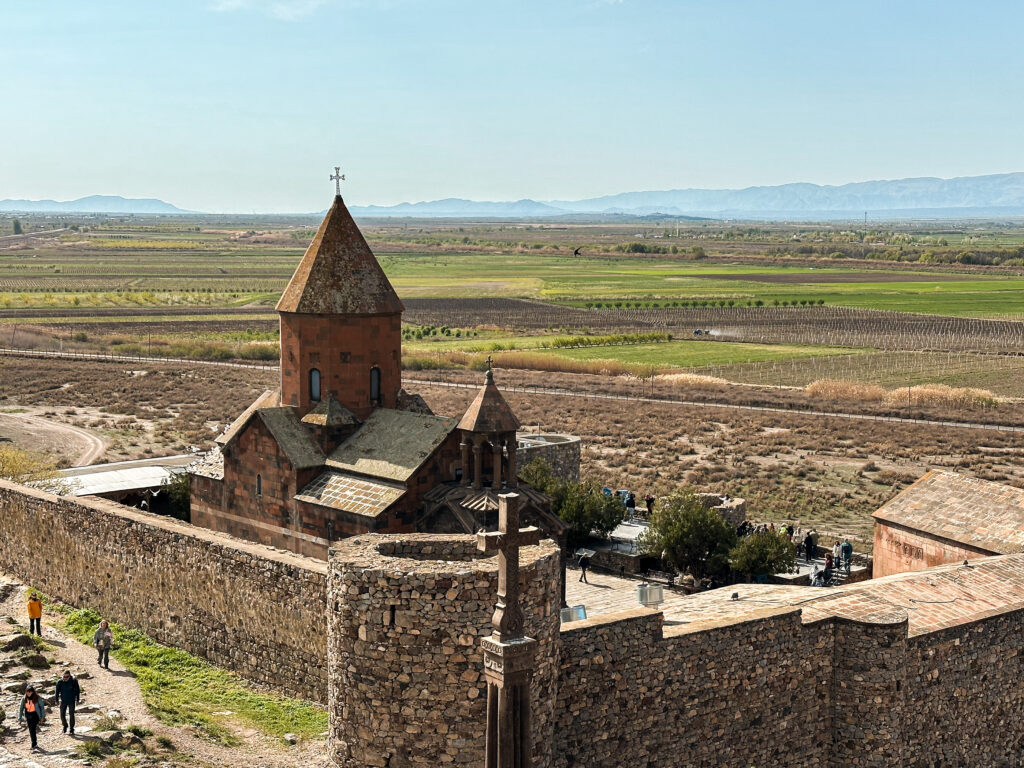 Khor Virap Monastery
The monastery that stands today was built in the 17th century, but the site’s significance stretches back to those early Christian foundations. From its courtyard, you get an unparalleled view of Mount Ararat, which towers across the plain in neighbouring Turkey. According to biblical tradition, this is the mountain where Noah’s Ark came to rest after the Flood, giving the landscape an added layer of spiritual and historical symbolism.
Visiting Khor Virap is both a spiritual and historical experience. The combination of ancient legend, medieval architecture, and the dramatic scenery of the Ararat plain makes it a must-see stop on any day trip from Yerevan.
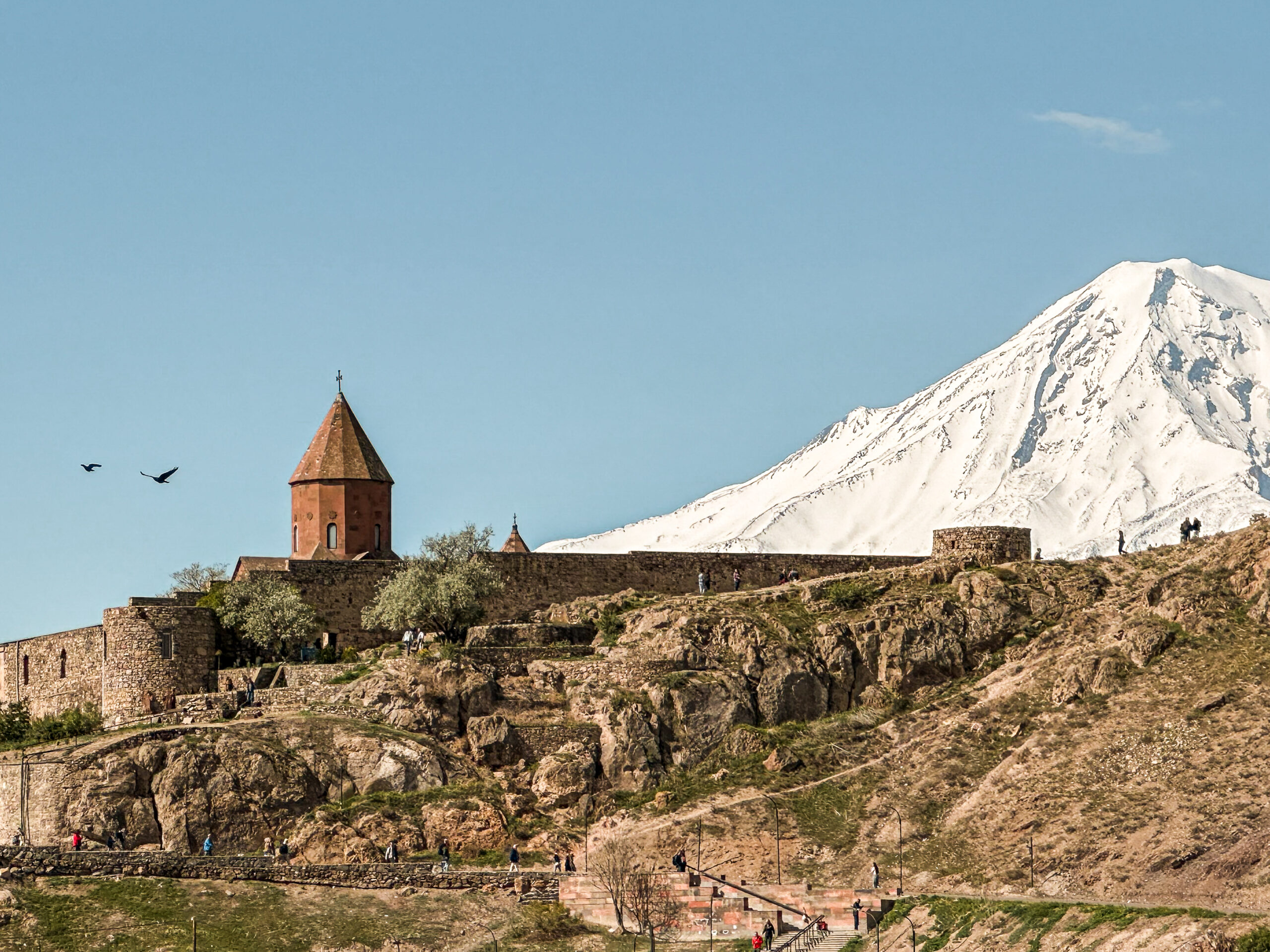
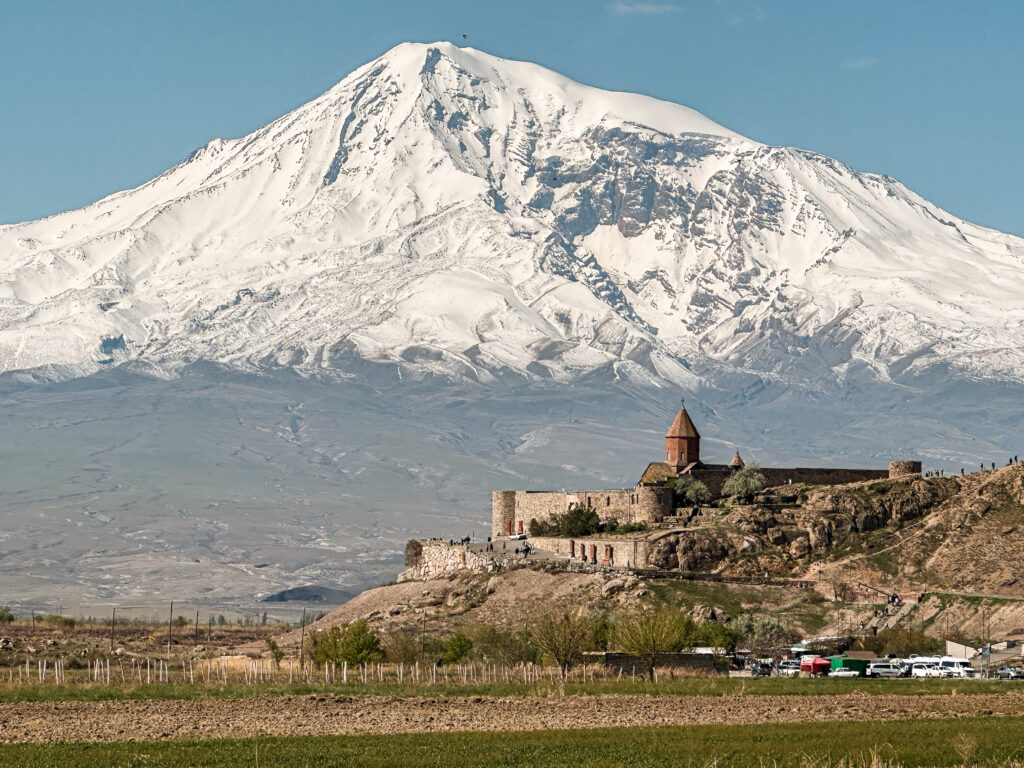 Khor Virap Monastery with Mount Ararat in the background
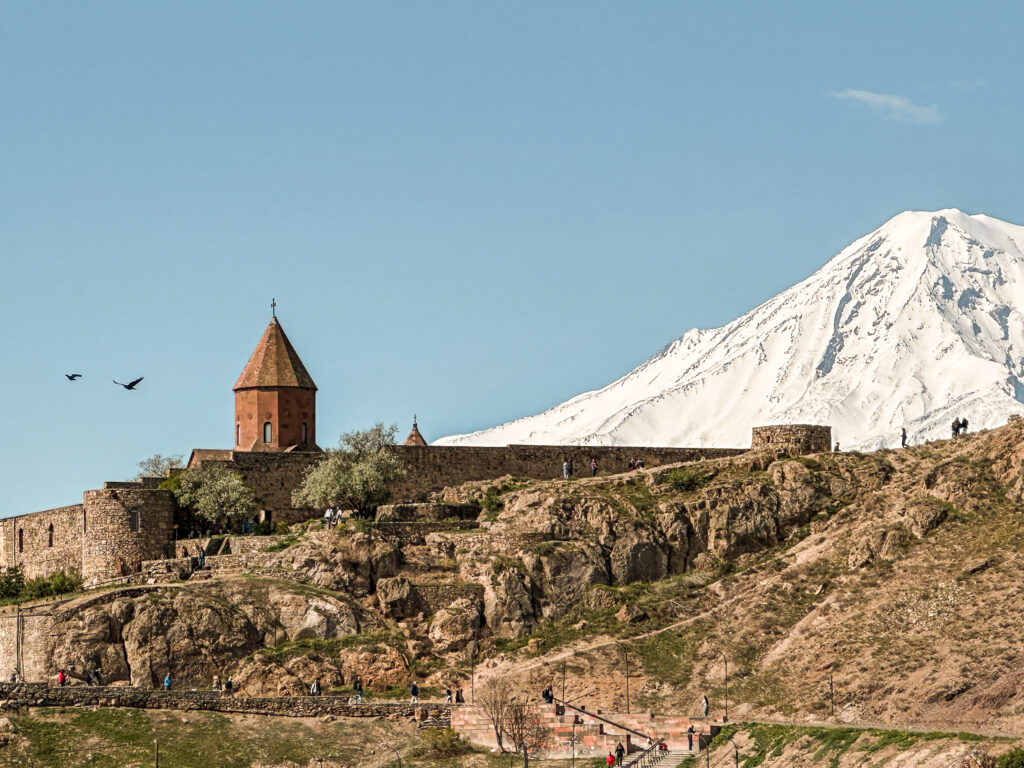 Khor Virap Monastery with Mount Ararat in the background
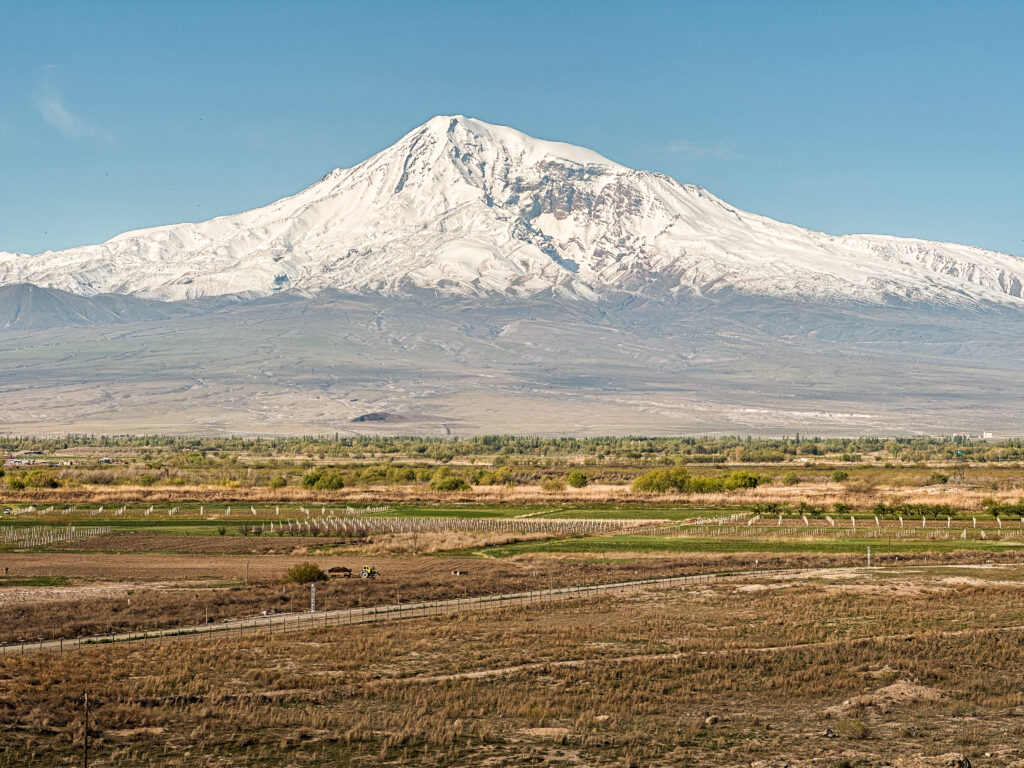 Views of Mount Ararat
Noravank Monastery
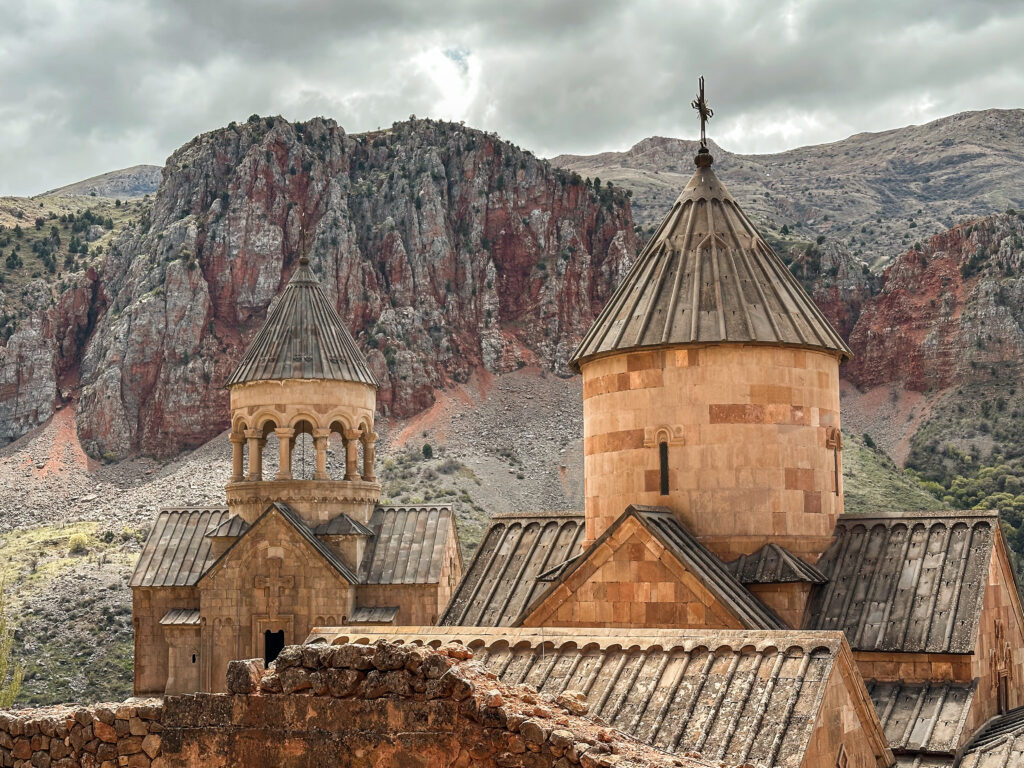
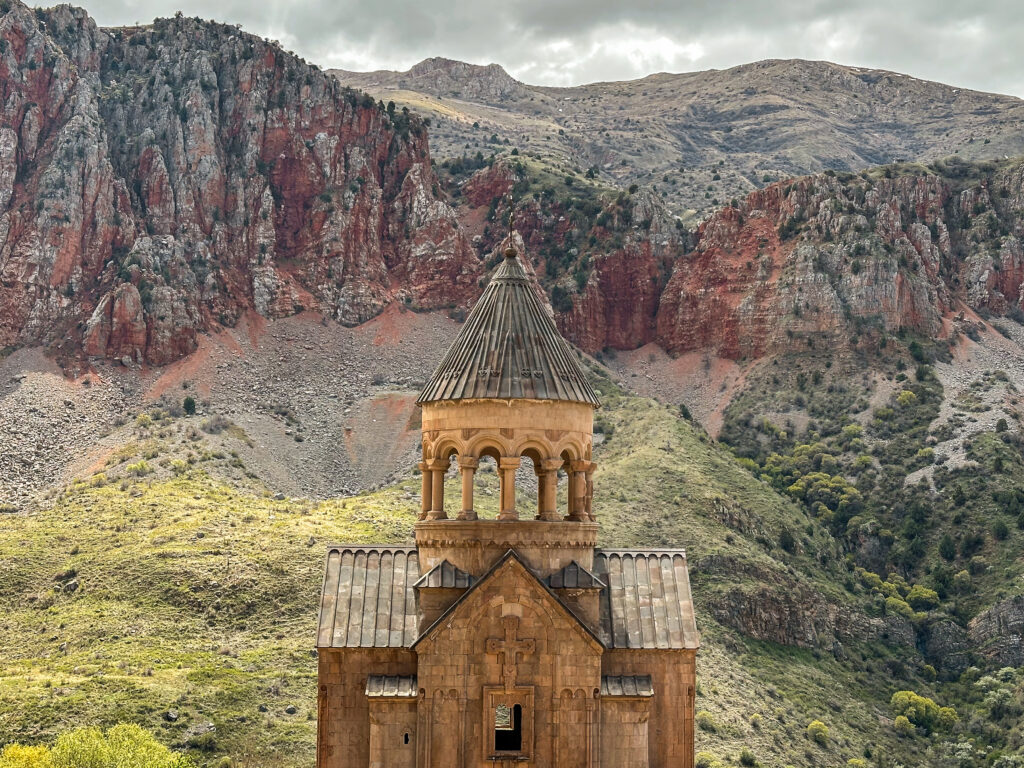
Further south lies Noravank Monastery, one of Armenia’s most visually striking monasteries. Founded in the 12th century and rebuilt in the 13th, it became a major religious and cultural centre, serving as the residence of the Orbelian princes.
Noravank is especially famous for its dramatic red cliffs that rise sharply behind the complex, creating a natural backdrop that feels almost theatrical. The monastery’s architecture is remarkable for its intricate stone carvings and the decorative khachkars (cross-stones) that adorn the walls. The Surb Astvatsatsin (Holy Mother of God) church, with its narrow stone staircase leading to the upper level, is a highlight and a unique feature in Armenian medieval architecture.
Historically, Noravank was not only a spiritual centre but also a hub for learning and art, producing manuscripts and fostering Armenian culture during the Middle Ages. Visiting it today, you get a sense of both the natural beauty of the surrounding landscape and the cultural importance of this site in Armenia’s Christian history.
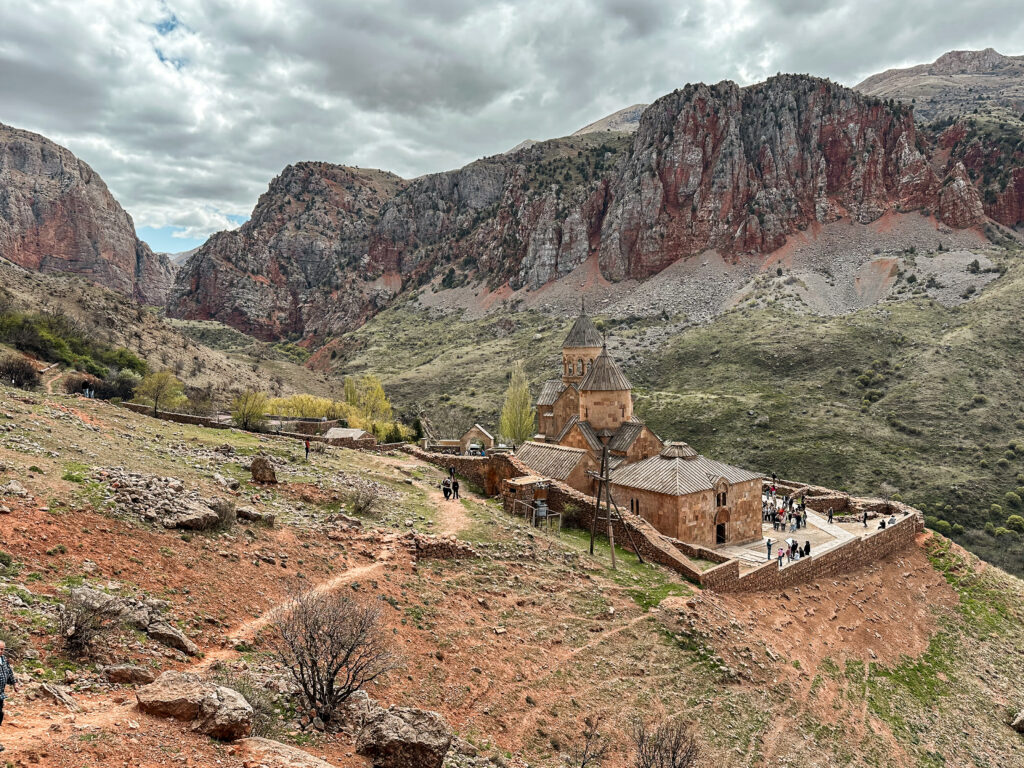 Noravank Monastery
 Noravank Monastery
 Noravank Monastery
Tatev Monastery and the Wings of Tatev
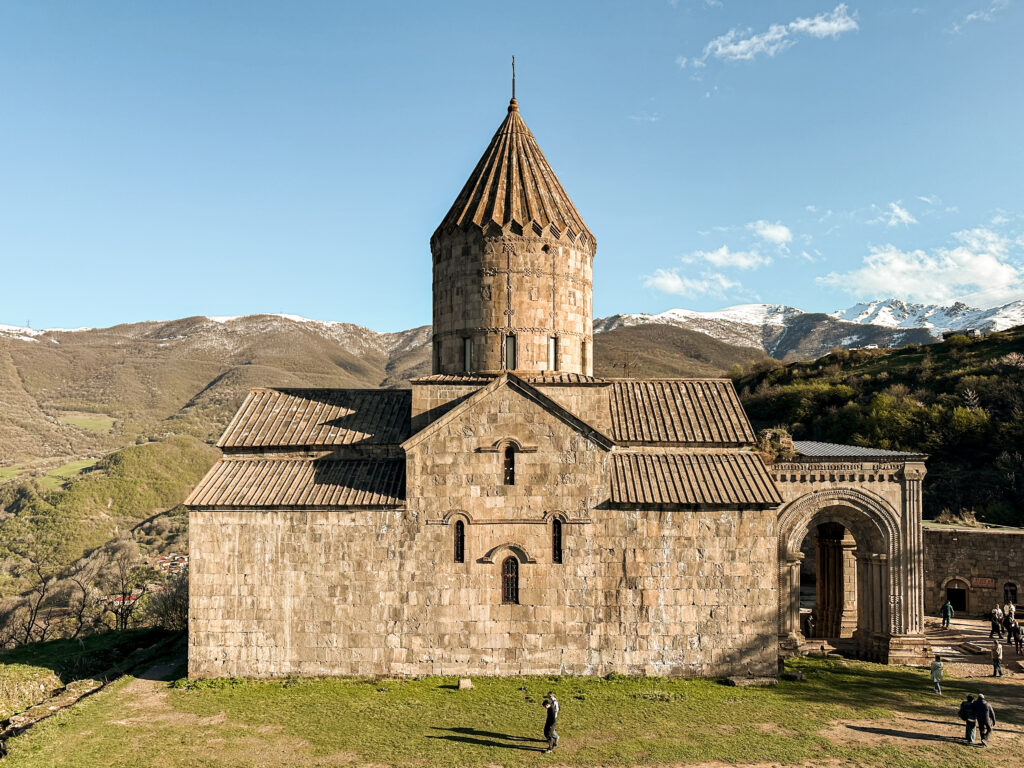
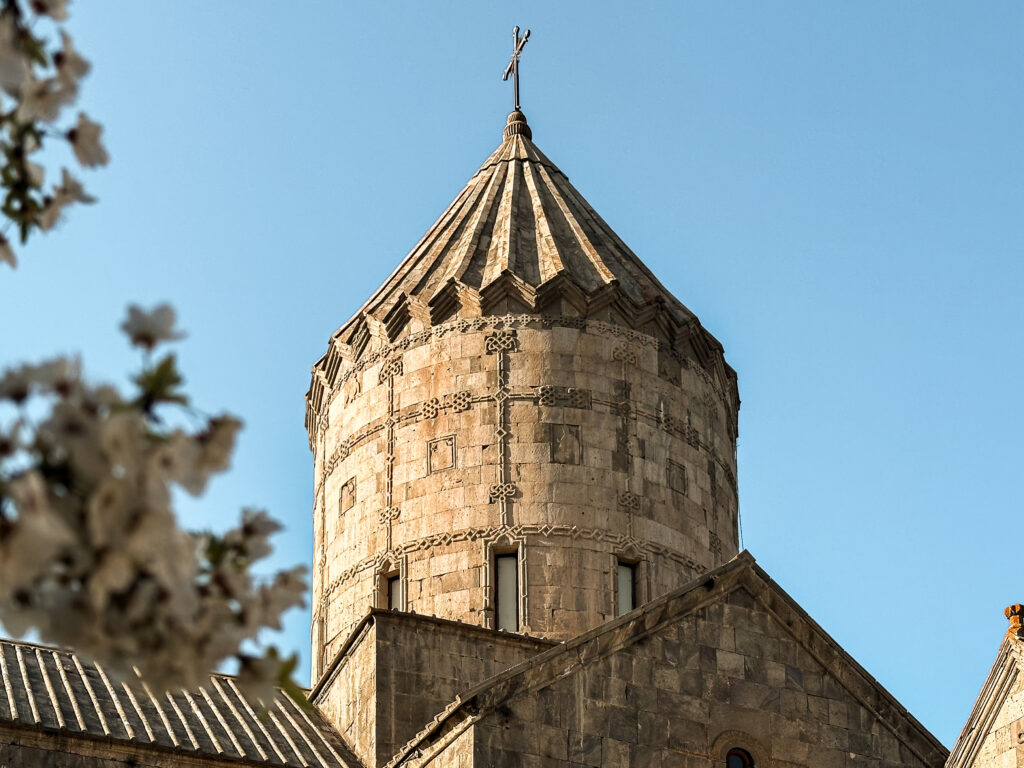
The final stop on the southern Armenia tour is Tatev Monastery, perched dramatically on a plateau overlooking the deep Vorotan Gorge. Founded in the 9th century, Tatev was an important religious, educational, and cultural centre during medieval Armenia. It housed a university that attracted scholars from across the region and played a key role in preserving Armenian culture and Christian learning.
 Tatev Monastery
 Tatev Monastery in Spring time
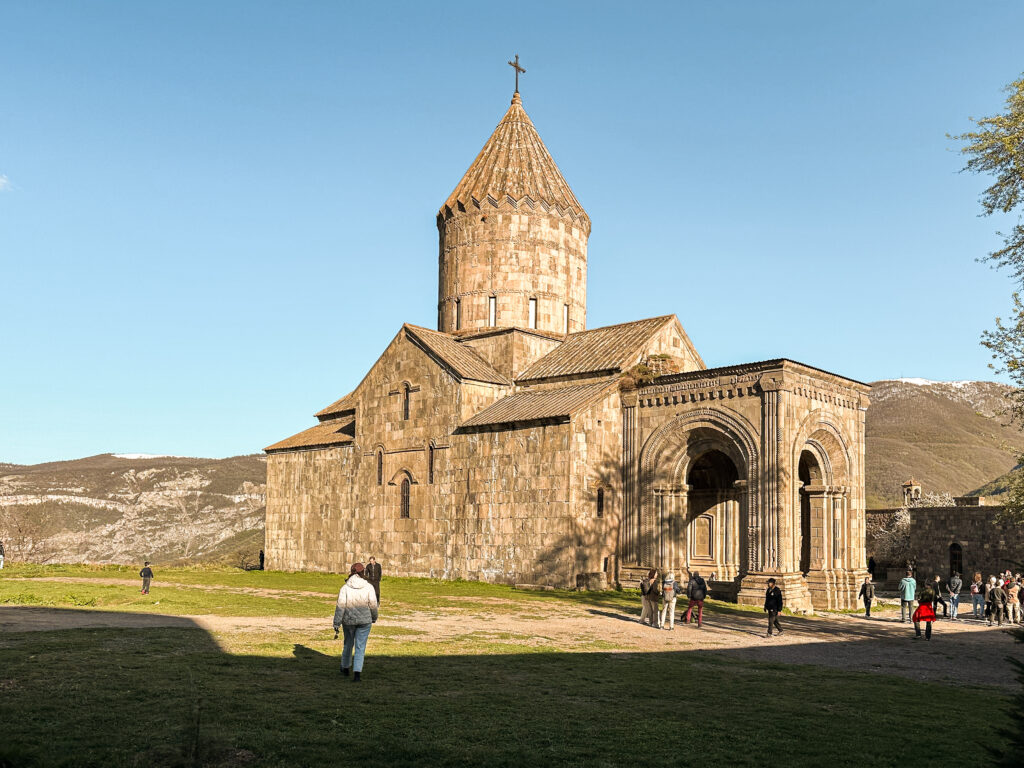 Tatev Monastery
The journey to Tatev is almost as impressive as the monastery itself, thanks to the Wings of Tatev, the world’s longest non-stop double-track cable car. Stretching over 5.7 kilometres, it glides above the beautiful Vorotan Gorge, offering breathtaking views of cliffs, forests, and winding rivers below. The cable car transforms what would be a long and winding drive into a spectacular, almost surreal experience, making the approach to Tatev as memorable as the monastery.
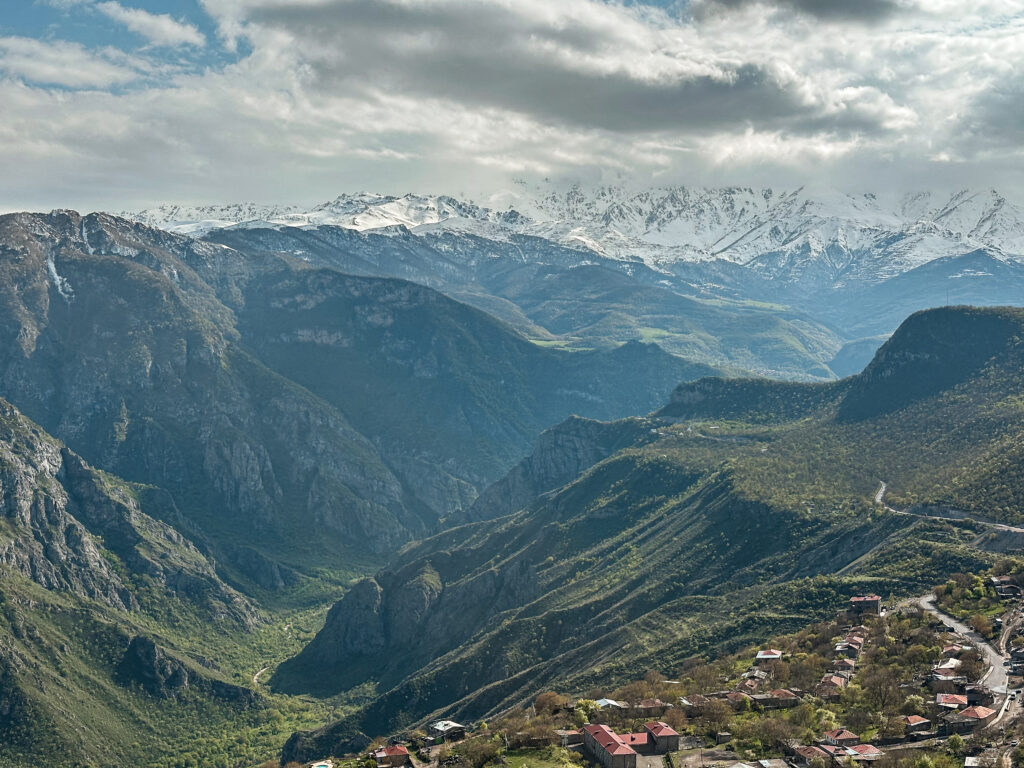 Vorotan Gorge
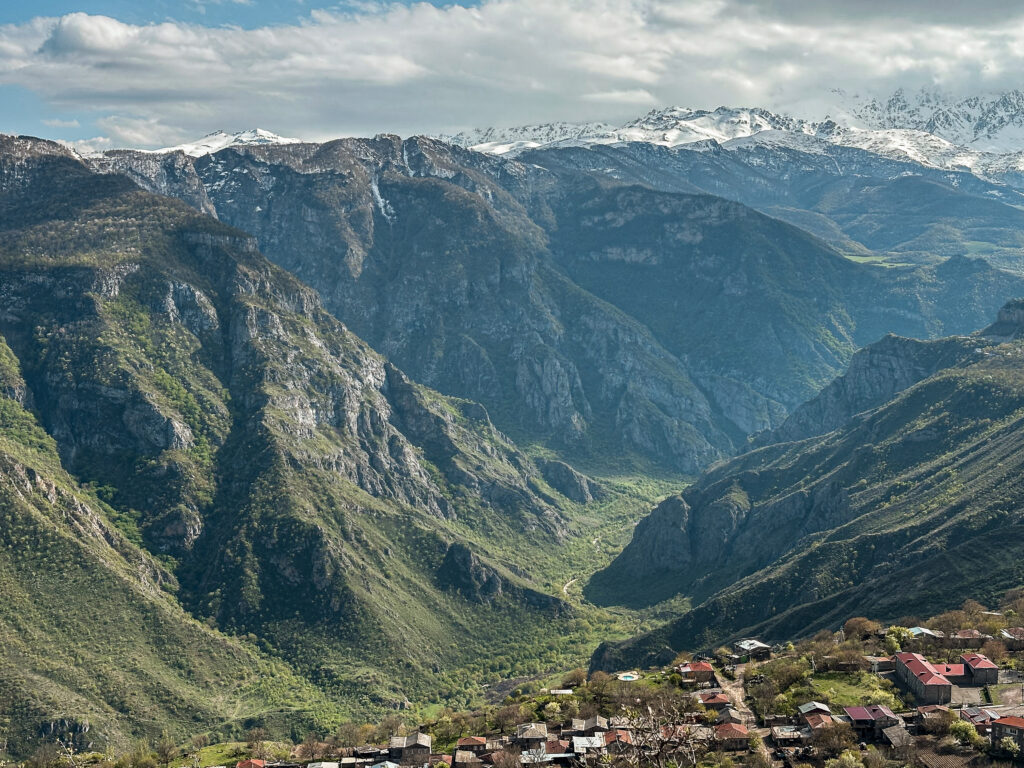 Vorotan Gorge
Sevan and Dilijan
After exploring Yerevan and taking a couple of day trips, I headed north to spend a few days in Dilijan and visit Lake Sevan. This part of Armenia felt completely different from the capital, quieter, greener, and more relaxed, with forests and mountains dominating the landscape.
Lake Sevan is one of the largest freshwater high-altitude lakes in the region and a popular spot for both locals and travellers. Its deep blue waters are framed by rolling hills and, in April, patches of lingering snow from winter still covered the surrounding mountains. It’s also home to several historic monasteries, such as Sevanavank, perched on a hill at the lake’s northwest tip. Visiting Sevan gives a sense of Armenia’s natural beauty combined with its spiritual heritage, a peaceful contrast to the busier sites near Yerevan.
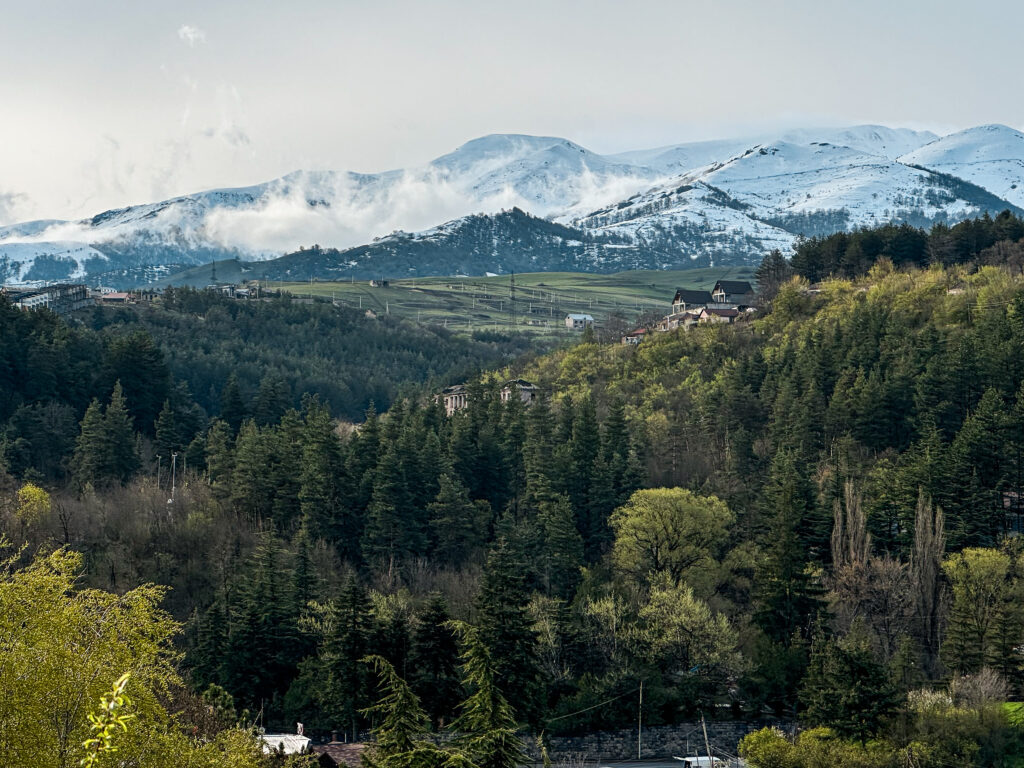 Dilijan in Spring with snow-capped mountains
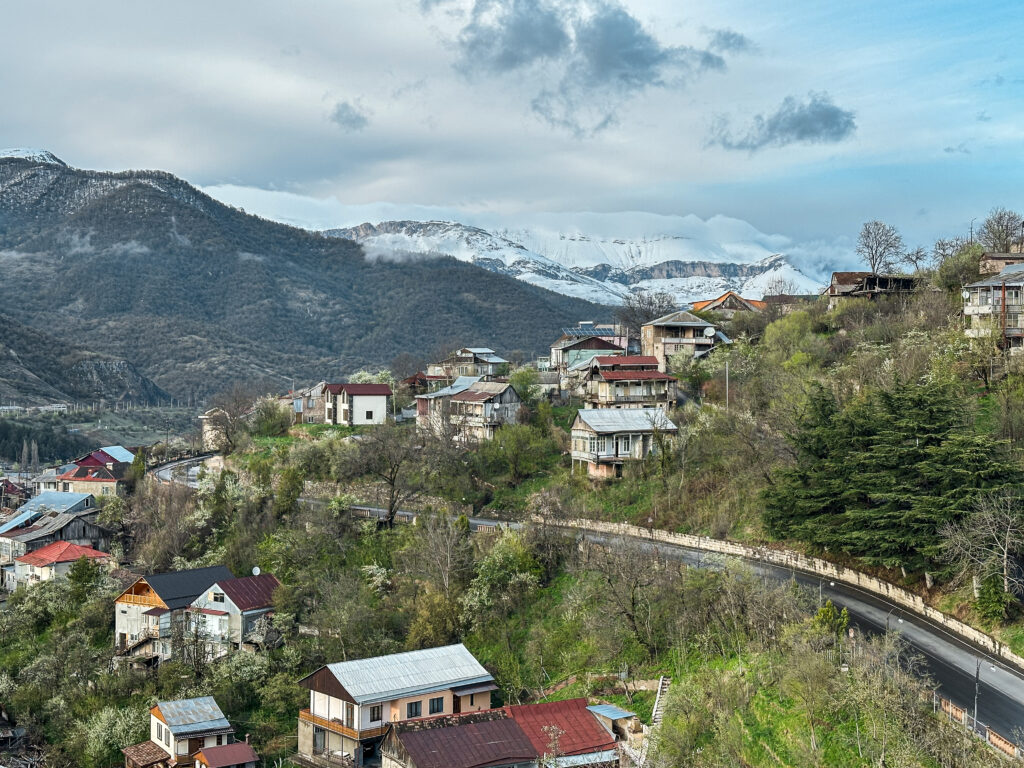 Dilijan in Spring with snow-capped mountains
From Sevan, I made my way to Dilijan, often called “the Armenian Switzerland” for its forested hills and scenic trails. Dilijan is perfect for independent trekking and exploring small villages, with trails leading through pine forests and along rivers. In April, the higher-altitude trails were still snowy, but the town itself had a calm atmosphere. Dilijan also has a charming old town with cobblestone streets and traditional houses, making it an ideal spot to slow down, wander, and soak in a quieter side of Armenia.
For those planning hikes, the Dilijan National Park has a network of trails for all levels. Extra information on routes, difficulty, and distances can be found on HikeArmenia, and the local Dilijan Tourism Information Center is also a great resource for maps and advice.
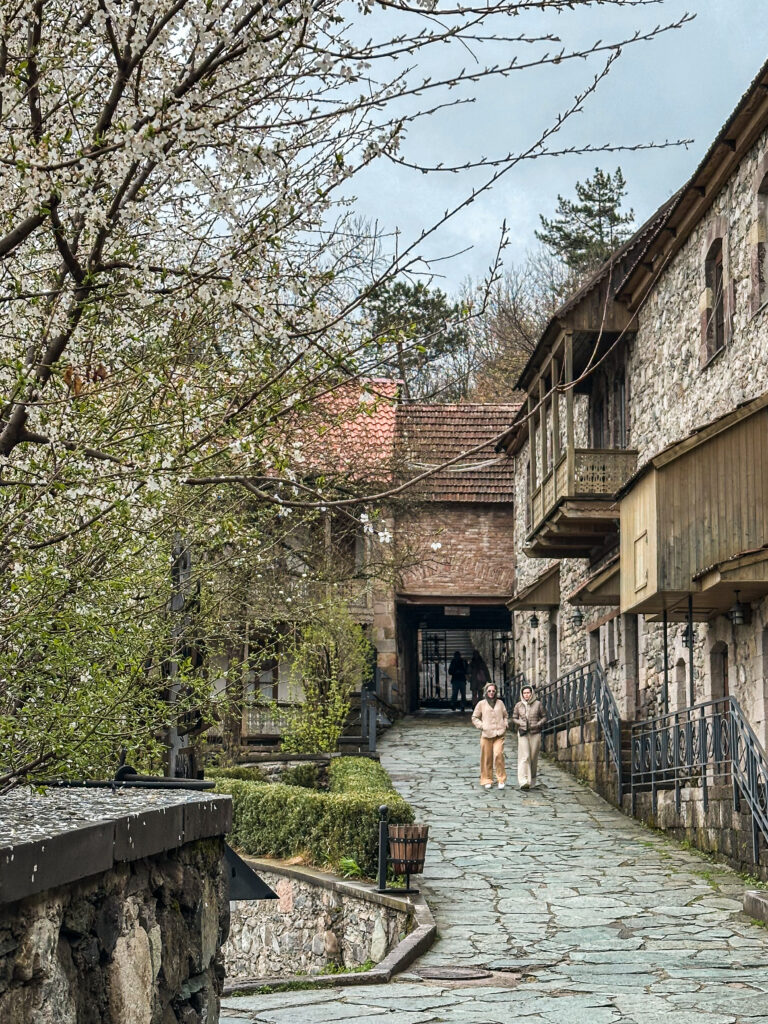 Cobblestone streets in Dilijan
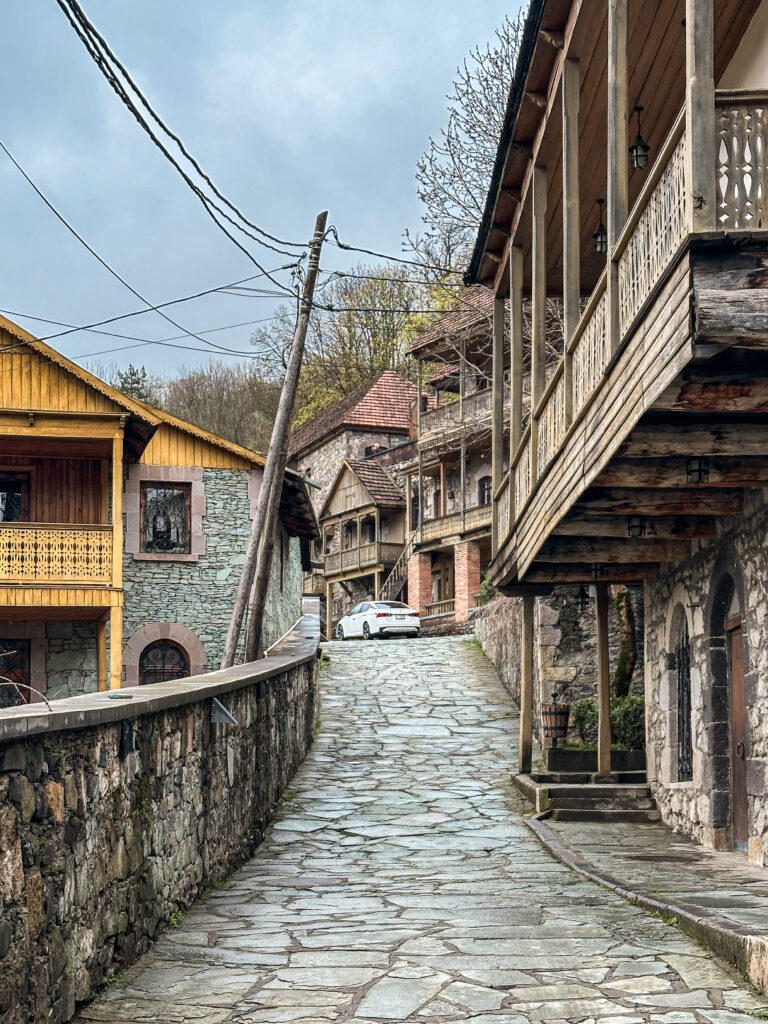 Cobblestone streets in Dilijan
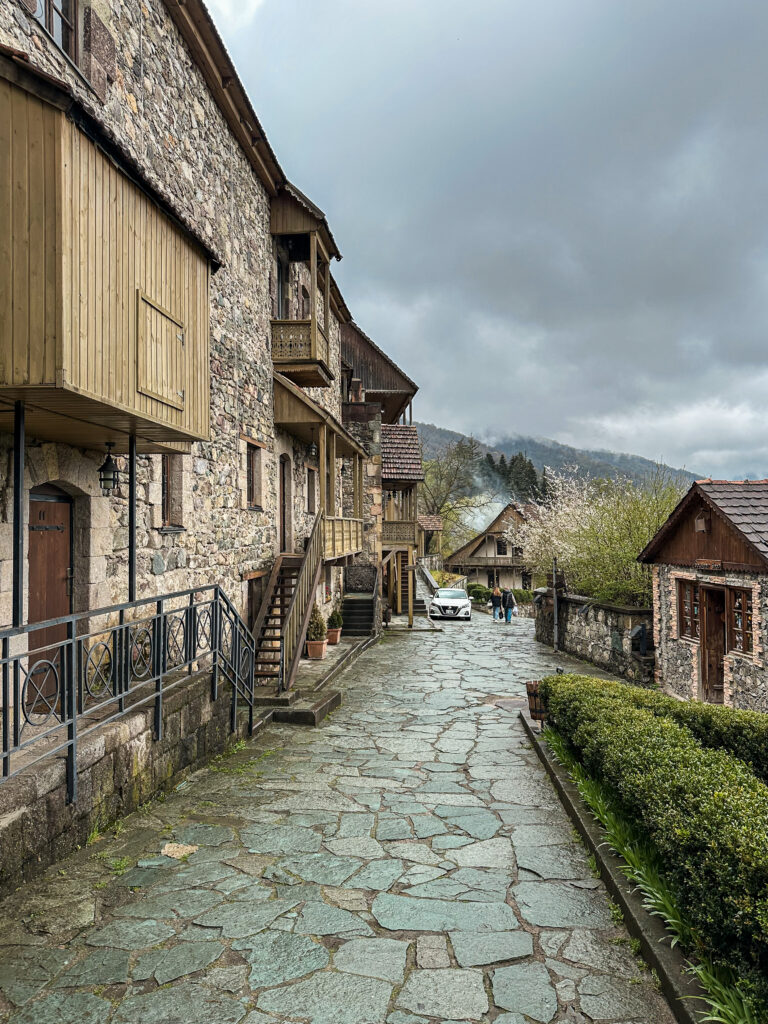 Cobblestone streets in Dilijan
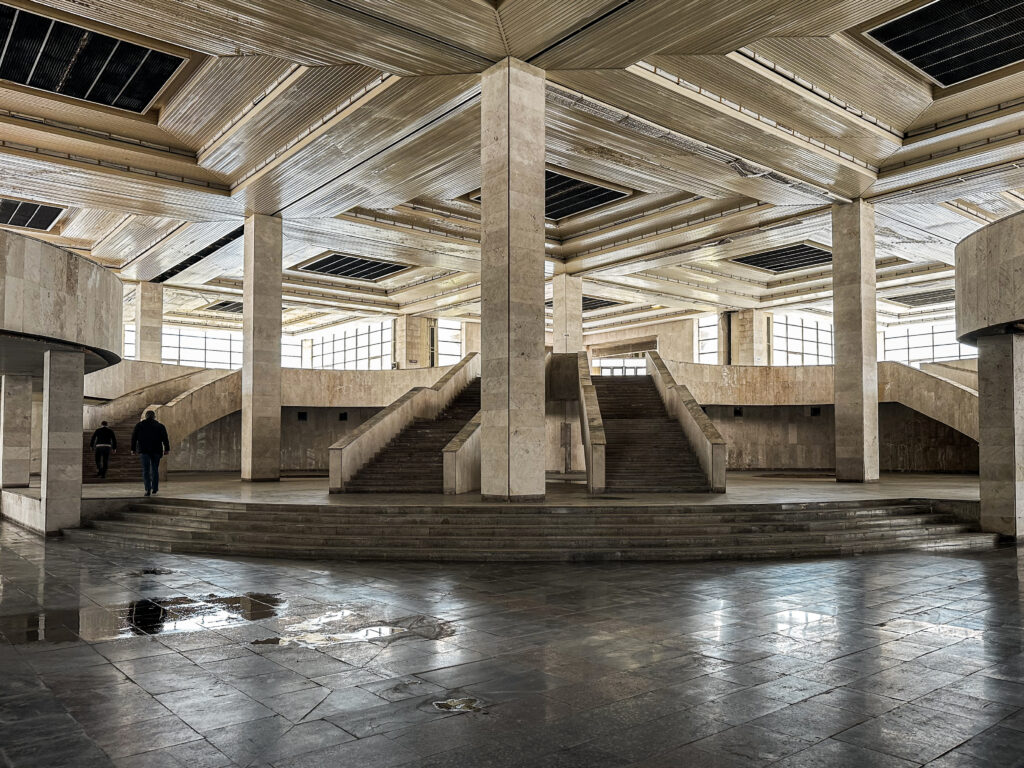
How to Reach Dilijan from Yerevan by public transport
Dilijan is easily reachable from Yerevan without a car, making it a good option for independent travellers. The most common way is by marshrutka (shared minibus), which runs regularly from Yerevan’s main bus station. The ride takes around 2-3 hours, depending on traffic and weather, and costs just a few dollars.
Marshrutkas depart frequently in the morning and throughout the day. You’ll usually find them leaving from the Northern Bus Station areas in Yerevan. Tickets are purchased directly from the driver or the station office, and the minibuses leave once they are full.
Where to Stay in Armenia
Yerevan
Yerevan has plenty of budget-friendly options for independent travellers, especially hostels that are both affordable and comfortable. During my stay, I tried a few and can recommend Envoy Hostel (which also exists in Tbilisi), Orion Hostel, and Tropica Inn Hostel. All of these are clean, well-maintained, and great for meeting other travellers.
Of course, Yerevan also has a wide range of mid-range and luxury hotels if you prefer more private accommodation, but for budget travellers, these hostels offer excellent value without sacrificing comfort.
Dilijan
In Dilijan, I stayed at 11+1 by Tumo, another hostel that I highly recommend. It’s clean, comfortable, and affordable, making it a great base for exploring the town, nearby trails, and Dilijan National Park.
Like Yerevan, Dilijan also has mid-range guesthouses and more upscale hotels, but for independent travellers on a budget, hostels are a convenient and pleasant option.
Armenian Food, Wine and Brandy
One of the highlights of visiting Armenia is its food: simple, hearty, and full of flavour. Traditional dishes like lavash (the soft, thin flatbread baked in clay ovens), khorovats (Armenian barbecue), and dolma (vine leaves stuffed with rice and meat) are widely available and usually very affordable. Street food and small local cafés often serve generous portions, making it easy to enjoy authentic meals without spending much.
Armenia is also known for its wine and brandy. The country has a winemaking tradition that stretches back thousands of years, and you’ll find local wines made from indigenous grape varieties in restaurants, bars, and wineries. For brandy lovers, Armenia produces some world-class cognac-style spirits and visiting a tasting room is a great way to sample it.
Even in Yerevan, there are casual wine bars and cafés where you can try Armenian vintages, and many of the day tours, like the southern Armenia route, include traditional lunches with local wine. Sampling the local cuisine is not just about the flavours, it’s a window into Armenian culture, hospitality, and centuries-old traditions.
Other Places Worth Visiting in Armenia
While I didn’t have time to explore them on this trip, there are plenty of other destinations in Armenia that are well worth a visit if you have more time.
Gyumri is Armenia’s second-largest city and has a distinctly different feel from Yerevan. It’s known for its charming old town, Soviet-era architecture, and vibrant arts scene, making it a great destination for history and culture lovers.
Vanadzor, the country’s third-largest city, is surrounded by mountains and forests, offering a mix of urban life and natural scenery. It’s less touristy than Yerevan or Dilijan, so it’s ideal for travellers looking to get off the beaten path.
In the south, Goris is a small town famous for its dramatic canyon landscapes and cave dwellings. Nearby, you can find the Areni-1 Cave, an archaeological site where the world’s oldest known winery, dating back over 6,000 years, was discovered. Visiting this area gives insight into Armenia’s long history of winemaking and ancient civilisation.
 Raw mountain views in Armenia
 Raw mountain views in Armenia
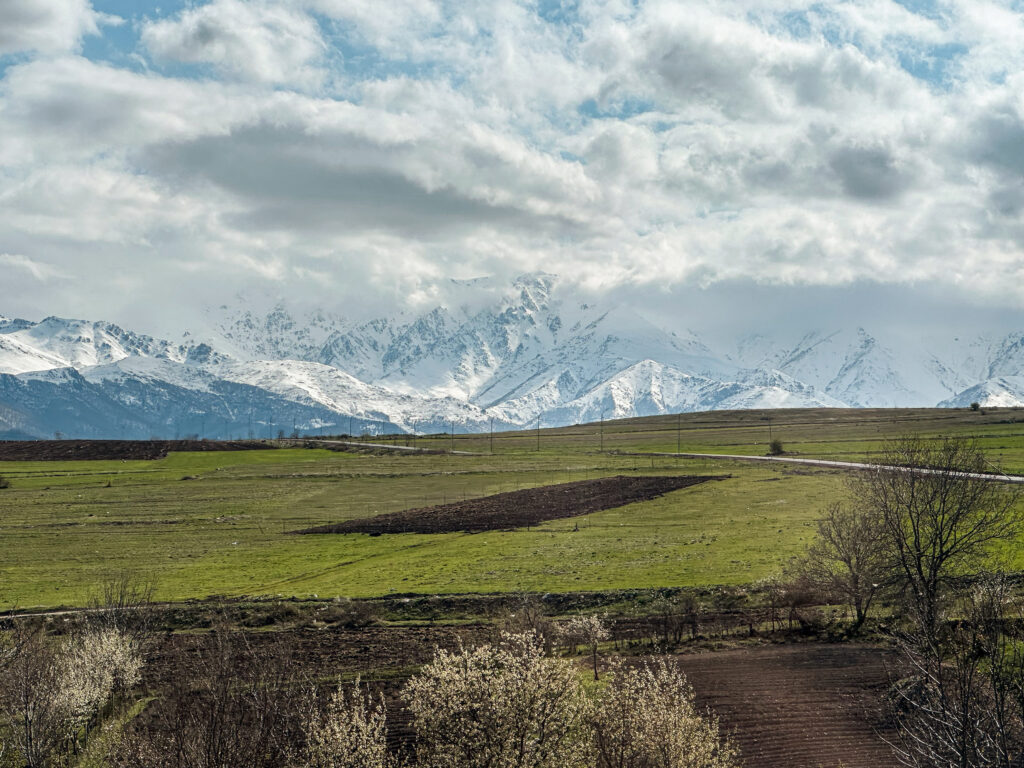
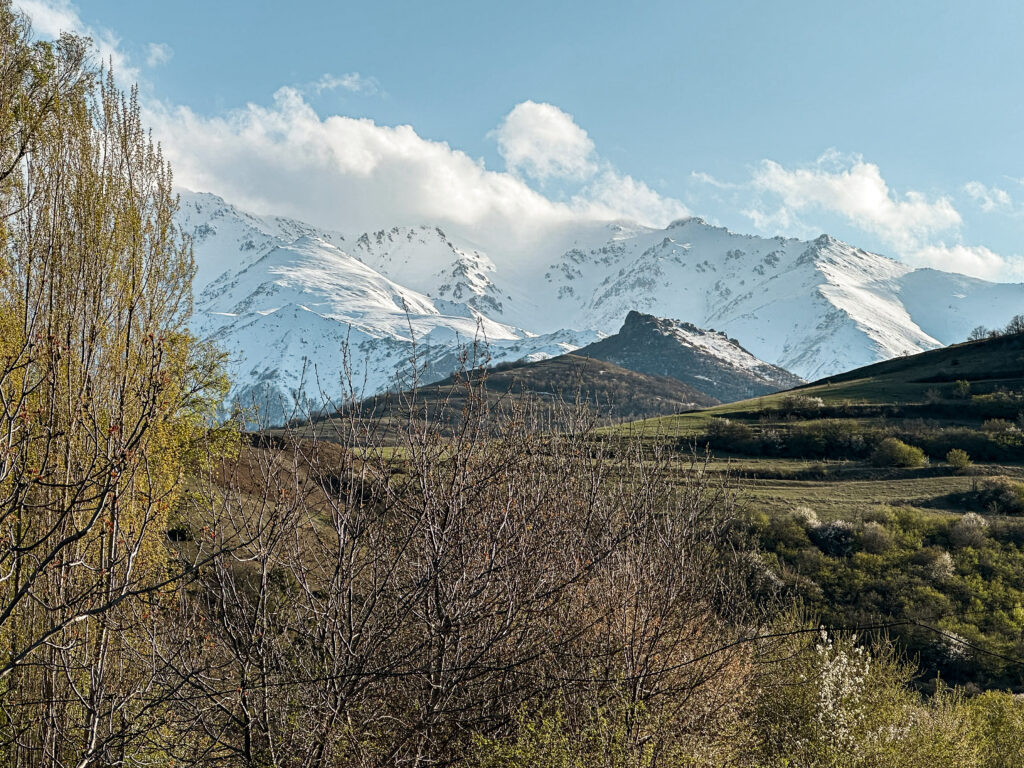
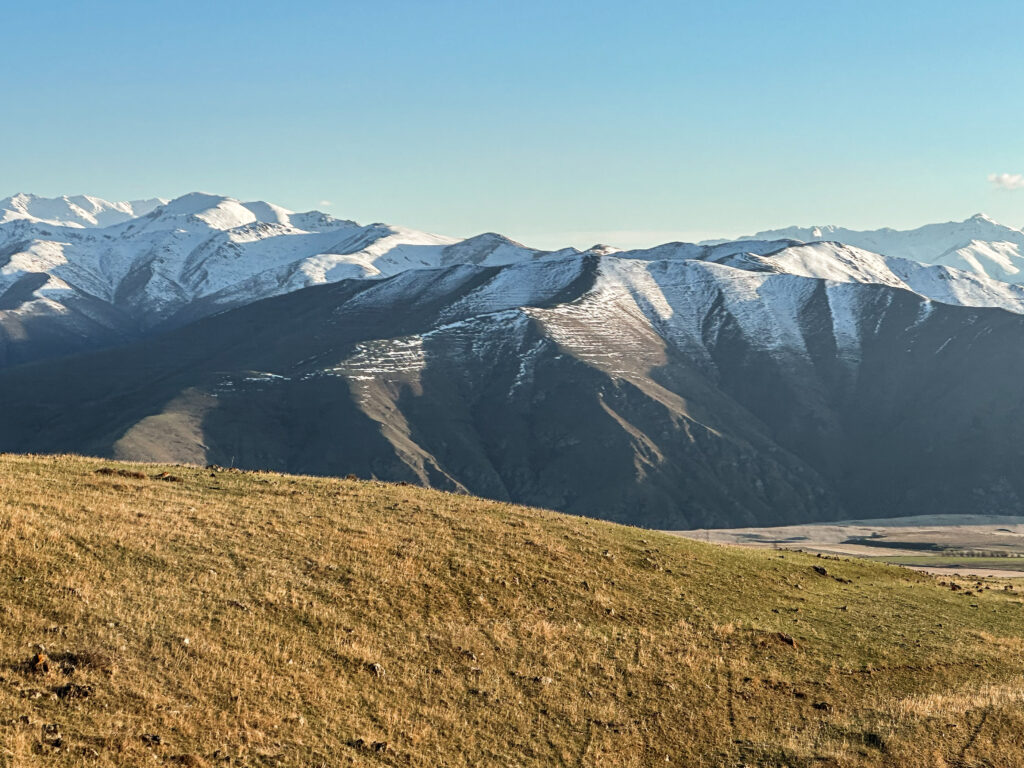 Raw mountain views in Armenia
Practical Tips for Travelling in Armenia
Getting Around
The best budget transport tip is to rely on marshrutkas (shared minibuses). They connect Yerevan with towns like Dilijan, Sevan, and Vanadzor, as well as some monasteries and tourist sites. For destinations further afield, such as Goris or Tatev, you’ll either need a day tour, a private taxi, or your own car, as public transport options can be limited and slow.
Within cities, taxis are cheap and easy to find. In Yerevan, I often used Yandex Go, which works similarly to Uber and allows you to see prices in advance and avoid any haggling.
Budget Tips
Armenia is very budget-friendly compared with Europe. Hostels and budget guesthouses are widely available, meals at local cafés are affordable, and entrance fees to monasteries or museums are usually only a few dollars. Tours like the ones I took to southern Armenia can be excellent value, as they save you time and include historical context that you might miss travelling independently.
Timing Your Visit
Spring and autumn are ideal. Spring offers mild city weather and blossoming landscapes, though higher-altitude hikes can still have snow. Autumn provides comfortable temperatures, fewer crowds, and beautiful colours in the countryside. Summer can get hot in Yerevan, while winter is quieter but many mountain roads may be inaccessible.
Language and Connectivity
Armenian is the official language, but Russian is widely understood. English is increasingly common in hostels, cafés, and tourist areas, but it helps to learn a few basic phrases in Armenian or Russian.
For reliable internet and mobile connectivity, it’s easy to get a local SIM card at a telecom office. One convenient option in Yerevan can be found here. SIM cards are affordable, and topping up data is straightforward. Wi-Fi is widely available in hostels, cafés, and restaurants, and mobile data is inexpensive. You can also opt to get an eSIM instead.
Need data before you land? Try Saily eSIM
Use code RITAHE1486 for $5 off your first plan.
Money
The local currency is the Armenian Dram (AMD). Cash is still preferred in smaller towns, markets, and for marshrutkas, though cards are widely accepted in Yerevan and larger establishments. ATMs are available in major towns.
Avoid ATM fees with Wise
The card I use for all my travel withdrawals – real exchange rate, low fees.
Use Revolut to avoid ATM fees
Good alternative to Wise – I carry both as a backup.
Armenia Travel FAQ
Is Armenia safe to travel solo?
Yes, Armenia is generally a safe country for solo travellers, including solo female travellers. Violent crime is rare, and locals are typically welcoming and helpful. The main things to watch for are overcharging by taxi drivers (use Yandex Go in Yerevan to avoid this) and the usual city-level awareness around your belongings. The border regions with Azerbaijan should be avoided due to ongoing security concerns.
Do I need a visa to visit Armenia?
Citizens of most European countries, the UK, the US, Canada, and Australia can enter Armenia visa-free for up to 180 days. Always check the latest entry requirements for your nationality before travelling, as these can change.
What currency is used in Armenia?
The Armenian Dram (AMD) is the local currency. Cash is still preferred in smaller towns, markets, and for marshrutkas. Cards are widely accepted in Yerevan. ATMs are easy to find in the capital.
Can I travel Armenia without a car?
Yes, and that’s exactly how I did it. Yerevan is walkable, marshrutkas connect the main towns (Dilijan, Sevan, Gyumri, Vanadzor), and for more remote sites like Tatev or Noravank, affordable day tours from Yerevan fill the gap. A car gives you more flexibility, but it’s not necessary for a solid two-week trip.
Is Armenia cheap to travel?
Very. As a budget backpacker, I stayed comfortably under €30/day on most days. Hostel dorms run €8-15/night, a filling meal at a local café costs €3-6, and marshrutkas are under €5 for most intercity routes. It’s one of the more affordable countries in the region.
How many days do I need in Armenia?
Two weeks gives you a well-rounded trip: a few days in Yerevan, a couple of day trips to the main monastery sites, and time to get up to Dilijan and Lake Sevan. One week is enough for a highlights trip if you’re combining with Georgia. If you want to explore the south (Goris, Tatev, Areni) and the north properly, two weeks is the sweet spot.
Can I visit Armenia and Georgia together?
Absolutely! This is one of the most natural travel combinations in the Caucasus. The overland crossing between Tbilisi and Yerevan takes around 5-6 hours by marshrutka and costs about €15. Most travellers do Georgia first, then cross into Armenia, or vice versa. Two to three weeks gives you time to do both countries justice without rushing.
Is Armenia Worth Visiting? Final Thoughts
Armenia completely exceeded my expectations. From the lively streets and cultural treasures of Yerevan to the serene landscapes of Dilijan and Sevan, and the awe-inspiring monasteries of the south, there’s a richness to the country that’s easy to miss if you only glance at the map. Travelling independently and on a budget is entirely possible, and even when I joined day tours, I found they added depth to the experience rather than taking away from it.
For anyone curious about history, mountains, or simply discovering an underrated corner of the world, Armenia offers a perfect mix of culture, nature, and hospitality, all without the crowds and high costs of more popular destinations. Spending even two weeks here gives a glimpse into a country that is both ancient and surprisingly accessible, leaving you wanting to return for more.
Explore More of the Caucasus
Armenia makes most sense as part of a wider Caucasus trip, and Georgia is the natural starting point for most travellers coming overland. Here’s everything I’ve written from the ground:
Backpacking Georgia: Independent Travel Guide: The full overview: how to get around, where to go, what it costs, and why Georgia deserves more than a rushed week.
Tbilisi Travel Guide: Where to stay, what to eat, and how to spend your time in one of the most underrated capitals in the region. Also your most likely entry and exit point for Armenia.
Kutaisi Travel Guide: Georgia’s second city and a good base for the caves, canyons, and monasteries of western Georgia. Easy to reach by overnight train from Tbilisi.
Kazbegi: The Caucasus Mountains: The most dramatic day trip from Tbilisi, or a destination in its own right. Gergeti Trinity Church, big hikes, and the kind of mountain scenery that makes you want to stay longer.
The Mestia to Ushguli Trek, Svaneti: One of the best multi-day treks in the Caucasus. Remote, stunningly beautiful, and entirely doable independently. If you’re already this deep into the region, don’t skip it.